
Dodgers, Padres Among Teams Pursuing Seth Lugo
Former Mets righty Seth Lugo has drawn interest from a wide range of clubs this winter, hoping to land an opportunity as a starting pitcher wherever he signs. Jon Heyman of the New York Post reports that the Dodgers and Padres are the likeliest landing spots at this point, though the Nationals have been involved to a lesser degree. Ken Rosenthal and Fabian Ardaya of The Athletic, meanwhile, reported over the weekend that the Dodgers are in the mix for Lugo and would indeed likely build him up as a starter.
Between Los Angeles and San Diego, the latter has a clearer path to rotation innings, if the Padres indeed have interest in giving Lugo a look as a starting pitcher. Joe Musgrove, Yu Darvish, Blake Snell and Nick Martinez are expected to occupy the top four spots in the rotation, but the No. 5 spot is generally unsettled. Former top prospect Adrian Morejon seems the likeliest option, but Ryan Weathers, Pedro Avila and Jay Groome are all on the 40-man roster as well.
Over in Los Angeles, it’s a slightly more crowded situation. Clayton Kershaw re-signed on a one-year deal, rejoining Julio Urias, Tony Gonsolin and Dustin May in a projected rotation that was largely rounded out by the Dodgers’ recent signing of Noah Syndergaard. That said, both May and Gonsolin missed substantial time due to injury in 2022. May missed the first three-plus months recovering from 2020 Tommy John surgery, while Gonsolin was slowed late in the year by forearm troubles. He still made 24 starts and tallied 130 1/3 innings, but May logged just 30 regular-season frames and will probably have his workload monitored. Prospects like Ryan Pepiot, Bobby Miller and Michael Grove could provide depth even without an additional veteran signing, though.
As for the Nats, while Heyman suggests they’re no longer prominent players for Lugo, he’d be a similar signing to their recent addition of Trevor Williams. Beyond the fact that both Williams and Lugo pitched for the Mets this past season, both have been used as relievers recently but carry a starter’s repertoire, making them intriguing buy-low options in that regard. That said, the Nats now have Stephen Strasburg, Patrick Corbin, Williams and youngsters MacKenzie Gore, Josiah Gray and Cade Cavalli all as rotation options.
Lugo, 33, has been shuttled between the Mets’ rotation and bullpen multiple times in his career but has been primarily a reliever in 2021-22. He’s notched a solid 3.56 ERA with a 26.6% strikeout rate, 7.9% walk rate and 44% ground-ball rate in that time, averaging 94.4 mph with his fastball and generally sitting at or near the top of the league in terms of spin rate on his curveball. More broadly, Lugo has long been a quality member of the relief corps in Queens; he’s totaled exactly 300 innings out of the bullpen and boasts a 2.91 ERA in that time.
That said, Lugo has a four-seamer, sinker, curveball, slider and seldom-used changeup — a deep arsenal for a relief pitcher that could lend itself to a return to the rotation. He was hit hard working out of the rotation in the shortened 2020 season, but Lugo has a 4.35 ERA in 194 career innings as a starter. He’s missed more bats out of the bullpen, as one might expect, but his walk rate as a starter is slightly better than as a reliever and Lugo’s opponents haven’t seen dramatic spikes in production when facing him for a second or even third time in a game.
In addition to the Dodgers, Padres and Nats, Lugo has also reportedly drawn at least some degree of interest from the Angels, Red Sox and Tigers.
Minor MLB Transactions: 12/17/22
There’s been a few minor league deals coming through of late, so here’s a quick recap.
- The Dodgers have brought in catcher Patrick Mazeika on a minor league deal, per his MLB transactions log. Mazeika made big league appearances for the Mets over the past two seasons, slashing a combined .190/.236/.279 with a pair of home runs across 159 plate appearances. He was claimed off waivers by the Giants in August, before being released at the end of the season. Across 188 plate appearances between the Mets’ and Giants’ Triple-A affiliates, Mazeika slashed .253/.356/.352 with four home runs. The Dodgers have Will Smith and Austin Barnes tabbed to handle the catching duties this year, so Mazeika will provide some depth in the upper minors.
- Oakland has added right-hander Garrett Williams on a minor league pact, per his MLB transaction log. Williams was originally drafted by the Giants in the seventh round of the 2016 draft, but made his way over to the Cardinals prior to the 2021 season. He showed some promise early on his minor league career, but has struggled in the upper minors. He owns a 4.46 ERA in 240 1/3 Double-A innings, and a 6.75 ERA in 80 Triple-A innings. He has flashed decent strikeout staff, boasting a 10.5 SO/9 in Triple-A, but control has been a huge problem, averaging a 7.9 BB/9 at the highest level of the minor leagues.
- Colorado has signed shortstop Connor Kaiser to a minor league contract, per his MLB transaction log. The Pirates took Kaiser in the third round of the 2018 draft, and he briefly made it up to Triple-A with the Bucs before being released in May of this year. He latched on with the Padres, spending the rest of the year at Double-A and hitting .202/.299/.360 with seven home runs in 207 plate appearances.
- The Nationals have added shortstop Nick Shumpert on a minor league deal, per his MLB transaction log. Shumpert was drafted out of high school in the seventh round by the Tigers in 2015, but he turned that down to go to college. He struggled at college, and wound up being taken in the 28th round a year later by the Braves. After three years in the minor leagues with Atlanta, Shumpert was released and turned to independent ball. The 26-year-old has spent the last four years there, and most recently slashed .265/.310/.421 with eight home runs in 375 plate appearances for the Cleburne Railroaders.
Minor MLB Transactions: 12/14/22
Teams have been quite active over the past couple of weeks and a few minor league deals slipped through the cracks. Here’s a quick roundup.
- The Giants signed infielder Donovan Walton to a minor league deal, according to his transactions tracker at MLB.com. Walton, 29 in May, began 2022 with the Mariners but was traded to the Giants in May. He spent the year as a frequently-optioned depth piece for the Giants, getting into 25 MLB games and hitting .158/.179/.303, wRC+ of 31. In the minors this year, he hit .248/.353/.403, wRC+ of 94. He was non-tendered at the end of the season but has now re-joined the organization in a non-roster capacity. He has some experience at all four infield positions and left field, giving the club a versatile depth option. If he makes it back onto the 40-man, he’s now out of options and will have to stick on the active roster or else be designated for assignment.
- The Braves signed catcher Joe Hudson to a minor league deal, according to his transactions tracker at MLB.com. Hudson, 32 in May, has 18 games of MLB experience stretched across three seasons from 2018 to 2020. He spent 2022 in the Rays’ system, getting into 49 games for the Triple-A Durham Bulls. He hit .226/.345/.489 in that time for a wRC+ of 119. The Braves recently acquired Sean Murphy to be their primary catcher, but sent William Contreras and Manny Piña packing as part of the deal. The club does still have Chadwick Tromp and the oft-injured Travis d’Arnaud but Hudson will give them a depth option with major league experience.
- The Twins signed first baseman Tyler White to a minor league deal, according to his transactions tracker at MLB.com. White, 32, played for the Astros from 2016 to 2019, and a brief stint with the Dodgers, but played in Korea in 2020. He came back to North America for the past two years but has been stuck in Triple-A. Though he generally hits well, his defense is essentially limited to first base at this point, aside from brief stints at third. With the Blue Jays’ system in 2021, he hit .292/.424/.476 for a wRC+ of 141. He split 2022 between the Triple-A teams of the Braves and Brewers, hitting .230/.357/.412, 108 wRC+.
- The Marlins signed infielder Alex De Goti to a minor league deal, according to his transactions tracker at MLB.com. De Goti, 28, has spent his entire career with the Astros thus far, getting into two big league games in 2021. He spent all of 2022 in Triple-A, hitting .253/.352/.377 for a wRC+ of 87. He’s played every position on the diamond in his minor league career except for catcher, even taking the mound for the occasional mop-up stint. He should serve as a versatile depth piece for the Fish.
- The Nationals have signed right-hander Ronald Herrera to a minor league deal, according to his transactions tracker at MLB.com. Herrera, 28 in May, has three innings of MLB experience, which came as a 22-year-old back in 2017 with the Yankees. He spent most of 2022 with the Double-A affiliate of the Nats, making 24 starts and throwing 129 innings. He posted a 4.40 ERA in that time with a 21.4% strikeout rate, 6.4% walk rate and 39.8% ground ball rate. The Nats had the worst rotation ERA in the majors in 2022, coming in at 5.97. They’ve signed Trevor Williams to help out but there’s a still a good chance they might have to rely on some depth options throughout the year.
- The Angels signed right-hander Nash Walters to a minor league contract, according to his transactions tracker at MLB.com. Walters, 26 in May, spent his entire career in the Brewers’ organization until getting sent to the Angels in a September 2022 trade. He made his major league debut with the Halos on the last day of the season, facing three batters, retiring one while surrendering one hit and one walk. His minor league work for 2022 amounted to 53 2/3 innings with a 4.70 ERA, 30.2% strikeout rate and 8.2% walk rate. He was non-tendered at the end of the year but has returned to the organization without taking up a spot on the 40-man.
- The Mariners signed right-hander Jose Rodriguez to a minor league deal, according to his transactions tracker at MLB.com. Rodriguez, 27, tossed 21 1/3 innings with the Angels over 2019 and 2020, posting a 2.53 ERA in that time. That number looks impressive but came with an unsustainable 100% strand rate and .226 batting average on balls in play. His 14.1% strikeout rate and 13% walk rate suggest he was lucky to allow so few earned runs. He spent 2022 in the Mets’ system, tossing 76 1/3 innings in Triple-A with a 4.95 ERA, 20.5% strikeout rate, 10.9% walk rate and 42.2% ground ball rate. If he’s able to crack Seattle’s 40-man roster, he still has two option years remaining and can be moved between the majors and minors with regularity.
Nationals Sign Matt Adams, Three Others To Minor League Deals
The Nationals announced Wednesday morning that they’ve signed first baseman Matt Adams, infielder Travis Blankenhorn, and righties Tommy Romero and Anthony Castro to minor league contracts with invitations to Major League Spring Training.
It’s a D.C. reunion for Adams, who won a World Series ring with the 2019 Nationals as a key bench bat for manager Dave Martinez. The now-34-year-old Adams appeared in 111 games that season, offsetting a huge strikeout rate (34.5%) and paltry OBP (.276) with some substantial power contributions: 20 home runs and 14 doubles, despite tallying just 333 plate appearances.
Adams has scarcely appeared in the big leagues since, totaling just 91 plate appearances between the Braves (2020) and Rockies (2021) with a combined .176/.231/.282 slash to show for it. Adams was out of affiliated ball entirely in 2022 but spent the bulk of the season with the Kansas City Monarchs of the independent American Association, for whom he slugged 27 home runs in just 367 plate appearances while turning in a .248/.327/.554 batting line.
Power has long been a part of “Big City’s” game, as he’s thrice had a 20-homer season with fewer than 400 plate appearances. Dating back to his 2012 debut with the Cardinals, Adams is a career .258/.306/.463 hitter, although those numbers are skewed by some dismal performances against left-handed pitching (career .210/.241/.378). When holding the platoon advantage, the lefty-swinging Adams is a .268/.320/.481 hitter. He’ll compete for a part-time first base/DH role this spring.
Romero, too, will be returning for a second stint with the Nats. The 25-year-old landed in Washington via waivers earlier this season and made one start late in the year, during which he yielded six earned runs in just 3 2/3 innings. Romero, however, was a fairly well-regarded arm with the Rays organization as recently as last offseason and enjoyed a solid showing between the Triple-A affiliates for the Rays and Nats: 3.24 ERA, 20.2% strikeout rate, 9.5% walk rate in 86 innings. He can serve as either rotation or bullpen depth for a Nationals staff that is teeming with uncertainty.
The 27-year-old Castro has pitched in the Majors in each of the past three seasons, showing promising life on his fastball and an ability to miss bats but also struggling with command — particularly as it pertains to home runs. Castro has a 6.00 ERA in 39 big league frames, due largely to an mammoth average of 2.31 home runs allowed per nine innings pitched. His heater averaged 95.2 mph in 2022 with the Guardians, and he’s fanned a quarter of the opponents he’s faced in the Majors, but throwing strikes (10.6% walk rate) and avoiding the middle of the plate on the strikes he does throw have both proven challenging.
Castro has a 3.19 ERA in two Triple-A seasons and has punched out 30.2% of his opponents at that level. He’s out of minor league options, so if he’s added to the big league roster at any point, he can’t be sent back to the minors without first passing through waivers.
Blankenhorn, 26, was a third-round pick by the Twins in 2015 and has been a fairly consistent hitter in the upper minors, topping out with a .260/.347/.462 batting line in 598 Triple-A plate appearances. He’s played primarily third base and second base in his pro career but has more recently begun to see time at first base and in the outfield corners. Blankenhorn is just 5-for-29 in a tiny sample of MLB time between the Twins and Mets. He’ll compete for a bench job in Spring Training and otherwise give the Nats a relatively versatile defender and lefty bat to stash in Triple-A for the 2023 season.
Trevor Williams Expected To Open Season In Nationals’ Rotation
The Nationals inked former division rival Trevor Williams to a two-year contract last week, reportedly guaranteeing him $13MM. The right-hander had worked in a swing capacity with the Mets, starting nine of his 30 outings in 2022.
Williams has an extended pre-2022 track record of starting, however, and he’s expected to move back into that role in the nation’s capital. Speaking with reporters yesterday, Williams said the Nats have told him he’ll get an opportunity to start next year (via Jesse Dougherty of the Washington Post). The former Pirate acknowledged he’d been hoping to find a rotation spot during his foray into free agency.
The 2022 campaign was a strong one for Williams, who tallied 89 2/3 innings of 3.21 ERA ball. He struck out a roughly average 22.6% of opponents with a strong 6.2% walk rate. The 30-year-old fared better in relief, working to a 2.47 ERA while holding opponents to a .247/.311/.371 mark across 51 frames. He was solid but less effective as a starter, allowing 4.19 earned runs per nine with a .260/.302/.467 slash line allowed. Williams’ control was strong in both roles. He missed more bats and allowed fewer homers while working out of the bullpen, however.
Williams occupied a full-time rotation spot in Pittsburgh for awhile, starting 25+ games each season from 2017-19 and all 11 of his outings during the shortened 2020 campaign. He started 12 of 13 appearances with the Cubs in 2021 before being dealt to the Mets at the deadline. Over that four-plus year stretch, Williams put up a 4.38 ERA with an 18.7% strikeout rate and a 7.7% walk percentage in 105 starts.
Washington certainly has room in the rotation, with virtually no certainty on the staff. Washington starters had a ghastly 5.97 ERA in 2022. That was easily the worst in the majors, three-quarters of a run higher than the 29th-placed Rockies (5.22 ERA). Aníbal Sánchez was remarkably the only Nationals pitcher with multiple starts and an ERA below 5.00. His 4.28 mark was paired with subpar underlying numbers, and he’s now a free agent who’ll be 39 by Opening Day.
Josiah Gray, MacKenzie Gore and Cade Cavalli all figure to have the inside track on starting jobs if healthy. They’re all young arms with significant upside who the organization hopes can develop into key pieces from their ongoing rebuild. Patrick Corbin and Stephen Strasburg are on hand and would surely have Opening Day rotation jobs based on their career bodies of work, but neither has been productive since 2019.
Corbin has remained healthy and at least taken the ball every fifth day, but Strasburg’s career has been thrown off track by continued issues with thoracic outlet syndrome. Gore has still yet to pitch as a National after missing the entire second half due to elbow inflammation, while Cavalli went down with season-ending shoulder inflammation after making his MLB debut in August. Given the health uncertainty with players like Strasburg, Gore and Cavalli, it’s little surprise to hear Williams is ticketed for rotation work to start the year.
Nationals Claim A.J. Alexy, Designate Lucius Fox
The Nationals have claimed right-hander A.J. Alexy from the Rangers, per announcements from both teams. Alexy had been designated for assignment by the Rangers last week. The Nats designated shortstop Lucius Fox for assignment in a corresponding move.
Alexy, 25 in April, was a Dodgers draftee who came to the Rangers via the Yu Darvish trade in 2017. He subsequently moved his way up the minor league ranks, but missed much of 2019 due to injury and didn’t pitch at all in 2020 due to the pandemic wiping out the minors that year. Regardless, the Rangers liked him enough to add him to their 40-man roster prior to the Rule 5 draft in late 2020.
He got back on track with a nice season in 2021, splitting his time between Double-A and Triple-A. Over 65 innings on the farm in 10 starts and six relief appearances, he had a 1.66 ERA, 29.8% strikeout rate and 10.6% walk rate. That was enough to get him a promotion to the big leagues late in the year. In 2022, Alexy made four MLB appearances but was lit up for ERA of 11.57 in that small sample. He tossed 96 innings in Triple-A but posted a 5.91 ERA with a 23.6% strikeout rate and 12.8% walk rate.
The Rangers relied on many youngsters for their pitching staff in 2022 but are going in a different direction for 2023, acquiring Jake Odorizzi before signing both Jacob deGrom and Andrew Heaney. Those moves pushed Alexy down the depth chart and off the roster, with his DFA coming when they announced the Heaney signing.
For the Nats, they are deep in rebuild mode and can take fliers on young players like Alexy. He still has one option year remaining and has shown some quality results in the past. They can keep him in the minors in 2023 and see if he takes a step forward in his age-25 season.
Fox, 25, was a high profile international signing of the Giants out of the Bahamas back in July of 2015, earning a $6MM bonus. Prospect evaluators considered him a gifted infielder with a distinct lack of power. That latter point has certainly proven to be true as Fox has never hit more than five home runs in any season since then. The Giants traded him to the Rays in the Evan Longoria deal but Tampa later flipped him to the Royals for Brett Phillips. He then went to the Orioles and Nationals on waiver claims. He made his MLB debut in 2022 but hit just .080/.115/.080 in 28 trips to the plate. In 216 minor league plate appearances, he hit .241/.321/.352 for a wRC+ of 81. The Nats will now have a week to trade him or pass him through waivers. He’s now out of options, meaning any team that acquires him would have to keep him on their active roster or else designate him for assignment again.
Anthony Franco of MLB Trade Rumors tweeted news of the Alexy claim prior to the official announcement.
Nationals Sign Trevor Williams To Two-Year Deal
TODAY: The Nationals officially announced Williams’ deal.
DECEMBER 9, 9:22am: Williams will be guaranteed a total of $13MM, Stephen J. Nesbitt of The Athletic reports (via Twitter).
8:54am: The Nationals are in agreement on a two-year contract with free-agent righty Trevor Williams, reports Mark Zuckerman of MASNsports.com (via Twitter). Williams is represented by John Boggs & Associates.
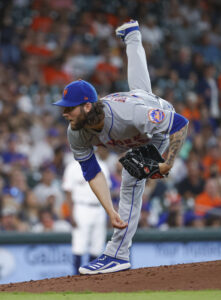
Williams, 31 in April, has spent the past season and a half with the Mets, pitching to a 3.17 ERA in 122 innings while splitting his time between the rotation (12 starts) and bullpen (28 appearances). He’d previously spent the bulk of his career as a starting pitcher, highlighted by a 31-start, 170 2/3-inning season of 3.11 ERA ball with the Pirates back in 2018. However, Williams has yet to consistently sustain that level of success over the course of multiple seasons.
For instance, Williams followed up that strong 2018 season with a 5.38 ERA in 26 starts in 2019, and he endured similar woes in the shortened 2020 season (6.18 ERA, 55 1/3 innings). That said, Williams has been a source of average or better innings in the other four full seasons of his career, dating back to 2017. In all, he owns a career 4.27 ERA and 4.40 FIP in a span of 715 1/3 Major League innings. He’s also coming off a career-high 22.6% strikeout rate and career-low 6.2% walk rate with the Mets in 2022.
Williams works with a traditional starter’s repertoire, leaning primarily on a four-seam fastball and complementing that with a sinker, slider and changeup that were all used at roughly equal levels in 2022 (plus a much more seldom-used curveball). None of those pitches generate huge spin, and none but the slider come with standout whiff rates. Still, Williams regularly excels at limiting hard contact, with above-average marks in exit velocity and hard-hit rate throughout the majority of his career to this point.
Zuckerman suggests that Williams could well end up in the Nationals’ rotation, but that’s not yet set in stone, and a return to the swingman role in which he’s thrived with the division-rival Mets is possible. At present, the Nats have a pair of albatross contracts atop the rotation in Stephen Strasburg and Patrick Corbin, and that pair will be followed by some combination of Josiah Gray, MacKenzie Gore, Cade Cavalli and perhaps Williams. Given Strasburg’s avalanche of recent injury troubles, plus the uncertainty surrounding inexperienced arms like Gore and Cavalli, there ought to be ample rotation innings available even if Williams initially begins the season in the bullpen.
Williams is the second free-agent addition of the winter for the Nats, who also inked corner infielder Jeimer Candelario to a one-year, $5MM contract last month. Washington has a projected payroll of about $106MM next season, though the bulk of that is tied up in their onerous commitments to Strasburg and Corbin. Strasburg is still signed through the 2026 season, while Corbin is signed through 2024.
2022 Rule 5 Draft Results
The 2022 Rule 5 draft will begin at 4pm Central time today at the Winter Meetings in San Diego. This will be the first time since 2019 that the meetings will be held in person, as the 2020 edition was virtual because of the pandemic and the 2021 draft was cancelled entirely due to the lockout.
As a refresher, the Rule 5 draft is a way for players potentially talented enough for the big leagues but blocked by their current clubs to find opportunities elsewhere. Any players that were 18 and under at the time of their original signing and were signed in 2018 or earlier, and any players 19 or older and signed in 2019 or earlier, who are not on a club’s 40-man roster are eligible to be selected in the Rule 5 draft.
The clubs will draft in reverse order of the 2022 standings, with no club obligated to make a selection when it’s their turn. If they do make a pick, they will have to pay $100K to the team they select from. The selected players must stay on the active roster (or injured list) for the entire 2023 season or else be placed on waivers. If they clear waivers, they must be offered back to their original team. They cannot be optioned to the minors. The most recent edition in 2020 saw some notable names move around, such as Akil Baddoo going from the Twins to the Tigers while Garrett Whitlock went from the Yankees to the Red Sox.
This post will be updated with the results as they come in…
First Round
1. Nationals: RHP Thad Ward (Red Sox) (hat tip to Jonathan Mayo of MLB.com)
2. A’s: 1B Ryan Noda (Dodgers)
3. Pirates: LHP Jose Hernandez (Dodgers)
4. Reds: OF Blake Sabol (Pirates); Reds later traded Sabol to Giants for cash or a player to be named later
5. Royals: pass
6. Tigers: RHP Mason Englert (Rangers)
7. Rangers: pass
8. Rockies: RHP Kevin Kelly (Guardians); Rockies later traded Kelly to Rays for cash considerations
9. Marlins: RHP Nic Enright (Guardians)
10. Angels: pass
11. D-backs: pass
12. Cubs: pass
13. Twins: pass
14. Red Sox: pass
15. White Sox: RHP Nick Avila (Giants)
16. Giants: pass
17. Orioles: RHP Andrew Politi (Red Sox)
18. Brewers: RHP Gus Varland (Dodgers)
19. Rays: pass
20. Phillies: RHP Noah Song (Red Sox)
21. Padres: LHP Jose Lopez (Rays)
22. Mariners: RHP Chris Clarke (Cubs)
23. Guardians: pass
24. Blue Jays: pass
25. Cardinals:RHP Wilking Rodriguez (Yankees)
26. Yankees: pass
27. Mets: RHP Zach Greene (Yankees)
27. Braves: pass
29. Astros: pass
30. Dodgers: pass
Second Round
- All teams passed
The minor league phase of the Rule 5 draft also occurred this afternoon. Those players will not go onto the selecting teams’ 40-man roster. A few former major leaguers changed uniforms. They include Hector Perez from Baltimore to the Rays, Josh Palacios from the Nationals to the Pirates, Jared Oliva from the Pirates to the Angels, Nick Burdi from the Padres to the Cubs, Peter Solomon from the Pirates to the D-Backs and Jonathan Arauz from the Orioles to the Mets.
Seth Lugo Drawing Widespread Interest
DECEMBER 7: The Angels, Nationals and Dodgers are also in the market, reports Ken Rosenthal of the Athletic.
DECEMBER 6, 8:01pm: The Red Sox are also expressing interest in Lugo, reports Chris Cotillo of MassLive (on Twitter).
DECEMBER 6, 6:39pm: Right-hander Seth Lugo has been drawing interest as a starting pitcher and Jon Heyman of The New York Post reports that working as a starter is Lugo’s preference as well, with the Padres one of several teams interested in him.
It’s been a while since Lugo has been tried out in a rotation role for more than a brief stretch. His career high for starts in a big league season is 18, which came back in 2017. Since that time, he’s been primarily working out of the bullpen, serving as an effective reliever for the Mets.
In 278 career games, only 38 of them have been starts, but Lugo has a career 3.48 ERA, 24.8% strikeout rate, 6.7% walk rate and 44.1% ground ball rate. He’s fared much better out of the ‘pen, as his ERA is 2.91 there while 4.35 as a starter, with more strikeouts as a reliever to match.
Despite that split, as mentioned, it’s been quite some time since Lugo’s been given an extended stretch in the rotation. That means most of those stats came from Lugo’s first two years in the big leagues, when he made 26 of those 38 career starts. It’s possible he’s capable of producing better results now that he has more experience. He also has a larger pitch mix than the average reliever, something that could help him move through a lineup a few times. Last year, he had four pitches that he threw at least 13.7% of the time, with his curveball leading the way at 33.5%, followed by his four-seamer at 29.3%, his sinker at 21.9% and his slider at 13.7%. He also has a changeup that he mixed in 1.6% of the time, though it’s been 7.1% for his career.
For the Padres, they lost a couple members of their rotation to free agency in Mike Clevinger and Sean Manaea, while also trading MacKenzie Gore to the Nationals. Nick Martinez opted out of his contract but was quickly re-signed and seems to have a chance of retaking a rotation spot himself, after getting bumped to the bullpen. They currently have Joe Musgrove, Yu Darvish and Blake Snell in the front three spots. It would be surprising to see them go into the season with the last two spots in their rotation dedicated to unproven options like Martinez and Lugo, especially when they just reportedly offered Trea Turner $342MM. But it’s possible they could also add a fourth starter and have those Martinez and Lugo battle for the fifth spot with one of them going to the bullpen if everyone is healthy. Though Lugo reportedly prefers to start, it’s unknown how he would value a non-guaranteed starting role on a contender like the Padres against a clearer path to starting on a less-competitive team.
San Diego’s payroll limits are an ongoing question. As mentioned, they just made a massive offer to Turner, but some reporting indicates they were willing to make an exception for him and won’t necessarily dedicate those resources to other players. As of right now, Roster Resource calculates their competitive balance tax figure at $230MM, just barely under the lowest CBT threshold of $233MM. With the club still seeking to upgrade in the rotation and elsewhere, going over the line seems inevitable. Lugo isn’t likely to break the bank as a back-end rotation candidate but every dollar over the line will count. Since the Padres are set to be a third-time payor, they will be subject to a 50% tax on all spending over the line and even higher penalties if they go over by $20MM or more.
Pirates Win #1 Overall Pick In Draft Lottery
The inaugural MLB draft lottery was conducted at the Winter Meetings this evening. The Pirates were awarded the first overall pick, followed by the Nationals and Tigers. Here is the first round:
- Pirates
- Nationals
- Tigers
- Rangers
- Twins
- A’s
- Reds
- Royals
- Rockies
- Marlins
- Angels
- Diamondbacks
- Cubs
- Red Sox
- White Sox
- Giants
- Orioles
- Brewers
- Rays
- Blue Jays
- Cardinals
- Mets
- Mariners
- Guardians
- Braves
- Dodgers
- Padres
- Yankees
- Phillies
- Astros
In previous years, the draft order was fixed in inverse order of the regular season standings. As part of the Players Association’s efforts to reduce the incentive for non-competitive teams to lose games, the latest collective bargaining agreement introduced a lottery to determine the top six overall selections. A team’s odds of landing a higher pick are still weighted in favor of the clubs with the worst records, although the three worst teams all had identical chances of landing the top selection. All 18 non-playoff teams were technically in the running for any of the top six picks, albeit with increasingly diminished odds for the clubs with better records. The 12 playoff teams were ordered depending on their postseason finishes, with a team’s revenue sharing status separating teams that were eliminated in the same round.
This year, the Nationals, A’s and Pirates all had the best chance of securing the #1 overall selection. Each club had a 16.5% probability. The Reds (13.25%) and Royals (10%) rounded out the top five as the only other teams with a 10% chance or better of securing the top pick. Other than Pittsburgh, the Twins were the biggest beneficiary of the new system, drawing into the top five despite having the 13th-worst record. The Royals fell outside the top ten despite finishing fifth from the bottom in the standings, while Oakland falls from second-worst to sixth.
The lottery only comes into play for the first round of the draft. From the second round onwards, pick order is determined in inverse order of the prior season’s standings, aside from compensatory and competitive balance selections.
While the draft order is official, there’s obviously plenty of uncertainty as to which players will be at the top of the class. Baseball America updated its preliminary top 100 draft prospects in October, slotting LSU right fielder Dylan Crews, Tennessee right-hander Chase Dollander and Ole Miss shortstop Jacob Gonzalez among the most talented prospects. There’ll be plenty of movement once the amateur baseball circuit kicks back off next spring.