
NL East Notes: Cuddyer, Arroyo, Badenhop, Hernandez
While some believed that Michael Cuddyer‘s retirement saved the Mets the full $12.5MM he was owed for the 2016 season, that’s not the case, reports Mike Puma of the New York Post. Cuddyer was paid a buyout in the range of $2-3MM, according to Puma. GM Sandy Alderson told reporters today that he’d still have been able to pursue Yoenis Cespedes this offseason even if Cuddyer had remained with the club, though he did acknowledge that some of the Mets’ other moves might not have been realistic. The Mets made small to mid-range signings of Jerry Blevins ($4MM), Alejandro De Aza ($5.75MM), Bartolo Colon ($7.25MM), Antonio Bastardo ($12MM) and Asdrubal Cabrera ($18.5MM) on the free-agent market this offseason.
A few more items pertaining to the NL East…
- Nationals right-hander Bronson Arroyo hopes to crack the rotation and return to the Majors this season, but he’ll receive some notice if that’s not likely to be the case, he told reporters yesterday (Twitter link via Chelsea Janes of the Washington Post). Arroyo’s deal stipulates that the Nationals inform him whether he’s made the team five days before Spring Training ends, presumably in order to allow him to latch on elsewhere if he doesn’t make the club in D.C. It’s been more than 18 months since Arroyo last pitched in a big league game after undergoing Tommy John surgery with the D-backs.
- Right-hander Burke Badenhop spoke with Chelsea Janes of the Washington Post about the feeling of being a veteran player in camp hoping to win a roster spot. Badenhop explained that he landed with the Nationals in part because they showed a greater sense of urgency when pursuing him than other clubs, and also because playing for a contender with a number of experienced players held appeal to him. Interestingly, Badenhop tells Janes that he’s learned manager Dusty Baker is quite familiar with him; Baker revealed to Badenhop that the Reds tried to trade for him when Baker was managing the club. Assistant GM Doug Harris told Janes that Badenhop gives hitters a different look than the rest of their current ‘pen candidates, which could be a point in his favor this spring.
- David Hernandez looks to be the favorite to serve as the Phillies‘ closer this season, writes MLB.com’s Todd Zolecki. Hernandez’s very presence in Phillies camp might’ve seemed improbable to him several months ago, as he kicked off the winter by telling his agent he hoped to sign with a West Coast club that played its spring games in Arizona. However, Hernandez inked a one-year deal with an East Coast club that plays Spring Training in Florida, in part because the Phillies told him he could end up with an opportunity to close. Hernandez signed shortly before the trade of Ken Giles to the Astros, and as Zolecki notes, the club likely knew full well that a trade of Giles could come together in the near future, helping to stock the farm with young talent and create an opportunity for a free-agent to inherit the ninth inning role.
NL West Notes: Sierra, Coors Field, Pence, Ravin
Right-hander Yaisel Sierra has been cleared to begin workouts with the Dodgers now that his deal has become official, tweets Bill Plunkett of the Orange County Register. Interestingly, Mike DiGiovanna of the L.A. Times writes that manager Dave Roberts said Sierra is being viewed as a reliever and not as a starting pitcher. That affords Sierra a more easily accessible path to the Majors — the Dodgers’ rotation is rife with options, including Clayton Kershaw, Brett Anderson, Scott Kazmir, Kenta Maeda, Alex Wood, Mike Bolsinger and rehabbing starters Hyun-jin Ryu and Brandon McCarthy — but also serves to limit the immediate return on investment the Dodgers will receive. Sierra, of course, could be shifted into the rotation in future seasons.
Here’s more from the NL West…
- The Rockies announced today that they will raise the fences at Coors Field, as Nick Groke of the Denver Post writes. The wall in right-center field will be raised by eight feet, nine inches in order to match the out-of-town scoreboard, Groke notes, and the wall straight down the left-field line will see an increase from five feet to 13 feet. Players offered some mixed reviews on the move, Groke writes, as Carlos Gonzalez didn’t seem worried that he’d lose many home runs. Charlie Blackmon, though, wasn’t pleased with the idea of losing a few of his homers or the fact that he and his outfield-mates will need to deal with new caroms off the walls.
- An MRI on the Achilles tendon of Giants right fielder Hunter Pence revealed only inflammation as opposed to any sort of structural damage, tweets Andrew Baggarly of the San Jose Mercury News. Pence will be sidelined for a week of Spring Training but appears to have escaped any serious injury that could’ve impacted his availability for Opening Day.
- Dodgers right-hander Josh Ravin suffered a fractured left forearm in a car accident yesterday, writes MLB.com’s Barry Bloom. The 28-year-old Ravin required surgery on Tuesday to repair the injury. As Bloom notes, Ravin was somewhat of a long shot to make the big league roster this spring due to the number of pitchers on the Dodgers’ roster, though his blistering fastball certainly made him an intriguing option. Ravin averaged 97.1 mph on his heater in 9 1/3 innings with the Dodgers last season and also whiffed 38 hitters in 28 Triple-A innings.
Aroldis Chapman Receives 30-Game Suspension
Newly-acquired Yankees reliever Aroldis Chapman has been hit with a thirty-game suspension arising out of an investigation into domestic violence allegations, Billy Witz of the New York Times reports (links to Twitter).
The power lefty will not appeal the decision, which is the first issued by commissioner Rob Manfred under the domestic violence agreement entered into between MLB and the player’s association. In a statement, Manfred said that he determined Chapman’s behavior on the night in question to be “inappropriate … particularly his use of a firearm and the impact of that behavior on his partner.” He also expressed that he is pleased that Chapman chose to take responsibility and forgo an appeal.
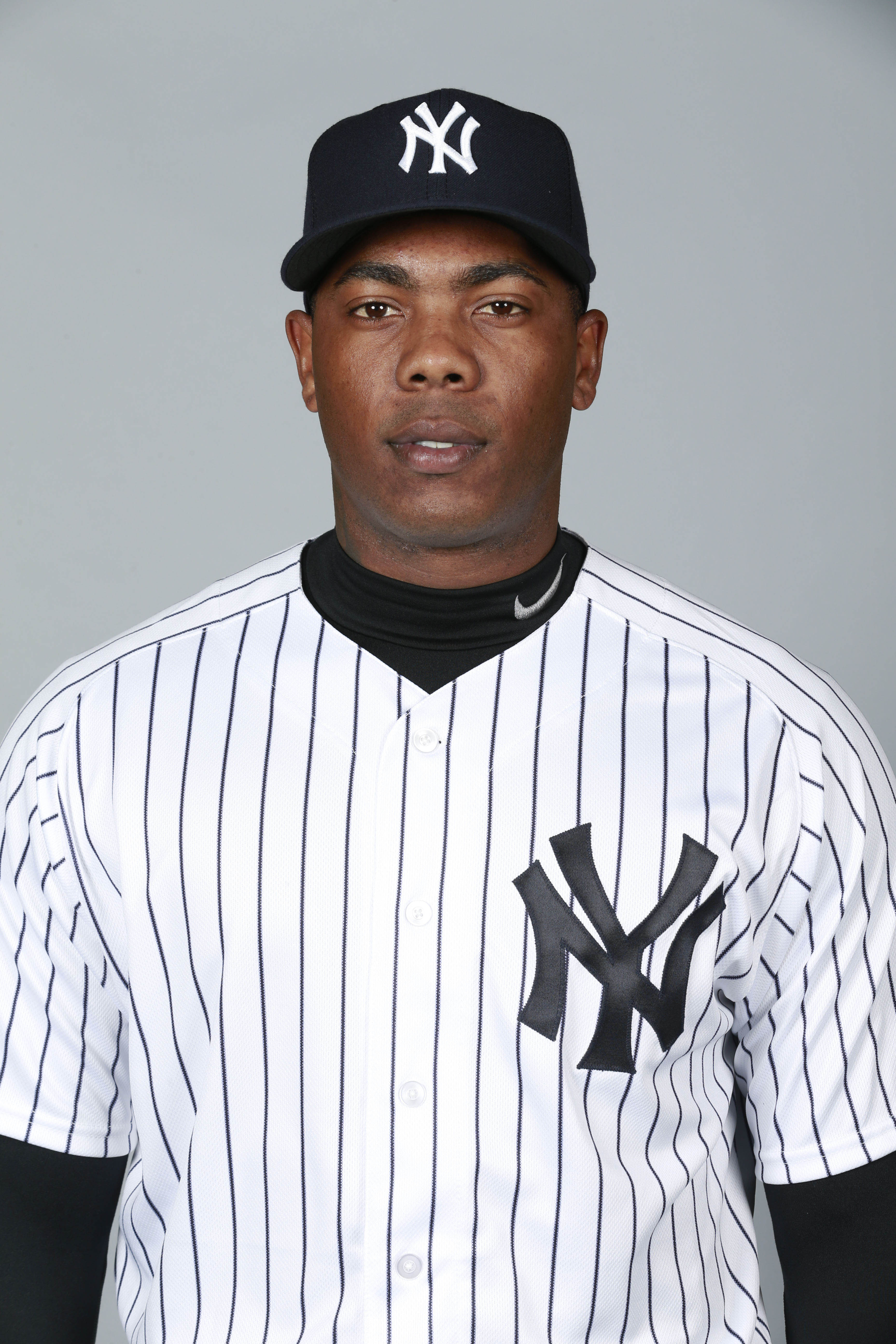
In his own statement, Chapman confirmed that he will not appeal. (Via Ken Rosenthal of FOX Sports, on Facebook.) He continued: “I want to be clear, I did not in any way harm my girlfriend that evening. However, I should have exercised better judgment with respect to certain actions, and for that I am sorry.” In deciding against appeal, said Chapman, he sought “to minimize the distractions that an appeal would cause the Yankees, my new teammates and most importantly, my family.”
The outcome represents an important marker as Major League Baseball seeks to be proactive in addressing the types of domestic violence incidents that have recently plagued the NFL. Certainly, it sets a notable precedent as the league goes on to consider the case of Rockies shortstop Jose Reyes, who is currently set for trial after allegedly striking his wife. Reyes was recently placed on paid leave while his case is resolved.
For its part, the MLBPA expressed support for Chapman’s “decision to forgo his right to an appeal” in a written statement. It noted that the union “and its members do not condone the mistreatment of others by playing or non-playing personnel,” but nevertheless “remains committed to protecting and ensuring the rights granted to Players” in the domestic violence policy.
Needless to say, it’s been an eventful winter for the Cuban fireballer, who was reportedly ticketed for the Dodgers until the swap was scuttled. Reports later emerged that he had been involved in a dispute with his girlfriend at his residence. He was not arrested at the time, and charges were not brought, but the league pursued an investigation under its new protocol.
Chapman was ultimately shipped from the Reds to the Yankees at a discounted rate. He avoided arbitration for $11.325MM, but he’ll lose $1.856MM of that sum over the life of his punishment. The length of the suspension will not, however, be enough to prevent the ace reliever from qualifying for free agency after the coming season. Chapman will be eligible to participate in Spring Training games, per the report. He will, however, be required to submit to ongoing meetings with a treatment board and could be required to submit to counseling and forfeiture of weapons (including firearms).
Photo courtesy of USA Today Sports Images.
MLBTR Chat Transcript
Click here to read a transcript of today’s live chat with MLBTR’s Steve Adams.
AL East Notes: Fowler, Markakis, Estrada, Cessa, Murphy
In a recent interview on MLB Network Radio (Twitter links), Orioles executive Dan Duquette further responded to recent comments by agent Casey Close regarding the Dexter Fowler talks. “It would’ve been a good fit for us. We’re disappointed the deal didn’t come together [but] that’s the way it goes sometimes,” Duquette said. Duquette went on to say that he was puzzled by the statement and he didn’t quite understand why Close was upset. “When you show sincere interest in a player, it helps him get a better deal,” said the Orioles GM.
Here’s more out of Baltimore and the rest of the AL East:
- The Orioles tried to open a conversation with the Braves about bringing back former right fielder Nick Markakis, Peter Gammons of GammonsDaily.com tweets. But Atlanta seemingly showed little interest in trying to work out a swap, per the report.
- The qualifying offer had an impact not only on Fowler, but also on one player who never fully tested the market: Marco Estrada, who struck a two-year deal to remain with the Blue Jays. Shi Davidi of Sportsnet.ca looks at the different experiences of Estrada and fellow Toronto signee J.A. Happ, who says he had interest from a dozen clubs on the first day of free agency. Estrada, meanwhile, says he “didn’t get a chance to really go through that process.” He added that he “probably should have done a better job of” assessing his market during his week-long consideration of the QO, and wishes he “could have gotten more years” in his deal, but ultimately says he’s happy to return to the Jays and was able to enjoy a more relaxing offseason after his early deal.
- Yankees righty Luis Cessa will get a shot to make it as a starter after being involved in several prominent trades, as Ken Davidoff of the New York Post writes. GM Brian Cashman said that adding Cessa and Chad Green in exchange for Justin Wilson was about getting quality pitchers who provide the team with options. “We think he has starter capability, just like we think Green has starter capability,” Cashman said. “And then if not, all failed starters go to the pen. We feel we acquired, in Cessa’s case, a strike-thrower with a good arm.”
- Newly-signed Red Sox outfielder David Murphy says that it’s “surreal” to return to the Boston organization, as Scott Lauber of the Boston Herald reports. Murphy says he knew he “was going to have to be patient” this winter, but nevertheless was surprised with how quiet market turned out to be. But he says he’s ready to “turn the page” on his disappointing winter and is looking forward to trying to crack the roster with the Red Sox — or, failing that, another club.
Brad Ausmus On Tigers’ Offseason
After four consecutive AL Central titles, the Tigers’ streak came to an end in 2015. Eager to get back to the business of hoisting championship banners, Detroit got to work in the winter and landed some serious upgrades on the open market. From signing Jordan Zimmermann to a five-year, $110MM deal in November to landing Justin Upton on a six-year, $132.75MM commitment in January, the Tigers went all out to ensure that they would be in position to return to the postseason once again. 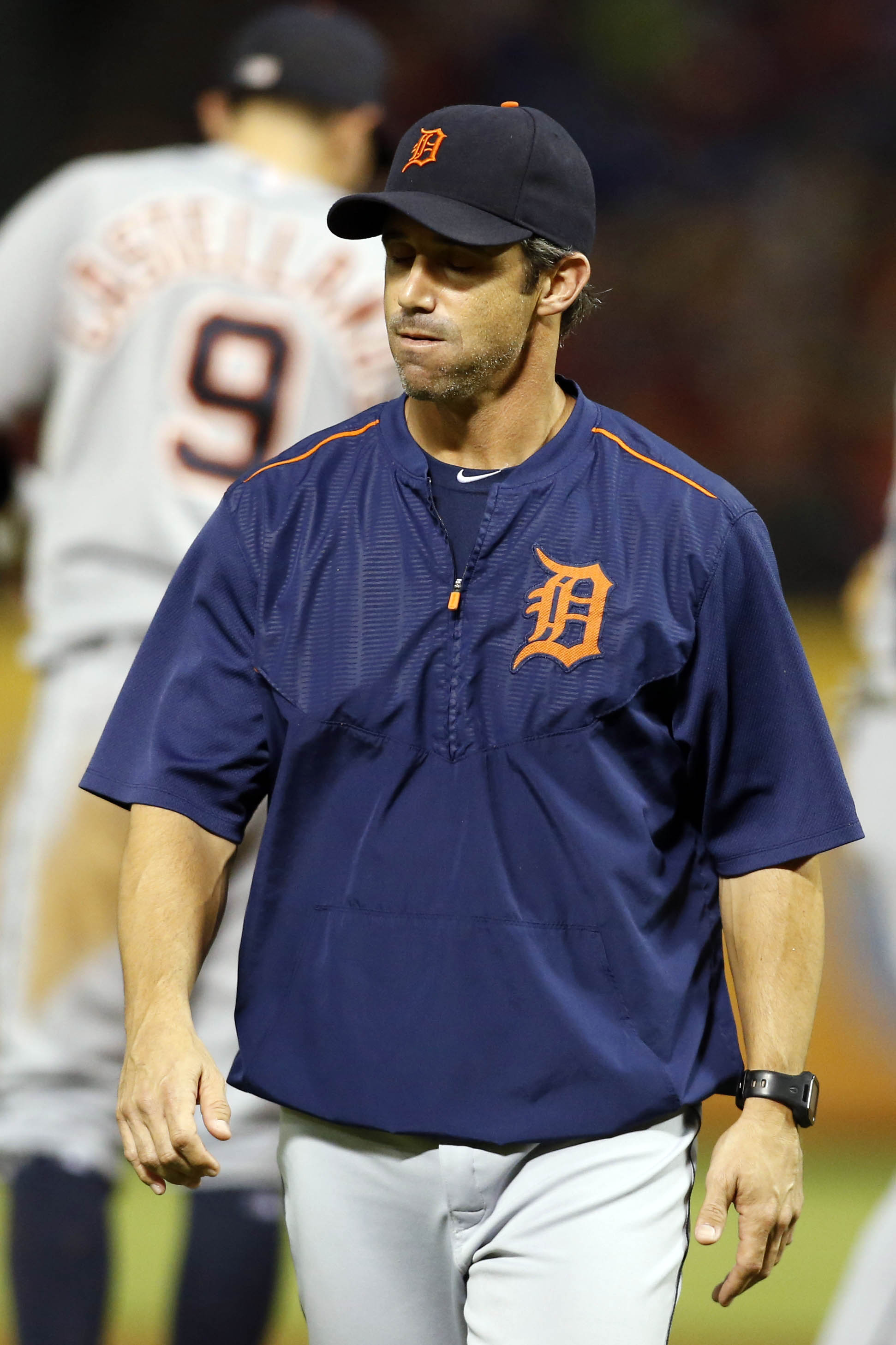
If the Tigers’ major additions took you somewhat by surprise this offseason, then you weren’t alone. Detroit manager Brad Ausmus didn’t necessarily expect things to work out this way, either.
“I knew what the plan was. It’s a lot easier to make a plan than it is to execute a plan,” Ausmus told MLBTR and other reporters on Tuesday morning at Joker Marchant Stadium. “I knew that we were going to be aggressive in terms of trying to sign free agents, but we were probably much more successful in doing it than I would have anticipated. It’s easy to talk about, it’s much more difficult to follow through on. But, it worked well.”
Ausmus addressed reporters outside of the clubhouse where players were having a private union meeting. With the MLBPA on-hand, the Collective Bargaining Agreement was fresh on everyone’s minds. One of the key issues in the next round of CBA talks is expected to be the Qualifying Offer system and the union is expected to fight for an overhaul given how it has negatively impacted several notable players.
During his playing days, Ausmus served as a union representative, but he could not recall what year he was serving in that capacity or whether he added much in MLBPA meetings. The former catcher says he was mostly an observer in “the back of the room” during some of the more substantive discussions taking place in the early 90s. In 2016, six years removed from playing in the majors, he’s not terribly interested in offering up his opinion on the QO. Still, he had to concede that the oft-criticized system helped lead one of the offseason’s top position players to Detroit.
“It might have helped us in the sense that [Justin Upton] was still out there in late January. Without the [draft pick] compensation system, I guess there may have been more teams that would have been involved earlier.”
Photo courtesy of USA Today Sports Images.
Royals, Salvador Perez Agree To Extension
The Royals have officially agreed to a new contract with catcher Salvador Perez. The deal covers six years for the Beverly Hills Sports Council client, including the coming season, and does not include any options. It guarantees three preexisting club options and adds two new seasons at the back end, with a total guarantee of $52.5MM.
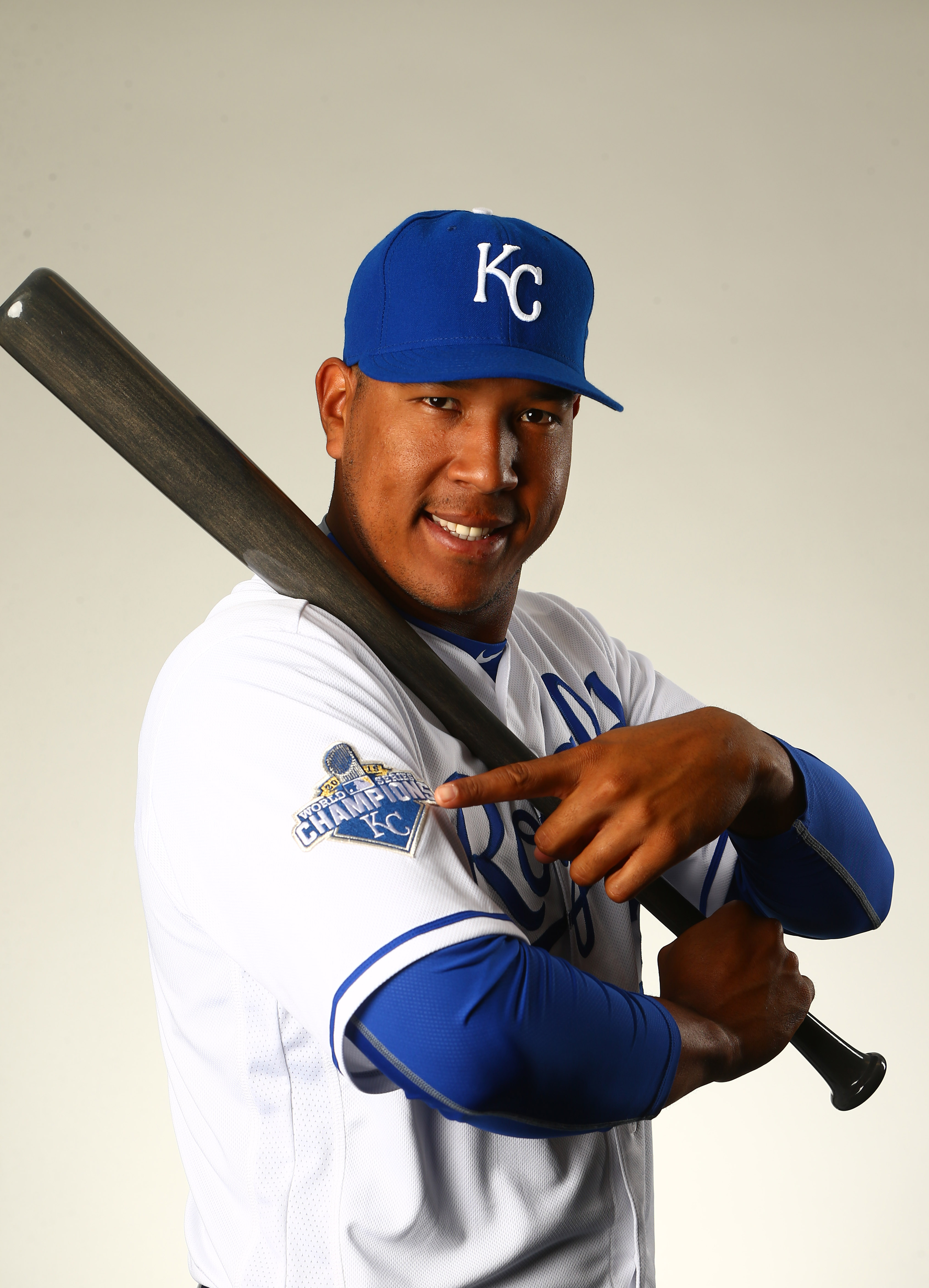
All told, then, Perez will be promised the payouts contemplated in his original extension in addition to receiving $36MM in new money. Part of that comes in the form of a $6MM signing bonus, so there’s some added cash coming to Perez up front. His new 2017 salary will be $3MM, and he’ll earn $7.5MM and then $10MM in the two seasons to follow before taking home $13MM annually in the two new years covered by the deal.
A contract restructuring has long been said to be in the works between the sides. Perez was playing under an early-career deal that allowed the club to control him through 2019, via club options, for the relatively meager sum of $16.5MM. The original contract, negotiated by his prior agents, promised him just $7MM over five years, though of course it was reached before he had even logged a full season in the majors.
While many players have worked out second extensions after originally signing team-friendly pacts, Perez’s situation was rather unique. His first deal turned out to be unusually tilted in the club’s favor, leaving him with little leverage and no contractual protection for the years to come. Though Perez won’t receive the kind of lengthy, high-dollar commitment that some others have achieved — most of them, superstar-level performers — the new deal represents a notable achievement under the circumstances.
With the agreement, Kansas City will be committed to Perez through his age-31 season. That’s still relatively youthful, of course, but the big-framed backstop has already logged 545 games behind the dish through his first five campaigns. That’s only increased over time, as he’s averaged 143 games over the past three seasons.
Of course, that workload also goes to show Perez’s durability. He’s battled through plenty of dings and dents along the way, providing ample proof of his willingness to push his body for the club. It remains to be seen whether he’ll be given some more opportunities for rest over the coming seasons, but certainly the club has a vested interest in ensuring his longevity.
Since taking over as the full-time receiver in 2013, Perez has compiled a .270/.297/.420 slash line with 17 home runs annually. He’s declined over the past two years to a below-average overall contributor at the plate, but has certainly shown the ability to put up at least league-average production offensively. Of course, Perez shines most notably with the mask on, as he has consistently rated as a quality defender in terms of blocking and throwing. He isn’t well loved by framing metrics, though obviously that doesn’t account for his game management abilities and broader contributions on and off the field.
All told, there’s plenty of risk in the deal for the defending champion Royals, particularly given that the organization already enjoyed risk-free contract control for three more seasons. But it’s hard not to appreciate the commitment to a player who has had a major role in the team’s recent rise to prominence.
The move represents the latest investment in what’s proven to be a busy offseason for K.C. The club had already struck a significant pact to keep star left fielder Alex Gordon, signed a big contract with free agent righty Ian Kennedy, inked reliever Joakim Soria, brought back another arm in Chris Young, and added yet another rehabbing starter in Mike Minor. It also worked out arbitration-only extensions with Lorenzo Cain and Mike Moustakas, though it remains to be seen whether lengthier pacts can be struck with either of those players or fellow young stalwarts Eric Hosmer and Alcides Escobar.
Jon Heyman of MLB Network first reported that a deal was close and added details on the contract structure (links to Twitter). Jeff Passan of Yahoo Sports said the deal was done and reported information on its value and allocation (links to Twitter). Ken Rosenthal of FOX Sports (in a tweet) and Jeffrey Flanagan of MLB.com (also on Twitter) added details on the breakdown.
Photo courtesy of USA Today Sports Images.
Nate Schierholtz: Big In Japan, Back In MLB
After eight straight years in the majors, outfielder Nate Schierholtz found himself in an unfamiliar situation last spring. The veteran outfielder inked a minor league deal with the Rangers in February 2015 and, roughly seven weeks later, he opted out of the pact when he learned that he would not make the cut. When baseball’s game of musical chairs left Schierholtz without a quality MLB opportunity, the veteran decided to go out of his comfort zone and hemisphere by signing with the Hiroshima Toyo Carp. 
“It was definitely an interesting experience and I learned a lot. I enjoyed living with the Japanese culture and learning some of their ways and values. The fans are very kind to the American foreign players and it was a great experience,” Schierholtz told MLBTR in Lakeland, Florida before the Tigers’ contest against the Pirates.
Schierholtz didn’t know much about the NPB before heading over there, but he quickly discovered that the Hiroshima Carp enjoy rockstar status in Japan.
“We were a very popular team, we sold out with 35,000 people every day that season. Our support was like no other team’s there, even during road games. It was neat to see fans stand up and cheer for three hours straight without sitting down. They had a couple of chants for every player too. Mine was ‘Nate-O,’ because that’s what they called me. The whole stadium would chant ‘Home Run Nate-O!’ every time I was at bat because that’s all they want to see from the American players,” the outfielder said.
Schierholtz, of course, isn’t a huge home run hitter, but he did oblige the fans’ request on ten occasions. In 248 plate appearances, Schierholtz slashed .250/.298/.435 while playing hard-nosed defense in the outfield. After re-establishing himself, the veteran had multiple non-guaranteed MLB opportunities for the 2016 season. This time around, he knew that his best bet was to sign early on in the offseason.
“I had a little bit of a different strategy from last offseason. I waited and waited and waited and I kind of got in a bad situation last Spring Training [with the Rangers] as far as opportunity goes, so I just wanted to sign with a team that wanted me there. I felt like [the Tigers’] track record of being a successful team really appealed to me. I think, at my age, my goal is to get back to the playoffs. I had so much fun back in San Francisco winning that World Series, that’s kind of what motivates me now.”
Photo courtesy of USA Today Sports Images.
Central Notes: Cole, Perez, Brewers, Villanueva
Pirates GM Neal Huntington tells Bill Brink of the Pittsburgh Post-Gazette that the club “made a mistake” in determining ace Gerrit Cole‘s 2016 salary upon their initial take. “Gerrit’s base salary a year ago plus his bonus took him above our scale,” Huntington explained. “We initially did not incorporate the bonus that he earned last year for making the All-Star team. We made that adjustment, took him above our scale. Gerrit agreed. Unhappy with that. We understand that, we can empathize with him. At the same time there is a system in place that is negotiated by the union and by Major League Baseball.” Over the weekend, Cole voiced some displeasure with his modest salary, although the scale and the system to which Huntington alluded aren’t uncommon. Many clubs use algorithms based on service time and performance to determine the salary of pre-arbitration players, and the Pirates are simply acting as they would with any of their pre-arbitration players by adhering to that scale. (ESPN’s Buster Olney opines that the team would be wise to make a small concession on Cole’s behalf, suggesting a fairly marginal increase to $750K as a means of good will to acknowledge Cole’s importance to the club.) For those interested in reading more on the topic, MLBTR’s Zach Links examined the means by which pre-arb salaries are determined a couple of years ago.
Here’s more from the game’s Central divisions…
- There’s positive movement on the negotiation front between the Royals and catcher Salvador Perez, Jon Heyman of MLB Network tweets. The sides have long been working toward a new deal for the backstop, who made good on his low-priced, early-career extension. It certainly will be interesting to see what kind of contractual arrangement is arrived at if something gets across the finish line.
- The Brewers‘ center field situation is as wide open as spring battles get, and Tom Haudricourt of the Milwaukee Journal-Sentinel takes a look at where things stand. There are as many as nine plausible candidates to claim the Opening Day gig, with possible bench spots and minor league opportunities also at stake, so there’s plenty of intrigue to go around. Skipper Craig Counsell calls it a “roster puzzle” that needs to be solved, and Haudricourt provides plenty of preliminary clues in the interesting piece.
- Cubs third base prospect Christian Villanueva suffered a broken right fibula during a Sunday workout and will miss several months recovering from the injury, reports MLB.com’s Carrie Muskat. Villanueva, who was expected to have surgery today, according to Muskat, was injured upon landing after leaping for a ball in play, said manager Joe Maddon. “It’s just crazy,” said Maddon. “It’s really unfortunate. This kid came in, ready to go. … It’s a tough break, literally, for him — he’s such a good kid.” Villanueva ranked 26th on MLB.com’s list of Top 30 Cubs prospects, though he’s fallen off Baseball America’s version of that same list after multiple prior appearances.
MLBTR Mailbag: Kimbrel, Desmond, Machado, Royals, Braves
With camp well underway, let’s dive into this week’s mailbag questions:
How would you compare the prospects the Padres gave up to acquire Craig Kimbrel to the ones they received? — Jeremy B.
The prospects the Padres received from the Red Sox in exchange for Kimbrel are widely considered to be better than the prospects they surrendered, but that’s because a large part of value the Padres provided to the Braves in order to get Kimbrel was to take on the remaining salary on Melvin Upton‘s contract. Including the money owed to Kimbrel himself, the Padres took on about $56MM in that trade, which carried huge value to the Braves. The Padres also gave up the 41st pick in the 2015 draft, their Competitive Balance Round A selection. They received more prospect capital than they surrendered, but they still have an expensive Upton on their books, and the loss of the pick in last year’s draft also detracted from the club’s farm system.
With Ian Desmond taking a one year $8 million dollar deal, I’m very curious as to why the Detroit Tigers didn’t try and get him. They basically have a replacement level playing at third base in Nick Castellanos, and a very talented yet injury prone shortstop in Jose Iglesias, both positions that Desmond can play. The Tigers also have a protected pick so that wouldn’t have been an issue. Do they really think Andrew Romine and Mike Aviles are better options than Ian Desmond? If so, I would have to totally disagree. — Broc R.
I agree with the general assessment, and not just from the Tigers’ vantage point. At $8MM, Desmond looks to be a strong buy — albeit moreso if he was being used in the infield. In today’s free-agent market, $8MM doesn’t typically get a player with the upside Desmond brings. That’s the same annual rate with half the commitment that the Tigers doled out to Mike Pelfrey, and it’s the range of what the Mets and Rangers paid for Bartolo Colon and Colby Lewis, respectively — a pair of aging fifth starters. True, Desmond required draft pick compensation, but the actual cost of that hit varies quite a bit from team to team. Recognizing that it’s much more difficult to spend $8MM in late February than it is earlier in the winter — clubs have their payrolls closer to maxed out now, 40-man roster spots are at more of a premium, etc. — the pure return on investment the Rangers can get from this deal is considerably more than most $8MM investments.
I’m sure Detroit is higher on Castellanos than you are, and there’s no reason to sign someone to play over Iglesias, so long as he projects to be healthy. But the Desmond contract has the potential to be one of the better buys of the offseason, even with the defensive question marks that come along with a new position.
Manny Machado recently told beat reporters he would “hope they keep me here long term.” What kind of contract extension would Machado be looking at if the O’s moved on it before this season? During the season? Waiting until after the season? — Carlos O.
Machado is earning $5MM after avoiding arbitration for the first time this winter, and he’s statistically close enough to Josh Donaldson that I don’t mind using the two for a rough comparison. Donaldson signed his second and third arbitration years away for a combined $28.65MM, and also had the benefit of qualifying as a Super Two to boost his starting point. Machado doesn’t have an MVP or 40-homer season under his belt, and he hasn’t played his first full arbitration season yet, so we can probably discount Donaldson’s deal somewhat when looking at the arb years. That being said, I don’t think $26MM for Machado’s final two arbitration seasons is outlandish, and from there you have to look at pricing him as an elite talent — something along the lines of $25MM+ per season — who is set to hit the market in advance of his age-26 season.
Quite honestly, I don’t even see how an extension is possible without the Orioles caving on their stance against opt-out clauses. The way the game is trending, especially in terms of long-term contracts for young players, an opt-out would seem almost like a requirement. Giancarlo Stanton, Jason Heyward, Clayton Kershaw, Masahiro Tanaka, Elvis Andrus, and Justin Upton all represent players that signed long term contracts at young ages (whether via free agency or extension), and each secured an opt-out clause in his deal. If the 2015 season, or even 90 percent of that production, becomes the norm for Machado going forward, he should have an easy case for $300MM or more in free agency. Given that, an extension for him right now should easily top $200MM and include an opt-out clause after his second and/or third would-be free-agent year. Given his age, and with two 6+ WAR seasons already under his belt, Machado’s agents could be looking to the Stanton contract as a comparable (though it was signed one service year later in his career).
Do you think the Royals will stick with Jarrod Dyson in RF? Or do you see them possibly picking up one of the left-over outfielders still on the market on a one-year deal – such as Austin Jackson, bringing back Alex Rios, David DeJesus? – Matthew G.
I touched upon this idea earlier today in breaking down Jackson’s market. Adding him seems plausible in theory, but in practice I’m not sure I see it happening. (Neither, perhaps, do our readers; Kansas City currently sits in last place in the poll for a Jackson landing spot — behind eight clubs and “other.”) While the newly free-spending team has shown an increased ability and willingness to spend, that doesn’t mean it will be willing to plunk down a few million bucks (or more) for a roll of the dice on AJax — especially since second base is probably a bigger need and others could well arise over the course of the season. Plus, for Jackson, there’s probably more to be gained by seeking an opportunity at more certain playing time on a team that will deploy him in center.
That’s not to say that another addition doesn’t make sense, but there’s probably more bang for the buck in focusing on ensuring a good mate to go with Dyson, who is sort of a perfect platoon outfielder. He hits well enough against right-handed pitching for his speed and defense to make him a valuable contributor. And while he’s not useful when a southpaw is on the hill to start a game, he’s quite an asset off the bench as a pinch runner/defensive replacement. That obviously lines him up well to pair with a right-handed hitter — possibly one that has limitations in the areas that Dyson has strengths. On the other side of the equation, there are times when a lumbering right-handed slugger would make for a great pinch-hitter to spell Dyson.
So far, the Royals have seemed happy to give that role to Paulo Orlando, who is a somewhat less extreme, right-handed-hitting version of Dyson himself. (He managed 1.0 fWAR in 251 plate appearances last year based on his contributions in the field and on the bases.) But they could certainly stand to add some competition in that regard, and there are some interesting names still out there who could be interesting additions to the mix — at least, that is, if any is willing to accept a reduced role (and possibly come in on a minor league deal). Rios could theoretically fit, as could Chris Denorfia. Both have good career batting numbers against opposing lefties, and despite sub-par offensive platforms did turn in solid seasons with the glove last year. The volatile but generally lefty-mashing Ryan Raburn also remains available, as does Marlon Byrd, who’s coming off a year in which he put up a 121 wRC+ against southpaws.
What should we expect from the Braves starting rotation this year? It appears that Julio Teheran, Matt Wisler, and Bud Norris will have three of the spots coming out of spring training but what else should we expect? Think Aaron Blair could win a spot out of spring training? — Tim B.
It’s hard to set many clear expectations for this unit, because there’s all manner of uncertainty in the staff — and that figures to continue all season long. Teheran is the only guy who seems a complete lock as camp opens, but he also remains a trade candidate for an organization that has proven willing to strike deals at any point in time. (Let’s not forget that first Kimbrel trade discussed above.) Norris and Wisler do indeed seem lined up for jobs, though neither is at all certain to stay there. The former could end up being shifted to the pen or another team, depending upon how things progress, while the latter still has a lot to prove after a less-than-dominant debut last year.
Beyond that group, it’s an open competition. Blair is obviously an intriguing talent, but it seems rather unlikely that he’ll appear on the Opening Day roster — even if he impresses this spring. For one thing, he isn’t on the 40-man roster. For another, even a brief stint in Triple-A would delay his service clock. For what it’s worth, those same considerations apply to two other young, talented pitchers who are in big league camp: Sean Newcomb and Lucas Sims.
If you’re hoping to see young arms with some upside emerge to earn rotation spots in camp, Manny Banuelos and Mike Foltynewicz have clearer paths since they’ve already cracked the majors. (Folty is still working back from a bout with blood clots, but he’s said to be progressing well.) Among the other younger starters who are already on the 40-man, only Casey Kelly and Ryan Weber made it up to the majors last year (both for brief stints).
The bet here is that the competition for the final two spots will come down to Banuelos, the young but generally lightly-regarded Williams Perez, and the club’s slate of minor league free agents. Atlanta must’ve promised Kyle Kendrick a real shot at earning a job to woo him this winter, and Jhoulys Chacin is another established veteran in camp. Either or both could conceivably end up on the staff. David Holmberg and Chris Volstad also have appeared in several MLB seasons, though they seem more likely to serve as swingman-capable depth pieces than members of the starting five coming out of camp.