
Rockies Interested In Extension For Carlos Gonzalez
There’s just one guaranteed year on Carlos Gonzalez‘s seven-year, $80MM contract, but the Rockies are interested in working out a longer-term pact to keep him in Denver, the outfielder himself tells Venezuelan journalist Wilmer Reina (Twitter link). Gonzalez said that while the Rockies want an extension, there’s still a lot to be negotiated.
Gonzalez, 31, has been with the Rockies since 2009 and established himself as a star there earlier this decade. While he didn’t follow up 2015’s 40-homer campaign with that same type of power, he’s coming off a season in which he batted .298/.350/.505 with 25 home runs and 42 doubles. That OBP was his highest since 2012, though Gonzalez’s walk rate, swinging-strike rate and contact rates all remained worse than the league average in 2016. The improved OBP was driven by a slight dip in strikeouts and a more notable spike in his average on balls in play. Gonzalez’s defense held steady at average to slightly above, in the estimation of metrics like DRS and UZR, though Gonzalez has a more favorable reputation around the game, as he was a Gold Glove finalist in right field this past season.
For the Rockies, though, they have a trio of left-handed-hitting alternatives in the outfield in David Dahl, Charlie Blackmon and Gerardo Parra, although the latter of that group struggled through a terrible first season in Colorado (.253/.271/.399). There’s been some talk of moving Gonzalez to first base, but as MLB.com’s Thomas Harding notes (Twitter links), that thought was due more to recent injuries than to a perceived need to move him for defensive purposes, and it also wasn’t necessarily an immediate plan.
Certainly, with four left-handed-hitting outfielders, it could be argued that Gonzalez is a somewhat superfluous asset for the Rockies, who should look to cash in on the still-productive veteran in a trade. (MLBTR’s Jeff Todd explored this more at length when previewing the Rockies’ offseason.) The Rockies, though, do seem intent on trying to contend in 2017, and Gonzalez is a better option in the outfield than Parra, so hanging onto him would make the team better. Beyond that, the return for a 31-year-old that is owed $20MM in his final year before free agency may not be as robust as many would expect considering Gonzalez’s name value. Considering the flooded corner outfield market, the Rox could feel there’s a chance to get a similar return if they explore a trade in July rather than moving one of their more productive bats before the 2017 season even opens.
Whether pursuing an extension is wise, of course, is entirely dependent on the price. Gonzalez would be 32 in the first season of a theoretical deal, and his bat is likelier to either continue at its solid-but-elite 2016 pace or to decline than it is to return to the form he showed in his mid-20s from 2010-13. Likewise, his defense figures to deteriorate a bit as he progresses into his mid-30s. For a team whose payroll is on the rise but still doesn’t compare to the most aggressive-spending clubs in the game, a misstep on an extension — even one for a player that is one of the faces of the franchise — would be a significant burden.
Certainly, with current holes at catcher, first base and in the bullpen (plus opportunities to add some rotation depth), an extension for Gonzalez wouldn’t seem like an immediate priority for GM Jeff Bridich and his staff. And while Gonzalez has voiced an openness to an extension quite recently due to the team’s improved play in 2016, today’s comments don’t make it sound like talks have progressed very far — if they’ve even begun at all. It seems likelier that an extension would be pursued later this winter, after some more of the club’s offseason shopping has been completed and after the team’s arbitration cases have been settled.
Yankees Notes: Tanaka, Chapman, Free Agents
Masahiro Tanaka‘s opt-out clause following the 2017 season looms large over any Yankees decisions on the pitching front this winter, writes ESPN New York’s Andrew Marchand, as the team doesn’t have a reliable starter that is definitively under control beyond the current campaign. (Michael Pineda and CC Sabathia are free agents next offseason.) As Marchand notes, Tanaka’s situation illustrates the dangers that opt-out clauses present to teams; if Tanaka pitches well in 2017, he’ll have been a great four-year investment but will test the open market in search of a larger deal. If he performs poorly and/or gets injured, the Yankees will be stuck with the remaining three years and $64MM on the contract. And, of course, there’s no way to know which scenario will play out, thus making it more difficult to plan for the future as well. Marchand notes that the lack of arms locked in beyond 2017 could lead the Yankees to Rich Hill (though he comes with his own obvious uncertainties) but cautions that GM Brian Cashman is still not keen on using his newly bolstered farm to land someone like Chris Sale. Marchand also explores various bullpen scenarios that could play out for the Yankees this winter.
A few more notes out of the AL East…
- Aroldis Chapman tells NY Sports Day’s Ray Negron that he would “love to be a Yankee again,” expressing gratitude for the fact that the Yankees “took a chance” on him amid domestic abuse allegations. “The organization treated me first class, and the fans were like no other,” said Chapman of his time in New York. George A. King III of the New York Post reports that the Yankees have had multiple conversations with Chapman’s agent, Barry Praver, about a reunion, but to this point there’s been no formal offer extended by New York, nor has there been a proposal in terms of years and dollars from Chapman’s camp. It’s certainly possible that the Yankees — and many teams with serious interest in Chapman — are awaiting the results of the current wave of collective bargaining negotiations, which will reportedly bring a yet-unknown increase to the $189MM luxury tax barrier.
- The free agent market is presently flush with corner outfield/first base/designated hitter types, and the Yankees intend to closely monitor that market and take advantage, as the Orioles have done in the past, tweets ESPN’s Buster Olney. In recent years, we’ve seen the O’s wait out the first base/rightfield/DH market and land affordable contracts for players like Pedro Alvarez (one year, $5MM last winter) and Nelson Cruz (one year, $8MM prior to the 2014 season). With names like Carlos Beltran, Brandon Moss, Mike Napoli, Steve Pearce, Matt Holliday, Trevor Plouffe, Mitch Moreland, Adam Lind, Logan Morrison and Justin Morneau among the available corner names, is does indeed seem possible that the Yankees could end up with a bargain on their hands by exercising some patience. Olney tweeted last week after the Brian McCann trade that the Yankees’ focus was on pitching, though they would very much like to bring Beltran back to the Bronx.
Minor MLB Transactions: 11/22/16
Here are the day’s minor moves from around the league…
- The Nationals announced yesterday that they’ve signed former Blue Jays right-hander Dustin Antolin to a minor league deal and invited him to Major League Spring Training. The 27-year-old made his big league debut with the Jays in 2016, tossing two innings and surrendering three runs in his lone appearance. Antolin was tremendous during his time with Toronto’s Triple-A affiliate, pitching to a 2.04 ERA with 61 strikeouts in 53 innings. However, he didn’t reach the Triple-A level until his age-26 season and also displayed some control issues, walking 28 batters (4.8 BB/9) and hitting another three batters as well. The Hawaiian-born Antolin has a career 4.16 ERA in the minors and has averaged eight strikeouts against four walks per nine innings pitched.
- The Orioles announced the signing of first baseman/outfielder David Washington to a minor league contract and assigned him to Triple-A Norfolk. Washington, who turned 26 on Sunday, had a big year in 2016, hitting a combined 30 homers between the Cardinals’ Double-A and Triple-A affiliates. His .259/.359/.532 slash line is impressive, but Washington is no stranger to strikeouts, as he whiffed in a bit more than 34 percent of his plate appearances last season. Since being selected in the 15th round of the 2009 draft, Washington has punched out in 30.6 percent of his professional plate appearances. Still, his power is intriguing, and he’ll give the O’s a depth piece as they seek out potential options in right field.
- Shortstop Wilfredo Tovar appears to have signed what is presumably a minor league deal with the Cardinals, as the infielder himself tweeted a thank you to the organization for his latest opportunity. The 25-year-old Tovar came up through the Mets system and made a pair of brief MLB appearances in 2013-14, collecting three hits in a tiny sample of 22 plate appearances. Once rated as one of the Top 15 prospects in the Mets’ system by Baseball America (and thrice rated as that system’s best defensive infielder), Tovar spent the 2016 campaign with the Twins’ Triple-A affiliate, where he served as their primary shortstop. Defensive prowess aside, Tovar doesn’t bring much to the table offensively; he hit .249/.301/.327 with one homer in 494 plate appearances at Triple-A last year, although he did chip in 29 steals (in 38 attempts) when he managed to reach base.
AL West Notes: Rangers, Astros, Angels
Several young Rangers prospects have been investigated by Dominican police after a reported sexual assault occurred in a hazing incident a few months ago. Ken Rosenthal of FOX Sports reported on the matter recently, with Jeff Passan of Yahoo Sports providing additional information today. At this time, no charges have been filed, but Passan notes that prosecutors have stated an intention to do so with regard to four players. The Rangers organization reported the matter to Major League Baseball, which placed the players on administrative leave.
Here are more notes from the American League West:
- The Rangers announced a series of front office moves in the wake of the departure of former assistant GM Thad Levine. As Gerry Fraley of the Dallas Morning News explains, the organization promoted a trio of executives to AGM posts. Mike Daly, previously the player development director, will most directly step into Levine’s shoes. Josh Boyd will take charge of professional scouting, research and development, and the team’s operations in the Pacific region. And Jayce Tingler, who was previously a uniformed coach (most recently, major league field coordinator), will take charge of player development.
- ESPN.com’s Keith Law takes a look at the Astros‘ recent series of moves, arguing that the team managed to shore up three areas of need without dedicating too much in the way of resources. Adding Josh Reddick improves the team’s flexibility while installing a near-regular corner outfielder, and Law finds the four-year, $52MM payday to be palatable. He’s also bullish on the value signing of righty Charlie Morton, who the team will look to as a solid rotation piece after he missed most of the 2016 season with a hamstring injury. Law is somewhat less enamored of Houston’s trade for Brian McCann, who he views as a more-or-less average performer behind the plate whose age is a concern.
- Meanwhile, Ken Rosenthal of FOX Sports isn’t convinced of the Angels‘ current direction, suggesting that the organization is in the process of wasting some of the best seasons of Mike Trout‘s already incredible career. Though Trout was again recognized as the A.L. MVP despite the team’s losing season, Rosenthal says that he’s playing in “relative obscurity” since the Halos haven’t managed to complement him with enough talent. Meanwhile, of course, there are no indications that Los Angeles has any interest in trading the best player in baseball. There’s no doubt, from my perspective, that the organization is in a bit of a bind given its largely moribund farm and the fact that it’s still feeling the effects of some ill-fated signings. The only real path to improving its roster at this point is to take on yet more future salary obligations, or to roll the dice on less-appealing (but more affordable) open-market options. The Angels have already set out to find some budget-friendly solutions in the early going — dealing for Cameron Maybin and signing Jesse Chavez and Andrew Bailey — but it’ll be interesting to see if a larger move or two is in the offing.
Jason Castro Reportedly Has Multiple Three-Year Offers
9:46pm: The Twins are “still engaged” on Castro, per Mike Berardino of the St. Paul Pioneer-Press. It’s not clear, though, whether Minnesota has put three years on the table for the veteran backstop.
4:23pm: Free-agent catcher Jason Castro has received three-year offers from multiple clubs, according to Ken Rosenthal of FOX Sports (Twitter links). A team willing to push its offer to four years could ultimately be the team to lock a deal into place, he notes, adding that many clubs are viewing Nick Hundley as a “Plan B” to Castro. The exception there, it seems, is the Orioles, who view Hundley as their top target, one source tells Rosenthal. BaltimoreBaseball.com’s Dan Connolly reported the Orioles’ interest in Hundley earlier today.
A fourth year for Castro would exceed even aggressive projections for the premium pitch-framer’s market, but the 29-year-old has reportedly been drawing interest from at least five teams for more than a week now. The Twins, Braves and Rays are the most oft-mentioned collection of suitors, though Rosenthal did note earlier today that the Angels have checked in on Castro recently (Twitter links). However, the Halos don’t consider an upgrade at catcher to be a top priority at this time, according to Rosenthal, which makes the fit unlikely. He adds that they’re instead looking for help at second base as well as a left-handed-hitting reserve outfielder and a pitcher that can both start and relieve in 2017.
The Rays are known to have made Castro an offer, but it’s not clear if they’ve submitted one of the three-year proposals on which the Stanford product is sitting. In addition to the teams mentioned thus far, the White Sox have been listed as a speculative fit for Castro, although they might be an unlikely fit to be adding relatively expensive veterans after GM Rick Hahn indicated earlier this winter that he could be open to selling veteran pieces as well.
Castro is coming off a season in which he batted just .210/.307/.377 with 11 homers, but he’s regarded as an excellent defender/framer and does have an All-Star season under his belt. It’s been three years since he slashed a highly impressive .276/.350/.485 with 18 homers back in 2013, though, and he’s also struck out in nearly 31 percent of his plate appearances since that time. Castro is a quality bat against right-handed pitching, however (.247/.328/.424 in his career), and paired with his glovework, that’s been enough to generate some interest early in the offseason. What isn’t certain is exactly how many teams are willing to go even to the three-year threshold; to this point the only teams that have been repeatedly linked to him are Minnesota, Tampa Bay and Atlanta, and Marc Topkin of the Tampa Bay Times downplayed the Rays’ ability to go to three years at all, let alone win a bidding war, over the weekend.
Offseason Outlook: Colorado Rockies
MLBTR is publishing Offseason Outlooks for all 30 teams. Click here for the other entries in this series.
For the first time in a while, perhaps, the Rockies have more answers than questions on their roster heading into 2017. But plenty of needs remain to be addressed if the team hopes to break a string of six-straight losing campaigns — let alone crack the postseason for the first time since 2009.
Guaranteed Contracts
- Carlos Gonzalez, OF: $20MM through 2017
- Gerardo Parra, OF: $19.5MM through 2018 (includes buyout of 2019 club option)
- Adam Ottavino, RP: $9.1MM through 2018
- Jason Motte, RP: $5MM through 2017
- DJ LeMahieu, 2B: $4.8MM through 2017 (arb eligible in 2018)
- Chad Qualls, RP: $3.25MM through 2017
Arbitration Eligible Players (service time in parentheses; link to MLBTR projections)
- Jake McGee (5.127) – $6.1MM
- Tyler Chatwood (5.039) – $4.8MM
- Jordan Lyles (5.021) – $3.3MM
- Charlie Blackmon (4.102) – $9.0MM
- Nolan Arenado (3.155) – $13.1MM
- Non-tender candidates: McGee, Lyles
Other Salary Obligations
- Jose Reyes: $26MM through 2018
Free Agents
Rockies Depth Chart; Rockies Payroll Information
Pitching is always the great question in Colorado. The thin air of Coors Field poses a unique challenge, and the organization has yet to find a systematic means of dealing with that problem.
While altitude-master Jorge De La Rosa is finally moving on, though, the organization finds itself with a reasonably promising array of starters entering the winter. At the top of the list is Jon Gray, who made good on his billing (and draft status) with 168 solid frames in his first full season in the majors. Tyler Anderson showed well in his debut year, and the still-youthful Tyler Chatwood bounced back nicely from Tommy John surgery. While Chad Bettis wasn’t quite a good in the earned run department as he was in his surprising 2015 season, he still profiles as a sturdy rotation piece after providing 186 frames.
Having four bona fide starters isn’t enough, of course, but the Rockies have some other internal options. Jeff Hoffman — the top prospect acquired in the Troy Tulowitzki deal — comes with some upside. Another first-round arm, lefty Kyle Freeland, reached Triple-A last year and may soon be ready for a chance at the bigs. German Marquez also briefly touched the majors last year after an impressive run in the upper minors, though he’s still just 21 years old. The club could still give a shot to Jordan Lyles, if he’s tendered; though he’s coming off of a rough year, and has dealt with injuries, he’s not far removed from a promising 2014 season in which he recorded a 4.33 ERA over 22 starts. And Eddie Butler has always been seen as having plenty of talent, so it would be unwise to rule him out as an option if he can get back on track early in 2017.
Still, there’s plenty of reason to believe that GM Jeff Bridich should search for a way to bolster that unit. Top-tier free agent starters and those seeking a place to re-launch their careers are generally unwilling to go to Colorado, at least absent a substantial overpay, so that’s an unlikely course. Bridich has utilized the open market previously, signing Kyle Kendrick to an ill-fated, $5.5MM pact before the 2015 season, so he could still look to fill some innings that way. Otherwise, the Rox could look to the trade market to obtain a reliable arm.
The same general calculus holds true in the bullpen, where there’s an even more apparent need for improvement. Colorado will hope that its investments in Jason Motte and Chad Qualls look better at the end of next season than they do at present. While Boone Logan finally contributed in the third year of his own free agent contract, he’s now back on the market. Last winter’s major trade acquisition, lefty Jake McGee, will need to reverse his plummeting velocity and strikeout numbers.
There’s some hope, at least, that the Rockies will get more out of Motte, Qualls, and especially McGee in 2017. But the real cause for optimism lies elsewhere in the pen. Adam Ottavino picked up where he left off when he underwent Tommy John surgery, and seems to have the inside track on the closer’s role. Carlos Estevez faded after taking over the ninth last year, but he has a big heater and generated 9.7 K/9 over his first 55 major league frames. And southpaw Chris Rusin, who flamed out as a starter, thrived in a bullpen role, working to a 2.58 ERA with a 41:8 K/BB ratio in his 45 1/3 relief innings.
That gives Colorado six rather clear pen options, with any of the above-noted starting candidates also representing plausible relievers depending upon how things shake out. There are a few others who could be considered, too, including young righty Miguel Castro. But as with the rotation, the addition of at least one sturdy arm would seem to make quite a bit of sense. Bridich has suggested that finding impact arms will be a key focus, though as he admits, it may require a calculated roll of the dice to get something done.
Indeed, beyond the problem of marketing the game’s worst home pitching environment, the Rockies have another potential limitation at play. The organization is fresh off of a season in which it carried a team-record $112MM payroll, and is already in for $66MM for the coming year, with an estimated $36.3MM in arbitration payouts still to be accounted for (as well as a host of league-minimum salaries to fill out the roster). While non-tendering Lyles or even McGee could free up some cash, it would also mean shedding depth. Owner Dick Monfort has said that the organization will set another record in salary in 2017, but it’s not clear whether that will represent a significant increase over last year’s number. If not, there’ll be some tough decisions to make.
The obvious question is whether the Rockies will consider dealing from their stock of left-handed-hitting outfielders to facilitate the acquisition of players that could help elsewhere. Center fielder Charlie Blackmon is the team’s best trade piece, as he’s still reasonably priced, is controlled for two more years, and is coming off of an outstanding all-around campaign. He’d be the type of piece that might bring back a truly high-quality rotation piece, and could be replaced up the middle by David Dahl, who was excellent in his debut last year.
Still, parting with Blackmon would mean giving up one of the club’s best all-around players and relying heavily on Dahl. And depending upon the return, it might not do much to change the financial picture. Shedding some of the obligation owed to Gerardo Parra would obviously make sense to Colorado after his ugly and injury-riddled first year with the team, but they’d be selling low and might not find a willing slate of buyers.
Instead, it may finally make sense for the organization to pursue a deal involving star Carlos Gonzalez. He’s owed a cool $20MM — over a sixth of the team’s current projected payroll — in the final year of his deal. Though he has finally been healthy for two consecutive seasons, and has knocked 65 homers since the start of 2015, his overall production at the plate of late has been more solid than great. And the recent iteration of Gonzalez doesn’t draw above-average reviews from metrics with the glove or on the bases. It’s unlikely at this point that a rival organization would give up a major haul of prospects to add the 31-year-old, but shaving his salary off of the books — and possibly picking up a solid arm in the process — might be a way to gain some breathing room without really harming the team’s immediate outlook.
Gonzalez says he’s open to an extension (though there’s no evidence of talks), and would even be okay with moving to first if that’s what’s needed, but it’s far from clear that the Rockies would be best off with all four southpaw swingers on the roster. In fact, the team even has two other possible lefty outfield options on hand in Jordan Patterson and Raimel Tapia, both of whom hit well in the upper minors and briefly reached the bigs last year. As things stand, Colorado would still be in need of a quality right-handed bat to utilize in the outfield, if not also at first, and there wouldn’t appear to be much cash to work with.
If one of the three veteran outfielders ends up being traded, the remaining needs would be fairly evident. The left side of the infield is stocked with superstar Nolan Arenado and slugging shortstop Trevor Story, who’ll be looking to build off of an impressive rookie year that was cut short due to injury. DJ LeMahieu has established himself as a high-quality, everyday second baseman. And there are at least two plausible, albeit uncertain, options on hand both behind the dish (Tony Wolters and Tom Murphy) for the open utility infield role (Christian Adames and Pat Valaika).
The biggest hole is at first, and that’s also perhaps the spot that the Rockies could target for a value bet in free agency. That’s just what Colorado did last year in signing veteran slugger Mark Reynolds, with somewhat middling results. Given the lefty-leaning nature of the outfield, a righty bat would likely make the most sense. Mark Trumbo could conceivably be a target, though it would be surprising to see the Rockies spend that big — particularly on a hitter whose power masks a questionable all-around offensive profile. A lengthy commitment also wouldn’t be preferable; top prospect Ryan McMahon hasn’t yet mastered Double-A, but he could be an option in the corner infield in the near future. Looking at shorter-term possibilities, there’s wide interest in Mike Napoli, but he could be a match. Better bang for the buck might be found with a player such as Steve Pearce or Sean Rodriguez, both of whom would also offer greater defensive versatility. On the trade market, bat-first, right-handed options such as Chris Carter could probably be had. It’s also easy to imagine a platoon coming together.
The most intriguing option, though, could be Matt Holliday. The 36-year-old, who began his career in Colorado, can still swing the bat and has expressed some interest in a return. He’d represent an option both at first and, at least on occasion, in the corner outfield. While there could be some overlap in needs, adding a righty bat that’s capable of playing the outfield is a near certainty. Indy ball project Stephen Cardullo hit well at Triple-A, but he’d be a stretch in what figures to be a fairly active fourth outfielder role. The team might prefer to add a center-capable option, particularly if Blackmon is moved, which would make relatively affordable players such as Jon Jay or Rajai Davis seem to be plausible targets. This year’s market includes a fair number of reasonably youthful, buy-low options, such as Austin Jackson, Peter Bourjos, and Desmond Jennings.
Behind the dish, Wolters and Murphy could make up the duo. The former was useful enough in his first major league stint and the latter annihilated pitching at Triple-A and (quite briefly) the majors. Dustin Garneau is also on hand, so there’s not a huge need here. But with sturdy veteran Nick Hundley departing, Colorado could be on the lookout for a short-term addition to bolster the depth. Likewise, filling in for free agent Daniel Descalso could mean checking into the utility pieces available for a meager commitment.
Beyond acquisitions, the Rockies could also spend some time looking into extensions. It’s a bit early to move on Gray, but he’s one possibility. And the club could look to lock up some innings at a reasonable rate with Chatwood. The big fish, though, are Blackmon and especially Arenado. Neither will be cheap, but this might be the time to make a move if the Rox hope to employ either for the long haul. An early attempt to buy out Story’s arb years at a reasonable rate and add some team control might also be considered.
All said, expectations are fairly high this winter. But new skipper Bud Black will need some new weapons to call upon if the Rockies hope to compete in an NL West division that will (as usual) feature two high-powered teams in the Dodgers and Giants.
Cardinals Notes: Cecil Signing, Ozuna, Backup Catcher
GM John Mozeliak spoke with the press about the team’s decision to sign southpaw Brett Cecil to a four-year deal, as the Associated Press reports (via the St. Louis Post-Dispatch). That article also provides a breakdown of the contract, which provides Cecil a $1MM signing bonus along with three years of $7.5MM salaries and a $7MM payout for the 2020 campaign.
- Cecil’s contract was a fair bit larger than most were expecting, but Mozeliak explained that the market dictated the deal. “Brett was the one person we thought if we were going to make a splash in the bullpen, he was the one we identified,” the veteran executive said. “There was a lot of demand for him and it was moving.” As ever, the presence of multiple bidders is a recipe for success in free agency.
- Clearly, there was plenty of interest, and more than one team that believed the 30-year-old was in an upper tier of relief pitchers. As Jeff Sullivan of Fangraphs explains, the $30.5MM guarantee really shouldn’t be seen as much of a surprise. (Mea culpa: we at MLBTR predicted a three-year, $18MM deal.) Cecil has been rather dominant when healthy, with the peripherals to match. And he is not only reasonably youthful, but has the kind of arsenal that gives reason to think he can keep it up. Sullivan argues that the pact fits comfortably in with precedential contracts such as Darren O’Day‘s four-year, $31MM payday last winter.
- One of the major reasons that Cecil’s contract rated as a surprise is the fact that he registered only a 3.93 ERA and managed just 36 2/3 innings in his platform season. St. Louis (and others) were willing to look past that, and Cecil suggested in his comments that he was already rounding back into form late in the year (as his strong late-season performance suggests). His torn lat muscle plagued him in the middle of 2016, as he balanced the need for healing with the urge to get back to the mound. “We tried to rest, tried to let it heal. It wasn’t working,” Cecil explained. “I was sidelined for six weeks. I almost had to start spring training over again in the middle of the season. It took me a little bit to get going, and there in August and toward the end of the season and in the playoffs, I was beginning to feel like my old self again.”
- Shoring up the bullpen was a major need for the Cards, especially once Zach Duke was lost for the year due to Tommy John surgery. But perhaps the single greatest opening for the organization is in the outfield, with the team giving indications that it prefers to add a center fielder — preferably, one with defensive chops. Still, there’s also a need to replace some of the pop that the club has lost with Brandon Moss and Matt Holliday heading to free agency, Mark Saxon of ESPN.com notes. He suggests that Marlins outfielder Marcell Ozuna is a “name to keep an eye on” for the Cardinals. Ozuna has rated well with the glove in the past, though his metrics dipped last year, but he also brings a power bat. (In 2016, Ozuna hit 23 home runs for the second time in his career while posting a personal-best .187 isolated slugging mark.) Of course, he’s also going to cost quite a bit in trade value since he’s only projected to earn $4.5MM in his first of three seasons of arbitration eligibility. That being said, the Cardinals look to be a strong possible match with the Marlins, at least on paper, given their relative abundance of MLB-level starting pitching — a major focus of Miami’s offseason.
- After designating catcher Brayan Pena for assignment today, the Cardinals seem like a possible suitor for a backup catcher to spell Yadier Molina. As their updated depth chart shows, the club’s top in-house options (assuming Pena takes free agency) are youngsters Carson Kelly and Jesse Jenner along with journeyman Alberto Rosario. It may be the right time for the organization to give Kelly an extended look, as Molina is only controlled through 2018 (via club option) and is already 34 years of age — though the lauded veteran proved again in 2016 that he’s still capable not only of carrying the bulk of the load, but playing at a high level. At the very least, though, it seems reasonable to expect St. Louis to make a depth addition. While the free agent crop of catchers may not quite be up to the demand for everyday pieces, it does have quite a few experienced backstops who’d make for solid reserve options.
Rangers Sign Andrew Cashner
MONDAY: The deal is now official, per a club announcement.
FRIDAY: The Rangers are nearing a deal with free agent righty Andrew Cashner, according to Ken Rosenthal of FOX Sports (via Twitter). It’s expected to be for a one-year term at $10MM, per MLB.com’s T.R. Sullivan (Twitter links), who says the deal appears to be done.
If a pact is completed, it would make Cashner the fourth rather significant starter to reach agreement already this winter. Charlie Morton, Bartolo Colon, and R.A. Dickey all previously agreed to short-term pacts.
Texas was one of the organizations that made the clearest sense for Cashner, as MLBTR’s Tim Dierkes noted in his breakdown of the top fifty free agents — which placed Cashner 28th in earning power but predicted he’d pursue a one-year deal with hopes of rebuilding his stock for next winter. While we ultimately guessed that he’d head instead to the Pirates with an $8MM guarantee, this result certainly lands within range of expectations.
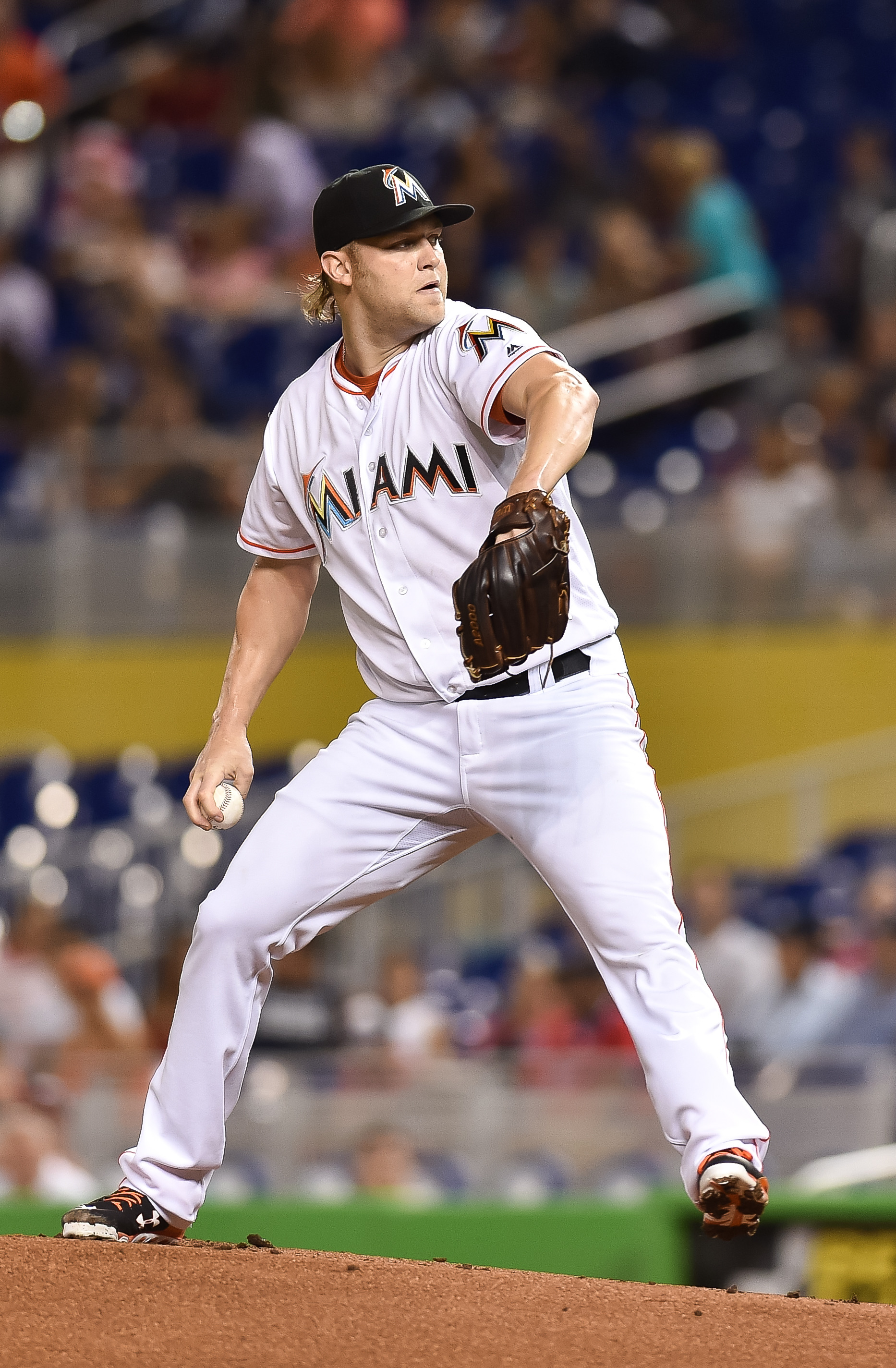
Cashner, 30, will look to get his career back on track in his native Texas. He delivers a big-time fastball and has long been seen as a premium talent. It’s important to remember, too, that he has been a quality big league starter before: over 2013-14, he worked to a 2.87 ERA in nearly 300 innings. But he hasn’t been able to sustain that, and the last two seasons have been rough.
Since the start of 2015, Cashner has compiled 316 2/3 innings with an ugly 4.72 ERA. His strikeouts did tick up to 7.9 per nine, but he has also walked 3.6 batters and surrendered more than a home run per regulation game. Things only got worse after a mid-season trade to the Marlins last year.
That being said, there are signs of hope. Cashner still induces grounders on nearly half of the balls put in play against him, and has been a victim of both high BABIPs (.330 and .315 in 2016 and 2017, respectively) and low strand rates (65.6% and 69.1%). Of course, this past year in particular, the quality of contact against him may have been more of a driving factor than poor fortune or bad defense. He generated just 12.5% soft contact in 2016 — worst in all of baseball among pitchers who logged at least 100 frames.
[RELATED: Updated Rangers Depth Chart]
It’s a calculated risk for the Rangers, who evidently felt that Cashner offered more promise than did Derek Holland. The club declined its option over the lefty, choosing to reallocate those funds to Cashner. Texas will surely hope that he’ll make good on the trust, as the organization still has a rather uncertain outlook in its rotation after top two hurlers Cole Hamels and Yu Darvish. At a minimum, the team needs Cashner to soak up some of the innings departing with Colby Lewis.
Photo courtesy of USA Today Sports Photos.
Cardinals Sign Brett Cecil
NOV. 21: The Cardinals have formally announced Cecil’s four-year deal and introduced him at a press conference.
NOV. 19: The Cardinals have agreed to a four-year deal with southpaw reliever Brett Cecil, Yahoo Sports’ Jeff Passan reports (Twitter link). The deal will pay Cecil $30.5MM over the four seasons and includes full no-trade protection, according to FOX Sports’ Ken Rosenthal (Twitter links). The contract will be official when Cecil, an ACES client, passes a physical.
[Related: Updated St. Louis Cardinals depth chart]
St. Louis was known to be interested in bullpen help this winter, and adding another left-hander was the more logical fit, as Kevin Siegrist was the only other healthy southpaw in the Cards’ bullpen. Tyler Lyons will miss at least the start of the 2017 season due to knee surgery, while Zach Duke will miss next season entirely after undergoing Tommy John surgery.
In Cecil, the Cardinals have landed one of the top setup men on the market this winter. In four years as a full-time reliever, Cecil posted a 2.90 ERA, 11.5 K/9 and 3.68 K/BB rate with the Blue Jays, with grounder rates of over 50% in three of those four years. Over his career, Cecil has dominated left-handed hitters, limiting them to just a .226/.281/.344 slash line.
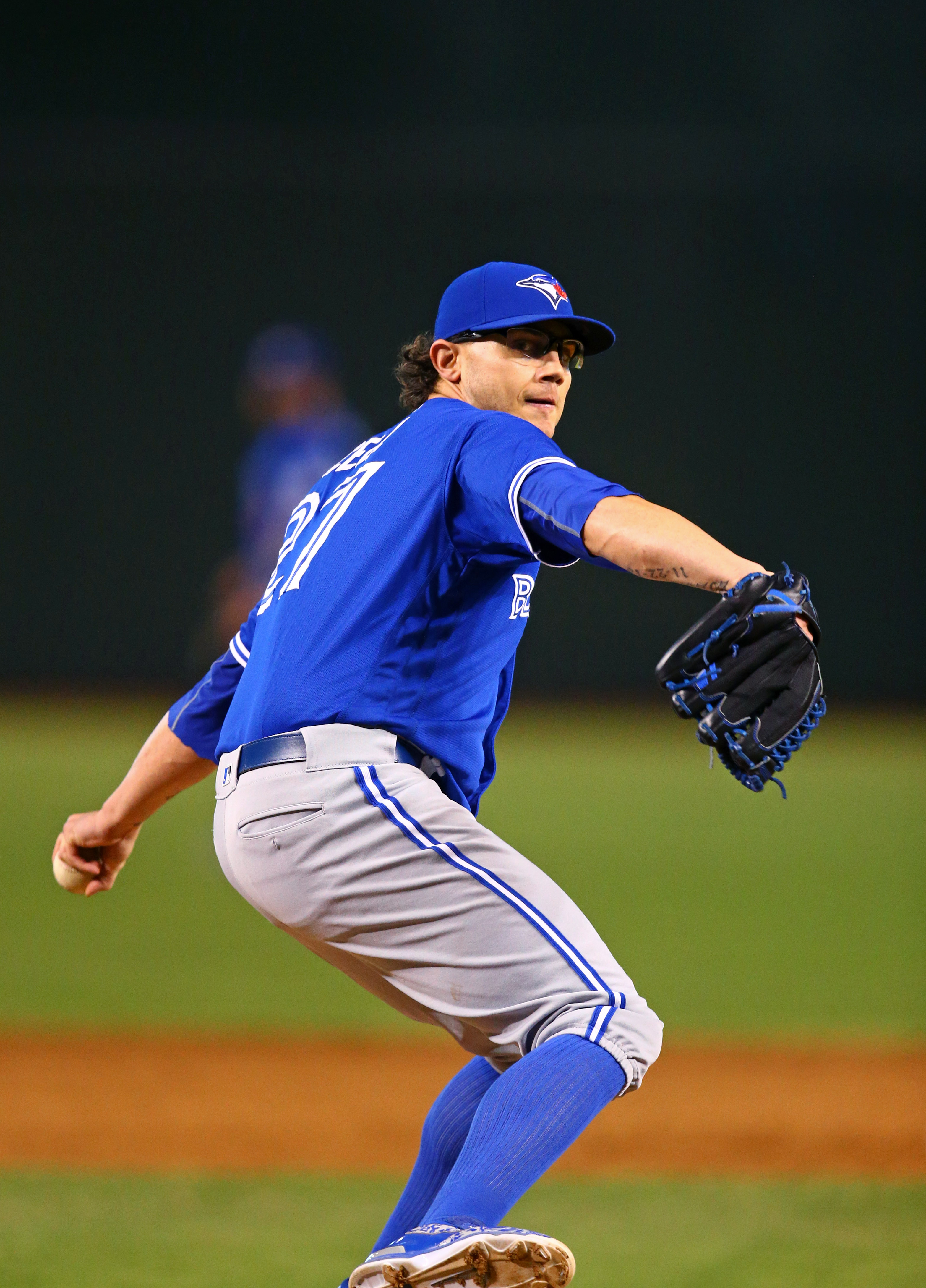
Despite this solid track record, the thought of Cecil landing a four-year deal seemed pretty remote in mid-July. The lefty missed six weeks due to a tear in his lat muscle, and he had a whopping 6.75 ERA over his first 16 innings of action. Down the stretch, however, Cecil looked far closer to his old self, posting a 1.74 ERA over his final 20 2/3 innings of the year.
Cecil’s 3.93 ERA was his highest in four seasons, though a .344 BABIP and an inflated 20% home run rate can be partially blamed for that spike. Advanced metrics peripherals (3.64 FIP, 2.87 xFIP, 2.71 SIERA) take a more positive view of Cecil’s season, and he also posted a 11.05 K/9 and 1.96 BB/9. His grounder rate did drop to just 42%, however, and hitters were making very good contact — 37.3% of Cecil’s contact allowed was comprised of hard-hit balls, easily the highest total of his career.
MLBTR’s Tim Dierkes ranked Cecil 26th on his list of the winter’s top 50 free agents, and projected him to land a three-year, $18MM contract. The fact that Cecil ended up with a fourth year and $30.5MM in guaranteed money is both a nice win for his representatives at ACES and a sign of just how far the Cards had to go to win the bidding. The Mariners and Blue Jays were both known to be interested in Cecil’s services, with Toronto reportedly putting a three-year deal on the table to retain their longtime reliever. Sportsnet’s Ben Nicholson-Smith reports that the Jays were one of multiple teams willing to give Cecil a three-year commitment.
Photo courtesy of Mark J. Rebilas/USA Today Sports Images
Blue Jays Offered Roughly $80MM To Edwin Encarnacion
The Blue Jays made a four-year contract offer to Edwin Encarnacion that was worth “about” $80MM before agreeing to a three-year, $33MM deal with Kendrys Morales, reports Jon Heyman of FanRag Sports. Sportsnet’s Shi Davidi first noted that the Jays’ offer to Encarnacion was “likely” in that vicinity. However, despite the addition of Morales, Toronto is still interested in re-signing Encarnacion and remains in the mix for his services, according to Heyman. The Jays feel that Encarnacion can play first base competently enough to coexist on the roster with Morales.
The $80MM offer to Encarnacion is a sizable step up from the team’s reported two-year offer back in Spring Training, though Encarnacion’s robust market seems likely to lead to greater offers. Heyman lists the Astros, Yankees, Rangers and Red Sox as other teams that have at least reached out to Encarnacion, and agent Paul Kinzer tells him that a couple of National League clubs have reached out as well. Certainly, there will be some who are scared off by the notion of playing Encarnacion at first base on an everyday basis, especially as he advances into his late 30s over the life of a four- or five-year deal, but it’s worth noting that Encarnacion has at least graded out as a roughly average defender at first in fairly limited action with the Jays over the past two seasons (0 DRS, +3.3 UZR in 1117 innings).
Toronto general manager Ross Atkins said this weekend that the door is still open for a new deal with Encarnacion, stating that the signing of Morales only “slightly” lessens the chances of a big splash for Encarnacion. However, Atkins also said the team would be aggressive in pursuing one, if not two outfield pieces to add to the mix, and the Jays are also known to be interested in adding left-handed relief help (especially now that Brett Cecil has signed in St. Louis). With so many needs across the board and a number of other clubs interested in Encarnacion’s bat, it’s not clear that the Jays will feel comfortable beating the market in order to retain their star slugger, especially considering the fact that the Morales deal brings another potential 30-homer bat to the table at a considerably more affordable rate.