No Timetable For David Wright To Resume Throwing
Mets third baseman David Wright was diagnosed with a shoulder impingement earlier this week, and he told reporters today that a second opinion confirmed the diagnosis of an impingement and instability in his right shoulder (via Kristie Ackert of the New York Daily News). More troubling was the fact that Wright said there’s no time frame for his return to baseball activities. Per the New York Post’s Mike Puma (on Twitter), Wright says he is embarking on an “aggressive, time-consuming rehab” of the shoulder.
Originally, Wright was said to be shut down from throwing for at least the next two weeks, though today’s meeting with the media suggests a substantially lengthier absence. He can continue to hit in a batting cage as he rehabs his shoulder.
With Wright on the shelf for an indeterminate amount of time, third base duties will fall to Jose Reyes. While the former shortstop has also been taking some reps in center field to enhance his versatility during Spring Training, he figures to land the majority of the work at the hot corner, with Wilmer Flores and perhaps T.J. Rivera also serving as options. Given the uncertainties across the diamond, where first baseman Lucas Duda has received cortisone injections in both hips after being slowed by pain early this spring, each of Reyes, Flores and Rivera could be in line for larger roles than initially expected. Jay Bruce has been getting a look at first base this spring as well.
[Related: New York Mets Depth Chart]
Wright said today that he still plans to return to the field this season, and per Newsday’s Marc Carig, he made no indication that he’s considering this latest injury the beginning of the end (Twitter link). Per Carig, right called the rehab process “well worth it.”
Once one of the game’s elite players, Wright batted a combined .302/.384/.505 with 208 homers, 177 steals, seven All-Star nods, two Gold Gloves and two Silver Sluggers from 2005-13. His consistent excellence prompted the Mets to sign Wright to an eight-year, $138MM extension, spanning the 2013-20 seasons. However, since a terrific but injury-shortened 2013 season, Wright has batted a more pedestrian .266/.339/.396 in 924 plate appearances across three seasons. He’s averaged 70 games per year over the past three campaigns and battled through a series of injuries, most notably including spinal stenosis and a herniated disk in his neck that required surgical repair last year. He’s owed a total of $67MM over the remaining four seasons on his contract.
MLB, MLBPA Announce Rule Modifications For 2017 Regular Season
Major League Baseball and the MLB Players Association jointly announced modifications to a series of rules today, all of which have been approved and will be implemented for the 2017 season (Twitter link). The most notable of the bunch include approval of an automatic intentional walk that does not require any pitches to be thrown, a 30-second limit for a manager to request a replay review, and a “conditional” two-minute guideline for officials to reach a determination on a review case. (The announcement notes that there are “various exceptions” but does not elaborate.) Additionally, Crew Chiefs can now invoke replay reviews of non-home-run calls even after a manager is out of challenges beginning in the eighth inning, as opposed to the seventh inning.
Over the course of the 2016-17 offseason, a number of potential rule changes have been floated — ranging from fairly mild in nature (e.g. today’s implementations) to extreme (e.g. Jeff Passan’s report of placing a runner on second base to open an inning at a certain point in extra innings and Jayson Stark’s report of potential strike zone alterations). While the elimination of the traditional four-pitch intentional walk has drawn its fair share of ire from fans and from some players, last season saw an intentional free pass issued just over once every third game during the regular season, so the change isn’t exactly radical. Then again, because of the infrequency of intentional walks, there’s also some merit to the argument that the change doesn’t impact the pace of play enough to merit implementation.
Beyond those two rules, there was also an amendment made in regard to the positioning of base coaches prior to the delivery of a pitch. (Effectively, they must be positioned at the intersection of the coaching box line that is closest to the plate and the line that runs parallel to the foul line when the pitch is delivered but are free to move to signal a player when a ball is in play). It is also now expressly forbidden to use any type of on-field markers that could serve as a reference for the positioning of defenders. And, the league made an addition to Rule 5.07, which seems to carry a direct correlation to Carter Capps‘ unorthodox and controversial delivery.
Per the league’s announcement, the rule now “stipulates that a player may not take a second step toward home plate with either foot or otherwise reset his pivot foot in his delivery of the pitch.” Doing so with the bases empty will result in an illegal pitch, while doing so with runners aboard will result in a balk.
As Dennis Lin of the San Diego Union-Tribune reports (Twitter links), Capps’ “hop-drag” delivery has been interpreted consistently by the league in recent years. Today’s rule change was a formalization of that interpretation. MLB.com’s A.J. Cassavell tweets that the team (and, based on Lin’s tweets, the league) interpret this to mean that Capps can legally drag his foot during his delivery so long as he does not pick the foot up and reset it.
Red Sox Renew Mookie Betts For $950K
The Red Sox have renewed outfielder Mookie Betts‘ contract at a healthy $950K price, according to Alex Speier of the Boston Globe (via Twitter). Betts, 24, has established himself as one of the game’s best players and is fresh off of an outstanding 2016 season in which he slashed .318/.363/.534 with 31 home runs and 26 stolen bases.
On the heels of that effort, Betts will take home the second-highest amount ever given to a 2+ service-class player who wasn’t eligible for arbitration, falling shy only of Mike Trout‘s 2014 payday of $1MM. Nevertheless, the Red Sox weren’t able to get him to sign his name to the agreement. The club had the right to renew him at whatever amount it preferred, so long as it met or exceeded the league minimum salary, so it’s not as if he had much leverage. But it’s still somewhat notable that Betts was the organization’s only player to make the symbolic gesture of forcing the club to renew him.
That being said, president of baseball operations Dave Dombrowski says that he did not sense any bad feelings between the sides during negotiations, as Tim Britton of the Providence Journal reports (Twitter links). Certainly, the club could have taken a harsher stance in setting the final number, but obviously had no interest in making a point at the expense of its relationship with a key player. As things turned out, says Betts, there’s no animosity on his part. (Via Michael Silverman of the Boston Herald, on Twitter.)
It would not be surprising to see the sides back at the bargaining table sooner rather than later. If nothing else, there’ll be a hefty arbitration salary to negotiate next winter, but it’s also possible to imagine that the sides will explore a longer-term deal. While Boston enjoys three years of control over Betts beyond the upcoming season, the team’s leverage will wane as he gets closer to free agency and increases his earnings through the arb process.
Nationals Designate Spencer Kieboom, Announce Joe Blanton Signing
The Nationals have designated catcher Spencer Kieboom for assignment, per a club announcement. His roster spot will go to righty Joe Blanton, whose signing was also announced.
Kieboom, 25, made it to the majors last year, though he received just a single opportunity to hit. He spent the bulk of the year at Double-A, where he slashed only .230/.324/.314 over 359 plate appearances. His younger brother, infielder Carter Kieboom, was taken by the Nats in the first round of last year’s draft.
For the elder Kieboom, there just wasn’t quite enough 40-man room for him to stick. Washington has yet to resolve its logjam behind the dish, which was created when Matt Wieters joined Derek Norris and Jose Lobaton as veteran options in camp. Pedro Severino and Raudy Read are also on the MLB roster.
White Sox Notes: Robert, Abreu, Jones, Frazier
Cuban outfielder Luis Robert, a 19-year-old prospect who’s hoping to be cleared to sign during the current July 2 period, has a variety of possible suitors, as Ben Badler of Baseball America reports. But the White Sox may be the team most likely to land Robert, per the report, given their current approach to the international market. Badler goes on to profile the talented youngster in detail in the post, which also includes some video.
Here’s more on the South Siders:
- Hopefully, Robert’s process of moving to the majors won’t be nearly as wild as the experiences of many other Cubans, including White Sox first baseman Jose Abreu, who testified yesterday in the human trafficking trial of former agent Bart Hernandez and trainer Julio Estrada. As the Associated Press reports (via ESPN.com), Abreu said that he literally ate the fake passport he used to board a plane to the United States while on board. The slugger is set to take the stand for further testimony today.
- Right-hander Nate Jones gave the White Sox a bit of a scare when he had to exit yesterday’s game after being hit on the leg by a one-hop comebacker, but the Chicago setup man has been diagnosed with a bruised knee, per Colleen Kane of the Chicago Tribune. That’s certainly good news for the club, as Jones could end up representing quite an interesting trade chip at the deadline this summer (if not before). The high-powered reliever, who’s controlled through 2021, could also step into the closer’s role if David Robertson is dealt.
- The White Sox still don’t have a timetable for third baseman Todd Frazier‘s return from an oblique strain, as MLB.com’s Barry Bloom reports. That’s due in part to the fact that it’s spring, with Frazier noting there’s “plenty of time” left for him to make it into competitive action. For now, the veteran is working out but making “slow progress.” The situation seemingly makes it less likely that the White Sox will strike a late deal involving the veteran, though rushing him back would run the risk of spurring a much bigger problem.
NL Notes: Weaver, Salas, Schebler, Holland
The Cardinals announced that right-hander Luke Weaver was removed from today’s Grapefruit League contest due to back spasms (Twitter link). Weaver faced two hitters in the eighth inning of today’s game and retired both before his back acted up. As MLB.com’s Jenifer Langosch writes, manager Mike Matheny said he’s unaware of any previous back problems for Weaver, and the team will re-evaluate the top prospect tomorrow. Weaver is battling fellow righties Michael Wacha and Trevor Rosenthal for the final spot in the St. Louis rotation and is by far the least experienced of the group. So while there’s no indication that the injury is especially serious, any time lost this spring could have an adverse impact on Weaver’s chances of laying claim to that vacant starting job.
A few more notes from around the Senior Circuit as the evening winds down…
- Right-hander Fernando Salas has a visa issue that is preventing him from pitching in spring games for the Mets, reports Newsday’s Marc Carig. Salas has already secured the necessary paperwork to pitch for Team Mexico in the upcoming World Baseball Classic, so that tournament could give him some needed in-game reps as he prepares for the season. Carig adds in a followup tweet that the Mets expect Salas’ current documentation issue to be resolved sometime next week, so he should be able to pitch with the team upon completion of the WBC, barring any further paperwork complications. Salas, 33, inked a one-year, $3MM deal to return to the Mets in early February on the heels of an excellent showing with the team following last year’s August trade. The veteran setup man tossed 17 1/3 innings with the Mets, yielding just four runs on 11 hits and no walks with 19 strikeouts.
- The Reds considered Scott Schebler as more of a left fielder than a right fielder when he was acquired in the 2015 trade that sent Todd Frazier to the White Sox, writes MLB.com’s Mark Sheldon, but the 26-year-old has spent a great amount of time working to improve his throwing. As such, the team now views Schebler as a viable option in right field, and he’s in line to get a chance to cement himself as the team’s primary option there in 2017. “It’s one of the things I worked on for quite some time, and it’s getting there,” Schebler told Sheldon. “I would never say I have a cannon. I may never have one, but you work toward that and maybe you end up somewhere in the middle.” Manager Bryan Price said the team has emphasized to Schebler that its preference would be less air underneath his throws, even if it means one-hopping the catcher on throws to the plate. Price praised Schebler for improvements to his arm strength and accuracy — both of which he attributes to mechanical alterations.
- Greg Holland won’t make his Cactus League debut for the Rockies until next week, at the earliest, writes Patrick Saunders of the Denver Post. The 31-year-old threw a 23-pitch simulated game on Tuesday of this week and will throw at least two more sim games before he’s cleared to get into an actual game with his new team, per Saunders. To this point, Holland hasn’t come out and thrown his fastball at 100 percent, though the former Royals closer said he’s building toward that point. Holland is clearly itching to get into a game, calling it “demoralizing” for any competitor to sit out as games are underway. “But you have to understand that there is a right way and there is a science behind this,” Holland told Saunders. “You have to stay patient with it, as hard as it is.” Holland inked a one-year, $7MM deal with the Rox this winter, and his contract also contains a vesting player option that’ll trigger at $15MM if he finishes 30 games or appears in 50 total contests.
NL East Notes: Conforto, Chen, Marlins, Rivero
There’ve been varying reports about the connection Mets‘ talks for Tigers right fielder J.D. Martinez this winter, the most recent of which suggested that the Mets “seriously discussed” parting with Michael Conforto to acquire Martinez. MLB.com’s Anthony DiComo, however, was told “emphatically” that the notion was not seriously discussed whatsoever (Twitter links). DiComo notes that New York did indeed touch base with the Tigers and discuss Martinez prior to re-signing Yoenis Cespedes, but the Mets “balked completely” once Conforto’s name was brought up by the Tigers.
More from the NL East…
- Asked about his first season in a Marlins uniform, left-hander Wei-Yin Chen bluntly told Clark Spencer of the Miami Herald that his performance “was terrible.” The 31-year-old, who signed a five-year, $80MM contract with the Marlins last winter, posted a 4.96 ERA across 123 1/3 innings in an injury-shortened campaign. Chen admitted to pitching through elbow discomfort that would act up without warning and also revealed that at times he felt “a lack of strength” in his fingers and arm. Manager Don Mattingly told Spencer that the Marlins believe Chen’s elbow has healed, but he also suggested that the Marlins may be more willing to have turn to the bullpen should they sense that Chen needs a reprieve on any given day. “That is one of the things we have a better idea of, how to keep an eye on him and be ready to pull that trigger a little quicker,” said Mattingly.
- Generally speaking, the Marlins could be quick to turn to their deep bullpen if the starters are struggling, writes MLB.com’s Joe Frisaro. Per Frisaro, the Marlins are planning to take a long look at how their starters are faring when facing the opposing lineup for the third time on a given day. Statistically speaking, starters tend to fare considerably worse as they turn a lineup over multiple times, due both to growing levels of fatigue and hitters’ increasing familiarity with their offerings. Miami’s starters appear open to the additional input they could receive from the team’s analytics department on the matter, as both Dan Straily and Tom Koehler spoke to Frisaro about how that type of data could potentially help to create an edge for pitchers. “I think that’s the way baseball is going with the analytics, with the data behind everything,” said Straily. Koehler added to that: “If there is something happening a third time, there’s a reason for it. So there’s probably a solution to it, too. … I think maybe if we dig deeper into it, we can find a solution.”
- MLB.com’s Mark Bowman tweets that Braves Rule 5 pick Armando Rivero is currently dealing with shoulder soreness that stems from his stint in the Venezuelan Winter League this offseason. Selected out of the Cubs organization, the 29-year-old Rivero pitched to an exceptional 2.13 earned run average in 67 2/3 innings with Chicago’s Triple-A affiliate last season. Along the way, the Cuban-born righty averaged a whopping 14 strikeouts per nine innings pitched, though he also averaged 4.7 walks per nine in that time.
Mariners Acquire Chase De Jong, Designate Mike Freeman
The Mariners announced that they’ve acquired minor league right-hander Chase De Jong from the Dodgers in exchange for minor league infielder Drew Jackson and minor league right-hander Aneurys Zabala. To clear room for De Jong on the 40-man roster, the Mariners designated infielder Mike Freeman for assignment.
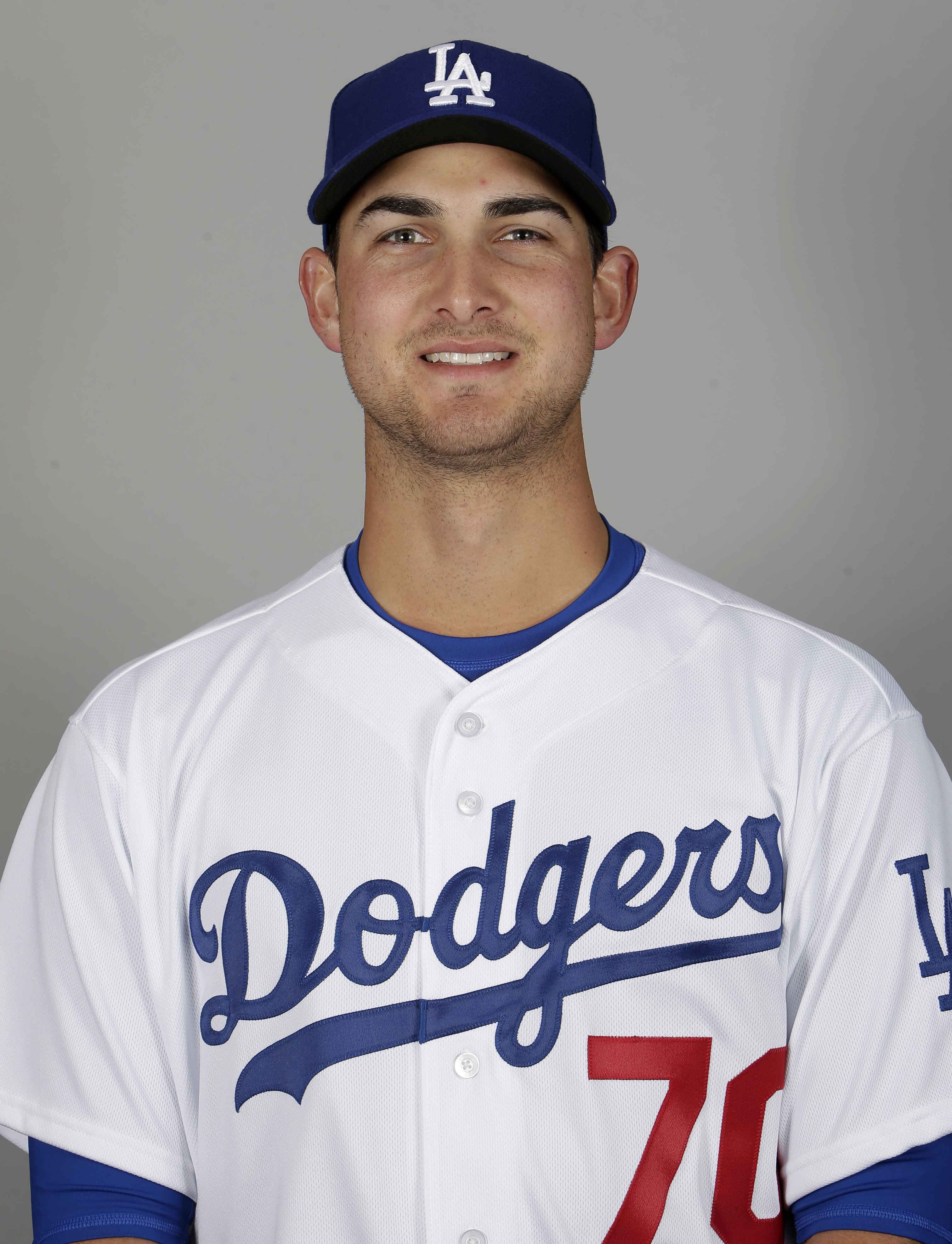
De Jong, 23, was the Blue Jays’ second-round pick back 2012 but was traded to Los Angeles alongside second baseman Tim Locastro in a swap that sent international bonus money to the Blue Jays.
The former No. 81 overall pick has raised his profile since joining the Dodgers organization and is coming off an impressive 2016 campaign that saw him reach Triple-A for the first time. De Jong tossed just 5 1/3 innings in Triple-A (allowing one run and striking out eight against one walk) but also delivered an excellent campaign at the Double-A level. With Tulsa, the righty logged 141 2/3 innings with a 2.86 ERA, 7.9 K/9, 2.5 BB/9 and a 38.3 percent ground-ball rate.
Last offseason, Baseball America ranked De Jong 16th among Dodgers farmhands, praising his feel for a solid-average curveball. That scouting report noted that his 88-92 mph fastball, which can top out at 94 mph, is a bit straight. He also sports a fringe-average changeup, per BA, and could eventually surface in the Majors as a back-of-the-rotation arm.
De Jong will give the Mariners another upper-level arm to provide depth beyond a rotation that projects to include Felix Hernandez, Hisashi Iwakuma, Drew Smyly, James Paxton and Yovani Gallardo. De Jong will join Dillon Overton, Rob Whalen, Ariel Miranda and Cody Martin — each of whom has been acquired by Seattle GM Jerry Dipoto in the past calendar year — as an upper level depth option. De Jong is merely the latest trade acquisition for the game’s most active general manager, as Dipoto is now up to 14 trades this offseason and 40 total since being tabbed as the Seattle GM following the 2015 season (hat tip: MLB.com’s Greg Johns, on Twitter).
[Related: Updated Seattle Mariners Depth Chart and Los Angeles Dodgers Depth Chart]
As for the Dodgers’ return, the 23-year-old Jackson rated 12th among Mariners’ farmhands, per MLB.com, and ranked 18th among Seattle prospects in the eyes of ESPN’s Keith Law (subscription required/recommended). The 2015 fifth-rounder spent last year at the Class-A Advanced level, where he batted .258/.332/.345 with six homers and 16 steals in 596 plate appearances. Jackson swiped 47 bags in Class-A a year prior, and the scouting reports from both MLB.com and from Law praise his speed, throwing arm and defensive prowess. His power is a question, though, as Jackson has just eight long balls in 862 pro plate appearances. Law noted that Jackson lacks power and hits the ball on the ground with regularity.
Baseball America was more bullish on Jackson this winter, ranking him seventh among Mariners prospects and calling him a potential everyday shortstop, though they too note that he’s routinely graded as a “fringe-average hitter with below-average pop.” Still, Jackson’s “double-plus” speed and arm create plenty of hope in BA’s scouting report (subscription required/recommended to read in its entirety).
Zabala, 20, spent the 2016 season in the Rookie-level Arizona League, pitching to a 2.88 ERA with a 28-to-15 K/BB ratio in 25 innings. He’s been used out of the bullpen exclusively in each of the past two years, and Law notes that he reached 99 mph in 2016. MLB.com rates him 22nd among M’s farmhands and puts a hefty 75 grade on his fastball, though he receives 40-grade control from that report. Zabala’s curveball draws praise from each report, though it’s not regarded nearly as well as his fastball. Low-level arms with this type of velocity are becoming more common in today’s game, but he makes for a nice long-term lottery ticket of sorts to add to a deep Dodgers farm system.
Losing his roster spot in all of this is the 29-year-old Freeman, who made his Major League debut in 2016 but received just 24 plate appearances between the D-backs and Mariners. Seattle claimed Freeman off waivers from Arizona shortly after the non-waiver trade deadline. In 503 Triple-A plate appearances last year, the former 11th-round draft pick hit .314/.285/.419 with four homers, 23 doubles and six triples. Those numbers, tallied across 104 games, bear a striking resemblance to the second baseman/outfielder’s career marks in 298 contests: .314/.376/.424.
The latest Mariners trade leaves Seattle with a full 40-man roster but does create an opening on the 40-man for the Dodgers, should they wish to make another move in the coming days. Alternatively, the Dodgers could simply keep the spot open to create the flexibility for some waiver activity throughout the remainder of Spring Training.
Photo courtesy of USA Today Sports Images.
MLBTR Chat Transcript
Click here to view the transcript for MLBTR Chat With Jason Martinez: March 1, 2017
Offseason In Review: Pittsburgh Pirates
This is the first entry in MLBTR’s annual Offseason In Review series. We’ll be reviewing the other 29 clubs over the next several weeks as the season approaches.
The Pirates were at the center of multiple potential blockbuster trade rumors this winter, but none of the rumored deals came to fruition. Now, Pittsburgh looks poised to enter the 2017 with a familiar core while several young talents hope to cement themselves as big league contributors.
Major League Signings
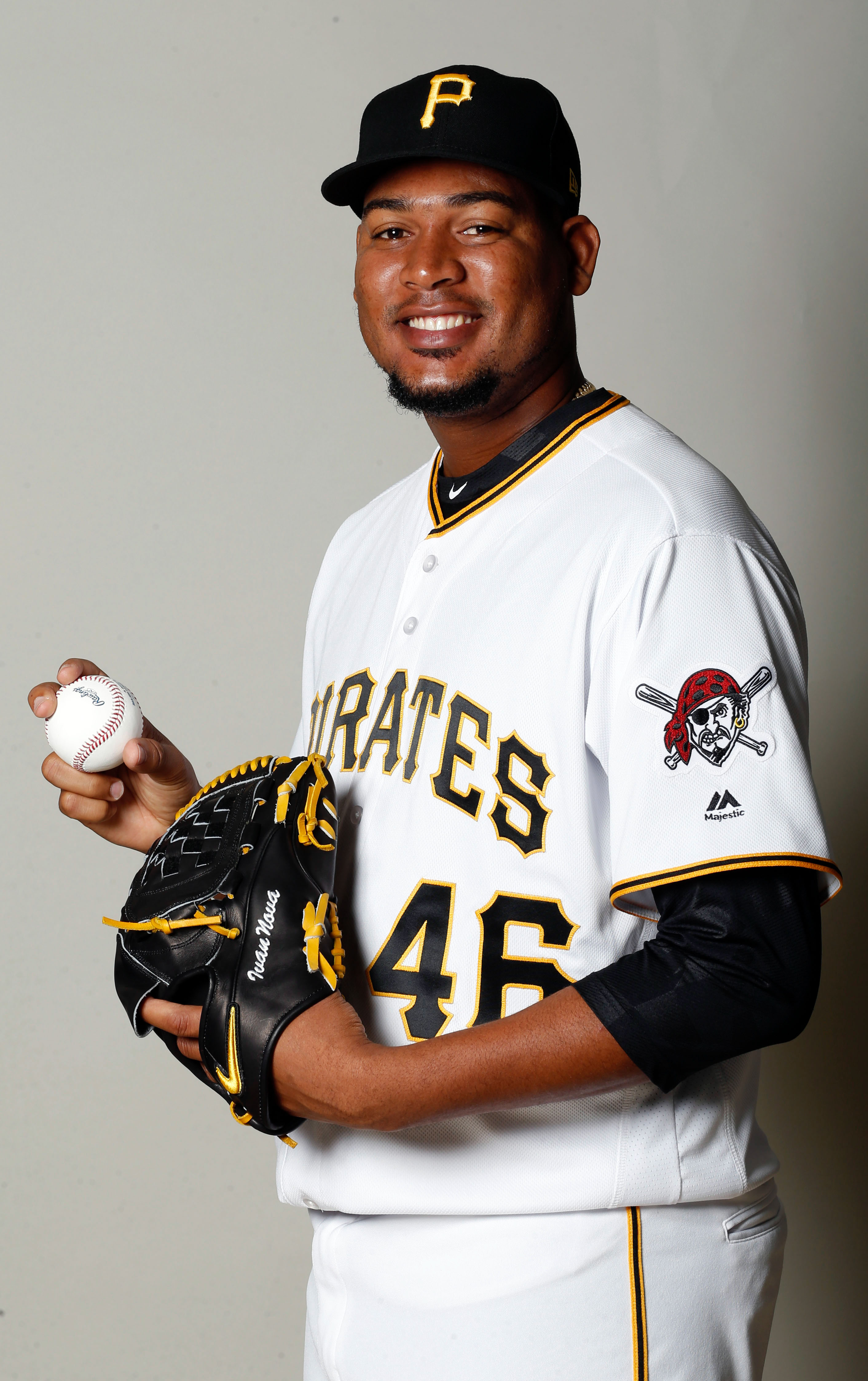
RHP Ivan Nova: three years, $26MM (re-signed)
RHP Daniel Hudson: two years, $11MM
RHP Lisalverto Bonilla: Major League contract (later lost on waivers to Reds)
Notable Minor League Signings
Eury Perez, Jason Stoffel, Josh Lindblom, Casey Sadler (re-signed), Angel Sanchez (re-signed)
Trades And Claims
Acquired IF Phil Gosselin from Diamondbacks for RHP Frank Duncan
Acquired RHP Pat Light from Twins for PTBNL or cash
Selected LHP Tyler Webb from Yankees in Rule 5 Draft
Extensions
LHP Wade LeBlanc: one year, $750K, plus $1.25MM 2018 option or $50K buyout
Notable Losses
Neftali Feliz, Matt Joyce, Sean Rodriguez, Jeff Locke, Ryan Vogelsong
Needs Addressed
Despite being connected to trade talks involving star lefty Jose Quintana throughout the winter, the Pirates’ offseason was generally a conservative one, designed to retain and augment the team’s top assets rather than adding more top assets to join them. That’s not to say, though, that their winter failed to prepare them for the upcoming season. The Bucs will have their work cut out for them as they attempt to compete with the Cubs again this year — that would be a tough assignment for any team, really. Still, there’s reason to think they can improve on their 78-win 2016 total, perhaps dramatically so if things go right.
The Bucs’ 2016 season was full of disappointments, particularly in their rotation. Ace Gerrit Cole couldn’t stay healthy and failed to build on his outstanding 2015. Francisco Liriano was a disaster, and he ended up heading to Toronto in a dubious August trade. Jon Niese, acquired prior to the season for a quality second baseman in Neil Walker, was a mess, posting a 4.91 ERA in Pittsburgh before heading back to New York. And Jeff Locke and Ryan Vogelsong, perhaps somewhat predictably, failed to pick up the slack. The Bucs’ rotation, formerly one of the team’s strengths, finished fifth-worst in the NL with a 4.67 ERA.
The disappointments extended to the lineup, where the Pirates got less than they were probably hoping for from Francisco Cervelli, Josh Harrison and John Jaso. By far the Bucs’ biggest disappointment, though, was Andrew McCutchen. The former MVP batted a mere .256/.336/.430 and looked markedly slower than he had in the past. His declining speed was a factor in his horrific -18.7 UZR and -28 DRS, with both statistics marking him as easily the worst regular center fielder in the game.
There’s reason to think the Pirates can avoid some of 2016’s troubles, even though they made few big on-paper moves. In the rotation, they re-signed Ivan Nova, who pitched better than he ever had after heading their way at the 2016 trade deadline. (More on Nova below.) They can also hope for a full, healthy season from Cole, and they should continue to receive help from a burgeoning group of young pitchers that includes Jameson Taillon (who had a strong rookie season in 2016), Chad Kuhl, Steven Brault and, if he can improve his control, top prospect Tyler Glasnow.
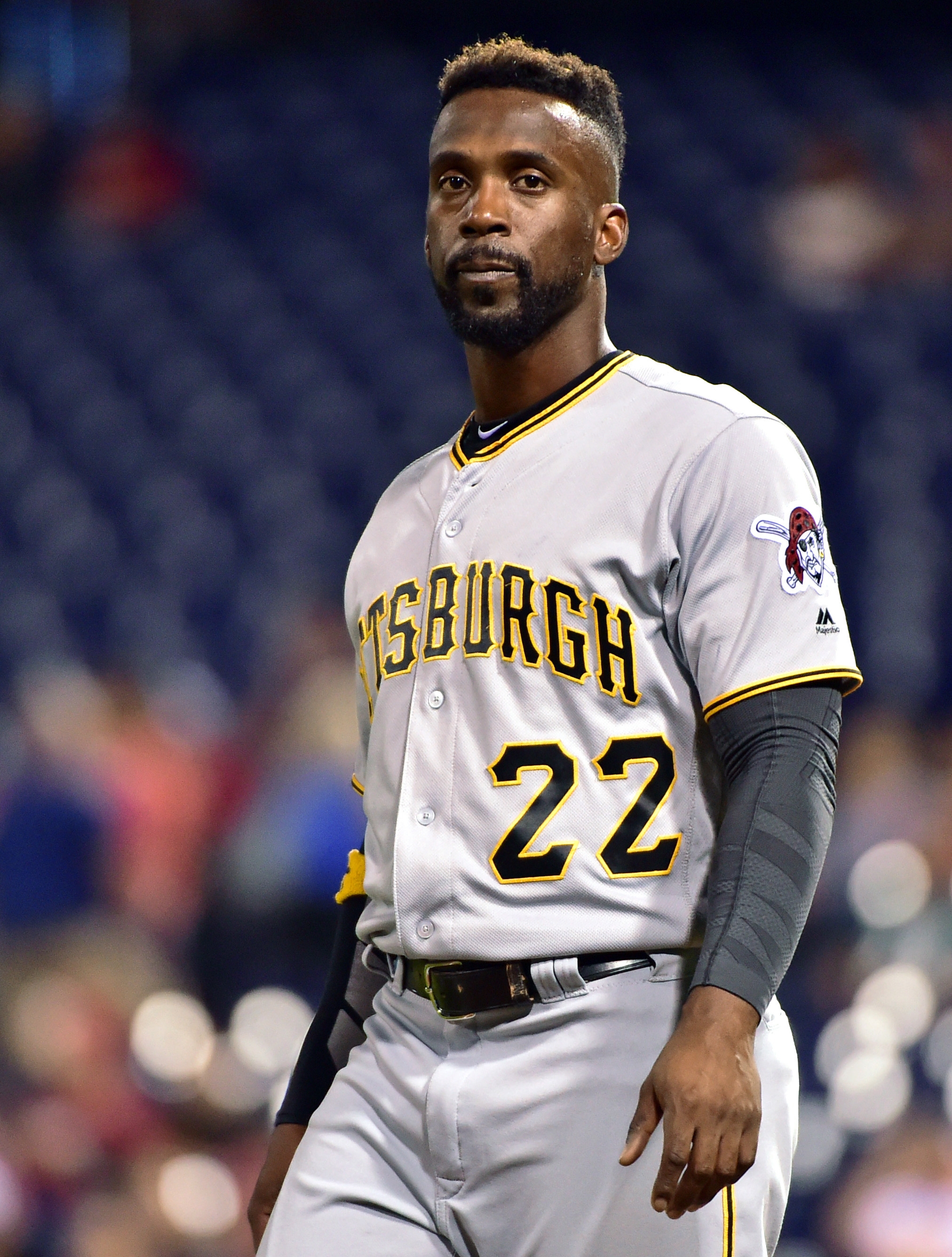 This offseason, the Pirates first attempted to address the McCutchen issue by trading him. The superstar has only one guaranteed year left on his contract, plus a team option for 2018, and with top prospect Austin Meadows on the way and Starling Marte looking like a far better defensive center fielder than McCutchen, McCutchen seemed like an increasingly strained fit in Pittsburgh. The Bucs were repeatedly connected to the Nationals as a potential trade partner, with the Nats reportedly offering pitchers Lucas Giolito and Dane Dunning, plus another player. Those plans were scuttled when the Nationals traded Giolito, Dunning and Reynaldo Lopez for Adam Eaton instead. It then appeared the Pirates would keep McCutchen, and though there were whispers about other teams (including the Mets and Blue Jays) having interest, the Bucs never seemed all that likely to trade him once their talks with the Nationals fell through.
So the Pirates will keep McCutchen, at least for now, and they’ll head into 2017 with a new plan for how to use him. While McCutchen’s 2016 season was disappointing, he did end it well, batting .284/.381/.471 over the season’s final two months. It remains to be seen whether he can retain that pace going forward, of course. But the Pirates also addressed his defensive struggles by changing their outfield alignment — the very capable Marte will man center field going forward, with Gregory Polanco in left and McCutchen in right. McCutchen has a weak arm, suggesting that right field is an odd fit, but right field in PNC Park is small. Also, McCutchen is better at going to his right than to his left, suggesting that he could fare decently in right by staying relatively near the foul line.
The Bucs also addressed their bullpen, which had been depleted by the losses of Mark Melancon at last year’s trade deadline and Neftali Feliz to free agency, by signing Daniel Hudson to a two-year deal. Hudson produced a 5.22 ERA with the Diamondbacks last season, but his peripherals were somewhat more promising than that, and his fastball averaged 96 MPH in his second full year back from his second Tommy John surgery. He shares his good velocity, extensive injury history and modest recent performance record with pre-2016 Feliz, who had a successful comeback season with the Pirates last year.
More analysis after the break …Read more