
Tigers’ Matt Manning To Make MLB Debut Thursday; Matthew Boyd To IL
The Tigers announced a series of roster moves today, the most exciting of which is the planned MLB debut of acclaimed pitching prospect Matt Manning. Manning, 23, will start Thursday night in Anaheim against the Angels. Additionally, pitchers Matthew Boyd and Alex Lange hit the IL, Wily Peralta and Miguel Del Pozo had their contracts selected, and Jeimer Candelario was reinstated from the IL.
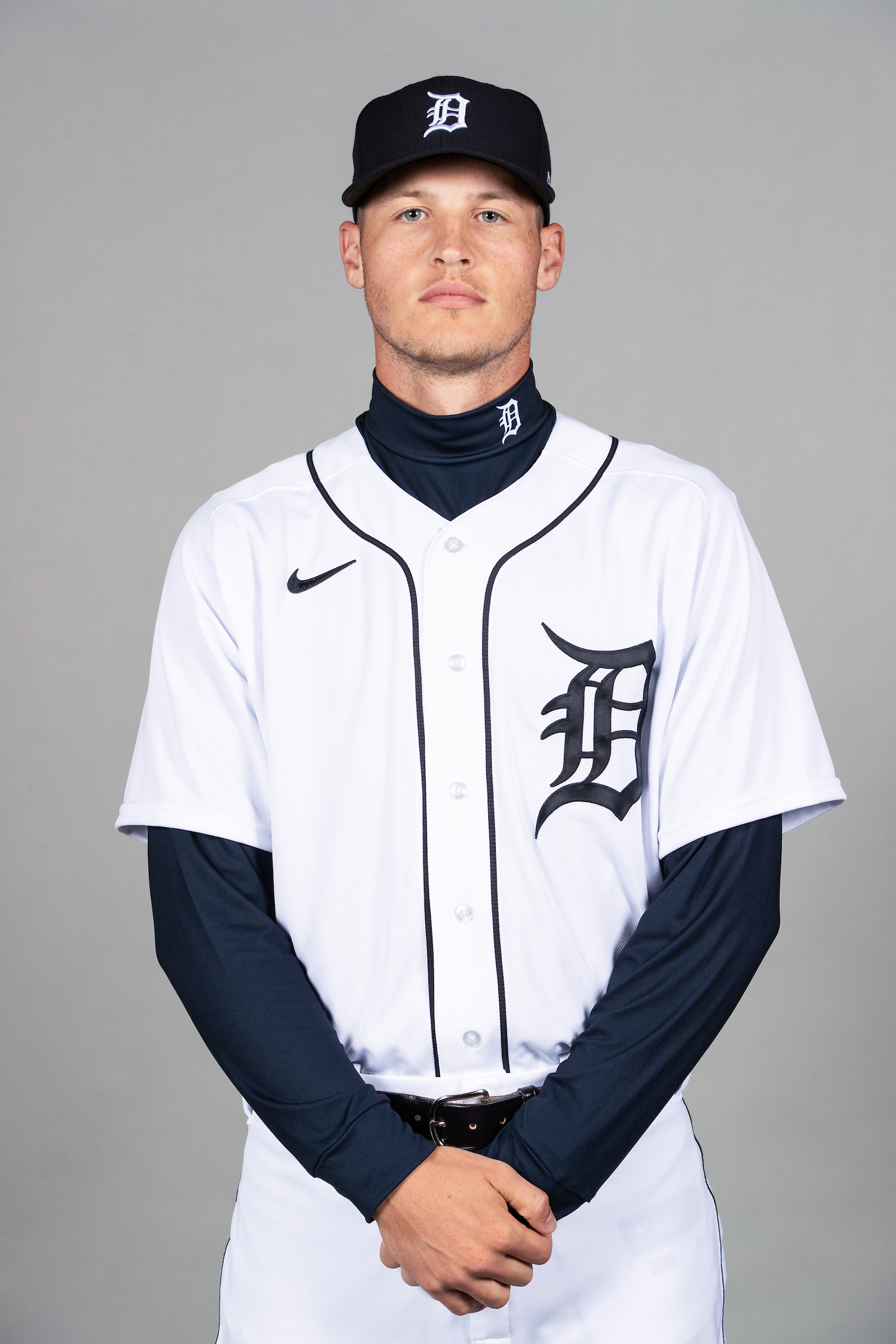
Manning was drafted ninth overall by the Tigers in 2016 out of high school. Prior to the season, Baseball America ranked Manning as the 33rd-best prospect in the game. The COVID-19 pandemic deprived Manning and many others of a minor league season in 2020, and he also dealt with a right forearm strain. Manning made his Triple-A debut on May 4th of this year. He’s scuffled to an 8.07 ERA in seven starts, with more than 27% of his flyballs leaving the yard. Still, Manning’s last outing was solid, and he retains “frontline starter potential” according to Baseball America. He’ll get a tough assignment, going up against Shohei Ohtani.
Boyd, 30, exited Monday’s start due to an arm injury that Tigers manager A.J. Hinch described today as “more toward the elbow.” Through 13 starts, he was experiencing a resurgent season with a 3.44 ERA in 70 2/3 frames. With a strikeout rate of just 18.8%, Boyd is likely still a 4.50 ERA type pitcher whose flyballs happened to stay in the yard over a brief sample. Still, he’s under team control through 2022 as an arbitration eligible player and should be a solid late July trade candidate if the injury turns out to be minor. Boyd joins rotation-mate Spencer Turnbull on the IL.
Lange, a 25-year-old rookie reliever, struggled to the tune of a 7.31 ERA over 18 fairly low-leverage outings before hitting the IL with a shoulder strain. He was rated as a 40-grade prospect by Baseball America prior to the season.
Peralta and Del Pozo will be new additions to the Tigers’ 40-man roster. One such spot was opened with the transferring of Rony Garcia to the 60-day IL. Peralta, 32, joined the Tigers on a minor league deal back in February. He was once a productive member of the Brewers’ rotation, peaking with a 3.53 ERA in 198 2/3 innings back in 2014. He managed to give the Mud Hens six mostly solid but brief outings and is an option to take Boyd’s spot Saturday in Anaheim, Hinch told reporters.
Del Pozo has 13 big league innings to his name. The 28-year-old southpaw inked a minor league deal with the Tigers back in January. He’s been dominant in a dozen Triple-A relief outings, punching out 34.7% of batters faced and walking only 6.1%.
Corey Dickerson Placed On IL For Foot Contusion
Marlins left fielder Corey Dickerson is headed to the IL, manager Don Mattingly told reporters today. Mattingly said Dickerson had an MRI and it’s “not very promising,” according to SportsGrid’s Craig Mish. The team later described Dickerson’s injury as a “left foot contusion.” Earlier today, we learned that the Marlins are calling up prospect Jesus Sanchez from Triple-A. Sanchez is batting fifth against the Cardinals’ Kwang Hyun Kim, who came off the IL today.
With 45 days until the trade deadline, it appears the last-place Marlins may have missed their chance to recoup some value on Dickerson. The 32-year-old wasn’t exactly setting the world on fire with a 102 wRC+, the Marlins may have been able to unload the $2.8MM that will remain on Dickerson’s contract come July 30th. Dickerson had signed a two-year, $17.5MM free agent deal with the Marlins in January 2020. Dickerson’s contract still marks by far the largest free agent signing of the Bruce Sherman/Derek Jeter era, with no one else topping $5MM.
The Marlins still have a solid trade chip in center fielder Starling Marte, who owns a 174 wRC+ on the season. Shortstop Miguel Rojas may also generate interest, though the club holds a $5.5M club option for 2022 that will become guaranteed if he reaches 500 plate appearances. Though controlled through 2022, first baseman Jesus Aguilar may also be available. Adam Duvall, also controlled through ’22, has had a rough year so far. On the pitching side, top reliever Yimi Garcia is slated for free agency and should be popular on the trade market.
Nick Madrigal Out For The Season
White Sox second baseman Nick Madrigal “underwent successful surgery to repair the proximal tendon tears in his right hamstring,” the club announced today. He’ll be out for the season and is expected to be restriction-free in spring of 2022. Madrigal’s injury was known to be potentially season-ending last week, as he was placed on the 60-day IL.
The White Sox have done a remarkable job weathering major injuries already this year, sitting in first place in the AL Central with the league’s second-best record despite early-season losses of Luis Robert and Eloy Jimenez. Jimenez could potentially join the club in August after rupturing his left pectoral tendon in late March, while Robert suffered a Grade 3 right hip flexor strain. Neither player has an official timetable for return from the White Sox.
Madrigal, Chicago’s high-contact 24-year-old rookie second baseman, had a 117 wRC+ on the season that ranked seventh among qualifiers. Danny Mendick and Leury Garcia have taken over at second since Madrigal’s injury. Should the White Sox look to upgrade, Adam Frazier, Josh Harrison, Eduardo Escobar, and Jonathan Schoop could be among those available.
Phillies Sign Brock Stassi
The Phillies have signed first baseman Brock Stassi to a minor league contract, per an announcement from the Long Island Ducks of the independent Atlantic League. Stassi had played in thirteen games with the Ducks before earning his way back into the affiliated ranks. He’ll be assigned to Double-A Reading.
Stassi (the older brother of Angels catcher Max Stassi) is most well known for his previous stint with the Phillies. The former 33rd-round pick and six-year minor league veteran broke camp with the Phils in 2017 and picked up fairly regular playing time over the season’s first month. Stassi didn’t produce much in that limited time, hitting just .167/.278/.295 with a pair of homers over ninety plate appearances.
Philadelphia outrighted Stassi off the roster near the end of that season. He’s hooked on with the Giants and Twins in recent years but hasn’t made it back to the big leagues. The 31-year-old has a .264/.364/.403 line in parts of four seasons at Triple-A, and he’s compiled a similar .271/.356/.404 mark at Double-A.
Rays Tyler Glasnow Placed On Injured List With Partial UCL Tear
2:08 pm: Glasnow’s MRI revealed a partial tear of his ulnar collateral ligament, as well as a flexor strain in his forearm, Adam Berry of MLB.com was among those to relay. It’s a brutal development, considering that UCL tears and flexor strains are often precursors to a Tommy John procedure. The current hope is that Glasnow can rehab the injury without surgery, relays Jeff Passan of ESPN, but it seems he’s in for a significant absence even in the best case scenario. The Rays haven’t released a formal timeline for his return, but he’s been placed on the 10-day injured list.
9:44 am: The Rays are sending Tyler Glasnow for an MRI on his elbow after the right-hander left last night’s start after four innings, Marc Topkin of the Tampa Bay Times was among those to report. The team announced Glasnow’s issue as elbow inflammation, with the pitcher telling reporters he felt “a little tug” and “tightness” in the area.
It’s an ominous-sounding diagnosis, but Glasnow himself didn’t sound overly concerned. “I think I got it relatively early. I just was like, I don’t want to go back out and chance it,” he said (via Topkin). “The (velocity) and everything was still there. But it just felt not right.” He did note, though, that the issue was more than mere discomfort. Glasnow missed most of the 2019 season with a forearm strain and suggested there’s a possibility his current issue is similar.
Certainly, the Rays will be holding their breath as they await the results of the MRI. Glasnow is amidst a stellar season, having worked to a 2.66 ERA/2.83 SIERA. He ranks fifth among qualified pitchers in strikeout rate (36.2%) and sixth in strikeout/walk rate differential (28.2 percentage points). He’s also been a true workhorse for a Rays pitching staff that otherwise tends to heavily leverage matchups, as Glasnow is tied for second in the American League with 88 innings pitched.
Nationals Place Max Scherzer On Injured List
The Nationals announced they’re placing ace Max Scherzer on the 10-day injured list, retroactive to June 12, due to groin inflammation. Reliever Justin Miller has been selected to the roster to replace him. To clear space for Miller on the 40-man roster, Washington designated righty Rogelio Armenteros for assignment.
Scherzer was forced out of his start on Friday night in the first inning with the groin issue. He downplayed the injury after his start, but he’ll apparently still need some time on the IL to recover. The team didn’t announce an initial timetable for his return.
The 36-year-old Scherzer has been his usual incredible self this season. Through 77 1/3 innings, he’s worked to a pristine 2.21 ERA/2.67 SIERA, striking out a stellar 36% of opposing hitters while walking only 5.2%. Even a minimal IL stint is a tough blow to the 28-35 Nats, who sit in fourth place in the National League East. After wrapping up a series with the Pirates tomorrow, Washington will kick off a run of eleven consecutive games against divisional foes (including five meetings with the division-leading Mets).
If Washington doesn’t get back on track, Scherzer’s name figures to surface in plenty of trade speculation in the coming weeks. He’s slated to hit free agency at the end of the season, and there’d be plenty of demand from contenders for one of the top pitchers in the game. There’s no indication today’s IL stint will last long enough to jeopardize his potential trade candidacy, although it’s still unclear if the team would make him available. Moving star players midseason hasn’t traditionally been the Nationals style, but there’s a case they should listen to offers on Scherzer if they don’t close the division gap in the coming weeks. Having previously received a qualifying offer in his career (back in 2014 from the Tigers), Scherzer is ineligible to be tagged with a QO this winter. Thus, the Nationals could stand to lose him for no compensation if they don’t move him this summer.
Miller makes his way back to Washington for the first time in two years. The righty looked to have broken out with a strong 2018 season in the Nats bullpen, when he tossed 52 1/3 frames of 3.61 ERA/3.34 SIERA ball. A pair of IL stints the following season knocked him off course, though, and his strikeout rate plummeted from 27.9% in 2018 to 16.9% in 2019. The Nationals outrighted him off the 40-man roster that season.
The 34-year-old signed a minor league deal with the Blue Jays over the 2019-20 offseason. He wound up traded to the Reds but didn’t make it onto either club’s 40-man roster. Miller elected minor league free agency and re-signed with the Nationals this March. He’s been nothing short of dominant this year with Triple-A Rochester. Over 16 1/3 innings, Miller’s allowed just a single earned run, striking out 29 of the 62 batters he’s faced (46.8%) while walking just four.
Like Miller, Armenteros has spent the entire season at Triple-A. He’s been far less successful, though, pitching to a 5.83 ERA with an average 23.1% strikeout rate but an elevated 14.2% walk percentage. Washington will now have a week to trade or waive the 26-year-old, whom they claimed from the Diamondbacks last December. Armenteros was once a decently regarded prospect in the Astros system and still has a pair of minor league option years remaining, so it wouldn’t be a surprise to see a rival club that needs rotation depth acquire him in a small transaction.
Marlins To Recall Jesus Sanchez
The Marlins are planning to recall outfield prospect Jesús Sánchez from Triple-A Jacksonville, reports Craig Mish of SportsGrid (Twitter link). The 23-year-old is in line for his first opportunity at the major league level in 2021.
Sánchez originally signed with the Rays and posted huge numbers at the minors’ lowest levels. He entered the 2018 season as one of the game’s top 50 prospects, in the estimation of Baseball America, and remained among the sport’s top 100 minor league talents for the following two seasons. Miami acquired Sánchez alongside reliever Ryne Stanek in advance of the 2019 trade deadline, sending righties Nick Anderson and Trevor Richards to Tampa Bay in return.
The left-handed hitting Sánchez scuffled in his first crack at Triple-A down the stretch that season, and the lack of minor league ball in 2020 meant he spent much of last year at the alternate training site. Sánchez did make a very brief MLB debut last season, struggling over 29 plate appearances.
That 2019-20 downturn in production diminished Sánchez’s status a bit. He fell off top 100 prospects lists entering 2021- although he still checked in eighth among Marlins farmhands at both Baseball America and the Athletic, and tenth in the system at FanGraphs. Sánchez has since gotten off to a fantastic start in Jacksonville, hitting .349/.400/.643 with nine homers in 140 plate appearances. That showing has earned him another look at the big league level.
Sánchez, who fits best in a corner outfield spot, draws praise for big raw power and electric bat speed. Public prospect rankers have expressed concern with his approach at the plate for a while, though, and Sánchez has continued to be highly aggressive. His 6.4% walk rate in Triple-A this year matches his career mark in the minors. Sánchez clearly has offensive upside, and he’s generally kept his strikeouts in check (career 18.3% minor league rate), but it remains to be seen if he’ll prove patient enough to cement himself as a quality everyday player.
Corey Dickerson, the Marlins regular left fielder, left Sunday’s game agains the Braves with foot soreness. He didn’t play last night, and it’s unclear if Sánchez’s promotion is related to Dickerson’s health status. The veteran outfielder has hit an average .263/.324/.380 over his first 225 plate appearances.
Athletics Exercise 2022 Option On Bob Melvin’s Contract
The Athletics announced this afternoon they’ve exercised their 2022 option on the contract of manager Bob Melvin. The 59-year-old is now set to lead the Oakland clubhouse next year in what will be his eleventh full season at the helm.
Hired on an interim basis on June 6, 2011 (and given the full-time position a few months later), Melvin is the league’s longest-tenured active manager with one team. Since the start of his first full season as skipper in 2012, the A’s have gone 761-663 (53.4% winning percentage). Oakland made the postseason each year from 2018-20, and the 41-27 A’s hold a 2.5 game advantage in the AL West to this point in the season.
Given that level of success, it’s unsurprising the A’s have decided to bring Melvin back for another year in the Bay Area. It’s always difficult to separate a manager’s impact from the talent of the team’s roster, but Melvin’s widely regarded as one of the sport’s best skippers. He’s a three-time Manager of the Year award winner (with the A’s in 2012 and 2018, and the Diamondbacks in 2007) and has a long, productive history working in tandem with Oakland’s top front office executives, Billy Beane and David Forst.
MLB Planning To Institute 10-Day Suspensions For Foreign Substance Use
11:20 am: MLB has officially announced its guidance on foreign substance rules. “After an extensive process of repeated warnings without effect, gathering information from current and former players and others across the sport, two months of comprehensive data collection, listening to our fans and thoughtful deliberation, I have determined that new enforcement of foreign substances is needed to level the playing field,” Commissioner Rob Manfred said as part of the release. “I understand there’s a history of foreign substances being used on the ball, but what we are seeing today is objectively far different, with much tackier substances being used more frequently than ever before. It has become clear that the use of foreign substance has generally morphed from trying to get a better grip on the ball into something else – an unfair competitive advantage that is creating a lack of action and an uneven playing field.”
As previously reported, umpires will be instructed to check each pitcher (multiple times for starters) from both teams. Position players can also be ejected and suspended for foreign substance use, but only if the umpires determine the position player applied the substance to the ball for the benefit of his pitcher. As expected, pitchers are still permitted to use rosin bags on the mound but are prohibited from “intentionally (combining) rosin with other substances (e.g., sunscreen) to create additional tackiness.” Non-player personnel who encourage or facilitate players using foreign substances (or who help mask their use after the fact) are subject to discipline, including fines and/or suspensions.
Notably, a player suspended for an on-field violation cannot be replaced on the roster, which could lead to instances of teams forced to play shorthanded if their pitchers disregard the foreign substance ban.
The full release is available here.
8:52 am: Major League Baseball will distribute a memo to teams today outlining its plans for enforcing a ban on foreign substances, reports Jeff Passan of ESPN. Players found with illicit substances on their person will be suspended for ten days, with pay, with enforcement expected to begin on June 21, per Passan.
Notably, the league isn’t planning to differentiate between substances, Passan reports. MLB is prepared to hand down equal bans for players found to have used a combination of sunscreen/rosin versus those detected with Spider Tack, an industrial superglue originally designed to help strongman competitors retain their grip on atlas stones. As Passan notes, that lack of distinction figures to irk some players. Pitchers’ use of sunscreen/rosin to gain a better grip on the ball is a longstanding practice, albeit one that seems to violate MLB Rule 6.02(c)(4), which prohibits pitchers from applying “a foreign substance of any kind to the ball.” It’s not uncommon to hear hitters express support for pitchers’ use of some kind of grip enhancer, though; after all, a pitcher with better feel for the ball is less likely to accidentally throw a pitch that hits the batter in a dangerous area.
In recent seasons, however, many pitchers have increasingly adopted more sophisticated grip enhancers found to substantially increase spin. More spin can lead to more movement on pitches, and a not insignificant number of hurlers have fined-tuned sticky substances that can enhance the quality of their raw stuff, not simply their control. Former MLB pitcher Jerry Blevins breaks down the generally accepted distinction between a pitcher’s use of sunscreen/rosin and the introduction of more sophisticated substances in an interesting Twitter thread.
While failing to distinguish between forms of sticky stuff might seem overly basic, it’s an arguably necessary simplicity. Umpires are going to be tasked with checking players for substances on the fly in the middle of games. That’s not an environment especially conducive for differentiating between substances and deciding upon the severity of a player’s violation. Indeed, one MLB umpire tells Passan the league taking a firm stance against all forms of sticky stuff is critical for umpires’ enforcement efforts.
Certainly, the league is hoping to avoid handing down many suspensions, with the mere threat of a ban intended to encourage players to voluntarily stop using foreign substances. MLB has sent memos to teams in each of the past two Spring Trainings suggesting there’d be increased attention to the practice. Buster Olney of ESPN reports that former big league pitcher Chris Young- then MLB’s chief baseball officer- was the first person in the league office to raise concerns about increased use of sticky substances to enhance pitchers’ repertoires. (Young, who authored the first of those memos, has since been hired as GM of the Rangers).
This season, MLB made it known they were monitoring pitchers’ spin rate data and confiscating randomly-selected baseballs, building a dossier of sorts on which players they considered to be the most frequent offenders. Over the past few weeks, it became apparent MLB was planning to intervene in the near future. The league also recently sent documents to teams identifying pitchers on their clubs MLB believed it had caught using foreign substances, Passan reports. That appears to be another tactic the league has put in place to encourage players to curtail the use of sticky stuff before suspensions come into play. For what it’s worth, Passan hears from multiple pitchers who said they have indeed stopped using foreign substances with MLB’s crackdown on the horizon.
Nevertheless, it’d be a surprise if there weren’t some high-profile instances of discipline, given how widespread the practice has become. Brian Harkins, a former Angels clubhouse manager who was fired after it was revealed he’d provided a sticky concoction to players around the league, filed a defamation action against the team and MLB last year alleging he’d been singled out for a nearly ubiquitous practice.
The suit has since been dismissed (pending appeal), but Harkins detailed more specific allegations in a recent interview with Stephanie Apstein and Alex Prewitt of Sports Illustrated. He names stars like Max Scherzer, Justin Verlander, Adam Wainwright and Corey Kluber (among many others) as alleged users of his pine tar/rosin mix. (Kluber’s agent, B.B. Abbott, adamantly denied the allegation against him, calling it a “blatant lie”).
The former clubhouse attendant also provides Apstein and Prewitt a February 2020 text exchange with Giants pitching coach Andrew Bailey in which Bailey purchases some of Harkins’ concoction. Bailey admitted to Sports Illustrated that he bought the substance but provided Apstein and Prewitt evidence he never distributed it to his pitchers. Bailey claimed MLB had instructed teams to reduce foreign substance use in between the time he purchased Harkins’ product and when he was planning to distribute it, which he says stopped him from passing along any form of foreign substance to players in the year-plus since.
All of Harkins’ alleged distribution came before his firing in March 2020- long after the MLB rule banning foreign substances was on the books, but before the league had shown much interest in enforcing it. There are surely other players and coaches who were engaged in similar practices with distributors other than Harkins. Apstein’s and Prewitt’s piece is well worth a read in full for those interested in the broader context surrounding foreign substance use.
Regardless of players’ and team personnel’s past actions, it seems MLB is ready to turn the page on this issue. All signs suggest the league is prepared for a massive crackdown in the hope of reinvigorating an anemic offensive environment. It’ll be clearer shortly enough how much impact these efforts will have on the on-field product.
GM: Braves Can Add Payroll At Trade Deadline
During a wide-reaching interview that any Braves fan will want to check out in its entirety, Atlanta general manager Alex Anthopoulos confirmed to Jeff Schultz of The Athletic that he’s been told by ownership he’ll have the ability to “add payroll at the deadline.”
It’s common for teams to leave room for in-season maneuvering when making their offseason transactions, but this sort of direct acknowledgment from a baseball operations leader is still of note — particularly on the heels of an offseason where virtually every club in the game had to work with more budgetary constraints than usual. The Braves were no exception, as they spent heavily to address the rotation and to re-sign Marcell Ozuna but appeared to be on a rather strict budget beyond those moves. The bullpen went largely unaddressed, though the team did ultimately bring Shane Greene back into the mix on an affordable one-year deal in early May.
There’s a vast array of directions the Braves can choose to go as they look to bolster the roster, though as with most clubs, they’re likely several weeks away from making any actual transactions. Sellers often prefer to wait until the market has more competition, and the Braves themselves right now probably want to take more time to evaluate the roster. Atlanta is five games out of first place at the moment and three games under .500. They’ll presumably operate as a buyer, given the generally underwhelming performance of the entire NL East, but a prolonged losing streak could send them in another direction, of course.
It’s also quite likely that the Braves want to gather more information on internal reinforcements before spending what still figures to be a limited amount of available resources. To that end, Anthopoulos notably reveals that he’s optimistic the Braves will get each of Mike Soroka, Travis d’Arnaud and Huascar Ynoa back at some point in the month of August.
The general assumption has been that Ynoa, who fractured his hand after punching the bench in the dugout after a poor outing, would make his way back in the season’s second half. But that hasn’t at all been clear regarding d’Arnaud and particularly regarding Soroka. The veteran d’Arnaud has been out since May 1 after tearing a ligament in his thumb that required surgery.
Soroka, meanwhile, opened the year on the injured list while wrapping up rehab from the Achilles tear that limited him to just three starts in 2020. But he felt some discomfort in his right shoulder that slowed his rehab, and once he ramped up in earnest, he experienced discomfort in his surgically repaired Achilles tendon, which prompted exploratory surgery. Anthopoulos declined to go into much detail but noted that the Braves received “good news” on the right-hander.
With d’Arnaud out, young William Contreras has stepped up with a .240/.313/.460 showing in 112 plate appearances. His bat has cooled since a hot start, but that production tops the output from d’Arnaud in the season’s first month. Of course, the veteran was brilliant for Atlanta in 2020 — the first season of a two-year, $16MM deal.
If the team feels confident that Soroka, d’Arnaud and Ynoa can return at some point in August, that could lessen any temptation to allocate some of the prospect capital and financial resources to rotation upgrades or catching help. That’d make the bullpen and the outfield far likelier targets for outside additions. Braves relievers have a collective 4.77 ERA, which ranks fifth-worst in the Majors. Atlanta outfielders, as a group, rank 10th in the Majors with a 104 wRC+ at the plate, but nearly all of their production has come from Ronald Acuna Jr. Non-Acuna Braves outfielders are batting a combined .215/.294/.356.
The trade market out to feature various outfield and bullpen options — you can peruse our initial Top 40 trade candidate list for some ideas — but Anthopoulos generally hasn’t been shy about making upgrades on the trade market in the past. With the Braves, he’s made midseason deals to acquire Greene, Chris Martin, Adam Duvall, Kevin Gausman, Darren O’Day, Brad Brach and Mark Melancon. Last year was an unusually quiet deadline for Anthopoulos, but the Braves had a rather comfortable division lead and may not have wanted to expend many resources with only one month of games post-deadline and with an expanded playoff field.
Again, we’re probably weeks away from the Braves or any other club beginning to pursue truly meaningful additions to the roster — a reality Anthopoulos himself acknowledges while discussing a generally open-minded approach to this year’s deadline. The whole interview, which also covers Freddie Freeman, some early thoughts on Contreras’ play and myriad other roster issues, is well worth a full look. But the general takeaway that the Braves will have some financial leeway is an important one, particularly at a time when many other teams won’t have that luxury.
The Yankees, Astros and Red Sox, for instance, are all within $4MM of the luxury-tax barrier. The division-rival Phillies are just shy of $5MM away from the $210MM threshold, while the Padres clock in at about $6MM from the tax line. The Indians and Reds both made substantial payroll cuts over the winter; it’s not yet clear how much (if any) additional salary they’ll be willing to take on.
We likely won’t know the extent to which Atlanta can increase its bottom line. Anthopoulos, like an GM or team president, would never directly tip his hand. However, the very presence of extra resources and the fact that they’re nowhere near the luxury barrier ought to give them some advantage when looking to pry veterans away from other clubs.