
Braves Avoid Arbitration With Tuffy Gosewisch
TODAY: Gosewisch will earn $635K, Jon Heyman of Fan Rag tweets. His contract entitled him to either $625K or $100K over the new league-minimum rate, which has been set at $535K.
YESTERDAY: The Braves have struck a deal to avoid arbitration with catcher Tuffy Gosewisch, according to a team announcement. Terms of the deal were not announced; MLBTR projects him to command a $600K salary.
Atlanta just claimed Gosewisch off waivers from the Diamondbacks, suggesting that the team would look to hammer out a deal with him. It remains unclear just what this means for the team’s backstop mix. Tyler Flowers remains on the books and Anthony Recker is also eligible for arbitration.
Gosewisch, 33, has seen time in each of the last four major league campaigns. He has slashed just .199/.237/.286, with five home runs, but he’s obviously regarded as a trustworthy presence behind the plate. It’s fair to note, too, that Gosewisch hit a robust .342/.399/.553 in his 219 Triple-A plate appearances in 2016.
Minor MLB Transactions: 12/1/2016
Here are some recent minor moves from around the league:
- The Orioles announced the signing of outfielder Logan Schafer to a minor-league deal. The six-year MLB veteran saw minimal time last year with the Twins. At Triple-A, he batted .272/.342/.382 with six homers and six stolen bases over 317 trips to the plate.
- The Athletics have added two more players on minors deals, each of which includes a spring camp invite, per MLB.com’s Jane Lee (via Twitter). Catcher Ryan Lavarnway and first baseman Chris Parmelee will join the Oakland organization. Lavarnway, a former top prospect, continues to bounce around. He hit .266/.351/.384 last year with at the highest level of the minors. The 28-year-old Parmelee has seen MLB action in each of the last six seasons, slashing .248/.313/.405. At Triple-A last year in the Yankees organization, he put up a .248/.335/.449 batting line.
- Outfielder Henry Ramos is headed to the Dodgers on a minor-league pact, per SB Nation’s Chris Cotillo (via Twitter). Ramos had spent his entire career in the Red Sox farm system, reaching its highest level last year. Over his 398 plate appearances in the upper minors in 2016, he slashed .263/.306/.402 with eight home runs.
- The White Sox have added catcher Roberto Pena on a minors deal, Cotillo also tweets. The 24-year-old has long been an Astros’ farmhand since being selected in the seventh round of the 2010 draft out of Puerto Rico. In the upper minors a season ago, he put up a .235/.273/.376 slash.
- Two pitchers are headed to the Pirates on minor-league contracts, per a club announcement. The Bucs will give a look to lefty Dan Runzler, who last appeared in the bigs in 2012 and put up a 5.82 ERA in 21 2/3 innings at Triple-A last year with the Twins. Also joining the Pittsburgh organization is righty Jason Stoffel, a 28-year-old who has spent plenty of time in the upper minors in recent years but hasn’t cracked the bigs. He recorded an impressive 2.44 ERA with 11.9 K/9 and 3.1 BB/9 over 59 frames in 2016 in the Orioles organization, splitting his time between Double-A and Triple-A.
- Though we missed it at the time, it’s worth noting that the Angels reached agreement on a minor-league contract with righty Justin Miller, as Matt Eddy of Baseball America reported. The 29-year-old has thrown 88 1/3 innings over the past three seasons, with a 4.99 ERA that doesn’t inspire much hope. But he turned in a promising 2015 campaign and still managed 9.5 K/9 in his forty appearances last year with the Rockies.
Market Notes: CBA, Astros, Encarnacion, Napoli, Cubs-Sox, Puig, A’s, Greinke, Bucs
With the CBA now in place, teams and players that were waiting for clarity can move toward new agreements. While plenty of organizations have gone right ahead with their plans, others seemingly have waited. That includes the Yankees (per Jon Heyman of Fan Rag, on Twitter), Nationals (per Chelsea Janes of the Washington Post, on Twitter), and perhaps also the Red Sox (via Peter Abraham of the Boston Globe, in a tweet). Whether we’re in for a rush of moves remains to be seen, but the stage is set.
Here’s all the latest chatter on the market:
- The Astros continue to strive to add another bat, with the team confident it will land either Edwin Encarnacion or Carlos Beltran, per Bob Nightengale of USA Today (Twitter link). Still, the Yankees, Blue Jays, and a “couple others” remain involved on Encarnacion, Heyman tweets. All three of those teams, along with the Red Sox, are in on Beltran, Nightengale adds on Twitter.
- Several former employers of first bagger Mike Napoli have interest in a reunion, per Heyman. The Red Sox, Indians, and Rangers are perhaps the three teams most heavily invested in his market. Meanwhile, the Yankees and Astros appear to be involved at the periphery at present.
- There have been some rumblings of late suggesting that the Cubs and White Sox likely won’t do business with one another this winter, at least not on any significant deals, and Gordon Wittenmyer of the Chicago Sun-Times rounds up the latest. Ultimately, it seems, there’s not much new to chew on here: both teams say they’re open working with one another, even if they acknowledge what GM Jed Hoyer suggests is an unsurprising reality that the clubs are unlikely to to match up on an impactful swap given their market competition.
- The Dodgers are still open to considering trades involving outfielder Yasiel Puig, Andy McCullough of the Los Angeles Times recently noted on Twitter. Meanwhile, the Athletics continue to chase a center fielder after signing Matt Joyce, per GM David Forst (via MLB.com’s Jane Lee, on Twitter). It seems that Oakland is considering options via trade and free agency to fill the void up the middle.
- There’s “minimal trade interest” at present in Diamondbacks righty Zack Greinke, Ken Rosenthal of FOX Sports reports. His massive contract remains an obvious impediment, though rival execs tells Rosenthal that they don’t believe Arizona can afford to carry that huge commitment. It’s certainly a notable dilemma for the team.
- The Pirates are looking into the trade market for relief help, per Bill Brink of the Pittsburgh Post-Gazette (via Twitter). It’s possible that Pittsburgh could consider moving Tony Watson, who is in his final season of team control and comes with a projected $5.9MM salary. The team does have two other solid pen lefties; while Watson currently profiles as the closer, moreover, there are a variety of potential alternatives on the open market.
Free Agent Profile: Dexter Fowler
Like a few other free agents, Dexter Fowler finds himself back on the market after failing to land the long-term pact he sought last winter. He can expect to do much better this time around.
Pros/Strengths
Fowler, 30, has never really been thought of as a premium hitter, and in truth he isn’t. But he is a somewhat under-rated, consistently above-average batsman who features a seemingly sustainable skillset at the plate. And he’s coming off of a career year.
Since the start of the 2011 season, Fowler has taken 3,331 plate appearances in the majors. His .271/.371/.428 batting line in that span works out to a 113 OPS+, and he has landed within 13 percentage points of that mark in every one of those seasons. If there was a swing, it may have occurred last year, when he posted a personal-best .276/.393/.447 slash.
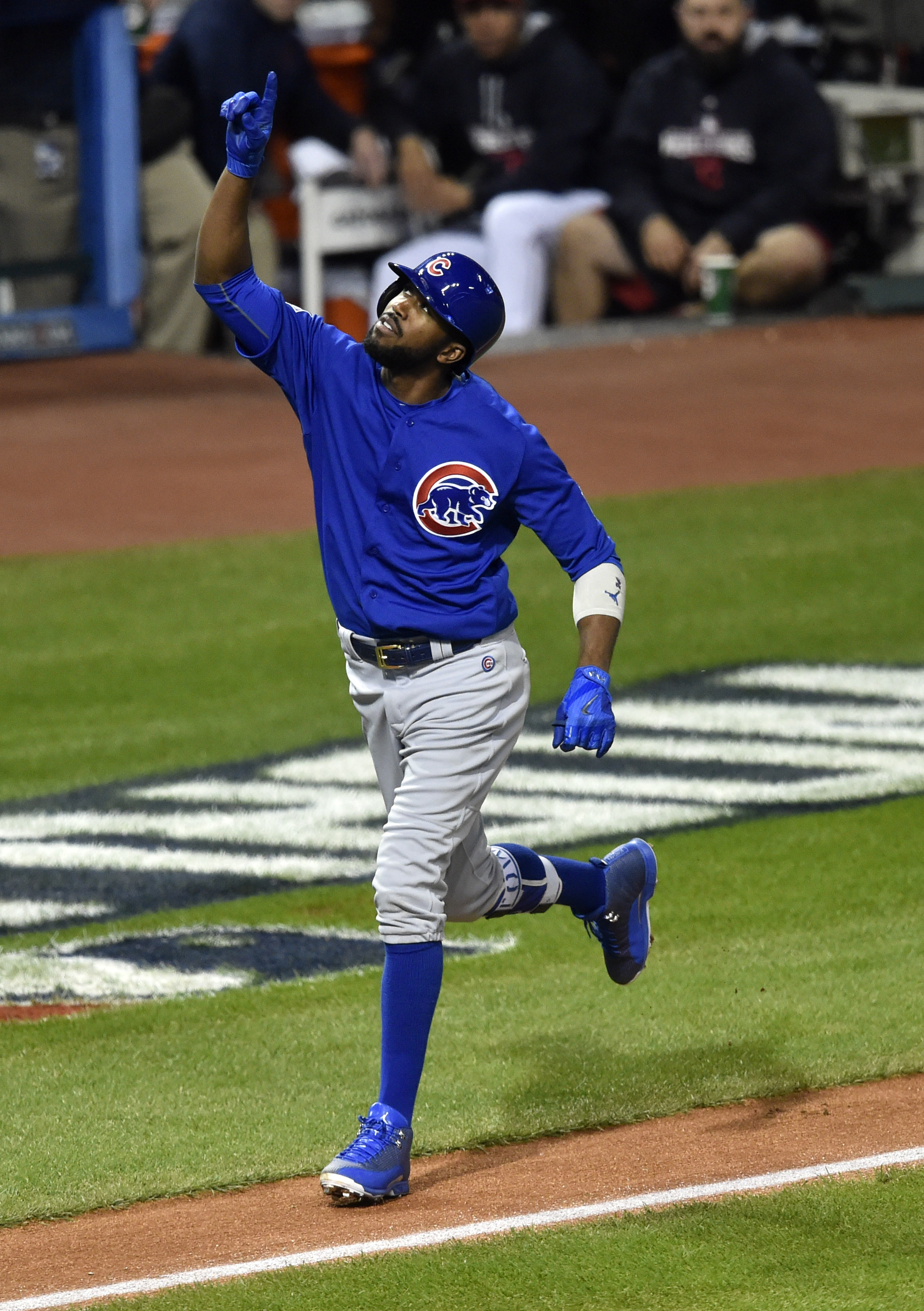
That consistency is reflected all the more in Fowler’s plate discipline. He has struck out at around the league-average rate for his career (22.2%), but drawn quite a few walks (12.6%), and has never wavered much in either regard. Again, last year was arguably his best in this arena, as he walked in a career-best 14.3% of his plate appearances.
Though his power has bounced around somewhat, and his 2016 output was driven in part by a .350 BABIP (not an atypical mark in his case), Fowler’s overall track record with the bat suggests he’s an excellent bet to continue trucking along as a productive hitter. He knows how to take a free pass; his batted-ball profile is remarkably steady; and he’s coming off of a year in which he both chased pitches out of the zone and swung and missed at the lowest rates of his career.
There’s some recent good news on the defensive side, too. Long rated as a below-average performer in center, Fowler drew solidly average marks from both Defensive Runs Saved and Ultimate Zone Rating in 2016. While nobody will buy into him as a difference-maker up the middle, it’s certainly possible that teams will still believe they can get a few seasons of plausible glovework in center.
Indeed, Fowler has shown no signs of a general drop in athleticism. He has typically drawn strong reviews on the bases, and that was never more true than in 2016. As usual, he wasn’t a huge stolen-base threat — he swiped 13 bags last year — but nevertheless ranked eighth among qualifying hitters in overall baserunning value, by measure of Fangraphs’ BsR.
In the aggregate, Fowler was worth between four and five wins above replacement in 2016, amply justifying his first All-Star selection.
Cons/Weaknesses
Of course, qualifying for the mid-summer classic is driven by first-half production, and Fowler’s power did fall off somewhat down the stretch, as he slugged .408 over his final 61 games. That ties into one of the largest questions facing his free agent case: is he, or is he not, a center fielder capable of delivering average-or-better power for at least a reasonable portion of a new contract?
In terms of pop, Fowler has never been much of a home run threat, and his 13 dingers from a year ago seem to represent a reasonable expectation moving forward. He delivered a .171 isolated slugging mark in 2016, and landed right at league average the prior year (.161), but posted sub-par marks in the two preceding campaigns (.122 in 2014 with the Astros and .145 in 2013 with the Rockies). Any erosion in that arena, or a drop in his lofty career .342 BABIP, could significantly reduce Fowler’s value even if he can largely maintain his healthy walk totals.
That’s all the more relevant given the questions over Fowler’s efficacy up the middle. Both DRS and UZR have largely panned his glovework over his career, excepting 2016. Though he isn’t particularly error-prone, Fowler has typically rated poorly in terms of range and throwing ability. While it’s arguable that he faced tough defensive assignments in Coors Field and Minute Maid Park, there are certainly questions as to whether and how long Fowler can passably roam the middle of the outfield.
If you take the pessimistic view, then, Fowler could be seen as a marginal power source that is limited to left field — a position he has never played in the majors. Plus, there are at least some durability questions. Fowler has never missed huge swaths of time, but has averaged only 131 games annually since breaking in as a regular in 2009. And he has only once topped 600 plate appearances (in 2015, his first year with the Cubs).
An additional factor worth considering is that the switch-hitting Fowler has typically fared better against left-handed pitching, the short side of the platoon split. He has been just fine against righties — compiling a lifetime .255/.356/.413 lifetime batting line — but any drop in overall productivity at the plate could leave him as a sub-optimal roster piece.
Personal
Fowler and his wife, Darya, have one daughter. A Georgia native, Fowler signed with the Rockies out of high school after being taken in the 14th round of the 2004 draft.
Fowler appeared in the 2008 Olympics for the U.S. national team and broke into the majors that same year. He was ultimately dealt to the Astros (in exchange for Jordan Lyles and Brandon Barnes) and then on to the Cubs (for Luis Valbuena and Dan Straily). Fowler reportedly nearly signed with the Orioles last winter before returning to Chicago.
Market
While he comes with draft compensation attached once again, Fowler appears to have a wide array of possible suitors. That likely won’t include the Cubs — even if they aren’t ruling it out — now that the team has added Jon Jay to the fold.
Several organizations are in need of help up the middle, including the Cardinals, Nationals, Rangers, and Indians. Any could make good fits, possibly planning to utilize him in center for part of the deal before eventually shifting him to left. The Mets, too, potentially still have a need in center, though that would be contingent upon a lot of other moving parts with Yoenis Cespedes re-signing.
There are other teams that might like the idea of installing Fowler’s high-OBP bat in the lineup while trying out his glove in left. That Fowler is capable of playing center also makes him a possible part-time option there — a scenario that might make particular sense for the Giants, Mariners, and even the Dodgers, who could spell Denard Span, Leonys Martin, and Joc Pederson (respectively) at least on occasion against left-handed pitching. A similar arrangement could make sense for the Blue Jays, who utilize light-hitting defensive stalwart Kevin Pillar up the middle, though he hits from the right side.
There are a few additional organizations that could conceivably get involved. The Athletics have a hole in center, though Fowler figures to be too expensive; likewise, the White Sox would make sense, but that is heavily dependent upon what course their offseason takes. The Orioles need another corner piece. And the Phillies might still utilize Howie Kendrick at second if they trade Cesar Hernandez.
It is important to bear in mind that there are alternatives, even with Jay somewhat surprisingly snapped up by the Cubs. Several notable players could be had via trade, and the open market still includes Ian Desmond and Carlos Gomez as center field options.
Expected Contract
While he is hardly a flawless player, that’s not necessary to strike it rich in free agency. Fowler profiles as a solid regular, and certainly seems to have a better case than did Josh Reddick — who just signed with the Astros for $52MM over four years. We’re predicting a four-year, $64MM contract for Fowler.
Photo courtesy of USA Today Sports Images.
League, Union Nearing CBA Agreement
There’s said to be progress in collective bargaining talks, as the owners and union strive to reach agreement — or, at least, avoid a work stoppage — with the current CBA set to expire at midnight. As ESPN.com’s Jayson Stark reports, the league’s ownership has not scheduled a lockout vote, though the owners are on standby in the event that one is required, or if there’s a deal to be confirmed.
Here’s the latest:
- A deal is close and could be finalized tonight, Rosenthal tweets. The meeting has adjourned with “handshakes all around,” MLB.com’s Richard Justice adds on Twitter.
- The sides are “close” to hammering out a deal on the luxury tax system, Jon Morosi of MLB Network tweets. That has been seen as one major obstacle. Given the overall movement, whether or not a final agreement is reached tonight, there’s now little chance of a lockout, Tyler Kepner of the New York Times tweets.
Earlier Updates
- It’s possible, of course, that the sides could simply decide to maintain the status quo while talks wrap up. If they haven’t seen eye to eye on everything, but see a path to a deal, that may well come to pass. In that event, the offseason business of baseball could carry on while the final issues are resolved. A lockout vote would be viewed as a drastic measure — “only if owners felt they were at point of no return” — at this point, per Ken Rosenthal of FOX Sports (via Twitter).
- We’re waiting to learn more on how things could be shaking out, and it seems there’s still quite a bit of variability in what form the qualifying offer system will take. One possibility, Rosenthal says, is that wealthy teams (i.e., those that pay into the revenue-sharing system) could sacrifice some draft position (say, five spots) if they sign a QO-declining free agent. Meanwhile, low-revenue organizations could sign such free agents without penalty. (Twitter links: 1; 2; 3; 4; 5.)
- Also under consideration, per Rosenthal (via Twitter), are changes to the international signing system. While it seems that a draft is off the table at this point, it’s possible that teams could face a hard cap on total bonus outlays. Presumably, there would also be some increase in the total spending allotment, though that remains unclear.
Astros Avoid Arbitration With Nori Aoki
The Astros agreed with outfielder Nori Aoki on a $5.5MM deal with him to avoid arbitration, according to Jake Kaplan of the Houston Chronicle (Twitter link). MLBTR had projected a $6.8MM salary for the veteran, so this represents a rather notable cost savings for the club.
While Aoki could have justifiably asked for a raise, the alternative was to test the open market. Though it’s possible he could have done as well or better there, he may simply have decided that he liked the price and the fit in Houston.
Soon to turn 35, Aoki was claimed off waivers from the Mariners earlier in the offseason. It wasn’t clear at the time whether the Astros would ultimately tender him a contract; yet more questions were raised when the club went out and added another left-handed-hitting corner outfielder in Josh Reddick.
It seems that Houston still likes the idea of utilizing Aoki in some kind of platoon. Presumably, he’ll share time with Yulieski Gurriel or some other right-handed hitter in left field.
Aoki has typically produced at just above the league-average rate, and that was true again last year in Seattle, as he put up a .283/.349/.388 slash over 467 plate appearances. He doesn’t typically carry platoon splits, and he has struck out in only eight percent of his trips to the plate in his career, making him a reliable — albeit somewhat unexciting — offensive presence.
Latest On Cardinals, Justin Turner
NOV. 30: ESPN’s Mark Saxon tweeted yesterday that he was told recently that the Cardinals aren’t pursuing Turner, and he adds in a followup that he checked in again today and was told the same. While it’s perhaps possible that the Cards are fans of Turner but don’t view him as a priority right now, Saxon’s reports certainly seem to suggest that St. Louis is not actively pursuing Turner at this time.
NOV. 29: The Cardinals have at least some interest in free agent third baseman Justin Turner, according to Jon Morosi of MLB Network (Twitter link). It is not apparent from the report whether the club has spoken to Turner’s representatives.
As things stand, St. Louis appears to have a full slate of infielders, even after deciding to shift Matt Carpenter to first base for the coming season. With Aledmys Diaz at short, Kolten Wong at second, and Jhonny Peralta and Jedd Gyorko also available up the middle and at third, there are plenty of established options on hand.
Given that array of players, Morosi suggests that the Cards would likely need to find a taker for Peralta to facilitate an addition of Turner. The 34-year-old Peralta is coming off of a rough 2016 season, though he’s owed just $10MM entering the final season of his front-loaded free agent contract.
Turner, who just turned 32, would represent a nice upgrade for the Cardinals, though of course that’s also true of many other teams. Since reviving his career with the Dodgers, Turner owns a .296/.364/.492 batting line and has rated as a top-quality defender at the hot corner.
That production also means that Turner is likely to earn a hefty deal on the open market. MLBTR ranked him fourth among this year’s crop of free agents, predicting a five-year, $85MM contract. Because he turned down the Dodgers’ qualifying offer, moreover, Turner will come with the cost of draft compensation.
St. Louis has emphasized its interest in improving defensively, and Turner would certainly help in that regard. Though Peralta has typically rated well as a shortstop, and would seem to have the skillset for third base, he drew very poor metrics there last season.
Of course, the Cards also have a variety of other needs. Most pressing, perhaps, is the open outfield spot. The organization has been said to be hunting for a center fielder, with the idea of moving Randal Grichuk to a corner spot. Whether the team could pursue an upgrade there while also making a move on Turner remains to be seen.
Mets Re-Sign Yoenis Cespedes
After two consecutive offseasons of anxiously awaiting to learn whether Yoenis Cespedes would return to their team, Mets fans can rest assured that the star slugger won’t be going anywhere anytime soon. The Mets announced on Wednesday that they’ve re-signed Cespedes to a four-year contract that reportedly comes with a full no-trade clause and guarantees Cespedes a total of $110MM. Cespedes will reportedly be paid $22.5MM in the coming season, followed by consecutive $29MM paydays, and then a $29.5MM hit for 2020. The team has called a 5pm ET press conference at Citi Field to announce Cespedes’ new contract.
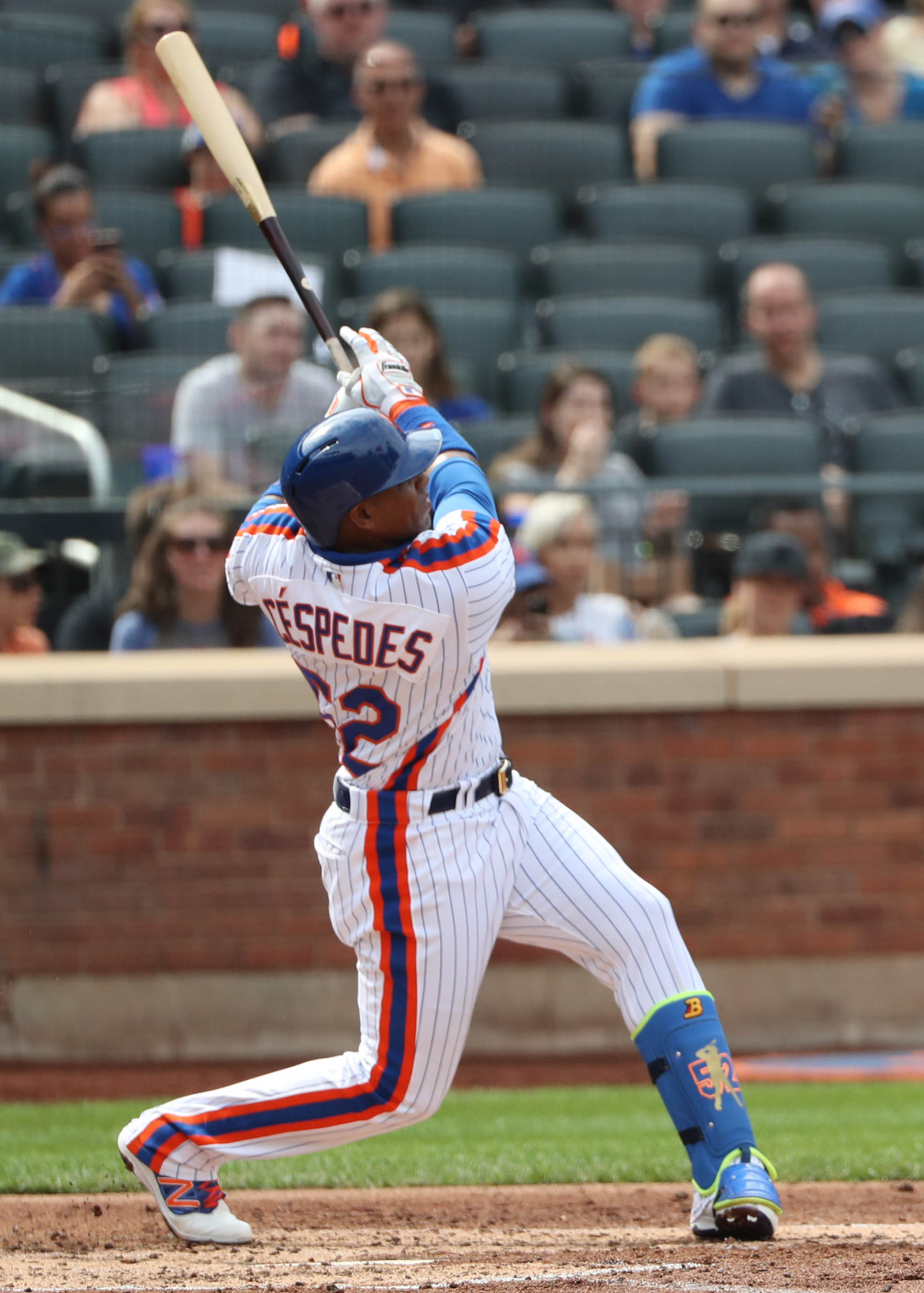
While the move doesn’t rate as a major surprise, the timing and the size of the deal are. Both sides were said to be seeking resolution by the end of the upcoming Winter Meetings, but evidently ended up striking an early deal. While Cespedes had a reasonable argument to command six guaranteed seasons, and seemed a good bet at least for five, he’ll end up taking a relatively short pact — albeit at a hefty average annual value of $27.5MM. MLBTR had predicted that Cespedes would earn $125MM over five seasons this winter.
[RELATED: Updated Mets Depth Chart]
Though he was rather clearly the best single free agent available this winter, it was never entirely clear what other organizations would join New York in pursuit. The Astros did end up as “serious bidders,” per ESPN.com’s Buster Olney (Twitter link), though it’s not clear whether Houston appealed to Cespedes as a destination. Certainly, both he and the Mets were interested in a reunion after one-and-a-half fruitful seasons together. The veteran slugger may not have found better opportunities elsewhere — at least, perhaps, not in preferred locales — but it’s notable that he did not at least await some further market development before putting pen to paper. Ongoing CBA uncertainties may have played some role, and it’s fair to recall that Cespedes did not exactly have an optimal trip through free agency the last time around.
Last winter, of course, Cespedes undertook a drawn out process before agreeing to return to New York on a three-year, $75MM deal. While he reportedly had larger offers elsewhere, at least nominally, that package was likely the best available. In particular, it gave him the chance to opt out this winter and re-enter the market after earning $27.5MM for his 2016 season. With another big season on his resume, he did just that, and was able to secure a much larger fortune in his next contract.
Though Cespedes didn’t quite maintain his torrid late-2015 work, his offensive output last year was a near match for his overall 2015 effort. Put those seasons together, and he has contributed 1,219 plate appearances of .286/.340/.537 hitting with 66 home runs. That’s about one-third more productive than the average offensive performer leaguewide.
Notably, the 31-year-old Cuban managed to repeat his impressive .251 isolated slugging mark from the prior year while also nearly doubling his walk rate to 9.4%. His strikeouts held steady at around one-fifth of his plate appearances. Combined, that made Cespedes an average (or slightly better) hitter in terms of plate discipline, which perhaps bodes well for his ability to adapt as his reflexes slow as he moves through his thirties.
Cespedes also thrived when he put the ball in play, limiting his soft contact and barreling up the ball a personal-best 39.3% of the time (per Fangraphs). He again produced home runs on nearly twenty percent of the fly balls he put in play — about 50% better than league average. Most of his power comes to the pull side, though Cespedes does spray liners around the diamond.
While he was death to lefties in 2016, putting up an OPS north of 1.000, Cespedes doesn’t really carry worrying platoon splits. Indeed, he’s still plenty productive against right-handed pitching; last year, when facing same-handed hurlers, he batted a quality .266/.329/.510. For his career, there has been virtually no difference in his output depending upon pitcher handedness, though he’s much more prone to draw a free pass when he has the platoon advantage.
In the field, Cespedes continued to draw very strong ratings for his work in left. That largely offsets the demerits he took for time spent in center. He split his innings about evenly between those positions, which explains why his overall defensive ratings tanked compared to 2015. Certainly, it would have been better for his market (and the Mets) if Cespedes was truly capable of manning a quality center field, but his bat plays just fine in the corner and he continues to earn plaudits there with the glove.
Cespedes didn’t provide any reason to believe he’s anything less than a quality defender in left, but there was at least one hint of a downturn in his athleticism. Perhaps in part due to the quad problems, he was more above-average than great in his accustomed corner position, representing a slight tick down from prior years. And for the first time in his career, Fangraphs’ BsR metric regarded Cespedes as a (very slightly) below-average overall baserunner. He stole only three bags, marking a personal low, and didn’t provide the kind of solid value on the bases that he had previously. It’s only a nitpick, and may be mostly attributable to the hamstring injury he dealt with in the middle of the year, but it’s a factor to consider given the march of time.
At the plate, it’s hard to find any recent areas for complaint, though the track record isn’t flawless. It remains to be seen, for instance, whether Cespedes will continue to exhibit the improved plate discipline that he managed in 2016. And while his past two campaigns have been excellent, he was underwhelming in the two that came before, posting a cumulative .251/.298/.446 batting line. In those years, his productivity was sapped by 45.6% and 48.0% flyball rates, which likely suppressed his batting average. It’s fair to note that his flyball rate crept forward again in 2016 (to 41.4%), and also that his additional walks serve to set a higher on-base floor — if he can maintain that approach.
For New York, the biggest piece of business of the winter is now out of the way. But it’s likely not a plug-and-go arrangement for the team. The team now has three notable, left-handed-hitting corner outfield options who’ll need to be accounted for: Jay Bruce is on the books for $13MM, Curtis Granderson is set to earn $15MM, and youngster Michael Conforto also in the mix. Though the right-handed-hitting Juan Lagares remains a factor in center, he’d best be used as a platoon piece, and it’s not clear who might join him up the middle. Trading Bruce seems likely at this point after his underwhelming half-season in New York, though perhaps Granderson or Conforto could be moved instead under the right circumstances. And that leaves unaddressed the question of which lefty will share time in center.
Tim Brown of Yahoo Sports first reported on Twitter that there was increasing optimism of a deal. Ken Rosenthal of FOX Sports reported that there was an agreement in place (via Twitter). Jeff Passan of Yahoo Sports added the financial terms (Twitter link), and FanRag’s Jon Heyman added the yearly breakdown (Twitter link). Joel Sherman of the New York Post tweeted that Cespedes also received a full no-trade clause.
Photo courtesy of USA Today Sports Images.
Twins Sign Jason Castro
The Twins announced on Wednesday that they’ve signed free-agent catcher Jason Castro to a three-year, $24.5MM contract, as was initially reported last week. Minnesota, one of the rare teams that discloses financial details of signings themselves, announced that the deal is slightly front-loaded, with Castro set to earn $8.5MM in 2017 and $8MM in both 2018 and 2019. The team’s 40-man roster is now full following the signing of Castro, though they’ll presumably vacate one spot in advance of next week’s Rule 5 Draft, when they have the first overall selection.
Castro, 29, drew strong early interest in a market that featured few immediate, near-regular catching options. With Wilson Ramos carrying a second ACL tear with him into free agency, Castro’s standing was significantly improved — as was that of other top options such as Matt Wieters, Kurt Suzuki, and Nick Hundley.
[Related: Updated Minnesota Twins Depth Chart]
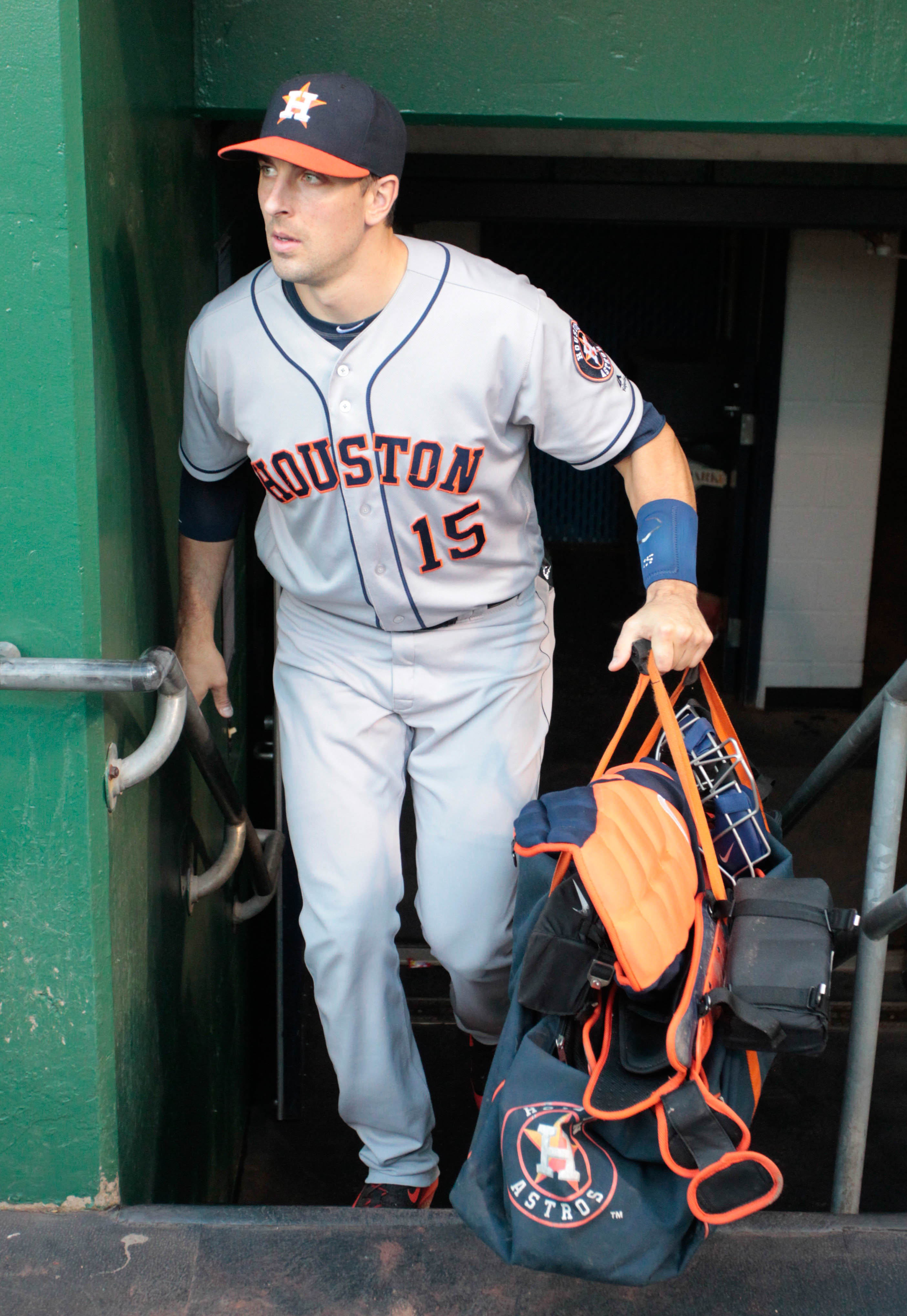
Age was undoubtedly a factor that worked in Castro’s favor, but he also intrigued with his blend of left-handed power and reputation as a framing guru. Though he has never returned to his breakout 2013 levels of production at the plate, and is deficient in the on-base department, Castro has hit double-digit home runs in each of the last four seasons and has historically posted approximately league-average power (in terms of isolated slugging).
In the defensive department, Castro has consistently rated as one of the game’s best at winning borderline strikes for his pitchers (by measure of both StatCorner and Baseball Prospectus). Though he’s average in other regards behind the plate, that leaves Castro as a top-quality run preventer, at least if one accepts the more aggressive assessments of pitch framing’s capacity to impact run expectancy.
There are plenty of limitations to his game, too, of course. Most notably, Castro carries only a .215 batting average and .291 OBP over the past three seasons. There’s a lot of swing and miss to his game (32.7% strikeout rate last year), though he can take a free pass and just boosted his walk rate to a career-best 12.0% in 2016.
With proper platoon usage, though, those problems can perhaps be offset. Castro hit just .149/.237/.241 last year when facing southpaws, but posted a much more useful .231/.331/.426 slash over his 279 plate appearances against righties. Those numbers mirror his career marks, which suggest there’s little reason ever to send him out without the platoon advantage.
For the Twins, Castro represents the first major acquisition of a new-look front office led by Derek Falvey and Thad Levine. With Kurt Suzuki departing this winter — bringing with him a glove that framing metrics were not fond of — that pair set out to find a replacement. Falvey and Levine evidently believe in the value of pitch framing, targeting Castro and staying on him even as the price tag moved to a fairly lofty level.
Minnesota will presumably pair Castro with John Ryan Murphy, who was picked up last winter in hopes he’d turn into a quality receiver. Though the 25-year-old scuffled badly at the plate in the majors, and hit just .236/.286/.323 in his 290 Triple-A plate appearances, he has shown more bat in the past and is considered a highly-talented framer in his own right. The club also just added Mitch Garver, another right-handed-hitting backstop, to the 40-man roster, so he’ll provide another option.
Ken Rosenthal of FOX Sports first reported the signing (Twitter links), and Yahoo’s Jeff Passan tweeted the exact guarantee.
Photo courtesy of USA Today Sports Images.
Latest On Collective Bargaining Agreement Negotiations
10:45pm: Rosenthal tweets a quote from someone connected to the CBA talks: “There is very positive dialogue right now. More meetings to come tonight.”
NOV. 29, 7:04pm: Following Olney’s report that the competitive balance tax is the “last big hurdle” to be cleared, Rosenthal reports (Twitter links) that the owners have proposed forfeiting draft picks as the penalty for going over the luxury tax limit, though the MLBPA is sensitive “sensitive to any adjustment that would cause [the] threshold to act as [a] de facto salary cap.” MLB Network’s Jon Morosi tweets that there’s some growing optimism about a deal being reached before the 12:01am ET deadline on Thursday.
NOV. 28, 7:07pm: Despite the apparent concession from the ownership side on the international draft, the “desired effect” of “mov[ing] talks forward” has yet to occur, Rosenthal adds on Twitter.
6:16pm: The owners won’t insist that an international draft be a part of the next CBA, Ken Rosenthal of FOX Sports reports (Twitter links). There is still disagreement regarding modification to the luxury tax system, he adds; it’s not clear whether the sides are simply haggling over where to set limits or, instead, considering larger changes. Presently, teams are hit with a tax if their payroll exceeds $189MM in a given year, which functions to restrain spending on major league rosters.
5:21pm: Teams may not participate in the upcoming Winter Meetings, according to a report from ESPN.com’s Buster Olney (via Twitter). Club officials, he says, have been given the understanding that they won’t take part in the meetings if the ongoing collective bargaining talks don’t make “sufficient progress.”
This report represents the latest indication that there’s a real possibility of a disruption in the offseason due to the stalled CBA talks. The current CBA expires on December 1, and prior reporting suggests that the league’s owners may consider a lockout depending upon how talks unfold. It’s worth noting that Olney had previously downplayed the potential for problems.
While potential disruption to the 2017 season is still months away from being a concern, a labor stand-off would surely have a significant impact on the way in which the winter signings and trades unfold. Many of the biggest moves take place at baseball’s annual Winter Meetings, which are scheduled this year for December 5-8.
All told, there are several notable upcoming dates of importance, each of which will pressure the sides to come to an agreement. While the league and the MLB Player’s Association seem to be dug in on some matters, there’s also plenty of incentive for both to avoid a work stoppage and find common ground. That’s all the more true given that the issues reportedly still open for negotiation appear to represent a relatively small slice of the game’s growing financial pie.
Among the other topics still under discussion, the possibility of an international draft — which the league has pushed — has drawn strong pushback from the union. Indeed, several Latin American big leaguers reportedly made in-person appearances during talks today, Jeff Passan of Yahoo Sports reports in a series of tweets (all of which can be seen here). While prior reports indicated that the league side was willing to scrap the qualifying offer system in exchange for the ability to institute a draft, the union appears to be taking a hard line on that particular issue.