
MLBTR Chat Transcript
Click here to read a transcript of this week’s chat with MLBTR’s Steve Adams.
Carlos Carrasco Questionable For Opening Day
Indians right-hander Carlos Carrasco has been slowed by inflammation in his right elbow (and, earlier, a hip flexor strain) this spring. And while an MRI confirmed that Carrasco is not dealing with any structural damage, president of baseball operations Chris Antonetti told reporters today that it could be a “stretch” for Carrasco to be ready for Opening Day (Twitter thread via Mandy Bell of MLB.com). Carrasco will be held back from throwing for a few more days.
It’s mixed news for Indians fans, as nothing from Antonetti’s comments suggested that Carrasco is expected to require a significant absence. But the Cleveland organization already has Mike Clevinger on the shelf as he recovers from surgery to repair a partial meniscus tear, and this winter’s slate of rule changes upped the minimum IL stint for pitchers from 10 days back to 15 days. If Carrasco is indeed placed on the injured list, that stint can still be backdated up to three days, but he’d be looking at missing at least the first dozen days of the 2020 campaign.
With Clevinger and Carrasco perhaps both sitting on the IL to begin the season, the Indians will likely give 2019 breakout righty Shane Bieber the Opening Day nod. He’d be followed by a quartet of relatively inexperienced arms: Aaron Civale, Zach Plesac, Adam Plutko and Logan Allen. (Civale has been bothered by a groin issue himself, though Antonetti indicated today that he’s expected to be ready for the opener.)
The Indians’ rotation is in somewhat of a transitional state — at least as pertains to the final couple of slots. Each of Bieber (controlled through 2024), Clevinger (controlled through 2022) and Carrasco (signed through 2023) should be locks for the next few years, health permitting. However, two of Civale, Plesac, Allen, Plutko and prospects Triston McKenzie and Scott Moss will likely be counted on to eventually seize permanent starting jobs. Viewed through that lens, even brief absences for the club’s top arms early in the season could serve as a continued audition for many arms the organization hopes will emerge as core pieces.
8 Out-Of-Options Players To Keep An Eye On
MLBTR released its annual compilation of out-of-options players just yesterday. Many of those listed have already sewn up active roster spots. But there are quite a few on the bubble. Here are eight of the most interesting out-of-options players to watch … particularly for teams that’ll be eyeing the waiver wire for hidden gems later this month:
Athletics: Jorge Mateo (2B/SS), Franklin Barreto (2B/SS), Tony Kemp (2B/OF)
We ran through this trio earlier in Spring Training, but there’s still no real clarity on who’s going to come away from this bunch with the Athletics’ starting job at second base — or even if it will be any of them. (Sheldon Neuse is also in the mix, although he has minor league options remaining.) Both Mateo and Barreto are former Top 100 prospects acquired by Oakland in high profile trades. Mateo came in the deal that sent Sonny Gray to the Yankees, while Barreto was acquired as a teenager in the ill-fated Josh Donlaldson swap with the Blue Jays. Mateo is an 80-grade runner and a natural shortstop who could shift to a utility role if he doesn’t win the second base gig. Barreto has had more success at the plate in the upper minors. Kemp, acquired from the Cubs in a small trade earlier in the winter, is the longest shot to win the job but could nab a bench spot, as he’s also capable of covering the outfield and the A’s are light on lefty bats.
Barreto entered Spring Training as the favorite, and he’s been the most impressive at the plate in a small sample of Cactus League games so far. The Royals and Tigers have reportedly shown some trade interest in Mateo.
Blue Jays: Anthony Alford (OF)
Toronto has room to carry Alford on the Opening Day roster, but the combination of Lourdes Gurriel Jr., Randal Grichuk, Teoscar Hernandez and Derek Fisher could all have bigger roles rotating between the outfield and designated hitter slots.
Alford, a former two-sport star and top prospect, has only logged 59 MLB plate appearances despite reaching the Majors in each of the past three seasons. That he’s out of options puts the Jays in a tough spot, as he can’t be sent to Triple-A for regular work but also probably won’t find everyday at-bats in the 2020 outfield — barring injuries to the four names ahead of him.
Cardinals: Rangel Ravelo (1B/OF)
With Paul Goldschmidt entrenched at first base, Ravelo has no path to his primary position. The Cards gave Ravelo his first look at third base since 2012 while he was in Triple-A this past season and also gave him some work in the outfield corners. The 27-year-old (28 in April) is looking at a spot as a right-handed bench bat on a heavily right-handed team that doesn’t have an easy path to regular at-bats. Over the past three seasons, he’s batted .307/.386/.480 in Triple-A — good for a 123 wRC+. Ravelo could be the Cardinals’ next version of Jose Martinez — a lefty-mashing first baseman/outfielder off the bench — but between Tyler O’Neill, Lane Thomas and Austin Dean, they’re not exactly short on right-handed bats to fill that role.
Reds: Scott Schebler (OF)
Schebler was a 30-homer bat for the Reds two years ago but struggled to get on base that year, hitting .233/.307/.484 on the whole. His power dipped in ’18 as his OBP rose, but he flopped in the big leagues and in Triple-A last year while battling oblique injuries. With Nick Castellanos, Shogo Akiyama, Nick Senzel, Jesse Winker and Aristides Aquino all likely ahead of Schebler on the depth chart now, his roster spot seems to be on shaky ground — though Aquino’s rough spring does leave room to claim a roster spot. Schebler will play the 2020 season at 29 years of age, and he’s controlled another four years via arbitration.
Rockies: Jeff Hoffman (RHP)
Hoffman was a top-10 draft pick, a top-50 MLB prospect and the centerpiece of the trade that sent Troy Tulowitzki from Denver to Toronto back in 2015. A half decade later, however, he’s toting a career 6.11 ERA and 5.67 FIP through more than 200 big league innings. Hoffman hasn’t even found success in the upper minors, but his pedigree, above-average fastball velocity (93.7 mph average in ’19), and excellent fastball spin (89th percentile) could all prompt another team to try its hand at coaxing some of that potential out of him. Hoffman certainly wouldn’t be the first pitcher to struggle at Coors Field only to find success following a change of scenery.
The Rockies aren’t exactly dealing with an arms surplus themselves and may be loath to let go of Hoffman for a minimal return. But owner Dick Monfort seems intent on making an attempt to contend in 2020, and Hoffman hasn’t performed well this spring. It’s feasible that he could be on the outside looking in.
White Sox: Carson Fulmer (RHP)
Once one of the most touted college arms in the country, Fulmer was the topic of great debate in the 2015 draft, when he went eighth overall to the White Sox. Fulmer led Vanderbilt’s rotation to the College World Series, but many scouting reports on him pegged him as a surefire reliever. The ChiSox were committed to him as a starter up until 2018, but he finally moved to the ‘pen that season and pitched exclusively in short stints in 2019. Fulmer hasn’t had success in the Majors or in the upper minors, but he showed elite spin on his four-seamer and breaking ball in 2019 while posting career-bests in average velocity (93.7 mph) and swinging-strike rate (10.8 percent).
The White Sox have, at most, two spots available in their bullpen this spring. Fulmer has turned in a strong effort — two runs on seven hits and three walks with 11 strikeouts in 9 2/3 innings — but manager Rick Renteria hasn’t labeled him any sort of favorite at this point (link via Daryl Van Schouwen of the Chicago Sun-Times).
Mariners Narrowing Outfield Competition
Entering Spring Training, the Mariners were slated to roll out Mallex Smith in center field and Kyle Lewis in left, but there was little clarity regarding right field following a series of injuries that have left Mitch Haniger without a timetable to return to game action. Jake Fraley, Braden Bishop, Jose Siri and veteran non-roster invitees Carlos Gonzalez and Collin Cowgill were among the team’s options to step into the void created by Haniger’s absence.
Fast forward a few weeks, and the team’s situation has trended toward a resolution. Siri was just claimed off waivers by the Giants earlier this afternoon, the Mariners also announced that Bishop was optioned to Triple-A Tacoma. Both struggled in Major League camp with the Mariners — Siri going 2-for-12 with a homer but seven strikeouts and Bishop going 1-for-11 with a pair of walks and five punchouts. (As Ryan Divish of the Seattle Times tweets, Bishop has struggled to return to form after having his spleen removed early last summer.)
At this point, Fraley appears to be the favorite to open the year in right field. MLB.com’s Daniel Kramer spoke with Seattle skipper Scott Servais about the 24-year-old, whom the organization acquired alongside Smith in the trade that sent catcher Mike Zunino to the Rays. “I like where Jake is at,” Servais said of Fraley. “There’s still room for growth. … But he comes to work every day. He’s about as serious as anybody in that clubhouse. He knows what he wants to get done every day.”
Fraley got his feet wet in the big leagues last season, although he went just 6-for-40 in his first MLB cup of coffee. That small sample shouldn’t overshadow a huge year between Double-A and Triple-A, however, as Fraley’s combined .298/.365/.545 slash is eye-catching (particularly considering the pitcher-friendly nature of the Double-A Texas League). Fraley appeared in 99 games in the minor leagues (427 plate appearances), but he still racked up 19 home runs, 27 doubles, five triples and 22 stolen bases. Thus far in Spring Training, he’s 6-for-26 with a pair of homers, a pair of doubles and a steal. He’s punched out in eight of his 29 plate appearances but also drawn three walks.
Gonzalez and Cowgill remain in the mix, but it seems unlikely that either would secure a starting job. The Mariners have every reason to get a look at Fraley in a regular role against big league pitching, considering they control him through at least the 2025 season. Gonzalez could be a bench bat and potential fallback option in the event that Fraley struggles early, but the Mariners appear intent on trotting out a young lineup and evaluating their controllable candidates. With uber-prospects Jarred Kelenic and Julio Rodriguez looming behind the current crop of outfielders, this is the best time to get a look at Fraley and other currently MLB-ready options.
It’s also possible — and perhaps likely — that neither CarGo nor Cowill breaks camp with the club. Divish tweets that the Mariners could carry both Tim Lopes and Dylan Moore on the Opening Day roster, using one as a fourth outfielder in that scenario. That’d keep with the team’s evaluation-focused modus operandi in 2020, although it’s worth noting that Moore exited today’s Cactus League game after being hit on the wrist by a fastball. Initial x-rays were negative, but his status is one to keep an eye on at the moment.
NL East Notes: Braves, Lowrie, Nunez, Martini
It doesn’t sound as though the Braves‘ decision on an everyday third baseman will come until the final days of camp. Austin Riley and Johan Camargo are vying for that spot, but manager Brian Snitker told reporters today that both players have impressed so far and he’ll “wait until the last couple of days” before making up his mind (Twitter thread via David O’Brien of The Athletic). Snitker has previously suggested that whichever player doesn’t get the Opening Day nod could head to Triple-A Gwinnett for everyday at-bats, as both have minor league options remaining. The skipper again implied as much today: “[A]ll things being equal, one guy’s not going to be real happy with the decision.”
Camargo is hitting .308/.333/.500 through 10 games thus far, while Riley is hitting .320/.346/.600 in the same sample. Obviously, we’re talking about a minuscule number of plate appearances (26), and the Braves’ decision will be based on more than the pair’s surface-level production at the plate.
A bit more from the National League East…
- There’s still no clarity regarding the knee injury that’s limiting Mets infielder Jed Lowrie, writes Ken Davidoff of the New York Post. The 35-year-old is still wearing a sizable brace on his ailing leg, and neither he nor the organization have been forthcoming about the exact nature of his knee troubles. There’s still no timetable for Lowrie, who tallied just eight plate appearances with the Mets during the first season of a two-year, $20MM deal in 2019. MLB Network’s Jon Heyman tweets that with Lowrie unable to participate in Grapefruit League games, fellow veteran Eduardo Nunez has impressed the Mets in camp — perhaps positioning himself to snag a utility role. Nunez is playing on a minor league pact and would need to be added to the 40-man roster. He’s hitting .321/.387/.464 with a pair of doubles and a triple through 31 plate appearances so far in Spring Training and has experience at second base, shortstop and third base in addition to some more limited work in left field.
- Outfielder Nick Martini was outrighted off the Phillies‘ 40-man roster last month, but the news that Andrew McCutchen will open the season on the injured list once again has him in contention for an Opening Day roster spot. Standing in his way are former Phillies top prospect Nick Williams and fellow offseason acquisition Kyle Garlick — both of whom are on the 40-man roster. Nevertheless, Meghan Montemurro of The Athletic writes that Martini has impressed manager Joe Girardi, who praised the “professional” manner in which Martini “grinds out” all of his at-bats. Martini does indeed have some of that “professional hitter” feel to him — at least based on his career numbers in Triple-A, where he’s slashed .305/.401/.435 with a hearty 13.5 percent walk rate against a 16.9 percent strikeout rate in more than 1400 plate appearances. Both Garlick and Williams have minor league options remaining, but the Phils would need to make a 40-man move to bring Martini north when camp breaks.
Giants Claim Jose Siri
The Giants have claimed outfielder Jose Siri off waivers from the Mariners, per an announcement from both clubs. San Francisco has placed injured catcher Aramis Garcia on the 60-day injured list to open a spot on the 40-man roster.
It’s the second waiver claim of the offseason for the 24-year-old Siri, who two years ago was ranked as one of the top prospects in the Reds organization. Back in 2017, Siri hit .293/.341/.530 slash with 24 homers and 46 steals in the Class-A Midwest League as a 22-year-old, earning him a spot on the back of FanGraphs’ Top 100 prospect list.
Unfortunately, over the past two seasons, Siri has struggled immensely. His on-base percentage across three minor league levels has checked in south of .300, and his 2019 campaign produced only a .237/.300/.357 slash between Double-A and Triple-A. Thus far in Spring Training, Siri has two hits (including a homer) and seven strikeouts in a dozen plate appearances.
Siri has a minor league option remaining, so he can be used as an up-and-down depth piece in San Francisco if the Giants see fit. It’s also possible that the Giants could try to pass Siri through waivers themselves in hopes of retaining him without committing a roster spot to him (not an uncommon tactic for president of baseball operations Farhan Zaidi).
Offseason In Review: Minnesota Twins
The Twins set out in search of “impact” pitching but instead signed a position player to the second-largest contract in franchise history and added a host of mid-rotation arms.
Guaranteed Contracts
- Josh Donaldson, 3B: Four years, $92MM (includes $8MM buyout of $16MM mutual option for 2024)
- Michael Pineda, RHP: Two years, $20MM
- Jake Odorizzi, RHP: One year, $17.8MM (accepted qualifying offer)
- Homer Bailey, RHP: One year, $7MM
- Sergio Romo, RHP: One year, $5MM (includes $250K buyout of $5MM club option for 2021)
- Alex Avila, C: One year, $4.75MM
- Rich Hill, LHP: One year, $3MM
- Tyler Clippard, RHP: One year, $2.75MM
- Total spend: $152.3MM
Trades and Claims
- Acquired RHP Kenta Maeda, C Jair Camargo and cash from the Dodgers in exchange for RHP Brusdar Graterol, OF Luke Raley and a Competitive Balance Draft Pick
- Acquired RHP Hunter McMahon from the Nationals in exchange for RHP Ryne Harper
- Claimed RHP Matt Wisler off waivers from the Mariners
Options Decisions
- Exercised $12MM club option over DH Nelson Cruz
- Declined $7MM club option over LHP Martin Perez
Extensions
- Miguel Sano, 1B/3B: Three years, $30MM (includes $2.75MM buyout of $14MM club option for 2023)
Notable Minor League Signings
- Jhoulys Chacin, Cory Gearrin, Danny Coulombe, Blaine Hardy, Ryan Garton, Juan Graterol, Parker Bridwell, Juan Minaya, Lane Adams
Notable Losses
- Kyle Gibson, Jason Castro, C.J. Cron, Jonathan Schoop, Martin Perez, Ryne Harper, Sam Dyson, Ronald Torreyes, Brusdar Graterol, Trevor Hildenberger, Kohl Stewart, Stephen Gonsalves
The Twins surprised onlookers in 2019 not only by winning the American League Central but by doing so in a decisive fashion thanks to a powerhouse lineup that shocked the baseball world with a Major League-record 307 home runs. But their rotation was a more middle-of-the-pack unit, and the vast majority of it — Jake Odorizzi, Kyle Gibson, Michael Pineda, Martin Perez — reached free agency at season’s end. Minnesota issued a $17.8MM qualifying offer to Odorizzi, and he made the somewhat surprising decision to accept. This winter’s free-agent market was vastly more active and player-friendly than the previous two, so perhaps he’d prefer a mulligan on that decision, but Odorizzi maintains that he has no regrets.
With Odorizzi on board alongside Jose Berrios, the Twins at least had a pair of quality arms on which to rely, but president of baseball ops Derek Falvey and general manager Thad Levine opened the winter by declaring their intent to acquire “impact” starting pitching. Minnesota entered the winter with a projected 2020 payroll of just $64MM and with only two players (Max Kepler and Jorge Polanco) guaranteed anything beyond the 2020 season. Their measured approach to free agency a year ago and their cost-efficient young core left them with plenty of immediate and long-term flexibility.
That said, adding “impact” pitching was still a rather lofty goal when considering the short supply of high-end talent available; Gerrit Cole was always projected to sign a record-setting contract — though few predicted his eventual $324MM price tag — and Stephen Strasburg wasn’t expected to be too far behind. (As it turns out, he briefly set a new record for starting pitcher contracts, signing days before Cole.)
The only real “impact” arms available beyond that duo were Zack Wheeler, Hyun-Jin Ryu and Madison Bumgarner — and the extent to which “impact” describes them is rather debatable. None of the bunch is a clear ace, be it for durability reasons, consistency of track record or some combination of the two. Ultimately, the Twins were spurned by both Wheeler — who reportedly had a strong East Coast preference — and Ryu. Their interest in Bumgarner wasn’t as high, and the longtime Giants star said after signing with the D-backs that Arizona was his top choice anyhow.
While the trade market normally presents an alternative avenue, there simply weren’t any top-of-the-rotation arms readily available this winter, with the possible exception of Corey Kluber. But Kluber is coming off an injury-ruined year, and it was never likely that the Indians would trade the former Cy Young winner to the reigning division champs.
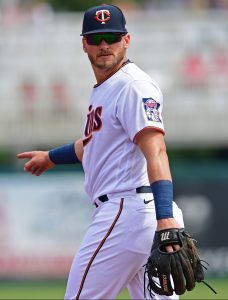
The Twins, then, were left with a choice: make short-term and/or smaller investments once again in hopes of spending the considerable financial resources at their disposal down the road … or pivot and sign the most talented player available to them. They opted for the latter, emerging as a dark-horse candidate for Josh Donaldson and eventually landing the former AL MVP on a four-year, $92MM deal — the second-largest contract in club history.
The “Bringer of (Purple) Rain” is already 34 years old, so there’s some clear age-related risk. But Donaldson also posted an outstanding .259/.379/.521 slash with 37 home runs, 33 doubles and, importantly, excellent third-base glovework in 2019. And by moving Miguel Sano (-7 Defensive Runs Saved, -5 Outs Above Average) across the diamond in favor of Donaldson (15 DRS, 8 OAA), the Twins should substantially help their pitching staff. The Donaldson deal might not look great by years three and four of the contract, but it’s a win-now move that bolsters their chances in 2020-21.
With Donaldson penciled into the heart of the order, the Twins didn’t have much else to do in terms of their starting lineup. Max Kepler will again man right field, and the Twins will hope that healthier iterations of Byron Buxton and Eddie Rosario will comprise a quality outfield trio on both sides of the ball. Jorge Polanco should again be the primary shortstop, while sophomore Luis Arraez (.334/.399/.439 in 366 plate appearances) will get the nod at second base. Nelson Cruz will be back for a second season at designated hitter. Mitch Garver is lined up for regular catching duties after a 2019 breakout. Utilitymen Marwin Gonzalez and Ehire Adrianza can play just about anywhere in the event of an injury.
Even if their big move was adding a third baseman, the Twins still addressed the pitching staff in multiple smaller ways. Pineda will return on an affordable two-year deal, although he’ll miss the first 39 games of the year under a league-reduced 60-game suspension after he tested positive for a banned diuretic.
Veterans Homer Bailey and Rich Hill both joined the mix on New Year’s Eve, signing low-cost one-year pacts. Bailey enjoyed his first full, healthy season since 2013 last year and flashed some positive secondary metrics that were more appealing than his base 4.57 ERA. Hill was terrific when healthy in ’19 but won’t pitch until at least June after undergoing primary repair surgery.
Most expected the Twins to be done with that set of additions, but they emerged as the third team in trade talks with the Dodgers and Red Sox as those clubs tried to sort out a Mookie Betts/David Price blockbuster. Minnesota originally got in on the deal by agreeing to send prized prospect Brusdar Graterol to Boston in exchange for the Dodgers’ Kenta Maeda. The Red Sox balked after viewing Graterol’s medical records, claiming surprise that he profiled more as a reliever. When that iteration of the deal was scrapped, the Dodgers worked out a separate trade to ship Maeda to Minneapolis, taking Graterol and other pieces themselves back in return. Weeks later, it emerged that Maeda had asked out of L.A. — seemingly frustrated by his lack of a consistent rotation spot, which the Twins can surely provide.
A Twins club that entered the winter with one clear big league starter on the roster (Berrios) will enter 2020 with Berrios, Odorizzi, Maeda, Bailey, Randy Dobnak, Devin Smeltzer, Lewis Thorpe and perhaps non-roster invitee Jhoulys Chacin all as options in the starting mix. Pineda (mid-May) and Hill (June or July) aren’t expected to be far behind. It may not be an imposing group of names, but it’s a suddenly deep reservoir from which to draw. The group doesn’t look markedly better or markedly worse than the collection of arms the Twins rode to a division title in 2019, but it still seems like they’ll be in the mix for the ever-elusive “impact” starter this summer as they look to end a comically lengthy postseason slump.
Elsewhere on the roster, the Twins added some steady veterans to fill complementary roles. Alex Avila will join his third AL Central club as the backup to Garver. Avila’s sky-high strikeout rates and low batting averages are a turnoff for many, but he’s an on-base machine (career 14.4 percent walk rate) who hits for some power, frames pitches well and throws well.
Minnesota’s bullpen emerged as a quietly deep unit down the stretch in 2019, buoyed by big performances from closer Taylor Rogers, setup men Tyler Duffey and Trevor May, and rookie starter-turned-reliever Zack Littell. The Twins added to that mix by re-signing Sergio Romo to a one-year deal with an option and by inking well-traveled veteran Tyler Clippard to a one-year pact. Romo shined in a high-leverage role with the Twins after being acquired from the Marlins last summer. Clippard could be an important piece due to his ability to retire left-handed hitters (.182/.256/.321 over the past three seasons combined); the new three-batter minimum makes effectiveness against both righties and lefties more critical, and this winter’s market was noticeably light on quality left-handed relievers.
The other notable piece of offseason business for the Twins was Sano’s new contract. It’s extraordinarily rare to see a player with four-plus years of big league service take a deal that delays his path to free agency in exchange for just one additional guaranteed year — and even rarer for that deal to include a club option. Over the past decade, former Braves third baseman Chris Johnson is the only position player to sign a three-year extension with a club option at this stage of his career.
Sano has dealt with myriad injuries in his career to this point and has been inconsistent when healthy. That surely impacted his decision to take the deal and was factored in by the organization in its offer. The end result is that in 2022 — the first of Sano’s would-be free-agent years — the Twins will control him, Polanco and Kepler (last winter’s extension recipients) for a combined $21.5MM. If Sano’s $14MM option is exercised in 2023, that trio will be owed $30MM. Combine that with Maeda’s annual $3.125MM base salary (also through 2023), and the Twins have done a nice job in establishing some cost certainty over the long run.
Other extensions could yet follow for Minnesota. The Twins tried to work out a long-term deal with Berrios a year ago and could do so again between now and Opening Day. Cruz is a free agent at season’s end, but the 39-year-old has made clear he plans to continue playing. Minnesota has talked to his agents already. Byron Buxton seems a plausible candidate as well. In the bullpen, a preemptive run at signing May before he reaches free agency at season’s end or a long-term deal with Rogers could be sensible pursuits. Last year’s breakout aside, there’s probably less urgency with the late-blooming Garver, who is already 29 years old and controlled through his age-33 season.
2020 Outlook
With a serviceable rotation, a quietly strong bullpen and what could be MLB’s most potent lineup, the Twins enter the 2020 season as the favorites in the AL Central. They’ll try to stave off an Indians club that cut spending and a White Sox organization that went the other direction, significantly ramping up payroll. But last year’s Minnesota roster bested Cleveland by eight games and Chicago by 28.5 games. The Indians look like a worse team now than they did in 2019, and while the ChiSox are unequivocally improved, wiping out that kind of deficit would be a stunning accomplishment.
Rotation help could very well be on the summer wishlist again, depending on the health and productivity of their incumbent options. But after toiling away in futility for much of their time since the opening of Target Field in 2010, the Twins finally look like a team poised for some sustainable success.
How would you grade the Twins’ offseason moves? (Link for app users.)
How would you grade the Twins' offseason?
-
B 54% (2,286)
-
A 37% (1,564)
-
C 7% (314)
-
F 1% (46)
-
D 1% (35)
Total votes: 4,245
Photo courtesy of USA Today Sports Images.
Rays Have Opened Extension Talks With Glasnow, Meadows
The Rays have approached Tyler Glasnow‘s representatives at Wasserman and Austin Meadows‘ representatives at Excel Sports about potential long-term deals for the pair of burgeoning stars, reports Marc Topkin of the Tampa Bay Times.
There’s no indication that talks with either party have progressed beyond the preliminary stage, but the reaction from the pair is notable. Both say they’re open to such an arrangement, with Meadows saying he “definitely would be open to something like that” but Glasnow taking a bit more reserved approach. While the right-hander acknowledged that he’d listen to offers, he also made clear that he doesn’t want to “sell [himself] short” and that he has “no problem going year-to-year.”
Looking at the two as separate cases, Glasnow’s situation is a bit trickier. The right-hander was utterly dominant when healthy in 2019, pitching to a 1.78 ERA with averages of 11.3 strikeouts, 2.1 walks and 0.59 home runs allowed per nine innings pitched. Unfortunately for both him and the Rays, a forearm strain limited the towering righty to 60 2/3 innings.
Glasnow was one of the game’s premier pitching prospects for years and, since being traded to the Rays, has broken out with 116 2/3 innings of 2.94 ERA ball and nearly 11 punchouts per nine frames. He doesn’t have a long track record in the Majors, though, and his platform season was noticeably light on workload. Throw in that he’s a Super Two player who’s already set to earn $2.05MM in 2020, and it becomes a bit muddier when trying to determine what the two sides might deem a fair price point.
For context, Glasnow’s own teammate, Blake Snell, holds the record for largest contract ever signed by a pitcher with between two and three years of big league service time. Snell signed a five-year, $50MM contract just last spring, but he wasn’t a Super Two player at the time of that agreement. He was, however, fresh off a Cy Young win, which makes his case perhaps something of an outlier. The second-largest deal ever inked by a two-plus pitcher was German Marquez, who landed a five-year, $43MM deal (also last winter). Marquez wasn’t a Super Two player but tossed thrice as many innings as Glasnow in his platform season. Luis Severino was a Super Two with two-plus years of service time when he signed a four-year, $40MM deal with a club option for a fifth season in February 2019, but he was projected to earn more than double the $2.05MM to which Glasnow agreed for the upcoming season (by virtue of his 2017-18 workload).
The unique nature of Glasnow’s situation and his stated willingness to go year-to-year might make an agreement tough to hammer out. A healthy and productive season out of the righty, after all, would lead to a substantial raise. Mike Foltynewicz played out the 2018 season as a Super Two player on a $2.2MM salary and, after 183 innings of 2.85 ERA ball, saw a 149 percent raise to $5.475MM for the 2019 campaign. Even with some regression in terms of his ERA, Glasnow could be looking at similar financial upside if he can rack up the innings. There’s also virtually no circumstance in which he’d be in for a pay cut in 2021, so he’s looking at a minimum of $4.1MM over the next two seasons as it is. At the very least, he has a bit of security on his side now that he’s into arbitration.
Meadows is in a different situation. The 24-year-old has a year and 74 days of service, which places him two full seasons away from reaching arbitration. Meadows slashed .291/.364/.558 with 33 home runs, 29 doubles, seven triples and 12 steals in 591 plate appearances during a breakout 2019 campaign with the Rays. In doing so, he cemented himself as a fixture in the lineup for the foreseeable future. The Rays’ interest in keeping him cost-controlled is plenty sensible, as Tampa Bay has routinely had to move on from its players as their salaries escalate in arbitration (Tommy Pham and Corey Dickerson are recent examples in the outfield). That looks particularly likely to be the case with Meadows iff he goes year-to-year, as his power numbers would play quite well when he does reach arbitration in the 2021-22 offseason.
Looking for some historical comps, Christian Yelich‘s first extension — seven years and $49.57MM — is the largest ever signed by a player with between and two years of service. Ronald Acuna Jr. secured a $100MM payday with less than a year of service time, although that deal was an outlier and required him surrendering four would-be free-agent seasons in the process. Something closer to the first Yelich extension is a likelier base point, but that deal is five years old, so Meadows’ camp could aim to set a new precedent.
In the event that one or both do put pen to paper, the Rays’ 2020 payroll figures to be largely unaffected. Tampa Bay is set to again field one of the lowest-cost (but most-talented) rosters in baseball, with a projected Opening Day mark of just under $71MM. The Rays have about $34MM in guaranteed money on the books both in 2021 and in 2022, though, and that number dips to $24MM by the 2023 season. Fitting contract extensions for Meadows and/or Glasnow into the long-term budget shouldn’t be much of a reach — if the involved parties can years and dollars.
Justin Verlander Shut Down Due To Lat Strain
12:42pm: Verlander himself sounds as though he’s expecting to open the season on the injured list (Twitter link via Rome): “I would say it would probably take a miracle for me to be back by Opening Day.”
12:07pm: The Astros have shut right-hander Justin Verlander down for the time being due to a “mild lat strain,” general manager James Click tells reporters (Twitter link via Chandler Rome of the Houston Chronicle). There’s no timetable for when Verlander will resume throwing yet, and the organization is uncertain as to whether Verlander will be ready for Opening Day.
There were far worse potential outcomes as Houston fans braced for the worst when Verlander exited yesterday’s start and went in for an MRI. Indeed, Click indicated that, “By and large, the news we got today was on the positive side.” While any injury to a starter of Verlander’s caliber is problematic, the lack of any tearing or structural damage in his arm surely came as a sigh of relief. That said, it’s still a discouraging development for a team with mounting questions on the pitching staff. If Verlander proves unable to take the ball come Opening Day, one would imagine that fellow veteran Zack Greinke would get the nod in the season opener. But beyond Greinke, the Astros are looking at Tommy John returnee Lance McCullers Jr. and the relatively inexperienced Jose Urquidy in the third and fourth slots in the rotation.
Presently, Austin Pruitt and Josh James are the presumptive front-runners for the fifth spot in the rotation, but both could be start games early in the season in the event of an IL stint for Verlander. Alternatively, the ‘Stros could look to use an opener early in the year. Click, it should be noted, was hired out away from the Rays earlier this winter — the organization that pioneered the opener tactic at the Major League level.
One in-house alternative, right-hander Rogelio Armenteros, has already been shut down due to elbow discomfort. Brad Peacock has yet to throw in a game this spring, as he’s been slowed by neck pain. He’s been slated for bullpen duties anyhow. Other options could include right-hander Cy Sneed or lefties Framber Valdez and Cionel Perez. However you want to judge the race for the final few spots, an Astros rotation that until very recently was a legitimate powerhouse now has more questions than answers. And at this point, it’s not as if Houston can simply go out into the free-agent market and plug a starter into their staff. Jason Vargas, Clay Buchholz and Andrew Cashner are among the unsigned names of note, but Opening Day is a mere 15 days away; none from that bunch would be ready in time.
Perhaps Click and his staff will explore other avenues, but no one should expect a proven big league starter to be on the move at this point of Spring Training. And with the Astros about $23MM over the luxury tax threshold as it is, they don’t seem likely to take on any sort of meaningful salary. Waiver claims and deals for veterans who opt out of minor league pacts elsewhere could help to replenish the depth, though, and it wouldn’t be a surprise to see the club make any moves along those lines.
NL Central Notes: Pirates, Lorenzen, Chatwood
The Pirates were “behind the times” in their approach to developing pitchers under the previous front-office/coaching regime, right-hander Tyler Glasnow opines in a fascinating interview with Jason Mackey of the Pittsburgh Post-Gazette. Glasnow details the manner in which the Pirates emphasized pitching down and inside even as the rest of the league evolved to attacking the top of the strike zone with four-seamers and ramping up the usage of breaking balls. The right-hander calls the Pirates’ approach “a good strategy for [2013-15]” but an outdated one in the current era of data-driven approaches to pitching and game-planning. Glasnow explains how he began working at the top of the strike zone on his own toward the end of his time as a Pirate — he was never approached by the club about doing so — and that was the first thing the Rays encouraged him to do following the trade. The interview is rife with interesting (and, if you’re a Pirates fan, frustrating) quotes from Glasnow and is well worth a full look regardless of which team you follow.
Taking a look elsewhere in the division…
- The “two-way player” criteria established by Major League Baseball within this winter’s slate of rule changes puts National League clubs at a disadvantage, writes Ken Rosenthal of The Athletic (subscription required). The rules, which stipulate that a pitcher who wishes to gain two-way designation must start 20 games as a position player (with three plate appearances per start), appear to have been written with Shohei Ohtani in mind (and perhaps Brendan McKay) but don’t allow for someone like the Reds‘ Michael Lorenzen to easily attain that status. Lorenzen played 29 games in center last season, including six starts. In two of those instances, he played every inning of an extra-inning game in the outfield, and in another he came in to throw two innings of relief before returning to center. Lorenzen called the criteria “obnoxious” in chatting with Rosenthal, who notes that the Reds are among the teams that have approached the league about the issue. Over the past two seasons, Lorenzen has batted .241/.302/.468 with five home runs in 87 plate appearances. He logged 89 innings in center field last season after serving as a frequent pinch-hitter a year prior in 2018.
- Cubs skipper David Ross has at least considered utilizing righty Tyler Chatwood as a multi-inning reliever, he tells Gordon Wittenmyer of the Chicago Sun-Times. Ross still calls Chatwood the favorite for the fifth slot in the rotation, but he also points to Chatwood hitting 99 mph out of the bullpen and the fact that he pitched in every inning while functioning in various roles last season. Ross likens Chatwood to Kenta Maeda, suggesting that he could function as a starter for much of the season before shifting to a multi-inning relief option late in the year and potentially into the postseason. If Chatwood once again struggles as a starter early in the season, it seems likely the organization will shift him back into that role and look to alternative options in the rotation.