
Corey Kluber, Max Scherzer Win Cy Young Awards
Indians ace Corey Kluber and Nationals ace Max Scherzer have been named the Cy Young Award winners in their respective leagues, the Baseball Writers Association of America announced tonight. Scherzer has now won back-to-back Cy Young Awards and three total in his career after receiving 27 of the 30 first-place votes. (Clayton Kershaw received the other three first-place votes.) It’s the second AL Cy Young nod for Kluber, who won in even more convincing fashion with 28 of 30 first-place votes. (Chris Sale received the other two first-place votes in the AL.)
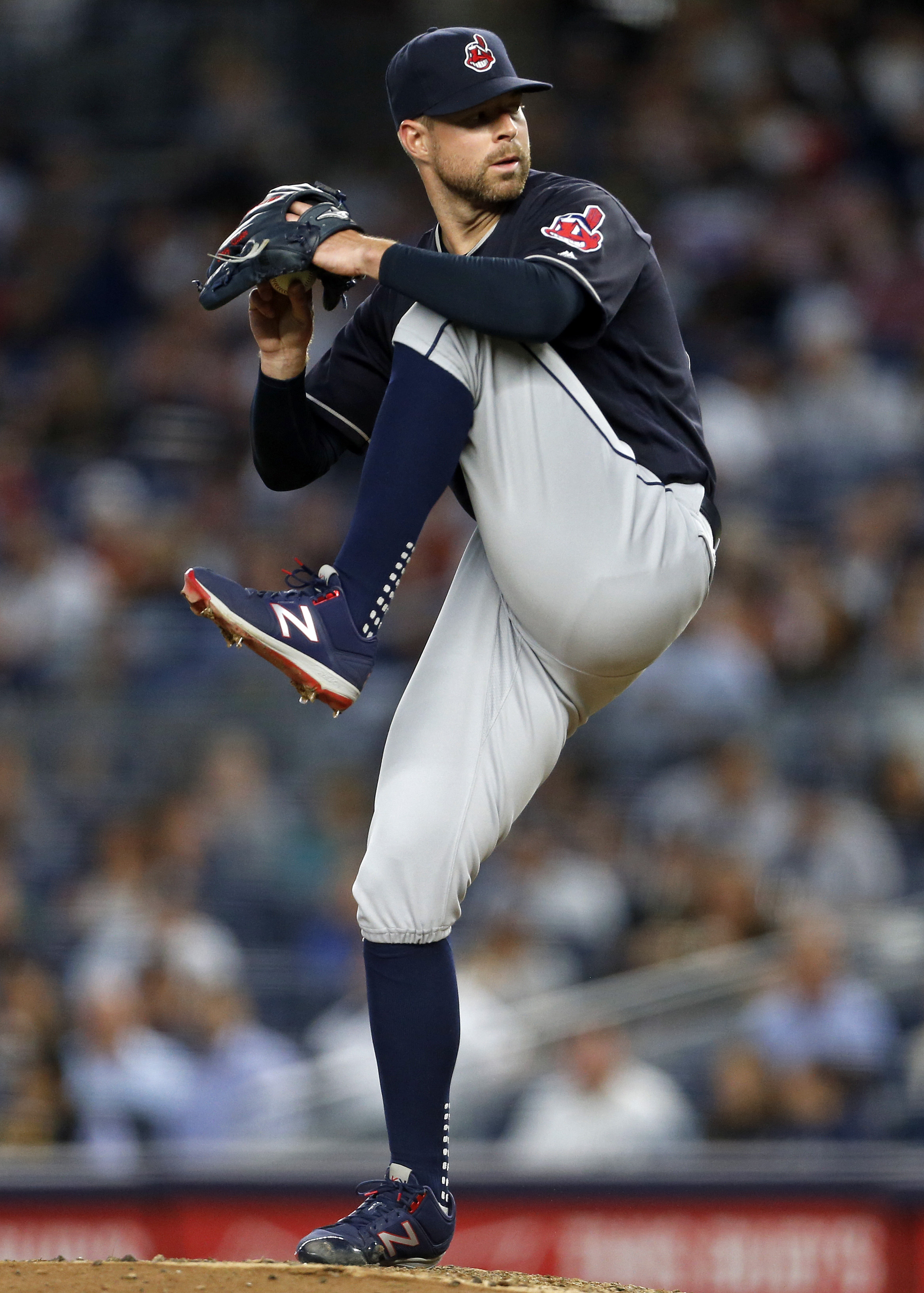
Kluber, who also took home the award back in 2014, rode a blistering hot finish to his second career Cy Young honor. The 31-year-old missed nearly all of May after going on the DL early that month with a lower back strain. At the time of Kluber’s DL placement, he carried a 5.06 ERA through his first six appearances on the season.
The Kluber of old resurfaced upon returning from injury, though. In his first appearance upon activation, Kluber fired six innings of shutout ball with two hits, one walk and 10 strikeouts. From that point forth, he went on an otherworldly hot streak, pitching to an immaculate 1.62 ERA with a 224-to-23 K/BB ratio that looked more like something one would see in MLB: The Show than in real life. All told, Kluber wrapped up his season with an AL-best 2.25 ERA through 203 2/3 innings. Kluber also led the American League in complete games (five), shutouts (three) and walks per nine innings (1.6) while averaging 10.3 punchouts per nine frames as well.
Sale took not only the other two first-place votes but 28 second-place votes, meaning that he and Kluber were first or second on all 30 ballots. Luis Severino finished a distant third place, while Carlos Carrasco, Justin Verlander, Craig Kimbrel, Ervin Santana and Marcus Stroman rounded out the ballot.
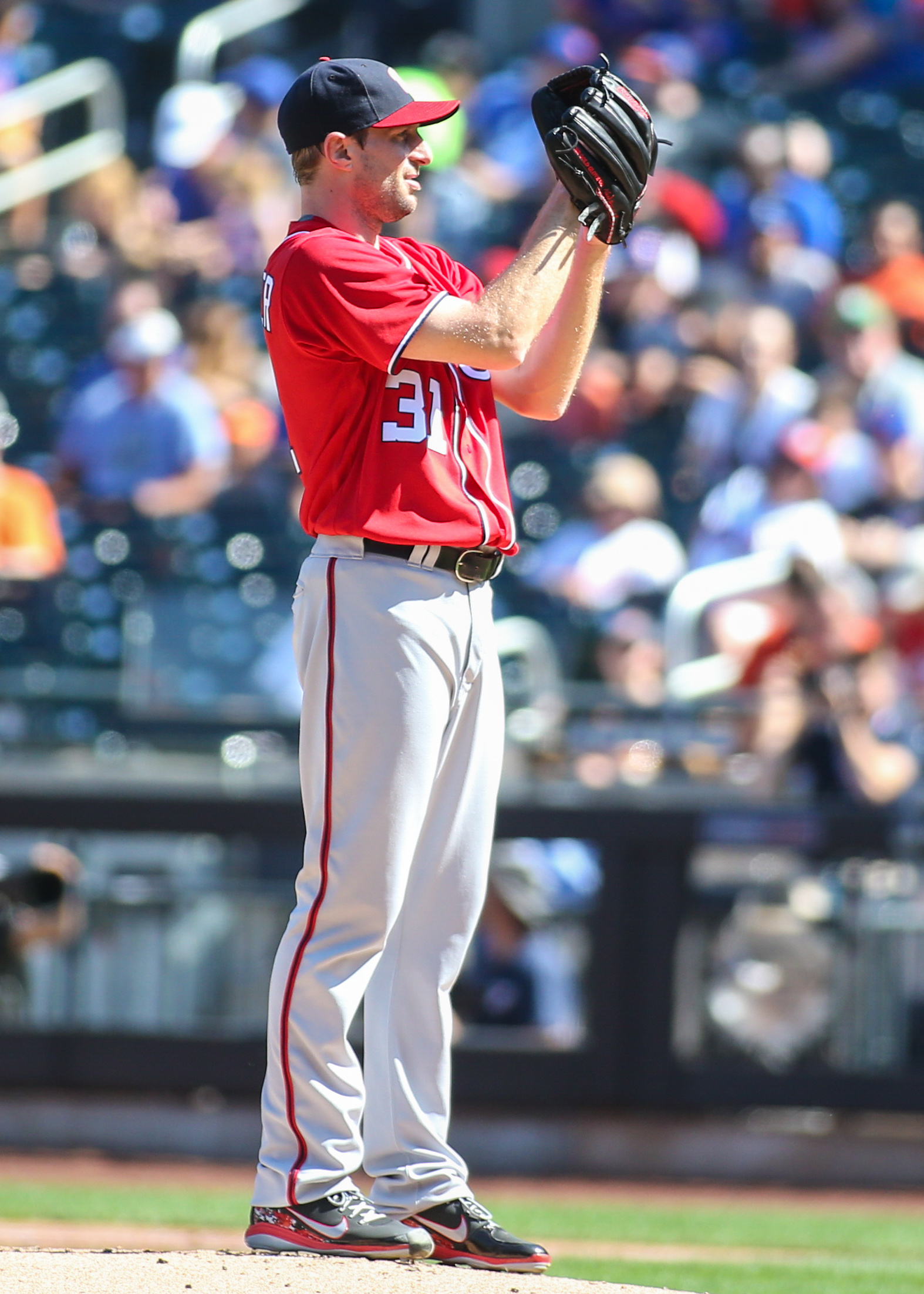
As for Scherzer, the 33-year-old topped 200 innings for the fifth consecutive season and led the National League in strikeouts for the second consecutive year. His gaudy 2.51 ERA and 12.0 K/9 rates were both career-bests, and he’s now made at least 30 starts in the past nine seasons after taking the hill 31 times this season.
Unlike Kluber, Scherzer was dominant from day one in 2017. Remarkably, there was only one point throughout the entire season where Scherzer’s ERA crept above 3.00; on May 20, he yielded three runs in five innings to bump his ERA to 3.02. From that point forward, Scherzer was virtually unhittable, posting a 2.30 ERA over his final 141 innings and at one point whiffing at least 10 hitters in six straight outings.
Kershaw received 25 of the 30 second-place votes, while Zack Greinke and Scherzer’s teammate, Stephen Strasburg, each took home a second-place vote as well. Strasburg wound up finishing in third place, with Greinke taking fourth and Kenley Jansen landing fifth overall in the balloting. Yet another Nats starter Gio Gonzalez, came in sixth place overall, giving the Nats three of the top six in the NL. Robbie Ray, Jacob deGrom, Jimmy Nelson and Alex Wood each collected an odd fourth- or fifth-place vote here and there, rounding out the ballot in that order.
Photos courtesy of USA Today Sports Images.
Early Markets For Santana, Morrison Taking Shape
TODAY: The early interest in Santana is robust, per Jon Heyman of Fan Rag, who writes that Santana “is thought to be drawing interest from as many as 10 teams.”
Among those reaching out to his representatives, per Heyman, are the Angels as well as two eyebrow-raising NL East clubs: the Mets and Phillies. The New York franchise has had its moments of frustration with Dominic Smith, though it would remain surprising to see him blocked entirely by a player that likely can’t be utilized anywhere other than first base. Mike Puma of the New York Post does tweet, though, that the club could send Smith back to Triple-A and eventually shop him. And the Phillies would appear to be set at first with Rhys Hoskins, though he could in theory be shifted to the corner outfield after experimenting there last year. (Of course, the team has other young players in the outfield and indications are that the preference is not to disturb that mix.)
YESTERDAY: The Red Sox have an obvious hole at first base in their lineup, and they’re set to begin the preliminary stages of filling that vacancy at this week’s GM Meetings. Nick Cafardo of the Boston Globe tweets that Boston will sit down with Carlos Santana‘s agents at Octagon, while Evan Drellich of NBC Sports Boston reports that the Sox have also lined up a meeting with Logan Morrison‘s representatives at ISE Baseball.
Boston isn’t alone in eyeing that pair, however. Jeff Fletcher of the Orange County Register reports that the Angels are considering a run at Morrison as they look to add some left-handed punch to their lineup. Morrison is one of multiple players on Anaheim’s radar, Fletcher notes.
Meanwhile, the Mariners have interest in bringing Santana into the fold, according to MLB.com’s Jon Morosi (on Twitter). There have yet to be any “substantial” discussions between the two sides, Morosi cautions (as one would expect this early in the offseason), but first base is a definite area of need for the Mariners. Seattle saw both Yonder Alonso and Danny Valencia hit free agency when the season ended, and while Dan Vogelbach represents an internal option, he’s not considered to be a strong defender.
Santana, 32 in April, is widely considered to be one of the best first basemen available on the free-agent market this offseason. While he wouldn’t necessarily provide the huge power bat that many Sox fans covet — he belted a career-high 34 homers in 2016 but saw that mark fall to a more typical 23 homers in 2017 — Santana is an on-base machine who has also worked himself into one of the premier defensive first basemen in the league.
A switch-hitter, Santana batted .259/.363/.455 this past season and has never posted an OBP south of .351 in a season. Santana has walked at a 15.2 percent clip in his career against just a 17 percent strikeout rate (13.2 percent and 14.1 percent, respectively, in 2017). Originally a catcher, Santana eventually moved off the position to first base and has built up a quality reputation there. He was a Gold Glove finalist this past season after registering a +10 Defensive Runs Saved mark and a +4.8 Ultimate Zone Rating. The Indians made a qualifying offer to Santana, so he’d cost the Red Sox their second-highest pick in next year’s draft as well as $500K of their international signing pool. The Mariners would have a lighter penalty, only surrendering their third-highest pick.
As for Morrison, he’s a younger option that’ll play most of next season at the age of 30. A longtime top prospect, Morrison’s career never fully took off as hoped in either Miami or in Seattle. However, he rebounded from a slow start with the Rays last year to hit .275/.350/.498 with 14 homers over his final 303 plate appearances before a wrist injury ended his season.
Morrison returned to the Rays as a free agent on a one-year, $2.5MM contract this past offseason and proved to be one of the top bargains in all of baseball. In 601 plate appearances, Morrison posted a .246/.353/.516 line and 38 homers while receiving slightly above-average marks from DRS and UZR himself (+1 from each metric). He doesn’t come with the platoon issues that many left-handed hitters carry, either, as he hammers right-handed opponents and has been a bit above average against lefties over the past two years. Including his strong finish in 2016, Morrison has raked at a .256/.352/.510 pace (130 wRC+) with an 11.8 percent walk rate and a 23.1 percent strikeout rate in 904 plate appearances.
Despite that huge season, the budget-conscious Rays opted not to extend a QO to Morrison. Tampa Bay had already extended a QO to righty Alex Cobb and surely didn’t relish the notion of taking the risk, however small, of two players accepting one-year salaries worth $17.4MM. Morrison now benefits from that decision, though, as he won’t require interested parties to surrender a draft pick or international money upon signing.
Poll: Which Of These Prospects Is Most Likely To Be Traded?
During the offseason, rumors about major league players dominate the headlines. Fans and analysts alike discuss potential landing spots for major league free agents and trade candidates. With so much of the focus on big name MLB players, the subject of which top prospects could change hands falls into the background.
The players below are some of the most valuable trade assets in the game who have not yet lost their rookie eligibility. MLB Pipeline considers each of them to be among the top 25 prospects in baseball. They all play for teams that are firmly in “win now mode”. Indeed, all five of them belong to teams that finished with a top four record in baseball last season. It’s safe to say that, were they to dangle their respective prospects as trade bait, each of those teams could fill nearly any need on their big league roster.
Victor Robles, OF (No. 2 Overall Prospect): Nationals
The Nationals signed Victor Robles out of the Dominican Republic at age 16, and he’s met little resistance throughout his development. The Nats promoted him to the majors for the first time in September of 2017; he even made the club’s NLDS roster. In his 24 regular season at-bats, Robles managed six hits, including three for extra bases. The Nationals are in need of another starting pitcher, and the 20-year-old outfielder could easily bring back an elite arm. Washington’s outfield picture for 2018 seems reasonably clear, with Adam Eaton, Michael Taylor and Bryce Harper all under contract and Brian Goodwin as a solid fourth outfielder option. However, Robles is practically major league-ready right now, so it might not make much sense to trade him when he could easily contribute this season. eIt’s especially important to note that Eaton, Taylor and Harper all dealt with injuries last season. With that in mind, the Nationals might prefer to deal their second-best prospect, outfielder Juan Soto, instead.
Kyle Tucker, OF (No. 7 Overall Prospect): Astros
Houston took Tucker out of H.B. Plant High School in Tampa, FL with the fifth pick in the 2015 draft. The young outfielder proceeded to rocket through the club’s minor-league system, reaching the Double-A level midway through 2017. Tucker’s hit tool is one of the best among minor-leaguers, but the Astros already have other left-handed outfield options at the major league level. Josh Reddick and Derek Fisher both bat primarily from the left side, while George Springer, Marwin Gonzalez and Jake Marisnick figure to be ahead of Tucker on the depth chart heading into 2018 as well. That’s not to say that Tucker isn’t more talented than those players, but it seems like a lot would have to happen for him to stumble into significant playing time next season. On the other hand, the Astros don’t have a clear hole on the major league roster outside of the bullpen, and Tucker is far too valuable to trade for a reliever. The organization has also reportedly been stingy about trading any of their top prospects lately, so perhaps it’s unlikely we’ll see him moved.
Francisco Mejia, C (No. 13 Overall Prospect): Indians
Mejia’s development has been a somewhat slow process; the Indians signed him out of the Dominican Republic all the way back in 2012. However, he’s vaulted up prospect lists after incredible success across the past two seasons, including a 50-game hit streak during the 2016 campaign. The best catching prospect in baseball is only 21 and has an elite hit tool from both sides of the plate. Cleveland decided to give him a bit of seasoning at the major league level this past September, which seems to imply that they think he could be close to MLB-ready. The Indians already have catchers Yan Gomes and Roberto Perez under contract for the foreseeable future, so Mejia could be a good candidate to be exchanged for help at first base if Carlos Santana signs elsewhere. But the Indians are also testing Mejia out at third base in the Arizona Fall League, a position he could more easily claim on the Tribe’s roster at some point in 2018.
Triston McKenzie, RHP (No. 20 Overall Prospect): Indians
After McKenzie struck out 157 batters in 91 innings during his senior year in high school, Cleveland selected the right-hander in Competitive Balance Round A of the 2015 draft. The lanky 20-year-old stands at 6’5″ and throws his fastball in the low 90s, though most scouts believe he could pick up even more velocity as he grows stronger. McKenzie struck out double-digit batters in six different games at the High-A level in 2017, including a 14-strikeout effort on May 9th. Overall, the Royal Palm Beach High School product pitched to a 3.45 ERA (and a 2.67 FIP) while punching out 11.71 batters per nine innings. With the Tribe’s window of contention seemingly at its peak, and McKenzie highly unlikely to reach the majors in 2018, the righty could potentially end up being an excellent trade chip. Even if the young righty were MLB-ready, the Indians already have a stacked rotation that will include Corey Kluber, Carlos Carrasco, Trevor Bauer and two of Danny Salazar, Josh Tomlin and Mike Clevinger. McKenzie could be dangled for help at first base (should Santana depart), or elite bullpen help such as Brad Hand or Felipe Rivero.
Alex Verdugo, OF (No. 23 Overall Prospect): Dodgers
The Dodgers took Verdugo in the second round of the 2014 draft, and the left-handed outfielder has done well at every level of the minors. His power isn’t prolific and his speed is average, but his hit tool is excellent. Verdugo is patient at the plate and is great at hitting to the opposite field. While fellow Dodgers prospect Walker Buehler is excluded from this list due to his proximity to the majors and a fairly clear opening in LA’s rotation, Verdugo could be more of a luxury than a vital asset. Chris Taylor and Yasiel Puig are set to man center field and right field, respectively, and it’s unclear whether the Dodgers are ready or willing to give up on Joc Pederson yet, especially following a strong postseason performance. Verdugo could potentially be used to land a strong second baseman. It’s not outside the realm of possibility that he could be used to acquire a more proven outfielder, either. Still, the Dodgers have four other top 100 prospects outside of Buehler and Verdugo. Even if they attempt to make a blockbuster trade during the offseason, they might prefer to move someone a bit further away from the majors.
What do you think? Which of these top 25 prospects is most likely to be with another organization by the time spring training rolls around? (Poll link for app users)
Which Of These Top Prospects Is Most Likely To Be Traded?
-
Alex Verdugo (Dodgers) 34% (4,669)
-
None of these prospects has any chance of being traded 25% (3,415)
-
Victor Robles (Nationals) 13% (1,724)
-
Kyle Tucker (Astros) 12% (1,659)
-
Triston McKenzie (Indians) 9% (1,281)
-
Francisco Mejia (Indians) 7% (1,023)
Total votes: 13,771
Central Notes: Santana, DeJong, Cubs
Although outgoing Royal Eric Hosmer is a clear bet to take home the largest contract among first basemen this winter, Travis Sawchik of Fangraphs suspects that career Indians first baseman Carlos Santana will outperform Hosmer for at least the next three years. While Hosmer is younger than Santana and had a better 2017 season by fWAR, Sawchik notes that Santana’s primary skill (his batting eye) is a better bet to age well than any other skill that either player brings to the table. Hosmer has also posted negative fWAR totals in two of his major league seasons; something Santana has never done. Worth mentioning: Santana was worth a total of 21.2 fWAR from 2011-2017, while Hosmer was worth a mere 9.9.
Elsewhere across baseball’s central divisions…
- The offseason for Cardinals‘ shortstop Paul DeJong will be an interesting one. As CBS2’s Steve Overmyer reported from New York on Thursday, DeJong has joined renowned scientist Dr. Lawrence Rocks in a lab study about the effects of heat and weather on baseball flight distance. Early returns in the study seem to indicate that while baseballs are likely to travel shorter distances as temperatures get colder, they are also likely to travel shorter distances if temperatures increase past a certain point. “As you decrease temperature, you get less bounce, like an automobile tire on a very cold day – it’s a little more brittle,” Rocks said. “As you increase temperature, the elastomeres get a little mooshy; you get less bounce.”
- While Cubs GM Jed Hoyer has declined to comment on his team’s pursuit of Shohei Ohtani, Patrick Mooney of NBC Sports Chicago suggests a plan of attack for the team in trying to acquire the Japanese ace. While bringing an end to “The Curse” is no longer a selling point (as it may have been to Jon Lester and some others, according to Mooney), Chicago still has plenty to offer as a city. Hoyer will be working hard to put together a more attractive pitch to Ohtani and his agents than the other 29 MLB teams that will be vying for the two-way star’s services.
Free Agent Rumors: Holland, Bruce, LoMo, Hosmer, Morrow, Ichiro
Though Greg Holland turned down his $15MM player option and will also reject his $17.4MM qualifying offer, it’s not yet a foregone conclusion that his Denver days are in the past, writes FanRag’s Jon Heyman. The Rockies “believe that Holland is the right leader” for their young pitching staff and will seek to re-sign him to a more lucrative multi-year offer, per Heyman. They will, of course, face a fair bit of competition in that pursuit. Heyman lists the Cubs and Cardinals as teams that will possibly be in the market for Holland this offseason as well.
A few more early notes on the free agent market…
- Jay Bruce‘s camp is reportedly setting its sights high and asking for a five-year deal worth $80-90MM, ESPN’s Jerry Crasnick reported yesterday. High asking price notwithstanding, Heyman reports today in his weekly notes column that the Blue Jays, Giants, Mariners and Cardinals are four potential landing spots for Bruce in free agency. Heyman notes that Bruce should be able to comfortably land a three-year commitment that could price him out of the comfort zones of the Mets and the Indians.
- Free agent first baseman Logan Morrison told Jon Morosi and Jim Duquette in an appearance on MLB Network Radio on SiriusXM today that playing for his hometown Royals “would be a dream come true.” (Twitter link, with audio) Morrison fondly recalls trips to Kauffman Stadium with his father as a child and says it would be “amazing” to be able to have his grandmother come to the park and watch him play regularly in 2018. “All of that stuff would be fun,” said Morrison, “but we’ll see what happens.” The 30-year-old Morrison, meanwhile, hit .246/.353/.516 with a career-high 38 home runs in a breakout campaign with Tampa Bay this past season. Despite that huge year, he didn’t receive a qualifying offer from the Rays and therefore won’t be tied to draft pick compensation. Kansas City will have a void at first base if Eric Hosmer leaves elsewhere, though Heyman notes in the aforementioned notes column that Hosmer is still the Royals’ top priority (at least among their own impending free agents). If he signs elsewhere, the Royals would recoup a draft pick — likely at the end of the first round.
- Right-hander Brandon Morrow also appeared on MLB Network Radio today, stating that “all things being equal,” he’d prefer to return to the Dodgers (Twitter link, with audio). Morrow specified that at age 33, he’d prefer to sign with a contending team, noting that he doesn’t necessarily care about pitching as a closer versus pitching in a setup capacity. Morrow raved about the young talent and clubhouse on the Dodgers, noting that the team is poised to be a contender for years to come — a highly appealing factor to him (and other free agents). Though perhaps we shouldn’t read too much into his comments, Morrow did note that “to be able to hopefully in that for three to four years … it’s definitely an attractive situation.” Morrow does indeed seem to have a strong case for a multi-year deal after a return to prominence in L.A. this past season. We pegged him for a three-year, $24MM contract on last week’s ranking of the game’s top 50 free agents.
- Susan Slusser of the San Francisco Chronicle reports that Ichiro Suzuki‘s agent, John Boggs, has already reached out to the Athletics to try to pitch his client’s services. Slusser the chat between the two sides as “brief,” noting that it was based on Ichiro’s relationship with A’s manager Bob Melvin, who managed Ichiro more than a decade ago. There does not appear to be a fit, she notes, though Boggs tells Slusser that Ichiro “has the ultimate desire to play” in 2018. Heyman noted in the aforementioned notes column that the Marlins did not make an offer to the 44-year-old Ichiro before declining his $2MM option.
Examining Draft Pick Compensation For The 6 Teams That Could Lose Qualified Free Agents
Six different teams made qualifying offers to free agents this winter. Assuming the nine players turn down the one-year, $17.4MM offer, here’s what each of those teams stands to gain in draft pick compensation.
[Related: Offseason Primer: The New Qualifying Offer Rules]
Cubs
The Cubs made qualifying offers to right-handers Jake Arrieta and Wade Davis. The Cubs were neither a revenue sharing recipient nor a competitive balance tax payor. Therefore, regardless of the size of the contracts Arrieta and Davis sign, the Cubs will receive draft pick compensation after Competitive Balance Round B, which takes place after the second round.
Cardinals
The Cardinals made a qualifying offer to starter Lance Lynn. Like the Cubs, they were neither a revenue sharing recipient nor a competitive balance tax payor. Regardless of the amount Lynn signs for, the Cardinals will receive draft pick compensation after Competitive Balance Round B.
Royals
The Royals made qualifying offers to center fielder Lorenzo Cain, first baseman Eric Hosmer, and third baseman Mike Moustakas. The Royals were a revenue sharing recipient. If any of their three free agents sign for a guarantee of $50MM or more, the Royals get draft pick compensation after the first round. For any of the three that signs for less than $50MM, the Royals get draft pick compensation after Comp Round B. MLBTR projects all three players to sign for well over $50MM, so the Royals should have a very favorable draft pool in 2018, potentially adding three picks in the top 35 or so if all three sign elsewhere.
Rays
The Rays made a qualifying offer to right-hander Alex Cobb. They were a revenue sharing recipient and are subject to the same rules as the Royals, Rockies, and Indians. However, Cobb is a borderline free agent when it comes to a $50MM contract, in our estimation. The team will be rooting for him to reach that threshold, as the Rays would then net a compensatory pick after the first round. If Cobb falls shy of that total guarantee, the Rays will receive an extra pick after Comp Round B.
Rockies
The Rockies made a qualifying offer to closer Greg Holland. They were a revenue sharing recipient and are subject to the same rules as the Royals, Rays, and Indians. Holland, too, is a borderline $50MM free agent, though he certainly figures to aim higher than that in the early stages of free agency. If he reaches $50MM+, the Rox will get a pick after the first round. If not, they’ll receive a pick after Comp Round B.
Indians
The Indians made a qualifying offer to first baseman Carlos Santana. They were a revenue sharing recipient and are subject to the same rules as the Royals, Rays, and Rockies. Santana is another borderline $50MM free agent in our estimation, but it’s certainly possible he clears that threshold and nets Cleveland a pick after the first round.
So, the Cubs and Cardinals already know where their draft-pick compensation will land if their qualified free agents sign elsewhere: after Competitive Balance Round B, which currently starts with pick No. 76. The Royals, Rays, Rockies, and Indians will all be rooting for their free agents to sign for at least $50MM, granting them compensation after the first round, which begins with pick No. 31.
Minor MLB Transactions: 11/7/17
After a busy transactional day yesterday, let’s catch up on some of the latest minor moves:
- Catcher Bryan Holaday and outfielder Alex Presley have elected free agency from the Tigers, Evan Woodberry of MLive.com reports on Twitter. Each of the veterans was outrighted recently, though Woodberry hints that Detroit has interest in bringing both back on minors deals. Holaday will enter the pool of catchers that are looking for opportunities to compete for reserve jobs in camp. The 32-year-old Presley should also draw attention from other organizations; he turned in 264 plate appearances of .314/.354/.416 hitting in 2017.
- The Rockies selected the contract of outfielder Noel Cuevas, per a club announcement. Acquired from the division-rival Dodgers in the trade that sent Juan Nicasio to Los Angeles, Cuevas blossomed at Triple-A Alburquerque in 2017. Across 528 plate appearances, he posted a .312/.353/.487 slash with 15 long balls and 16 steals.
- Two players were also added to the Yankees 40-man roster, the club announced. Outfielder Jake Cave is one of them; the one-time Rule 5 pick won’t be eligible for the draft again this year. He turned in a compelling season in the upper minors, including a robust .324/.367/.554 batting line with 15 long balls in 297 Triple-A plate appearances. Joining him is righty Nick Rumbelow, who returned from Tommy John surgery with aplomb last year. Over 40 1/3 innings, he allowed just five earned runs on 21 hits while racking up a 45:11 K/BB ratio.
- The Indians selected the contract of Eric Haase, per the MLB.com transactions page. The 24-year-old backstop knocked around Double-A pitching to the tune of a .258/.349/.574 batting line and 26 homers through 381 plate appearances.
- Cuban catcher Lorenzo Quintana is joining the Astros for a $200K bonus, per MLB.com’s Jesse Sanchez (via Twitter). The 28-year-old is not subject to international signing restrictions. Quintana was long one of the most productive receivers in Cuba’s Serie Nacional, carrying a lifetime .310/.377/.438 batting line, but he last played there in the 2014-15 season.
Indians Will Make Qualifying Offer To Carlos Santana
TThe Indians will extend a one-year, $17.4MM qualifying offer to first baseman Carlos Santana, reports FanRag’s Jon Heyman (on Twitter). Santana will have 10 days to determine whether to accept or reject that $17.4MM contract. If he rejects, any club that signs him this winter will forfeit a draft pick (or picks), while Cleveland will stand to recoup a pick in the 2018 draft should he sign elsewhere. For more details on the specifics of the QO system, check out MLBTR’s previous primer on the newly restructured system.
The 31-year-old switch-hitter batted .259/.363/.455 with 23 home runs and career-best work at first base in 2017. While the market for corner bats hasn’t been great in recent years, Santana’s defensive improvements, power and longstanding reputation as one of baseball’s most patient hitters (career 15.2 percent walk rate) should serve him well on the open market even with draft-pick compensation attached to his name.
Eric Hosmer is most commonly projected to top the free-agent market for first basemen given his youth and enormous production in his walk year, but we pegged Santana as the second-best option at the position on our annual Top 50 free agent list, pegging him for a three-year deal in the $45MM range and noting that a fourth year is certainly a possibility. The QO won’t help Santana to maximize his earning capacity, but he’s a more well-rounded player than many of his more one-dimensional peers at first base.
Indians Reportedly Decline Option On Boone Logan
The Indians have declined their $7MM club option on left-handed reliever Boone Logan, tweets Tom Withers of the Associated Press. The 33-year-old Logan will receive a $1MM buyout, bringing his total earnings with Cleveland to $6.5MM.
Logan spent much of the 2016-17 offseason in search of a multi-year deal before ultimately signing a one-year pact with a club option in early February. The contract, at the time, was viewed as a coup for a Cleveland organization that lacked another established lefty reliever to pair with Andrew Miller in the ‘pen. Logan’s 2016 season with the Rockies featured 46 1/3 innings of 3.69 ERA ball, 11.1 K/9, 3.9 BB/9 and a 49.5 percent ground-ball rate. Lefties batted just .139/.222/.255 against him in ’16.
His 2017 season in Cleveland, however, was considerably less successful. Logan’s season was cut in half by a strained lat muscle in mid-July, and in the end his lone year with the Indians resulted in a 4.71 earned run average in just 21 innings of work. On the plus side for Logan, his strikeout, walk, home-run and ground-ball rates all remained virtually identical. Logan actually allowed hard contact at a lower rate in 2017 and didn’t see any appreciable decline in his velocity. Rather, he was plagued by a massive spike in his BABIP (.353), which can be more reasonably expected to take a step back in 2018 and beyond.
Cleveland, though, has a tight payroll that now has even less wiggle room after the club elected to exercise its $12MM option over outfielder Michael Brantley. That Tyler Olson has emerged as an excellent left-handed complement to Miller in manager Terry Francona’s bullpen only makes the decision to walk away from Logan an easier one.
As for Logan, he’ll likely draw plenty of interest and could yet land a Major League deal with a lower base salary than last winter’s $6.5MM mark. Some clubs may wish to hold out hope that he’ll take a minor league contract in light of his season-ending injury, but Logan’s solid across-the-board peripheral numbers create hope that he’ll be able to bounce back nicely in coming seasons.
Qualifying Offer Rumors: Monday
Teams have until 5pm ET tonight to issue one-year, $17.4MM qualifying offers to their impending free agents if they wish to recoup draft pick compensation in the event that their free agent(s) depart and sign elsewhere. Those unfamiliar with the process can refer back to a lengthy exploration of the QO system (penned by MLBTR’s Mark Polishuk), which was revamped last winter in the 2017-21 collective bargaining agreement.
For those looking for a Cliff’s Notes-esque refresher, here’s the QO system in a few sentences. MLB teams can issue a one-year offer worth the mean salary of the league’s 125 highest-paid players to an impending free agent in order to receive compensation in the next year’s draft. A player can receive a qualifying offer only once in his career and is eligible to receive a QO if and only if he spent the entire season with his club. Players that accept a QO are considered signed and cannot be traded until June 15 of the upcoming season. Players have 10 days to decide whether to accept or reject.
The new CBA places the standard compensatory pick after Competitive Balance Round B — meaning it should fall somewhere between picks 70 to 80. Elements like revenue sharing, luxury tax penalization and size of the player’s new contract can all impact the placement of the comp pick, however. Teams that sign a player who rejected a QO will be required to forfeit at least one pick in the next year’s draft. Each team’s top pick is protected, but the placement of forfeited pick(s) is dependent on the luxury tax and revenue sharing. International pool money may also need to be forfeited. (Again, I’d highly recommend checking out Mark’s piece, in full, for more details.)
Here are today’s rumors…
- MLB.com’s Jordan Bastian calls it a “safe bet” that the Indians will issue a qualifying offer to first baseman Carlos Santana (Twitter link). The 31-year-old switch-hitter batted .259/.363/.455 with 23 home runs and career-best work at first base in 2017. While the market for corner bats hasn’t been great in recent years, Santana’s defensive improvements, power and longstanding reputation as one of baseball’s most patient hitters (career 15.2 percent walk rate) should serve him well on the open market even with draft-pick compensation attached to his name.
Earlier Updates
- Reds shortstop Zack Cozart is still unlikely to receive a qualifying offer, per FanRag’s Jon Heyman (Twitter links). That’s been the direction in which Cincinnati has reportedly been leaning for the past couple of weeks, though MLB.com’s Mark Sheldon hears that the Reds are still debating the QO for Cozart. Despite the Reds’ rebuilding status, it still seems surprising that they could let him walk for no compensation. Cozart had a breakout .297/.385/.548 season at the plate in 2017 and even in the two years prior was a roughly league-average bat with well-above average defense at shortstop. He should be able to top $17.4MM by a wide margin in free agency, and even if he accepts, he’d be a bargain at that rate. The Reds do already have $86MM worth of payroll commitments and arbitration projections for next season, but there are other areas (non-tenders, trades) that they could trim from the payroll if need be..
- Some players — Eric Hosmer, Mike Moustakas, Lorenzo Cain, Jake Arrieta, Wade Davis, Greg Holland and Lance Lynn — have long seemed like locks to receive a QO. Alex Cobb, too, has stood out as a logical recipient, though the Rays’ payroll limitations at least cast some doubt on that possibility. Heyman reported last night that Cobb would receive a QO, and it’s been reported by multiple outlets that each member of that Royals trio will receive a QO as well.