
Cubs Exploring Early Market For Starting Pitching
2:29pm: Levine quickly walked back his report, citing a Cubs source in adding that while the team has indeed been exploring the rotation market at large, they’ve yet to have specific discussions with the Mets regarding Peralta.
2:10pm: The Cubs, with starters Cade Horton, Matthew Boyd and Justin Steele all on the injured list (and Horton done for the season), have inquired with the struggling Mets about the potential availability of right-hander Freddy Peralta, reports Bruce Levine of 670 The Score.
The Mets have not yet shown a willingness to seriously entertain offers on Peralta, per the report, but the early interest is nonetheless somewhat notable. It shows that the Cubs are taking a proactive approach to seeking rotation help and points to some interest in Peralta, specifically, if the Mets can’t turn their season around and eventually concede to selling off some pieces. Granted, that much could more or less have been assumed; any contending team would have interest in Peralta if the Mets made him available, and Cubs skipper Craig Counsell knows Peralta especially well from the pair’s time together in Milwaukee.
Early interest on the Cubs’ behalf speaks to the current positions of both clubs. The Cubs (26-12) are in a three-way tie with the Yankees and Braves for the game’s best record. However, they lost Horton to Tommy John surgery last month. More recently, ace Justin Steele had a setback while rehabbing from his own UCL procedure, performed last April. He’s now expected to be sidelined beyond the All-Star break. Earlier this week, the Cubs announced that Boyd had suffered a partial meniscus tear that required surgery. He’s expected to be down around six weeks, but that’s only a rough timeframe. A more concrete timetable will be established as he progresses through rehab.
The Cubs’ rotation is currently being led by a resurgent Shota Imanaga, who looks much more like the 2024 version of himself than the 2025 version. Righties Edward Cabrera, Jameson Taillon, Ben Brown and Colin Rea round out the group. It’s still a serviceable quintet, but the Cubs have lost several of their top arms and would be in dire straits with another prominent injury. Depth options include Javier Assad and recent waiver pickup Doug Nikhazy. Prospects Jordan Wicks, Jaxon Wiggins, Brody McCullough and Brandon Birdsell are all on the injured list as well (Wicks in the majors, the others in the minors).
Given those injuries, it’s only natural for the Cubs to be poking around, even if the trade market isn’t likely to really gain momentum for two and a half months or so. Similarly, it’s natural for contending clubs to be taking the Mets’ temperature as they stare up from not just the NL East cellar but the MLB cellar with a 14-23 record. They’re currently tied with the Giants for the worst record in baseball, and only five clubs have a worse run differential than the Mets’ -28.
Though the Mets’ season is on life support before we’re even into mid-May, it’s not especially surprising to hear that they’re not willing to begin considering making aggressive sell-side trades at this time. Poor as their play has been, the Mets are “only” six and a half games back of a Wild Card spot. The National League standings (all of baseball so far, really) are quite top-heavy. The 21-17 Pirates hold the final Wild Card spot at present. Even an 18-20 Nationals club is only three games back. The Mets’ odds of reaching the postseason have obviously plummeted, but there’s still 77% of the season left to play. It’s sensible to wait until at least next month to see if they can turn their fortunes around.
The Mets don’t necessarily need to surge back above .500 or even close that entire 6.5-game gap in the interim. If they’ve moved closer to .500 and picked up a few games in the standings a month from now, they’ll likely wait until July to make any decisions on their deadline approach. Conversely, if they slide further and find themselves 10 to 12 games back, they might consider jumping the market to try to get a strong return for some of their more marketable trade assets — Peralta standing as the most obvious among them.
The 29-year-old Peralta (30 next month) was acquired from the Brewers in an offseason deal sending righty Brandon Sproat and infield/outfield prospect Jett Williams back to Milwaukee. His connection to Counsell is of some anecdotal note but probably shouldn’t be overemphasized. Counsell isn’t the one making the call on any trade scenarios, and his familiarity with Peralta is a nice silver lining but probably doesn’t substantially intensify any interest from the Cubs.
Peralta has gotten out to a fine start, tossing 43 1/3 innings with a 3.12 ERA, a 23.2% strikeout rate and a 9.7% walk rate. His average fastball is down about a mile per hour. He’s lost five percentage points on his strikeout rate but only a half percentage point on his swinging-strike rate. Peralta is inducing grounders at a career-high 43.7% rate and doing a nice job avoiding hard contact (87.6 mph average exit velocity, 4.1% barrel rate). He was tagged for four runs in five innings during his Mets debut but hasn’t allowed more than three runs in a start since, compiling a 2.58 ERA in that time.
Peralta is earning $8MM this season after the Brewers picked up the second club option on an early-career extension (and subsequently traded him to New York). He’ll be a free agent for the first time at season’s end. The Mets reportedly had interest in extending him this spring, but he’s said to have preferred a seven- or eight-year, long-term deal — rather than the shorter-term but higher-annual-value deal formats on which the Mets tend to focus for pitchers.
With regard to rental players of this nature, the general thinking is that a team doesn’t have to move the player at the trade deadline if he’s a clear candidate to receive and reject a qualifying offer. Peralta is a slam dunk to do so. However, while a lower-payroll team might stand to gain a compensatory pick after the first round of the draft (i.e. in the 30 to 35 range), the Mets are in a different boat as a luxury tax payor. Their compensatory pick for Peralta turning down a QO and signing elsewhere would come after the fourth round. It’s a much lower bar to clear in trade talks, and the paltry nature of that compensation might prompt the team to more actively seek a trade in a couple months, given that any return should vastly outpace a pick in the low 130s.
Of course, all of this hinges on whether the Mets can go on a run that bolsters their playoff hopes. If they can do so, there’s a good chance Peralta won’t be available at all and that the Mets will instead look to add to the roster. That increasingly feels like a long shot, but we clearly have yet to reach the point of the season where they’re making such big-picture decisions. For now, the primary takeaways should be that the Cubs are actively looking around for arms and that the Mets, brutal as their start has been, will continue to exercise patience in the near term.
Mets Planning To Recall Christian Scott For Thursday Start
The Mets will recall righty Christian Scott from Triple-A Syracuse to start Thursday’s series finale against the Twins, manager Carlos Mendoza tells the team’s beat (link via MLB.com’s Anthony DiComo). It’ll be Scott’s first big league action since undergoing Tommy John surgery during the summer of 2024. He’ll square off against Twins top starter Joe Ryan.
Scott, now 26 years old, once ranked as the organization’s top pitching prospect and one of the top prospects in the entire sport. He made his major league debut in 2024 and posted a 4.56 ERA with 19.8% strikeout rate and 6.1% walk rate in his first nine starts in the Mets’ rotation. He’d previously tossed 42 1/3 innings with a 2.76 ERA, 33.5% strikeout rate and 7.3% walk rate at the Triple-A level. His surgery didn’t take place until September, so he was never going to be an option for the Mets in 2025.
At this point, Scott is 19 months removed from going under the knife. He held opponents to three runs in six spring innings and has tossed 13 2/3 innings in Syracuse so far in 2026. His 5.27 ERA isn’t much to look at, but Scott has set down 29.3% of his opponents against a microscopic 3.4% walk rate. His 95.3 mph average four-seamer is actually up about a mile per hour over his prior levels. He’s pairing that pitch with a slider and splitter — the same three-pitch mix he featured prior to his elbow injury.
Outside of Nolan McLean, the Mets’ rotation is something of a mess at the moment. Freddy Peralta has been solid but not as effective as expected when trading a pair of top-100 prospects for the final season of his contract. David Peterson‘s 5.40 ERA is tied heavily to a sky-high .373 average on balls in play, but the results are discouraging nonetheless. Clay Holmes has a sub-2.00 ERA but is working with diminished strikeout and walk rates; metrics like FIP (4.18) and SIERA (4.23) feel he’s in line for a change of fortune. Lefty Sean Manaea, in the second season of a three-year deal guaranteeing him $75MM (with some notable deferrals), has been relegated to a long relief/swing role.
Most concerning of all is right-hander Kodai Senga, whom the Mets optioned to Triple-A last summer amid a series of struggles that looks to have been rekindled. The 33-year-old started the season in strong fashion (four runs, 16-to-5 K/BB ratio in his first 11 2/3 innings) but has lasted only 5 2/3 innings over his past two starts. In that time, he’s been shelled for 14 runs (13 earned) on 14 hits and five walks with only six strikeouts (17.1%).
For the time being, Mendoza indicated that Senga would stay in the rotation. His start date will be pushed back to Saturday, however. Peterson, meanwhile, will pitch out of the bullpen during the upcoming turn through the rotation (via SNY’s Chelsea Janes). It doesn’t seem that move is permanent, but with the Mets mired in a calamitous 11-game losing streak, they’re pulling some levers to try to change the team’s fortunes and avoid the doomsday scenario of digging an April hole that’s simply too large to escape.
The tumult in the Mets’ rotation could pave the way for Scott to carve out a lasting spot. His workload will probably be monitored closely this season, but the Mets can find ways to try to manage that if he’s pitching like one of the team’s five best starters. From a service time vantage point, Scott only needs 56 days on the major league roster or injured list this season to cross from one to two years of service. Doing so would put him on track for arbitration following the 2028 season and free agency following the 2030 campaign. He’s currently in the second of his three minor league option years.
MLBTR Podcast: Previewing The 2026-27 Free-Agent Class
The latest episode of the MLB Trade Rumors Podcast is now live on Spotify, Apple Podcasts, and wherever you get your podcasts! Make sure you subscribe as well! You can also use the player at this link to listen, if you don’t use Spotify or Apple for podcasts.
This week, host Darragh McDonald is joined by Anthony Franco of MLB Trade Rumors to discuss…
- The April edition of MLBTR’s 2026-27 Free Agent Power Rankings (1:15)
- Tarik Skubal‘s free agency (5:00)
- Freddy Peralta‘s free agency (16:10)
- Bo Bichette‘s free agency (21:20)
- Jazz Chisholm Jr.‘s free agency (27:50)
- Trevor Rogers‘ free agency (34:20)
- Michael King‘s free agency (38:55)
- Daulton Varsho‘s free agency (41:40)
- The Pirates promoting Konnor Griffin a few days into the season (recorded prior to his extension becoming official) (48:30)
Check out our past episodes!
- Lots Of Extensions And Big-Picture Topics – listen here
- The PCA and Sanchez Extensions, And Prospect Promotions And Reassignments – listen here
- Banged-Up Reds And Braves, Kevin McGonigle, And Spring Breakouts – listen here
The podcast intro and outro song “So Long” is provided courtesy of the band Showoff. Check out their Facebook page here!
Photo courtesy of Mark J. Rebilas, Imagn Images
Peralta Seeking “Seven Or Eight” Years In Extension Talks
The Mets paid a fairly significant prospect price to acquire ace Freddy Peralta from Milwaukee in January. A bargain $8MM salary was a big part of his trade value. The Mets surely have some interest in keeping the impending free agent in Queens at what would be significantly higher prices beyond this year.
Although Peralta has expressed openness to extension talks, he’s targeting the kind of contract which the Mets have mostly avoided under president of baseball operations David Stearns. Peralta told Ken Rosenthal of The Athletic earlier this week that he was looking for a long-term deal. He was more specific on Friday, telling Jon Heyman of The New York Post he’s seeking “seven or eight years.”
It’d be surprising if the Mets go to that length, at least before Peralta hits the open market. As shown on MLBTR’s Contract Tracker (available to Front Office subscribers), the Mets haven’t signed a pitcher for more than three years since Stearns was hired in 2023.
Last winter’s three-year, $75MM deal with Sean Manaea is their only pitching contract beyond two seasons. They reportedly made a 12-year offer to Yoshinobu Yamamoto, but he was an ace coming over from Japan at age 25. It has been a similar setup on the position player side. They were willing to do essentially whatever it took to sign Juan Soto, but they’ve otherwise pursued short-term deals at huge annual rates with their free agent targets.
Stearns has traded for Peralta twice and signed him to a bargain early-career extension when he was running baseball operations in Milwaukee. He understandably loves the player and clearly appreciates what he brings to the clubhouse.
That said, Peralta would be a more typical high-end free agent than a nearly unique case like Soto or Yamamoto. He turns 30 in June, so the first year of an extension or free agent deal would be his age-31 season. He’s an excellent pitcher but is a clear notch below the likes of Tarik Skubal and Paul Skenes as the best arms in MLB.
Last season’s fifth-place Cy Young finish was the first time in Peralta’s career that he appeared on ballots. He’s coming off a career-low 2.70 earned run average through 176 2/3 innings. He ranked 11th among starters (minimum 120 innings) with a 28.2% strikeout rate. Peralta hasn’t missed a start in three seasons and ranks 15th in innings pitched during that time.
There’s some recent precedent for a seven-plus year deal with that profile. Aaron Nola commanded seven years and $175MM from the Phillies at the same age in 2023. Nola was extremely durable but didn’t throw as hard as Peralta does and had started to struggle with the home run ball.
Dylan Cease pulled seven years and $210MM (albeit with deferrals dropping the actual value closer to $185MM) from the Blue Jays last offseason. Cease throws a little harder and misses a few more bats than Peralta does, but his start to start efficiency was lacking. Max Fried is the only pitcher in his 30s to sign for eight years within the past decade. He got to $218MM from the Yankees as a lefty with plus stuff who hadn’t allowed an ERA higher than 3.25 in any of the five seasons preceding free agency.
Peralta fits in that group on talent. The difference between his current situation and the aforementioned trio is that he’s still a year away from the open market. Walk year extensions for Luis Castillo and José Berríos landed south of $150MM. Peralta presumably isn’t looking for an annual value in the low $20MM range simply to stretch the length of the contract.
Rosenthal reported on Monday that the sides had yet to seriously broach an extension. They’ll likely have those conversations within the three weeks leading up to the start of the regular season. Whether there’s a long-term deal in place or not, Peralta will make his team debut on Opening Day. Skipper Carlos Mendoza made that unsurprising announcement last week. They’ll host the Pirates (who’ll surely turn the ball to Skenes) in a marquee pitching matchup.
Latest On Mets, Freddy Peralta
The Mets and right-hander Freddy Peralta still haven’t had any serious extension talks, reports Ken Rosenthal of The Athletic. The report suggests the talks will likely ramp up at some point but the two sides will likely have different priorities. President of baseball operations David Stearns has shown a preference for short-term agreements with pitchers but Peralta tells Rosenthal he would prefer to sign a long-term pact.
Almost as soon as the Mets acquired Peralta in January, speculation began about the club potentially signing him to an extension. Stearns already traded for and extended Peralta once, when he was with the Brewers. Now Peralta is just one season away from that extension ending, as he’s slated for free agency after the 2026 campaign.
Despite the logic, it was quickly reported after the trade that the Mets wouldn’t be rushing anything. They planned to let Peralta get comfortable with his new club for a while. That means it’s not really too surprising that the Mets haven’t yet made a hard push. Some players prefer not to negotiate contracts during the season, though it’s unclear if Peralta has any such preferences.
Whenever talks do get more serious, it’s notable that Peralta and the Mets are potentially starting out with different goals. “I would prefer to go long and make sure I’m going to be in the place where I want to finish my career,” Peralta says to Rosenthal.
That’s in contrast with the general approach of Stearns as a baseball operations leader. As shown in MLBTR’s Contract Tracker, he has avoided long-term deals for pitchers, both during his time with the Brewers and now with the Mets. He did give five-year extensions to Peralta and Aaron Ashby during is time in Milwaukee, but those deals were for pitchers in their mid-20s. Other than those two early-career extensions, he hasn’t signed a pitcher to a deal longer than three years. Even though he’s now working with one of the largest payrolls in the league, Sean Manaea‘s $75MM deal is the largest guarantee Stearns has given to a pitcher. Rosenthal mentions that the Mets did offer a 12-year deal to Yoshinobu Yamamoto, but that was a special case since he was only 25 years old at the time.
Peralta will turn 30 in June and will therefore be going into his age-31 season when he is a free agent. Getting a lengthy deal at that age should be possible for Peralta if he has another strong season. Last offseason, Max Fried got an eight-year deal going into his age-31 campaign. The prior winter, Aaron Nola got seven years ahead of his age-31 season. Dylan Cease is going into his age-30 season, so he is a year younger than Peralta will be in that sense, but his birthday is in December. Peralta’s birthday is in June, so it will only really be a difference of about six months.
In terms of the guarantees, Fried got $218MM, Cease got $210MM and Nola got $172MM. Cease’s deal had notable deferrals, putting the net present value in the $180-185MM range. Peralta has an argument to get into that range next winter, especially when comparing him to Cease.
Over the past five seasons, Peralta has thrown 738 1/3 innings with a 3.30 earned run average, 29.6% strikeout rate and 9% walk rate. In that same span, Cease took on a bigger workload of 884 innings but a higher ERA of 3.72. Cease’s 29.7% strikeout rate was a near match for Peralta’s, with Cease having a higher walk rate of 9.7%. Peralta’s 37.7% ground ball rate was marginally higher than Cease’s 37% clip.
If Peralta is looking to get something resembling the Cease deal, Stearns would have to go to new territory to keep him with the Mets. A deal in that range would require Stearns to more than double his previous high water marks, both in terms of length and guarantee. Perhaps he is willing to buck his previous tendencies since he clearly loves Peralta.
Peralta would be taking on some risk in not signing now, as it’s always possible for a pitcher to get hurt. Perhaps there’s some middle ground that could work for both parties now, where Peralta doesn’t fully max out his earnings by going to free agency next winter, but still locks in a really significant guarantee.
Photo courtesy of Reinhold Matay, Imagn Images
MLBTR Podcast: Examining MLB’s Parity Situation – Also, Bellinger, Peralta, Robert, And Gore
The latest episode of the MLB Trade Rumors Podcast is now live on Spotify, Apple Podcasts, and wherever you get your podcasts! Make sure you subscribe as well! You can also use the player at this link to listen, if you don’t use Spotify or Apple for podcasts.
This week, host Darragh McDonald is joined by Tim Dierkes of MLB Trade Rumors to discuss…
- Tim’s recent post looking at MLB’s economics and issues of parity (1:20)
- The possibility of a salary cap coming into existence at some point in the future (5:25)
- Comparing the salary cap path to alterations to the current revenue sharing system (8:40)
- The public relations battle with fans knowing all about players and their salaries but not necessarily knowing so much about the owners and their finances (17:35)
- Is there any hope of the owners working out some new revenue sharing arrangement? (20:45)
- Are deferrals a massive problem or is the Shohei Ohtani deal just an extreme outlier that had led to increased angst? (26:50)
- What kind of compromise are we likely to get in the next collective bargaining agreement? (32:45)
- The Yankees re-signing Cody Bellinger (37:35)
- The Mets acquiring Freddy Peralta from the Brewers and Luis Robert Jr. from the White Sox (47:20)
- The Brewers‘ end of the Peralta trade (53:20)
- The White Sox‘ end of the Robert deal (56:15)
- The Rangers sending five prospects to the Nationals to acquire MacKenzie Gore (1:02:00)
Check out our past episodes!
- What The Tucker And Bichette Contracts Mean For Baseball – Also, Nolan Arenado And Ranger Suarez – listen here
- The Cubs Land Cabrera And Bregman, Remaining Free Agents, And Skubal’s Arbitration Filing – listen here
- Contracts For Imai And Okamoto, And Thoughts On The Pirates And Giants – listen here
The podcast intro and outro song “So Long” is provided courtesy of the band Showoff. Check out their Facebook page here!
Photo courtesy of Michael McLoone, Imagn Images
Twins Notes: Peralta, Jeffers, Bullpen
Entering the offseason, most expected the Twins to continue the July fire sale that saw them trade 11 players for a combination of salary relief, prospects and controllable young big leaguers. Instead, after finalizing the addition of three new minority stakeholders, ownership gave president of baseball operations Derek Falvey and his staff at least some modest resources to add to a stripped-down payroll. That’s resulted in free-agent pickups of Josh Bell, Victor Caratini and, most recently, Taylor Rogers. (The latter two of those signings have not yet been made official.)
Minnesota at least looked into one far more notable swing, it seems. Ken Rosenthal of The Athletic reports that the Twins were among the teams to show some late interest in now-former Brewers ace Freddy Peralta before Milwaukee traded him to the Mets.
Given Peralta’s status as a one-year rental, it’s clearly a surprising fit. The Twins have made some relatively small additions but don’t stand as a clear contender, even in a perennially weak AL Central division. That said, Peralta’s $8MM salary would fit into even their stripped-down budget, and the Twins have a plethora of MLB-ready young arms as well as a glut of young outfielders who have either already made their MLB debut or are on the cusp of MLB readiness. Acquiring Peralta would’ve boosted their chances in the Central. Peralta could’ve been shopped again at the deadline had the season not gone their way, and he’s a clear qualifying offer recipient who’d net a team a compensatory pick upon rejecting.
It’s not clear how aggressively Minnesota pursued the idea, but it’s of at least minor note that they even looked into the possibility. The trade market has been largely picked over, particularly with MacKenzie Gore coming off the board in yesterday’s trade with the Rangers, but even faint Peralta interest suggests that the Twins could look into other moves on the buyers’ side of the trade spectrum.
Further reinforcing the idea that subsequent moves will be geared toward improving, catcher Ryan Jeffers said in a recent appearance on the Inside Twins show (video link) that management kept him apprised of how things were developing throughout their pursuit of Caratini. At first glance, the Caratini signing would seem to make Jeffers, a free agent next winter, a possible trade candidate. Jeffers suggests that management indicated otherwise to him.
“Before all that happened, I had conversations [with management telling me] ‘Hey, this might happen,’ and just reassuring me that my role as the guy who’s going to catch 100-plus games is not going to change,” Jeffers told host John Vittas. I’m excited to go back there and really get a full season in. Throughout my career, I’ve split time with a lot of guys, and I’m excited to catch a full workload and also be joined by a guy (Caratini) who’s been in the game for eight-plus years and has a lot of experience, has won a lot of games and has been with some organizations that have played really good baseball.”
Jeffers, 28, has quietly been one of the better-hitting catchers in the league over the past three seasons, hitting a combined .254/.338/.434 (117 wRC+) in 1264 plate appearances. A fair portion of that time has come at designated hitter while others handle the work behind the plate — veterans Christian Vazquez and Mitch Garver among them. Jeffers has never caught more than 88 games in a season, but the Twins have indeed signaled that the plan for him is to be behind the plate more often in 2026.
Caratini, of course, still figures to see plenty of time behind the plate. Even if the plan is for Jeffers to catch 100 to 110 games, that’d leave ample time at catcher for Caratini and Alex Jackson, who’s also on the 40-man and out of minor league options. Caratini has experience at first base and could log some DH reps himself, and he provides a nice fallback for the Twins in 2027 if Jeffers departs as a free agent. In that instance, Caratini could help to serve as a bridge to top prospect Eduardo Tait, whom the Twins acquired in last summer’s Jhoan Duran blockbuster with the Phillies.
While the Twins might not be making a full-fledged push for contention — they’re still going to end up with payroll that’s more than $20MM shy of last year’s $135MM mark, in all likelihood — it sounds as though there will still be some additions on the horizon. Rogers adds a veteran arm to the bullpen, but there’s still room for more additions. Rogers, Cole Sands, Justin Topa and Kody Funderburk are the only Minnesota relievers with even one year of major league service time.
Bobby Nightengale of the Minneapolis Star Tribune suggests that Rogers could be the first of multiple bullpen additions in the near future. Falvey told Nightengale and others that the Twins have been talking with multiple relievers. “We’re close to being able to add some guys that we think will fill out some experience in that group, but we’re going to need some young guys to step up,” Falvey said.
The Twins had at least some contact with right-hander Seranthony Dominguez before he landed with the White Sox on a two-year deal today. The open nature of their bullpen mix would make them an appealing destination for rebound candidates seeking opportunity at late-inning spots. Speculatively speaking, names like Michael Kopech, Liam Hendriks, Jose Leclerc and Drew Smith could see an unsettled Twins bullpen as an appealing opportunity where they’ll be afforded some leash to get back on track after recent injury troubles. Regardless of specific targets, it seems quite likely that Rogers won’t be the lone bullpen addition the Twins make between now and Opening Day.
Mets Notes: Peralta, Senga, Benge
The Mets acquired right-hander Freddy Peralta from the Brewers earlier this week, which led to immediate speculation about his new club potentially pursuing an extension. That probably won’t happen right away, however. Tim Britton and Will Sammon of The Athletic reported earlier this week that the club plans to give Peralta some time to get comfortable with his new club. President of baseball operations David Stearns later addressed the media via videoconference and his comments matched that reporting.
“I’m not going to speculate on that Day 1 here,” Stearns said of the extension possibility, per Jorge Castillo of ESPN. “We’ll let Freddy get acclimated to the organization. And, you know, any conversations that we may have or have in the future I think we’re going to do our best to keep private and not talk about publicly.”
The reason Peralta was traded away from Milwaukee is that the Brewers generally don’t spend at a level to keep their best players. Guys like Josh Hader, Corbin Burnes and Devin Williams have all been traded in recent years as they reached free agency. Peralta ended up going down the same road but his new club has far deeper pockets than his previous team.
Stearns is very familiar with Peralta and is clearly fond of him. He already signed him to an extension once, when both were with the Brewers back in 2020. This week, Stearns surrendered a couple of notable prospects by sending Jett Williams and Brandon Sproat to Milwaukee in order to reunite with Peralta and acquire Tobias Myers.
Now that Stearns has access to more financial resources, he would presumably love to get Peralta to sign on the dotted line again. Based on this week’s scuttlebutt, it seems there won’t be a rush to get that done. Spring training is a common time for extension talks to take place, so maybe more news will trickle out in the next couple of months. In-season extensions are rare but not totally unprecedented. If Peralta gets to the end of 2026 healthy and without a deal in place, he would be a lock to receive and reject a qualifying offer on his way to free agency.
Stearns also addressed a couple of other players on the roster in a sit-down with team reporter Andy Martino. In that interview, Stearns says that outfield prospect Carson Benge still has a chance to break camp with the team even after the Luis Robert Jr. acquisition and that Kodai Senga is expected to be in the rotation.
Back in November, Stearns said that Benge would have a chance to make the team. Not long after making those statements, the Mets opened up a big hole in their outfield by trading away Brandon Nimmo for second baseman Marcus Semien. They then made a spirited effort to sign Kyle Tucker, offering him a four-year deal with a heavy average annual value, but he accepted a similar offer from the Dodgers. The Mets then pivoted and acquired Robert from the White Sox via trade.
After the shuffle, there’s still a path for Benge. The Mets currently project to have Juan Soto in right and Robert in center. At the moment, Benge would seemingly be battling with Tyrone Taylor for the job in left. Taylor is a light hitter but a strong defender, so he would ideally be pushed into a fourth outfielder role by Benge taking the left field job. And given Robert’s history, there’s a decent chance of Taylor ending up getting regular playing time in center as well.
Benge has no major league experience yet and isn’t on the 40-man roster. His Triple-A work is also short and unimpressive, though he was perhaps unlucky there. He began last year at High-A and tore through that level as well as Double-A, slashing a combined .308/.413/.513 for a 174 wRC+ at those two stops while playing all three outfield positions. He finished his 2025 with a .178/.272/.311 slash at Triple-A, though that was in a tiny sample of 103 plate appearances, during which he had a .188 batting average on balls in play.
The Mets are showing a good amount of faith in Benge by leaving a door open for him, even after he put up those rough numbers in Triple-A. If he doesn’t perform in the spring, they have a few fallback options in addition to Taylor. Brett Baty no longer has a position after the Bo Bichette signing and could end up out in left field. Vidal Bruján and Jared Young are infielder/outfielders on the roster. Cristian Pache and Ji Hwan Bae are non-roster options. The Mets may add to that group but it may be more depth additions if they want Benge to still have a path.
As for Senga, he looked dominant in 2023 when he posted a 2.98 earned run average but hasn’t been as much of a sure thing since then. He missed most of 2024 due to injury. Last year, he struggled enough to get optioned to the minors in September. He then popped up in some trade rumors this offseason but is still on the roster. Assuming Stearns is being forthright in his recent comments, Senga will have a rotation job when the season begins.
As of now, the rotation candidates include Peralta, Nolan McLean, David Peterson, Clay Holmes, Sean Manaea and Senga. McLean still has options but it would be quite surprising if the Mets sent him down, given how he dominated in his first eight big league starts. If everyone stays healthy, then the Mets may need to run a six-man rotation or bump someone to the bullpen.
Holmes was a reliever prior to last year and could return to that role but he had a pretty good season as a starter, posting a 3.53 ERA. Manaea and Peterson have occasionally been bumped to long relief roles and could perhaps do so again. A six-man rotation would keep all the starters a bit more fresh but would leave the Mets with a seven-man bullpen, given the 13-pitcher roster limit.
This would only really be an issue for as long as everyone is healthy, which doesn’t happen very often in today’s game. If multiple injuries arise, Myers, Jonah Tong, Christian Scott and others are on the roster and should be ready to step up.
Photo courtesy of Michael McLoone, Imagn Images
Brewers Trade Freddy Peralta To Mets
The Mets made another splash, acquiring All-Star starter Freddy Peralta and swingman Tobias Myers from the Brewers for prospects Jett Williams and Brandon Sproat. The teams announced the blockbuster trade on Wednesday night. New York designated right-hander Cooper Criswell for assignment in a corresponding move.
After losing out on Kyle Tucker, the Mets have signed Bo Bichette and traded for Luis Robert Jr. and Peralta. Tonight’s move is arguably the biggest of the three, as Peralta gives them a legitimate #1 starter atop what had been a talented but volatile rotation. He’s coming off a career season that landed him fifth in NL Cy Young balloting.
Peralta set a career mark with 176 2/3 innings while managing a personal-best 2.70 earned run average. He punched out 28.2% of opponents behind a near-13% swinging strike rate while issuing walks at a 9.1% clip. Peralta’s underlying marks have been consistently strong over his five seasons as a full-time starter. He misses bats at a plus rate with solid command. He had been a little susceptible to the longball between 2023-24, which elevated his ERA slightly (3.77) over that span. A dip in homer rate was the biggest factor in last year’s results, but estimators like FIP and SIERA feel he has been more or less the same pitcher five years running.
The 6’0″ righty challenges hitters with his fastball, a 94-95 MPH offering that plays up because of its plus spin and life. He backs that up with a changeup that he’ll throw to hitters of either handedness and a pair of breaking balls (though he only uses his slider against righties). His willingness to attack hitters up in the zone with the fastball leads to a fly-ball approach and the occasional home run, but it’s a worthwhile tradeoff for the few baserunners he’ll allow. Opposing hitters have mustered a .210/.288/.367 batting line over the past three seasons.
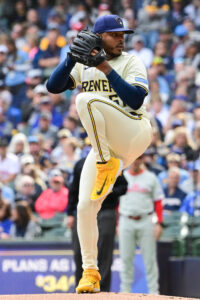
Peralta also brings an excellent durability track record to stabilize a rotation that was light on established innings sources. He hasn’t required a single stint on the injured list in three years. He’s tied for fifth with 95 starts and ranks 15th with 516 innings over that stretch. Only Dylan Cease and Zack Wheeler have more strikeouts in that time. Peralta and Cease are the only pitchers to record 200+ strikeouts in each of the past three seasons. He battled some shoulder issues in 2021-22, including a lat strain that limited him to 18 appearances four years ago, but his recent health record has been clean.
Mets president of baseball operations David Stearns knows Peralta well from his time running baseball operations with Milwaukee. He’s probably the best starting pitcher who’ll get traded this offseason, so the Mets would surely have been involved even without that connection, but the familiarity only made him a more natural fit. Stearns also brought back closer Devin Williams on a three-year free agent contract as his biggest bullpen move of the winter.
The Stearns-led front office wisely locked Peralta up on an extension before his breakout. Peralta had been an unheralded amateur signee by the Mariners whom the Brewers acquired as one of three prospects in an Adam Lind trade when he was in rookie ball. He worked in a swing role with mixed results over his first two seasons. Milwaukee secured him on a $15.5MM guarantee with a pair of $8MM club options over the 2019-20 offseason. It almost immediately became one of the sport’s most team-friendly contracts.
Peralta is headed into the final season of that deal and playing on the second of those $8MM options. The Mets will happily pick up that salary and the associated $8.8MM luxury tax hit. RosterResource projects them for a $365MM competitive balance tax payroll. They ended last season with $347MM in CBT commitments and paid another $91.6MM in taxes.
This is much more affordable from a salary perspective than were the Bichette and Robert acquisitions, though the pitcher is less than a year from a monster payday of his own. He’s on track to hit free agency before his age-31 season and could command the second-largest contract in the class after Tarik Skubal. He’s a lock to reject a qualifying offer barring a major injury. The Mets would receive a compensation pick after the fourth round in ’27 if he walks. As a revenue sharing recipient, Milwaukee would’ve gotten a pick after the first round had they kept him (assuming he signed elsewhere for $50MM+).
The Mets will presumably make an effort to keep him long term, but the main focus is on 2026. Peralta slots ahead of touted rookie Nolan McLean at the top of the staff. Sean Manaea, Clay Holmes, David Peterson and Kodai Senga are also penciled into what could be a six-man rotation — though the latter two have come up in trade rumors this offseason. Jonah Tong didn’t dominate the way McLean did after a late-season promotion, but he’s a top prospect who’ll be in the mix. They’re getting another touted arm, Christian Scott, back from elbow surgery.
Myers projects for a swing role but is likely to make some starts over the course of a 162-game season as well. The 27-year-old righty is more than a throw-in addition, as he has pitched well for Milwaukee over the past two years. Myers held a rotation spot for the majority of the ’24 season. He started 25 of 27 games as a rookie and posted an even 3.00 earned run average through 138 innings. He recorded a solid 22.3% strikeout rate while limiting his walks to a 6.3% clip.
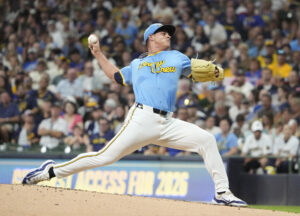
An oblique strain sidelined Myers to open last season. The Brewers activated him in late April but optioned him to Triple-A after a handful of shaky appearances. Myers was up and down in a swing role for the remainder of the season. He was mostly squeezed out of the rotation by Milwaukee’s bigger arms, but he pitched well in the second half and finished the year with a 3.55 ERA across 50 2/3 frames. He had similar numbers over 12 starts with Triple-A Nashville.
Myers works in the 93-94 MPH range with his fastball. He uses a cutter and slider as his breaking balls and tweaked his changeup to more of a splitter midway through last season. The pitch got good results in a small sample, as opponents hit .108 while swinging through it almost 40% of the time. That should give him a better offering against left-handed hitters after he struggled with southpaws as a rookie.
The righty has between one and two years of service time. He won’t reach arbitration for another two seasons and is under club control through 2030. He has a minor league option remaining, which gives the Mets flexibility to move him between MLB and Triple-A Syracuse.
The Brewers deserve credit for helping Myers develop into a serviceable back-end starter. He’d once been a reasonably well-regarded prospect — Cleveland regrettably traded Junior Caminero to the Rays for him when the slugging infielder was in rookie ball — but he’d seemingly hit a wall in the upper minors. Milwaukee added him as a minor league free agent over the 2022-23 offseason, and he’s now a secondary but meaningful part of a trade that netted them a pair of top prospects.
Williams and Sproat each placed on the back half of Baseball America’s Top 100 prospects list, which was released this morning. BA had Williams as the slightly more highly regarded of the two, but they’re essentially within the same tier. Williams is a right-handed hitter whom the Mets took in the first round out of a Dallas-area high school in 2022. He’s on the shorter side at 5’7″ but has plus athleticism and an up-the-middle defensive profile. Scouts credit him with plus speed and a strong arm with more power than one might expect based on his size.
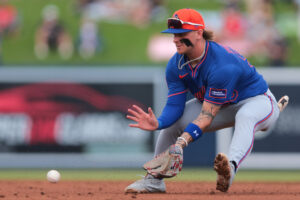
That athleticism was on display in the upper minors. Williams combined for 17 homers and 34 stolen bases while hitting .261/.363/.465 across 572 plate appearances. He looked no worse for wear after a right wrist surgery had cost him a good chunk of the ’24 season. Williams raked at a .281/.390/.477 clip in Double-A. He struggled after a second half promotion to Triple-A, where he hit .209 with a .285 on-base percentage across 34 games. That’s not a huge concern for a 21-year-old who would have been young for the level even if he’d spent the entire season in Double-A.
Williams is a patient hitter who has worked a lot of walks in the minors. Although big league pitchers will be better positioned to attack the smaller strike zone, he has the makings of a potential top-of-the-lineup spark plug. Williams has played mostly shortstop and has experience at second base and in center field. He’s likely to begin the season at Triple-A Nashville and could challenge Joey Ortiz or Garrett Mitchell/Blake Perkins for playing time midway through the season.
Sproat, 25, is a big league ready rotation option. A second-round pick out of the University of Florida in 2023, he debuted as a September call-up. The 6’3″ righty made four starts, giving up 11 runs across 20 2/3 innings. Sproat otherwise spent the season in Triple-A, where he worked to a 4.24 ERA across 121 frames. He fanned 22.1% of opponents while issuing walks at a slightly elevated 10.4% clip. He has a six-pitch mix and works in the 96-97 MPH range on his sinker and four-seam fastball.
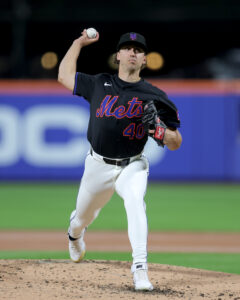
Baseball America’s scouting report credits Sproat with a plus changeup and slider. They write that he has the upside of an average or better starter, albeit with some relief risk based on his average control. He’s not as highly-regarded as McLean or Tong, but it’s not surprising the Mets weren’t willing to part with either of those prospects for a rental. McLean seems categorically untouchable. Michael Marino reported that Milwaukee had tried to involve Tong in discussions on Peralta but were quickly rebuffed. They then turned to a Williams/Sproat framework. It seems they needed to part with Myers to push the deal over the top.
Milwaukee wasn’t going to move Peralta without landing a strong prospect return. His salary was affordable enough that they didn’t need to trade him for salary relief. They certainly weren’t going to re-sign him, though, and it’s their usual operating procedure to hear clubs out on veteran stars who are approaching free agency. It doesn’t make a trade inevitable — they held Willy Adames and let him walk for a compensatory draft pick — but Peralta joins Josh Hader, Corbin Burnes and Williams as recent stars traded within a year or two of reaching the open market.
The Brewers never go into a full rebuild. They’re coming off a 97-win season and advanced to the NLCS. They’ll expect to compete for a fourth consecutive NL Central title. Milwaukee won the division in ’24 after the Burnes trade, which was the most direct parallel for their decision on Peralta. They also landed two prospects in that deal, Ortiz and left-hander DL Hall, who were borderline Top 100 talents who were at the MLB level. Williams and Sproat are probably a little more highly-regarded than the players they got in the Burnes trade, though their deal with Baltimore also included a competitive balance draft pick and didn’t involve the secondary piece in Myers.
Brandon Woodruff will slot atop the rotation after accepting the qualifying offer. Quinn Priester, Jacob Misiorowski, Logan Henderson, Chad Patrick, Robert Gasser and Sproat could all battle for jobs. The Brewers haven’t closed the door on giving Angel Zerpa or Aaron Ashby rotation looks, though they’re each likelier to end up in relief. President of baseball operations Matt Arnold acknowledged that getting Woodruff back made them more comfortable parting with Peralta (relayed by Curt Hogg of The Milwaukee Journal-Sentinel).
There’s a lot of upside with this group, but they’ll probably need to dip into the lower tiers of free agency for a back-end arm to provide innings. RosterResource projects their payroll around $126MM, roughly $11MM north of where they began the ’25 season. They should nevertheless be able to sign a starter for a few million dollars as Spring Training approaches. They wouldn’t have issued the QO to Woodruff if ownership weren’t willing to approve at least a slight payroll bump.
Milwaukee fans are familiar with the churn, but it’s surely a blow to lose another homegrown star and fan favorite. Peralta was third in franchise history in strikeouts and eighth in wins. He’s a two-time All-Star who has been a part of seven playoff teams over the past eight years. He’s out of the division but anchoring the rotation for what looks to be one of their top competitors in the National League.
Michael Marino first reported that the Brewers and Mets were discussing Peralta for Williams and Sproat. Pat Ragazzo of Sports Illustrated indicated talks were accelerating, while Jeff Passan of ESPN first had the agreement. Joel Sherman of The New York Post reported Myers’ inclusion. Respective images courtesy of Benny Sieu, Michael McLoone, Sam Navarro and Brad Penner — Imagn Images.
Mets, Brewers In Conversations About Freddy Peralta
The Mets and Brewers are in discussions about star right-hander Freddy Peralta, according to reports from Pat Ragazzo of Sports Illustrated and Jon Heyman of The New York Post. There’s no deal in place, but The Post’s Joel Sherman characterizes talks as “serious.” Ragazzo adds that middle infield/center field prospect Jett Williams has come up in conversations.
This morning, Michael Marino reported that Milwaukee was looking to acquire Williams and rookie right-hander Brandon Sproat in a Peralta deal. According to Marino, the Mets rebuffed earlier interest from the Brew Crew in top pitching prospect Jonah Tong. Meanwhile, Sherman adds that swingman Tobias Myers would likely head from Milwaukee to Queens if a deal gets across the finish line.
Peralta has been a top target for teams in need of rotation help. He’s coming off a fifth place Cy Young finish behind 176 2/3 innings of 2.70 ERA ball. The Mets have been in the rotation market all offseason but haven’t been keen on making long-term free agent commitments. President of baseball operations David Stearns reiterated this morning that he still hoped to add a starter (link via Jorge Castillo of ESPN).