
How The Delayed Season Impacts The Twins
All 30 big league clubs are waiting to see whether a 2020 season will be played at all, but assuming a season is able to take place in some capacity, the prolonged delay will impact some clubs more than others. We’ve already run through the Yankees, Angels, Phillies and Athletics in this regard.
Turning to the Twins, who’ll be looking to defend their first division crown since 2010, they’ll suddenly have the opportunity to get nearly a full season out of one of their most important pitching pickups of the winter: left-hander Rich Hill.
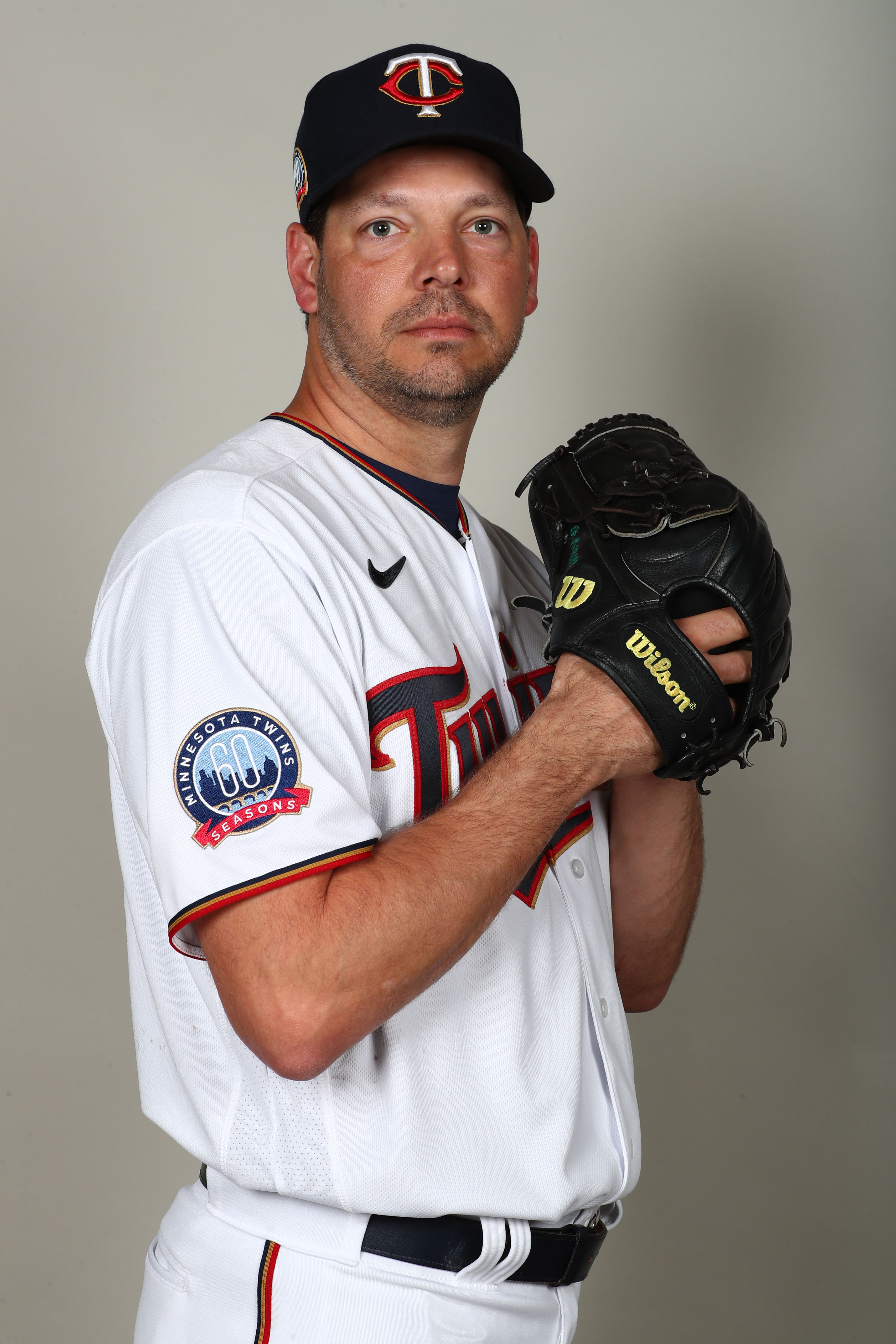
The 40-year-old Hill underwent “primary repair” surgery on his left ulnar collateral ligament over the winter and inked a one-year, $3MM deal with Minnesota (plus $9.5MM of available incentives), knowing that he’d miss the first few months of the season. Primary repair is a less invasive alternative to Tommy John surgery that can be pursued depending on the extent of the tear and its location within the ligament; Hill’s injury met the requisite criteria, and he was targeting a June or July return to the mound. It’s now possible he’ll be ready to join the Twins’ rotation early in a truncated season — if not from the very outset.
Manager Rocco Baldelli gave an update on Hill’s status in a recent interview with Steve Phillips and Eduardo Perez on MLB Network Radio on SiriusXM, suggesting that Hill is rehabbing and throwing and has “done very well — about as well as you could ask for.” To this point, there’s no reason to think his initial rehab timetable needs adjustment.
Hill wasn’t the ace that many Twins fans hoped to see the front office add this winter, but on a per-inning basis he remains highly effective. The durability concerns with the veteran southpaw are very real even if his recovery from offseason surgery goes as planned, but there’s no denying how good Hill has been recently when able to take the mound. In 58 2/3 innings last season, the lefty pitched to a 2.45 ERA with 11.0 K/9 against 2.8 BB/9 — despite pitching part of the season with the ligament damage that necessitated his surgery. Hill only managed 327 regular-season innings over the past three years, but he logged a 3.30 ERA with just under 11 punchouts per nine frames in that time and also chipped in 37 innings of 2.43 ERA ball in the playoffs.
The postponement of Opening Day not only gives Hill more time to get up to speed — it also should allow the Twins to more easily manage his innings. It’s likely that rosters will be expanded at least early on, which should give Baldelli some extra relievers if the club wants to limit Hill to three to five innings per outing to begin the season. One of the Twins’ previously projected fifth starter candidates — Randy Dobnak, Devin Smeltzer, Lewis Thorpe or non-roster invitee Jhoulys Chacin — could potentially be paired with Hill in a tandem or piggyback type of arrangement.
Additional downtime will also allow the Twins to ensure that several key players are at full strength to begin the year. None of Byron Buxton, Jorge Polanco or Marwin Gonzalez was expected to open the 2020 campaign on the injured list, but each is recovering from surgery. Buxton went under the knife last September to repair a torn labrum and was only just about to get into Grapefruit League games when Spring Training was suspended. Baldelli has said Buxton would’ve been ready for Opening Day, but there shouldn’t be any doubt about his shoulder’s well-being now.
Polanco, meanwhile, underwent surgery to repair an ankle injury that dogged him throughout the 2019 season. He appeared fine at the plate, hitting .295/.356/.485 with 22 long balls, 40 doubles and seven triples, but it’s possible that the nagging ankle issue contributed to Polanco’s lackluster defensive ratings and his lack of stolen bases (just four). Gonzalez, meanwhile, underwent a debridement of the patellar tendon in his right knee over the winter and was a bit behind schedule in camp. He should be fully up to speed once play resumes.
There are also possible implications for suspended right-hander Michael Pineda, who still has 39 games remaining on a reduced 60-game ban issued late last year. That suspension will still be in effect if the 2020 season is able to be played, and there’s been no indication that it’d be shortened or prorated to reflect the reduction of games on this year’s schedule. If the season is canceled entirely, however, ESPN’s Jeff Passan has previously reported that drug suspension wouldn’t carry into the 2021 campaign. Pineda would seemingly be able to join the rotation from day one.
The hope in Minnesota is that by the end of whatever season we get, Jose Berrios, Jake Odorizzi, Kenta Maeda, Homer Bailey, Hill and Pineda will combine to make the bulk of the starts. With six starters, plus the trio of Dobnak, Smeltzer and Thorpe on hand as depth options (and perhaps Chacin as well), the Twins should be well-equipped to handle regular doubleheaders and fewer off-days in the accelerated regular-season schedule.
In a worst-case scenario that sees the season postponed entirely, the Twins could see holdovers Odorizzi, Gonzalez, Nelson Cruz and Trevor May all reach free agency. Meanwhile, Hill, Bailey, Tyler Clippard and Alex Avila could depart without ever formally suiting up in a game that counts.
AL Central Notes: Buxton, Fulmer, Royals
The Twins‘ expectation is that center fielder Byron Buxton would’ve been in center field on Opening Day had the season commenced on time, writes Phil Miller of the Minneapolis Star-Tribune. The 26-year-old underwent surgery to repair a torn labrum in his left (non-throwing) shoulder last September, and manager Rocco Baldelli said in a weekend conference call that Buxton’s rehab from the procedure “could not have gone smoother.” Buxton was a bit limited early in camp during the first spring training, but he’ll be on a normal schedule if a second (likely abbreviated) training camp is able to come together. Injuries have plagued much of Buxton’s career — crashing into the center field fence on the regular and frequently laying out for diving attempts take their toll on a body — but he turned in a .262/.314/.513 slash line (114 OPS+, 111 wRC+) in 295 plate appearances when healthy last season. Despite playing in only 87 games, he tied for fifth among MLB outfielders in Statcast’s Outs Above Average metric.
More out of the division…
- Michael Fulmer‘s rehab from Tommy John surgery is on track, and the Tigers right-hander would likely be ready for a minor league rehab stint in early July if play has resumed by that point, writes Chris McCosky of the Detroit News. Fulmer’s 2018 season was cut short due to knee surgery, and he sustained the UCL tear that led to his Tommy John surgery last spring. A late start to the year and an pushed-back end date would give Fulmer some additional innings, though he’s quick to say that he “[doesn’t] think there are any positives to take out of” the COVID-19 pandemic, even while acknowledging that it could allow him to get in more work in 2020. Fulmer, the 2016 American League Rookie of the Year (159 innings, 3.06 ERA, 5.4 rWAR), hasn’t pitched since September 2018 and will be arbitration-eligible for the third time next winter. He’s a Super Two player and remains under club control through the 2022 season.
- Lynn Worthy of the Kansas City Star takes an interesting look at the manner in which the Royals‘ front office is operating amid the suspended state of play. And while the makeshift manner in which the club’s player development staff now has to interact with players is obviously a sub-optimal setup, assistant general manager J.J. Picollo believes that the club “will end up with better processes for our offseason communication” as a result of needing to be more nimble with their interactions. Regular Zoom meetings; webinars on nutrition, pitch grips and new technologies to utilize; and more concrete one-on-one communication schedules have been put into place via a variety of platforms.
Blaine Hardy Undergoes Tommy John Surgery
Southpaw Blaine Hardy, who was in camp with the Twins on a minor-league deal, will now be sidelined until 2021. He underwent Tommy John surgery last Friday, according to Phil Miller of the Star Tribune. (Hardy’s wife notes on Twitter that elective procedures were fully permissible in Minnesota at the time it was performed.)
The 33-year-old Hardy has thrown plenty of innings against the Twins over his six seasons with the Tigers. His tenure in Detroit wrapped up after 289 2/3 innings of 3.73 ERA ball.
While he has turned in solid overall results over the years, Hardy has had some ups and downs and never really wowed with the peripherals. All told, he has averaged 7.1 K/9, 3.2 BB/9, and a 43.1% groundball rate.
Hardy managed to get outs despite averaging less than 90 mph with his heater. Perhaps the Twins had extra ideas for how to maximize Hardy’s typical four-pitch mix. He’ll now have to mount a comeback next spring.
Extension Candidates: AL Central
It’s now official: MLB rosters are frozen. We won’t see any players coming and going for some times. And it’s unlikely that any new long-term extensions will be announced. But that doesn’t mean such deals won’t be explored. Some may already have advanced nearly to completion before the global pandemic intervened.
While we may have to wait to learn who the targets are and see what deals get done, there’s a silver lining: more time for rampant speculation! Okay, we’re not going to speculate here; rather, we’ll tick through some interesting possibilities on paper. Remember, we’ve seen an increasing prevalence of deals with less-experienced players (even some without any MLB service) and with new player types (early-career relievers and utilitymen).
In the present MLB environment, value is king and the old forms are fading. We’ve already checked in on the NL East, NL Central, NL West, AL East, and AL West. To round things out, here are some possible extension candidates from the AL Central …
Indians
Francisco Lindor is the big story. Unfortunately, that ship seems to have sailed: he informed the team he’d like to halt talks since the sides weren’t making progress. Unless there’s a change of heart and another attempt during the current pause, Lindor is not going to sign onto a long-term deal (at least, before he has reached his final season of arbitration eligibility later in 2020).
There are a few other interesting candidates. Top hurlers Mike Clevinger and Brad Hand would be of interest, but the Cleveland org may not be able to afford these high-end veterans. Perhaps a few others would be more achievable targets for the cost-efficient Indians. Outfielder Oscar Mercado has only 139 days of service under his belt, meaning he’s two full seasons away from likely Super Two arbitration qualification. Young starters Shane Bieber and Adam Plutko are each in the 1+ service class, so they shouldn’t cost all that much and could convey significant upside.
Royals
There are certainly some interesting questions for the K.C. organization to consider. Slugger Jorge Soler had an eye-popping 2019 … but is he going to keep it going and should the team lock into a player who profiles best as a DH? And how about exciting young shortstop Adalberto Mondesi? There’s no real limit to his ceiling but he had some struggles last year and is still working back from a shoulder injury.
The situation is equally uncertain on the pitching side. Righty Brad Keller has had success through two full MLB seasons but isn’t exactly a top-of-the-rotation arm. You could perhaps make a case for relievers Scott Barlow and Tim Hill, though there doesn’t seem to be a pressing reason to push for a deal with either.
Tigers
The Detroit MLB roster turned in a roundly awful 2019 season. But it still has a few potential targets. The versatile Niko Goodrum could be a part of quite a few rosters around the game, though there’s no particular need to lock into him for the long haul. There are more interesting candidates on the pitching side: starter Matthew Boyd and reliever Joe Jimenez. The former has a whole lot of upside and three more seasons of team control remaining; perhaps the club could take a bit of a gamble. As for Jimenez, 2020 is something of a boom or bust year — rack up a lot of saves and he’ll get a big first-time arbitration payday; stumble and he may not do very well at all. Perhaps he and the club could take share the risk over a longer term.
It’s probably a bit too soon to consider the top of the farm system for deals. But this time next winter, the Tigers could have a host of interesting candidates.
Twins
Both of last winter’s extensions turned out well; the team struck again more recently with Miguel Sano. Perhaps the most obvious remaining candidate is quality young righty Jose Berrios, who is entering his first season of arbitration eligibility. Now that he’s in line for bigger money, it’ll cost more to do a deal. The sides have struck out in previous talks. Byron Buxton is also a 3+ service-class player. There’s likely too much uncertainty in his outlook to structure a deal, but it’s not out of the question.
It’s tempting to stake out a case for a deal with breakout catcher Mitch Garver, but he’s already 29 years of age and still a full season away from arbitration eligibility. Outfielder Eddie Rosario is two seasons from the open market, but that also gives him greater leverage for a higher price tag. Would the Twins really want to commit?
How about a few wild cards? Infielder Luis Arraez should at least be a nice utility player for years to come. There might be upside in an early deal for the plate-discipline magician. And reliever Taylor Rogers is another interesting target. He’s still three seasons from free agency but gets more impressive with each successive campaign. The Twins will owe him a big raise on his $4.45MM salary if he keeps racking up saves; perhaps a deal could suit both sides.
White Sox
The South Siders have already extended a wide swath of their roster. You might wonder whether there are any candidates left. But the team is exceptionally aggressive in this arena and can’t be counted out on exploring deals with just about anyone of interest.
The most obvious candidate at this point is righty Lucas Giolito. We recently broke down his case for an extension. You could perhaps argue for fellow starters Reynaldo Lopez and Dylan Cease, or even injury rehabbers Michael Kopech and Carlos Rodon, but there’s likely too much uncertainty in each of those situations for the sides to see eye to eye. The same is true of outfielder Nomar Mazara.
If you’re looking for a sleeper candidate … how about second baseman Nick Madrigal? The Sox haven’t been shy at all with pre-MLB extensions and the former fourth-overall pick is just about ready for a run at the game’s highest level.
Optioned Players: Red Sox, Twins, Astros, Rangers, Cubs
What was supposed to be Opening Day across baseball may as well have been called Optioning Day. As seen on this site, several teams cut down their rosters Thursday. Here are several that we haven’t covered yet:
- The Red Sox made their minor league signing of utilityman Yairo Munoz official, assigning him to Triple-A Pawtucket, and sent down pitchers Colten Brewer, Chris Mazza, Matt Hall and Jeffrey Springs. Brewer’s the most notable name among the pitchers. The 27-year-old ranked fifth among Red Sox relievers last season in innings (54 2/3). Brewer recorded a passable 4.12 ERA with 8.56 K/9 and a 50.3 percent groundball rate along the way, but he also walked 5.6 batters per nine.
- The Twins optioned right-handed reliever Sean Poppen and outfielder LaMonte Wade Jr., Betsy Helfand of the St. Paul Pioneer Press tweets. Poppen had a rough 8 1/3-inning major league debut last year, but he logged solid production as a member of Triple-A Rochester, with which he pitched to a 3.84 ERA, struck out just over 10 hitters per nine and induced grounders at a 57 percent clip. The disciplined Wade impressively drew more walks than strikeouts at both the Triple-A and big league levels last season, though low batting averages and a lack of power limited his impact.
- The Astros optioned infielder Jack Mayfield, catcher Garrett Stubbs and lefty Blake Taylor to Triple-A Round Rock, according to Chandler Rome of the Houston Chronicle. Mayfield and Stubbs posted subpar production last year during their MLB debuts, though they only combined for 104 plate appearances. Taylor, 24, spent most of 2019 as a member of the Mets’ Double-A affiliate, with whom he managed an excellent 1.85 ERA with 10.38 K/9, 2.77 BB/9 and a 50.5 percent GB rate in 39 innings. He joined the Astros in the package they received for outfielder Jake Marisnick over the winter.
- The Rangers sent down southpaw Taylor Hearn and outfielder Scott Heineman. The 25-year-old Hearn endured an injury-limited 2019, but he was seen as one of the Rangers’ top pitching prospects before then. While Heineman raked in Triple-A ball (.340/.412/.553 in 182 plate appearances), he slumped to a .213/.306/.373 line in 85 PA with the Rangers.
- The Cubs optioned hard-throwing reliever Dillon Maples to Triple-A Iowa, according to Mark Gonzales of the Chicago Tribune. Despite great strikeout totals, the 27-year-old righty has gotten knocked around to the tune of an 8.06 ERA in 22 1/3 frames as a Cub since 2017. Walks have been a major problem for Maples, who has doled out almost 8.5 free passes per nine in the bigs. He wasn’t much better in that department in Triple-A last year, when he walked more than 7.5 hitters per nine. Nevertheless, thanks in large part to a whopping 16.53 K/9 and a tremendous GB percentage of 62.1, Maples pitched to a respectable 3.77 ERA in 43 innings.
Rookie Radar: AL Central
The delayed start to the 2020 season will obviously have a wide range of massive effects on Major League Baseball. Among them: a totally different promotional timeline for some of the game’s most exciting young players. We will never know how things would’ve unfolded. And we don’t yet even know what the parameters are for an altered season. But there’s no doubting the impact.
Typically, opportunities open as rosters evolve over the course of a grueling, 162-game season. Some top prospects force their way up to the majors; others are called upon because a need arises. In a shorter campaign, there’ll be less attrition … though we may also see relaxed roster rules and changes to allocation of service time that could create opportunities.
Still, with more time to examine rosters and think about the state of the game, there’s an opportunity to stop and appreciate the young talent on the cusp of the majors. We’ll run through the most interesting prospects pressing for near-term MLB action. Having already looked at the American League West, let’s head to the AL Central:
Indians
Third baseman Nolan Jones won’t be tasked with a big league job out of the gates, but could be an option if there’s a need and/or he develops as hoped. Soon to turn 22, Jones has done nothing but produce in the minors. He’s due for a bit more seasoning at Triple-A but is close to ready.
Otherwise, most of the best-regarded Cleveland farmhands are further off. But there are some other prospects of note who are immediate factors. Relievers Emmanuel Clase and James Karinchak could hold key bullpen roles, though the former will first need to get to full health. Southpaw Logan Allen is a swingman option. First baseman Bobby Bradley and outfielder Daniel Johnson are both on the 40-man roster and ready for MLB chances after strong seasons in the upper minors. (Bradley also made a brief 2019 debut but struggled in the bigs.)
Royals
The rebuilding Royals need not be in any rush, but top pitching prospects Brady Singer and Jackson Kowar could force the organization’s hand. The former sprinted to Double-A in his first professional season; the latter in his second. They both looked plenty comfortable at the penultimate level of the minors and will likely dictate their own timelines.
Otherwise, there are only a few players with significant “prospect” billing who seem likely to be near-term options. Outfielder Nick Heath and third baseman Kelvin Gutierrez are both on the 40-man roster, so could be called upon to fill any injury gaps. Outfielder Khalil Lee is considered a higher-upside young player, though he’ll need to polish some things up if he’s to force his way onto the MLB roster in 2020. The pitching staff could call upon inexperienced arms including Scott Blewett, Chance Adams, and Richard Lovelady.
Twins
The Minnesota organization just keeps getting more intriguing. Depending upon the development of some top prospects and needs at the MLB level, it could be another year for interesting graduations … or one to watch and wait.
Top prospects Royce Lewis and Alex Kirilloff both have the ability and the positioning to press for the majors in the near term. But will they force the issue … or will there be an opening? The Twins aren’t in need of help at shortstop or in the outfield, at least on paper, but both have star-level upside and will get their chance when the time is right.
Outfielder/first baseman Brent Rooker doesn’t have a clear path to the bigs just yet but could get a look if a need arises. Though he is no longer considered an elite prospect, infielder Nick Gordon is also a near-term option. His situation is helped by the fact he already has a 40-man roster spot. Likewise, having already debuted, lefty Lewis Thorpe is perhaps the best-regarded Minnesota pitching prospect who’s an immediate possibility for the majors, though we’ll surely see fellow lefty Devin Smeltzer and right-hander Randy Dobnak in 2020 as well. Both impressed in their 2019 debuts. Flamethrowing righty Jorge Alcala allowed two runs in 20 innings between Double-A, Triple-A and the Majors after moving to the ‘pen in late July.
Tigers
The Detroit organization is banking on its pitching factory. We’ll begin to see the results in the immediate future. Top starting prospects Matt Manning, Casey Mize, Beau Burrows, and Alex Faedo are all nearing readiness. And the team also has some promising relievers on tap, including Bryan Garcia, Anthony Castro, and perhaps Rule 5 choice Rony Garcia. Precisely when and how these arms will be slotted into the MLB staff remains to be seen. In the starting staff, especially, the organization has others in line first. But mid-season movement is highly possible (depending, in no small part, upon what shape the 2020 season takes).
Though the position-player side of the farm isn’t as loaded, there are quite a few near-term candidates for MLB roles. Infielders Isaac Paredes, Willi Castro, and Sergio Alcantara all have 40-man spots and can be called upon as soon as there’s a need or desire to do so. Ditto outfielder Daz Cameron, a player who has had ups and downs in the minors but still possesses a fairly lofty ceiling. Catcher Jake Rogers had an abysmal debut with the bat but hit well in the upper minors last year and is considered a quality defender.
White Sox
Last but certainly not least … the South Siders are stacked with young players who’ll be given MLB trials in the near term. Recently extended center fielder Luis Robert leads the charge as one of the game’s most touted prospects. But there are other blue-chippers as well. Given the delay in the season, high-upside righty Michael Kopech will have a chance to finish rehabbing from Tommy John surgery. And recent first-rounder Nick Madrigal has little left to show in the upper minors. He could take over at second base and push Leury Garcia into a utility role.
Those are the big names, but there are others as well. Infielder Danny Mendick had a nice cup of coffee last year and could also be a platoon option at second base or take on a utility job. With a 26th roster spot to work with, bat-first catchers Zack Collins and Seby Zavala could play interesting roles. Righties Zack Burdi and Ian Hamilton will have to overcome health troubles but could end up playing significant roles in the bullpen if they’re able.
Video: Why Joe Mauer’s Monster Contract Was Worthwhile
Ten years ago, the Twins signed star catcher Joe Mauer to the fourth-largest deal in baseball history. MLBTR’s Jeff Todd explains why the contract made tons of sense at the time, in today’s video.
Transaction Retrospection: Joe Mauer’s Extension
Though negotiations between J.T. Realmuto and the Phillies are currently on hold, the idea of a contract extension between the two sides has been gestating for months. As such, there has already been a lot of speculation about how a Realmuto deal (if one is reached) will shake up the pay scale of catcher contracts. The latest reports indicated that Realmuto was looking for an extension that would pay him more guaranteed money than Buster Posey‘s eight-year, $159MM extension with the Giants, which is the second-biggest deal ever given to a catcher.
The largest catcher contract in history? That agreement came exactly ten years ago today, with the Twins making the official announcement a day later. Minnesota had inked Joe Mauer, its star player and local hero, to an eight-year, $184MM extension that covered the 2011-18 season. Not only was it was the largest deal ever signed by a catcher, but it was the fourth-largest contract in baseball history as of March 2010 — Mauer’s payday was topped only by Alex Rodriguez‘s two mega-contracts with the Rangers and Yankees, and Derek Jeter‘s ten-year, $189MM extension with New York.
Could Realmuto and his representatives try to top Mauer’s contract? Even before the coronavirus pandemic added an extra layer of uncertainty over baseball and the world at large, it didn’t seem overly likely, though Realmuto’s camp had some interest in topping Mauer’s $23MM average annual value. Like Mauer at the time of his extension, Realmuto is just a season away from free agency, but Realmuto recently turned 29 years old, while Mauer was only entering his age-27 season at time of his deal.
Plus, there’s also the fact that the Phillies would naturally be gunshy about signing a catcher to that large a contract given how things played out in Minnesota. Unfortunately for both Mauer and the Twins, the fairytale story of the St. Paul native staying with his hometown team and leading them to a World Series title didn’t come to pass, as 2011-18 was a lean period the franchise. After reaching the postseason six times between 2002-10, the Twins only had one playoff appearance and two winning seasons total over the course of Mauer’s extension.
That period also saw Mauer’s production decline, though some dropoff was inevitable given the high level of Mauer’s first seven MLB seasons. From 2004-10, only six players topped Mauer’s 34.2 fWAR, as he developed into one of baseball’s best all-around players. Those seven years saw Mauer hit .327/.407/.481 with 81 home runs over 3578 PA, while amassing a resume that includes four All-Star appearances, four Silver Slugger Awards, three Gold Gloves, three AL batting titles, and four top-eight finishes in AL MVP voting.
Mauer’s best season came directly before his extension, as he was named AL MVP after hitting .365/.444/.587 (leading the American League in all three categories) with 28 homers over 606 plate appearances. As per Fangraphs, Mauer’s 2009 was tied for the fifth-best season ever for a catcher in terms of fWAR, with 8.4.
These numbers add context to the extension and perhaps serve as a bit of a reminder — Joe Mauer was an awesome player in his prime. Just about any big-market team in the game would have happily given Mauer eight years and $184MM given the opportunity to extend him, and the fact that a smaller market club like the Twins also felt comfortable in taking the plunge speaks to Mauer’s value at the time.
Of course, the Twins faced unique pressure to retain Mauer given his roots, as the idea of a literal homegrown superstar leaving for another franchise would have been a particularly tough blow for Minnesota. It should be noted that the Twins’ extension with Mauer was met with near-unanimous praise from both their own fans and the baseball world in general, with many comparing Mauer to the likes of Tony Gwynn, George Brett, or Cal Ripken Jr. as a one-team star who would define a franchise for a generation. ESPN.com’s Buster Olney described the extension as “going to be viewed as a strong development for Major League Baseball, at a time when there are growing concerns about the disparity between teams like the Yankees and Red Sox, and teams that generate less revenue.”
A decade after the fact, that disparity certainly remains despite the large amount of new revenue (from TV contracts and online media) coming into the sport, as it still stands out as notable when a non-major market franchise makes a particularly big splurge to sign a free agent, acquire a big contract in a trade, or ink one of its own stars to an extension. In the latter case, teams have become more and more proactive about extending their players earlier in their careers, well before they get even a year away from free agency as Mauer did.
From 2011-18, Mauer still provided above-average (113 wRC+, 114 OPS+) production by hitting .290/.372/.405 over 4382 plate appearances. The problem was, however, that this production was less impressive coming from a first baseman than it would have been from a catcher. Minnesota shifted Mauer out from behind the plate after the 2013 season due to a number of concussions and knee problems, and Mauer never played catcher again until his very last game, when he caught a single pitch in the ninth inning before being substituted out.
Mauer’s contract made him a particular target for criticism during the Twins’ struggles in the 10’s, which was an unfair burden given that Minnesota’s issues had much more to do with a number of trades and signings during the decade that provided far less return than the Mauer extension. It’s easy to say in hindsight that the Twins erred in keeping Mauer, though that also makes the assumption that the club would have spent that extra $23MM per season on more canny roster upgrades….or that the Twins would have even stretched their payroll to that extent whatsoever.
Ten years later, the Mauer extension is perhaps best seen as a defensible investment that didn’t quite pan out. Given the perfect storm of age, production, and added hometown value that went into the contract, it may yet be a while before another catcher tops it, with Realmuto’s potential new deal with Philadelphia standing as the closest challenger in years.
Latest On Byron Buxton
Twins center fielder Byron Buxton is still on the mend from the left shoulder surgery he underwent last September, but he’s making progress. Buxton faced live pitching Tuesday for the first time since August, Phil Miller of the Star Tribune was among those to report.
Twins hitting coach Rudy Hernandez took an optimistic tone after Buxton’s session at the plate, saying the 26-year-old “looked good” and is “going in the right way.”
While the Twins and Buxton are hopeful that he’ll be ready by Opening Day on March 26, neither side is setting a date for his season debut. Considering Buxton’s importance to the club, that’s understandable. After all, despite the time he missed, the former No. 2 overall pick did help the reigning American League Central champion Twins to one of the finest regular seasons in their history last year. The defensively brilliant Buxton slashed .262/.314/.513 (111 wRC+) with 10 home runs, 14 stolen bases and 2.7 fWAR over just 87 games and 295 plate appearances.
For most of the games Buxton sat out last season, the Twins turned to right fielder Max Kepler in center. That figures to be the plan again at the start of this season if Buxton isn’t healthy enough to take the field on Opening Day. The Twins also have LaMonte Wade Jr. and Jake Cave as center field-capable players, while utilityman Marwin Gonzalez could hold down right if Kepler has to fill in for Buxton.
[RELATED – Offseason In Review: Minnesota Twins]
Offseason In Review: Minnesota Twins
The Twins set out in search of “impact” pitching but instead signed a position player to the second-largest contract in franchise history and added a host of mid-rotation arms.
Guaranteed Contracts
- Josh Donaldson, 3B: Four years, $92MM (includes $8MM buyout of $16MM mutual option for 2024)
- Michael Pineda, RHP: Two years, $20MM
- Jake Odorizzi, RHP: One year, $17.8MM (accepted qualifying offer)
- Homer Bailey, RHP: One year, $7MM
- Sergio Romo, RHP: One year, $5MM (includes $250K buyout of $5MM club option for 2021)
- Alex Avila, C: One year, $4.75MM
- Rich Hill, LHP: One year, $3MM
- Tyler Clippard, RHP: One year, $2.75MM
- Total spend: $152.3MM
Trades and Claims
- Acquired RHP Kenta Maeda, C Jair Camargo and cash from the Dodgers in exchange for RHP Brusdar Graterol, OF Luke Raley and a Competitive Balance Draft Pick
- Acquired RHP Hunter McMahon from the Nationals in exchange for RHP Ryne Harper
- Claimed RHP Matt Wisler off waivers from the Mariners
Options Decisions
- Exercised $12MM club option over DH Nelson Cruz
- Declined $7MM club option over LHP Martin Perez
Extensions
- Miguel Sano, 1B/3B: Three years, $30MM (includes $2.75MM buyout of $14MM club option for 2023)
Notable Minor League Signings
- Jhoulys Chacin, Cory Gearrin, Danny Coulombe, Blaine Hardy, Ryan Garton, Juan Graterol, Parker Bridwell, Juan Minaya, Lane Adams
Notable Losses
- Kyle Gibson, Jason Castro, C.J. Cron, Jonathan Schoop, Martin Perez, Ryne Harper, Sam Dyson, Ronald Torreyes, Brusdar Graterol, Trevor Hildenberger, Kohl Stewart, Stephen Gonsalves
The Twins surprised onlookers in 2019 not only by winning the American League Central but by doing so in a decisive fashion thanks to a powerhouse lineup that shocked the baseball world with a Major League-record 307 home runs. But their rotation was a more middle-of-the-pack unit, and the vast majority of it — Jake Odorizzi, Kyle Gibson, Michael Pineda, Martin Perez — reached free agency at season’s end. Minnesota issued a $17.8MM qualifying offer to Odorizzi, and he made the somewhat surprising decision to accept. This winter’s free-agent market was vastly more active and player-friendly than the previous two, so perhaps he’d prefer a mulligan on that decision, but Odorizzi maintains that he has no regrets.
With Odorizzi on board alongside Jose Berrios, the Twins at least had a pair of quality arms on which to rely, but president of baseball ops Derek Falvey and general manager Thad Levine opened the winter by declaring their intent to acquire “impact” starting pitching. Minnesota entered the winter with a projected 2020 payroll of just $64MM and with only two players (Max Kepler and Jorge Polanco) guaranteed anything beyond the 2020 season. Their measured approach to free agency a year ago and their cost-efficient young core left them with plenty of immediate and long-term flexibility.
That said, adding “impact” pitching was still a rather lofty goal when considering the short supply of high-end talent available; Gerrit Cole was always projected to sign a record-setting contract — though few predicted his eventual $324MM price tag — and Stephen Strasburg wasn’t expected to be too far behind. (As it turns out, he briefly set a new record for starting pitcher contracts, signing days before Cole.)
The only real “impact” arms available beyond that duo were Zack Wheeler, Hyun-Jin Ryu and Madison Bumgarner — and the extent to which “impact” describes them is rather debatable. None of the bunch is a clear ace, be it for durability reasons, consistency of track record or some combination of the two. Ultimately, the Twins were spurned by both Wheeler — who reportedly had a strong East Coast preference — and Ryu. Their interest in Bumgarner wasn’t as high, and the longtime Giants star said after signing with the D-backs that Arizona was his top choice anyhow.
While the trade market normally presents an alternative avenue, there simply weren’t any top-of-the-rotation arms readily available this winter, with the possible exception of Corey Kluber. But Kluber is coming off an injury-ruined year, and it was never likely that the Indians would trade the former Cy Young winner to the reigning division champs.
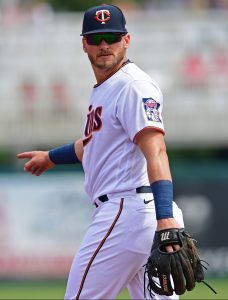
The Twins, then, were left with a choice: make short-term and/or smaller investments once again in hopes of spending the considerable financial resources at their disposal down the road … or pivot and sign the most talented player available to them. They opted for the latter, emerging as a dark-horse candidate for Josh Donaldson and eventually landing the former AL MVP on a four-year, $92MM deal — the second-largest contract in club history.
The “Bringer of (Purple) Rain” is already 34 years old, so there’s some clear age-related risk. But Donaldson also posted an outstanding .259/.379/.521 slash with 37 home runs, 33 doubles and, importantly, excellent third-base glovework in 2019. And by moving Miguel Sano (-7 Defensive Runs Saved, -5 Outs Above Average) across the diamond in favor of Donaldson (15 DRS, 8 OAA), the Twins should substantially help their pitching staff. The Donaldson deal might not look great by years three and four of the contract, but it’s a win-now move that bolsters their chances in 2020-21.
With Donaldson penciled into the heart of the order, the Twins didn’t have much else to do in terms of their starting lineup. Max Kepler will again man right field, and the Twins will hope that healthier iterations of Byron Buxton and Eddie Rosario will comprise a quality outfield trio on both sides of the ball. Jorge Polanco should again be the primary shortstop, while sophomore Luis Arraez (.334/.399/.439 in 366 plate appearances) will get the nod at second base. Nelson Cruz will be back for a second season at designated hitter. Mitch Garver is lined up for regular catching duties after a 2019 breakout. Utilitymen Marwin Gonzalez and Ehire Adrianza can play just about anywhere in the event of an injury.
Even if their big move was adding a third baseman, the Twins still addressed the pitching staff in multiple smaller ways. Pineda will return on an affordable two-year deal, although he’ll miss the first 39 games of the year under a league-reduced 60-game suspension after he tested positive for a banned diuretic.
Veterans Homer Bailey and Rich Hill both joined the mix on New Year’s Eve, signing low-cost one-year pacts. Bailey enjoyed his first full, healthy season since 2013 last year and flashed some positive secondary metrics that were more appealing than his base 4.57 ERA. Hill was terrific when healthy in ’19 but won’t pitch until at least June after undergoing primary repair surgery.
Most expected the Twins to be done with that set of additions, but they emerged as the third team in trade talks with the Dodgers and Red Sox as those clubs tried to sort out a Mookie Betts/David Price blockbuster. Minnesota originally got in on the deal by agreeing to send prized prospect Brusdar Graterol to Boston in exchange for the Dodgers’ Kenta Maeda. The Red Sox balked after viewing Graterol’s medical records, claiming surprise that he profiled more as a reliever. When that iteration of the deal was scrapped, the Dodgers worked out a separate trade to ship Maeda to Minneapolis, taking Graterol and other pieces themselves back in return. Weeks later, it emerged that Maeda had asked out of L.A. — seemingly frustrated by his lack of a consistent rotation spot, which the Twins can surely provide.
A Twins club that entered the winter with one clear big league starter on the roster (Berrios) will enter 2020 with Berrios, Odorizzi, Maeda, Bailey, Randy Dobnak, Devin Smeltzer, Lewis Thorpe and perhaps non-roster invitee Jhoulys Chacin all as options in the starting mix. Pineda (mid-May) and Hill (June or July) aren’t expected to be far behind. It may not be an imposing group of names, but it’s a suddenly deep reservoir from which to draw. The group doesn’t look markedly better or markedly worse than the collection of arms the Twins rode to a division title in 2019, but it still seems like they’ll be in the mix for the ever-elusive “impact” starter this summer as they look to end a comically lengthy postseason slump.
Elsewhere on the roster, the Twins added some steady veterans to fill complementary roles. Alex Avila will join his third AL Central club as the backup to Garver. Avila’s sky-high strikeout rates and low batting averages are a turnoff for many, but he’s an on-base machine (career 14.4 percent walk rate) who hits for some power, frames pitches well and throws well.
Minnesota’s bullpen emerged as a quietly deep unit down the stretch in 2019, buoyed by big performances from closer Taylor Rogers, setup men Tyler Duffey and Trevor May, and rookie starter-turned-reliever Zack Littell. The Twins added to that mix by re-signing Sergio Romo to a one-year deal with an option and by inking well-traveled veteran Tyler Clippard to a one-year pact. Romo shined in a high-leverage role with the Twins after being acquired from the Marlins last summer. Clippard could be an important piece due to his ability to retire left-handed hitters (.182/.256/.321 over the past three seasons combined); the new three-batter minimum makes effectiveness against both righties and lefties more critical, and this winter’s market was noticeably light on quality left-handed relievers.
The other notable piece of offseason business for the Twins was Sano’s new contract. It’s extraordinarily rare to see a player with four-plus years of big league service take a deal that delays his path to free agency in exchange for just one additional guaranteed year — and even rarer for that deal to include a club option. Over the past decade, former Braves third baseman Chris Johnson is the only position player to sign a three-year extension with a club option at this stage of his career.
Sano has dealt with myriad injuries in his career to this point and has been inconsistent when healthy. That surely impacted his decision to take the deal and was factored in by the organization in its offer. The end result is that in 2022 — the first of Sano’s would-be free-agent years — the Twins will control him, Polanco and Kepler (last winter’s extension recipients) for a combined $21.5MM. If Sano’s $14MM option is exercised in 2023, that trio will be owed $30MM. Combine that with Maeda’s annual $3.125MM base salary (also through 2023), and the Twins have done a nice job in establishing some cost certainty over the long run.
Other extensions could yet follow for Minnesota. The Twins tried to work out a long-term deal with Berrios a year ago and could do so again between now and Opening Day. Cruz is a free agent at season’s end, but the 39-year-old has made clear he plans to continue playing. Minnesota has talked to his agents already. Byron Buxton seems a plausible candidate as well. In the bullpen, a preemptive run at signing May before he reaches free agency at season’s end or a long-term deal with Rogers could be sensible pursuits. Last year’s breakout aside, there’s probably less urgency with the late-blooming Garver, who is already 29 years old and controlled through his age-33 season.
2020 Outlook
With a serviceable rotation, a quietly strong bullpen and what could be MLB’s most potent lineup, the Twins enter the 2020 season as the favorites in the AL Central. They’ll try to stave off an Indians club that cut spending and a White Sox organization that went the other direction, significantly ramping up payroll. But last year’s Minnesota roster bested Cleveland by eight games and Chicago by 28.5 games. The Indians look like a worse team now than they did in 2019, and while the ChiSox are unequivocally improved, wiping out that kind of deficit would be a stunning accomplishment.
Rotation help could very well be on the summer wishlist again, depending on the health and productivity of their incumbent options. But after toiling away in futility for much of their time since the opening of Target Field in 2010, the Twins finally look like a team poised for some sustainable success.
How would you grade the Twins’ offseason moves? (Link for app users.)
How would you grade the Twins' offseason?
-
B 54% (2,286)
-
A 37% (1,564)
-
C 7% (314)
-
F 1% (46)
-
D 1% (35)
Total votes: 4,245
Photo courtesy of USA Today Sports Images.