
Marlins Will Not Retain Any Of 2024 Coaching Staff
1:20pm: Also among the cuts were head athletic trainer Lee Meyer and strength & conditioning coach Brendan Verner, per Mish and Barry Jackson of the Miami Herald. None of the coaches being dismissed were under contract for the 2025 season, per the report. Still, an overhaul of this magnitude is borderline unprecedented in recent big league history.
11:40am: The Marlins are gutting their coaching staff, as Craig Mish of SportsGrid and the Miami Herald reports that the entire staff has been informed it will not return for the 2025 season. Mish notes that there are a couple “exceptions” who have been told there’s some interest in a reunion, but even that’s dependent on the hiring of the incoming manager and any preferences that person may have. Specifically, Daniel Alvarez Montes of El Extra Base reports that bench coach Luis Urueta and first base/outfield coach Jon Jay have been told there’s interest in a reunion, pending the managerial search. Both will be free to pursue other opportunities in the meantime, however.
All of this aligns with a report last night from Isaac Azout of Fish On First, who tweeted that the Marlins’ firings were being described to him as a “blood bath” that extended to the coaching staff, clubhouse attendants, performance staff and more.
Manager Skip Schumaker already departed the organization over the weekend. His impending exit was one of the worst-kept secrets around the league. The former big league utilityman and Cardinals bench coach was hired by former Marlins GM Kim Ng and won NL Manager of the Year honors last season in his rookie effort. His original two-year contract included an option for the 2025 season. However, after the Marlins hired Rays GM Peter Bendix as their new president of baseball operations, prompting Ng to walk away from the organization. Schumaker reportedly voiced frustration with the club’s direction — understandably so, given last year’s playoff berth — and management agreed to void the 2025 club option on his deal in order to allow him to explore new opportunities.
In addition to Urueta and Jay, today’s news presumably indicates that hitting coach John Mabry, assistant hitting coaches Bill Mueller and Jason Hart, pitching coach Mel Stottlemyre Jr., third base coach Griffin Benedict, infield coach Jody Reed, bullpen coach Wellington Cepeda, bullpen coordinator Rob Flippo and field coordinator Rod Barajas will all be at the very least free to pursue other opportunities, if not dismissed outright.
Among the group, Stottlemyre figures to be a particularly hot commodity on the coaching market. He’s spent a dozen years on big league coaching staffs, serving as both a pitching coach and bullpen coach in addition to prior stints as a minor league pitching coordinator. He’s worked with the D-backs and Mariners organizations in the past but has spent the past seven years as the pitching coach in Miami, building a strong reputation along the way.
While the Marlins have regularly been a doormat in the NL East — with the exception of the 2020 and 2023 seasons — a strong core of touted young pitching has been a hallmark of the team in recent years. Stottlemyre alone isn’t to credit for that, of course, but his influence on the staff and the organization’s pitching development as a whole is clear. Cepeda, it should be noted, has been in lockstep with Stottlemyre throughout his time in the organization. He was hired as the Marlins’ bullpen coach back in 2019. The two have worked alongside one another for seven years.
That’s not to say others on the staff won’t be coveted free agents in their own right. Urueta spent 15 years in the D-backs system, rose to their bench coach under Torey Lovullo, and has interviewed for MLB managerial posts in the past. Mabry and Mueller, in addition to lengthy big league careers, have extensive coaching backgrounds across multiple organizations. Barajas, who also had a lengthy big league career, has served as the bench coach and interim manager of the Padres and has interviewed for various managerial posts in recent years (in addition to several years as a minor league manager in San Diego’s system). Jeff Jones of the Belleville News-Democrat speculates that Jay could wind up a target of the Cardinals, for whom he played six MLB seasons — though Jay could also join Schumaker wherever he lands his next managerial assignment.
Broadly speaking, the Miami coaching staff can hardly be faulted for the disastrous record this season. Bendix spent most of the 2023-24 offseason focused on reshaping the baseball operations department and did little to augment the actual Marlins roster. Injuries waylaid much of the pitching staff, and when Miami opened the season with a significant losing streak, the front office wasted little time in waving the white flag. Luis Arraez was traded to San Diego in early May, signaling exactly what type of direction the new baseball ops staff would be taking. No manager or coaching staff could’ve spun the ’24 Marlins into a contender, and other clubs will surely be cognizant of that as they show interest in a wave of newly available coaching talent.
Ross Atkins Will Return As Blue Jays’ General Manager In 2025
11:00am: Atkins revealed during his own media availability that bench coach and offensive coordinator Don Mattingly will no longer oversee the team’s offense; he’ll fill a “more traditional” bench coach role. Between the change in Mattingly’s role and the reported firing of hitting coach Guillermo Martinez — which Atkins confirmed — the team will conduct an external search to bring in new voice to oversee the team’s offense.
10:15am: Blue Jays team president Mark Shapiro is currently meeting with the media on the heels of a season he described as a “bitter disappointment” and announced that Ross Atkins will return as the team’s general manager for the 2025 season. “There won’t be a change with Ross,” said Shapiro. (Readers can watch the live press conference via Sportsnet.) The 2024 season was Atkins’ ninth season as Toronto’s general manager after spending 14 seasons as an integral part of Cleveland’s player development department. He signed a five-year contract extension covering the 2022-26 seasons back in April of 2021.
This past season was indeed a disaster for the Jays, who finished out the season at 74-88 — last place in the American League East. The Blue Jays made a spirited run at Shohei Ohtani in free agency last offseason but added primarily complementary pieces after he signed a ten-year deal with the Dodgers. The Toronto front office inked Isiah Kiner-Falefa and Yariel Rodriguez to multi-year contracts, also adding veterans Justin Turner and Kevin Kiermaier on one-year deals (Kiermaier’s second one-year pact with the Jays).
Depth proved to be an Achilles heel for the Jays as injuries mounted. Bo Bichette endured multiple IL stints and was limited to half a season’s worth of uncharacteristically feeble production at the plate. Alek Manoah underwent UCL surgery. Closer Jordan Romano pitched just 13 2/3 rough innings before undergoing arthroscopic elbow surgery. Top prospects Orelvis Martinez (PED suspension) and Ricky Tiedemann (Tommy John surgery) had lost seasons. Meanwhile, key veterans like Kiermaier, George Springer, Danny Jansen, Erik Swanson, Tim Mayza and others turned in performances that were not commensurate with their prior standards. The Jays turned to a host of in-house stopgaps but, particularly in the bullpen, were unable to piece together a serviceable performance.
The end result saw Jansen, Kiner-Falefa, Yusei Kikuchi, Yimi Garcia and Nate Pearson all traded away in deadline swaps for younger talent. The Jays were universally praised for a strong return on Kikuchi, an impending free agent. However, that’s at best a silver lining when considering the team entered the 2024 campaign looking to build on last year’s Wild Card berth into the playoffs and was viewed as a legitimate contender in a deep AL East division.
Heading into the 2025 season, it’ll be incumbent upon Shapiro and Atkins to engineer an immediate turnaround, lest the calls for changes in leadership grow even louder. Asked about the club’s payroll outlook for the ’25 campaign, Shapiro demurred, calling it “early” to ask such a question and suggesting that next month’s GM Meetings or even December’s Winter Meetings would be a time at which he could offer a clearer answer. For now, the club’s president merely suggested he didn’t anticipate player payroll rising or decreasing in a significant manner.
If that’s indeed the case, Atkins will have his work cut out for him. The Jays entered the 2024 season with a club-record $225MM Opening Day payroll. RosterResource currently pegs them for just shy of $125MM in 2025 commitments, not including an arbitration class projected by MLBTR contributor Matt Swartz to cost more than $61MM in total. Add in a slate of league-minimum players to round out the roster, and the Jays are at just over $194MM. There are some likely non-tenders in this offseason’s class of arbitration-eligible players, but the group is headlined by Vladimir Guerrero Jr. and his projected $29.6MM salary, with notable paydays projected for Romano ($7.75MM), Daulton Varsho ($7.7MM) and Alejandro Kirk ($4.1MM) as well.
Asked multiple times about Guerrero’s future, Shapiro generally sidestepped the question. The slugger is entering his final season of club control before potentially becoming one of the most coveted free agents in recent memory. Manager John Schneider recently touted Guerrero as a generational talent. Asked today whether he agreed with that assessment, Shapiro questioned the definition of what constitutes a generational player and suggested that it’s tough to say right now, noting that Guerrero has the “potential” to become such a player but implying that such a label can’t be placed on him this early in his career.
Atkins spoke more directly on the matter of Guerrero’s future, suggesting that ownership will provide the support to make long-term commitments to both Guerrero and Bichette. That doesn’t guarantee an extension for either player will happen, of course, and Atkins noted that it’s “difficult” to construct a contract of such magnitude for even one player — let alone two players. Still, he voiced confidence that the Jays can support long-term deals for both and still have the resources needed to build a competitive roster around what would presumably be a pair of substantial contracts.
With regard to the forthcoming offseason, Atkins spoke generally about the need to be “more aggressive” with external additions to the roster than the Blue Jays were this past offseason, specifically in the bullpen. He also called adding a power bat “low-hanging fruit” but also noted that it’s not as simple as adding a pure slugger, citing a need to look at contact ability, on-base skills, and strengths against specific pitch types.
Asked whether the aforementioned Rodriguez and Bowden Francis have pitched well enough to solidify their spots in the rotation next season, Atkins praised both pitchers for the job they did in the season’s second half. The Jays will be in the market for both depth and “impact” starting pitching, per Atkins, but with Kevin Gausman, Jose Berrios, Chris Bassitt, Rodriguez and Francis all in the fold, the GM said he feels fortunate to not feel a dire need to be in the market for a top free-agent starter.
The manner in which the Jays will pursue upgrades was left fairly open-ended. Both Atkins and Shapiro spoke favorably of the 13 young players Toronto acquired at this season’s trade deadline. Atkins acknowledged that while many of those players are viewed as potential near-term contributors, that influx of talent into the system also opens the door for potential trades involving some of those same prospects. The Blue Jays will explore both the free agent and trade markets as they look to revamp the roster, but it’s clear from both men’s comments today that the club does not plan to take any kind of step back and will endeavor to put a playoff contender on the field next year. That much has been reported at various points since the deadline, but today’s on-record commitment to such an approach from the team’s top two decision-makers is nevertheless notable.
Projected Arbitration Salaries For 2025
Matt Swartz has created a model to project salaries for arbitration eligible players, which we’ve been publishing at MLB Trade Rumors for 14 years.
In the baseball industry, teams and agents determine arbitration salaries by identifying comparable players. To project the entire arbitration class in this way would take a massive amount of time and effort. So, Matt has developed an algorithm to project arbitration salaries that looks at the player’s playing time, position, role, and performance statistics while accounting for inflation. The performance of comparable players matters, but our system is not directly selecting individual comps for each individual player.
As a disclaimer, it should be emphasized that our projections are not to be used as a scorecard for the agent and team on an individual player level. A player doing better or worse than our projection isn’t indicative of anything. Our arbitration projections are created as a tool for our readers to get a general idea of a team’s payroll situation.
The service time figures included are not official. Also, there is not yet an established Super Two cutoff, which delineates which players with between two and three years of service qualify for early arbitration. That could lead to a few late entrants being added to the list. It’s also worth noting that contracts signed prior to the non-tender deadline aren’t generally considered to be normal arbitration comparables; contracts signed prior to that deadline can be skewed by light offers that are presented to borderline non-tender candidates in take-it-or-leave-it fashion (with “leave it,” in such instances, being a non-tender). That’s not universal to all pre-tender deals but is frequently applicable.
One other note: it’s increasingly common for teams to negotiate one-year deals with club options or mutual options covering an additional arbitration season. We’ve noted all of the players who have an option for the 2025 season under the terms of a prior agreement. If the team buys out that option, the player does not become a free agent. He simply is paid whatever buyout (if any) was agreed upon under the terms of the prior agreement and heads back through the arbitration process again this winter.
If you find MLBTR’s arbitration projections useful, please consider supporting us with a subscription. Trade Rumors Front Office subscribers received early access to these arbitration projections, and the subscription also includes the best research tools you can get without actually working for an MLB team: our contract tracker, and our agency database.
The projections:
Angels (12)
- Griffin Canning (5.075): $5.1MM
- Luis Rengifo (5.043): $5.8MM
- Taylor Ward (4.164): $9.2MM
- Patrick Sandoval (4.149): $5.9MM
- Jose Quijada (4.046): $1.1MM
- Brock Burke (4.045): $1.2MM
- Jose Suarez (4.022): $1.2MM
- Carson Fulmer (3.108): $1MM
- Jo Adell (3.085): $2.1MM
- Matt Thaiss (3.038): $1.3MM
- Mickey Moniak (3.027): $1.8MM
- Reid Detmers (2.159): $1.9MM
Astros (10)
- Framber Valdez (5.163): $17.8MM
- Kyle Tucker (5.079): $15.8MM
- Jose Urquidy (5.049): $3.75MM
- Mauricio Dubon (4.162): $4.6MM
- Luis Garcia (4.083): $1.875MM
- Bryan Abreu (4.022): $3.7MM
- Chas McCormick (4.000): $3.3MM
- Jake Meyers (3.044): $2.2MM
- Jeremy Pena (3.000): $4.4MM
- Penn Murfee (2.169): $800K
Athletics (5)
- Austin Adams (5.150): $1.7MM
- Miguel Andujar (5.053): $2.8MM
- Seth Brown (4.096): $3.8MM
- Brent Rooker (3.059): $5.1MM
- Dany Jimenez (2.162): $1MM
Blue Jays (10)
- Vladimir Guerrero Jr. (5.157): $29.6MM
- Erik Swanson (5.059): $3.2MM
- Jordan Romano (5.051): $7.75MM
- Genesis Cabrera (5.011): $2.5MM
- Dillon Tate (4.144): $1.9MM
- Daulton Varsho (4.128): $7.7MM
- Alejandro Kirk (4.047): $4.1MM
- Alek Manoah (3.063): $2.4MM
- Zach Pop (2.171): $1MM
- Ernie Clement (2.168): $1.7MM
Braves (6)
- Ramon Laureano (5.159): $6.1MM
- Cavan Biggio (5.110): $4.3MM
- Huascar Ynoa (3.117): $825K
- Jarred Kelenic (2.169): $2.3MM
- Dylan Lee (2.150): $1.2MM
- Eli White (2.140): $800K
Brewers (10)
- Hoby Milner (5.068): $2.7MM
- Aaron Civale (5.058): $8MM
- Devin Williams (5.056): $7.7MM (Brewers hold $10.5MM club option/$250K buyout)
- Jake Bauers (4.084): $2.3MM
- Bryse Wilson (4.036): $1.5MM
- Joel Payamps (4.027): $2.8MM
- Eric Haase (3.159): $1.8MM
- William Contreras (3.112): $7.6MM
- Nick Mears (3.022): $900K
- Trevor Megill (3.002): $2MM
Cardinals (6)
- Ryan Helsley (5.105): $6.9MM
- JoJo Romero (4.045): $1.9MM
- John King (3.145): $1.5MM
- Lars Nootbaar (3.076): $2.5MM
- Brendan Donovan (3.000): $3.6MM
- Andre Pallante (2.145): $2.3MM
Cubs (14)
- Yency Almonte (5.143): $2.2MM
- Christian Bethancourt (5.023): $2.5MM
- Mike Tauchman (4.143): $2.9MM
- Julian Merryweather (4.109): $1.3MM
- Nick Madrigal (4.087): $1.9MM
- Patrick Wisdom (4.058): $3MM
- Adbert Alzolay (4.050): $2.3MM
- Trey Wingenter (4.049): $1.4MM
- Nate Pearson (4.005): $1.4MM
- Isaac Paredes (3.160): $6.9MM
- Justin Steele (3.143): $6.4MM
- Jimmy Herget (3.069): $900K
- Colten Brewer (3.063): $800K
- Keegan Thompson (3.006): $1MM
Diamondbacks (8)
- Zac Gallen (5.100): $14.1MM
- A.J. Puk (4.124): $2.6MM
- Ryan Thompson (4.095): $2.9MM
- Kevin Ginkel (4.033): $2.3MM
- Joe Mantiply (4.029): $1.6MM
- Kyle Nelson (3.076): $800K
- Geraldo Perdomo (3.015): $2.1MM
- Pavin Smith (3.015): $1.6MM
Dodgers (9)
- Dustin May (5.059): $2.135MM
- Michael Kopech (5.041): $5.2MM
- Brusdar Graterol (4.167): $2.7MM
- Tony Gonsolin (4.152): $5.4MM
- Evan Phillips (4.136): $6.2MM
- Gavin Lux (4.114): $2.7MM
- Alex Vesia (4.078): $1.9MM
- Connor Brogdon (3.139): $800K
- Anthony Banda (3.135): $1.1MM
Giants (4)
- Mike Yastrzemski (5.128): $9.5MM
- LaMonte Wade Jr. (5.035): $4.7MM
- Tyler Rogers (5.034): $5.5MM
- Camilo Doval (3.071): $4.6MM
Guardians (9)
- Josh Naylor (5.127): $12MM
- Lane Thomas (5.014): $8.3MM
- James Karinchak (4.099): $1.9MM
- Triston McKenzie (4.002): $2.4MM
- Sam Hentges (3.157): $1.4MM
- Nick Sandlin (3.157): $1.6MM
- Eli Morgan (3.091): $1MM
- Steven Kwan (3.000): $4.3MM
- Ben Lively (2.133): $3.2MM
Marlins (6)
- Jesus Luzardo (4.165): $6MM
- Anthony Bender (3.153): $1.4MM
- Jesus Sanchez (3.118): $3.2MM
- Braxton Garrett (2.168): $1.8MM
- Nick Fortes (2.149): $1.6MM
- Edward Cabrera (2.147): $2.2MM
Mariners (12)
- Austin Voth (5.115): $2.2MM
- JT Chargois (5.101): $1.7MM
- Luis Urias (5.014): $5MM
- Trent Thornton (4.148): $2.1MM
- Randy Arozarena (4.129): $11.7MM
- Josh Rojas (4.126): $4.3MM
- Sam Haggerty (4.036): $900K
- Logan Gilbert (3.144): $8.1MM
- Tayler Saucedo (3.112): $1MM
- Cal Raleigh (3.085): $5.6MM
- Gabe Speier (2.172): $900K
- George Kirby (2.151): $5.5MM
Mets (8)
- Joey Lucchesi (5.112): $1.8MM
- Paul Blackburn (5.018): $4.4MM
- Luis Torrens (4.105): $1.1MM
- Tyrone Taylor (4.093): $2.9MM
- David Peterson (4.089): $4.4MM
- Alex Young (4.085): $1.4MM
- DJ Stewart (3.144): $1.7MM
- Sean Reid-Foley (3.133): $900K
- Tylor Megill (3.031): $2.1MM
Nationals (9)
- Tanner Rainey (5.127): $1.9MM
- Derek Law (5.081): $3MM
- Ildemaro Vargas (5.007): $1.8MM
- Kyle Finnegan (5.000): $8.6MM
- Luis Garcia Jr. (3.142): $4.8MM
- Josiah Gray (3.075): $1.4MM
- Mason Thompson (3.046): $800K
- Riley Adams (3.005): $1.1MM
- MacKenzie Gore (3.000): $3.5MM
Orioles (15)
- Gregory Soto (5.102): $5.6MM
- Cedric Mullins (5.078): $8.7MM
- Jorge Mateo (5.000): $3.2MM
- Matt Bowman (4.137): $1.3MM
- Ryan Mountcastle (4.105): $6.6MM
- Cionel Perez (4.085): $2.1MM (Orioles hold $2.2MM club option)
- Keegan Akin (4.083): $1.4MM
- Trevor Rogers (4.075): $2.8MM
- Jacob Webb (4.046): $1.7MM
- Ramon Urias (4.025): $3.1MM
- Tyler Wells (3.132): $2.1MM
- Dean Kremer (3.112): $3.5MM
- Emmanuel Rivera (3.026): $1.4MM
- Adley Rutschman (3.000): $5.8MM
- Kyle Bradish (2.160): $2.1MM
Padres (8)
- Luis Arraez (5.121): $14.6MM
- Dylan Cease (5.089): $13.7MM
- Tyler Wade (5.058): $900K
- Michael King (5.004): $7.9MM
- Adrian Morejon (4.140): $1.8MM
- Jason Adam (4.132): $5.3MM
- Luis Patino (3.061): $800K
- Luis Campusano (2.144): $1.7MM
Phillies (9)
- Ranger Suarez (5.112): $8.9MM
- Austin Hays (5.057): $6.4MM
- Jose Ruiz (4.148): $1.2MM
- Edmundo Sosa (4.140): $2.5MM
- Garrett Stubbs (4.120): $1.2MM
- Alec Bohm (4.106): $8.1MM
- Kolby Allard (4.021): $1.1MM
- Brandon Marsh (3.078): $3MM
- Bryson Stott (3.000): $3.5MM
Pirates (9)
- Dennis Santana (4.126): $1.8MM
- David Bednar (4.076): $6.6MM
- Ben Heller (3.165): $1MM
- Connor Joe (3.136): $3.2MM
- Johan Oviedo (3.079): $1.5MM
- Bryan De La Cruz (3.056): $4MM
- Joey Bart (3.020): $1.8MM
- Colin Holderman (2.144): $1.4MM
- Bailey Falter (2.138): $2.8MM
Rangers (5)
- Nathaniel Lowe (4.145): $10.7MM
- Jonah Heim (4.097): $4.8MM
- Dane Dunning (4.078): $4.4MM
- Josh Sborz (4.055): $1.3MM
- Leody Taveras (3.124): $4.3MM
Rays (12)
- Colin Poche (5.114): $3.4MM
- Zack Littell (5.043): $4.8MM
- Tyler Alexander (5.011): $2.8MM
- Drew Rasmussen (4.111): $2MM
- Dylan Carlson (4.104): $2.7MM
- Cole Sulser (4.031): $1MM
- Taylor Walls (3.092): $1.3MM
- Garrett Cleavinger (3.060): $1.4MM
- Ben Rortvedt (3.043): $1.1MM
- Jose Siri (3.015): $2.3MM
- Richard Lovelady (3.008): $900K
- Shane Baz (2.158): $1.9MM
Red Sox (3)
- Tanner Houck (3.100): $4.5MM
- Jarren Duran (2.155): $4.9MM
- Kutter Crawford (2.136): $3.5MM
Reds (10)
- Ty France (5.089): $8.6MM
- Tejay Antone (5.000): $1.1MM
- Santiago Espinal (4.149): 4MM
- Jake Fraley (4.097): $3.3MM
- Tyler Stephenson (4.056): $5.2MM
- Austin Wynns (4.017): $1.4MM
- Ian Gibaut (3.077): $800K
- Sam Moll (3.075): $1.1MM
- Alexis Diaz (3.000): $4.2MM
- Nick Lodolo (3.000): $2.2MM
Rockies (10)
- Dakota Hudson (5.141): $2.3MM
- Cal Quantrill (5.132): $9MM
- Austin Gomber (5.111): $5.6MM
- Brendan Rodgers (5.075): $5.5MM
- Jake Cave (5.071): $1.8MM
- Peter Lambert (4.083): $1.5MM
- Sam Hilliard (4.023): $1.7MM
- Lucas Gilbreath (3.148): $900K
- Justin Lawrence (2.167): $1MM
- Ryan Feltner (2.143): $2.6MM
Royals (10)
- Josh Taylor (5.121): $1.1MM
- Hunter Harvey (5.047): $3.9MM
- Brady Singer (4.156): $8.8MM
- Kris Bubic (4.135): $2.8MM
- Kyle Wright (4.062): $1.8MM
- John Schreiber (4.027): $2MM
- Carlos Hernandez (3.099): $1.2MM
- Kyle Isbel (3.043): $1.7MM
- MJ Melendez (2.153): $2.5MM
- Daniel Lynch IV (2.136): 1.1MM
Tigers (11)
- Tarik Skubal (4.114): $8MM
- Casey Mize (4.111): $2MM (Tigers hold $3.1MM club option/$10K buyout)
- Jake Rogers (4.040): $2.5MM
- Will Vest (3.100): $1.4MM
- Zach McKinstry (3.099): $1.3MM
- Jason Foley (3.033): $3.5MM
- Matt Vierling (3.026): $3MM
- Akil Baddoo (3.003): $1.6MM
- Alex Lange (3.003): $1.3MM
- Andy Ibanez (2.170): $1.5MM
- Beau Brieske (2.134): $1.3MM
Twins (13)
- Willi Castro (5.017): $6.2MM
- Jorge Alcala (4.165): $1.7MM (Twins hold $1.5MM club option/$55K buyout)
- Ryan Jeffers (4.089): $4.7MM
- Michael Tonkin (4.074): $1.5MM
- Justin Topa (4.044): $1.3MM
- Alex Kirilloff (3.141): $1.8MM
- Bailey Ober (3.093): $4.3MM
- Brock Stewart (3.093): $800K
- Griffin Jax (3.091): $2.6MM
- Joe Ryan (3.033): $3.8MM
- Trevor Larnach (3.009): $2.1MM
- Jhoan Duran (3.000): $3.7MM
- Royce Lewis (2.142): $2.3MM
White Sox (9)
- Nicky Lopez (5.139): $5.1MM
- Matt Foster (4.093): $900K
- Garrett Crochet (4.028): $2.9MM
- Enyel De Los Santos (4.015): $1.7MM
- Andrew Vaughn (4.000): $6.4MM
- Justin Anderson (3.122): $1.1MM
- Jimmy Lambert (3.108): $1.2MM
- Gavin Sheets (3.076): $2.6MM
- Steven Wilson (3.000): $1MM
Yankees (10)
- Jon Berti (5.168): $3.8MM
- Tim Mayza (5.129): $4MM
- Nestor Cortes (5.094): $7.7MM
- Jose Trevino (5.063): $3.4MM
- Trent Grisham (5.060): $5.7MM
- JT Brubaker (5.000): $2.275MM
- Jazz Chisholm Jr. (4.075): $6.9MM
- Mark Leiter Jr. (4.031): $2.1MM
- Clarke Schmidt (3.148): $3.5MM
- Scott Effross (2.156): $900K
Giants To Replace General Manager Pete Putila
The Giants held a press conference today to allow new new president of baseball operations Buster Posey to address the media. During that session, Posey announced that general manager Pete Putila will be given a new role and the franchise will be hiring a new GM. Maria I. Guardado of MLB.com was among those to relay the news on X. Chairman Greg Johnson reported at the conference that Posey will retain his seat on the club’s ownership board and has a three-year contract to serve as the POBO (X links from Andrew Baggarly of The Athletic).
Putila was hired as the club’s general manager going into the 2023 season, working under then-president of baseball operations Farhan Zaidi. He got that gig on the heels of a long run with the Astros. He started with Houston as an intern in 2011, eventually moving up to director of player development and then assistant general manager before jumping to the Giants.
It’s difficult to assign blame and/or credit to someone in Putila’s shoes, who had a notable position on the Giants’ decision-making pyramid for the past two years, but on a staff that involved input from dozens of people. Regardless, it’s not terribly surprising that Posey is looking to find his own lieutenant, as opposed to just inheriting one from the previous regime.
Posey is coming into his gig in fairly unusual circumstances. Many of the people who lead baseball operations departments work their way up the ladder through scouting or analytics channels, gradually getting promotions and moving to more important positions. Posey took a different route, as he was on the field as a player as recently as 2021. Less than a year after announcing his retirement in November of 2021, it was announced in September of 2022 that Posey was joining the club’s ownership board.
At that time, Posey said that he wasn’t “taking on any type of front office role” and that it would be more “hey, let me know where I can help and I’ll help there” approach with his new position. It seems that his role and influence have grown in the past two years. It was reported a couple of weeks back that Posey took a leading role in the Matt Chapman extension negotiations and now he has been given the POBO role with a three-year contract.
Though the club clearly has lots of faith in Posey and he surely has confidence in his own abilities to handle this role, it’s possible that his second-in-command could play a notable role in helping him deal with any parts of the job that he hasn’t fully tackled yet. As such, he probably wants to pick someone that he feels best suits that particular requirement or simply someone that he has a good working relationship with.
For Putila, it seems like he will remain with the club for now but in a changed role of some kind. Prior to joining the Giants, he had interest from other front offices. He was a candidate for Pittsburgh’s general manager vacancy that eventually went to Ben Cherington, for instance. If he has interest for other such vacancies going forward, there would be little standing in the way of him pursuing those now. Clubs generally allow their employees to interview for positions with other teams as long as a promotion is involved, so Putila shouldn’t have any obstacles if another club views him as a possible future GM or POBO.
Chris Sale Not On Braves’ Wild Card Roster
The Braves announced their roster for the Wild Card series today and it does not include left-hander Chris Sale. The club is going with an even split of 13 pitchers and position players, the latter group including two catchers, five infielders and six outfielders.
Sale had an excellent bounceback season in 2024 and could be awarded a Cy Young trophy in a few weeks, but the campaign ended on a frustrating note. He hasn’t taken the mound since September 19 against the Reds. In that outing, Sale’s velocity was down and he hasn’t pitched since. Up until yesterday, it seemed as though the club was just holding Sale to see if they would need him for a do-or-die game, otherwise hoping to hold him back for the first game of the Wild Card round.
Going into yesterday’s double-header, which was necessitated after two midweek games between the Mets and Atlanta were delayed by Hurricane Helene, both clubs needed a victory to secure a playoff spot. Spencer Schwellenbach started Game 1, which the Mets went on to win 8-7. It was expected that Sale would take the ball for the second contest but the club then announced that Sale had been scratched with back spasms. The issue had flared up during that start against the Reds and he kept hoping to be able to return to the mound but it didn’t improve and then worsened on Sunday night, per Mark Bowman of MLB.com (X links).
Based on Sale being left off the Wild Card roster, it can be assumed that the club doesn’t expect him to be game ready in the next few days. As mentioned, he is having a great season and undoubtedly would have been a part of their plans if he were healthy. He made 29 starts this year with a 2.38 earned run average, 32.1% strikeout rate, 5.6% walk rate and 44.8% ground ball rate.
Without Sale, the club will have to get creative to survive against the Padres. Due to the aforementioned double-header situation, they used a lot of arms yesterday. Schwellenbach started the first game and Grant Holmes the second. Neither of those pitchers are on the roster either, which makes sense since they probably wouldn’t be available for a few days anyway.
Max Fried and Reynaldo López will likely start game two and three respectively, as they would be on normal rest for those contests following their last regular season outings. Charlie Morton started on Sunday and might not be available early in the series, though he is on the roster.
For today, the club may be looking to get some innings out of Bryce Elder or AJ Smith-Shawver. Neither has been a huge part of the club’s performance of late but they may need to step up while the bullpen is taxed and the club can’t turn to Sale, Schwellenbach or Holmes. Elder posted a 6.52 ERA in the big leagues this year while frequently being optioned to the minors. He had a solid 3.73 ERA in Triple-A this year but hasn’t pitched for the big league club since August 6.
Smith-Shawver only pitched once in the majors this year, a spot start of 4 1/3 innings in May. He has a 4.85 ERA in Triple-A on the year, though he finished somewhat strong with a 3.68 ERA over his last seven starts.
In addition to Elder and Smith-Shawver, Atlanta’s playoff roster consists of Fried, Lopez, Morton, Aaron Bummer, Jesse Chavez, Daysbel Hernández, Raisel Iglesias, Luke Jackson, Joe Jiménez, Pierce Johnson and Dylan Lee. On the position player side, they have catchers Sean Murphy and Travis d’Arnaud, infielders Ozzie Albies, Orlando Arcia, Whit Merrifield, Matt Olson and Gio Urshela, as well as outfielders Michael Harris II, Jarred Kelenic, Ramón Laureano, Marcell Ozuna, Jorge Soler and Eli White.
Justin Verlander Not On Astros’ Wild Card Roster
The Astros announced their Wild Card Series roster this morning, and it does not include struggling veteran Justin Verlander. Houston is carrying a slate of 15 position players, including three catchers, and 11 pitchers for their date with the upstart Tigers.
Verlander, 41, missed a substantial portion of the season due to shoulder and neck injuries. Houston reinstated him from the injured list in late August after an absence of more than two months owing to said neck issues, and while he was solid in his return effort (two runs in five innings versus the Red Sox), his season quickly snowballed thereafter. The three-time Cy Young winner and future Hall of Famer was torched for a catastrophic 8.89 ERA over his final six starts, which included individual games that saw him yield four, five, six and eight runs. Manager Joe Espada tells the Astros beat that the conversation with Verlander was “very easy,” crediting him for being “a true pro” about the decision (X link via Brian McTaggart of MLB.com).
One notable return to the lineup, however, is Yordan Alvarez. The Houston slugger has been out of action for more than a week due to a sprained knee, but he’s in the lineup hitting second and serving as Houston’s designated hitter. Espada tells the Astros beat that Alvarez is not 100% and isn’t likely to run at full speed or slide (X link via Chandler Rome of The Athletic). Still, Alvarez’s game-changing power and general excellence at the plate — he hit .308/.392/.567 with 35 homers in 147 games — are enough that the ‘Stros will live with those shortcomings to get his bat into the order.
The Astros are sending Framber Valdez to the mound to start Game 1 opposite Tigers ace Tarik Skubal. They’ve yet to announce the second and third starters for the potential three-game set. Starters Yusei Kikuchi, Hunter Brown, Ronel Blanco and Spencer Arrighetti are all on the playoff roster, as are relievers Bryan Abreu, Caleb Ferguson, Josh Hader, Bryan King, Hector Neris and Ryan Pressly.
On the position player side of things, the ‘Stros are going with catchers Victor Caratini, Yainer Diaz and Cesar Salazar; infielders Jose Altuve, Alex Bregman, Zach Dezenzo, Mauricio Dubon, Grae Kessinger, Jeremy Pena and Jon Singleton; and outfielders Jason Heyward, Chas McCormick, Jake Meyers and Kyle Tucker. Alvarez, listed as an outfielder, seems quite likely to serve as the DH for this series at least, given the physical limitations outlined by Espada.
Royals Activate Vinnie Pasquantino For Wild Card Series
The Royals announced their Wild Card Series roster this morning, revealing within that first baseman Vinnie Pasquantino is being reinstated from the injured list. He’ll be back in the middle of the Kansas City lineup taking on Orioles ace Corbin Burnes in today’s Game 1 matchup.
It’s a rapid return for Pasquantino, who suffered a broken thumb back on Aug. 29 and was originally projected for a recovery period of six to eight weeks. He’ll instead return to the lineup in about five weeks’ time and jump right back into the fray without the benefit of a rehab assignment.
There’s some obvious risk for rust or lingering effects of that fractured digit, but the Royals are surely thrilled to have one of their best hitters cleared to take the field. The 26-year-old Pasquantino hit .262/.315/.446 (108 wRC+) this season and ranked third on the team with 19 homers and 97 runs plated. He’s the toughest strikeout among Royals regulars, too, fanning in a tiny 12.8% of his trips to the plate this season.
Pasquantino’s ahead-of-schedule return will effectively squeeze Robbie Grossman off the team’s postseason roster, at least for this round. Kansas City is going with 11 pitchers and 15 position players. Cole Ragans, Seth Lugo and Michael Wacha are lined up to start the three games, with a contingent of Kris Bubic, Lucas Erceg, Sam Long, Michael Lorenzen, Daniel Lynch IV, John Schreiber, Brady Singer and Angel Zerpa available in relief. They’ll carry eight infielders (Pasquantino, Paul DeJong, Adam Frazier, Maikel Garcia, Yuli Gurriel, Garrett Hampson, Michael Massey and Bobby Witt Jr.) in addition to five outfielders (Dairon Blanco, Kyle Isbel, MJ Melendez, Tommy Pham, Hunter Renfroe) and their two catchers (Freddy Fermin, Salvador Perez).
Pete Rose Passes Away
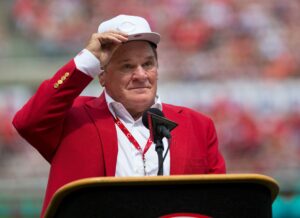
MLB hit king Pete Rose passed away today at age 83, the Reds confirmed. One of the most accomplished players in MLB history, his decision to gamble on his team as a manager leaves behind a complicated legacy that has ultimately kept him out of the Hall of Fame.
“Our hearts are deeply saddened by the news of Pete’s passing,” Reds owner Bob Castellini said in a press release. “He was one of the fiercest competitors the game has ever seen, and every team he played for was better because of him. Pete was a Red through and through. No one loved the game more than Pete and no one loved Pete more than Reds Country. We must never forget what he accomplished.”
A Cincinnati native, Rose signed with his hometown team out of high school. The Reds called him up in 1963. Rose hit .273 while appearing in 157 games during his debut season. He won the NL Rookie of the Year award while establishing himself as Cincinnati’s everyday second baseman. That kicked off one of the most illustrious playing careers in league history.
Rose suffered through a sophomore slump but rebounded with a strong ’65 season. He led MLB with 209 hits while running a .312/.382/.446 line. He earned his first All-Star selection and a sixth-place finish in MVP balloting. That was the first of six straight seasons in which Rose would appear among the Senior Circuit’s top 10 in MVP voting.
Throughout the rest of the 1960s, Rose never hit below .300 despite the league skewing extremely favorably for pitching. He topped 200 hits in four of the final five years of the decade. Rose won consecutive batting titles in 1968 and ’69, securing his first two top-five MVP finishes in the process. He moved off second base to the corner outfield midway through that run and would secure consecutive Gold Glove nods as an outfielder in 1969-70.
Excellent as those performances were, Rose truly broke out as an all-time great in the following decade. He was an integral part of the budding dynasty in Cincinnati that would dominate the National League during the 1970s. The Big Red Machine won their first pennant in 1970, a season in which Rose hit .316 with an MLB-best 205 hits. The Reds were bounced by the Orioles in the World Series. After missing the playoffs in ’71, they returned to the Fall Classic in 1972 behind Rose and Hall of Famers Johnny Bench, Joe Morgan and Tony Pérez. They dropped a seven-game set to the A’s.
Rose again led the majors in hits in ’72. His 1973 campaign, at age 32, was the best of his career. Rose tallied a personal-high 230 hits while hitting .338/.401/.437 over 752 plate appearances. He won his third and final batting title, secured his seventh All-Star nod and won the MVP. The Reds won another division title but were knocked out by the Mets in a closely fought NL Championship Series.
The switch-hitter’s production tailed off somewhat in ’74, although he led the majors with 45 doubles and earned another All-Star selection. The Reds won 98 games but missed the postseason thanks to a 102-win showing from the division-leading Dodgers before the introduction of the Wild Card. Cincinnati returned to the playoffs with a 108-win season in ’75. They swept the Pirates in the NLCS, setting up a showdown with the Red Sox that’d go down as one of the greatest series in MLB history.
Carlton Fisk’s heroics in Game 6 pushed that Series — which had five one-run contests — to a deserved seventh game. The Reds came back from three runs down in the decider, scoring four times in the final four innings to win 4-3 at Fenway. Rose tied the game with a two-out RBI single in the seventh before Morgan drove home the winner in the ninth. Rose’s .370/.485/.481 slash earned him World Series MVP honors.
The Reds returned to the Fall Classic following a 102-win regular season the next year. This one was a lot less of a nail biter, as Cincinnati swept the Phillies and Yankees en route to a dominant repeat. Rose didn’t hit well in that World Series but had an MLB-best 215 to earn a fourth place MVP finish in the regular season.
Rose remained in Cincinnati through the end of the ’78 season. He combined for 402 hits between 1977-78 while topping .300 in both seasons. Rose left his hometown club to sign a free agent deal with the Phillies going into ’79. That ended a 16-year run in Cincinnati, over which he hit .310 with nearly 3200 hits in more than 2500 games. He continued racking up hits and All-Star appearances over five seasons with Philadelphia, where he hit .291 across over 3200 plate appearances during his age 38-42 seasons. He was part of three playoff teams with the Phils and won his third World Series on the 1980 club.
The Expos signed Rose for the 1984 season. While his stint in Montreal was brief and generally unproductive, he picked up his 4000th career hit that April. Rose joined Ty Cobb as the only players to cross the 4000-hit threshold. A return to Cincinnati set the stage for Rose to pass Cobb’s mark of 4189 career knocks. He did just that late in the ’85 campaign with a single off San Diego’s Eric Show.
Rose finished his playing days in 1986. He retired not only as the all-time leader in hits but also games played (3,562) and plate appearances (15,890). His durability was staggering. Rose led the league in plate appearances seven times. He had 15 seasons in which he came to the plate at least 700 times. Rose almost never missed a game despite the hard-nosed playing style that earned him his “Charlie Hustle” moniker — a reputation that endeared him to plenty of fans while no doubt earning the ire of those of other teams.
At the time of his retirement, Rose was a surefire Hall of Famer. The hits crown alone would have gotten him into Cooperstown with ease. Rose was also a 17-time All-Star, a former Rookie of the Year and MVP, and a three-time champion. He hit .303/.375/.409 with 160 home runs, 2165 runs scored (sixth all time), 746 doubles and 1314 RBI. No player got on base more often than Rose, who reached nearly 6000 times over his 24-year run.
While those records and accolades will never change, Rose’s seemingly inevitable Hall of Fame induction was halted by a bombshell revelation. Rose had acted as a player-manager with the Reds beginning in 1984 and continued to manage after his retirement from playing. Late in the ’89 season, MLB announced that an investigation determined Rose had bet on baseball. That included bets on the teams which he’d been managing. While Rose only bet on Cincinnati to win and there’s no indication he ever tried to fix any games, that’s a violation of MLB’s biggest rule.
A finding that a player or coach had bet on games in which their team was involved — whether to win or lose — warrants a lifetime ban. (That remains the case today and came back into play this past June when MLB banned Padres infielder Tucupita Marcano for life for placing bets on the Pirates while he was a member of the team in 2023.) In 1991, the Hall of Fame announced a policy that any person who had been hit with a lifetime suspension by MLB was ineligible for induction. Rose never got on the ballot.
Getting into the Hall clearly would have meant a lot to Rose, who unsuccessfully pushed for reinstatement in the decades following his suspension. That continued well into Rob Manfred’s tenure as commissioner. Manfred, maintaining that betting on baseball warrants a true lifetime ban, rejected Rose’s appeals. The commissioner did not directly weigh in on the Hall of Fame’s policy against considering induction for those on the ineligible list. With neither the league nor the Hall budging, Rose was and remains ineligible for Hall of Fame consideration.
Rose remained tangentially involved with the game as a media personality. He worked as an analyst for Fox Sports between 2015-17. His tenure with Fox came to an end after a woman alleged in a court filing that Rose had had sexual relations with her while she was a minor in the 1970s. The allegations surfaced well after the statute of limitations for criminal action had passed and Rose was never charged. Rose filed a defamation suit against former MLB investigator John Dowd, who first publicly alleged in 2015 that Rose had relations with underage girls during the 70s. The suit was dropped by mutual agreement in 2017.
Rose’s worthiness for the Hall of Fame has been a divisive topic among fans for decades. What is indisputable is that he was one of the most iconic figures in baseball history. His hit record will probably stand the test of time, as league batting averages have dropped sharply with the proliferation of strikeouts and velocity. Rose was among the best players of the 1960s and 70s and an instrumental figure on a Big Red Machine team stacked with Hall of Fame talent that won multiple championships. MLBTR sends our condolences to his family, loved ones, friends and former teammates.
TMZ Sports was first to report Rose’s death. Image courtesy of USA Today Sports.
Giants Fire Farhan Zaidi, Name Buster Posey President Of Baseball Operations
The Giants announced Monday that they have fired president of baseball operations Farhan Zaidi. Franchise icon Buster Posey will serve as the team’s new president of baseball operations, the team announced. Posey is one of six on the Giants’ board of directors and will now oversee the roster’s construction as well. Susan Slusser of the San Francisco Chronicle first reported that Zaidi, who was under contract through the 2025 season (with a 2026 option), was being dismissed.
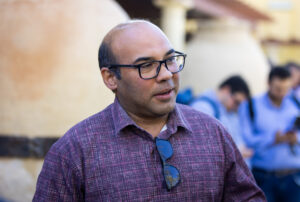
“We appreciate Farhan’s commitment to the organization and his passion for making an impact in our community during six years with the Giants,” chairman Greg Johnson said in statement within today’s press release. “Ultimately, the results have not been what we had hoped, and while that responsibility is shared by all of us, we have decided that a change is necessary. While these decisions are not easy, we believe it is time for new leadership to elevate our team so we can consistently contend for championships. I wish Farhan and his family nothing but the best moving forward.
“As we look ahead, I’m excited to share that Buster Posey will now take on a greater role as the new President of Baseball Operations. We are looking for someone who can define, direct and lead this franchise’s baseball philosophy and we feel that Buster is the perfect fit. Buster has the demeanor, intelligence and drive to do this job, and we are confident that he and [manager] Bob Melvin will work together to bring winning baseball to San Francisco.”
The writing has in many ways been on the wall for Zaidi for some time now. The 2024 season was viewed as a pivotal one for the Giants, who unsuccessfully pursued Shohei Ohtani over the offseason and instead wound up signing Matt Chapman, Blake Snell, Jung Hoo Lee, Jorge Soler and Jordan Hicks as they looked to get back on track after consecutive losing seasons. The Giants won 107 games under Zaidi in 2021 but have not had a winning season under his watch otherwise. The lack of consistent results prompted many to wonder whether Zaidi could survive another sub-.500 season.
The most telltale portent for change, however, came late this summer, when the Giants announced a six-year, $151MM contract extension for the aforementioned Chapman. Signing the star third baseman on the heels of a down season proved to be a home run swing for Zaidi & Co., as Chapman rebounded with one of the best seasons of his career. However, The Athletic reported not long after the extension was completed that Posey had stepped in to run point on negotiations after ownership had become “frustrated” with the lack of early progress in talks.
The Giants had plenty of individual player acquisition successes under Zaidi’s watch. San Francisco became a destination for pitchers looking to turn their careers around, as veterans like Kevin Gausman, Carlos Rodon, Anthony DeSclafani, Drew Smyly, Drew Pomeranz and Derek Holland all strong seasons at Oracle Park before cashing in on more lucrative deals (Holland’s in a one-year return to the Giants that did not pan out as well). Gausman’s resurgence, in particular, proved to be a major win for the Giants. He thrived on a one-year deal during the Covid-shortened 2020 season, accepted a qualifying offer that winter, and was dominant in a full season in ’21.
That list of successes is also emblematic of another hallmark of Zaidi’s tenure, however: an aversion to long-term spending. The Giants opted to let Gausman walk in free agency rather than commit long-term. His five-year, $110MM deal with the Blue Jays has been a bargain for Toronto thus far. Similarly, the Giants let Carlos Rodon depart after his own tremendous season in orange and black, although the early returns on his six-year deal with the Yankees might have the Giants feeling better about that decision than the Gausman one. The Giants did pay up to keep DeSclafani, who returned on a three-year, $36MM contract after a terrific 2021 season, but that contract almost immediately went south.
On the position-player side of things, the Giants have struggled to attract hitters to their spacious park and to develop key contributors. Zaidi’s early tenure included some unmitigated successes in terms of bargain bin shopping. He acquired Mike Yastrzemski, LaMonte Wade Jr., Donovan Solano, Thairo Estrada and Darin Ruf for next to nothing. All became vital regulars or role players for several years. But the Giants were also unable to land big fish like Aaron Judge and Bryce Harper, while the attempted 13-year deal with Carlos Correa was scuttled by medical concerns.
The Giants have regularly pivoted to Plan B or Plan C after missing on big-name free agents — as they did last year following Ohtani’s deal in L.A. — and have a much spottier track record on those deals. Soler, Mitch Haniger and Michael Conforto all fell well shy of being the middle-of-the-order presences the Giants hoped. It’s too early to tell how the aforementioned six-year deal for Lee will play out after his season ended early due to shoulder surgery, but the sheer magnitude of that $113MM contract was a surprise to some in the industry.
The missteps weren’t all limited to the team’s pursuit of big bats. San Francisco has also had its share of misses on smaller-scale free agent investments; Tommy La Stella, Luke Jackson, Ross Stripling and Tom Murphy have all fallen shy of expectations. La Stella was released before the final season of his three-year deal. Jackson and Stripling were shipped out in salary-dump deals. Murphy’s signing — which helped push Joey Bart out of town and over to Pittsburgh, where he enjoyed a breakout year — has been a flop thus far and could make him a salary dump candidate himself this winter.
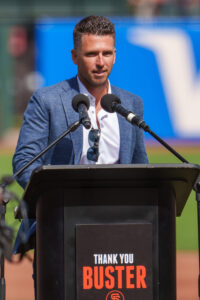
Posey will now be tasked with engineering a turnaround at the stadium he called home for the entirety of his 12-year playing career. His instantaneous ascension to president of baseball operations is far more surprising than Zaidi’s departure. Posey joined the Giants’ board of directors barely two years ago, when he purchased a minority stake in the team.
At the time, it seemed to be little more than a ceremonial move from a beloved player. Posey even stated at the time of the announcement that he was not taking on any type of front office role and that he was viewing his new role as “another opportunity for me to learn more about the game, more about the business and really commit my time to an organization in a city that I’ve grown to love.”
What happens from here remains to be seen, of course. Johnson’s statement did not indicate that general manager Pete Putila is in any danger of being dismissed, though even if he stays on board, he’d be second on the team’s baseball operations hierarchy, behind Posey. Longtime assistant general manager Jeremy Shelley remains with the club as well. Still, today’s press release did include a reference to conducting searches for any “open positions.” Virtually any change at the top of a baseball operations department is eventually accompanied by some personnel changes down the ladder, so it remains possible there are still some alterations to the tapestry of the Giants’ front office that have yet to come to light.
Posey, of course, has no baseball operations experience outside of whatever interactions occurred between him and Chapman earlier this summer. He’s likely been at least tangentially involved in some roster construction elements since purchasing his stake in the club, but he’s never held any sort of baseball operations title and more or less went directly from the team’s everyday catcher to minority owner, purchasing his share of the club less than one calendar year after playing his final game.
It’s rare, albeit not unprecedented in today’s game, for someone to be tabbed as a baseball operations leader with zero prior baseball operations experience. Agents Brodie Van Wagenen and Dave Stewart (a former big leaguer himself, of course) were hired as the general managers for the Mets and Diamondbacks within the past decade, respectively. Neither lasted more than a few seasons in their posts, however. Current Rangers general manager Chris Young pitched in the majors until 2017 and was working in the league’s central offices as MLB’s senior vice president of on-field operations, initiatives and strategy when Texas hired him as GM under then-president Jon Daniels.
Posey’s ascension to the top of a baseball operations department is far more sudden and rapid than any of those executives. Van Wagenen had been one of the highest-profile agents in the sport for more than a decade, negotiating countless contracts — albeit on the other side of the proverbial table. Stewart was retired as a player for nearly 20 years and, like Van Wagenen, had been representing players for quite some time, giving him plenty of familiarity with that side of the game. Young wasn’t much further removed from his playing days but had spent two years working in the league’s central offices. He was also hired as the No. 2 executive on the Rangers’ front office chart and spent more than two years working under Daniels before being promoted to the top post in Arlington.
Posey will now be tasked with revamping a Giants roster that has regularly lacked star power, relied heavily on platoons and has too often been permeated by aging players with waning athleticism. He’ll simultaneously need to build up a farm system that’s regarded as lackluster and work to improve a player development operation that has frequently seen top prospects either underperform or fizzle out. Homegrown talents like Logan Webb, Kyle Harrison, Heliot Ramos, Tyler Fitzgerald and Patrick Bailey all look like viable core pieces. But a number of the team’s other top prospects over the years — Bart, Luis Matos, Marco Luciano, Hunter Bishop, Will Bednar, Casey Schmitt — have not developed as hoped.
The $151MM Chapman extension signals that even with this change in baseball operations, the Giants aren’t planning on taking any kind of step back. They’ll look to get back into competition in the National League West next year and do so alongside a perennial Dodgers powerhouse, an ascendant Padres club and a D-backs squad that went to the World Series as recently as last season. It’s a tall order for any executive, let alone a rookie one — though Posey’s last rookie season certainly produced strong results.
Chaim Bloom To Replace John Mozeliak As Cardinals President Of Baseball Operations After 2025
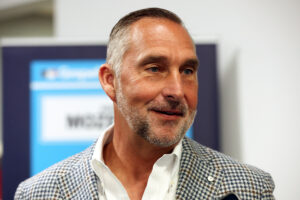
The Cardinals held a press conference today featuring chairman Bill DeWitt Jr., club president Bill DeWitt III, president of baseball operations John Mozeliak and advisor Chaim Bloom. DeWitt Jr. announced at the press conference that Bloom would be taking over the Mozeliak’s POBO role after 2025 and has signed a five-year contract. Jeff Jones of the Belleville News-Democrat was among those to relay the details (X links). That contract starts in 2026, per Derrick Goold of the St. Louis Post-Dispatch (X link). Mozeliak adds that he will make day-to-day decisions through 2025 but but long-term decisions will involve Bloom and ownership, per Jones (X link). Also, Michael Girsch is no longer the general manager, with his title now changed to vice president of special projects. Mozeliak says he expects player payroll to go down, per Goold (X link).
There had been a lot of smoke in recent days that significant changes were coming to the front office. A week ago, Jones reported that some notable developments would be announced at today’s press conference. Around that same time, Bob Nightengale of USA Today had reported that Bloom was likely ticketed for a larger role. A few days later, Katie Woo of The Athletic provided some more details, noting that Bloom would be overhauling the club’s player development. As part of that overhaul, the club planned to redirect resources away from the major league roster and towards improving their minor league pipeline. On the weekend, Nightengale reported further on the club, noting that the payroll reduction could lead to right-hander Sonny Gray winding up on the trading block. Meanwhile, a report from Goold aligned with Woo’s info, noting that the club planned to take a long-term focus on their player development. Woo herself added another report which noted that the club planned to move on from long-time first baseman Paul Goldschmidt.
Today’s announcements all line up with that reporting, though also take it a step further. Though no one is using words like “rebuild” or “retool” or anything along those lines, it seems there is a general understanding that the club will be placing less of a focus on results in the immediate present with more of an eye on long-term and/or sustainable roster construction.
For most of this century, the Cardinals have had a strong track record in terms of finding and developing young talent. That allowed them to generally post strong on-field results despite never being one of the top spenders in the league. From the year 2000 to the present, they have only missed the playoffs nine times and only finished with a losing record twice.
That cutting edge has seemingly gone a bit dull in most recent years, however. From 2000 to 2015, they only once missed the playoffs twice in a row, which was in 2007 and 2008. But that was sandwiched in between two World Series titles in 2006 and 2011. From 2016 to 2024, the club has missed the playoffs five times. Of their four postseason appearances from 2019 to 2022, three of them ended with losses in the Wild Card round. While the club rebounded somewhat from a losing season in 2023, getting over .500 in 2024, they did so with a good chunk of the roster consisting of pricey veterans in their mid-30s. That includes Goldschmidt, Gray, Nolan Arenado, Lance Lynn, Kyle Gibson and Miles Mikolas.
Per the recent reporting leading up to today’s conference, it seems the decision makers have come to the conclusion that they have been hampered by redirecting their focus to the major league roster, which has hurt the club’s player development pipeline. Recent years have seen players like Randy Arozarena, Adolis García, Zac Gallen and others thriving after departing the organization. Meanwhile, some of the club’s young prospects like Dylan Carlson, Jordan Walker, Nolan Gorman and others have struggled to live up to expectations.
Every organization will have some of those misses, but it seems the club realizes that they need to change their hit rate in order to find success. As a mid-market club that doesn’t generally sign top free agents, good player development is fairly essential for running out winning ball clubs.
 Bloom will be entrusted with making those changes, though he won’t be given carte blanche right away. As detailed by Mozeliak up top, it seems he will handle the basic running of the club for the next year as Bloom focuses on things under the hood. That presumably will involve tackling things away from the majors, from the minor league facilities, coaches, scouting departments and things of that nature. After a year of making changes in those capacities, he will eventually take over the baseball decisions in a more complete capacity.
During his tenure as the chief baseball officer for the Red Sox, Bloom had some hits and misses but the are good reasons why the Cardinals have picked him for this role. Bloom made some odds choices in Boston, such as selling at the 2022 deadline but staying narrowly above the competitive balance tax. The signings of Trevor Story and Masataka Yoshida haven’t really worked out so far.
But a lot of Boston’s future is made up of players acquired during Bloom’s time, either through the draft, international free agency or trades. Though the 2022 deadline was odd at the time, getting Enmanuel Valdéz and Wilyer Abreu for a few months of Christian Vázquez now looks like a big win. Plucking Garrett Whitlock from the Yankees in the in the 2020 Rule 5 draft was a nice pull. Kyle Teel, Marcelo Mayer, Roman Anthony, Miguel Bleis and Kristian Campbell are all on top 100 prospect lists and were acquired during Bloom’s time.
As he ramps up to take over, Mozeliak will be preparing to wind things down. Though the recent results have stirred up the anger of many fans in the St. Louis area, Mozeliak is connected to much of the clubs’ aforementioned success earlier this century. He joined the club’s scouting department in 1995, just a few years before they kicked off that strong run of success. He worked his way up to eventually take over the general manager role going into the 2008 season.
The club has largely been a mainstay of the postseason in that time, including winning the World Series in 2011. There has been an apparent tapering off of the club’s momentum in recent years, though even before that, it seemed like Mozeliak was leaning towards transitioning away from his current role. Back in February of 2023, before the club’s disappointing results in the two most recent campaigns, Mozeliak gave some hints that he was heading out the door eventually.
“I know there is going to be some change coming over the next few years,” he said at that time. “We certainly want to give individuals within the organization opportunities to grow and expand some of their roles, and over the course of the next year or so we’ll work through that.”
At that point, it seemed fair to conclude that he was talking about Girsch, who had been in the organization since 2006. He had been promoted to general manager in 2017, working as Mozeliak’s top lieutenant since then. Girsch had been signed to a multi-year extension in October 2022, just a few months prior to Mozeliak’s comments.
But Bloom was fired by the Red Sox in September of 2023 and then landed an advisory role with the Cards in January of 2024. It seems that Bloom has surpassed Girsch at some point, either based on his track record with Boston or something he has shown them since taking on that advisory role.
Girsch has now been given a new title, which is perhaps a favor to him in a sense. With Bloom now blocking his path to a promotion with the Cards, this sends a signal to other clubs. If any front office positions open up elsewhere and another team is interested in Girsch, he will now seem more available than he did a few weeks ago. Clubs generally allow their personnel to interview with other clubs if a promotion is involved, so the Cards could be open to Girsch pursuing a role somewhere else if the opportunity arises. Per Woo on X, the club doesn’t plan to hire another GM in the short term, likely waiting until Bloom takes over next year. Woo also relays in a column at The Athletic that Girsch is under contract for one more year.
As the weeks and months roll along, more specifics should emerge about the organization and their plans. But from the news today and in recent weeks, it’s clear that the main idea is change, a new direction that should have significant ramifications for years to come.