
Manfred Hopes To Make Expanded Playoff Format Permanent
The 2020 MLB season looks like nothing we’ve ever seen in the sport’s century-plus history. A 60-game schedule with 28-man rosters, frequent seven-inning doubleheaders, a universal DH and runners magically manifesting on the bases in extra innings have all been chalked up as necessities to get through a pandemic-shortened season that had a limited ramp-up period and was set to take place in a span of just 67 days. This year’s 16-team playoff field was implemented as a means to help curb some of the broad-reaching revenue losses that have hit all 30 clubs.
Unsurprisingly, however, it seems as though MLB is mulling the permanent implementation of some of these aspects. Speaking at an online event hosted by Hofstra University this week, MLB commissioner Rob Manfred said he hopes to make the expanded postseason format permanent, adding that he believes the opposition to the universal DH is waning and stating that the extra-inning rule has been received better than he anticipated (YouTube link to the entire 71-minute appearance).
“I’m a fan of the expanded playoffs,” Manfred said of this year’s 16-team field. “…I think getting back to that three-game series in the first round is a positive change. I think the initial round could have the kind of appeal you see in the early couple days in the NCAA tournament. It’s going to be crazy — just a lot of baseball in a compressed period of time. We’re going to have a bracket, obviously. People love brackets and love picking who’s going to come through those brackets. I think there’s a lot to commend it. It is one of those changes that I hope becomes a permanent part of our landscape.”
Nothing is set in stone on that front just yet, but the concept of an expanded playoff structure had been discussed and was generally supported by the “overwhelming majority” of owners prior to this year’s implementation, per Manfred.
Postseason expansion has indeed been floated speculatively in the past, although pushing all the way to 16 teams was an even more radical jump than ownership initially sought in return-to-play negotiations. Back in March, the league was reportedly looking at a 14-team structure, although that presumably would’ve served as a gateway to the 16-team format that is now in place. It’s also odd to tie the three-game Wild Card series to postseason expansion, as the league could simply have pushed the existing, sudden-death Wild Card Game into a three-game series without adding more teams to the field.
The league can spin the reasoning however it chooses, positioning the broadened structure as a win for fans — that surely is the case in many instances — but the ultimate goal is the greatly increased revenue associated with extra postseason play. With or without fans in attendance, adding six teams to the field will cause television revenue to soar. It’s been reported that this year’s expansion could generate $200-300MM in additional television revenue, and the potential for broadened gate revenue in subsequent seasons only creates further incentive for teams to endorse the larger field.
Manfred wasn’t so straightforward with his own personal endorsement of the universal designated hitter, but he strongly implied that he feels the on-field product is enhanced by the DH in the National League.
“I think that playing with the designated hitter every day, the best I could tell you right now, has softened the opposition to the DH in the National League,” said Manfred. “The experience of doing it, the offense that it injects into the game, the way it makes it more exciting — I’m not sure it’s going to last, but I do think it has definitely changed some minds in the National League, which is obviously where the opposition to having a single set of rules has been centered over the years.”
Regarding the most radical rule change in 2020, Manfred suggested that placing a runner on second base in extra innings not only has a chance to stick beyond 2020 but has been well-received to this point. The concept has been polarizing, at best, among fans on social media — MLBTR readers were against it four-to-one back in June, though that was of course before seeing it put into practice — and has also been panned by some players.
“The extra-inning rule has been more positively received than I would have expected,” said the commissioner. “I told people, I said publicly before Covid, that I didn’t see this rule coming to the Major Leagues. I think it has a chance now. It’s been good. People see it as a strategic rule. It’s a whole different thought process that goes into handling the extra innings. I think it’s a good thing.”
Not every rule change is likely to stay in place. Manfred cast doubt on whether seven-inning doubleheaders would remain in place beyond the 2020 season, characterizing the traditional nine-inning length of games as something that isn’t likely to be altered on a permanent basis.
Looking further down the road, Manfred again touched on the topic of expansion to 32 teams. The commissioner has long been a proponent of adding two new teams to the league but acknowledged that the Covid-19 pandemic — the revenue losses and the time dedicated to navigating a season amid it — have likely pushed expansion down the road a ways.
“Expansion makes great sense for baseball, just based on the math,” said Manfred. “Fours work way better than fives. We have five-team divisions right now, 15 teams in each league. Those fives are rough when you go to make a schedule. … Getting to 32 [teams] is a really appealing idea from a schedule format perspective.”
Manfred didn’t delve into potential sites for new teams, though he did go back to a previously stated belief that international expansion beyond the U.S. and Canada would be good for the game’s growth, citing Mexico’s existing baseball culture as a “great opportunity” for the league to explore at some point.
Eventual changes to the rulebook, the structure of the season and the very composition of the league have long felt inevitable, but it’s certainly notable that the league has implemented this many changes to the 2020 season with the looming expiration of the 2016-21 collective bargaining agreement. The impending negotiations on a new CBA undoubtedly played a role in the MLBPA’s decision to only agree to expanded playoffs in 2020, as the expanded format can now be a point of leverage in future negotiations rather than the status quo heading into those talks.
Even if some of the league’s desired changes for the 2021 season don’t come to fruition on the heels of this year’s experimental campaign, don’t be surprised if (or when) they are once again major talking points as MLB and the MLBPA again come to the negotiating table in a year’s time.
MLB, MLBPA Reach Agreement On Postseason Plan
3:55pm: Because of concerns over air quality in the West Coast (the Mariners-Giants game in Seattle on Tuesday was postponed for that reason), the Phoenix area has become the league’s top fallback option for postseason games, Jeff Passan of ESPN tweets.
12:52PM: Major League Baseball has officially announced the postseason schedule, which is set to begin on September 29 with the start of the AL wild card series. One notable aspect of the schedule is that there aren’t any scheduled off-days until the World Series, so teams won’t get any break (or a chance to reset their pitching staffs) unless they win their series in early fashion.
10:25am: Players’ families will have the option of quarantining at the hotel with them in the seven days prior to the postseason, Rosenthal tweets. They’d then be able to join the bubbles for the duration of the playoffs.
9:49am: Sherman further reports that teams will continue operating their alternate training sites during the pre-postseason quarantine, but transfers between the alternate site and big league roster won’t be permitted. As such, all players on the IL and 40-man roster are likely to join in that quarantine setting to allow clubs to continue to make roster moves.
That’s hardly an ideal setup, as those players seem unlikely to be able to participate in simulated games and other standard workouts, but the league is clearly exercising extra caution in order to ensure the postseason is able to take place.
9:37am: Sherman adds that the previously reported quarantine measures leading up to the playoffs will remain in place for players. All members of contending clubs, even those playing at home, will quarantine in hotels for seven days prior to the first round of postseason play. They’ll be tested daily during that period. If a team is eliminated from postseason contention in that seven-day span, of course, those players can leave the hotels early.
9:30am: Major League Baseball and the MLB Players Association are in agreement on a plan for the 2020 postseason that includes a “bubble” format hosted at neutral sites for the Division Series, League Championship Series and World Series, reports Ken Rosenthal of The Athletic (via Twitter). A formal announcement is expected today.
Details of the arrangement remain sparse, although at last check, the plan was to host the ALDS and ALCS at National League stadiums in southern California (Dodger Stadium and San Diego’s Petco Park). The NLDS and NLCS, in turn, would be hosted at a pair of American League sites: the Rangers’ Globe Life Field and the Astros’ Minute Maid Park. The World Series would be staged at Globe Life Field as well. The first round of play would be hosted at the home park of the matchup’s higher seed, Joel Sherman of the New York Post tweets.
Those points seemed largely agreed upon, but there were other details to be hammered out. Notably, players pushed back against the quarantine measures that were to be put in place for their family members before being permitted to join them in the bubble. It also appears that there’s been some discussion of allowing fans in a limited capacity, as commissioner Rob Manfred suggested last night in an online event with Hofstra University’s business school (link via Evan Drellich of The Athletic). Whether that possibility is woven into the agreement is not yet clear.
“I’m hopeful that the World Series and the LCS we will have limited fan capacity,” Manfred said in that appearance. “…Obviously it’ll be limited numbers, socially distanced, protection provided for the fans in terms of temperature checks and the like. Kind of the pods like you saw in some of the NFL games. We’ll probably use that same theory.”
Referring to anything as a “bubble” when family members and fans — even in limited quantities — are permitted to enter the equation seems like a reach, but it’s notable that it’s even under discussion. Limited fan attendance would complicate health and safety protocols but would also soften the financial blow that clubs are facing without gate revenue in 2020. It could also serve as somewhat of a litmus test in advance of the 2021 season, which Manfred acknowledged is not a given to return to normalcy from day one:
“I think the trick in terms of what’s going to happen next year, it’s dependent on the virus,” said Manfred. “The virus controls and it’s ‘do you have a vaccine? Are we still seeing spikes?’ That’s going to drive what local governments are going to allow us to do.”
Yankees Reinstate Giancarlo Stanton, Gio Urshela, Jonathan Loaisiga From Injured List
The Yankees announced that outfielder Giancarlo Stanton, infielder Gio Urshela and right-hander Jonathan Loaisiga have all been reinstated from the 10-day injured list. Miguel Andujar and Mike Ford were optioned to the alternate training site in corresponding moves, and the Yankees already had an open roster space since right-hander Clarke Schmidt was optioned after Sunday’s game.
Stanton hit the IL with a left hamstring strain back on August 9, and the Yankees and their fans are hoping that the slugger can finally enjoy a sustained run of healthy play after almost two full seasons of inactivity due to various leg injuries. Stanton played in only 18 games in 2019 and appeared in 14 games this season before going on the injured list, with this year’s absence being particularly disappointing since Stanton was off to a huge start (hitting .293/.453/.585 with three homers in 54 PA).
However, Stanton’s return gives him time to get ramped up prior to the postseason, as the Yankees are starting to get healthy at perhaps just the right time. Urshela will back to action after a minimal 10-day placement due to a bone spur in his right elbow, and the third baseman has followed up his breakout 2019 campaign with a strong .272/.358/.515 slash line and six homers in 120 PA this season. Aaron Judge is also expected to soon return from a calf injury.
Loaisiga’s return is also welcome news for the Yankees, especially considering the rather unusual nature of his IL placement. On September 4, the Yankees said Loaisiga was suffering from “a medical condition that prevents him from playing and necessitates placement on the injured list,” with manager Aaron Boone later specifying that the right-hander’s absence was not due to COVID-19. Regardless, it is good to see Loaisiga back in relatively quick fashion. The 25-year-old has a 3.18 ERA, 5.00 K/BB rate, and 10.6 K/9 over 17 innings this season.
Steve Cohen Agrees To Purchase Mets
4:54pm: SNY is not in the deal, Joel Sherman of the New York Post tweets.
4:17pm: Billionaire Steve Cohen has agreed to purchase the Mets from Fred Wilpon and Jeff Wilpon, Jon Heyman of MLB Network reports. Cohen will need approval from 23 MLB owners to acquire the team, and if they sign off on his purchase in November, he’ll own 95 percent of the franchise, according to Tim Healey of Newsday. The deal values the Mets at roughly $2.475 billion, Healey adds.
“I am excited to have reached an agreement with the Wilpon and Katz families to purchase the New York Mets,” Cohen announced.
The Cohen purchase has been a long time coming for the Mets, who have been in on-again, off-again negotiations with him dating back to last winter. Cohen was seemingly in line to buy the team for $2.6 billion before, but the prior deal between him and the Mets collapsed in February. Cohen, who’s a minority owner of the Mets now, would have ended up with 80 percent of the franchise had that agreement gone through. He’ll now take over almost the entire organization, though it’s unclear whether he’ll get the coveted SNY Network in the sale.
After the Mets resumed their attempt to sell the team, Cohen vied against an Alex Rodriguez-Jennifer Lopez team and a Josh Harris-David Blitzer tandem, among others, in order to land the club. Cohen won out for exclusive negotiations on Aug. 28, though Rodriguez was reportedly none too pleased with the Wilpons for how they handled the process.
Of course, Mets fans also aren’t big fans of the Wilpon family, who have been part of their ownership since the 1980s. The Mets have recently endured serious struggles under the Wilpons, who are at the helm of a franchise that hasn’t won a World Series since 1986, has gone to the postseason four times in the 21st century and hasn’t made the playoffs since 2016.
At 21-26 this season, it doesn’t appear the Mets will snap their playoff drought. Considering the difficulties they’ve faced over the past couple seasons, it’s anyone’s guess which changes Cohen will make if he takes over the team before next season. General manager Brodie Van Wagenen could end up on the chopping block, though, as the beleaguered second-year exec has overseen back-t0-back disappointing teams.
Athletics Sign Jake Lamb
Sept. 14: The Athletics announced that they’ve signed Lamb to a Major League contract after he’d become a free agent (i.e. cleared release waivers). Lefty A.J. Puk, who is slated to undergo shoulder surgery, was moved to the 45-day injured list to open a roster spot. Oakland also placed Frankie Montas on the paternity list and added righty James Kaprielian as the 29th man for today’s doubleheader.
Sept. 13: The A’s are set to sign corner infielder Jake Lamb, as first reported last night by Shayna Rubin of the San Jose Mercury News (Twitter link). The Diamondbacks designated Lamb for assignment on Thursday.
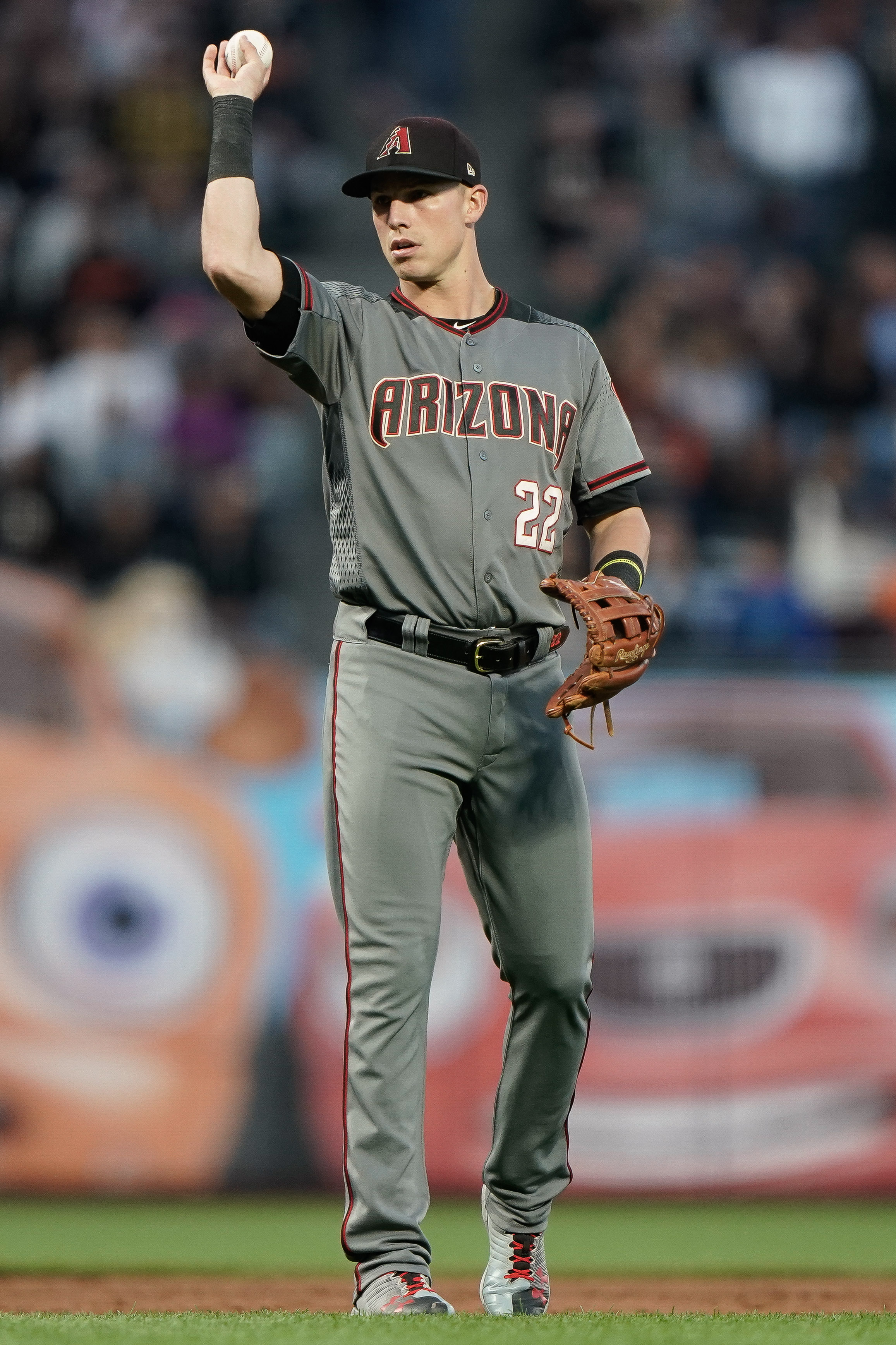
The left-handed hitter isn’t officially eligible to sign until Monday, Rubin adds; presumably, he’s still on release waivers, although it’s a lock he’ll clear them since any team that claims him would absorb what remains of Lamb’s prorated $5.515MM contract. By waiting until he clears waivers, the A’s will leave the Arizona organization on the hook for all but the prorated portion of the league minimum salary. As Susan Slusser of the San Francisco Chronicle points out (on Twitter), Lamb’s deal should be finalized before Tuesday’s deadline for players to be eligible for a new team’s playoff roster.
Lamb came up as a third baseman, but he saw an increasing amount of time at first base in his final couple seasons in the desert. The A’s have Matt Olson locked in at first, so Lamb’s path to playing time in Oakland is surely back at the hot corner. The A’s just found out yesterday that star third baseman Matt Chapman was lost for the season. With Chapman out, Rule V pick Vimael Machin and veteran utilityman Chad Pinder have taken most of the third base work over the past week. Neither Machin nor Pinder has hit well this season, though, so the A’s are adding another bat to the mix. Additionally, Pinder also seems ticketed for the injured list after getting scratched from yesterday’s lineup with a hamstring strain.
Of course, that Lamb was designated for assignment this week speaks to his own recent struggles. While he once looked like a building block for the Arizona organization, the 29-year-old has never returned to form after a 2018 shoulder injury that eventually required surgery. Over the past three seasons, Lamb has combined for a paltry .199/.307/.330 line (73 wRC+) in 514 plate appearances. He’s continued to draw his fair share of walks, but the power he showed from 2016-17, when he combined for 59 home runs, has evaporated. Lamb has just 12 long balls over the past three seasons. He was off to the worst start of his career before the Diamondbacks moved on, hitting .116/.240/.140 in 50 plate appearances.
Lamb will be a free agent at season’s end, so he’s a short-term stopgap for the A’s. Oakland has a 40-man roster spot available already, and further space can be cleared by placing Chapman on the 45-day injured list.
Reds Place Sonny Gray On Injured List
The Reds have placed right-hander Sonny Gray on the 10-day injured list with a right mid-back strain, the team announced. Sal Romano has been selected to the roster in his stead. The IL placement is retroactive to Friday.
Gray has continued to shine in his second season in Cincinnati. Through 45.2 innings in nine starts, the right-hander has put up a 3.94 ERA/2.93 FIP with a career-best 30.6% strikeout rate. His 5.8 fWAR since the start of 2019 ranks thirteenth league-wide, a turnaround from a pair of down seasons with the Yankees. The Reds didn’t announce a timetable for his return, but there’s obviously not much time remaining for Gray to make it back in 2020. With just fifteen days left in the season, it’s possible this brings his campaign to an end. It’s certainly another blow to the 20-26 Reds’ faint hopes of mounting a playoff run.
The Reds waived the hard-throwing Romano over the winter, and he’ll now be making his first appearance on the MLB roster this season. Originally a starting pitcher, Romano moved to the Cincinnati bullpen full-time in 2019, where he put up a 7.71 ERA in 16.1 innings.
Giants-Padres Series To Resume On Sunday
SEPTEMBER 13, 10:19 am: Major League Baseball has officially confirmed today’s doubleheader. Given most recent test results, the league has determined that the test which triggered the initial postponements, reported by Jon Heyman of MLB Network to be that of San Francisco outfielder Alex Dickerson, was a false positive.
SEPTEMBER 13, 9:06 am: Indeed, the teams are scheduled to return to play a doubleheader today, reports Kevin Acee of the San Diego Union-Tribune. As Acee notes, the clubs’ other missed contest figures to be made up when they conclude the season against one another September 25-27.
SEPTEMBER 12: The Giants and Padres could potentially return to the field Sunday for a doubleheader, USA Today’s Bob Nightengale reports (Twitter link). The player who originally tested positive for COVID-19 has since had two negative test results, and if other tests are passed tonight, the Giants could be cleared to return to action.
SEPTEMBER 11, 8:49pm: The league announced that it has also postponed Saturday’s game “out of an abundance of caution and to allow for additional testing and contact tracing to be conducted.”
8:29pm: The Padres-Giants game in San Diego on Friday was postponed after one of San Francisco’s players tested positive for the coronavirus, Kevin Acee of the San Diego Union-Tribune reports.
“Tonight’s game was postponed due to a positive COVID test within the Giants organization,” the Padres stated. “MLB will announce additional information regarding the status of our series with San Francisco as soon as possible.”
The two teams played Thursday and are scheduled to end their series with a game Sunday, but it’s now unclear whether they’ll be able to take the field over the weekend. There are just two-plus weeks left in the season, and with the Padres and Giants vying for playoff spots, significant changes in their schedules could prove detrimental. Nevertheless, the league will have to make a decision that abides by health and safety protocols. MLB has already seen the virus force notable changes to its schedule, especially for the Marlins and Cardinals.
Matt Chapman To Undergo Season-Ending Hip Surgery
5:41PM: Chapman has suffered a torn hip labrum, agent Scott Boras tells Susan Slusser. Boras estimates Chapman will need 12-16 weeks of recovery time.
1:09PM: The Oakland A’s have placed Matt Chapman on the 10-day injured list, per Susan Slusser of the San Francisco Chronicle (via Twitter). Chapman has been seeking a second opinion on his right hip tendinitis, per Slusser. Chapman will now undergo surgery on the hip on Monday, which will sideline the star third baseman for the rest of the season, tweets Martín Gallegos of MLB.com.
The news obviously comes as a blow to the division-leading Athletics. Chapman’s defense at the hot corner is a rare commodity of itself – he’s a two-time Platinum Glove winner – but paired with the thump of a .503 career slugging percentage and that’s a special player. More specifically, that’s an MVP candidate: Chapman finished in the top-7 for MVP voting in each of his two full seasons.
This year, Chapman’s triple slash of .232/.276/.535 is down a little from his career standards, primarily in the on-base department. A 10.3 BB% for his career has dwindled to 5.3 BB% this season, paired some additional swing-and-miss as well (35.5 K%). In 37 games, he’s produced 1.1 rWAR, which extrapolated would be a 4.8 rWAR year over 162 games.
Taking a glass-half-full approach, Chapman should be able to return to form after the surgery, which will be performed on Monday by Dr. Marc Philippon, per Slusser. Teammate Mark Canha can give Chapman the rundown of expectations, as Canha underwent the same surgery, Slusser notes. Chad Pinder and Vimael Machín figure to get the majority of playing time at the hot corner the rest of the way.
Seth Brown has been recalled to take his roster spot, the team announced. Brown put up a surprising 26-game stint in 2019 in which he slashed .293/.361/.453 across 83 plate appearances. He’s without a hit in 4 at-bats so far this season.
Braves Designate Robbie Erlin, Recall Sean Newcomb
The Atlanta Braves have designated starter Robbie Erlin for assignment, per the team. Sean Newcomb has been added to the active roster to take his place.
Erlin’s tenure in Atlanta was short, in the grand scheme of things. He made 7 appearances, 5 starts, for a 8.49 ERA/6.75 FIP while allowing 8 home runs over 23 1/3 innings. The Braves have been desperate for rotation help, claiming Erlin off waivers from the Pirates on August 7th.
Newcomb made his debut as a starter for the Braves in 2017, but by 2019 he made himself into a valuable piece of the Braves’ bullpen. He posted a 3.16 ERA/4.24 FIP across 68 1/3 innings in 51 appearances and 4 starts in 2019. When the bottom fell out from the Braves’ rotation plans in 2020, Newcomb stepped in and made four starts to disastrous results: 11.20 ERA/7.51 FIP while walking 4 per nine innings and striking out 6.6 per nine. Despite the currently-thin rotation, the Braves plan on returning Newcomb to the bullpen, per The Athletic’s David O’Brien (via Twitter).
The Braves might see some reinforcements in the rotation shortly with Cole Hamels expected to make his Braves’ debut on Wednesday, per O’Brien (via Twitter). Huascar Ynoa, Bryse Wilson, and Newcomb can provide multi-inning efforts from the bullpen, while Josh Tomlin, Ian Anderson, Kyle Wright and Hamels take turns in the rotation. Max Fried can be activated from the injured list as early as Wednesday to join the rotation, but the Braves have not updated his health status yet.
Diamondbacks Designate Jake Lamb
The Diamondbacks have designated infielder Jake Lamb for assignment and selected infielder/outfielder Pavin Smith‘s contract, per a team announcement.
Arizona has been Lamb’s only organization since he went in the sixth round of the 2012 draft, but it now looks as if his run with the club will end. Primarily a third baseman, Lamb looked like a legitimate building block for the Diamondbacks from 2016-17. He combined for above-average offense then and totaled 4.9 fWAR, adding 30 home runs in 2017 and earning his lone All-Star nod. However, thanks in part to shoulder problems, Lamb’s career took a negative turn the next season and hasn’t recovered since.
In 514 plate appearances going back to 2018, the 29-year-old Lamb has batted .199/.307/.330 with 12 home runs. He was amid a horrid season this year (.116/.240/.210 without a homer in 50 PA) before the Diamondbacks designated him. He was due to reach free agency in the offseason anyway, so the D-backs decided to cut the cord a few weeks early.
Smith, the No. 7 pick in the 2017 draft, signed a $5,016,300 bonus with the Diamondbacks on the heels of his selection. Despite his draft pedigree and the money he initially received, the former Virginia Cavalier is not regarded as a premium prospect anymore (Baseball America ranks him 18th in the D-backs’ system), though Smith did bat an impressive .291/.370/.466 in his first 506 Double-A plate appearances last year.