
Report: Reds “Clear Frontrunners” To Sign Nicholas Castellanos
According to a report from Jon Paul Morosi of MLB Network, the Reds are now seen as the “clear frontrunner” to sign free-agent outfielder Nicholas Castellanos, with Morosi adding that the two sides have made progress in their negotiations over the past few days.
The Giants have also been in contact with Castellanos in recent weeks, per Morosi. The Rangers have also been strongly linked to the 27-year-old. And while Castellanos is decidedly the best slugger left on the market, it could very well be a three-team race for his services; when we explored the best fits for Castellanos last week, we also named the Indians, Cardinals, and Cubs as potential landing spots, but all of those teams have displayed a certain reluctance to splurge on free agents and seem unlikely to do so in this case.
Cincinnati is already looking at a pretty busy outfield mix—especially at the corners, where Castellanos would play—but none of the Reds’ existing pieces can quite match the offensive firepower that Castellanos would add to the lineup. Aristedes Aquino, Jesse Winker, and Phil Ervin are all likely to be deployed frequently in the outfield corners, with Shogo Akiyama and Nick Senzel representing options for the centerfield job.
If indeed the Reds wind up inking Castellanos, two of the aforementioned teams would be doubly hurt by missing out: the Cubs and Cardinals, of course, would have to turn around and deal with the division rival Reds several times every year.
MLBTR originally predicted that Castellanos would earn a four-year, $58MM deal in free agency. There’s still a chance he could reach those numbers, but the one-year, $18MM contract signed by Marcell Ozuna last week might reflect how the industry values Castellanos, whose profile and on-field value resembles that of Ozuna. Castellanos, though, is more than a year younger and doesn’t come with a qualifying offer attached, so signing teams won’t have to worry about surrendering draft pick compensation.
Royals Re-Sign Alex Gordon
TODAY: Gordon has agreed to waive his 10-and-5 no-trade rights beginning on June 16, as per The Associated Press. Talking with MLB.com’s Jeffrey Flanagan and other reporters about the signing, GM Dayton Moore referred to the unusual provision as a way to “eliminate the red tape” and “take out the dynamics of going through the union” if a trade offer from a contender emerged. Moore also implied that Gordon would still have an unofficial veto about any trade proposal, saying “anything we do with Alex, we would have a conversation with him first. It’s really important to know that. It’s always about the players….If you decide together at some point [that a trade] could benefit Alex, you want to have very easy conversations about things.”
JANUARY 22, 5:33pm: Gordon’s contract pays him an extra $500K upon reaching 250 plate appearances, tweets USA Today’s Bob Nightengale. There’s also a $500K assignment bonus in the event that he’s traded, although as a player with 10-and-5 rights, Gordon can veto any proposed swap.
9:15am: The Royals have struck a new deal with outfielder Alex Gordon, as first reported by MLB.com’s Jeffrey Flanagan (via Twitter). The pact is said to guarantee him $4MM for the 2020 season. Righty Heath Fillmyer was designated for assignment to create roster space.
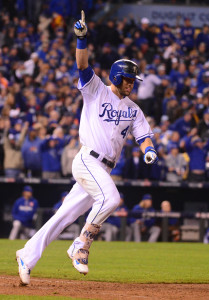
Gordon’s second free agent return to Kansas City comes with less drama and a much lower cost than did his prior one. The veteran previously inked a four-year deal in January of 2016, all but ensuring he’d never wear another uniform.
Entering the 2019-20 offseason, the only question was whether Gordon would decide to continue his career for an additional season. He and the K.C. organization decided upon at least one more.
That aforementioned contract hasn’t worked out at all from an on-field perspective. Gordon, who’ll soon turn 36, has yet to turn in even an average offensive campaign under the new deal. He carries an ugly .237/.320/.366 batting line over the four-season span.
On the other hand, Gordon has continued to turn in sterling defensive work in the outfield. And his bat did trend up in 2019, as he slashed .266/.345/.396 (96 wRC+) with 13 home runs.
While there was never any chance the Royals would pick up a high-priced option over Gordon, it’s not hard to understand the rationale for this move. The money, roster spot, and playing time surely could’ve been appropriated elsewhere, but every team needs some veterans around and the Royals are as familiar and comfortable with Gordon as any club could be with any player.
As for Fillmyer, the 25-year-old has thrown 104 2/3 MLB frames over the past two seasons, working to a 5.07 ERA with 6.2 K/9 and 3.8 BB/9. He turned in solid results while working his way through the farm, but has also struggled at the Triple-A level, where he owns a 5.48 ERA over 116 2/3 innings in 2018-19.
Photo courtesy of USA Today Sports Images.
Marlins To Sign Brandon Kintzler
The Marlins have agreed to a one-year contract with right-hander Brandon Kintzler, ESPN.com’s Jesse Rogers reports. The deal will pay Kintzler $3.25MM in guaranteed money — $3MM in 2020 salary, and a $250K buyout of a $4MM club option for the 2021 season. In the event of a trade before the 2020 season is out, the 2021 club option increases to $5MM with a $500K buyout. Kintzler is represented by Kevin Kohler.
Miami has been linked to the 35-year-old Kintzler for the last few weeks, with MLB Network’s Jon Heyman reporting earlier today that the two sides were “working on a deal.” With Kintzler now in the fold, it would seemingly put an end to the Marlins’ pursuit of Pedro Strop, another former Cubs reliever Miami was also considering as a ninth-inning option.
Now, Kintzler will step back into a closer’s role for the first time since the 2017 season. Kintzler has spent the bulk of his career outside of save situations, though he did total 46 saves with the Twins and Nationals over the 2016-17 seasons. 2018, however, was a rougher ride for Kintzler, who struggled to a 7.00 ERA over 18 innings with the Cubs after the Nationals dealt him at the trade deadline.
After working to “simplify my mechanics” last Spring Training, Kintzler bounced back in impressive fashion, posting a 2.68 ERA, 3.69 K/BB rate, 7.6 K/9, and 54.7% grounder rate over 57 innings out of the Chicago bullpen in 2019. Despite being in the bottom eighth percentile of hard-hit ball rate, opposing batters couldn’t do much with that hard contact, as Kintzler also posted a low exit velocity (19th percentile) and limited batters to a .265 wOBA that was only slightly lower than his .286 xwOBA.
Kintzler brings some closing experience and, with 10 MLB seasons to his name, simply some experience overall to a mostly-young Marlins bullpen. With Kintzler looking like the favorite to handle the ninth inning, Miami can deploy Jose Urena, Ryne Stanek, Drew Steckenrider, or any other potential closer candidates in other high-leverage roles to gauge their readiness for any save situations. Since the Marlins are still rebuilding, it wouldn’t be surprising to see Kintzler shopped at the trade deadline if the right-hander is pitching well, and the extra control offered by the 2021 club option could increase his trade value over pure rental pitchers.
Astros Interviewed Bobby Evans For GM Job
The Astros have interviewed former Giants general manager Bobby Evans for their own vacant GM post, according to a report from Ken Rosenthal of The Athletic. Evans is the first name to have emerged in Houston’s hunt for its next top executive.
The Astros, of course, are in need of replacements for both deposed GM Jeff Luhnow and manager A.J. Hinch. While we’ve had plenty of news to follow along with the managerial search, things have been mostly quiet on the GM front. It makes sense, given that spring training is just around the corner and, well, beginning the spring with no manager would be quite the bold move. However, hiring a manager before a GM is not an ideal scenario; it’s increasingly necessary that executives up and down the organization are on the same page. That’s created a tricky situation for owner Jim Crane, who placed himself in charge of the team’s baseball operations in the interim.
Evans worked in the Giants organization beginning in 1994, serving as the team’s vice president of baseball operations during the franchise’s dynastic run of success from 2010-2014. He earned a promotion to general manager prior to the 2015 season, a post that he held for nearly four seasons until he was fired in September of 2018. Interestingly, as the Houston Chronicle’s Chandler Rome notes, Evans’ San Francisco tenure largely coincided with Dusty Baker’s stint as the Giants’ skipper from 1993-2002. Baker, of course, has been named as a candidate in the Astros’ managerial search.
That connection, if it’s anything meaningful, could serve to quell some of the tension that could arise between a manager who’s been hired before his GM. Of course, it has been nearly two decades since the two worked together, so that history may wind up being irrelevant anyway.
Cubs Nearing Deal With Steven Souza
The Cubs are closing in on a deal with free agent outfielder Steven Souza Jr., per Ken Rosenthal of The Athletic (via Twitter). If completed, it’ll be the Chicago organization’s first MLB contract of the offseason.
Souza was previously cut loose by the Diamondbacks. The Arizona organization decided against tendering him and paying a projected $4.125MM salary in Souza’s final year of arbitration eligibility.
This news helps explain the Cubs’ decision to open a 40-man spot today. Adding Souza will not really change the pitch of the austerity-themed offseason, but it does represent a notable commitment that could potentially have an intriguing butterfly effect.
Souza, who’s looking to bounce back following a 2019 season lost to injury, has played almost exclusively in right field during his five seasons in the majors. That has been the primary domain of high-proced Cubs veteran Jason Heyward, who could also appear in center.
There’s now a bit of a crowd in the outfield picture. Kyle Schwarber has spent most of his time in left and figures to do so again. Ian Happ has been seen as an option up the middle but could be utilized in a variety of manners (including in the infield). Albert Almora is a possible platoon partner for Heyward or Happ. Star third baseman Kris Bryant has also spent time in the corner outfield in recent seasons.
At a minimum, the addition of Souza makes it tougher than ever to envision Nicholas Castellanos returning. Even sans Castellanos, the roster may yet be pared through trade — with Bryant still the most intriguing possibility.
Souza won’t necessarily be assured of a significant role — or even a roster spot out of camp. He’s not only working back from a serious knee injury, but needs to prove he can rebound at the plate. Souza managed only a .220/.309/.369 batting line in 272 plate appearances in 2018, another injury-limited campaign.
The Cubs obviously hope that Souza can rediscovery the form he showed back in 2017, when he was an effective performer for the Rays. He turned in .239/.351/.459 slash with thirty long balls and 16 steals over 617 trips to the plate, easily representing his best season in the bigs. Souza was even then prone to strike out in about three of every ten plate appearances, but drew walks at a healthy 13.6% clip and made plenty of good contact.
Souza has also graded as a plus defender and baserunner at times. When he put it all together in ’17, he was a 3.8 fWAR / 4.1 rWAR performer. Anything approaching that level of production would make this signing a slam dunk for the Cubs, though that’s probably also a low-likelihood outcome given Souza’s more recent track record.
Mets Hire Luis Rojas As Manager
TODAY: The Mets have officially announced the hiring. Rojas will be introduced at a press conference on Friday.
JANUARY 22, 1:46pm: Rojas will receive a two year deal in addition to multiple club options, tweets MLB Network’s Jon Heyman.
11:53am: The Mets have moved swiftly in the wake of the departure of manager Carlos Beltran. Their 2020 club will be helmed by Luis Rojas, according to multiple reporters including Mike Puma of the New York Post (via Twitter) and Tim Britton of The Athletic (Twitter link).
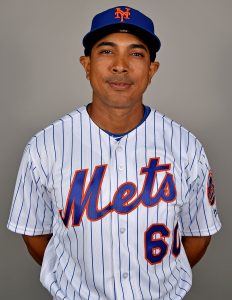
Rojas and the Mets are said to be finalizing a multi-year contract. The 38-year-old had interviewed for the open managerial position before it went to Beltran, leaving Rojas to reprise his role as quality control coach. But when Beltran stepped out the door due to his role in the Astros cheating scandal, the Mets turned back to Rojas.
Indications are that Rojas will oversee the same coaching staff that had expected to serve under Beltran. Obviously there’ll be at least one new hire as well, to account for the promotion.
It’s a bit opportunity for Rojas, who’ll take over for former manager Mickey Callaway after just one year on an MLB staff. Rojas came up through the Mets farm system as a coach and manager but had only overseen big leaguers during his time managing Dominican Winter League outfits.
Beyond his own experience, Rojas comes from a royal lineage. He’s the son of legendary skipper Felipe Alou and half-brother of MLB stalwart Moises Alou. MLB.com’s Nathalie Alonso detailed Rojas’s rise and managerial future in an article last summer.
This is obviously not how anyone envisioned Rojas moving into the manager’s seat, but he’ll need to hit the ground running. Camp opens in just three weeks and Rojas inherits a roster that carries win-now expectations after two-straight disappointing campaigns. The stakes are lofty for all involved, including GM Brodie Van Wagenen and his front office, with an ownership change on the horizon.
Photo courtesy of USA Today Sports Images.
Subscribe To MLB Trade Rumors On YouTube
MLB Trade Rumors is now on YouTube! Our new MLB Trade Rumors channel currently features six videos from MLBTR’s Jeff Todd, and you can expect around 3-5 per week in the near future. The channel will feature the quality hot stove news and rumors we’ve delivered over the last 14 years, and we plan to get creative from time to time. The website itself will remain the same, as we’re creating videos as a complementary piece for those who may be interested. We’d love your feedback on these early videos.
Please check out MLB Trade Rumors on YouTube and consider subscribing!
Check out today’s video here:
Twins Sign Josh Donaldson
JANUARY 22: The signing is now official. Donaldson’s pact also includes a five-team no-trade clause, Dan Hayes of The Athletic tweets.
JANUARY 15: The Twins have reportedly agreed to a four-year, $92MM contract with free agent third baseman Josh Donaldson. It’s said to include a $16MM club option for a fifth season, which comes with a $8MM buyout. Donaldson is represented by the MVP Sports Group.
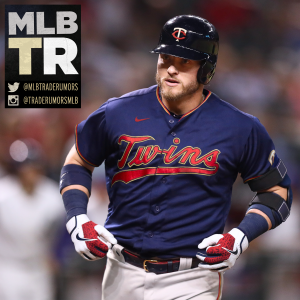
The $92MM guarantee makes this the largest free-agent signing in team history and the second-largest contract the franchise has ever given out, trailing only Joe Mauer‘s eight-year, $184MM mega-deal.
Minnesota has long been reported to hold interest in Donaldson after missing out on higher-end upgrades in the starting rotation earlier in the winter. By bringing Donaldson aboard, the Twins will shift the recently extended Miguel Sano across the diamond to first base, upgrading their infield defense substantially while adding one of the game’s most potent bats to what was already one of MLB’s best lineups in 2019.
Donaldson, 34, bounced back from an injury-ruined 2018 season to hit .259/.379/.521 with 37 home runs in 155 games/659 plate appearances with the Braves last season. That marked his fourth season of at least 33 home runs in the past five years, with the lone exception coming in 2018 when a calf injury held him to 52 games. His addition, incredibly, will give the Twins six players who hit 30 or more home runs in 2019; Sano, Nelson Cruz, Max Kepler, Eddie Rosario and Mitch Garver also crossed the 30-homer threshold on a team that Rosario nicknamed the “Bomba Squad.” While that type of output can’t be expected to be repeated — at least, assuming the league corrects last year’s juiced ball — the Twins should still be in possession of perhaps baseball’s most powerful lineup.
For the Twins, Donaldson’s glove at third base is arguably as important as his offensive prowess. Despite playing last season at age 33, Donaldson tied for 17th among MLB infielders with +8 Outs Above Average (per Statcast). Sano, conversely, checked in at -5 in that same category, so shifting him across the diamond in favor of Donaldson will represent a marked upgrade to the team’s infield defense, which was quietly one of its most significant needs. Shortstop Jorge Polanco graded out poorly, as did rookie second baseman Luis Arraez. The team’s infield defense surely won’t be a strength in 2020, but it figures to be considerably better with Donaldson than it otherwise would have.
Given the Twins’ inability to upgrade their rotation in a notable way this winter, that improved defense will be all the more important. Minnesota has signed Homer Bailey and Rich Hill to affordable one-year deals but will otherwise rely upon a very similar starting staff to the one that looked overmatched in the 2019 American League Division Series. Jose Berrios remains under club control as an arbitration-eligible player, while Jake Odorizzi accepted a qualifying offer and Michael Pineda re-signed on a two-year, $20MM deal. There’s still room for the Twins to make an addition, of course, but the free-agent market has been largely picked over and the trade market doesn’t offer a clearly available top-of-the-rotation arm.
The addition of Donaldson should push the Twins to a new franchise record in payroll, eclipsing the previous mark of $129MM by a good margin. Assuming an even $21MM breakdown of the first four years of the deal, the Twins’ 2020 payroll will clock in at just shy of $140MM. Large as that number may be, the Twins’ total commitments will plummet to about $55MM in 2021; Odorizzi, Cruz, Bailey, Hill, Marwin Gonzalez, Alex Avila, Tyler Clippard, Trevor May and Ehire Adrianza are all lined up to become free agents.
Signing Donaldson, who rejected a qualifying offer from the Braves, will cost the Twins their third-highest pick in the 2020. That’s their Competitive Balance Round B selection — currently slotted to come in at No. 73 overall. The Braves, conversely, will receive a compensatory selection between the end of Competitive Balance Round B and the beginning of Round 3. Coincidentally, the comp pick they’ll receive will land in the exact same range as the pick that Minnesota is surrendering.
Certainly, given Donaldson’s age, there’s some risk with the deal. He’s generally been a durable commodity outside of that 2018 season, but Donaldson’s ability to remain an elite player into the middle years of this contract is more in question than is typical with younger free agents. Of course, with Cruz among the Twins’ many free agents next winter, Donaldson could eventually begin seeing some extra time at DH to help keep him productive. And, in the final season or two of the deal, it’s possible that he could even serve as the team’s primary designated hitter if that becomes necessary.
Looking ahead to the remainder of the offseason, it seems likely that the Twins will continue to at least parse the market for available pitching upgrades. The bullpen is in better shape than it was at the onset of free agency, but there’s potentially some room for another ‘pen addition and certainly room for another starter to be brought into the fray. Just how much further owner Jim Pohlad is willing to push payroll and how willing president of baseball ops Derek Falvey is to part with young talent will ultimately dictate whether another splash is in the offing.
The Twins, of course, aren’t the only team impacted by this signing. The Braves now have a glaring hole in the middle of their lineup and a need at the hot corner. The Nationals, another finalist in the Donaldson mix, can turn to some combination of Starlin Castro, Asdrubal Cabrera or prospect Carter Kieboom at third base. That Donaldson landed in Minnesota also bodes well for both the Cubs and Rockies, if either plans to seriously entertain offers for their respective star third basemen, Kris Bryant and Nolan Arenado. The Twins wouldn’t necessarily have made a push to add a different third baseman had Donaldson signed elsewhere, having Sano already in the fold. But the Braves now appear to have a significant need at third base — creating a clear avenue to a potential trade for a third baseman of some type.
Mark Feinsand of MLB.com tweeted news of the signing. Darren Wolfson of 1500 SKOR North Radio (via Twitter), Do-Hyoung Park of MLB.com (via Twitter), and Ken Rosenthal of The Athletic (via Twitter) all reported contract details. This post was originally published on 1-14-20.
Braves Sign Marcell Ozuna
6:06pm: The Braves have announced the deal and confirmed the terms of the agreement.
6:01pm: The Braves have agreed to a one-year deal with free-agent outfielder Marcell Ozuna, reports Jeff Passan of ESPN.com. The MDR Sports Management client will receive an $18MM salary that slightly exceeds the $17.8MM qualifying offer from the Cardinals that he rejected back in November.
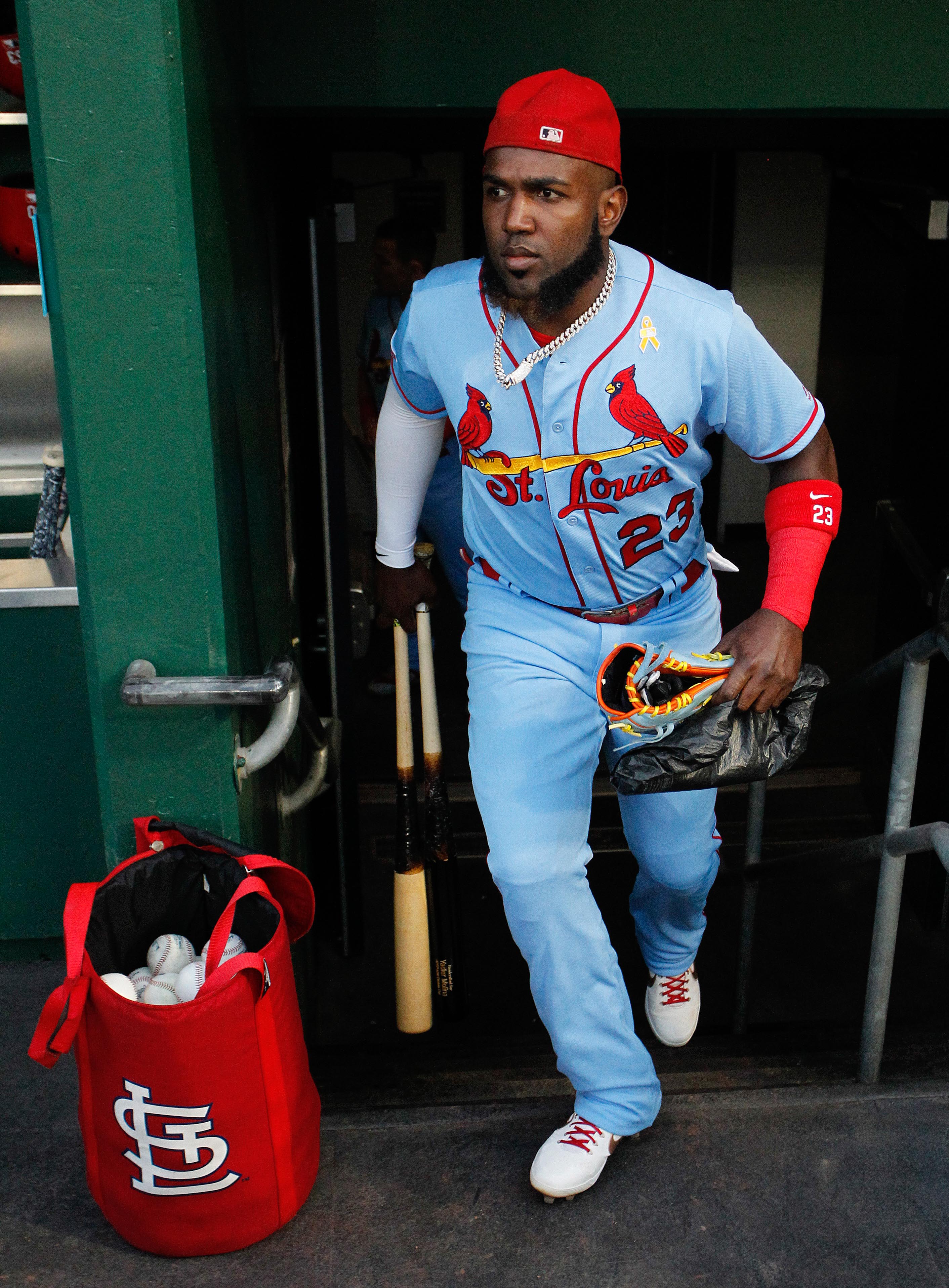
The market for Ozuna has been tepid, with the Cardinals and Rangers reported as the primary suitors for much of the winter. That likely changed when Atlanta missed out on third baseman Josh Donaldson, who agreed to a four-year deal with the Twins last week. Adding Ozuna to the lineup won’t account for the loss of Donaldson’s production, but it nonetheless bolsters a lineup that already won the division in 2018 and 2019.
Ozuna will presumably join Ender Inciarte (center) and Ronald Acuna Jr. (right) in comprising the Braves’ regular outfield trio. Inciarte and fellow outfielders Nick Markakis and Adam Duvall will likely lose some at-bats as a result of the signing, which gives the Braves a deep and talented mix from which to draw.
When the Cardinals originally acquired Ozuna from the Marlins in the 2017-18 offseason, it looked as though the club had acquired one of the game’s burgeoning top power threats. Ozuna swatted 37 home runs in ’17 and turned in a scintillating .312/.376/.548 line through 159 games. But shoulder problems slowed him over his two seasons in St. Louis — particularly in 2018. Ozuna did turn in a .262/.327/.451 batting line with 52 home runs, 39 doubles, three triples and 15 steals in 1177 trips to the plate (106 OPS+, 108 wRC+), but he wasn’t the heart-of-the-order force the Cardinals had presumably hoped to acquire.
That 2018-19 production aligns with the output that Ozuna showed in 2014-16 — raising the question of whether the 2017 season is repeatable or simply an outlier. Notably, there are some encouraging factors that suggest Ozuna could have more in the tank than he showed during his time with the Cardinals. His average exit velocity and hard-hit rate were both elite, per Statcast, as were his expected batting average, expected slugging percentage and expected wOBA. Ozuna also posted a career-high 11.3 walk rate that easily topped his previous career-best of 9.4 percent and trounced the 6.9 percent career mark he carried into 2019.
Defensively, Ozuna comes with plenty of uncertainty. He won a Gold Glove in 2017 with the Marlins, but his ongoing shoulder troubles completely sapped his throwing ability in 2018. Defensive Runs Saved and Ultimate Zone Rating both still graded him as an above-average fielder thanks to his range, although Statcast’s Outs Above Average metric pegged him at -9 over the duration of his two-year stint in St. Louis. At the very least, he should’t be a major liability for the Braves, and there’s the potential that he’ll actually deliver plus glovework if he’s at full strength.
The other ripple effect for the Braves is that bringing Ozuna into the fold cements Austin Riley‘s return to the infield mix. He and Johan Camargo are now the likeliest options for the Braves at third base, but it’s at least plausible that the club could look into options on the trade market. However, Ozuna’s contract pushes the Braves up to a franchise-record $158MM projected cash payroll, and perhaps even more surprisingly, they’re at $186MM in payroll as calculated for luxury tax purposes, per Roster Resource’s Jason Martinez. A Nolan Arenado acquisition has long appeared unlikely but looks even less plausible now, as acquiring him would push the Braves over the luxury threshold for the first time in franchise history. Even a deal to bring Kris Bryant over from the Cubs would leave Atlanta just a couple million shy of the $208MM barrier.
While the deal is a sensible one for the Braves, it’s hard to view it as anything other than a disappointing outcome for Ozuna. He’ll take home the largest salary of his career and slightly beat the qualifying offer value, but this isn’t the multi-year deal that most envisioned for the 29-year-old at the outset of free agency. We at MLBTR expected that he could struggle to secure the type of four- or five-year pact that some had forecast, but our prediction of a three-year, $45MM deal still proved too aggressive.
On the plus side for Ozuna, he’ll pocket that hefty one-year salary and reenter the free-agent market next winter at a relatively youthful 30 years of age. There’ll be even greater competition on the outfield market next time around, when Mookie Betts and George Springer are among the top-ranked free agents on the market, but Ozuna won’t have a qualifying offer hanging over his head. Additionally, it’s possible that some big-spending clubs who are in the midst of quiet offseasons — e.g. Cubs, Red Sox, Giants — will be more apt to engage in the open market.
As for the Cardinals, the fact that Ozuna settled on a one-year deal backs up recent reporting from Derrick Goold of the St. Louis Post-Dispatch indicating Ozuna wasn’t a priority for the team. Other reports of the St. Louis organization’s interest in keeping Ozuna in the fold appear to have been overstated, and the outfielder’s ultimate price point only reinforces recent comments from Cardinals owner Bill DeWitt Jr. which suggested that another splash might not be in the forecast.
It’s hard not to point out that Ozuna’s 2020 salary will line up almost perfectly with the $18.5MM owed to Matt Carpenter, who signed a two-year extension last spring that now looks to be regrettable for the Cardinals. Keeping Ozuna or acquiring a third baseman might’ve been more of a priority had Carpenter hit free agency this winter, as he would’ve without signing that new contract. Instead, the organization is left hoping for a rebound from the 34-year-old Carpenter, who slashed .226/.334/.392 in 2019.
The Cardinals won’t be left entirely empty-handed with Ozuna out the door, though. They’ll get a compensatory draft pick following Competitive Balance Round B in this summer’s draft — a selection that should fall in the upper-70s. The Braves, meanwhile, will surrender their third-best pick in next year’s draft in order to sign Ozuna, although they’re also set to acquire a compensatory pick for the loss of Donaldson, which helps to mitigate the damage.
With Ozuna off the market, Nicholas Castellanos is the clear-cut top free agent remaining. He and fellow free-agent Yasiel Puig represent the top two options on the market for clubs still seeking corner outfield upgrades. Ozuna’s subtraction from the pool of available talent could help the market for one or both outfielders move closer to a resolution.
Derek Jeter, Larry Walker Elected To Hall Of Fame
Derek Jeter and Larry Walker have been inducted into the National Baseball Hall of Fame, the Baseball Writers Association of America announced Tuesday evening. Jeter, predictably, has been enshrined in his first year of eligibility. However, the longtime Yankees shortstop was not unanimously elected, as he was omitted from one lone ballot. Walker, meanwhile, has at last reached the 75 percent vote threshold in his 10th and final season of eligibility on the BBWAA ballot. He appeared on 76.6 percent of this year’s ballots.
Among notable misses, Curt Schilling saw another increase, appearing on 70 percent of this year’s ballots — up from 60.9 percent in last year’s balloting. Roger Clemens (61 percent), Barry Bonds (60.7 percent) and Omar Vizquel (52.6 percent) were the only others to secure a vote on even half of this year’s ballots. That marks a bit more than a one percent increase for both Clemens and Bonds but represents a notable jump up from 42.8 percent for Vizquel.
There was never a shred of doubt that Jeter, a former AL Rookie of the Year, five-time World Series champion, five-time Gold Glover, five-time Silver Slugger and 14-time All-Star would be enshrined in Cooperstown. The 45-year-old, now the CEO of the Miami Marlins, played in 20 Major League seasons and compiled a .310/.377/.440 batting line along the way.
In that time, Jeter racked up 3465 hits, scored 1923 runs, knocked in 1311 men, clubbed 260 home runs and swiped 358 bases. Those 3465 hits rank Jeter sixth in Major League history, trailing only Pete Rose, Ty Cobb, Hank Aaron, Stan Musial and Tris Speaker. Jeter also ranks 11th all-time in runs scored and 35th in doubles (544).
Of course, Jeter is known every bit as much for his postseason excellence as his regular-season dominance. He appeared in an incredible 158 postseason games and tallied 734 plate appearances in that time, hitting .308/.374/.465 with 20 home runs, 32 doubles and five triples. Jeter was named the MVP of the 2000 World Series after he went 9-for-22 with two homers, two doubles and a triple to lead the Yankees past the Mets. His 2001 postseason is arguably even more memorable, however, as it was in the ALDS against the Athletics that Jeter’s heady “flip play” was a pivotal moment, and his iconic walk-off home run against the D-backs in Game 4 of the World Series earned him the nickname “Mr. November.”
In all, Jeter’s brilliant regular-season career was valued by Baseball-Reference.com at 72.4 wins above replacement. FanGraphs pegged him at an even 73 WAR. Coupled with his legendary postseason track record, that made Jeter among the most obvious Hall of Famers in recent balloting history — although it’s nevertheless a shocking to see him omitted from a ballot. Once Jeter’s longtime teammate, Mariano Rivera, finally set the precedent for unanimous enshrinement, the expectation had been that others would follow. Perhaps that’ll still be the case, but Jeter was clearly a worthy recipient of such an honor and still fell shy by the slightest of margins.
Turning to Walker, the longtime Rockies and Expos star might’ve been voted in years ago were it not for many voters taking his stats with a grain of salt thanks to the hitter-friendly nature of Coors Field, where he played his home games from 1995-2004. It’s become increasingly difficult to vote against Walker, however. The Canadian-born superstar’s list of accolades certainly feel Cooperstown-worthy.
The National League MVP in 1997, Walker is a seven-time Gold Glover, three-time Silver Slugger and three-time batting champ. Many feel that he was a frequent All-Star snub — only appearing in the Midsummer Classic on five occasions — but Walker’s production arguably speaks even louder than his awards history. In 8030 plate appearances over the life of 17 MLB seasons, Walker hit .313/.400/.565 with 383 home runs, 1355 runs scored, 1311 runs batted in and 230 stolen bases.
Beyond his three batting titles, Walker twice led the Senior Circuit in on-base percentage, slugging percentage and OPS. That outstanding slash line translates to a tremendous 141 OPS+ and 140 wRC+, suggesting that the ultra-consistent Walker’s bat was about 40 percent better than that of a league-average hitter over the course of his career. Even at the end of his career, in his age-37 and age-38 seasons with the Cardinals, Walker’s .286/.387/.520 slash was nothing short of brilliant. Baseball-Reference’s version of WAR put Walker right alongside Jeter (72.7), while FanGraphs valued his career at 68.7 WAR.
Both Jeter and Walker are highly deserving of the honor they’ll receive this July when they take their place alongside the elite and entrench themselves in the annals of baseball’s history. Congratulations to the game’s two newest Hall of Famers.