
Free Agent Stock Watch: Josh Willingham
Left fielder Josh Willingham has established career-highs in home runs and RBIs this year, with 28 and 94 respectively and three games remain on the schedule. On the other hand, a slipping batting average and walk rate have his OBP at a career-worst .335, and his defense doesn't come highly regarded.
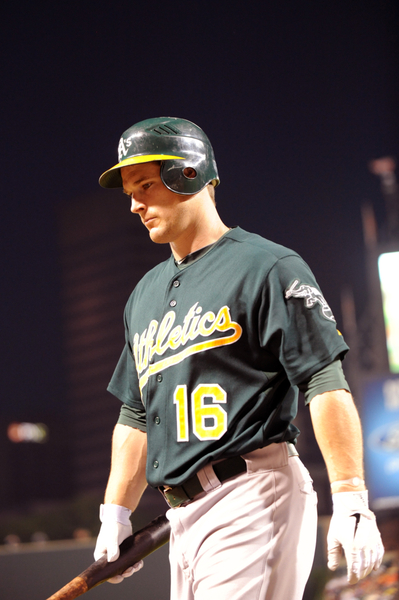
Many teams seeking power this offseason will start with home runs, and among free agents only Albert Pujols, Prince Fielder, and David Ortiz have more than Willingham, with Carlos Pena even at 28. Aramis Ramirez and Carlos Beltran are at 25 and 22 respectively, and Michael Cuddyer would be at the bottom end of that range had he not missed time due to injuries. Pujols and Fielder come with price tags only a handful of teams can consider, while Ortiz requires a DH job.
Ramirez, Beltran, Cuddyer, Pena, and Willingham form the next tier of free agent hitters. The first three are probably looking at three-year deals paying $10MM or more per year. Pena and Willingham may have to settle for two-year deals. Willingham, in particular, probably will receive less than $10MM per year. I'm thinking something in the two-year, $16MM range.
Pena comes with the wrinkle of a perenially ugly batting average. With Willingham, the warts are his defense, durability, potential Type A status, and this year's OBP drop. Maybe next year his walk rate comes back up a bit, and you're comfortable penciling him in for 130 games instead of 155. The Type A issue could go away too if the A's don't offer arbitration. Or perhaps Willingham will never hit the market, if the team offers and he accepts. As we learned yesterday from Susan Slusser, the Athletics' spending decisions are on hold until they hear about their stadium situation. Agent Matt Sosnick said, "Josh and I both made it clear he'd like to stay, but at this point, I'm pretty sure he'll test the free-agent market."
Losing a draft pick for Willingham would sting, depending on what team signs him. A team like the Indians, with the first unprotected pick at #16, probably wouldn't want to make the sacrifice. The Dodgers and Giants also project to pick in the top 20. Willingham should still have a range of suitors, with the White Sox, Twins, and Reds also among the teams with potential left field openings.
Photo courtesy of Icon SMI.
West Notes: Kuroda, Lopez, Sanchez, Harden, Angels
Here are some notes from both divisions out west…
- Dodgers pitcher Hiroki Kuroda shrugged off speculation from the Japanese media that he'll return to Japan to pitch a farewell season with Hiroshima in 2012, writes Ken Gurnick of MLB.com. Kuroda put the odds of him pitching in MLB or going home next season at 50-50.
- Expect lots of teams to talk with the agent of Giants reliever Javier Lopez, writes ESPN.com's Buster Olney. The 34-year-old has postseason experience and teams such as the Yankees, Red Sox, Rangers, Brewers, and Cardinals have been after a good matchup lefty this year.
- Giants second baseman Freddy Sanchez expect to be ready for opening day but manager Bruce Bochy and GM Brian Sabean already have discussed the importance of covering themselves with other options at the position, writes Andrew Baggarly of the Mercury News.
- Rich Harden would like to return to the Athletics and Susan Slusser of the San Francisco Chronicle says that’s something that could happen. The injury-prone veteran would likely sign for an inexpensive one-year deal.
- With his strong work down the stretch, Jerome Williams has become the leading in-house candidate to assume one of the spots behind Jered Weaver, Dan Haren, and Ervin Santana in the Angels' 2012 rotation, writes Lyle Spencer of MLB.com.
Athletics’ Spending Decisions On Hold
The Athletics and manager Bob Melvin agreed to an extension earlier this week, but that could be the last deal the A's make for a little while. Josh Willingham's agent, Matt Sosnick, told Susan Slusser of the San Francisco Chronicle that he approached the club with ideas for a multiyear contract for his client. However, Sosnick was told by GM Billy Beane that the Athletics' spending decisions are on hold until the team's stadium situation is resolved.
"We gave the A's an idea of where we were, and we were told they have interest in bringing Josh back, but before they did anything, they want to see what happens with the stadium," Sosnick said. "Josh and I both made it clear he'd like to stay, but at this point, I'm pretty sure he'll test the free-agent market…. We talked about a time frame, given that Billy would like Josh back, but it seems like Billy is sort of hamstrung right now."
As Slusser writes, the A's have been awaiting a decision on their move to San Jose for over two and a half years. Beane and other club officials have indicated for the first time recently that they expect resolution soon.
According to one of Slusser's sources, the stadium decision will affect the way the A's spend their money this offseason. If San Jose were approved, the club would cut back on payroll and go into "all-out rebuilding mode," while if they remained in Oakland, short-term spending is more likely, in an attempt to increase gate and possibly attract potential buyers.
Film Review: Moneyball
 Bennett Miller's Moneyball doesn't present sabermetrics as a revelation. That might be the key factor in making the film enjoyable for both of the movie's target audiences: hardcore baseball fans who know Michael Lewis' original book front-to-back and want to see if Hollywood gets the details right, and for more casual moviegoers who don't know the Oakland A's from the Oakland Raiders but are always interested in seeing Brad Pitt on the big screen.
The film streamlines Lewis' book into just the 2002 season, as the A's have just lost a heartbreaking ALDS to the Yankees and now face a winter of losing Jason Giambi, Jason Isringhausen and Johnny Damon to free agency. GM Billy Beane (Pitt) is getting frustrated over the realities of small-market baseball but gets inspiration when he encounters Peter Brand (Jonah Hill, playing a composite version of Paul DePodesta), a young, Yale-educated economist working in the Cleveland front office. Brand shows Beane the value — both financially and competitively — of signing unheralded players who take a lot of pitches, take walks and generally don't fit the mold that most teams look for in a Major Leaguer.
Along the way, Beane and Brand run into resistance from Oakland scouts, Oakland manager Art Howe (Philip Seymour Hoffman), the media and the fact that the A's struggle through the first few months of the season. The team starts to gel, however, culminating in an incredible 20-game winning streak that tied an AL record.
The 20th win is more or less treated as the "Hollywood ending" so often seen in sports movies, since obviously Oakland's loss to Minnesota in the ALDS that year wasn't exactly an inspiring justification of Beane's strategies. (Also, the Athletics' 20th win was a game worthy of a movie in itself.) Yet the fact that Miller gives voice to the critics in the wake of Oakland's eventual defeat is a strong choice — it acknowledges the reality that there is no magic formula to putting together a team and that the sabermetric strategy was only a singular, and temporary, part of the Athletics' success. Pitt plays Beane as a smart and competent man who believes in what he's doing, but also allows just a bit of doubt to keep his feet fully grounded.
For baseball fans, the obvious elephant in Moneyball's room isn't Stomper, but the fact that the 2002 A's weren't a surprise. The Athletics are presented as an "island of misfit toys," to use Brand's description, but in real life, Oakland was coming off two consecutive playoff appearances. Even with free agent losses, they still had the likes of Miguel Tejada, Eric Chavez, Tim Hudson, Barry Zito and Mark Mulder on board. These players are barely mentioned in Moneyball, with Scott Hatteberg, David Justice and Chad Bradford instead featured as the key figures in the team's success. That trio combined for a 5.5 WAR in 2002, while Hudson by himself had a 6.6 WAR (Zito was 5.5). Obviously focusing on the players acquired due to sabermetric analysis fits the film's underdog theme, but treating the A's like the Roy Hobbs-less New York Knights is a bit disingenuous.
Those wondering how Moneyball would recreate, or dramatize, Lewis' portions of the book that deal with the 2002 draft….well, never mind, since the draft isn't even mentioned. Other important "Moneyball" figures as Jeremy Brown, Kevin Youkilis and Bill James are only briefly cited, though in James' case, it's probably best that he was just noted as the father of sabermetrics and not used as an animated narrator, as was the plan when Steven Soderbergh was originally supposed to direct the film.
Still, factual liberties are to be expected, especially given that Lewis' book doesn't follow a clear narrative. Oscar-winning screenwriters Steven Zaillian (Schindler's List) and Aaron Sorkin (The Social Network) are no stranger to adapting real-life stories to the screen and they approach Moneyball as Beane's story since that will make it the most easiest to digest for mainstream audiences. Pitt is up to the part, turning in a fine performance and making Beane a character compelling enough that you're eager to watch him NOT watch a ballgame.
Beane is so centralized as Moneyball's main figure that Brand basically just seems like his sidekick, and it may have helped to get a bit more insight into Brand's feelings at seeing his theories actually being applied by a Major League team. The film also seems to be missing a payoff scene between Beane and Howe where Howe begrudgingly admits that his boss had a point. (Though, since Howe actually didn't return to manage the A's in 2003, perhaps such a scene would've been a total invention.) Hoffman makes the most out of the role, but the Howe character is incomplete enough that it seems a waste of a gifted actor like Hoffman, who won an Oscar when he was last directed by Miller in 2005's Capote.
The film does well by its baseball scenes, in part because several of the actors portraying the A's are former major and minor leaguers, most notably Royce Clayton as Tejada. Moneyball generates some amusing tension from a scene where Beane and Brand are trying to negotiate a trade for Ricardo Rincon, which baseball fans may find comical given the relatively low stakes of picking up a reliever at the trade deadline. Nevertheless, the scene is a (very simplified) example of the mindgames that GMs often use on each other in negotiations.
Those expecting a documentary about the 2002 Oakland A's will be disappointed by Moneyball, as will those who value the opinions of baseball scouts, given how harshly the old-timer scouts are depicted. That said, Moneyball succeeds at its basic goal of delivering an entertaining story and making in-depth statistical analysis understandable and relatable to audiences that might barely understand balls and strikes. And, to boot, this character study of an impassioned, small-market GM may gain some unintentional comedy points if the real Billy Beane ends up as the general manager of the Cubs.
Image by Scott Wachter/Icon SMI
Quick Hits: Pujols, Nunez, Mets, Moneyball
With some Major League teams restricting players from consuming energy drinks, you'll have to rely on these late-night news items to perk you up…
- The Cardinals' re-signing of Lance Berkman is a good move for several reasons, argues Bernie Miklasz of the St. Louis Post-Dispatch. Berkman's presence will help convince Albert Pujols that the Cards can remain competitive or, if Pujols did leave, Berkman could replace Pujols as the club's first baseman.
- Speaking of Pujols, Tony La Russa praised his star for not being distracted by his pending free agency, reports MLB.com's Steve Overbey. La Russa also commented on Pujols' future, saying "I just know both parties want to stay here, so I'm hopeful it will work out." No doubt Pujols' decision will factor heavily in La Russa's own decision about exercising his side of the mutual option on his contract for 2012.
- Leo Nunez (a.k.a. Juan Carlos Oviedo) could face jail time in the Dominican Republic for using a false identity, reports Ezra Fieser and Frances Robles of the Miami Herald.
- The Mets recently signed 16-year-old, Venezuelan right-hander Luis Carreno, tweets Adam Rubin of ESPN New York.
- Scouts from around baseball are telling Susan Slusser of the San Francisco Chronicle that they won't be going to see Moneyball given how the A's scouts are portrayed in the movie. Slusser herself objected to how former A's manager Art Howe was turned into "a villain" in the picture. "It’s essentially character assasination of a man who is well-liked all over the sport," Slusser writes.
- For more on Moneyball, check out my review of the film.
Quick Hits: Crisp, Patton, Yankees, Indians
On this date in 1983, Steve Carlton of the Phillies won the 300th game of his career. The Phillies don't have any 300 game winners on their staff at this point, but it won't be surprising if one or two of their pitchers join Carlton in Cooperstown one day. Here are some links for Friday…
- Coco Crisp told Joe Stiglich of the Contra Costa Times that he's looking for a winning team, a location he likes and a good "financial situation" when he decides where to sign this offseason (link via the Boston Herald). The 31-year-old California native says he enjoys playing in Oakland and believes the A's have a chance to win in 2012.
- The Orioles placed Troy Patton on the restricted list yesterday, according to MLB.com's Transactions Page. The left-hander left the team for a court-appointed orientation class that's related to his offseason DUI arrest, according to Dan Connolly of the Baltimore Sun. He should re-join the team in Detroit today.
- Yankees GM Brian Cashman told Bob Klapisch of the Record that he's "comfortable but not expectant" of a new contract after the season, when his current deal with the Yankees expires. Klapisch says Cashman has earned another contract.
- Bud Shaw of the Cleveland Plain Dealer made the case for bringing Grady Sizemore and Fausto Carmona to the Indians next year. Though there are arguments in favor of each player, it's not easy to get excited about "the prospect of continued uncertainty."
Quick Hits: Willingham, Rivera, Royals, Wilson
Links for Wednesday, as the Cardinals, Rays and Angels try to make improbable surges into the playoffs with some late-season magic…
- It appeared that Manny Ramirez was going to play winter ball in the Dominican Republic, but he is ineligible to play there because he has "unresolved drug program violations" with MLB, which is an affiliate of the Dominican League, according to ESPN.com's Jerry Crasnick (on Twitter).
- Josh Willingham, a free agent after the season, told John Shea of the San Francisco Chronicle that manager Bob Melvin's extension helps make Oakland an appealing destination (Twitter link).
- Joel Sherman of the New York Post chronicles the obstacles that Mariano Rivera had to overcome before throwing a single MLB pitch. The Yankees left Rivera unprotected in the 1992 expansion draft and nearly traded him in 1995.
- ESPN.com's Buster Olney predicts that a wide variety of teams including the Marlins and Nationals will be interested in C.J. Wilson this offseason (Twitter link). We heard earlier today that the Nationals are scouting the Rangers left-hander.
- The Royals intend to trade for a starting pitcher this winter, but they don’t intend to trade Eric Hosmer, Mike Moustakas or Danny Duffy and probably won’t part with Jake Odorizzi or Mike Montgomery, either, Jon Heyman writes at SI.com. They are one of the many teams with interest in Wilson.
Rosenthal On Moneyball
Ken Rosenthal of FOX Sports spoke to a slew of top executives about Moneyball, with the movie coming out Friday. Here are a few highlights.
- Executives Dave Dombrowski (Tigers) and Mark Shapiro (Indians) agree that the stark line drawn by the 2003 book between scouting and statistics is not present today. I've yet to find a baseball executive who doesn't prefer a blend.
- Yankees GM Brian Cashman admits that the Red Sox "were having a great deal of success with players of lesser ability," adding, "I studied what they were doing to some degree, adjusted accordingly, brought the Yankees up to speed, brought us into the 21st century."
- Shapiro, president of the Indians, expects further dominance of big-market teams in the next five to seven years. He added, "That doesn’t preclude small-market teams from winning. But they’re going to go in and out, go through cycles of winning, then violently remaking their rosters."
- Paul DePodesta told Rosenthal he thinks the explosion of information in baseball would have happened without Moneyball, but Cashman and Cardinals chairman Bill DeWitt Jr. noted that they were pleased to see Oakland's methods revealed in the book.
- Braves president John Schuerholz doesn't think so-called Moneyball teams have been successful, saying, "I think everyone looked and I don’t think many considered it a better mousetrap. You look at the won-loss records of the teams that adopted and the teams that didn’t, I don’t think you’ll find much of a difference in the impact."
- Brewers GM Doug Melvin is losing some faith, based on "some bad experiences with possible deals that I might have made based off numbers."
- Athletics GM Billy Beane believes injuries represent a current opportunity, if a team can create an advantage in prevention and treatment. DePodesta noted that inefficiencies arise every five or six years, when a new collective bargaining agreement is reached.
A’s, Bob Melvin Agree To Three-Year Extension
The A's have agreed to terms with manager Bob Melvin on a three-year deal that will make him their permanent manager, according to Janie McCauley of the AP (via the Miami Herald). Melvin took over the A's on an interim basis midseason, after the club dismissed Bob Geren.
The A's, who played to a 27-36 record before letting Geren go, have a 42-48 record since Melvin took over. Melvin, 49, managed the Mariners (2003-04) and D'Backs (2005-09) before joining the A's. He had been working as a special advisor in Arizona's front office earleir this year. The 2007 NL Manager of the Year now has a 535-556 record in eight seasons as a skipper.
When Billy Beane replaced Geren with Melvin, the GM expressed confidence in his new hire's ability to handle the role and it became clear later in the summer that Geren was likely to return in 2012.
Free Agent Stock Watch: David DeJesus
When the Athletics acquired David DeJesus last winter, the outfielder's stock was at a high. Although he appeared in only 91 games in 2010, DeJesus posted career highs in average (.318), OBP (.384), and OPS (.827), and played his usual solid corner outfield defense. Unfortunately for the A's, DeJesus has followed up that performance with perhaps the worst season of his career. In 125 games with Oakland, the 31-year-old has hit .236/.322/.369, his OPS dropping nearly 140 points from a year ago.
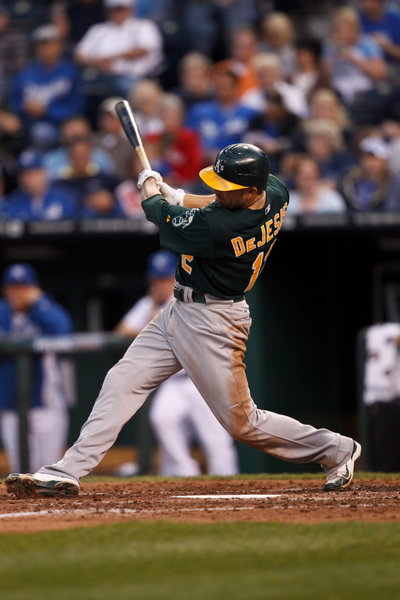 It's likely little consolation to the A's that the main piece they traded for DeJesus, young right-hander Vin Mazzaro, took a step back this year in Kansas City. Mazzaro still has time to turn things around for the Royals, while DeJesus figures to become a free agent in a matter of weeks.
As our latest Elias projections show, DeJesus comfortably ranks as a Type B, so he won't cost a draft pick even if he turns down arbitration. Of course, with a salary of $6MM this year, DeJesus might be a good bet to accept an arbitration offer, given this season's performance. The payroll-conscious A's could probably only offer arb to the outfielder if he agreed to decline it in order to net them a draft pick. Either way, DeJesus figures to hit the open market.
This year's class of outfielders isn't particularly stacked, so despite his down year, DeJesus should draw interest. His batting average on balls in play (.271) is 45 points below his career mark, and his walk rate (9.1%) matches a career high, suggesting that he's a candidate to bounce back. It wouldn't be the first time he came back strong after a disappointing year – he followed up a subpar 2007 season (.722 OPS) by hitting .307/.366/.452 in 2008.
So what sort of contract could make sense for both DeJesus and an interested team? Carlos Pena's deal with the Cubs could be an interesting comparison. The two are very different players, and DeJesus won't earn the $10MM the Cubs are paying Pena for a year of his services, but their career trajectories are similar. Pena entered free agency for the first time last year coming off his worst season, and elected to sign a one-year deal, presumably in hopes of rebuilding his value and landing a multiyear contract this coming winter. The approach seems to have worked – Pena's OPS has jumped 100 points in Chicago this season, setting him up nicely for the offseason.
For DeJesus, a one-year deal playing in a better hitter's park than Oakland's could be the most effective way to rebuild his value and earn a bigger payday down the road. Given the outfielder's promising peripheral numbers, the team that signs him could very well be getting solid value for 2012.
Photo courtesy of Icon SMI.