
MLB’s Core Economics Proposal Not Well-Received By MLBPA
JANUARY 13: Details of this afternoon’s meeting remain unclear, but both Passan and Nightengale (Twitter links) characterize the union’s response to the league’s proposal as unfavorable. It’s not yet known when the sides will meet again, which Passan suggests is dependent on how quickly the union makes a counterproposal. Passan ominously adds that an on-time start to Spring Training “is in peril.”
JANUARY 11: Major League Baseball and the MLB Players Association have scheduled a collective bargaining negotiation session for Thursday, reports Jeff Passan of ESPN (Twitter link). Notably, MLB is expected to present a core economics proposal to the union, marking the first development on the most contentious issues of the lockout since the league instituted the work stoppage on December 2.
Bob Nightengale of USA Today sheds some light on the upcoming proposal. The league is not expected to address the service time structure during this session. MLB is expected to put forth an increase in the league minimum salary to $600K, with further hikes to a height of $700K by the end of a potential CBA term, as well as alterations to draft pick compensation/forfeiture for signing free agents tagged with a qualifying offer.
Nightengale wrote Monday that the league was preparing to make its proposal within the next two weeks. In a bit of a surprise, they’ll come in at the earlier end of that timetable. Thursday’s conference will take place over video, tweets Evan Drellich of the Athletic.
Last-ditch efforts to progress on core economics before the previous collective bargaining agreement expired proved fruitless, culminating in a seven-minute session during the afternoon of December 1. Entering that meeting, the league had reportedly informed the MLBPA it would only entertain core economics discussions that didn’t involve changes to revenue sharing, six-year free agency eligibility and the existing eligibility requirements (for the most part, three years of service time) for arbitration. The union refused to accept those conditions, and the parties have been in a holding pattern since that point, with the MLBPA waiting for the league to bring forth another proposal.
It remains to be seen whether the league’s offer will meaningfully reignite discussions. It’s unclear to what extent MLB’s forthcoming proposal differs from its previous iterations, to which the union has not responded favorably. (MLB, of course, has been similarly unhappy with the PA’s offers). The possibility remains that the union will not consider this week’s offer sufficiently dissimilar from MLB’s past presentations to advance negotiations. Yet it’s at least notable that the parties are set to speak with one another regarding the most important topics for the first time in nearly six weeks. The sides have met a few times since the lockout began, but those discussions were limited to points outside of core economics.
Spring Training games are scheduled for February 26. In all likelihood, the parties will need to have a new CBA in place within the first half of next month to avoid any cancellations of exhibition play. That’ll require bridging the gap on a handful of key sticking points, like the service time structure, league minimum salary, competitive balance tax, playoff expansion, revenue sharing and the universal designated hitter.
Travis Snider Announces Retirement
Former major league outfielder Travis Snider announced his retirement on Instagram this morning. “Thank you baseball. You have given me countless relationships and experiences I will cherish for the rest of my life,” Snider wrote as part of his statement. “I am so thankful that I got to live out my childhood dream and share it with the people I love and care about. I have contemplated this day for a while but the time has finally come for me to hang up the spikes. … To my teammates, coaches, trainers, front office, and clubhouse families, thank you for all the amazing memories.”
A first-round pick of the Blue Jays in the 2006 draft, the left-handed hitting Snider quickly emerged as one of the sport’s more promising prospects. Baseball America ranked him among the league’s Top 100 farmhands over each of his first three full pro seasons. That included a #6 overall ranking heading into the 2009 campaign, not long after Snider had made his big league debut at age 20 late in the prior season.
Snider would go on to spend the next three-plus seasons in Toronto. He never emerged as the middle-of-the-order slugger evaluators and the Jays’ fanbase hoped he’d become, but he hit around a league average level over his first few seasons. Snider struggled in 2011, though, and the Jays traded him to the Pirates for Brad Lincoln at the following deadline. He spent the next couple years as a platoon outfielder in Pittsburgh, posting a career-best .264/.338/.438 showing over 359 plate appearances in 2014.
The following offseason, the Bucs traded Snider to the Orioles for Steven Brault and Stephen Tarpley. He didn’t perform well in Baltimore and wound up released in August. Snider hooked back on with Pittsburgh late in the season but was outrighted off the Bucs’ roster after appearing in 18 games.
That ultimately proved to be the final big league run for the Washington native, as Snider hasn’t appeared in the majors since 2015. He’s hung around the periphery of the majors as a high-priority depth option, logging Triple-A time with the Royals, Mets, Rangers, D-Backs and Braves over the past half-decade.
All told, Snider departs having appeared in eight big league seasons and suiting up in 630 games. Across 1,971 plate appearances, he hit .244/.311/.399 (93 wRC+) with 54 homers, 100 doubles and seven triples. Snider never blossomed into a star or even as a true everyday player, but he played in the bigs every year between 2008-15 and ultimately spent a decade and a half in affiliated ball. MLBTR congratulates Snider on his career and wishes him all the best in his post-playing days.
Seiya Suzuki Still Planning To Wait Out Lockout To Sign With MLB Club
As it has for all major league free agents, the lockout has frozen the signing process for Seiya Suzuki. The Japanese star was posted by his NPB club, the Hiroshima Carp, in late November. That opened a 30-day window for Suzuki to come to an agreement with a big league team, but MLB instituted a lockout just ten days into the posting process.
MLB and NPB agreed to freeze Suzuki’s posting window for the duration of the lockout. Now six weeks into the work stoppage with essentially no progress on key issues, questions had begun to emerge about Suzuki’s future. NPB preseason camps open February 1, and there’d been some thought that he may choose to return to the Carp if MLB and the Players Association don’t make rapid progress over the coming weeks.
Suzuki’s apparently not considering that course of action, however. In an interview with Andrew Baggarly of the Athletic, Suzuki suggested he’s content to wait out an extended work stoppage. “I’m just going to wait until both sides agree,” the outfielder told Baggarly via an interpreter. “There’s no date I set on myself. In Japan, you don’t experience a lockout so it’s a first for me. At first, I was a little worried about it. But when you think about it, it’s going to end sometime soon. Just having that positive mindset that it will end sometime has allowed me to keep my head up.”
With ten days of the posting process already elapsed, Suzuki and his representatives at Wasserman will have 20 days after the finalization of a new collective bargaining agreement to hammer out a deal with a big league club. There’ll be no shortage of interest. Baggarly writes that between ten and twelve teams had reached out to Suzuki prior to the lockout. The Giants, Mariners, Rangers, Red Sox, Blue Jays and Yankees have all been linked to the right-handed hitter in past reports. Baggarly adds the Rays, Padres and Dodgers as teams expected to be in the mix.
Entering the offseason, MLBTR forecast Suzuki for a $55MM guarantee over five seasons. Evaluators with whom MLBTR spoke expressed varying opinions on his upside, but broad consensus was that he could be a well-rounded everyday right fielder in the big leagues. He’s coming off a monster showing at Japan’s top level, hitting .317/.433/.639 with 38 home runs across 533 plate appearances. That huge power production didn’t come with much swing-and-miss. He fanned in only 16.5% of his trips to the dish while walking at a robust 16.3% clip. (R.J. Anderson of CBS Sports provides some batted ball and plate discipline metrics from Suzuki’s last season in NPB).
Suzuki didn’t tip his hand regarding geographical or league preferences for his next destination. Yet he does offer some insight into his motivation for playing in the majors and on which players he models his game. Baggarly’s piece, which also includes tidbits from a few of Suzuki’s former teammates, is worth checking out in full.
MLBPA Takes Issue With Endeavor’s Purchase Of Minor League Affiliates
The William Morris Endeavor Agency (WME) has made fairly rapid strides in MLB player representation over the past two years. Carlos Correa hired WME’s Jon Rosen in September 2019. In 2021, the company landed a few notable player reps formerly of established agencies like Excel Sports Management and CAA. (WME also briefly hired Billy Eppler between his stints as general manager of the Angels and Mets).
Last month, Endeavor also announced the purchase of a handful of minor league teams, including the Triple-A affiliates of the Cubs, Yankees, Braves and Cardinals (report via Business Wire). At the time, the company expressed a desire to buy additional minor league clubs — all of which are under the purview of Diamond Baseball Holdings, a subsidiary organization of Endeavor’s with a stated goal of “supporting, promoting and enhancing the sport of baseball through professional management, best practices, innovation and investment.”
That combination is apparently not sitting well with the MLB Players Association. Evan Drellich of the Athletic reports that the union, which is responsible for regulating player agents, has warned WME’s reps they’re in danger of losing their MLBPA agent certifications if they don’t divest themselves from Endeavor. Union regulations prohibit agents from acquiring or holding financial interests in professional baseball teams unless authorized by the MLBPA to do so.
Reached by MLBTR, a spokesperson for Endeavor declined comment. Drellich notes that MLBPA regulations do contain an appeals process for agent-union disputes, although it’s not clear whether the WME-MLBPA situation will eventually require such a development.
CPBL’s CTBC Brothers Sign Francisco Pena
The CTBC Brothers of Taiwan’s Chinese Professional Baseball League announced the signing of former big league catcher Francisco Peña (h/t to CPBL Stats). It’ll be the first experience in an Asian professional league for the 32-year-old, who has spent the past fifteen seasons in affiliated ball in the United States.
Peña has appeared in the majors in parts of five seasons, logging at least brief time each year between 2014-18. He broke in with the Royals but tallied just seven combined plate appearances with Kansas City’s pennant-winning clubs in 2014-15. The right-handed hitting backstop spent parts of the next two seasons with the Orioles before tallying a career-high 142 plate appearances as Yadier Molina’s backup with the Cardinals in 2018.
Over 202 MLB plate appearances, Peña owns a .216/.249/.311 line with five home runs. He’s spent the past few seasons in Triple-A, including the 2021 campaign with the A’s top affiliate in Las Vegas. He hit .250/.322/.459 over 447 plate appearances in that extremely hitter-friendly setting but will now make the jump to Taiwan. He’ll team up with fellow former big leaguers Shawn Morimando and José Valdez, each of whom signed with the Taichung-based club last October.
Jon Lester Announces Retirement
After a 16-year major league career, Jon Lester tells Jesse Rogers of ESPN he’s made the decision to retire. “It’s kind of run its course,” the 38-year-old said of his career. “It’s getting harder for me physically. The little things that come up throughout the year turned into bigger things that hinder your performance. I’d like to think I’m a halfway decent self-evaluator. I don’t want someone else telling me I can’t do this anymore. I want to be able to hand my jersey over and say, ‘thank you, it’s been fun.’ That’s probably the biggest deciding factor.”
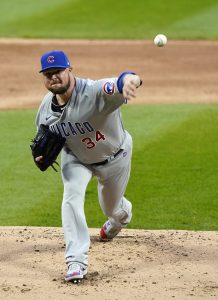
A second-round pick of the Red Sox out of a Washington high school in 2002, Lester entered pro ball as one of the more promising pitching prospects in the Boston system. Within a few years, the left-hander was ranked among the top farmhands in baseball and he made his big league debut at age 22 in June 2006. Lester was faced with incredible adversity just a few months into that run. He was diagnosed with anaplastic large cell lymphoma late in his rookie season, cutting that year short and requiring chemotherapy treatments.
Lester beat the disease and made an inspiring return to the mound in 2007. He made 12 regular season appearances that year, then pitched in three playoff games during the Red Sox’s run to a championship. Making his first career postseason start in Game 4 of the World Series against the Rockies, Lester tossed 5 2/3 innings of scoreless ball. He wound up getting the win in what proved to be the title-clinching game, as the Sox wrapped up a sweep.
Entering 2008, Lester was cemented as a key rotation member on Terry Francona’s staff. Incredibly durable, he’d make at least 31 starts over each of his next six seasons in Boston. While Lester only had two seasons (2009-10) with excellent strikeout numbers, he consistently demonstrated strong control and proved one of the game’s hardest pitchers to square up. A pillar of high-end consistency, Lester posted an ERA between 3.21 and 3.75 in five of six years from 2008-13.
Lester’s run in Boston was littered with accomplishments. He tossed a no-hitter in May 2008, earned back-to-back All-Star selections in 2010-11 and finished fourth in AL Cy Young award balloting during a 2010 season in which he tossed 208 innings of 3.25 ERA ball. Perhaps of most importance, Lester was excellent during the Red Sox’s surprising run to another championship in 2013. He pitched to a 1.55 ERA over 34 2/3 postseason innings that year, including 15 1/3 frames of one-run ball to earn two wins as part of a World Series triumph over the Cardinals.
Ticketed for free agency after the 2014 season, Lester began the year stellar as ever. He tossed 143 innings with a 2.52 ERA for the Red Sox, earning his third career All-Star nod in the process. Yet with free agency looming and the Red Sox on their way to a last place finish, they traded him to the A’s at the deadline. Lester continued to excel over his final few months in Oakland, eventually getting the nod in the AL Wild Card game. The A’s were knocked off by the Royals in one of the more thrilling back-and-forth contests in recent memory, and Lester hit the open market for the first time shortly thereafter.
Ranked by MLBTR as that offseason’s #2 free agent, Lester commanded a six-year, $155MM deal with a Cubs team looking to emerge from a massive rebuild. That’ll go down as one of the best free agent investments in franchise history, as he picked up right where he’d left off upon switching to the National League.
Lester worked 205 innings of 3.34 ERA ball his first season, helping Chicago to the NLCS. The following year, he compiled a 2.44 mark across 202 2/3 frames. He finished second in NL Cy Young voting, earned a fourth All-Star nod, and was arguably the top pitcher on a 103-win team. As he had so often in Boston, Lester shined in the playoffs yet again. He was tabbed that year’s NLCS MVP after tossing 13 innings of two-run ball to knock off the Dodgers. Lester made three outings with a 3.68 ERA during the World Series, in which the Cubs erased a 3-1 deficit against the Indians to end the franchise’s legendary 108-year title drought.
The third World Series title of Lester’s career proved to be his final one, as the Cubs never had quite the same level of success from that point forward. That wasn’t much fault of the veteran southpaw’s, though, as he remained effective for the next few seasons. He paced the NL with 18 wins in 2018, earning another All-Star nod in the process. As he entered his late-30s, Lester’s production finally began to tail off, although he remained remarkably durable and took the ball every fifth day through the expiration of his contract after 2020.
Last winter, Lester hooked on with the Nationals on a one-year, $5MM deal. He made 16 starts with Washington before being flipped to the Cardinals at the trade deadline. Despite lackluster strikeout and walk numbers, he managed a decent 4.36 ERA over 12 starts in St. Louis, proving to be a much-needed stabilizing force for a Cardinals rotation that had been hit hard by injuries. St. Louis made a miraculous September run to a playoff spot, but they fell to the Dodgers in the Wild Card game. Lester didn’t appear in what’ll go down as the final contest of his career.
One of the league’s most reliable hurlers for more than a decade, Lester leaves a fantastic legacy in the game. He tossed 2,740 innings over parts of 16 MLB seasons. He pitched to a 3.66 ERA, won exactly 200 games and struck out just under 2,500 batters. The five-time All-Star was a key contributor to three World Series teams with two separate franchises, and he’ll be remembered by both Red Sox’s and Cubs’ fans as one of the more impactful players in each organization’s recent histories. Lester’s career was valued at between 44 and 46 wins above replacement by FanGraphs and Baseball Reference, before accounting for an incredible 2.51 ERA over 154 playoff innings. According to B-Ref, he earned just over $188MM.
Lester will likely garner some Hall of Fame support five years from now. Whether or not he’s ultimately enshrined in Cooperstown, there’s no question he had a long run of excellence and reliability. MLBTR congratulates Lester on his fantastic career and wishes him all the best in his post-playing days.
The Many Paths Ahead Of Andrew Benintendi
2018 was a tremendous season for Andrew Benintendi. The outfielder hit 16 home runs, stole 21 bases and slashed .290/.366/.465. His walk rate and strikeout rate were both better than league average, coming in at 10.7% and 16%, respectively. His wRC+ was 123 and he was worth 4.4 wins above replacement, according to FanGraphs. He was part of an utterly dominant Red Sox team that went 108-54 in the regular season and then cruised to a World Series title by going 11-3 in the postseason. To top it all off, that was just his age-23 season, suggesting that there was still time for him to soar to even greater heights.
Unfortunately, things have gone in the opposite direction since then, with his numbers slipping slightly from the heights of 2018. The following year, he hit 13 homers, stole 10 bases and slashed .266/.343/.431, for a wRC+ of 100 and 2.0 fWAR. The pandemic-shortened 2020 season was especially short for Benintendi, as a ribcage strain limited him to just 14 games. After a trade to the Royals, his 2021 season saw him bounce back to roughly his 2019 level of production. He hit 17 dingers, stole 8 bags and hit .276/.324/.442 for a wRC+ of 106 and 2.1 fWAR. That means that Benintendi has now played four full seasons, with three of them being solid campaigns of either 2.0 or 2.1 fWAR, as he also produced 2.0 fWAR in 2017.
Now Benintendi is entering his final year before reaching free agency, assuming the new CBA doesn’t drastically alter the previous service time structure. MLBTR contributor Matt Swartz projected he’ll earn a salary of $9.3MM via arbitration. He’ll be playing for a Royals team with an uncertain short-term outlook, as their attempt to emerge out of rebuilding in 2021 came up short. They went 74-88, finishing 19 games behind the White Sox in the Central and just one game ahead of the basement-dwelling Twins. It was a relatively quiet pre-lockout offseason for them, as their biggest move so far was signing Taylor Clarke to a deal for less than $1MM. They should be able to improve by virtue of their young players continuing to develop, but it’s unclear how aggressive they will be in what could be Benintendi’s final year with the team. That leaves a wide variety of potential outcomes for him in the coming year.
If the Royals want Benintendi to stick around as they open a new competitive window, they could always offer him an extension, as they did with Michael A. Taylor in September. Taylor was headed into free agency in about a month, but agreed to a two-year extension that will keep him in KC through 2023. However, Benintendi will likely require a lengthier commitment than that, given that he is more than three years younger than Taylor and comes with a higher ceiling.
Benintendi is currently slated to reach free agency as a 28-year-old, similar to Kyle Schwarber, who was predicted by MLBTR to get a contract of $70MM over four years. They don’t produce in the same way, as Schwarber typically hits more but without much defensive contribution. However, they are still fairly analogous in terms of overall production. Over the past five years, Schwarber’s 10.8 fWAR in 593 games just barely eclipses Benintendi’s 10.1 fWAR in 585 games.
It would be something of a surprise for the Royals to give out an extension in that ballpark to Benintendi, as it would be fairly close to the four-year, $82MM extension they gave to Salvador Perez a year ago. Having close to $40MM committed to just two players would be a risky maneuver for a team that’s only rarely run a payroll over $100MM.
There’s also the possibility that Benintendi’s job in the outfield gets filled internally in the next year. The club currently has an infield mix that includes Adalberto Mondesi, Nicky Lopez, Whit Merrifield, Carlos Santana and Hunter Dozier, with prospects Bobby Witt Jr. and Nick Pratto likely to debut in 2022. That crowded mix could lead to Merrifield and Dozier getting pushed to the outfield, alongside Taylor, Kyle Isbel and Edward Olivares. Considering all those options, perhaps they’d think it best to spend their money elsewhere.
With just one year of club control remaining, Benintendi will be a logical trade candidate if the Royals struggle to compete again in 2022. With the aforementioned glut of position players, the outfield could be covered by Taylor, Isbel, Merrifield, Dozier and Olivares after his departure. If Benintendi is having another season similar to what he did in 2017, 2019 and 2021, he should garner plenty of interest at the deadline, especially given that his affordable salary will be even less onerous by midseason. If he can go a notch higher and start to resemble his 2018 production, even better.
There’s also the chance that the Royals are able to take a step forward and get into the postseason mix, especially considering that the new CBA is expected to include an expanded postseason. A player like Benintendi could certainly be useful in a postseason chase, especially given his experience. If he were to stick on the Royals roster until the end of 2022 season, there’s a chance he could be a candidate for a qualifying offer, depending on how his season went. A one-year contract around $19MM or so could perhaps be a bit high for a 2-win player, but Benintendi has shown he is capable of more. Considering he will be hitting free agency at a young age, he would likely be inclined to turn down the QO and try to secure himself a long-term deal. Of course, that’s dependent on a healthy and productive season in 2022.
However, there is also the great unknown of the next CBA. There’s a chance that the qualifying offer system is scrapped or somehow altered in a way that would change all of these calculations for Benintendi and the Royals. There’s also the chance that Benintendi’s free agency trajectory is altered by the new CBA. It was reported back in August that one of the proposals made by MLB involved altering the free agency rules to be based on age instead of service time. Under this proposed structure, players would reach free agency at age 29 1/2, as opposed to the previous system of accruing six years of service time. Benintendi was born July 6th, 1994, meaning he wouldn’t reach 29 1/2 years of age until 2024. (July 1st was proposed as the cutoff date, meaning Benintendi would just miss.) The MLBPA reportedly wanted nothing to do with this proposal, but the course of the negotiations is difficult to predict at the moment. In a prolonged standoff, resolution will likely require a bit of compromise on both sides. It’s impossible to know which items will wind up back on the table as part of a larger deal.
There are a great many unknowns for baseball in 2022. We don’t know when the lockout will end, if a full season will be played or what the rules will be. For Benintendi and the Royals, there are even more questions remaining to be answered.
Braves, Jackson Stephens Agree To Minor League Deal
The Braves have signed right-handed pitcher Jackson Stephens to a minor league deal, according to Alfonso E. Saer Gomez and David O’Brien of The Athletic. (Twitter links.) As noted by both tweets, the 27-year-old was recently awarded Pitcher of the Year in the Venezuelan Winter League.
Stephens was selected by the Reds in the 18th round of the 2012 draft. Working primarily as a starter, he worked his way up the minor league ranks and was able to make his MLB debut in 2017, throwing 25 innings over four starts and three relief appearances. In 2018, he made 29 more appearances, all out of the bullpen, throwing 38 1/3 innings. He hasn’t been able to crack the big leagues since, making his 63 1/3 innings over those two campaigns the total of his big league experience thus far. He has a career ERA of 4.83, strikeout rate of 19% and walk rate of 8.5%.
In 2019, he logged 84 innings in Triple-A and then elected free agency after he was outrighted off the roster at the end of the year. After missing out on 2020, he spent 2021 with Tecolotes de los Dos Laredos of the Mexican League. He logged 65 innings there, with an ERA of 4.98. Shortly thereafter, he joined Cardenales de Lara and had perhaps his best run of success to date. In 49 1/3 innings over 14 games, including nine starts, he struck out 44 hitters, walking only 10, putting up an ERA of 1.82. As mentioned, he was awarded the league’s Pitcher of the Year honors.
Stephens doesn’t have much on his track record that can match that recent showing in Venezuela, either in the majors or the upper minors. However, he’s only 27 years old, turning 28 in May. For the Braves, there’s no harm in bringing him aboard and seeing if that recent uptick in his performance is due to some sort of adjustment that could be sustainable.
Comparing Each Team’s Current Payroll To Previous Spending
The MLB and MLBPA will be returning to the bargaining table tomorrow, in order to hopefully begin the process of thawing the MLB landscape, which has remained quite frosty for over a month now. While this is surely welcome news for the baseball world, it doesn’t seem like the end of the lockout is imminent. At this point, with the scheduled start of spring training about a month away, there’s no avoiding a scenario with a quick turnaround between the conclusion of the lockout and the resumption of baseball activities. It’s been deduced by many that this will surely lead to a period of frenzied hot stove activity, as there are still a great number of free agents to be signed, as well as trades to be made, as teams look to set their rosters before the season begins in earnest.
Once that happens, some teams will surely be more active than others, depending on their respective circumstances. Front office members are typically cagy in public about what sort of payroll parameters they are working within, for sensible reasons. When negotiating with a player’s agent, for instance, it’s harder to make it seem as though you have little wiggle room if you’ve publicly boasted about having millions of dollars at your disposal. That makes it impossible for us to know exactly how much money is remaining in each team’s piggy bank, but we can at least make inferences by looking at precedents.
It’s not a guarantee that a team will stick to their previous habits, of course, as we’ve seen with the spending spree from the Mets this year. Some teams may intentionally be taking a step back to rebuild and won’t be spending to previous levels. There’s also the fact that many teams may be waiting to see how the luxury tax tiers are affected by the next CBA. (MLBTR’s Anthony Franco covered that issue in greater detail here.) However, there are some broadly predictable patterns as to which teams are usually big spenders and which are usually low spenders.
Without further ado, here’s a quick shorthand version of where each team is at, comparing their projected 2022 Opening Day payroll to their previous record outlay for Opening Day. The following numbers are actual dollars, not luxury tax calculations. (2022 projections courtesy of Jason Martinez of Roster Resource. Payrolls from previous years from Cot’s Baseball Contracts.)
- Angels: $10MM under. (Current projected payroll of $172MM, previous high was $182MM in 2021.)
- Astros: $18MM under. (Current projected payroll of $170MM, previous high was $188MM in 2021.)
- Athletics: $7MM under. (Current projected payroll of $85MM, previous high was $92MM in 2019.)
- Blue Jays: $23MM under. (Current projected payroll of $140MM, previous high was $163MM in 2017.)
- Braves: $9MM over. (Current projected payroll of $140MM, previous high was $131MM in 2021.)
- Brewers: $2MM under. (Current projected payroll of $121MM, previous high was $123MM in 2019.)
- Cardinals: $14MM under. (Current projected payroll of $150MM, previous high was $164MM in 2021.)
- Cubs: $89MM under. (Current projected payroll of $114MM, previous high was $203MM in 2019.)
- Diamondbacks: $46MM under. (Current projected payroll of $86MM, previous high was $132MM in 2018.)
- Dodgers: $45MM under. (Current projected payroll of $227MM, previous high was $272MM in 2015.)
- Giants: $75MM under. (Current projected payroll of $126MM, previous high was $201MM in 2018.)
- Guardians: $86MM under. (Current projected payroll of $49MM, previous high was $135MM in 2018.)
- Mariners: $71MM under. (Current projected payroll of $87MM, previous high was $158MM in 2018.)
- Marlins: $46MM under. (Current projected payroll of $69MM, previous high was $115MM in 2017.)
- Mets: $68MM over. (Current projected payroll of $263MM, previous high was $195MM in 2021.)
- Nationals: $79MM under. (Current projected payroll of $118MM, previous high was $197MM in 2019.)
- Orioles: $103MM under. (Current projected payroll of $61MM, previous high was $164MM in 2017.)
- Padres: $25MM over. (Current projected payroll of $199MM, previous high was $174MM in 2021.)
- Phillies: $10MM under. (Current projected payroll of $181MM, previous high was $191MM in 2021.)
- Pirates: $61MM under. (Current projected payroll of $39MM, previous high was $100MM in 2016.)
- Rangers: $38MM under. (Current projected payroll of $127MM, previous high was $165MM in 2017.)
- Rays: $7MM over. (Current projected payroll of $84MM, previous high was $77MM in 2014.)
- Red Sox: $45MM under. (Current projected payroll of $191MM, previous high was $236MM in 2019.)
- Reds: $12MM under. (Current projected payroll of $115MM, previous high was $127MM in 2019.)
- Rockies: $41MM under. (Current projected payroll of $104MM, previous high was $145MM in 2019.)
- Royals: $57MM under. (Current projected payroll of $86MM, previous high was $143MM in 2017.)
- Tigers: $83MM under. (Current projected payroll of $117MM, previous high was $200MM in 2017.)
- Twins: $38MM under. (Current projected payroll of $91MM, previous high was $129MM in 2019.)
- White Sox: $51MM over. (Current projected payroll of $180MM, previous high was $129MM in 2021.)
- Yankees: $14MM under. (Current projected payroll of $214MM, previous high was $228MM in 2013.)
Oakland A’s Job Openings
From time to time, as a service to our readers, MLB Trade Rumors will post job opportunities of possible interest that are brought to our attention. MLBTR has no affiliation with the hiring entity, no role in the hiring process, and no financial interest in the posting of this opportunity.
The Oakland Athletics are currently accepting applications for the following positions. Each is linked to the job description and application for the position.
Major League Video Assistant (Full-Time)