
Terry Francona, Dave Roberts Win Manager Of The Year Awards
Indians skipper Terry Francona and Dodgers manager Dave Roberts have been named Manager of the Year in their respective leagues, the Baseball Writers’ Association of America announced tonight. It should be noted that voting is conducted prior to the playoffs, meaning their teams’ postseason performances aren’t factored into the decision.
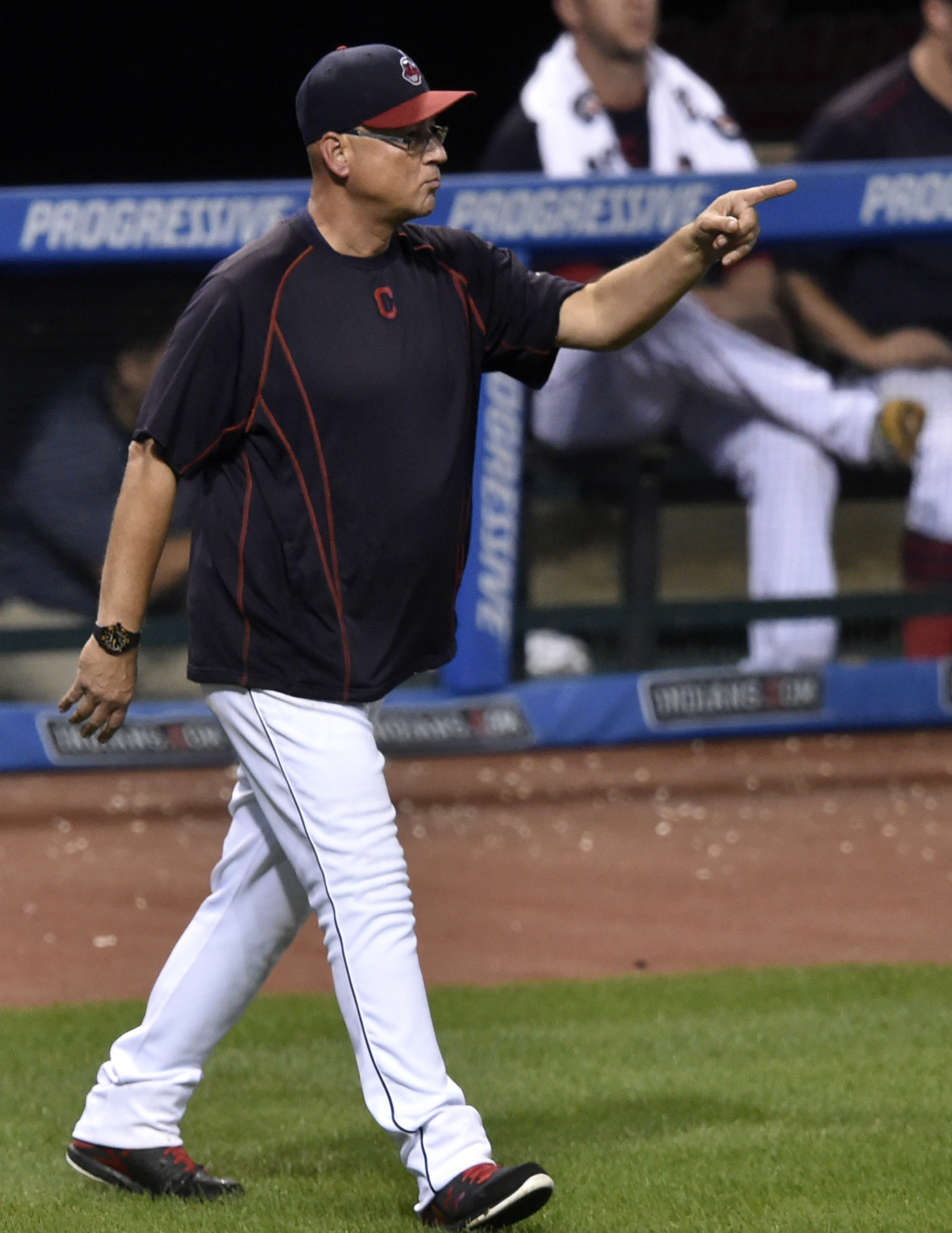
Francona, 57, guided the Indians their fourth straight winning season since coming on board as the team’s skipper prior to the 2013 season. Cleveland went 94-67 under Francona’s watch this year, running away with the American League Central division by a margin of eight games. Cleveland’s terrific season was all the more impressive due to the fact that the team’s best player from 2014-15, Michael Brantley, played in just 11 games due to difficulties recovering from offseason shoulder surgery. Francona also dealt with late injuries to Carlos Carrasco, Danny Salazar and Yan Gomes down the stretch as the team made its final push to the playoffs. That performance led Francona to receive 22 of the 30 first-place votes from the BBWAA. Rangers manager Jeff Banister (four), Orioles manager Buck Showalter (two) and Red Sox manager John Farrell (two) also received first-place votes (link to full voting breakdown).
This marks Francona’s second Manager of the Year Award in just four years with Cleveland, as he also took home the honor in 2013 — his first season with the team. His efforts have already been rewarded, as Cleveland announced shortly after the World Series that the 2019 and 2020 club options on Francona’s contract have already been exercised four years in advance.
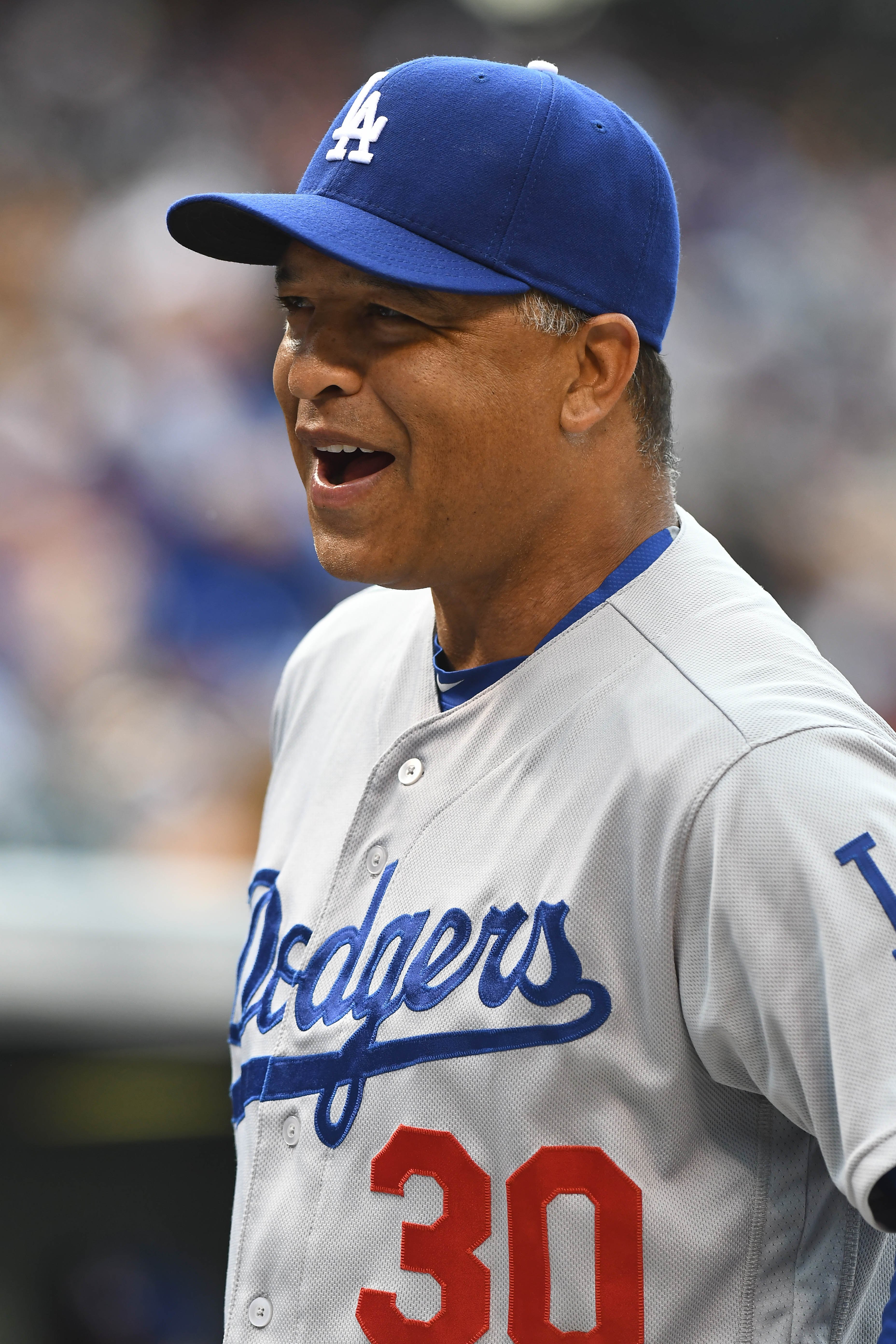
The 44-year-old Roberts takes home the honor in his first full season as a manager, having guided the Dodgers to a 91-71 record and a National League West Division title despite a multitude of injuries throughout the rotation — including a two-month absence from ace Clayton Kershaw. Fifteen different pitchers made starts for the Dodgers this year, with rookie Kenta Maeda starting a team-high 32 games and 20-year-old Julio Urias making the fourth-most starts at just 15. Prior to this season, Roberts had precisely one game of managing experience, stepping in for a single game with the 2015 Padres following the dismissal of Bud Black.
Roberts received 16 first-place votes, while Cubs skipper Joe Maddon (eight), Nationals manager Dusty Baker (four) and Mets manager Terry Collins (two) each nabbed some first-place votes as well (full voting breakdown here). Roberts still has two years remaining on the three-year deal he inked prior to the 2016 season plus a club option for a fourth year in 2019.
Photos courtesy of USA Today Sports Images.
Bobby Wilson Clears Waivers, Elects Free Agency
The Rays announced today that catcher Bobby Wilson has cleared outright waivers, and Marc Topkin of the Tampa Bay Times tweets that Wilson will, unsurprisingly, elect free agency. Per Topkin, Wilson expressed some disappointment over the decision, as he had hoped to remain with the Rays, but he said the “door’s still open” when it comes to a potential reunion.
[Related: Updated Tampa Bay Rays Depth Chart]
However, Topkin opines that Wilson could find a big league deal on the open market this winter. The veteran 33-year-old (34 in April), logged 251 plate appearances between the Rays, Rangers and Tigers in 2016, hitting .237/.270/.355 with a career-high seven homers. Those numbers, paired with just a 17 percent caught-stealing rate and average pitch-framing numbers could make it difficult for Wilson to find a guaranteed 40-man spot elsewhere this winter. Wilson, a career .214/.268/.319 hitter in 849 plate appearances, will compete with the likes of Alex Avila, Drew Butera, Hank Conger, A.J. Ellis, Ryan Hanigan, Jeff Mathis and Kurt Suzuki, among others, in the lower tiers of the free-agent market for catchers as he seeks out his next contract.
Phillies Release Matt Harrison
2:12pm: Philadelphia actually will be able to reap some of the insurance benefits relating to Harrison, Salisbury clarifies. The Phils would have been able to save over half of the remainder owed had they kept him on the roster, but instead negotiated a settlement with the carrier that leaves the team with a “lesser payout.”
12:38pm: The Phillies have released lefty Matt Harrison, per a club announcement. Dropping him from the 40-man roster will increase the team’s flexibility this winter.
Harrison, 31, came to Philadelphia as part of the cost balancing in the Cole Hamels trade. He is still owed $15MM through next season, which includes a buyout of a 2018 club option, under the extension he signed with the Rangers.
There were no clear expectations that Harrison would even attempt to pitch this year. Serious back issues have completely derailed his career. Though he was able to return briefly to the majors in 2015, he hasn’t appeared in any competitive action since the trade.
By cutting ties with Harrison now, the Phillies will not be able to collect insurance proceeds to offset the money still owed, Jim Salisbury of CSNPhilly.com notes on Twitter. The policy covering Harrison’s contract appeared to have some possibility of paying out for at least a significant part of the remaining salary, but that either wasn’t likely to occur or wasn’t worth the sacrifice of a roster spot.
Though he was never much of a strikeout pitcher, and tended to overperform his peripherals, Harrison pitched to a 3.34 ERA in 399 innings over the 2011 through 2012 campaigns. That led Texas to ink him to a five-year, $55MM extension, but Harrison was only able to make nine more starts from that point forward.
MLBTR Chat Transcript
Click here to read a transcript of today’s chat with MLBTR’s Steve Adams.
Joel Hanrahan Retires
Reliever Joel Hanrahan has decided to retire from the game, as he announced in an appearance on MLB on TuneIn (audio link). He had been seeking to make a comeback in 2016, but ultimately wasn’t able to overcome the arm issues that plagued him in recent years and won’t undertake another effort this winter.
As recently as 2012, Hanrahan was a quality late-inning arm. But he succumbed to Tommy John surgery early in the following season, and ended up requiring a second UCL replacement in the spring of 2015.
Taken by the Dodgers in the second round of the 2000 draft, Hanrahan made it to free agency before seeing time in the majors with his original organization. But the Nationals snagged him off of the open market and even gave him 11 starts in his debut year of 2007.
It was a move to the bullpen that really launched Hanrahan’s career. Lots of strikeouts and walks quickly became the norm, and Hanrahan generally frustrated as much as he intrigued. After 168 innings of 5.30 ERA pitching, he was shipped to the Pirates in a rather interesting 2009 challenge trade. Hanrahan was joined by outfielder Lastings Milledge, with the Nats receiving lefty Sean Burnett and outfielder Nyjer Morgan.
The change of scenery benefited both relievers, with Hanrahan showing improved velocity and producing improved results upon heading to Pittsburgh. He ultimately took the club’s closer’s job in 2011 and made two All-Star games. Over 229 1/3 total innings with the Bucs, Hanrahan worked to a 2.59 ERA with 10.4 K/9 and 3.8 BB/9.
With one final year of arbitration control remaining, at a saves-inflated rate, Hanrahan was again moved in a deal that prominently featured another reliever. Joined by Brock Holt, he headed to the Red Sox in exchange for Mark Melancon (who was coming off of a disastrous prior season) and three others.
Boston proved to be the end of the line for Hanrahan: he made just nine appearances, picking up four saves but allowing eight earned runs with five strikeouts and six walks before going under the knife. While he signed with the Tigers in both 2014 and 2015, he never made a regular-season appearance for Detroit in the majors or minors.
All told, it was a nice run for Hanrahan, who ended up pitching in parts of seven major league seasons. MLBTR wishes him the best of luck in his future endeavors.
Offseason Outlook: Cleveland Indians
MLBTR is publishing Offseason Outlooks for all 30 teams. Click here for the other entries in this series.
After missing out on their first World Series title in nearly 70 years, the Indians enter the offseason with a strong core in place but multiple injury question marks as well.
Guaranteed Contracts
- Jason Kipnis, 2B: $39.5MM through 2019 (including buyout of 2020 option)
- Corey Kluber, RHP: $32MM through 2019 (including buyout of 2020 option)
- Yan Gomes, C: $18.45MM through 2019 (including buyout of 2020 option)
- Andrew Miller, LHP: $18MM through 2018
- Carlos Carrasco, RHP: $15.1625MM through 2018 (including buyout of 2019 option)
- Carlos Santana, 1B/DH: $12MM through 2017
- Michael Brantley, OF: $8.5MM through 2017 (including buyout of 2018 option)
- Josh Tomlin, RHP: $3.25MM through 2017 (including buyout of 2018 option)
Arbitration Eligible Players
- Bryan Shaw (5.081) – $4.5MM
- Chris Gimenez (4.163) – $1.2MM
- Lonnie Chisenhall (4.158) – $4.1MM
- Zach McAllister (4.077) – $1.7MM
- Cody Allen (4.076) – $7.7MM
- Brandon Guyer (4.066) – $2.0MM
- Jeff Manship (3.130) – $1.2MM
- Dan Otero (3.124) – $1.2MM
- Michael Martinez (3.104) – $600K
- Danny Salazar (2.162) – $3.8MM
- Trevor Bauer (2.158) – $3.7MM
- Non-tender candidates: Gimenez, Martinez
Contract Options
- Carlos Santana, 1B/DH: $12MM option with a $1.2MM buyout (team already exercised)
Free Agents
Cleveland Indians Depth Chart; Cleveland Indians Payroll Information
Game 7 of the World Series was an emotional roller coaster for Indians and Cubs fans alike, but the Indians’ followers will be the ones who have to endure the thoughts of what might have been this winter after coming up just shy in the 8-7 extra-inning loss. The good news for the Cleveland faithful, though, is that the vast majority of the 2016 team will be back in 2017 — including the entire pitching staff. Corey Kluber will once again lead the rotation, possibly with a second Cy Young Award in his back pocket, and he’ll be joined by a hopefully healthier Danny Salazar and Carlos Carrasco. Salazar recovered well enough to pitch in relief in that deciding game, and while Carrasco didn’t appear in the postseason after going down with a fracture in his pitching hand, he should be back up to speed next spring. Any of that trio could potentially lead a big league rotation, and they’ll be joined by Trevor Bauer and Josh Tomlin to round out the starting five for recently-extended manager Terry Francona.
With those five starters set to return and a promising young arm in Mike Clevinger also at the ready, Cleveland doesn’t need to make any notable starting pitching additions, though president of baseball ops Chris Antonetti and GM Mike Chernoff could still pick up a starter or two on a minor league deal (as most teams will do in the offseason). If Cleveland wants Clevinger to start in the minors rather than spend the 2017 season primarily in the bullpen, the team could pursue a swingman like Yusmeiro Petit, Dillon Gee or Bud Norris, though some of those names could be looked at as starting pitchers by other teams. Any of the bunch could step into the rotation should multiple injuries occur, and each would be an option for spot starts as well.
The bullpen will also remain largely intact, although adding a left-handed reliever is a logical step. Andrew Miller is the only southpaw locked into next year’s bullpen — Antonetti has said he has no plans to trade Miller this winter, much to the chagrin of bullpen-hungry teams around the league — and as dominant as he is, the Tribe probably prefers to have a couple of lefties back there. Ryan Merritt cemented his place in Cleveland lore with an ALCS spot start for the ages, and he could be an option if the Indians don’t feel like paying for an arm like Brett Cecil, Boone Logan, Jerry Blevins or Mike Dunn. The trade market will also bear myriad options of varying quality.
The rest of the ‘pen should be largely set. Cody Allen will be back to close things out in the ninth, with Miller undoubtedly accumulating some save chances as well. Bryan Shaw is a lock to return, and he’ll be joined by Zach McAllister, Jeff Manship and Dan Otero in the right-handed setup corps. Each of those arms notched an ERA comfortably south of 4.00 (though Shaw and especially Manship had some shaky peripherals). In particular, Otero’s brilliant season may have flown under the radar — a waiver claim last winter, he logged an immaculate 1.53 ERA with 7.3 K/9, 1.3 BB/9 and a 62.3 percent ground-ball rate in 70 2/3 innings.
Cleveland’s position players offer less certainty than the pitchers due largely to Michael Brantley. Improbably, the Tribe made their World Series run without any real contributions from the man who was a bona fide MVP candidate in 2014 and has been one of the team’s best players since 2012. Brantley had his second shoulder surgery in about a 10-month span back in August, and what he’ll be able to contribute next year is anyone’s guess.
The rest of the outfield, too, has some questions. Rajai Davis is a free agent after delivering a tremendous 2016 campaign on a one-year deal. Tyler Naquin broke out in a way that few expected possible, and while he got some Rookie of the Year love on the heels of a .296/.372/.514 batting line, he wilted in August and September (combined .234/.331/.331) and received virtually no playing time against lefties (40 plate appearances). Beyond that, his center field defense rated anywhere from below average (-5.1 UZR) to dismal (-17 DRS) depending on one’s metric of choice. He’d probably deliver better marks in a corner, but Brantley and Lonnie Chisenhall are also best suited for corner work.
Chisenhall bore a lot of similarities to Naquin, in fact, delivering very solid marks against right-handed pitching but playing cheerleader nearly every time a left-handed opponent was on the mound (Chisenhall had just 52 PAs against lefties). There hasn’t been any indication that he’ll be available in trades this winter, but with a $4.1MM projected salary and a skill set that seems redundant alongside Naquin, I can see Cleveland exploring the idea. Trade deadline acquisition Brandon Guyer provides a right-handed-hitting platoon complement in the corners.
Center field, then, seems like a potential area of upgrade with Davis hitting the open market. The team does have top prospect Bradley Zimmer in the upper minors, but his 30.7% strikeout rate between Double-A and Triple-A is a clear indicator that he still has some work to do. Brantley could also play center field, though as previously noted, it’s tough to rely on him for regular work. And there’s also Abraham Almonte, but he posted a .294 OBP last year after serving an 80-game PED suspension and doesn’t have a track record outside of what could have been a fluky 2015. With so many corner options but no sure thing in center, Cleveland could pursue a reunion with Davis, look to sign Jon Jay or go really big with a run at Dexter Fowler. The latter of those three scenarios is the least likely, as Cleveland already projects to have a franchise-record $113MM payroll and probably wouldn’t be keen on surrendering its top pick. But Fowler would be a clear upgrade, and the deal could be backloaded to stack more money up beyond the 2017 season — after which Santana, Shaw and the remainder of the money owed to Chris Johnson will be off the books.
As for the infield, it’s mostly set. Jason Kipnis and Francisco Lindor comprise one of the best double-play tandems on the planet and are controlled for years to come. Jose Ramirez broke out in 2016 and delivered a legitimate star-caliber performance with a .312/.363/.462 slash, 11 homers, 22 steals, and solid defense at multiple positions. Slotting him in as the everyday third baseman makes perfect sense, though Chernoff has said the team could move him around the field again in 2017. (I doubt center field is under consideration, but if they feel Ramirez can handle it defensively, his bat would be an outstanding fit for the position.)

First base is the true question in the Cleveland infield. Indians fans were more than happy to “Party at Napoli’s” all season long, and the resurgent slugger swatted 34 big flies on what turned out to be a bargain one-year commitment. Napoli’s defense and baserunning drew negative reviews, though, and he could command a two-year deal at nearly double the annual rate at which he played in 2016. That could prove to be too rich for the Indians even on the heels of a World Series windfall. The free agent market sports alternatives, though very few that hit right-handed. Steve Pearce offers a potential 25+ homer righty bat at a cheaper rate, though he’s coming off forearm surgery and has a recovery timeline that runs right up to Spring Training. Cheaper right-handed trade options that could be plugged in at first base include C.J. Cron and Chris Carter.
Looking behind the plate, Yan Gomes will be back and hope to bounce back from the pair of terrible seasons he’s recorded in years two and three of his six-year contract extension. If he’s not able to rebound, he can team with young Roberto Perez to at least form a premium defensive catching contingent. However, adding some catching help on a minor league deal might make sense for Cleveland.
With Perez, Guyer, and another outfielder on the bench, a utility infielder is the other potential addition for Antonetti and company. The team could simply stick with Michael Martinez for that role since he’ll make scarcely more than the league minimum in arbitration, but Cleveland should add someone with more of a track record. Ramirez’s ability to play shortstop means that the final bench piece needn’t be shortstop-capable, though that would certainly be a plus. Veteran right-handed bats that could fit well include Aaron Hill, Andres Blanco, Adam Rosales and the switch-hitting Erick Aybar, in addition to potential trade candidates, of course.
With a relatively small amount of areas to augment the current roster, Cleveland could focus some of its offseason efforts on extensions for core players. Certainly, Lindor should top the team’s wishlist, though his already impressive track record would make it a pricey proposition. Given the level of excellence he’s already displayed, he has a case to top Andrelton Simmons‘ seven-year, $58MM contract, which currently stands as the largest contract extension ever signed by a player with between one and two years of Major League service time. Indeed, with over 10 WAR on his record through just 257 MLB games, Lindor could reasonably hold out for a deal that truly re-sets the bar. Beyond Lindor, Ramirez and Salazar also stand out as possible extension candidates, though Salazar is already going to earn a projected $3.8MM next season, so his level of urgency to sign a long-term deal isn’t as great as it would’ve been a year ago.
The 2016 campaign brought both elation and anguish for Tribe fans, but with the bulk of the team set to return and a full season of Andrew Miller on the horizon, they should be firmly in contention again next year. The AL Central hardly looks like a powerhouse: the Tigers and Royals may shed payroll while the White Sox have hinted at shifting to a longer-term focus and the Twins are looking to find their footing under a new front office. A repeat division crown doesn’t just seem plausible — it’ll probably be the expectation heading into 2017.
Photo courtesy of USA Today Sports Images.
Giants Have Held Trade Talks With Tigers On J.D. Martinez
9:21am: The discussions were held during the GM Meetings and “have yet to advance beyond [the] initial stage,” Morosi adds on Twitter.
8:27am: The Giants and Tigers have discussed the possibility of a swap that would send power-hitting outfielder J.D. Martinez out west, according to Jon Morosi of MLB Network (via Twitter). Detroit has been said to be willing to consider deals involving all its veteran assets, so news of the discussions is hardly surprising. As things stand, there’s no reason to believe there’s any particular momentum toward a transaction.
Entering his final year of team control, Martinez is a clear trade candidate, particularly since the Tigers have made clear they won’t pursue an extension with him. Martinez is owed $11.75MM this year as part of the two-year contract he signed last winter to buy out his remaining arbitration years. Though Detroit is looking to trim salary in the long run, that doesn’t mean it couldn’t keep him for one more run. But the reasonable salary and short commitment also make Martinez a highly appealing trade chip, which the Tigers could use to boost their efforts to develop a younger and more cost-efficient roster.
Martinez has turned himself into one of the game’s premier power hitters since joining the Tigers as a minor league free agent just before the 2014 season. Since that time, he owns a .299/.357/.540 slash line and has hit 83 home runs in 1,654 plate appearances. Though Martinez missed time last year after suffering a freak elbow fracture, he returned as good as ever. While metrics liked his glovework in right field in 2015, they were way down on him last season, and Martinez has never rated well on the basepaths. Despite those questions, the bat does plenty to carry his value, and Martinez only just turned 29.
Martinez has batted a combined .299/.357/.540 over the past three years and averaged 34 homers per 162 games played along the way. He missed nearly two months of the 2016 season with a fracture in his elbow but was improbably even better after his time on the DL, slashing .332/.392/.553 with 10 homers over his final 232 plate appearances (albeit with the help of an unsustainable .418 BABIP).
The fit with the Giants makes a good bit of sense on paper — at least, that is, if San Francisco is willing to cough up enough of interest to get something done. Certainly, the need is there, as the club has an opening in left field and surely wouldn’t mind filling it with another big bat. With several significant long-term contracts on the books, though, and the possibility of a second Madison Bumgarner extension on the horizon, there would seem to be appeal in a one-year obligation.
Parting with young talent always hurts, but there are countervailing considerations at play here. Dealing for Martinez would deliver a team exclusive negotiating rights with him until he reaches free agency, so there’s always the possibility of striking a lengthier accord at a more appealing price than could be found on the open market. And then there’s the fact that he’d be an obvious qualifying offer candidate next winter, which would open the door to draft compensation, although ongoing collective bargaining talks inject some uncertainty into that consideration.
Yasiel Puig Will Not Opt Into Arbitration
Dodgers outfielder Yasiel Puig has elected to keep his guarantee over the following two seasons rather than opting into arbitration, Ken Rosenthal of FOX Sports reports on Twitter. That’s the opposite choice from that made yesterday by White Sox slugger Jose Abreu, who faced a similar — but hardly identical — situation.
In both cases, the decision was fundamentally one of risk and reward in earnings. Neither player had the right to take action that would have shortened the control rights of their respective teams. But both had to weigh whether to retain the multi-year guarantees in their contracts, or instead seek potentially higher paydays in arbitration.
MLBTR’s Tim Dierkes laid out the essential factors in this post, pertaining to Abreu, and you’ll want to read that post to understand them. In Puig’s case, his original free agent deal provides that he’ll earn $6.5MM this year and $7.5MM next. He remains controllable via arbitration so long as he lacks the service time for traditional free agency — unlike some international players, whose deals provide for early releases — so he was set to be arb-eligible for the 2019 season regardless.
The question, then, was whether he was better off taking that two-year, $13MM guarantee or entering the wilds of arbitration. With his numbers on the decline over the last two seasons, there’s no chance he’d rate as a $6.5MM first-year arb earner. But because players typically don’t have their salaries trimmed in arbitration, his already-high earning level gives him a big earning minimum for 2017 — which also would have provided a nice base from which to work in playing his way toward a raise for 2018.
So, what might Puig have earned? If you divide his $12MM signing bonus over the seven seasons of his deal, and add it to his $5.5MM salary from 2016, he’d have a baseline of just over $7.2MM. With a net-present-value adjustment on the bonus, that could go to approximately $7.5MM, with the potential to argue for even more by pushing a theory that the arb opt-in reduces the length of the deal (thus boosting the share of the signing bonus assignable to his 2016 salary, increasing the floor).
That all sounds like gravy, but there are risks, too. The CBA is not clear on precisely how to make these calculations, so that’d all have to be argued over in arb. And there are examples of players — most recently, Leonys Martin — who suffered salary drops in arbitration from their prior years’ marks. And then there’s the fact that parting with the guarantee would’ve left Puig’s salary for 2018 dependent upon his performance in the year to come, with a non-tender a possibility if things go poorly.
All told, taking the sure $13MM isn’t the upside play. But many players accept two or three-year, arb-only extensions that sacrifice some earning ceiling in exchange for security. It’s arguable that Puig didn’t have much to lose, but his mediocre 2016 season may have left him unsure of taking the risks of trying to maximize his earning power through the arbitration process.
East Notes: Holland, Encarnacion, Sale, Reddick, Bruce
The Red Sox are one of the most aggressive pursuers of free agent reliever Greg Holland, Rob Bradford of WEEI.com reports. But there are multiple other organizations that have keen interest in the veteran hurler, who is looking to return following Tommy John surgery. Boston, of course, wouldn’t be able to offer Holland much of a path toward a closing job; presumably, he’d be expected to serve in a set-up capacity in front of Craig Kimbrel. Whether or not other organizations would hand Holland the ninth — or, perhaps, at least provide a chance for him to get there at some point — isn’t known, and it’s also not clear to what extent that really matters in his decisionmaking process.
- There are numerous opportunities for the Red Sox to consider this winter — with free agent Edwin Encarnacion, perhaps, being the most intriguing. Bradford reports that the organization has yet to engage Encarnacion’s camp in earnest, however, and certainly the public signals given by president of baseball operations Dave Dombrowski suggest that he’s not a top target. That could be posturing, or a nod to the still-uncertain CBA talks, but Bradford argues that Boston ought to be in on Encarnacion.
- The Nationals have spoken to the White Sox about ace lefty Chris Sale, Bob Nightengale of USA Today tweets. But Chicago has not undertaken serious talks with any clubs about Sale to this point, he adds. While it’s certainly reasonable to think that the Nats would be interested in knowing what it might take to add the talented southpaw, it seems at this point there’s no reason to view the chatter as more than due diligence.
- The Blue Jays, meanwhile, are looking for a lefty outfield bat and are exploring options in both trade and free agency, Jim Bowden of ESPN.com said in an appearance on MLB Network Radio on Sirius XM (Twitter link). Josh Reddick is one possible target, per the report, and Toronto has also chatted with the Mets about Jay Bruce — who, perhaps, would be shopped if New York were to add a certain, significant free agent.
Joe Thatcher Retires
Veteran lefty Joe Thatcher is calling it quits after a 13-year professional career, Pedro Velazco of the Kokomo Tribune reports. He says that he is looking forward to remaining involved in the game by helping young ballplayers in his hometown of Kokomo, Indiana.
Thatcher, 35, worked parts of nine seasons in the majors, throwing 260 2/3 total innings — the bulk of them with the Padres. He ended with a quality stat line, compiling a 3.38 ERA with 9.3 K/9 against 3.1 BB/9.
Though he was utilized primarily as a lefty specialist, and held opposing southpaw hitters to a .232/.298/.348 slash line, Thatcher proved useful enough against right-handed opposition, too. Ultimately, he faced exactly as many batters from each side (561) in the bigs. Thatcher’s strong K numbers came against lefties — 176 fell victim — but he kept opposite-handed hitters to a palatable .278/.346/.374 batting line.
Thatcher wasn’t drafted after finishing his collegiate career at Indiana State, but caught on in independent ball and got an opportunity in the Brewers organization. He was traded to the Padres in a deadline deal that sent reliever Scott Linebrink to Milwaukee. Later, he’d be the veteran changing hands in the summer. In 2013, he was swapped to the Diamondbacks for Ian Kennedy and then was moved on to the Angels the following year.
Thatcher joined the Astros as a minor league free agent for the 2015 campaign, making the roster and providing the team with 43 appearances but working only 22 2/3 innings. While he helped Houston in what proved to be a playoff year, Thatcher lost his spot in July. He never ended up playing in the postseason, though he did spend time in 2016 with three organizations — the Cubs, Indians, and Dodgers — that played rather notable roles in the postseason this year.
Though he didn’t quite make it back to the majors in his final season of pro ball, Thatcher says he has no regrets. With a family at home, the Triple-A lifestyle no longer held appeal. “I’m at peace with the decision,” he said. “I’m proud of what I’ve done. I played pro baseball for 13 years but I’m ready to try something different and move on with the next chapter in my life.”