
Joe Thatcher Retires
Veteran lefty Joe Thatcher is calling it quits after a 13-year professional career, Pedro Velazco of the Kokomo Tribune reports. He says that he is looking forward to remaining involved in the game by helping young ballplayers in his hometown of Kokomo, Indiana.
Thatcher, 35, worked parts of nine seasons in the majors, throwing 260 2/3 total innings — the bulk of them with the Padres. He ended with a quality stat line, compiling a 3.38 ERA with 9.3 K/9 against 3.1 BB/9.
Though he was utilized primarily as a lefty specialist, and held opposing southpaw hitters to a .232/.298/.348 slash line, Thatcher proved useful enough against right-handed opposition, too. Ultimately, he faced exactly as many batters from each side (561) in the bigs. Thatcher’s strong K numbers came against lefties — 176 fell victim — but he kept opposite-handed hitters to a palatable .278/.346/.374 batting line.
Thatcher wasn’t drafted after finishing his collegiate career at Indiana State, but caught on in independent ball and got an opportunity in the Brewers organization. He was traded to the Padres in a deadline deal that sent reliever Scott Linebrink to Milwaukee. Later, he’d be the veteran changing hands in the summer. In 2013, he was swapped to the Diamondbacks for Ian Kennedy and then was moved on to the Angels the following year.
Thatcher joined the Astros as a minor league free agent for the 2015 campaign, making the roster and providing the team with 43 appearances but working only 22 2/3 innings. While he helped Houston in what proved to be a playoff year, Thatcher lost his spot in July. He never ended up playing in the postseason, though he did spend time in 2016 with three organizations — the Cubs, Indians, and Dodgers — that played rather notable roles in the postseason this year.
Though he didn’t quite make it back to the majors in his final season of pro ball, Thatcher says he has no regrets. With a family at home, the Triple-A lifestyle no longer held appeal. “I’m at peace with the decision,” he said. “I’m proud of what I’ve done. I played pro baseball for 13 years but I’m ready to try something different and move on with the next chapter in my life.”
Offseason Outlook: Los Angeles Dodgers
MLBTR is publishing Offseason Outlooks for all 30 teams. Click here for the other entries in this series.
The Dodgers have the highest payroll in baseball and some big holes to fill on their roster. They also have the necessary financial resources to retain their own free agents and bid competitively for the top players on the free agent market. And, if they choose to explore the trade market, they have the elite young talent necessary to acquire an impact player or two. At the very least, the Hot Stove talk surrounding this team will be very interesting this offseason.
Guaranteed Contracts
- Clayton Kershaw, SP: $139.3MM through 2020. Kershaw can opt out after the 2018 World Series.
- Adrian Gonzalez, 1B: $44.7MM through 2018.
- Scott Kazmir, SP: $35.3MM through 2018.
- Brandon McCarthy, SP: $23MM through 2018.
- Kenta Maeda, SP: $21MM through 2023.
- Andre Ethier, OF: $20MM through 2017. Contract includes a $17.5MM club option in 2018 with a $2.5MM buyout.
- Yasiel Puig, OF: $17.4MM through 2018. Puig can opt in to arbitration during the 2016 offseason. He is on pace to become a free agent after the 2019 season.
- Hyun-Jin Ryu, SP: $15.6MM through 2018.
Arbitration Eligible Players (service time in parentheses; projections via MLB Trade Rumors)
- Yasmani Grandal, C (4.115): $5.3MM
- Louis Coleman, RP (4.018): $1.5MM
- Scott Van Slyke, 1B/OF (3.151) : $1.3MM
- Luis Avilan, RP (3.146): $1.5MM
- Chris Hatcher, RP (3.146): $1.4MM
- Alex Wood, SP/RP (3.123): $2MM
- Josh Fields, RP (3.092) – $1.2MM
- Non-tender candidates: Coleman, Hatcher
Other Financial Commitments
- Yaisel Sierra, SP: Owed $28MM through 2021 (removed from 40-man roster in 2016)
- Carl Crawford, OF: Owed $21.8MM through 2017 (released in 2016)
- Hector Olivera, OF: Owed $18.7MM through 2020 (traded in 2015)
- Erisbel Arruebarrena, SS: Owed $12MM through 2018 (removed from 40-man roster during 2015-16 offseason)
- Matt Kemp, OF: Owed $10.5MM through 2019 (traded during 2014-15 offseason)
- Alex Guerrero, IF/OF: Owed $7.5MM through 2017 (released in 2016)
- Dian Toscano, OF: Owed $3.6MM through 2018 (removed from 40-man roster during 2015-16 offseason)
Free Agents
- Brett Anderson, Joe Blanton, Jesse Chavez, Rich Hill, J.P. Howell, Kenley Jansen, Josh Reddick, Justin Turner, Chase Utley
Los Angeles Dodgers Depth Chart; Los Angeles Dodgers Payroll Information
Andrew Friedman (President of Baseball Operations) and Farhan Zaidi (general manager) have maintained a conservative approach in free agency since taking over prior to the 2014-15 offseason, focusing on building a team that can compete year in and year out as opposed to a high risk “win-now” approach. Four consecutive division titles says that they’re on the right track. But they’ve also been knocked out of the playoffs in each of those seasons and haven’t been to the World Series since 1988 while the division-rival Giants have won three World Series championships since 2010. The Dodgers are also in danger of losing two players who have been integral to the team’s recent success.
Third baseman Justin Turner and closer Kenley Jansen, who rank No. 4 and 5, respectively, in our Free Agent Power Rankings, would not be easy to replace if they were to sign elsewhere. There are no internal options ready to step in. Luis Valbuena is the only other free agent who can be viewed as a starting third base option. There are two other elite closers—Aroldis Chapman and Mark Melancon—but as many as four other teams (Cubs, Giants, Nationals, Yankees) are expected to pursue them.
If Turner does not re-sign, the Dodgers could be scrambling to find his replacement. Despite entering his age-32 season, he’s in line for a huge payday after slashing .296/.364/.492 while playing terrific defense at the hot corner in his three seasons with the Dodgers. While he’d certainly be an upgrade for many teams around the league, there doesn’t appear to be a team that comes remotely close to the Dodgers in terms of need and payroll flexibility. MLBTR has predicted that he’ll return on a five-year, $85MM deal.
Even if they can hang on to Turner, who struggled badly against lefties in 2016, adding another right-handed hitter to balance out a left-handed heavy lineup would seem to be a priority. The heart of the order includes lefties Corey Seager, Adrian Gonzalez and Joc Pederson. Switch-hitter Yasmani Grandal is a better hitter with much more power from the left-hand side. Darin Ruf, acquired from the Phillies in the Howie Kendrick trade, has a .921 OPS in 321 career plate appearances against left-handed pitchers, although he’ll likely be relegated mostly to pinch-hitting duty.
In addition to third base, the Dodgers could possibly be searching for a new second baseman. Enrique Hernandez, Micah Johnson and Chris Taylor represent internal options, but the team could pursue a reunion with Chase Utley or explore the trade market. Los Angeles may also look at adding a corner outfielder if they’re still ready to move on from Yasiel Puig and/or are not comfortable going with some combination of Andre Ethier, Trayce Thompson, Scott Van Slyke and Andrew Toles at the other corner.
Brian Dozier and Ian Kinsler, both under team control through 2018, are logical trade targets. By acquiring a leadoff hitter who plays second base and crushes left-handed pitching, the Dodgers would be able to check off three boxes on their offseason shopping list. Yoenis Cespedes, as MLBTR has predicted, would be the biggest splash possible in free agency, while Ian Desmond and Dexter Fowler are others who are capable of making a big impact while filling multiple needs.
Puig will once again be one of the more interesting names being thrown around in trade rumors, although it wouldn’t be a big surprise if he stayed put. After being sent to Triple-A Oklahoma City for the entire month of August, the 25-year-old returned to post a .900 OPS over his final 65 plate appearances. Zaidi recently expressed that Puig did everything asked of him after the demotion and that the organization felt “really good about where he is”.
While his comments could be posturing in an attempt to boost Puig’s trade value, Zaidi might not want to trade the team’s most productive hitter against left-handed pitching. Puig’s .784 OPS versus lefties was best on a team that was, by far, the worst in baseball against them (.622 OPS).
Starting pitching depth does not appear to be a problem, but adding a legitimate frontline starter to pair with Clayton Kershaw could conceivably be in the Dodgers’ plans. Re-signing Rich Hill, who has pitched like an ace in 24 starts since September 2015, would likely suffice, but the expected bidding war could push his asking price well above what any team should feel comfortable giving a soon-to-be 37-year-old with a checkered injury history. They could also swing a trade to bolster their rotation. Chris Sale, Justin Verlander, Jose Quintana and Chris Archer are amongs the most notable starting pitchers who might be available this offseason.
There is no shortage of candidates to compete for a rotation spot after Kershaw, Kenta Maeda, Scott Kazmir and, potentially, Hill or another acquisition. Julio Urias will have the edge after posting a 1.99 ERA in the 2nd half while Brandon McCarthy, Alex Wood, Jose De Leon, Ross Stripling and Brock Stewart could also be in the mix, as might Hyun-jin Ryu if he can ever get healthy.
Whether or not Los Angeles will beat the market for a top relief arm remains to be seen. The current front office has not invested big dollars in the pen as yet, but it could be that Jansen will represent a special case. And the organization is said to have interest in Chapman, who was nearly acquired last winter before news emerged of a domestic violence incident. There are a variety of trade possibilities, too, but the Dodgers can’t be counted out to pursue a creative option — even one that spurns a typical closer role.
Closer’s job aside, the Dodgers’ bullpen could remain mostly intact. Luis Avilan, Pedro Baez, Grant Dayton, Josh Fields and Josh Ravin were all very good in the second half as the Dodgers pulled away in the NL West. A few of the aforementioned starting candidates, particularly Wood, have the potential to fill bullpen roles. While it’s unlikely to happen from the onset of the 2017 season, Urias and De Leon have the ability to dominate out of the ‘pen. Middle and late-inning relief is not expected to be a priority unless, for some reason, they are unable to acquire a closer and are forced to fill the role internally.
Between Avilan, Dayton (2.05 ERA, 4.8 H/9, 2.1 BB/9, 13.3 K/9 in 25 appearances), Adam Liberatore (0.55 ERA, 10 holds in his first 42 appearances before an elbow injury derailed his season), newly-acquired Vidal Nuño and Wood, the Dodgers aren’t short on reliable lefty options for manager Dave Roberts. Baez, despite being a painfully slow worker, is capable of stepping into free agent Joe Blanton’s eighth inning setup role. Yimi Garcia, who was terrific as a rookie in 2015 before missing most of last season with biceps and knee injuries, could also factor into the mix.
After the 2018 season, the only guaranteed contracts remaining on L.A.’s books belong to Kershaw ($34.5MM in ’19 and $33.5MM in ’20), if he doesn’t exercise his opt-out clause, and Maeda ($3MM per season through ’23). Even if their inability to advance to the World Series, the success of their biggest rival and the potential loss of Jansen and Turner hasn’t changed their thinking on how they’d like to operate, it’s clear that the Dodgers have a whole lot of financial flexibility in the near future. Not only can they begin to explore contract extensions for young stars Grandal, Pederson and Seager, they are set up to make a huge splash this offseason.
Minor MLB Transactions: 11/14/16
Here are the day’s minor moves:
- Outfielder Shane Robinson and righty Cory Rasmus cleared outright waivers and were sent to Triple-A by the Angels, the club announced. The 32-year-old Robinson, a seven-year MLB veteran, struggled badly last year in his time in the majors but displayed his typical high-OBP bat in the upper minors. The 29-year-old Rasmus, meanwhile, worked to a 5.84 ERA in 24 2/3 frames with the Halos, posting 17 strikeouts against 16 walks.
- The Braves have agreed to a minor league deal with utilityman Colin Walsh, according to Chris Cotillo of SB Nation (via Twitter). Walsh, 27, struggled in limited major league action last year with the Brewers after being selected in the Rule 5 draft. Though he displayed his trademark plate discipline, taking 15 walks in 63 plate appearances, he also racked up 22 strikeouts and managed only four base knocks. Upon returning to the Athletics after losing his major league roster spot in Milwaukee, Walsh put up a .259/.384/.388 batting line in 245 plate appearances at Triple-A.
- Matt Duffy has signed on with Japan’s Chiba Lotte Marines, Cotillo also reports on Twitter. Not to be confused with the other infielder of the same name — who was traded this summer from the Giants to the Rays — the 27-year-old saw brief MLB action in each of the last two years with the Astros and played most recently for the Rangers. Duffy had impressed at Triple-A in 2015, but struggled to a .229/.297/.387 slash in 444 plate appearances at the highest level of the minors in the 2016 campaign.
- Right-hander Casey Lawrence will return to the Blue Jays on a minor league deal that includes a Spring Training invite, the club announced. Lawrence, who just turned 29, has spent his entire professional career with the Toronto organization but has yet to crack the big leagues. Working as a starter last year, splitting 162 frames about evenly between Double-A and Triple-A, he pitched to a 4.17 ERA with 6.0 K/9 against 2.1 BB/9.
Corey Seager, Michael Fulmer Win Rookie Of The Year Awards
Corey Seager of the Dodgers and Michael Fulmer of the Tigers have been named the Rookies of the Year in their respective leagues by the Baseball Writers Association of America.
Seager followed Kris Bryant in taking the National League RoY award by a unanimous vote. The only question with his candidacy is whether the trophy will be joined on his shelf by a 2016 N.L Most Valuable Player award. (Bryant stands as perhaps his strongest competition for that top honor.)
There were quality competitors, though. The Nationals’ Trea Turner might’ve made things interesting had he played at the major league level for the entire season — and managed to sustain his partial-season excellence for the long haul. As it turned out, he edged Dodgers hurler Kenta Maeda for second place. Three hurlers — Jon Gray of the Rockies, Steven Matz of the Mets, and Seung-hwan Oh of the Cardinals — received one third-place vote apiece.
The 22-year-old Seager had already taken the game by storm last year, but his 27-game run didn’t use up his rookie eligibility. He was great from start to finish in 2016, compiling a .308/.365/.512 batting line and knocking 26 long balls over 687 plate appearances. And he did all that at the plate while providing quality defense at shortstop, making him one of the game’s most valuable performers (and, given his cheap control, one of its top assets).
Things were a bit tighter on the American League side. Fulmer seemed to be running away with things before Yankees catcher Gary Sanchez emerged late in the year. Like Turner, he was just too late to make up the ground in the award hunt — but that doesn’t dampen the enthusiasm for his future. Indians outfielder Tyler Naquin came in third, with Astros hurler Chris Devenski landing in fourth.
Fulmer enjoyed a breakout campaign in his first major league action. The 23-year-old ran up 159 innings of 3.06 ERA pitching, with 7.5 K/9 against 2.4 BB/9. For a Detroit organization that is looking to get younger and add assets with greater control, Fulmer — who came over in the 2015 deadline deal that sent Yoenis Cespedes to the Mets — is a cornerstone.
Neil Walker To Accept Qualifying Offer
Second baseman Neil Walker will accept the Mets’ qualifying offer for the 2017 season, reports Joel Sherman of the New York Post (via Twitter). Walker is now under control for 2017 at the set rate of $17.2MM and cannot be traded next year until June 15 without his consent.
Though that locks in Walker’s salary for the coming season, he and the Mets are still exploring mutual interest in a lengthier pact, according to Marc Carig of Newsday (via Twitter). It was reported over the weekend that the sides had yet to engage in “substantive” chats about a long-term arrangement, but it seems that could still be explored over the winter and spring to come.
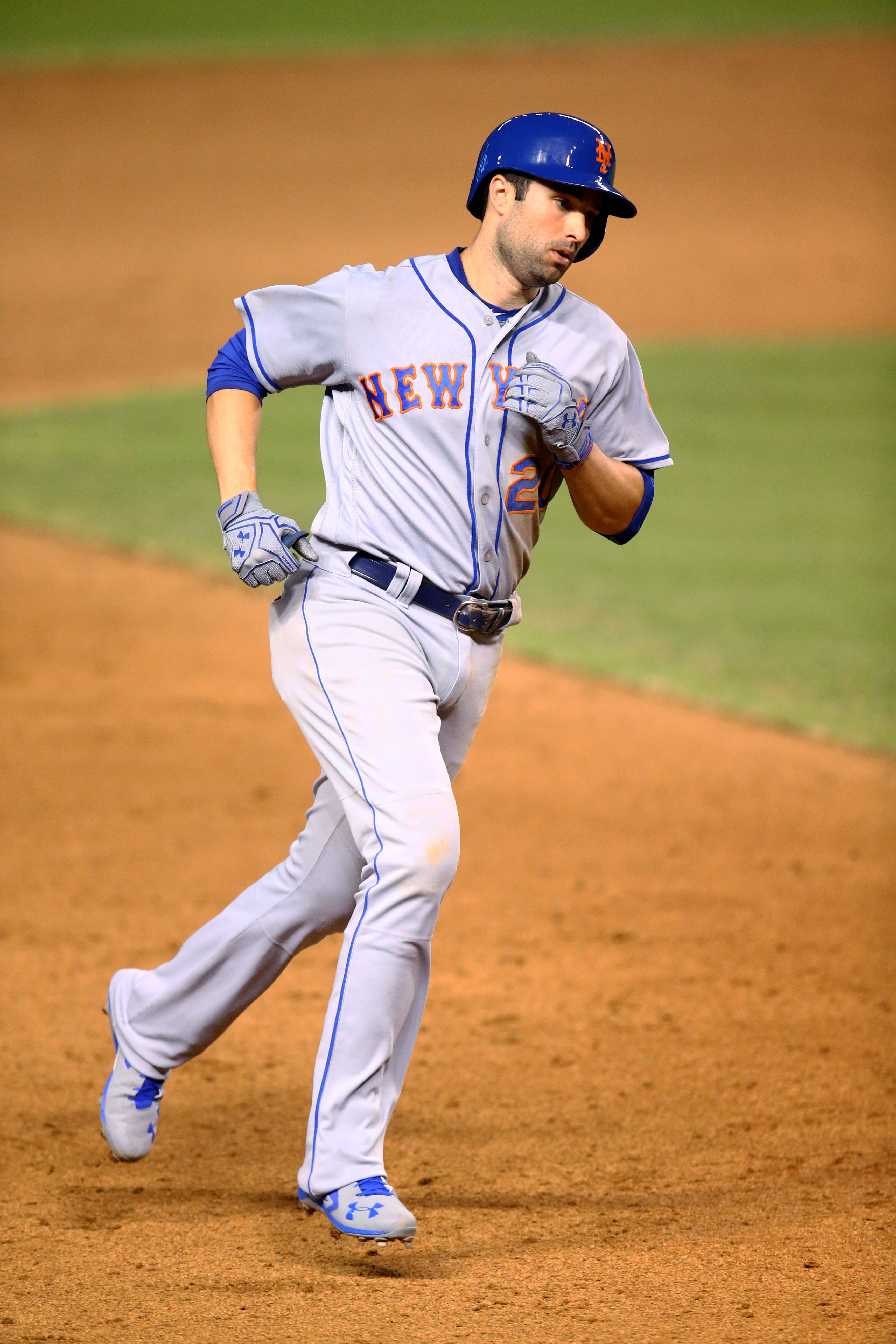
By taking the one-year payday, Walker joins Jeremy Hellickson of the Phillies in declining an opportunity to test the open market in preference of the security of the QO cash already on the table. Of course, both players had a chance to speak with other organizations before making their decisions, so they had at least a strong idea of the interest elsewhere.
Both unquestionably would have done better as true free agents, but entering the market after rejecting a qualifying offer would have required any signing team to part with a valued draft choice to add them. Even with the draft compensation attached, MLBTR’s Tim Dierkes predicted Walker to land three years at a $36MM guarantee. But there aren’t a lot of big spenders in search of a second baseman, and numerous intriguing trade targets also cloud the market, so there was a fair bit of risk involved.
Right up until the point that Walker’s season ended with back surgery, he had seemed a near-certain bet both to receive and reject a qualifying offer. But that situation halted his year and added some uncertainty, which may well have played into the decision. Indeed, it was not even clear that the Mets would issue the offer, though Walker seemed to progress well and is expected to be a full go for 2017.
The 31-year-old switch-hitter fit in well in New York, where he spent the 2016 season after being acquired from the Pirates as the replacement for the departing Daniel Murphy (who rejected a QO from New York this time last year). Over 458 plate appearances, he slashed a robust .282/.347/.476 with 23 home runs. That tied his career-best output in the long ball department despite the fact that he only played in 113 games.
For the Mets, it’s a good outcome. The team would have faced some uncertainty at second base without Walker, and might have been ended up taking on a longer-term commitment or giving up assets to strike a trade. He’ll play nearly everyday, though the right-handed-hitting Wilmer Flores (or another utility player) could spell him at times against left-handed pitching.
[RELATED: Updated Mets Depth Chart]
That being said, Walker raked against southpaws in 2016 despite historically faring much better against right-handed pitching. He also made strides with the glove, at least in the eyes of defensive metrics. Walker frequently received rather poor marks, but last year UZR graded him as a high-quality fielder and DRS rated him as average. If he can keep up those trends, he’ll likely represent a strong value for the Mets once again in 2017.
Photo courtesy of USA Today Sports Images.
Jose Abreu Opts Into Arbitration
White Sox first baseman Jose Abreu has opted out of the remaining three years and $34MM on his guaranteed contract and will enter arbitration for his remaining three years of club control, reports Dan Hayes of CSN Chicago (via Twitter). Abreu originally signed a six-year, $68MM contract with the ChiSox, but that contract allowed him to enter the arbitration process whenever he was deemed eligible. With three years of big league service time now under his belt, this offseason marks the earliest juncture at which he’d have been able to do so.
Abreu earned $10MM this past season under the guaranteed phase of his six-year deal and would’ve earned $10.5MM in 2017, $11.5MM in 2018 and $12MM in 2019 had he not opted out. However, as MLBTR’s Tim Dierkes recently explored, the arbitration process figures to be more lucrative for the Cuban-born slugger. Arbitration raises are based on previous salaries, but Abreu’s $10MM 2016 salary isn’t technically the figure from which he’ll receive a raise, as with contracts such as the one on which Abreu currently plays, the signing bonus must be annualized and factored in as well. Abreu’s deal contained a $10MM signing bonus, so adding one sixth of that sum ($1.66MM) to last year’s salary gives him an arbitration base of toughly $11.66MM. (Abreu’s agents could try to argue that the bonus should be pro-rated over three years, as he’s opting out of three guaranteed years, but it’s unclear if they’d be successful in that endeavor; at the very least $11.66MM is the floor on which his raise will be determined.)
As Tim also noted in that exploration of Abreu’s unique contract situation, though, Abreu also can’t be given a standard raise on top of that base. Abreu’s numbers to date compare favorably to Giancarlo Stanton‘s first three years, but Stanton earned $6.5MM in his first trip through arbitration. Abreu is already north of that and wouldn’t be boosted an additional $6.5MM on top of his current salary, but he also isn’t in line for a cut to that mark either. More realistically, he’ll gain some form of token raise atop his “on-paper” salary of $11.66MM, which prompted Tim to project a $12MM salary for him in the event of opting into arbitration. (For further explanation on the fine details of Abreu’s case, I’d recommend checking out Tim’s piece in its entirety, as it does a fine job highlighting the complexities associated with this type of Major League contract.)
Abreu, 30 in January, hit .293/.353/.468 this season and swatted 25 homers. His offense has taken a step back in each of his seasons since his brilliant Rookie of the Year campaign in 2014, but he remains a considerably above average bat and should do well from this point forth in arbitration, as whatever price the Sox and Abreu’s camp determine this winter will be the baseline for his second trip through arbitration. Of course, it’s also not entirely certain that Abreu will even remain with the White Sox long term. While GM Rick Hahn hasn’t outright said that he’s planning to orchestrate a fire sale, the South Siders do seem more apt than ever to listen to trade pitches on their top veteran players, and Abreu certainly fits that bill. Hahn spoke earlier this winter of “focusing on longer-term benefits,” and interested parties could subsequently make the Sox strong offers for stars such as Abreu, Chris Sale and/or Jose Quintana. Conversely, the Sox could simply be opportunistic in listening to offers on shorter-term commodities like Todd Frazier and Melky Cabrera, though certainly neither veteran comes with the type of value that Chicago’s more controllable assets carry.
Jeremy Hellickson Accepts Qualifying Offer
2:40pm: Hellickson tells MLB.com’s Todd Zolecki that he was leaning toward declining the qualifying offer but changed his mind after multiple teams expressed reluctance to part with a draft pick when speaking to Boras (Twitter link).
1:11pm: Right-hander Jeremy Hellickson has accepted the one-year qualifying offer and will return to the Phillies for the 2017 season a $17.2MM salary, reports Jon Heyman of FanRag Sports (Twitter link). Hellickson, a client of the Boras Corporation, will become the fourth player to ever accept a QO, joining outfielder Colby Rasmus, left-hander Brett Anderson and catcher Matt Wieters — each of whom accepted a $15.8MM qualifying offer last winter.
[Related: Updated Philadelphia Phillies Depth Chart]
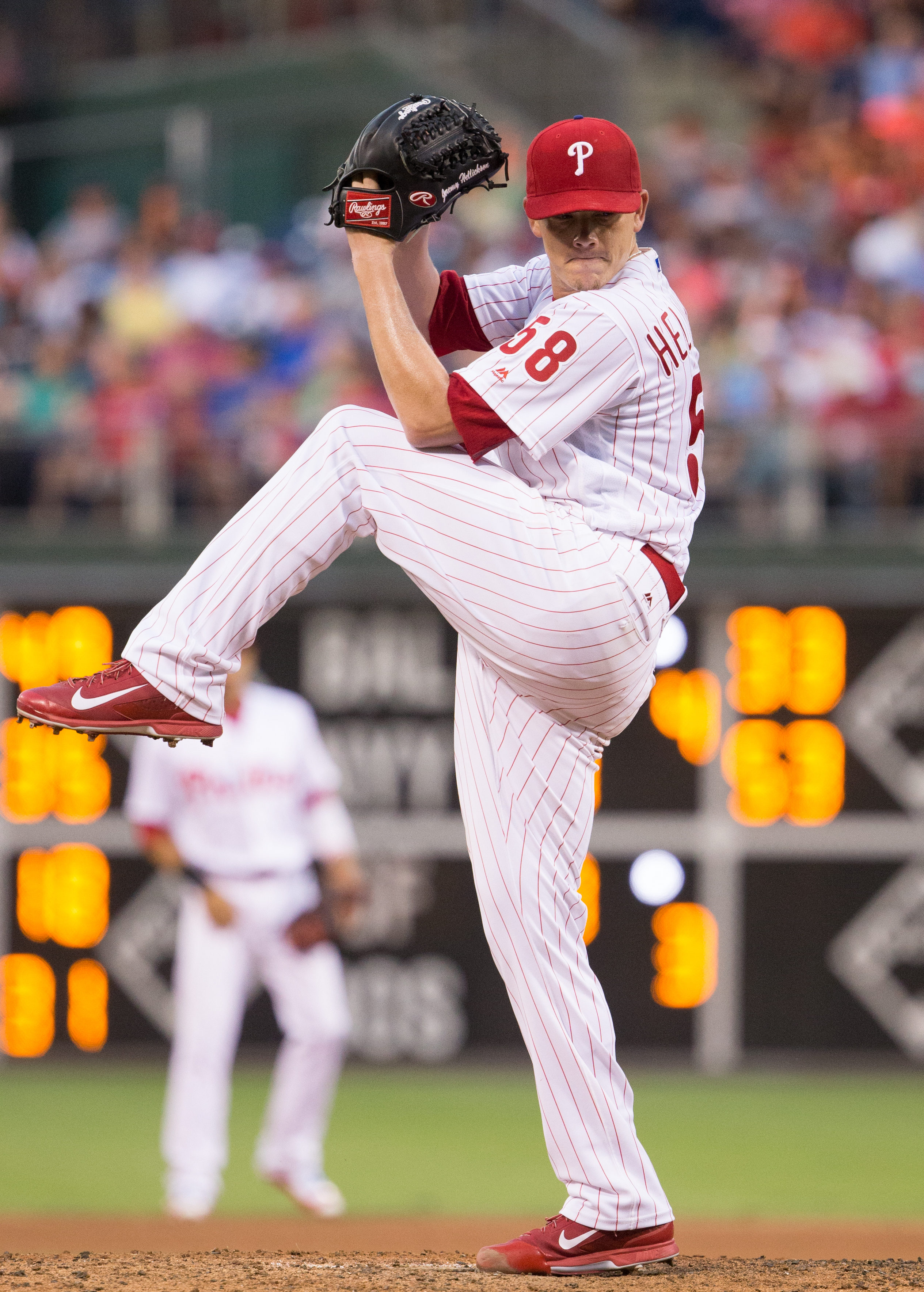
The news on Hellickson comes as somewhat of a surprise, given the dismal market for starting pitching. The 29-year-old Hellickson (30 next April) looked to be one of a select few arms that could be expected to deliver a quality season’s worth of innings in 2017 and, as such, was one of the few rotation options projected to receive a multi-year deal in free agency. However, Hellickson and his representatives have had the past week to survey the free-agent market while weighing the decision to accept Philadelphia’s offer, and clearly his camp wasn’t comfortable enough with his potential earning power to forgo a one-year deal at $17.2MM. That sum actually exceeds Hellickson’s career earnings to date, so his reluctance to pass on it is understandable from that point of view. He’ll now look to repeat was a strong 2016 season in the Phillies’ rotation and enter the open market next winter in advance of his age-31 season. If he’s able to do so, he could find himself in position for an even more lucrative deal, as he’d be coming off a two-year platform of quality work as opposed to the rebound campaign he enjoyed with the Phils this past year.
Acquired from the D-backs last winter in what amounted to be a salary dump, Hellickson tossed 189 innings of 3.71 ERA ball for the Phillies this year, averaging 7.3 K/9 and 2.1 BB/9 to go along with a 40.7 percent ground-ball rate. That represented a continuation of a strong second half in 2015, giving Hellickson a 3.74 ERA with 7.3 K/9 and 2.3 BB/9 over his past 240 1/3 innings at the big league level. If he’s able to continue on at that pace in 2017, he should have no issues finding a sizable multi-year deal next winter, and there’s reason to believe that he could do so without needing to burden himself with a qualifying offer. The collective bargaining agreement is being renegotiated as we speak, and the flawed QO system is one of the main subjects of the newest wave of collective bargaining talks. Some reports have suggested that the new CBA will prevent players from being eligible for a QO in consecutive years, while other speculation has centered around eliminating the QO system altogether.
The long-term financial outcome for Hellickson remains to be seen, but his short-term prospects are set in stone at this point. After accepting the QO, he cannot be traded until June 15 of next season without his consent, so he’ll return to a Phillies rotation that’ll also include Aaron Nola, Vince Velasquez and Jerad Eickhoff. Philadelphia has a number of young arms that can compete for the final spot in that rotation, including right-handers Zach Eflin, Jake Thompson, Alec Asher and Ben Lively. That group should give manager Pete Mackanin a solid starting mix in 2017, so the challenge for GM Matt Klentak, president Andy MacPhail and the rest of the Phillies’ front office will be to improve a lineup that was one of the worst, if not the worst in all of baseball last season. The Phils have already added one veteran bat to the mix in the form of Howie Kendrick, and they’ll presumably look to add some more respectable pieces to help round out a lineup that will be centered around Odubel Herrera and a hopefully improved Maikel Franco in 2017.
The Phillies will not receive the compensatory draft pick they likely expected to acquire when issuing Hellickson the QO in the first place, although having a capable arm back in their rotation on a one-year deal isn’t a disastrous outcome, even if it comes at somewhat of an overpay. Philadelphia, after all, has virtually no money committed to its long-term books, as Hellickson will join Kendrick ($10MM), recently acquired right-hander Pat Neshek ($6.5MM) and injured lefty Matt Harrison ($13.25MM plus a $2MM buyout of his 2018 option) as the only guaranteed contracts on next year’s roster. That, plus a modest projection of $12.8MM to four arbitration-eligible players (which could dip if Cody Asche and/or Jeanmar Gomez is non-tendered) brings them to a current Opening Day payroll projection of just $77.7MM (including pre-arb players). For a team that has previously spent as much as $177.7MM on its Opening Day payroll, the addition of Hellickson at $17.2MM is hardly a financial burden.
Taking a step back, the removal of Hellickson from the free-agent market takes an already terrible crop of starters and thins it even further. Rich Hill, Ivan Nova and Jason Hammel are the top three starters available this winter, and teams in need of other arms will be left with few options. Those teams could turn to bounce-back candidates like Andrew Cashner, Edinson Volquez, Jake Peavy, Jorge De La Rosa and Doug Fister or look to get creative by signing someone such as Travis Wood and converting him back into a starter or pursuing international arms like Korea’s Kwang-hyun Kim, Hyeon-jong Yang and Woo-chan Cha.
Otherwise, the trade market will be the most obvious method for teams to add to their respective rotations, though the lack of viable alternatives that are available through other means should place an abnormally high premium on rotation help. That was always going to be the case anyway; Hellickson’s subtraction from the free-agent class doesn’t create a shortage of pitching, but it certainly creates even more scarcity and should force one more team to get creative in seeking a starter, as he’ll now be returning to a team that didn’t otherwise seem like a plausible fit for him on a multi-year deal.
Photo courtesy of USA Today Sports Images.
Dexter Fowler To Reject Qualifying Offer
Cubs center fielder Dexter Fowler will reject the team’s one-year, $17.2MM qualifying offer, writes FanRag Sports’ Jon Heyman (he also previously tweeted the news). Fowler has been widely expected to do just that despite the problems he faced after rejecting a QO from Chicago last winter, as he even said himself recently on ESPN’s Sportscenter that he would be a free agent again this offseason.
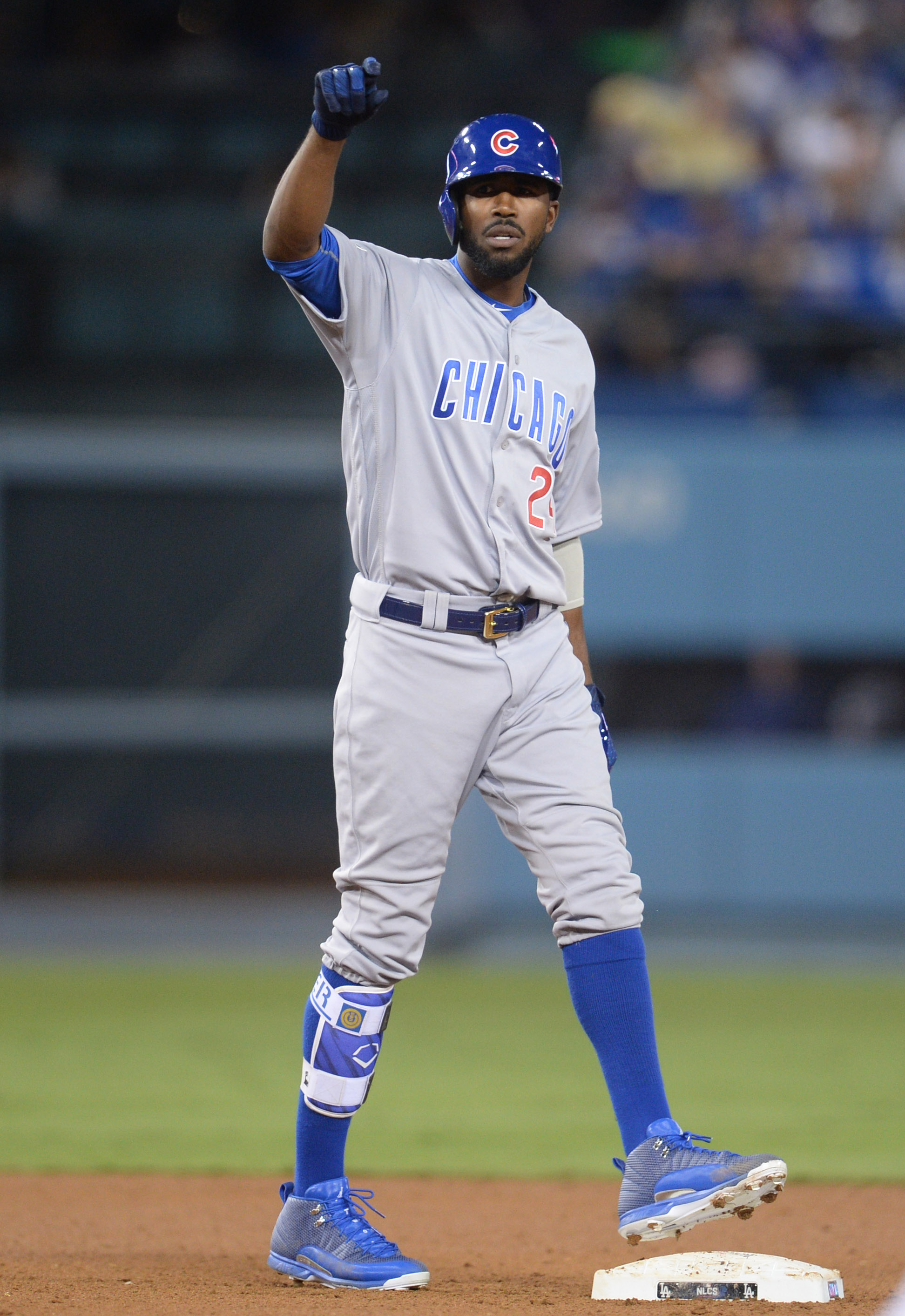
Fowler, 31 in March, had a career year at the plate, hitting .276/.393/.447 with 13 homers and 13 stolen bases — providing well-rounded value in every facet of his offensive game. As the switch-hitter himself told USA Today’s Bob Nightengale last month, though, it was questions about his glove that led to skepticism over Fowler’s value and ultimately prompted him to linger on the free agent market. As Fowler explained in that interview, he altered his positioning in center field, believing himself to be playing too shallow (the Cubs agreed), and the results manifested in both his Ultimate Zone Rating and Defensive Runs Saved marks. Both metrics graded him as one run above average, which isn’t a ringing endorsement but is a significant step forward for a player who had delivered negative ratings in each of the five previous years.
Of course, if Fowler is an average or even slightly below average center fielder, he could probably perform well in either corner outfield slot, and there are undoubtedly teams that would like to see him in either left field or right field (and atop their lineup) in 2017. His reported near-deal with the Orioles last February, for instance, would’ve sent Fowler to right field, and the market will surely present similar opportunities this winter as well. Fowler, though, has considerably less competition on the free agent market for outfielders this time around and is also coming off a better all-around season in terms of offense, defense and baserunning (he rated as MLB’s eighth-best baserunner in 2016, per Fangraphs’ BsR metric).
While the Cubs would probably love to have Fowler back on a short-term deal once again — they could sort the subsequent outfield logjam via offseason trades and platoons in 2017 — the market should present a considerably better offer for Fowler this time around. On paper, he makes sense for any number of teams, including the Blue Jays, Cardinals, Giants, Dodgers, Phillies, Mariners, Rangers and Athletics, among others. While not all of those teams will have interest in Fowler at the price he could command, interest should still be great enough that he’ll land the payday that eluded him last winter. MLBTR rated him sixth on our top 50 free agent list and pegged him for a four-year, $64MM deal.
Photo courtesy of USA Today Sports Images.
Kenley Jansen, Justin Turner Will Reject Qualifying Offer
Continuing with this morning’s trend of unsurprising qualifying offer decisions, Dodgers stars Kenley Jansen and Justin Turner will reject the team’s qualifying offer, per FanRag’s Jon Heyman (Twitter links). Andy McCullough of the L.A. Times tweeted as much at the time that each QO was extended in the first place. Each of the two should find at least a four-year deal on the free-agent market, and we pegged the them both for five-year contracts when ranking them in the top five on our list of the top 50 free agents.
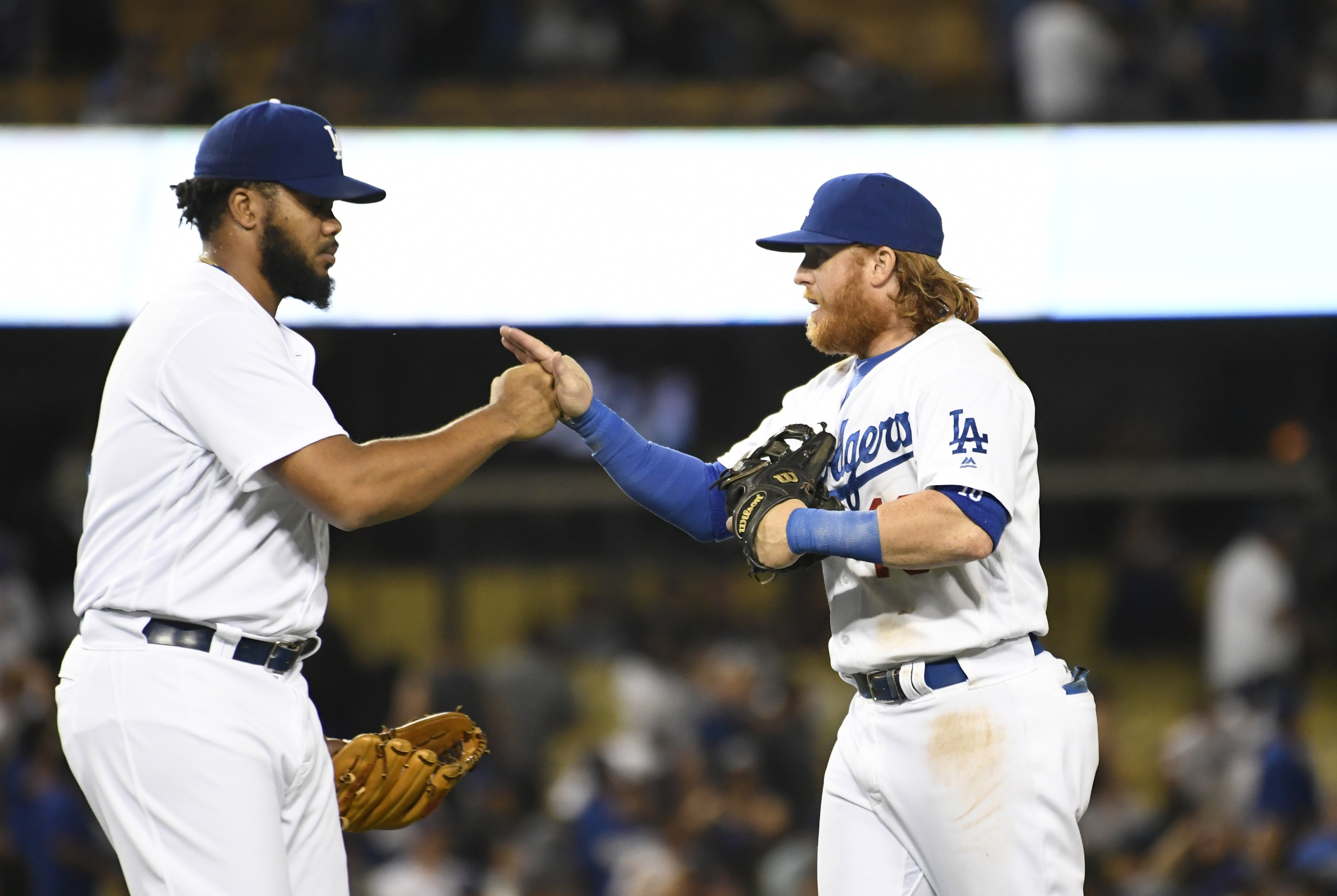
The 29-year-old Jansen logged a brilliant 1.83 ERA with 13.6 K/9, 1.4 BB/9 and a 30 percent ground-ball rate in 2016. Since making his big league debut at the age of 22, the converted minor league catcher has never posted a single-season ERA greater than 2.85, nor has he averaged fewer than 13 strikeouts per nine innings. Over the past four years, Jansen has a 2.19 ERA with a ridiculous 396-to-56 K/BB ratio in 263 innings of work. He potentially added to his value with a Herculean postseason performance for the Dodgers, recovering from an early hiccup to turn in three appearances of two shutout innings or more. Jansen threw 51 pitches in 2 1/3 scoreless innings in the decisive Game 5 of the NLDS, registering a hold that set up Clayton Kershaw‘s memorable save. In Game 6 of the NLCS, he fired three perfect innings of relief with four strikeouts in a losing effort. That demonstration of his ability to work multiple innings effectively in the highest-leverage spots possible makes him all the more appealing as a free agent.
Turner, meanwhile, has blossomed into a superstar-caliber talent in three years with the Dodgers after being non-tendered by the Mets and signing a minor league deal in L.A. The 31-year-old (32 next week) has batted .296/.364/.492 in his three seasons with the Dodgers, demonstrating improved power in each year, which culminated with a career-high 27 homers in 2016. That impressive total was accompanied by 34 doubles and three triples, giving him 64 extra-base hits in 622 plate appearances. Turner also registered elite defense at third base this year, according to both Defensive Runs Saved (+7) and Ultimate Zone Rating (+14) in 1224 innings at the hot corner. Although he’s a bit older than the typical free-agent position player, a four-year deal seems easily attainable, and five years is possible for Turner. Ben Zobrist, after all, inked a four-year, $56MM deal last offseason that began with his age-35 season, and Turner’s age-35 season would be the fourth year of a theoretical multi-year pact.
The Dodgers have reportedly been in contact with both Jansen and Turner about new contracts already, though the Giants, Yankees, Cubs and Nationals are all expected to be in the mix for Jansen this offseason as well. The Dodgers will collect a compensatory draft pick at the end of the first round next year if either signs with a new team and a pair of picks if both sign elsewhere.
Photo courtesy of USA Today Sports Images.
Mark Trumbo Will Reject Qualifying Offer
“Indications are” that Orioles slugger Mark Trumbo will reject his qualifying offer, per FanRag’s Jon Heyman, and Yahoo’s Jeff Passan tweets a similar sentiment, calling the market for Trumbo “bustling” and adding that he can be “cross[ed] off the list of players who might be inclined to accept a qualifying offer.” SB Nation’s Chris Cotillo tweets more definitively that Trumbo will reject. After leading the Majors with 47 home runs, Trumbo has never seemed to be an especially likely candidate to accept the qualifying offer. Some teams, undoubtedly, will be scared off by his fairly one-dimensional nature, but power is always an in-demand commodity even in spite of the league-wide increase in home runs in 2016.
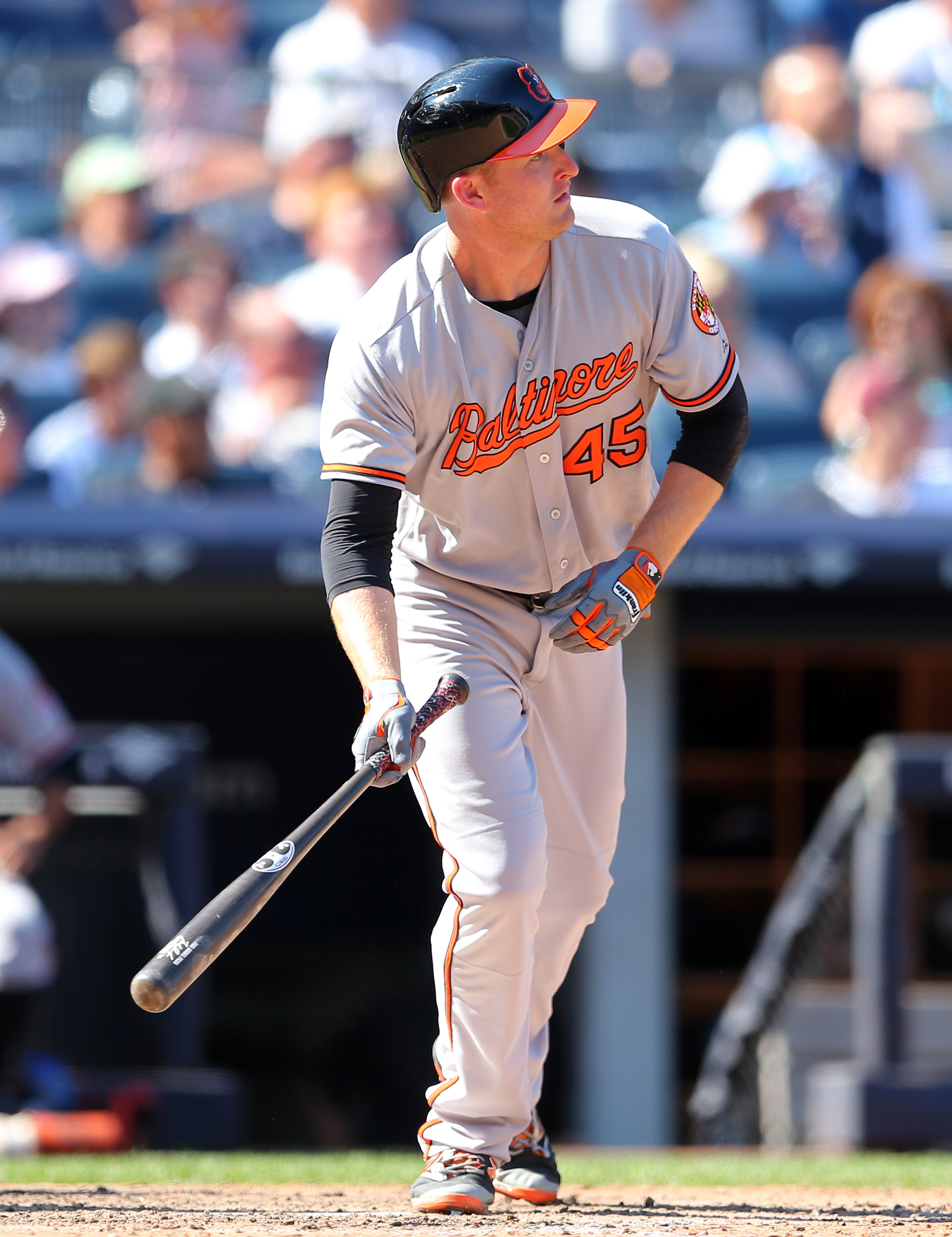
Trumbo, 31 in January, hit .256/.316/.533 in 667 plate appearances this past season, adding 27 doubles and a triple to his MLB-leading home run total. However, Baltimore deployed Trumbo as its primary right fielder, and while he has plenty of corner outfield experience from his days with the D-backs, the results have never been pretty, as one might expect for a player that is listed at 6’4″ and 235 pounds. In 791 outfield innings this year (all but eight of which came in right field), Trumbo graded out to 7.7 runs below average, per Ultimate Zone Rating, and an even less-flattering 11 below average, per Defensive Runs Saved. He also walked at a slightly below-average 7.6 percent and struck out in 25.5 percent of his plate appearances, hence the middle batting average and on-base percentage.
All of that said, Trumbo’s bat should still get him paid fairly handsomely. He’s topped 30 homers three times in his career to date (and fell one big fly shy of that mark in 2011), and while he’s never been a great defensive outfielder, he’s received solid marks at first base when playing there in the past. Trumbo’s presence on teams that have had established first basemen — Albert Pujols with the Angels, Paul Goldschmidt with the D-backs and Chris Davis with the Orioles — has forced him to the outfield grass with regularity (as MLBTR’s Mark Polishuk recently noted in Trumbo’s free agent profile), but could be a nice fit on a team with a vacancy at first base and/or designated hitter.
MLBTR ranked Trumbo eighth on our top 50 free agent list and projected a four-year, $60MM contract for the 2016 home run king. The Orioles have expressed interest in retaining Trumbo, though GM Dan Duquette did caution that he wasn’t sure they’d be able to afford him.
Photo courtesy of USA Today Sports Images.