
MLBTR Live Chat: 4/28/16
Click here to read a transcript of today’s live chat with host Jeff Todd.
Reddick Not Aware Of Any Significant Extension Talks With A’s
Athletics right fielder Josh Reddick tells MLB.com’s Jon Morosi that he’s not aware of any substantive extension talks that took place between his agents, Seth and Sam Levinson of ACES, and the team during Spring Training.
That doesn’t mean no talks took place at all, though, as Reddick told his agents that he himself didn’t want to be involved in the process unless a deal became close. “I’ve told [my agents], ‘I don’t want to even get a phone call if we don’t think it’s the right deal for me,'” he said. “They understand that. They’re right on the same page with me. The A’s told me they still wanted me, and they want it to be at the right price, and that was obviously great to hear.” Reddick, though, is a free agent at season’s end, and the tight-budgeted A’s could very well have a hard time retaining him if he reaches the open market. Reddick was said to have placed an end-of-Spring-Training deadline on contract talks, though a report from late March indicated that talks could potentially continue into the season if they show “sufficient promise of completion.” That’s similar to the thinking we heard from Adrian Beltre‘s camp, and Beltre indeed agreed to a new two-year deal following Opening Day (despite having set an end-of-spring deadline himself).
Interestingly, Morosi focuses in on the fact that Reddick is a longtime favorite of Cubs president of baseball operations Theo Epstein, and Reddick himself confirmed as much. “[Epstein] told me he would never trade me, either,” Reddick tells Morosi. “Then he left — and I got traded [to Oakland, in December 2011]. I think I was Ben Cherington’s first or second move after he took over.” Morosi notes that Epstein was the Sox’ GM when Reddick was drafted and adds that it’s conceivable that Chicago could seek a corner outfielder this summer on the trade market following Kyle Schwarber‘s season-ending injury.
Of course, it should also be noted that it’s still rather early in the season, and the Athletics are sporting an 11-11 record in a tightly contested AL West. In order for a trade of Reddick to even be considered a plausible scenario, Oakland would have to fall behind in the standings by a fairly wide margin, as he’s an easy candidate to receive a qualifying offer following the year. Beyond that, the Cubs have Jorge Soler as an option to pick up the slack in Schwarber’s absence. While Soler is struggling at the moment, he’s also enjoying a career-best walk rate and a career-low strikeout rate; at least some portion of his struggles can be attributed to a .205 average on balls in play, though Soler’s line-drive and hard-contact rates are somewhat diminished this season. It’s certainly plausible that the former top prospect, still just 24 years of age, could turn things around at the plate in short order. Suffice it to say, quite a bit would need to transpire over the coming months for a trade scenario to play out.
The likelier scenario, as it stands, seems to me to be that Reddick rejects a qualifying offer and tests the open market in what will be a weak crop of free agents. He’ll play this season at age 29 and is off to a strong start, batting .282/.352/.474 with four homers (including the base hit he collected just minutes ago as I was writing this). With the exception of a down year in 2013, Reddick has been a decidedly above-average bat with the A’s, and he’s posted a cumulative .269/.328/.450 slash since the opening of the 2014 campaign. Those numbers, of course, are suppressed to some extent by the cavernous dimensions of O.Co Coliseum, and context-neutral stats like OPS+ and wRC+ feel that Reddick has been 16 to 18 percent better than the league average hitter. While he struggles against left-handed pitching, he’s a strong bat against righties with an excellent glove in right field, per Defensive Runs Saved (+51 for his career).
Those skills, combined with his age and the aforementioned thin crop of free agents landed Reddick sixth on the first installment of MLBTR’s 2017 free agent power rankings, with Tim Dierkes writing that Reddick could be a sneaky candidate for a $100MM contract. I’d agree with that assessment and may even be higher on his chances at that nine-figure threshold than Tim, assuming Reddick is able to approximate his 2015 production. Reddick is, in many regards, a similar player to Jason Heyward and Alex Gordon, though he’s three years older than Heyward and three years younger than Gordon. That skill set has proven to reward free agents handsomely, positioning Reddick for a hefty contract if he continues his recent success.
Follow Pro Football Rumors For The Latest NFL Draft News
It’s NFL Draft day! Whether you’re a hardcore football fan or more of a casual observer, the NFL Draft is a can’t-miss event. We encourage you to follow @pfrumors on Twitter for up-to-the-second updates on today’s madness. 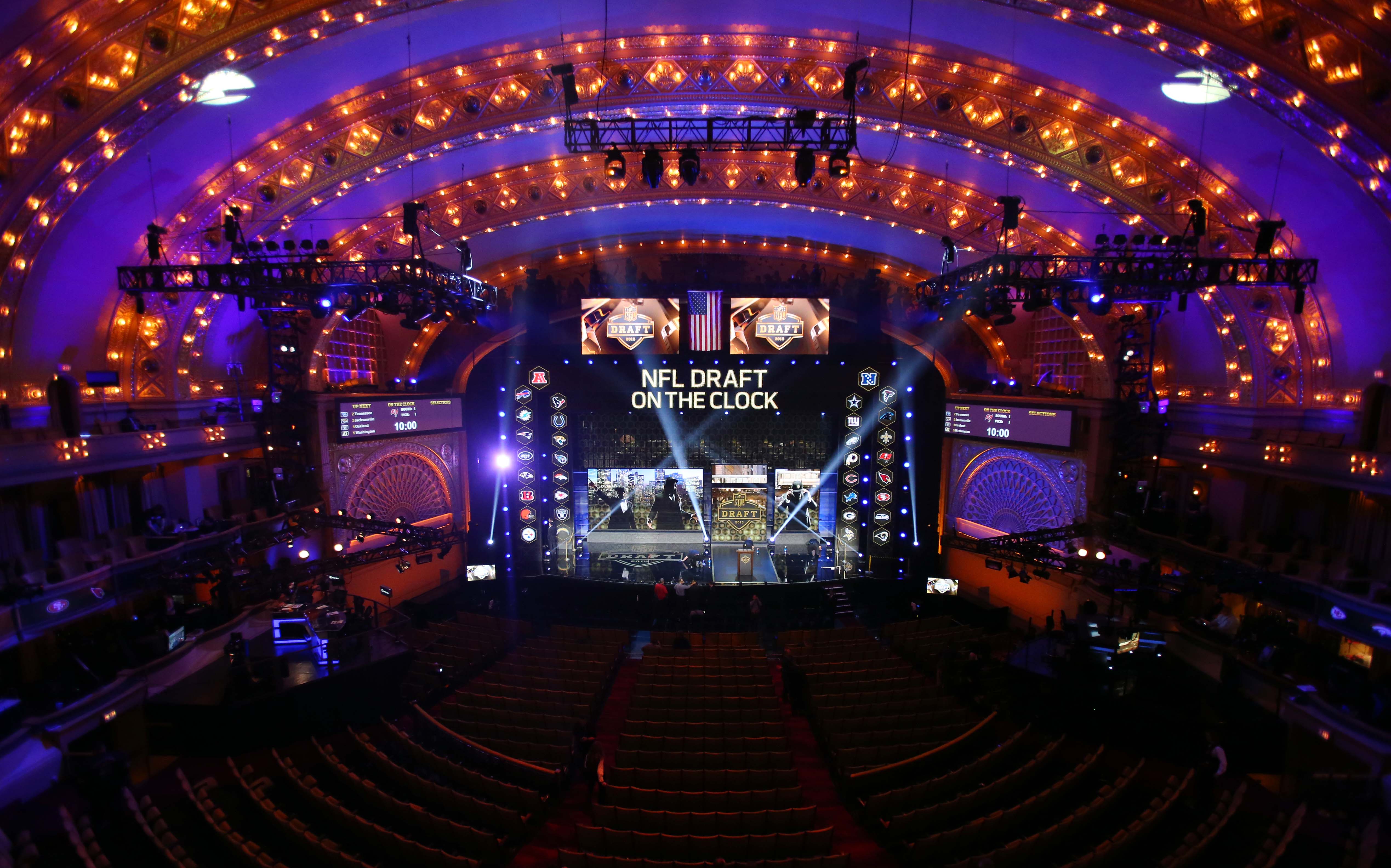
The Rams and Eagles are expected to take Jared Goff and Carson Wentz with the top two picks, but things are wide open after that point. Many view Ole Miss’ Laremy Tunsil as the best tackle in this year’s class, but the Chargers could go against the grain and take Notre Dame tackle Ronnie Stanley at No. 3. At No. 4, the Cowboys have long been linked to defensive back Jalen Ramsey (an FSU product, just like Deion Sanders), but Jerry Jones is said to be infatuated with Ohio State running back Ezekiel Elliott. Beyond that, the Jaguars could shock some people by taking Georgia linebacker Leonard Floyd at No. 5, the Ravens could trade down at No. 6, and no one is quite sure what the 49ers are thinking at No. 7. From there, the rest of the first round promises to be full of surprises and our latest mock draft has some bold predictions based off of informed speculation.
Of course, the draft can also spur teams to move established veterans. In the coming days, we could see the 49ers finally pull the trigger on a Colin Kaepernick deal with the Broncos. Meanwhile, quarterback Sam Bradford is mad at the Eagles for trading to get one of the top QBs in this year’s draft and is pushing hard for a trade.
So, what are you waiting for? Follow @pfrumors on Twitter and stay tuned to ProFootballRumors.com for all the latest NFL Draft news.
Scooter Gennett Placed On DL; Brewers Select Hernan Perez’s Contract
11:20am: Manager Craig Counsell tells Tom Haudricourt of the Milwaukee Journal-Sentinel that Gennett has a “mild” strain of his oblique (Twitter link). Counsell’s early expectation is that Gennett will be out three weeks, which would be on the low end of the typical recovery time frame for oblique strains.
10:36am: The Brewers announced this morning that second baseman Scooter Gennett has been placed on the disabled list due to right oblique tightness. In his place, the club has selected the contract of infielder Hernan Perez from Triple-A Colorado Springs and transferred Matt Garza to the 60-day disabled list to clear a spot on the 40-man roster.
Gennett, 25, has been one of Milwaukee’s more productive hitters thus far, batting .258/.361/.516 with four homers through 18 games (72 plate appearances). There’s no timeline on his return just yet, though an oblique issue could conceivably sideline him for up to a month, depending on the severity of the issue. Jarrod Dyson recently missed six weeks with a Grade II oblique strain, though the club has labeled Gennett’s injury simply as “oblique tightness” for the time being.
Perez, also 25, was hitting .339/.364/.484 in one of the best hitters’ environments in the minor leagues, but he doesn’t have that type of track record in the Majors, where he has posted a collective .235/.251/.307 batting line in 351 trips to the plate. He’ll combine with Yadiel Rivera and Rule 5 pickup Colin Walsh to cover Gennett’s time at second base.
Garza’s transfer to the 60-day disabled list confirms that he won’t return to the club within his initial timeline of four to six weeks. The veteran right-hander hit the disabled list with a strained lat muscle earlier this month and has yet to pitch for the Brewers in 2016. Garza is in the third season of a four-year, $50MM contract with Milwaukee which also contains a complex fifth-year option that is largely dependent on the health of his right arm. (The $5MM club option turns into a $13MM vesting option if Garza throws 110 games over the course of the contract’s first four seasons but also shrinks to just a $1MM option if he spends more than 130 days of a season on the disabled list.) The Brewers owe Garza approximately $23.36MM over the remainder of that contract through the end of the 2017 season. He’s earning $12.5MM this year and will earn the same in 2017. At this point, his best-case scenario for a return would be early June. While Milwaukee may have had some hope of Garza pitching well for the first half of the season in order to emerge as a viable trade chip, he won’t have much time to build up value before this season’s Aug. 1 trade deadline rolls around.
Minor MLB Transactions: 4/28/16
Here are the day’s minor moves from around the league…
- The Braves outrighted Danny Burawa off the 40-man roster and sent him from Triple-A Gwinnett to Double-A Mississippi on Wednesday, according to the MLB.com transactions page. The 27-year-old Burawa was claimed off waivers from the Yankees last August and pitched 12 1/3 innings in the Majors for Atlanta, logging a 3.65 ERA. He’s struggled in Triple-A to open the season, however, surrendering six runs (four earned) in seven innings with a troublesome 11 walks against five strikeouts. Following Burawa’s removal, Atlanta’s 40-man roster is now at 38 players.
- The Rangers have released former top prospect Cody Buckel, reports MLB.com’s T.R. Sullivan (via Twitter). Buckel, a 23-year-old right-hander, ranked as the game’s No. 87 prospect prior to the 2013 season, according to MLB.com. However, he developed a staggering control problem that season, walking 35 batters in just 10 2/3 innings. Buckel wasn’t diagnosed with a major injury and seemingly never recovered from the yips he encountered that season, as he averaged 6.8 walks per nine innings pitched from 2014-16 in his time between the Rangers’ minor league affiliates and winter ball in Australia.
Tigers To Promote Michael Fulmer
The Tigers will promote right-hander Michael Fulmer to make his Major League debut against the Twins on Friday, reports MLive.com’s Chris Iott (via Twitter).
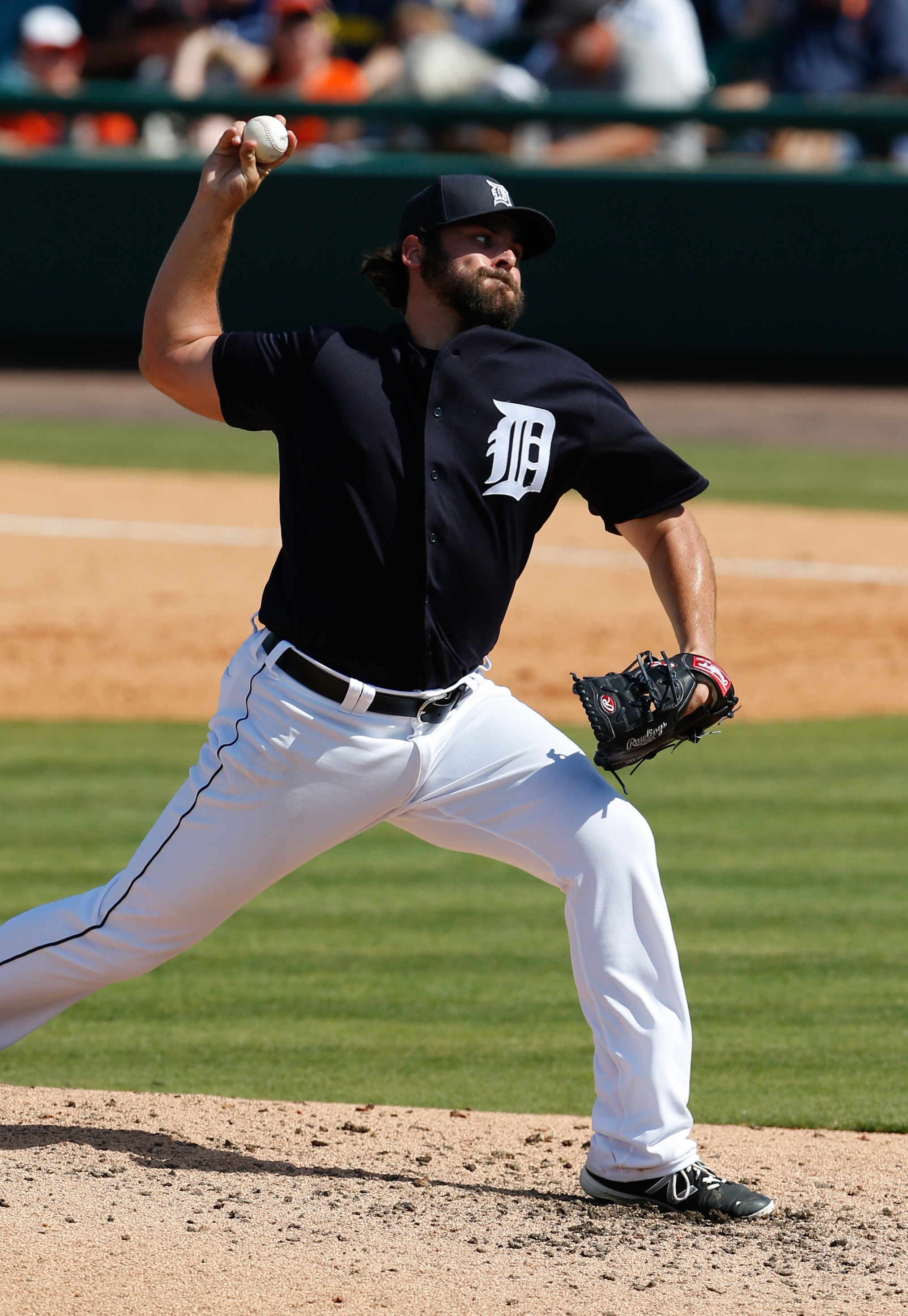
Fulmer, acquired from the Mets last summer in the trade that sent Yoenis Cespedes to New York, rated as the game’s No. 47 prospect entering this season, according to Baseball America. Other prospect outlets agreed, as ESPN’s Keith Law rated him 48th, MLB.com rated him 50th and Baseball Prospectus rated him 87th.
The 23-year-old Fulmer hasn’t exactly dominated at the Triple-A level, yielding seven earned runs on 16 hits and five walks with 20 strikeouts in 15 1/3 innings thus far. That marks his first action at the top minor league level, as the former No. 44 overall draft pick split the 2015 campaign between Class-A Advanced and Double-A, working to a combined 2.24 ERA with a 125-to-30 K/BB ratio in 124 2/3 innings. BA gives Fulmer credit for two plus pitches — his fastball and slider — and writes that he could be a No. 3 starter or, if durability issues persist, a shutdown arm at the back of the bullpen. Law is higher on Fulmer’s changeup than BA, calling solid-average as opposed to fringe-average. Law and MLB.com both give him praise for an average curveball as well. All of the scouting reports on Fulmer note that he was on the cusp of big league readiness.
Fulmer is already on the club’s 40-man roster, so the club needs only to clear a spot on the active roster for him. That will be accomplished by placing fellow right-hander Shane Greene on the 15-day disabled list, tweets Iott. Greene had been previously occupying the fifth spot in the rotation, and it’s conceivable that a strong showing from Fulmer will create a long-term opportunity for him. Left-handers Daniel Norris and Matt Boyd remain as alternatives in the Triple-A rotation, in the event that Fulmer falters or that further injuries arise among the Detroit starting staff.
Fulmer’s debut will come nearly four weeks into the regular season, meaning that the right-hander won’t be able to accrue a full year of service, even if he remains in the Majors for the long haul this year. He will, however, be a very likely Super Two player if he is in the Majors to stay, finishing the season with 158 days of big league service. The Super Two cutoff is typically in the 2.122 to 2.140 range, so unless Fulmer were to be sent down in the future, he’d be on pace to arbitration eligible four times, should he stick on the roster.
This marks the fifth time in the past week that a Top 100 starting pitcher has been promoted to make his big league debut. Since Saturday, we’ve seen Rays lefty Blake Snell, Braves righty Aaron Blair and Twins right-hander Jose Berrios make their big league debuts, while A’s southpaw Sean Manaea is slated to make his MLB debut on the same day as Fulmer.
Photo courtesy of USA Today Sports Images.
AL West Notes: McBride, Manaea, Zunino, Wilson, Heaney
The Athletics have called up catcher/first baseman/outfielder Matt McBride in order to prevent the 30-year-old from signing with a club in Japan, reports Susan Slusser of the San Francisco Chronicle. McBride received an offer from the Yokohama DeNa BayStars of Nippon Professional Baseball, Slusser reports, and his contract contains a clause that would’ve allowed him to opt out and pursue the deal. Rather than allow the versatile McBride to leave the organization, Oakland added him to its 25-man and 40-man roster (Felix Doubront was transferred to the 60-day DL). “I’m happy to be here,” McBride told Slusser following the promotion. “I knew it would be one or the other, and I think everyone wants to get the chance to play in the big leagues.” McBride does have some Major League experience, having spent parts of three seasons with the Rockies. In 158 plate appearances in the Majors, he’s batted .199/.228/.305. The A’s, then, will hope that his production can more closely resemble his lifetime .315/.351/.527 line at the Triple-A level (1418 PAs).
More from the division…
- Slusser also writes that lefty Sean Manaea has an “excellent shot” to stick in the Athletics‘ rotation for the long haul if he can approach his numbers from Triple-A. The top prospect, acquired in last summer’s Ben Zobrist trade, could have an audition window of several weeks to impress the front office, as right-hander Henderson Alvarez still figures to be sidelined until mid-May. Should Manaea falter in his initial taste of the Majors, right-hander Jesse Hahn could re-emerge from Nashville, though he’s currently dealing with a blister that prevented him from getting the call on Friday. As Slusser notes, a strong early impression from Manaea will lead to a difficult decision for Oakland, who could have Manaea, Alvarez, Hahn, Sonny Gray, Rich Hill, Kendall Graveman and Chris Bassitt all in the rotation picture. And, for those looking for a bit of a scouting report on the exciting young lefty, Vince Lara-Cinisomo of Baseball America has posted just that, in addition to his thoughts on what to expect from Manaea in the Majors.
- Mike Zunino spoke with Larry Stone of the Seattle Times about the mechanical adjustments he’s made to his swing and the more relaxed mental approach he’s been able to adopt with the Mariners‘ Triple-A affiliate this season. Triple-A hitting coach Scott Brosius and manager Pat Listach each weighed in on Zunino’s hot start as well, noting that he’s not only more mechanically sound but also showing greater strike-zone recognition, neglecting to chase sliders on the outer edge of the plate and high fastballs out of the zone. Zunino said to Stone that he doesn’t feel “on edge all the time” like he has in the past while struggling in the Majors, adding that he’s “not chasing base hits” by worrying about the outcome. Zunino has come around on recognizing that hard contact, such as a line drive that turns into an out, isn’t necessarily a bad outcome. Zunino was particularly heartened recently with some success hitting to the opposite field — a component of his game that he freely acknowledged has long been lacking.
- Angels lefty C.J. Wilson is now targeting a mid-June return, as Jeff Fletcher of the Orange County Register writes. The 35-year-old southpaw is slated for a bullpen session on May 9 and a simulated game on May 18, each of which would precede a minor league rehab assignment that is currently scheduled to begin on May 23. “It feels like it’s taking forever,” Wilson said. “I want to pitch. I always want to pitch. When you have a light at the end of the tunnel, it feels a little longer as opposed to ‘I’m not going to pitch till next year.'” Wilson added that he’s experimenting with a new arm slot in an effort to maintain his health.
- Another Angels lefty, Andrew Heaney, hasn’t received as optimistic news as Wilson. As MLB.com’s Alden Gonzalez tweets, the team said today that Heaney’s recovery “has slowed,” and the lefty will seek an “additional opinion” on his forearm strain. The club didn’t make any further comment on his health, but it’s now been several weeks since Heaney has thrown, and the continued uncertainty surrounding his recovery (or lack thereof) is discouraging for the team and for Angels fans.
Five MLB Players Enter Into Brand Contracts With Fantex
Fantex, Inc. announced today that it has entered into brand contracts with five Major Leaguers: Phillies third baseman Maikel Franco, Astros right-hander Collin McHugh, Orioles second baseman Jonathan Schoop, Twins right-hander Tyler Duffey and Padres third baseman Yangervis Solarte (as noted on BusinessWire.com).
Fantex offers professional athletes an up-front, one-time payment in exchange for a portion of that player’s future earnings both on and off the field. Fantex then sells “shares” of that player to public investors for a set price (thus covering the up-front payment to the player), allowing those investors to turn a profit if said player crosses a certain threshold in his career earnings. Obviously, that creates risk for the investors, who stand to take a financial loss if the player fails to earn enough money in his career to justify the shareholders’ investment. Angels left-hander Andrew Heaney became the first player to enter into an agreement with Fantex last September, taking a $3.34MM up-front payment in exchange for 10 percent of his future earnings. (Notably, the league and the MLBPA each approved that agreement, and Fantex’s announcement seemingly suggests that the same is true of these five agreements.)
As for the new wave of Fantex additions, Schoop secured the largest sum, agreeing to an up-front payment of $4.91MM. Franco, meanwhile, will earn $4.35MM, while McHugh will take home $3.96MM, Solarte will take home $3.15MM and Duffey will earn $2.23MM. Notably, Solarte’s agreement is for 11 percent of his “brand,” while the other four (and Heaney) signed away 10 percent.
With six big leaguers now on board in addition to 14 athletes from other sports, it stands to reason that the number of professional baseball players willing to enter into such agreements will increase. It’s an interesting proposition for Major Leaguers — not entirely dissimilar from agreeing to an early contract extension; in essence, the players in question are taking a life-changing sum of money early in their career in exchange for limiting their earning capacity once they’ve navigated through their arbitration years and entered their free-agent seasons. Those same principles are all true of players that sign contract extensions, though the extent of the up-front sum and the long-term risk obviously vary.
Beyond the long-term impact on a player’s earnings, it also seems plausible that players who enter into agreements with Fantex could be less likely to sign long-term extensions with their current club. Extensions, after all, are most often signed to provide a player with his first fortune in exchange for giving the club a discount rate on would-be free-agent or arbitration seasons. Heaney, Franco, McHugh, Schoop, Duffey and Solarte, though, have each secured a sizable sum without altering their free agency timelines, thereby creating less urgency to sign an extension. (It should be noted, too, that players like Duffey and Solarte aren’t necessarily obvious extension candidates in the first place.) It seems reasonable to expect that some players and agents will view Fantex as a means of locking in that first payday while preserving the right to get to free agency at a younger age. In a market that places a premium on youth — as evidenced by contracts signed by Jason Heyward, Justin Upton, Mike Leake and others — that comes with significant benefit.
The payments from Fantex, of course, are smaller than the sums that we’ve seen players haul in via contract extensions, but the trade-off that Fantex players face early in free agency figures to be more minimal than the trade-off of their peers that sign extensions. For instance, Giants lefty Madison Bumgarner will reach six years of Major League service time this season, but he remains under control for three more seasons; he’s guaranteed $11.5MM in 2017 and has a pair of $12MM club options on each of the two subsequent seasons. Bumgarner’s contract guaranteed him $35MM ($57.5MM if each of those options is exercised), but he’ll earn a maximum of $35.5MM over what would have been his first three free-agent seasons — a fraction of what he could earn were all 30 teams allowed to bid on him. Bumgarner’s open-market annual value could be $25MM or more over the life of a six- or seven-year term. Ten percent of a theoretical $150-175MM contract is a smaller loss for the player than the difference between the free-agent seasons on an extension and the aforementioned market value.
I should note that this isn’t a knock on Bumgarner’s contract by any means — it was a record-setting deal for a pitcher in his service class and comes with the same potential risk/reward that many early extensions carry. Conversely, Jon Singleton locked in $10MM and has yet to see his big league career get off the ground. If Singleton never develops into an MLB-caliber hitter, he’ll receive significantly more than he would have by entering into a Fantex deal. Balancing that risk and reward is likely something with which players and their agents will wrestle if Fantex agreements continue to increase in popularity.
From a more general standpoint, there’s quite a bit we don’t know about the finer details of Fantex. The method by which each player’s up-front valuation is determined, for instance, isn’t known. Accurate reporting of off-field income (e.g. endorsements) would be paramount (and is presumably mandated within the contract agreements), and the unproven model in question seemingly only works if Fantex is able to raise enough investor funding to finance the initial payment to the player. This is all relatively new territory, though, and additional information pertaining to the new opportunity for pro athletes should become increasingly available in the months to come.
John Stanton Group Purchases Majority Ownership Of Mariners
5:19pm: Stanton will become the chairman and CEO of the Mariners, the team announced today in a press release. Kevin Mather will remain the club’s president. MLB.com’s Greg Johns tweets that the ownership change is subject to approval from Major League Baseball, which won’t be finalized until August. Per the press release announcing the ownership transition, the Mariners franchise was valued at $1.4 billion, meaning that First Avenue Entertainment, the new ownership group, spent $1.26 billion to purchase its 90 stake. Lincoln issued the following statement:
“From the first day of our involvement nearly 24 years ago, Nintendo has had two goals for its investment in the Mariners. First, we wanted to assure the permanence of the team in this great city. And on that count, I am proud and gratified that this agreement further solidifies that goal. On the other hand, I’m equally disappointed that we have not been able to host a World Series game for our fans.”
Stanton, too, issued a statement in the Mariners’ press release:
“My goal and the goal of the entire Mariners ownership and management team is to win a World Series. I believe that the Mariners are well positioned to achieve that goal and it will be my honor to lead the organization. I want to thank Howard for his leadership for the last 17 years and thank the members of the board and ownership for giving me this opportunity.”
2:00pm: Unspecified “ownership changes” have led to the end of CEO Howard Lincoln’s tenure with the Mariners, Mike Salk of 710 ESPN reports. Lincoln is set to resign his position, per the report, with minority owner John Stanton in line to “become the new point person for the ownership group” — though it’s unclear precisely what position (if any) he will take.
It’s obviously difficult at this point to assess the long-term ramifications of the move. It’s not clear whether other front office changes could be afoot, though it would obviously be surprising if there were any immediate impact on baseball operations. A news conference has been scheduled for this afternoon, which may begin to shed further light on the situation, including the underlying ownership modifications that prompted the leadership move.
The 76-year-old Lincoln has held his role since taking over before the start of the 2000 season. A former executive with Nintendo of America, the entity which now owns a controlling share of the ballclub, Lincoln is said to have been involved at the highest levels since the current M’s ownership group took control back in 1992.
Lincoln was obviously a significant part of the team’s financial dealings over the years, including the construction of Safeco Field and the organization’s regional sports network agreement in 2013. He was an immensely powerful figure in the organization, as Geoff Baker of the Seattle Times explains. Of course, his tenure has also come with its share of criticism; among other things, the club’s attendance has dwindled quite a bit and its last post-season berth came way back in 2001.
Among Lincoln’s more recent moves was the promotion of Kevin Mather to president and COO early in 2014, replacing Chuck Armstrong. At the time, the organization was winding up for what it hoped would be a successful 2015 season after shocking the baseball world by signing Robinson Cano. But the on-field results proved disappointing, and the leadership group ultimately fired GM Jack Zduriencik, who has since been replaced at the helm of baseball operations by Jerry Dipoto.
Now, it seems, Stanton will decide the strategic direction of the Seattle organization. He is said to have been looking to enhance his role with the club for some time, as Baker explains (Twitter links). Stanton reportedly controls about one-tenth of the Mariners’ ownership stake at present; it’s not known whether he’ll increase his holdings as part of today’s shake-up.
Twins, Andrew Albers Agree To Minor League Deal
The Twins and left-hander Andrew Albers have agreed to terms on a minor league contract, MLBTR has learned (links to Twitter).
Albers, 30, was a 10th-round pick of the Padres back in 2008 but wound up pitching on the independent circuit in 2010. The True Gravity client parlayed impressive numbers in the Can-Am Association into a minor league deal with the Twins back in 2011 and rose through the club’s ranks quickly, reaching the Majors and tossing 60 innings for Minnesota in 2013. Albers recorded a 4.05 ERA with a 25-to-7 K/BB ratio in those 60 innings, and he spent the 2014 season pitching in the Korea Baseball Organization before returning to North America to pitch for the Blue Jays. Albers struggled at Triple-A and in a brief MLB stint with the Jays last season and again turned to the independent league over the winter. He made one start for the Atlantic League’s Lancaster BarnStormers and fired seven shutout innings, yielding just a hit and a walk with nine strikeouts before this new agreement.
Minnesota has seen its rotation depth compromised by injuries to Ervin Santana and Kyle Gibson, and three members of its Triple-A rotation — Tyler Duffey, Alex Meyer and Jose Berrios — are now at the big league level. Albers, it seems, will add an experienced minor league arm to Minnesota’s Triple-A affiliate in Rochester for the time being.