
Royals Designate Louis Coleman For Assignment
The Royals have designated right-hander Louis Coleman in order to clear a roster spot for fellow righty Ian Kennedy, whose five-year contract with Kansas City is now official, per MLB.com’s Jeffrey Flanagan (on Twitter).
Coleman, who will turn 30 on April 4, tossed just three innings for the Royals in 2015 but had been a regular member of the bullpen in the four seasons prior, pitching to a combined 3.25 ERA with 9.6 K/9 against 3.9 BB/9 in 174 1/3 innings. However, Coleman’s production tailed off badly in 2014, when he recorded a 5.56 ERA in 34 big league innings. While he rebounded with an outstanding 2015 season in Triple-A (1.69 ERA, 8.9 K/9, 3.2 BB/9 in 64 innings), the Royals possess one of the game’s deeper bullpens and have a number of options on the depth chart even with the removal of Coleman from the 40-man roster.
Coleman had been arbitration eligible this offseason and, in fact, already agreed to a one-year deal worth $725K. However, arbitration contracts are not fully guaranteed, so the Royals will be able to make this move while only being on the hook for roughly $119K of that sum — a little less than one sixth of the contract’s total — if they ultimately release Coleman. For the time being, however, the Royals will probably explore trade opportunities involving Coleman. This isn’t the first time that the Royals have designated a player after agreeing to an arbitration salary; two years ago, the team designated Emilio Bonifacio for assignment after having agreed to a considerably more significant $3.5MM salary. Bonifacio was ultimately released (and went on to sign a minor league deal with the Cubs), leaving Kansas City responsible for about $575K of his salary.
Dodgers “Making Progress” On Howie Kendrick Deal
10:18am: The Dodgers are “making progress” on a new contract with Kendrick, reports Rosenthal (via Twitter).
8:02am: Despite having already signed Chase Utley this offseason and possessing considerable infield depth, the Dodgers are considering a reunion with Howie Kendrick, tweets Ken Rosenthal of FOX Sports. There are additional factors to consider, as well, he notes, namely that the Dodgers would effectively be surrendering a draft pick by re-signing Kendrick. Despite the fact that they won’t lose an existing pick, Los Angeles would not receive the compensatory pick they’d have landed had Kendrick signed elsewhere after rejecting their qualifying offer back in November. That pick, as it stands right now, would slot in around No. 33 in the draft and give the Dodgers four of the top 36 picks this June — joining their natural No. 22 overall selection, the No. 32 pick they obtained when the D-backs signed Zack Greinke and the No. 36 selection they received as compensation for failing to sign Kyle Funkhouser out of Louisville last year.
While the Dodgers figure to have one of the larger bonus pools in this year’s draft as it is simply by the virtue of those three selections, adding a fourth to the mix would give the club a significant amount of money to implement a creative strategy in the 2016 draft. Going off of last year’s slot values in the draft — and I should note that there was an 8.77 percent increase in slot values between 2014 and 2015 — the Dodgers’ currently projected picks at Nos. 22, 32 and 36 would carry a value of $5.72MM. Adding in a fourth pick in that No. 33 slot, the Dodgers would have $7.55MM in bonus money from their first four picks alone. Based on an estimated slot growth of six percent in 2016 (reflective of MLB’s six percent revenue increase in 2015), Baseball America projects the Dodgers to currently have a bonus pool of $9,296,370 — 10th-largest in the league. Adding in the No. 33 pick and accounting for that same six percent inflation in value, the Dodgers’ draft pool would increase to about $12.15MM — the fifth-largest in the league. The Dodgers, then, would be able to spend roughly $12.76MM on draft bonuses without losing a first-round pick in the future. (The current structure allows a team to overshoot its pool by up to five percent before losing a future pick; the initial 0 to 5 percent overage is taxed at a rate of 75 percent, however.)
Perhaps that’s overthinking the matter at this juncture, but these are factors that the Dodgers, to be certain, have already considered in weighing whether or not to seriously pursue a reunion with Kendrick. Beyond that, though, could simply be where the team would work Kendrick into the lineup and at what rate he is currently willing to sign. Utley currently sits atop the Dodgers’ depth chart at second base, but the team also has the highly versatile Enrique Hernandez as an option at second base, and well-regarded prospect Micah Johnson — acquired in the three-team Todd Frazier trade — is nearly ready for a full-time look in the Majors as well. Alex Guerrero also remains on the roster, though he was used sparingly in the season’s second half and didn’t appear in a big league game at second last season despite it being his most frequently manned position in the minors.
As Rosenthal notes, Justin Turner underwent offseason knee surgery, but he’s said in the past that his expectation is to be 100 percent for Spring Training, and the team has quite a bit of positional depth already; Utley himself is already somewhat of an insurance policy that one can envision eventually moving around the diamond in somewhat of a utility role, and adding Kendrick to either expedite that transition or to fill a similar capacity would make for some high-priced assets lacking a clear opportunity for everyday at-bats over the course of the year.
Of course, the longer Kendrick remains on the market, the easier it is to see him returning to the Dodgers on what some could end up considering a club-friendly deal. While Rosenthal doesn’t specify an asking price for Kendrick, his price has almost certainly dropped since the offseason began. There’s been little in the way of teams connected to Kendrick recently, though the D-backs are said to have some interest. GM Dave Stewart, however, said recently that he wouldn’t part with a second draft pick after surrendering his No. 13 overall pick to sign Greinke. The Angels certainly make some sense as a landing spot for Kendrick, but owner Arte Moreno appears entirely unwilling to surpass the $189MM luxury tax threshold, and adding Kendrick would certainly cause the team to do so. Following an interview with Brewers GM David Stearns on this week’s MLBTR Podcast, Jeff Todd and I took a look at Kendrick’s market and tried to peg some dark-horse suitors for him late in the offseason. Kendrick and fellow middle infielder Ian Desmond were the subjects of a recent poll in which 70 percent of MLBTR readers picked Desmond to earn more than Kendrick in the late stages of free agency.
AL West Notes: Sucre, Mariners, Fister, Wilson
Mariners catcher Jesus Sucre, who recently suffered a fractured fibula while playing in the Venezuelan Winter League, will be out considerably longer than initially believed, writes MLB.com’s Greg Johns. Sucre’s injury ultimately required surgery that will keep him on the shelf for the next six months, trainer Rick Griffin told Seattle reporters yesterday. Sucre was, perhaps, a long shot to make the Mariners’ roster in the first place considering the team’s offseason additions of Chris Iannetta and Steve Clevenger, but he now stands to miss as much as half the season. While Sucre is just a .178/.206/.229 hitter in 235 plate appearances at the Major League level, he’s also caught 40 percent of opposing base-stealers and rated as a strong pitch-framer throughout his big league tenure in Seattle. Johns notes within his piece that Sucre is the only player dealing with a significant injury as camp approaches, adding that Robinson Cano is fully recovered from double hernia surgery that he underwent in October and lefty Charlie Furbush is throwing pain-free after missing the second half of the 2015 season due to shoulder tendinitis.
Here’s more from the AL West…
- Also from Johns, both Mariners GM Jerry Dipoto and manager Scott Servais said at a recent media luncheon that they feel the team is positioned to contend in the AL West this season. Servais spoke highly of the club’s improvements in terms of outfield defense and overall athleticism, though he conceded that they’ll have to perform well in close games due to the nature of Seattle’s run-suppressing environment. “I think we’ll play a high number of one-run games,” said Servais. “I just believe in this ballpark, you’re going to play tight games. So the ability to get on base and create consistent opportunities to score is important. The more athletic you are, the better chance you have to make that happen.” Dipoto went on to speak about the competition not only for the final few spots in the bullpen but also in the rotation, where he labeled the fourth and fifth spots in the rotation a “great competition” between Taijuan Walker, James Paxton and Nate Karns. He also added that the club’s goal is for Mike Zunino to open the season at Triple-A and get as much development time as he needs after many believe that he was rushed to the Majors. “This season is going to be about what’s best in the career development of Mike Zunino,” said Dipoto. Topics such as the potential batting order, defensive alignments and first-base platoon options are discussed in the piece as well.
- Following the announcement of Doug Fister‘s one-year deal with the Astros on Thursday, Jeff Sullivan of Fangraphs explores the greatly diminished velocity which contributed to Fister’s struggles and left him with only a slightly larger guarantee than journeyman Rich Hill. Sullivan found 117 pitchers dating back to 2002 that lost more than 1.5 mph on their fastball in consecutive seasons of 50 innings or more (which Fister has done), finding that there are nearly as many pitchers who didn’t start a game in the third year (15) as there were pitchers who regained a full mile per hour on their heater (22). While there were some notable exceptions (Ryan Vogelsong among them), most saw, at best, minimal improvement of 0.1 to 0.2 mph in their fastballs. Though a forearm problem could have played a role in Fister’s drop, Sullivan also points out that he didn’t gain any velocity in his return to the rotation after a DL stint, making a big rebound in 2016 seem unlikely. The one-year term could also be advantageous to Fister, however, as if he is able to rediscover some of his previous form, he’ll be able to enter a vastly weaker market in a considerably strong position next winter.
- Though C.J. Wilson has been an oft-speculated trade candidate this winter, Jeff Fletcher of the Orange County Register writes that Wilson is likely to open the season with the Angels. Much has been made of the Angels’ left field platoon of Daniel Nava and Craig Gentry — I’d personally contend that second base is a greater need, anyhow — but Wilson himself spoke to Fletcher and voiced a belief that the club’s rotation will be what determines its successes in 2016. Wilson noted that a team “[doesn’t] need 10 Mike Trouts,” as he went on to discuss the club’s depth of rotation candidates and some of the questions that surround them — himself included. Wilson said that on a personal level, he won’t be satisfied unless he approaches his 2013 results — a 3.39 ERA in 212 1/3 innings — but he’s more concerned with team success anyhow. “I’ve had all the individual success I need in my career,” Wilson told Fletcher. “The only thing left for me is the World Series. Anything less than that is not going to be enough.”
MLBTR Podcast With Brewers GM David Stearns
Milwaukee’s GM David Stearns joins the show to talk about how he’s begun shaping the Brewers in his first three months on the job. He covers an array of topics, including the team’s efforts to acquire controllable talent, the status of veteran catcher Jonathan Lucroy, and what he’s hoping for out of the 2016 season.
MLBTR’s Steve Adams then hops on with host Jeff Todd to talk through the current market outlook for talented infielders Ian Desmond and Howie Kendrick. While there are still plenty of possibilities for both players, the requirement of draft compensation and a dwindling number of contenders with clear needs may have sapped some of their leverage.
Click here to subscribe to the podcast on iTunes, and please leave a review! The podcast is also available via Stitcher at this link.
The MLB Trade Rumors Podcast runs weekly on Thursday afternoons.
NL Notes: Reds, CarGo, Torres, Phillies, Pirates
Reds president of baseball operations Walt Jocketty indicated that it’s “less likely” that team will add an arm now that Bronson Arroyo has signed with the Nationals, writes C. Trent Rosecrans of the Cincinnati Enquirer. Per Rosecrans, the Reds considered Arroyo to be somewhat of a special case because of his familiarity with the team and his eagerness to work as a mentor for young pitchers. Jocketty did confirm that the Reds made an offer to Arroyo, but in the end, “it just wasn’t good enough,” the longtime exec added. However, first-year GM Dick Williams painted a bit of a different picture when discussing the remainder of the Reds’ offseason, as MLB.com’s Mark Sheldon writes. “There are still a handful of guys out there that might make sense to bring into camp with a similar profile as Bronson,” said Williams. “Just veteran guys, but not high-profile, big-dollar guys. I wouldn’t be surprised if we add maybe a little bit to our depth there.” Speaking speculatively, Arroyo wasn’t the only former Reds pitcher on the free agent market that could theoretically serve as a mentor to a young staff; right-handers Aaron Harang, Kyle Lohse and Alfredo Simon are all still unsigned.
Here are some more notes from the National League…
- The Rockies have discussed seeing how Carlos Gonzalez looks at first base in Spring Training, manager Walt Weiss tells MLB.com’s Thomas Harding. “CarGo at first base is something we’ve talked about introducing a little bit this spring, but it’s more of a potential longterm outlook,” Weiss explains. “We’re not really looking to circulate him at first base — just starting to introduce it in a practice setting.” As Harding notes, the Rockies never indicated that it was a possibility for the since-traded Corey Dickerson to play some first when such questions arose in regards to the team’s outfield logjam. While playing Gonzalez full-time at first base could theoretically allow the Rockies to make a run at a defensive upgrade in center field (e.g. Austin Jackson), it seems unlikely that the team would simply bank on Gonzalez learning the position in a few weeks’ time in Spring Training. From a long-term perspective, however, slowly acclimating Gonzalez with first base could help to create room for top prospect David Dahl, who has the potential to debut at some point in 2016.
- The Mets are in trade talks with multiple clubs about right-hander Carlos Torres, who was recent designated for assignment when New York signed left-hander Antonio Bastardo to a two-year deal, tweets SB Nation’s Chris Cotillo. Previously, the New York Post’s Mike Puma noted that the Twins may have some interest in the right-hander, who had somewhat of a down year in 2015 but has been a solid ‘pen arm for the Mets over the past few seasons. Dating back to 2013, Torres has a 3.59 ERA with 8.2 K/9, 2.7 BB/9 and a 46 percent ground-ball rate in 241 innings.
- The Phillies announced on Thursday that they’ve hired former Google quantitative analyst Andy Galdi as their new director of baseball research and development. GM Matt Klentak spoke excitedly about the fresh perspective that Galdi can bring to the research and decision-making processes in Philadelphia based on his recent experience, writes MLB.com’s Todd Zolecki, although it should also be noted that Galdi has a background in sports as well. Galdi served as a baseball operations intern for the Mets in 2009, Zolecki notes, and he also spent two years serving as a statistical analyst in the NBA commissioner’s office. Within Zolecki’s column, Klentak speaks at length about the improvements made to the Phillies’ analytics department in his first offseason as the club’s general manager.
- Sticking with front office changes, earlier this week the Pirates announced some promotions in their baseball operations department. Kevan Graves will move from director of baseball operations to the role of assistant general manager, while Will Lawton has been promoted from baseball operations assistant to assistant director of baseball operations.
- For Brewers fans (or fans of any club, for that matter) that missed today’s MLBTR Podcast, Milwaukee GM David Stearns joined host Jeff Todd and discussed his team’s continued pursuit of cost-controlled young talent, the club’s farm system and young pieces for the 2016 rotation, as well as the recent comments from catcher Jonathan Lucroy implying that he’d be open to a trade.
Minor MLB Transactions: 1-28-16
Here are the day’s minor league signings and outright assignments from around the league…
- The Twins announced that left-hander Logan Darnell, who was designated for assignment when the club claimed fellow left-hander Mike Strong off waivers from the Marlins, has cleared waivers and been outrighted to Triple-A Rochester. The 26-year-old was a sixth-round pick back in 2010 and reached the Majors in 2014, struggling to a 7.13 ERA with a 22-to-8 K/BB ratio in 24 innings. Darnell has worked as both a starter and a reliever in the minors, spending most of the 2015 campaign in the bullpen, where he logged a 2.78 ERA with 7.6 K/9 against 2.9 BB/9 in 77 2/3 innings. All told, Darnell has a 3.85 ERA in 687 1/3 minor league innings with the Twins. He’ll head back to Triple-A and serve as rotation and bullpen depth for the Twins in 2016.
- First baseman/outfielder Joey Terdoslavich has cleared waivers after being designated for assignment and outrighted to Triple-A Norfolk by the Orioles, the team announced. Once a well-regarded prospect in the Braves organization, the now-27-year-old Terdoslavich has compiled a .221/.296/.324 batting line in 162 Major League plate appearances. He has a solid track record at the Triple-A level, however, highlighted by a .281/.391/.452 performance in 179 PAs with the Gwinnett Braves this past season. Baltimore claimed him off waivers from Atlanta earlier this offseason but designated Terdoslavich for assignment to clear a roster spot for the newly re-signed Chris Davis.
Rays Sign Steve Pearce
The Rays announced on Thursday that they have signed corner outfielder/first baseman Steve Pearce to a one-year deal. The Excel Sports Management client will reportedly receive a $4.75MM guarantee with a the opportunity to earn more through playing time incentives. Pearce can earn $125K for reaching 400 and 425 plate appearances and an additional $250K for reaching 500, 525, 550 and 575 plate appearances. All told, he can earn a total of $6MM between his base salary and playing-time incentives, and he’ll also pick up a $250K bonus if he’s traded.
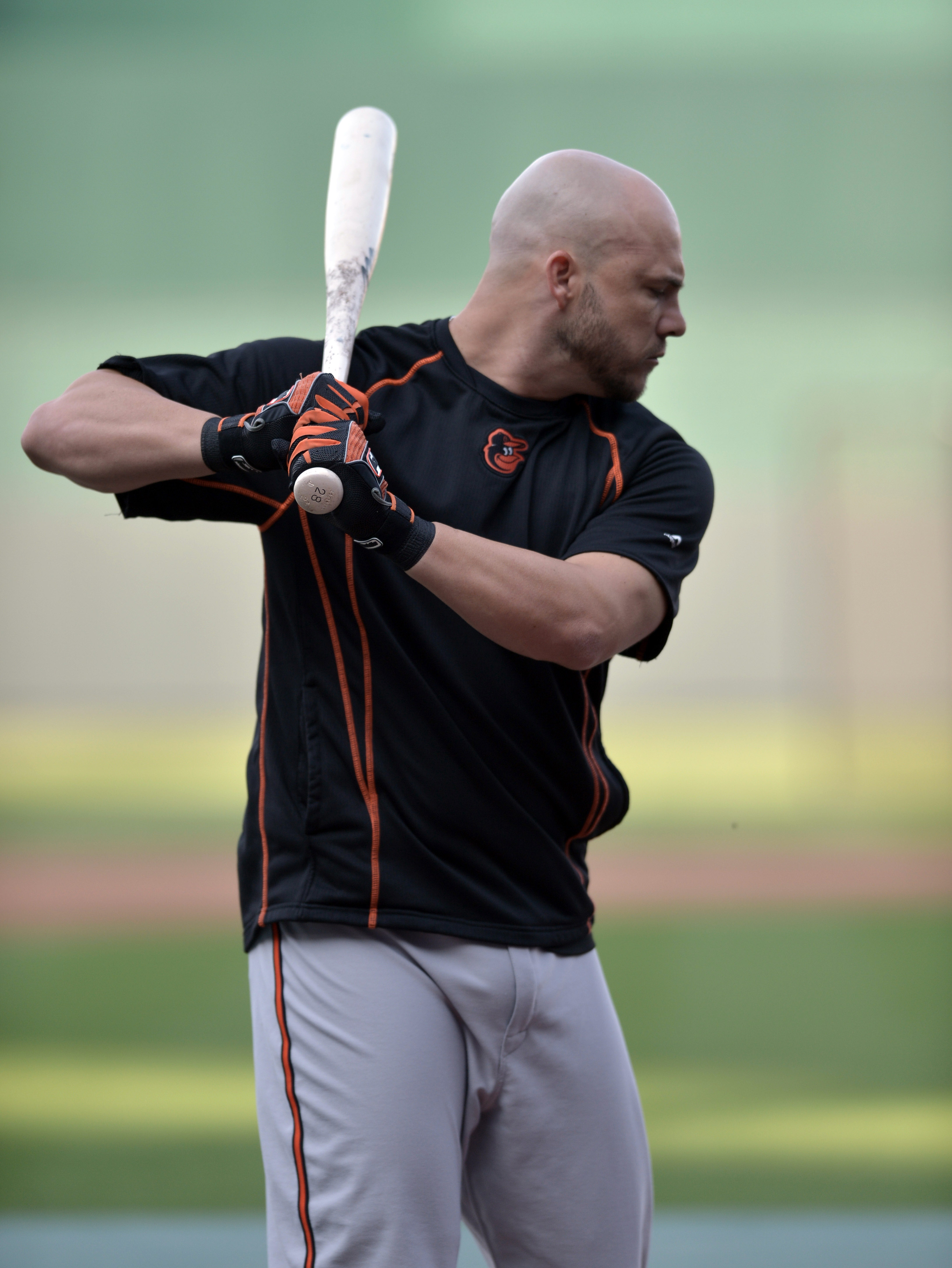
A deal with the Rays represents a homecoming of sorts for the 33-year-old Pearce, who is a native of Lakeland, Fla. — about an hour northeast of Tropicana Field in St. Petersburg. Pearce enjoyed a monster 2014 season with the Orioles but saw his production come back down to Earth in 2015. His strikeout and walk rates trended in the wrong direction this past season, but the larger factor behind Pearce’s 2015 struggles was likely a 90-point drop in BABIP. Pearce did see a fairly notable dip in his percentage of hard contact (34.6 percent in 2014, 30.1 percent in 2015), but that shouldn’t result in such a drastic drop in his fortune on balls in play, so there’s good reason to believe that he can bounce back to some extent in 2016.
While expecting a return to 2014’s mammoth .293/.373/.556 levels of production isn’t realistic, the cumulative sum of his efforts across the past two seasons is a .258/.335/.494 batting line, and if Pearce can approach anything resembling that production, he’d be an excellent pickup for the Rays on a one-year pact. Pearce’s track record, admittedly, is rather spotty, but as a player with 31 homers over his past 592 Major League plate appearances, there’s certainly upside to be had.
Pearce gives manager Kevin Cash a platoon option with either Logan Morrison or James Loney at first base/designated hitter, and he can see time in the outfield as well in the event of further injuries to Desmond Jennings, Steven Souza and the newly acquired Corey Dickerson. Pearce also spent some time at second base last season in Baltimore, although that was a rather curious decision considering the fact that Pearce had never started a regular season game at that position prior to 2015. Nonetheless, Pearce added 18 games’ worth of experience at second to his bag of tricks and could conceivably be used there on occasion in a pinch. It should also be noted that Pearce isn’t necessarily just a platoon option. While he’s done more damage against left-handed pitching over the past two seasons, he’s also hit right-handers quite well, slashing .258/.336/.481 against same-handed opponents.
While he’s entering his age-33 season, the upcoming campaign could be an important one for Pearce, who has spent the entirety of his career playing on one-year deals to this point. If he’s able to produce at a consistent level, he’ll enter a weak class of free agents coming off a three-year stretch that includes a pair of highly productive seasons. Heading into his age-34 campaign in 2017, a multi-year deal wouldn’t be out of the question.
Because the Rays traded two players that were on the 40-man roster — Jake McGee and German Marquez — in the Dickerson trade and only received one 40-man player in return (Dickerson), the Rays do not need to make a move to clear space for Pearce.
Marc Topkin of the Tampa Bay Times first reported the agreement (Twitter link). Ken Rosenthal of FOX Sports reported the financial terms (Twitter link).
Photo courtesy of USA Today Sports Images.
Rockies Designate Christian Friedrich For Assignment
The Rockies announced that they have designated left-hander and former first-round pick Christian Friedrich for assignment. Because Colorado acquired two 40-man roster players — Jake McGee and German Marquez — in the trade that sent Corey Dickerson and a non-40-man player (Kevin Padlo) to Tampa Bay, the Rockies needed to clear a second spot on what had been a full 40-man roster.
Friedrich, 28, was selected 25th overall out of Eastern Kentucky University back in 2008, but he’s struggled for much of his pro career, amassing an ERA north of 5.00 at both the Triple-A level and in the Major Leagues. This past season, Friedrich posted a 5.25 ERA with 6.9 K/9, 3.9 BB/9 and a 47.4 percent ground-ball rate in 58 1/3 innings of work. While Friedrich has struggled throughout his career, he’s held left-handed hitters in check fairly well, limiting same-handed opponents to a .257/.314/.364 batting line. He’s also posted considerably better numbers away from Coors, where he has a 4.61 ERA as compared to a 6.96 mark at home.
Rays Acquire Corey Dickerson For Jake McGee, German Marquez
After two weeks of strong speculation about the possibility of the Rockies trading an outfielder, the club has announced the trade of left fielder Corey Dickerson and third base prospect Kevin Padlo to the Rays in exchange for left-hander Jake McGee and right-handed pitching prospect German Marquez.
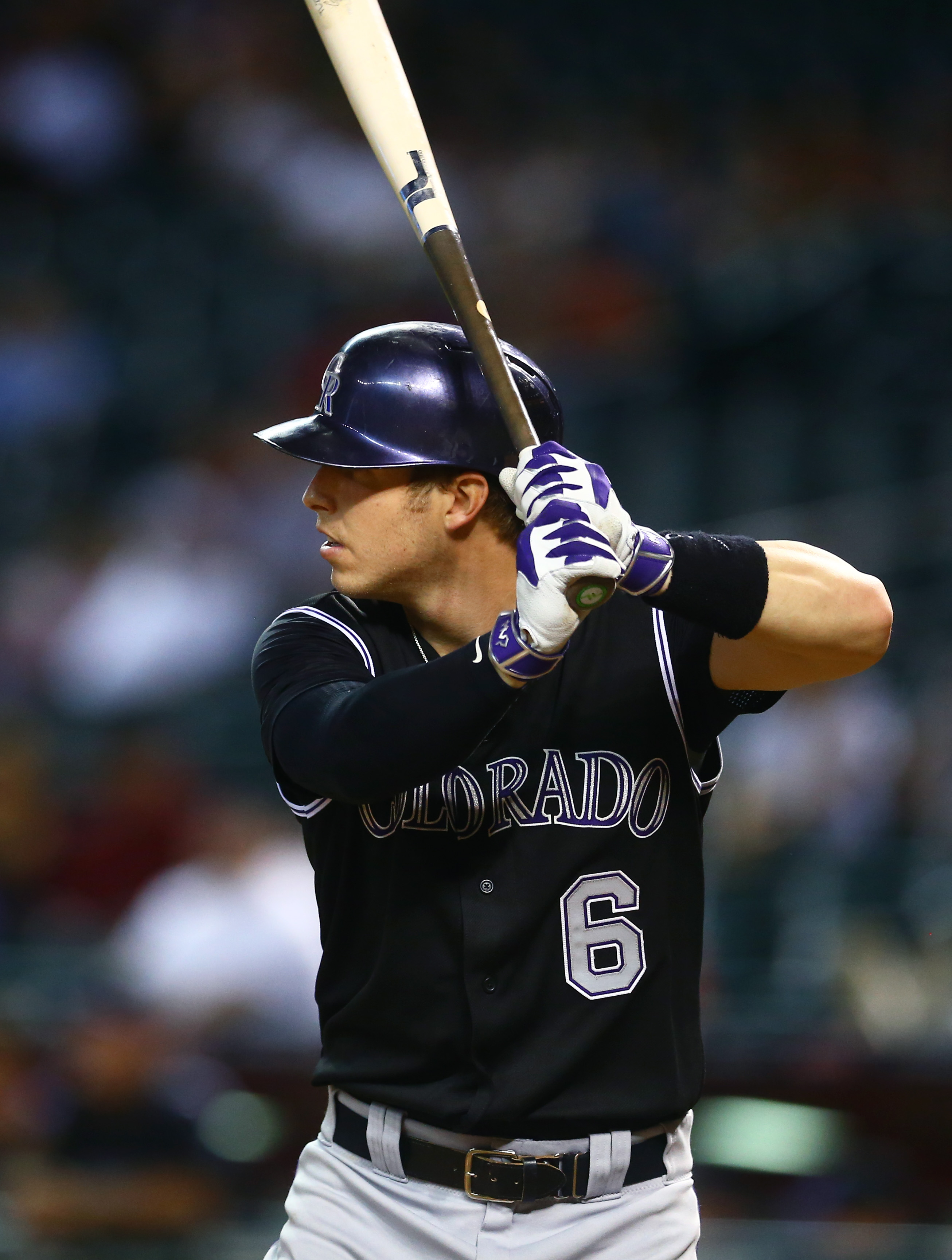
The trade accomplishes multiple goals for the Rays, who will add a high-upside young bat in the form of Dickerson and also clear a bit of money from the payroll by shedding McGee’s $4.8MM salary in the deal. That’s not to suggest in any way that this is a salary dump, of course, as McGee has quietly emerged as one of the better left-handed relievers in the game in recent years.
Dickerson, 26, is not yet arbitration eligible and comes with four years of club control remaining. The former eighth-round pick missed most of the 2015 season as he dealt with plantar fasciitis in his left foot and, later, a broken rib, but he should be healthy enough to take regular at-bats for Tampa Bay in 2015. The left-handed hitter is a career .299/.345/.534 hitter with 39 home runs in just 925 big league plate appearances, although those impressive numbers do come with some caveats. For one, Dickerson has crushed right-handed pitching at a .313/.358/.577 clip in his time as a Major Leaguer, but lefties have given him a fair amount of difficulty, limiting to a .246/.299/.377 slash. Beyond that, there’s a nearly 400-point difference between his OPS at the hitter-friendly Coors Field and his mark on the road. Then again, as MLB.com’s Mike Petriello explained back in December, there’s reason to believe that the so-called “Coors Field Effect” is overblown, and Rockies hitters can excel once leaving the team even if they initially possessed gaudy home/road splits. Dickerson’s troubles against lefties, then, could be the greater cause for concern.
Defensively, Dickerson has spent the bulk of his Major League time in left field, though he’s seen 200 innings in center as well. Defensive Runs Saved and Ultimate Zone Rating are down on his work in left, although his worst ratings in the eyes of those metrics came in 2015, when he endured multiple DL stints due to the aforementioned plantar fasciitis. It’s easy to imagine that such a painful condition in one’s left foot could hamper outfield range and lead to considerably diminished contributions with the glove.
From a broader perspective, it’s not entirely clear how Dickerson will fit with the Rays’ roster. Tampa Bay already has a wealth of outfielders, with Desmond Jennings slotted into left field, Kevin Kiermaier in center field and Steven Souza in right field. With Brandon Guyer and Mikie Mahtook as possible reserve options and the yet-formally-announced newcomer Steve Pearce also carrying significant corner outfield experience, the Rays didn’t have a clear need for an outfield upgrade. Then again, positional depth is a trademark of the Rays, and the team is never shy about adding controllable young talent — especially in instances like this, where the cost of acquisition (at least at the big league level) is a player with just two years of club control remaining.
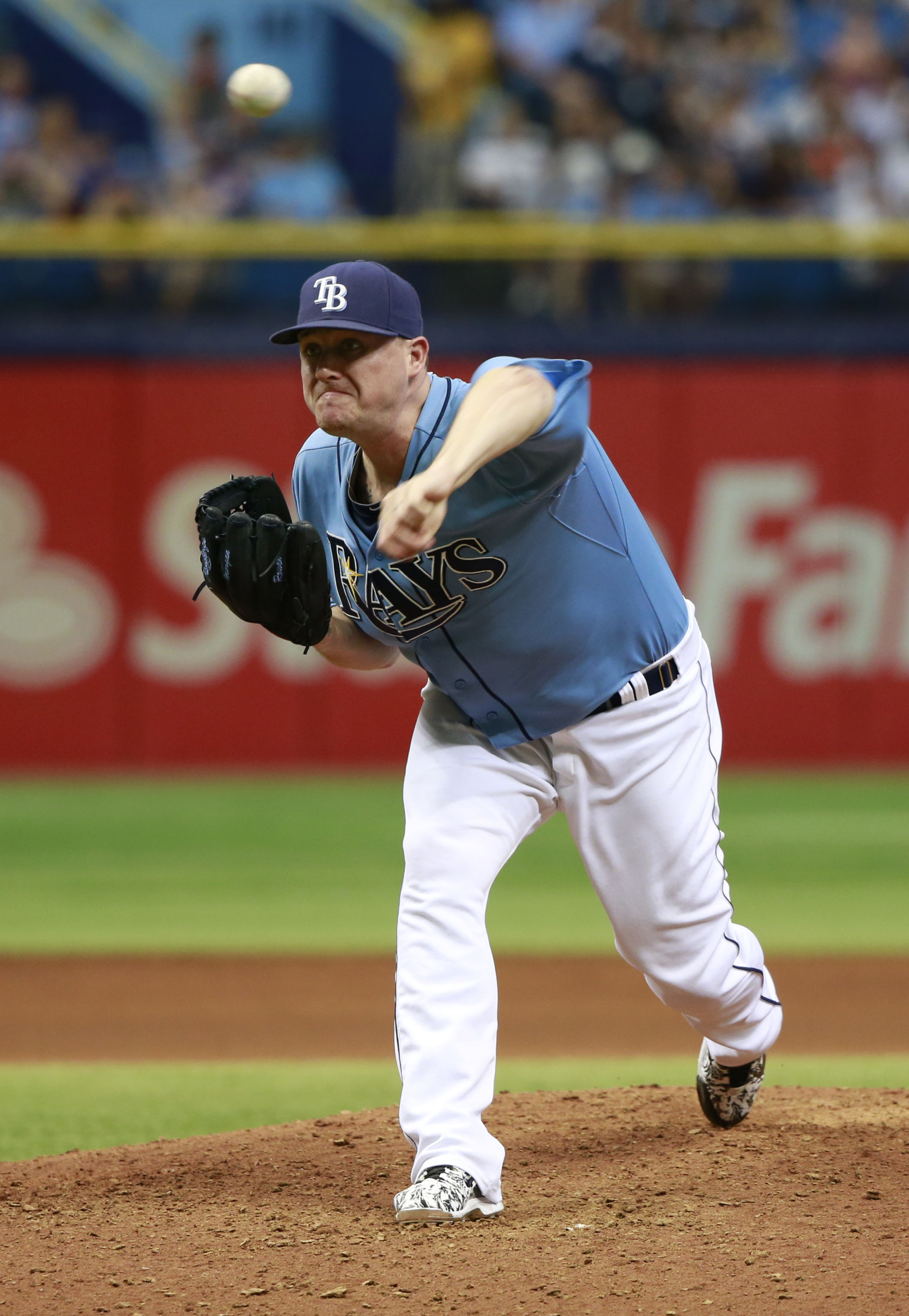
The 29-year-old McGee missed the beginning of the 2015 campaign after undergoing offseason surgery to remove a bone spur from his left elbow. He returned in mid-May, however, and showed no ill effects from the operation, cruising to a 2.41 ERA with outstanding strikeout and walk rates of 11.6 and 1.9 per nine innings pitched, respectively. A partial tear in his left meniscus cost McGee another month later in the season, but he did return at the end of the year to fire 2 1/3 scoreless innings. Over the past four seasons, McGee has been terrific, pitching to a combined 2.58 ERA with 11.4 K/9, 2.3 BB/9 and a 40.9 percent ground-ball rate. He’s exhibited dominance against not only left-handed batters in that time but right-handed opponents as well. In fact, lefties have actually hit McGee harder than opposite-handed opponents, although neither has mustered much in the way of meaningful offense against him.
McGee could enter the season as the favorite to close games in Colorado as right-hander Adam Ottavino recovers from 2015 Tommy John surgery. McGee has saved 25 games across the past two seasons and looked to have cemented himself as Tampa Bay’s primary ninth-inning option prior to last winter’s elbow surgery. (In his early-season absence, righty Brad Boxberger seized the role and never looked back.) The Rockies will have control of him for at least two seasons, although the possibility of course exists that Colorado will flip him either in July if the team is not contending or perhaps next offseason, when he gets another bump in his $4.8MM salary via arbitration and is only one year removed from free agency.
The Rockies have long been expected to trade an outfielder — in spite of the front office’s suggestion that a deal wasn’t a necessity — due to their own surplus of left-handed-hitting outfielders that was created upon signing Gerardo Parra to a three-year deal. In Dickerson, Parra, Charlie Blackmon and Carlos Gonzalez, the Rockies were carrying four somewhat redundant assets, with each of the three incumbent options representing an appealing option to clubs in search of a bat. Given Colorado’s own need for pitching, a trade certainly seemed plausible, even if, as GM Jeff Bridich said on several occasions, a deal was far from a given.
Turning to the prospects in the deal, Padlo was a fifth-round selection by the Rockies in the 2014 draft. Selected out of high school, Padlo hit .257/.372/.447 across two Class-A levels in 2015 and has amassed a composite batting line of .271/.388/.494 with 19 homers and 41 stolen bases early in his pro career. Baseball America rated Padlo 14th among Rockies farmhands last offseason, noting that he had “impressive power” for a high school player in the draft but has a thick lower half and can get flat-footed at third base, so he’ll need to work on his agility and be conscious about his weight.
Marquez, who was on the Rays’ 40-man roster, rated 25th among Tampa Bay farmhands, according to MLB.com’s most recent prospect rankings (a new version of the list will be out soon, as will Baseball America’s full Top 30). The 20-year-old Venezuelan right-hander that spent last season pitching at Class-A Advanced, where he worked to a 3.56 ERA with 6.7 K/9 against 1.9 BB/9 in 139 innings. MLB.com notes that Marquez has been consistently challenged by facing older competition — he was three years younger than the league average this past season, for instance — and has succeeded despite being one of the younger players in each league in which he’s pitched. Marquez offers a low- to mid-90s fastbal with the makings of an average or better curveball and a changeup that’s still a work in progress. His control has improved with each season in the minors as well.
Nonetheless, it’s somewhat surprising, in my eyes, that the Rockies felt comfortable parting with four years of Dickerson for two years of a reliever, however excellent he may be, and one mid-level pitching prospect. Colorado, of course, may see considerably more in Marquez than others in the industry, and they may also have had concerns about Dickerson’s diminished plate discipline and increased strikeout rate.
Ken Rosenthal of FOX Sports first reported that Dickerson was going to the Rays in a trade (Twitter link). Joel Sherman of the New York Post added that McGee would go to Colorado, and prospects were also involved (Twitter link). Rosenthal further tweeted some additional details on the structure of the deal, and Jon Heyman reported that Marquez was going back to the Rays as well (on Twitter). Rosenthal later tweeted that Padlo was the fourth player in the trade.
Photos courtesy of USA Today Sports Images.
MLB Declares Luis Yander La O, Three Others Free Agents
Major League Baseball has declared four Cuban players — third baseman/second baseman Luis Yander La O, third baseman Henry Quintero, shortstop Anibal Sierra and catcher Oscar Valdes — as free agents, making each free to sign with any club, according to MLB.com’s Jesse Sanchez (Twitter link) and Baseball Essential’s Robert Murray (who first tweeted that Sierra was a free agent).
La O, 24, is the most notable of the bunch. The third baseman turned 24 this past December and has six years of professional experience in Cuba, thereby making him exempt from Major League Baseball’s international bonus pool system. He’s free to sign with any club at any time and is near MLB-ready, according to summer reports from Baseball America’s Ben Badler, who noted that La O could probably jump directly into a Triple-A lineup.
La O is a lifetime .329/.388/.406 hitter in Serie Nacional in 1338 plate appearances. He’s homered just nine times in his Cuban career but also has displayed an uncanny knack for making contact — striking out in just five percent of his career plate appearances (as compared to a seven percent walk rate). La O has also stolen 57 bases in that time, although he went just 11-for-23 in his final Cuban season. Per Badler, some scouts are concerned about his lack of power and question how much he’ll hit in the Majors. Badler did call him an above-average defender at third base with plus or better arm strength but a low throwing slot that leads to inaccuracy at times. Badler also praised La O’s instincts at second base and feels that he can “absolutely” play the position in the Majors, though he noted that La O is inexperienced there and showed as much when turning double plays.
Considerably less is known about Sierra (22), Quintero (22) or Valdez (23), each of whom has been absent from lists of top Cuban prospects. Badler briefly mentioned Sierra when profiling Hector Olivera a year ago (the two were double play partners in Cuba), calling him a light-hitting shortstop with a good glove. Indeed, Sierra has batted just .238/.307/.298 in 91 games/175 plate appearances across parts of three seasons in Cuba. It would stand to reason that he’d need considerable time in the minor leagues, though his glove could have appeal to Major League scouts, it would seem. As for Quintero, he’s a .223/.274/.325 hitter in an even smaller sample of 181 professional plate appearances in Cuba. Valdez has only 59 professional plate appearances, per Baseball-Reference, having batted .200/.345/.244 in 59 plate appearances. (Of course, all of those numbers exclude international tournaments and other venues in which scouts would have the opportunity to see them in game situations). All three are subject to international spending limitations.