
Mariners Claim Ryan Weber Off Waivers From Brewers
The Mariners have claimed Ryan Weber off waivers from the Brewers, the two clubs announced. Milwaukee designated Weber for assignment earlier this week after acquiring Kyle Lobstein from the Nationals. To create 40-man roster space, Seattle designated infielder Wyatt Mathisen for assignment.
Weber’s stay in Milwaukee proved quite brief. The Brew Crew added him off waivers from the Red Sox last month, and he ultimately made just a single appearance with the team. He also pitched in one major league game with Boston, but the majority of his experience this season has come at the minors’ highest level.
Between the Red Sox’s and Brewers’ top affiliates, Weber has made nine appearances (eight starts) in Triple-A this year, working to a 5.02 ERA with an average 23.5% strikeout percentage and a strong 6.0% walk rate. The right-hander has been quite good at that level over the course of his career. In parts of six Triple-A seasons, he’s pitched to a stingy 3.08 ERA, striking out hitters at a below-average rate (17.1%) but rarely doling out free passes (5.2% walk percentage) and inducing plenty of groundballs.
To date, he hasn’t carried that success over to the major league level. While Weber’s racked up grounders at a lofty 52.8% clip over his 61 MLB appearances, he’s only managed a 5.27 ERA/4.30 SIERA thanks to a lack of missed bats. Still, the 30-year-old is capable of working as a starter or multi-inning reliever, and he can be optioned for the remainder of the season. So long as he sticks on the 40-man roster, Weber will give the Mariners front office a flexible depth option for the pitching staff.
Seattle acquired Mathisen from the Rays for cash considerations last month. He’s spent his entire Mariners tenure at Triple-A Tacoma, where he’s slumped to a .122/.302/.184 line across 63 plate appearances. That belies a generally strong track record at that level. Mathisen has hit a much better .258/.362/.491 over parts of three Triple-A seasons, but he hasn’t performed well in a brief big league look comprising 84 plate appearances between 2020-21.
The Mariners will have a week to trade Mathisen or expose him to waivers. He’s already been in DFA limbo twice this season — first with the Diamondbacks and then with Tampa Bay — and been acquired by a rival club each time. It wouldn’t be surprising if another team picks him up via small trade or waiver claim, although his most recent struggles with the Rainiers could dissuade clubs from devoting him a 40-man roster spot.
Mariners To Recall Jarred Kelenic
2:15pm: Mariners general manager Jerry Dipoto confirmed in an appearance on 710 ESPN this morning that Kelenic will open the second half back with the big league club (link via 710’s Brandon Gustafson).
“We sent him back, he had a plan to work on,” said Dipoto. “Some of it was how to approach the game and some of it was more skills development-based, and he did everything we asked him to do. … We think it’s the right time to give it another shot. He’s just too talented to allow him to not gain this exposure and these at-bats at the big league level.”
Presumably, the Mariners will make a formal announcement and corresponding roster move tomorrow.
10:03am: The Mariners are recalling outfielder Jarred Kelenic for the start of the second half, according to Ryan Divish of the Seattle Times.
After much controversy earlier this year about service time manipulation and the resignation of Mariners President Kevin Mather, the star prospect was initially promoted in May. However, he struggled in his first 23 games to a line of .096/.185/.193, producing a measly wRC+ of 11. This slump caused the Mariners to option the rookie back to Triple-A Tacoma in June. But since that time, Kelenic has fared much better against Triple-A pitching, with a line of .306/.386/.622, for a wRC+ of 135. One very encouraging sign is Kelenic’s strikeout rate. After striking out in 28.3% of his plate appearances at the big league level, he has cut that essentially in half, to 14.3% since his demotion.
If Kelenic can carry that offensive production to the big league level, it would be a tremendous help to a Mariners team that finds itself in playoff contention, seven games behind the Astros in the AL West and 3.5 behind Oakland for the second wild card spot. The club has a record of 48-43, despite a run differential of -50, which is largely due to only scoring 4.08 runs per game, a rate which ranks 26th out of the 30 MLB clubs.
Kelenic’s initial delay in getting promoted had already prevented him from reaching free agency until after the 2027 season. But this second stint almost certainly prevents him from acquiring Super Two status and reaching arbitration after the 2023 season, which will suppress his earning power during his arbitration years.
With Mitch Haniger and Jake Fraley playing well, Kelenic could potentially take at-bats away from Shed Long Jr., who has limped to a subpar .188/.233/.400 line and wRC+ of 73 so far this year. If Kelenic can hit enough to stay in the mix, Seattle could be facing an outfield logjam in the future. Kyle Lewis tore his meniscus in June but was was playing well before then. And there is also the fast-approaching star prospect Julio Rodriguez, who was recently promoted to Double-A. Haniger is only controlled through 2022 and has often been mentioned as a potential trade chip for the Mariners, as they have been rebuilding in recent years. But that could change if the team continues playing well and maintains contender status.
MLBTR Poll: Most Dangerous Second Half Teams
With the unofficial second half of the season set to kick off tomorrow night, it’s worth taking a moment to look at the current standings. If the season were to end today, the American League postseason field would consist of the White Sox, Astros, Red Sox, Rays and A’s. The National League entrants would be the Giants, Brewers, Mets, Dodgers and Padres.
In all likelihood, though, that field will change a bit over the coming months. According to FanGraphs’ playoff odds, the probability of all ten current would-be playoff teams reaching the postseason is just 14.9%. With that in mind, we’ll turn it over to the MLBTR readership to opine on which teams stand the best chance of making a run and unseating a member of the postseason picture.
For simplicity’s sake, we’ll exclude any team with postseason odds below 3%. That rules out the Nationals, Cardinals, Twins, Marlins, Orioles, Tigers, Royals, Rangers, Pirates, Rockies and Diamondbacks.
American League
Yankees (46-43, playoff chances: 40.4%)
It has been a disappointing season to date for a Yankees team that entered the year with World Series aspirations. The lineup, one of the league’s best on paper, has been thoroughly average to this point. The rotation has been similarly middle-of-the-pack, although that was a bit more foreseeable. The bullpen was one of the league’s best early but has hit a skid recently. With all the talent on the roster, the Yankees feel like they should be better, but their +1 run differential reinforces that they’ve played at a merely OK level so far.
Blue Jays (45-42, playoff chances: 34.5%)
The Jays have had an elite offense all year. They had four All-Star position players, three of whom started for the American League. They’re among the top 5 teams in runs scored and wRC+. The pitching has been less impressive, although the rotation and bullpen are both among the top 15 units in ERA. The Jays have had some ill-timed relief issues, though. A 6-10 record in one-run games (including a 2-5 mark in extra innings) has them just three games over .500 despite the AL’s fourth-best run differential.
Angels (45-44, playoff chances: 15.1%)
There’s no doubting the Angels’ high-end position player talent. Getting Mike Trout back to join Shohei Ohtani, Jared Walsh and Anthony Rendon will make them one of the more fearsome middle-of-the-order groupings. The ever-persistent question is on the pitching staff. Angels starters rank just 25th leaguewide with a 5.04 ERA, and the relief corps hasn’t been much better. The defense hasn’t done the pitchers many favors. Despite the quality lineup, the Angels have been outscored by 26 runs.
Indians (45-42, playoff chances: 6.6%)
The Indians hung around the AL Central for quite a while despite an underwhelming offense. A strong bullpen and a trio of quality starting pitchers kept the team in games, but Cleveland lost each of Shane Bieber, Aaron Civale and Zach Plesac to the injured list. Plesac’s back, but the team has predictably sputtered without their top pitchers. They’re still only 4.5 games back in the Wild Card race, but they’ll have to turn things around against a tough schedule coming out of the Break.
Mariners (48-43, playoff chances: 3%)
Seattle’s offense has been a weak point this season. Only the Rockies have a lower team wRC+, although the M’s have hit well enough with runners in scoring position to plate runs at a near-average rate. Both the rotation and bullpen have higher-than-average ERA’s, and the Mariners -50 run differential is the worst among plausible contenders. The projections are highly skeptical they can keep up that kind of high wire act (hence the low odds), but those wins can’t be taken away and the Mariners enter the second half closer to the playoffs than anyone else in the AL discussion.
Which American League Team Is Most Likely To Make The Playoffs In 2021?
-
Blue Jays 48% (8,909)
-
Yankees 24% (4,413)
-
Angels 12% (2,177)
-
Mariners 8% (1,571)
-
Indians 8% (1,570)
Total votes: 18,640
(poll link for app users)
National League
Reds (48-42, playoff chances: 22.2%)
The Reds have been the National League’s analogue of the Blue Jays. The lineup has been good, ranking sixth in wRC+ and eleventh in runs. The rotation has been solid. Bullpen issues have been Cincinnati’s undoing, as Reds relievers have MLB’s fourth-worst ERA. The Reds are 3.5 games back in the Wild Card race and four back in the NL Central and were playing well leading up to the Break.
Phillies (44-44, playoff chances: 17.8%)
The Phillies lineup has a few stars, but it’s been rather top-heavy and a middle-of-the-pack unit overall. It’s the same story in the rotation, where the back end has continued to be problematic. And the bullpen has blown a league-worst 22 saves. It has been a good core surrounding by a weak enough complimentary cast to keep the team hovering around average. That’s been a common refrain in Philadelphia over the past couple seasons, but few teams can match the Phils’ top-end talent.
Braves (44-45, playoff chances: 7.5%)
One of the more disappointing teams of the first half, Atlanta entered the year as a World Series hopeful but hasn’t gotten into a groove. The lineup has been good, although the loss of Ronald Acuña Jr. is certainly going to be tough to overcome. Starting pitching has been fine but unspectacular, but the bullpen — as with the Reds and Phillies — has been an issue in Atlanta. At +19, the Braves have the best run differential in the NL East, but a 2-6 record in extra-inning games has contributed to them underperforming in the standings.
Cubs (44-46, playoff chances: 4.1%)
The Cubs were in the thick of the NL Central race a few weeks ago. An 11-game losing streak knocked them well back in the standings, though. The current lineup still has some high-end talent, and the bullpen has been great this year. But the rotation has predictably proven an issue, and it seems likely the front office will move some players off the big league roster in the coming weeks.
Which National League Team Is Most Likely To Make The Playoffs In 2021?
-
Reds 56% (11,382)
-
Phillies 20% (4,066)
-
Braves 18% (3,710)
-
Cubs 6% (1,211)
Total votes: 20,369
(poll link for app users)
Mariners Release Shane Carle
The Mariners have released right-hander Shane Carle from his minor league contract, as was first indicated on the Triple-A Transactions log at MLB.com. He’s once again a free agent and can sign with any club.
Carle’s stay with the M’s proved quite brief, as he signed there not even two weeks ago. He tossed a pair of shutout frames for the organization’s Triple-A affiliate in Tacoma before being sent back out to the market. That came on the heels of a nice run with the Reds’ top affiliate in Louisville, where Carle held opponents to six runs in 15 2/3 frames. All told, the 29-year-old has pitched to a 3.06 ERA in 17 2/3 innings while striking out 19.7 percent of his opponents against a 6.6 percent walk rate.
It’s been a couple years since we’ve seen Carle in the Majors. He was a solid member of the Atlanta bullpen in 2018, tossing 63 1/3 innings with a 2.86 earned run average, although there was reason to be skeptical of that number. Carle’s 16.6 percent strikeout rate and 10.4 percent walk rate were both markedly worse than the league average, and he benefited from a low homer-to-flyball rate (4.2 percent) as well as some good fortune on balls in play (.258). Carle generally limited hard contact well in ’18, but it’s difficult to maintain that level of run prevention with sub-par strikeout and walk percentages — particularly in the absence of an elite ground-ball rate.
Carle’s 2019 season represented a notable step back, as he yielded 10 runs in 9 1/3 MLB frames while also pitching to a 5.62 ERA through 40 innings of Triple-A ball between the Braves and Rangers organizations. That shaky showing in 2019 notwithstanding, Carle has pitched well enough with a pair of Triple-A affiliates in 2021 that he could well draw interest from a third organization looking to stockpile some depth.
Mariners Designate Will Vest For Assignment
The Mariners announced Monday that they’ve designated right-hander Will Vest for assignment in order to open a spot on the roster for lefty Yusei Kikuchi, who has been reinstated from the Covid-related injured list.
Vest, the Mariners’ pick in December’s Rule 5 Draft, was selected out of the Tigers organization and had a nice run with the Mariners early in the season. The 26-year-old pitched to a 1.38 ERA in 13 innings in April, albeit with shakier K-BB numbers, and kept his ERA at a respectable 4.03 through the end of May.
Since the calendar flipped to June, however, it’s been increasingly tough for the Mariners to trust Vest. He’s tallied 12 2/3 frames in that time and surrendered 14 runs on 18 hits and eight walks with 11 strikeouts. Overall, he’s tossed 35 innings for the Mariners and been roughed up to the tune of a 6.17 earned run average with a 17.3 percent strikeout rate and an 11.5 percent walk rate.
Were the Mariners playing the way that many onlookers expected, it might be easier for them to continue dedicating a roster spot to Vest for the balance of the season. Doing so would’ve given the Mariners his long-term contractual rights. However, Seattle is five games over .500 and is only three and a half games out of a Wild Card spot. The seven-game gap they’re facing in the division is a bit tougher to surmount, but the Mariners are at least on the periphery of the postseason picture and will have a harder time finding opportunities for a pitcher who cannot be optioned and has looked increasingly overmatched.
Vest will now be placed on outright waivers and, if he clears, must be offered back to the Tigers organization. If a team does claim Vest, he’ll retain his Rule 5 status for the balance of the season.
Mariners Promote Cal Raleigh
The Mariners announced they’re selecting the contract of catching prospect Cal Raleigh. All-Star southpaw Yusei Kikuchi was placed on the COVID-19 injured list to create active and 40-man roster space. Additionally, utilityman Donovan Walton has been recalled from Triple-A Tacoma, while outfielder Taylor Trammell was optioned to Tacoma after last night’s game.
Raleigh is now set to make his major league debut. A third-round pick out of Florida State in 2018, the switch-hitting backstop has developed into one of the game’s more promising young catchers. After a pair of quality seasons in the low minors, Raleigh entered 2021 as one of the Mariners top prospects. Each of Baseball America, Eric Longenhagen of FanGraphs and Keith Law of the Athletic slotted him among the top ten farmhands in a strong system this year.
All three outlets laud Raleigh’s combination of power potential and solid receiving skills, with Longenhagen noting that he’s rated as a strong pitch framer throughout his amateur and minor league career. The general expectation among evaluators is that he’ll develop into an average or better regular behind the plate.
The M’s would have had to add Raleigh to the 40-man roster to protect him from the Rule 5 draft at the end of the season, but he forced his way to the big leagues a bit early by performing well at Triple-A. Assigned to Tacoma for the first time this year, he’s hit .324/.377/.608 with nine home runs across 199 trips to the plate. Raleigh has slashed his strikeout rate to a personal-best 12.6% this year, swinging and missing at a lower-than-average 10.9% clip.
With the 48-42 Mariners hanging in the postseason picture, Raleigh will get an immediate opportunity to contribute to a playoff race. The Mariners catching trio of Luis Torrens, Tom Murphy and José Godoy has offered slightly below-average production on the season, although Torrens has been better lately after a bad start. It’s not a given that Raleigh will stick on the active roster from here on out, but his selection clears the way for him to contribute at the big league level down the stretch.
As for Kikuchi, there doesn’t seem to be much cause for concern. The 30-year-old has been feeling virus-like symptoms recently, but he’s fully vaccinated and has already tested negative for COVID-19, relays Ryan Divish of the Seattle Times (Twitter link). Assuming a follow-up test today comes back negative, he’ll be cleared to participate in the All-Star Game and return to the Mariners next week.
Indians Acquire Damon Casetta-Stubbs From Mariners To Complete Jake Bauers Trade
The Indians have acquired right-handed pitching prospect Damon Casetta-Stubbs from the Mariners, the two teams announced. The move completes the clubs’ June 10 deal that sent first baseman Jake Bauers to Seattle for a player to be named later.
Casetta-Stubbs was Seattle’s 11th-round draft pick in 2018 out of a Washington high school, signing for an overslot $325K bonus. He has spent the past three years in the low minors, topping out at High-A in 2019 but pitching in Low-A to this point in 2021. While he’s only managed a 6.42 ERA in 40 2/3 innings this year, the 21-year-old has struck out a lofty 31.2% of opposing hitters, far and away a career-best mark. Casetta-Stubbs has issued way too many walks (14.5%), but he’s also keeping the ball on the ground at stellar 56.2% clip.
The uptick in strikeouts doesn’t seem to be a coincidence. In mid-May, Eric Longenhagen of FanGraphs wrote that Casetta-Stubbs had improved his velocity from sitting in the low-90s to working in the 93-95 MPH range consistently. Longenhagen slotted Casetta-Stubbs as the #25 prospect in the Mariners system, suggesting he’s likely to wind up as a solid reliever at his peak based on his combination of quality stuff and subpar control. He’ll need to be added to the 40-man roster or made available in the Rule 5 draft after the 2022 season.
Bauers, meanwhile, has continued to struggle in Seattle after a poor start to the year with Cleveland. The left-handed hitter has taken 91 plate appearances as a Mariner, hitting .241/.290/.299 with a single home run.
Mariners Notes: Trade Deadline, Sheffield, Dipoto
2:50pm: Dipoto revealed in an appearance on 710 ESPN Radio today that Sheffield has been diagnosed with a mild flexor strain in his left forearm but also a Grade 2 oblique strain (Twitter link via 710’s Shannon Drayer). The oblique injury is the more significant of the two, and based on the fact that it’s a Grade 2 strain, it seems fair to expect Sheffield to be absent from the Seattle rotation for a rather notable chunk of time. Even less-severe Grade 1 oblique strains can sideline players for around a month at a time.
10:20am: After slipping a few games below .500 in mid-June, the Mariners have rallied back with a 14-7 showing that has them three games over .500, at 45-42. That still places them nine games back in a tough AL West, but they’re only three and a half games down in the Wild Card standings. Seattle has looked like one of the many teams whose deadline trajectory could very well be determined by how the team fares in its next 10 games or so, but manager Scott Servais suggested in an appearance on MLB Network Radio on SiriusXM that he expects the front office to operate as buyers (Twitter link, with audio).
“We’ve got a ton of prospect capital, and we’ve got young players in our system — our minor league system has improved so much,” Servais told hosts Mike Ferrin and Jim Duquette. “…Our Major League team is moving in the right direction, so the possibility to add players to help this year and to help going forward is really important for us. I’m sure [GM Jerry Dipoto] and [assistant GM] Justin Hollander are talking to everybody out there and seeing what they can do to better us now and then also take a look into 2022 and beyond.”
Asked about specific areas of need, Servais said with a chuckle that “every manager out there says he needs more pitching.” While that was something of a tongue-in-cheek comment, the rotation is a fairly obvious area of focus if Dipoto and the front office do indeed look to add to the roster. The Mariners have received solid results from Yusei Kikuchi, Justin Dunn, offseason signing Chris Flexen and top prospect Logan Gilbert, but on the whole, their starters are 23rd in the Majors with a 4.76 ERA.
Opening Day starter Marco Gonzales missed more than a month with a forearm injury and hasn’t looked like himself when healthy enough to take the mound. The typically steady left-hander has posted a career-worst nine percent walk rate, which has been exacerbated by the fact that he’s been one of MLB’s most homer-prone pitchers in 2021 (2.29 HR/9).
Fellow left-hander Justus Sheffield, meanwhile, has recently struggled through a brutal stretch — a slump that looks all the more alarming after the Mariners announced last night that he was headed to the injured list with a forearm strain of his own. No timetable for the southpaw’s return was provided.
The 25-year-old Sheffield pitched to a 4.17 ERA and 3.97 FIP from Opening Day 2020 through June 3 of this season and looked to be settling in as a reliable member of the Seattle rotation. But over his past five starts, Sheffield has managed only 19 1/3 innings and been hammered for 24 runs on 33 hits (seven homers) and 12 walks. His velocity hasn’t dipped in that time, but it’s still the worst stretch of his young career — one that’s ballooned his 2021 ERA to 6.48 in short order.
Looking long-term, the Mariners have some high-end arms still on the way. Recent first-rounders George Kirby and Emerson Hancock were both drafted as polished college arms, but they’re currently pitching at Class-A Advanced and aren’t immediate options to help round out the MLB group. The Mariners have some depth options in Triple-A — Robert Dugger is already on the 40-man roster — but they’ve also lost a lot of their depth to injuries. Dunn is currently on the IL with a shoulder strain. James Paxton‘s return to Seattle lasted just 1 1/3 innings before he required Tommy John surgery. Righty Ljay Newsome also went down with a UCL tear, and lefty Nick Margevicius underwent thoracic outlet surgery earlier in the year.
Given that slate of injuries and new concerns surrounding Sheffield, it’d only be natural for the Mariners to look for some help on the trade market. And while that’ll be especially likely if they remain within arm’s reach of a postseason berth, the Mariners are the type of team that could look to add longer-term pieces to their MLB group even if they begin to fall back in the standings. Servais foreshadowed as much when mentioning “[taking] a look into 2022 and beyond” — a nod to the possibility of acquiring a pitcher with multiple years of club control remaining.
Regardless of how the Mariners finish in the standings this year, the offseason expectation will be that they’re going to start adding to the roster via free agency and trades. Much of the team’s young core has either emerged in the big leagues already or will do so over the next calendar year. Acquiring a pitcher with multiple years of club control would only serve to jumpstart that process for Dipoto & Co.
Then again, as Ryan Divish of the Seattle Times points out, there’s at least some degree of uncertainty surrounding the organization’s top decision-maker himself. Dipoto is in the final season of a three-year contract right now and has yet to sign a new deal. Divish reports that the Mariners have “floated” the idea of a one-year extension for the 2022 season, which would give Dipoto a chance to finish off his rebuild and ownership the chance to take a look at a more finished product, so to speak.
For the time being, however, Dipoto is approaching a pivotal trade deadline with no guarantee he’ll still be at the helm this coming offseason. It’s still possible that ownership will get something done this month — Dipoto’s last three-year extension was signed in early July, 2018 — but it’s not clear whether there’s been any formal offer made.
Poll: Mitch Haniger’s Future In Seattle
With a year and a half to go before free agency, Mariners right fielder Mitch Haniger will be among the more talked-about names in the three-plus weeks leading up to the July 30 trade deadline. The veteran outfielder is in the midst of a bounceback campaign after a pair of injury-ruined seasons, batting .252/.304/.479 (116 wRC+) with 18 home runs, 16 doubles and a triple. Statcast pegs him at three Outs Above Average in right field.
Despite that nice showing, Ryan Divish of the Seattle Times reports that the team has not yet approached Haniger about an extension, even though he’d be open to such talks. This time of year, such revelations are often accompanied by the assumption that absent a contract extension, a player is likely to be traded. That’s sometimes true — it’s reportedly more or less the case with Starling Marte down in Miami, for instance — but every situation is different.
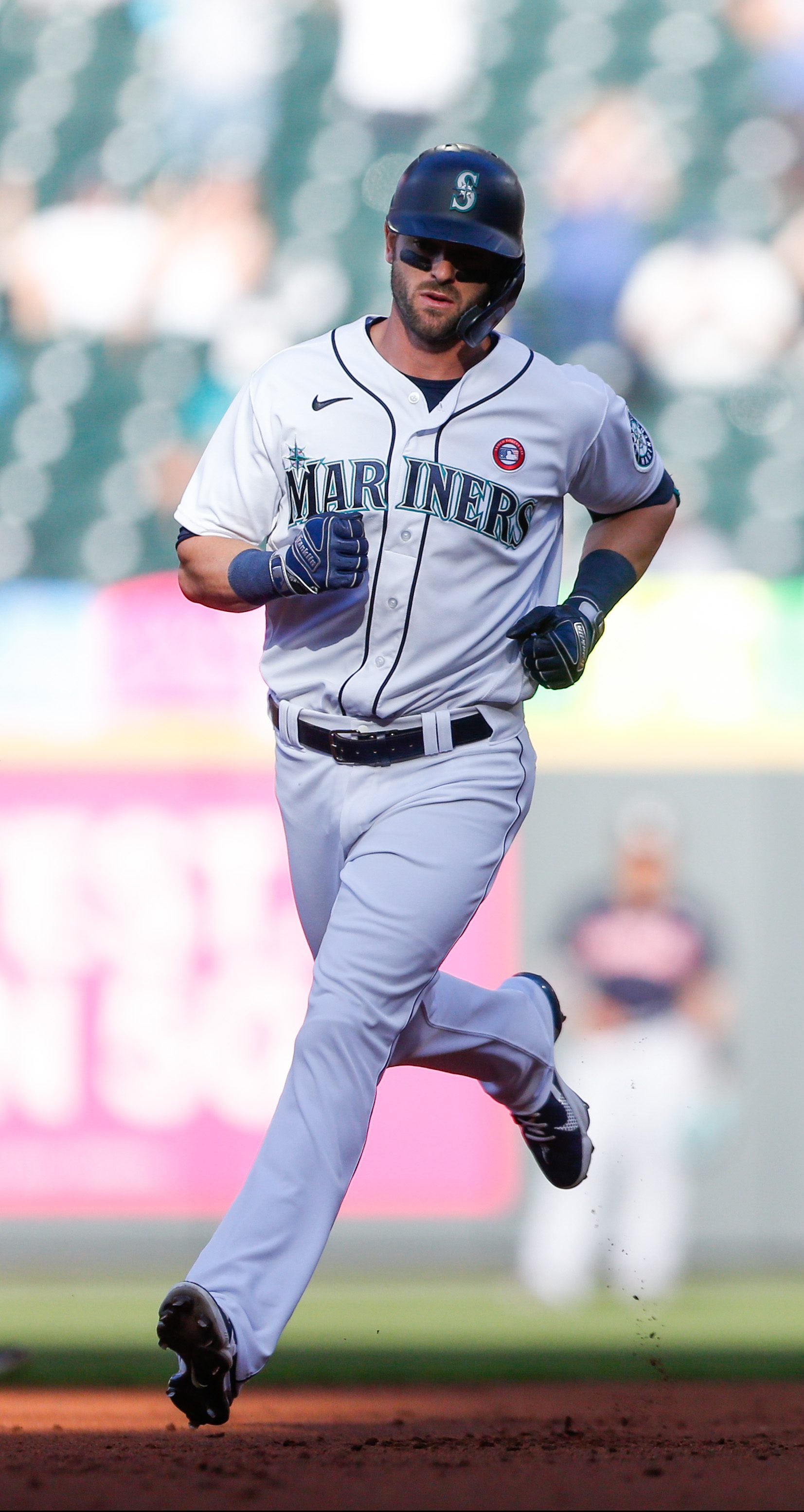
Firstly, the Mariners aren’t squarely out of postseason contention. It’d be tough to erase a seven-game deficit and overtake not one but two very good teams (Houston and Oakland) en route to a division title, but the M’s have played good ball as of late and are now five games over .500. A Wild Card berth would be more viable, and they’re looking at a more manageable 3.5-game deficit in that race. At the very least, GM Jerry Dipoto is going to want to see how his club performs over the next couple of weeks before trading away veteran contributors.
Beyond that, the Mariners may not feel forced to trade Haniger, even though this is the apex of his trade value. It’s true that they’d get more for trading one-plus season of him in the next three weeks than they would by marketing one year of Haniger this winter, but it’s not as though he’d be devoid of trade value in the offseason — or even next summer. And with the Mariners playing as well as they have been lately, there’s reason to at least wait until the deadline approaches to give this group a chance to decide its own fate.
The Mariners, after all, are staring down a two-decade postseason drought. If they’re within arm’s reach of a Wild Card berth and/or a division lead in the days leading up to the deadline, it’d be hard to fault the front office for opting to ride things out with the current group (or even for making some additions that don’t mortgage the future). The fanbase in Seattle is starved for playoff baseball, and the heavy lifting in their rebuild has already been done. We also regularly hear GMs, managers, coaches and veteran players talk about the importance of exposing young players to the pressure of a postseason chase. It’s hard to quantify the benefit of that type of experience, but most agree on its inherent value.
As for an extension, however, that’d be another beast entirely. The best-case scenario for the Mariners is that their vaunted farm produces a controllable outfield. Jarred Kelenic struggled in his first taste of the Majors earlier this year, but he was making the jump to big leagues at 21 and with just six games of Triple-A experience under his belt. He’s demolished Triple-A pitching since being optioned back down to Tacoma — .302/.382/.621, seven homers, seven doubles, one triple, 14.5 percent strikeout rate, 10.9 percent walk rate — and is still seen as a long-term cornerstone.
Kelenic and Julio Rodriguez entered the season as consensus top-five prospects in all of baseball. Taylor Trammell has been widely regarded as a top-100 prospect himself, and the Mariners of course have 2020 AL Rookie of the Year Kyle Lewis — though he’s currently sidelined by another knee injury. That doesn’t even take into account 26-year-old Jake Fraley, who has never been considered an elite prospect but has emphatically forced his way into the conversation with a .263/.437/.505 showing in 134 plate appearances so far.
Suffice it to say, the Mariners are deep in outfield talent and there are only so many spots to go around. Extending Haniger takes one of those long-term positions and commits it to a player who’ll turn 31 this winter and is five years older than any of the in-house alternatives. There’s something to be said for Haniger as a proven commodity, but the Mariners also likely trust they can assemble a high-quality outfield with younger, more affordable players. Doing so would allow them to dedicate their financial resources to other areas of need.
Considering their outfield depth, it’s not too surprising to hear the Mariners haven’t put forth a long-term offer for Haniger. That doesn’t necessarily make a trade a fait accompli, however.
It’s possible that three weeks from now, the team’s play will have solved any potential dilemma for the front office. Seattle’s final seven games before the trade deadline come against the Athletics and Astros, from July 22-28. They have an off-day on the 29th. If the M’s stay red-hot and come away with a pair of series wins in that pivotal seven-game stretch, Dipoto & Co. will likely be more emboldened to take a measured shot at a 2021 run. If the Mariners go something like 5-13 in their remaining 18 games leading up to the deadline, including some poor play against their top rivals, it becomes far likelier that we’ll see Haniger and other veterans marketed in a hurry.
It’s too soon to know just how that’ll all play out, but we’ll still open this one up for debate. As things stand right now, what’s the best course of action for the M’s to take with Haniger? (Link to poll for Trade Rumors iOS/Android app users)
What should the Mariners' approach be with Mitch Haniger?
-
They need to sell high this month. Don't be fooled by a small chance at a 2021 playoff run. 51% (3,106)
-
Ride out the 2021 season and shop him this winter/next summer. They're still in this, and the prospects aren't all ready. 28% (1,728)
-
He's a proven player and a core piece. They should extend him. 21% (1,312)
Total votes: 6,146
The Mariners Have A Yusei Kikuchi Decision To Make
Yusei Kikuchi‘s first two seasons in the Major Leagues didn’t go as either the Mariners or the left-hander himself hoped. After establishing himself as one of the premier pitchers in Japan by pitching to a 2.77 ERA in parts of eight seasons (2.51 in his final three years), he tested international free-agent waters as one of the most coveted talents in recent memory.
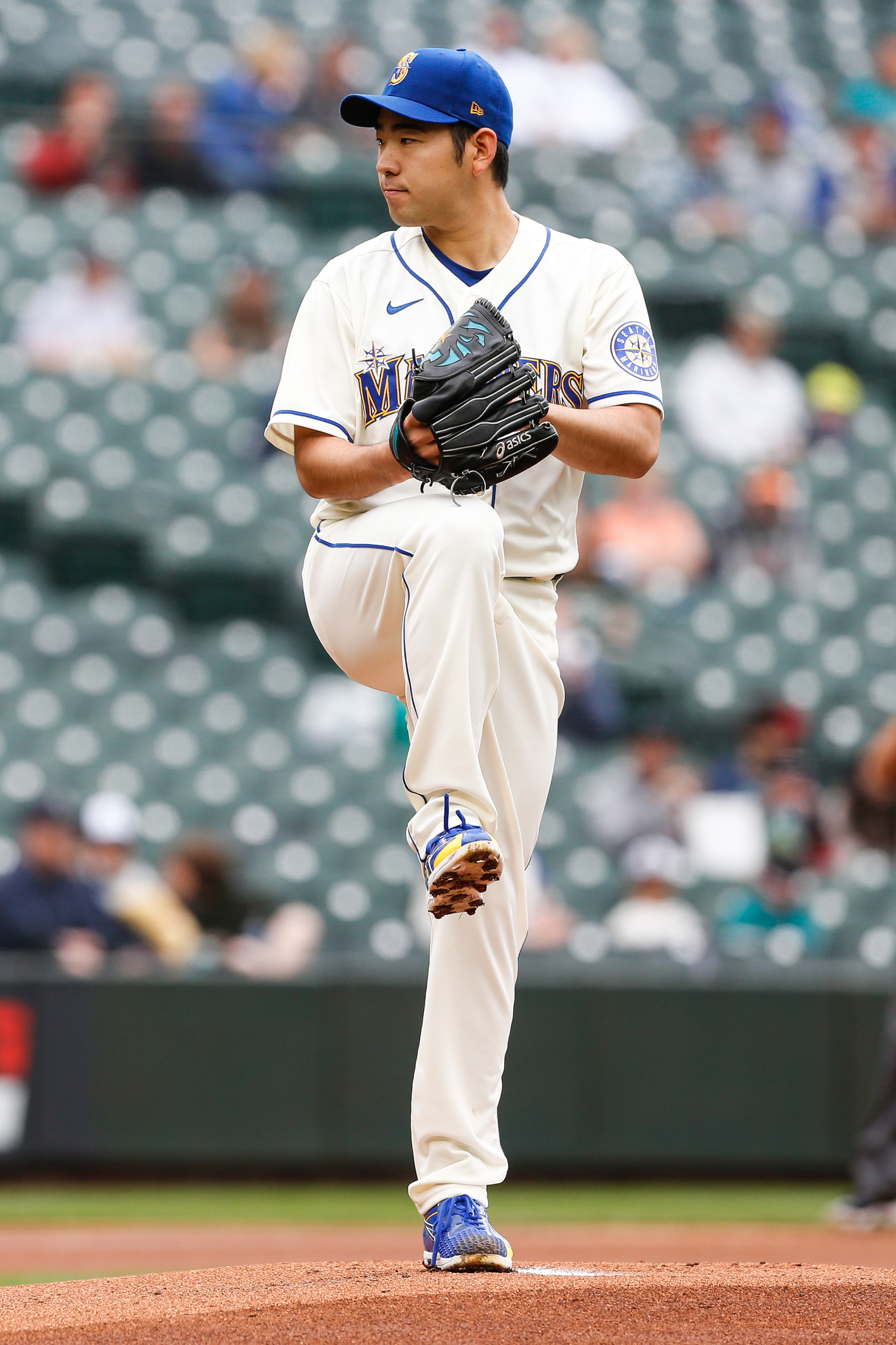
Beyond his excellent numbers in Japan and his arsenal of what many scouts believed to MLB-caliber offerings, Kikuchi was a free agent at just 27 years of age. Unlike many of his countrymen, he was seeking his first opportunity in North America while firmly in the midst of his prime seasons. The level of interest and intrigue in the left-hander was readily apparent both in the size and the structure of his contract. Kikuchi hired the Boras Corporation to represent him as he looked to jump to the big leagues and eventually secured a four-year, $56MM guarantee from the Mariners.
Put rather simply, Kikuchi’s first year in the Majors went poorly in just about every regard. He remained healthy, but Kikuchi struggled in adjusting from pitching every sixth day in NPB to every fifth in MLB. The Mariners did, at times, find ways to get him an extra day’s rest, and they even gave him a few starts that were short by design. (He tossed just one inning in an April 26 “start,” for instance, as he adjusted to his new workload.)
The numbers weren’t there. He made 32 starts but pitched to a 5.46 ERA and 5.17 SIERA. His 6.9 percent walk rate was a good bit better than league average, but Kikuchi also had a well below-average 16.1 percent strikeout rate and was tagged for a whopping 36 home runs in just 161 2/3 frames. It was not a great debut. Mariners fans might’ve hoped that a second season would produce better results as Kikuchi overcame his adjustment phase, but he came back with a 5.17 ERA in 47 innings (nine starts). He understandably drew a fair bit of criticism.
However, there was also good reason to believe that Kikuchi’s 2020 season marked something of a turning point. While the ERA wasn’t great, the signs of a forthcoming breakout weren’t exactly hidden.
Kikuchi’s average four-seam velocity jumped from 92.6 mph to 95.1 mph in 2020, and he began using an effective cutter that wasn’t in his 2019 repertoire. His strikeout rate jumped from 2019’s 16.1 percent to 24.2 percent, and his ground-ball rate spiked from 44 percent in ’19 to 52 percent in 2020. The home run troubles that plagued him in 2019 were gone; Kikuchi yielded just three round-trippers in those 47 innings. Despite the improvements in many of his underlying stats, however, Kikuchi was hindered by an elevated 10.3 percent walk rate and a 59.9 percent strand rate that looked rather fluky.
Just as many of those indicators suggested, Kikuchi looks like a different pitcher in 2021. He’s started 15 games and ridden a 3.18 ERA, 25.4 percent strikeout rate, 8.5 percent walk rate and career-best 53.8 percent ground-ball rate to his first career All-Star nod. Kikuchi has allowed three or fewer runs in 13 of his 15 starts, with the lone exception being a pair of five-run hiccups in his third and fourth starts of the season. Over his past 11 trips to the mound, Kikuchi has logged a 2.33 ERA while averaging 6 1/3 innings per start.
The transformation is striking, although it’s worth noting that similarly to 2020, when he pitched better than his ERA indicated, Kikuchi probably isn’t quite this good. He’s benefiting from a tiny .221 average on balls in play and a huge 82.9 percent strand rate that, like his 2020 mark, looks unsustainable (just in the other direction). Still, if you combine Kikuchi’s 2020-21 results, it’s a pretty nice-looking pitcher without too many red flags: 140 1/3 innings, 3.85 ERA, 3.97 SIERA, 25 percent strikeout rate, 9.1 percent walk rate, 53.1 percent ground-ball rate. The combined .251 BABIP is a bit lower than should be expected, but few pitchers can boast that combination of missed bats, solid control and strong ground-ball tendencies.
All of this is particularly notable given the aforementioned unique structure of Kikuchi’s contract. He’s technically guaranteed $56MM from 2019-22, but the Mariners will have a pivotal decision at season’s end. They can choose to exercise a quartet of one-year, $16.5MM options all in conjunction with one another — effectively a four-year, $66MM extension. If not, Kikuchi will have a $13MM player option that he can decline in order to test free agency. (Seattle could make him a qualifying offer at that point.)
The Mariners are in the late stages of a multi-year rebuild and will surely be aiming to contend beginning in 2022. But while they’ve begun to see a growing number of position prospects emerge at the MLB level, the pitching looks far less certain. Justus Sheffield is still looking to settle in as a consistent producer. Logan Gilbert has looked sharp after a few rocky outings early in his MLB career. Chris Flexen has proven to be a shrewd signing thus far. Marco Gonzales has battled injuries in 2021 and taken a step back. Top prospects George Kirby and Emerson Hancock shouldn’t be expected to be too far behind Gilbert in terms of MLB readiness, but the rotation could certainly use some stability — which Kikuchi has provided to this point in the season.
As such, there’s good reason for the Mariners to want to keep Kikuchi around, though the question will be whether that four-year, $66MM price point proves palatable. The team has just $19MM committed to the 2022 payroll beginning in 2022, so Seattle can certainly afford to keep Kikuchi around and still make another notable addition to the rotation either via free agency or trade this winter. The $66MM price point is roughly in line with recent deals signed by Nathan Eovaldi (four years, $68MM), Miles Mikolas (four years, $68MM), Dallas Keuchel (three years, $55.5MM) and Alex Cobb (four years, $57MM). If Kikuchi continues pitching near his current level, a deal in that range wouldn’t be unreasonable in free agency.
That’s particularly of note, too, because if the Mariners choose not to pick up their end of the arrangement, Kikuchi currently looks like a lock to turn down that $13MM player option, given how well he’s pitched. He’d quite likely reject a qualifying offer as well, based on the strength of his performance.
Other teams could try to pry Kikuchi away from the Mariners with a strong trade offer, but if he’s pitching well enough to carry substantial trade value, that probably means he’s also pitching well enough for the Mariners to look favorably on that four-year extension. Trading a player with such a virtually unprecedented conditional option would also be immensely complicated. It’d be tough for Seattle to extract considerable value when the best-case scenario is having the exclusive right to extend Kikuchi at a fairly notable rate.
There’s also downside for an acquiring team that can’t be overlooked; were Kikuchi to incur a substantial injury in the months following a trade, he’d likely exercise that $13MM player option. The Mariners have already taken that risk in issuing the initial contract — but they weren’t parting with young talent in addition to taking that risk. Another club would be doing just that, which would weigh down the potential return in a trade.
We’re only at the season’s halfway point, so there’s still time for Kikuchi to make this decision look more straightforward — either with a continued run of dominance or a return to his 2019-20 form. But the fact that he’s begun to make the four-year option/extension route look viable in and of itself is a testament to the strength of his season. He’s gone from looking like a possible front office misstep to the potential rotation cornerstone the Mariners envisioned when signing him in the first place.