
Details On Luxury Tax Payments For Dodgers/Padres
As expected, the Dodgers and Padres are the two teams that exceeded the luxury tax threshold this past season. The Associated Press reports that Los Angeles will pay $32.65MM in fees, while the Padres’ tax penalty lands at a more modest $1.29MM. No other teams exceeded the threshold in 2021.
Neither the Dodgers nor the Padres exceeded the threshold in 2020. Under the terms of the 2016-21 collective bargaining agreement, teams were only subject to escalating penalties for exceeding in consecutive years. Thus, both teams will be treated as first-time payors this offseason.
Teams are only subject to penalties on the dollars they spend above the threshold. The 2021 penalties for first-time payors checked in at 20% on every dollar between $210MM and $230MM, 32% on overages between $230MM and $250MM and 62.5% on each dollar spent above $250MM. CBT figures are calculated by summing the average annual values of all of a team’s player contracts (plus benefits), not by looking at a team’s actual payrolls in a given season.
As their hefty tax suggests, the Dodgers were by far the game’s biggest spender in 2021. Los Angeles’ final luxury tax number checked in at $285.6MM. (Their tax payment is calculated as the sum of $4MM on their overages between $210MM – $230MM, $6.4MM on their overages between $230MM – $250MM and $22.25MM on their overages above $250MM). The Dodgers flexed that financial might to build a star-studded roster that went to the NL Championship Series.
By exceeding $250MM, the Dodgers also accepted a minor hit in next year’s amateur draft. Teams that exceeded the highest tax threshold in the previous CBA saw their top choice moved back ten spots in the ensuing Rule 4 draft. Instead of picking 30th overall next season as originally scheduled, they’ll first select at pick No. 40.
While the Dodgers shattered the luxury mark, the Padres very narrowly exceeded the first threshold. Their final ledger checked in at $216.5MM, the highest mark in franchise history. San Diego’s financial cost for doing so is minuscule, but surpassing the threshold would be of more import were they to sign a free agent who has been tagged with a qualifying offer. Teams that pay any CBT penalties are subject to the highest levels of draft pick and international signing bonus forfeiture for signing qualified free agents. Exceeding the tax also reduces the compensation teams receive when one of their own qualified free agents signs elsewhere; this winter, the Dodgers received the lowest possible compensation (a pick after the fourth round) for watching Corey Seager depart.
As mentioned, the previous CBA contained escalating penalties for teams that exceeded the threshold in multiple consecutive years. It’s not clear whether that process will continue with the next CBA (or where the thresholds will land in the next CBA) but most high-revenue teams have occasionally determined to dip back under the threshold to “reset” their tax bracket and dodge escalating penalties.
That makes the Padres’ decision to narrowly exceed the threshold and potentially shoulder escalating penalties in future years a bit atypical. A handful of teams settled their spending limits just below the $210MM mark. According to the AP, each of the Phillies, Yankees, Mets, Red Sox and Astros ended with payrolls less than $5MM below the first tax threshold. They’ll each be first-time payors if they exceed that mark in 2022, with the Yankees and Astros resetting after exceeding the threshold in 2020. (The Cubs also exceeded the threshold in 2020 but didn’t come especially close to $210MM in 2021).
The AP also reports that overall spending on players took a step back. The combined tally of all thirty teams’ luxury tax payrolls this past season tallied $4.52 billion, down from the $4.71 billion teams spent in 2019. That’s not entirely surprising on the heels of a 2020 campaign with essentially no gate revenues, although it’s the lowest overall expenditures on players since 2016’s $4.51 billion.
Which 2022 Draft Picks Have Teams Gained And Lost From Qualifying Offer Free Agents
Of the 14 free agents to receive qualifying offers this winter, nine have already figured out where they will be playing next season, leading to some noteworthy adjustments to the 2022 draft order. For a refresher on the QO rules, you can check this list of what signing a qualifying offer-rejecting free agent would cost each team, or this list of what teams receive as compensation for losing a QO-rejecting free agent.
Or, for simplicity’s sake, you could just read this post right here as a quick summary of the extra picks gained and lost due to these signings. First of all, four of the nine signed players don’t factor into the discussion, since they are back with their former teams — Brandon Belt accepted the Giants’ qualifying offer in the first place, while Raisel Iglesias re-signed with the Angels, Chris Taylor re-signed with the Dodgers, and Justin Verlander re-signed with the Astros.
For the five other signed QO free agents and the five unsigned QO free agents, here is the breakdown of what their former teams would receive as compensatory picks. The specific order of the compensatory picks is based on the previous year’s record, so the team with the fewer wins would get the superior pick.
- Extra pick after Round 1 of the draft: This is awarded to a team that receives revenue-sharing funds, and whose QO-rejecting free agent signs with another team for more than $50MM in guaranteed salary. The Rockies and Reds would therefore each qualify if Trevor Story (Colorado) or Nick Castellanos (Cincinnati) signed for $50MM+. Since the Reds had the better record between the two teams, the Rockies would pick 32nd overall and the Reds 33rd overall if both clubs indeed ended up in this same category. If Story and/or Castellanos signed for less than $50MM, Colorado and/or Cincinnati would be in the next group…
- Extra pick between Competitive Balance Round B and Round 3: Four picks have already been allotted within this group, comprised of teams who don’t receive revenue sharing funds. The Mets received an extra selection when Noah Syndergaard signed with the Angels, the Blue Jays received two picks when Marcus Semien signed with the Rangers and Robbie Ray signed with the Mariners, and the Red Sox got a pick when Eduardo Rodriguez signed with the Tigers. Like Toronto, the Mets could also receive a second pick if Michael Conforto signed elsewhere. The Braves (Freddie Freeman) and Astros (Carlos Correa) would also land in this category if their respective QO free agents left town. The draft order of this sandwich round based on 2021 record would line up as Mets (77 wins), Braves (88 wins), Blue Jays (91 wins), Red Sox (92 wins), and Astros (95 wins). For the moment, the four picks in this group represent the 75th-79th overall selections in the draft, though that specific order will be altered based on where the other QO players sign, or what other second-round picks might be surrendered as penalties for signing those free agents.
- Extra pick after Round 4: For teams that lose a QO free agent but exceeded the luxury tax threshold in 2021, their compensatory pick is pushed back to beyond the fourth round. Therefore, this is where the Dodgers will make their extra pick in the wake of Corey Seager‘s deal with the Rangers.
Moving on, here is what the four teams who have signed QO free agents had to give up in draft capital…
- Second-highest 2022 draft pick, $500K in international signing pool money: The Angels didn’t receive revenue sharing funds, and didn’t exceed the luxury tax in 2021. As a result, signing Syndergaard will cost the Angels their second-round draft selection and a chunk of their funds for the next international signing period.
- Third-highest 2022 draft pick: The Mariners and Tigers fall into this category, as teams who received revenue sharing payments in 2021. For Seattle, this is simply their third-round selection. For Detroit, their “third-highest pick” won’t be determined until MLB establishes the order for this year’s Competitive Balance Draft. Depending on which of the two CBD rounds the Tigers are drawn into, their cost for the Rodriguez contract could either be their second-rounder or their pick in Competitive Balance Round B.
- Both their second AND third-highest 2022 draft picks, and $500K in international signing pool money: The Rangers splurged by signing both Seager and Semien, and thus faced twice the draft penalty (both their second-round and third-round picks) for landing a pair of QO free agents. Texas would have faced the same penalty as the Angels if it had signed just one of Seager or Semien.
- Second- and fifth-highest 2022 draft picks, $1MM in international signing pool money: The stiffest penalty is reserved for teams who exceeded the luxury tax threshold last season. Therefore, only the Dodgers and Padres would have to give up multiple picks to sign a single QO free agent, which would surely influence any efforts on their part to pursue Correa, Freeman, Conforto, Story, or Castellanos.
Report: Yasiel Puig Faced Two Sexual Assault Allegations In 2017
Outfielder Yasiel Puig was accused of sexual assault by two women in January 2017, according to a report from Gus Garcia-Roberts of the Washington Post. Puig had also been accused of sexual assault in 2018, with those previously-reported allegations resulting in a civil action that was settled out of court this past October.
The Post report contains details on the disturbing set of allegations made against the then-Dodgers outfielder in 2017. One woman alleged Puig became violent during a sexual encounter. She reported the allegation to police — who photographed injuries she said resulted therefrom — but declined to pursue criminal charges. The other woman alleged that Puig attempted to force her to engage in various sexual acts without her consent, according to a letter from the woman’s attorney to Puig obtained by the Post. There is no indication the second woman reported the alleged assault to police.
Both women initiated civil actions against Puig which were confidentially settled out of court by April 2017. As part of both settlements, Puig denied the veracity of the allegations. His attorney tells the Post that Puig agreed to settle based on the advice of counsel at the time, citing the Cuba native’s “limited English abilities” as a factor in Puig’s decision to go along with that course of action. Puig’s agent, Lisette Carnet, told the Post she believes Latin American players are particularly susceptible to false allegations being made against them. She also claimed that players agreeing to confidential settlements with accusers of sexual assault is a common practice throughout MLB, one some agents consider “part of the business behind the game.”
Major League Baseball investigated both incidents in 2017, according to Garcia-Roberts, ultimately making the determination not to impose discipline. That decision was made “based on the evidence available to league investigators,” a league spokesperson told the Post. (MLB was permitted to speak with the women despite the respective settlements’ inclusion of non-disclosure agreements, per Garcia-Roberts, although it’s not clear whether they ever did so).
Puig continued to play that season while the league’s investigation was ongoing. That’s standard practice in instances where the allegations have not been made public, Garcia-Roberts notes. While the MLB – MLBPA Joint Domestic Violence, Sexual Assault and Child Abuse Policy gives the league the authority to place a player accused of a violation on paid administrative leave pending investigation, the Post writes that MLB has typically declined to do so unless the allegations are made public in some other way or unless they’re on the verge of imposing discipline.
Dodgers president Stan Kasten told the Post that he had “no recollection” of the allegations against Puig. Garcia-Roberts notes that the Joint Domestic Violence Policy contains a provision that limits the league’s ability to disclose information related to an investigation — even to the player’s team — to certain circumstances (i.e. for the imposition of discipline, in anticipation of a grievance, when needed to further potential mental health treatment for the player, etc.).
Puig played in Los Angeles through the end of the 2018 season. He split the 2019 campaign between the Reds and Indians. While he’d neared an agreement to sign with the Braves in 2020, that deal was scuttled after he tested positive for COVID-19. He didn’t play last year, then spent 2021 in the Mexican League. Last week, Puig signed with the Kiwoom Heroes of the Korea Baseball Organization. In recent months, the 31-year-old has continued to express a desire to eventually return to MLB.
Mets Interview Clayton McCullough
The Mets have interviewed Dodgers first base coach Clayton McCullough as part of their ongoing managerial search, tweets Joel Sherman of the New York Post. It’s expected to be their final interview of the first round of the search to replace Luis Rojas.
McCullough joins Dodgers bench coach Bob Geren as the second member of Dave Roberts’ staff to interview for the Mets’ vacancy. The other four known candidates are veteran skipper Buck Showalter, Rays bench coach Matt Quatraro, Astros bench coach Joe Espada and former Tigers/Angels skipper Brad Ausmus.
The 2021 season was the first on a Major League coaching staff for the 41-year-old McCullough, a former minor league catcher who’d previously spent close to a decade as a minor league coach and manager in the Blue Jays system. The Dodgers hired him as their minor league field coordinator in 2015 and promoted him to the big league coaching staff this past season. McCullough also interviewed for the Giants’ managerial vacancy prior to the team’s hiring of Gabe Kapler.
While the first wave of interviews was conducted via Zoom by new general manager Billy Eppler, per SNY’s Andy Martino, the second round of interviews will be conducted in person and will include owner Steve Cohen. He adds that the field is expected to be whittled down to three finalists prior to in-person interviews. At the moment, Showalter is seen as having a “strong chance” to secure the position, per Martino, but it seems as though two more candidates will have the opportunity to sway Eppler and Cohen before anything is finalized.
Mets To Interview Bob Geren
Dec. 8: Geren’s interview will take place today, tweets Joel Sherman of the New York Post.
Dec. 7: Dodgers bench coach Bob Geren will interview for the Mets’ managerial vacancy this week, according to SNY’s Andy Martino (Twitter link). Geren is the sixth known candidate for the job, joining Buck Showalter, Brad Ausmus, Joe Espada, Don Kelly, and Matt Quatraro as names on the Amazins’ radar.
Like Showalter and Ausmus, Geren has some past big league managerial experience on his resume, as he posted a 334-376 record while working as the Athletics’ skipper from 2007-11. He has also previously worked in the Mets’ dugout, serving as the club’s bench coach from 2012-15. Geren has worked as manager Dave Roberts’ bench coach with the Dodgers for each of the past six seasons.
Geren has been linked to several other managerial jobs since his time in Oakland, such as the Dodgers’ job that went to Roberts, the Red Sox vacancy that went to Alex Cora, the Giants’ job that went to Gabe Kapler, and even one of the Mets’ recent managerial searches. Before New York hired Mickey Callaway prior to the 2018 season, Geren was reportedly one of the early contenders as a possible replacement for Terry Collins, though it didn’t appear as if Geren made it too deep (if at all) into the interview process.
This past connection to the Mets certainly makes Geren a known quantity to both president Sandy Alderson and owner Steve Cohen, whereas the other known candidates don’t have any past ties to Queens. Ausmus and Espada did previously work with GM Billy Eppler, creating an interesting mix of familiarity and entirely fresh voices within the group of six.
Bud Fowler, Gil Hodges, Jim Kaat, Minnie Minoso, Tony Oliva, Buck O’Neil Elected To Baseball Hall Of Fame
Six legendary names have been inducted to the National Baseball Hall Of Fame, as per the results of today’s special selection committee meetings. Bud Fowler, Gil Hodges, Jim Kaat, Minnie Minoso, Tony Oliva, and Buck O’Neil have all been elected to Cooperstown, and will be officially inducted on July 24 along with any players voted in by the regular writers’ ballot.
Often referred to as “veterans committee” selections, the Baseball Hall Of Fame now organizes an annual panel with a differing membership that focuses on a rotation of different eras in the sport’s history. The Early Baseball (covering candidates from 1871-1949) committee meets once per decade, the Golden Days (1950-1969) committee once every five years, and the Modern Baseball (1970-1987) and Today’s Game (1988-present) committees meet twice each during every five-year period.
Last year’s vote was postponed due to the pandemic, so this winter saw both the Early Baseball and Golden Days committees each meet, resulting in 20 possible candidates for Cooperstown. Each committee was comprised of 16 members, and each member can list as many as four names on their voting ballot. Candidates must receive at least 12 votes to receive induction into the Hall of Fame.
Minoso, Hodges, Kaat, and Oliva were inducted on the Golden Days ballot. Minoso received 14 votes, while Hodges, Kaat, and Oliva all received 12 votes apiece. Dick Allen fell just short with 11 votes, another unfortunate close call after Allen also missed out on the 2015 ballot by a single vote. Other candidates on the ballot included Ken Boyer, Roger Maris, Danny Murtaugh, Billy Pierce, and Maury Wills, who all received three or fewer votes.
O’Neil and Fowler were inducted via the Early Baseball ballot, with O’Neil receiving 13 of 16 votes and Fowler receiving 12 votes. Other candidates on the ballot receiving votes were Vic Harris (10 votes), John Donaldson (eight), Allie Reynolds (six), Lefty O’Doul (five), and George Scales (four), while Bill Dahlen, Grant “Home Run” Johnson, and Dick Redding received three or fewer votes.
This edition of the Early Baseball ballot put a renewed focus on the Negro Leagues. Donaldson, Johnson, Redding, and Scales were all star Negro League players, while O’Neil both played and managed in the NAL before becoming a coach with the Cubs and a longtime scout in the Cubs and Royals organizations.
In addition, Fowler was arguably the first black professional player, an accomplished second baseman who spent his career barnstorming around North America playing with many all-black teams and some integrated amateur teams. Fowler also founded and organized several teams and leagues both during and beyond his playing days, with his influence as an early pioneer helping set the stage for what we now recognize as the Negro Leagues. Fowler, whose birth name was John Jackson in 1858, also spent part of his childhood growing up in Cooperstown.
There has been perhaps no greater ambassador for either the Negro Leagues or even baseball itself than O’Neil, one of the game’s most beloved figures. Beyond his on-field success as a player, O’Neil helped scout and then shape the careers of countless players during his long career, and he became the first black coach in MLB history when hired by the Cubs in 1962.
It was widely expected that O’Neil would receive induction into the HOF back in 2006 when a special committee was formed to focus on Negro Leagues legends, and yet while 17 other illustrious names were given the nod for Cooperstown, O’Neil was surprisingly omitted. Nonetheless, O’Neil took the decision with his customary grace, and even spoke at the induction ceremony that summer. O’Neil passed away later that same year.
Minoso also began his career in the Negro Leagues, as the Cuba native spent parts of three seasons with the New York Cubans before debuting in the big leagues with the Indians in 1949. Minoso played parts of 20 seasons in the majors (12 with the White Sox), hitting .299/.387/.461 over 8223 career plate appearances and receiving 13 total All-Star selections. Minoso finished as high as fourth in MVP voting on five different occasions, and won three Gold Gloves.
Later generations might remember Minoso for his cameo appearances in 1976 and 1980, as White Sox owner Bill Veeck arranged for Minoso (at ages 50 and 54) to play in five games and thus become only the second player to play Major League Baseball in five different decades. Beyond that quirky footnote, however, Minoso has an incredible legacy as an icon to both Cuban players in particular, and for Hispanic baseball players across generations.
Speaking of footnotes, Hodges’ status as the player who received the most HOF votes on the writers’ ballot without ever receiving induction to Cooperstown is now a thing of the past. While Hodges’ initial path to the Hall may have been hampered by a lack of league-leading or even team-leading credentials, Hodges still put together an outstanding career, hitting .273/.359/.487 with 370 home runs over 8104 career PA in 18 seasons with the Dodgers and Mets.
It isn’t as if Hodges was overlooked in his time, as he was an eight-time All-Star and the winner of three Gold Gloves. He also captured two World Series titles with the Dodgers as a player, and added a third ring as a manager in 1969, leading the out-of-nowhere Mets to one of the most surprising championships in sports history.
A prototype of the old-school workhorse pitcher, Kaat pitched 4530 1/3 innings and 180 complete games over 25 years in the majors, while posting a 3.45 ERA. One of the best-fielding pitchers of all time, Kaat won 16 Gold Gloves during his career, tied for the second-highest total of GGs for any player at any position. The southpaw also received three All-Star nods, and won a late-career World Series title while working out of the Cardinals bullpen in 1982.
Kaat played for five different teams over his long career, but spent 15 of his seasons with the Twins. Twelve of those seasons overlapped with Oliva’s Minnesota career, and now the two former teammates will join forces once again on their way into the Hall of Fame.
Oliva spent all 15 of his seasons in a Twins uniform, beginning his career with a bang by winning Rookie Of The Year honors in 1964. In defiance of the sophomore slump, Oliva became the first player to ever win batting titles in his first two seasons, and he also added a third batting crown in 1971. Oliva hit .304/.353/.476 with 220 home runs over 6880 PA, and it is fair to wonder if Oliva could’ve added considerably to this resume had he not been beset by several injuries in the latter years of his career. His relatively short prime may have been the reason it took so long for Cooperstown recognition, and yet what a prime it was — Oliva was an All-Star every year from 1964 to 1971, and was a runner-up in AL MVP voting in both 1965 and 1970.
The 16 members of the Early Baseball panel were Bert Blyleven, Ferguson Jenkins, Ozzie Smith, Joe Torre, John Schuerholz, Bill DeWitt, Ken Kendrick, Tony Reagins, Gary Ashwill, Adrian Burgos Jr., Leslie Heaphy, Jim Henneman, Justice Hill, Steve Hirdt, Rick Hummel and John Thorn.
The 16 members of the Golden Days panel were Jenkins, Smith, Torre, Schuerholz, DeWitt, Kendrick, Reagins, Burgos, Hirdt, Rod Carew, Mike Schmidt, Bud Selig, Al Avila, Kim Ng, Jaime Jarrin and Jack O’Connell.
Latest On Carlos Correa’s Market
With MLB implementing a lockout yesterday, it will likely be some time until fans learn the fate of the sport’s presently unsigned free agents. Per the parameters of the lockout, teams are unable to contact players or make any transactions during this period. Touted by many as the best player on the free agent market, Carlos Correa will have his eventual contract delayed as well, though that doesn’t mean he won’t have his fair share of suitors when the lockout concludes. Prior to yesterday’s announcement, Mark Berman of Fox 26 (KRIV) tweeted a list of teams Correa’s camp has been contacted by at some point this offseason. The Astros and Yankees were teams already known to have reached out, but Berman adds the Red Sox, Dodgers, Cubs, and Braves to the mix as well.
At first glance, some of these newly reported teams may seem like imperfect landing spots for a shortstop who will command a 9-figure salary. Then again, it’s hard to fault any big market team for performing due diligence on a high caliber player like Correa. It’s not presently known when these teams contacted Correa’s agent or how serious these check-ins were, but any team even passingly reported as having communications with Correa’s camp could clue fans into where the star shortstop will end up signing.
Starting alphabetically with one of the more curious fits, Atlanta concluded it’s pennant-winning season with Dansby Swanson entrenched at the shortstop position. While Swanson didn’t quite replicate his production from 2020, he did pop a personal-best 27 home runs and provided defense that was generally regarded as passable or better. The 27-year-old will enter 2022 under his last year of team control, however, perhaps creating a scenario where Correa is signed and Swanson is peddled to a team still in search of a new shortstop. Any movement from Atlanta on the Correa market would likely come after there’s resolution (or, in order to afford Correa, a breakdown) on the Freddie Freeman front.
Boston ended 2021 with a prominent name at shortstop as well, Xander Bogaerts. The 29-year-old Bogaerts continues to rate as one of the league’s more consistent run producers, winnning his fourth Silver Slugger award after a .295/.370/.493 (127 OPS+) showing. Like Swanson in Atlanta, Bogaerts may find himself in his last year of team control if he opts out of the remaining three years on his contract like he is widely expected to do. A Correa pursuit would require some infield shuffling, but would make for an imposing addition to an already strong Red Sox lineup. It would also provide cover for a Bogaerts departure while drastically increasing infield defense.
Chicago has less standing in the way of a Correa run than the previous two teams, as they have the payroll space and an acute need for more offense. Nico Hoerner projects as the current Cubs shortstop following the midseason Javier Baez trade, and to his credit he acquitted himself well to the position. As solid as the former first-rounder was through 44 games though, batting .302/.382/.369 (105 OPS+), he’s only a year removed from a 57 OPS+ showing in a similar amount of games. Hoerner is also defensively adept enough that he could slide to any number of other positions to make room for the more powerful Correa. It remains to be seen if the Cubs are willing to spend additional funds to inch back towards competitiveness or if the Marcus Stroman signing will be their signature offseason acquisition.
Lastly, LA serves as an intriguing landing spot for the All-Star Correa. Like other teams here, the Dodgers have a strong shortstop already in place— Trea Turner. The speedy Turner though can play second base, allowing second basemen Chris Taylor and Gavin Lux to operate in the utility-type roles in which they’ve grown accustomed. One question for the Dodgers front office, however, is if they’d be willing to spend upwards of $300MM on a shortstop when they just let their last superstar shortstop leave for a similarly rich contract. There’s also the 4-year-old elephant in the room, the 2017 World Series in which Correa’s Astros infamously defeated the Dodgers. It’s unlikely any still-lingering weirdness would tank mutual interest (money tends to do the most talking in free agency, after all), but it could serve as a dealbreaker in the event another team were to pursue Correa with the same amount of fervor.
Dodgers Designate Sheldon Neuse For Assignment
The Dodgers are designating infielder Sheldon Neuse for assignment, tweets Fabian Ardaya of the Athletic. The move clears 40-man roster space for Chris Taylor, whose previously-reported four-year deal has been made official.
The 26-year-old Neuse came over to the Dodgers via trade in February from the Athletics. While Neuse continued to post strong numbers in Triple-A, he struggled to find his footing at the plate while operating as a bench piece for the Dodgers. In 33 games, but just 66 plate appearances, Neuse hit .169/.182/.323 with an alarming 26 strikeouts.
The former second round draft pick will likely draw interest from other teams owing to his history of success in the upper minors, to say nothing of his versatility. Since being drafted in 2016 Neuse has played every position on the field except for catcher, center field, and pitcher. It’s not impossible Neuse returns to the Dodgers, of course, but if this is the end of his tenure in Dodger blue his LA supporters may take solace knowing the Oakland end of the trade has yet to bear much fruit either.
Dodgers Re-Sign Chris Taylor
The Dodgers are retaining at least one of their top free agents, announcing agreement on a four-year contract with Chris Taylor. It’s reportedly a $60MM guarantee for the Meister Sports Management client that also contains a 2026 club option which could bring the value of the deal as high as $73MM.
According to reports, Taylor will be paid $15MM salaries in each of the next two seasons, followed by successive $13MM guarantees in 2024-25. He’s also guaranteed at least a $4MM buyout on the 2026 option, which is valued at $12MM. He’d receive a $2MM assignment bonus for every time he’s traded over the course of the deal. Additionally, the value of Taylor’s option season would increase by $3MM if he’s traded within the next two seasons, by $2MM if he’s traded between the end of the 2023 and the end of the 2024 campaigns, or by $1MM if he’s traded between the end of 2024 and the beginning of 2026. The option price would also escalate by $1MM if he tallies 525 plate appearances, earns an All-Star nomination or wins a Silver Slugger Award during the 2025 campaign.
Taylor’s guarantee falls a bit shy of MLBTR’s four-year, $64MM projection entering the offseason. He had hit the market as a fairly atypical free agent, having never settled into one spot on a star-studded Dodgers roster while bouncing around the diamond in a utility capacity. Despite his lack of a settled role, Taylor has gotten into the lineup on a near everyday basis, earning the organization’s trust with rare offensive punch for a utilityman.
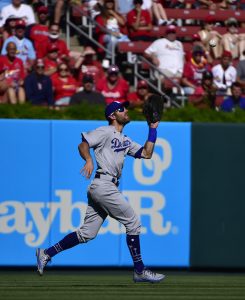
The Dodgers acquired Taylor from the Mariners in a seemingly minor 2016 deal. That proved to be one of the more shrewd pick-ups of president of baseball operations Andrew Friedman’s tenure in L.A., though, as Taylor has been a highly productive player essentially from that moment on. The right-handed hitter has posted above-average offensive numbers (by measure of wRC+) in each of the past five seasons.
Taylor gets to that production with a strong blend of plate discipline and power. He rarely chases pitches outside the strike zone, and he’s become especially adept at drawing walks over the past few seasons. He also brings 15-20 home run power to the table despite playing in a pitcher-friendly environment in L.A. That’s helped Taylor offset higher than average strikeout rates to remain a quality offensive player.
Going back to his 2017 breakout, the Virginia native owns a .265/.343/.461 cumulative line. That’s 16 percentage points above the league average output, not far off his numbers in his platform campaign. Taylor hit .254/.344/.438 with 20 homers in 582 plate appearances in 2021, translating to a 113 wRC+ (13 points above average). He started especially hot, posting a .277/.382/.452 mark through the season’s first half en route to his first career All-Star selection.
While Taylor’s multi-year track record always looked likely to pay him handsomely this offseason, he did seem at one point as though he’d hit the market on a down note. The 31-year-old slumped to a .223/.290/.419 line over the regular season’s second half, seeing his strikeout rate spike to 33.1% in the process. But Taylor put any questions about his tough finish to rest with a monster postseason, popping four homers in 43 playoff plate appearances (including a walk-off shot in the National League Wild Card game) to help the Dodgers to the NL Championship Series.
Valuable as Taylor is offensively, he’s perhaps more well-known for his defense. Taylor has functioned as a true utility player over the years, starting games at every position other than first base and catcher. He spends the bulk of his time at the higher-value positions up the middle of the diamond, particularly at second base and in center field.
His return will give skipper Dave Roberts plenty of flexibility, and it’s likely Taylor will continue to assume that rover role now that he’s back in Dodger blue. Looking at the 2022 roster, it seems the bulk of that time could come at second base.
Taylor played very little at the keystone down the stretch after L.A. acquired Trea Turner from the Nationals at the trade deadline. With Corey Seager now in Texas, Turner looks likely to slide back to his typical shortstop position. That’d leave Taylor and Gavin Lux as the favorites for playing time at second, with either player also capable of spelling the presumptive starting outfield of AJ Pollock, Cody Bellinger and Mookie Betts.
The specific breakdown of Taylor’s deal has yet to be reported, but the $15MM average annual value is the meaningful figure from a competitive balance tax perspective. Luxury tax calculations are based on deals’ AAV’s as opposed to actual payouts structures. After accounting for the Taylor deal, the Dodgers’ 2022 CBT number sits around $231MM, in the estimation of Jason Martinez of Roster Resource. That’d have handily exceeded the $210MM first threshold in 2021, although it’s impossible to know precisely where the CBT markers will land in the next collective bargaining agreement.
The Taylor signing also has an indirect effect on the Dodgers’ 2022 draft. He’d received and rejected an $18.4MM qualifying offer at the outset of the offseason. The Dodgers won’t directly forfeit a pick for re-signing their own free agent, but they are bypassing the pick they’d have received had they allowed Taylor to sign elsewhere. That’s a small price to pay for a player of Taylor’s caliber, though, particularly for the Dodgers. Because they exceeded the CBT threshold in 2021, they’d have only stood to recoup a pick after the fourth round had they allowed Taylor to walk.
Jeff Passan of ESPN first reported the Dodgers and Taylor were making progress on an agreement. Ken Rosenthal of the Athletic first reported the sides had reached an agreement, as well as first with the contract terms. The Associated Press reported the specific breakdown of terms.
Image courtesy of USA Today Sports.
Rangers Sign Corey Seager
The Rangers’ huge offseason continues, as Texas has agreed to terms with free agent shortstop Corey Seager on a ten-year deal, the team announced today. According to various reports, it’s a massive $325MM guarantee for the Boras Corporation client. He’ll reportedly receive a $5MM signing bonus and a $32.5MM salary in 2022. Seager will make $35MM in 2023, $34.5MM in 2024 and $32MM in 2025 before settling in at $31MM annually from 2026-31 as part of the front-loaded pact. The deal also contains limited no-trade protection but does not feature any opt-out clauses.
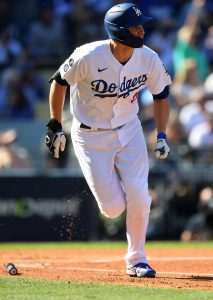
It’s the Rangers’ second big-ticket free agent infield pickup of the offseason, as they also agreed to terms with Marcus Semien on a seven-year, $175MM deal. The Rangers announced Semien’s signing at the same press conference. Huge as the Rangers’ investment in Semien is, the Seager deal is on a whole other level. The $325MM guarantee will tie Giancarlo Stanton’s November 2014 extension for the sixth-highest sum in MLB history (and Stanton’s was distributed over a thirteen-year term). The $32.5MM average annual value checks in eleventh all-time.
It’s an incredible investment, although that’s a testament to Seager’s blend of productivity and youth. He’ll turn 28 years old next April, making him one of the younger options available in free agency. More importantly, Seager’s one of the game’s best players — a middle-of-the-order lineup presence capable of playing shortstop. A former first-round pick and top prospect, he’s more than lived up to lofty expectations.
Seager has been an above-average bat in every season of his career, and he’s been far better than most at the plate for the bulk of that time. By measure of wRC+, he’s been at least 27 percentage points above the league average in four of his five seasons with 200+ plate appearances. Seager has been especially productive over the past two years, combining for a .306/.381/.545 line over 641 regular season trips to the plate since the start of 2020. That’s the eighth-best offensive production leaguewide (minimum 500 plate appearances) and that’s before considering Seager’s huge showing in the 2020 postseason. He was perhaps the single greatest driver of the Dodgers’ World Series run that year, winning NLCS and World Series MVP honors after popping seven homers over 57 combined plate appearances between the two rounds.
Those great bottom line results are supported by Seager’s underlying metrics. He has never struck out at a higher-than-average rate in a season, and he rarely chases pitches outside the strike zone. Seager’s 11.7% walk rate in 2021 was the highest of his career, around three percentage points better than the league mark. The left-handed hitter pairs that plate discipline with high-end raw power, consistently rating well above-average in terms of average exit velocity, hard contact rate and barrel rate (essentially how often a hitter makes hard contact at the optimal angles for power).
Any player with Seager’s offensive acumen would be in high demand, but that kind of production is particularly impressive from a shortstop. Aside from a brief stint at third base in his 2015 rookie season, Seager has exclusively played the infield’s most demanding position. Advanced defensive metrics have been mixed on his work. Defensive Runs Saved has pegged him just a touch below-average in each of the past few seasons; Statcast’s Outs Above Average rated Seager fairly well in 2019 and 2020 but pegged him as a fair bit below par in 2021.
Those metrics seem to align with the general understanding of Seager’s defense. He’s a competent if unexceptional shortstop, unlikely to either win a Gold Glove nor immediately have to move off the position. His 6’4″, 215-pound frame has led to some speculation he might kick over to third base at some point down the line, but it’s likely the Rangers envision him as a franchise shortstop for at least the next few seasons. Even if Seager eventually has to assume a less demanding defensive role, he should be more than capable of living up to the higher offensive demands of positions further down the defensive spectrum.
While there’s not much to nitpick about Seager as a player, he has dealt with a couple of significant injuries over the past few seasons. He missed the bulk of the 2018 campaign recovering from a UCL sprain that required Tommy John surgery. This past season, he suffered a right hand fracture on a hit-by-pitch that cost him two months. Seager absolutely mashed at a .335/.417/.592 clip upon returning from that most recent issue, though, likely assuaging any fears on the part of teams about his current level of health.
Seager now becomes the centerpiece of an incredible offseason for the Rangers and their fanbase. Texas brass has hinted at the potential for an active winter for months, but it wasn’t until a few weeks ago it became clear ownership might sign off on an historic spending spree. Evan Grant of the Dallas Morning News reported earlier this month that the Rangers could add $100MM to their 2022 books alone, and between the recent deals for Seager, Semien, starter Jon Gray (four years, $56MM) and corner outfielder Kole Calhoun (one year, $5.2MM), they’ve added around $76.7MM to next year’s payroll within the past 36 hours alone.
That’s in part due to the wide open payroll outlook the Rangers carried into the winter. José Leclerc ($5.25MM) is the only other player with guaranteed money on the books for 2022; Seager, Semien and Gray are the club’s only long-term commitments. Active as they’ve been, it’s certainly possible the Rangers aren’t done yet. Texas currently has around $125MM in 2022 player expenditures, in the estimation of Jason Martinez of Roster Resource. (That assumes the Seager, Semien and Gray deals are paid out relatively evenly; specific contract terms on each have yet to be reported). For a franchise that spent around $160-165MM on players in both 2016 and 2017, there could still be more funds in reserve.
Regardless of what’s to come, the past two days have marked an incredible turnaround for a franchise coming off three last-place finishes in the past four years. That’s not to say the Rangers are certain to contend in 2022. The roster still has plenty of holes, particularly in the starting rotation. Still, installing Seager and Semien into the middle infield and Gray near the top of the rotation locks in some certainty at key areas of the roster.
At the very least, the 2022 Rangers should be far better than the 60-102 team they trotted out in 2021. And Semien, Seager and Gray will all be key pieces of a club that could legitimately contend in 2023 — particularly if top third base prospect Josh Jung hits the ground running as an above-average player alongside their star middle infield.
Until Jung’s arrival, Isiah Kiner-Falefa looks likely to kick back over to third base. The 26-year-old broke in as a third baseman but acclimated well upon a move up the defensive spectrum to shortstop this past season. While the Rangers likely didn’t see displacing Kiner-Falefa as a must, the opportunity to add two members of this offseason’s stacked shortstop class ultimately proved too tempting to pass up. Semien, meanwhile, looks likely to stay at second base, where he spent the 2021 season with the Blue Jays after a lengthy run as the A’s shortstop.
The Rangers already forfeited their second-highest 2022 draft choice and gave up $500K in international bonus pool space to sign Semien, who rejected a qualifying offer from Toronto. They’ll lose another pick to sign Seager, who declined a QO from the Dodgers. Signing multiple qualified free agents in the same offseason actually makes some amount of sense, though.
Under the terms of the collective bargaining agreement, teams that sign multiple qualified free agents pay a diminishing penalty. A team that already forfeited its second-highest pick on one qualified player (like the Rangers) lose their third-highest pick to sign another qualified free agent. That’s less costly than the second-highest pick other clubs in the Rangers’ revenue bucket would have had to forfeit to land Seager, a small benefit for teams concentrating their big free agent investments in the same offseason.
The primary appeal, though, is in simply adding a pair of star players to the 2022 roster. That’s the position in which the Rangers find themselves, while Seager’s former team finds itself in the opposite situation. The Dodgers have seen both Seager and Max Scherzer (who landed a record-setting three-year deal with the Mets) land elsewhere within the past few days. Los Angeles’ acquisition of Trea Turner from the Nationals at this past summer’s trade deadline gives them another All-Star caliber shortstop capable of stepping into Seager’s place.
Of course, the Dodgers aren’t likely to sit idly by for the rest of the offseason. Particularly as they battle with the Giants (and potentially Padres) in a loaded NL West, it’s likely Los Angeles will continue to explore ways to bolster a still-stacked roster. In the meantime, they’ll receive a compensatory pick after the fourth round in the 2022 draft for Seager’s departure as a team that exceeded the luxury tax threshold in 2021.
Seager’s signing is the latest in a transactions flurry getting in before the looming expiration of the current CBA on Wednesday night. Seager’s and Scherzer’s departures from L.A. could have a massive impact on the NL West race, while the Rangers’ run of big-ticket acquisitions and the Mariners’ agreement on a nine-figure deal with Robbie Ray will have reverberations in the AL West for years to come.
Finally, Seager’s deal becomes a key data point for the rest of the free agent shortstops remaining, particularly Carlos Correa. While Seager and Correa were the clear top two names in this winter’s class, Correa is generally expected to command a loftier deal based on his superior defense at shortstop. Seager’s guarantee, however, comes in above MLBTR’s ten-year, $305MM estimate entering the winter. In light of the robust market we’ve seen in recent weeks, it wouldn’t be a surprise if Correa also tops his ten-year, $320MM projection whenever he puts pen to paper. That’s particularly true in light of the Rangers signing two of the top five shortstops. The Yankees, Phillies, Mariners and Astros are among the other clubs who could still be motivated to land a long-term infielder.
Jeff Passan of ESPN first reported the Rangers and Seager were in agreement on a ten-year, $325MM guarantee. Jon Heyman of the MLB Network reported the limited no-trade protection and the $5MM signing bonus, as well as the absence of any form of opt-out clause. Levi Weaver of the Athletic was first with the specific contract breakdown.
Image courtesy of USA Today Sports.