
Rays Acquire Tommy Pham
10:25am: The Rays and Cardinals have announced the trade. Mark Feinsand of MLB.com tweets that the Cardinals are sending $500K of international money to the Rays in the deal. St. Louis is barred from spending more than $300K on any single international signing anyhow, and they’ve already been using their international funds as currency in trades over the past few days.
9:51am: The Rays have struck a deal to acquire Tommy Pham from the Cardinals, reports Jeff Passan of Yahoo Sports (via Twitter). It’s not clear what other elements are in play, though Passan adds that Chris Archer is not involved in the trade. Marc Topkin of the Tampa Bay Times tweets that the Rays will send outfielder Justin Williams, left-hander Genesis Cabrera and right-hander Roel Ramirez to the Cardinals in exchange for Pham and international bonus allotments.
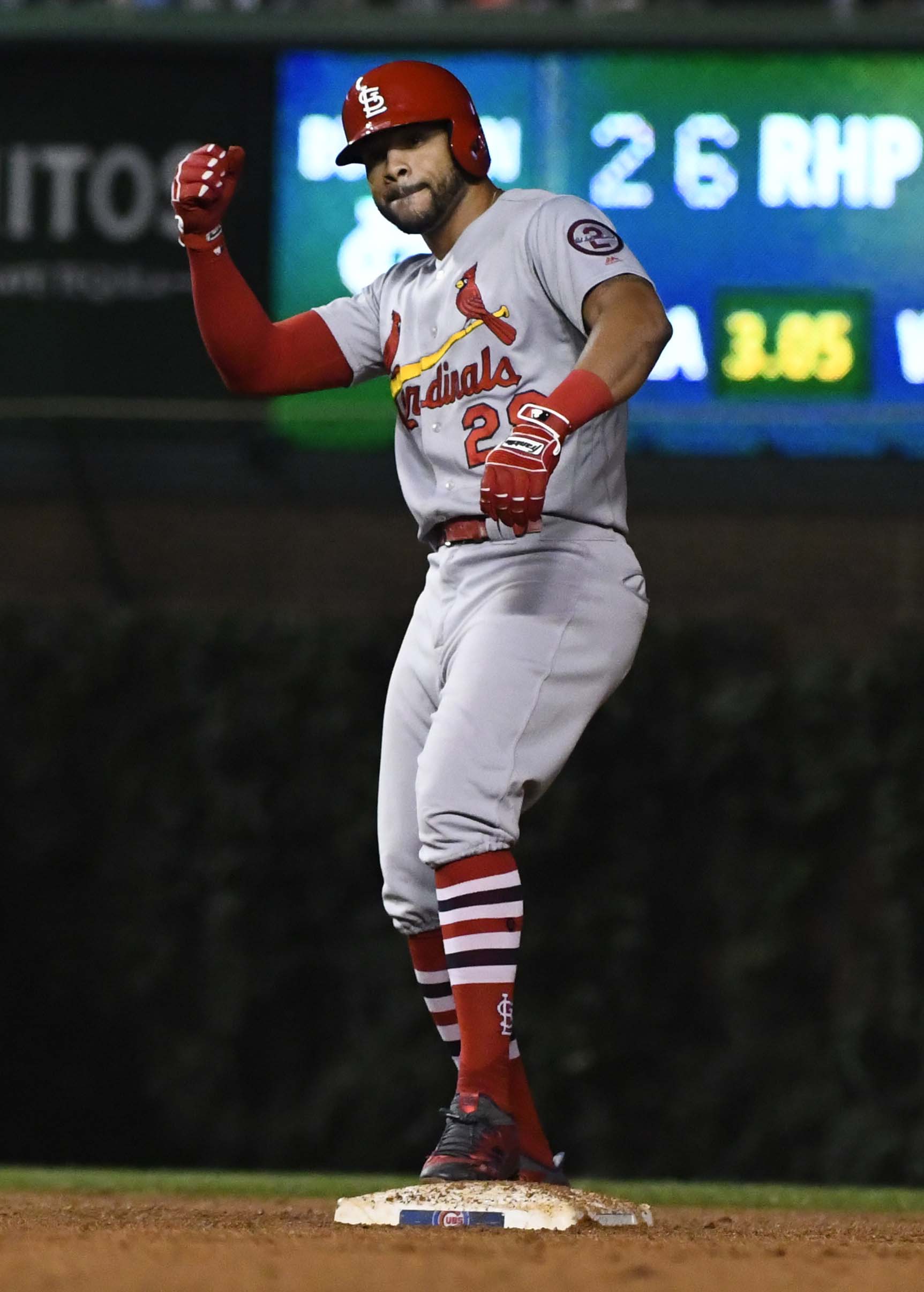
While some may raise an eyebrow at the notion of the Rays adding pieces when they’re firmly out of both the AL East race and the AL Wild Card picture, Pham is controlled for another three seasons beyond the current campaign. Pham will be arbitration-eligible for the first time this offseason and is not eligible for free agency until after the 2021 season, making him an affordable long-term piece to help the Rays as they hope to move back into a contention with a young core built around Blake Snell, Jake Bauers, Willy Adames and others.
For the Cardinals, the trade serves as the latest in a roster shakeup that is approaching cataclysmic proportions. The Cards have designated Greg Holland and Tyler Lyons for assignment, traded Sam Tuivailala to the Mariners and are reportedly open to offers on Bud Norris and Jose Martinez. The Cardinals also sent minor league first baseman Luke Voit to the Yankees (along with international money) in order to acquire a pair of big league bullpen assets in Chasen Shreve and Giovanny Gallegos.
With Pham out of the picture in St. Louis, the Cards will create more opportunity for younger outfield options like Harrison Bader and Tyler O’Neill, though both Marcell Ozuna and Dexter Fowler remain on hand as high-priced, veteran options.
In Pham, the Rays are buying low on a player who has slumped over the past two months but looked to have broken out as one of the National League’s better all-around players in 2017 and in the early stages of the 2018 campaign. From the start of his season in 2017 to the end of May this year, Pham posted a sensational .296/.399/.506 with 32 homers and 33 steals through 734 plate appearances. He’s capable of playing all three outfield spots, though with Kevin Kiermaier serving as one of the game’s premier defenders in center, Pham’s home will likely be in an outfield corner. Of course, Kiermaier has also proven to be injury prone, and Pham provides some insurance in center during future seasons.
It’s worth noting that over the past two months, Pham’s output at the plate has plummeted. He’s posted just a .227/.292/.330 slash through his past 192 plate appearances, though his walk and strikeout rates have remained fairly constant in that time. Pham’s average on balls in play during that stretch is .278, though, and while that isn’t all that far below the league average, it’s considerably south of his career .339 mark. With a lifetime 40.6 percent hard-hit rate and a 22.1 percent line-drive rate, Pham has proven himself to be a hitter capable of sustaining a BABIP better than the league mean, so there’s some reason for the Rays to hope for a turnaround.
In return for Pham, the Cardinals will acquire a package of three prospects that, frankly, would’ve appeared underwhelming when Pham’s value was at its peak. It’s possible, of course, that St. Louis views Pham as an asset that is unlikely to rebound or is particularly high on one or more of the pieces coming over from Tampa Bay, but the package is lacking in the way of top-tier prospects.
Williams, 22, ranked as the Rays’ No. 14 prospect as of last week’s update from Jim Callis and Jonathan Mayo of MLB.com. He’s posted a .258/.313/.376 batting line in 386 plate appearances in his first exposure to Triple-A pitching this season, though he notched a more encouraging .301/.364/.489 slash in Double-A last season. MLB.com’s report praises his athleticism and gives him the potential for 20-plus homer pop, noting that his offensive abilities are still a bit raw but he could become a well-rounded player in an outfield corner.
Cabrera, 21, has a 4.12 ERA with with 9.8 K/9, 4.5 BB/9 and a 34.4 percent ground-ball rate in 113 2/3 innings at the Double-A level this season. He’s been playing against much more experienced competition and, in fact, is in his second run through Double-A after reaching the level as a 20-year-old last year. Callis and Mayo ranked him 25th in Tampa Bay’s system, noting that he has a projectable enough frame to potentially be a starter down the line but a strong enough fastball/slider combo to be a bullpen piece if that doesn’t pan out.
Ramirez, 23, is enjoying a solid season in the Double-A ‘pen, having worked to a 3.32 ERA with 10.2 K/9, 3.8 BB/9, 0.89 HR/9 and a 35.6 percent grounder rate in 40 2/3 innings of work. He’s closer to the Majors than Cabrera, it seems, given his more advanced age, status as a reliever and greater success at that level. He could conceivably emerge as a ‘pen option in St. Louis either this season or next, though was not considered to be among the Rays’ top group of prospects.
Pirates Acquire Keone Kela
The Pirates have officially landed righty Keone Kela from the Rangers, per Jeff Passan of Yahoo Sports (via Twitter). Lefty Taylor Hearn is one of the players in the deal, the Rangers announced. The other remains a player to be named later.
Kela, 25, has turned in a solid season to this point while functioning as the closer in Texas. He’ll presumably slot into a setup role in Pittsburgh in front of Pirates closer Felipe Vazquez.
The move reflects the Bucs’ surprising surge in the standings of late. While the club is still seven back in a tough NL Central division, it’s only four out of the Wild Card race and certainly could end up in postseason position. Of course, this isn’t a purely win-now move by any stretch. Kela, who is earning just $1.2MM this year, will be controllable via arbitration through 2020.
All told, Kela will wrap up his time in Texas with 169 2/3 innings of 3.45 ERA pitching. That’s right where his ERA sits this year, too, though estimators are a bit more bullish on his efforts (2.97 FIP/3.57 xFIP/3.22 SIERA) than the results would indicate. Kela is averaging 10.8 K/9 against 3.4 BB/9 while throwing his fastball at a career-high average velocity of 97.5 mph.
While he has been on an upswing of late, there have been some low points as well. On the heels of a rough 2016 season, Kela found himself in the Rangers’ doghouse after some Spring Training shenanigans. He has also dealt with some problems in his elbow and shoulder, though to this point no major problems have arisen.
The Rangers may have seen this as the right time to cash in Kela, though surely he’d have remained an asset at the back of their bullpen. Given the organization’s need to build a new core, and the abundance of talent elsewhere in the division, it certainly makes sense to move relievers — even established but still-controllable ones.
This swap will bring some real value. Hearn came to Pittsburgh along with Vazquez in the same deadline swap two years ago. He’s widely considered an intriguing hurler, albeit one who’ll have to make some strides to factor as a starter at the game’s highest level.
Whether or not Hearn can tap into his ceiling, he seems likely to be a big-league contributor and there’s good reason to think he’ll at least become a high-quality reliever. Soon to turn 24, Hearn has mowed through the Double-A competition since a slow start to the present campaign. Overall, he owns a 3.12 ERA with 9.3 K/9 and 3.3 BB/9 on the year. Jim Callis and Jonathan Mayo of MLB.com ranked him seventh among Pirates farmhands in their midseason re-ranking of the organization, lauding his 97-98 mph heater and above-average changeup while also noting the need to improve his slider and the control of his entire repertoire.
Photo courtesy of USA Today Sports Images.
Red Sox Acquire Ian Kinsler
The Red Sox have struck a deal to bring in second baseman Ian Kinsler from the Angels, per Ken Rosenthal of The Athletic (via Twitter). Minor-leaguers Williams Jerez and Ty Buttrey are going to the Halos in return, as Jon Heyman of Fancred was first to tweet.
Boston will also receive some money in the deal, per reports from Evan Drellich of NBC Sports Boston (Twitter links) and Rosenthal (via Twitter). The Sox will receive $1.83MM, about half of the $3.6MM or so still owed to Kinsler, who is earning $11MM this year before reaching free agency at season’s end.
Kinsler, 36, remains a solid performer at his native second base. He has boosted his output at the plate with a recent tear, leaving him with a .239/.304/.406 slash for the season — good for a 97 wRC+. He still produces his share of home runs (13) and steals (9). And Kinsler remains a top-end defender.
All told, Kinsler seems to be quite a worthwhile addition for the Sox, who needed to account for ongoing uncertainty surrounding Dustin Pedroia. While the team has generally struck an optimistic tone on Pedroia, it’s anyone’s guess whether and when he’ll be back in action. At the very least, he’ll now face much less pressure to get on the field quickly, which may be best for both him and the team in the long run.
Certainly, the veteran second bagger is a known commodity to Red Sox president of baseball operations Dave Dombrowski, who previously brought Kinsler onto the Tigers. Dombrowski might have stayed his hand, or opted for a lesser addition. But third baseman Rafael Devers recently went down as well further increasing the need to boost the infield depth. And given Boston’s compelling start to the season, there’s every reason to push the pedal to the floor to maximize the team’s chances of taking the AL East and navigating what promises to be a powerhouse AL postseason field.
Meanwhile, this deal delivers a consolation prize to the Angels, whose season started with great promise but crumbled as injuries mounted. Both of the team’s new assets are reasonably interesting, advanced pitchers who ought to help pad the organization’s depth charts as it enters an interesting offseason.
The 25-year-old Buttrey ranked 19th on MLB.com’s mid-season ranking of the Red Sox’ top prospects. The scouting report isn’t particularly optimistic, noting that he lacks movement and command on his high-velo heater and still hasn’t fully developed a reliable secondary offering. Still, Buttrey has impressed this year at Triple-A, turning in 44 frames of 2.25 ERA pitching with 13.1 K/9 and 2.9 BB/9.
Jerez, 26, was also listed among Boston’s top thirty farm assets. The southpaw is a converted outfielder who has been working things out in the upper minors for several seasons now. While Jerez is currently showing a nice boost in his strikeout rate, which is up to 11.8 per nine at Triple-A, he’s also issuing a few too many walks (4.2 per nine) and has continued to struggle against right-handed batters. As things stand, he seems to profile mostly as a lefty specialist.
Photo courtesy of USA Today Sports Images.
Braves Acquire Adam Duvall From Reds For Lucas Sims, Matt Wisler, Preston Tucker
The Braves have acquired outfielder Adam Duvall from the Reds in exchange for a trio of players, all of whom have MLB experience. Cincinnati receives righties Lucas Sims and Matt Wisler along with outfielder Preston Tucker. At first glance, it’s something of a swap of unwanted assets, as both teams clearly had different plans with their roster spots.
For the Atlanta organization, this represents an easily justifiable roll of the dice on Duvall. As he closes in on his 30th birthday, Duvall is stuck in a rough campaign. But he has huge power — he topped thirty bombs in each of the past two seasons — and also grades out as a high-end defender in left field.
In the near-term, Duvall will bolster the current outfield mix. Even if he isn’t able to boost his productivity at the plate all that much, he has been much better against left-handed pitching this season and over his career. The opposite is true of struggling Braves center fielder Ender Inciarte, who could give way to phenom Ronald Acuna up the middle when the situation calls for it.
There’s also some future value here for the Braves to hope for. Duvall is heading into arbitration this fall for the first time. While he’ll likely be relatively expensive given his lofty home run rate and ample playing time in recent seasons, he could still be quite a valuable asset. With Nick Markakis headed to free agency, the organization does need corner outfield options.
First, though, Duvall will have to sort himself out. Through 370 plate appearances this season, he has an even 100 strikeouts. While his walk rate is up to a career-high 9.2%, Duvall is carrying a .286 OBP on the season and owns a piddling .294 lifetime mark. Believers in Statcast data will certainly note that the slugger has a promising .349 xwOBA to date on the year, far superior to the .295 wOBA he has actually produced.
Though this swap may not bring the promise of a massive near-term upgrade, it’s a clever means of improving the roster both now and in the future. It is somewhat more difficult to understand the move from the Reds’ perspective, unless one presumes that the club simply decided it wished to part ways with Duvall and that this was the time to do so.
Indeed, Reds president of baseball operations Dick Williams says that one aspect of the deal was a desire to go in another direction in the corner outfield, as C. Trent Rosecrans of The Athletic tweets. Jesse Winker may be out for the rest of this season, but he’ll now presumptively line up across from Scott Schebler next year. That leaves unanswered what the team will do up the middle with Billy Hamilton, who continues to run and defend with aplomb while barely hitting at all.
It’s a bit of a curious return for Duvall — who, to be fair, likely wasn’t drawing many strong prospect offers — but one that probably appeals more to the Reds than it would to just about any other organization. All three players acquired will require 40-man spots, yet none has carved out a permanent MLB job to this point despite receiving some opportunities to do so.
Perhaps one’s view of the swap hinges upon how you view the arms that are going to Cincinnati. For the Braves, both were simply upper-level depth pieces who were likely to be squeezed out as rising talents reach the majors or require Rule 5 draft protection. For a Reds organization whose pitching rebuilding effort hasn’t been quite as promising, either or both could perhaps become sources of affordable, useful innings.
The 24-year-old Sims, a 2012 first-rounder, has struggled through twenty MLB outings (including ten starts) over the past two seasons. He has spent most of the present season at Triple-A, where carries a 2.84 ERA with 10.2 K9 and 4.2 BB/9 over 73 innings. As for Wisler, 25, he has limped to a 5.27 ERA in 324 2/3 lifetime MLB frames. The former top prospect has posted a nice combination of 8.4 K/9 and 1.8 BB/9 at Triple-A this year, but owns only a 4.37 ERA in seventy innings there.
For the time being, Tucker will help fill the opening created by the trade itself. He could in theory be a future reserve piece for the Reds, but he hits from the left side of the plate — an attribute he shares with all of the above-cited Cincinnati outfielders. The 28-year-old hit well in his run in the majors this year, posting a slighly-above-average .256/.307/.444 slash in 127 plate appearances, but has struggled in limited action at Triple-A.
Photo courtesy of USA Today Sports Images.
“Strong Possibility” Johnny Cueto Will Require Tommy John Surgery
There’s a “strong possibility” that righty Johnny Cueto will require Tommy John surgery, Giants manager Bruce Bochy told reporters today, including Kerry Crowley of the Bay Area News Group (via Twitter). Cueto was placed on the disabled list earlier this evening.
Though clearly a final decision has yet to be made, it’s obviously poor news for a Giants organization that surely hoped for quite a bit more from the veteran starter. Cueto already missed over two months of the season due to a sprained right elbow, and he clearly hasn’t been pitching at full capacity since his return — the veteran righty has a 6.86 ERA in his four starts (21 IP) since being activated off the 60-day disabled list.
Between that extended stint and a brief 10-day DL stay due to a sprained ankle in April, Cueto seems set to finish his 2018 campaign with only 53 innings pitched. To make matters even more frustrating for both the player and his team, Cueto’s numbers over his first five starts were outstanding. He has a microscopic 0.84 ERA over his first 32 innings of the season, doing his best to carry an injury-riddled Giants rotation in April. It appeared as though Cueto had bounced back from a subpar 2017, but he now faces a major injury setback that will keep him sidelined for potentially all of the 2019 season, given the 12-16 month recovery window for Tommy John patients.
Cueto has generally been a durable arm over his career, notching four seasons of 200+ innings since 2012. He had a minor elbow issue in 2015, though that didn’t stop the Giants from signing Cueto to a six-year, $130MM contract in the 2015-16 offseason, and Cueto certainly didn’t look anything less than first-rate in his initial season in San Francisco (2.79 ERA, 8.1 K/9, 4.4 K/BB rate over 219 2/3 innings). A flexor strain and some blister issues cropped up in 2017, however, and Cueto managed just a 4.52 ERA over 147 1/3 innings.
This performance led Cueto to forego exercising his player opt-out clause following the 2017 season, leaving the Giants fully on the hook for the remainder of the contract. Cueto is owed $21MM in 2019, 2020, and 2021, and the Giants have a $22MM club option for the 2022 campaign that carries a $5MM buyout. Next year’s salary is now all but a write-off for the team, and since Cueto turns 33 in February, it can’t be certain that he’ll resume his front-of-the-rotation form when he eventually does return.
Tonight’s win over the Padres brought the Giants’ record to an even 54-54, and with a third of the season to go, the club is five games back in the NL West race and 5.5 games out of a wild card slot. Giants GM Bobby Evans recently indicated that his team still saw itself as a contender, and have been connected to a variety of names on the trade market in recent days. With the Giants already trying to thread the needle of making deadline upgrades without putting payroll over the luxury tax threshold, however, it could be that Cueto’s absence may turn San Francisco towards selling. MLB.com’s Jon Paul Morosi has reported that the Giants are indeed now open to trading pending free agents as they look ahead to 2019.
Without Cueto, the Giants’ rotation for next season currently projects as ace Madison Bumgarner (whose $12MM club option is an no-brainer pickup), a veteran who has dealt with his own share of injury problems in Jeff Samardzija, Andrew Suarez and Dereck Rodriguez (who have both pitched well in their rookie seasons). The Giants could look internally and give Ty Blach or Chris Stratton another crack at the fifth starter’s job, or it’s also possible the team could look to add a more established arm this winter. The Giants will be in a position to spend, after all, since they’ll only be charged the first-time offenders’ rate for luxury tax overages after getting back under the tax limit this season. The Brian Sabean/Bobby Evans front office hasn’t been shy about making bold moves for veterans, so expect the Giants to be linked to several big-name pitchers on the free agent and trade fronts this offseason.
Yankees Acquire Lance Lynn From Twins For Tyler Austin
The Twins and Yankees have announced a trade that will send veteran righty Lance Lynn to New York. First baseman/outfielder Tyler Austin and minor-league right-hander Luis Rijo are headed to Minnesota.
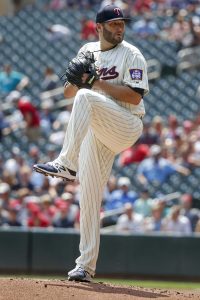
Notably, the Twins will also send some cash in the swap. Lynn is earning $12MM this year, around $4MM of which remains to be paid. The sides will split the paychecks from this point forward. That will allow the Yankees to remain more or less cash-neutral after sending out righty Adam Warren in another trade this evening.
The Yanks clearly prefer Lynn to Warren, as the former will take the place of the latter on the roster. Though Lynn has worked exclusively as a starter since establishing himself in the majors, he seems likely to work from the bullpen upon his arrival in New York. While his numbers lag those of Warren, though, Lynn provides a clear backstop in the rotation.
There have been some positives this year for Lynn. He’s getting swinging strikes (10.1%) and groundballs (50.8%) more than ever before while operating near his peak velocity levels (94.1 mph). Still, there’s no sugarcoating the results. Through 102 1/3 innings in Minnesota, Lynn allowed 5.10 earned runs per nine.
While the magnitude of his difficulties has come as a surprise, many observed that the long-effective hurler seemed a strong candidate for regression when he reached the open market last winter. He had enjoyed a string of seasons in which he suppressed home runs to an extent that did not seem sustainable, then benefited from an unnaturally low BABIP-against (.244) upon returning from Tommy John surgery in 2017. This year, Lynn has allowed a .322 BABIP and 15.0% rate of home runs per flyball.
Of course, the market was aware of those concerns and priced them in. Lynn’s body of work still seemed impressive enough to support a multi-year deal, but he settled for a $12MM pillow contract with the Twins. The organization didn’t get what it bargained for, but then it also doesn’t need to worry about any ongoing salary entanglements.
Austin was a piece the Yankees could part with at will, as he just did not seem to have a place on the active roster and was in his final optionable year. The 26-year-old split the 2018 season between the majors (where he produced at a league-average clip) and Triple-A. In parts of four seasons at the highest level of the minors, Austin carries a .270/.347/.479 sash with 32 home runs through 829 plate appearances. He’ll likely enter camp next year with at least a shot at carving out a role on the 2019 Minnesota roster.
As for Rijo, he won’t turn twenty until September but did recently crack the High-A level. In 39 innings on the year in the low minors, he carries a 2.77 ERA with 32 strikeouts against just three walks.
Jon Heyman of Fancred (Twitter links) first reported the deal, with Joel Sherman of the New York Post tweeting it was for Lynn. Both reporters also had further details (Twitter links.)
Photo courtesy of USA Today Sports Photos.
Mariners Acquire Adam Warren
Less than an hour after acquiring lefty Zach Duke in a trade with the Twins, the Mariners announced that they’ve landed right-hander Adam Warren from the Yankees in exchange for international bonus pool allocations. Seattle didn’t specify the amount in its release, though they’re reported to be sending $1.25MM of slot money to New York in the swap. In order to open a spot on the 40-man roster, the Mariners designated infielder Gordon Beckham for assignment.
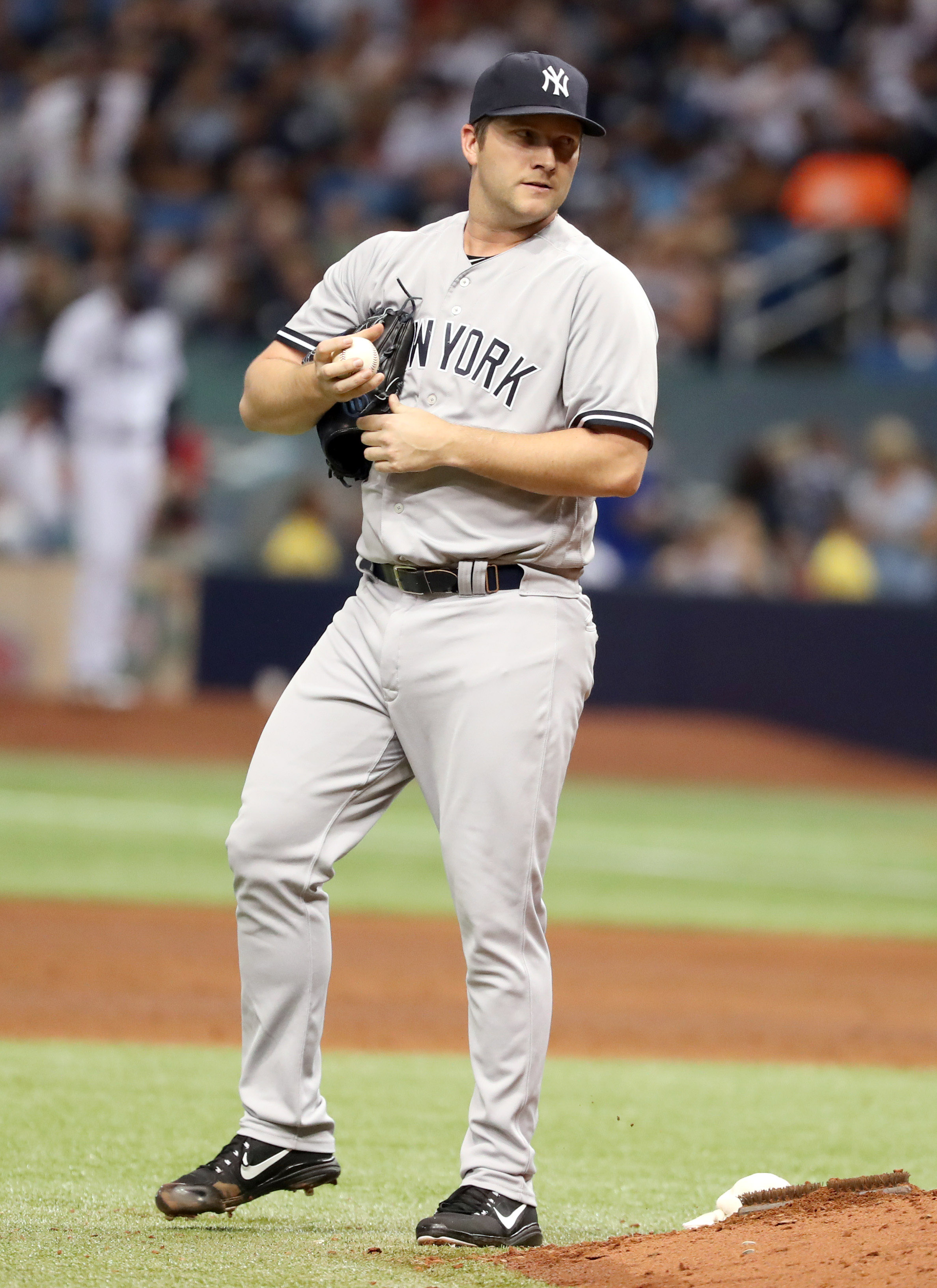
Warren, who’ll soon turn 31, is earning $3.32MM on the year and is still owed $1.106MM of that sum. That’ll now become the responsibility of the Mariners, who’ll control Warren only until the end of the season, when he’s set to become a free agent.
The move promises to deepen the Seattle relief unit by adding a hurler who has been quite successful while pitching on a big stage in New York. Though Warren struggled in a stint with the Cubs in 2016, he carries a 3.18 ERA in 407 career frames with the Yanks.
This year, Warren has shown an ability to generate quite a few more strikeouts (11.1 per nine innings) than he has over his career (7.9). He is carrying a career-best 11.0% swinging-strike rate, though he has been near that number in some prior seasons. Through thirty frames, Warren owns a 2.70 ERA. While he has struggled a bit against lefties, he has dominated right-handed hitters, who have produced a paltry .169/.246/.271 slash against him.
The veteran Beckham, 31, appeared in 13 games with Seattle this season and batted just .200/.263/.229 in 40 trips to the plate. He’d been with Seattle’s top affiliate in Tacoma, where he’d delivered a productive .305/.406/.469 slash through 315 plate appearances. The Mariners will have a week to trade Beckham, release him or run him through outright waivers in an attempt to keep him in the organization.
For the Yanks, this swap tweaks the club’s pitching mix, as it paved the way for New York’s acquisition of Lance Lynn from the Twins in exchange for Tyler Austin and prospect Luis Rijo. While Lynn doesn’t have an appealing ERA this year, he has loads of rotation experience and thus provides some added protection in that area. Plus, the move effectively allows the club to swap out some of its upper-level talent for far-away prospects, much as it has done in recent trades with the Cardinals and with the White Sox that have brought international spending money into the Yanks’ coffers.
Ken Rosenthal and Emily Waldon of The Athletic first reported the deal (via Twitter). MLB.com’s Mark Feinsand tweeted news of the return.
Mariners Acquire Zach Duke
5:01pm: MLB.com’s Mark Feinsand tweets that the Twins sent $75K to the Mariners in the deal, which will leave Seattle on the hook for just over $600K of Duke’s salary.
4:36pm: The Mariners have deepened their relief corps as they continue to stock up for a potential postseason run, adding veteran lefty Zach Duke in a trade with the Twins. In exchange for Duke, an impending free agent who is owed about $683K of his $2.05MM salary through season’s end, Minnesota will receive right-hander Chase De Jong and minor league corner infielder Ryan Costello. Because De Jong was already on the Mariners’ 40-man roster, Seattle won’t need a corresponding move for Duke.
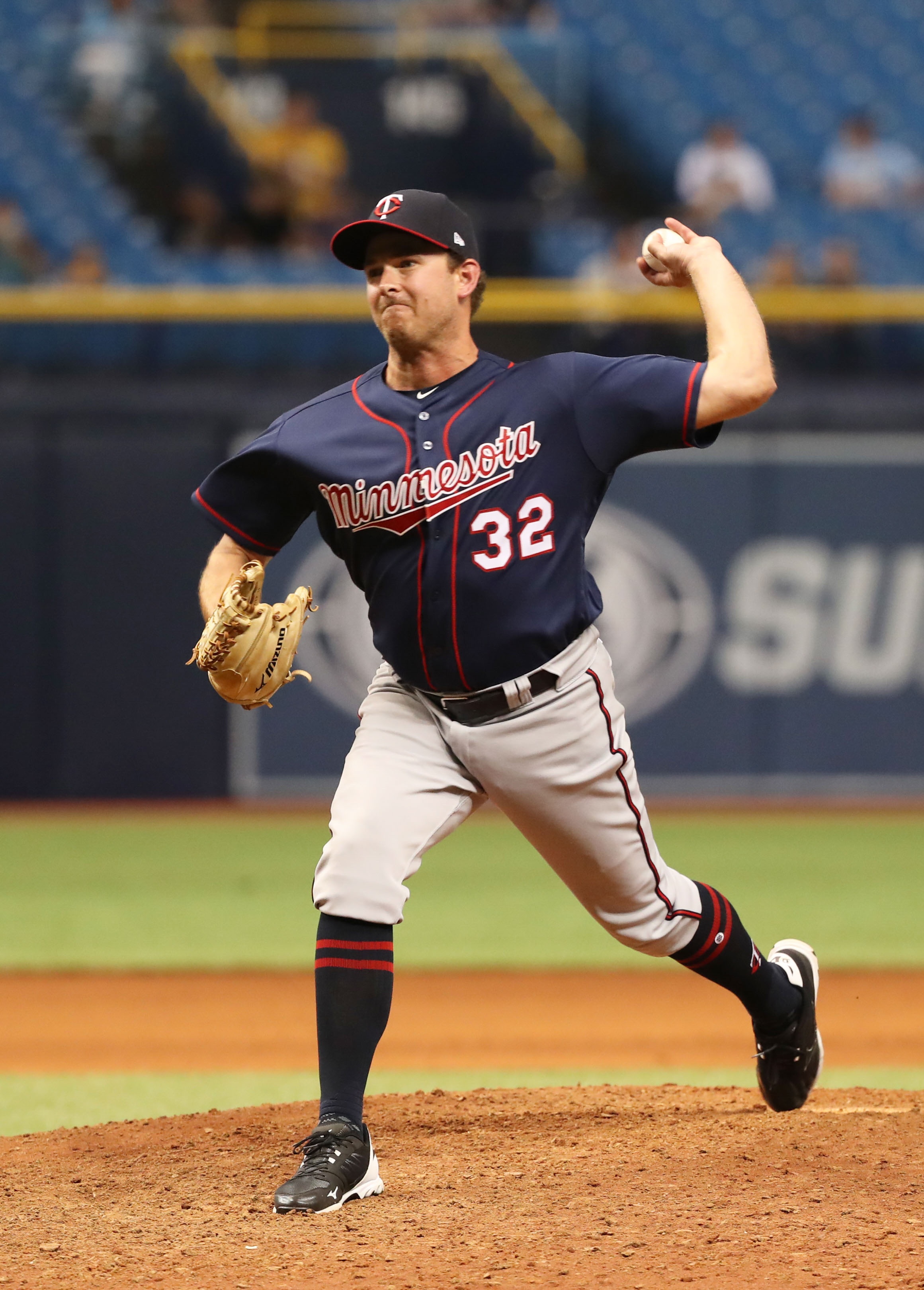
Duke, 35, had Tommy John surgery in 2016 but returned for the last couple months of the 2017 season and pitched well enough to land a big league deal from the Twins this offseason. Minnesota was rewarded with 37 1/3 innings of 3.62 ERA ball from Duke, who has averaged 9.4 K/9 and 3.6 BB/9 without allowing a home run this season. Duke’s superb 58.8 percent ground-ball rate ties a career-high (set in 2016 prior to his surgery).
As one would expect, Duke comes with a fairly notable platoon split. Minnesota has used him in 45 games this season but only allowed him to total 37 1/3 innings — a split that is indicative of his status as more of a lefty specialist than a full-inning setup piece. Indeed, left-handed opponents have mustered just a .237/.274/.288 slash against Duke, while righties have hit slashed a much more potent .303/.409/.351 against the veteran southpaw.
Duke will give the Mariners a lefty option to step into the role which Seattle had hoped fellow veteran Marc Rzepczynski could fill in 2017-18. Unfortunately for Seattle, Rzepczynski’s two-year, $11MM deal proved to be a substantial misstep. “Scrabble” struggled in both seasons with Seattle and was released earlier this season. Duke will complement James Pazos and Roenis Elias as southpaw options in manager Scott Servais’ bullpen, giving him a trio of lefties to deploy as matchups dictate.
As for the Twins, they’ll acquire a former second-round pick (Blue Jays, 2012) with minor league options remaining in De Jong. The 24-year-old made his big league debut with Seattle last season but was hit hard in 28 1/3 innings. De Jong yielded 20 runs on 31 hits (five homers) and 13 walks with just 13 strikeouts in 28 1/3 MLB frames last season.
That said, De Jong is still just 24 years of age and has had a solid, if unspectacular season pitching for Seattle’s Double-A affiliate this season. Through 120 2/3 innings, De Jong has notched a 3.80 ERA with 6.6 K/9, 2.5 BB/9, 0.9 HR/9 and a 39.2 percent ground-ball rate. Despite some big league experience, he technically retained his prospect status and ranked 28th in an admittedly dismal Mariners’ farm system, per Jim Callis and Jonathan Mayo of MLB.com.
Costello, 22, was the Mariners’ 31st-round pick in the 2017 draft out of Central Connecticut State University. He’s posted solid numbers in the Class-A Midwest League this season, though as a college bat playing against younger competition, that should be the expectation. In 406 trips to the plate, Costello has hit .266/.360/.486 with 16 homers, 24 doubles and a pair of triples while posting a 12.6 percent walk rate against a 20.2 percent strikeout rate. He won’t factor in anywhere near the top of the Twins’ prospect rankings, but he’ll add a left-handed bat with some pop to the lower levels of the Twins’ system.
De Jong is the more immediate return for the Twins, and while he profiles more as a swingman than a rotation option, that’s not a bad return for a couple of months of a lefty specialist who was set to hit free agency. Of course, it’s also a pretty easy commodity for the Mariners to surrender in order to improve their options in high-leverage spots down the stretch and, ideally, into the postseason. It’s hardly an exciting trade, but it’s one that makes a fair bit of sense for both parties involved.
Jon Heyman of Fancred reported that the Mariners had a deal to acquire Duke (via Twitter). Joel Sherman of the New York Post reported the return (also via Twitter).
Astros Acquire Roberto Osuna, Send Ken Giles To Blue Jays
The Astros have struck a deal to acquire relief pitcher Roberto Osuna from the Blue Jays, as Ken Rosenthal of The Athletic first reported (links to Twitter). Former Astros closer Ken Giles is heading to Toronto along with righties Hector Perez and David Paulino. The Jays announced that they’ve designated righty Oliver Drake for assignment and moved Josh Donaldson to the 60-day disabled list in order to clear roster space for Giles and Paulino, each of whom is on the 40-man roster.
This is a rather jarring swap that’ll surely ignite quite a reaction. Both of these pitchers have been working at Triple-A recently, for rather different reasons, despite generally excellent track records in the majors.
Osuna is currently pitching on a rehab assignment while serving a suspension under the MLB-MLBPA Joint Domestic Violence, Sexual Assault and Child Abuse policy. He is also still facing domestic assault charges in Canada for alleged crimes against his girlfriend.
Up until his arrest in early May, Osuna was widely regarded as one of the game’s most exciting and valuable young relief pitchers. He was in typically excellent form to begin the present season, as he has been ever since breaking into the majors at the start of 2015. Osuna has worked as the Toronto closer for much of that time, accumulating 104 saves in 223 innings.
Despite the fact that Osuna is still in legal limbo for a despicable alleged crime, the defending World Series champions have decided to add him to their relief corps. The 23-year-old will be eligible to return from his suspension on August 5th and will not be precluded from participating in the postseason. (Unlike the rules involving players banned for PEDs, domestic violence-related bans do not come with limitations on the playoffs.) That said, his legal situation could still theoretically impact his availability, owing to trial involvement, potential prison time, and travel issues.
Houston GM Jeff Luhnow and Osuna have each released statements (via Mark Berman of FOX 26, Twitter links). Luhnow says the team is “confident that Osuna is remorseful, has willfully complied with all consequences related to his past behavior, has proactively engaged in counseling, and will fully comply with our zero tolerance policy relate to abuse of any kind.” Notably, there’s no specification of just what “past behavior” is at issue. Osuna, meanwhile, stated that he is excited to play for the team, but did not even reference his alleged malfeasance.
As for Giles, 27, his recent problems have been tied more closely to his performance on the mound. He had maintained a typically strong mix of strikeouts and walks (31:3) in his 30 2/3 innings to open the season and only allowed a pair of long balls. Yet Giles was also tagged for 17 earned runs on 36 base hits.
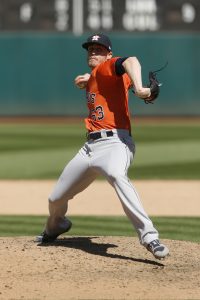
The struggles came to a head earlier this month, as Giles was pulled from an appearance and perhaps offered some choice words for his skipper. Regardless of just what happened, the decision was made that some time in the minors was on order for a reliever who had limped to a 4.99 ERA. It didn’t help, surely, that Giles struggled during the Astros’ World Series run.
There’s still plenty to like about Giles, of course. He’s averaging about 98 mph with his fastball and maintaining an excellent 16.4% swinging-strike rate, in line with his career numbers. He has never before been so stingy with free passes. While there has certainly been a rise in the hard contact Giles has surrendered, the tools seem to remain in place for a turnaround.
Though the two players’ once-similar paths have diverged in other ways, they remain a near-perfect match in terms of contract situations. Both are headed for free agency after the 2020 season. Giles is earning a bit less than Osuna this year ($4.6MM vs. $5.3MM), but those salaries will likely even out this fall since the former will have logged quite a few more MLB innings than the latter.
From a baseball perspective, Osuna seems clearly to be the most talented player in this deal. He has no real blemishes on his pitching record and could well be a critical piece of the Astros’ attempt to hang another banner while still maintaining its store of prospect capital. Of course, there’s also an unsavory reason that the club was able to achieve such potential value.
It seems the Blue Jays, in the midst of a failed season, decided to get what they could for a disgraced player. Though the team suggested otherwise publicly, MLB.com’s Jon Morosi tweets that the Jays had decided already to trade Osuna rather than allow him back on their active roster.
Giles certainly seems a worthwhile player to take a chance on, but the other pieces are notable as well. Paulino will bring his own baggage up north, as his once-bright prospect star faded after a PED suspension last year. He also had bone spurs removed from his elbow last fall and has been limited to seven appearances in the minors. He has allowed 11 earned runs in 18 Triple-A frames, but has also recorded a healthy 23:5 K/BB ratio.
Perez is another fairly advanced hurler of note. He has handed out far too many walks during his time on the Houston farm, but has also shown some swing and miss ability. Perez recently moved up to the Double-A level. In 89 1/3 total frames on the year, most at High-A, he’s carrying a 3.73 ERA with 10.2 K/9 and 4.8 BB/9. While there’s obviously some polish still needed, Perez has drawn plaudits from prospect hounds who love his pure stuff and think he could potentially still harness his command enough to make it into a MLB rotation — or, if not, turn into a nice high-leverage bullpen piece.
As for the corresponding moves made by Toronto, the DFA of Drake comes as little surprise, given that the righty was only recently claimed off waivers last week and had made just two appearances with the Blue Jays — his fourth MLB organization of the season. He’ll be traded, outrighted or released within the week. Moving Donaldson to the 60-day DL is merely a procedeural move; he’s not expected back until next month anyhow and will have missed far more than the requisite 60 days in total by the time he’s ready for activation.
Photos courtesy of USA Today Sports Images.
Braves To Promote Kolby Allard
3:32pm: Manager Brian Snitker confirmed to reporters that Allard will indeed make his Major League debut Tuesday (Twitter link via Gabe Burns of the Atlanta Journal-Constitution). A corresponding 40-man move remains unclear and likely won’t be known until after tonight’s game.
1:35pm: The Braves will promote top pitching prospect Kolby Allard to make his Major League debut and start tomorrow’s game against the Marlins, reports David O’Brien of The Athletic (via Twitter). O’Brien had recently tweeted that Allard was a candidate to make his MLB debut in a spot start this week. Allard isn’t on the 40-man roster, so the Braves will need to make a corresponding move to accommodate his promotion.
Allard will become the second 20-year-old starter to make his debut for the Braves in 2018, joining fellow 2015 first-rounder Mike Soroka in that regard. Allard didn’t rank as highly on most midseason prospect rankings as he did when his stock was at its peak, but he still checks in 93rd overall per Jonathan Mayo and Jim Callis of MLB.com, and it’s hard to argue with the results that he’s delivered this season in his first exposure to Triple-A.
Through 109 1/3 innings at that level, Allard has worked to a 2.80 ERA with 7.2 K/9, 2.7 BB/9, 0.49 HR/9 and a 38.8 percent ground-ball rate in 18 starts. Allard hasn’t missed bats like he did in the lower minors since reaching Double-A, and he does bring a history of back injuries to the Braves, but he’s a potential mid-rotation arm who’ll add yet another high-upside piece to a growing collection of starting options on the Braves’ 40-man roster.
Given the timing of Allard’s promotion, he’ll be controllable through at least the 2024 season for the Braves, though that could push into 2025, depending on how much time he spends at the big league level in each of the next few seasons. He wouldn’t be on track for Super Two status as things stand, though as with his path to free agency, that could change depending on how often (if at all) he’s shuttled back and forth between Triple-A Gwinnett and the Majors.
In what looks to be a very temporary move, Allard will step into a rotation that also features Mike Foltynewicz, Sean Newcomb, Julio Teheran, Anibal Sanchez and Max Fried, though there’s been enough uncertainty at the back of the rotation that he could work his way into a more permanent role. The Braves have been tied to a variety of pitching upgrades as tomorrow’s non-waiver trade deadline approaches, and it remains to be seen just how their pitching staff will look following that 4pm cutoff.
That said, now that Allard is on the 40-man roster, he’ll join Fried, Luiz Gohara and several others who’ve oscillated between Gwinnett and Atlanta this season as the Braves have patched together both the bullpen and the back of their rotation. And, of course, his addition to the 40-man roster means he’ll be a lock to join the club at some point as a September call-up as well.