
The Risk/Reward Of Acquiring Players With Opt-Outs
With four weeks until the trade deadline, a lot remains uncertain. Most teams still find themselves in a muddled middle and will wait until the last few days to determine how aggressively they'll buy or sell. That's especially true in the National League, where nine teams are within six games of one another as they fight for the final two Wild Card spots. The Mets, Giants and Cubs are among those borderline contenders. It wouldn't be especially surprising to see any of them wind up as sellers depending on how they play over the next few weeks.
The Mets are the NL's top non-playoff team and approaching the deadline as a buyer for the moment. Dropping a few games back in the standings by the end of the month could change that mentality. San Francisco and Chicago are a little further out and perhaps likelier sellers. Cubs president of baseball operations Jed Hoyer suggested late last week that the team would need to perform better to avoid a sell-off. Why focus on those three specifically? Each has a notable player who'd be desirable trade candidates if not for their contract structures.

Unlock Subscriber-Exclusive Articles Like This One With a Trade Rumors Front Office Subscription
- Access weekly subscriber-only articles by Tim Dierkes, Steve Adams, and Anthony Franco.
- Join exclusive weekly live chats with Anthony.
- Remove ads and support our writers.
- Access GM-caliber tools like our MLB Contract Tracker
Orlando Cepeda Passes Away
Hall of Famer Orlando Cepeda has passed away at age 86, the Giants announced. Cepeda played nine of his 17 MLB campaigns in San Francisco and won the 1967 National League MVP award as a member of the Cardinals.
A native of Ponce, Puerto Rico, Cepeda secured a minor league contract with the Giants in 1955. He hit 22 home runs as a 17-year-old in his first minor league season, hinting at the power he’d eventually show in the big leagues. Cepeda quickly hit his way up the ladder, reaching the majors midway through April in 1958. His arrival coincided with the franchise’s move to San Francisco.
The first baseman wasted no time in cementing himself as one of the faces of the organization. He raked at a .312/.342/.512 clip with 25 homers and a National League-high 38 doubles at age 20. Cepeda was a unanimous choice as the Senior Circuit’s Rookie of the Year and finished ninth in MVP balloting. While he didn’t earn an All-Star selection in his first season, Cepeda would earn trips to the Midsummer Classic in the six seasons thereafter.
The 6’2″ slugger reached 35 doubles and topped 20 homers in his second and third years. He took his already excellent form to another level in his fourth season. Cepeda blasted a career-high 46 longballs to top the National League. He drove in a staggering 142 runs while hitting .311/.362/.609 over 152 contests. Cepeda led the majors in RBI and finished runner-up to Frank Robinson in MVP balloting.
While he didn’t quite match those numbers in 1962, Cepeda popped another 35 homers and drove in 114 runs. He finished 15th in MVP voting and helped the Giants capture the pennant. He didn’t have a great World Series as the Yankees dropped the Giants in a seven-game set, but he’d get another couple cracks at the Fall Classic later in the decade.
Those didn’t come in San Francisco. Cepeda remained a productive hitter for the next couple seasons, topping 30 homers while hitting over .300 in each of the next two years. He lost most of the ’65 campaign to injury, though, putting something of a sour end on an illustrious run with the organization. The Giants traded Cepeda to the Cardinals for left-hander Ray Sadecki in May 1966. While Sadecki was a solid starting pitcher for the next couple seasons, that blockbuster turned out squarely in the Cards’ favor.
Cepeda hit .303/.362/.469 in his first year with the Cardinals. He paced the NL with 111 RBI the following season, running a .325/.399/.524 line over 644 plate appearances. Cepeda helped the Cardinals to 101 wins and a trip to the World Series. He topped teammate Tim McCarver to win the MVP. While Cepeda only had three hits in the Series, the Cards triumphed over the Red Sox in seven games to claim the eighth title in franchise history.
The Cardinals won a second straight pennant the following season, though they fell to the Tigers in the ’68 World Series. St. Louis traded Cepeda to the Braves the following Spring Training in a one-for-one swap for Joe Torre. The star catcher and future Hall of Fame manager would win the ’71 MVP in St. Louis, so the Cardinals netted a future MVP on both ends of their respective Cepeda trades.
Cepeda was a key contributor for Atlanta over three and a half seasons in his own right. He remained a well above-average hitter, running a .281/.343/.486 line in 401 games as a Brave. Atlanta traded him to the A’s in 1972 for Denny McLain, a deal that didn’t work out for either team. Cepeda signed with the Red Sox as a full-time designated hitter in 1973 and hit .289/.350/.444 to earn a few more down-ballot MVP votes. He retired after a brief stint with the Royals the year after.
Over a career that spanned parts of 17 seasons, Cepeda hit .297/.350/.499 in more than 2100 games. He finished his playing days with 379 home runs, 2351 hits and 1365 runs batted in. He’s 74th on the all-time leaderboard in homers and tied with Garret Anderson for 87th in RBI. Cepeda spent 15 years on the Hall of Fame ballot, falling just shy of induction with 73.5% of the vote share in his final year (1994). Five years later, he was enshrined by the Veterans Committee.
While Cepeda had an accomplished run for three franchises, he’ll always be best remembered for his time with the Giants. He hit .308/.352/.535 in more than 4500 plate appearances in a San Francisco uniform. The franchise retired his #30 and unveiled a statue in his honor outside of Oracle Park back in 2008. His passing unfortunately comes only 10 days after the death of his longtime teammate and fellow Giants/MLB icon Willie Mays. MLBTR joins others throughout the sport in sending condolences to Cepeda’s family, loved ones, former teammates and the countless fans whose lives he touched over his excellent career.
Coco Montes Expected To Sign With NPB’s Yomiuri Giants
Infielder Coco Montes has an agreement with the Yomiuri Giants pending a physical, reports Francys Romero (X link). The South Florida product had been in Triple-A with the Rockies before being granted his release earlier this week.
Montes had a cup of coffee at the big league level a year ago. He appeared in 18 games for the Rox, hitting .184/.244/.316 over 41 plate appearances. Montes spent the remainder of the season with Triple-A Albuquerque, running a .317/.400/.551 slash line over 107 contests. Teams were skeptical about that production given Albuquerque’s very hitter-friendly nature and he cleared waivers in September.
The 27-year-old returned to the Isotopes this season. He has been one of the more productive hitters in the Pacific Coast League, turning in a .335/.414/.551 mark with nine homers through 297 plate appearances. While it wasn’t enough to get Montes another look in the Colorado infield, it caught the attention of the NPB’s Giants. He’ll head overseas for the first time in his career, a deal that surely comes with a nice pay bump relative to what he’d been making in Triple-A.
Orioles Sign Niko Goodrum, Burch Smith To Minor League Deals
The Orioles announced the signing of utility player Niko Goodrum and reliever Burch Smith to minor league contracts. Both players hit free agency last week — Goodrum after clearing outright waivers by the Pirates, Smith upon being released by the Marlins.
Goodrum is on his fifth organization of the season. He has bounced between the Twins, Rays, Angels and Pirates going back to Spring Training. The switch-hitter has appeared in 13 big league contests split between Tampa Bay and Los Angeles. He’s hitting .103/.188/.103 with 10 strikeouts and three walks. Goodrum has logged 75 Triple-A plate appearances with a far superior .270/.387/.444 slash. He has drawn 11 walks with three home runs in that limited sample.
The 32-year-old Goodrum has appeared in parts of seven MLB campaigns. He’s a career .224/.297/.383 hitter over nearly 1600 big league plate appearances. Goodrum played a portion of the 2023 season in Korea, turning in a .295/.373/.387 batting line in 201 trips to the plate. He provides a depth option at virtually every position outside of catcher and center field.
Smith, 34, pitched 29 2/3 innings with the Marlins this year. The right-hander was in camp with the Rays on a non-roster contract before leveraging an upward mobility clause into an MLB look in Miami. Smith pitched in mostly low-leverage situations out of Skip Schumaker’s bullpen. He turned in a 4.25 earned run average behind a solid 47% grounder percentage. He didn’t miss many bats, though, striking out 17% of batters faced with a meager 8.6% swinging strike rate.
That stint in Miami was Smith’s first big league action in three years. He also had a brief stay in Korea last season but only made one start before suffering a shoulder injury. His velocity returned this season, as he averaged a solid 94.4 MPH on his four-seam fastball. He’ll head to Triple-A Norfolk and try to pitch his way into a middle relief role at Camden Yards.
Cardinals Promote Gordon Graceffo
June 28: The Cardinals have made it official today, announcing they have selected Graceffo to the roster. Righty Kyle Leahy was optioned to open an active roster spot while Matz was transferred to the 60-day IL to open a 40-man spot.
June 27: The Cardinals are planning to promote pitching prospect Gordon Graceffo before tomorrow night’s matchup with the Reds, reports Katie Woo of the Athletic (X link). The 24-year-old will be available out of the bullpen behind scheduled starter Andre Pallante.
Garceffo signed for an overslot $500K bonus as a fifth-round pick out of Villanova in 2021. The 6’4″ righty had a breakout season the following year, working to a 2.97 ERA across 139 1/3 innings between High-A and Double-A. He garnered some attention as a Top 100 caliber prospect heading into 2023, but his stock took a hit last year. Graceffo missed some time with a shoulder issue and wasn’t especially effective in his first crack at Triple-A. He allowed 4.92 ERA through 86 innings at the top minor league level.
Entering the season, Graceffo ranked in the back half of the organization’s top 10 prospects at both Baseball America and on Keith Law’s write-up at The Athletic. Both outlets wrote that Graceffo looked like a back-end starter last season after flashing mid-rotation potential during the ’22 campaign. Eric Longenhagen and Travis Ice of FanGraphs slotted Graceffo 25th among St. Louis farmhands in May, suggesting he may fit better in relief unless he recaptures the command he showed a couple seasons ago.
The 24-year-old has started 14 times for Triple-A Memphis this year. He owns a solid 3.84 ERA, albeit with pedestrian strikeout (21.4%) and walk (8.9%) rates. Graceffo hasn’t missed a ton of bats since he first reached the Double-A level. Working in shorter stints could improve that — either by pushing his velocity back to the mid-90s range he’d shown before the shoulder injury or allowing him to lean heavily on a slider that evaluators credit as an above-average to plus pitch. While Graceffo’s first MLB look will come out of the bullpen, the Cards could eventually send him back to Memphis to keep him stretched out for potential rotation work down the line.
Graceffo is not on the 40-man roster. St. Louis will select his contract tomorrow. Their 40-man roster is at capacity, but they can open a spot by transferring Steven Matz to the 60-day injured list after his recent setback. The Cards will need to take another pitcher off the active roster in a corresponding move.
Front Office Subscriber Chat Transcript
MLBTR’s Anthony Franco held a live chat today, exclusively for Trade Rumors Front Office subscribers. Anthony took questions on the appeal of going underslot in the draft, the Rockies' pitching development challenges, Guardians' outfield targets, Jurickson Profar's market value, Ben Cherington's GM tenure in Pittsburgh, the Tigers' deadline approach, whether teams can move more pitchers from the bullpen to the rotation, and much more.
Unlock Subscriber-Exclusive Articles Like This One With a Trade Rumors Front Office Subscription
- Access weekly subscriber-only articles by Tim Dierkes, Steve Adams, and Anthony Franco.
- Join exclusive weekly live chats with Anthony.
- Remove ads and support our writers.
- Access GM-caliber tools like our MLB Contract Tracker
2024-25 MLB Free Agent Power Rankings: June Edition
We’re around the halfway point of the 2024 season. Trade season is still a couple weeks from getting fully underway. It’s an opportune time to refresh our ranking of the upcoming free agent class.
This is the second of at least three installments we’ll do over the course of the season. Steve Adams handled our initial write-up of the top 10 players back in mid-April. This is our attempt to capture a player’s earning power, so age is big factor. This is not strictly a list of the best players in the class, though talent is obviously the starting point. There’s no change in the top two spots, but the past few months have shuffled the next tiers.
Our power rankings are compiled collaboratively. I worked with Steve and Darragh McDonald — with input from MLBTR founder and owner Tim Dierkes — for this installment. Players with opt-out clauses and player options are eligible for the list. Stats are up to date through June 26.
1. Juan Soto, OF, Yankees
No surprise here. Soto has been the crown jewel for years and is likely to go wire-to-wire as the top impending free agent. He continues to build what looks like a future Hall of Fame résumé. Soto has been an elite hitter from the moment he debuted as a 19-year-old with the Nationals. That carried over upon his first blockbuster trade to the Padres and hasn’t changed in the Big Apple.
Soto is on pace for what might be the best season of his career. He’s hitting .303/.434/.567 across 357 plate appearances. As measured by wRC+, that offense is 85 percentage points better than league average and would be a personal high over a 162-game schedule. Soto has more walks than strikeouts for a fifth straight season. He already has 19 homers, giving him a chance to exceed last year’s career-high 35 longballs.
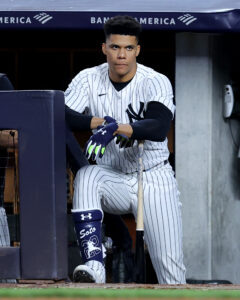
Not only is Soto one of the top three hitters in baseball, he’s firmly in his prime. He’ll play all of next season at 26, making him three to four years younger than a typical free agent. A signing team can realistically expect Soto to remain a top-flight hitter for the first seven to 10 years of a megadeal. While the calling card is obviously the bat, Soto has turned in decent defensive marks in the Bronx. Both Defensive Runs Saved and Statcast have credited him as a slightly above-average right fielder this season.
Soto turned down a reported $440MM extension offer from the Nats a few years ago — a decision that increasingly looks like it’ll pay off handsomely. Yankees owner Hal Steinbrenner has spoken of a willingness to negotiate an extension during the season, but it’d be downright shocking if Soto doesn’t test the market at this point. (The outfielder himself suggested as much on Tuesday.) The Yankees will certainly make a run at keeping him, while teams like the Mets, Dodgers, Giants, etc. figure to be involved.
Soto will be three years younger than Shohei Ohtani was during his free agency. Soto isn’t likely to accept a deal with the kind of deferrals that Ohtani took, but he should handily beat the approximate $461MM net present value of the Ohtani contract. He should top half a billion dollars and it wouldn’t at all be surprising if his camp at the Boras Corporation were aiming for something close to $600MM at the start of the winter.
2. Corbin Burnes, SP, Orioles
Burnes has been the top pitcher in the class for some time. He broke out with a 2.11 ERA during the shortened 2020 season and backed that up with an MLB-best 2.43 ERA with 234 strikeouts over 28 starts to claim the NL Cy Young the following year. Burnes punched out an NL-leading 243 hitters the following season before turning in a 3.39 earned run average during his final season in Milwaukee.
The Brewers traded the three-time All-Star to Baltimore in advance of his final year of arbitration. While Milwaukee has gotten good work out of rookie infielder Joey Ortiz (and acquired hard-throwing lefty DL Hall), the O’s can’t have any regrets with how the trade has played out. Burnes owns a 2.35 ERA across 99 2/3 innings. He’s on his way to a fifth straight top-10 Cy Young finish and should be a candidate to win the award for a second time.
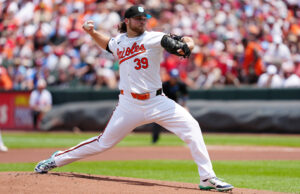
Unlike with Soto, one can at least find a yellow flag on Burnes’ stat sheet. His swing-and-miss rate has dropped over the last year and a half. Burnes struck out more than 30% of batters faced in each season from 2020-22. Among pitchers with 250+ innings over that stretch, only Carlos Rodón had a higher strikeout percentage than Burnes’ 33.4% mark. That dipped to 25.5% a year ago and currently sits at 23.9%, his lowest rate since his 2018 rookie campaign. He’s getting fewer whiffs on both his cutter and curveball than he did back in 2021-22.
Teams will at least take note of the drop-off in whiffs, but it’s not likely to have too detrimental an effect on Burnes’ market. His 95 MPH cutter velocity is still as strong as ever. The bottom-line results are among the best in the league. Burnes has pristine command and is very difficult for opponents to square up even as they’re getting a few more balls in play. While every pitcher comes with some level of health risk, Burnes’ only injured list stint in the last three and a half years came as a result of a positive Covid test.
Burnes will play all of next season at age 30. Aaron Nola landed seven years and $172MM last offseason going into his age-31 campaign. Burnes is a better pitcher. He should be able to find an eight-year deal that also runs through his age-37 season, and there’s a chance he gets to nine years. While Burnes will probably come up shy of the nine-year, $324MM deal which Gerrit Cole landed a few years ago, he shouldn’t have much issue surpassing the $200MM mark and could beat $250MM.
3. Willy Adames, SS, Brewers
Adames is the biggest riser from the previous iteration of this list. We had him eighth in the class two months ago. Adames has since pulled away as the clear top shortstop and quite arguably the best infielder. The Brewers shortstop has rebounded from a pedestrian offensive season and is on pace for the best year of his career.
Over 353 plate appearances, the Dominican-born infielder owns a .238/.331/.423 slash line. He has 13 home runs and is drawing walks at a personal-high 12.2% clip. Most importantly, Adames is striking out 21% of the time. That’s trending as easily the lowest strikeout rate of his career. Whiffs have been the biggest question for the righty-hitting infielder. If he’s striking out at a league average pace, there aren’t many weaknesses to his game.
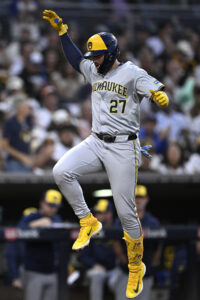
Adames has reached 20 home runs in all four full schedules he’s played. Barring injury, he’ll surpass that again and quite likely end in his customary 25-30 homer range. While Milwaukee’s American Family Field boosts power numbers, Adames has solid exit velocities and gets a lot of balls in the air. He has a decent approach and has incrementally improved his contact rate, particularly on pitches within the strike zone.
Even if Adames is more of a good hitter than an elite one, he’s a major asset on the other side of the ball. DRS and Statcast have graded him as one of the sport’s best infielders over the last six seasons. DRS has been bizarrely down on his defense this season, yet Statcast has had no such qualms. Most teams will view him as a plus or better defender, at least for the next few years. Adames turns 29 in September and should remain a sure-handed infielder with a good arm into his early-mid 30s.
On top of the well-rounded production, Adames has drawn rave reviews from teammates and coaches in both Tampa Bay and Milwaukee for his clubhouse acumen. It’s the kind of leadership and intangibles that teams love from a franchise shortstop. Players like Trevor Story, Javier Báez and Dansby Swanson all landed six- or seven-year deals between $140MM and $177MM with a broadly similar profile. None of those contracts have worked out quite as the signing team hoped — the Story and Báez deals have been unmitigated disasters — which could give teams pause. Yet those examples show the value teams place on a plus defensive shortstop with enough power to hit in the middle to upper third of a batting order.
4. Alex Bregman, 3B, Astros
Bregman’s platform year started rather inauspiciously. He hit .219/.280/.372 through the end of May, a stretch that briefly relegated him as far as sixth in the Houston batting order. Bregman was not only doing his market no favors, he was a major contributor to the Astros’ terrible start to the season.
Fortunes have changed in June for team and player alike. Bregman owns a .341/.404/.494 line through 94 plate appearances this month. His overall season slash is still fairly pedestrian, weighed down by his early-season swoon. He’s rounding into form though, and he remains one of the best hitters (non-Soto division) in the class.
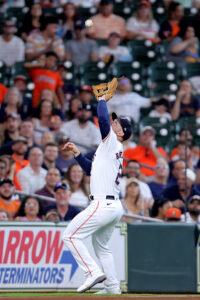
Bregman has been an above-average hitter in all nine seasons of his career. His 41-homer season from 2019 looks like a clear outlier at least partially attributable to the juiced ball. Bregman has gone from an MVP candidate to “merely” a very good everyday third baseman. Over the past five seasons, he carries a .260/.355/.437 batting line — a wRC+ that checks in 23 percentage points better than league average.
Some teams could take issue with Bregman’s batted-ball profile. He has never had massive raw power that translates into eye-popping exit velocities. His game has been built around pristine strike zone feel and an innate ability to pull the ball in the air, thereby maximizing the power he does possess. This year’s 35.9% hard contact rate is below average. Bregman’s walk rate has also fallen sharply as he’s gotten a little more aggressive and pitchers have attacked him in the strike zone with higher frequency.
Bregman could wind up being something of a divisive free agent. The batted-ball data and drop in walks could strike some clubs as a harbinger of decline. Bregman’s camp will point to his preternatural contact skills, solid third base defense, excellent durability, and status as one of the faces of a team that has gotten to the ALCS in seven straight seasons. Bregman turns 31 around Opening Day and still has a shot at a six- or seven-year deal that could push into the $150MM range (or further, if he can continue his blistering June pace).
5. Max Fried, SP, Braves
A former seventh overall pick, Fried has been a top-of-the-rotation arm for most of his time in Atlanta. He turned in a 4.02 ERA in his first full season back in 2019. The southpaw hasn’t allowed more than 3.04 earned runs per nine in any of the five seasons since then. Fried got off to a rocky start this year, surrendering 11 runs in five innings over his first two outings. Set those aside, and he’s looked better than ever. Over his last 13 starts, he carries a 2.12 ERA while averaging 6.53 innings per game and holding opponents to a .191/.255/.254 batting line.
The way Fried succeeds is somewhat unconventional. He doesn’t miss bats at the level typically associated with an ace. Fried has punched out 23.8% of his opponents in his career and carries a 22.3% strikeout rate this season. That’s solid but not overwhelming. He excels behind plus command and elite contact management. Fried is routinely near the top of the league in limiting opponents’ exit velocities. He has never posted a ground-ball rate lower than 50% and is racking up grounders at a huge 60.6% clip this season.
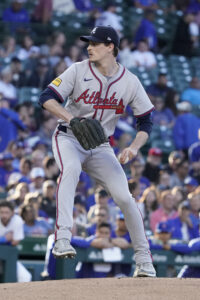
Fried isn’t a peak Dallas Keuchel or Kyle Hendricks type who thrived despite middling velocity. He throws sufficiently hard, averaging nearly 94 MPH on his four-seam and sinker. His mid-70s curveball isn’t a power breaking pitch, but it generates so much movement that hitters have never been able to square it up. Statcast credits him with seven distinct offerings. He leans most heavily on the four-seam, curve, sinker and changeup.
Some teams could shy away from paying top-of-the-market money to a pitcher who doesn’t have elite whiff rates. Others could have some concern about Fried’s arm health. He lost three months of the 2023 season to a forearm strain. (He also has a Tommy John surgery on his résumé, although that came back in 2015 when he was a prospect.) While Fried has looked no worse for wear, that adds a little extra risk for an investment beginning in his age-31 season.
Fried’s camp will probably view the Nola and Rodón (six years, $162MM) deals as comparison points. Fried is a Southern California native, which has led some to speculate he could prefer to sign with a team on the west coast, though he hasn’t publicly tipped his hand on any geographical preferences. He and the Braves have kicked around extension terms a few times over the years without coming to an agreement.
6. Jack Flaherty, SP, Tigers
Fried’s high school teammate is the first player on this top-10 who didn’t crack the list in April. He was one of a number of rebound starting pitching targets in the class. Flaherty has pulled away from the group with a dominant first three months to his Detroit tenure. Through 14 starts, he carries a 2.92 earned run average. He has punched out a third of opposing hitters with a huge 14.2% swinging-strike rate.
It’s Flaherty’s best sustained stretch since the second half of the 2019 season, when he looked to be breaking out as one of the best pitchers in the game. The intervening four years were largely disappointments. Flaherty struggled to a 4.91 ERA during the shortened 2020 schedule. He lost extended chunks of the next two seasons to shoulder problems. The righty avoided the injured list last year but looked like a shell of his former self. He allowed nearly five earned runs per nine with a roughly average 22.8% strikeout rate between the Cardinals and Orioles. Baltimore used him in relief at times down the stretch.
MLBTR predicted Flaherty would land a mid-level three-year deal last offseason. Given his youth, that would’ve offered him a life-changing payday while still affording him the opportunity to return to the market ahead of his age-31 season. Instead, he bet on himself and took a straight one-year pact. That looks like it’ll pay out handsomely. A nine-figure contract could be on the table. He’ll play next season at age 29 and has a shot at five or even six years. It wouldn’t be without risk given the volatility of his career, but Flaherty arguably has a higher ceiling than any starter in the class beyond Burnes and Fried.
Like everyone else on this list, Flaherty is eligible to receive a qualifying offer. He’s likelier than any of the other top free agents to be traded this summer, which would take the QO off the table. (Players traded midseason cannot receive a qualifying offer.) The Tigers are still on the periphery of Wild Card contention but haven’t hit enough to be a bona fide contender. A deadline deal would allow Flaherty to hit free agency unencumbered by draft compensation.
7. Pete Alonso, 1B, Mets
Alonso remains one of the sport’s preeminent power hitters. He has hit at least 37 homers in his four full seasons (and was on a 43-homer pace during the shortened season). He’s not quite at that level this year, connecting on 16 homers with a .465 slugging mark. That puts him at a 33-homer pace, although it wouldn’t at all be surprising if he outperforms that during the summer months.
Teams know what they’re getting with Alonso. He’s incredibly durable and has only had two minimal injured list stints as a big leaguer. He’s likely to hit 35+ homers in the middle of the lineup. The average and on-base marks are fairly pedestrian, but no one has more home runs than Alonso since he came into the league in 2019. Though his hard contact rate and average exit velocity are more ordinary than one might expect, no one questions his ability to hit for power in any stadium.
Alonso has a case as the second-best offensive player in the class. There’s not much value in the rest of the profile. He’s a below-average baserunner and a limited defender. Defensive Runs Saved has graded him as an average first baseman over the course of his career; Statcast has him below average with the glove. Alonso is entering his age-30 season and will likely try to beat the Matt Olson (eight years, $168MM) and Freddie Freeman (six years, $162MM with deferrals) contracts. He might need to move to designated hitter midway through a five- or six-year pact.
The Mets have maintained they want to keep their franchise first baseman. Alonso reportedly declined a seven-year, $158MM extension offer during the 2023 season. (He’s earning $20.5MM this season in his final arbitration year, so he’d “only” need to top $137.5MM to come out ahead on that decision.) That reported offer came before the Mets hired David Stearns as president of baseball operations. The sides seem content to table discussions about a long-term deal until Alonso gets a chance to field offers from other teams. He seemed like a trade candidate when the Mets were floundering early in the season. That’s harder to envision now that New York has pulled themselves back into the Wild Card race.
8. Ha-Seong Kim, SS, Padres
Kim is one of the top defensive players in the class. Public metrics have given him strong grades for his work all around the infield. The Padres liked Kim’s glove enough to fully commit to him as their shortstop this year, bumping Xander Bogaerts to the right side of the second base bag.
The offensive profile isn’t as exciting. Kim is a decent hitter whose game is built around excellent strike zone awareness and pure contact skills. Kim has walked nearly as often as he has gone down on strikes. A dismal .236 batting average on balls in play has depressed his overall output, as he’s hitting .223/.333/.385 across 328 plate appearances. While there’s surely some amount of poor fortune in that mark, Kim’s batted-ball metrics aren’t impressive. This season’s 35.5% hard contact rate, while a career high, is still a couple points below average. The South Korea native is on pace to top last year’s personal-high 17 home runs, but he’s probably never going to be a huge power threat.
After a poor first season at the MLB level, Kim was worth around four wins above replacement annually in the next two years. He’s on a similar pace in 2024. There’s probably not much more in terms of untapped upside, but Kim’s combination of contact skills, defense and baserunning (he has 53 stolen bases over the past two seasons) make him an above-average regular. He’s going into his age-29 season and could land a five-year contract in free agency.
9. Nick Pivetta, SP, Red Sox
One of the more volatile pitchers in the class, Pivetta has somewhat quietly excelled over the past calendar year. The right-hander’s performance has long lagged behind the quality of his stuff. It seemed as if he might always be too inconsistent despite flashing mid-rotation potential. As recently as last May, he looked as if he might pitch his way off the Red Sox’ roster entirely.
Things finally clicked for Pivetta after the Sox kicked him to the bullpen in mid-May last year. The former fourth-round draftee dominated in a multi-inning relief role. He continued overpowering hitters after the Sox returned him to the rotation for the final six weeks of the ’23 campaign. Pivetta has worked exclusively out of the rotation in 2024 and is still posting a gaudy strikeout and walk profile.
Over 11 starts, he owns a 4.06 earned run average. Pivetta has fanned 27.2% of batters faced against a 6.4% walk rate. He’s giving up a lofty 1.87 home runs per nine innings, leading to an unimpressive 4.42 FIP. Metrics that normalize HR/FB are far more bullish (3.43 SIERA, 3.56 xFIP). The longball has always been an issue and is a key reason he has never posted a sub-4.00 ERA season in the big leagues. Yet it’s possible a team falls in love with the stuff and the strikeouts.
Dating back to last year’s initial bullpen conversion, Pivetta touts a 3.48 ERA with a huge 32.1% strikeout rate across 160 1/3 innings. Opponents are hitting .202/.263/.388 in 639 plate appearances. Pivetta lost around a month this season to a flexor strain in his forearm. That’s a potential concern, but there wasn’t any structural damage and he has held up since being reinstated on May 8. Outside of virus-related placements, that was Pivetta’s first injured list stint in his MLB career. If the forearm issue is in the rearview, he looks like a volume innings eater with the stuff to be a No. 3 starter. Even going into his age-32 campaign, he’s got a shot at a four-year deal if he can sustain this K-BB% and keep his ERA at a reasonable level.
10. Luis Severino, SP, Mets
Severino jumped across town after a terrible final season with the Yankees. The two-time All-Star signed with the Mets on a pillow contract that guaranteed him $13MM. The early returns are good. Severino has turned in a 3.29 ERA while averaging six innings per start through his first 15 outings. It’s a marked improvement from the 6.65 ERA that ended his time in the Bronx.
If one looked no further than the ERA, it’d be easy to conclude that Severino is back to the No. 2/No. 3 form he’d shown for most of his Yankee tenure. It’s not that simple. Severino hasn’t recaptured the swing-and-miss stuff that essentially evaporated after 2022. This year’s 19% strikeout rate is a match for his 18.9% mark a season ago. His 8.5% swinging-strike percentage is down slightly from last season and trending towards a personal low. Rather than overpowering hitters the way he once did, Severino has gotten by with dramatically better batted-ball results than he had during his final season with the Yankees.
The 30-year-old deserves some credit for that. Severino has incorporated a sinker that he’s using around a quarter of the time. While the pitch doesn’t miss bats, it has helped increase his ground-ball rate to a career-high 50.8% clip. Hitters have also had a significantly harder time squaring up his four-seam fastball than they did last season. Severino has said he believed he was tipping his pitches last year.
There’s certainly some amount of fortune in this year’s results. Opponents hit .326 on balls in play last season; that’s all the way down to .252. His rate of home runs per fly-ball has more than halved (from 20.9% to 9.4%). That’s not all luck, but it’d be too optimistic to wave away the role of batted ball variance entirely. As is so often the case, the truth lies somewhere between the past two seasons.
Severino is not likely to secure the kind of nine-figure deal that once seemed attainable unless he dramatically improves the whiff rate. Still, there’s enough to like in the profile to warrant a three- or potentially four-year contract. Players like Taijuan Walker ($72MM) and Jameson Taillon ($68MM) landed four-year guarantees around $70MM with similar career arcs. They’d been former top prospects who once looked like potential top-end arms before settling in as mid-rotation types without a ton of strikeouts. Severino, who turns 31 in February, could be following that trajectory. He’ll be eligible for a qualifying offer unless the Mets trade him.
Honorable Mentions (listed alphabetically): Cody Bellinger*, Matt Chapman*, Gerrit Cole *^, Paul Goldschmidt, Teoscar Hernández, Clay Holmes, Danny Jansen, Max Kepler, Tyler O’Neill, Jurickson Profar, Anthony Santander, Max Scherzer, Christian Walker
* Denotes ineligible for a qualifying offer
^ Cole can opt out of the remaining four years and $144MM on his contract at season’s end, though if he signals his intent to do so, the Yankees can override his opt-out by tacking on a tenth year at another $36MM. Because Cole was only recently reinstated from the injured list and because the Yankees can effectively veto his opt-out, we’re not including him on this installment. If, as the season wears on, he’s pitching well enough to trigger that opt-out and there’s talk of the Yankees allowing him to walk, he could land on future iterations.
Blue Jays’ GM Ross Atkins Talks Deadline Approach
Even after last night’s 9-2 drubbing of the Yankees, the Blue Jays sit six games below .500. They’re at the bottom of the AL East with a 37-43 record and have three teams between them and the Royals — the current holder of the American League’s final playoff spot.
It’s certainly not where the Jays expected to find themselves at the season’s halfway point. Toronto had won between 89 and 92 games in each of the past three seasons and has gotten to the postseason in three of the last four years. They should be squarely in their competitive window.
That sets the Jays up as one of the more interesting pivot teams over the next month. They’re not eager to sell, but they’re running low on time to play their way back into the playoff mix. Toronto is 6.5 back in the Wild Card race. Any hope they had of winning the division coming into this year has long since disappeared.
GM Ross Atkins acknowledged the team’s precarious position when he spoke with the Toronto beat before Thursday’s win. “We’ve obviously put ourselves into a tough spot over the last seven days,” Atkins said (link via Keegan Matheson of MLB.com). “Ten days ago, we were feeling like there was positive momentum, and that has gone away.”
Jeff Passan of ESPN wrote earlier this week that the Jays weren’t yet willing to make key players available in trade. Atkins suggested similarly in his comments on Thursday, saying the front office’s “focus is on the 2024 team.” While the GM acknowledged that any decision also involves consideration of the future, he pointed to the organization’s investment in both payroll and prospect capital in this roster. “We’ll continue to do that until it doesn’t make sense to do so any more,” he added.
That naturally raises the question of when the front office could decide they have no choice but to turn their focus toward the future. That’ll largely depend on how things play out in the next four to five weeks — both in Toronto and around the rest of the American League. “The coming days are exceptionally important to us, and understanding the market is also exceptionally important to us in either way,” Atkins said (via Matheson). “We’re focused on winning. We’re focused on building the best possible team we can this year and supporting them the best we can. If we get to a point where we need to adjust, we’ll be prepared to do so.”
Toronto isn’t unique in that regard. There are only five or six (depending on one feels about the Tigers) teams who look like clear-cut sellers at this point. Yet there aren’t many more who can feel secure about their chances of getting to the postseason. Upwards of half the teams in the league could decide their deadline direction based on how they perform in July. Various clubs could also try to straddle the line by offloading some veterans while looking for immediate help in other areas of the roster.
The Jays have a more established roster than most of those fringe teams. Toronto has potentially impactful trade candidates with varying levels of club control. Neither Danny Jansen nor Yusei Kikuchi has played well in recent weeks, yet they’d both started the season quite well. Jansen is the top impending free agent catcher, while Kikuchi would be one of the more talented rental starting pitchers on the market if the Jays made him available.
Yimi García is pitching well and would be a straightforward target for teams seeking veteran bullpen help if he’s healthy by the deadline. (He went on the injured list with elbow neuritis two weeks ago.) Justin Turner and Kevin Kiermaier are having disappointing seasons. While the Jays would probably have to kick in cash to facilitate trades of either player, they could get calls based on their pre-2024 track records.
Things would become more interesting if the Jays seriously considered moving key players who are under control beyond this season. That would signify a bigger reset than merely trading rentals. There’s an argument for doing so if the Jays can’t claw back into contention over the next few weeks. Toronto has a handful of players who are in or at the back end of their primes. They’ve got dwindling control windows on franchise faces Vladimir Guerrero Jr. and Bo Bichette, each of whom are slated for free agency after the 2025 campaign. Bichette will make $16.5MM next season, while Guerrero is going to be due a noteworthy raise on this year’s $19.9MM salary.
Atkins bluntly shot down the notion of trading either star hitter earlier this month. That presumably won’t stop teams from calling to gauge whether the Jays are willing to reconsider. Bichette himself told Hazel Mae (X link) that he wouldn’t be surprised if the Jays moved him, though that’d presumably change if the team plays its way back into contention.
Guerrero is amidst arguably the second-best offensive season of his career. He’s hitting .289/.370/.447 across 351 plate appearances. While he hasn’t hit for the same level of power he did in 2021-22, Guerrero has the second-highest average and on-base mark of his career. Bichette hasn’t performed to his usual standard, running a personal-worst .232/.282/.333 slash line over 287 trips. While that’d arguably make this summer an inopportune time to move him, Bichette would surely still draw ample attention if the Jays put him on the market. There aren’t many everyday shortstops who seem likely to be available.
Beyond that duo, the Jays have a handful of controllable players who could generate calls, particularly on the pitching side. Jordan Romano has spent the past month on the injured list with elbow inflammation. He’s a two-time All-Star closer who is under arbitration control through next season, though. Romano recently resumed throwing from 120 feet on flat ground (via the MLB.com injury tracker). Chris Bassitt is making $22MM this season and next. He turned in a 3.60 ERA over 33 starts a year ago and has worked to a 3.45 mark with decent strikeout and walk numbers over 91 1/3 innings. Trading Kevin Gausman, who is under contract through 2026, still seems unlikely unless the front office kicks off a more significant reboot.
If the Jays perform the way they’re hoping over the next month, adding to the bullpen and deepening the lineup would be the likely priorities. The Romano and García injuries — paired with Erik Swanson’s struggles — have contributed to the Jays running out one of the least consistent relief groups in the majors. The bottom half of the lineup hasn’t performed up to expectations either. That’s largely due to underperformance from the likes of Bichette, Turner, Kiermaier and George Springer. The Jays also entered the season with questions at second and third base. They’ve plugged rookie Spencer Horwitz into regular action at the keystone while free agent signee Isiah Kiner-Falefa (who has somewhat quietly impressed with a .283/.333/.402 showing) has gotten the bulk of the third base reps.
Tigers, Drew Maggi Agree To Minor League Deal
The Tigers are signing infielder Drew Maggi to a minor league contract, as announced by the Staten Island FerryHawks of the Atlantic League (X link). The 35-year-old has appeared in 29 games with Staten Island this year.
Maggi garnered some attention in baseball circles last spring. A veteran of 13 minor league seasons, he earned a long-awaited big league debut with the Pirates last April. Maggi had previously spent some time in the big leagues as a member of the Twins but wasn’t called into game action. He appeared in three contests for Pittsburgh, collecting two hits in six at-bats. The Bucs outrighted him in May and released him in July.
The righty-swinging Maggi wasn’t hitting well for Pittsburgh’s Double-A team at the time of his release. That required him to head to independent ball. Maggi hit .235/.301/.343 across 113 plate appearances in the Atlantic League. He’s a .254/.355/.378 hitter over parts of six Triple-A campaigns and owns a .252/.338/.316 mark in seven years at the Double-A level.
Guardians Place Will Brennan On Injured List
The Guardians placed outfielder Will Brennan on the 10-day injured list, retroactive to June 25, with rib cage inflammation. Infielder José Tena is up from Triple-A Columbus to take his spot on the active roster. Cleveland also optioned Xzavion Curry and recalled Darren McCaughan.
Brennan has been Cleveland’s primary right fielder, starting 43 of their 78 contests. He’s having a solid season, hitting .256/.314/.415 across 226 plate appearances. Brennan has already established a personal high with eight home runs while keeping his strikeout rate to a tidy 11.9% clip. The Guards have shielded him from lefty pitching, giving him all but 29 plate appearances with the platoon advantage.
It’s not clear how long Brennan will be out of action, but he’ll at least miss the next week-plus. The Guardians kick off an important divisional series in Kansas City tonight. Daniel Schneemann handles right field alongside Tyler Freeman and Steven Kwan. Schneemann will probably pick up the majority of the right field work with Brennan on the shelf, at least against righty pitching. The 27-year-old rookie is hitting .280/.379/.520 through his first 58 big league plate appearances.