
2026-27 MLB Free Agent Power Rankings: June Update
We’re more than one third of the way through the 2026 MLB season, and what looked like a weak free agent class heading into the year only looks thinner following injuries and poor performances from many of the top names. It’s not hyperbole to call this the thinnest crop of free agents in recent memory. That doesn’t mean there aren’t solid contributors to be signed, but there’s only one true marquee free agent — he recently had elbow surgery — and there are charitably only four or five players who might command a nine-figure deal. (Realistically, it’s more like two or three.)
Of course, there’s plenty of time for things to turn around. As we’ll get into in the full breakdowns of our top 10, several players on this list stumbled through poor March/April showings before finding their form in May. If that continues through season’s end, then a poor April performance will be a mere footnote that teams pay little heed. That cuts both ways, however. An impending free agent who’s out to a strong start right now could suffer an injury of note or tank his stock with a poor four-month finish to the season. Power rankings are subjective and inherently fluid — perhaps more so than ever with this class.
As a reminder, our rankings at MLBTR are based on earning power. We’re not ranking these free agents based on potential impact in 2027 or 2028. Sonny Gray is having a nice season, but he’ll be 37 in November and probably isn’t going to command more than two years in free agency, for instance. Despite the fact that he’d be a big boost to a team’s 2027 chances, he’s not likely to land on any installments of this year’s power rankings (unless the class really tanks as a whole over the next few months).
With that preamble stated, let’s dive into the rankings…
1. Tarik Skubal, LHP, Tigers
Skubal’s recent elbow surgery rules out a third consecutive American League Cy Young Award, but it doesn’t do much to alter his broader free agent stock. He’s on a fast track to recovery after undergoing a cutting-edge “NanoNeedle” arthroscopic procedure to remove a loose body from his pitching elbow. Skubal had surgery one month ago, was throwing two weeks later, and threw a five-inning rehab start yesterday. A return later this week isn’t out of the question.
In seven starts pre-surgery, Skubal looked as good as ever. He pitched 43 1/3 innings with a 2.70 earned run average, a 27.1% strikeout rate and a 3.6% walk rate that would register as a career-best mark over a full season. The left-hander’s velocity was down a mile per hour relative to 2025 but right in line with his overall career mark. His 13.7% swinging-strike rate is great but not up to his previously elite 16-17% levels. Then again, Skubal clearly wasn’t pitching at 100%. Posting the marks he did with an elbow issue that eventually required an elbow scope is impressive.

If Skubal comes back strong, teams aren’t going to pay much mind to the elbow procedure. He’s been the best pitcher in baseball since 2024 and won’t turn 30 years old until November. The expectation entering the season was that Skubal would reach free agency and set a new record for the largest contract ever signed by a pitcher, eclipsing Yoshinbou Yamamoto’s $325MM guarantee. That’s still firmly in play, barring diminished performance during his return.
And, if the Tigers can’t pull themselves back into contention and ultimately have to trade Skubal, he’ll come with the added benefit of being ineligible for a qualifying offer, meaning he won’t cost his new team a draft pick. Even if the Tigers hold Skubal, however, his status is so high that no team is going to balk at the draft cost to sign him. Pitchers like this just don’t come around often, and when they hit the open market, a bidding war should be expected.
2. Freddy Peralta, RHP, Mets
Peralta isn’t having his best season, but he’s having a very good one and getting better as it progresses. Peralta, who turned 30 last week, celebrated his birthday a day early with six innings of one-run ball in a win over the red-hot Mariners. He’s posted a 2.98 ERA, 23.4% strikeout rate, 10.2% walk rate and 43.1% grounder rate in 45 1/3 innings across his past eight trips to the mound. Overall, Peralta touts a 3.38 ERA, 23.9% strikeout rate, 9.7% walk rate and 42% ground-ball rate in 13 starts — all while averaging about 5 2/3 innings per appearance.
One of baseball’s most consistent starters since establishing himself, Peralta pitched to a 3.30 ERA from 2021-25. His ERA each season was between 2.70 and 3.86. His strikeout rate sat between 27.1% and 33.6% each season along the way, and his walk rate fell between 7.9% and 9.7%. Peralta hasn’t had a hiccup or a true down season. He’s a playoff-caliber starter year-in, year-out. Peralta turns 31 next June, which is still young enough to command five, six or even seven years in free agency.
The quality of his finish will play a significant role in which of those lengths ultimately comes to fruition, but Peralta is a clear candidate for a contract north of $100MM. A look at MLBTR’s Contract Tracker shows Max Fried (eight years, $218MM), Blake Snell (five years, $182MM), Aaron Nola (seven years, $172MM), Jacob deGrom (five years, $185MM) and Kevin Gausman (five years, $110MM) as the starting pitchers who’ve reached free agency ahead of their age-31 season (if not older) over the past half decade and commanded nine-figure deals. Peralta isn’t likely to reach the very top end of that spectrum, but he has a better track record than Gausman did when he signed his deal five years ago.
Like Skubal, Peralta is pitching for a losing club that entered the season firmly expecting to contend. If the Mets bite the bullet and decide to sell some veteran pieces this summer, Peralta will be among the most sought-after names on the trade market. A trade would render him ineligible for a qualifying offer, which would only enhance his appeal on the open market.
3. Jazz Chisholm Jr., 2B, Yankees
Chisholm had a 30-30 season in 2025 and went 24 homers/40 steals in 2024. Speed/power packages of this caliber are rare and often locked up on early-career extensions. That’s not the case with Chisholm, who’ll reach free agency at 28 and play all of his first free-agent year at 29. Entering the season, it seemed like a compelling package with a $100MM+ deal on the horizon.
A couple months into the ’26 campaign, and things aren’t so rosy. Chisholm had one of the worst months to begin the year. Through April 30, he was hitting .202/.281/.330 — 26% worse than league average, by measure of wRC+. He looked more like a candidate to sign an opt-out-laden bounceback deal than a long-term contract.
Chisholm turned a corner in early May, and since the calendar flipped beyond April, he’s looked like his typical self. Dating back to May 1, he carries a .265/.331/.460 batting line with five homers and seven steals. That’s a 120 wRC+ (20% better than league-average production), which is right in line with last year’s season long 126 mark. Chisholm has walked at a 9.4% rate and fanned at a 29.1% clip since May — again, not far off last year’s season-long numbers.
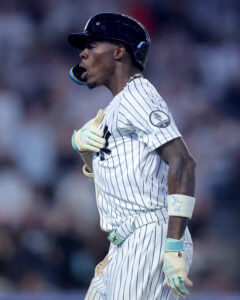
If Jazz is back to being Jazz, his poor April probably won’t matter much. He’s a clear candidate to receive and reject a qualifying offer in that scenario, and the associated draft pick cost might cause some teams to shy away. The market generally doesn’t pay second basemen, but Chisholm would likely be valued based on his overall offensive prowess rather than his defensive home. That he can at least claim the ability to play on the left side of the infield or in the outfield helps his cause, even if he’s clearly best-suited for work at second base.
In most seasons, Chisholm would be closer to the No. 8-10 spots on this list, but it’s a grim class and he offers a blend of youth, offensive upside and track record not present elsewhere in this class. A big finish will make him the consensus top position player in the class. A poor or only slightly above-average showing over the next four months will leave him in a difficult spot — likely weighing disappointing long-term offers versus higher-risk, short-term deals with opt-outs.
4. Michael King, RHP, Padres
King isn’t technically a free agent yet, but he can opt out of the final two seasons of his three-year, $75MM contract at season’s end. Based on the way things have been going thus far, that seems likely to happen. The right-hander’s 2025 season was derailed by injury, but King has averaged just over 5 2/3 innings over his first 13 starts, turning in a 3.41 ERA over 74 innings. His 23.3% strikeout rate is down from the 27.7% mark he logged in a career-best 2024 season but is still better than average. His 9.8% walk rate is a career-worst mark — the first time he’s been worse than average in that regard — but he’s kept 47% of batted balls against him on the ground (about five percentage points north of average).
King’s 94.1 mph average fastball is up slightly from the past couple seasons. His 10.9% swinging-strike rate is close to average, sitting between last year’s 10.4% mark and 2024’s 12% mark. He doesn’t have age on his side, as he’ll turn 32 next May, but King rejected a qualifying offer from the Padres last November and is accordingly ineligible to receive a second one.
King’s age probably caps him at a four-year deal. Blake Snell and Jacob deGrom are the only two pitchers in the past decade to score a contract of five or more years on the open market ahead of their age-32 season. It’s possible King is again limited to three-year offers with a hearty annual value, but he pulled a guaranteed $75MM on the back of an injury-ruined season, so him topping that guarantee after a healthy season — even when he’s a year older — seems plenty possible.
5. Randy Arozarena, OF, Mariners
Arozarena has been quite consistent since becoming established as a big leaguer. From 2021 to 2025, he hit between 20 and 27 home runs each year and stole 20 to 32 bases. His wRC+ finished in the 114 to 127 range. FanGraphs credited him with two to four wins above replacement in each campaign. In short, he has been a solidly above-average corner outfielder with some power and speed.
His 2026 season has largely been more of the same. He only has six home runs, which is a bit shy of his usual pace. However, some batted ball luck has actually made his overall offense a bit better than usual. He has a .285/.376/.442 line and 138 wRC+ on the year. That is due in part to his .358 batting average on balls in play but some regression in that category would nudge him into his usual range.
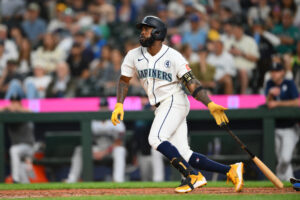
He already has 18 stolen bases in less than half the season, putting him on pace to set a new career high. His defensive numbers are trending up slightly. Outs Above Average has always disliked him in the field, giving him minus-6 grade in 2024 and 2025. This year’s minus-1 isn’t great but is a relative improvement. Defensive Runs Saved has wobbled for Arozarena but had him below average in 2024 and 2025. This year, he’s at +3 DRS so far. Put it all together and Arozarena is at 2.2 fWAR already, on pace to beat his previous best of 3.9.
Though he is generally having a good season, Arozarena’s earning power is capped by a few factors. He was a late bloomer and is getting to free agency at a relatively older age, as he’ll turn 32 before next year. As a corner-only guy, that’s a profile that doesn’t lead to major long-term deals.
A look at MLBTR’s Contract Tracker shows that the biggest deal for an outfielder that age or older in recent years was the four-year, $78MM deal the Mets gave to Starling Marte, who was still a viable center fielder. Next on the list is the three-year, $66MM pact the Dodgers gave to Teoscar Hernández, a deal which contained notable deferrals. Mitch Haniger, Jorge Soler and Jurickson Profar signed three-year deals in the $42-43.5MM range. Those deals give a vague approximation of what Arozarena could reasonably expect, though he’s probably closer to Hernández territory than the latter trio.
6. Brandon Lowe, 2B, Pirates
Like Arozarena, Lowe is a 32-year-old who plays a position that the market doesn’t tend to value all that highly. As MLBTR’s Contract Tracker shows, the only second basemen to land deals of three or more years in free agency over the past half decade have been foreign players coming over from the Korea Baseball Organization. Hyeseong Kim and Sung-Mun Song, however, signed for modest annual values that reflected the uncertainty surrounding whether their offensive output could be sustained against major league pitching.
Marcus Semien is the last pure second baseman to land a notable multi-year free agent deal, but his seven-year, $175MM isn’t a clean comp for Lowe, either. Semien was 31 in the first year of that contract and was coming off a Gold Glove-winning season at second base after years spent as a shortstop. Most clubs viewed him as a viable option at shortstop. The Rangers only kept him at second base because they also signed Corey Seager that winter. Semien was also coming off a 6-WAR season. Good as Lowe has been, he’s not going to get to that point.
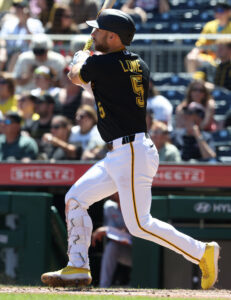
Be that as it may, there’s reason to believe Lowe can buck the trend of 32-year-olds and second basemen being shrugged off by the market. He has a long track record of hitting for power and is doing so at a level we haven’t seen from him since 2020-21. Lowe has already belted 15 homers in 60 games. His .270 ISO (slugging minus batting average) is his best since a 39-homer campaign back in 2021. His 10.7% walk rate is a nice rebound after a couple down seasons in that regard, and his 25.2% strikeout rate — while still higher than league average — is the second-best mark of his career. Most encouraging is that Lowe’s 82% in-zone contact rate is the second-best mark of his career as well.
Lowe can credibly claim that he’s the second-best offensive second baseman in the sport behind Brice Turang this year. His oft-maligned defense has improved, too. Whether it’s sustainable or a one-year blip is an open question that scouts will have to weigh heavily, but he’s been credited with positive marks from both Defensive Runs Saved (2) and Outs Above Average (5) in 2026 after drawing cumulatively negative grades the over the five preceding seasons (including career-worst marks of -14 DRS and -14 OAA in 2025).
Lowe has some experience in left field and at first base, even if he’s spent the vast majority of his playing time at second base. He also has more than enough bat to be an above-average designated hitter. Even though second basemen are rarely paid well, we saw Jorge Polanco get a two-year, $40MM deal for his age-32 and age-33 seasons last year. Lowe’s performance has been steadier over the years, and his production right now is outpacing what Polanco did last year in a rebound season after an awful 2024 campaign.
There are probably some teams that would prefer Lowe’s left-handed bat at second base to Arozarena’s right-handed bat in left field. A deal north of $60MM seems plausible if he can continue his blistering start to the season.
7. Casey Mize, RHP, Tigers
For a former first overall pick, it is perhaps underwhelming to some that Mize hasn’t turned into an ace. But expectations aside, Mize has developed into a valuable mid-rotation starter. In 2021, he took the ball 30 times for the Tigers and posted a 3.71 earned run average. His 19.3% strikeout rate was low but he only walked 6.7% of batters faced and induced grounders on 48.1% of balls in play.
Tommy John surgery wiped out most of his 2022 and 2023 seasons. In 2024 and 2025, he was back to his previous form. He posted a 4.12 ERA over 251 1/3 innings across those two campaigns. His 20.1% strikeout rate was again below par but with an excellent 6% walk rate and solid 43.2% ground ball rate. He made two postseason starts last year with a flat ERA of 3.00 in those.
Here in 2026, he has twice gone on the injured list due to an adductor issue, but the results have been encouraging around that. In his nine starts, Mize has thrown 47 2/3 innings with a 2.27 ERA. His 35.2% ground ball rate is a drop for him but he has increased his strikeout rate to 26.5% while keeping his walks at a 6.5% level. He has thrown his slider way more at the expense of his slurve. He went to the slider 16.3% of the time last year but that’s up to 25.1%, while his slurve usage has gone from 13.3% to 4.7%.
A reliable mid-rotation starter going into his age-30 season can land a healthy contract, even for pitchers who haven’t shown Cy Young upside. In recent years, Eduardo Rodriguez, Taijuan Walker, Marcus Stroman, Jameson Taillon and Luis Severino have signed deals of three or four years in the range of $67-80MM while in their early 30s. Just below that are guys like Jon Gray, Nick Pivetta and Steven Matz (Cardinals deal), who signed in the $44-56MM range.
8. Luis Arraez, 2B, Giants
Luis Arraez the hitter is well known. He doesn’t have a ton of power and doesn’t draw many walks but is the game’s preeminent contact hitter. In an age where the league average strikeout rate is around 22%, Arraez is usually somewhere about a third of that. He won three straight batting titles from 2022 to 2024.
He had a bit of a dip in 2025. As he battled a thumb injury, his batting average dipped to .292, a strong number for most but low for him. Since that’s his main asset, that reduced his overall output. He hit just eight home runs on the year and only walked in 5% of his plate appearances. That left him with a .292/.327/.392 line and 104 wRC+, barely above league average. Since his defense has generally been poor in his big league career, he went into free agency last winter without a ton of juice. He settled for a one-year, $12MM deal with the Giants.
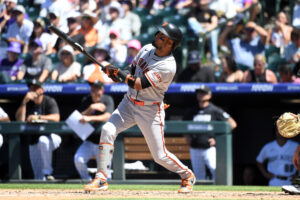
Here in 2026, the offense is back. He has only two homers and just a 5.4% walk rate but the batting average is up to .323, much more normal for him. His .323/.359/.431 line leads to a 120 wRC+, a nice improvement relative to last year.
What might be more interesting is the improvement he has shown in the field. The Giants plugged Arraez in as their regular second baseman, which seemed like a recipe for disaster. He came into this year with almost 3,000 innings at the keystone and had graded at minus-6 Defensive Runs Saved and a shocking minus-36 Outs Above Average in that time. The Twins started giving him more time at first base back in 2022. The Marlins tried moving him back to second in 2023 but the Padres acquired him in 2024 and mostly had him back at first. He only had 82 innings at second in 2025.
The idea of Arraez suddenly becoming a strong second baseman in his age-29 season wasn’t on most people’s radar but that seems to be happening. In over 500 innings this year, DRS has put Arraez at league average. OAA, which was so remarkably down on Arraez, has him at +9 this year. JJ Wetherholt is the only second baseman ahead of Arraez on the OAA leaderboard.
Defensive metrics can be wonky in small samples, so some of this is to be taken with a grain of salt. Nico Hoerner has +8 OAA on the year, for instance, and most people probably don’t think Arraez is suddenly better than Hoerner on the dirt.
Still, the fact that Arraez seems playable at the keystone should open up his market. Second basemen don’t usually get big paychecks in free agency but being passable there is better than being viable at first base only. Jeimer Candelario and Jorge Polanco recently signed deals in the $40-45MM range as solid bats with questionable defense but the capacity to at least play a couple of infield positions.
9. Adrian Morejon, LHP, Padres
The only reliever in the top 10, Morejon has some of the best stuff of any southpaw in the game. His 99.4 mph average sinker speed is tops among left-handed fastballs and eighth overall. He has a plus slider and an excellent changeup, which he uses almost exclusively against righty hitters.
Morejon is among the top 10 relievers in swinging strikes and has the third-highest opponents chase rate (minimum 20 innings). He’s top five in ground-ball percentage at 61.6% while posting plus strikeout (28.2%) and walk (5.3%) marks. His 2.34 FIP and 2.08 SIERA are among the best in MLB.
It’s all the ingredients of a wipeout back-end arm. Morejon was just that between 2024-25, combining for a 2.42 ERA while striking out more than a quarter of opponents in 137 1/3 innings. His ERA has spiked to an ugly 4.60 mark this season, though that comes mostly from a handful of bad early-season outings. Morejon allowed runs in four of his first six appearances but carries a 2.92 ERA dating back to April 14. He has reeled off 11 scoreless appearances in his past 12 around a three-run clunker against Philadelphia last week.
Morejon only has six career saves, as he has been a setup arm in front of Robert Suarez and Mason Miller for the past few seasons. It’s admittedly an indictment of the overall free agent class that a setup arm with a near-5.00 ERA nabs a spot on the top 10, but it’s also a testament to Morejon’s ceiling. There are probably teams that feel he’s one of the three to five best left-handed relievers in MLB right now. He’s squarely in the prime of his career, turning 28 next February. Tanner Scott commanded a four-year deal with a lesser track record at age 30. Devin Williams secured a three-year, $51MM deal at 31 with a similar gap between his ERA and much stronger underlying marks.
It’s also worth considering the possibility another team targets Morejon as an upside play for the rotation. He already has the changeup and plus command that clubs prefer in a starter. Morejon was a high-end rotation prospect in the minor leagues who only moved to the bullpen because of a series of early-career arm injuries (2019 shoulder impingement and Tommy John surgery in ’21). Morejon continued to battle injuries through 2023 but has been fully healthy for the past two and a half seasons.
Morejon will be eligible for a qualifying offer. The Padres have shied away from making the QO to borderline candidates in recent years as they navigate short-term payroll concerns. The franchise’s forthcoming sale to José E. Feliciano and Kwanza Jones could change that, but Morejon still seems a longer shot qualifying offer candidate.
10. Ian Happ, OF, Cubs
Happ and Arozarena have been bucketed pretty similarly on previews of the class. They’re both left fielders who’ll turn 32 before Opening Day 2027. Both players have been consistently above-average but shy of elite offensive players. They’re having similarly productive ’26 campaigns.
The main separator is a spike in Happ’s strikeout rate. The former #9 overall pick has fanned at a 32.1% clip on the season, easily his highest rate since 2018. Happ has never had great pure hitting ability but had trimmed his strikeouts to a slightly higher than average 23.4% mark between 2022-25.
Despite the increased swing-and-miss, Happ has some of the best numbers of his career. He’s walking at a typically excellent 13.9% rate while hitting for power. Happ has 14 home runs through the team’s first 66 games, putting him on pace to eclipse 30 for the first time in his career. Even if he doesn’t quite maintain this kind of power production, he’s essentially a lock for his fifth 20-plus homer season in the past six years (and sixth of his career).
Happ has done a disproportionate amount of this year’s damage versus right-handed pitching. He has been better from the left side of the dish throughout his career, though he’s generally close to average versus lefties and well above against right-handers. This year, he’s mashing righties at a .267/.395/.559 clip while limping to a .153/.228/.319 mark versus southpaws. It might just be a blip but is something interested suitors will need to weigh if it continues all season.
Although he’s limited to a corner, Happ has a reputation as one of the top defensive left fielders in the game. He has won the NL Gold Glove in four straight seasons. Outs Above Average has typically rated him right around par. Happ has traditionally fared better by Defensive Runs Saved but also has an essentially neutral grade (+1) in 521 1/3 frames this season. Assuming they remain in contention and avoid a deadline sale, the Cubs will need to weigh qualifying offers for Happ and Seiya Suzuki.
Note: While players with opt-out clauses are eligible, MLBTR currently projects Bo Bichette, Tatsuya Imai and Corbin Burnes not to test free agency.
Honorable Mentions (listed alphabetically): David Bednar, Kris Bubic, J.P. Crawford, Kevin Gausman, Sonny Gray, Trent Grisham, Clay Holmes, Shota Imanaga, Ryan Jeffers, Nick Martinez, Michael Soroka, Seiya Suzuki, Gleyber Torres, Daulton Varsho, Taylor Ward, Brandon Woodruff
Images courtesy of Imagn Images.
Mariners Place J.P. Crawford On 10-Day IL
The Mariners have placed shortstop J.P. Crawford on the 10-day injured list, three days after a hit-by-pitch forced him from the game. They’re calling the injury a right hand contusion. In Crawford’s place, Seattle has recalled infielder Ryan Bliss from Triple-A Tacoma.
It’s a poorly timed injury for the Mariners, as Crawford’s recent play has played a big role in Seattle’s climb to the top of the AL West. Dating back to late April, the veteran shortstop has slashed .258/.366/.500 with nine homers, a pair of doubles and a 12.7% walk rate in 142 trips to the plate. He’s done so while handling shortstop duties on a near-daily basis, though Crawford recently volunteered to begin working out at the hot corner and could slide over to third base as a means of opening more shortstop work for top prospect Colt Emerson. Crawford is a free agent at season’s end, whereas Emerson is viewed as the shortstop of the future.
Overall, Crawford is hitting .228/.356/.409 this season. By measure of wRC+, he’s been about 26% better than average — thanks largely to that hearty on-base percentage. His glovework at shortstop no longer grades plus (or even average), which is also partly why he’s been tinkering with a move to third base.
With Crawford sidelined, Emerson figures to handle shortstop for at least the next week. He’s gotten out to a .242/.319/.548 slash with four homers through his first 69 trips to the plate at the major league level. Since Brendan Donovan is on the shelf again — and has been since May 15 due to a groin strain — third base reps will fall primarily to Patrick Wisdom and Bliss for the time being. Bliss has been more of a second baseman in his career, but he’s played 56 innings at the hot corner in Tacoma recently.
It’s an unenviable spot for now, but since Crawford’s injury doesn’t seem too severe, the Mariners can hope they’re not that far from having a healthy Donovan, Crawford and Emerson to man the left side of the infield in some capacity. Donovan could always shift to the outfield corners or second base at some point, too, but the Mariners have gotten good production from Randy Arozarena in left field, Luke Raley in right (against righties anyhow), Cole Young at second base and Dominic Canzone at designated hitter. The exact alignment will be determined by the overall health of the roster, but Seattle has quality hitters at just about every position if they can get everyone on the active roster at the same time.
Trade Rumors Front Office Subscriber Chat Transcript
Steve Adams
- Good afternoon! I'll get going at about 2pm CT, but feel free to submit a question(s) ahead of time if you're so inclined. Looking forward to it!
- Good afternoon! I'll get going in one minute here, just wrapping up a long email on our forthcoming Free Agent Power Rankings.
- Ok!
Little Texas
- could you see the Rangers moving in the outfield walls this winter or try signing more power hitters
Steve Adams
- They've already brought in power hitters on both sides of the plate. Neither Joc Pederson nor Jake Burger has had the impact they hoped. I can see them altering the dimensions at some point, yeah. Seems like they're pretty surprised the new Globe Life plays so pitcher-friendly.
Guy Incognito
- Hi Steve. Do you think the uncertainty of the next CBA and possible work stoppage is going to affect trade deadline targets? I was wondering specifically about guys that have extra years of control beyond 2026. Would a guy with 1 extra year be treated as such if 2027 might get washed out? Would a guy with 2+years be affected because of the possible salary cap?
Steve Adams
- It didn't have a major impact last time around, just like the shortened Covid season didn't have a huge impact on the trade deadline. Teams are motivated to win now, and I expect everyone to operate under the assumption that there'll be a lockout but no games lost. I think fans have a more pessimistic outlook on games being played in '27 than a lot of people who work within the sport, which is kind of the point. The league is trying (and succeeding) to rally fan sentiment/support for the cap with a lot of doom-and-gloom narratives but I don't think nearly as many front office people (I'm sure there are some) see it as a foregone conclusion that games will be lost.
Steve
- Instead of teaching and encouraging pitchers to throw ungodly MPH. Is it a lost cause to teach pitchers how to pitch instead of throw? This, in my mind, cut down TJ surgeries, especially younger and younger kids getting the operation. I site a prime example of Greg Maddox. It takes strategy. Have a great fastball...that's fine, but there are a few pitchers scattered throughout MLB that are good pitchers and not gifted with speed. I was going to point to a guy like Bailey Ober, but I think even he had the surgery. Any thoughts on any of this. Love the chats. Thanks.
-

Unlock Subscriber-Exclusive Articles Like This One With a Trade Rumors Front Office Subscription
BENEFITS- Access weekly subscriber-only articles by Tim Dierkes, Steve Adams, and Anthony Franco.
- Join exclusive weekly live chats with Anthony.
- Remove ads and support our writers.
- Access GM-caliber tools like our MLB Contract Tracker
Rays To Select Austin Slater
1:20pm: The Rays have officially announced Slater’s addition to the roster. Heasley was transferred to the 60-day IL as the corresponding 40-man move. To open an active roster spot, infielder Oliver Dunn has been optioned to Triple-A Durham.
9:55am: The Rays will select the contract of outfielder Austin Slater from Triple-A Durham, reports Marc Topkin of the Tampa Bay Times. Slater signed a minor league deal with Tampa Bay late last month but is now headed to the major league club as the Rays gear up for a slate of left-handed pitchers.
Tampa Bay will need to open a 40-man spot for Slater. Righty Jon Heasley, who was recently diagnosed with a stress reaction in his elbow and placed on the 15-day IL, seems like a potential 60-day IL candidate. Outfielder Jake Fraley underwent a hernia procedure last month that came with a recovery timetable of six to eight weeks and could be a candidate as well, if the team feels his recovery will skew toward the lengthier end of that window.
Slater, 33, has already played with two different teams this season and seven over the past three seasons combined. He’s been hitting well in Durham, going 8-for-23 with five doubles, a homer, five walks and six strikeouts in 28 trips to the plate (.348/.464/.696).
Slater has taken 49 major league plate appearances between the Marlins and Mets this season, and they haven’t gone well. He’s 8-for-43 with only one extra-base hit (a double) and three times as many strikeouts (15) as walks (five). Broadly speaking, his past three seasons in the majors have been a struggle — hence the frequent changes of address. He’s taken 421 plate appearances in the bigs since Opening Day 2024 and slashed just .212/.298/.304.
Even with that lackluster run, however, Slater is still a lifetime .263/.352/.420 hitter in 1067 plate appearances against left-handed pitching. The Rays will face Red Sox left-hander Connelly Early tonight and are slated to face fellow southpaw Payton Tolle tomorrow. The Angels’ rotation is in disarray, so it’s hard to gauge exactly who’ll be starting for them next weekend when the Rays visit Anaheim. They’ll miss lefty Reid Detmers, barring a shuffle of the current order, but the Halos currently have five lefties in the bullpen. That should lead to plenty of chances for Slater to contribute off the bench or perhaps in the starting lineup if the Angels opt for bullpen games with a lefty opener and/or bulk reliever (e.g. Mitch Farris, Sam Aldegheri).
Taijuan Walker Opts Out Of Angels Contract
Veteran right-hander Taijuan Walker has been granted his release by the Angels, per the transaction log at MiLB.com. Jeff Fletcher of the Orange County Register reports that Walker, who signed a minor league deal with the Angels a few weeks ago, had an opt-out in that deal, which he triggered.
Walker, 33, was released by the Phillies earlier this season after being shelled for 25 runs (23 earned) on 36 hits and 11 walks with 17 strikeouts in 22 2/3 innings. The resulting 9.13 ERA put an end to a disappointing stint with the Phils, who’d signed him to a four-year, $72MM contract ahead of the 2023 season. Walker posted decent numbers in 2023 and 2025 but was clobbered in 2024 and 2026. His time in Philly drew to a close with a 5.12 ERA, a 16.9% strikeout rate, a 9.1% walk rate and a 42.9% ground-ball rate in 402 2/3 innings.
In three starts with the Angels’ Triple-A affiliate in Salt Lake City, Walker pitched well. He tallied 11 innings and held opponents to four runs (three earned) on 11 hits and four walks with nine strikeouts. The Halos’ rotation is a mess right now, but apparently they didn’t see enough in those three starts to plug Walker into the staff. They’re currently going with Jose Soriano, Reid Detmers, Walbert Ureña and Grayson Rodriguez. Righty Jack Kochanowicz hit the injured list with elbow inflammation this weekend after surrendering seven runs (six earned) in just one-third of an inning against the Dodgers in his most recent start.
Walker will once again explore free agency in search of new opportunities. Even if the Angels prefer other in-house options to step into the fifth spot in the rotation, there are plenty of other clubs around the league whose starting staffs have been ravaged by health troubles. The Blue Jays, Cubs, Tigers, Twins and Marlins are just a few of the teams that have multiple rotation arms on the injured list at the moment.
Rotation depth is always in demand, so Walker should find another opportunity, even if it means taking another minor league deal and trying to earn his way onto a big league roster with continued solid performance in Triple-A. Any team that signs Walker would only owe him the prorated league minimum for any time spent on the major league roster. The Phillies are on the hook for the rest of his $18MM salary.
Is It Even Worth It For The Mets To Be Sellers?
The Mets' season spiraled out of control far quicker than anyone could have reasonably anticipated. Even those who thought New York's NL club would miss the 2026 postseason probably weren't forecasting a 27-35 record placing them third from the bottom in the league, trailing a rebuilding Nationals club or a $75MM-payroll Marlins team.
Many Mets fans are -- understandably! -- waving the white flag already and calling for the team to be deadline sellers. The Mets, unsurprisingly, aren't in any rush to part with veteran players. No team is pivoting to sellers in early June. The Mets might very well end up in that bucket come late July/early August, but unless they're 10 or more games back at that point, the expected return doesn't necessarily outweigh the faint playoff chances they might still harbor. That's sure to be an unpopular sentiment among a vocal portion of the fan base, but let's take a look at who and what the Mets could reasonably peddle. The list of appealing trade candidates isn't especially compelling (which is a big reason they're in this mess in the first place).

Unlock Subscriber-Exclusive Articles Like This One With a Trade Rumors Front Office Subscription
- Access weekly subscriber-only articles by Tim Dierkes, Steve Adams, and Anthony Franco.
- Join exclusive weekly live chats with Anthony.
- Remove ads and support our writers.
- Access GM-caliber tools like our MLB Contract Tracker
Logan Porter Elects Free Agency
1:25pm: Porter has chosen to elect free agency, MLBTR has learned.
11:49am: The Giants announced Friday that catcher Logan Porter cleared waivers and was assigned outright to Triple-A Sacramento. He’d been designated for assignment earlier in the week. San Francisco also recalled righty Carson Seymour from Triple-A and optioned righty Wilkin Ramos in his place.
Porter appeared in one game with the Giants this season and was hitless in his lone trip to the plate. He tallied nine plate appearances across five games with San Francisco last season and also saw a bit of big league action with the 2024 Royals. Porter has played 17 games in the majors and posted a .184/.326/.289 slash in 47 trips to the batter’s box.
Though he hasn’t provided any offense in his tiny major league sample, the 30-year-old Porter has a decent track record in the minors. He’s a .244/.359/.389 hitter in parts of five Triple-A seasons. He doesn’t hit for much power, but Porter has drawn a walk in a hefty 14.4% of the 1237 plate appearances he’s tallied at the top minor league level.
Defensively, Porter is sound. He’s nabbed a respectable 22% of runners who’ve attempted to steal against him in the minors, including an outstanding 33% (17 of 51) dating back to 2025. Baseball Prospectus credits him with plus framing skills but slightly below average blocking ability. It’s a solid defensive skill set all around, and when coupled with his penchant for drawing free passes, Porter’s defensive acumen makes him a fine option to stick around as a third catcher on the depth chart or a big league backup.
Porter has been outrighted in the past, so he has the option to elect free agency now that he’s been outrighted again. He briefly elected free agency last summer after the Giants outrighted him, though he quickly reupped on a new minor league contract.
Red Sox Exploring Trade Market For Right-Handed Bats
Yesterday’s loss dropped the Red Sox to nine games under .500 — last place in the American League East. There’s a host of reasons for the team’s struggles to date, but a punchless offense is near the top of the list. Despite being in the division cellar and fourth from the bottom overall in the American League, Boston doesn’t appear to be entertaining the idea of a summer sell-off yet. To the contrary, ESPN’s Buster Olney reports that the Sox have been searching the trade market for a right-handed bat and have even signaled a willingness to take on some salary.
As noted, the Red Sox’ offense has been one of the worst in the sport. They’re last in the American League with 243 runs scored and sit 28th in all of MLB in that regard. Boston’s team-wide .248 batting average actually ranks sixth in baseball, but Sox hitters rank 14th in on-base percentage (.319) and 24th in slugging percentage (.380). Their 46 home runs are the second-fewest in the game, and their 8% walk rate is fifth from the bottom.
That the Sox are apparently focusing their search on a right-handed bat is both notable and, at first glance anyhow, a bit counterintuitive. They’ve been far better against left-handed pitching (.271/.339/.401) than against righties (.240/.312/.373). However, their production against left-handed pitching has been rather top-heavy. Willson Contreras has been one of the best hitters in baseball when it comes to southpaw mashing. Ceddanne Rafaela has been terrific as well. The Sox’ best hitter against lefties, improbably, has been lefty-swinging Wilyer Abreu.
Most of the remaining hitters beyond that trio have struggled. Right-handed bats like Caleb Durbin, Trevor Story and Isiah Kiner-Falefa have all been well below average against lefties. Andruw Monasterio has been about average. Carlos Narvaez has hit them well in a small sample of 23 plate appearances; fellow catcher Connor Wong has provided no value in the same sample (.150/.227/.150). Even among their most productive bats versus lefties, both Abreu (.475) and Rafaela (.469) have achieved their success thanks largely to sky-high BABIPs they won’t sustain. Rafaela has fanned in 35% of his plate appearances against lefties. Contreras is the only player on the roster who has provided clearly above-average production that looks sustainable.
There aren’t typically many players available this time of the year, and that’s even truer in 2026 than most years, given how tightly packed the American League standings are. The game’s likeliest seller, the Rockies, doesn’t have much in the way of productive righty bats that figure to be available. Catcher Hunter Goodman is their only righty with above-average production right now, but his 34% strikeout rate (46.5% versus lefties) is a red flag. Plus, he’s controllable for three years beyond the current season.
There are still some names who could potentially be available in the early stages of the summer. The Angels are in the AL cellar again but have enjoyed unexpectedly strong production from former Yankees top prospect Oswald Peraza. Outfielder Jo Adell isn’t hitting righties at all but is torching left-handed opponents. The Angels, however, rarely make conventional sell-side trades despite the fact that it’s been more than a decade since they were genuine contenders.
The Giants, Royals and Tigers are tied for the game’s third-worst record. Detroit, in particular, entered the season expecting to contend. They’re not likely to be ready to wave any white flags, particularly with Tarik Skubal inching closer to a return and with wins in each of their past three games.
The Giants probably aren’t ready to punt on the season just yet and don’t have great options available to market anyhow. Casey Schmitt is in the midst of a breakout but is controllable through 2029. Heliot Ramos is also controlled through ’29 and is having something of a down season. It’d be amusing to see the Red Sox and Giants line up on a second trade involving a notable veteran signed to a weighty long-term deal just one year after the Rafael Devers trade, but neither Matt Chapman nor Willy Adames seems likely to be a fit — even if the Sox are open to taking on some cash. Neither veteran is producing anywhere close to his typical levels, and both have full no-trade clauses. Chapman is owed $100MM over four years beyond the current season, while Adames is owed $140MM from 2027-31.
The Royals’ offense has similarly been one of the worst in baseball. They’re not moving Bobby Witt Jr., of course, and the only other right-handed bat that’s provided any real offense this year is outfielder Lane Thomas. He’s a free-agent signing on a one-year deal and thus can’t be traded without his consent for another 10 days (after June 15). He’s hit poorly against righties but thrived against lefties, which is par for the course for the 30-year-old veteran.
Given the lack of obvious sellers, the Red Sox might be better served trying to line up on a prototypical “baseball trade” between two contenders dealing from positions of strength. Both the Pirates and Padres are known to be looking for bullpen help already, for instance. Boston ranks second in the majors with a 3.03 ERA from its relief corps. There’s obvious risk in trading from that group, but there will be more bullpen arms available later this summer than there will right-handed bats, so the Sox could always look to replenish the ‘pen later on if they feel it’s necessary.
Boston’s payroll at the moment is just under $200MM, but they’re carrying enough luxury-tax obligations to put them right on the cusp of the second penalty tier. A trade that adds any salary of note would push them firmly into the second tier, though the penalty at that point is only a slight hike in tax rate. They’d have about $20MM of AAV they could add to the books before incurring an additional rate hike and seeing their top pick in next year’s draft dropped by 10 spots. That’s the penalty at which more teams tend to balk. Of course, if the Sox were to deal from their bullpen, it’s possible they’d be shipping out some major league salary, which would alter the math.
June trades of any significance are rare in modern baseball, but we’ve seen a handful in recent years. It’s not likely that the Sox pull off a second June swap of note for a second straight year, but the fact that they’re even angling to do so is a notable indication of how they view themselves and their playoff hopes at the moment.
Elias Díaz Elects Free Agency
Veteran catcher Elias Díaz rejected an outright assignment from the Royals in favor of free agency, as reflected on the transaction log at MiLB.com. Players with more than three years of service (or a prior outright in their career) can reject outrights and instead elect free agency. Díaz has more than nine years of major league service.
The 35-year-old Díaz appeared in 10 games with the Royals and popped a pair of home runs in just 23 trips to the plate. He hit .227/.261/.591 overall in that tiny sample before being designated for assignment. It was a nice burst of power, but Díaz swung at nearly 58% of the pitches he saw and his numbers from recent seasons don’t support the idea of him continuing to show that kind of home run power. From 2022-25, he picked up 1541 plate appearances between the Rockies and Padres but turned in a tepid .246/.298/.380 slash (77 wRC+).
It’s a modest track record at the plate, but Díaz has above-average power relative to other catchers and has turned in greatly improved defensive grades in recent seasons. He’s always been adept at controlling the running game, evidenced by a career 27% caught-stealing rate, and he continued to show off that arm in his short time with Kansas City when he nabbed two of five potential thieves on the bases. Díaz graded as a poor framer for the first several seasons of his career but has been above-average in that regard by virtually every publicly available metric dating back to 2024. Statcast credits him as roughly average when it comes to blocking pitches in the dirt.
Díaz has never walked much and isn’t likely to hit for a high average. Be that as it may, teams with notable catching injuries (e.g. Braves, Mariners, White Sox, Mets, Twins) could feasibly take a low-cost look at plugging him into a backup role while waiting on their injured starters to mend — or they could simply add him on a minor league deal as insurance against further injuries to their already-depleted catching corps.
Phillies Release Bryse Wilson
The Phillies have released veteran right-hander Bryse Wilson, per the transaction log at MiLB.com. He’d been working out of the rotation with Philadelphia’s Triple-A affiliate in Lehigh Valley.
Wilson, 28, signed a minor league deal back in December. He’s made 10 appearances, nine of them starts, with the IronPigs in 2026. He’s been dinged for a grisly 7.44 earned run average, but his performance hasn’t been as rough as that bloated number would seem. Wilson has average or better rates of strikeouts (22.1%), walks (8.1%) and ground-balls (52.7%). He’s been dogged by a sky-high .393 average on balls in play despite lower-than-average exit velocity and hard-hit numbers from his opponents. Metrics like xFIP (4.13) and FIP (4.30) feel he’s pitched well enough to have an ERA multiple runs lower than its current mark.
Wilson has pitched in parts of eight major league seasons but hasn’t found much big league success outside of a 2023-24 run with the Brewers. He gave Milwaukee 181 1/3 innings of 3.42 ERA ball with a 19% strikeout rate and 7% walk rate across those two seasons, but Wilson has a collective 5.73 ERA in his other six MLB seasons between the Braves, Pirates and White Sox. He’s worked as a starter, a short reliever and a swingman to this point in his big league career and is fully stretched out, so he could latch on with any club that’s looking for some experienced depth.