
Red Sox Notes: Deadline, Houck
At 40-40, the Red Sox sit 13 games behind the division-leading Rays but are a more manageable three and a half games back in the American League Wild Card chase. A month of strong play or a month of poor play would drastically alter the team’s postseason hopes, and chief baseball officer Chaim Bloom tells Alex Speier of the Boston Globe that the team’s play over the next several weeks will determine the front office’s approach to the Aug. 1 trade deadline.
“If we’re able to play well, and that should make us more aggressive,” said Bloom. “…That frankly dictates how you go into the deadline and what you’re looking to accomplish.”
The Red Sox, like many teams in today’s MLB, walked the line between traditional “buyer” and “seller” at the 2022 trade deadline. Veterans Jake Diekman and Christian Vazquez were traded away, but Boston also acquired a big league catcher (Reese McGuire) in that Diekman swap and swung separate trades to acquire veterans Tommy Pham and Eric Hosmer. The Sox wound up hanging onto veterans Rich Hill, Michael Wacha, J.D. Martinez, Nathan Eovaldi and Xander Bogaerts despite all five being on the cusp of free agency. (Boston ended up narrowly exceeding the luxury-tax line, thus reducing their draft compensation for Eovaldi and Bogaerts, who rejected qualifying offers.)
Bloom’s wait-and-see approach is one being employed by many teams right now. The Red Sox are one of six American League teams within six games of a playoff spot. Over in the National League, there are another four non-playoff teams that are currently fewer than six games back from positioning themselves for a spot. Understandably, those clubs aren’t yet giving up hope on their season. Some may become sellers closer to the deadline, while others will surely play their way into clear-cut buyer status. Broadly speaking, given the parity throughout the league and the increased frequency with which teams are willing to cash in Major League assets who have dwindling club control, many clubs will take that same hybrid buy/sell approach that the 2022 Red Sox took at last year’s deadline. Boston itself could certainly do so again.
As is the case with many baseball operations leaders, Bloom spoke in generalities and didn’t detail what his club might seek on the market should they end up looking to add pieces. Rotation help is an obvious need in Boston, however, evidenced both by a 4.89 ERA from their starters (26th in MLB) and by the trio of starters on the injured list at present. Chris Sale, Corey Kluber and Tanner Houck are all on the shelf, leaving the Sox with a rotation of James Paxton, Brayan Bello, Garrett Whitlock and Kutter Crawford at the moment. That group has performed well of late, it should be noted, with Paxton in particular thriving now that he’s finally healthy. However, the depth beyond the current staff is thin, at best, and there are both health (Paxton) and workload (Whitlock) concerns among the bunch.
A timeline for Houck, who recently underwent surgery after being struck in the face by a comeback line drive, hasn’t been fully clear since he incurred that frightening injury. Sean McAdam of MassLive.com now reports that Houck is unlikely to return before August. The right-hander hasn’t thrown in two weeks and will still need additional time to recover from a procedure that inserted a small plate into his cheekbone. It’ll be a long enough layoff that Houck will need to build arm strength back up and go out on a minor league rehab assignment.
Houck, 26, has had an up-and-down season while seeking to establish himself as a long-term option in the Boston rotation. At the time of his injury, he was sitting on a 5.05 ERA through 67 2/3 innings, although his strikeout rate, walk rate, ground-ball rate and average on balls in play were all right in line with his 2022 levels, when he posted a tidy 3.15 ERA in a similar sample of 60 innings. Houck has seen more than twice as many of the fly-balls he’s allowed leave the yard this season, which is the primary culprit for the ERA spike. He’ll apparently have to wait at least five weeks before he’s able to return to the mound and correct that ugly trend.
Reds Outright Randy Wynne
Reds right-hander Randy Wynne went unclaimed on outright waivers and has been assigned to Triple-A Louisville, per a club announcement. He’ll remain with the organization but no longer occupy a spot on the 40-man roster.
Wynne, 30, made his big league debut earlier this month, tossing 2 1/3 innings and allowing a run on three hits and a walk. He’d been summoned from Louisville when a taxed and injury-riddled Cincinnati pitching staff needed a fresh arm, and Wynne found himself removed from the 40-man just one day after his debut in order for the Reds to get another fresh arm in the bullpen (righty Jake Wong, who’s now also been designated for assignment).
An undrafted free agent who spent three years in independent ball before the Reds signed him out of the Frontier League, Wynne is currently in his second season at the Triple-A level. He’s been tagged for a 5.12 ERA in 31 2/3 frames with Louisville this season and posted a 4.75 ERA in 133 2/3 innings there during the 2022 season. Wynne doesn’t throw particularly hard (89.4 mph average on his sinker) or miss many bats, but he’s displayed keen command of the strike zone throughout his time in pro ball, walking just 3.9% of his opponents between the minors and his brief big league tenure.
Red Sox, Dinelson Lamet Agree To Minor League Deal
The Red Sox and right-hander Dinelson Lamet are in agreement on a minor league contract, per the team’s transaction log at MLB.com. The Rockies designated Lamet for assignment on June 17 and released him a week later.
It’s been a tough season for the 30-year-old Lamet, who missed multiple weeks due to a back injury and has been hit hard when healthy enough to take the mound. The 6’3″ righty pitched 25 2/3 innings with Colorado but was tattooed for 33 earned runs on 38 hits and a dismal 22 walks in that time. Lamet’s 31 strikeouts in those 25 2/3 frames look like a strong number, but because of all the walks and long innings, he’s actually only fanned 23.1% of his opponents — well below his career mark of 30.2%. His 16.4% walk rate, meanwhile, is a career-high mark.
Once one of the top pitchers in the National League, Lamet has endured a precipitous decline in recent seasons. The righty showed enormous strikeout potential early in his career with the Padres, but Tommy John surgery wiped out his 2018 season. He had a solid return in 2019 and looked to be taking his game to new heights in 2020, when he posted a 2.09 ERA, 34.8% strikeout rate and 7.5% walk rate in 69 innings during the shortened 2020 season — good for a fourth-place finish in NL Cy Young voting.
Lamet entered the 2021 season locked into San Diego’s rotation, but forearm injuries limited him to 47 innings with a pedestrian 4.40 ERA. He’s struggled to get back on track. In 58 frames between the Padres, Brewers and Rockies over the past two seasons, he’s yielded a grim 8.53 ERA. Lamet’s fastball, which averaged 97 mph in 2020, was sitting at 95 mph in this year’s 25 2/3 innings. His strikeout rate, swinging-strike rate, opponents’ chase rate, walk rate and home-run rate in 2023 are all at career-worst levels.
Obviously, the past few seasons do little to inspire confidence in a turnaround. However, the Rockies are on the hook for the remainder of Lamet’s $5MM salary, meaning the Red Sox would only owe him the prorated league minimum for any time spent on the MLB roster. In other words, the minor league deal amounts to a free look at a big arm who as recently as 2021 was viewed as a potential high-end starting pitcher. At the very least, Lamet can provide rotation or bullpen depth in Triple-A, and if the Sox are able to get him back on track in a way that the Rockies weren’t able, he’ll only cost them a few hundred thousand dollars down the stretch. If not, they can move on with minimal investment in this particular dice roll.
MLBTR Chat Transcript
Click here to read a transcript of Tuesday’s chat with MLBTR’s Steve Adams.
Braves Sign Charlie Culberson, Seth Elledge To Minor League Deals
The Braves re-signed veteran utilityman Charlie Culberson to a new minor league contract just days after he rejected an outright assignment in favor of free agency, per the team’s transaction log at MLB.com. Righty Seth Elledge, who also elected free agency following a recent DFA (by the Tigers), has also signed a minor league deal with Atlanta. It’s his second stint in the organization.
Culberson, 34, didn’t appear in a game with the Braves after being selected to the big league roster earlier this month. He’s spent the season in Triple-A Gwinnett, where he’s batted .204/.234/.255 in 107 plate appearances. A veteran who’s accrued more than seven years of MLB service over parts of ten big league seasons, Culberson also spent the 2018-20 seasons in Atlanta, hitting .265/.314/.454 in 473 plate appearances. Along the way, he endeared himself to the Atlanta faithful with a series of clutch hits, including multiple memorable walk-off home runs.
While Culberson hasn’t hit especially well this season, he’ll return to the Braves organization to remain on hand as a possible depth option and a mentor to up-and-coming infielders like Vaughn Grissom and Braden Shewmake. And, if the Braves feel they need some additional infield depth but don’t want to take either of those young players out of an everyday role to sit on the big league bench, Culberson could again be summoned for a short-term look at the MLB level. His versatility would make him a reasonable addition when rosters slightly expand in September, too.
Elledge, 27, was with the Braves in 2022 and opened the season in the organization this year. Atlanta designated him for assignment on April 8, and he’s since bounced to the Mets and Tigers on waivers before being designated in Detroit and electing free agency after clearing waivers.
In 23 1/3 career innings at the MLB level — all with the Cardinals — Elledge has a 4.63 ERA, 24% strikeout rate and 14.4% walk rate. In 2022, he posted a 3.88 ERA and gaudy 33.7% strikeout rate for the Braves’ Gwinnett affiliate, but he’s found rougher waters so far in 2023. Through 28 2/3 frames between the Triple-A affiliates of the Braves, Mets and Tigers, Elledge has been tagged for a 5.34 ERA. He’s had more success with the Braves’ Triple-A club than any other stop in his tour of the upper minors, so he’ll return to what’s seemingly a comfortable setting and look to build on that success with an eye toward a return to the big league roster.
Cubs, Shane Greene Agree To Minor League Deal
The Cubs have agreed to a minor league deal with veteran right-handed reliever Shane Greene, per the transaction log at MLB.com. The Ballengee Group client been assigned to Cubs’ affiliate in the Arizona Complex League for now, presumably to build up before joining the their Triple-A club in Iowa; Greene has yet to pitch for any team this season.
Greene, 34, had a strong run as a setup man and closer from 2017-20 between the Tigers and Braves. In 221 1/3 innings during that four-year peak, he posted a 3.25 ERA with a 24.2% strikeout rate, 8.6% walk rate, 33 holds and 64 saves. All but one of those saves came with Detroit. Atlanta acquired Greene at the 2019 trade deadline — sending lefty Joey Wentz and outfielder Travis Demeritte to the Tigers in return — but deployed him primarily as a setup man following the swap.
Following the trade, Greene posted a serviceable 4.01 ERA down the stretch for them in ’19 and went on to enjoy a solid 2020 campaign with Atlanta. However, that marks the most recent bit of MLB success for the right-hander. Greene was a late signee in May 2021, ultimately returning to the Braves only to see his results crater. He was torched for 16 runs in 17 innings to begin his ’21 season (8.47 ERA), and things were only marginally better in a brief nine-game cup of coffee with the Dodgers after being released in Atlanta.
Greene saw brief looks with the Dodgers and Yankees in 2022 but only pitched a total of three MLB innings. Overall, since the conclusion of the 2020 campaign, he has just 29 2/3 innings with a dismal 7.09 ERA to show for it. His sinker, which averaged 95 mph during his best year with the Tigers, averaged just 92.6 mph in 2021 and sat at 91.3 mph during last year’s tiny sample of big league work.
Swift decline notwithstanding, Greene represents a no-risk flier for a Cubs team that regularly rolls the dice on veteran rebound candidates in the bullpen. It hasn’t always worked in their favor, of course, but the Cubs have netted strong returns on minimal investments for names like Andrew Chafin, David Robertson, Ryan Tepera, Mychal Givens and Mark Leiter Jr. (among others) in sticking to this approach in recent years. They’ll hope to add Greene’s name to that list of successes in the coming months.
Rangers Have Shown Interest In Andrew McCutchen
The Rangers have reached out to the Pirates about a potential Andrew McCutchen trade, tweets Jon Morosi of MLB.com, but the Bucs aren’t open to such scenarios at this time. As Morosi observes, the Rangers have a deep lineup but have received poor production from the designated hitter spot in the order. The veteran McCutchen, hitting .271/.394/.431 with nine homers and nine steals on the season, would clearly represent a boost.
That said, there are plenty of reasons to be skeptical of a potential McCutchen trade coming together. Jason Mackey of the Pittsburgh Post-Gazette wrote at the time of McCutchen’s reunion in with the Pirates that the franchise icon returned to Pittsburgh with the intent of finishing out his career there; the Pirates didn’t make the signing with the intent of flipping him at the deadline, and Mackey reported in January that the two parties even discussed McCutchen’s desire to stay put in Pittsburgh while negotiating the deal. McCutchen told Mackey exactly one month ago that he wants to win in Pittsburgh and is not interest in playing elsewhere. “I don’t want to continue my career on another team,” McCutchen said on May 26.
It’s certainly possible that if the Pirates are buried in the standings as the deadline looms, McCutchen could have a change of heart and inform the front office he’d like to be moved to a contender. That seems unlikely based on his recent comments, however. And, even after their recent freefall, the Pirates are only five and a half games back in a dismal NL Central division.
That relative proximity to contending in the division matters, too. It was barely more than a week ago that Pirates president Travis Williams publicly indicated that the team’s hope was to return to the postseason as soon as this year. If the Bucs find themselves with a shot at doing so in the run-up to the trade deadline, Williams noted that GM Ben Cherington would have ownership support to add pieces, even if it meant further boosting the payroll. The Pirates weren’t quite so far into their staggering 1-12 swoon at that point, but again, the feeble context of their division could yet leave them with a realistic chance at a playoff berth — particularly with more than a month until the deadline.
All of that context notwithstanding, it’s at least of some note that the Rangers are perusing the market for potential upgrades. Interest in McCutchen is only logical for them. He’s an accomplished veteran hitter who’s well liked and who has played under current skipper Bruce Bochy. It stands to reason that Bochy enjoyed having McCutchen in the lineup and in the clubhouse during the outfielder’s brief time with the Giants.
Further, as Morosi rightly points out, the Rangers simply haven’t gotten much out of the DH spot in the lineup this year. Texas designated hitters are batting .223/.313/.377 on the season. The resulting 94 wRC+ ranks 19th in the Majors. That production (or lack thereof) has come from a combination of 10 players. Robbie Grossman leads the Rangers with 88 plate appearances as their DH, and he’s hit extremely well in that time. Grossman, though, is also seeing regular time in the outfield. The Rangers have cycled him, Brad Miller, Mitch Garver, Ezequiel Duran, Corey Seager, Jonah Heim, Adolis Garcia, Josh H. Smith and Sam Huff through the DH spot this year, ostensibly using it more as a means of affording occasional rest to regulars rather than dedicating one slugger to the position.
Acquiring any other full-time DH would mark a departure from that strategy. McCutchen is just one of several options to fill that role — seemingly not even a likely one — and since it’s the DH spot in question, the position of a potential trade target could be largely immaterial.
Broadly speaking, it’s still early in the summer for trades of significance to come together. Modern front offices tend to wait until the final few days before the deadline to act with much aggression, and the expansion of the playoff field seems like it’ll only further fuel that trait. Only three teams in baseball currently find themselves facing a deficit of nine games or greater in the postseason hunt: the Royals, A’s and Rockies. And while those teams surely know the direction they’ll take at the deadline, even they might prefer to wait and see if there are more motivated buyers at the deadline. Many teams — the Pirates included — are currently on the fence about their deadline trajectory but might be more willing to part with young talent closer to Aug. 1.
Orioles Select Jordan Westburg, Outright Jose Godoy
The Orioles have formally selected the contract of top infield prospect Jordan Westburg from Triple-A Norfolk, per a club announcement. The move was reported to be in the works yesterday afternoon. Baltimore opened a spot on the 40-man roster by passing catcher Jose Godoy through outright waivers. Godoy will remain in Triple-A but no longer occupy a spot on the 40-man roster. Fellow infielder Joey Ortiz was optioned to Norfolk to open a spot on the active 26-man roster for Westburg, who’ll make his MLB debut in tonight’s game.
Westburg, 24, was the No. 30 overall pick in the 2020 draft and has ripped through Triple-A pitching this year, slashing .295/.372/.567 with 18 homers, 15 doubles, a pair of triples and a perfect six-for-six showing in stolen bases. He’s walked in 9.6% of his plate appearances against a 21.3% strikeout rate. Westburg is widely regarded as one of the sport’s 100 best prospects, ranking prominently on lists compiled by Baseball America (No. 41), MLB.com (No. 34) and many others.
Given that pedigree, Westburg will likely be given the opportunity for regular plate appearances. His promotion could cut into the playing time for veteran second baseman Adam Frazier (who’s also capable of playing left field) and slumping shortstop Jorge Mateo. Westburg has primarily been a shortstop in his minor league career, but he’s also logged considerable time at third base and second base, in addition to some brief cameos in the outfield corners.
As for the 28-year-old Godoy, he came to the O’s about three weeks ago in a cash trade with the Yankees. The former Cardinals farmhand has quickly become something of a journeyman, as the O’s are his sixth organization since 2019. He’s appeared in 26 big league games — split between the Mariners, Twins and Pirates — but has just a .123/.194/.140 batting line in a tiny sample of 62 plate appearances. He has a much better .272/.327/.412 batting line in 671 Triple-A plate appearances across parts of four seasons, and Godoy is regarded as a quality defensive option behind the dish as well. He’ll remain with the O’s and serve as a depth option with their top affiliate.
Best Deadline Rental Returns In Recent History, No. 1: Twins Land A Rotation Cornerstone
With the trade deadline now less than two months away, we at MLBTR are setting our sights backwards for a bit to highlight past trades of rental players to provide a loose guideline of what sort of returns fans can expect with their teams’ current rental players. With an arbitrary cutoff point of 2017-21, we’re counting down the top 10 returns that a team got when selling a rental player. We’ve already published some honorable mentions as well as entries No. 10, No. 9, No. 8, No. 7, No. 6, No. 5, No. 4, No. 3. and No. 2. If you disagree with our rankings, let us know! It’s all part of the subjective fun! Now for the top spot in our series…
The 2021 season was a disaster for the Twins. Fresh off a division title in the shortened 2020 season, they entered the year as the team to beat in the American League Central but faceplanted with a 9-15 showing in the season’s first month and never recovered. Offseason signings of Andrelton Simmons, J.A. Happ, Alex Colome and Matt Shoemaker all flopped. Top prospect Alex Kirilloff, expected to be a key contributor, was limited to 59 games thanks to a torn ligament in his wrist. Kenta Maeda followed up his Cy Young runner-up season with an injury-shortened year that ended with him undergoing Tommy John surgery. Jose Berrios was the only pitcher who even reached 110 innings on an injury-ravaged Twins staff.
Berrios was also one of several veterans the Twins wound up trading once they waved the white flag on their 2021 season. After years of failed extension efforts, he was traded to the Blue Jays in exchange for prospects Austin Martin and Simeon Woods Richardson. That trade was one of the headline moves of the entire 2021 trade deadline, but it wasn’t the defining move of the summer for the Twins.
That distinction goes to the first trade they made, jumping the market to send designated hitter Nelson Cruz to the Rays in a trade that brought back a pair of pitching prospects: the since-DFA’ed Drew Strotman and a near-MLB-ready right-hander by the name of Joe Ryan. The Twins also sent minor league righty Calvin Faucher to the Rays as part of the deal — he’s since made his debut but hasn’t pitched particularly well — so it can be argued that this wasn’t a pure rental, but the heart of the trade was a half season of Cruz for the aforementioned prospects.
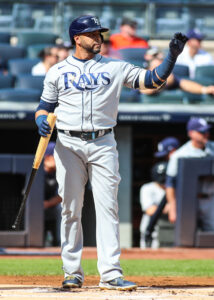
Regardless of how things play out with Faucher, there’s no getting around the fact that the trade didn’t work out as the Rays hoped. Cruz was hitting .294/.370/.537 with 19 homers in 346 plate appearances at the time of the trade, and Tampa Bay hoped they were acquiring a heart-of-the-order slugger who could deepen their lineup and provide some needed thump in the postseason. Cruz kept hitting for power (13 homers, 238 plate appearances), but his strikeout rate spiked as his walk rate plummeted.
The end result was a .226/.283/.442 slash, plus a 3-for-17 showing in an ALDS loss to the Red Sox. One of those hits was a solo home run, but Cruz’s well below-average OBP and dramatic rise in strikeouts (from 18.2% in Minnesota to 26.5% in Tampa Bay) fell shy of expectations. Cruz hit free agency following the season and went on to sign a one-year deal with the Nationals.
The now-26-year-old Strotman’s time with the Twins lasted barely a year. He was hit hard in Minnesota’s Triple-A rotation following the trade and moved to the bullpen the following year, which did little to quell his long-running command issues. He’s since bounced to the Rangers and Giants via waivers, the latter of whom was able to pass him through waivers unclaimed. He currently has a 6.54 ERA in Triple-A Sacramento. Strotman was an upper-level pitching prospect who had a chance to debut in the Majors in relatively short order, but his half of the trade (quite clearly) hasn’t panned out.
The other half of the Twins’ return is another story entirely.
At the time of the trade, Ryan had only just begun to sneak onto the back-end of top-100 prospect rankings around the industry. He was in the midst of a strong season with Triple-A Durham, pitching to a 3.63 ERA with a 34.9% strikeout rate against a 4.7% walk rate. Ryan’s lack of velocity — he averages under 93 mph on his fastball — perhaps created some skepticism about his ability to continue missing bats at that level in the big leagues, but his atypical release point has allowed him to continually befuddle hitters despite his pedestrian velocity.
Ryan’s time in the minor leagues with the Twins was brief, to say the least. Minnesota had the right-hander make just two starts in Triple-A following the trade before summoning him for his Major League debut. In his next four starts, Ryan held opponents to a 2.45 ERA with a 25-to-3 K/BB ratio in 22 innings. He was hit hard in his final outing of the year, finishing out the season with a 4.05 ERA and 30-to-5 K/BB ratio in 26 2/3 innings.
The Twins had seen enough to not only pencil Ryan into their 2022 rotation, but make him their Opening Day starter after just five big league appearances. Ryan’s 2022 campaign, his age-26 season, marked a significant step forward. The right-hander made 27 starts, pitched to a 3.55 ERA and fanned a quarter of his opponents against a tidy 7.8% walk rate. If there was any doubt about his status as a surefire big league starter, it’d largely been eliminated.

Continuing on at that pace would’ve made Ryan a clear building block for the Twins, but he’s taken his game to another new level so far in 2023. Long an extreme fly-ball pitcher, Ryan has added a splitter that’s helped him up his ground-ball rate and further neutralize left-handed opponents. Ryan’s 35% ground-ball rate is still lower than average by nearly 10 percentage points, but it’s a huge increase from the 27.7% mark he posted in 2022. Lefties weren’t effective against him in the first place, hitting just .202/.288/.348 in 2022, but they’ve flailed away at a .199/.242/.281 clip in 2023. The addition of that splitter has helped out against righties, too; they’re hitting just .225/.257/.373 against Ryan this year. Statcast credits the newly implemented splitter with a .196 “expected” opponents’ batting average and a .283 expected slugging percentage.
Ryan entered play today with a 3.30 ERA, 27.1% strikeout rate and 4.5% walk rate in 84 1/3 innings. After averaging just over 5 1/3 innings per outing last year, he’s been given a longer leash by the Twins in 2023 and averaged a bit better than six innings per start. The mustachioed righty has already surpassed his 2022 total of 2.1 FanGraphs wins above replacement, and his 1.8 WAR over at Baseball-Reference is rapidly approaching last year’s mark of 2.3. He’s a candidate for a 2023 All-Star bid, and if he can sustain this pace, he’ll likely find himself on the periphery of Cy Young voting later this season.
Because Ryan fell well shy of a full year of service time in 2021, he didn’t accrue a full year of service until the completion of the 2022 season. He’ll finish the 2023 campaign with two-plus year of service and won’t be eligible for arbitration until after the 2024 season. The Twins control him all the way through the 2027 season, though his performance through his first 46 career starts certainly makes him a logical extension candidate for the Twins if the two sides can find a palatable middle ground.
It’s difficult for teams marketing rental players to command any degree of highly ranked prospects, let alone a near-MLB ready arm who can step into a big league rotation just weeks after the swap is completed. The Twins’ willingness to jump the sellers’ market — Cruz was traded more than a week before the deadline — and his status as perhaps the top bat available on the market created the right circumstances for Minnesota to strike gold and set a new benchmark for modern-day rental returns.
It’s probably not realistic for fans hoping their teams can cash in on a high-end rental player to expect a return this good, but the Twins surely don’t mind Ryan’s status as a best-case scenario for a return in this type of swap. Their decision to re-sign Cruz for a third year netted them a half season of excellent offense and, quite possibly, six-plus years of a pitcher who’s increasingly looking like a front-of-the-rotation arm. It’s the type of return any GM or president of baseball operations dreams of every July but the type that is rarely achieved.
Images courtesy of USA Today Sports.
Twins Sign Dallas Keuchel To Minor League Deal
10:49am: Twins manager Rocco Baldelli confirmed the signing, tweets Do-Hyoung Park of MLB.com. “We’re glad to have him in the organization and to give him an opportunity to go out there and pitch and show all the things that he’s been working on,” said Baldelli.
9:43am: The Twins have agreed to a minor league deal with left-hander Dallas Keuchel, reports Jon Heyman of the New York Post (Twitter link). The WME client has recently been working out with Driveline Baseball and, as Driveline director of pitching Chris Langin recently noted (Twitter thread), has restored some of the velocity on his heater and movement on his sinker and revamped sweeper. He’ll presumably wind up with the Twins’ Triple-A affiliate in St. Paul, though he might first require a tune-up at a lower-level affiliate.
The 35-year-old Keuchel’s past two seasons have been a nightmare, as the former AL Cy Young winner was shelled for a 6.35 ERA in 222 2/3 innings between the White Sox, D-backs and Rangers. That includes a particularly calamitous 2022 campaign in which he was tagged for 62 earned runs on a whopping 94 hits and 31 walks in just 60 2/3 frames. Keuchel’s fastball averaged a career-worst 87.8 mph in 2022, and his 10.2% walk rate was his highest since a 10.3% mark as a rookie way back in 2012.
That said, Keuchel had strong results back in 2020 (1.99 ERA in 63 1/3 innings) and from 2014-20 was a high-end starting pitcher for the Astros, Braves and White Sox. During that time, the lefty piled up 1126 1/3 innings of 3.25 ERA ball (3.55 FIP, 3.63 SIERA). Keuchel has long posted below-average strikeout rates but, at his best, will offset them with excellent command and one of the top ground-ball rates in the Majors. Opponents have averaged just an 87.4 mph exit velocity against him since Statcast began tracking it in 2015, and even in his recent disastrous seasons Keuchel was only slightly below average in terms of limiting hard contact.
Certainly, it’s beyond optimistic to expect Keuchel to recapture his 2015 Cy Young form. The Twins would likely be thrilled if the lefty were able to even emerge as a viable back-of-the-rotation starter or perhaps a multi-inning reliever. Langin notes that Keuchel has been sitting 89 mph with his fastball and 88.9 mph with his sinker in workouts — down slightly from peak levels but roughly in line with Keuchel’s 2016-19 seasons, when he posted a 3.77 ERA over 102 starts.
Fortunately for the Twins, they can look at Keuchel as a pure depth option rather than someone they’ll realistically need to turn to before long. Minnesota recently optioned fifth starter Louie Varland to Triple-A, but the expectation is that Kenta Maeda will be returning from the injured list in his place. Sonny Gray, Pablo Lopez, Joe Ryan and Bailey Ober give the Twins a strong top four in their rotation anyhow, and the club is hoping for Chris Paddack to finish off his rehab from Tommy John surgery later this summer as well.
Keuchel will merely add to that stockpile of rotation options. If he looks to be in pre-2021 form in Triple-A, that’ll be a major bonus for the Twins, but if he continues to struggle as he has over the past two seasons, they can move on without feeling they’ve placed a major strain on their rotation depth.