
Looking For A Match In A Justin Verlander Trade
In recent seasons, the veteran-laden Tigers have frequently headed into the summer as trade deadline buyers, but with a 45-55 record this year and J.D. Martinez already out the door, 2017 looks like a different story. One star who could be on the move is Justin Verlander, who joins a starting pitching market that also includes Sonny Gray and Yu Darvish. The Tigers have a variety of other players potentially available, including Ian Kinsler, Justin Wilson and Alex Avila, and they’ve reportedly discussed package deals, so if the Tigers trade Verlander, it could be along with one or more of his teammates.
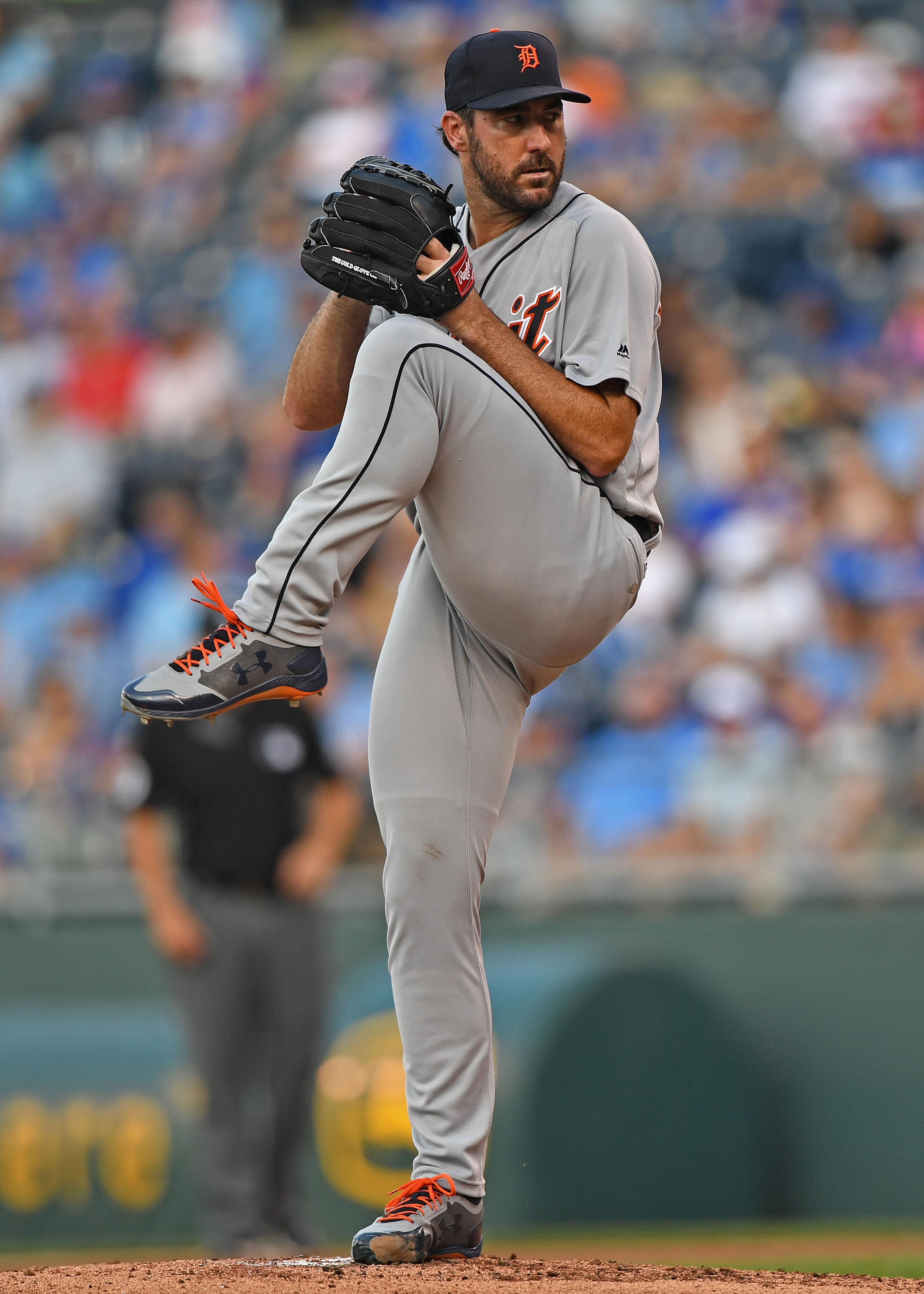 That’s not to say a Verlander trade would be easy. It’s impossible to discuss the righty’s potential market without noting his contract — he’s making $28MM per season through 2019, plus a $22MM vesting option for 2020. That option contains no buyout and only vests if Verlander finishes in the top five in Cy Young voting in 2019, but the $66MM or so remaining on Verlander’s contract is still a significant obstacle. At last check, the Tigers did not appear willing to take on a significant portion of Verlander’s deal, though they reportedly would pay the remainder of his 2017 salary. His full no-trade clause could present another potential problem.
And then there’s Verlander’s performance — he finished second in AL Cy Young balloting just last season but has taken a big step backwards this year, with a 4.50 ERA and 8.7 K/9 over 124 innings, plus a 4.1 BB/9 that’s almost twice as high as it was in 2016. At 34, that’s a serious concern, particularly when considered alongside his hefty contract. That means the Tigers might not get much if they trade him. Also, his star status in Detroit might not ordinarily be an impediment, but it might be in this case, since, as MLBTR’s Steve Adams recently pointed out, fans might react poorly to a Verlander deal for a limited return.
With all that in mind, here are a few potential landing spots for Verlander.
Cubs: Even after acquiring Jose Quintana, the Cubs are known to have interest in starting pitching, and Verlander would give them another veteran arm to help them manage the possible losses of Jake Arrieta and John Lackey to free agency next winter. They’ve reportedly scouted Verlander and have discussed him with the Tigers, and they’re one of only a handful of teams who clearly could afford him. They’re also reportedly interested in acquiring a catcher, so perhaps there could be a deal involving both Verlander and Avila, particularly since Avila makes a mere $2MM and has been productive this season. The intensity of the Cubs’ interest in Verlander is unclear, and as with all teams, his contract will be an obstacle.
Astros: Houston has been connected to Verlander, along with Wilson, although the Detroit Free Press’ Anthony Fenech characterized the Astros’ level of involvement in Verlander trade talks as “minimal.” The team’s recent return to health, with Collin McHugh returning from injury and Dallas Keuchel set to come back this week, might make the Astros more likely to pursue top-end starters rather than innings eaters, since they currently have enough reliable arms to fill out their rotation. Their interest in Verlander, then, might depend on whether they still see him as an ace-type pitcher. Verlander’s contract would of course be a factor as well, although the Astros do appear to have the payroll flexibility to add him, particularly if the Tigers are willing to pay what’s left of his 2017 salary.
Yankees: The Yankees have been connected to a variety of rotation possibilities and could potentially afford Verlander, although their luxury-tax bill is a concern. They haven’t recently been connected to Verlander in particular, though, and based on published reports, seem to have greater interest in Gray. They also have a clear need for another A’s veteran, Yonder Alonso, which might give them further incentive to continue talking with Oakland. Verlander could, however, represent an interesting alternative to Gray whose acquisition likely wouldn’t cost the Yankees top prospects.
Dodgers: L.A. has repeatedly been connected to Darvish, while there haven’t been many indications they’re seriously interested in Verlander. Still, they have an injured ace (Clayton Kershaw), and their seemingly wide-open wallet would give them a big advantage if they decided they had serious interest.
Nationals: The Nats haven’t been strongly connected to Verlander, and FOX Sports’ Ken Rosenthal recently indicated that they aren’t in on Gray or Darvish. Injuries to Stephen Strasburg and Joe Ross have left them with some rotation questions, however, and they generally aren’t shy about adding big-name players. They’ve also been connected to Wilson.
Brewers: Milwaukee has reportedly shown interest in Verlander, along with other rotation options. The Brewers have also been connected to Wilson and Kinsler, again raising the possibility the Tigers could strike some sort of package deal. And the Brewers under owner Mark Attanasio have never been shy about adding big-name pitching as they’ve prepared for past stretch runs, adding CC Sabathia and Zack Greinke in past seasons in which they contended. All that written, it seems especially unlikely that they would consummate a deal for Verlander. His age and salary could potentially pose big problems for a generally budget-conscious organization (although one with few long-term commitments at the moment). And the Brewers’ 2017 run at the NL Central title, while impressive, has if anything been a pleasant surprise from a team that seemed to be rebuilding. They recently fell into second place, behind the Cubs, and their fade might make them less likely to make a big move.
Rockies: Acquiring Verlander would be a break from the Rockies’ M.O., but they’ve shown interest in rotation upgrades and have limited payroll obligations beyond 2017, so Verlander could theoretically be a fit. They have enough interesting young arms to fill out their rotation, but could potentially benefit from a veteran anchor. Of course, it’s not clear that Verlander is the right veteran anchor for them, given his contract, fly-ball tendencies and sketchy 2017 performance thus far. It’s also unclear whether Verlander would accept a deal that would place him in Coors Field, a stadium that could potentially hurt his future earning power.
Diamondbacks: The Diamondbacks have already swung one big trade with the Tigers, and there have at least been whispers about the possibility they could look to improve their rotation. Most current rumors about the Snakes focus on other areas, however, and all five of their current starters have performed capably this year.
Red Sox: Sox president of baseball operations Dave Dombrowski is no stranger to headline-grabbing trades, and he was general manager of the Tigers when Detroit drafted Verlander in 2004. With Eduardo Rodriguez‘s recent return to health, though, the Red Sox five healthy starting pitchers who each could potentially pitch well for the remainder of the season, and most rumors about the team since their acquisition of infielder Eduardo Nunez have pertained to relievers, not starters.
Mariners: The M’s have been connected to Gray, and the odds that Jerry Dipoto will find a way to insert them into a significant trade can never fully be discounted. They are, however, below .500 at this point and already have big salaries for Felix Hernandez, Robinson Cano, Kyle Seager and Nelson Cruz on the books for 2018.
Royals: Kansas City has been on the lookout for starting pitching, although the Royals have mostly been connected to lower-tier options like Francisco Liriano, Marco Estrada and Jaime Garcia (plus Trevor Cahill, who they already acquired). It would seem extremely unlikely that they’d take on Verlander’s contract, given their uncertain future as an organization and the fact that their 2017 payroll is already the highest they’ve ever had.
Indians: The back of the Indians’ rotation has struggled, although Danny Salazar‘s recent return to health helps them in that regard, and trading for a pitcher with Verlander’s salary would be out of character for them.
Braves: The Braves look like longshots at best to acquire Verlander at the deadline, since they aren’t contending, and they recently traded a veteran arm in Garcia. It’s also unclear whether Verlander would be willing to accept a trade to a below-.500 team. If the Braves do acquire someone of Verlander’s ilk, that might be more likely to happen in the offseason. They’ve been connected to a variety of controllable veteran starters, however, and have enough money coming off the books next year that they could theoretically afford him.
Photo courtesy of USA Today Sports Images.
Looking For A Match In A Yu Darvish Trade
With next Monday’s 4 p.m. ET trade deadline looming, there’s a chance right-hander Yu Darvish‘s start on Wednesday will go down as his last in a Rangers uniform. If that 3 2/3-inning, 10-earned run disaster against Miami does represent the impending free agent’s swan song in Texas, it’ll be a shame for both parties. Darvish has generally been masterful since signing a six-year, $56MM contract in 2012 to emigrate from Japan. The 30-year-old has pitched to a 3.42 ERA and totaled upward of 18 wins above replacement across nearly 800 innings, making his deal well worth the investment for Texas, even when including the $51.7MM posting fee.
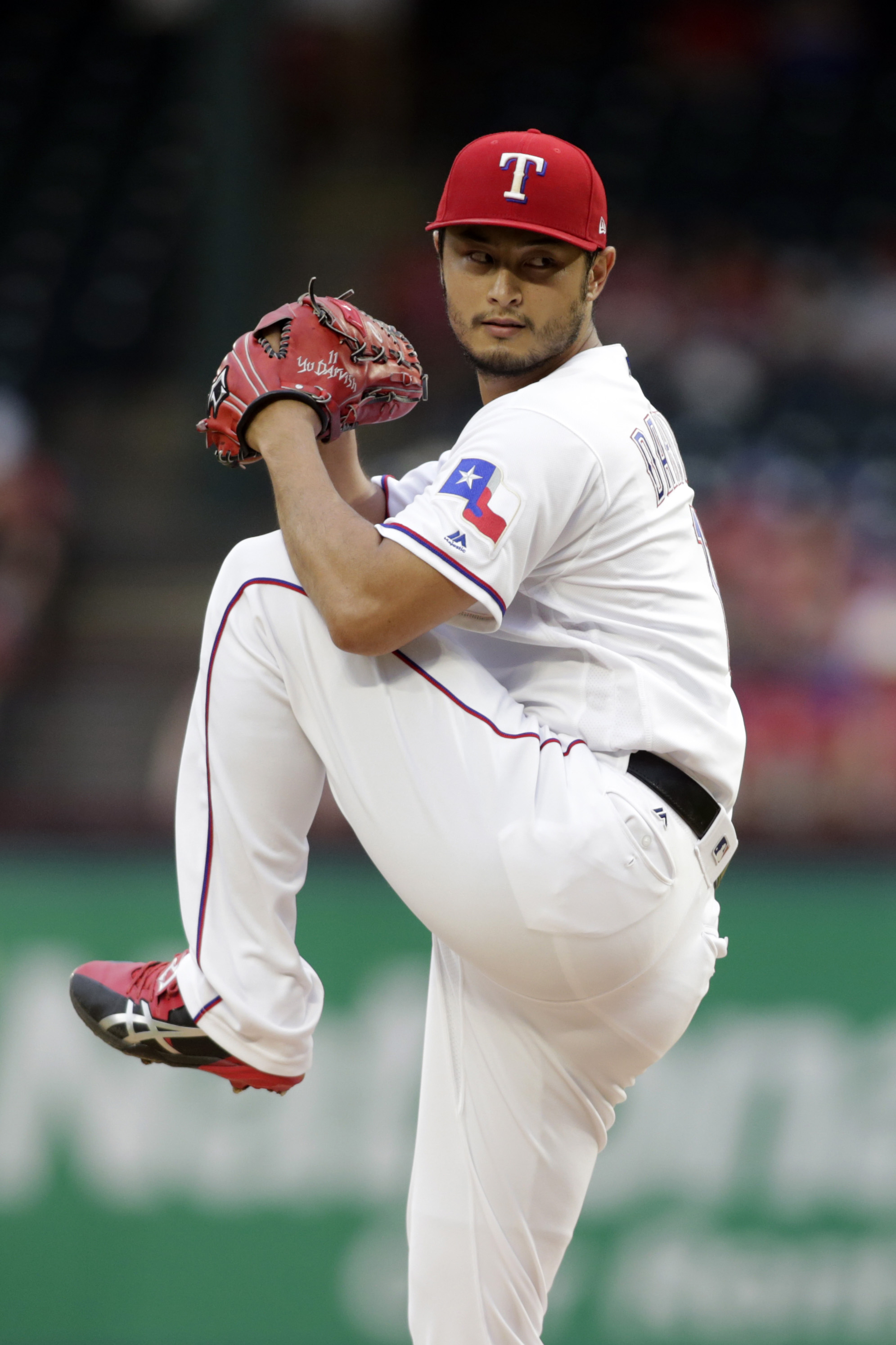
Darvish’s pact is now on the verge of expiring, while the Rangers are the owners of a 49-52 record after their 22-10 drubbing at the Marlins’ hands. That uninspiring mark has helped make the Rangers irrelevant in the American League West, which the 67-34 Astros ran away with long ago, but they’re still a manageable 4.5 games out in a parity-laden wild-card race.
With his team tenuously clutching to postseason hopes, Texas general manager Jon Daniels isn’t a lock to sell by Monday. Even if he does, Darvish might not go anywhere. Multiple reports this week have indicated that it would take a godfather offer for Daniels to part with Darvish, whom the Rangers would like to re-sign. And if the team keeps the four-time All-Star through season’s end but isn’t able to prevent him from testing free agency, it would surely make him a qualifying offer in order to receive compensation – a pick after the second round of next year’s draft – for his departure. That wouldn’t be much immediate consolation for the Rangers, but it’s among several factors that could influence them to retain Darvish past the deadline.
Although the Rangers may be content to ride it out with Darvish, pitcher-needy contenders have inquired about the Arlington ace in recent weeks and figure to continue doing so leading up to Monday. As such, there will be opportunities for clubs to pry Darvish away from the Rangers. The Cubs, Dodgers, Astros and Yankees come to the fore as potential landing spots, having already shown interest in Darvish.
In Chicago, Darvish would join Jon Lester, Jake Arrieta, Kyle Hendricks and the just-acquired Jose Quintana to comprise one of the Majors’ most proven rotations. That quintet would more than likely do enough to help the reigning World Series champions fend off the Brewers, Cardinals and Pirates in the National League Central. The Cubs aren’t exactly a flawless fit, though, given that they’re on Darvish’s limited no-trade list and also seem more inclined to chase a controllable starter (such as the Athletics’ Sonny Gray) than give up a prospect bounty for a rental.
As MLBTR’s Mark Polishuk pointed out last week, the Cubs are only a year removed from paying a heavy price for a free agent-to-be, closer Aroldis Chapman, whom they acquired from the Yankees in a deal that included standout infield prospect Gleyber Torres. Picking up Chapman helped the Cubs win their first championship in 108 years, but that doesn’t mean they should continue to deplete their farm system to acquire stopgaps. Further, should the Cubs reach the playoffs with their current rotation, they’d be in more-than-adequate shape, thereby lessening any need for Darvish. While all of Lester, Arrieta, Hendricks and Quintana have failed to replicate their 2016 numbers, that doesn’t make them weak links. The only significant disappointment has been John Lackey, who’s not going to factor into the Cubs’ rotation plans in the postseason.
Meanwhile, the Dodgers and Astros, who possess the two best records in baseball, aren’t hard up for starting help. Nevertheless, the Dodgers’ interest in Darvish was reportedly “serious” even before ace Clayton Kershaw suffered a back injury last Sunday that will keep him out until late August or early September. At an astounding 71-31, the Dodgers can cruise to the NL’s top seed even with Kershaw and Brandon McCarthy on the disabled list, and they still boast four decent to excellent healthy starters in Alex Wood, Rich Hill, Kenta Maeda and Hyun-Jin Ryu.
It’s true that there are durability concerns scattered throughout the Dodgers’ staff, yet Darvish still remains much more of a luxury than a need. Therefore, even with a World Series in their sights, it’s tough to imagine the Dodgers meeting the Rangers’ asking price for Darvish. Los Angeles would probably have to part with one of its most extolled prospects, whether it’s outfielder Alex Verdugo or a young righty in Walker Buehler or Yadier Alvarez, which doesn’t seem like something president Andrew Friedman and GM Farhan Zaidi would do in this instance.
The same applies to Astros GM Jeff Luhnow, who refused for months to budge in a standoff with the White Sox over Quintana. Unlike Darvish, Quintana is under team control at eminently affordable rates through 2020. Nevertheless, Luhnow wouldn’t deal a package including outfielder Kyle Tucker and righty Francis Martes for the southpaw over the winter. Keeping his team’s prospect pool together has worked out nicely for Luhnow, who has seen Houston establish itself as the premier unit in the AL this year.
The Astros have gotten ace-caliber performances along the way from Dallas Keuchel and Lance McCullers (the former has missed notable time with neck issues, though), while Charlie Morton, Brad Peacock and Mike Fiers have provided quality complementary work. The club also just welcomed back bona fide mid-rotation starter Collin McHugh from an elbow issue that kept him out for nearly the entire first four months of the season. All of that is to say there’s enough starting talent on hand to confidently rely on in a playoff series. Consequently, the Astros don’t seem like serious suitors for a couple months of Darvish, and Luhnow has indicated that he’s comfortable with his bevy of current options.
As for the Yankees, with Masahiro Tanaka in the midst of a mediocre to poor year and Michael Pineda having undergone season-ending Tommy John surgery this month, they do have obvious rotation issues. The problem for the Rangers, if you want to call it that, is New York’s eyes have been on Gray far more than Darvish. The only current Yankees starters who are surefire bets to be in their rotation next season are Luis Severino and Jordan Montgomery, as Tanaka could opt out of his deal (which looks improbable, granted) and CC Sabathia is set to become a free agent. Even though Darvish is arguably superior to Gray, then, the latter would perhaps be the more sensible acquisition for a Yankees team that needs to better their starting staff for both this year and the coming seasons.
Beyond those four squads, a match for Darvish is even more difficult to find. Most clubs either occupying wild-card spots or at least hanging around the league’s playoff races – the Royals, Rays, Mariners, Twins, Angels, Orioles, Diamondbacks, Rockies, Brewers, Cardinals and Pirates – don’t look like proper fits for various reasons (mainly weak farm systems and/or low playoff odds).
The Royals have been red hot and are in their last hurrah of contention with the core that helped deliver a championship in 2015, but their farm is lacking enough to impede a Darvish pursuit. Kansas City, which isn’t on Darvish’s no-trade list and has a flaw or two in its rotation, would otherwise be a logical destination.
The Rockies, who have a four-game lead on the NL’s second wild-card position, possess a middle-of-the-pack rotation that would certainly benefit from Darvish’s addition. However, even if Colorado were to make a serious run at Darvish, there’s a large roadblock in that it’s among the teams on his no-trade list. Whether he’d waive that right just to spend the stretch run of his contract year at Coors Field is questionable to say the least.
As first-place teams, the Red Sox, Nationals and Indians look like strong bets to earn playoff berths. They’re hardly clear-cut bedfellows for Darvish, though. Red Sox president Dave Dombrowski is never shy to make a daring move, but the club’s rotation is in fine shape as it is with Chris Sale, David Price, Rick Porcello, Drew Pomeranz and Eduardo Rodriguez in the equation.
Speculatively, the Nationals may have been been a big factor in the Darvish sweepstakes had Stephen Strasburg‘s nerve injury been serious. Strasburg’s OK, according to the club, which isn’t in on Darvish. It’s interesting to imagine Darvish teaming with Strasburg and the great Max Scherzer as the Nats’ top three starters come October, but there’s nothing to suggest it’s going to happen.
Cleveland, another place on Darvish’s no-trade list, has come up as a potential suitor for Gray. The Indians have been the beneficiaries of Mike Clevinger‘s breakout, but their rotation could still use a surer thing to complement Corey Kluber and Carlos Carrasco. Darvish would provide that, but again, it would mean waving goodbye to acclaimed farm talent for a Band-Aid. That’s something the Indians might not want to do 12 months after sending touted prospects Clint Frazier and Justus Sheffield to the Yankees for Andrew Miller.
Darvish’s next scheduled start is Aug. 1, the day after the deadline, and there’s a legitimate possibility that outing will come in a Rangers uniform. Barring an intrepid move from one of the imperfect fits highlighted above, it seems Darvish and the Rangers will continue their union for at least another two months. Regardless of whether that proves to be the case, the impending free agent will spend the rest of the year making an argument for a mega-deal. With a 4.01 ERA that looks pedestrian in comparison to his marvelous career production, it appears he has work to do on that front. Darvish remains a flamethrowing strikeout maven, though, which means some playoff-bound team could talk itself into paying a ransom for him in the coming days.
Photo courtesy of USA Today Sports Images.
Looking For A Match In A Sonny Gray Trade
For the third consecutive July, Sonny Gray‘s name figures to permeate headlines at MLBTR and throughout the industry, as the Athletics are well out of the race for the American League West and for an American League Wild Card spot.
Interest in Gray figures to be heightened in 2017 given that he’s looked more impressive on the mound than he did in an injury-shortened 2016 season. While it has to be noted that Gray did miss the month of April due to a strained lat muscle, the 27-year-old has returned to throw 64 2/3 innings of 4.45 ERA ball. Obviously, that’s not an especially appealing number, but most front offices in today’s game aren’t overly swayed by ERA, and the underlying stats with Gray are considerably more intriguing.
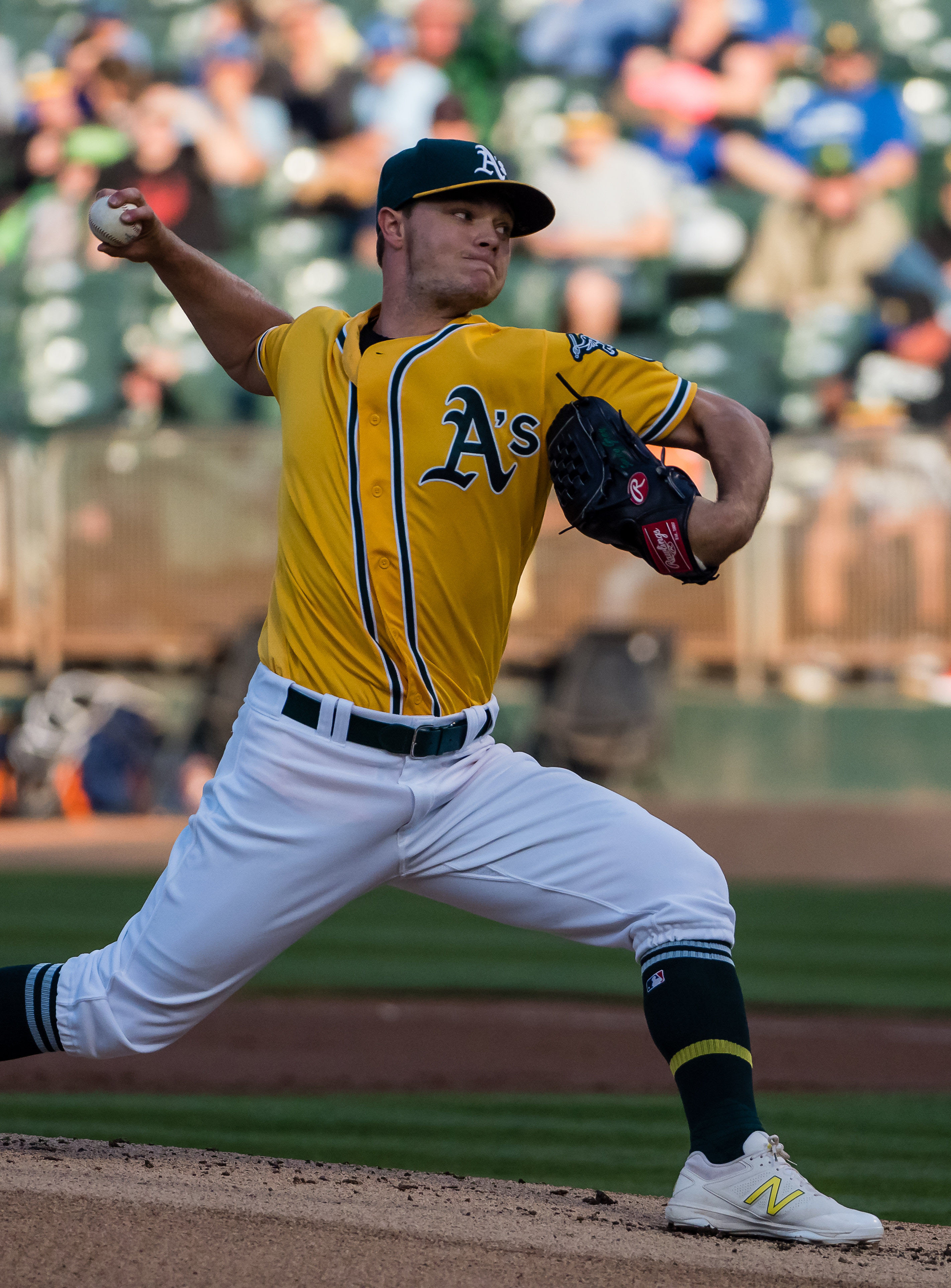
Gray has averaged 9.1 strikeouts (his highest since his rookie season) and 3.1 walks per nine innings pitched while inducing grounders at a 54.9 percent clip thus far in the season. His 93.4 mph average fastball velocity is still strong, and he’s inducing more chasing outside the strike zone (31.4 percent) than he ever has in his career. Perhaps unsurprisingly, his swinging-strike rate (12 percent) and opponents’ contact rate (74.2 percent) have both improved accordingly. Each of those marks is also a career-best for Gray.
Moreover, while Gray gets some benefit from playing in the spacious O.Co Coliseum, whatever help he receives is largely mitigated by the fact that the Athletics are the worst defensive team in baseball. Oakland’s -47 mark in Defensive Runs Saved is eight runs worse than the closest team (the Giants) and 19 runs worse than the 28th-ranked Blue Jays. Ultimate Zone Rating tells a similar story, grading the A’s at an MLB-worst -31.7. All of that has played prominently in his elevated ERA, as Gray’s .320 BABIP is the highest mark of his career to date.
Last year’s health troubles obviously have to be a concern to interested teams, but there’s a small silver lining: Gray’s price in arbitration was dramatically impacted both by his lack of innings in 2016 and his substandard results. He’s earning at an eminently affordable $3.575MM rate in 2017 and is controllable for two more years, through his age-29 season, before hitting free agency.
All of this is to say, of course, that the asking price for Gray will be steep. In spite of recent injury troubles, the paucity of controllable starters that will be available on the market and the vast number of teams looking to swing a deal for a player that can help their rotation beyond 2017 figure to result in a huge return for the A’s if they ultimately decide to move their ace.
Any team that’s seriously considering a run at Gray will have to have a fairly strong farm system and/or some young, MLB-ready talent with less than a year of club control on the table in talks. The A’s almost certainly aren’t going to move Gray for anyone that’s within arm’s reach of arbitration eligibility. The endgame here is to pick up multiple long-term assets that won’t have any real earning power for several more years.
Oakland, after all, has a wave of young prospects hitting the Majors right now and undoubtedly hopes that those assets can quickly help to form the core of a contender. Ryon Healy arrived on the scene last year, while this season has brought forth names like Matt Chapman, Matt Olson, Franklin Barreto, Jaycob Brugman and Bruce Maxwell, among others. It doesn’t seem likely that the A’s would be open to moving Gray for a package of high-ceiling 19-year-olds that are three years away from the Majors.
All of that probably puts fringe contenders like the Orioles, Angels, Mariners and Royals at a disadvantage. It’s feasible that Seattle could make a run in the wake of Drew Smyly‘s Tommy John surgery, but their system is pretty light on top-end talent, the A’s are a division rival, and their lone shot in 2017 is to get into the playoffs via Wild Card. That Gray is controlled through 2019 no doubt appeals to them, but I have to imagine that other clubs could put together more enticing offers.
It’s likely fair to also cross off any of the Giants, Padres, Reds, Phillies, Mets, Tigers, Marlins and White Sox. Each is well under .500, and many of those clubs are in the midst of a rebuild. Looking to some clear contenders that are in win-now mode, however, there are lots of readily apparent suitors for Gray…
Astros: Houston has been the most oft-linked team to Gray, as many pundits expect that they’ll add a front-line arm to join Dallas Keuchel and Lance McCullers in the playoff rotation. The Astros have plenty of high-end pitching prospects that aren’t yet proven in the big leagues (e.g. Francis Martes, David Paulino) as well as upper-level position prospects that don’t necessarily have a clear path to regular at-bats in the Majors (e.g. Kyle Tucker, Derek Fisher, Teoscar Hernandez). Houston also spent very aggressively on this past year’s international market, so they’ll have some potential impact talent rising through the ranks to replenish the system if they trade from their upper levels.
Cubs: Virtually the entire Chicago rotation has taken a step back in 2017, and whether it’s due to a potential “hangover” effect of last year’s lengthy postseason run or simply the year-to-year volatility that comes with pitchers, they’re in need of help. The Cubs entered the year with a questionable fifth slot in the rotation to begin with, and they’ve now lost Kyle Hendricks to the DL while Jake Arrieta, John Lackey and Jon Lester are all offering reduced production, to varying extents. Chicago is rife with young position players that could appeal to the A’s, though they’re reportedly not especially amenable to trading any of their young big league bats.
Yankees: The Yankees will be without CC Sabathia for awhile, and Masahiro Tanaka has struggled for much of the season. Michael Pineda‘s home run problems are more pronounced than ever, though he’s still managed to turn in solid overall results. However, the Yankees could lose Pineda, Sabathia and Tanaka at season’s end, leaving them with significant holes to fill in the rotation. Jordan Montgomery may very well be emerging as a long-term option, but he also threw just 139 innings last year, so at some point they’ll want to monitor his workload. Like the Cubs, the Yankees’ farm is stuffed with intriguing prospects. And for New York, there’s an additional (albeit entirely speculative) scenario to consider: with first base being a clear point of weakness, could they line up a package deal to land both Gray and Yonder Alonso in the same trade?
Dodgers: Rich Hill hasn’t looked like the 2015-16 version of himself this year, and Julio Urias will miss this season and possibly much of next year due to an ominous shoulder surgery. Gray would slot directly into a playoff rotation alongside Clayton Kershaw and breakout star Alex Wood, and the Dodgers aren’t lacking for appealing trade chips. Cody Bellinger is assuredly off limits, but prospects like Alex Verdugo, Willie Calhoun and others would likely pique Oakland’s interest.
Rockies: Colorado has leaned heavily on young pitching this season, but those inexperienced arms have begun to labor in recent weeks. Antonio Senzatela and Kyle Freeland come with some rather dubious peripherals, and lefty Tyler Anderson is now out for a month or so due to arthroscopic knee surgery. Jon Gray is returning from the DL, and Jeff Hoffman looks terrific, but there’s virtually no experience in the rotation beyond Tyler Chatwood and, to a lesser extent, the other Gray (Jon). Perhaps some of the young but raw arms that Colorado has leaned upon this year (e.g. German Marquez) could entice the A’s, and Colorado has prospects like outfielder Raimel Tapia and infielder Ryan McMahon that are somewhat blocked at the big league level. Per Nick Groke of the Denver Post, however, Brendan Rodgers is almost entirely off limits.
Diamondbacks: The rotation isn’t a clear area of need for the D-backs. In fact, it’s been one of the team’s strengths. They also have a weak farm system and may prefer to simply stick with the arms that have gotten them this far, so perhaps this is too much of a long shot for serious consideration. But, there also aren’t many holes on the Diamondbacks’ roster, and they’d currently turn to one of Zack Godley, Patrick Corbin or Taijuan Walker as the third starter behind Zack Greinke and Robbie Ray in a playoff rotation. Arizona might not have expected to be in this position, but they’re firmly in the hunt for the division and look, at worst, to be a Wild Card favorite. The core that’s propelled them will be around through at least 2018 — and most of it through at least 2019 — meaning Gray aligns well with the rest of their roster.
Indians: Like the Cubs, the Indians have seen a number of their pitchers take a step back in 2017. They, too, entered the year with a questionable setup at the very back of the rotation, and Danny Salazar‘s sharp decline, paired with the struggles of Trevor Bauer and Josh Tomlin, creates a need for rotation help as Cleveland finds itself in a surprising race with the Twins and Royals for top billing in the AL Central. Last year’s deal for Andrew Miller thinned out the farm, but they’re hardly hurting for top-end prospects. Bradley Zimmer‘s impressive play in the Majors probably removes him as a consideration in trades, but Cleveland has some potentially blocked assets in Tyler Naquin and Yandy Diaz as well as a number of upper-level prospects that have yet to break into the bigs.
Red Sox: Third base will probably be Boston’s primary area of focus, but they’ve already been linked to Gray on the rumor circuit. The Boston rotation is already stacked with high-profile names, but David Price‘s elbow issues and early struggles make him something of a question mark, and Rick Porcello hasn’t replicated his 2016 Cy Young form yet. Eduardo Rodriguez, meanwhile, is dealing with knee issues, while Steven Wright is out for the season and Doug Fister is a wild card. Chris Sale will join Price and Porcello in a potential playoff rotation for the Sox, though, so the notion of adding Gray to the mix might be a stretch, especially with the aforementioned greater need at the hot corner.
Each of those clubs looks to be firmly in “win-now” mode, but there are also a few teams that are walking the line between winning in the present while also building for the future. They may be a bit more of a stretch, but each has reason to at least explore the possibility of pursuing Gray.
Twins/Brewers: These two teams are in a fairly similar position. Both entered the year with a long-term outlook in mind, but both now surprisingly find themselves contending sooner than expected. Mortgaging the future wouldn’t be prudent if it meant acquiring a rental piece, but adding an affordable arm that can be controlled through 2019, when each team’s core has gained more experience, could hold appeal. Milwaukee has the better farm system of the two and has more outfielders than it knows what to do with, but the Twins still have some Top 100 prospects as well as some younger pieces that have yet to solidify themselves in the Majors. It’s worth noting, too, that Minnesota GM Thad Levine has already expressed an openness to acquiring long-term assets.
Braves: David O’Brien of the Atlanta Journal-Constitution recently linked the Braves to Gray, and while he’s reportedly not atop their wish list, his controllable nature should hold appeal to GM John Coppolella, who has never been shy about brokering trades. Depending on your prospect list of choice, the Braves have roughly 10 percent of the game’s Top 100 prospects in their ranks, so if they do decide that Gray is worth the considerable price, they’ll have plenty of pieces to entice Oakland president Billy Beane and GM David Forst.
Photo courtesy of USA Today Sports Images.
Looking For A Match In A Rich Hill Trade
Something as small as a blister could have a huge impact on this year’s trade deadline. Rich Hill was forced to leave Sunday’s start against the Blue Jays after just five pitches due to a popped blister on the middle finger of his throwing hand, disappointing the many scouts in attendance and bringing into question the status of perhaps the most hotly-pursued starter heading into August 1.
Injury may have been the only thing that could’ve lowered Hill’s trade value at this point. The 36-year-old lefty already missed a month recovering from a groin strain, though he looked good in his first two outings back from the DL. This blister issue already caused Hill’s first post-break start to be pushed back two days, and now Hill believes it will at least a few days before the blister heals well enough for him to throw again. It could be a full week before Hill takes the mound again, leaving him time for perhaps two starts before the trade deadline.
Needless to say, this isn’t a welcome development for an A’s team that was looking to cash in on Hill’s unexpected dominance. Between his four-start emergence for the Red Sox in 2015 and his continued terrific work in 2016, Hill has posted a 2.06 ERA, 10.8 K/9 and 3.82 K/BB over his past 105 innings. Hill is a free agent this winter and is owed around $2.3MM for the remainder of the season, making him an easily affordable rental for teams in both large and small markets.
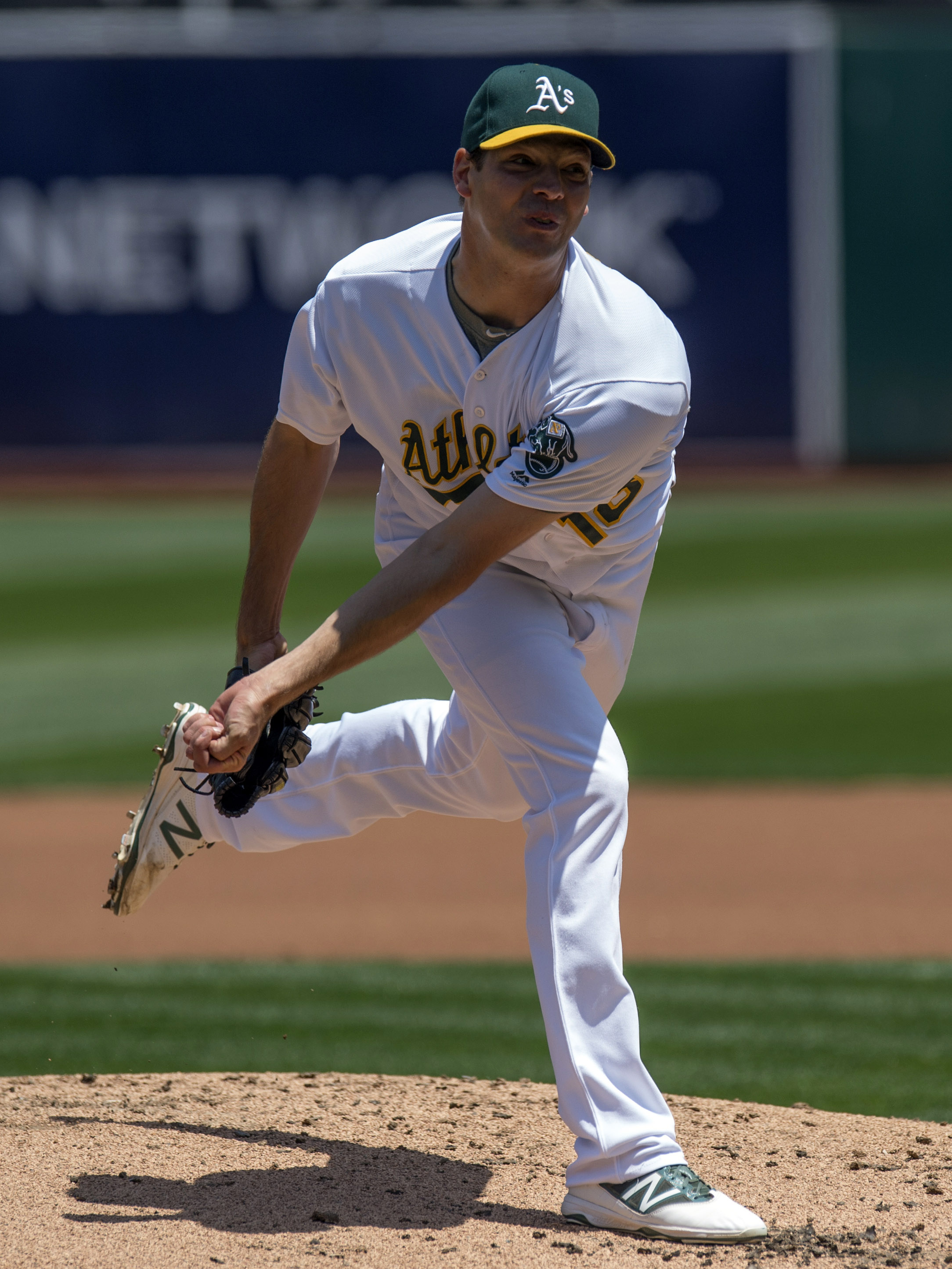
Affordable in salary, that is — not necessarily affordable in terms of the return it will take to pry him out of Oakland. Hill has pitched so well that the A’s could justify issuing him a qualifying offer in order to recoup a first-round compensation draft pick back if Hill signed elsewhere. (Though it’s an interesting question if Hill would accept the QO to lock in a one-year deal in the $16MM range, which would certainly impact the A’s decision to issue the offer.) That means the Athletics’ absolute minimum asking price will be a prospect graded as equal to the value of that comp pick, and the asking price to this point has been much higher; the A’s reportedly initially wanted Anderson Espinoza when the Red Sox inquired about Hill.
The blister and groin strain underline the great unknown that is Hill’s durability, as the 76 innings he’s thrown this year is already the third-highest innings total of his 12-year career. This being said, in a very thin summer market for starting pitching, Hill may still emerge as the top arm available if he is able to recover from his blister and deliver at least one more quality start before the deadline. There’s been so much interest in Hill that the A’s should still be able to find a trade partner, even if their hopes of landing a top-tier prospect may not be realized.
Billy Beane, David Forst and company will probably take the usual route of looking for the best talent available when shopping Hill, Josh Reddick, Danny Valencia or other trade chips before Aug. 1. If the A’s do prioritize a need, Baseball America’s Jim Shonerd (BA subscription required) recently noted that the A’s are thin on minor league outfield talent. That could be a particular area of focus in trade talks, especially if Reddick is also dealt. It’s also not out of the question that Oakland looks to add a Major League player, given that the Athletics have been loath to fully rebuild in the Beane era. While the A’s have struggled over the last two seasons, recent history suggests that they have their eye on rebounding in 2017.
Over a third of the league has been scouting Hill or has been otherwise connected to him in trade rumors, and you can make a case that a few other postseason contenders could also be a fit for the 36-year-old lefty. Let’s try to figure out who might be best-positioned to trade for Hill, beginning with the 11 teams who have already shown interest…
Looking For A Match In A Ryan Braun Trade
Ryan Braun was already into the fourth year of an eight-year, $45MM extension with the Brewers when he signed another extension that theoretically made him a Brewer for life. That deal, signed in April 2011, only just began this season — a five-year, $105MM extension covering the 2016-20 seasons that also includes a $15MM mutual option for 2021 (that can be bought out for $4MM).
The Brewers reached the NLCS in 2011 on the strength of Braun’s NL MVP numbers, though it’s been a rougher ride for both player and team ever since. Braun’s MVP was called into question after he tested positive for PEDs following the season, though that positive test was overturned in very controversial fashion. The outfielder then did face suspension for his part in the Biogenesis PED scandal, accepting a 65-game ban that prematurely cut short his 2013 season. Beyond the disciplinary issues, Braun has also had his share of injury problems, including a nagging nerve injury in his right thumb, a bad back that required surgery last offseason and some wrist and neck soreness this season.
So with Braun now in his age-32 season, there’s no question that he carries a fair amount of baggage for potential trade suitors. Beyond the salary, injury history and PED history, there’s also the fact that Braun wields a great deal of control over his movement via a 23-team no-trade clause. For 2016, the only six teams not on his list are the Angels, Diamondbacks, Dodgers, Giants, Marlins and Padres.
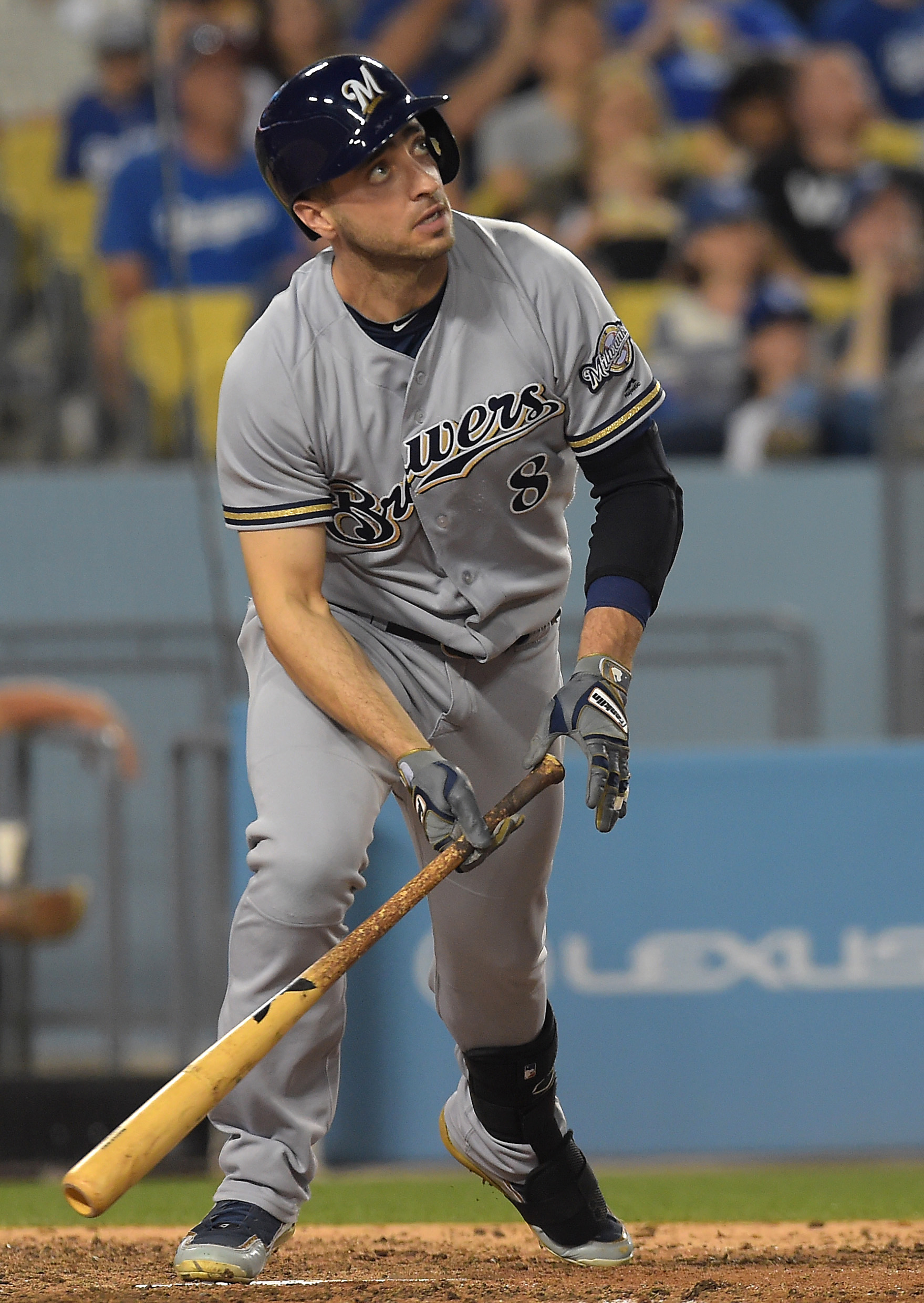
With all of this in mind, Braun is nonetheless one of baseball’s top trade candidates as we approach the August 1 deadline because he can still flat-out hit. He has cooled off a bit in June after a blazing-hot start, yet Braun is still hitting .325/.381/.557 with 13 homers in 270 plate appearances this season. When healthy, Braun is still a very dangerous bat who could improve virtually any contender’s lineup.
The Brewers find themselves in something of a kingmaker’s position this deadline, as they not only have Braun, but also perhaps the single biggest trade chip of all in catcher Jonathan Lucroy. I examined Lucroy’s trade market earlier in June and speculated that Milwaukee GM David Stearns could look to kill two birds with one stone by packaging Braun and Lucroy in the same trade; Lucroy’s team-friendly contract could make a team more willing to absorb all of Braun’s deal, leaving the Brew Crew with tons of future payroll flexibility.
Owner Mark Attanasio, however, is reportedly more focused on adding blue chip young talent to his organization than he is about getting Braun’s contract off the books. There are also relatively few teams that could realistically meet what would still be a substantial asking price for a Braun/Lucroy combo. It’s a fun idea from a blockbuster standpoint, though it’s probably not in the cards.
Focusing just on Braun, then, let’s go through the teams that could use corner outfield help. Braun shifted back to left field this season after playing right primarily in 2014-15, though his defensive metrics as a right fielder (minus-9 Defensive Runs Saved and -7.7 UZR/150) aren’t pretty. He could return to the position in a pinch with a new team, though it’s rather clear that Braun is more serviceable in left, where the metrics are split (31 DRS but -4.0 UZR/150 over his career in left field) on his glove.
Let’s begin with the six teams exempt from Braun’s no-trade list…
Looking For A Match In A Zack Cozart Trade
At thirty years of age, Zack Cozart has fully hit his stride as a ballplayer. Yet because of his early-career struggles at the plate and an ill-timed knee surgery last year, he’s earning just under $3MM this season with one more arbitration-eligible campaign to come. That makes him an interesting and affordable trade piece for the Reds.
A deal is far from a fait accompli, but seems increasingly likely as the market develops. Still, Cincinnati could certainly justify holding onto him if a fair offer isn’t forthcoming. As I recently noted in ranking Cozart among the game’s top fifteen trade candidates, though, he will quite likely be the best shortstop available. Particularly since he was kind enough to acknowledge his MLBTR readership recently, we thought it made sense to take a look at where he could end up playing next.
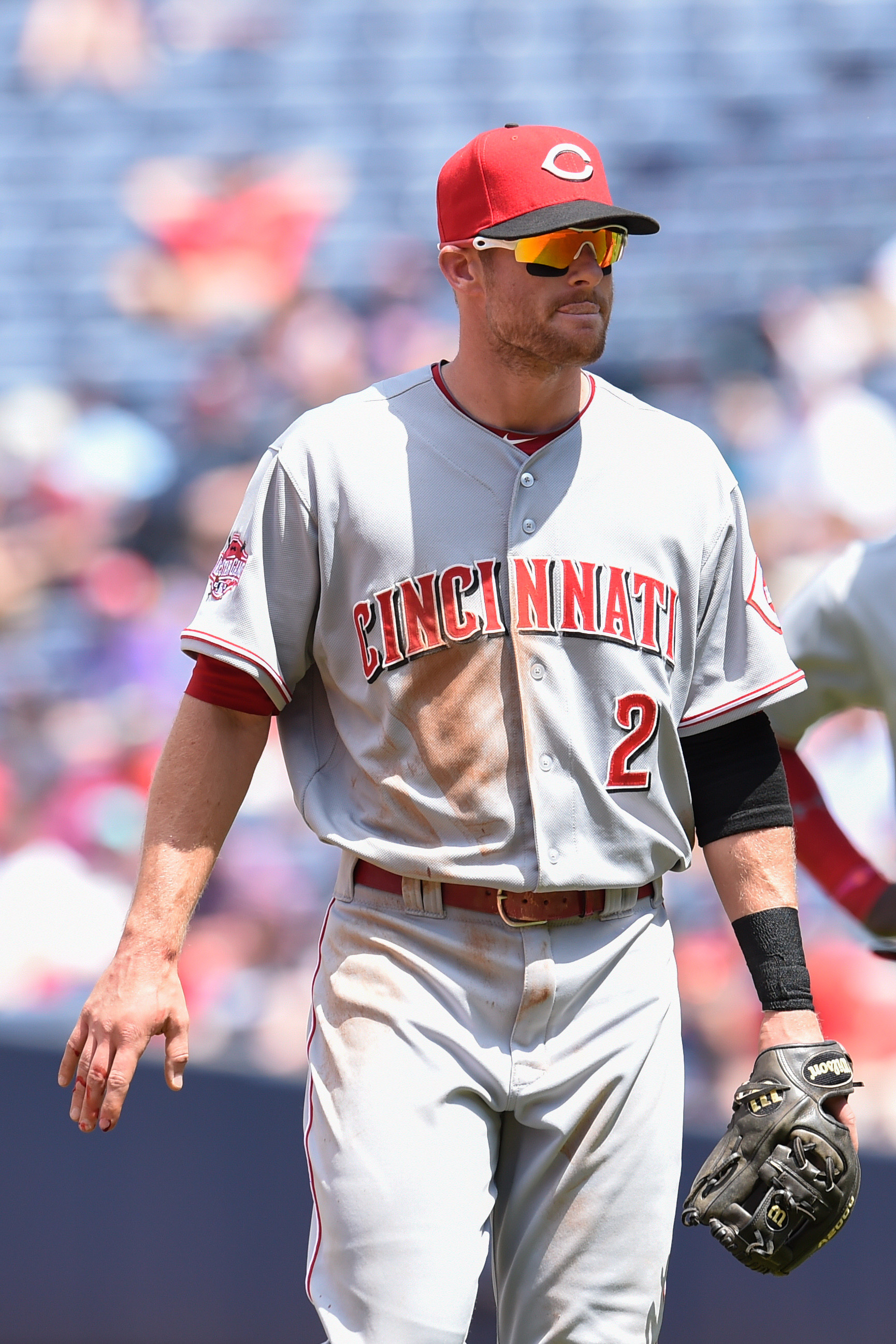
Cozart began turning heads last year, when he came out of the gates with a strong .258/.310/.459 batting line and nine home runs over 214 plate appearances. Then came his hard-to-watch injury, which occurred as he hustled to leg out a grounder and landed awkwardly on first base. That not only sapped Cozart’s arb earning power, but put a halt to his efforts to prove that he had really turned a corner at the plate. After being installed as Cincinnati’s regular shortstop in 2012, he managed only a .241/.280/.362 batting line over 1,761 trips to the plate in the next three years. He did show some pop, with 31 total home runs, but the bat looked marginal.
Thus far in 2016, Cozart has put both the injury and those past struggles in the rearview mirror. He has maintained and even improved upon his offensive production from last year, slashing .273/.316/.486 over the first 275 plate appearances of the season. Cozart is making hard contact (32.9%) and spraying line drives (23.4%) at career-best rates, and he’s continuing to bang long balls on about 13% of the flyballs he hits. He has actually been better on the road than at Great American Ballpark and isn’t benefiting from an inflated BABIP.
If you want to take the optimistic side, Cozart’s development looks somewhat similar to that of Brandon Crawford. As in the case of the Giants’ $75MM man, Cozart has never faced questions with the glove. In fact, Cozart has been among the most valuable defenders in all of baseball, delivering more or less equivalent value to Crawford. Just check out this UZR-based leaderboard from 2012-16 and whistle with surprise and admiration.
With solid baserunning mixed in, Cozart is and always has been a fairly high-floor player. That’s why he managed to play at about a two-WAR clip even when he was sagging on offense. Mix in an average or better bat, though, and you’re suddenly looking at a guy who has already compiled two wins in just 67 games. With the cheap salary and bonus year added in, that’s a pretty appealing trade piece.
There’s little question that the Reds front office believed Cozart would ultimately deliver this kind of productivity; he has been an everyday player since 2012. But Cincinnati may not be well-positioned to enjoy the fruits of its patience. The club isn’t expected to contend before Cozart hits free agency after the 2017 season, and an extension doesn’t seem particularly wise given his age and the team’s ongoing efforts to trim obligations and manage some long-term contracts that haven’t panned out. Plus, the organization has a pair of intriguing young infielders at the major league level — Eugenio Suarez and Jose Peraza — who could step in at short.
All sounds good so far … but truth be told, there isn’t a really evident match on paper. There are a few contenders whose shortstops have scuffled thus far, to be sure. And some other clubs have needs around the infield that could conceivably be met by adding Cozart. But it’s tough to find any specific team that is likely to feel extremely motivated to add a new face at short.
Let’s take a closer look:
Royals: K.C. just hasn’t received much of anything from Alcides Escobar, who has followed up on a poor offensive 2015 with an even worse start to the current campaign (56 wRC+) while drawing negative defensive metrics. Meanwhile, holes opened at both second and third; while they’ve been plugged admirably by Whit Merrifield and Cheslor Cuthbert, it’s not clear that either will be up to the task of regular duty for the long haul. It’s possible to imagine Cozart being utilized in any number of ways by the resourceful Royals.
Mariners: Seattle hoped that Ketel Marte would be ready for a regular role this year, but he’s struggled to a .278/.305/.363 batting line and hasn’t drawn rave reviews from defensive metrics with the glove. The team traded away a one-time option, Chris Taylor, and hasn’t received much at all from reserves Shawn O’Malley and Luis Sardinas. Installing Cozart could allow the M’s to turn Marte into a super-utility player who could see time all over the infield and outfield.
White Sox: Highly-regarded prospect Tim Anderson has been a league-average hitter over his first 74 plate appearances, but there are some red flags mixed in. He has yet to draw a walk, is striking out in about a third of his plate appearances, and is benefiting from a .370 BABIP. Ultimately, his current productivity is dependent upon a .219 ISO that would dwarf anything he has done in the minors. While Chicago may not want to burn resources and may be glad to roll the dice on Anderson’s talent, the fear of regression is real. It’s worth noting, too, that second baseman Brett Lawrie has cooled off considerably since his hot start.
Mets: Yes, the club just added Jose Reyes to provide an option with David Wright possibly down for the count in 2016. But that move didn’t come with any financial risk. And Reyes looked like a shell of his former self last year before sitting out the first half of this season. Then, there’s the fact that Asdrubal Cabrera has never had good range at shortstop. Adding Cozart up the middle while bumping Cabrera to third could represent a huge defensive upgrade.
Giants: San Francisco is set at short with the aforementioned Crawford and has quality young options at second (Joe Panik) and third (Matt Duffy). But Duffy is currently out and the organization is rumored to have looked at Yunel Escobar. Cozart would represent a similar addition in terms of his cost now and in 2017, and he’s probably the better player at this point. Of course, adding an infielder never seemed like the most pressing need in the first place.
Astros: Hear me out! Most agree that Carlos Correa is not a great defensive shortstop; moving him to third has long been discussed as a possibility. Adding Cozart and bumping Correa to third would essentially be another way of addressing the team’s questions at the hot corner. Top prospect Alex Bregman is streaking toward the majors, of course, but the team might not want to rush up the 2015 draftee or rely on him too heavily right out of the gates. I’ll admit it’s a long-shot, but it could be an interesting fit.
Marlins: We’ve long heard how enamored Miami is of Adeiny Hechavarria, and he’s highly valued for his glove, but he’s one of the team’s few regulars that isn’t hitting for the club. Cozart would also make a great platoon mate for Derek Dietrich at second, and could spell Martin Prado at third. With Dee Gordon‘s return nearing, though, Cozart would likely only make sense if the club decides it’s time to replace Hech. Pitching seems a much higher priority for the Fish.
Tigers: This situation looks much like that of the Marlins. Jose Iglesias remains a fantastic fielder, but he’s now hitting .255/.314/.332 on the year. Plus, Nick Castellanos is a marginal defender at third and is carrying a sub-.700 OPS in June. Cozart could bump Castellanos to the outfield while J.D. Martinez is out and then be utilized in a variety of ways — including, conceivably, as the regular shortstop — down the stretch.
Orioles: Cozart doesn’t look all that dissimilar from a younger version of J.J. Hardy, who is now nearing 34 years of age. Hardy’s always-questionable on-base abilities have faded yet further in the last two years, and he last hit double-digit home runs in 2013. It’s not entirely inconceivable that Baltimore could seek his replacement in Cozart, though the elder player remains a top-quality defender. That scenario would begin to look more plausible if Hardy suffers another injury or can’t pick up the pace he has set since returning on June 18th (.257/.257/.314).
Others: We’re really starting to wade into implausible territory the further we get down the list here, but there are some other teams who could match if you squint. The Red Sox have 99 problems and shortstop ain’t one, but adding Cozart to the mix would open up some platoon opportunities at first and third, give the team a highly-capable fill-in at the middle infield, and/or open up the possibility of utilizing Travis Shaw in left. And the Rays could conceivably send Cinci a useful arm in order to improve its shortstop situation at a reasonable price — with an eye on 2017. You could make a case that the Indians could improve upon Juan Uribe, who isn’t hitting much but still defends like a champ. But even then, they’d probably be better suited adding an outfielder and deploying Jose Ramirez at the hot corner. The Dodgers always seem to find a way to add another infielder, though admittedly it’s difficult to see in this case; the Yankees would probably prefer to have better production from second and third, though that’s a tough fit.
In the aggregate, the demand side of the equation isn’t terribly robust. The real question, perhaps, is whether one or more contender will come up with a really significant need between now and the deadline. In the event of an injury or steep performance decline from one or more shortstops, the Reds could be left holding a critical piece of the trade deadline puzzle.
Photo courtesy of USA Today Sports Images.
Looking For A Match In A Jonathan Lucroy Trade
2015 was essentially a lost season for Jonathan Lucroy. The Brewers catcher was limited to 103 games thanks to a concussion and a fractured toe, and he posted his worst numbers in four seasons by hitting only .264/.326/.391 with seven homers over 415 plate appearances. Down year notwithstanding, it’s still quite possible that had Lucroy could be wearing a different uniform today had he stayed healthy — the former All-Star garnered some trade buzz last winter as rivals teams looked to buy low. Brewers GM David Stearns didn’t pull the trigger on a deal, which looks like a shrewd decision given how Lucroy has thoroughly rebuilt his value.
Lucroy has been nothing less than baseball’s best all-around catcher in 2016. In addition to hitting .304/.361/.515 with nine home runs through 227 PA, Lucroy is also posting above-average pitch-framing numbers and has thrown out 24 of 32 runners trying to steal. Since fWAR doesn’t include framing value, there’s an argument that Lucroy has been even more valuable than his already-impressive 2.1 fWAR, which leads all qualified catchers by a healthy margin and ranks him within the top 30 of all players.
If that output wasn’t enough, Lucroy is also on one of the game’s most team-friendly contracts. He has roughly $2.7MM still owed to him in salary for this season, and he is controllable through 2017 on a $5.25MM club option (with a $250K buyout, though the option is a no-brainer to be exercised). Between the superstar production and the small salary commitment, it’s no surprise that Jeff Todd placed Lucroy atop both installments of the MLBTR Top 10 Trade Candidates rankings.
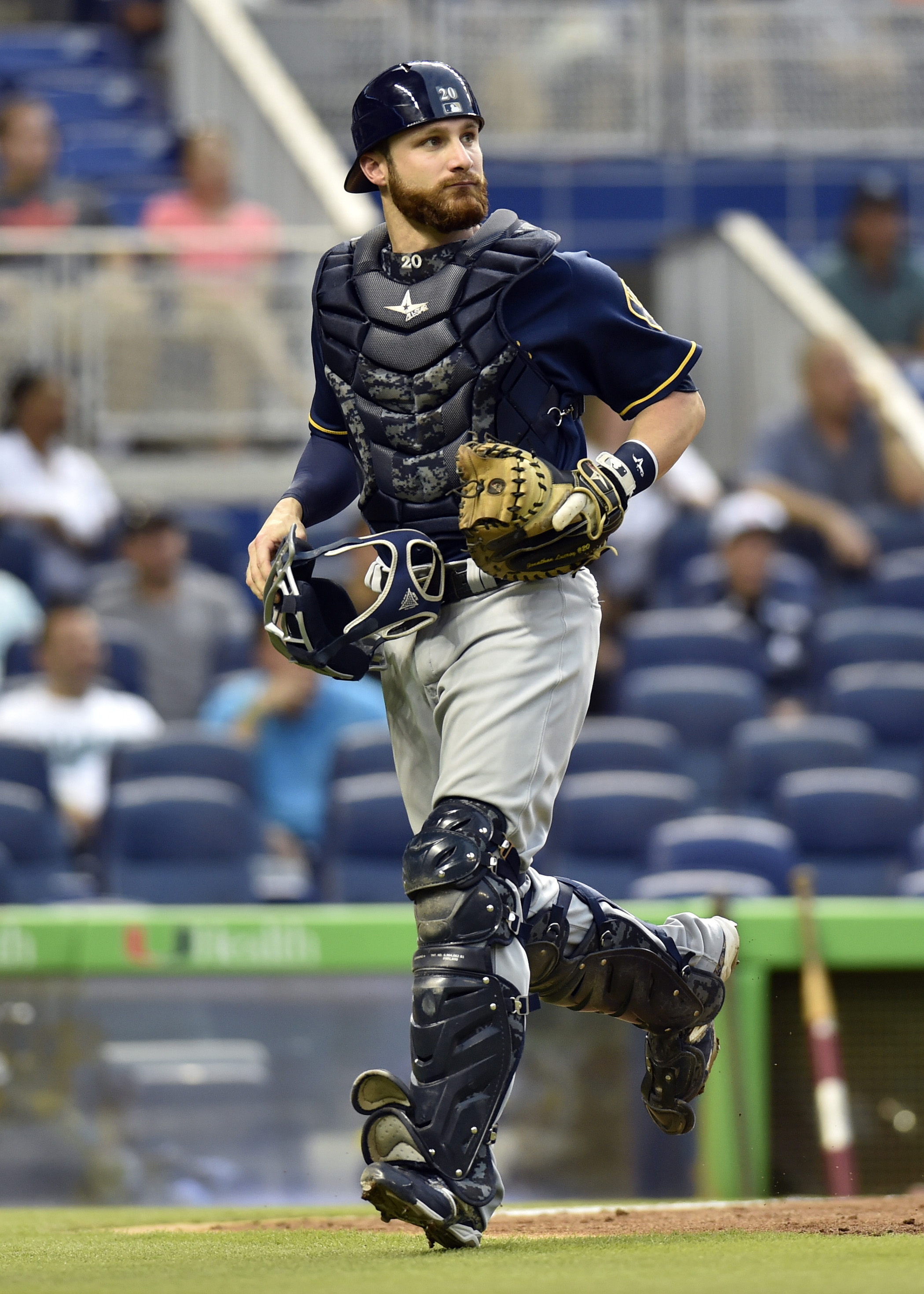
One wrinkle to Lucroy’s trade candidacy is his partial no-trade clause, which allows him to block deals to eight teams each season. Lucroy quite openly discussed his desire to play for a winning team during an interview in January, so it doesn’t seem like he’d stand in the way of a move to a contender, though he could obviously ask for some financial incentive to waive his clause if Milwaukee worked out a deal with one of those eight teams. The Nationals are the only team known to be on Lucroy’s list and while D.C. has shown interest in Lucroy in the past, they have no need for a catcher upgrade thanks to Wilson Ramos‘ huge season.
So if not Washington, who else could be Lucroy’s new team? We can probably eliminate these teams since they’re either rebuilding, out of the race or are already set at catcher: Athletics, Blue Jays, Braves, Cardinals, Diamondbacks, Dodgers, Giants, Marlins, Orioles, Padres, Pirates, Reds, Rockies, Royals, Twins.
As I mentioned earlier, Lucroy (who turns 30 on Monday next week) won’t come at a big payroll cost, but the Brewers will surely ask for multiple blue-chip prospects and/or MLB-ready young players in return. This type of price tag definitely narrows the field, as some teams simply may not have the young talent to meet Milwaukee’s demands. Teams like the Angels, Mariners, Tigers and White Sox could all use a catcher upgrade but are hamstrung by thin farm systems.
The Mets’ farm system is more highly-regarded than the aforementioned teams, though they might well have to offer one of the young starters in their current rotation to get Milwaukee’s attention in a Lucroy trade. (Given the questionable health of Travis d’Arnaud and Lucas Duda, Lucroy would give the Mets a much-needed bat at catcher or first.) The Phillies can probably also be counted out, as while it’s fun to imagine them pausing their rebuild plans to capitalize on their surprising proximity to the wild card race, it’s probably unlikely that Philadelphia will trade some of the young talent it has amassed over the last year-plus.
The Indians have Yan Gomes locked up on a contract extension that could run through the 2021 season, though Gomes has been hampered by both injuries and inconsistency over the last two years, making him a weak link on a Cleveland team challenging for the AL Central. If you really look outside the box, you could conceive of a scenario where Cleveland offers two of their “untouchable” prospects in Clint Frazier, Bradley Zimmer or Bobby Bradley for Lucroy, then either trades Gomes in the offseason or uses Lucroy at first in 2017. (Gomes could also go to the Brewers in a Lucroy trade.) I would think it’s much more likely, however, that the Tribe focuses on outfield help at the deadline.
The Yankees don’t stand out as an obvious Lucroy landing spot given Brian McCann‘s presence, though if Mark Teixeira‘s knee injury ends up requiring season-ending surgery, Lucroy and McCann could split time between catcher and first base. (This timeshare could continue into 2017 if Teixeira leaves in free agency, or the Yankees could look to deal Lucroy or McCann in the offseason.) Lucroy’s bat would be a huge boost to a Yankees team that is hanging around the race despite a severe lack of offense. On the flip side, New York’s farm system is also not very deep, and GM Brian Cashman has thus far resisted trade offers for young pieces like Aaron Judge, Luis Severino, Jorge Mateo or Gary Sanchez.
The Cubs have the prospect depth to get involved in any trade market, though they don’t have a pressing need at catcher. Chicago ranks ninth among all teams in cumulative catcher bWAR for the season, as Miguel Montero and David Ross have both been very good defensively if below-average at the plate. Montero’s hitting may well pick up as he fully recovers from some back issues, though given how well the Cubs’ catching tandem is fielding the position and handing their spectacular rotation, Theo Epstein and Jed Hoyer could easily stand pat at catcher. Plus, top prospect Willson Contreras is raking at Triple-A.
The Astros and Rays are in similar positions as teams with a clear need at catcher and some good young talent to offer, yet their biggest issue at the moment is just getting to .500. Even if a pennant run this season is questionable, either club could acquire Lucroy with an eye towards contending again in 2017. Houston asked about Lucroy last winter, and though Jason Castro‘s minor revival at the plate has somewhat lessened the Astros’ need at catcher, Lucroy is obviously still a big upgrade. The Astros could also use Lucroy at first base in case top prospect A.J. Reed isn’t quite ready for the bigs. Tampa Bay may not be so eager to deal from its vaunted pitching depth given how Chris Archer, Matt Moore and Drew Smyly have all had their ups and downs this year, though Lucroy would definitively solve the Rays’ longstanding catcher problem.
The Rangers have been linked to Lucroy in trade rumors for months, yet recent reports suggest Texas may instead focus on pitching upgrades at the deadline. Robinson Chirinos has just been activated from the DL, plus the Bryan Holaday/Bobby Wilson combo has performed very well in Chirinos’ almost season-long absence. If Texas was interested in Lucroy over mostly this same catching corps last winter, however, they’re probably still interested in him now. The Rangers have as much young talent at both the major and minor league levels as anyone, and they’re one of the few clubs that could put together a package of four or even five young players without cleaning out their system.
The Red Sox could deal from their own minor league surplus to address their catching situation, as Christian Vazquez has been an excellent defender but a sub-replacement level hitter thus far in his MLB career. Boston’s catching depth has been thinned by Ryan Hanigan and Blake Swihart both hitting the DL, and Swihart had already been moved to left field due to defensive concerns. The Sox are another team that could acquire Lucroy and shift him to first next season if they want to give Vazquez another chance to catch, as Hanley Ramirez will get most of the DH duties once David Ortiz retires. It’s also possible Vazquez himself could be sent to Milwaukee as part of the Lucroy trade package, though clearly not as the headliner — the Brewers would demand at least one (or even two) of Yoan Moncada, Andrew Benintendi, Rafael Devers or Anderson Espinoza.
Catcher is not a deep position around the game, and Lucroy’s market could still develop quite a bit more before the trade deadline if a contender suffers an injury to its starting backstop. Lucroy’s ability to play first base also allows for some positional creativity for teams looking to jump into his market (as I noted earlier in a few examples). It’s possible the Brewers themselves could look to capitalize Lucroy’s high trade value by packaging him in a deal with Ryan Braun, who’s also hitting well but who is a tougher sell due to his pricey contract, injury history and PED baggage. There aren’t many teams who would be willing or able to absorb all of Braun’s deal, though pairing him with Lucroy would be a creative way for Stearns to clear Milwaukee’s biggest future payroll commitment.
All things considered, Lucroy is probably the most fascinating trade candidate to watch leading up to the deadline. It’s not often that a catcher is the centerpiece of the summer trade season, yet Lucroy is the perfect storm of a star catcher with a very reasonable contract who’s playing for a rebuilding club.
Photo courtesy of Steve Mitchell/USA Today Sports Images