
Poll: Who Will Win The NL East?
With the first game of the 2026 season already in the rearview mirror, the offseason is now complete for MLB’s 30 teams. Until the playoffs begin, teams will be focused on a smaller goal: winning their division. In the run-up to the start of the season, we have been conducting a series of polls to gauge who MLBTR readers believe is the favorite in each division. The Blue Jays came out on top in the AL East, and the Tigers did the same in our poll on the AL Central, and the Mariners were predicted to win the AL West. In the NL West, the Dodgers predictably came out on top, while the the Cubs won a plurality (42%) of the votes in the NL Central. Today, we’ll round out this series of polls with a look at the NL East. All teams are listed in order of their 2025 regular season record:
Philadelphia Phillies (96-66)
The Phillies won the NL East in dominant fashion last year, but repeating that feat figures to be a much taller order in 2026. That’s because Philadelphia’s biggest offseason moves were focused on the same core that they’ve used for the last several years. Kyle Schwarber and J.T. Realmuto re-signed. Cristopher Sanchez and Jesus Luzardo signed extensions. But none of that meaningfully pushes the ball forward relative to 2025. There were some external additions of note, like Adolis Garcia and Brad Keller, but the Phillies seem very comfortable banking on youngsters like Justin Crawford and Andrew Painter to pick up the slack left by departing All-Stars Ranger Suarez and Nick Castellanos. Will that be enough to keep them at the top of the NL East?
New York Mets (83-79)
The Mets completely overhauled their entire organization this offseason after missing the playoffs by a hair in 2025. Pete Alonso, Edwin Diaz, Brandon Nimmo, Starling Marte, and Jeff McNeil (among others) are gone. Marcus Semien, Jorge Polanco, Bo Bichette, Devin Williams and Luis Robert Jr. (among others) have arrived to replace them. The result is a completely overhauled lineup that offers the potential for a very impressive offense on paper but comes with real defensive questions as Bichette and Polanco are set to be tasked with learning new positions. With that said, the team’s biggest addition of the winter is surely Freddy Peralta, who will lead a rotation that also stands to get a full season from Nolan McLean this year. It was an unorthodox retool of the roster in Queens this offseason, but this year’s team built around Juan Soto and Francisco Lindor certainly has a chance to be a lot stronger than the one they leaned on last season.
Miami Marlins (79-83)
The Marlins surprised baseball fans in 2025 by nearly making it all the way back to .500, but that wasn’t enough to convince president of baseball operations Peter Bendix to call off the rebuild early. Edward Cabrera and Ryan Weathers were shipped out the door, while the team’s additions were fairly modest. Owen Caissie joined the team as part of the Cabrera trade return and could be a 30-homer bat in right field, mirroring 2025 All-Star Kyle Stowers in left once the latter is healthy, but a team relying on Christopher Morel at first base and Chris Paddack to be your big free agent additions to the lineup and rotation doesn’t offer much reason for optimism about the club’s division chances. Pete Fairbanks was a strong addition to the bullpen, but Miami will need a big rebound from Sandy Alcantara plus significant steps forward from youngsters like Connor Norby, Max Meyer, and Agustin Ramirez if they’re going to compete for the East.
Atlanta Braves (76-86)
No team in baseball had a more disappointing season last year than the Braves. Virtually everything went wrong in Atlanta last season, as the entire roster struggled with injuries and under-performance outside of a few bright spots like Drake Baldwin and Matt Olson. The good news for Atlanta is, they still have a very talented core on paper. Ronald Acuna Jr. is a superstar with an MVP award on his mantle. Chris Sale is a future Hall of Famer. Spencer Strider and Austin Riley are certainly capable of bouncing back. Additions like Robert Suarez and Mike Yastrzemski should be helpful, though Ha-Seong Kim is starting the season on the injured list after signing on to be their starting shortstop. The bones of a great team are certainly present, but it’s anyone’s guess whether Atlanta can perform up to that level this year.
Washington Nationals (66-96)
The Nationals enter 2026 with little reason for hope in the short-term. James Wood looks like a budding superstar, but MacKenzie Gore has been traded and CJ Abrams could follow suit later this year. Offseason additions like Zack Littell and Miles Mikolas in the rotation should help to eat innings but neither offers substantial upside. Fans in D.C. could hope for big years from players like Wood, Abrams, Cade Cavalli and Brady House, but even with those things going right, the best case scenario would be convincing newly-minted president of baseball operations Paul Toboni to try and make a more substantial effort to compete next year. It would take a minor miracle to get the Nationals into the postseason for 2026, much less as the champions of the NL East.
How do MLBTR readers think the NL East will play out this year? Will the Phillies hang on to win it again despite running it back? Will the Mets’ massive retool work out? Or will a team like the Marlins or Braves surprise and take the crown for themselves? Have your say in the poll below:
Who will win the NL East in 2026?
-
Philadelphia Phillies 40% (2,316)
-
New York Mets 33% (1,894)
-
Atlanta Braves 21% (1,198)
-
Washington Nationals 4% (212)
-
Miami Marlins 3% (152)
Total votes: 5,772
Mets, Tommy Pham Agree To Minor League Deal
The Mets and veteran outfielder Tommy Pham are in agreement on a minor league contract, reports ESPN’s Jorge Castillo. It’ll be the Republik Sports client’s second stint with the organization. He’d earn a prorated $2.25MM upon being selected to the majors and has an April 25 opt-out date in the deal, per USA Today’s Bob Nightengale. He can tack on another $850K worth of incentives, Castillo adds.
Pham, 38, spent the 2025 season with the Pirates and turned in a slightly below-average .245/.330/.370 batting line (95 wRC+), though last year’s production was skewed by an awful start to his season. The well-traveled outfielder caught fire in mid-June and slashed .278/.363/.468 with 10 homers, 13 doubles, a triple, an 11.7% walk rate and a 17.2% strikeout rate over his final 273 turns at the plate.
Pham’s first stint with the Mets came back in 2023, when he signed a one-year deal in free agency and enjoyed a productive stretch before being traded to the Diamondbacks. He logged 264 plate appearances with the Amazins, hit .268/.348/.472, and was flipped to Arizona in a deadline deal netting teenage infield prospect Jeremy Rodriguez.
Now back with the Mets, he’ll ramp up in Triple-A in hopes of hitting his way onto the big league roster. The Mets broke camp with top prospect Carson Benge as their starting right fielder, and the hope is that he’ll hit the ground running, but one of New York’s top fallback plans, Mike Tauchman, is out for the foreseeable future after suffering a meniscus tear that will require surgery at the very end of spring training.
Pham gives the Mets another veteran option to consider in the event that Benge, who’ll make his big league debut with only 116 professional games under his belt, is overmatched against big league pitching early in the year. He also provides a potential righty-hitting complement to the left-handed Benge; Pham is a career .261/.368/.434 against lefties.
Back in November, Pham told The Athletic that he’s still hoping to play several more seasons. His past few years haven’t been especially productive, though he revealed in that November interview that he played through plantar fasciitis the past couple seasons. He’s since undergone a stem cell treatment that he feels can alleviate the issue and help him regain some value on the basepaths. Pham hit .256/.326/.448 with 16 homers and 22 steals (in 25 attempts) between the Mets and D-backs in 2023. He posted a .246/.317/.369 line and gone 12-for-18 in stolen base attempts in the two subsequent seasons.
Mets Release Austin Barnes
The Mets have released catcher Austin Barnes, reports Anthony DiComo of MLB.com. The veteran backstop signed a minor league deal in late January. It’s the second catcher-related move of the day for New York, as the club also designated Ben Rortvedt for assignment this morning.
Barnes was set to make $1.5MM if he made the big-league club, reported Jon Heyman of The New York Post. He could’ve earned another $500K in incentives. The longtime Dodger will now look to latch on elsewhere.
New York was largely set behind the plate with Francisco Alvarez and Luis Torrens locked into the top two spots on the depth chart. The former has an extensive injury history, so it was prudent of the Mets to keep a handful of backup candidates in camp. Alvarez was pulled from a spring game last week with back tightness, but returned to the lineup over the weekend.
The 36-year-old Barnes did all he could to position himself for a roster spot if Alvarez or Torrens went down. He slashed .313/.389/.500 in limited spring action. The veteran has spent the past 11 seasons with the Dodgers. He’s been a backup for the duration of that stretch, maxing out at 262 plate appearances in a single season (2017).
Barnes has an 85 wRC+ in his big-league career. His main value has come on defense. The veteran has accrued 35 Defensive Runs Saved in more than 3,500 innings behind the plate. Barnes has even made the occasional appearance in the infield. He’s only done it a handful of times the past few years, but he had a run from 2017 to 2018 that saw him appear in 40 games at second base.
As DiComo points out, Hayden Senger and Kevin Parada are now the primary catching depth pieces behind Alvarez and Torrens. Senger made his debut last season after a lengthy minor league career. He hit just .181 with a 28.2% strikeout rate, though he racked up 5 DRS in 31 games. Parada was a first-round pick in 2022. He’s put up some solid minor league campaigns at the plate, but there are questions about his glove in the majors.
Photo courtesy of Reinhold Matay, Imagn Images
Mets Designate Vidal Bruján, Bryan Hudson, Ben Rortvedt For Assignment
The Mets announced that infielder/outfielder Vidal Bruján, left-hander Bryan Hudson and catcher Ben Rortvedt have been designated for assignment. All three are out of options and had to be bumped off the 40-man roster if not on the active roster. Left-hander Richard Lovelady and infielder/outfielder Jared Young will get Opening Day roster spots, per Mike Puma of The New York Post. Rortvedt always seemed likely to be squeezed out as the third catcher behind Francisco Alvarez and Luis Torrens.
Bruján, 28, was once a prospect of note with the Rays but he has struggled to produce in the majors. That has led to him exhausting his options, therefore pushing him to fringe roster status. He played for the Cubs, Baltimore and Atlanta last year. Over the winter, he rode the transaction carousel some more, going to the Twins via a waiver claim and then the Mets via a small trade. He came into camp and hit .273/.400/.273 in 40 spring plate appearances.
It seemed there was a chance for him to stick on the roster to start the year. The Mets optioned Ronny Mauricio not too long ago, seemingly content to roll into the season with Bo Bichette as the de facto backup to shortstop Francisco Lindor. That would allow the club to keep Mike Tauchman on the bench and prevent him from triggering his opt-out. But then Tauchman suffered a meniscus tear, taking him out of the running for a roster spot.
The Mets have decided to give that spot to Young, which has bumped Bruján into DFA limbo. Back in November, Bruján and Atlanta avoided arbitration by agreeing to a deal that pays him $850K in the majors and $500K in the minors. If the Mets put him on waivers in the coming days and he goes unclaimed, he would have the right to elect free agency since he has at least three years of service time. But since he has less than five years, he would have to walk away from that money in exercising that right, meaning he would most likely decide to stay in the minors with the Mets.
It’s a similar situation for Rortvedt. He and the Dodgers avoided arbitration back in November by agreeing to a contract worth $1.25MM. He then went to the Reds, back to the Dodgers, and then to the Mets via waivers this winter.
For the Mets, they already had Alvarez and Torrens on hand but Rortvedt gave them a fallback plan if one of those two suffered a spring injury. They stayed healthy so Rortvedt stayed in the #3 spot on the depth chart. Since he’s out of options, he has been pushed into DFA limbo today. Like Bruján, Rortvedt would have the right to elect free agency if he clears waivers but probably wouldn’t since he would have to leave his money on the table.
Hudson, 29 in May, gave the Brewers 62 1/3 innings with a 1.73 earned run average in 2024. He struck out 26.8% of batters and limited walks to a 7.4% clip. He got some help from a .148 batting average on balls in play and 94.2% strand rate but his 3.60 FIP and 3.22 were still good marks. But in 2025, he struggled and got sent to the minors, later going to the White Sox via waivers. He finished the season with a 4.80 ERA in 15 innings.
The Sox designated him for assignment in February and flipped him to the Mets for cash. He didn’t have a good spring, allowing six earned runs in 3 1/3 innings. He exhausted his final option season last year and therefore had a tenuous grip on his roster spot. The Mets are going with Lovelady instead, bumping Hudson off the roster.
Unlike Bruján and Rortvedt, Hudson hasn’t qualified for arbitration. He wouldn’t have the right to elect free agency if he clears waivers in the coming days. If some other club does acquire him, he can be retained for five full seasons.
Photo courtesy of Jim Rassol, Imagn Images
MLBTR Podcast: The PCA and Sanchez Extensions, And Prospect Promotions And Reassignments
The latest episode of the MLB Trade Rumors Podcast is now live on Spotify, Apple Podcasts, and wherever you get your podcasts! Make sure you subscribe as well! You can also use the player at this link to listen, if you don’t use Spotify or Apple for podcasts.
This week, host Darragh McDonald is joined by Anthony Franco of MLB Trade Rumors to discuss…
- The extension between the Cubs and Pete Crow-Armstrong (recorded prior to the numbers being reported) (2:20)
- The extension between the Phillies and Cristopher Sánchez (7:00)
- The Braves losing Spencer Strider to the injured list (14:00)
- Is there a trend of starting pitcher prospects being used in major league bullpens? (18:15)
- The Nationals optioning Dylan Crews and Harry Ford, with Josiah Gray landing on the 60-day IL (23:35)
- Carson Benge making the Mets‘ Opening Day roster (30:30)
- JJ Wetherholt making the Cardinals‘ Opening Day roster (35:40)
- The Pirates not breaking camp with Konnor Griffin (39:15)
- The Guardians not breaking camp with Travis Bazzana (44:40)
- The Blue Jays starting the season with José Berríos and Trey Yesavage on the injured list (49:20)
- The Marlins optioning Braxton Garrett (55:55)
Check out our past episodes!
- Banged-Up Reds And Braves, Kevin McGonigle, And Spring Breakouts – listen here
- Jesús Luzardo’s Extension, Atlanta’s Depth, And Zack Littell – listen here
- Max Scherzer, The Red Sox’ Lineup, Spring Extension Candidates, And More! – listen here
The podcast intro and outro song “So Long” is provided courtesy of the band Showoff. Check out their Facebook page here!
Photo courtesy of Kyle Ross, Imagn Images
T.J. McFarland Announces Retirement
After over a decade in the big leagues, T.J. McFarland is hanging up his spikes. The left-hander announced his retirement on Instagram today, thanking his wife, parents, family, friends, teammates and the clubs who employed him for all their support throughout his time as a professional ballplayer.
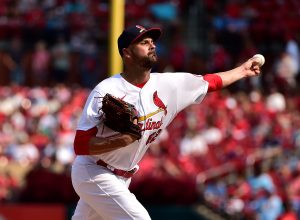
McFarland wraps up a career of more than a decade. A relative soft tosser by today’s standards, his velocity topped out in the low 90s and he didn’t strike many guys out. But he had great control and was one of the best arms in the league when it came to inducing ground balls. His earned run average wobbled from year to year, as ground balls are less reliable than strikeouts since they need to be hit towards fielders who can regularly convert them into outs. McFarland had three seasons with an ERA under 3.00 and five above 5.00, but he was generally effective on the whole.
His professional career began when he was a fourth-round pick of Cleveland in 2007, taken out of Amos Alonzo Stagg High School in Palos Hills, Illinois. He worked his way up the minor leagues as a starter. He was left unprotected in the 2012 Rule 5 draft. The Orioles took him and plugged him into their bullpen. He stuck on the roster all season long in 2013, throwing 74 2/3 innings over 38 appearances with a 4.22 ERA. His 17.5% strikeout rate was well shy of league average but he generated grounders on 57.8% of balls in play. He stuck with the Orioles in 2014 and dropped his ERA to 2.76 with fairly similar rate stats. But that ERA ticked up to 4.91 in 2015 and then 6.93 the year after.
He was released ahead of the 2017 season and landed with the Diamondbacks. His 5.33 ERA that year wasn’t especially impressive but he was back with the Snakes in 2018 and posted a flat 2.00 ERA over 72 innings. The seesaw nature of his career then flung him in the other direction, as he had a 4.82 ERA in 2019. That may have been related to the juiced balls in that season, as McFarland’s 17.1% home run to fly ball ratio was the highest of his career.
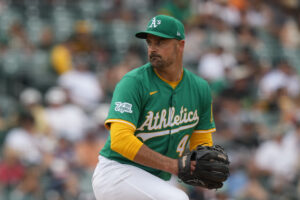
He was put on waivers after that campaign, getting claimed by the Athletics. He posted a 4.35 ERA for the A’s in that shortened season as the club won the American League West. He got to make his postseason debut, tossing two scoreless innings, though the A’s were knocked out by the Astros in the Division Series.
He became a free agent going into 2021. He was with the Nationals on a minor league deal for a while but then got back to the majors with the Cardinals. He gave them 38 2/3 innings with a 2.56 ERA. The Cards snagged a Wild Card spot, which meant a single-game playoff at that time.
Facing the Dodgers, the Cards would eventually fall with McFarland given the tough-luck loss. He was sent into a tied game in the bottom of the ninth. He got Albert Pujols and Steven Souza Jr. to line out then walked Cody Bellinger. Alex Reyes was brought in to face the right-handed Chris Taylor, who hit a walk-off home run. Since Bellinger was technically the winning run, the L went next to McFarland’s name in the boxscore.
Despite that bitter ending, the Cards clearly liked what McFarland gave them. They brought him back for 2022 via a $2.5MM deal, the largest of McFarland’s career. Unfortunately, he was dragged by one of his patented ERA swings. He was released in August with a 6.61 ERA and then re-signed with the Cards on a minor league deal. In 2023, he was mostly stuck in the minors, making just three appearances for the Mets midsummer.
Another bounceback came in 2024. He signed a minor league deal with the Dodgers but was traded to the A’s just before Opening Day and given a roster spot. He made 79 appearances for that club’s final season in Oakland with a 3.81 ERA. He re-signed with that club, a one-year deal worth $1.8MM, going into 2025. His ERA jumped up once more, getting to 6.89 that year, before he was released in July.
Overall, McFarland appeared in 460 major league games and logged 546 1/3 innings with a 4.18 ERA. His 13.7% strikeout rate was well below average but his 7.3% walk rate was quite good and his 61.7% ground ball rate was elite. Among pitchers with at least 500 innings pitched from 2013 to 2025, only Clay Holmes and Framber Valdez induced grounders at a higher rate than McFarland. He had a 26-20 record and earned one save and 68 holds. Baseball Reference pegs his career earnings a bit north of $12MM. We at MLB Trade Rumors salute McFarland on his fine career and wish him the best with whatever comes next.
Photos courtesy of Mark J. Rebilas, Jeff Curry, Darren Yamashita, Imagn Images
Carson Benge To Make Mets’ Roster
Outfield prospect Carson Benge is going to break camp with the Mets, reports Mike Puma of The New York Post. He will be the starting right fielder on Opening Day, per Chelsea Janes of SNY. The Mets will need to open a 40-man spot in order to officially select Benge’s contract.
The move is notable but not shocking. During the offseason, president of baseball operations David Stearns consistently said that Benge would have a chance to break camp with the club. The 19th overall pick from 2024, he mashed his way through High-A and Double-A last year.
He seemed to stall out at Triple-A, with a .178/.272/.311 line in 24 games to finish the year, but there were reasons to not worry about that too much. His 18.4% strikeout rate was good and his 8.7% walk rate around average. His .188 batting average on balls in play was tiny. It seemed more like fluky bad luck than a young hitter being overmatched.
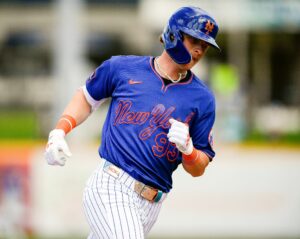
The Mets, as mentioned, wanted to leave a path open for him to reach the big leagues. They did bring in some contingency plans. They signed Mike Tauchman to a minor league deal. MJ Melendez got a 40-man spot but still has an option. It felt like the right field job would be Benge’s to lose and he didn’t do anything to lose it. He hit .366/.435/.439 in Grapefruit League action. That line got some help from an unsustainable .469 BABIP but the Mets were trending towards giving Benge the job as long as he didn’t look overwhelmed.
Melendez was optioned to the minors last week. The Mets were perhaps trending towards rostering both Benge and Tauchman, but the latter tore the meniscus in his left knee a few days ago. That only gave Benge a firmer hold on the job.
There’s always risk in handing a job over to a prospect, as even some very talented young players struggle when first called up, but Benge has shown he deserves a shot. Even including his Triple-A swoon, he hit a combined .281/.385/.472 last year for a 150 wRC+. He stole 22 bases. His defensive abilities are considered strong enough for him to be a plus corner outfielder and maybe even a decent center fielder. He’ll begin the season in right but it’s not out of the question that he eventually spends a decent amount of time in the middle spot with center field manned by the oft-injured Luis Robert Jr..
By carrying Benge on the Opening Day roster, the Mets will open up the possibility of the Prospect Promotion Incentive. He’s a consensus top 25 prospect in the league. If he stays in the majors for enough of the campaign to earn a full year of service, he could net the Mets an extra draft pick by winning Rookie of the Year or with a top three finish in MVP voting during his pre-arbitration seasons.
If things don’t go well with Benge, then the Mets will have to turn to some backup plans. Tauchman has an opt-out in his minor league deal but presumably won’t trigger it while hurt, so he’ll be back in the mix whenever he’s healthy again. Melendez will be on optional assignment in Triple-A, alongside Jared Young and Nick Morabito. Brett Baty is going to be in a super utility role now that Bo Bichette and Marcus Semien are at third and second base respectively. Tyrone Taylor will be on the bench as a glove-first fourth outfielder. The Tauchman injury might also allow Vidal Bruján to stick on the bench in a utility role.
Photo courtesy of Sam Navarro, Mitch Alcala, Imagn Images
Craig Kimbrel To Forgo Opt-Out, Stay With Mets
March 23: Kimbrel will forgo his first opt-out opportunity and remain with the Mets for the time being, per Jon Heyman of the New York Post.
March 22: Mets manager Carlos Mendoza told the media (including SNY TV) that veteran reliever Craig Kimbrel was told that he won’t be breaking camp with the team. An Article XX(B) free agent, Kimbrel had the chance to trigger the first of three opt-out dates in his minor league contract this weekend, and Mendoza’s comments seemingly indicate that the right-hander hasn’t exercised an out clause, as Kimbrel is considering staying in the organization.
“Now he is deciding whether he wants to stay, which looks like he’s leaning that way,” Mendoza said. “He likes it here, he wants to win, but he also is going to look around for opportunities. But there’s a good chance he stays back here in Florida, to continue to pitch and [wait] until the opportunity presents.”
Kimbrel has a 4.50 ERA over six Grapefruit League innings for the Mets, with five walks and five strikeouts. It wasn’t the kind of performance that would help what was already something of a longshot bid to make New York’s roster, and it could be that Kimbrel is fine pitching in the minors for now. Given how the Mets cycled through an endless amount of relievers last season, Kimbrel may figure it won’t be too long before he is needed in Queens, even if his call-up would come with the added wrinkle of a contract selection to the 40-man roster.
Making the Mets’ roster would also guarantee a $2.5MM salary for Kimbrel, and since New York is over the highest level of luxury tax penalization, the Mets would pay more than double that amount in additional taxes. While money isn’t exactly a top concern for the big-spending Mets, it isn’t absolutely no concern, and the front office may feel a reliever on a minimum salary is a better investment both financially and results-wise than what Kimbrel can offer at age 37.
Kimbrel has been bouncing around the league for the last few years, showing some flashes of his old All-Star form but without much consistency. In 2025, Kimbrel had a 2.25 ERA and a 34.7% strikeout rate over 12 innings with the Braves and Astros, but with a hefty 14.3% walk rate as well. Control has been an issue for Kimbrel even during his prime years, and he has also been hurt by an increased tendency to allow home runs.
There could still be a market elsewhere for Kimbrel’s services, if another team feels he still has something in the rank. Mendoza noted that playing for a contender seems to be a priority for Kimbrel, so he might not want to sign with just any team if he does re-enter the open market.
Mike Tauchman To Undergo Surgery After Meniscus Tear
Veteran outfielder Mike Tauchman has suffered a meniscus tear, according to Mike Puma of the New York Post. The injury will require surgery, though a timeline for his return to action has not yet been announced.
It’s devastating news for the 35-year-old, who signed with the Mets this offseason on a minor league deal. Tauchman entered camp as the primary competition for top prospect Carson Benge as the club’s starting right fielder, but played so well in Spring Training (with a .241/.371/.448 slash line across 13 spring games) that he was in serious consideration for a roster spot even as Benge began to prove he was ready for the majors. Now, any hope of contributing to the Mets (or any other club) this year will be put on hold for the foreseeable future. Meniscus surgery can require only a few weeks of recovery for minor procedures, but more significant injuries often take months of recovery and can even be season-ending. With minimal information about the severity of Tauchman’s injury known, it’s possible a more clear timeline for his return won’t be clear until he goes under the knife.
A tenth-round pick by the Rockies back in 2013, Tauchman made it to the majors in 2017 but first received widespread attention as a member of the Yankees during the 2019 season. Tauchman burst onto the scene alongside other little-known players like Gio Urshela and Luke Voit to help carry New York to a 103-win season, though they ultimately lost the ALCS to the Astros in six games. Tauchman’s performance that year was one to remember, as he slashed an incredible .277/.361/.504 with 13 homers and 18 doubles in just 87 games. When Tauchman struggled during the 2020 and ’21 seasons, it was easy to view his strong 2019 campaign as little more than a blip. He departed stateside ball in 2022 to play for the KBO’s Hanhwa Eagles, and that year went well enough for him that the Cubs decided to take a shot on him with a minor league deal.
Tauchman’s tenure with the Cubs revived his MLB career headed into his mid-30s. The then-32-year-old aptly filled in for Cody Bellinger in center field when the star was injured and wound up making himself a key piece of Chicago’s offense for the 2023-24 seasons. He hit .250/.360/.372 (109 wRC+) across 217 games on the north side, but saw his role shrink in 2024 with the emergence of star center fielder Pete Crow-Armstrong and ultimately found himself squeezed off the roster by the addition of Kyle Tucker during the 2024-25 offseason. After being non-tendered by the Cubs, Tauchman headed to the south side to play for the White Sox and managed to continue his resurgence there. While injuries limited Tauchman to just 93 games with the White Sox, he hit an impressive .263/.356/.400 (115 wRC+) and was a surprising non-tender for Chicago this past offseason.
Tauchman seemed to be in good position to impact an outfield-needy club this offseason for a relatively low cost, and while the Mets were the team to take advantage of his availability it seems they won’t be able to benefit from his on-base skills and steady bat for at least the start of the season. With Tauchman sidelined, utility man Vidal Brujan could be the favorite to take the last spot on the Mets’ bench headed into Opening Day while Benge will surely get every opportunity to establish himself in right field for New York.
Mets, Freddy Peralta “Highly Unlikely” To Agree To Extension Before Opening Day
Back in the first week of March, Freddy Peralta and the Mets hadn’t yet begun any real discussions about a possible contract extension, and Peralta said he was looking to land a deal “seven or eight years” in length. In the latest update from Jon Heyman of the New York Post, the two sides have had some level of talks in the interim, and things remain far enough apart between Peralta and the Mets that an extension is “highly unlikely” to happen prior to Opening Day.
This doesn’t necessarily rule out a deal altogether. The Mets are reportedly open to talking even after play begins on March 26, and Peralta “didn’t say he was opposed” to continuing negotiations, though he told Heyman he would let his agents at ACES make that determination. Most players set Opening Day as a deadline for extension talks in order to focus exclusively on baseball, though this isn’t a uniform approach, and naturally negotiations often continue if the two sides feel they’re very close to finalizing an agreement.
Peralta is set to become a free agent next winter, which is why the Brewers were looking to trade the ace this offseason rather than just let him walk for a draft pick at season’s end. The Mets won the bidding to pry Peralta away from Milwaukee, and between both the hefty trade return and Peralta’s obvious ability, New York surely has interest in keeping Peralta in Queens for years to come. Exactly how many years seems to be the sticking point between the two parties, as Peralta’s aim for at least seven years runs counter to the Mets’ desire to sign pitchers to shorter-term contracts.
One potential compromise could be a four- or five-year extension worth a high average annual value, and with multiple opt-outs. The Mets used such a structure to land Bo Bichette on a three-year, $126MM free agent pact this offseason, and opt-outs were included in past contracts for Edwin Diaz and Pete Alonso. Due to the likelihood of a lockout next winter, an extension that contains an opt-out for perhaps as early as the 2027-28 offseason would allow Peralta to re-enter the market at age 31, and avoid any labor unrest.
Of course, Peralta also projects to be one of the top free agents available next winter, so his market may not be much affected since teams will be lining up to try and get him signed (likely before the Collective Bargaining Agreement expires on December 1). Peralta also may not want to compromise on his next contract after already signing what ended up being a very team-friendly extension with the Brewers early in his career. That five-year, $15.5MM extension turned into a seven-year deal worth an extra $14.5MM for Peralta once Milwaukee exercised both club options, yet it still amounted to a gigantic bargain for the Brew Crew as Peralta developed into a frontline pitcher.
David Stearns was the Brewers’ president of baseball operations at the time of Peralta’s extension, and Stearns now holds that same role in New York’s front office. Maybe Stearns is willing to go longer on a contract for a pitcher he obviously knows well and values highly, and with Peralta so close to free agency, the Mets might simply have to pay top dollar in order to keep Peralta from testing the market.
Speaking of the Mets and pitcher extensions, Heyman adds that “there’s no indication” that the Mets and Nolan McLean have discussed any long-term deals. McLean was an instant star in posting a 2.06 ERA over 48 innings in his 2025 debut season, and now looks like a cornerstone piece of New York’s rotation.
As MLBTR’s Contract Tracker indicates, it’s pretty rare for pitchers to sign long-term extensions when they have less than one year of MLB service time. Chris Archer‘s six-year, $25.5MM extension with the Rays from April 2014 remains the largest deal ever given to a pitcher with under a year of service time, and McLean’s reps at CAA would surely be looking to vastly surpass Archer’s number.