
MLB Announces Modifications To Pitch Clock, Other Rule Changes
1:27pm: In a statement, Major League Baseball Players Association executive director Tony Clark announced that the players on the Competition Committee voted against today’s slate of changes.
“This afternoon, Player Representatives voted against the 2024 rule changes proposed by the Commissioner’s Office,” the statement reads. “As they made clear in the Competition Committee, Players strongly feel that, following last season’s profound changes to the fundamental rules of the game, immediate additional changes are unnecessary and offer no meaningful benefits to fans, Players, or the competition on the field. This season should be used to gather additional data and fully examine the health, safety and injury impacts of reduced recovery time; that is where our focus will be.”
1:15pm: Major League Baseball announced a slate of modifications to the game’s official rules, which have been approved by the MLB Competition Committee (comprised of six owners, four players and one umpire). Per the league’s press release, the changes are as follows:
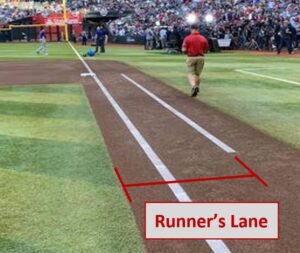
- Runner’s Lane: The Runner’s Lane will be widened to include the dirt area between the foul line and the infield grass. Widening the lane allows batters to take a more direct path to first base while retaining protection from interference. The distance between the foul line and the infield grass will be between 18 and 24 inches in all parks, with some limited grace periods granted by MLB due to difficulty in modifying the field (e.g., synthetic turf field).
- Pace of Game: MLB proposed minor changes to the Pace of Game Regulations to address an increase in game time as the season progressed – the average nine-inning game time increased seven minutes from April to September (five minutes after controlling for the number pitches, breaks, and runs scored).
- Timing Between Pitches: Reduce time from 20 seconds to 18 seconds with runners on base. Pitchers began their deliveries with an average of 7.3 seconds remaining on the 20-second timer in 2023. Pitchers retain the ability to step off and re-set the Clock up to two times without penalty. Violations with runners on base were the least frequent (14% of all violations vs 32% of all pitches) in 2023. A universal 17-second Clock used for the final month of the Triple-A season did not increase violations with runners on base.
- Batter Timeouts: Based on player feedback, MLB withdrew a proposal that would have required the home plate umpire to immediately reset the Pitch Clock after a batter called timeout.
- Pitching Changes: If a new pitcher steps onto the warning track with less than 2:00 remaining on the inning break Clock, the Clock will reset to 2:00 rather than 2:15 as was the case in 2023. Inning breaks that contained a pitching change averaged 2 minutes and 35 seconds in 2023 (broadcasters are only guaranteed two minutes of commercial time).
- Mound Visits: Mound visits will be reduced from five per game to four, and an extra mound visit will still be awarded for the ninth inning if the defensive team has zero remaining at the end of the eighth inning. Mound visits rank among fans’ least favorite events in baseball. Clubs averaged only 2.3 mound visits per game in 2023. Last season, 98% of games would not have exceeded a limit of four mound visits. Umpires will also permit defensive players to signal for a mound visit without actually visiting the mound to further help improve pace of game.
- Circumvention: The FTC (field timing coordinator) will now restart the timer after a dead ball (e.g., foul ball) when the pitcher has the ball and play is ready to resume. There will no longer be a requirement for the pitcher to be on the mound, removing the pitcher’s ability to delay the start of the timer by walking around the edge of the mound.
- Pitcher Who Warms Up Must Face At Least One Hitter: A pitcher who is sent out to warm up for an inning must face at least one batter (in addition to any requirements under the Three-Batter Minimum rule). There were 24 instances this season where the pitcher that warmed up between innings was replaced before throwing a pitch (adding approximately three minutes of dead time per event). There were two such instances during the 2023 World Series.
Runner’s lane photo courtesy of Major League Baseball communications department.
Mets Acquire Adrian Houser, Tyrone Taylor From Brewers
The Mets have acquired right-hander Adrian Houser and outfielder Tyrone Taylor from the Brewers for right-handed minor leaguer Coleman Crow, per announcements from both clubs. Ken Rosenthal of The Athletic first reported that Houser and Taylor were going to the Mets for a minor leaguer. Robert Murray of FanSided reported that Crow would be that minor leaguer.
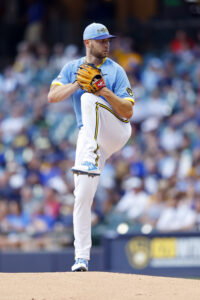 David Stearns is plenty familiar with Houser and Taylor, having spent many years calling the shots in Milwaukee before becoming president of baseball operations for the Mets a couple of months ago. In both cases, the player has had some major league success but had reached arbitration and was in competition for playing time in Milwaukee. Instead, they will head to a Mets club that has been primarily focused on depth moves this offseason, while allowing the Brewers to clear a bit of payroll.
Houser, 31 in February, has been a solid contributor for the Brewers in the past five seasons, mostly as a starter. From 2019 to the present, he’s appeared in 120 games, 97 of those being starts. In his 523 2/3 innings pitched, he has an earned run average of 4.04. His 19.2% strikeout rate and 9% walk rate aren’t especially strong but he’s kept 52.5% of balls in play on the ground.
He has just over five years of service time, meaning he’s slated for free agency after 2024. MLBTR contributor Matt Swartz projects him for a salary of $5.6MM next year. Houser might project as merely a back end starter with just one year of control, but that’s still a relative bargain compared to free agents. The Mets paid $13MM to get Luis Severino for one year, while other clubs have given out comparable deals. Jack Flaherty got $14MM, Kyle Gibson $13MM, Lance Lynn $11MM, Wade Miley $8.5MM and Martín Pérez $8MM.
In Milwaukee, Houser was slated to be behind Corbin Burnes, Freddy Peralta and Miley, battling pitchers like Colin Rea, Joe Ross, Janson Junk, Aaron Ashby and Robert Gasser for starts. But instead, he’ll jump to a somewhat similar spot with the Mets. His new club has Kodai Senga, José Quintana and Severino in three spots, with pitchers like Tylor Megill, Joey Lucchesi and José Butto options for the back end. The club has been heavily linked to Yoshinobu Yamamoto and everyone would move down one spot if they successfully land him, but Houser should be in line for a role at the back of the rotation either way. He will have a leg up on Megill, Lucchesi and Butto in the sense that they can still be optioned to the minors but Houser cannot, as a player with more than five years of service time.
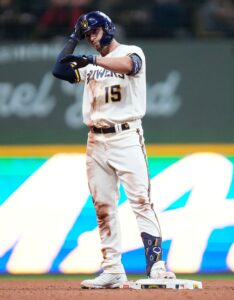
Taylor, 30 in January, seemed to establish himself as a viable big leaguer in 2021 and 2022. He got into 213 games for the Brewers over that stretch, hitting 29 home runs and slashing .239/.300/.448 for a wRC+ of 104. He also got strong grades for his outfield defense in all three spots and produced 3.4 wins above replacement, according to FanGraphs.
But he dealt with an elbow sprain in Spring Training this year, which caused him to miss the first month of the season and then another month-plus in the middle of the year. He only got into 81 games and had diminished production when in the lineup, hitting .234/.267/.446 on the year.
He reached arbitration for the first time this winter and is projected to make $1.7MM, with two years of control beyond that. He was also going to be part of a crowded outfield mix in Milwaukee that includes Christian Yelich, Jackson Chourio, Garrett Mitchell, Sal Frelick, Blake Perkins, Joey Wiemer and Chris Roller.
With the Mets, they have Brandon Nimmo in center but the corners are more questionable. Starling Marte was dealing with groin issues in 2023, missing roughly half the season and struggling when on the field. DJ Stewart finished the season on a hot streak at the plate but is a poor defender and better suited to be rotating through the designated hitter spot or pinch-hitting duties. Taylor’s righty bat could also potentially platoon with the lefty Stewart. Taylor has fairly neutral splits in his career but Stewart has been far better with the platoon advantage.
Crow, 23 later this month, was drafted by the Angels. He was traded to the Mets in the Eduardo Escobar deal in June but underwent Tommy John surgery in August, meaning he may miss most or all of the 2024 season. At the time of the Escobar trade, he was ranked the Angels’ #17 prospect at Baseball America and #8 at FanGraphs. He’s currently listed 25th in the Mets’ system at BA and 20th at FG. He tossed 128 Double-A innings in 2022 with a 4.85 ERA.
Aside from their pursuit of Yamamoto, the Mets have mostly been focused on adding depth this winter. They have claimed Penn Murfee, Zack Short, Tyler Heineman and Cooper Hummel off waivers. They have given one-year deals to Severino, Joey Wendle, Michael Tonkin, Jorge López and Austin Adams. They have also given minor league deals to Cole Sulser, Kyle Crick, José Iglesias, Taylor Kohlwey, Rylan Bannon, Trayce Thompson and Cam Robinson. Now they have bolstered their rotation and outfield with a couple of solid regulars.
For the Brewers, they are cutting a projected $7.3MM from their 2024 payroll. They are subtracting a bit of depth in the process but still have plenty of other options for their rotation and outfield even after this deal, while taking a flier on a long-term prospect in Crow.
Roster Resource currently pegs next year’s payroll at $104MM, well below last year’s Opening Day mark of $119MM, per Cot’s Baseball Contracts. There have been plenty of trade rumors this winter surrounding guys like Burns and Willy Adames, but it doesn’t appear as though the club needs to make a move of either of those guys just for payroll purposes, assuming they are willing to have a similar payroll to 2023.
As for the Mets, they are taking on that $7.1MM but could end up paying more. RR currently has their competitive balance tax number at $298MM, just above the fourth and highest threshold of $297MM. As a third time payor, their tax rates in each bracket are 50%, 62%, 95% and 110%. But the tax isn’t calculated until the end of the year. If the club isn’t competitive at the deadline and they trade some players with notable salaries, they could change their final position. Though signing Yamamoto for something in the $250-300MM range would obviously push them even further beyond their current level.
Tigers Sign Jack Flaherty To One-Year Deal
The Tigers announced that they have signed right-hander Jack Flaherty to a one-year, $14MM deal. He can also earn an extra $1MM in bonuses based on games started: $250K for 26 and 28 starts, then another $500K for 30. Flaherty is a client of CAA Sports.
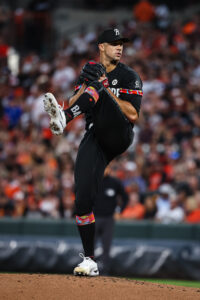
Just 28 years old, Flaherty isn’t all that far removed from looking like one of the National League’s budding young aces. The former first-rounder was one of the sport’s top all-around prospects prior to making his big league debut, which came in 2017.
The following year saw the California native pitch to a sharp 3.34 earned run average through 151 big league innings, but Flaherty’s best work came, of all times, during the juiced-ball season in 2019. That year’s 2.75 ERA, 29.9% strikeout rate, 7.1% walk rate and 1.15 HR/9 would be strong marks in any season but were especially impressive during the highest run-scoring environment since the steroid era. Two teams broke MLB’s single-season home run record that year, and yet while many pitchers throughout the league posted career-worst marks, Flaherty shined at his absolute brightest.
Unfortunately for both Flaherty and the Cardinals, that brilliant start to his career didn’t hold up. Injuries, primarily shoulder issues, conspired to limit Flaherty to just 154 1/3 innings over the next three seasons combined. During that time, he worked with slightly lesser velocity (93.9 mph) than his 94.5 mph peak, and his walk and home-run rates trended in the wrong direction. Overall, he posted a 3.90 earned run average but was limited to 32 starts (and another three bullpen outings).
The 2023 season for Flaherty was split between the Cardinals and the Orioles, who acquired him in a trade deadline deal sending lefty Drew Rom and prospects Cesar Prieto and Zack Showalter from Baltimore back to St. Louis. It was a mixed bag of a season for the righty. On the one hand, Flaherty’s 27 starts and 144 1/3 innings clearly made for his healthiest season since that brilliant ’19 effort. On the other, his 4.99 ERA was a career-worst (outside of a 21-inning sample as a rookie in 2017). His 22.8% strikeout rate was about average, but Flaherty’s 10.6% walk rate was elevated and his 93.2 mph average heater was down even further.
Despite the poor 2023 showing, Flaherty drew interest from at least the Pirates, Royals and Tigers — though his market surely included other suitors. There’s good sense in taking a flier on Flaherty, given his age, former prospect pedigree and the heights he reached earlier in his career.
As we noted on our Top 50 Free Agent Rankings, while we predicted a three-year pact for the righty — presuming a team would extend a multi-year pact in hopes of acquiring a below-market bargain — a straight one-year pillow deal always figured to be on the table. With strong results this year Flaherty can return to the market as a 29-year-old in position for a much more lucrative deal. The downside, of course, is that with another lackluster performance, Flaherty could well hit the market with considerably less earning power and no interest on multi-year contracts. Despite that potential, he’ll bet on himself with the more traditional approach and hope to cash in a year from now.
Should things play out that way, it’ll be to the benefit of the Tigers, who’ll not only have the opportunity to help Flaherty return to something resembling his peak levels but — if things play out that way — extend a qualifying offer to the righty. There’s a long way to go before that scenario is in play, but Flaherty’s early-career performance shows that he clearly has the talent to merit that type of offer when he’s at his best.
Flaherty becomes the second free-agent addition to what will be a dramatically different Tigers rotation than the one we saw in 2023. Gone is veteran lefty Eduardo Rodriguez, who opted out of the three years and $49MM on his contract and scored a four-year, $80MM deal with the NL champion D-backs. Flaherty and righty Kenta Maeda, fresh off an excellent finish to his ’23 campaign with the division-rival Twins, will take up the mantle of veteran rotation leaders for skipper AJ Hinch.
Not only will the Tigers have that newly signed pair of arms, they’ll also welcome 2018 No. 1 overall pick Casey Mize back into the fold after a season lost to Tommy John surgery. Standout lefty Tarik Skubal returns as the team’s top starter, and the quartet of Skubal, Flaherty, Maeda and Mize will be joined by some combination of Reese Olson, Matt Manning and Sawyer Gipson-Long. Olson, in particular, had a solid rookie campaign. Manning, meanwhile, is a former first-round pick and top prospect himself — one who’ll be looking for better luck in 2024. In astonishing fashion, Manning suffered a broken left foot on two different occasions, both upon being struck by a comeback liner (once in April and again in September).
With Flaherty’s $14MM salary added to the books, the Tigers’ payroll projection climbs north of $104MM. That’s still quite a ways down from last year’s $135MM Opening Day mark — due in no small part to Miguel Cabrera‘s retirement — and nowhere close to the franchise-record $200MM mark. The Tigers will surely want to leave ample playing time for young, potential core pieces like Mize, Skubal, Manning, Olson, Riley Greene, Spencer Torkelson, Kerry Carpenter and prospects Colt Keith and Justyn-Henry Malloy. But there’s still enough payroll space for the team to make some further additions, perhaps in the bullpen or on the bench.
Trevor Plouffe of Jomboy first connected the two sides. Jeff Passan of ESPN first relayed the contract specifics.
Corbin Burnes Downplays Possibility Of Signing Extension
Heading into the offseason, the trade market contained a handful of veteran starters who were a year from free agency and widely expected to be available — Tyler Glasnow, Shane Bieber and perhaps Corbin Burnes chief among them. Glasnow has already changed hands, going from Tampa Bay to Los Angeles and signing an extension — which the two parties agreed upon as a contingency of the trade becoming official. Bieber is still with the Guardians. But as earlier this month, like Glasnow, he was reportedly open to discussing a long-term deal following a trade.
Fans of rival clubs may be eyeing Burnes and envisioning a similar outcome, but the right-hander himself effectively quashed any such hopes in an appearance with Erik Kratz, A.J. Pierzynski and Hannah Keyser on Foul Territory (video link). Asked by Kratz about the possibility of taking the same path Glasnow did, Burnes replied:
“Being in my shoes, being a year away from [free agency], I think if a trade-and-extension type of deal came up — obviously, every guy that gets this close to free agency wants to test the market to see what your true dollar amount is, see what teams really are in on you. It would have to be something that would just absolutely blow you away to get you away from testing the free agent market and being able to choose where you want to go. I think that’s one thing every player in their career wants to get to. Once you get that six years of service time — which for a lot of guys takes seven, eight, sometimes nine years to get to — you get that chance to test the market and see what your top dollar is.”
Burnes, of course, is speaking in generalities. The majority of players ostensibly share his sentiment, but Glasnow has now twice signed an extension in lieu of reaching free agency, and we’ve seen plenty of players over the years hammer out a long-term deal when they’re less than a calendar year from reaching the market. It’s rarer, although hardly unprecedented, with an expected top-of-the-market free agent. Rafael Devers, Stephen Strasburg and Xander Bogaerts are just a few examples of prominent, All-Star-caliber talents signing an extension after reaching five years of big league service.
Still, Burnes’ comments seemingly align with most star-level players and shouldn’t be taken as a surprise. That’s particularly true given that he’s a client of the Boras Corporation, whose players tend to gravitate toward free agency. (Although, again, that’s a generality and perhaps even an overstated one; Strasburg, Bogaerts, Jose Altuve, Carlos Gonzalez and others have all signed extensions under Boras.)
In his latest notes column at The Athletic, Ken Rosenthal reports that Brewers owner Mark Attanasio is still uncertain about how to proceed with Burnes and is wary of creating a similar backlash to the 2022 trade deadline deal that sent Josh Hader to San Diego. That doesn’t preclude a trade from ultimately coming together, but it’s a starkly different tone from the circumstances surrounding Glasnow, where a trade felt like an inevitability as the offseason wore on.
If the Brewers opt to hold onto Burnes, they can head into the 2024 season with him, Freddy Peralta, the recently re-signed Wade Miley and Adrian Houser in the top four spots of the rotation. Colin Rea, free-agent signee Joe Ross and prospect Robert Gasser (acquired in the aforementioned Hader deal) are among the other in-house candidates for rotation spots, and further additions via free agency or trade can’t be squarely ruled out. The lineup would need clear augmentation, but Milwaukee’s pitching would again have the makings of a solid group with Burnes and Peralta leading the rotation and Devin Williams anchoring the bullpen.
Should Milwaukee hold onto Burnes and fail to contend even in a thin National League Central division, Burnes would obviously hold immense appeal at the trade deadline. And, if they ride out the year with Burnes atop a contending rotation, they could at least extend a qualifying offer and recoup a draft pick after the first round in 2025. It’s a relatively small consolation prize for a former Cy Young winner, but that compensation still factors in when listening to any trade offers that come their way.
Holding onto any impending free agent/trade candidate comes with the risk of said player incurring an injury that tanks their value. Burnes, however, is so talented that anything short of a major surgery that would jeopardize his 2025 availability makes a QO a no-brainer. Over the past four seasons, he’s pitched 622 1/3 innings with aa 2.86 ERA, 30.9% strikeout rate and 7.1% walk rate. Burnes has made three consecutive All-Star teams and won the National League Cy Young Award in 2021. MLBTR contributor Matt Swartz projects him to earn $15.1MM in 2024 before he becomes a free agent next winter.
Pirates Re-Sign Andrew McCutchen
Andrew McCutchen said multiple times throughout the 2023 season that he didn’t intend to play anywhere other than Pittsburgh for the remainder of his career, and that’s exactly where he’ll be in 2024. The Pirates announced Wednesday that they’ve re-signed the franchise icon to a one-year deal contract for the upcoming season. McCutchen, a client of Aegis Sports Management, will reportedly be guaranteed $5MM. A corresponding move will be announced “at a later time,” the team said in this morning’s press release.
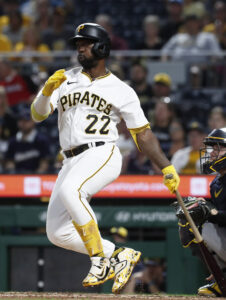
It’s a reunion that has long been expected, given not only McCutchen’s vocal stance on the matter but also comments from general manager Ben Cherington indicating the Pirates wanted McCutchen back and planned to discuss a new contract in the offseason. Since Cutch suffered a partial tear of his Achilles in September, the club appeared to want to see how his rehab progressed before making things official, but reporting from last week suggested the two sides were starting to accelerate talks.
McCutchen, 37, isn’t the MVP-caliber performer from earlier in his career but can still swing it. He signed a one-year, $5MM deal to rejoin the Pirates for 2023, hitting 12 home runs and drawing walks in 15.9% of his plate appearances. His .256/.378/.397 batting line translated to a wRC+ of 115, indicating he was 15% better than the league average hitter overall. He also still flashed a bit of baserunning prowess, stealing 11 bags in 14 tries.
Defensively, he was almost exclusively a designated hitter, spending just 64 2/3 innings in right field. He is likely to be in a similar role this year, having returned via the same $5MM deal that he signed a year ago. The Pirates will likely be delighted with a comparable performance but are surely also signing McCutchen for leadership and veteran presence, as well as being a treat for fans. Jack Suwinski and Bryan Reynolds will likely have two everyday spots in the outfield locked down. Edward Olivares, Joshua Palacios, Connor Joe and others should be battling for playing time in one corner, though McCutchen will perhaps jog out to the grass from time to time.
The season-ending injury forced McCutchen to miss the last few weeks of the 2023 campaign, with his last appearance coming on September 4. That kept him from hitting his 300th career home run during the campaign, as he’s currently parked on 299. But he should have plenty of opportunities to hit that milestone next year, which will appropriately come in a Pirates’ uniform. From 2009 to 2017, McCutchen was a five-time All-Star, won a Gold Glove in 2012 and National League MVP in 2013.
The heyday of McCutchen coincided with the club’s last competitive window. They made the playoffs in three straight years from 2013 to 2015 but haven’t been back since. The 2023 campaign featured an encouraging record of 76-86, still below .500 but their best finish since 2018. If the club’s young core is able to take a step forward and return to the postseason, then McCutchen could be a nice throughline connecting the two eras of baseball in Pittsburgh.
Roster Resource now pegs the club’s 2024 payroll at $70MM, just a bit below last year’s Opening Day figure of $73MM, per Cot’s Baseball Contracts. General manager Ben Cherington has suggested that the payroll could push upwards next year, though it’s unclear exactly how far they are willing to go. In the post from Mackey linked above, he hints that the club may be making an addition to its pitching staff soon, likely via trade.
Jason Mackey of the Pittsburgh Post-Gazette first reported the agreement and the terms.
Dodgers Acquire Tyler Glasnow, Manuel Margot; Glasnow Signed To Contract Extension
December 19: Per Jon Heyman of The New York Post, the extension is actually valued at $111,562,500 over four years, with Glasnow to make $30MM from 2025 to 2027. The player option in 2028 is valued at $21,562,500, slightly higher than previous reporting. Heyman’s framing also suggests that Glasnow will choose on his option first. If he turns it down, then the Dodgers will get to decide whether or not to trigger a $30MM club option.
December 16, 3:33pm: USAToday’s Bob Nightengale relays the full contract breakdown for Glasnow, reporting that the 2028 player option is worth $21.5MM. This accounts for the previously unexplained $1.5MM discrepancy between the reported contract breakdown and the Dodgers’ announced $136.5MM figure.
12:08pm: The Dodgers and Rays finalized the four-player trade that will sent right-hander Tyler Glasnow, outfielder Manuel Margot, and $4MM in cash considerations to Los Angeles in exchange for right-hander Ryan Pepiot and outfielder Jonny Deluca. News of the trade first broke a few days ago, with the final hurdle being the Dodgers’ ability to sign Glasnow to a contract extension. That deal has now also been completed, with L.A. announcing that Glasnow has agreed to a new long-term pact worth $136.5MM. Glasnow is represented by Wasserman.
As per the terms reported yesterday by ESPN’s Jeff Passan, the new contract will see Glasnow earn $110MM in new money over the course of the 2025-28 seasons. Glasnow was already slated to earn $25MM in 2024 according to the terms of his prior contract with the Rays, and the new deal with L.A. breaks down as $90MM in salary over the 2025-27 seasons, and then the Dodgers hold a $30MM club option on Glasnow’s services for 2028. If the team declines that option, Glasnow can exercise a $20MM player option for 2028. Since Passan’s numbers only add up to $135MM rather than the Dodgers’ announced figure of $136.5MM, that extra $1.5MM has yet to be accounted for, possibly a signing bonus or a bit of extra guaranteed money on one of the years.
Unlike Shohei Ohtani‘s $700MM mega-deal with the Dodgers from last week, Glasnow’s extension doesn’t contain any deferred money. As such, it will be entirely portioned out onto the Dodgers’ luxury tax bills based on a $27.3MM average annual value over the next five seasons. According to Roster Resource‘s calculations, Los Angeles has an estimated luxury tax number of roughly $253.7MM for 202 — still under the $257MM secondary CBT tier, thanks to all of Ohtani’s deferrals lowering his tax-related AAV to $46MM per season. Still, with a number of roster needs still be addressed, the Dodgers’ tax bill could certainly still approach or exceed the next penalty tier of $277MM between now and Opening Day.
Glasnow has been seen as a possible trade candidate basically since the moment he inked his previous two-year, $30.35MM extension with Tampa Bay during the 2022 season. Signed when Glasnow was recovering from Tommy John surgery, the deal saw $25MM of the salary backloaded into the 2024 season, making it likely that the cost-conscious Rays would try to unload the right-hander beforehand.
The 30-year-old’s availability dovetailed with the Dodgers’ need for pitching this winter, as the Los Angeles rotation is full of injury-related question marks (i.e. Walker Buehler, and possibly Dustin May at midseason), pitchers without much big league experience (Bobby Miller, Emmet Sheehan, Michael Grove, Gavin Stone), and a swingman in Ryan Yarbrough who may be best suited for bullpen duty. Pepiot was another member of that young crop of arms, but he’ll now head to Tampa Bay as he enters his third season of MLB duty.
In moving Glasnow and Margot and factoring in the $4MM in cash considerations, the Rays unloaded $33MM worth of salary for two players making the Major League minimum, in a move reminiscent of many budget-trimming, sell-high types of trades Tampa has become known for over the years. The Rays’ success rate in these deals is almost a cliche by this point, and even if Tampa Bay fans have become weary of the team’s continual roster churn and perpetually low-spending ways, the Rays’ ability to field competitive teams speaks for itself. Pepiot figures to step right into the rotation spot left open by Glasnow, while Deluca may not be guaranteed a spot in the Opening Day outfield, but he’ll at least be part of the shuttle heading back and forth between Triple-A since the outfielder has two minor league option years remaining.
The right-handed hitting Margot figures to move into a part-time role in the Dodgers’ outfield picture, acting as a complement to the left-handed James Outman and Jason Heyward. Margot has played primarily as a center fielder and right fielder, thus lining up well with Outman and Heyward’s projected positions. Mookie Betts will be taking over as the Dodgers’ new everyday second baseman in 2024, so it’s safe to guess that L.A. will aim to add more outfield depth if Betts will be spending most of his time on the dirt.
MLB Trade Rumors’ Steve Adams broke down the Glasnow extension in larger detail yesterday, while Darragh McDonald outlined the news of the four-player trade agreement for MLBTR on Thursday. Jack Azoulay-Haron of MLB Nerds and Bruce Kuntz of Dodgers Digest first reported the four principal players in the trade. Jon Heyman of The New York Post first relayed that a Glasnow extension was a possibility. Jeff Passan of ESPN relayed that the deal was agreed to, contingent on the extension. Marc Topkin of the Tampa Bay Times first relayed the Rays’ inclusion of the $4MM in salary offset.
Padres Reportedly Close To Signing Yuki Matsui
The Padres are close to signing a deal with free agent left-hander Yuki Matsui, reports Mark Feinsand of MLB.com. Earlier, Jon Morosi of MLB.com (X links) reported that the Friars had offered Matsui a contract and also relayed a Japanese-language report from Sankei Sports. The Google translation of that report says that the southpaw has already undergone a medical check, though it seems nothing is official quite yet. Morosi relays that it will be a multi-year deal, though the financial are not yet known at this time.
Matsui, 28, is a left-handed reliever that has 10 years of experience in Japan’s Nippon Professional Baseball, having debuted back in 2014. He has an earned run average of 2.40 in his 501 career games, tossing 659 2/3 innings. He has 236 saves in that time, including at least 24 in each of the past three campaigns. He’s coming off a strong 2023 season as well, with a tiny ERA of 1.57 while recording 39 saves. He struck out 32.4% of batters faced this year while walking just 5.9%.
In addition to his excellent results, Matsui is notable for his size, listed at just 5’8″ and 167 pounds. That unusual frame didn’t stop MLB clubs from having interest, with the Cardinals having recently hosted Matsui in St. Louis, though the Padres will apparently be the one to seal the deal.
Beyond his skills, Matsui surely intrigued clubs due to the fact that he reached proper free agency by reaching nine years of service time. Unlike some other pitchers coming over from Japan, such as Yoshinobu Yamamoto, Matsui isn’t currently connected to any NPB club. That means the MLB club that signs him won’t be subject to a posting fee on top of the contract itself.
Matsui has consistently featured on MLBTR’s NPB Players to Watch series this year, with Dai Takegami Podziewski reporting on Matsui’s four-pitch mix, featuring a fastball, splitter, slider and curveball. The southpaw reportedly had some trouble adapting to the ball in the World Baseball Classic, which is closer to the one used in MLB. There’s always some uncertainty with foreign players since they are unproven in North America, and while Matsui’s size and issues with the WBC ball perhaps add to that, clubs are often intrigued by the possibility of unearthing a hidden gem.
That’s especially true of the Padres, for whom the budget has been a focus all year. Due to the ongoing bankruptcy of Diamond Sports Group, the club’s broadcast rights reverted to MLB during the year. It was later reported that the Friars took out a loan to cover expenses and all recent reporting has pointed to a drop in payroll relative to recent years, likely resulting in them staying under the competitive balance tax in 2024.
Their offseason moves to this point have mostly been about clearing out payroll space. The Padres sent outfielders Juan Soto and Trent Grisham to the Yankees for five players, then sent lefty Ray Kerr to Atlanta as a means to get some of Matt Carpenter‘s contract off the books.
Roster Resource currently pegs the club CBT number at $205MM for next year, with the base threshold to be $237MM. That gives the club a bit of room to work with but they still have some things to do. They likely want to find two outfielders to replace Soto and Grisham while also perhaps looking for a designated hitter and some more starting pitching.
But the bullpen is also an issue, with Josh Hader, Nick Martinez, Luis García and Tim Hill now free agents. That means the club will have work to do just to get back to 2023 levels, when their relievers posted a collective ERA of 3.80, the tenth-best mark in the league.
No one is going to expect Matsui to replace Hader as one of the best relievers in the league, but he can certainly bolster the club’s southpaw relief mix, which currently consists of Tom Cosgrove and Adrián Morejón. The former had a solid season in 2023 but still has less than a year of major league experience, while the latter has had ongoing injury issues and is coming off a poor showing this year. Perhaps this is the first of many moves as the Padres pivot from subtracting salary to adding it, looking to fill out the roster for 2024.
Latest On Yoshinobu Yamamoto’s Market
There’s been ample speculation about the eventual price tag of a Yoshinobu Yamamoto contract, but until early this week, the right-hander hadn’t discussed specific years and dollars with clubs, ESPN’s Jeff Passan reports.
Teams eyeing the NPB ace’s services were asked to submit a “preliminary” bid early in the process to gauge the seriousness of their interest, per Passan, but a follow-up round of more concrete bidding hadn’t taken place prior to this week. Yamamoto has met with several teams recently, presumably to familiarize himself with each organization and the systems and personnel in place at each potential landing spot. Entering the week, no teams had made a formal offer of $300MM or more, despite speculation to the contrary; none, in fact, had submitted a formal offer even beyond that preliminary bid. Passan wrote that some clubs have tried to broach the subject of years and dollars, but Yamamoto’s camp preferred to hold off until this week.
The Yankees, Mets, Dodgers, Giants, Red Sox, Phillies and perhaps the Blue Jays among the teams reported to have met with Yamamoto over the past 14 days. Ken Rosenthal of The Athletic characterized both the Phillies and Blue Jays as teams more on the periphery of the bidding as of this morning, however (video link). It takes only one aggressive bid to change that perception, of course, but it’s notable that they’re being framed in that manner at present.
The two New York clubs have long been known to be serious bidders for Yamamoto, though the manner in which he fits into each club’s landscape of potential offseason moves is quite different. The Yankees, for instance, have no intention of easing up even if they miss on Yamamoto. If they can’t lure the 25-year-old righty to the Bronx, Rosenthal suggests they’ll look to bolster the roster elsewhere. Among the possibilities he lays out are a run at bringing Jordan Montgomery back to the Bronx or perhaps building a stacked bullpen with pursuits of top-tier relievers like Josh Hader, Jordan Hicks and Robert Stephenson.
That seems to be a direct contrast to how the Mets are approaching the situation. The Athletic’s Will Sammon wrote over the weekend that the Mets are focused on Yamamoto and Yamamoto alone; they’re not expected to change course and pursue other marquee additions if Yamamoto ultimately signs elsewhere. Mike Puma of the New York Post reports that the Mets will submit a formal offer to Yamamoto in the next couple of days, adding that the team’s expectation has been that Yamamoto will reach a decision before next Monday. That’s entirely dependent on the player’s mindset, of course; Yamamoto’s 45-day negotiation window with MLB clubs doesn’t draw to a close until Jan. 4.
MLBTR polled readers last week, with more than 27% indicating they believe Yamamoto will sign somewhere between $300-325MM, not including the posting/release fee owed to his former club, the Orix Buffaloes. The Yankees and Dodgers were the top predicted landing spots, with both drawing about 22% of the vote (though the Yankees technically garnered 88 more of the 17,000+ votes than the Dodgers).
Pirates, Martín Pérez Agree To One-Year Deal
The Pirates and left-hander Martín Pérez are in agreement on a contract, pending a physical, per a report from Robert Murray of FanSided. It will be a one-year, $8MM deal, per Jason Mackey of the Pittsburgh Post-Gazette.

Pérez, 33 in April, had a career year in 2022 but couldn’t keep it going into the following campaign. Last year, he made 32 starts for the Rangers and logged 196 1/3 innings with a 2.89 earned run average. His 20.6% strikeout rate was a bit below league average but his 8.4% walk rate was solid and his 51.4% ground ball rate was strong. He was also quite good at missing barrels and limiting hard contact that year.
He likely benefitted from a high strand rate of 77% and a low 6.5% rate of fly balls leaving the yard, which is why his 3.27 FIP and 4.08 SIERA were a bit less impressive. But it was a strong season nonetheless, with his 4.0 wins above replacement from FanGraphs and 5.0 from Baseball Reference both career highs by wide margins. The Rangers had enough faith in that performance to issue Pérez a $19.65MM qualifying offer, which he accepted.
Unfortunately, the regression gods came for him in 2023, with Pérez struggling enough to get moved to the bullpen in August after the Rangers acquired Max Scherzer and Jordan Montgomery at the trade deadline. At that point, Pérez had an ERA of 4.98, with his strikeout rate having dropped to 14.4% and his grounder rate down to 41%. He pitched reasonably well out of the bullpen over the final two months of the season, eventually dropping his ERA to 4.45, but it was obviously not the season the Rangers envisioned at that price point.
The Pirates will be paying him less than half of what he made last year and likely won’t be expecting anything like that 2022 campaign, as it stands out as a clear outlier. But even if they get the solid back-end guy that Pérez has been for the rest of his career, that will be an upgrade for their rotation. From 2012 to 2021, Pérez threw 1,102 2/3 innings with a 4.71 ERA. He didn’t get many strikeouts but limited his walks to around league average and got grounders on almost half of balls in play.
The Pittsburgh starting rotation had an ERA of 4.88 in 2023 as the stability was quite low. Mitch Keller and Johan Oviedo each made 32 starts, but Oviedo won’t be an option for 2024 due to Tommy John surgery. Rich Hill made 22 starts for the club but then went to the Padres at the deadline and is now a free agent. 12 other hurlers made at least one start for the Bucs for the year.
The club later added Marco Gonzales from Atlanta, who had just acquired him from Seattle as salary ballast in the Jarred Kelenic trade. Between Gonzales and Pérez, the club has added a couple of soft-tossing veteran lefties to hopefully eat some innings and stabilize the situation while perhaps turning into trade chips by the deadline, as was the case with Hill this year and José Quintana the year prior. Those two vets and Keller should take three rotation spots, leaving a couple of roles available for less-proven guys like Bailey Falter, Luis Ortiz, Roansy Contreras, Quinn Priester, Jackson Wolf or Kyle Nicolas, with this year’s first overall pick Paul Skenes perhaps not too far off.
This deal brings Pittsburgh’s payroll up to $66MM, per Roster Resource. General manager Ben Cherington has previously indicated that next year’s payroll could be an increase over their $73MM figure from Opening Day 2023.
Royals Sign Michael Wacha
December 18: The Royals have now officially announced the deal.
December 15: The Royals’ active offseason is continuing, as Kansas City has agreed to terms with free agent righty Michael Wacha, per a report from Robert Murray of FanSided. It’s a two-year, $32MM contract, ESPN’s Jeff Passan adds. The second season is a player option, so Wacha will have the opportunity to opt back into free agency next winter. The contract pays the CAA client an even $16MM in each season, per USA Today’s Bob Nightengale, and Anne Rogers of MLB.com tweets that Wacha can earn an additional $500K via incentives in each season of the deal.
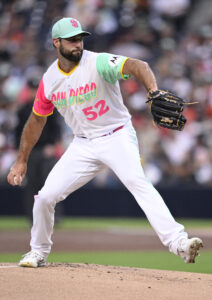
It’s the second notable free-agent pickup of the day for the Royals, who also agreed to a two-year $13MM deal with Hunter Renfroe earlier this morning. Kansas City has also added righty Seth Lugo on a three-year, $45MM pact that contains an opt-out after the second season. Wacha and Lugo, who were teammates with the Padres in 2023, will join a Royals rotation that includes Cole Ragans, Brady Singer and Jordan Lyles. Depth options include Daniel Lynch, Kris Bubic (recovering from Tommy John surgery), Max Castillo, Alec Marsh and Jonathan Heasley, among others.
Wacha’s two-year, $32MM deal matches the exact terms of a two-year club option that the Padres declined earlier this offseason. The inclusion of an opt-out provision and some modest incentives makes this a stronger deal for the righty, however. Kansas City will be Wacha’s sixth team in six years, as his trips to free agency have routinely resulted in either a one-year pact (Mets, Rays, Red Sox) or a multi-year deal with options and/or opt-out opportunities (Padres).
Over the past two seasons, between the Red Sox and Padres, Wacha has posted a combined 3.27 ERA with a 21.3% strikeout rate, 6.9% walk rate and 37.7% ground-ball rate. Despite being more of a fly-ball pitcher, he’s allowed a manageable 1.14 homers per nine frames. Pitching his home games at the spacious Kauffman Stadium should help him continue to avoid the long ball at an acceptable rate despite his pronounced fly-ball tendencies.
In those two seasons, Wacha has changed up his pitch selection, reducing his reliance on a four-seamer while increasing the usage rates on his sinker and changeup. He threw both pitches at a career-high rate in 2022 and then set a new career-high in usage again in 2023. While the more frequent sinker usage hasn’t shown up in Wacha’s ground-ball rates, he’s posted improved batted-ball metrics; last year’s 88.1 mph average exit velocity and 35.4% hard-hit rate were both lower than the league averages of 89 mph and 39.2%, respectively. That’s helped Wacha to offset his slightly below-average strikeout rate.
The number of innings that the Royals can expect from Wacha is perhaps the biggest question mark surrounding him. Wacha has been placed on the injured list nine times in his big league career, with five of those IL placements stemming from shoulder troubles (including a six-week absence in the 2023 season). Wacha has also had IL stints for oblique, hamstring, knee and intercostal strains. While the shoulder is an obvious concern, Wacha did manage a solid 3.88 ERA in 48 2/3 innings after returning from this past season’s shoulder issue. He closed out the year with a pair of particularly impressive outings, tossing consecutive seven-inning gems (two total runs allowed on nine hits and two walks with 13 strikeouts).
With Wacha, Renfroe, Lugo, Will Smith, Chris Stratton and Garrett Hampson all signing major league deals in Kansas City this month, the Royals have committed $105MM in total free-agent dollars in a span of just over two weeks. It’s unlikely all of those dollars will end up being paid out, as each of Wacha, Renfroe, Stratton and Lugo received player options/opt-outs within their respective contracts. Still, it’s a hefty slate of investments by Kansas City’s standards — one that’s added an additional $47MM in payroll to the team’s 2024 roster (a net $45.75MM, when factoring in that Taylor Clarke and his $1.25MM salary were traded to the Brewers to make roster space for Lugo).
The relatively heavy investment in free-agent arms represents something of an acknowledgement from the Kansas City front office that its previous efforts to rebuild a homegrown rotation with a heavy focus on college arms in the draft simply hasn’t panned out. Singer, Lynch, Bubic, Marsh, Jackson Kowar and Asa Lacy were at one point focal components of the Royals’ hopes for the future, but only Singer remains locked into the rotation but is in need of a bounceback campaign after he was unable to carry his 2022 breakout into the 2023 season. Kowar was traded to the Braves for injured starter Kyle Wright (who’ll miss all of 2024). Lacy has yet to reach the Majors. Lynch and Marsh haven’t established themselves. Bubic showed some promise before tearing his left ulnar collateral ligament and undergoing Tommy John surgery.
Kansas City’s new-look rotation should represent a massive improvement over last year’s group, which pitched to a combined 5.12 ERA, ranking 27th in the big leagues. Gone from that mix are Brad Keller, Ryan Yarbrough and (at least for now) Zack Greinke. Other key names in 2023, Lynch most prominently, have been pushed down the depth chart. It’s not yet clear what lies ahead for the Royals and Greinke. The future Hall of Famer spent the past two seasons back with his original organization and at least ostensibly seemed poised to close out his career there. It’s possible the two parties still come to terms on another one-year pact, as Greinke is preparing to pitch in 2024, but that would likely push Lyles to the bullpen (or perhaps prompt the Royals to explore a potential trade of the veteran innings eater).