
International Signing Period Opens Today
MLB’s 2021-22 International signing period opens today, making it possible for teams to consummate deals with international amateurs from countries outside of the United States and Canada.
Some agreements have been in place for years, but today is the day that players can finally sign on the dotted line. Not all players will actually sign today, but many of the player agreements should come to light. Baseball America’s Ben Badler has put together the list of international free agent signings for every team thus far, with more expected to pour in throughout the day.
Let’s refresh the international signing period basics. Though the signing period has traditionally opened on July 2, the pandemic delayed the opening of the 2020-2021 signing period. This is the second consecutive season that international signings have opened on January 15th instead. Teams have an 11-month window to sign international amateurs, with this year’s signing period set to close on December 15, 2022.
Prospects aged 16 and up – born after Sept. 1, 2005 – are eligible to sign minor league contracts with teams for signing bonuses that fall within the constraints of a league-allotted bonus pool. MLBTR’s Mark Polishuk recently posted each team’s pool allotment, with smaller market clubs typically having the largest available pools. This year, the Diamondbacks, Cardinals, Guardians, Orioles, Padres, Pirates, Rockies, and Royals each with $6,262,600 to spend.
Jesse Sanchez annually tracks this signing period for MLB.com, providing a list of some of today’s top available players. The Yankees are expected to sign top Roderick Arias, the top prospect in this year’s class, per Sanchez.
Details On Today’s CBA Negotiations
The owners and players met today to discuss core economic issues for the first time since the start of the lockout, even if today’s talks seemingly didn’t result in much (or any) common ground being found between the two sides. Ronald Blum of The Associated Press reports that the session lasted roughly an hour, with the league presenting its proposal, and the players then agreeing to make an official response and counter-proposal at an unspecified future bargaining session.
As one might expect, reports have already begun to filter out about the players’ dissatisfaction with the league’s proposal well in advance of any official response the union might make. For starters, MLB’s proposal didn’t address luxury tax thresholds or free-agent eligibility whatsoever, and the MLBPA has made clear their dissatisfaction with the current rules regarding both issues.
According to Blum, The Athletic’s Evan Drellich, ESPN’s Jeff Passan and Jesse Rogers, and other reporters, here are some of the proposals floated by the league in today’s talks…
- In regards to the top pick in the amateur draft, the teams with the three worst records would be involved in a lottery, with the winner receiving the first overall pick. This is similar to a previous league proposal, except this time, MLB added that a team wouldn’t be allowed to take part in the lottery for three consecutive seasons (to help address tanking). The MLBPA has also wanted a draft lottery, except a larger process involving the eight teams with the worst records.
- A draft for international players, as opposed to the current “July 2” international signing window and bonus pool system.
- The elimination of the “Super Two” arbitration system, as players who would count as Super Two-eligible in the future would have salaries determined by a formula. The league’s proposal offers some leeway, as players with even one day of MLB current service time would have the option of taking part in this new system or opting to remain in the old system. Regardless of this grandfather clause for current union members, the MLBPA isn’t keen on the idea of any statistical-based calculation tied to salary, such as the league’s prior proposal to entirely eliminate the salary arbitration process.
- If a team has a top 100-ranked prospect on its Opening Day roster, and that player finishes in the top five in voting for a major award (the MVP, Cy Young, or Rookie Of The Year) during one of his arbitration-eligible seasons, the team would receive a bonus draft pick. The idea is to provide a benefit for teams so they won’t hold back top prospects for service-time reasons, as extra playing time might help a player earn an award like the ROY as soon as possible. According to Passan/Rogers, players have some reservations about this idea, including concerns over how the list of “top prospects” eligible would be determined. (MLBTR’s Tim Dierkes is more bullish on the concept, as outlined in this Twitter thread.)
- An expanded playoff bracket, with 14 teams reaching the postseason. The players have expressed an openness for a 12-team postseason in the past, though as Sportsnet’s Ben Nicholson-Smith notes, an expanded playoff is “arguably players’ biggest bargaining chip” given how much the league and the owners want that extra postseason TV revenue.
- The use of the DH in both the American and National Leagues. The universal DH has widely been expected to be part of this CBA, and Susan Slusser of The San Francisco Chronicle writes that the players union seems agreeable to the idea as long as the universal DH isn’t “tied to something else as a bargaining chip.”
Seiya Suzuki Still Planning To Wait Out Lockout To Sign With MLB Club
As it has for all major league free agents, the lockout has frozen the signing process for Seiya Suzuki. The Japanese star was posted by his NPB club, the Hiroshima Carp, in late November. That opened a 30-day window for Suzuki to come to an agreement with a big league team, but MLB instituted a lockout just ten days into the posting process.
MLB and NPB agreed to freeze Suzuki’s posting window for the duration of the lockout. Now six weeks into the work stoppage with essentially no progress on key issues, questions had begun to emerge about Suzuki’s future. NPB preseason camps open February 1, and there’d been some thought that he may choose to return to the Carp if MLB and the Players Association don’t make rapid progress over the coming weeks.
Suzuki’s apparently not considering that course of action, however. In an interview with Andrew Baggarly of the Athletic, Suzuki suggested he’s content to wait out an extended work stoppage. “I’m just going to wait until both sides agree,” the outfielder told Baggarly via an interpreter. “There’s no date I set on myself. In Japan, you don’t experience a lockout so it’s a first for me. At first, I was a little worried about it. But when you think about it, it’s going to end sometime soon. Just having that positive mindset that it will end sometime has allowed me to keep my head up.”
With ten days of the posting process already elapsed, Suzuki and his representatives at Wasserman will have 20 days after the finalization of a new collective bargaining agreement to hammer out a deal with a big league club. There’ll be no shortage of interest. Baggarly writes that between ten and twelve teams had reached out to Suzuki prior to the lockout. The Giants, Mariners, Rangers, Red Sox, Blue Jays and Yankees have all been linked to the right-handed hitter in past reports. Baggarly adds the Rays, Padres and Dodgers as teams expected to be in the mix.
Entering the offseason, MLBTR forecast Suzuki for a $55MM guarantee over five seasons. Evaluators with whom MLBTR spoke expressed varying opinions on his upside, but broad consensus was that he could be a well-rounded everyday right fielder in the big leagues. He’s coming off a monster showing at Japan’s top level, hitting .317/.433/.639 with 38 home runs across 533 plate appearances. That huge power production didn’t come with much swing-and-miss. He fanned in only 16.5% of his trips to the dish while walking at a robust 16.3% clip. (R.J. Anderson of CBS Sports provides some batted ball and plate discipline metrics from Suzuki’s last season in NPB).
Suzuki didn’t tip his hand regarding geographical or league preferences for his next destination. Yet he does offer some insight into his motivation for playing in the majors and on which players he models his game. Baggarly’s piece, which also includes tidbits from a few of Suzuki’s former teammates, is worth checking out in full.
Jon Lester Announces Retirement
After a 16-year major league career, Jon Lester tells Jesse Rogers of ESPN he’s made the decision to retire. “It’s kind of run its course,” the 38-year-old said of his career. “It’s getting harder for me physically. The little things that come up throughout the year turned into bigger things that hinder your performance. I’d like to think I’m a halfway decent self-evaluator. I don’t want someone else telling me I can’t do this anymore. I want to be able to hand my jersey over and say, ‘thank you, it’s been fun.’ That’s probably the biggest deciding factor.”
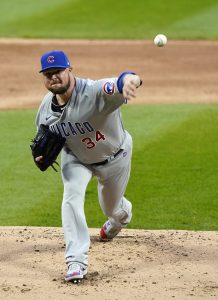
A second-round pick of the Red Sox out of a Washington high school in 2002, Lester entered pro ball as one of the more promising pitching prospects in the Boston system. Within a few years, the left-hander was ranked among the top farmhands in baseball and he made his big league debut at age 22 in June 2006. Lester was faced with incredible adversity just a few months into that run. He was diagnosed with anaplastic large cell lymphoma late in his rookie season, cutting that year short and requiring chemotherapy treatments.
Lester beat the disease and made an inspiring return to the mound in 2007. He made 12 regular season appearances that year, then pitched in three playoff games during the Red Sox’s run to a championship. Making his first career postseason start in Game 4 of the World Series against the Rockies, Lester tossed 5 2/3 innings of scoreless ball. He wound up getting the win in what proved to be the title-clinching game, as the Sox wrapped up a sweep.
Entering 2008, Lester was cemented as a key rotation member on Terry Francona’s staff. Incredibly durable, he’d make at least 31 starts over each of his next six seasons in Boston. While Lester only had two seasons (2009-10) with excellent strikeout numbers, he consistently demonstrated strong control and proved one of the game’s hardest pitchers to square up. A pillar of high-end consistency, Lester posted an ERA between 3.21 and 3.75 in five of six years from 2008-13.
Lester’s run in Boston was littered with accomplishments. He tossed a no-hitter in May 2008, earned back-to-back All-Star selections in 2010-11 and finished fourth in AL Cy Young award balloting during a 2010 season in which he tossed 208 innings of 3.25 ERA ball. Perhaps of most importance, Lester was excellent during the Red Sox’s surprising run to another championship in 2013. He pitched to a 1.55 ERA over 34 2/3 postseason innings that year, including 15 1/3 frames of one-run ball to earn two wins as part of a World Series triumph over the Cardinals.
Ticketed for free agency after the 2014 season, Lester began the year stellar as ever. He tossed 143 innings with a 2.52 ERA for the Red Sox, earning his third career All-Star nod in the process. Yet with free agency looming and the Red Sox on their way to a last place finish, they traded him to the A’s at the deadline. Lester continued to excel over his final few months in Oakland, eventually getting the nod in the AL Wild Card game. The A’s were knocked off by the Royals in one of the more thrilling back-and-forth contests in recent memory, and Lester hit the open market for the first time shortly thereafter.
Ranked by MLBTR as that offseason’s #2 free agent, Lester commanded a six-year, $155MM deal with a Cubs team looking to emerge from a massive rebuild. That’ll go down as one of the best free agent investments in franchise history, as he picked up right where he’d left off upon switching to the National League.
Lester worked 205 innings of 3.34 ERA ball his first season, helping Chicago to the NLCS. The following year, he compiled a 2.44 mark across 202 2/3 frames. He finished second in NL Cy Young voting, earned a fourth All-Star nod, and was arguably the top pitcher on a 103-win team. As he had so often in Boston, Lester shined in the playoffs yet again. He was tabbed that year’s NLCS MVP after tossing 13 innings of two-run ball to knock off the Dodgers. Lester made three outings with a 3.68 ERA during the World Series, in which the Cubs erased a 3-1 deficit against the Indians to end the franchise’s legendary 108-year title drought.
The third World Series title of Lester’s career proved to be his final one, as the Cubs never had quite the same level of success from that point forward. That wasn’t much fault of the veteran southpaw’s, though, as he remained effective for the next few seasons. He paced the NL with 18 wins in 2018, earning another All-Star nod in the process. As he entered his late-30s, Lester’s production finally began to tail off, although he remained remarkably durable and took the ball every fifth day through the expiration of his contract after 2020.
Last winter, Lester hooked on with the Nationals on a one-year, $5MM deal. He made 16 starts with Washington before being flipped to the Cardinals at the trade deadline. Despite lackluster strikeout and walk numbers, he managed a decent 4.36 ERA over 12 starts in St. Louis, proving to be a much-needed stabilizing force for a Cardinals rotation that had been hit hard by injuries. St. Louis made a miraculous September run to a playoff spot, but they fell to the Dodgers in the Wild Card game. Lester didn’t appear in what’ll go down as the final contest of his career.
One of the league’s most reliable hurlers for more than a decade, Lester leaves a fantastic legacy in the game. He tossed 2,740 innings over parts of 16 MLB seasons. He pitched to a 3.66 ERA, won exactly 200 games and struck out just under 2,500 batters. The five-time All-Star was a key contributor to three World Series teams with two separate franchises, and he’ll be remembered by both Red Sox’s and Cubs’ fans as one of the more impactful players in each organization’s recent histories. Lester’s career was valued at between 44 and 46 wins above replacement by FanGraphs and Baseball Reference, before accounting for an incredible 2.51 ERA over 154 playoff innings. According to B-Ref, he earned just over $188MM.
Lester will likely garner some Hall of Fame support five years from now. Whether or not he’s ultimately enshrined in Cooperstown, there’s no question he had a long run of excellence and reliability. MLBTR congratulates Lester on his fantastic career and wishes him all the best in his post-playing days.
MLB, Apple Reportedly Discussing Broadcasting Rights
According to a report from the New York Post’s Andrew Marchand, Major League Baseball has recently engaged in “serious” and “substantial” talks with Apple with regard to weeknight broadcasting rights, specifically to the Monday- and Wednesday-night package previously aired by ESPN. Should a deal be reached, Apple would presumably broadcast the games on Apple TV+, the company’s subscription streaming service that competes with Netflix, Hulu, Disney+, and Amazon Prime Video, among others. Apple, the world’s most valuable publicly traded company, recently attained a $3 trillion market valuation.
Though the move wouldn’t exactly represent something wholly new for MLB — regular-season games have been carried on YouTube, Facebook, and Twitter in recent seasons, and speculation that MLB might seek to sell the games ESPN had dropped has been rampant since the network’s new deal was announced — it would reflect a shifting sports media landscape. Amazon, a direct competitor with Apple in several arenas, recently reached a deal with the NFL to poach Thursday Night Football from Fox to the tune of $1 billion per season, and NBC has made many Premier League soccer matches available exclusively on Peacock, its own streaming service. MLB also operates its own highly successful streaming service, MLB.tv, which logged a record 10 billion minutes of viewership in 2021, per an October press release. Neither Apple nor MLB have yet commented on the reported talks.
Though the size and scope of a potential deal are presently unclear, it’s unlikely the package would approach the $1 billion mark that Amazon agreed to pay the NFL. While the approximately 60 MLB games ESPN has relinquished dwarf the 18 NFL games Amazon will receive, national viewing habits (and consequent broadcast values) differ greatly between the sports. For reference, per Tom Bassam of SportsPro Media, ESPN paid MLB $700MM annually for the right to a 90-game package and from 2022 will pay an annual fee of $550MM to retain Sunday Night Baseball (roughly 30 games) as well as the Little League Classic, the opening night game, the Home Run Derby, and either all Wild Card series games (should the new CBA include a playoff format similar to 2020’s) or one of two Wild Card games and eight additional regular-season games (should the existing playoff format remain in place).
Still, should a deal be reached, it would almost certainly represent a substantial cash infusion for a league presently at a standstill in CBA negotiations that center largely on the share of revenue retained by owners and that paid to players. In any event, should such a deal come to fruition, it’s very unlikely to be the last of its kind.
Yankees Name Rachel Balkovec As Manager Of Lower-A Affiliate
The Yankees have made a groundbreaking hire in their minor league ranks, as The Athletic’s Lindsey Adler (Twitter link) reports that Rachel Balkovec will manage the organization’s lower-A team in Tampa next season. Balkovec will become the first woman to ever manage an affiliated minor league club.
This is the latest of several barriers broken over the course of Balkovec’s decade-long career in baseball. Beginning as a strength and conditioning coordinator in the Cardinals’ farm system from 2011-15, she then moved to a similar role with the Astros from 2016-18, working with both Houston’s Latin American prospects and then the Astros’ Double-A affiliate. She has spent the last two seasons working within the Yankees’ minor league system as a hitting coach, following some time spent working with Driveline and in the Netherlands working with the Dutch national teams.
Along the way, Balkovec has routinely been noted as the first woman to be hired in these positions, whether in her strength/conditioning jobs or as a hitting coach. The 34-year-old will now take yet another step forward managing some of the Yankees’ top young prospects, and Balkovec is undoubtedly already familiar with many of these players due to her coaching work.
As Balkovec told The Associated Press’ Ronald Blum in 2019, “I have aspirations of being in a more leadership role from a broader standpoint,” mentioning the possibility of one day being hired as a “director of baseball operations or farm director or GM.” Such goals aren’t as remote as they once seemed for women in baseball, considering that Kim Ng is the Marlins general manager, Eve Rosenbaum is the Orioles’ director of baseball development, and Sara Goodrum was recently hired as the Astros’ director of player development. As for on-field personnel, Alyssa Nakken is a member of the Giants coaching staff, while Bianca Smith (Red Sox) and Rachel Folden (Cubs) have worked coaching jobs in the minor leagues for their respective teams.
Read The Transcript Of Our Chat With Hall Of Famer Chipper Jones
This is a big one. Chipper Jones needs no introduction; you can simply read his Hall of Fame plaque. Chipper is one of the best switch-hitters of all time. Drafted first overall in 1990, he was the offensive centerpiece of the Braves dynasty in the 90s and early 2000s mainly as the team’s third baseman. Chipper’s first full season was 1995, when the Braves won the World Series and he finished second in the Rookie of the Year voting. His accomplishments are too numerous to list, but Jones was the 1999 NL MVP and received votes in 12 other seasons. He hit 30 home runs in six separate seasons, including 45 in ’99. He also reached the century mark in RBI nine times. Even as he battled injuries later in his career, Jones’ production stayed strong, and he won the 2008 batting title by hitting .364 at age 36.
Jones finished his career with a .303/.401/.529 line, hitting 468 home runs in his 19-year career. He became a first-ballot Hall of Famer in 2018. We were honored to host Chipper today for a live chat. Click here to read the transcript. You can follow Chipper on Twitter @RealCJ10.
If you’re a current or former MLB player who would like to do a chat with MLBTR readers, reach out through our contact form! We’ve also had requests for a chat with a former MLB general manager, if there are any out there who would be interested.
New York Times To Purchase The Athletic
4:05pm: As previously expected, the deal has been announced following the close of the stock market. A press release by the New York Times Company confirms that it has reached a deal to acquire The Athletic (as well as the purchase price of $550MM) and announces an expected closing of the deal in the first quarter of 2022.
Though she makes clear that The Athletic’s ample subscriber base played a major role in the Times’ attraction to the San Francisco-based sports outlet, Meredith Kopit Levien, the New York Times Company’s president and CEO, suggests in the statement that The Athletic will be given relative free reign, describing it as a “complement to” the Times and “a subsidiary of The Times Company” that will “continue to operate separately.” The Athletic’s founders, Alex Mather and Adam Hansmann, will remain on board following the acquisition, though each will now report to Times Company executive David Perpich, who will be named The Athletic’s publisher.
Though the role is multi-faceted and varies from organization to organization, a publisher broadly sets the editorial and commercial direction for a publication, particularly with regard to big-picture decisions like target markets, forms of content, and the scope and nature of advertising. Perpich previously served as president and general manager for Wirecutter, another New York Times subsidiary, and is the first cousin of Times publisher A.G. Sulzberger. Perpich’s precise role in the future of The Athletic remains, at this point, unclear.
1:36pm: In a deal likely to shake up the sports media landscape, the New York Times Company (the parent company and publisher of the New York Times) has agreed to a $550MM deal to purchase subscription sports news service The Athletic (first reported by Jessica Toonkel of The Information). As of early Thursday afternoon, neither The Athletic nor the Times has announced the deal, though Sara Fischer of Axios reports that the deal is expected to be announced after the stock market closes for the day.
How (if at all) the deal will affect The Athletic’s coverage or subscription model remains to be seen, but Toonkel suggests that the deal may have been motivated by the site’s hefty subscriber base. Indeed, the acquisition of The Athletic’s more than one million subscribers (a threshold it crossed in September 2020) will go a long way towards meeting the Times’ stated goal of reaching 10 million subscribers by 2025; as of September 2021, it reported 8.3 million digital and print subscribers. Though some overlap in the publications’ subscriber bases certainly exists, the deal will move the Times a good deal closer to its target.
Previous reporting suggests that The Athletic had been in discussions with a number of media outfits since at least early 2021. In addition to the New York Times, the site had engaged in talks with politics-focused news site Axios (per Fischer) as well as sports betting behemoths DraftKings and FanDuel (per Jessica Toonkel and Sahil Patel of The Information), though it’s not entirely clear which of these negotiations culminated in an offer.
Since launching in 2016, The Athletic has pioneered a new model in the sports media landscape, offering a subscription-based service dedicated to what it has called “smarter coverage for die-hard fans” through a combination of day-to-day beat reporting (traditionally the province of local newspapers) alongside the sort of long-form analysis, original reporting, and social commentary more commonly found in national magazines. The site also benefited from a broader decline in print media, which has seen many local papers cut staff (including in sports sections) and others shut their doors entirely. At present, The Athletic has devoted coverage for 40 US cities, seven Canadian cities, and the United Kingdom.
On one hand, the backing of one of the world’s most powerful news organizations could offer The Athletic further coverage resources to add to its stable of experienced reporters. On the other, the potential imposition of new leadership (Fischer reports that founders Alex Mather and Adam Hansmann will stay on, though they’ll now at least notionally report to the Times’ board of directors) could impact the thrust of the site’s coverage in any number of possible directions. Until either organization confirms the deal or releases a statement regarding the future plans for the site, any further analysis of the deal’s implications would be wholly speculative, but it does represent a significant consolidation in digital sports media — a long-established trend across the digital media landscape.
Cameron Maybin Announces Retirement
Longtime major league outfielder Cameron Maybin announced his retirement this evening. The 34-year-old appeared in fifteen major league seasons, suiting up with ten different clubs between 2007-21. He spent the bulk of that time — four seasons apiece — with the Padres and Marlins.
“I’ve played this game since I was 4 years old,” Maybin wrote as part of his announcement, the full text of which is available on Twitter. “Three decades later, my love for baseball is only matched by the love I have for the family that’s supported me every step of the way. … Although my journey as a professional baseball player ends here with the announcement of my retirement, my work in this game is just getting started. I’m excited for what lies ahead, including my work with the Players Alliance in our effort to provide access and opportunity for the next generation of Black ballplayers.”
Maybin was a first-round pick back in 2005, selected tenth overall by the Detroit Tigers. At just 19 years old, Maybin made quick work of his minor league competition and drew praise from a number of publications. Baseball America regularly ranked the speedy outfielder among the top ten prospects in the game, doing so from 2007 until he exhausted prospect eligibility in 2009.
Though he made his Major League debut for the Tigers in 2007, a franchise-altering trade sent Maybin, along with a young Andrew Miller and others, to the Marlins for Miguel Cabrera and Dontrelle Willis. Irregular playing time but continued minor league dominance made Maybin a target of another trade just a few years later, when the Padres acquired him to be their starting center fielder for relievers Ryan Webb and Edward Mujica.
San Diego took well to their new center fielder, as Maybin broke out with a 40-steal, 103 OPS+ showing in his first year on the West Coast. That performance, combined with Maybin’s stellar glove up the middle, resulted in a 5-year $25MM extension before the 2012 season. Before the contract’s expiration, Maybin was dealt in yet another high-profile trade. In this deal, new Padres general manager A.J. Preller made his presence felt by acquiring closer Craig Kimbrel in an Opening Day-beating deal with the Braves.
After a year in Atlanta, Maybin bounced around between eight teams, providing clubs with speed and modest offense in the outfield and off the bench. During this stretch, Maybin had a resurgent year when he reunited with the Tigers in 2016, sporting a 118 OPS+ in 94 games. He pushed his offense to new heights in 2019, with a strong .285/.364/.494 (127 OPS+) showing in 82 games for an injury-ravaged Yankees team.
Maybin was set to look for 2022 opportunities as a veteran depth option for clubs. Instead, he’ll eschew a complicated free agent market and retire a career .254/.323/.374 hitter with 187 steals.
MLBTR congratulates Maybin on an excellent career, and wishes him the best of luck with his Players Alliance endeavors and elsewhere.
Kyle Seager Announces Retirement
Kyle Seager has announced his retirement, according to a statement relayed by his wife on Twitter. He had the rare honor of spending his entire career with one organization, having been drafted by the Seattle Mariners and staying with them until reaching free agency at the end of the 2021 season.
Seager, 34, began his career as a third-round pick of the Mariners in 2009, climbing through the minors to make his MLB debut in 2011, getting into 53 games that year. In 2012, he had a breakout year that saw him hit 20 home runs in 155 games, slashing .259/.316/.423. In combination with his solid third base defense, he was worth 3.8 fWAR that year.
From that point on, he essentially took over and made himself a fixture at the hot corner in Seattle, playing at least 154 games for the Mariners for seven straight seasons from 2012 to 2018. A hand injury limited him to 106 games in 2019, but that would prove to be his only significant absence, as he played all 60 games in the pandemic-shortened 2020 campaign and then 159 games in 2021.
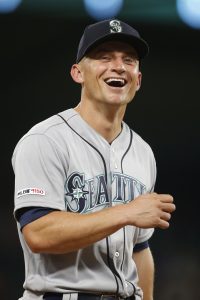 After a 2014 season in which Seager hit 25 homers, was selected to the All-Star game and won a Gold Glove, he and the Mariners agreed to a contract extension worth $100MM over seven years. That contract, which just concluded a few months ago, kept him a Mariner for life.
Over his 11 seasons, Seager played 1,480 games, notching 1,395 hits, 309 doubles and 242 home runs. His overall career slash line was .251/.321/.442. He was worth 34.8 wins above replacement in the estimation of FanGraphs, with Baseball Reference putting him at 36.9. A model of consistency, Seager produced at least 1.5 fWAR for ten straight seasons, from 2012 to 2021, hitting at least 20 home runs in each of those seasons, except for the shortened 2020 campaign. Despite his reliable durability, power production and defense, the Mariners were never able to build a postseason-worthy team around him, having not been to the postseason since 2001.
In 2021, the final year of his career, Seager set career highs in home runs and runs batted in, with 35 and 101, respectively. His slash line on the year was .212/.285/.438. Going into the offseason, MLBTR predicted that he could have earned himself a new contract worth $24MM over two years. Instead, he will hang up his spikes and enter the next chapter of his life.
Seager addressed his retirement with Ryan Divish of the Seattle Times this afternoon. The third baseman said he’d decided to retire by the end of the season, a year that ended with an emotional farewell from the fans at T-Mobile Park after the Mariners had been eliminated from playoff contention. “I knew if we got eliminated that would be the last time I played baseball. I knew it was my last at-bats, I knew it was my last ground balls, my last innings,” Seager texted Divish. “All those thoughts were in my head. I had so many emotions going on that day. My family being out for the pregame pitch was magical. I got very emotional very early in the day!”
Seager went on to tell Divish he’d been contemplating retirement as far back as Spring Training and said the ongoing lockout and labor uncertainty played no role in his decision. “It honestly was an easy decision. As much as I love baseball, it was time. I’m ready to be home with my family. I’ll miss a lot of people and aspects of the game, but I am ready to start the next chapter of my life.” Mariners fans in particular will want to check out Divish’s full piece, which also contains quotes from Seager on his appreciation for the Seattle fanbase as well as interest he’d received from other teams this winter after the M’s bought out his club option for 2022.
The MLBTR team would like to extend a heartfelt congratulations to Kyle for an incredible career and wish him the best of luck in whatever comes next.