
No Planned Future Discussion On Expanded Playoffs, Universal DH In 2021
There has been no recent movement in talks between MLB and the MLB Players Association regarding the potential implementation of an expanded postseason or the universal designated hitter for the 2021 season, reports Evan Drellich of the Athletic. There are no current plans to revisit those talks, per Drellich, who characterizes playoff expansion and the National League DH as “dead issues” for next season.
Last summer, MLB and the MLBPA agreed to an expanded 16-team playoff format for 2020 just hours before the beginning of the regular season, with the players receiving $50MM of postseason television revenues. In a typical postseason, players receive a share of gate revenue. While Drellich cautions that another last-minute accord can “never be totally ruled out,” tonight’s report is the firmest indication yet that the broad season structure is set to revert to its pre-2020 status. (The two sides did agree on health and safety protocols last month, so the seven-inning doubleheaders and modified extra innings rules will return).
The universal DH was included as part of the health and safety protocols last season, but that was not the case this time around. Throughout the offseason, MLB tried to leverage the players’ interest in the NL DH as part of a new agreement on economic issues, particularly playoff expansion. The MLBPA has consistently rejected such a framework, fearing that lowering the bar to make the playoffs will reduce teams’ incentives to invest in their rosters.
Ken Rosenthal of the Athletic reported in January that MLB had offered players an $80MM pool in playoff revenues if they signed off on postseason expansion. That would’ve marked a rather significant increase over last season’s $50MM figure, but the players didn’t feel that represented much of an improvement on the status quo. As Drellich points out, the MLBPA has more reason to be optimistic about the possibility of brining in gate revenues this postseason. With distribution of COVID-19 vaccines expected to increase substantially in the next few months, the possibility of fan attendance at playoff games looks much more realistic in 2021 than it did last season.
It’s worth remembering the MLBPA is under no obligation to negotiate any changes to the playoff format. In the absence of a new accord, the 2016-2021 collective bargaining agreement remains in place to govern the season structure.
Without coming to terms on playoff expansion, however, it seems MLB is unwilling to agree to the implementation of the universal DH. Some in the league office believe the addition of the DH at this late a date would threaten competitive integrity, per Drellich, since National League teams would have little ability to acquire help at the position at this point. There’s some truth to that, but it’s nevertheless a strange argument in the wake of a 2020 season that saw MLB and the MLBPA frequently agree on significant structural changes (including the implementation of the NL DH) on the fly.
Even if this does mark the end of discussions about playoff expansion and the universal DH for 2021, the topics are sure to arise again in the near future. They’ll no doubt be key issues as the parties negotiate a new CBA after the current one expires December 1.
Out Of Options 2021
The following 40-man roster players have less than five years service time and are out of minor league options. That means they must clear waivers before being sent to the minors. I’ve included players on multiyear deals. This list was compiled through MLBTR’s helpful and much-appreciated sources.
This year, option status for several players remains unresolved at present due to the nature of the 2020 season, as reported by Derrick Goold of the St. Louis Post-Dispatch. We’ll keep this list updated as new information comes in.
Angels
- Max Stassi, C
- Mike Mayers, P
- Franklin Barreto, 2B
- Jaime Barria, P
Astros
- Aledmys Diaz, 2B
- Austin Pruitt, P
- Brooks Raley, P
Athletics
- Chris Bassitt, P
- Tony Kemp, 2B
- J.B. Wendelken, P
- Nik Turley, P
Blue Jays
- Rafael Dolis, P
- Reese McGuire, C
- Breyvic Valera, 2B
Braves
- Abraham Almonte, RF
- Luke Jackson, P
- Grant Dayton, P
- Phillip Ervin, RF
- Tyler Matzek, P
Brewers
- Daniel Robertson, 3B
- Josh Lindblom, P
- Dan Vogelbach, 1B
- Derek Fisher, RF
- Adrian Houser, P
- Ray Black, P
- Billy McKinney, LF
- Jacob Nottingham, C
Cardinals
- Miles Mikolas, P
- John Gant, P
- Tyler Webb, P
- Daniel Ponce de Leon, P
- Edmundo Sosa, SS
Cubs
- Ildemaro Vargas, 2B
- Alec Mills, P
- Duane Underwood, P
- Dillon Maples, P
Diamondbacks
- Christian Walker, 1B
- Stefan Crichton, P
Dodgers
Giants
- Curt Casali, C
- Matt Wisler, P
- Darin Ruf, 1B
- Jarlin Garcia, P
Indians
- Adam Plutko, P
- Jake Bauers, LF
Mariners
- Rafael Montero, P
- Marco Gonzales, P
- Tom Murphy, C
- Casey Sadler, P
- Jose Marmolejos, 1B
- Chris Flexen, P
Marlins
- Adam Duvall, LF
- Jesus Aguilar, 1B
- Jorge Alfaro, C
- Magneuris Sierra, CF
Mets
- Miguel Castro, P
- Jacob Barnes, P
- Tomas Nido, C
Nationals
- Joe Ross, P
- Austin Voth, P
Orioles
- Pedro Severino, C
- Shawn Armstrong, P
- Jorge Lopez, P
- Cesar Valdez, P
Padres
- Dan Altavilla, P
- Taylor Williams, P
- Austin Adams, P
- Pierce Johnson, P
- Javy Guerra, P
- Jorge Mateo, SS
Phillies
- David Hale, P
- Roman Quinn, CF
Pirates
- Michael Feliz, P
- Erik Gonzalez, SS
- Chris Stratton, P
- Jacob Stallings, C
- Carson Fulmer, P
- Anthony Alford, CF
- Dustin Fowler, CF
Rangers
- Mike Foltynewicz, P
- Ronald Guzman, 1B
- Joely Rodriguez, P
Rays
- Ji-Man Choi, 1B
- Cody Reed, P
- Brett Phillips, RF
Red Sox
- Austin Brice, P
- Nick Pivetta, P
- Christian Arroyo, 3B
Reds
- Noe Ramirez, P
- Amir Garrett, P
- Jeff Hoffman, P
- Lucas Sims, P
- Sal Romano, P
Rockies
- Elias Diaz, C
- Carlos Estevez, P
- Antonio Senzatela, P
- Jairo Diaz, P
- Robert Stephenson, P
- Raimel Tapia, LF
- Yency Almonte, P
- Yonathan Daza, LF
Royals
Tigers
- Matthew Boyd, P
- Buck Farmer, P
- Jeimer Candelario, 3B
Twins
- Max Kepler, RF
- Tyler Duffey, P
- Jorge Polanco, SS
White Sox
- Evan Marshall, P
- Jose Ruiz, P
Yankees
- Gary Sanchez, C
- Luis Cessa, P
- Gio Urshela, 3B
- Mike Tauchman, CF
- Kyle Higashioka, C
Royals, Hunter Dozier Agree To Four-Year Extension
TODAY: The Royals have officially announced Dozier’s extension. The Athletic’s Alec Lewis (Twitter links) has the financial breakdown — Dozier will get a $1MM signing bonus, $2.25MM this season, $4.5MM in 2022, $7.25MM in 2023, $9MM in 2024, and there is a $1MM buyout on the $10MM club option for 2025. There are multiple escalators involved, including $1MM bonuses for various awards.
FEB. 28, 9:51AM: Dozier and the Royals are in agreement on a four-year, $25MM guarantee with a $10MM option for 2025, per Jeff Passan of ESPN (Twitter link). If Dozier reaches all available escalators and bonuses, it could max out at $49MM, Passan reports.
9:35AM: While the deal isn’t yet complete, there’s “optimism” it’ll get over the finish line, per Alec Lewis and Andy McCullough of the Athletic (via Twitter). If finalized, the guarantee is expected to land in the $25MM range, report Lewis and McCullough. The 2025 option would be worth $10MM, reports Jon Heyman of MLB Network (Twitter link).
8:59AM: The Royals are finalizing a four-year contract extension with Hunter Dozier, reports Robert Murray of FanSided (Twitter link). The proposed deal would also contain a club option for 2025, per Murray. Dozier is a client of The L. Warner Companies, Inc.
As a player with three-plus years of MLB service, the 29-year-old wasn’t set to reach free agency until after the 2023 season. Rather than proceed year-by-year through arbitration, the parties are locking in some cost certainty over the next three seasons while lengthening their relationship by at least one year. The deal will buy out Dozier’s first year of would-be free agency, while the club option adds a second additional season of team control.
Despite being selected eighth overall out of Stephen F. Austin University in 2013, Dozier had something of a slow ascent through the minors. He made his MLB debut as a September call-up in 2016, but it wasn’t until the middle of the 2018 season that he had established himself as a big league regular.
Dozier struggled down the stretch as a rookie but seemed to break out as a middle-of-the-order bat in his sophomore season. The right-handed hitter popped 26 home runs and hit .279/.348/.522 across 586 plate appearances in 2019. Dozier’s batted ball metrics reinforced that power output. His 91.1 MPH average exit velocity placed him in the 83rd percentile league-wide; Dozier’s hard contact and barrel rates were similarly impressive. A higher than average 25.3% strikeout rate and .339 BABIP hinted at some potential regression in future seasons, but Dozier’s power and decent plate discipline positioned him as an above-average offensive performer nonetheless.
The shortened 2020 season, however, proved a difficult one for Dozier. That was the case for plenty of players, but Dozier was one of the players most directly impacted by the COVID-19 pandemic. He tested positive for the coronavirus last July and was forced to start the season on the injured list. Upon his return, he lacked the same power he’d shown the season before. Whether because of his bout with COVID-19 or merely due to the season’s small sample size (he tallied just 186 plate appearances), the Royals clearly feel Dozier’s .228/.344/.392 line was anomalous.
Regaining his footing at the plate is critical for Dozier, who’s rather limited defensively. He broke in as a third baseman, but defensive metrics panned his work at the hot corner from 2018-19. After signing Maikel Franco last offseason, Kansas City mostly limited Dozier to first base and the corner outfield in 2020. Franco is back in free agency, possibly bumping Dozier back to third this year (and perhaps beyond). At his age, it’s doubtful he transforms into an above-average defender at the position.
Last November, Dozier agreed to a $2.72MM deal to avoid arbitration. It remains to be seen if this extension changes that figure. At the moment, the Royals have around $90MM on the books for the upcoming season, right in line with last year’s payroll. Besides Dozier, only Whit Merrifield and recent free agent signees Carlos Santana and Mike Minor have guaranteed money on the books beyond 2021. That should leave plenty of long-term payroll space for the Royals, who will see Salvador Pérez and Jorge Soler reach free agency (barring extensions of their own) next offseason.
Giants, Scott Kazmir Agree To Minor League Deal
FEB 27: Kazmir’s deal is official and he will report to spring training, per Kerry Crowley of the Bay Area News Group (via Twitter).
FEB 23: Comeback season is upon us, it seems. The Giants have agreed to a minor league contract with left-hander Scott Kazmir, reports ESPN’s Buster Olney. He’ll be invited to Major League Spring Training. Kazmir will earn a $600K base salary if he makes the Giants, Susan Slusser of the San Francisco Chronicle tweets. His deal doesn’t include any opt-out dates.
It’s been nearly five years since Kazmir, now 37, pitched in the Majors with the Dodgers. Current San Francisco president of baseball operations Farhan Zaidi was serving as general manager under president Andrew Friedman in Los Angeles at that point, and he was also an assistant GM in the Athletics’ front office in 2013 when Oakland inked Kazmir to a two-year deal.
There’s some obvious history between Zaidi and Kazmir, who at one point was one of the game’s brightest young starters. Kazmir broke out with the Rays in 2005, drawing Rookie of the Year votes that season and going on to make a pair of All-Star teams with Tampa Bay, where he posted a 3.51 ERA and a 25.1 percent strikeout rate from 2005-2008 (back when the league-average strikeout percentage was just 17 percent).
Injuries looked to have derailed Kazmir’s career after a disastrous stint with the Angels. He recorded just five outs in the Majors from 2011-12 and looked to be in danger of washing out entirely before even celebrating his 30th birthday. But Kazmir parlayed a minor league deal with the Indians — not unlike the one he’s now signing with the Giants — into a strong rebound campaign in 2013. He rewarded the A’s with an All-Star season in ’14 and a strong first half in ’15 before being traded to the Astros. Injuries again waylaid Kazmir in the second and third seasons of his three-year pact with the Dodgers, and he hasn’t been on a big league mound since Sept. 2016.
Overall, Kazmir owns a lifetime 4.01 ERA that, remarkably, is an exact match with both his FIP and his SIERA. He’s fanned 22.2 percent of his opponents at the MLB level against a 9.4 percent walk rate. Those numbers come across as that of a third or fourth starter, but Kazmir has shown on multiple occasions that when he’s at his best, he’s a good deal better than that.
Whether he has anything left in the tank remains to be seen, but Olney notes that Kazmir hit 92-93 mph in recent bullpen sessions. He’s never been a particularly hard thrower, so that velocity aligns nicely with Kazmir’s peak years. Even during his All-Star campaigns in 2006, 2008 and 2014, Kazmir averaged just north of 91 mph on his heater.
There’s no harm in the Giants taking a look this spring to see if Kazmir has another rebound in him — even if this comeback seems all the more improbable given his age and his considerably longer layoff from pitching in the Majors. He’ll add another intriguing, high-upside arm to a Giants staff that has rolled the dice on Aaron Sanchez, Alex Wood and Anthony DeSclafani on Major League deals.
Kelvin Herrera Announces Retirement
Two-time All-Star and 2015 World Series champion Kelvin Herrera announced today, via Twitter, that he is retiring after spending parts of 10 seasons in the Major Leagues.
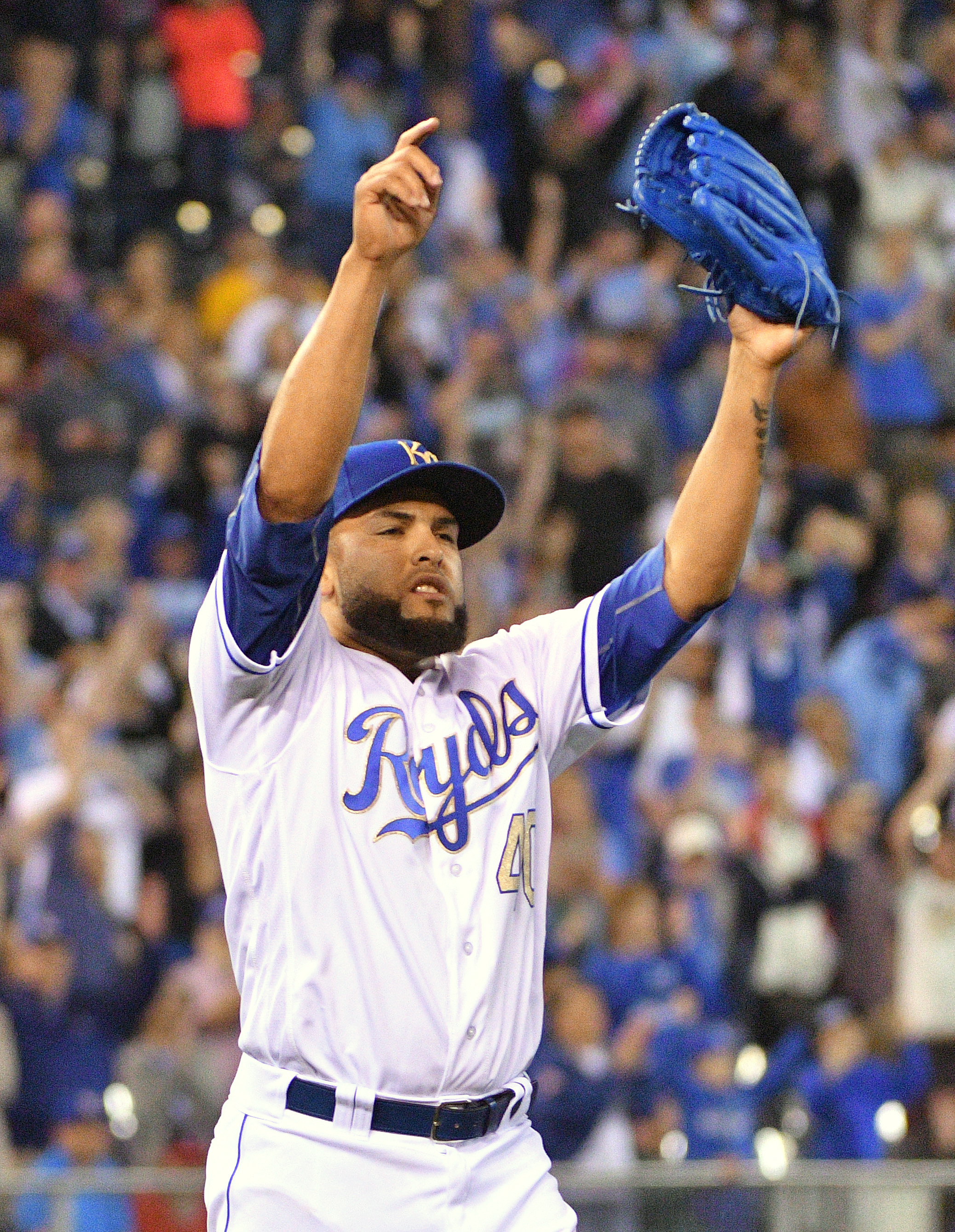
“I want to thank everyone who has been a part of my career, starting with the Kansas City Royals organization who believed in this kid from Tenares, Dominican Republic and gave him a chance to do something meaningful with his life,” Herrera wrote in his announcement. “From ownership, to the Front Office, the staff, my teammates and last but not least, the fans, I owe you guys everything.”
Herrera goes on to thank both the Nationals and White Sox organizations for welcoming him as well. For the time being, Herrera says he plans to focus on his family and the next chapter of his life.
It’ll no doubt surprise some readers to see that Herrera is still just 31 years old. He’s been around the Majors for a decade due to the Royals calling on him for his Major League debut at just 21 years of age.
Herrera pitched in just two games late in that 2011 season, but the right-hander was an immediate success in 2012 — his first full season at the MLB level. In 84 1/3 innings, he worked to a pristine 2.35 ERA with 19 holds, three saves and a heater that averaged a blistering 98.5 mph. In a normal year, that overwhelming success would’ve no doubt garnered Rookie of the Year consideration, but 2012 happened to also be the rookie season for Mike Trout, Yoenis Cespedes and Yu Darvish, who commanded nearly every top-three vote on the ballot that year.
Even without any Rookie of the Year love, Herrera had established himself as a dominant late-inning arm in short order, and that’s the exact role he’d over the next half decade as a steady presence at the back of some elite Kansas City bullpens. From 2012-16, Herrera pitched 354 1/3 regular-season innings with the Royals and notched a collective 2.57 ERA with 106 holds and 17 saves.
The bullpen was in many ways the backbone of the Royals’ back-to-back World Series runs in 2014-15, and Herrera joined teammates Wade Davis, Greg Holland and (in 2015) Ryan Madson in forming a juggernaut late-inning group that gave opposing lineups absolute fits. Each of Herrera, Davis and Holland posted ERAs south of 1.50 and appeared in at least 65 games during the 2014 season. Herrera was as untouchable during the postseason as he was in the regular season, combining for 28 2/3 innings of 1.26 ERA ball in his playoff career.
With the Royals out of contention during Herrera’s final year of club control in 2018, they made the decision to trade him to the Nationals for a package of young players including Kelvin Gutierrez, Blake Perkins and Yohanse Morel. Herrera was injured for part of his time with the Nats, going down with a Lisfranc tear in his foot, but he gave them 18 1/3 innings of 4.34 ERA ball before reaching free agency and signing a two-year pact with the White Sox. Things didn’t pan out in Chicago, as Herrera was tagged for 39 runs in just 53 2/3 innings across his two seasons there.
Herrera’s peak was brief but absolutely dominant, and he’ll go down in Royals lore as an absolutely vital member of a bullpen that fueled a baseball renaissance in Kansas City and brought home the club’s first title in three decades. He’ll hang up the spikes with a career 3.21 ERA, 119 holds, 61 saves and 510 strikeouts in 513 2/3 innings of regular-season work — plus the aforementioned sterling postseason track record. Best wishes to Herrera and his family in whatever the future holds.
Braves Extend Brian Snitker
The Braves announced this morning that they’ve signed manager Brian Snitker to a two-year contract extension through the 2023 season. The deal contains a club option for the 2024 season as well.
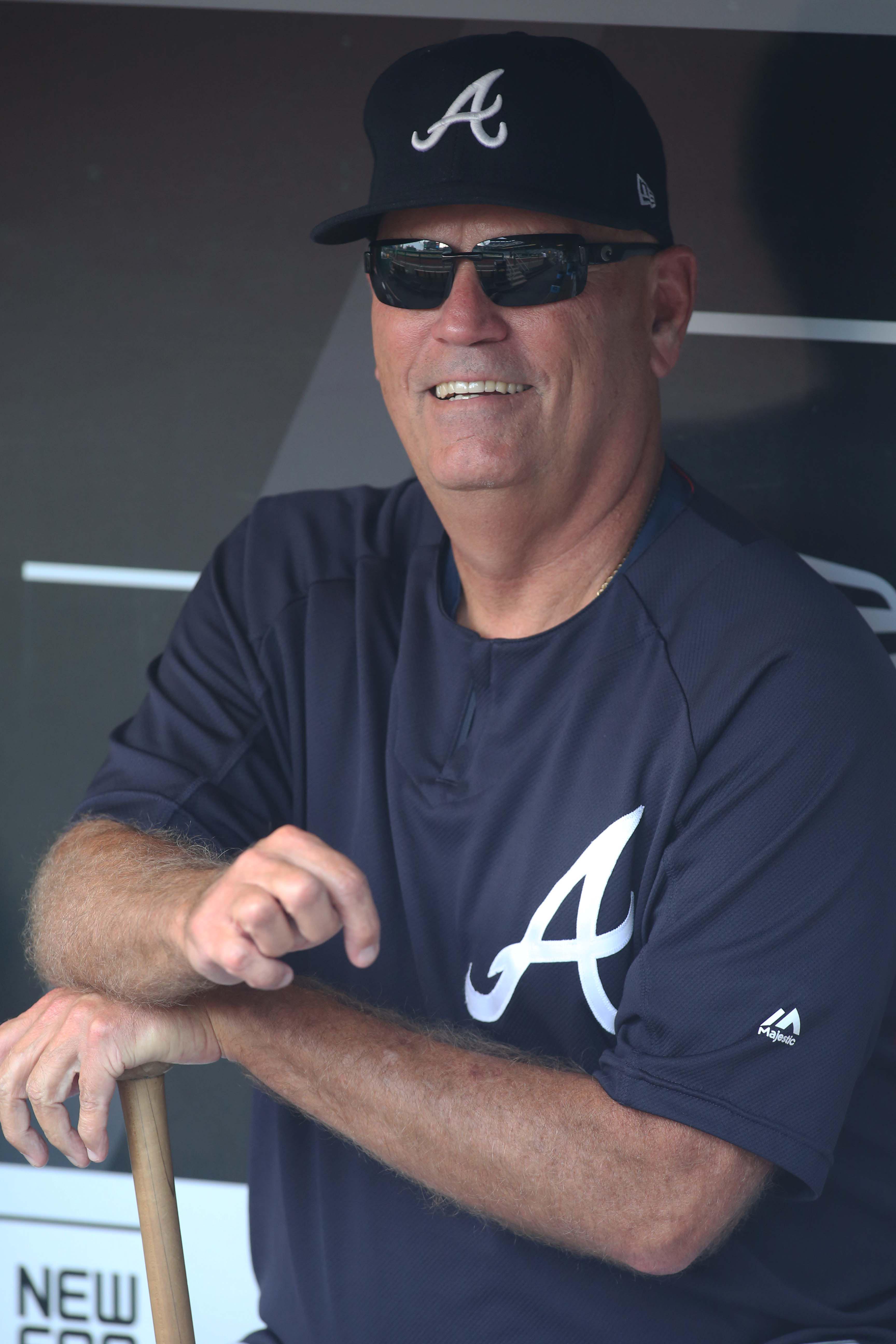
“I am thrilled that Brian will continue to lead our club on the field and in the clubhouse,” Braves general manager Alex Anthopoulos said in a statement accompanying the announcement. “Three consecutive division titles speak to the impact of Brian and his staff, and we are pleased that he will continue to guide our club through 2023.”
It’s the second straight spring with an extension for Snitker, although today’s additional two years (and a club option for a third) makes for a stronger vote of confidence than last year’s one-year extension. That deal would’ve expired at season’s end. Snitker now not only sheds dreaded lame-duck status but picks up job security for multiple years.
Snitker, 65, is a Braves lifer who has spent more than four decades in the organization, including the past five as the big league skipper. Originally taking over midway through the 2016 season after the dismissal of Fredi Gonzalez, Snitker managed the club to a 72-90 showing in his first full season (2017) but has captured three consecutive division titles at the helm of a team that has played .578 ball during the regular season since 2018. The Braves are 222-162 during that time, and Snitker’s overall managerial record (in the Majors) stands at 353-317.
In his 40-plus years with the organization, Snitker has managed seven different minor league affiliates, had two different stints as the Major league bullpen coach (both in the 1980s) and served as the third base coach for both Gonzalez and Bobby Cox. He was voted National League Manager of the Year in 2018 and has since finished third and fourth, respectively, in subsequent Manager of the Year balloting.
Snitker’s Braves were bounced from the postseason in the first round both in 2018 and 2019, but he found postseason success in his third opportunity in 2020. The Braves swept both the Reds and the Marlins during the first two rounds of last year’s expanded postseason format before taking the eventual World Series Champion Dodgers to their limit in a seven-game National League Championship Series showdown.
Yankees Sign Justin Wilson
11:45am: Wilson’s contractual terms are virtually identical to Gardner’s, per MLB Network’s Jon Heyman (Twitter link). He’ll be paid $2.85MM in 2021 with a $2.3MM player option for the 2022 season. If Wilson declines that option, the Yankees have a $7.15MM club option or $1.15MM buyout on him. The lone difference is that if Wilson exercises his player option for the 2022 season, the Yankees will pick up a 2023 club option worth the league minimum plus $500K. (The exact 2023 league minimum isn’t yet known due to the expiring collective bargaining agreement.)
As with Gardner, it’s quite unlikely that Wilson will exercise that player option, thus giving the Yankees a year of virtual league-minimum control over him — particularly when he’s guaranteed at least the $1.15MM buyout on the 2022 club option anyhow. But rather than a straight $4MM guarantee, this structure reduces the luxury hit to a more palatable $2.575MM.
Feb. 23, 10:40am: The Yankees have announced the signing of Wilson to a one-year deal. As with their signings of Brett Gardner and Darren O’Day, the contract contains a player option for Wilson and a club option for the Yankees that can be picked up if he declines. The player option structure will allow the team to artificially weigh down the luxury-tax hit on Wilson, as it’s considered guaranteed money for luxury purposes.
Feb. 15: The Yankees and free-agent reliever Justin Wilson have reached a deal, pending a physical, Robert Murray of FanSided tweets. Sweeny Murti of WFAN first reported the pact. The Yankees were in discussions with Wilson over the weekend and looked to be progressing toward a deal then, so it isn’t a surprise that the ACES client is joining the team.
This will be the second Yankees stint for Wilson, who began his career with the Pirates from 2012-14 before moving on to the Bronx in a trade for catcher Francisco Cervelli. The left-handed Wilson was highly effective in 2015, but the Yankees nonetheless moved on from him after that season in a trade with the Tigers. The Yankees acquired right-handers Chad Green and Luis Cessa (who are still on their roster) for Wilson, who has continued to perform well dating back to that deal. Along with the Tigers, the 33-year-old Wilson has suited up for the Cubs and Mets since the Yankees first parted with him.
Wilson has been effective everywhere he has pitched, evidenced in part by his 3.27 ERA/3.54 SIERA and above-average strikeout percentage (26.7) over 429 1/3 innings. The hard-throwing Wilson has also surrendered comparable numbers versus lefty hitters (.291 weighted on-base average) and righties (.284), so regardless of handedness, the Yankees can be confident he’ll keep holding his own in 2021.
Along with the aforementioned Green, Wilson will join Zack Britton and fellow free-agent pickup Darren O’Day in giving the team another proven reliever in front of closer Aroldis Chapman.
Braves Sign Jake Lamb
Feb. 23: The Braves announced their one-year deal with Lamb. While it is technically a Major League deal, it’s also a non-guaranteed deal, per the team. That means Lamb could yet be cut in Spring Training for only a portion of his salary. MLB Network’s Jon Heyman reports that salary to be $1MM.
Feb. 21: The Braves are in agreement on a contract with corner infielder Jake Lamb, reports Mark Bowman of MLB.com (Twitter link). It’s expected to be a major league pact, per Joel Sherman of the New York Post (via Twitter). The deal is pending a physical. Lamb is a client of CAA Sports.
Lamb once looked like a building block for the Diamondbacks, with whom he began his career. Between 2016-17, he hit .248/.345/.498 with 59 home runs, earning an All-Star berth in the latter season. Unfortunately, the left-handed slugger was plagued by a shoulder issue that eventually required surgery in 2018, knocking him off course. Over the past three seasons, Lamb has just a .205/.309/.351 line with 15 homers across 563 plate appearances. That led Arizona to release him last September.
To his credit, Lamb hooked on with the Athletics after being cut loose by the Diamondbacks and hit very well down the stretch. That production came over just thirteen games on the heels of two-plus seasons of subpar performance, though, so it seems unlikely he’s completely regained his footing at the plate.
The Braves needn’t get his return to peak form for this to make for a worthwhile addition, though. Lamb won’t see much action at first base, thanks to the presence of reigning NL MVP Freddie Freeman, but third base was a problem area last season. The combination of Austin Riley, Johan Camargo and the since-departed Adeiny Hechavarría struggled to varying degrees at the plate. Lamb isn’t a sure thing to produce himself, but he’ll bring a left-handed bat with some power to the mix, which could pair well with the right-handed hitting Riley. Non-roster invitees Jason Kipnis and Ehire Adrianza will try to work their way onto the roster during spring training, as well.
Athletics Sign Mitch Moreland
The Athletics added some left-handed pop to their lineup, announcing on Tuesday that they’ve signed first baseman/designated hitter Mitch Moreland to a one-year deal. The Paragon Sports International client will reportedly be guaranteed $2.25MM on the deal and can earn another $250K worth of incentives.
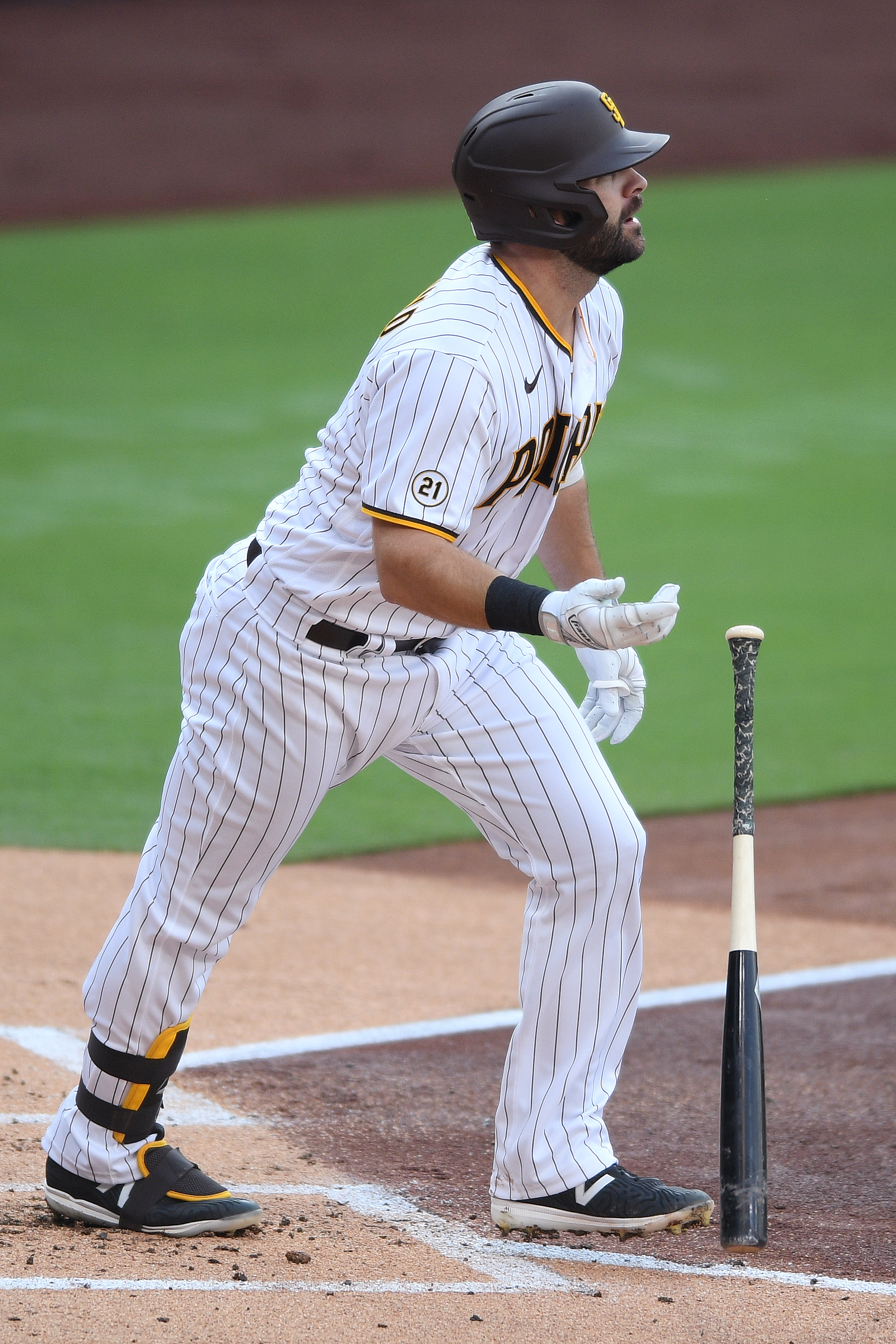
Moreland may be 35 years old, but he’s turned in the best work of his career at the plate over the past two seasons. In 487 plate appearances between the Red Sox and Padres in that time, Moreland has slashed .256/.333/.521 with 29 home runs, 26 doubles and a triple. He’s also boosted his walk rate north of 10 percent in the past few years after previously sitting around seven percent for the bulk of his career, and the uptick in power and free passes hasn’t come with any discernible increase in strikeouts (21.8 percent).
At this point in his career, Moreland’s glovework likely isn’t as good as it was at its Gold Glove peak, but that’s not much of an issue in Oakland, where Matt Olson is among the game’s best defenders at the position. He’ll give them a veteran with a solid defensive track record in the event that Olson misses any time, but Moreland figures to see time as the primary designated hitter for the A’s now that Khris Davis has been traded to Texas in a trade that brought Elvis Andrus to Oakland.
Moreland has never hit left-handed pitching well and is typically shielded from facing southpaws too much, so he’ll likely be deployed in a platoon setting. The A’s don’t have an obvious right-handed-hitting platoon partner at the moment — Chad Pinder likely in a platoon at second base — so it’s possible they could yet look to the market to bring in an affordable righty bat or switch-hitter to pair with Moreland.
Moreland joins Trevor Rosenthal, Yusmeiro Petit and Sergio Romo as recent additions on one-year deals, bringing the Oakland payroll up to a still-modest $85MM in total. It had been a near-silent offseason for the A’s, but it seems their ability to shed the Davis contract and a flooded free-agent market still full of veterans seeking deals has pushed ownership to begin spending a bit.
ESPN’s Jeff Passan first reported the deal (via Twitter). Chris Cotillo of MassLive.com first reported the financials.
Yankees Re-Sign Brett Gardner
Brett Gardner is back for a 14th season with the Yankees. The team announced this morning that Gardner has been re-signed to a one-year deal with a player option for the 2022 season. The Meister Sports client will reportedly be paid $2.85MM in 2021, with a $2.3MM player option for a second season. If Gardner declines his player option, the Yankees can pick up a $7.15MM club option or buy him out at $1.15MM. Luis Severino, who is recovering from 2020 Tommy John surgery, was placed on the 60-day injured list to open roster space.
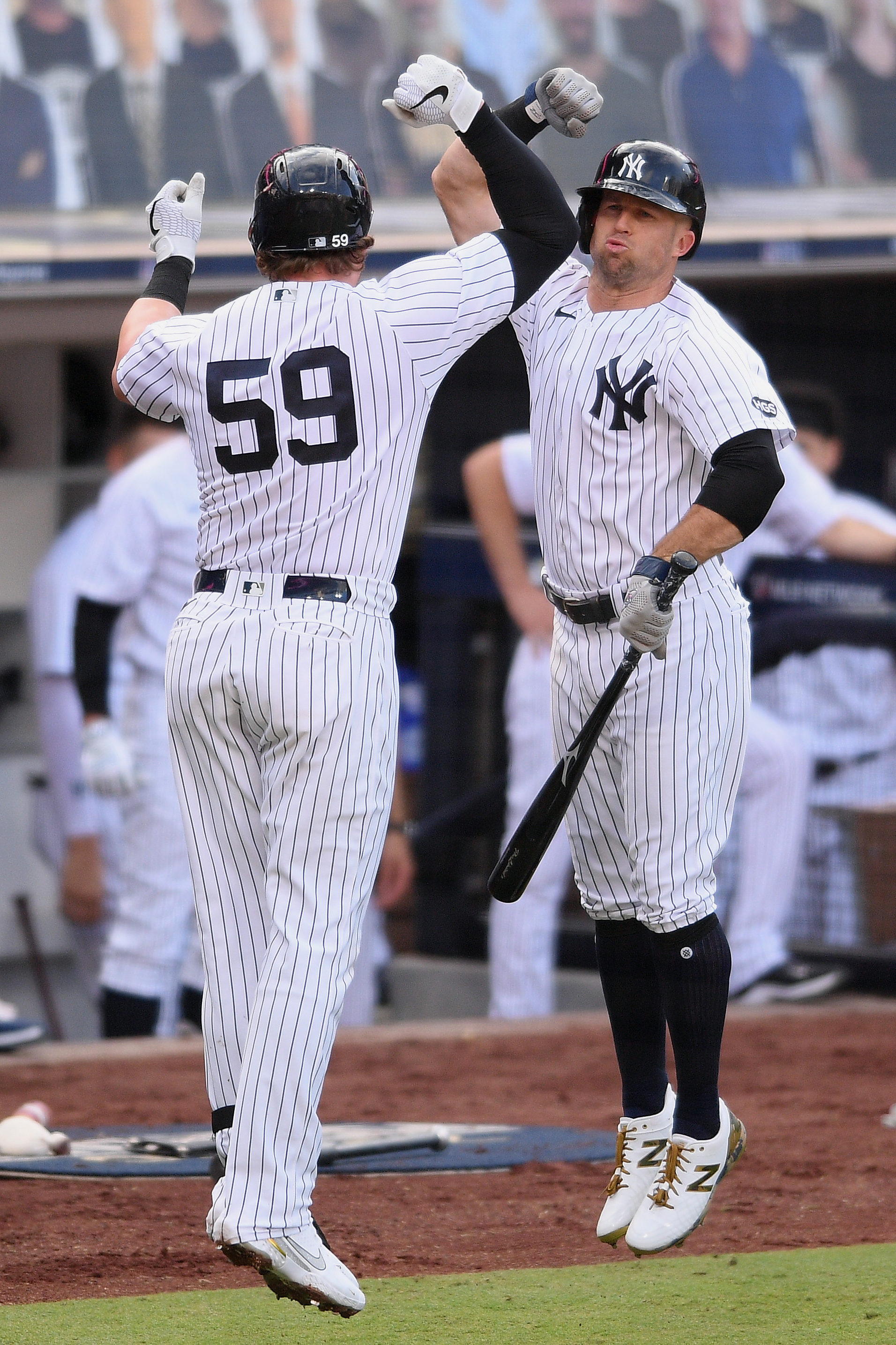
The Yankees declined Gardner’s $10MM option for 2021 in favor of a $2.5MM after last season, but the new agreement hardly comes as any kind of shock. After all, the 37-year-old has been a career-long member of the club since he debuted in 2008 and remains an asset despite his advanced age.
Gardner is still adept at handling both left and center field, and he posted yet another above-average offensive showing in 2020. While his batting average wasn’t good, his overall .223/.354/.392 line in 158 plate appearances was around 10 percent better than the league-average mark, according to both OPS+ and wRC+. He’s also an immensely respected member of the team’s clubhouse.
If Gardner does return to the Yankees in 2021, he would serve as a highly qualified fourth outfielder on a team that has Aaron Judge, Aaron Hicks and Clint Frazier lined up to start in the grass, with designated hitter Giancarlo Stanton also likely to cycle in at right field from time to time.
The Yankees are aiming to stay under the $210MM luxury-tax threshold this year, and their deal with Gardner is the latest example of that. The Yankees have used split player/club options as a means of weighing down their luxury obligations. Because Gardner is unlikely to pick up that $2.3MM player option when he’s guaranteed at least the $1.15MM buyout on the club option anyway, his contract effectively amounts to a one-year deal with a club option. However, because player options are technically considered guaranteed money, that lowers the average annual value of the contract to $2.575MM; a traditional one-year deal with the club option and the same guarantee would’ve clocked in at $4MM.
It’s the same approach the Yankees took in their contracts with both Darren O’Day and Justin Wilson. None of the individual deals is likely to save them more than a million-plus in luxury room, but taken in totality they’ve probably trimmed back $3-4MM of luxury breathing room by brokering a series of player options that are all unlikely to be exercised.
With Gardner back in the fold, the Yankees’ luxury obligations sit just shy of $204MM, per Roster Resource’s Jason Martinez, although the specifics of Wilson’s deal aren’t yet known and will further push that sum toward the $210MM threshold. In all likelihood, the Yankees will leave themselves a few million dollars of breathing room to allow some in-season dealings as needs arise.
Ken Davidoff of the New York Post first reported that the two sides had agreed to a new deal, and MLB Network’s Jon Heyman added details on the contract’s structure. USA Today’s Bob Nightengale reported the exact breakdown.