
Giants To Sign Jake McGee
FEB. 22: It’s a two-year, $5MM guarantee for McGee, according to Susan Slusser of the San Francisco Chronicle. McGee will earn a $2MM salary this year and $2.5MM in 2022, when he could also make $2MM in performance bonuses. There’s a $4.5MM club option or a $500K buyout for 2023.
FEB. 9: The Giants are signing free-agent reliever Jake McGee, Robert Murray of Fansided reports. It’s a two-year deal worth $7MM for the Wasserman client, per Jon Heyman of MLB Network.
San Francisco will be the third National League West stop for the left-handed McGee, a 34-year-old who divided the previous five seasons between the Rockies and Dodgers. McGee was not particularly successful in Colorado, which acquired the ex-Ray before 2016 and then re-signed him to a three-year, $27MM guarantee in the ensuing offseason. As a result of his struggles as a Rockie, McGee had to settle for a low-paying deal with the Dodgers last summer.
The McGee signing worked out brilliantly for the Dodgers, who ran roughshod over the competition during the regular season and then earned a World Series title. While McGee was hardly the most instrumental part of the team’s run, he did give Los Angeles an excellent 2.66 ERA/1.81 SIERA over 20 1/3 innings.
The Dodgers’ version of McGee went to an almost all-fastball approach and averaged 95 mph on his heater – his best since 2014 – while posting eye-popping strikeout and walk percentages of 41.8 and 3.8, respectively. His K-BB percentage (38.0) ranked second among relievers behind Brewers Rookie of the Year winner Devin Williams. McGee also finished toward the top of the majors in such Statcast categories as expected batting average against, expected weighted on-base average against and expected ERA. On the other hand, he was near the bottom in exit velocity and hard-hit rate.
Now that he’s heading to the division-rival Giants, McGee will be the most established southpaw in their bullpen. The team does have other options, however, including Jarlin Garcia (who, like McGee, kept runs off the board at a great clip in 2020) and Sam Selman.
Mariners CEO Kevin Mather Resigns
FEB. 22, 3:02pm: Mather has resigned, Divish was among those to tweet. As part of a statement regarding Mather’s resignation, Mariners chairman John Stanton said: “There is no excuse for what was said, and I won’t try to make one. I offer my sincere apology on behalf of the club and my partners to our players and fans. We must be, and do, better. We have a lot of work to do to make amends.” Stanton added that he’ll serve as acting president/CEO until the team finds a permanent replacement for Mather.
2:17pm: The MLB Players Association has released a statement about Mather: “The Club’s video presentation is a highly disturbing yet critically important window into how Players are genuinely viewed by management. Not just because of what was said, but also because it represents an unfiltered look into Club thinking. It is offensive, and it is not surprising that fans and others around the game are offended as well. Players remain committed to confronting these issues at the bargaining table and elsewhere.”
FEB. 21, 10:20PM: Mather issued a public apology, stating “I want to apologize to every member of the Seattle Mariners organization, especially our players and to our fans. There is no excuse for my behavior, and I take full responsibility for my terrible lapse in judgement. My comments were my own. They do not reflect the views and strategy of the Mariners baseball leadership who are responsible for decisions about the development and status of the players at all levels of the organization.
“I’ve been on the phone most of the day today apologizing to the many people I have insulted, hurt, or disappointed in speaking at a recent online event. I am committed to make amends for the things I said that were personally hurtful and I will do whatever it takes to repair the damage I have caused to the Seattle Mariners organization.”
7:25PM: In a video speech given to the Bellevue Breakfast Rotary Club on February 5, Mariners president/CEO Kevin Mather discussed a number of topics surrounding his team and the upcoming season at large. The speech was posted to YouTube earlier today and later removed, though not before several outlets (including Grant Bronsdon and Kate Preusser of the Lookout Landing blog and Ryan Divish of the Seattle Times) took note of several eyebrow-raising statements made by the Seattle executive.
Speaking with an unusual (and rather shocking) amount of openness, Mather made multiple comments that are sure to gain the attention of Mariners fans, players, and the players’ union. The most problematic remarks concerned how star prospect Julio Rodriguez and former pitcher Hisashi Iwakuma reportedly have or had difficulties speaking English. Asked to tell attendees about Rodriguez, Mather began with, “Julio Rodríguez has got a personality bigger than all of you combined. He is loud, his English is not tremendous.” Rodriguez has already responded to Mather’s comments with a pair of pointed tweets.
In response to a separate question, Mather went on a tangent about Iwakuma, saying:
“For instance, we just re-hired Iwakuma, he was a pitcher with us for a number of years. Wonderful human being, his English was terrible. He wanted to get back into the game, he came to us, we quite frankly want him as our Asian scout, interpreter, what’s going on with the Japanese league. He’s coming to spring training. And I’m going to say, I’m tired of paying his interpreter. When he was a player, we’d pay Iwakuma X, but we’d also have to pay $75,000 a year to have an interpreter with him. His English suddenly got better, his English got better when we told him that!”
While Mather also praised Rodriguez, Iwakuma, and other players during the speech, his overall breakdown of Seattle’s roster carried more than a few awkward moments. For instance, Mather continually referred to catcher Luis Torrens as “Luis Torres,” and he described longtime third baseman Kyle Seager as “probably overpaid” while also citing Seager’s clubhouse leadership.
It’s quite possible league officials may also have a few words with Mather considering how he discussed such topics as prospect service time, noting that the Mariners didn’t intend to promote any of the top prospects working out at their alternate training camp last summer.
“There was no chance you were going to see these young players at T-Mobile Park,” Mather said. “We weren’t going to put them on the 40-man roster, we weren’t going to start the service time clock. There were all kinds of reasons that, if we had an injury problem or COVID outbreak, you might’ve seen my big tummy out there in left field. You would not have seen our prospects playing in T-Mobile Park.”
It isn’t any surprise that the Mariners or any other team are looking to gain as much extra team control as possible over their young players, with this tactic most often manifesting itself in a prospect’s debut being delayed just long enough so the club can gain an extra year of control over the player, or delay their chances of reaching Super Two eligibility (and another year of arbitration). Front office executives couch these decisions under a nebulous guise of saying that a prospect needs more seasoning in one aspect or another of his game, with the prospect suddenly being ready as soon as the service time threshold has been passed. The MLBPA was already expected to pursue ways of addressing this loophole during the upcoming collective bargaining agreement negotiations, and Mather’s comments figure to be the union’s clearest evidence yet that teams are engaging in service-time machinations.
This coming spring, Mather implied that both star outfield prospect Jarred Kelenic and pitching prospect Logan Gilbert would have their debuts delayed. “We would like [Kelenic] to get a few more at-bats in the minor leagues,” Mather said. “Probably Triple-A Tacoma for a month, and then he will likely be in left field at T-Mobile Park for the next six or seven years.” As for Gilbert, “you won’t see him on April 1st, but by mid-April” he will be on Seattle’s active roster.
Kelenic was offered a contract extension of six years in length, Mather said, plus multiple years of club options. This has been the standard model for most teams when making long-term deals with players who have yet to debut in the big leagues, and the Mariners reached such a deal themselves with Evan White back in November 2019.
Mather didn’t seem to have any hard feelings about Kelenic’s decision to reject the offer, and he also gave credit to White for taking an extension, saying the first baseman “took a lot of heat for signing that deal, the union really pushed back and said, ‘don’t do it.’ ” Mather added that the Mariners will continue to offer similar extensions “to…three or four more players…over the next two years,” saying “we’re eager to sign these players up [and] we’re willing to take that risk. Some we’ll win on, some we’ll lose on.”
Mather also made some candid comments about Seattle’s pursuit of free agent pitching, as his speech took place before the team signed James Paxton. The CEO mentioned that the Mariners were in talks with both Paxton and Taijuan Walker, noting that Walker “thinks he’s going to get a three-year deal. I don’t think he’s going to get a three-year deal.” As it turned out, Walker essentially did get a three-year contract from the Mets in the form of a two-year pact with a player option for 2023 that will pay Walker at least $20MM in guaranteed money and potentially as much as $25.5MM.
Speaking of the free agent market in general, Mather said that Major League Baseball “lost $2.9 billion last year, and we have taken the position that there are 180 free agents still out there on February 5 unsigned, and sooner or later, these players are going to turn their hat over and come with hat in hand, looking for a contract.”
In terms of the season itself, Mather said he was “embarrassed” that Spring Training was beginning as scheduled, and that the league and players couldn’t come to an agreement on delaying both spring camp and the season itself by a month. “There is a high level of distrust between the union and the management currently, and I’m very worried about what’s coming in the future,” Mather said. The Mariners are hoping to have a “small” number of fans in attendance to begin the season and then gradually increase to nearer to full capacity by September, but Mather said that the situation will all depend on local health officials and the state of the pandemic.
Athletics Sign Trevor Rosenthal
TODAY: The A’s have officially announced the signing.
FEB. 18, 8:37pm: While it’s only a one-year pact, the Athletics will pay Trevor Rosenthal for three seasons, Ken Rosenthal of The Athletic tweets. He’ll earn $3MM in both 2021 and ’22 and another $5MM in ’23.
8:59am: In a surprising move, the A’s have agreed to a one-year deal with free-agent righty Trevor Rosenthal, reports MLB Network’s Jon Heyman (via Twitter). The Boras Corporation client will earn $11MM in 2021 and presumably slot in as Oakland’s primary closer before returning to the open market next winter.
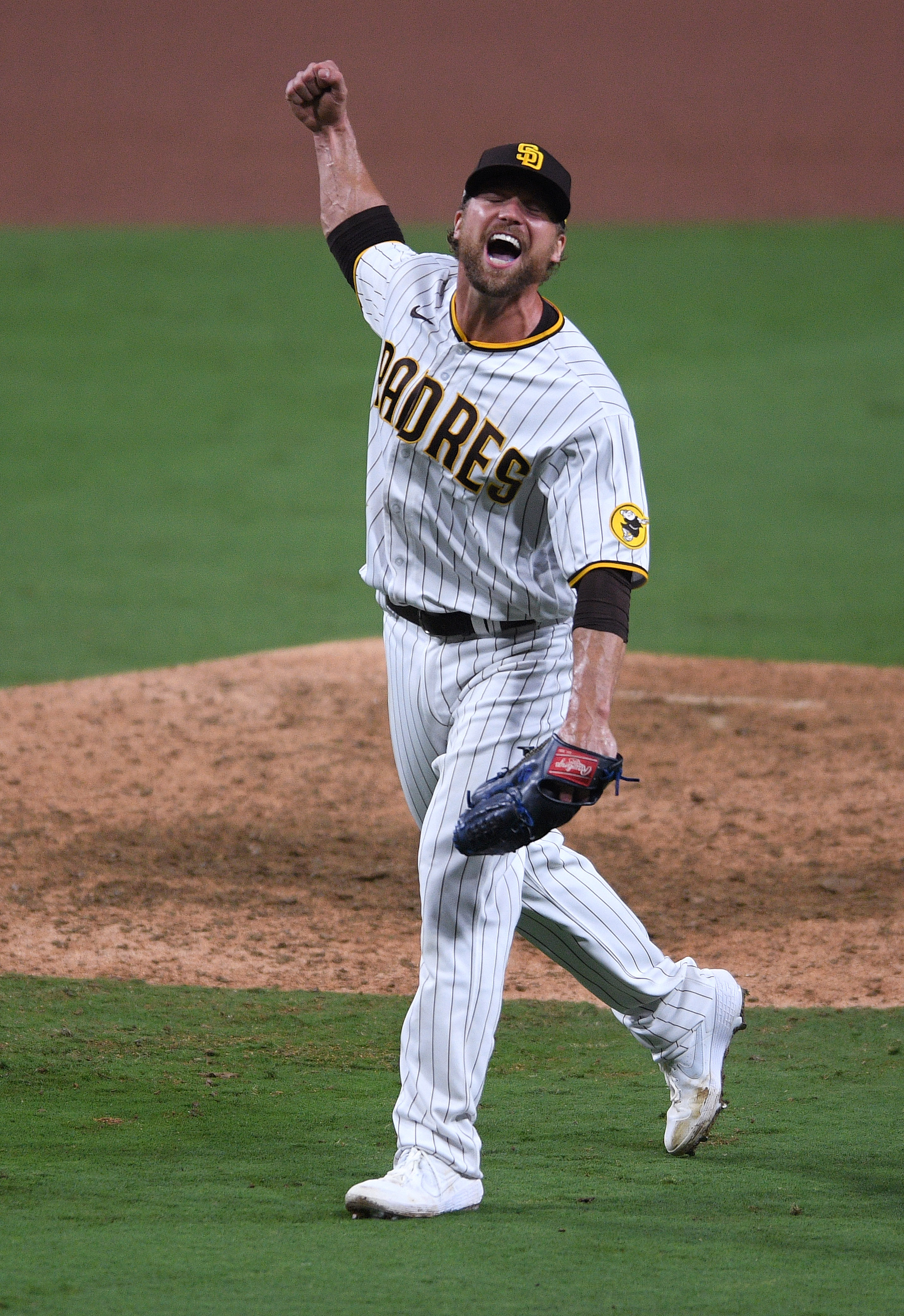
It’s a rather stunning development to see the Athletics of all clubs strike this pact. Oakland has spent the offseason in a veritable state of dormancy, only jumping into the free-agent market after first shedding a notable chunk of cash in the deal that shipped Khris Davis and his $16.75MM salary to Texas. Even then, the additions made by the club have been small-scale in nature: one-year deals with Yusmeiro Petit ($2.55MM), Sergio Romo ($2.25MM) and Mitch Moreland ($2.25MM).
The only indication to date that the A’s have been willing to spend near this level on a single player has been their $12.5MM offer to shortstop Marcus Semien, although The Athletic reported that offer came with as much as $10MM deferred over the course of an entire decade. The extent of deferrals in the Rosenthal deal isn’t yet known, but ESPN’s Jeff Passan tweets that a portion of that $11MM is indeed deferred beyond the 2021 season. Passan adds that Rosenthal and agent Scott Boras initially set out seeking a four-year pact, but when the multi-year interest they received didn’t meet those lofty expectations, Rosenthal eventually opted for a higher-value one-year deal.
Rosenthal, 30, was among the game’s most dominant relievers in 2020 — a remarkable rebound from a 2018-19 downturn that had brought his very future in the game into question. From 2012-17, Rosenthal was one of the National League’s best relievers, tossing 325 innings of 2.99 ERA ball and punching out 31.2 percent of his opponents while closing down games in St. Louis. He underwent Tommy John surgery in 2017, however, causing him to miss the entire 2018 season.
When he returned in 2019 with the Nationals, Rosenthal walked 15 of the 43 batters he faced and plunked another three while mixing in five wild pitches. He went to the Tigers and walked more than a quarter of his opponents there, too, before landing with the Yankees’ Triple-A club. Rosenthal faced five batters with the Yankees’ Scranton affiliate, walking three of them and hitting another.
The sudden case of the yips had many questioning whether he’d ever make it back from Tommy John surgery, but Rosenthal parlayed a minor league deal with the the Royals into the aforementioned dominant 2020 campaign that brought about this sizable one-year arrangement. Armed with a triple-digit heater and a rediscovered control of the strike zone, Rosenthal tossed 13 2/3 innings of 3.29 ERA ball as Kansas City’s closer before being traded to the Padres, where he closed out the year with 10 shutout innings of relief. Overall, the flamethrowing righty posted a 1.90 ERA and 2.31 SIERA with a powerhouse 41.8 percent strikeout rate and a strong 8.8 percent walk rate.
If Rosenthal can replicate that success in 2021, he could hit the market as a 31-year-old on the heels of a similar resurgence to that of the man he’ll effectively replace in Oakland: Liam Hendriks. The Aussie buzzsaw went from clearing outright waivers in 2018 to breaking out as one of MLB’s most dominant relievers in 2019-20. Hendriks cashed in on a $54MM guarantee this winter, and it stands to reason that another dominant year will position Rosenthal for that type of commitment and the lengthy multi-year deal he coveted as well.
It’s been a remarkable week for the Oakland bullpen, which not long ago looked to be a collection of question marks anchored by veteran lefty Jake Diekman. In the past seven days, however, they’ve acquired ground-ball machine Adam Kolarek from the Dodgers, re-signed iron man Yusmeiro Petit and inked slider specialist Sergio Romo as well. The A’s bullpen now looks like a deep, formidable group with the highly underrated J.B. Wendelken and the talented-but-still-inconsistent Lou Trivino now sliding down the ladder into lower-leverage spots.
The Athletics’ payroll, meanwhile, will rise to nearly $85MM — a fraction of what many clubs will spend in 2021 but at least within striking distance of their 2019-20 levels of spending. It’s hard to praise ownership too much when this recent spending spree was preceded by a salary dump and an insulting offer to their longtime clubhouse leader, but it’s better late than never to act like the contenders they should be.
Oakland won the American League West in 2020 and captured Wild Card berths in both 2018 and 2019. However, they’ve yet to ride this talented core — anchored by Matt Chapman, Matt Olson, Ramon Laureano and Semien — beyond the divisional round of postseason play. The core group is morphing a bit, with Semien now in Toronto and Jesus Luzardo perhaps emerging to lead the Oakland rotation, but the A’s still have control of Chapman, Olson and Laureano for multiple years. Adding Rosenthal, Petit, Romo, Moreland and Kolarek in a week’s time only supplements that core and gives the club a shot at its first full-season division crown since 2013.
Padres Extend Fernando Tatis Jr.
FEB 22: The Padres have announced their mega-contract with Tatis (via Twitter). Tatis will make $1MM in 2021, $5MM in 2022, $7MM in 2023, $11MM in 2024, $20MM apiece in 2025 and 2026, $25MM in 2027 and 2028, and then $36MM yearly from 2029 through 2034, per MLB.com’s Mark Feinsand (via Twitter).
FEB 17: The Padres have agreed to a historic 14-year deal with superstar Fernando Tatis Jr., according to Kevin Acee of the San Diego Union-Tribune (via Twitter). It is worth a guaranteed $340MM, Robert Murray of Fansided adds on Twitter. The deal provides Tatis with full no-trade rights, MLB.com’s Mark Feinsand tweets. There’s a $10MM signing bonus.
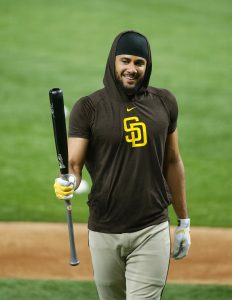
While the deal covers a staggering number of years, it’ll only take Tatis through his age-35 season. The young superstar only just celebrated his 22nd birthday.
This pact sets a record for pre-arbitration deals by a rather healthy margin. The great Mike Trout had held the record with a $144.5MM deal. In Trout’s case, of course, the contract covered only six seasons — until it was further extended a few years later. Tatis’s guarantee falls just shy of the $360MM of additional money Trout received in the second agreement. It’s such a monster deal, in fact, that it slots in as the third-largest of any kind in baseball history.
[The 20 Largest Contracts In MLB History]
While this deal won’t change the complexion of an increasingly loaded 2021 Friars roster, it makes for a bold statement of intent by the San Diego organization. The club could’ve sat back and enjoyed Tatis while waiting to see how its roster situation evolved. Instead, the Pads have effectively declared him the franchise cornerstone for the foreseeable future.
Tatis would have reached arbitration eligibility after the 2022 season, so he was still a full campaign away from securing serious earnings. The MVP Sports client had been slated to reach free agency after the 2024 season, at which time he’d have been marketing his age-26 and beyond years.
This deal represents the culmination of a fascinating series of developments involving Tatis. At the time the Padres acquired him — in what turned out to be an all-time heist of a deal — Tatis was noteworthy mostly because of his namesake father, former big leaguer Fernando Tatis. The younger Tatis quickly blossomed into one of the game’s most-hyped prospects, though some worried about his strikeout rate and ability to stick at shortstop.
[How Did The White Sox Trade Fernando Tatis Jr.?!]
At this point in the spring of 2019, the Padres appeared set to keep up a steady building process, with Tatis opening at the Triple-A level and trying to earn his way into the majors by mid-season. Instead, the club inked Manny Machado to a $300MM pact, then went on to promote Tatis to the MLB roster to open the season. That decision seemed to some a foolhardy gambit, as even a brief delay would’ve allowed the Friars to delay Tatis’s free agency by a full season.
Now that Tatis has joined Machado to form the most expensive left side of an infield in baseball history, it’s fair to wonder if the daring promotion helped set the stage. While Tatis’s agents gained added leverage in negotiations, the good will surely helped the small-market Pads convince Tatis to commit to the organization instead of holding out for a potential bonanza in free agency.
Though Tatis has logged just 143 MLB games to this point — the product of an injury and global pandemic — he has done nothing but impress. Through 629 plate appearances, he has produced at a healthy .301/.374/.582 clip (good for a 150 wRC+) with 39 home runs and 27 stolen bases. He not only improved his plate discipline but generated much greater defensive value in his sophomore season.
Padres GM A.J. Preller had already given fans of the organization ample reason for excitement — even if it’ll still take a herculean effort to take down the perennial favorite Dodgers. Now, the Friar faithful will have the chance not only to watch one of the game’s most entertaining players, but to do so knowing there’s a real chance he’ll be a lifetime franchise icon.
Photo courtesy of USA Today Sports Images.
Mets Sign Kevin Pillar
TODAY: Pillar’s deal was officially announced by the team.
FEB. 15, 10:18pm: Pillar will earn $3.6MM this year. There is a $2.9MM player option with no buyout or a $6.4MM club option with a $1.4MM buyout for 2022, per Mark Feinsand of MLB.com.
9:40pm: It’s a $5MM guarantee that could go to $10MM over two years, Heyman tweets.
7:57pm: It’s a one-year contract, Anthony DiComo of MLB.com reports.
7:38pm: The two sides have a deal, pending a physical, Andy Martino of SNY tweets. It’s expected to be a major league pact, Joel Sherman of the New York Post adds.
7:24pm: The Mets and free-agent outfielder Kevin Pillar “are in serious talks,” according to Jon Heyman of MLB Network. Pillar would be the second notable outfield addition in the past week for the Mets, who previously signed ex-Cub Albert Almora Jr.
Like Almora, Pillar would provide depth in a Mets outfield that, at least for now, is slated to start Brandon Nimmo, Michael Conforto and Dominic Smith in 2021. Of course that, could be subject to change if the Mets make another major acquisition by signing, say, Jackie Bradley Jr. – the top-ranked center fielder left in free agency – or swinging a trade for Cubs third baseman/outfielder Kris Bryant. Mets fans would probably prefer a high-profile move like that, but it’s possible the team will simply go into the year with the cast it has and a lower-cost pickup such as Pillar.
Now 32 years old, Pillar is best known for his run in Toronto from 2013-19, during which he established himself as a world-class defender in center field. Pillar spent most of 2019 as a Giant after they acquired him from the Blue Jays, and he divided last season between the Red Sox and Rockies. Statistically, Pillar’s defense isn’t at peak form (he combined for minus-6 Defensive Runs Saved and a 2.0 Ultimate Zone Rating from 2019-20), but he does carry experience at all three outfield positions.
Pillar has never been a huge offensive threat, but a team could certainly do worse than him as a reserve option. He’s a lifetime .262/.299/.408 hitter with 82 home runs and 88 stolen bases over 3,486 plate appearances. Pillar recorded a personal-best 106 wRC+ last season, when he slashed .288/.336/.462, hit six homers and swiped five bags in 223 PA.
Giants Sign Aaron Sanchez
FEBRUARY 21: The deal has been made official. The incentive structure breaks down as follows (per Maria Guardado of MLB.com): $250K apiece for reaching 16 and 18 starts, $500K each for starting 20, 22, 24 and 26 games.
FEBRUARY 17: The Giants have reached an agreement to sign righty Aaron Sanchez, reports Susan Slusser of the San Francisco Chronicle. It’s a $4MM deal with another $2.5MM in incentives, adds Slusser. Sanchez is represented by the Boras Corporation.
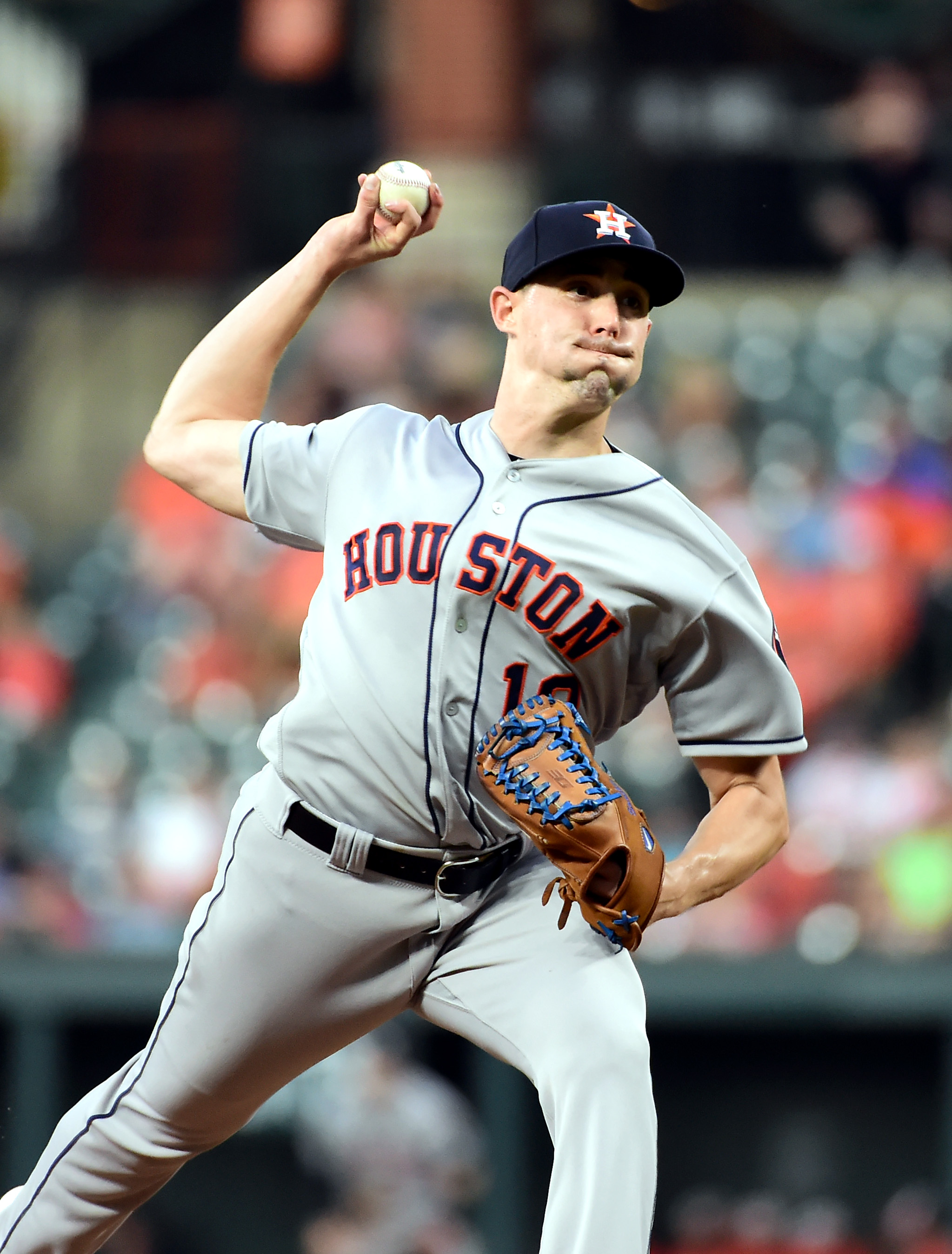
Sanchez, 28, was drafted 34th overall out of high school by the Blue Jays back in 2010 as a supplemental pick for the loss of free agent Marco Scutaro. He was still a few weeks shy of his 18th birthday upon being drafted. Sanchez’s path from Barstow, California to being drafted by the Jays was chronicled in this excellent read from Stephen Brunt of Sportsnet.ca a few years back.
Sanchez’s prospect status climbed as he ascended through the minors, with Baseball America praising his “premium velocity with an effortless delivery.” The Blue Jays eased Sanchez into the Majors in 2014 via the bullpen, and he even picked up three saves in his 24 appearances that year.
Marcus Stroman‘s unfortunate ACL tear paved the way for Sanchez to make the Jays’ rotation out of camp in 2015, but after a summer lat strain that year he returned to the ‘pen. The following year Sanchez again won the team’s fifth starter job out of spring training, and this time he ran with it. 2016 still stands as the best year of Sanchez’s career, as he posted a 3.00 ERA in 192 innings, making the All-Star team and finishing seventh in the AL Cy Young voting. In a year where the average starting pitcher managed a 20.2 K% and 7.7 BB%, Sanchez fell right around those marks at a 20.4 K% and 8.0 BB%. He did succeed in limiting exit velocity and keeping the ball on the ground. Despite concerns about Sanchez’s workload, which wound up increasing more than 100 innings over the prior year, the Blue Jays couldn’t bring themselves to pull him from the rotation despite a yearlong flirtation with the idea.
Sanchez would be limited to just eight starts in 2017 due to a blister/split fingernail that required four separate IL stints. Further finger issues held him to 20 starts in 2018, culminating in season-ending surgery. Sanchez battled through similar issues in 2019, making 27 starts on the season but averaging fewer than five innings per turn. Sanchez was not able to replicate his previous success, posting a 5.45 ERA, lackluster 18.6 K%, and unfortunate 11.7 BB% across 2018-19. By the 2019 trade deadline, the Blue Jays had seen enough, trading Sanchez to the Astros with Joe Biagini and Cal Stevenson for Derek Fisher. Fisher’s Jays story coincidentally came to an end this week with a trade to the Brewers.
While it was thought that the Astros might work magic with Sanchez’s curveball and its 91st percentile spin rate, especially after his debut for the club was the first six innings of a combined no-hitter, the righty quickly went down for shoulder surgery and was non-tendered after the 2019 season. Sanchez wasn’t heard from again until October 2020, when he held a showcase for 20 teams in Miami. Agent Scott Boras would go on to boast of a 2,700-2,800 RPM fastball, speaking of Sanchez’s intent to work as a starter in 2021. Sanchez must have shown well at a second showcase held this month, given the $4MM contract with the Giants. Indeed, Slusser notes that “the Giants have been paying attention to [Sanchez] all off season and took especial notice last week, when Sanchez hit 98 mph in a bullpen session.” Here’s the proof of that from Sanchez’s Instagram.
After another reclamation project gone well, Kevin Gausman, accepted his $18.9MM qualifying offer, the Giants went to work on their rotation this winter by adding Anthony DeSclafani for $6MM (a teammate of Sanchez’s on the 2012 Lansing Lugnuts) and Alex Wood at $3MM on one-year free agent contracts. While Sanchez will presumably round out the team’s starting five, no team is getting by with five starters – not this year, and not with this group. The club also added Nick Tropeano on a minor league deal today, and Logan Webb figures to be in the mix as well. Tyler Beede is expected to become an option around May after recovering from Tommy John surgery.
With pitchers and catchers already starting to report to spring training, there are still several rotation-worthy starting pitchers on the free agent market, including Jake Odorizzi, Taijuan Walker, Rick Porcello, Cole Hamels, and Mike Leake. It’s been an odd winter for starting pitching. Aside from Trevor Bauer, who signed for three years and $102MM, no starting pitcher has landed as much as $20MM. The last time fewer than three starting pitchers received a $20MM guarantee in an offseason was 2009-10, when only John Lackey and Randy Wolf achieved it.
Ian Desmond Opts Out Of 2021 Season
Rockies outfielder Ian Desmond is opting out of the 2021 season, at least temporarily. He made the announcement on his Instagram page (h/t to Robert Murray of FanSided).
“Over the last few months, I’ve had tough conversations. I’ve asked a lot of questions and done a lot of thinking. For now, I’ve decided to opt out of the 2021 season. My desire to be with my family is greater than my desire to go back and play baseball under these circumstances. I’m going to continue to train and watch how things unfold,” Desmond wrote as part of his statement.
Desmond also opted out of the 2020 season amidst concerns over COVID-19. Doing so meant forfeiting the prorated portion of his $15MM salary last year. Now in the final guaranteed season of his contract, Desmond would’ve been in line for an $8MM salary this season. The well-respected veteran will instead exercise his right to step away from the game. His statement leaves open a potential return later in the season, but it’s certainly possible this marks the end of Desmond’s tenure in Colorado. His contract contains a $15MM club option for 2022, but that’ll certainly be bought out, even if Desmond returns to the field at some point this year.
As Joel Sherman of the New York Post points out (on Twitter), the Rockies are the only team in the league not to have signed a major league free agent this offseason. It remains to be seen whether the club plans to reinvest Desmond’s forfeited salary elsewhere on the roster. His departure will open a spot on the Rockies’ 40-man roster, which was previously full.
Over twenty players stepped away from the sport last season. With COVID-19 rates in many parts of the United States higher now than they were last summer, it’s possible other players share Desmond’s concerns about returning to the field at this time.
Mets Sign Taijuan Walker
TODAY: The Mets have officially announced Walker’s deal. Noah Syndergaard has been placed on the 60-day injured list to open up a roster space for Walker.
FEB. 19, 8:14am: It’s a two-year, $20MM deal with a player option for a third season, Joel Sherman of the New York Post reports (Twitter links). The deal, which is still pending a physical, will pay Walker $10MM in 2021 and $7MM in 2022. The player option is at a base of $6MM and can rise to $8.5MM via escalator clauses based on Walker’s performance. There’s a $3MM buyout on the option, should Walker decline, making for a total of $20MM in guarantees.
7:04am: The Mets and free-agent right-hander Taijuan Walker have agreed to terms on a contract, tweets SNY’s Andy Martino. The Excel Sports client will step into the rotation alongside Jacob deGrom, Carlos Carrasco, Marcus Stroman and David Peterson.
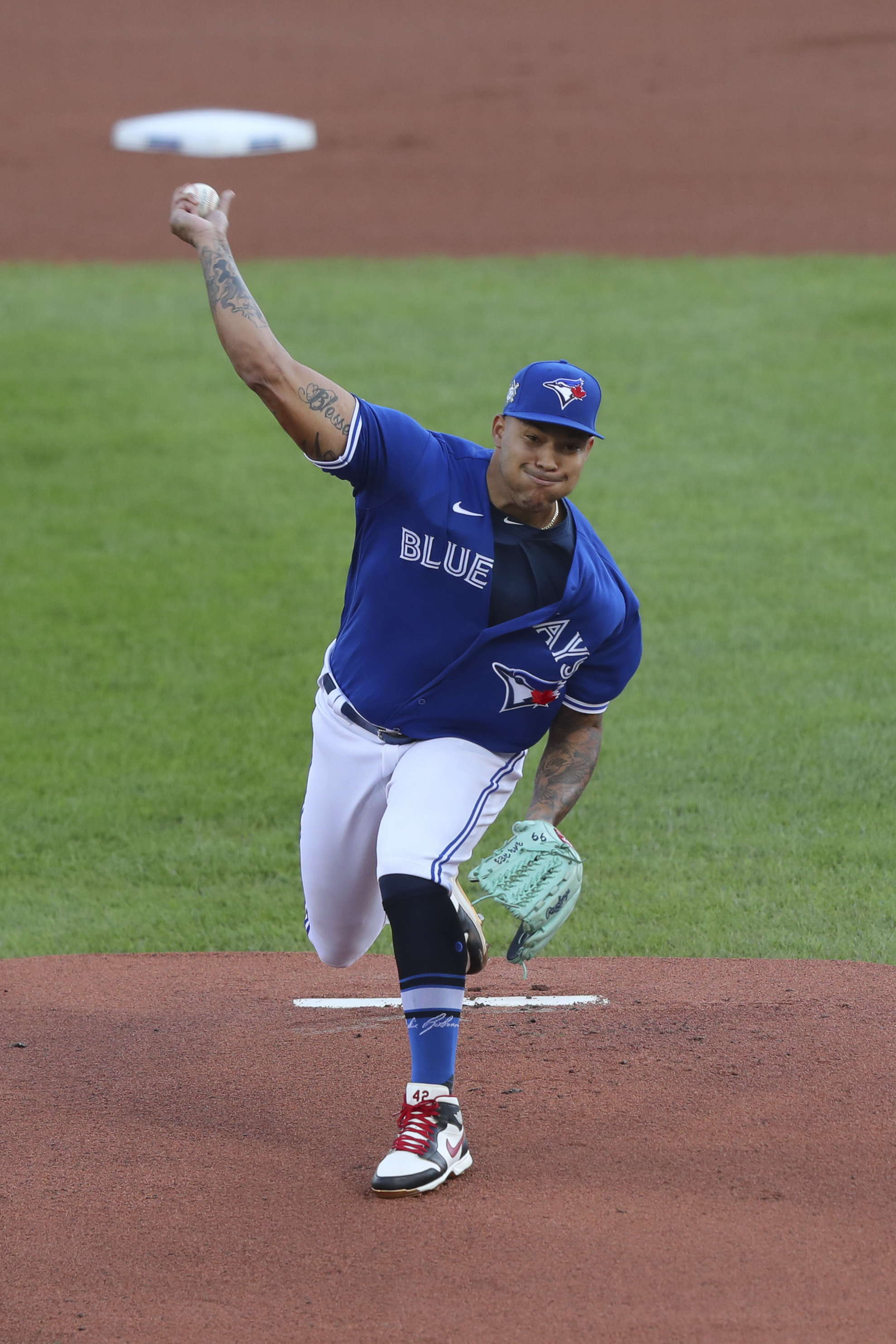
Heading into his age-28 season, Walker was the youngest established starter available in free agency. The former top prospect made his big league debut with the Mariners just two weeks after his 20th birthday back in 2013 and solidified his place in the Seattle rotation in 2015 at 22 years of age. The M’s traded Walker to the D-backs in a high-profile 2016 deal also including Ketel Marte, Jean Segura and Mitch Haniger, and he went on to have his best season in 2017: 157 1/3 innings of 3.49 ERA ball.
Walker went down with a torn ulnar collateral ligament in 2018, however, and the resulting Tommy John surgery wiped out nearly his entire season. He was on the comeback trail in 2019, but those efforts were derailed by a strained shoulder capsule that limited him to one inning. After pitching a combined 14 innings in 2018-19, Walker was non-tendered by the D-backs and returned to the Mariners on a low-cost, one-year deal in free agency.
The signing worked out well for the Mariners, who parlayed five solid starts from Walker into a deadline trade with the Blue Jays that netted outfield prospect Alberto Rodriguez (currently Seattle’s No. 24 prospect at Baseball America). Walker made six starts with the Blue Jays and pitched to a pristine 1.37 ERA with a 25-to-11 K/BB ratio over the life of 26 1/3 innings.
Overall, Walker’s 2.70 earned run average in 53 1/3 innings last year looked quite sound. However, despite that impressive mark, his age and his former top prospect pedigree, Walker appears to have had a difficult time finding a club willing to meet his asking price this winter. There’s likely some good reason for that, as once looking past the ERA, the numbers aren’t nearly as appealing.
On his way to that 2.70 ERA, Walker benefited from a .243 average on balls in play and a slightly elevated 78.5 percent strand rate. His 22.2 percent strikeout rate was below the league average, as was his 39.1 percent ground-ball rate. The righty’s 93.5 mph average heater was down from its 95.1 mph peak, and his swinging-strike rate was among the lowest in the league (13th percentile, per Statcast). Fielding-independent marks like SIERA (4.60) and Statcast’s xERA (4.87) aren’t as bullish on Walker, who averaged just 4 2/3 innings per start in 2020.
Add in the elbow and shoulder injuries in 2018-19, and some trepidation from interested teams is understandable — but only to an extent. We’ve seen the free-agent market regularly pay upwards of $10-12MM per year on mutli-year deals to fourth starter types, and Walker ought to be at least that moving forward. His prospect pedigree, youth, velocity and raw stuff give him the upside to become quite a bit more than that as well.
With the Mets, Walker needn’t perform like anything more than a fourth starter, thanks to the talent they already have atop their starting staff. Of course, if he does take a step forward and pitch closer to last year’s ERA marks, an already impressive rotation will only look all the more formidable. With the newest agreement in place, the Mets have an enviable quintet of deGrom, Carrasco, Stroman, Walker and Peterson. Beyond that looms the return of Noah Syndergaard, who’ll ideally be ready for a summer return following his own Tommy John surgery last May.
Unlike in 2020, that group is backed up by considerable depth. Joey Lucchesi, Jordan Yamamoto, Sean Reid-Foley and Sam McWilliams were added to the 40-man roster via trade and free agency this winter, and prospects Franklyn Kilome and Thomas Szapucki will be able to work toward minor league readiness in a game setting. The Mets also added lefty Mike Montgomery and righty Jerad Eickhoff on minor league deals, and it’s conceivable that they could yet bring in some additional non-roster depth in Spring Training.
While it may not be quite the offseason Mets fans envisioned, it’s hard to look at the current roster and consider the offseason anything other than a substantial step in the right direction. New York’s marquee acquisition of Francisco Lindor and Carrasco will go down as its largest strike of the offseason, with free-agent acquisitions of Walker, James McCann, Trevor May, Jonathan Villar, Kevin Pillar, Aaron Loup and Albert Almora have deepened the roster.
The Mets didn’t shatter the luxury tax threshold as many expected when Steve Cohen purchased the team — they’d have done so had their near-deal with Trevor Bauer been completed — but Walker’s deal pushes their baseline payroll and their luxury-tax ledger both just shy of $200MM. It’s a franchise record for Opening Day payroll by a magnitude of roughly $40MM, setting the tone for future offseasons under Cohen’s ownership.
Dodgers Re-Sign Justin Turner
Feb. 19: The Dodgers have formally announced the signing of Turner to a two-year deal that runs through the 2022 season. Lefty Caleb Ferguson, who had Tommy John surgery last September, has been placed on the 60-day IL to open a 40-man roster spot.
Feb. 13: Justin Turner alerted the baseball universe of his return to Los Angeles. Pending a physical, the Vayner Sports client will re-sign with the Dodgers for two years, $34MM with a $14MM team option for a third year. The deal includes an $8MM signing bonus and built-in escalators that could raise the overall value of the deal to $52MM over three years, conditional to MVP voting.
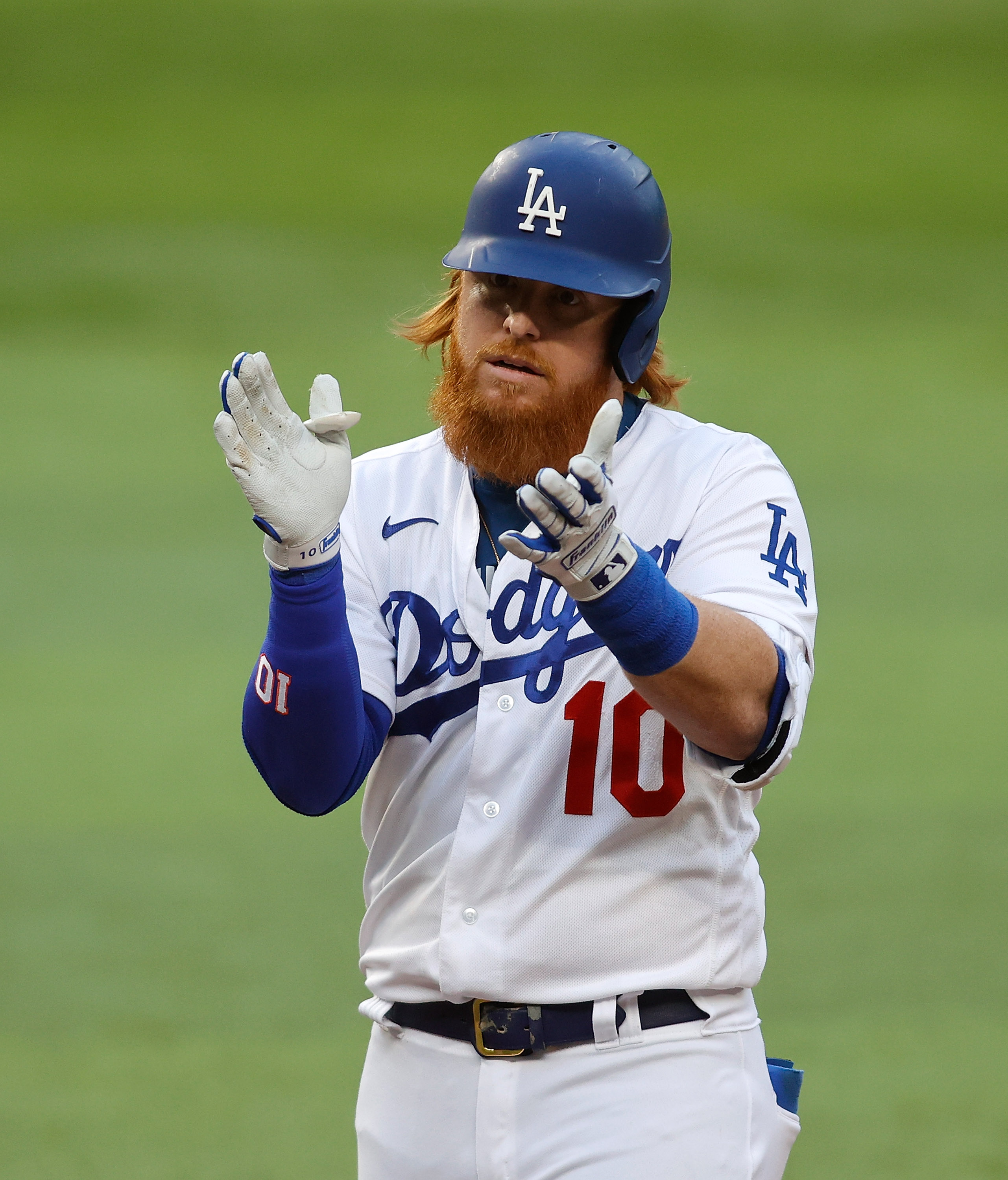
Turner returning to the Dodgers hardly counts as a surprise, though the scuttlebutt of late had pushed the narrative of a possible departure. Whether he actually came close to signing with the Brewers or another club is unclear. What we know is that Turner will return to the franchise where he made his name, became a superstar, fan favorite, and World Champion. The 36-year-old third baseman was an All-Star in 2017 and earned down-ballot MVP votes in each of 2016, 2017, and 2018. For his career, he owns a .292/.369/.469 line with 124 home runs and 29.5 bWAR.
His career famously started slow, however, as he languished through most of his twenties as a contact-first reserve infielder for the Orioles and Mets. As he arrived in Chavez Ravine, he brought with him just a .260/.323/.361 slash line over 926 career plate appearances. Perhaps most notably, he had shown almost no signs of power through his age-28 season with a meager .101 ISO.
The tale turned rapidly in LA as Turner produced a revelatory .340/.404/.493 line and 158 wRC+ in 2014, his first season with the Dodgers. The sudden uptick in potency at the plate was prompted by a swing change that he’d begun work on during his final season with the Mets, but it was only once he headed west that results populated his box scores. Turner has to this point produced 98.0 percent of his career bWAR since donning Dodger blue as a 29-year-old.
The relationship has benefited both sides, of course, as Turner has grown into a centerpiece of a dominant era of Dodger baseball. They have won the National League West every season that Turner’s been stationed at the hot corner and finally broke through to win the World Series last year – their third season as pennant winners together.
In returning, Turner is able not only to help defend their title, but to move together beyond an uncomfortable moment on the national stage that took place, unfortunately, at the crowning moment of the Turner/Dodgers partnership. Turner was pulled late in the clinching game of their World Series win because of a positive coronavirus test. Turner nonetheless returned and (often mask-less) took part in the post-game celebration.
The dilemma put upon Turner, the Dodgers, and the league was no doubt trying considering how unlikely it was that he had made it to that point. He is, after all, not only a gregarious and popular superstar on one of the league’s preeminent franchises, but he is a symbol of perseverance for the game, its young players and its fans. Nevertheless, it was an unfortunate disregard of protocols on the national stage.
Turner will now add another chapter to his Dodgers’ career. In returning to defend their title, Turner joins an arguably even-more-star-studded team than the one that defeated the Rays in six games last fall. With the addition of NL Cy Young winner Trevor Bauer to the rotation, as well as former AL Cy Young David Price, who opted out of 2020, the Dodgers boast one of the more decorated rotations in recent memory. All-time great Clayton Kershaw remains at the top with young phenom Walker Buehler. Julio Urias, who closed out the World Series, rounds out their likely starting five.
According to Cot’s Baseball Contracts, the Dodgers’ CBT payroll now stands around $254.7MM. That means they’ve passed the base tax threshold ($210MM), the first surcharge threshold ($230MM) and the second surcharge threshold ($250MM). MLBTR’s Tim Dierkes calculates the team’s projected tax amount at about $13.8MM, but that’s only if their payroll holds at this level. The second surcharge threshold is especially steep, as any dollar spent beyond $250MM is taxed at 62.5%. Furthermore, finishing the season above $250MM also carries the penalty of the team having its highest available draft pick next year moved back by ten places. It’s plausible the Dodgers will attempt to get back under that line, perhaps by trading Joe Kelly and his $8.33MM CBT hit.
Wherever the Dodgers’ 2021 payroll lands, it’s highly likely they’ll be a tax payor of some sort, landing past that first $210MM line for the first time since 2017. Dodgers president of Baseball Operations Andrew Friedman managed to get the team’s payroll south of $210MM in each of the 2018 and ’19 seasons after the club paid the luxury tax from 2013-17. The Dodgers’ actions this winter serve as a reminder that the $210MM threshold is not a salary cap, especially for a team that gets classified as a first-time CBT payor after “resetting” previously. The tax rates are higher for second and third-time payors, which is presumably why the Yankees, Astros, and Cubs seem to be trying to stay below $210MM. Why any other big market team would treat that number as a salary cap is harder to explain.
Turner tweeted news of his return himself tonight, though Jorge Castillo of the LA Times (via Twitter) chipped in with confirmation. Jeff Passan of ESPN (via Twitter) first had the deal in the $30MM range, while MLB Network’s Jon Heyman provided the specific two-years, $34MM number, and the Athletic’s Ken Rosenthal added the club option for 2023 and $8MM signing bonus, as well as later specifics. Mike DiGiovanna of the Los Angeles Times contributed to dollar value of the team option (via Twitter).
Athletics Re-Sign Yusmeiro Petit
Feb. 19: The A’s have officially announced the signing. Oakland opened a 40-man roster spot by placing right-hander Frankie Montas on the Covid-19 related injury list. A’s manager Bob Melvin revealed this week that Montas had tested positive for Covid-19 (link via Shayna Rubin of the San Jose Mercury News). He’s been dealing with symptoms and will be delayed in his arrival to Spring Training.
Feb. 14: The Athletics have re-signed right-hander Yusmeiro Petit to a one-year contract, The Athletic’s Ken Rosenthal reports (Twitter link). The deal will be official once Petit passes a physical. MLBTR’s Steve Adams reports that Petit will earn $2.55MM in guaranteed money, with another $450K available in incentive bonuses. Petit is represented by Godoy Sports.
Petit returns for his fourth season with Oakland, a tenure that has been nothing but successful for both parties. Petit has a 2.73 ERA over 197 2/3 innings in an A’s uniform, and has been a workhorse out of the bullpen — 154 appearances in 2018-19 and then 26 appearances during the shortened 2020 season.
Petit is far from a Statcast darling and doesn’t record many strikeouts, as evidenced by his below-average K% over the last three years. However, Petit’s 4.14% walk rate over that same stretch is elite, and he doesn’t allow much hard contact. All in all, Petit has continually outperformed his peripherals; his 3.89 SIERA from 2018-20 is over a run higher than his actual ERA over his past three seasons.
Not that many free agent relievers drew a ton of attention this winter, but there wasn’t much in the way of public buzz about Petit, perhaps due to his advanced metrics and his age (36). The righty previously inked a two-year, $10MM deal with Oakland in November 2017 that ended up being a three-year, $14.5MM pact after the Athletics exercised their club option on Petit for the 2020 season.
Between Petit and new acquisitions Sergio Romo and Adam Kolarek, Oakland has suddenly added a lot of bullpen reinforcement over the last three days. Relief pitching was a major strength for the A’s in 2020 but it was a position that needed to be addressed since Liam Hendriks and Joakim Soria departed in free agency.