
Ender Inciarte Will Not Return To Braves For NLDS
The Braves have shut down outfielder Ender Inciarte from physical activity, manager Brian Snitker told reporters including Gabe Burns of the Atlanta Journal-Constitution (via Twitter). He’s not going to be a part of the team’s upcoming divisional series roster.
Inciarte had hoped to appear in the team’s final series of the regular season. But it didn’t go well when he tested out his injured hamstring today. The decision was made that he simply won’t be ready when the NLDS gets underway on October 3rd.
Going without Inciarte isn’t a huge surprise at this point, and the impact is mitigated somewhat by the fact that Nick Markakis was able to return from his own significant injury. The club can still trot out Billy Hamilton in a run-and-glove role, too, though he’s not to Inciarte’s standard with the bat.
At this point, at least, the Atlanta organization isn’t ruling Inciarte out for a hypothetical championship series round return. But he’ll need to rest up and test the hammy once more. And it’ll take a bit of a leap of faith to activate him at that point, given the risk of aggravating the injury and the fact that he hasn’t seen live game action in months.
Red Sox Aim To Get Under Luxury Line In 2020, Seek Outside GM
In eye-popping late-September news, the Red Sox top brass told reporters that they aim to get under the luxury tax line for the 2020 campaign. Alex Speier of the Boston Globe (Twitter feed) is among those covering the fascinating statements of principal owner John Henry, chairman Tom Werner, and president/CEO Sam Kennedy.
There’s loads to unpack here, but the payroll comment is of particular note, because the Boston organization spent over $230MM in each of the past two seasons and already has over $150MM (as calculated for competitive balance tax purposes) committed for 2020 — before accounting for expensive arbitration raises for Mookie Betts, Jackie Bradley Jr., and Eduardo Rodriguez.
Dipping under the luxury line to re-set the tax penalty would mean getting south of $208MM. That’s simply not going to be possible without some notable roster changes, even with a number of players departing via free agency. J.D. Martinez is an obvious wild card here, as he’d open a big chunk of change if he opts out of his deal, but that’d also leave a significant hole in the lineup.
So, does that mean Betts is destined to depart? Not at all, per the organizational leadership. Though Betts has made clear time and time again that he’s not interested in an extension, Werner says the team intends to actively pursue further extension talks this winter — and has already reached out to Betts’s agent to get the ball rolling.
Even if Betts remains on the roster, at least for one more campaign, it’s fair to wonder whether the Red Sox are set to begin some kind of reloading effort. The trio denied that they see the upcoming season as a moment to step back from full competitiveness. It remains difficult to imagine a complete rebuild, but it’s equally hard to imagine how the club will compile a truly competitive roster while also drawing down payroll so significantly.
Needless to say, making the difficult tradeoffs that will be required promises to be quite tricky. While the Red Sox say they have ample confidence in the four executives currently guiding the baseball operations department following Dave Dombrowski’s ouster, they plan to seek an experienced general manager to take the helm. That sets up a fascinating outside hiring search, with the organization seeking a tried-and-true baseball ops leader.
The circumstances of Dombrowski’s departure remain a hot topic, particularly given the notable gap between the event and today’s full-scale media availability. Henry explains that differences arose in the immediate aftermath of last year’s World Series win and couldn’t be bridged throughout the ensuing campaign. While some have wondered whether the upheaval at the top could compromise the Boston organization’s ability to lure whatever exec they set their sights upon, Werner suggested that’s not a concern held internally. “I consider this position to be one of the most coveted in all of sports,” he said.
MLBTR Chat Transcript: 9/27/19
Click here to read a transcript of today’s chat with host Jeff Todd.
Tim Wallach Will Not Return As Marlins Bench Coach
Veteran coach and long-time big leaguer Tim Wallach will step away from the Marlins at the end of the season, according to Jon Heyman of MLB Network (Twitter links). Wallach has served as the bench coach in Miami since the 2016 season.
Though the Marlins decided to retain skipper Don Mattingly, they’ll be on the look for a new second in command in the dugout. The split is entirely amicable, it seems. Per Heyman, Wallach would simply like to live nearer to his extended family.
Wallach is said to be willing to continue his coaching career elsewhere if it puts him closer to his native California. He had spent his prior coaching career with the Dodgers organization.
Jonathan Villar’s Second-Half Surge
Jonathan Villar‘s name was barely kicked around the rumor circuit prior to this year’s trade deadline, with the Cubs standing out as the only team reported to have shown much interest. That doesn’t mean that Villar wasn’t discussed with other clubs, of course. But when an affordable veteran ($4.825MM) with only one and a half seasons of control remaining on one of the game’s worst teams doesn’t change hands at the deadline, it’s likely that interest in him was generally tepid.
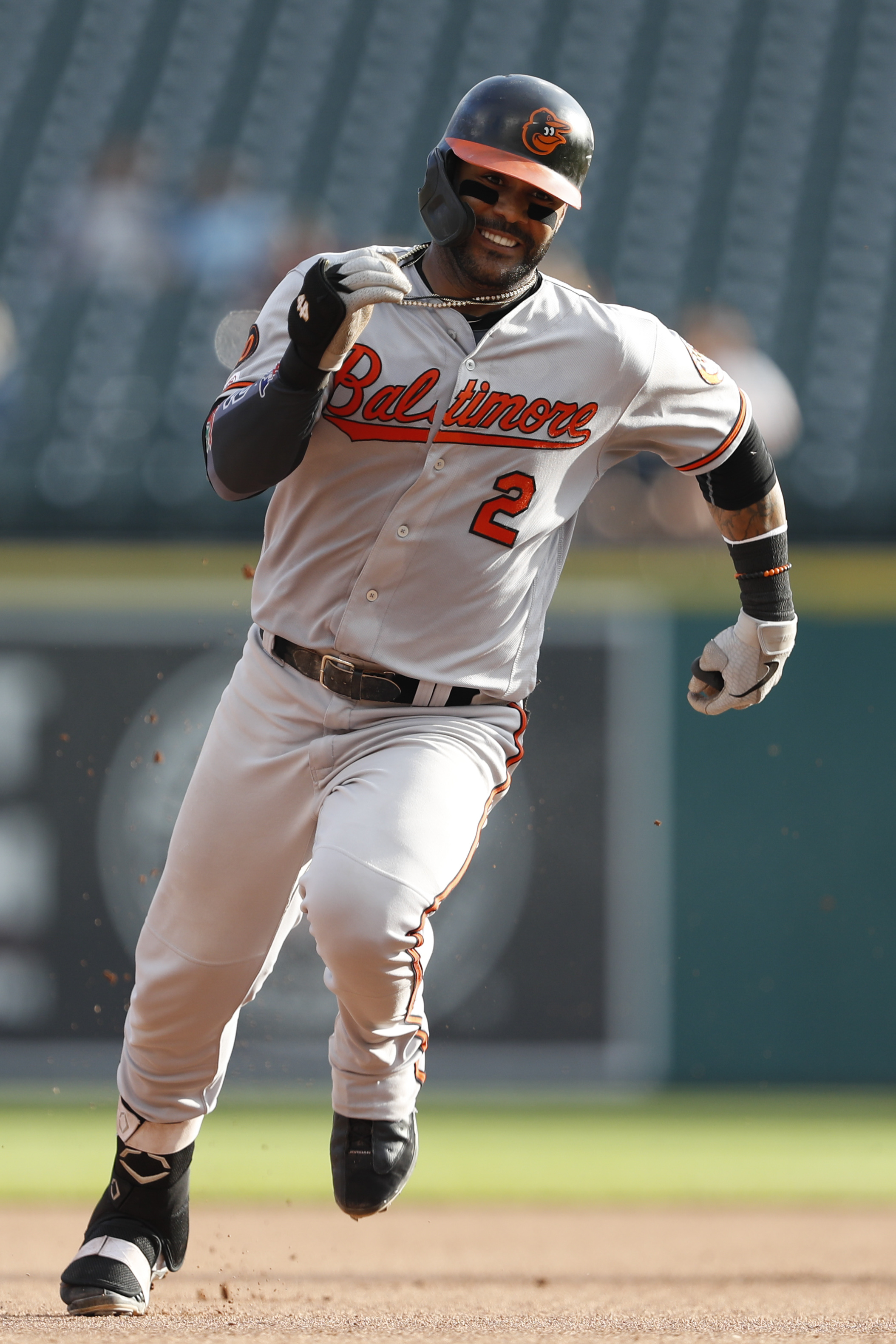
Really, there weren’t many infielders who changed hands at all on this year’s trade market. Jesus Aguilar, Scooter Gennett and Tony Kemp were traded largely for depth purposes. Prospects like Mauricio Dubon, Nick Solak and Josh Rojas were moved as hopeful long-term pieces. Among established middle infielders, Eric Sogard might’ve been the most consequential player traded. (Freddy Galvis later changed hands via August waiver claim.)
It stands to reason that not many teams were keen on making middle-infield upgrades, but that won’t be as true in the winter when all 29 other teams are taking a fresh look at their roster. And Villar has been nothing short of brilliant since the deadline passed, which certainly can’t hurt the Orioles’ chances of finding a team willing to part with some future in exchange for his final season of club control.
Villar, 29 next May, was already in the midst of a solid season in late July. On the morning of July 31, he carried a .266/.329/.425 batting line, 13 home runs and 23 steals on the season. For a middle infielder with ample experience at both positions — even if he’s not a great defender at either — that’s respectable output. Villar had a 98 wRC+ at that point, whereas the league-average second baseman was at 93. Essentially, Villar had been about five percent better than an average-hitting second baseman and about two percent worse than an average shortstop (100 wRC+ in 2019).
Since that time? Villar has improved across the board. He’s hitting .295/.364/.524 with 11 homers, nine doubles, three triples and 16 stolen bases (in 19 tries). Villar has punched out a slight bit more over the season’s final two months, but his overall strikeout rate on the season (24.9 percent) has improved for the second straight year since his career-worst 30.3 percent in 2017. His average exit velocity, hard-hit rate and launch angle are all below average but have all improved for the second straight season. And while Villar isn’t the burner one might expect for someone with his stolen-base totals, he’s been highly efficient across the past two seasons, going 74-of-88 in that regard (84.1 percent).
Thanks to the strength of his second half, Villar’s offensive output (108 wRC+) now checks in 15 percent better than the average second baseman and eight percent better than the average shortstop. Like many switch-hitters, he’s been better from one side of the plate (116 wRC+ as a lefty, 94 as a righty), but he hasn’t been completely overmatched regardless of which batter’s box he stands.
Villar earned $4.825MM in 2019, and he’ll take home a solid raise on that sum thanks to his workload (159 games, 700 plate appearances at the moment) and his career-best counting stats. But even if Villar matches the 89 percent raise he received in arbitration last year, his salary will still clock in at about $9.125MM. Compare him, at that rate, to the rest of the rest of the free-agent class, and Villar looks like a sound one-year pickup before qualifying as a free agent himself next winter. That’s nearly the same price at which Brian Dozier ($9MM) signed with the Nationals this past winter after an off year and only slightly more than Jonathan Schoop ($7.5MM) received from the Twins. Villar’s four wins above replacement (4.0 bWAR, 3.9 fWAR) outweigh that pair of veterans combined.
This could be a peak year for Villar, but he’s now been worth at least two wins in three of the past four seasons, making his 2017 flop with the Brewers look more and more like an outlier. The free-agent market at shortstop has a pretty intriguing rebound candidate in Didi Gregorius and a defensive stalwart in Jose Iglesias. Dozier, Schoop and perhaps Mike Moustakas will headline the options on the other side of the bag. It’s not an elite class.
Villar may not be elite himself, but he’s a solid regular player who’ll come with an affordable price tag. The Orioles aren’t going to receive a king’s ransom for him by any means, but he’s also someone who should command a decent prospect or two in return. In retrospect, some team probably should’ve paid that price back in July.
Examining A Potential Jorge Soler Extension
While it’s been a tough season for the Royals as a team, Jorge Soler has emerged as a bright spot in the heart of the lineup, hitting .262/.352/.555 with 45 home runs in a career-high 668 plate appearances. Long one of the game’s top hitting prospects, the now-27-year-old Soler (28 in February) has finally displayed the enormous raw power that garnered so much praise as a minor leaguer. Kansas City still controls Soler through 2021, but MLB.com’s Jeffrey Flanagan writes in his latest Royals inbox column that he’s “convinced” the team will offer Soler an extension this winter.
Soler’s current contractual status is a bit unique, as he signed a nine-year, $30MM contract with the Cubs back in 2012 when he was just 20 years old. International free agency wasn’t nearly as restricted then as it is now — under current rules, he’d have been limited to a minor league deal and likely garnered a signing bonus worth less than a quarter of that guarantee — and the Cubs committed both a lengthy term and sizable guarantee despite knowing he’d need to log time in the minors.
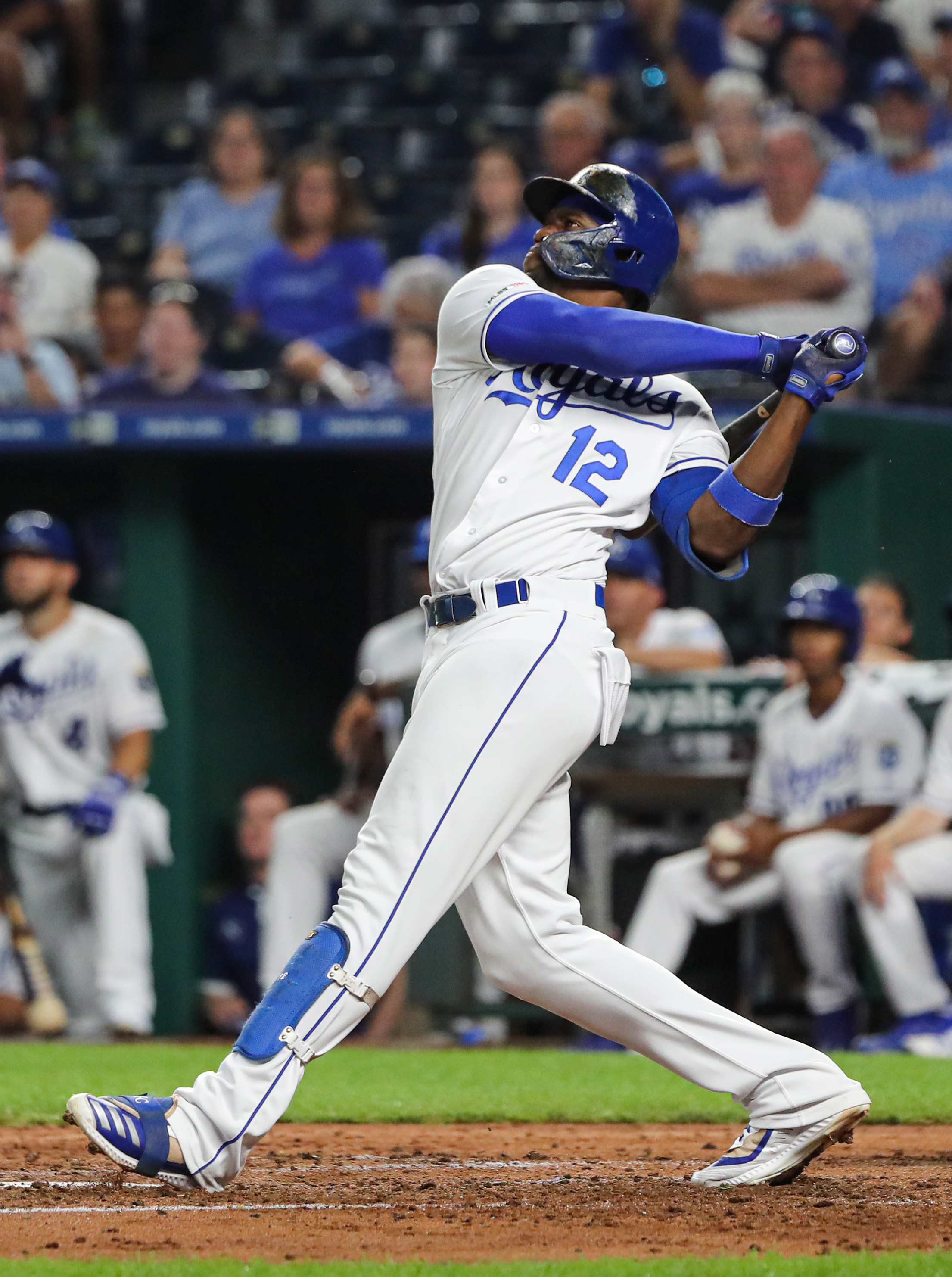
Soler is “signed” for the 2020 season at just $4MM, but he can opt out of that guaranteed salary and into MLB’s arbitration process this winter, as is the case with many Cuban defectors who signed Major League deals under the previous international free agency infrastructure. Based on his 45-homer campaign, he’s a lock to do just that. Arbitration raises for international players who opt out of this type of arrangement haven’t always been as steep as one might expect, but Soler will clearly top a $4MM salary. And since he’d be arb-eligible again in 2021, his salary for that season would be dependent on the size of the raise he gets in arbitration this winter.
All of that would be rendered moot in the event of a new long-term arrangement, though. Soler and the Royals will surely be talking contract when arbitration figures are exchanged in January, and that seems like a reasonable point at which the two sides could avoid a particularly tricky arbitration case with a multi-year arrangement. If not then, Spring Training extensions are commonplace.
There’s good reason for both parties to be amenable to a deal. Soler has banked a substantial sum in his career already but has yet to lock in a multi-year deal that pays him anywhere near open-market prices. The Royals, meanwhile, are aiming for a return to contention in 2021, and losing their top slugger at the end of that season would be a step backward. Soler is currently on track to become a free agent in advance of his age-30 season, so the Royals would be acquiring some additional prime years in a theoretical long-term deal.
The price of Soler’s would-be free-agent seasons is up for debate. Nelson Cruz has played each of the past five seasons (2019 included) for an annual rate around $14.25MM. He was considerably older than Soler when he signed a four-year, $57MM deal with the Mariners and his most recent one year, $14.3MM deal with the Twins. Edwin Encarnacion secured a $20MM annual rate in his three-year deal with the Indians — a contract that began with his age-33 season. Both right-handed sluggers had considerably longer track records of productivity than does Soler when they signed their contracts, though, and both had the benefit of an open-market setting. Soler didn’t even log a full big league season with Kansas City in either 2017 or 2018, posting a combined .228/.322/.403 batting line through 367 plate appearances across those two years.
Any power hitter’s production in 2019 is also going to be met with some skepticism as a result of this year’s explosive ball. That’s not to say the Royals should expect Soler to turn into a pumpkin when the clock strikes midnight on the 2019 season, but they’d be justified in pondering to what extent his power might scale back if the 2020 ball is more in line with previous seasons.
The length of an extension, of course, will be the other key part of the debate. Recent extensions for players with between four and five years of service time include Randal Grichuk and Jean Segura, both of whom signed away three free-agent seasons in addition to their remaining two arbitration years. Segura’s deal included an option for another year. In the case of Soler, who has a limited track record and notable injury history, a contract that exceeds five seasons in length seems like a reach. A total of five guaranteed years seems attainable.
Perhaps the biggest wild card in forecasting a possible extension value for Soler lies in the how his arbitration seasons are valued. As we saw with Jose Abreu, Yasiel Puig and others, this type of contract is handled atypically in arbitration. Abreu hit .293/.353/.468 with 25 home runs the year before he opted into arbitration, and his salary only rose from $10MM to $10.825MM. A year later, he received a raise barely north of $2MM after posting an outstanding .304/.354/.552 slash with 33 homers. Puig, meanwhile, opted into arbitration last winter when he reached five-plus years of service time and, working from a smaller 2018 base salary of $6.5MM, jumped up to $9.7MM. He’d have earned $7.5MM had he stuck with his initial contract.
Depending on how Soler’s arbitration seasons are valued, Grichuk’s five-year, $52MM contract could be a particularly relevant comparison. They’re different types of players, of course, but their final two arb seasons could fall within the same ballpark. The roughly $13MM annual rate at which Grichuk’s free-agent seasons were valued in his extension could also be a point of reference Soler’s camp seeks to top; doing so would put him in Cruz territory for the average annual value of his free-agent seasons. I’d imagine Soler would do a bit better than Grichuk in terms of overall guarantee, but something in that general vicinity seems like a plausible landing point for the burgeoning slugger.
Managerial Rumors: Angels, Callaway, Bochy
The Padres have already moved on from skipper Andy Green, whereas Ned Yost has announced that this’ll be his final year managing the Royals. There’s been some recent chatter surrounding the fate of Pirates manager Clint Hurdle, as well, which stemmed largely from none other than Hurdle himself. It’s the time of year that’s typically filled with managerial/coaching/front office turnover, and there won’t be any shortage of rumblings on that front over the next several days. Here’s some of the latest from that arena…
- Although Ken Rosenthal of The Athletic recently suggested that the Angels would “consider” moving on from Brad Ausmus after just one season in order to pursue Joe Maddon (should he become available, as many expect), Maria Torres of the Los Angeles Times writes in her latest Angels mailbag column that Ausmus is will be back in 2020. Torres adds that she’s received no indication that any members of the coaching staff are in particular danger of being replaced, either. Ausmus is signed through the 2021 season under a three-year contract he agreed upon just last offseason.
- The Mets‘ second-half Wild Card push fell short but was enough to at least raise speculation about Mickey Callaway surviving the offseason and returning for a third year. Nevertheless, SNY’s Andy Martino writes that multiple people connected to the team will still be surprised if Callaway is retained after the season. New York won’t make any final announcement on the matter until after the season has wrapped up, however, and team decision-makers are expected to discuss the manager’s future into early next week. Callaway himself campaigned a bit for his job prior to last night’s loss, per Mike Puma of the New York Post, telling the Mets beat: “I think a manager’s job is to get guys going in a direction and I think these guys never wavered from that, so I am definitely proud about that. … I understand the rigors of the job and I try to deal with it the best I can and try to stay even-keeled for the organization’s sake and for our players’ sake.”
- There’s been speculation that Bruce Bochy could pursue other managerial jobs once he steps away from the Giants — some from his own players, even — and the future Hall of Famer discussed that speculation with John Shea of the San Francisco Chronicle this week. While Bochy doesn’t have any immediate plans to seek out other opportunities, he conceded that there’s no telling what the future holds. “Later on, when you get away from the game, who knows how you’ll react?” Bochy asked rhetorically. “I’m good with my call. I’d be lying if I didn’t say it’s been tough here at the end of the season realizing it’s ending. No, I’m fine with it. I can’t tell you what’s going to happen in the future because I don’t know.”
Quick Hits: Pillar, Mets, White Sox
Whether the Giants tender outfielder Kevin Pillar a contract during the offseason “will serve as a clear referendum on how married to the metrics Farhan Zaidi’s baseball operations group will be,” Andrew Baggarly of The Athletic writes (subscription required). The Giants’ Zaidi-led front office acquired Pillar from Toronto in April, though the club could move on from him within the next couple months if it decides he’ll be too pricey to keep. Pillar’s making an affordable $5.8MM this year, but he’ll earn an appreciable raise over that sum during his last trip to arbitration because of his counting stats (631 plate appearances, 21 home runs, 86 runs batted in, 81 runs, 13 stolen bases). Those are aesthetically pleasing numbers, which can’t be said of the .257/.284/.430 batting line or the 83 wRC+ Pillar has posted. And while the soon-to-be 31-year-old Pillar has rightly been regarded as a marvelous defender throughout his career, advanced metrics haven’t been that bullish on him the past couple seasons (zero DRS, plus-1.2 UZR between center and right this year).
Pillar realizes the new-school turn that baseball’s front offices have taken could spell doom for his tenure as a Giant. He told Baggarly he wants to stay in San Francisco, but he acknowledged that “my future’s kind of up in the air.” Baggarly’s piece is worth a full read for more quotes from Pillar, a couple of his teammates and manager Bruce Bochy in regards to the high impact they believe he has made as a Giant.
Checking in on a pair of other MLB clubs…
- Mets first baseman/corner outfielder Dominic Smith will attempt to add center field to his list of positions next year, Tim Healey of Newsday relays. Smith, who has already slimmed down since he debuted in the majors in 2017, will spend the offseason getting in even better shape in order to become a viable option at the outfield’s most challenging spot. Whether Smith will play another game for the Mets after this season is in question, though, with Healey noting the 24-year-old could be a trade chip over the winter. NL Rookie of the Year shoo-in Pete Alonso occupies Smith’s primary position, first base, while the Mets count Michael Conforto, Brandon Nimmo, Jeff McNeil and J.D. Davis (not to mention the injured Yoenis Cespedes) among their other corner outfield-capable players.
- White Sox right-hander Dylan Cease‘s season came to an early end when the club made him a late scratch from his scheduled start Thursday. Cease is dealing with a hamstring issue, one that will require an MRI on Friday, Scott Merkin of MLB.com tweets. The touted 23-year-old wrapped up his debut campaign with a 5.79 ERA/5.19 FIP, 9.99 K/9 and 4.32 BB/9 in 73 innings.
- Righty Michael Kopech, another of the White Sox‘s coveted young arms, didn’t pitch at all this year after undergoing Tommy John surgery last September. Now, though, the flamethrowing Kopech is anticipating what he hopes will be a normal spring training. “I am as ready I can be right now,” Kopech said (via Bruce Levine of 670 The Score). “I have done everything I can to prepare. It has been a long time coming. I am ready to go for next spring.” Kopech should have a shot to join the returning trio of Cease, breakout star Lucas Giolito and Reynaldo Lopez in the White Sox’s season-opening rotation in 2020.
Felix Hernandez: “I’m Not Retiring”
Mariners legend Felix Hernandez may have taken the ball for the last time as a member of the organization on Thursday. In what seems likely to go down as his goodbye to the M’s franchise, King Felix threw 5 1/3 innings of three-run ball against the Athletics before an emotionally charged exit from the field in Seattle.
Even though Hernandez’s phenomenal tenure as a Mariner may have just drawn to a close, the right-hander hopes his career hasn’t. Hernandez told Greg Johns of MLB.com and other reporters after the game that his goal is to pitch in 2020.
“We’ll see if I can find a job. I’m not retiring,” the 33-year-old said.
For the extreme majority of his career, it would have been ludicrous to wonder if Hernandez was capable of landing a job in the majors. Unfortunately, though, that’s no longer the case for the longtime ace, six-time All-Star and one-time AL Cy Young winner.
Hernandez inked his current contract – the seven-year, $175MM extension he signed in 2013 – at the height of his powers, but injuries and the significant amount of mileage on his arm have taken their toll over the past couple seasons. In fact, since 2018, no starter with at least 200 innings has posted a worse ERA (5.84) or a higher FIP (5.41) than Hernandez. He ran up an even uglier 6.40 ERA/6.01 FIP across 71 2/3 innings this season, during which shoulder problems kept him out from the first half of May until the second half of August.
Based on the rough turn Hernandez’s production has taken of late, it appears the pending free agent will be in line for a minor league contract in the offseason (if anyone signs him, that is). But if Thursday proves to be the final time Hernandez takes a major league mound, it’ll count as one of the most memorable sendoffs the game has seen in recent history.
Francisco Liriano Plans To Pitch In 2020
Set to turn 36 next month, Pirates left-hander Francisco Liriano hopes to keep pitching for a couple more seasons, Stephen Nesbitt of The Athletic reports (subscription required). There’s no word on whether the Pirates are interested in re-signing the pending free agent, though.
Liriano could be days from wrapping up his second stint with the Pirates, who inked him to a minor league contract last February. While the well-traveled Liriano was a starter (and a good one at that) during his previous run with the Pirates from 2013-16, he has settled into a full-time relief role this season.
Pittsburgh’s decision to buy low on a Liriano reunion and use him in its bullpen has worked out for both parties. He earned a roster spot out of camp and has since logged 69 innings (which paces all Pirates relievers) of 3.39 ERA ball with 8.09 K/9, 4.43 BB/9 and a 49.2 percent groundball rate. ERA indicators FIP (4.54), xFIP (4.93) and SIERA (4.76) suggest Lirirano has been fortunate to prevent runs at such a useful clip, but it’s worth pointing out he has done so by inducing harmless contact more than the vast majority of major league hurlers. Liriano’s infield fly percentage (15.2) sits 22nd among all of the game’s qualified relievers, while he ranks in the league’s 99th percentile in average exit velocity against (84.5 mph) and hard-hit percentage (28.7), according to Statcast.
Assuming Liriano remains a reliever going forward, it doesn’t seem he’ll be fazed by the three-batter minimum rule that MLB will implement in 2020. That could push southpaw relievers who struggle versus right-handed hitters out of the bigs, but Liriano has done a satisfactory job retiring them. Righties have posted a .309 weighted on-base average against Liriano, which isn’t a great deal higher than the .295 mark lefties have managed.
Despite his success this year, Liriano obviously isn’t going to come at a high cost as a free agent. Liriano has earned a $1.8MM salary this year, and if he does land a guaranteed contract during the offseason, the value doesn’t seem likely to stray far from that neighborhood.