
Tim Raines, Jeff Bagwell, Ivan Rodriguez Elected To Hall Of Fame
Tim Raines, Jeff Bagwell and Ivan Rodriguez have been elected to the Major League Baseball Hall of Fame, per an announcement from the Baseball Writers Association of America (full balloting available at that link). Both Raines and Bagwell had to wait for their enshrinement among baseball’s all-time elite, as Raines was on his 10th (and final) ballot this year, while Bagwell was on his seventh. Rodriguez, meanwhile, will receive the call to Cooperstown as a first-ballot Hall of Famer — just the second catcher to ever receive that honor (joining the great Johnny Bench).
Raines, now 57, spent the majority of his career with the Expos, suiting up for Montreal in 13 of the 23 seasons during which he played a Major League game. One of baseball’s greatest leadoff hitters during his peak, the former fifth-round pick played in 2502 Major League games and tallied 10,359 plate appearances while batting .294/.385/.425 with 170 home runs, 808 stolen bases, 1571 runs scored and 980 runs batted in. Not only did Raines rack up stolen bases in bunches during his career — including four straight league-leading seasons of 71+ steals in 1981-84 — he was also extremely efficient in doing so, as evidenced by a career 84.6 percent success rate. The seven-time All-Star spent the bulk of his career playing left field, though he did have cameos in center field and at second base over the life of his illustrious career. Baseball-Reference pegs that career at 68.4 wins above replacement, while Fangraphs credits him for 66.4 WAR.
Now 48 years of age, Bagwell spent his entire 15-year career in an Astros uniform and is widely regarded as one of the greatest Astros of all time (if not the greatest). In 2150 games and 9431 plate appearances, Bagwell batted .297/.408/.540 with 449 home runs, 202 stolen bases, 1529 RBIs and 1517 runs scored. Bagwell was a near-unanimous (one vote shy) National League Rookie of the Year in 1991 when he batted .294/.387/.437 as a 23-year-old, and he was the unanimous NL MVP in a strike-shortened 1994 season that saw him hit .368/.451/.750 with 39 homers and a league-leading 116 RBIs. Bagwell earned four All-Star nods, a Gold Glove at first base and three Silver Sluggers in his brilliant career. In addition to his ’94 MVP win, he finished as second to future Hall of Famer Chipper Jones in 1999 and third behind MVP Larry Walker (who many believe should be in Cooperstown) and runner-up Mike Piazza (another Hall of Famer) in 1997. Baseball-Reference credits Bagwell with 79.6 WAR in his career, while Fangraphs is ever so slightly more bullish at 80.2 WAR.
Rodriguez, 45, spent parts of 20 seasons in the Major Leagues and finished his career as one of the most decorated catchers of all-time. A 14-time All-Star, “Pudge” also won the American League MVP Award in 1999 and was the recipient of an incredible 13 Gold Glove Awards, to say nothing of seven Silver Slugger Awards. In 10,270 career trips to the plate, Rodriguez batted .296/.334/.464 with 311 home runs, 1332 runs batted in and 1354 runs scored. He also prevented an incredible 46 percent of stolen base attempts against him in his career (661 of 1447), leading the league in caught-stealing percentage on nine occasions (including a ridiculous 60 percent mark in 2001).
Falling painfully shy of the 75 percent of votes needed to be immortalized in Cooperstown was Padres legend Trevor Hoffman, who fell just five votes and one percent short of joining this trio. Hoffman’s near-election came in just his second time on the ballot, which suggests that he’ll likely be bestowed with this honor in the years to come. Vladimir Guerrero, too, falls just shy at 71.7 percent in his first year on the ballot, though it seems exceptionally likely that he’ll eventually join Hoffman in the Hall.
Edgar Martinez (58.6 percent), Roger Clemens (54.1 percent), Barry Bonds (53.8 percent) and Mike Mussina (51.8 percent) round out the players to receive more than 50 percent of the vote from the BBWAA. Meanwhile, legendary closer Lee Smith will fall well shy (34.2 percent) of election in what was his 15th and final time on the Hall of Fame ballot.
Tigers Acquire Mikie Mahtook From Rays, Designate Anthony Gose
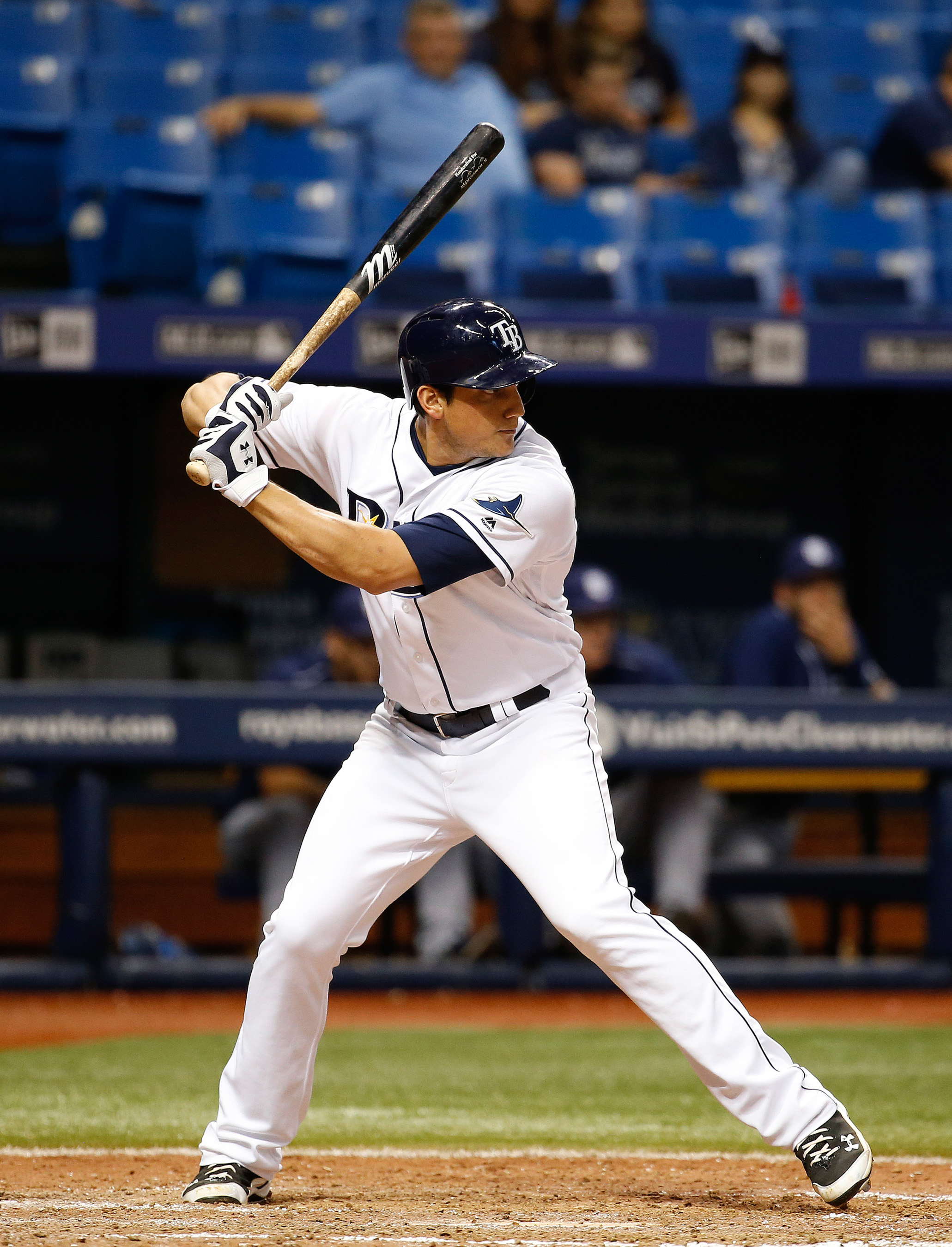
The Rays announced that they’ve traded outfielder Mikie Mahtook to the Tigers in exchange for a player to be named later or cash. Detroit, too, has announced the move, adding that fellow outfielder Anthony Gose has been designated for assignment to clear a spot on the roster for Mahtook.
[Related: Updated Detroit Tigers Depth Chart]
Tampa Bay selected Mahtook, now 27, with the 31st overall pick in the 2011 draft, but the LSU product struggled in his second stint against Major League pitching this past season. Mahtook debuted in 2015 and batted an impressive .295/.351/.619 with nine home runs in just 115 plate appearances, but he’d never shown that type of power throughout his minor league tenure. Mahtook’s bat regressed (and then some) in 2016, as he received 196 Major League plate appearances but slashed just .195/.231/.292 with three homers over the life of 65 games. A broken left hand did sideline Mahtook for a good portion of the 2016 season, though it doesn’t seem likely that the injury had much to do with his lack of production, as Mahtook wasn’t performing at the plate even prior to being hit by the pitch that ultimately caused the fracture.
Defensively, Mahtook is capable of playing all three outfield spots and has split his time across all three slots fairly evenly (though he’s played a slight bit more in center than in either outfield corner). Mahtook has been primarily a center fielder throughout his minor league career, so he’ll give the Tigers an option in center field for the team to consider. And it should be noted that he does come with a sound track record of performance in Triple-A, where he’s batted .277/.342/.420 with 17 homers and 33 steals (40 tries) in 1088 plate appearances.
Mahtook will compete with out-of-options Tyler Collins and his former college teammate, JaCoby Jones, for playing time in center field. He could also serve as a right-handed complement to Collins in a platoon setting. Mahtook does have a minor league option remaining, so the Tigers can also send him to Triple-A for further refinement if he struggles this spring.
As for Gose, his time with the Tigers has long looked to be in jeopardy. Though the 26-year-old has been mentioned by GM Al Avila as an option in center field at times this offseason, he’s out of minor league options and hasn’t hit in the Majors with the Tigers since being acquired from the Blue Jays in exchange for Devon Travis two years ago. The fleet-footed Gose has batted just .247/.315/.363 with Detroit. That includes a .209/.287/.341 slash in 30 games last season and an even more disheartening .203/.276/.312 slash in 90 games between Triple-A and Double-A. Beyond his on-field struggles, Gose also received a brief, team-issued suspension due to a dugout altercation with Triple-A skipper Lloyd McClendon (followed by a demotion to Double-A).
As for the Rays, the trade of Mahtook opens a spot on the 40-man roster which could clear way for fellow outfielder Colby Rasmus, who has reportedly agreed to a one-year deal with Tampa Bay that has yet to be formally announced. The Rays are also reportedly nearing a Major League deal with right-hander Shawn Tolleson, so Mahtook’s spot could go to him as well. Either way, it seems that the Rays stand to make at least one additional 40-man roster tweak in the days to come.
Photo courtesy of USA Today Sports Images.
Angels Extend Kole Calhoun
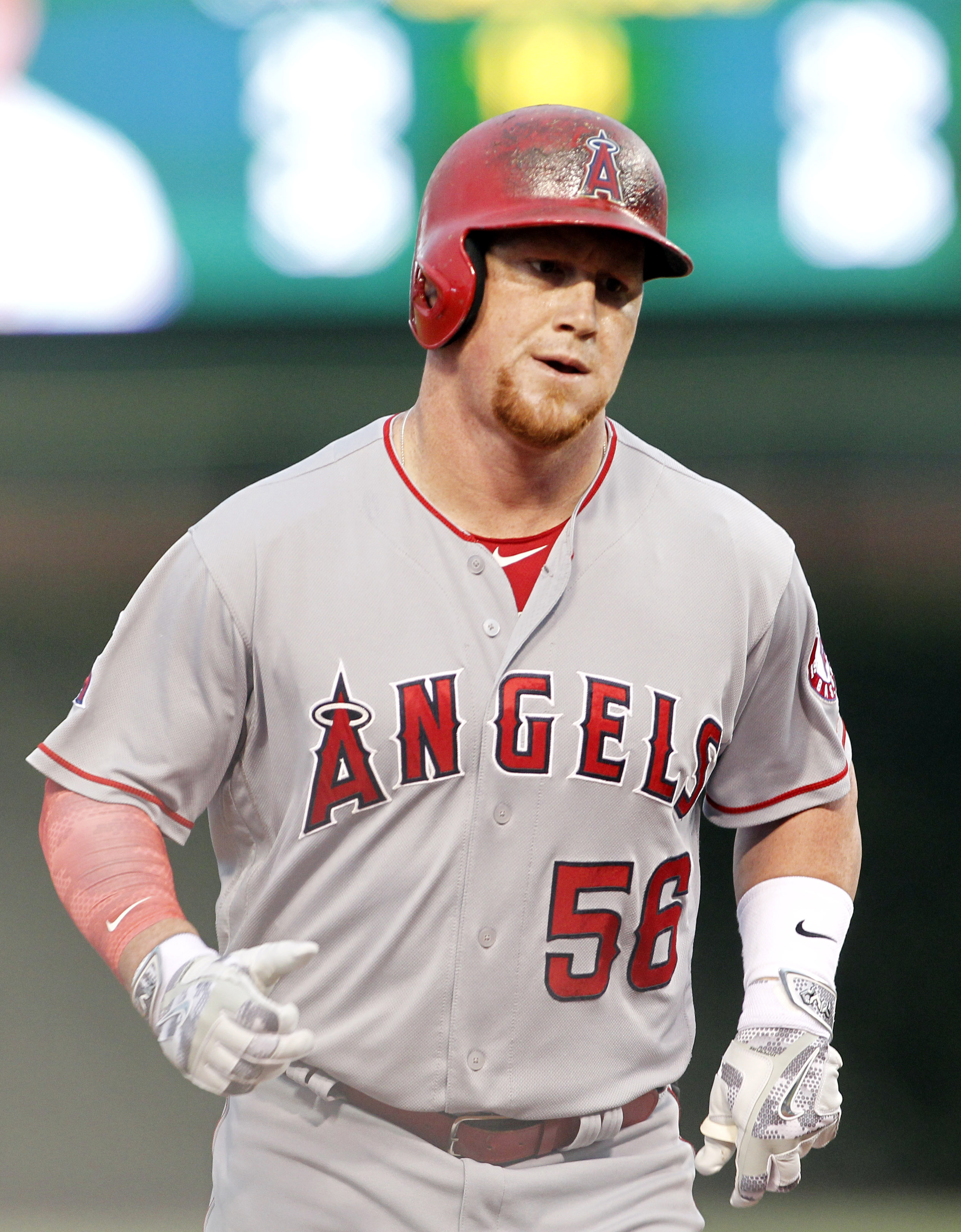
The Angels have agreed to a three-year contract extension with right fielder Kole Calhoun, per a club announcement, covering the 2017 through 2019 seasons. Importantly, the deal includes an option for 2020, which means that the team will pick up an added season of control while buying out all of Calhoun’s remaining arbitration eligibility.
Calhoun will be guaranteed $26MM in the agreement, while the option is valued at $14MM, per Jeff Fletcher of the Orange County Register (via Twitter). He will be paid annual salaries of $6MM in 2017, $8.5MM in 2018, and $10.5MM in 2019, per SB Nation’s Chris Cotillo (via Twitter). There’s also a $1MM buyout on the option year.
The deal represents a bit of a surprise given its structure. The sides had already agreed upon a $6.35MM arbitration salary for the coming season after Calhoun earned $3.4MM in 2016 as a Super Two. While arb-only agreements do occur from time to time, it’s not often that a mid-arbitration, high-quality regular gives up the rights to a free-agent eligible season just to lock in two more seasons of guarantees over arb-eligible years.
While it’s important to note that Calhoun’s future free-agent earnings were limited somewhat by his age — he’d have hit the market in advance of his age-32 season — this still looks to be a rather notable bargain for the Halos. There’s relatively little risk in the deal, given Calhoun’s track record and relative youth (he just turned 29). And promising just under $20MM for his final two arb years likely represents a discount on what he’d have earned through arbitration — barring a total fall-off in play. Adding a reasonably priced free-agent season, without taking on any lengthy commitment, provides a lot of value to the organization.
Though he was never hyped as a prospect, the former eighth-round draft pick has done nothing but perform as a professional. Calhoun showed plenty of promise during his first extended stay in the majors, back in 2013, and hasn’t looked back since. In over 2,000 trips to the big league plate, he carries a .266/.328/.436 batting line with 69 home runs. With solid glovework and baserunning added into the mix, he has steadily checked in with between 3 and 4 wins above replacement annually, making him one of the Angels’ best players.
With this move, the Angels have two-thirds of their outfield under control through 2020 at very appealing rates, given the quality of the players involved. That’s also the last season of the organization’s six-year deal with star center fielder Mike Trout. For a club that is attempting to remain highly competitive while managing some significant salaries, not all of which have gone according to plan, these extensions both represent strong values.
Photo courtesy of USA Today Sports Images.
J.P. Arencibia Announces Retirement
Former big league catcher J.P Arencibia has announced his retirement from the game in a message on Twitter. He’ll hang ’em up after parts of a half-dozen seasons at the major league level.
Arencibia didn’t spend any time in the big leagues last year, when he played at Triple-A with the Rays and Phillies organizations. But he had reached the majors in each of the prior six campaigns, beginning in 2010 with the Blue Jays.
Surely, Arencibia will be remembered most for his time in Toronto, where he was the regular catcher for three seasons. The first two of those went pretty well for the slugging receiver, as he combined for a .225/.279/.437 slash with 41 home runs over 2011-12.
But 2013 proved a turning point for Arencibia, who hit just .194/.227/.365 — though he appeared in a career-high 138 games. Always prone to swinging and missing, he ended that year with 148 strikeouts against just 18 walks. He later saw time in the majors with the Rangers and the Rays, but never regained his standing as a regular behind the dish.
Having failed to make it back to the game’s highest level in 2016, there was little question that the 31-year-old would have been looking at another minor-league assignment while waiting and hoping for another opportunity. Instead, he’ll move on.
As he humorously put it in his announcement: “I really never could take a walk in my career but this walk will be my biggest yet, I’m walking away from baseball.” MLBTR wishes Arencibia the very best in his future endeavors.
Braves, Blaine Boyer Agree To Minor League Deal
TODAY: Boyer will earn $975K if he makes the MLB roster, Jon Heyman of Fan Rag tweets.
YESTERDAY: The Braves have agreed to a minor league contract with right-hander Blaine Boyer, reports Mark Bowman of MLB.com (Twitter link). Bowman notes that the Aegis Sports client will have a good chance to make the Atlanta bullpen.
The 35-year-old Boyer was originally drafted by the Braves back in 2000 and spent the first five seasons of his career in Atlanta. After a two-year absence from the Majors from 2012-13, during which Boyer has previously said he believed his career to be over, the right-hander returned to MLB on a minors pact with the Padres. Since that time, he’s posted a very strong 3.31 ERA in 171 1/3 innings with the Padres, Twins and Brewers.
Most recently, Boyer tossed 66 innings for the 2016 Brewers, posting a 3.95 earned run average with 3.5 K/9, 2.5 BB/9 and a 48.9 percent ground-ball rate. That K/9 rate stands out as the likely reason that Boyer has continually had to settle for minor league deals in recent years. Boyer misses fewer bats than just about any reliever in the game — he’s averaged just 4.6 K/9 since returning the bigs — but demonstrates strong control and induces plenty of weak contact, which helps his cause.
Fangraphs’ Travis Sawchik recently penned a fascinating look at Boyer in an attempt to determine how he’s been able to succeed despite that lack of strikeouts. Sawchik observes that Boyer allowed the fewest number of barreled balls to opponents in 2016. Beyond that, opponents averaged a feeble 86.2 mph exit velocity against Boyer, which was the 11th-lowest mark in baseball. Sawchik likened Boyer’s knack for inducing consistent weak contact to that of Mark Buehrle, another low-strikeout arm that thrived for more than a decade despite his own lack of missed bats. Braves fans are encouraged to check out the piece in its entirety, as it’s a thorough look at one of the game’s more unique skill sets.
Blue Jays Re-Sign Jose Bautista
12:05pm: The deal includes attendance bonuses as well, per Jon Heyman of Fan Rag (via Twitter). In each year of the deal, Bautista can earn up to $900K depending upon how the club draws. He’ll take home $150K for every hundred-thousand fans through the gate between 3.5 and 4.0 million.
It’s not known just how attendance will be calculated, but per ESPN.com, the Jays drew 3,392,299 guests to the Rogers Centre last year.
9:58am: The Blue Jays have now formally announced that they’ve re-signed Bautista (via press release). One of the few teams to publicly disclose the financial details of their contracts, the Jays announced that Bautista will earn $18MM next season. His 2018 option is a mutual option worth $17MM which comes with a $500K buyout that is paid out if either side declines their half of the option. Bautista’s deal also contains a $20MM vesting option for the 2019 season.
JAN. 18, 7:36am: The final guarantee is $18.5MM, Passan tweets. An official announcement is expected in short order.
JAN. 17, 3:45pm: Jeff Passan of Yahoo Sports reports that Bautista’s 2017 salary will be $18MM, but the buyout on the second-year option will tack another $500K to $1MM onto the overall guarantee (Twitter links). Bautista will have mutual option for the 2018 season and a vesting option for the 2019 season, according to Passan. The two sides are still finalizing the details surrounding the vesting option, he notes, but there’s a framework in place for the agreement.
2:35pm: Bautista receives an $18MM guarantee, per Steve Phillips of MLB Network Radio on Sirius XM (Twitter link). The maximum value of the deal — with incentives and the consecutive mutual options — is $60MM.
The 2017 salary remains unknown, but buyouts on the option years help contribute to the total guarantee, Bob Nightengale of USA Today notes on Twitter.
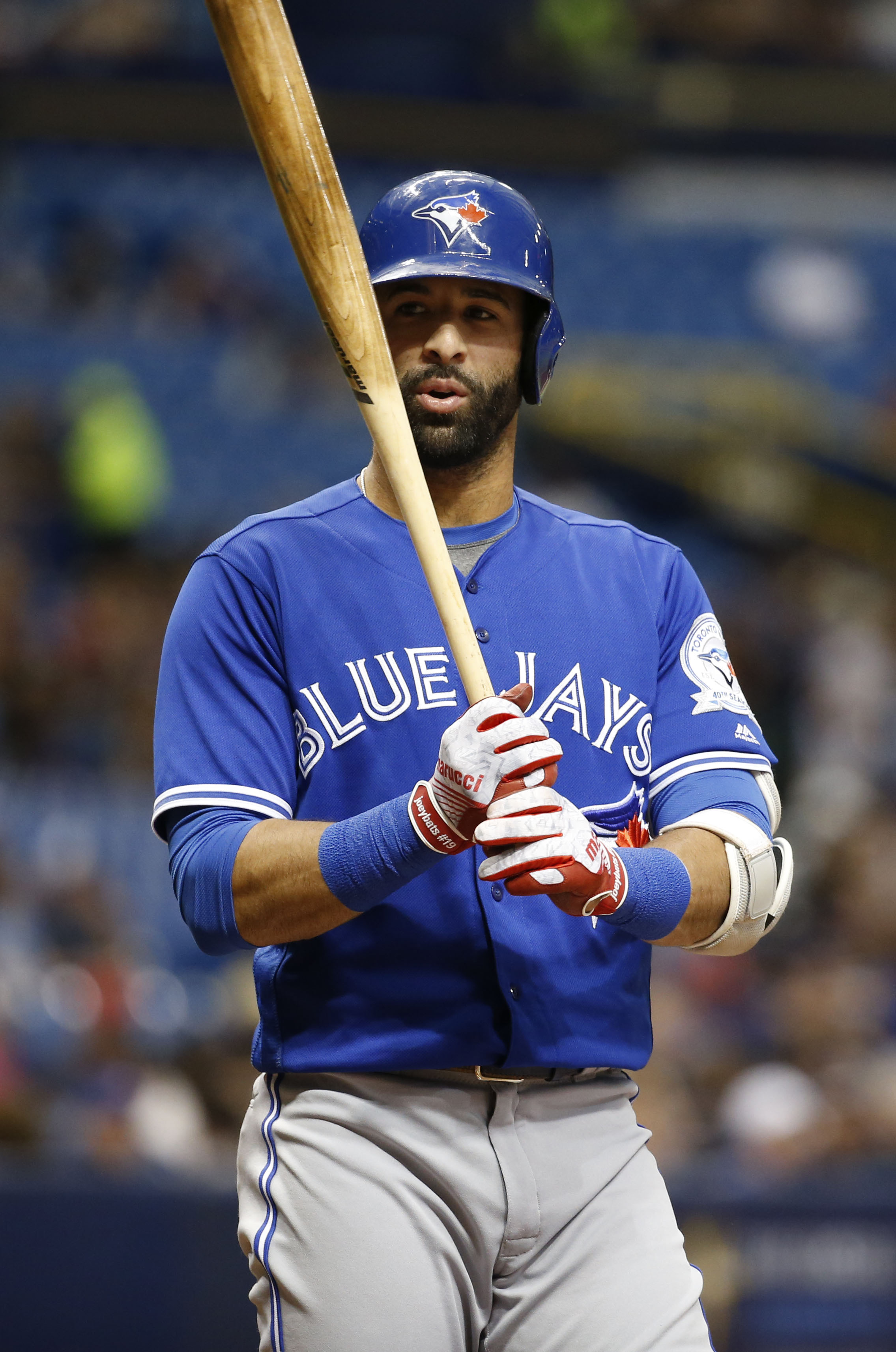
1:53pm: The Blue Jays have agreed to a deal with free-agent outfielder Jose Bautista, according to reports from Baseball Prospectus Toronto (Twitter link) and Ken Rosenthal of FOX Sports (via Twitter). It’s a one-year deal that includes at least one mutual option, and could reportedly extend to three total seasons in duration. Bautista will receive a guarantee that exceeds the $17.2MM qualifying offer value, per Jon Heyman of Fan Rag (via Twitter), assuming he passes his physical.
[RELATED: Updated Blue Jays Depth Chart]
Bautista was said to be nearing a reunion with the Jays, who’ll plug his bat back into the middle of their order for at least one more season. At the outset of the offseason, Bautista had declined a QO from the organization, which set the stage for Toronto to recoup draft compensation if he signed elsewhere. Instead, the team will give up that possible first-round pick in order to fill the noticeable void that remained in right field.
The signing brings to an end — for now, at least — what has been a lengthy dance between the organization and the player who was perhaps most singularly associated with it. Both Bautista and fellow slugger Edwin Encarnacion were reclamation projects that turned into stars in Toronto. After performing admirably under their respective extensions, both hit the market when they were unable to reach new long-term accords. Though the Jays pursued Encarnacion, he spurned their initial efforts and ended up joining the Indians when Toronto pivoted to add DH Kendrys Morales.
Bautista, though, will be back in the fold. Now, the attention will turn back to the field of play. The 36-year-old has long delivered a potent blend of top-end plate discipline and outstanding power. But while he maintained the former in 2016, his power output dipped. He ended the year with 22 home runs and a .217 isolated slugging percentage — each of which represented his lowest marks since 2009, the year before his remarkable breakout.
Of course, that was still a plenty productive offensive campaign; Bautista checked in at about 20% above the league-average hitter. Though he made more soft contact than has been his custom (21.3%), he also posted a career-best 41.0% hard-contact rate. If he’s able to maintain the lion’s share of his pop while continuing to display an impeccable batting eye and excellent contact ability, then Bautista ought to continue to produce. If he can boost the power back to its typical levels, then there’s plenty of upside here for the Jays. Of course, there’s also a slight downside scenario — though it’s curbed by the nature of the arrangement — in the event that 2016 represents a turning point for an aging player.
Really, there’s plenty of reason to bet on Bautista’s bat, at least to some extent. The real question is whether there’s enough left there to make up for his declines elsewhere. Typically a solid defender in right, Bautista has drawn negative reviews from both UZR and DRS for his glovework in each of the last two seasons. And he checked in with a very poor -5.2 BsR rating for his efforts on the bases last year.
Bautista did need to rehab and return from a mid-season toe injury, which surely didn’t help. Aside from that malady and a 2012 wrist injury, both of which were acute issues, he has been a pillar of fitness and durability. Though there has been plenty of debate about the wisdom of a long-term investment, given Bautista’s age, those concerns largely go out the window in that shorter-term, flexible scenario that the sides seemingly landed at.
Of course, Bautista was long said to be hoping for a much greater guarantee. He and the Jays’ then-new front office engaged in extension discussions this time last year, but he wasn’t willing to move off of a number well in excess of $100MM over five years. While there was little chance that he’d reach that level of contract after his relatively unsuccessful 2016 season, Bautista still seemed a reasonable bet to achieve a strong, multi-year commitment heading into the offseason. MLBTR predicted he could command $51MM over three years, while noting that a one-year, make-good scenario remained a plausible outcome.
Toronto seems likely to plug Bautista back into right field, though perhaps he’ll also see time at first base — which is currently set to be manned mostly by Justin Smoak, who typically struggles against left-handed pitching. Fellow signee Steve Pearce might also get some time in right and at first, with Morales likely occupying the DH slot on a more-or-less full-time basis while Ezequiel Carrera and Melvin Upton form a platoon in left alongside regular center fielder Kevin Pillar.
Photo courtesy of USA Today Sports Images.
Athletics Designate Zach Neal
The Athletics have designated righty Zach Neal for assignment, per a club announcement. His roster spot will go to third baseman Trevor Plouffe, whose one-year deal is now official.
Neal, 28, made his MLB debut last year, throwing 70 innings of 4.24 ERA ball over six starts and 18 relief appearances. Though he managed only 27 strikeouts, he also permitted just six walks in that stretch while relying on a variety of fastballs (including a cutter sometimes classified as a slider), a change, and a little-used curve.
A noted control artist in the minors, Neal has worked mostly as a starter over his professional career. Over parts of three seasons at Triple-A, he has compiled a 3.95 ERA with 5.5 K/9 and 1.3 BB/9.
Athletics Sign Trevor Plouffe
JANUARY 18: The A’s have announced the deal. Plouffe gets a $5.25MM guarantee, per Jon Heyman of Fan Rag (Twitter link). He can also earn $150K upon reaching 350 plate appearances, another $300K if he gets to 450, and then $300K more if he reaches 525 trips to the plate, per Ken Rosenthal of FOX Sports (via Twitter). There’s also a one-time, $250K trade bonus.
JANUARY 11: Plouffe is expected to receive around $5MM of guaranteed money in the deal, per Jon Heyman of Fan Rag (via Twitter). There are also incentives, though details remain unknown.
JANUARY 10: The Athletics have an agreement in place with free agent infielder Trevor Plouffe, reports Ken Rosenthal of FOX Sports (via Twitter). The deal, which is pending a physical, will be a one-year agreement, per Susan Slusser of the San Francisco Chronicle (Twitter links). She adds that Plouffe is likely to see the bulk of the playing time at third base for the A’s next season, with Ryon Healy shifting to designated hitter and first base. Plouffe is represented by CAA Baseball.
[Related: Updated Oakland Athletics Depth Chart]
Prior to this new deal with the A’s, the 30-year-old Plouffe had spent his entire career in the Twins organization. A first-round pick by Minnesota back in 2004, Plouffe took quite some time to blossom into an everyday Major Leaguer but cemented himself as the Twins’ everyday third baseman beginning in 2012. That season saw Plouffe belt 24 homers in 119 games, and while that mark still stands as a career-best, Plouffe has consistently shown solid pop from the right side of the plate over the life of his big league career. In his first four seasons as a regular, he proved to be a roughly league-average bat, hitting .248/.312/.426 and averaging 23 homers per 162 games played. A right-handed hitter, Plouffe has been significantly more productive against lefties (career .268/.344/.465) than righties (.239/.294/.403).
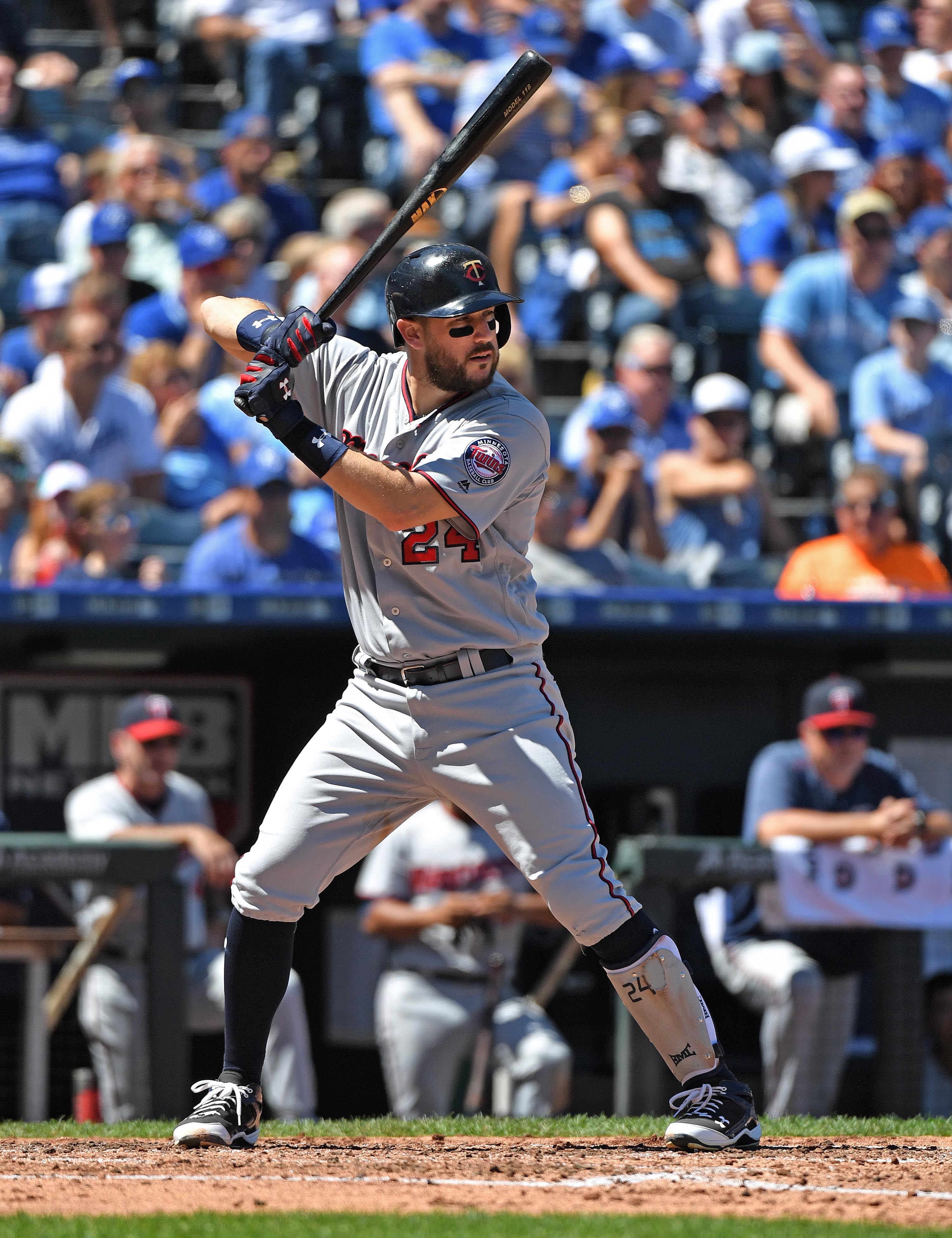
This past year, Plouffe hit .260/.303/.420 with 12 homers in an injury-ravaged season that included three trips to the disabled list for an intercostal strain, a fractured rib and an oblique strain. Those three maladies combined to limit Plouffe to just 84 games and 344 plate appearances — both his lowest marks since establishing himself as a regular with the Twins. The three trips to the DL, Plouffe’s projected $8.2MM price tag in arbitration (courtesy of MLBTR contributor Matt Swartz) and a stacked corner infield/DH scene in Minnesota prompted the new Twins front office to part ways with Plouffe following the season rather than tender him a contract in arbitration.
Despite possessing fairly notable platoon splits, it seems that Plouffe will be in line for near-everyday at-bats, as was the case during his tenure with the Twins. Plouffe never rated as an exceptional defender at the hot corner, but the converted shortstop went from dreadful Defensive Runs Saved and Ultimate Zone Rating marks to above-average grades over the course of his time in Minnesota as he grew more accustomed to his new position. (His 2016 defensive metrics were poor, though certainly one can imagine his persistent injuries impacting his mobility on the field.)
From 2014-15, Plouffe posted a +5 DRS and +8.4 UZR, so with better health there’s reason to believe he can return to form with the glove. That would be an improvement over the younger Healy, who was below average per DRS (-2) and UZR (-9.4). Though Healy may not see many reps at third base in 2017, it seems logical to expect that the A’s will want to keep his bat in the lineup as much as possible. The 25-year-old compiled a .305/.337/.524 slash with 13 homers through 72 games as a rookie, suggesting that he could be a 20-homer bat for the A’s even if his .352 BABIP is bound to regress to some extent.
Plouffe also reportedly drew interest from the Red Sox, Braves and Royals, and he was speculatively linked to the Marlins as well. Instead, he’ll opt for a homecoming of sorts, returning to his home state (albeit a few hundred miles north of his Los Angeles area roots) and a presumably larger role as he takes aim at a healthier season in 2017.
Photo courtesy of USA Today Sports Images.
Indians Sign Brandon Guyer To Two-Year Deal
10:41am: The deal also allows Guyer to earn up to $400K in plate-appearance-based bonuses in both 2018 and 2019, Bastian tweets. And the option value can rise to as much as $3.75MM with escalators.
9:51am: It’s a two-year, $5MM contract for Guyer, tweets MLB.com’s Jordan Bastian. He’ll receive $2MM in 2017 (just shy of the $2.1MM midpoint between the two sides’ arbitration numbers) and $2.75MM in 2018. Guyer’s contract contains a $3MM club option for the 2019 season, which comes with a $250K buyout.
9:35am: The Indians announced on Wednesday that they’ve signed outfielder Brandon Guyer to a two-year deal with a club option for the 2019 season. The 30-year-old Guyer (31 next week) was arbitration-eligible and had filed for a $2.3MM, which the Indians countered with a $1.9MM offer (as shown in MLBTR’s 2017 Arbitration Tracker). Rather than hammer out a one-year pact, Guyer will instead agree to lock in both of his remaining arbitration salaries in exchange for a club option over what would’ve been his first free-agent year.
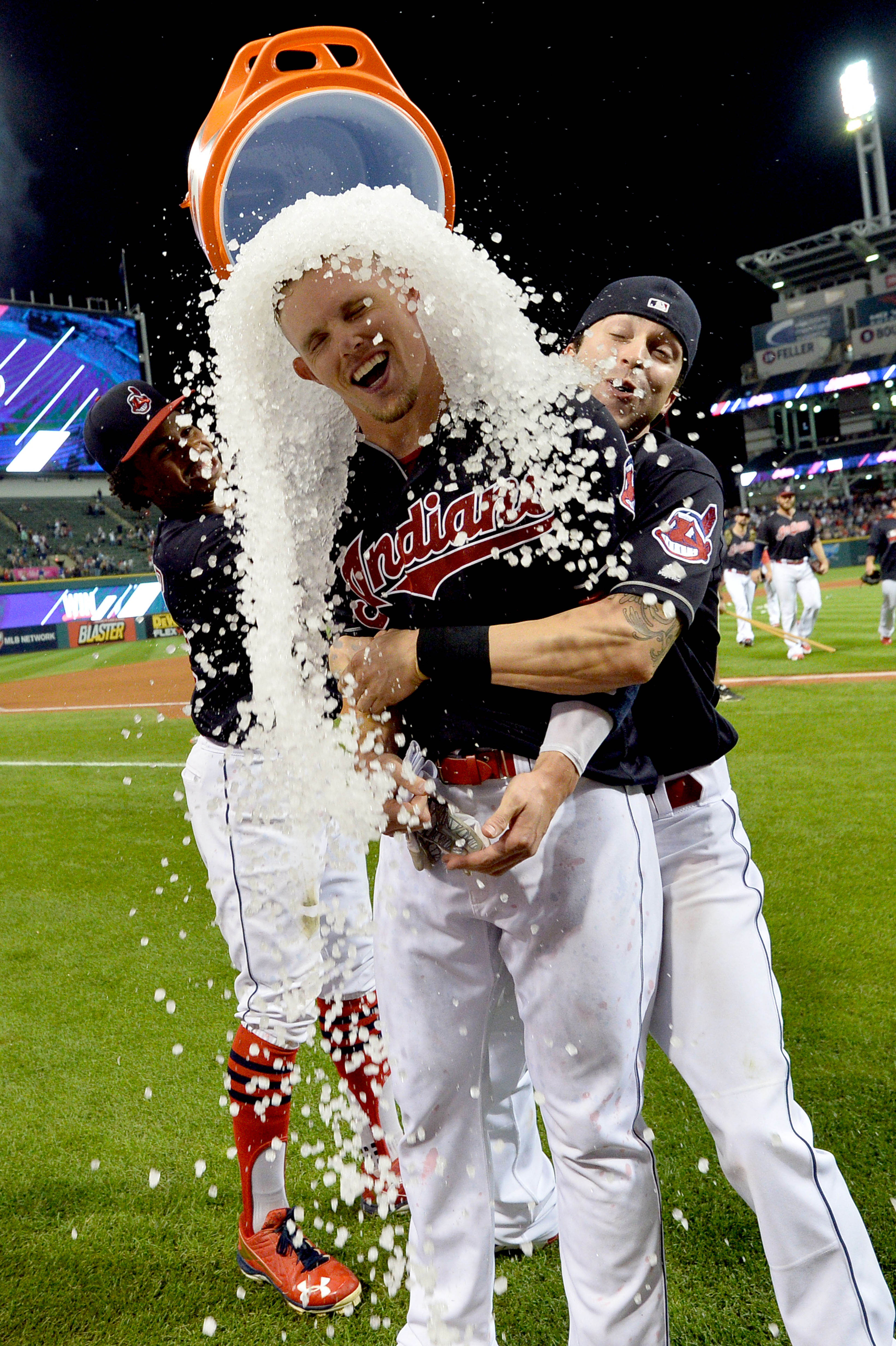
Guyer, a longtime member of the Rays, was a deadline pickup for the Indians, who traded minor league outfielder Nathan Lukes and minor league righty Jhonleider Salinas to the Rays to acquire the remaining two and a half years of control on Guyer’s contract. Guyer has long been a thorn in the side of left-handed pitching, and Cleveland benefited substantially from that trait, as Guyer slashed .333/.438/.469 in a limited role (91 plate appearances) over the remainder of the regular season following the trade. He also chipped in a .333/.500/.389 batting line in 24 postseason plate appearances.
Beyond his strong career performance against left-handed pitching (.289/.391/.470), Guyer thrives in one perhaps underappreciated element of the game: getting hit by pitches. Shortly after the trade, August Fagerstrom examined Guyer’s uncanny penchant for being hit by pitches over at Fangraphs, observing that Guyer is not only the active leader in total HBPs over the past couple of seasons, but the leader in HBPs on a percentage basis (min. 500 PAs) dating all the way back to 1921.
A ridiculous 6.1 percent of Guyer’s plate appearances have resulted in him being plunked by a pitch, which compensates for a below-average walk rate and has allowed him to consistently post strong OBPs in the Majors. As Fagerstrom breaks down in the aforementioned Fangraphs column, Guyer’s HBP magic isn’t as much from crowding the plate (though he does that, too) as it is from a striding toward the plate and the inside edge of the batter’s box as he loads for a swing. While some might raise an eyebrow at calling that a “skill,” Guyer’s propensity for reaching base the hard way has undoubtedly benefited his teams over the years, and no one in the game seems as adept at doing so.
Turning to Guyer’s glovework, he has experience at all three outfield positions but has spent the majority of his time in left field, where he grades out as an above-average defender. With Cleveland, however, he’s likely to spend the bulk of his time in right field, where he’ll serve as a platoon partner for the left-handed-hitting Lonnie Chisenhall (who has struggled considerably against southpaw pitchers in his career). Guyer, of course, can move all over the outfield for manager Terry Francona, if needed. Guyer and Chisenhall will be part of a mix that includes a hopefully healthy Michael Brantley in left field, Tyler Naquin in center (who could also potentially benefit from some platooning) and presumptive reserve outfielder Abraham Almonte.
Photo courtesy of USA Today Sports Images.
NL Central Notes: Molina, Wainwright, Thames, Cervelli
The Cardinals are readying to face some potentially tricky decisions with regard to franchise stalwarts Yadier Molina and Adam Wainwright, as Derrick Goold of the St. Louis Post-Dispatch writes. While the organization is hoping for both to finish out their careers in St. Louis, a sentiment the players share, such arrangements are sometimes easier said than done. Extension talks are planned at some point this year with Molina, who remains a highly valuable workhorse behind the dish. The guaranteed portion of his contract ends after the season, with a mutual option looming. As Goold explains, it’s hardly a straightforward matter to reach a new deal; the question of how great a commitment the team wants to make will have to account for not only the valuation of an aging catcher, but also the rise of prospect Carson Kelly. As for Wainwright, who tells Goold he’ll only be interested in single-season contracts when his deal is up (after the 2018 season), there’s more time to see how things progress and less pressure given his position.
Here are a few more notes from the NL Central…
- Eric Thames will be the latest data point as teams try to project how star-level performance in the Korea Baseball Organization carries over to Major League Baseball, and Fangraphs’ David Laurila spoke to Brewers GM David Stearns about the factors that went into signing Thames. Stearns explained that improved plate discipline despite a vast increase in the number of breaking balls Thames saw in Korea played into the decision, as did a number of analytics processes and statistical projections. “As more players play in the KBO, or any other foreign league, and then come back to the States, projection systems are going to continue to improve,” said the Milwaukee GM. “Clearly, the translation of KBO stats to (MLB) stats isn’t as straightforward as translating a Triple-A environment to a Major League environment, but it still played a role in our evaluation.”
- MLB.com’s Adam Berry breaks down the value that Pirates catcher Francisco Cervelli brings to the team with his ability to frame pitches. While Cervelli’s lack of pop might make his three-year, $31MM deal look questionable to some, Berry points out that per MLB’s Statcast data, Cervelli rated third in the Majors in total strikes “stolen” for his pitchers in 2015 and, in an injury-shortened 2016 campaign, ranked third once again on a per-pitch basis in that same category. The skill is hardly lost on the Pirates’ young pitchers, several of whom lauded Cervelli’s receiving abilities when speaking to Berry. “He makes every pitch look really good, even your bad pitches,” said Jameson Taillon. “”That’s a big confidence-builder.”