
Minor MLB Transactions: 11/5/16
Here are today’s minor moves from around the game.
- The Astros have announced that they’ve selected the contract of Dominican lefty Reymin Guduan, preventing him from hitting minor league free agency. The 24-year-old struggled at Triple-A Fresno in 2016 and has a long history of control problems, with an extremely high career 7.1 BB/9. He did, however, have a brilliant stretch at Double-A Corpus Christi last season (with 19 strikeouts and three walks over 13 innings), and he can apparently touch 100 MPH, a very rare quality in a lefty.
- The Pirates have announced that they’ve added righty Dovydas Neverauskas and 1B/OF Jose Osuna to their 40-man roster, protecting them from the Rule 5 Draft. In 2009, the Bucs signed Neverauskas as a 16-year-old, and he made his way through their system slowly — perhaps unsurprisingly, given that his home country of Lithuania isn’t exactly a baseball hotbed. He transitioned from starting to relieving in 2015, and emerged as a hard-throwing relief prospect in a fine 2016 season in which he represented the Bucs in the Futures Game and posted a 3.10 ERA, 8.7 K/9 and 3.4 BB/9 in 58 innings split between Double-A and Triple-A. His year was sullied when he was arrested in a bar fight in Toledo in August, but the Pirates still appear to believe in his potential. The 23-year-old Osuna also spent the season at Double-A and Triple-A and held his own, hitting .279/.331/.457. He’s never had an exceptional minor league season and does not rate among the Bucs’ top prospects, but he’s been reliably productive and hit lefties very well last season.
Royals Decline Luke Hochevar’s Option
The Royals have announced they’ve declined Luke Hochevar‘s $7MM 2017 mutual option. That means they’ll owe him a $500K buyout. He is now a free agent.
The move was expected. Hochevar underwent surgery to relieve thoracic outlet syndrome in August, and it’s unclear when he’ll be ready to return to game action. There have, however, been indications that the Royals could attempt to sign Hochevar to a cheaper deal for 2017.
Hochevar generally pitched well in 2016 when healthy, posting a 3.86 ERA, 9.2 K/9 and 2.2 BB/9 over 37 1/3 innings. The 33-year-old former No. 1 overall pick struggled for years as a starter and missed the 2014 season after having Tommy John surgery, but he’s now had three relatively successful seasons as a hard-throwing reliever, including with the Royals’ 2015 World Series team.
Offseason Outlook: Chicago White Sox
MLBTR is publishing Offseason Outlooks for all 30 teams. Click here for the other entries in this series.
After a fourth straight losing season, the White Sox have not revealed their organizational strategy. Do they finally commit to a roster tear-down? Or will the team spend another winter attempting to add the right veteran pieces to complement its talented core?
Guaranteed Contracts
- James Shields, SP: $44MM through 2018. Shields can opt out after 2016 World Series. If Shields does not opt out, White Sox are responsible for $20MM for 2017-18. Contract includes $16MM club option for 2019 with a $2MM buyout; White Sox would be responsible for buyout.
- Melky Cabrera, LF: $15MM through 2017.
- Jose Abreu, 1B: $34MM through 2019. Can opt into arbitration system for 2017.
- David Robertson, RP: $25MM through 2018.
- Chris Sale, SP: $13MM through 2017. Includes $12.5MM club option for 2018 with a $1MM buyout and $15MM club option for 2019 with a $1MM buyout. 2019 option increases to $16MM with Cy Young from 2016-18.
- Jose Quintana, SP: $16.85MM through 2019. Includes $10.5MM club option with a $1MM buyout for 2019 and $10.5MM club option for 2020 with a $1MM buyout. 2020 option can reach $13-14MM based on 2016-19 Cy Young voting.
- Adam Eaton, RF/CF: $19.9MM through 2019. Includes $9.5MM club option with a $1.5MM buyout for 2020 and $10.5MM club option for 2021 with a $1.5MM buyout. 2021 option can reach $13MM based on 2016-20 MVP voting.
- Nate Jones, RP: $5.85MM through 2018. Includes club options for 2019-21, with salaries depending on games finished and on whether Jones requires right elbow surgery by end of 2018 season.
Contract Options
- Matt Albers, RP: $3MM club option with a $250K buyout (declined).
Arbitration Eligible Players (service time in parentheses; link to MLBTR projections)
- Miguel Gonzalez (5.073) – $2.6MM
- Todd Frazier (5.071) – $13.5MM
- Brett Lawrie (5.055) – $5.1MM
- Dan Jennings (3.171) – $1.2MM
- Avisail Garcia (3.167) – $3.4MM
- Zach Putnam (3.135) – $975K
- Jake Petricka (3.044) – $900K
- Jose Abreu (3.000) – $12MM (educated guess, outside of arbitration model)
- Non-tender candidates: Lawrie, Garcia
Free Agents
- Justin Morneau, Austin Jackson, Alex Avila, Jacob Turner (outrighted off 40-man roster)
Chicago White Sox Depth Chart; Chicago White Sox Payroll Information
In early October, Robin Ventura announced he was stepping down as White Sox manager after five seasons. Ventura’s contract was up anyway, and it’s not clear whether the Sox had any intention of offering him a new contract. The team almost immediately promoted bench coach Rick Renteria to manage the club, on a term that has not yet been reported. GM Rick Hahn chose not to interview other candidates, as Renteria was atop the team’s “living document” of potential future managers. Renteria had a difficult experience with the Cubs, managing them in a 2014 rebuilding season, doing well enough to warrant a second year, and then getting fired when Joe Maddon became available.
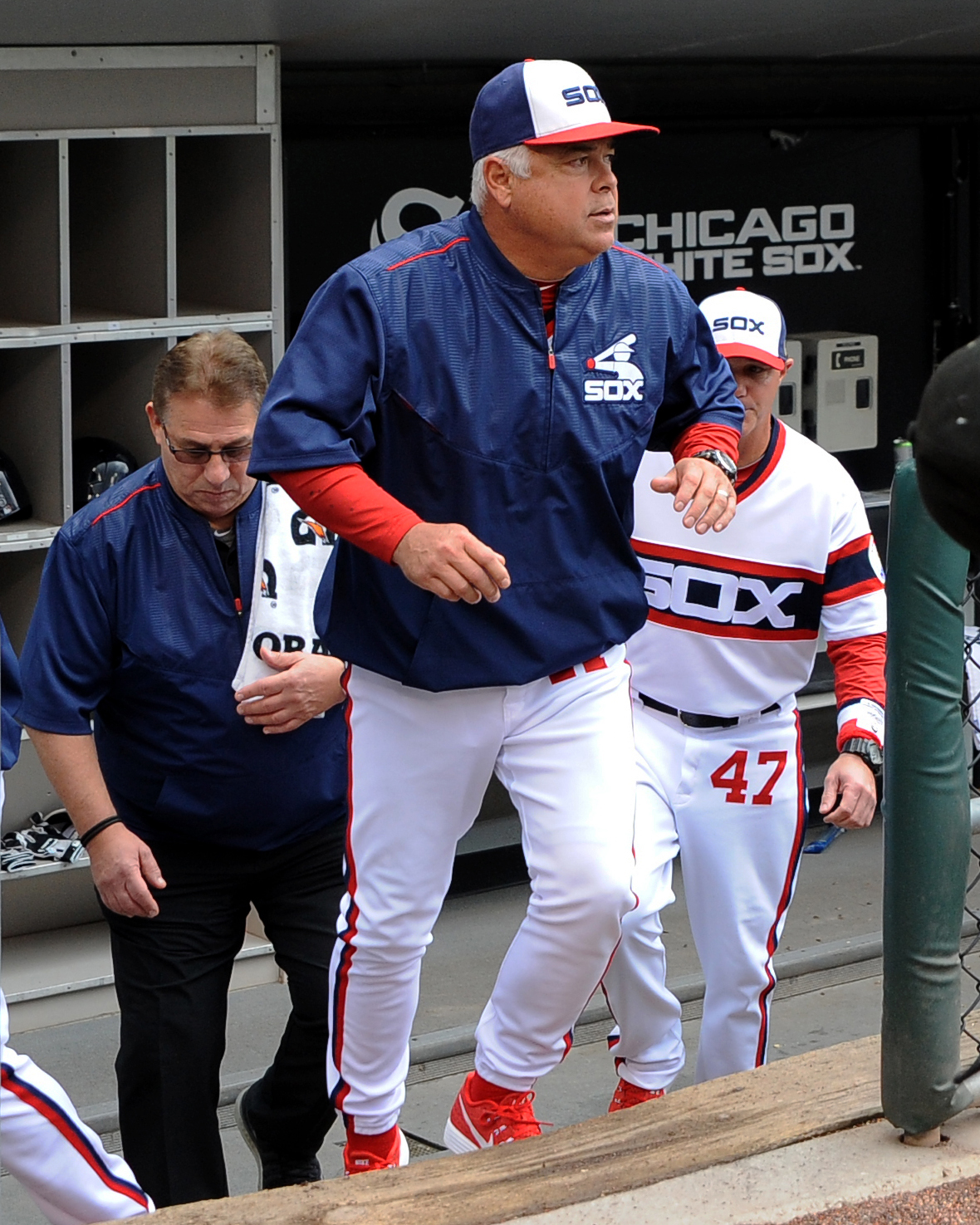 I don’t know if the hiring of a less experienced manager like Renteria is an indication that he will preside over a 2017 rebuild for the White Sox, as Hahn has chosen not to tip his hand on the team’s offseason direction. Hahn did posit in August that “by the time we make our first or second transaction, publicly it will be fairly clear as to our direction.” As White Sox fans await this odd reveal, I’ll tackle this post from each direction.
In a rebuild scenario, the team could move a host of players that clearly won’t be part of the next good White Sox team: Todd Frazier, Melky Cabrera, Miguel Gonzalez, David Robertson, Brett Lawrie, Avisail Garcia, and James Shields. Frazier, 31 in February, is coming off a career-best 40 home runs and a career-worst .225 batting average. MLBTR projects a $13.5MM salary for 2017, after which he’ll reach free agency. The White Sox could get something useful in return, but only a handful of contenders are seeking third basemen, and the free agent market features Justin Turner and Luis Valbuena. Cabrera is also an above-average hitter, but his value is limited by his poor defense and $15MM salary. Robertson struggled with his control and blew seven saves on the season, but his two year, $25MM commitment would appeal to teams not willing to pay full freight for Aroldis Chapman, Kenley Jansen, or Mark Melancon. Gonzalez bounced back as a solid back-end starter, which is hard to come by in the 2016-17 free agent market. Lawrie, Garcia, and Shields have little to no trade value, but moving Cabrera and Robertson would clear $40MM in commitments, and trading Frazier and Gonzalez would free up $16MM+ that would have been spent on their arbitration salaries. It seems likely that Avisail Garcia’s time with the White Sox will come to an end soon, as the 25-year-old has shown few signs of being a useful Major Leaguer after 409 career games, 356 of which came with the White Sox.
Trading players like Frazier, Cabrera, Robertson, and Gonzalez might return a handful of decent prospects and free up payroll space but would do little to change the long-term trajectory of the White Sox. To truly reboot the franchise and try something different, Hahn and executive vice president Kenny Williams will have to entertain trades for any or all of Chris Sale, Jose Quintana, and Jose Abreu. Sale and Quintana are immensely valuable assets. Sale is among the ten best starters in baseball, and Quintana has to be in the top 20. Both lefties will enter the 2017 season at just 28 years of age, with clean bills of health. Both have extremely team-friendly contracts. On the open market, Sale would be worth over $100MM for 2017-19 alone. Instead, he’ll be paid $40.5MM at most. Quintana will be paid at most $40.35MM over the next four seasons, which would also be valued over $100MM. To top it off, there is no one remotely similar to Sale or Quintana in this year’s free agent market.
Nearly every team in baseball would have interest in Sale and Quintana. Teams with a strong need for starting pitching this winter, like the Marlins, Braves, Astros, and Angels, would obviously be interested. Others, who may add on the “only if it’s an ace” condition, like the Cubs, Dodgers, Red Sox, and Yankees, would be in as well. According to an August report from Bruce Levine of CBS Chicago, the Red Sox were unwilling to part with center fielder Jackie Bradley Jr. for one of the White Sox aces at the trade deadline. That gives you an idea of a potential headliner, though – an established, five-win under-30 player who is under control for four more years. Other centerpiece examples could include Starling Marte, George Springer, or Christian Yelich. The White Sox could also try for less-established, but extremely valuable young players like Yoan Moncada, Lucas Giolito, or Andrew Benintendi. The question is whether Hahn would enter the offseason hellbent on trading one or both of his aces to kick off a true rebuild, or if he’d set a price and only make the trade if that price is met. The latter approach makes more sense, since both pitchers will still be very valuable at the July trade deadline as well as next offseason (and beyond).
In the event of a rebuild, the White Sox must also consider trading first baseman Jose Abreu, who might earn $40-45MM through arbitration over the next three seasons. While Abreu’s power has slipped since his rookie season, he’ll turn 30 in January and has a good $20MM of surplus value in comparison to market prices for power hitters. Teams such as the Red Sox, Orioles, Rangers, Rockies, Astros, Yankees, and Blue Jays are a few possible matches. Right fielder Adam Eaton would have immense trade value, with five years of potential control remaining. However, I see Eaton as a potential source of stability, someone who can anchor the roster even if the front office starts shipping out other top players.
We haven’t even mentioned Carlos Rodon, Tim Anderson, and Nate Jones yet. Plainly, the White Sox have too many good or great players to sell most of them off in a rebuild. Owner Jerry Reinsdorf is 80 years old. Shouldn’t this team be going for it? Let’s look at what that might require.
The White Sox have had Opening Day payrolls in the $115-120MM range in three of the past four seasons. They peaked at about $128MM in 2011, so that might be the ceiling. The Sox have about $74MM committed to eight players under contract for 2017. Add another $19MM for Frazier, Gonzalez, Jennings, Petricka, and Putnam, and we’re at $93MM for 13 players.
First and foremost on the agenda should be a catcher. The White Sox pretty much have to go outside the organization for a backstop. They could sign one of Matt Wieters or Jason Castro in free agency, or trade for the Yankees’ Brian McCann. Signing Castro to a two-year deal in the $15MM range would be a measured way to fill the void.
At second base, the White Sox must decide whether they would like to bring the perennially disappointing or injured Lawrie back for $5MM or so through arbitration. I’d vote no, because payroll will be tight and they can plug in Tyler Saladino for a much cheaper solution while possibly getting similar production. It seems likely that Lawrie can bring back some kind of spare part in trade prior to the non-tender deadline. Free agent options at second base include Neil Walker, Chase Utley, and Sean Rodriguez, if the White Sox want to go that route.
Center field is one of the more obvious areas of upgrade for the White Sox. Adam Eaton had an excellent season as the team’s primary right fielder and should probably stay there. Dexter Fowler, a player to whom the Sox made an offer last winter, is a free agent again and remains a strong fit. One big concern is that Fowler will come with a qualifying offer attached, meaning the Sox would have to surrender the #12 pick in the 2017 draft if they sign him. Unless Fowler comes at a serious discount from our projected lucrative four-year contract, he’s not an ideal addition. Ian Desmond comes with a similar concern. Instead, the White Sox could roll the dice on Carlos Gomez, who struggled mightily for parts of the last two seasons but showed promise in about a month’s worth of time with the Rangers at the end of the season. Gomez could sign a one-year deal for around $13MM in an attempt to rebuild value in Chicago, assuming they’re willing to tangle with agent Scott Boras. The relationship between Boras and the White Sox has had contentious moments dating back to the 90s. While it has softened in recent years, I don’t know if they would be able to get together on a free agent deal for players like Gomez, Wieters, or Kendrys Morales.
To balance out the lineup, the White Sox could use a left-handed designated hitter. Call it the Justin Morneau/Adam LaRoche role. This could be filled by a switch-hitter as well, with free agents such as Carlos Beltran and Kendrys Morales fitting the bill. If the goal is more to find a bat that can hit right-handed pitching well, then certainly Edwin Encarnacion is worth considering. However, a contract for Encarnacion would annihilate Abreu’s franchise record of $68MM and bust the payroll. Even the $12-14MM types like Beltran and Morales could be excessive for this bat-only role. Free agents who have been solid against righties over the past three years and would come with palatable price tags include Adam Lind, Luis Valbuena, Pedro Alvarez, Chris Coghlan, and Brandon Moss. None of those acquisitions would excite White Sox fans, but a high-priced designated hitter is a poor allocation of limited payroll space. One could argue that the White Sox are already paying good money for a pair of DH-types who are dragging down the defense, in Melky Cabrera and Jose Abreu. Another possibility would be to pencil Cabrera in for most of the DH at-bats, plugging the hole in left field with a defensively superior addition like trade candidate Brett Gardner.
So far we’ve added three players (or player types) to fill position player holes, and it would require about $27MM in salary for 2017. This conservative offseason approach already requires $120MM for 16 players. Accounting for minimum salary players, it’s difficult to see room for more significant additions. Payroll will be tight, making the $10MM owed to James Shields in 2017 all the more painful. Attempting to dump some of Cabrera’s salary is worth considering. Given his subpar left field defense, he’s not providing good value to the White Sox on a $15MM salary. Still, he was an above average hitter in two of the last three seasons, so the Sox might be able to find a team to take $8MM or so of the commitment. The problem is that the savings might have to be reallocated to a new left fielder. Eric Thames, coming off three huge years in Korea, could be a cheap roll of the dice for a team that would need some things to break their way to reach the playoffs.
I think the White Sox would find a taker for the majority of the $25MM owed to Robertson over the next two years, though his loss would create a hole in the bullpen. Robertson just had minor knee surgery, while Putnam had elbow surgery in August and Petricka had hip surgery in June. A good case can be made for adding to this bullpen rather than subtracting from it. A late-inning lefty would be a good fit, with Brett Cecil, Travis Wood, Boone Logan, Mike Dunn, and Jerry Blevins looking like the better free agents.
The White Sox look very strong in the first four rotation spots, with Sale, Quintana, Rodon, and Gonzalez. Shields, 35 in December, was brutal in 22 starts for the White Sox after being acquired in December, and his contract presents a real problem. If not for the $22MM the Sox owe Shields over the next two years, he’d be a release candidate. The contract might force the club to give him a look as their fifth starter heading into 2017, though cutting Shields now might be better for the team’s record. It seems unlikely that the White Sox could bite the bullet and release Shields and also pour additional money into the rotation opening.
Most of the proposed roster solutions here have come from free agency. In reality, Hahn will certainly look at the trade market. The White Sox remain light on prospects, and would have to consider trading top names like Carson Fulmer, Zack Collins, Spencer Adams, or Zack Burdi to bring in Major League talent. Trading from this group seems like digging a deeper long-term hole.
Whichever path Reinsdorf, Williams, and Hahn choose, I don’t expect a major organizational shift from the White Sox this offseason. I can’t picture a $150MM+ payroll and a free agent megadeal or two, nor do I expect the team to clean house by trading Sale, Quintana, Abreu, and others. This front office has taken the middle road before; perhaps there is enough talent on the roster to try it one last time.
Photo courtesy of USA Today Sports Images.
Red Sox To Look For Setup Man, Designated Hitter
Last offseason, the Red Sox made big moves to acquire Craig Kimbrel and David Price. This year, Sox president of baseball operations Dave Dombrowski says the team doesn’t necessarily expect those sorts of blockbusters, Evan Drellich of the Boston Herald reports. Dombrowski does, however, have some positions in mind that the team will target.
“Last year, I thought all along that we really needed two big moves, which was a No. 1 starting pitcher and a closer,” says Dombrowski. “Those are two, I guess, what you’d consider headline moves. This winter I wouldn’t say that you put the same thought process on it. But again, you start talking to clubs, you never could tell what happens. But I would say philosophically, that’s probably the case.”
The Red Sox will have a big hole to fill at DH, given David Ortiz‘s retirement, and they’ve been widely connected to Edwin Encarnacion. But Dombrowski says he remains open to the possibility that the Sox could fill the position with talent already in the organization.
“[W]e’ll just kind of wait to see what happens in David’s situation as far as filling that is concerned. Can deal with that internally, externally (too) I think,” Dombrowski says.
Signing someone like Encarnacion would be costly, of course. Red Sox president Sam Kennedy, meanwhile, says he doesn’t know what the team’s 2017 payroll will be, Drellich reports. Kennedy adds that the Red Sox will have to be “prepared” to adjust after Ortiz’s departure.
“I don’t know what’s going to happen with payroll, truthfully,” says Kennedy. “I think the consistent theme of the John Henry, Tom Werner ownership group, going all the way back to 2002, has been to not sort of set a hard and fast payroll each and every year.”
Dombrowski does say the Red Sox will look for a setup man. WEEI.com’s Rob Bradford writes that the team is planning to attend former Royals closer Greg Holland‘s upcoming showcase. He would potentially fit the bill, although it appears there will be considerable interest from other teams as well. Bradford also suggests re-signing 41-year-old free agent Koji Uehara could be a possibility.
Yoenis Cespedes To Opt Out Of Contract With Mets
NOVEMBER 5: Cespedes has officially opted out of his contract, ESPN’s Adam Rubin writes. The Mets will extend him a qualifying offer on Monday.
OCTOBER 26: Outfielder Yoenis Cespedes plans to opt out of the two remaining years on his contract with the Mets, according to Jon Heyman of Fan Rag. His deal gave him a choice between returning to the free agent market and taking $47.5MM for two more years in New York.
The decision to opt out has been expected for quite some time — if not from the dramatic moment the contract was signed in late January, then since Cespedes completed a mostly healthy and entirely productive campaign. Certainly, it has been apparent to the team that Cespedes would test the market, of course, so his decision won’t come as a surprise when it’s made official after the World Series.
Giving Cespedes an opt-out opportunity was a critical element of the Mets’ pitch to him last winter, when he took a smaller total contract (three years, $75MM) than some other teams offered. While the desire to return to New York certainly seemed to play a role, there was plenty of financial sense in the move as well.
Taking the Mets’ offer gave Cespedes the chance to take home $27.5MM for 2016 and then re-enter the market — which, it seems, is exactly what he’ll do. Alternative arrangements would have reportedly promised him as much as $110MM, but would’ve included deferrals, covered five years, and come without an opt-out opportunity.
That gambit seems likely to pay off, as the 31-year-old posted another huge season and now looks to be the biggest free agent target in a much weaker overall group of talent than was available last year. Cespedes followed up on his monster second half run with the Mets in 2015 with a .280/.354/.530 slash and 31 home runs over 543 plate appearances.
Best of all, perhaps, Cespedes showed increased plate discipline — he posted a career-high 9.4% walk rate — without letting the selectivity sap his power. While he didn’t repeat his stellar defensive metrics, that was due in part to the fact that Cespedes was pressed into duty in center (where he has never rated well) and perhaps also to a nagging quad injury.
Importantly, New York will still be able to slap a qualifying offer on Cespedes. He’ll obviously turn that one-year, $17.2MM contract down, but in doing so will enable the Mets to pick up a draft pick if he signs with another team. A second reunion certainly can’t be ruled out after the team surprised with the first, but it seems the Mets will either need to promise more than they’d probably like to or (perhaps more likely) sit back and wait to see whether Cespedes again fails to find a suitable payday from another organization.
Offseason Outlook: St. Louis Cardinals
MLBTR is publishing Offseason Outlooks for all 30 teams. Click here for the other entries in this series.
The Cardinals remain in a strong position despite missing the playoffs in 2016, and they’ll enter the offseason hoping to add an outfielder and to sort through their starting pitching depth.
Guaranteed Contracts
- Mike Leake, SP: $68MM through 2020 (includes $5MM buyout on 2021 mutual option)
- Matt Carpenter, IF: $39.75MM through 2019 (includes $2MM buyout on 2020 team option)
- Adam Wainwright, SP: $39.5MM through 2018
- Jedd Gyorko, IF: $29MM through 2019 (includes $1M buyout on 2020 team option; the Padres are paying a portion of the deal)
- Kolten Wong, IF: $24.25MM through 2020 (includes $1M buyout on 2021 team option)
- Yadier Molina, C: $16MM through 2017 (includes $2MM buyout on 2018 mutual option)
- Jhonny Peralta, IF: $10MM through 2017
- Lance Lynn, SP: $7.5MM through 2017
- Zach Duke, RP: $5.5MM through 2017
- Jonathan Broxton, RP: $3.75MM through 2017
- Brayan Pena, C: $2.5MM through 2017
- Aledmys Diaz, SS: $2MM through 2017
Arbitration-Eligible Players (service time in parentheses; link to MLBTR projections)
- Trevor Rosenthal (4.058) – $6.3MM
- Matt Adams (4.033) – $2.8MM
- Seth Maness (3.154) – $1.6MM
- Kevin Siegrist (3.116) – $1.9MM
- Carlos Martinez (3.073) – $5.3MM
- Michael Wacha (3.062) – $3.2MM
- Non-tender candidates: None
Club Options
- Matt Holliday, OF: $17MM or a $1M buyout (the Cardinals are expected to decline the option)
- Jaime Garcia, SP: $12MM or a $500K buyout (the Cardinals have exercised the option)
- Jordan Walden, RP: $5.25MM or $250K buyout (the Cardinals have declined the option)
- Seung-hwan Oh, RP: $2.75MM (option already vested because Oh finished more than 30 games in 2016)
Free Agents
Cardinals Depth Chart; Cardinals Payroll Information
In 2016, the Cardinals missed the playoffs for the first time since 2010, winning only (or “only”) 86 games. The team said goodbye to Matt Holliday after the season, beginning what’s likely to be an organizational transition from a core of Holliday, Adam Wainwright, Yadier Molina, Jhonny Peralta and Matt Carpenter to one that’s much younger.
Of course, this seems to be a common refrain for the Cardinals, who have had winning seasons in 16 of the last 17 years, transitioning from their previous core of Albert Pujols, Chris Carpenter, Jim Edmonds and Scott Rolen without a hitch. Among the Cardinals’ younger players, there were positive signs in 2016, as Aledmys Diaz, Stephen Piscotty, Carlos Martinez, Alex Reyes and Randal Grichuk all contributed solid value. The Cardinals will therefore keep trying to do what they always do, replacing good players with more good ones while making perhaps one big acquisition each winter. They’ll face an uphill battle as the divisional rival of a brilliant Cubs team, but they have way too much talent not to strive for the postseason.
With Molina and Brayan Pena (who returned from the DL in September after missing much of the season to knee issues) under contract for next season, the catcher position is mostly set. It wouldn’t hurt the Cardinals to find a solid third backstop in case of another DL stint for Molina or Pena, however, since both have significant injury histories and aren’t getting any younger. (22-year-old Carson Kelly is currently the Cardinals’ next man up, and he could benefit from a bit more seasoning at Triple-A.) A lucrative minor league deal (along the lines of the one the Red Sox gave Sandy Leon last offseason) to lure a solid third option might be a good move.
Likewise, the Cardinals won’t need much infield help. Jedd Gyorko — who swatted 30 home runs after being acquired in what amounted to a salary dump by the Padres — was a revelation for the Cards last season, and with Carpenter, Diaz and Peralta flanking him and other capable situational options at various positions (including Matt Adams, Kolten Wong and Greg Garcia), the Cards have significant depth.
If the Cardinals are going to make a big move to add offense, they’ll probably grab an outfielder. The loss of former top prospect Oscar Taveras in a tragic offseason accident two years back still looms large for the franchise. Piscotty can be counted on for everyday at-bats, and Grichuk has probably shown enough to warrant everyday play as well, even though his on-base percentages will likely continue to underwhelm. Tommy Pham has proven as least modestly useful as well. With both Holliday and Brandon Moss coming off the payroll, though, the Cardinals are probably short a big bat, and the outfield is the only obvious place to put one.
The Cardinals are reportedly most interested in acquiring a center fielder, and might prefer to do so on the trade market. Derrick Goold of the St. Louis Post-Dispatch identifies Charlie Blackmon, A.J. Pollock and Adam Eaton as possibilities (although, as our own Steve Adams notes, the White Sox probably won’t be inclined to trade Eaton). Of the other two, Pollock is the only righty, and from my perspective, a right-handed hitter might be a slightly better fit. The Cards’ lineup is fairly balanced, but they already have plenty of left-handed hitting in Carpenter, Adams, Wong and Garcia, and their team OPS was 35 points better against righties than lefties last season. Pollock is the better fit from a fielding perspective, too — advanced statistics suggest Grichuk is a better defensive center fielder than Blackmon, and it’s unclear whether the alignment of Blackmon in center and Grichuk in a corner would provide enough of a defensive upgrade to justify the Cardinals’ reported focus on center fielders rather than corner outfielders.
Of course, there have yet been no meaningful indications that the Diamondbacks are interested in trading Pollock, and they might prefer to wait to deal him until he recovers value after an injury-marred 2016 campaign. Other names could come into play as well, and perhaps the Cardinals could also turn to a relatively robust outfield free agent market, which features the likes of Ian Desmond and Carlos Gomez, both of whom are relatively young and play quality center field defense. 30-year-old Dexter Fowler, too, will be available as an even higher-value target.
The Cardinals could also circle back and re-sign Moss, although Goold notes that Moss seems to be down their list of priorities right now. They didn’t extend him a qualifying offer, which makes sense — he hit 28 home runs last season, but with a low batting average (.225) and on-base percentage (.300). Re-signing Moss would certainly not be the worst idea, although it’s easy to understand the organization’s reasons for wanting to look elsewhere first, given the variety of potential alternatives.
The Cardinals appear set to welcome Wainwright, Carlos Martinez, Mike Leake and perhaps Michael Wacha (who the Cards say they still view as a starter despite a 2016 season marred by health concerns) back to their rotation next year, with talented newcomer Alex Reyes also likely set to receive significant playing time. They can also probably count on getting something from Lance Lynn, who missed the entire 2016 season after having Tommy John surgery but was pitching in Triple-A by the end of the year. There are other options as well, like Luke Weaver, Mike Mayers, Tyler Lyons, Marco Gonzales and Tim Cooney. (The last three of those pitchers are returning from injury, and Gonzales and probably Cooney are better bets to contribute later in the season rather than earlier.)
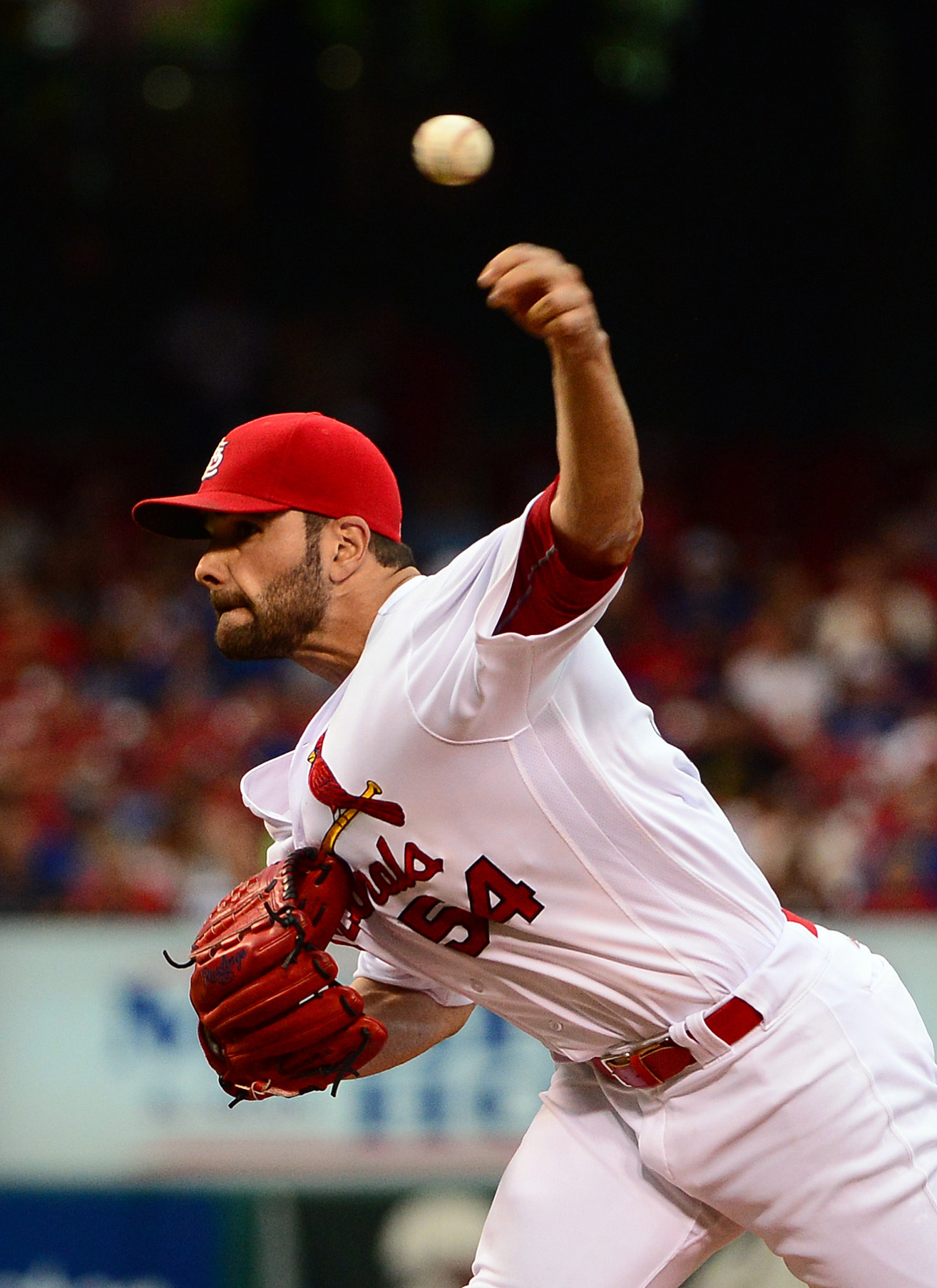 That depth left the Cardinals with a decision regarding 30-year-old Jaime Garcia, whose $12MM option they recently exercised. Given Garcia’s relative youth, his experience as a starter, and his outstanding ground-ball rate (56.5% for his career), he’s worth that kind of scratch, so the Cards’ call wasn’t a surprise. They could still try to deal him, though, and given the weak free agent market for starting pitching, Garcia would probably command at least a decent return.
Garcia alone wouldn’t be enough to acquire the sort of outfield talent the Cardinals are likely to seek, however. Perhaps an alternate route would be for the Cardinals to keep Garcia and trade another starting pitcher for a good outfielder. There is no indication the Cards are considering such a possibility, but it’s worth keeping in mind, since keeping a competent starter in Garcia and dangling a young, controllable arm like Wacha could be a way to get trade talks going. There’s precedent for such a trade, too, in the form of the November 2014 deal that sent Shelby Miller and Tyrell Jenkins to Atlanta for Jason Heyward and Jordan Walden. Dealing Peralta could be another option, since the Cardinals have infield depth and Peralta only has one year left on his contract.
In the bullpen, Korean closer Seung-hwan Oh will be back after a brilliant first season in the US, and Kevin Siegrist, 2015 Rule 5 pick Matthew Bowman and ground-ball specialist Seth Maness (who had UCL surgery in August but could be ready in time for Spring Training if all goes well) are all likely to return after 2016 seasons that were generally effective. Jonathan Broxton, too, had a passable first season in St. Louis and should be back in 2017.
Trevor Rosenthal, though, walked a way-too-high 6.5 batters per nine, suffering through a shoulder injury and ultimately losing his closer job to Oh. Rosenthal is set to be paid a hefty $6.3MM this season, but the Cardinals would seem to have no choice but to tender him, since he’s only 26, throws in the high 90s and still struck out 12.5 batters per nine innings even in what was otherwise a terrible season. Zach Duke, meanwhile, had Tommy John surgery in mid-October, and the Cardinals declined Walden’s option after two injury-riddled years. It’s likely the Cardinals can get some relief mileage out of some of their less established arms (including Sam Tuivailala and Miguel Socolovich) and starting depth. Someone like Lyons or Gonzales could ultimately replace the left-handed Duke. It wouldn’t be surprising, though, if the Cardinals sought out a veteran bullpen arm (either left-handed or right-handed).
The Cardinals’ offseason, then, could follow a variety of possible paths. The organization could potentially be punished for former scouting director Chris Correa’s hacking of the Astros’ database, and it’s unclear whether that punishment could affect the team’s drafting or something else. For now, though, the Cardinals will proceed as if they’ll have no restrictions. While there’s potential for the Cards to pull off a blockbuster, given the team’s pitching depth and outfield needs, the franchise seems unlikely to veer off its current path, and they’ll enter 2017 hoping to field yet another competitive club.
Photo courtesy of USA Today Sports Images.
Blue Jays Exercise Jason Grilli’s Option
The Blue Jays have announced that they’ve exercised righty Jason Grilli‘s 2017 option. (SB Nation’s Chris Cotillo was first to tweet the news.) That means they’ll pay Grilli a $3MM salary for next season, rather than a $250K buyout.
Jays GM Ross Atkins recently described exercising Grilli’s option as “as near to a no-brainer” as there exists in baseball, so the team’s decision comes as no surprise. Grilli turns 40 this week, but he was very effective with Toronto in 2016, posting a 3.64 ERA with 4.1 BB/9 and an outstanding 12.4 K/9 over 42 innings following a trade from Atlanta. His option was part of a two-year, $7MM deal he signed with the Braves following the 2014 season.
Grilli, the fourth overall pick in the 1997 draft, struggled for his first several seasons in the big leagues, but he emerged as a quality late-inning reliever and then a closer with the Pirates several years ago. In addition to the Bucs, Braves, and Blue Jays, he’s played for the Marlins, White Sox, Tigers, Rockies, Rangers and Angels over the course of a 14-year career in the Majors.
Indians Interested In Retaining Rajai Davis
The Indians are interested in keeping outfielder and would-be Game 7 hero Rajai Davis, notes MLB.com’s Jordan Bastian. President of baseball operations Chris Antonetti reiterates that the team would also like to retain slugger Mike Napoli.
“[B]oth for Raj and Mike, we expressed our desire to potentially have them back,” Antonetti says. “And we recognize they both have alternatives, based on the years that they had, but we’re certainly open to exploring different ways where both of them could be back here.”
Davis batted a modest .249/.306/.388 in the regular season after signing a one-year, $5.25MM deal last December, but he still managed to produce good value, thanks in part to his AL-leading 43 stolen bases (and only six caught stealings). He also, of course, had that memorable Game 7 homer.
“This is the best season I’ve ever had in my Major League career,” says Davis. “That would be great if we could get us both back, especially with this group of guys.”
Davis would undoubtedly still be a good complementary piece for Cleveland, particularly given his baserunning value. It will be interesting to see whether they keep him, though, given their outfield depth. Tyler Naquin, Lonnie Chisenhall and Brandon Guyer all performed well for the Indians this year and are controllable for 2017, and Guyer could potentially play center against left-handed pitching (although Cleveland used him exclusively at the corners down the stretch). The Indians also hope to have Michael Brantley healthy for next season, although his shoulder was a problem throughout the 2017 season.
Minor MLB Transactions: 11/4/16
Here are the day’s minor moves from around the league…
- The Orioles declined the team’s previously unknown option over righty Logan Ondrusek, as BaltimoreBaseball.com’s Dan Connolly was among those to tweet. Ondrusek had signed with the Orioles out of Japan in the middle of the 2016 season, but was outrighted in late August after a brief stint. It was essentially a formality at this point for the team to decline the option (which was for an unknown amount). Baltimore had hoped that adding Ondrusek would represent a creative way to bolster their relief corps in the middle of the season, and brought him back stateside after he continued to produce good results for the NPB’s Yakult Swallows.
- The Reds announced that utilityman Ivan De Jesus has been outrighted off of the 40-man roster. He has been a fairly significant part of the major league team over the last two years, playing in 180 total games. But his batting output dwindled in 2016: despite a slightly higher batting average and identical .311 OBP in comparison to his 2015 line, De Jesus slugged only .312 in his 243 plate appearances.
- Two recently outrighted Mariners — lefty Charlie Furbush and catcher Steve Clevenger — have both elected free agency rather than accepting a minor league assignment, per MLB.com’s Greg Johns. The team is still waiting to learn what righty Ryan Cook will do; he, too, was recently cut from the 40-man.
- Lefty Ricky Romero will remain with the Giants on a minor league deal, according to Matt Eddy of Baseball America (via Twitter). Soon to tun 32, Romero is now well removed from his days as an effective major league starter. He only appeared in two games in 2016, both at the Triple-A level, and has thrown just 53 2/3 total innings professionally since 2013 — the last season in which he reached the big leagues.
- The Yankees selected the contracts of catcher Kyle Higashioka and right-hander Domingo German, adding them to thee 40-man roster in advance of the Rule 5 draft. Though he’s already 26, and has been Rule 5-eligible before, Higashioka is coming off of his most promising season as a professional. Over 416 plate appearances at Double-A and Triple-A, he slashed .276/.337/.511 with 21 home runs. Meanwhile, the 24-year-old German pitched last year at the Class A and High-A level after missing all of 2015 due to Tommy John surgery. He ended up starting ten games and posting a 3.81 ERA over 49 2/3 innings, with 6.9 K/9 against 2.0 BB/9, but will look to get fully back on his promising track next year.
Earlier Updates
- The Tigers announced that they have selected the contracts of right-hander Myles Jaye and left-hander Chad Bell from Triple-A Toledo. The 24-year-old Jaye split the 2016 season between Detroit’s Double-A and Triple-A affiliates, working to a combined 3.95 ERA with 7.5 K/9, 2.3 BB/9 and a 53.3 percent ground-ball rate in 161 2/3 innings (28 starts). MLB.com ranks Jaye as Detroit’s No. 26 prospect, writing that he has a 91-93 mph and a solid three-pitch mix but also noting that he lacks an out pitch. Their report pegs his ceiling as a fourth or fifth starter and says he’s not far from Major League readiness. Meanwhile, the 27-year-old Bell posted a 3.29 ERA with 8.1 K/9, 3.9 BB/9 and a 52 percent ground-ball rate in 98 1/3 innings at Triple-A between the Rangers and Tigers organizations. Detroit picked him up from Texas in the May trade that sent catcher Bobby Wilson to the Rangers. Bell worked more as a reliever than a starter and held opposing lefties to a .605 OPS, including a .286 slugging percentage. He’ll join Kyle Ryan, Blaine Hardy and Joe Mantiply as options to serve as a second lefty behind Justin Wilson in Detroit’s bullpen next year.
Royals Open Extension Talks With Danny Duffy
The Royals have opened extension talks with lefty Danny Duffy, MLB.com’s Jeffrey Flanagan reports. At this point, it seems that discussions have not moved beyond the preliminary stage, but there is said to be mutual interest in a deal.
While there doesn’t appear to be any particular momentum toward a pact — Flanagan says the sides have yet to exchange “firm details or proposals” — it’s notable that the talks are taking place. Duffy is entering his final season of arbitration eligibility, making him one of several notable Kansas City players who’ll qualify for free agency after the year. While the club is already locked in for longer commitments on several key regulars, there appear to be some payroll pressures and there is plenty of uncertainty as to how things will play out with so many fixtures set to depart.
Contract talks were inevitable, of course; if nothing else, there’s the matter of Duffy’s final arb payday to be sorted out. MLBTR projects him to earn $8.2MM after a strong year in which he racked up 179 2/3 innings despite making 16 relief appearances to go with his 26 starts. He ended the year with a 3.51 ERA and 9.4 K/9 against 2.1 BB/9, while also showing improved fastball velocity, filling up the strike zone more than ever, and registering a career-high 12.4% swinging-strike rate.
GM Dayton Moore declined to comment, noting only that the club hopes to secure its best homegrown players when it’s able. And Duffy said he wasn’t aware of the talks, though he left no doubt that he is hoping for a long-term deal with the team. “I want to stay with the Royals long term,” he said. “One hundred percent. For sure.”
Despite his evident interest, finding a valuation for Duffy that suits the team’s needs will not be an easy task. Duffy will be entering his age-29 season when he qualifies for free agency, so he’ll have prime years to sell, and he showed enough last year to believe he could line up for a rather significant contract with another quality campaign. While his relative youth also enhances his appeal to Kansas City, it means that the team will either need to stretch beyond its typical comfort zone — after doing so already last winter for Ian Kennedy — or try to convince Duffy to take a team-friendly payout.