
Austin Jackson Out At Least 6 Weeks With Torn Meniscus; Petricka, Webb Out For Season
The White Sox announced today that they’ve placed center fielder Austin Jackson on the 15-day disabled list with a medial meniscus tear in his left knee. Jackson will undergo surgery to repair the injury and will miss a minimum of six weeks, GM Rick Hahn told reporters, including Dan Hayes of CSN Chicago (Twitter link). Beyond that, Hayes tweets that Hahn informed the media that relievers Jake Petricka and Daniel Webb have undergone season-ending surgery. Webb had Tommy John surgery to repair a torn ulnar collateral ligament, while Petricka required surgery to repair an impingement in his right hip. Outfielder Jason Coats has been recalled from Triple-A Charlotte to take Jackson’s spot on the roster.
The loss of Jackson won’t subtract an overly productive bat from the club’s everyday lineup — Jackson is hitting .254/.318/.343 through 204 plate appearances — but it will thin the team’s outfield depth and deprive the Sox of their primary center fielder. Adam Eaton shifted over to center field for tonight’s contest and could very well take the reins at the position he frequented for the first four seasons of his big league career. Jackson had posted below-average defensive metrics in center this season, but Eaton rated as arguably the best defender in all of baseball while playing right field, so moving him off that position could be a detriment to the club’s overall outfield defense even if his work in center is a small step up from that of Jackson. Eaton, after all, also carries below-average Defensive Runs Saved and Ultimate Zone Rating marks in center field for his career.
Petricka, 28, is a particularly big loss for the Chicago bullpen. While he’s hardly a shutdown reliever, the former second-round pick tallied 144 1/3 innings of 3.24 ERA ball across the 2013-15 seasons for the ChiSox and had averaged 64.5 appearances over the past two seasons. He’s been limited to eight innings this year, however, as a result of the hip injury that ultimately required surgery. Webb, meanwhile, opened the season in Triple-A and pitched just one inning in late April before landing on the disabled list with right flexor inflammation. While he struggled through the 2015 campaign (6.30 ERA in 30 innings), Webb was better in 2013-14, pitching to a 3.87 ERA in a combined 79 innings out of the bullpen. The hard-thrower averaged nearly 96 mph on his fastball in that 2013-14 span, but his heater was sitting at 92 mph in his lone big league appearance of the 2016 season (though he still managed to strike out the side).
While the Sox can stick with Coats and Avisail Garcia and cover right field internally, the team has shown a very proactive approach in attempting to right the ship after a hot start disintegrated into a .500 record. The South Siders have already picked up James Shields in a trade and designated Mat Latos for assignment, and earlier today the team promoted top shortstop prospect Tim Anderson from Triple-A and designated veteran Jimmy Rollins for assignment. The Sox have already been connected to both left-handed bats and bullpen help, so it’s reason to believe that these significant hits to their depth could push Hahn and his staff into further action on the trade market. Jay Bruce and, to a lesser extent, Carlos Gonzalez stand out as reasonable options on that would satisfy Chicago’s desire for a left-handed bat and fill the right field void left by Eaton. Alternatively, they could pursue a left-handed bat with center field experience such as San Diego’s Jon Jay. Petricka and Webb, while neither are exactly cornerstone relievers for the Sox, further deplete the organizational depth and could lead the Sox to pursue any of the considerable amount of relievers that are currently available or could become available on the trade market.
7 Surprise Players Making Cases To Land Qualifying Offers
Since Major League Baseball instituted the qualifying offer system in 2012, the cost to extend one to a free agent has gradually risen from $13.3MM on a single-year contract to $15.8MM. That number figures to increase again this year, which is all the more reason for teams to be vigilant when distributing them. Last year was the first time a player accepted the offer – three did, actually – which prevented their teams from watching them depart in free agency in favor of a first-round compensatory pick.
Looking ahead to the upcoming offseason, potential free agents like Yoenis Cespedes, Jose Bautista and Kenley Jansen, among others, are slam dunks to receive qualifying offers if they reach November without being traded and without new contracts (Cespedes would have to opt out of his current deal, which he seems likely to do). That premier group of shoo-ins could be joined by a slew of players who have been surprise standouts so far this year. Those players are…
Mark Trumbo, 1B/RF/DH, Orioles: Six months ago, the Mariners dealt Trumbo to Baltimore for backup catcher Steve Clevenger in what amounted to a salary dump. Trumbo established himself as a notable home run threat during the first five years of his major league career, hitting 131 balls over the fence from 2011-15, but that’s about all he did well. In addition to proving himself a defensive liability, Trumbo struck out too much, walked too little and got on base at a paltry .301 clip. The Mariners, already Trumbo’s third team, decided it made more sense to get rid of his salary (which ended up at $9.15MM after a January arbitration hearing) than deal with his shortcomings.
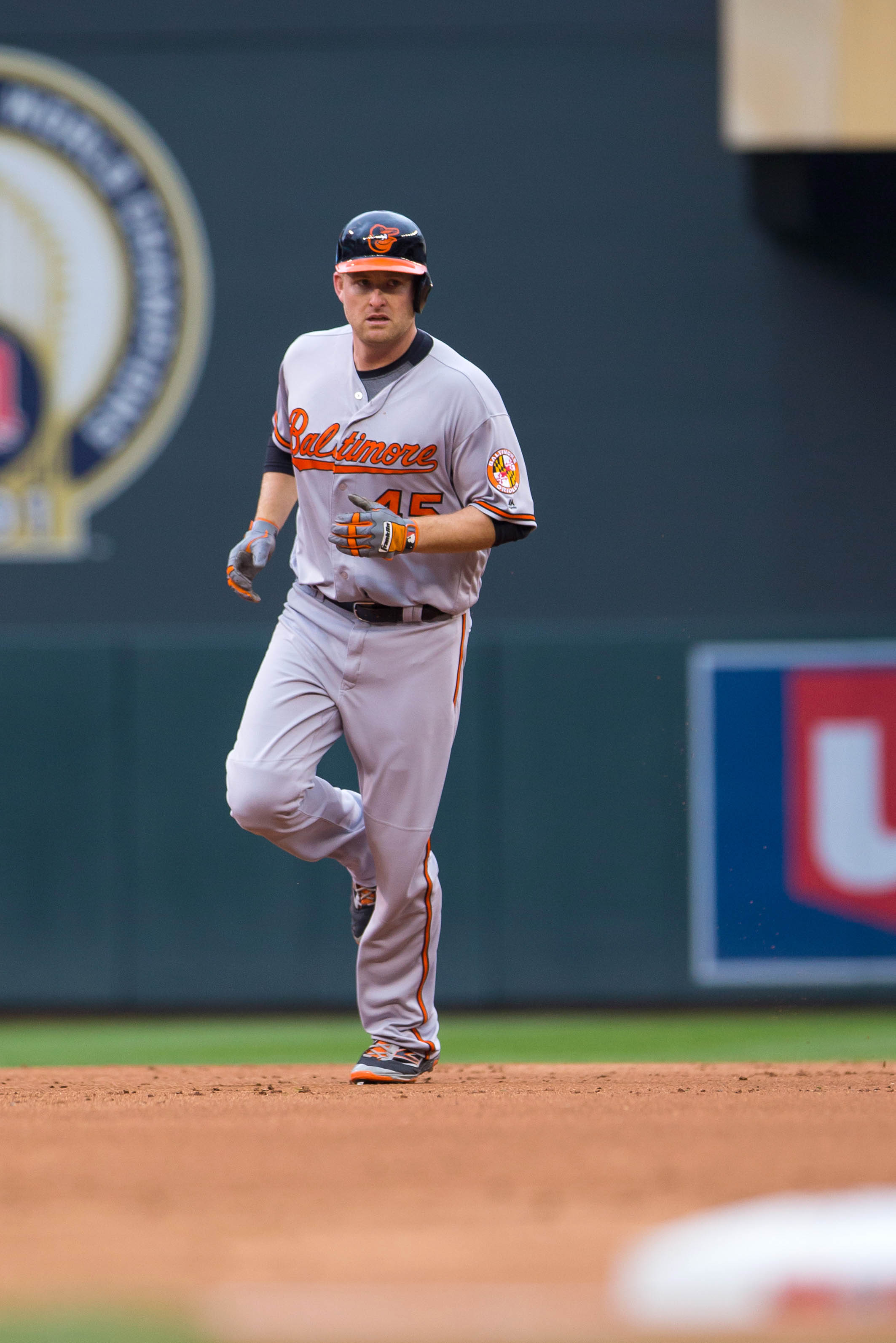
The Baltimore version of Trumbo brings the same flaws to the table as he did in previous stops, but now he’s doing his best to offset his imperfections by producing like an elite hitter. The 30-year-old has already totaled a major league-leading 20 homers, and he ranks fourth in ISO (.316, 99 points higher than his career mark) and is tied for fifth in wRC+ (155) through 251 plate appearances.
Trumbo – who has slashed .296/.347/.609 – has helped himself by chasing fewer bad pitches than ever, having swung at a career-best 32.7 percent of offerings outside the strike zone, and has elevated the ball and hit it both hard and far when he has swung. Trumbo’s 43.1 fly ball percentage and 37.5 ground-ball rate are both personal bests, and Statcast (link via Baseball Savant) indicates that the ball is coming off Trumbo’s bat at a mean of 95.3 miles per hour – good for fourth in the league – and traveling an average of 250 feet. At that distance, he’s tied with teammate Chris Davis, among others, for seventh in the league. Further, as pointed out earlier this week by FanGraphs’ Jeff Sullivan, Trumbo’s stellar production at the plate goes all the way back to last July – nearly a calendar year. All things considered, the Orioles have a prodigious slugger who’s on a collision course with a qualifying offer.
Rich Hill, SP, Athletics: Hill went on the disabled list Thursday with a strained right groin, which is a troubling development for someone who has a long injury history and hasn’t exceeded 100 innings in a major league season since 2007. Nevertheless, the 36-year-old was among the top starters in baseball over the season’s initial two months. Eleven starts and 64 innings into 2016, the curveball specialist owns the league’s ninth-best ERA (2.25) and 10th-best K/9 (10.41), and Hill has amassed those numbers while inducing plenty of grounders (48.1 percent rate) and generating soft contact (87 mph exit velocity). Both Hill’s early season brilliance and the A’s struggles make him an ideal candidate to move prior to the Aug. 1 trade deadline. If the A’s do sell Hill, he won’t be eligible to receive a qualifying offer in the offseason from his new team. In the event Oakland keeps Hill and he doesn’t turn into a pumpkin before the end of the season, he’ll be a strong bet to land a qualifying offer. Given Hill’s journeyman status, including a stint in the independent Atlantic League last summer, his story is already rather improbable. If he goes from Long Island Duck in July 2014 to major league qualifying offer recipient in November 2016, it would add yet another unexpected chapter to the book.
Michael Saunders, LF, Blue Jays: When it comes to Toronto’s pending free agents, almost all of the attention has understandably gone to Bautista and Edwin Encarnacion. Saunders’ start to the year has also made him worth paying attention to, though, as he has rebounded from an injury-ravaged 2015 to upstage his more accomplished teammates. Through his first 222 trips to the plate, Saunders leads all Jays regulars – including reigning AL MVP Josh Donaldson – in average (.294), OBP (.374) and slugging percentage (.528), and he’s third on the team in both ISO (.234) and fWAR (1.5). On a leaguewide scale, Saunders’ 145 wRC+ places him in a tie with former NL MVP Ryan Braun and slightly ahead of other world-class talents like Paul Goldschmidt, Anthony Rizzo, Miguel Cabrera and Bryce Harper. It’s possible Saunders’ success is largely driven by a .376 BABIP and he’ll eventually revert to being merely the decent cog he was during his most productive seasons with the Mariners from 2012-14. For now, he’s following in the footsteps of Bautista and Encarnacion as the Jays’ latest out-of-nowhere offensive star. That puts Saunders on pace to once again mimic those two in receiving a qualifying offer.
Latest On Zack Collins
UPDATE: There no formal agreement between the two sides in place as of yet, Murray tweets, retracting his initial report.
10:19am: The White Sox have agreed to terms with first-round pick Zack Collins, per Baseball Essential’s Robert Murray (links to Twitter). The University of Miami catcher was selected with the 10th overall pick, which came with a slot value of $3,380,600. SB Nation’s Chris Cotillo tweets that Collins signed for slot value.
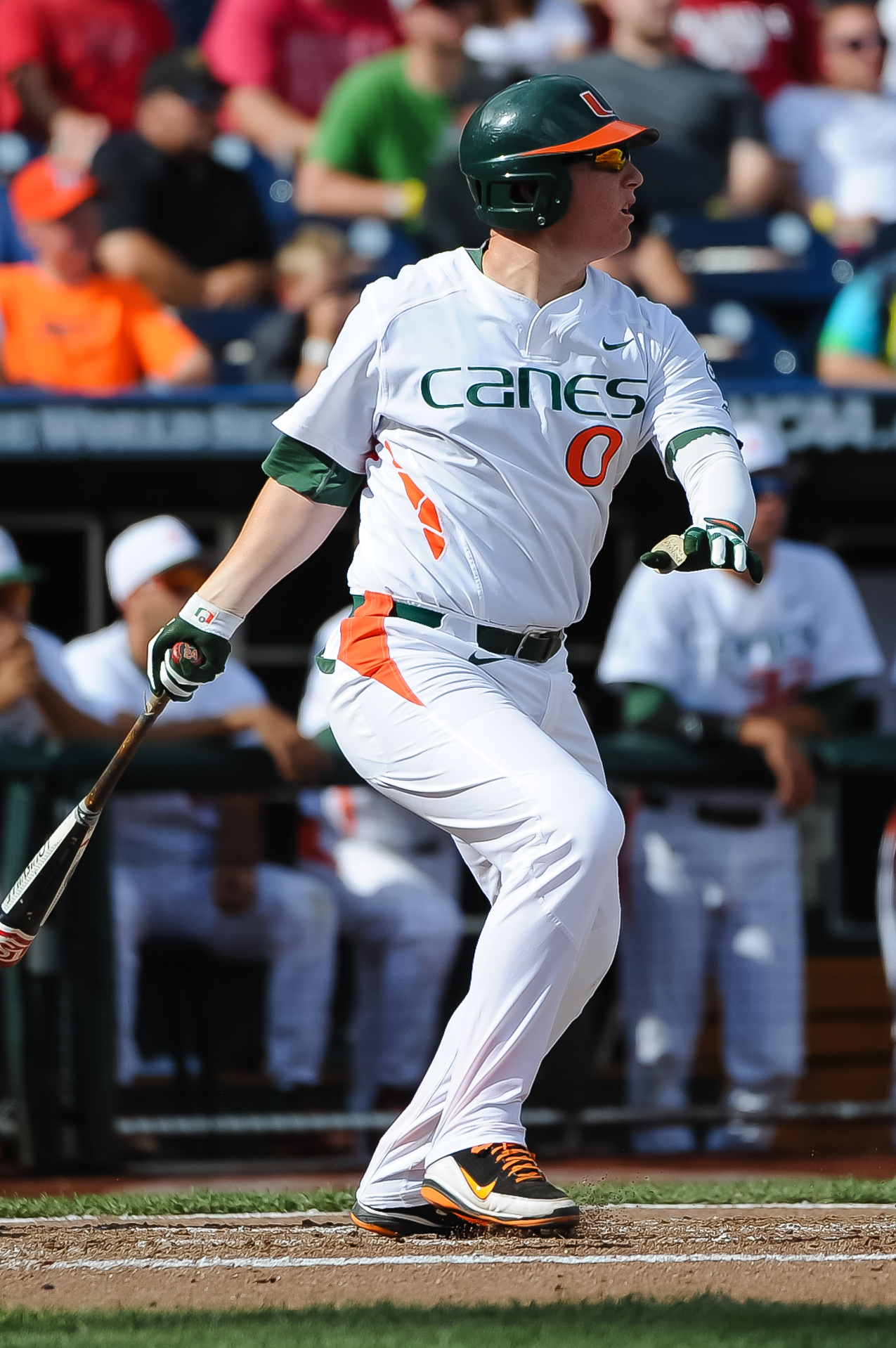
Collins entered the draft ranked 14th on the Top 200 prospects list from Jonathan Mayo and Jim Callis of MLB.com, ranked 16th by Baseball America and ranked 18th by ESPN’s Keith Law. Mayo and Callis note that Collins was a top 100 draft prospect back in 2013 but slid to the Reds in the 27th round due to his strong commitment to Miami. All three scouting reports agree that Collins is a bat-first catcher that may not be able to stay behind the plate, as Law notes that a move to first base or DH is likely. The other two give him more of a chance to remain at catcher, noting that he’s improved his throwing. BA writes that he’ll never be an above-average backstop but has a chance to stay there thanks to the improved throwing.
Collins addressed those perceived defensive shortcomings in an interview with MLBTR contributor Chuck Wasserstrom earlier this spring, telling Wasserstrom: “Obviously, I’m an offensive catcher, but I’m working on my defense a lot lately. I think I’ve gotten a lot better defensively … I’ve worked a lot on my blocking and receiving and throwing and footwork – all that kind of stuff. We actually have a new catching coach down here in Miami (Norberto Lopez), and he’s helped me a ton.” Collins also talked about his extremely patient approach at the plate and the importance of recognizing that it’s best for the team to take a walk when he’s not presented with pitches to hit as opposed expanding the zone to try to put a ball in the seats.
In his junior season at Miami, Collins batted an impressive .358/.534/.631 with 13 homers and nine doubles in 176 at-bats. He drew 69 walks against just 48 strikeouts as well, and that display of power and a discerning eye at the plate led MLB.com to peg him as a potential 20-homer bat on a year-to-year basis. Collins is the first player from this year’s first round to reportedly agree to terms with a club, and we at MLBTR will be continually updating our list of first-round and list of compensation/competitive balance round A picks with numbers as the players begin to sign. The White Sox had a draft pool of $9.354MM, so with Collins signing for slot value, they have $5.973MM remaining to spend on their other selections before exceeding their pool (and $6.441MM to spend before incurring the loss of future draft picks for exceeding said pool by more than five percent).
Photo courtesy of USA Today Sports Images.
The Cases For And Against A Julio Teheran Trade
We’re firing up another new series here at MLBTR in which we’ll take one oft-discussed topic each week and present the high-level cases both for and against the move in question. Following that, we’ll present a roundtable of opinions from the MLBTR staff in a separate post and ask our reader base to weigh in on the matter with a poll.
With the Braves in full rebuild mode and their stated willingness to listen to offers for anyone not named Freddie Freeman, it’s only natural that Julio Teheran‘s name has come up frequently early in the summer. Last week, MLBTR’s Connor Byrne examined the difficulties in identifying a trade partner that had both the need to add Teheran and the ability to part with the MLB-ready types of young talent which Atlanta is said to covet in a theoretical deal.
Teheran is off to an incredible start to his 2016 season, having pitched to a 2.85 ERA with 8.5 K/9, 2.5 BB/9 and a 42.5 percent ground-ball rate in 82 innings out of the Atlanta rotation. He also looks to be well on his way to a third straight season of 200+ innings in just his age-25 season. He’s benefited from some good fortune in terms of BABIP (.228) and strand rate (83 percent), but Teheran has posted a BABIP lower than the league average throughout his career and also posted strand rates that are above the league norm, so while some regression can be expected, it probably shouldn’t be assumed that those numbers will trend all the way back to the league averages.
We’re a good seven and a half weeks away from this year’s non-waiver trade deadline, and Teheran is pitching brilliantly for a last-place club in the midst of a rebuild, expect to hear his name floated with some degree of regularity between now and Aug. 1. However, does the very fact that he’s an appealing asset on a rebuilding club mean that Teheran should be traded? Let’s look at both sides of the coin.
The case for trading Julio Teheran
The case for the Braves to trade any player on their big league roster always starts at the same place: they’re a team that wasn’t good in 2015 and has been significantly worse in 2016. Atlanta is currently on a course for the No. 1 overall pick in the 2017 draft, and they’ll be among the few teams that are definitive sellers leading up to the Aug. 1 non-waiver trading deadline. The Braves will probably field calls on any and all pieces that could help a contending club, and Teheran, as noted above, more than fits that bill.
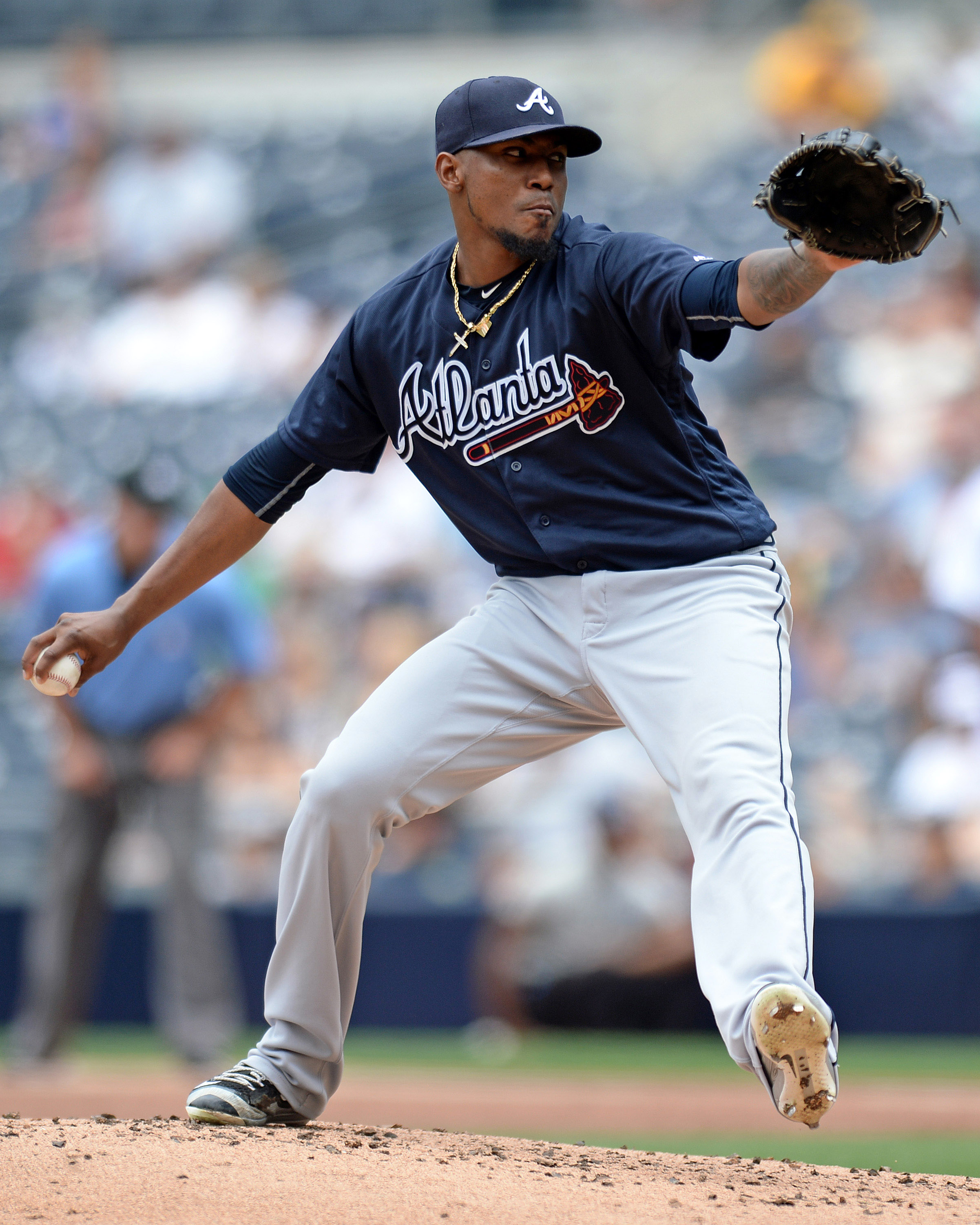
Given his strong start to the season, his highly affordable contract and the utter dearth of impact arms not only on the summer trade market but also on the upcoming free-agent market, there’s a chance that the Braves could coerce a team into parting with a potentially exorbitant package of young talent to pry Teheran from their hands. Atlanta reached that nexus of frenzied demand and willingness to surrender elite talent in the offseason’s Shelby Miller blockbuster, and there’s a case to be made that Teheran could, or at least should, be worth more. The D-backs, after all, were acquiring three years of Miller at arbitration prices, whereas a team dealing for Teheran would be taking on the remainder of this season’s salary ($2.06MM as of this writing) and three more years at $26.3MM. That’s three and a half years of Teheran for roughly $28.14MM plus a club option for $12MM in 2020 — his age-29 season. Last summer, the Rangers surrendered a package of Jerad Eickhoff, Jake Thompson, Jorge Alfaro, Nick Williams and Alec Asher in the Cole Hamels/Jake Diekman trade. Teheran’s entire contract is worth barely more than a season of Hamels, financially speaking.
Moving Teheran this summer could net the Braves an MLB-ready asset (as Eickhoff gave the Phillies or as Ender Inciarte and Aaron Blair gave the Braves in the Miller deal) as well as multiple high-ceiling, top 100 range prospects. The 2016 product is bad, and moving Teheran right now could net them two or more pieces that would help in 2017, when more of their vaunted farm system is at the Major League level.
The case against trading Julio Teheran
On the flip side, the Braves are aiming to contend in 2017, and Teheran helps them tremendously in that vein. Matt Wisler‘s solid start to the season aside, Teheran is the Braves’ best pitcher. He misses more bats, generates more grounders and has displayed better control over the course of his career than Wisler has in his. Trading Teheran almost certainly makes the Braves a worse team in 2016, and there’s a very real chance that doing so would make them worse in 2017 as well. Acquiring MLB-ready assets is always a plus, but prospects aren’t guaranteed, no matter how highly regarded they may be. Teheran is performing well in the Majors right now and has done so since 2013, posting a cumulative 3.30 ERA in 689 1/3 innings.
The contract, as mentioned above, gives the Braves the best years of a pitcher that may not be a definitive ace but can clearly pitch near the top of a Major League rotation at an exceptionally affordable rate. Teheran is in his fourth season of big league service and would’ve been arbitration-eligible for the second time this coming winter. He’s earning salaries of $3.3MM, $6.3MM and $8MM for his arbitration seasons and can be controlled for just $23MM total for his first two would-be free-agent seasons. His arb years are cheaper than the likes of Wade Miley and Lance Lynn, and Teheran’s free-agent seasons are priced somewhere in the range of 50 to 75 percent of what they’d command on the open market (as is the case with most pre-arbitration extensions). There’s an enormous amount of value to the Braves themselves in that deal.
Beyond the on-field and financial reasons for keeping Teheran, the Braves have been aggressively working to fight the notion that they’re “tanking” in order to continue to build up the farm through the draft. General manager John Coppolella has repeatedly stressed that his hope for the 2016 season was an improvement over 2015’s record and strides toward a competitive product in 2017 — the opening season of the Braves’ new stadium, Sun Trust Park. Trading away their best pitcher for even more young, controllable pieces would only further fuel the tanking narrative, even if the return brought the potential for multiple contributors to the 2016-17 roster. The Braves would also face continued backlash from a fanbase that has been particularly vocal about its thoughts on the current rebuild, and while fan reaction shouldn’t be the deciding factor in a move, it’s certainly something of which the Braves’ brass must be mindful as it approaches the Aug. 1 non-waiver trade deadline.
Photo courtesy of USA Today Sports Images.
Heyman’s Latest: D-Backs, Villar, Mets, Yanks, Gibbons, Ramos
Diamondbacks GM Dave Stewart tells Jon Heyman of todaysknuckleball.com that the organization is “not giving up” despite a dismal start to the year. He did acknowledge that “the signs are not real good right now,” though. And in suggesting that the team thinks there’s a chance A.J. Pollock could return by September, Stewart added, somewhat ominously: “Hopefully, we’re still in it.”
Here are some more notes from the column:
- When asked whether the Brewers would consider dealing shortstop Jonathan Villar this summer, GM David Stearns suggested it would be unlikely. “We are looking to acquire players like that,” he said. It’s been quite a turnaround for the 25-year-old since he followed Stearns from the Astros to Milwaukee. Over 250 plate appearances, Villar owns a .306/.405/.450 batting line with a league-leading 22 steals. Better still, he’ll likely fall shy of Super Two status next year, so there’s plenty of cheap control remaining.
- The Mets haven’t tried to open extension talks with either Noah Syndergaard or Jacob deGrom, per Heyman. It seems the same holds true of Matt Harvey, who is further ahead in service time, with a source telling Heyman that the star righty is highly unlikely to be retained past his arb eligibility. It is a bit surprising to learn, though, that the team hasn’t at least looked into whether there might be a bargain to be had amongst the pre-arb righties — deGrom in particular, since he is somewhat older and might be more willing to settle for a team-friendly rate.
- The Yankees, meanwhile, won’t sell in the near-term, but will reconsider in the run-up to the trade period. That’s not surprising to hear; the team is, after all, still treading water in the division.
- While the Blue Jays don’t have any inclination to part with John Gibbons at present, Heyman suggests it’s unlikely he’ll be retained past the present season. A “huge year” could change that, though.
- The Nationals dabbled with the idea of upgrading over Wilson Ramos over the winter, but decided against it — or, at least didn’t find a deal to their liking. That’s turned out to be wise in retrospect, as the big Venezuelan is off to a notable start at the plate: .345/.392/.554 with eight home runs and just 21 walks against 13 strikeouts over 181 plate appearances. The pending free agent remains an interesting player to watch the rest of the way.
Minor MLB Transactions: 6/9/16
Here are the day’s minor moves:
- Padres corner infielder Josh Satin has retired, Michael Mayer of Metsmerized Online first reported (Twitter link). The 31-year-old has seen action in four seasons with the Mets, compiling a .243/.346/.351 slash line in 292 big league plate appearances. He has scuffled in limited playing time this year at Triple-A, though, with just eight base knocks in 49 trips to the dish.
- The Giants have acquired outfielder Shawon Dunston Jr. from the Cubs, as he himself tweeted (h/t to Henry Schulman of the San Francisco Chronicle, via Twitter). It’s a cash deal for the son of the former big leaguer, who also went from Chicago to San Francisco in the mid-nineties. Of course, the younger Dunston hasn’t yet cracked the majors; far from it, in fact. Signed to a significant bonus after being picked in the 11th round of the 2011 draft, he has yet to advance past the High-A level at 23 years of age. Over 128 plate appearances there this year, he owns a .219/.299/.342 batting line with seven steals.
2016 MLB Draft Results — Compensation & Competitive Balance Round A
With the traditional first-round picks in the books, we’ll use this post to track the “sandwich” selections that come before the second round: compensatory picks awarded to clubs that lost QO-declining free agents as well as Round A of the competitive balance picks (tradeable choices that are awarded by lottery to low-revenue/small market clubs).
Click here for bonus pools and other important context, including links to scouting reports and other assessments. Here are the picks:
Compensation Picks
24. Padres — Hudson Sanchez, SS/3B, Carroll Senior HS, Southlake, TX
25. Padres — Eric Lauer, LHP, Kent State University
26. White Sox — Zack Burdi, RHP, University of Louisville
27. Orioles — Cody Sedlock, RHP, University of Illinois
28. Nationals — Carter Kieboom, SS/3B, Walton HS, Marietta, GA
29. Nationals — Dane Dunning, RHP, University of Florida
30. Rangers — Cole Ragans, LHP, North Florida Christian HS, Crawfordville, FL
31. Mets — Anthony Kay, LHP, University of Connecticut
32. Dodgers — Will Smith, C, University of Louisville
33. Cardinals — Dylan Carlson, OF, Elk Grove HS, Elk Grove, CA
34. Cardinals — Dakota Hudson, RHP, Mississippi State University
Competitive Balance (Round A) Picks
35. Reds — Taylor Trammell, OF, Mount Paran Christian School, Kennesaw, GA
36. Dodgers — Jordan Sheffield, RHP, Vanderbilt University
37. Athletics — Daulton Jefferies, RHP, University of California
38. Rockies — Robert Tyler, RHP, University of Georgia
39. Diamondbacks — Anfernee Grier, OF, Auburn University
40. Braves (via Marlins) — Joey Wentz, LHP, Shawnee Mission East HS, Prairie Village, KS
41. Pirates — Nick Lodolo, LHP, Damien HS, La Verne, CA
2016 MLB Draft Results — First Round
The 2016 MLB Draft is underway, and we’ll track the first-round picks as they come in — starting with the first 23 picks (worst-to-first, and excepting teams that sacrificed picks to sign qualifying offer-declining free agents). We’ll fire up another post for the “sandwich” choices: selections awarded to clubs that lost QO-declining free agents and competitive balance Round A picks.
Click here for bonus pools and other important context, including links to scouting reports and other assessments. Here are the picks (links to players who participated in MLBTR’s Draft Prospect Q&A Series):
- Phillies — Mickey Moniak, OF, La Costa Canyon HS, Carlsbad, CA
- Reds — Nick Senzel, IF, University of Tennessee
- Braves — Ian Anderson, RHP, Shenendehowa HS, Clifton Park, NY
- Rockies — Riley Pint, RHP, St. Thomas Aquinas HS, Overland Park, KS
- Brewers — Corey Ray, OF, University of Louisville
- Athletics — A.J. Puk, LHP, University of Florida
- Marlins — Braxton Garrett, LHP, Florence HS, Florence, AL
- Padres — Cal Quantrill, RHP, Stanford University
- Tigers — Matt Manning, RHP, Sheldon HS, Sacramento, CA
- White Sox — Zack Collins, C/1B, University of Miami — Agreed to sign for slot value ($3.3806MM)
- Mariners — Kyle Lewis, OF, Mercer University
- Red Sox — Jason Groome, LHP, Barnegat HS, Barnegat, NJ
- Rays — Joshua Lowe, 3B, Pope HS, Marietta, GA
- Indians — Will Benson, OF, The Westminster Schools, Atlanta, GA
- Twins — Alex Kirilloff, OF, Plum HS, Pittsburgh, PA
- Angels — Matt Thaiss, C, University of Virginia
- Astros — Forrest Whitley, RHP, Alamo Heights HS, San Antonio, TX
- Yankees — Blake Rutherford, OF, Chaminade College Prep HS, Canoga Park, CA
- Mets — Justin Dunn, RHP, Boston College
- Dodgers — Gavin Lux, SS, Indian Trail Academy, Kenosha, WI
- Blue Jays — T.J. Zeuch, RHP, University of Pittsburgh
- Pirates — Will Craig, RHP/3B, Wake Forest
- Cardinals — Delvin Perez, SS, International Baseball Academy, Ceiba, Puerto Rico
Cubs To Sign Joel Peralta
The Cubs have agreed to a minor league deal with veteran righty Joel Peralta, Ken Rosenthal of FOX Sports tweets. The agreement is pending a physical.
Peralta, 40, was recently cut loose by the Mariners after a rough start to the season. Seattle still owes him the balance of his $1.25MM salary, less whatever he can earn (presumably, at the league minimum) with Chicago or another organization.
Though Peralta has pitched to a 5.40 ERA in his 23 1/3 frames on the year, there is some reason for optimism. He also struck out 10.8 and walked only 2.7 batters per nine with the M’s, and he’s maintained his velocity while hitting the zone and managing contact much as he has in prior years. The trick will be limiting the long ball, which has hurt the flyball-prone reliever thus far in 2016.
Per the report, the Blue Jays and Royals also showed interest before Peralta elected to reunite with manager Joe Maddon. Many of Peralta’s best seasons came with Tampa Bay during his four-year run with the organization.
Phillies Select Mickey Moniak With First Overall Pick
The Phillies have made it official, taking high school outfielder Mickey Moniak with the first overall selection of the 2016 draft. That makes him the first draft choice of GM Matt Klentak.
Philadelphia had been connected with several other players in recent months, including southpaws Jason Groome and A.J. Puk. But the rebuilding organization ended up going with the youngster out of Carlsbad, California, as had seemed increasingly likely in recent weeks. He is currently committed to play at UCLA.
Moniak doesn’t wow with off-the-charts physical prowess, but ESPN.com’s Keith Law says he “appears to have the best hit tool in the high school class.” Baseball America and MLB.com’s Jonathan Mayo and Jim Callis join Law in rating Moniak the fifth-best overall talent in the draft.
While some question whether he’ll ever develop significant power to match his 6’2 frame, the evaluators agree that Moniak ought to be capable of manning center field in the long run, with his good wheels aiding him both in the field and on the basepaths. The 18-year-old draws universal praise for his instincts on the field as well as his work ethic.
It seems likely that the Phils are angling to preserve some of their spending power with the choice. That’s not to say that Moniak isn’t a top talent — by all accounts he is. Rather, somewhat like the Astros did in going with Carlos Correa over Byron Buxton back in 2012, the idea would be to take a more affordable player with hopes of adding yet more talent later in the draft. (Lance McCullers, Rio Ruiz, Brett Phillips, and Preston Tucker were among the other early-round choices that year by Houston.)
Philadelphia has $9.015MM to put towards signing Moniak, but it can allocate any savings to other selections. The club’s total pool adds up to just over $13.4MM, ranking second to the Reds — who just top their National League foes thanks to landing the first overall competitive balance Round A selection.