
NL East Notes: Giolito, Henderson, Appel, Toussaint, Newcomb
If Lucas Giolito isn’t in the majors by June then something has gone wrong, a scout tells Jayson Stark of ESPN, Giolito is the number three prospect in the game per ESPN, Baseball Prospectus, and MLB.com. Giolito features a 98 mph fastball, plus-plus curve, and an above average changeup. Stark and those he’s talked to can’t offer enough praise, throwing around terms like future “superstar” without reservation. The Nationals will hope Giolito can provide the same midseason boost their division rivals enjoyed from Noah Syndergaard and Steven Matz last season.
Here’s more from the NL East:
- Mets non-roster invitee Jim Henderson is battling for one of the final bullpen jobs, writes Glenn Sattell of MLB.com. The former closer has missed most of the last two seasons with a shoulder injury. He’s finally healthy, throwing in the 90s, and turning in solid results. With only a couple spots open to competition, Henderson will face stiff competition. The good news for him is this: if he’s really healthy, somebody will have a job for him.
- Former first overall pick Mark Appel may be well served by his recent change of scenery, writes Jim Salisbury of Baseball America. Appel, 25, joined the Phillies organization over the offseason as a part of the Ken Giles trade. Despite well-regarded stuff, a straight fastball and command issues have limited his performance to date. The command has continued to be an issue this spring, but perhaps a new coaching staff can help to add a new perspective. My own two cents – the comparison between Appel and former first overall pick Luke Hochevar is an easy one. Hochevar didn’t unlock his talent until he transitioned to relief. Appel may also benefit from such a move, and he could have the necessary stuff to switch back to starting like Carlos Carrasco.
- A couple Braves trade acquisitions are turning heads, writes J.J. Cooper of Baseball America. Touki Toussaint joined Atlanta as compensation for taking on Bronson Arroyo‘s salary. While his stuff continues to impress, command and control issues plague him. He’s described as possessing a quality fastball, curve, and change. Meanwhile, Sean Newcomb has shown better strikeout stuff throughout his minor league career. Acquired in the Andrelton Simmons trade, Newcomb also has a history of shaky command.
Red Sox Notes: Castillo, Sandoval, Shaw, Moncada, Kelly
Rusney Castillo needs to improve against hard fastballs, writes Alex Speier of the Boston Globe. Last season, the Red Sox outfielder hit just .203/.230/.203 against fastballs of 93 mph or harder. The weak performance is doubly damning because the AL East is populated with plenty of hard throwing hurlers. If Castillo can’t figure out how to barrel up more heaters, he’ll find his playing time dwindling. Fortunately, Castillo and the Red Sox aren’t without hope. Speier highlights Jackie Bradley Jr. who went from one of the worst against hard fastballs in 2014 to one of the best in 2015 (.333/.439/.745). The small sample sizes involved along with other factors can complicate the surface level analysis of these numbers.
Here’s more from Boston:
- Travis Shaw‘s hot play this spring is putting pressure on third baseman Pablo Sandoval, writes Ian Browne of MLB.com. Shaw “could be competing for regular at-bats,” per manager John Farrell. Sandoval is more likely to lose time than Hanley Ramirez. Farrell also commented on Sandoval, saying “the work has to translate to performance.” Shaw is expected to spend some time in left field as well, which could put pressure on Castillo instead.
- Prospect Yoan Moncada is a good test case of the Red Sox position switching protocol, writes Rob Bradford of WEEI.com. While Moncada is unlikely to play much second base at the big league level due to the presence of Dustin Pedroia (just ask Mookie Betts), the club won’t move a prospect to a new position until they prove proficiency at their base spot. That usually occurs at Double- or Triple-A. It’s possible Moncada’s bat will be big league ready by the end of this season, but he still has a number of developmental hurdles to overcome – in part due to the presence of Pedroia. It’s worth noting, Pedroia is signed through 2021 with a limited no trade clause.
- Throwing more breaking balls may be the key to success for Joe Kelly, writes Sean McAdam of CSN New England. That was the change he made prior to a strong eight start finish to the 2015 season. With Eduardo Rodriguez set to miss the start of the season, Kelly’s success could save the club from being forced to make a trade.
Offseason In Review: Seattle Mariners
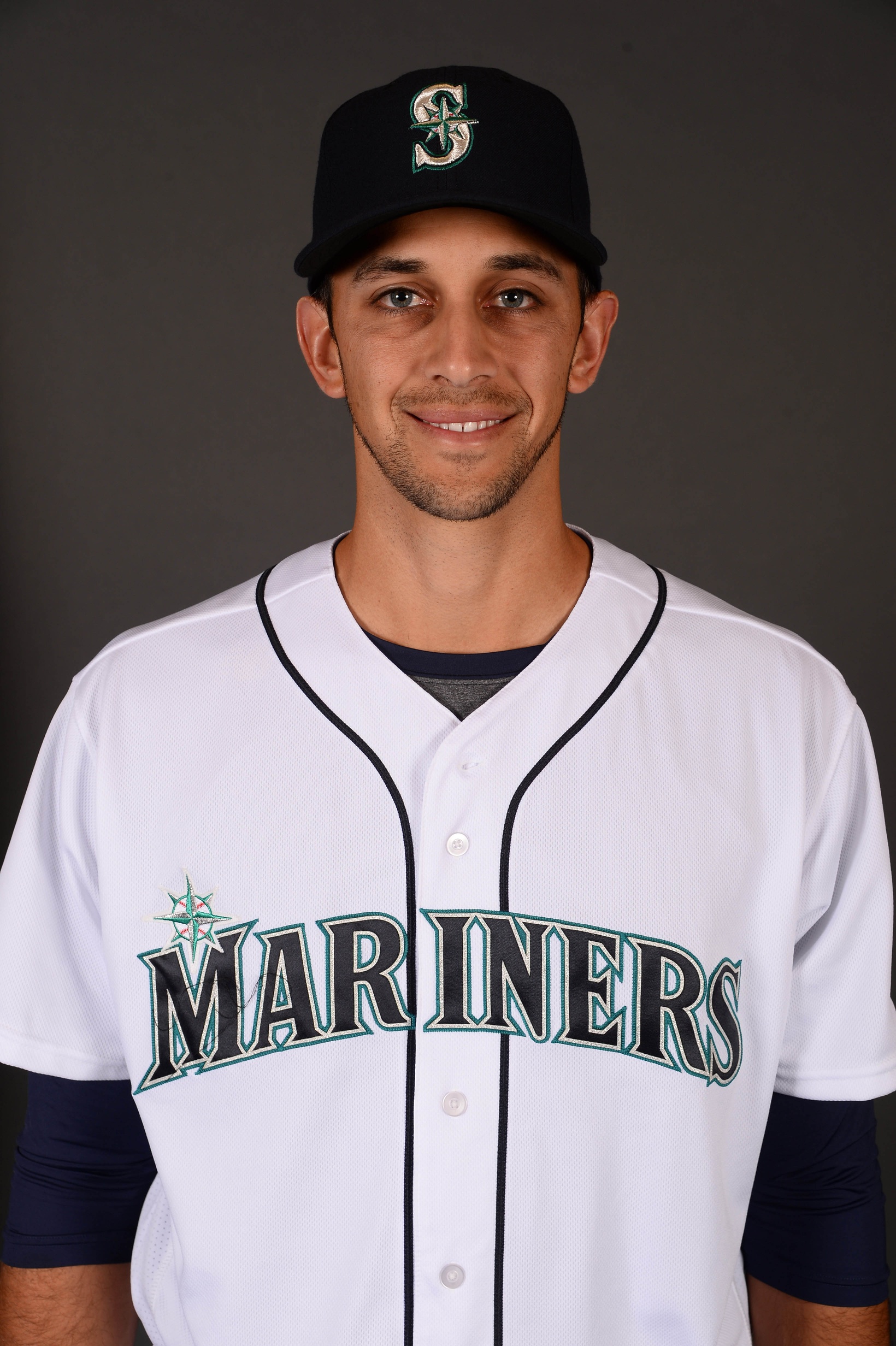
In his first offseason on the job, new GM Jerry Dipoto aggressively turned over the Mariners’ roster, augmenting a talented core with a collection of complementary pieces that should be better fits than last year’s were.
Major League Signings
- Hisashi Iwakuma, SP (re-signed): one year, $12MM, plus club/vesting options for 2017 and 2018
- Nori Aoki, OF: one year, $5.5MM
- Chris Iannetta, C: one year, $4.25MM (plus 2017 option)
- Steve Cishek, RP: two years, $10MM plus up to $3.5MM in bonuses
- Franklin Gutierrez, OF (re-signed): one year, $1.5MM plus up to $4.25MM in bonuses
- Guillermo Heredia, OF: Major League deal (around $500K)
Notable Minor League Signings
- Dae-ho Lee, Ryan Cook, Dainer Moreira, Gaby Sanchez (since released), Joel Peralta, Efren Navarro, Justin De Fratus, Blake Parker
Trades And Claims
- Acquired P Nate Karns, P C.J. Riefenhauser and OF Boog Powell from Rays for SS Brad Miller, 1B Logan Morrison and P Danny Farquhar
- Acquired 1B Adam Lind from Brewers for P Carlos Herrera, P Daniel Missaki and P Freddy Peralta
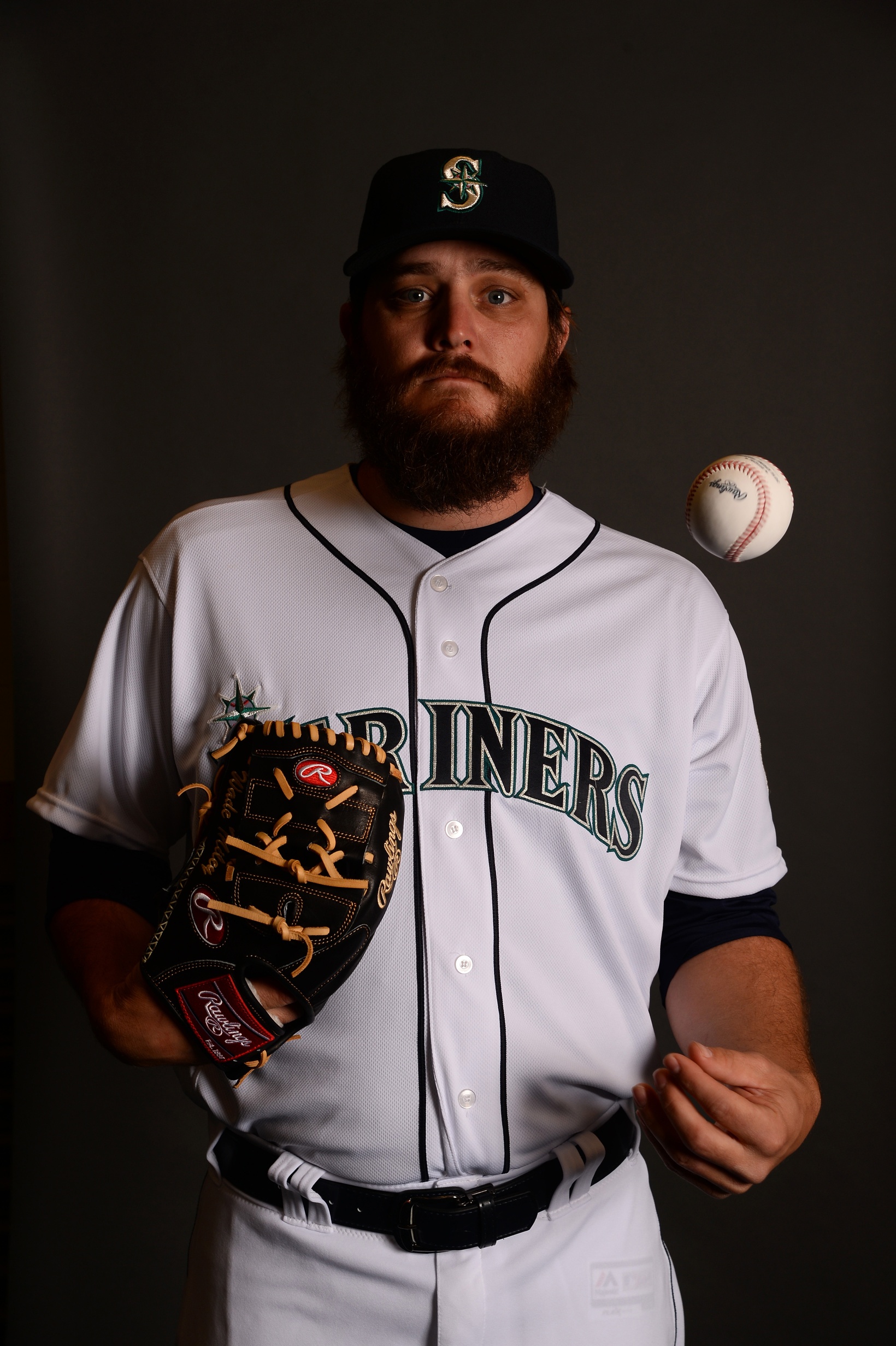
- Acquired P Wade Miley and P Jonathan Aro from Red Sox for P Carson Smith and P Roenis Elias
- Acquired P Joaquin Benoit from Padres for P Enyel De Los Santos and SS Nelson Ward
- Acquired OF Leonys Martin and P Anthony Bass (since released) from Rangers for P Tom Wilhelmsen, OF James Jones and IF/OF Patrick Kivlehan
- Acquired IF Luis Sardinas from Brewers for OF Ramon Flores
- Acquired P Evan Scribner from Athletics for P Trey Cochran-Gill
- Acquired C Steve Clevenger from Orioles for 1B Mark Trumbo and P C.J. Riefenhauser
- Acquired P Joe Wieland from Dodgers for SS Erick Mejia
- Acquired P Ryne Harper and cash from Braves for P Jose Ramirez
- Claimed C Rob Brantly from White Sox
- Claimed P Cody Martin from Athletics
- Claimed OF Daniel Robertson from Angels
Extensions
- None
Notable Losses
- Miller, Morrison, Farquhar, Trumbo, Smith, Elias, Wilhelmsen, Jones, Joe Beimel, Logan Kensing
Needs Addressed
Many new GMs begin their tenures by completely revamping their new franchises, but that wasn’t necessary for Jerry Dipoto, who took over a 76-win Mariners team that was merely disappointing, rather than hopeless. Dipoto inherited Felix Hernandez, Robinson Cano, Kyle Seager, Nelson Cruz and Taijuan Walker, a group that would form a good starting point for any new GM.
Accordingly, Dipoto spent the offseason retooling, rather than rebuilding. After replacing Lloyd McClendon in the manager’s chair with former fellow Angels exec Scott Servais, Dipoto quickly took to the task of turning the Mariners’ talented core into a contender. Most of the talent the Mariners received this winter was acquired with the present in mind. Despite the fact that this offseason wasn’t a massive change of direction for the franchise, however, it was a very busy one.
One of Dipoto’s most crucial moves, of course, was to re-sign one of the previous administration’s key players. In early December, Hisashi Iwakuma had agreed to a three-year, $45MM contract with the Dodgers, but the Dodgers tried to adjust the deal due to an issue with his physical. Iwakuma then opted to return to Seattle for significantly less guaranteed money — just $12MM, even less than the qualifying offer he’d rejected earlier in the offseason. The deal also contains two relatively cheap club/vesting options, giving the Mariners additional value. Iwakuma got a no-trade clause and the opportunity for bigger paydays if he stays healthy, but his deal was, overall, a remarkably cheap one for the Mariners, given how effective Iwakuma has been since arriving from Japan prior to the 2012 season. Iwakuma has, thus far, made three spring starts without incident, so whatever gave the Dodgers pause hasn’t yet shown itself to be an issue, and the Mariners’ modest upfront commitment protects them in case he does get hurt.
Dipoto’s first significant move, though, completed in early November, was to ship Brad Miller, Logan Morrison and Danny Farquhar to Tampa for Nate Karns, C.J. Riefenhauser and Boog Powell. Later, Dipoto sent Riefenhauser and Mark Trumbo to the Orioles for catcher Steve Clevenger. The two deals addressed two key issues with the 2015 Mariners — that they had a logjam at shortstop, and that they were a mismatched and below-average defense team with too many all-bat, no-glove players.
At 26, shortstop Miller still has promise, but he struggled defensively in 2015, to the point that he frequently played outfield last season while the younger and slicker-fielding Ketel Marte played short. The team also still has Chris Taylor in the fold. So the Rays trade allowed the Mariners to commit more thoroughly to Marte and avoid the roster headache of what to do with Miller. The Mariners also managed to unload Morrison, who’d hit a mere .225/.302/.383 in 2015 while providing little defensive value. Morrison seems likely to rebound somewhat in the coming season, but he doesn’t appear likely to be much more than a replacement-level player. The M’s might have sold somewhat low on Farquhar, who is better than his 5.12 2015 ERA suggests, but his velocity and strikeout rate have dipped in each of the last two seasons.
In return for three players for whom they didn’t have a pressing need, the Mariners received a package centered on Nate Karns, a useful starter with five years of team control remaining. Karns’ peripherals in 2015 didn’t quite support his 3.67 ERA, thanks in part to a high walk rate. But he’s a good bet to provide his share of strikeouts and give the Mariners 150 solid innings. They also got Boog Powell, an outfield prospect with modest power but real on-base skills who could arrive at some point during the season.
The third player in that trade was Riefenhauser, who headed to Baltimore along with Trumbo in a move seemingly designed to clear salary and reduce roster headaches. Steve Clevenger, the Mariners’ return in the trade, is a low-upside backup catcher, and Trumbo certainly has usable power, particularly against lefties. But he was due a hefty 2016 salary through the arbitration process ($9.2MM, as it turned out), and his lack of defensive value and issues getting on base created nearly as many problems as his power solved.
A week after the Trumbo trade, the Mariners sent three very young pitching prospects (Carlos Herrera, Daniel Missaki and Freddy Peralta) to Milwaukee for Adam Lind, who will be the Mariners’ new primary first baseman. Lind needs to be platooned, and like Morrison and Trumbo, he isn’t a superlative defender. He is, however, a significantly better hitter than either one. Trumbo’s stats will probably improve this year heading from Safeco Field to Camden Yards, and Lind’s are likely to dip heading from Miller Park to Seattle, but he’s still a quality player whose on-base skills should help the Mariners’ lineup.
As for the three prospects heading to the Brewers, it’s worth noting that Dipoto was very new to the GM job at the time of the trade, and there’s a bit of danger in not knowing exactly what you’re trading, especially with players like Herrera, Missaki and Peralta, all of whom have yet to turn 20 and posted very good peripheral numbers in the low minors last year. Still, Dipoto’s Mariners probably had a clearer read than anyone else on those players, particularly since Dipoto retained many of the team’s key front office execs.
More analysis after the break.
Central Notes: Pirates, Cardinals, Holaday
The Pirates, rarely satisfied with the unexamined application of conventional wisdom, are considering moving Andrew McCutchen to the No. 2 spot in their order, writes ESPN.com’s Jayson Stark. McCutchen has been the Pirates’ No. 3 hitter for more than five seasons, but the Pirates think they might be able to score more runs batting second, because he’ll get more plate appearances, but also because they’ll have his high on-base percentage closer to the top of the order and because he won’t be coming up with two outs and the bases empty so much. “For 47 years, the baddest dude on the team hit third,” says manager Clint Hurdle. “Well, you know what? It shouldn’t be that way anymore. There’s a better way to get it done.” Here’s more from the Central divisions.
- GM John Mozeliak says the Cardinals‘ signing of Ruben Tejada increases the team’s flexibility, MLB.com’s Anthony Castrovince writes. “There is a level of fatigue in this game that was not discussed 10, 15, 20 years ago,” says Mozeliak, whose Cardinals were the victims of what seemed like an unusually long list of injuries last year (although Castrovince notes that they were lucky to have four players, including Peralta, appear in at least 150 games). “One of the things we wanted to do was just make sure, as the season turns to July, August and September, is just make sure our guys are fresh.” Tejada presumably will take over for Jhonny Peralta at shortstop while Peralta recovers from a thumb injury, with Jedd Gyorko returning to the utility role the Cards originally planned for him. But Tejada doesn’t seem to be taking a starting job for granted. “I just came here to play, to do my best,” he says through an interpreter. “Whatever my performance is on the field, there’s going to be a decision made [off of that].”
- Tigers catcher Bryan Holaday is generating interest from other teams, Peter Gammons tweets. Holaday is out of options, and the Tigers have two more established catchers in James McCann and Jarrod Saltalamacchia. So there might not be a roster spot for Holaday, unless the Tigers want to carry three catchers. (The Tigers have also experimented with using Holaday at third base and in the outfield this spring.) The 28-year-old Holaday, who split his time between Detroit and Triple-A Toledo last season, has hit brilliantly this year in Spring Training, for what little that’s worth — he has 11 hits, including four homers, in just 21 at-bats. His previous track record, including a career .251/.283/.340 line in the Majors, isn’t nearly so Ruthian, but it’s not surprising there would be at least some interest in a relatively young, cost-controlled catcher.
Braves Claim Jesse Biddle From Pirates
The Braves have claimed lefty Jesse Biddle, MLB.com’s Adam Berry tweets. The Pirates had designated Biddle for assignment last week. It was originally reported that the Pirates had released Biddle with the intention of re-signing him to a minor-league deal, but perhaps they had simply placed him on release waivers, which would have allowed the Braves to claim him.
Biddle will miss the 2016 season after having Tommy John surgery. The Pirates acquired him from Philadelphia earlier this offseason. He struggled the last two seasons in the high minors, but was once one of the Phillies’ top prospects. MLB.com ranked him the No. 53 prospect in baseball after the 2013 season, when he posted a 3.64 ERA with 10.0 K/9 and 5.3 BB/9 in 138 1/3 innings as a 21-year-old at Double-A Reading.
Reactions To And Details Of Adam LaRoche’s Retirement
Here’s the latest on Adam LaRoche‘s sudden retirement, which stemmed from a dispute between LaRoche and executive vice president Ken Williams over the regular presence of LaRoche’s son in the team’s clubhouse.
- The dispute between various members of the White Sox organization over LaRoche’s son is “one of the most bizarre Spring Training stories in memory,” Bleacher Report’s Scott Miller writes. One anonymous White Sox player tells Miller that he feels obligated to fight for the LaRoches because of his perception that LaRoche was lied to by the organization, and because the organization’s decision regarding LaRoche’s son caused divisions in the clubhouse. Miller also, however, notes that not everyone with the team agreed that LaRoche’s son should have such a continuous presence in the White Sox’ locker room.
- LaRoche’s son was with the team for about 120 games in 2015, writes Bob Nightengale of USA Today. No players or team staffers complained to LaRoche about his son’s presence, but several of them did speak to team management. In response to the complaints, Williams reportedly asked LaRoche to limit his son’s presence in the locker room, but LaRoche kept bringing his son to work each day. Williams then “lost it” and revoked LaRoche’s son’s clubhouse access, then changed his mind went back to requesting to LaRoche that he only bring his son to work about half the time.
- If LaRoche had performed better in Chicago, there would have been no issues regarding his son hanging around the team, Jesse Spector of the Sporting News writes. It’s possible some players or staffers would have complained to management about LaRoche’s son if LaRoche had figured to do be a key player for the Sox in 2016, Spector writes. But management never would have done anything about it. Now, LaRoche’s retirement allows them to save $13MM and move Avisail Garcia to the DH spot, improving their defense.
- Outfielder Adam Eaton and pitcher Mat Latos say the players are ready to put the controversy behind them, reports Colleen Kane of the Chicago Tribune. “Let’s get all of the information out there,” says Eaton. “Let’s let it ride, and not forget about it, but say, ‘Hey, there’s where we are.'” Eaton, the White Sox’ player rep, had previously said that he had been in touch with the union about a potential grievance. Latos, meanwhile, says he is used to being around kids at work, thanks to his former manager Dusty Baker and Baker’s famous son Darren. Latos adds, though, that he feels it’s time to move on. “Everybody is talking about it, and it’s kind of blown up to where it has become a distraction,” he says.”We have to focus on baseball, period, and kind of let this die down.”
Nationals Release Logan Schafer
Here are today’s minor moves from around the league.
- The Nationals have announced that they’ve released outfielder Logan Schafer. (They also reassigned infielder Jason Martinson to the minors.) The Nats had signed Schafer to a minor-league deal in November. He hit 4-for-20 in Spring Training. The 29-year-old can play all three outfield positions and generally rates as a solid defender, particularly in a corner, but he hasn’t shown enough offense to stick in the Majors. Schafer appeared in all of the last five seasons with the Brewers, accumulating a career .212/.286/.319 line in 646 career plate appearances, including 143 last year. Milwaukee outrighted him after the season.
NL Notes: Phillies, Melancon, Holliday
GM Matt Klentak says that despite Aaron Altherr‘s wrist injury and Cody Asche‘s oblique troubles, the Phillies are not actively looking for additional outfielders, MLB.com’s Todd Zolecki writes. The Phillies do, however, remain open to the possibility of acquiring a player should the right opportunity arise. “I wouldn’t characterize it as active,” says Klentak. “This is the time of the year where most teams are starting to connect with each other to talk about different scenarios that are going to play out at the end of camp — who is going to make the team, who may not. So those conversations have begun — generally, anyway.” With Altherr on the shelf until midseason and Asche possibly missing the start of the season, the Phillies plan to go with Odubel Herrera, Peter Bourjos and Rule 5 selection Tyler Goeddel in their outfield to start the season.
- The Pirates entered the offseason projecting to pay about 10% of their payroll to Mark Melancon. Paying such a steep price for their closer might not have seemed ideal in theory, but GM Neal Huntington says keeping Melancon was the best move in practice, Stephen J. Nesbitt of the Pittsburgh Post-Gazette writes. Melancon ended up with a $9.65MM deal for the year when the Bucs avoided arbitration with him. “We went into the offseason thinking Mark would be a part of the bullpen until somebody compelled us to think differently,” says Huntington. “No one did.” The Pirates instead made other cost-cutting moves, including parting ways with Pedro Alvarez and trading Charlie Morton to the Phillies. Melancon and Tony Watson were nearly unstoppable in the late innings last season, and the Bucs are hoping that they can be again in 2016, likely Melancon’s last year with the club.
- Cardinals outfielder Matt Holliday is taking well to learning first base, writes MLB.com’s Richard Justice. “I think having played third base for a few seasons in the Minor Leagues definitely helped,” says Holliday. “There’s definitely a little bit of an adjustment period being that close in. But I feel like I’ve played a long time and I’m athletic enough that with the proper training and work, I can do it.” Holliday has never played first in the regular season in his long big-league career, but he’s appeared there in five games this spring. Once the season starts, Holliday still figures to take his share of time in the outfield. Two young outfielders, Randal Grichuk and Stephen Piscotty, already are in line for everyday at-bats, but playing Holliday at first on occasion would potentially allow another younger player, Tommy Pham, more playing time. Brandon Moss will also figure into the Cardinals’ first base and outfield mix.
Latest On Bronson Arroyo
SATURDAY 10:55am: GM Mike Rizzo says Arroyo has partial tears in his rotator cuff tendon and there is inflammation in the area, MASN’s Dan Kolko reports (all Twitter links). Arroyo will be shut down for ten days to two weeks, at which point he’ll begin a program to strengthen his shoulder. The rehab process could take four to six weeks.
FRIDAY 8:33pm: The Nationals have told reporters, including MASNsports.com’s Mark Zuckerman (Twitter link), that tonight’s reports regarding Arroyo are “not consistent” with their findings. Nats brass, Arroyo and the club’s medical staff will have a meeting tomorrow.
7:17pm: The initial results of an MRI on Bronson Arroyo‘s shoulder were, somewhat incredibly, misread by the doctor that evaluated him, reports Ken Rosenthal of FOX Sports (on Twitter). Arroyo does not have a tear of the rotator cuff in right shoulder, as he was initially told, but rather is suffering from bursa sac inflammation. Arroyo will be shut down for seven to 10 days, but he does not have the career-threatening injury he believed himself to be facing just yesterday. Notably, James Wagner of the Washington Post tweets that the first diagnosis came from a non-baseball doctor, so it was not the Nationals’ medical staff that provided the faulty results.
Earlier this week, MLB Network’s Peter Gammons reported that Arroyo had a tear in his labrum, and Arroyo himself spoke to reporters the following day to reveal that he’d been told the tear was actually in his rotator cuff. The veteran right-hander was said to be weighing whether to undergo surgery and rehab for another comeback attempt or call it a career.
The injury still seems to hinder Arroyo’s chances of making the Nationals’ Opening Day rotation, as another seven to 10 days without throwing would mean he can return to throwing with another seven to 10 days of Spring Training to get back up to speed. However, the very fact that Arroyo is not facing a devastating injury is a breath of fresh air. The well-liked and well-respected Arroyo has been hoping to break camp with the Nats and return to a Major League mound for the first time since the summer of 2014, when he tore the ulnar collateral ligament in his right elbow and required Tommy John surgery.
Prior to that injury, Arroyo was baseball’s most durable starter. From 2005-13, Arroyo pitched in 300 games and averaged 211 innings per season, falling shy of the 200-inning milestone just one time, when he tossed 199 innings in 2011. Arroyo was not only durable, but effective, as he worked to a 4.10 ERA in that span despite pitching at the hitter friendly Great American Ball Park and despite the fact that many of those frames came during a much higher-scoring time period.
Cardinals Sign Ruben Tejada
The Cardinals have announced that they’ve signed shortstop Ruben Tejada to a one-year, big-league contract. Tejada will receive $1.5MM, Jon Heyman tweets. MLB.com’s Jenifer Langosch was first to report that a deal was imminent (Twitter links). Tejada is a client of the Legacy Agency.
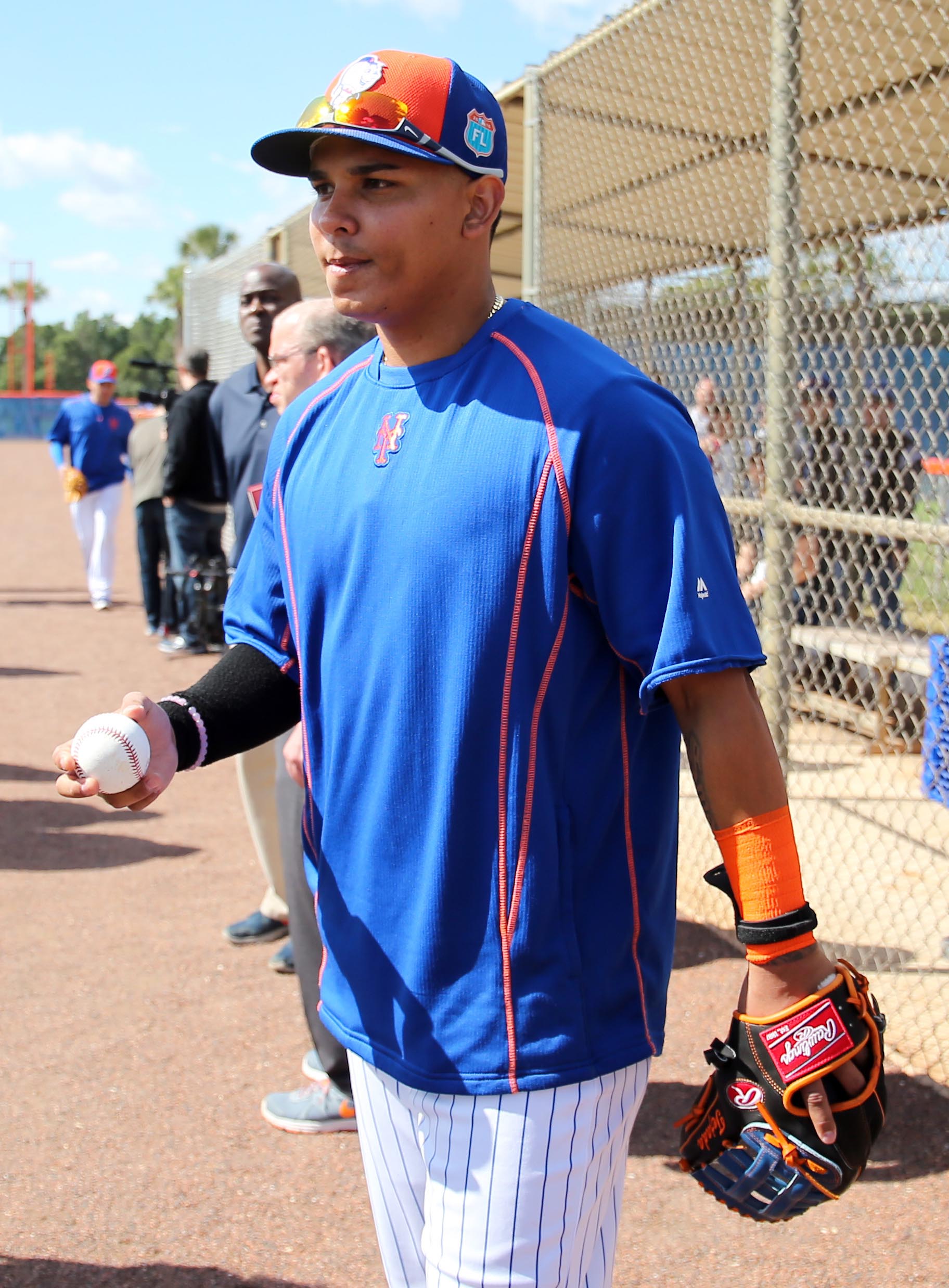
The Mets released Tejada earlier this week. He reportedly rejected a minor-league deal with the Yankees in hopes of finding a big-league deal with another team, and it appears he’s found one. Jhonny Peralta is out ten to 12 weeks after having thumb surgery, which had left the Cardinals without a legitimate starting shortstop — Jedd Gyorko, Greg Garcia and Aledmys Diaz topped the team’s list of internal options.
Tejada now looks like the Cardinals’ presumptive starter at the position until Peralta returns. Tejada’s sudden appearance on the free agent market at this late date provided the Cardinals with the opportunity to acquire something resembling a proven shortstop, albeit one with some drawbacks. The 26-year-old batted a reasonable .261/.338/.350 with New York last season and generally does a good job reaching base, thanks to a good batting eye. He has little power, however and has yet to have a truly strong offensive season, with a .696 OPS as a 21-year-old rating as his finest season at the plate. Metrics rate his defense as about average over the course of his career, though both DRS and UZR were down on his work in 2015. He also irked the Mets at times with his lack of physical conditioning.
Nonetheless, given Tejada’s experience and his ability to keep his head above water as a big-league shortstop, it’s not surprising that the Cardinals pursued him. He can become a free agent after the season due to a clause in his arbitration agreement with the Mets that awarded him an extra day of service time. (I previously wrote, incorrectly, that there was a possibility the Cardinals could take him through arbitration next winter.)
Tejada and the Mets avoided arbitration by agreeing to a $3MM deal last offseason, although the Mets’ plans changed when they acquired middle infielders Neil Walker and Asdrubal Cabrera, and they ultimately owed Tejada only $491K of that $3MM contract after they decided to release him. The Mets’ $3MM deal will therefore have no particular impact on his deal with the Cardinals.
Photo courtesy of USA Today Sports Images.