
Francisco Cervelli, Russell Martin Available On Trade Market
Pirates catcher Francisco Cervelli and Blue Jays catcher Russell Martin are both generating some degree of interest on the trade market, per Jeff Passan of Yahoo Sports (all Twitter links). The Jays are willing to pay a “significant” portion of the final $20MM on Martin’s contract, per Passan, and have already discussed him with other clubs. Cervelli’s on-base skills are also appealing to catcher-needy teams, Passan notes, and the Pirates are willing to listen to offers for the veteran backstop. Both players are entering the final season of multi-year contracts.
Cervelli, 33 in March, just wrapped up a vastly superior offensive season to Martin and is owed a more palatable $11.5MM in 2019 before reaching free agency next winter. That price point is obviously steep for the typically low-budget Pirates, but other clubs around the league may not consider it excessive for a player who hit .259/.378/.431 with a career-high 12 home runs in 404 plate appearances last season. That OBP is hardly anything new for Cervelli, who has reached at a .370 clip or better in five of the past six seasons, with a .342 mark in 2017 serving as the lone exception.
Cervelli also halted an outstanding 39 percent of stolen-base attempts against him, though his once-superlative framing skills have checked in below the league average in each of the past two seasons, per Baseball Prospectus. He also rated below average in terms of pitch blocking in 2018.
The 35-year-old Martin is in a much different spot. He’ll make $20MM in the final season of a backloaded five-year, $82MM contract next season, and while his 15.9 percent walk rate was sensational, his overall .194/.338/.325 batting line leaves plenty to be desired. Martin was undoubtedly harmed by a .234 average on balls in play, but that’s perhaps not as unlucky as some might think at first glance.
While that .234 mark is well south of his career .283 BABIP, Martin saw his line-drive rate drop by nearly 10 percent this past season — from 23.7 percent in 2017 to 14 percent in 2018. He also posted a career-worst 19.4 percent infield-fly rate and hit the ball on the ground at a career-high 51.2 percent clip. For a 35-year-old catcher whose once-surprising speed has largely evaporated, that’s not a great trend.
Defensively, Martin’s once-excellent caught-stealing rate has waned over the past three seasons (22 percent in 2018 — six percent below the league average), but Baseball Prospectus still grades him as a premium framer and blocker.
The availability of both Cervelli and Martin only further adds to a market that has a vast supply of options but also a rather substantial amount of demand. Marlins star J.T. Realmuto is obviously the prize of the catching class but also surely comes with a substantially greater cost of acquisition than either Cervelli or Martin. Cleveland’s Yan Gomes, too, is said to be available. Free agency, meanwhile, offers the likes of Yasmani Grandal, Wilson Ramos, Martin Maldonado and Robinson Chirinos, among others.
As for demand, there’s no shortage of contenders or hopeful contenders who could use upgrades. The Dodgers, Astros, Rockies, Angels, Twins, Red Sox, Mets, Brewers and Phillies could all conceivably explore the market, as could a number of teams that are either in the midst of a rebuild or retooling process (e.g. Mariners, Tigers). And, of course, if any of Cervelli, Martin or Realmuto is moved, those catchers’ former clubs could look to the market to add a replacement option at a lower price.
Coaching Hires: Jays, Mariners, Dodgers, D-Backs, Pirates
This offseason has brought quite a lot of coaching turnover, yet we’ve not heard anything regarding Red Sox pitching guru Brian Bannister. That’s not only by design, but is included in his contract with the club, Evan Drellich of NBC Sports Boston writes in an interesting look at a key figure in the Boston organization. It seems the Red Sox will continue to enjoy Bannister’s services for some time, even if other organizations might have loftier positions to offer.
Here are some of the latest coaching decisions from around the game …
- The Blue Jays have rounded out their coaching staff under new skipper Charlie Montoyo. Former Double-A manager John Schneider is heading up to the big club, though his precise role isn’t yet clear. Other recent hires include Mark Budzinski as first base coach and Shelley Duncan as field coordinator, as Robert Murray of The Athletic reported (Twitter links). The former comes from the Indians’ staff, while the latter had been managing on the Diamondbacks’ farm.
- Tim Laker has been announced as the new hitting coach of the Mariners. He had been in an assistant’s role with the Diamondbacks for the past two seasons. A former MLB backstop, Laker will be tasked with stepping into the shoes of the legendary Edgar Martinez, who shifted to a broader role as organizational hitting advisor.
- The Dodgers have decided to bring on Robert Van Scoyoc as their new hitting coach, according to Pedro Moura of The Athletic (via Twitter). He is also coming from the D-Backs organization. This’ll be Van Scoyoc’s first stint on a MLB staff, and it comes at just 32 years of age. He’s best known for helping to re-launch J.D. Martinez into stardom as a private hitting coach.
- Needless to say, the Diamondbacks have some holes to fill in this area. Eric Hinske will be part of the picture, as he is set to join the team as the assistant hitting coach, per Patrick Mooney of The Athletic (via Twitter). He will work alongside recently hired hitting coach Darnell Coles. Hinske recently held the top hitting coach slot with the Angels and Cubs.
- In another hitting move, the assistant job of the Pirates will be handled by Jacob Cruz. The 45-year-old was most recently the minor-league hitting coordinator of the Cubs and previously worked in the Diamondbacks organization. A former big-league outfielder, Cruz is slated to pair with new hitting coach Rick Eckstein.
Chris Archer Undergoes Procedure To Repair Hernia
Pirates righty Chris Archer has undergone a procedure to repair a bilateral hernia, the club announced. He’s expected to require approximately six weeks to recover.
The surgery does not appear to represent any kind of threat to Archer’s ability to contribute to the Bucs in 2019. The club says it’s “anticipated” that he’ll “be on or close to a regular schedule for the 2019 season.”
Presumably, the organization cautious phrasing is mostly designed to avoid over-promising. But it also hints at the realities of recovering from a core muscle procedure, which isn’t sure to be straightforward. No doubt the organization will be conservative in bringing Archer along this spring.
Expectations remain high for Archer, who came over in a surprising trade deadline swap. Though he continues to turn in sparkling peripherals, Archer has also not posted a sub-4.00 ERA season in any of the past three years. Reversing that run of disappointment will certainly require good health.
It has thus far been a fairly eventful offseason for a Pirates team that will try to contend but likely won’t spend big to do so. They sent fellow starter Joe Musgrove out for his own abdominal procedure about a month ago. Meanwhile, the club has (true to character) pursued a few low-cost means of unearthing value, inking Jung Ho Kang and Lonnie Chisenhall to affordable, one-year pacts.
Pirates Designate Alex McRae For Assignment
The Pirates announced that they’ve designated right-hander Alex McRae for assignment. His spot on the 40-man roster will go to outfielder Lonnie Chisenhall, whose previously reported one-year deal has now been formally announced.
McRae, 25, made his MLB debut with the Bucs in 2018, allowing four runs with five strikeouts and five walks in 6 1/3 innings of relief. The former 10th-round pick (2014) spent the bulk of the season in the rotation for the Pirates’ Triple-A affiliate, where he logged a 4.77 ERA with 8.0 K/9 against 3.8 BB/9. McRae’s sinker sat at 92.4 mph during his brief MLB audition, and he’s used the pitch to generate average or better ground-ball tendencies throughout his minor league career.
While he hasn’t found success in Triple-A or the Majors yet, McRae did post a 3.61 ERA with 5.4 K/9, 2.2 BB/9, 0.54 HR/9 and a 49.1 percent ground-ball rate in 149 2/3 innings with Pittsburgh’s Double-A affiliate in 2017.
Pirates Sign Lonnie Chisenhall
Nov. 27: The Pirates have formally announced the signing, via press release.
“Lonnie Chisenhall adds an experienced, productive and versatile player to our Major League Team,” said GM Neal Huntington in a statement accompanying the announcement. “When healthy, Lonnie has been a quality hitter while offering defensive flexibility. He also provides us an immediate option in right field while Gregory Polanco is getting healthy and his abilities and versatility will make our club better once Polanco returns.”
Nov. 26: The Pirates have struck a deal with free agent outfielder Lonnie Chisenhall, per Ken Rosenthal of The Athletic (Twitter link). It’s said to be a one-year, $2.75MM pact.
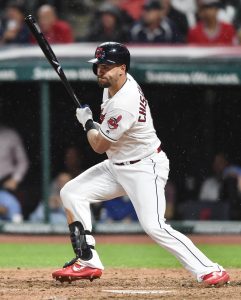
Chisenhall, 30, missed much of the 2018 season owing to a nagging calf injury. If he can avoid the DL, and earn playing time, he’ll have a chance to boost his salary in Pittsburgh. Per Rosenthal, the deal comes with some reasonably hefty potential incentives. Chisenhall will receive $250K upon reaching 250, 300, 350, and 400 plate appearances along with $500K if he makes it to 450, 500, 550, and 600 trips to the dish. That’s a potential $3MM boost.
Of course, it’d be rather surprising to see the left-handed-hitting Chisenhall receive enough action to max out the contract. He has only topped the five-hundred PA barrier once in his career, most of which has been spent in platoon duty. And for good reason: Chisenhall has been 58 OPS points better against right-handed than left-handed pitching in the majors.
For the Bucs, Chisenhall represents a part of a solution for the absence of Gregory Polanco, who is expected to miss a big chunk of the season recovering from shoulder surgery. Frankly, it’s unclear what the club will receive from Polanco in 2019, so it was imperative that a fill-in be found.
While a right-handed hitter might have dovetailed better with the existing unit by the time Polanco is back in action — after all, he and Corey Dickerson both hit from the left side — adding a lefty makes for a cleaner immediate fit with the team’s slate of reserve options. Pablo Reyes, Jose Osuna, and Patrick Kivlehan are among the players who could compete for bench duties. Of course, it’s also still possible that a higher-end asset could fall into the Bucs’ laps at some point over the offseason.
Regardless of how the platoon machinations work out, this is an interesting signing. Chisenhall is a sneaky upside play, given the ceiling he has shown on both sides of the ball.
Offensively, Chisenhall has produced at about a league-average clip over his eight-year career. But he churned out a 117 wRC+ in 2014, the season in which he saw his most extensive playing time (142 games, 533 plate appearances). And since the start of the 2017 season, he’s a .297/.368/.503 hitter with 13 home runs over 365 plate appearances. That represents a notable power surge as against his prior track record, though it came in a short sample and showed up more in ’17 than in his brief ’18 effort.
With the glove, Chisenhall went from a questionable third baseman to a high-end right fielder in 2015. The exuberant defensive metrics have cooled in the years to come, but he generally grades out in sight of average. It’s at best questionable whether he’ll be more than a solid performer in the field, particularly given that he’ll be looking to move past the longstanding lower-leg ailment, but there’s reason to think the Pirates will at least have an average defender for their money.
All things considered, as Jason Rollison of Bucs Dugout noted in tweeting the club’s interest recently, it seems like a nice match that will serve both player and team. Chisenhall joins Jung Ho Kang as a reasonably high-upside early signee, giving the Pirates two roster pieces at a palatable price and leaving a relatively robust amount of spending capacity untapped for further additions. (Of course, some potential payroll space could be held and deployed at midseason if the team proves worthy of further investment.)
Photo courtesy of USA Today Sports Images.
NL Central Notes: Iglesias, Cubs, Pirates
In the wake of Raisel Iglesias‘s newly-signed deal with the Reds, Bobby Nightengale of the Cincinnati Enquirer suggests that Iglesias may operate in an altered role for the club in 2019, which may have been part of the team’s motivation to guarantee his salary for the next three seasons. Having worked as the Reds’ full-time closer for the previous two years, Iglesias may be utilized in a greater variety of game situations moving forward. Free of added pressure to eclipse certain statistical benchmarks as a means of boosting his arbitration salary, Iglesias may feel more comfortable pitching in non-save situations, allowing new manager David Bell to deploy his best bullpen weapon in a more versatile role. General manager Dick Williams acknowledged that getting Iglesias and team management on the same page was a factor in finalizing a new contract with his star reliever; now, Iglesias and the team can concern themselves solely with winning games, rather than worrying about the counting stats that influence arbitration salaries.
All this is not to say that Iglesias has struggled as a closer; in fact, he has excelled in the role, converting 58 of 64 save opportunities over the last two years and notching a 2.43 ERA over that span. Rather, this will simply grant Bell and new pitching coach Derek Johnson increased flexibility in their usage of Iglesias as they seek to maximize his value. It should be noted that Josh Hader, who often pitched multiple innings and entered in high-leverage situations regardless of inning, pitched under Johnson when he served as the Brewers’ pitching coach for the last three seasons.
More from around the NL Central…
- Following Jim Hickey’s departure from the team, the Cubs may have found a favorite to fill their vacant pitching coach position from within the organization. The Athletic’s Sahadev Sharma writes that Tommy Hottovy, who currently serves as the club’s run prevention coordinator, has emerged as a leading candidate to seize the job, although no final decision has been made. Just 37, Hottovy has endeared himself to players and coaches up and down the organization, and his presence may help quell some of the uncertainty that comes with Hickey’s unexpected resignation. He has been touted for his communication skills and analytical inclination, and his working relationship with catching coach Mike Borzello has been cited as part of the reason for the team’s sustained pitching success despite coaching instability. Hottovy and Borzello have been credited with tapping into the potential of numerous pitchers over the years, fueling breakouts from Kyle Hendricks, Jake Arrieta, and others. Furthermore, he would provide a familiarity that President of Baseball Operations Theo Epstein covets, much like newly-hired hitting coach Anthony Iapoce, who worked in the Cubs organization from 2013-15.
- The Pirates have hired Jacob Cruz to be their assistant hitting coach, writes Mark Gonzales of the Chicago Tribune. Cruz previously worked as the Cubs’ minor-league hitting coordinator, a position he earned after joining the organization in 2017 as the Double-A hitting coach. Cruz’s departure represents yet another point of turnover for the Cubs’ coaching staff: the team will also need to fill the hole left by the departure of pitching coach Jim Hickey, who has chosen to step down for personal reasons. For the Pirates, Cruz will join new hitting coach Rick Eckstein in the club’s overhauled hitting department. Alongside Eckstein, he will look to hone the potential of Josh Bell and Gregory Polanco, among others, in order to reinvigorate an offense that ranked 10th in the National League in runs scored.
Players Added To The 40-Man Roster
Tonight marks the deadline for players to be added to their respective organizations’ 40-man rosters. Over the nine hours, there’ll be a flurry of moves, ranging from minor trades (like the one the Indians and Rays made yesterday), waiver claims and players being designated for assignment or outrighted. Each will be made to clear room for players who need protection from this year’s Rule 5 Draft. As a reminder, players who signed at 18 years of age or younger and have five professional seasons are eligible, as are players who signed at 19 or older and have four professional seasons under their belts.
Here’s a rundown of players who’ve been added to their respective 40-man rosters (which will be updated throughout the day)…
- There are three additions for the Twins: outfielder LaMonte Wade and infielders Nick Gordon and Luis Arraez.
- The Giants announced that they have added a trio of righties: Melvin Adon, Sam Coonrod, and Logan Webb.
- Lefty Justin Steele is now a member of the Cubs‘ 40-man, per an announcement.
- The Rangers announced that they are protecting veteran hurler Edinson Volquez, who’s returning from Tommy John surgery, along with outfielder Scott Heineman, righty Wei-Chieh Huang, and lefty Taylor Hearn.
- Righties Mitch Keller and JT Brubaker, infielder Cole Tucker, and outfielder Jason Martin are all joining the Pirates‘ 40-man, per Tim Williams of Pirates Prospects (via Twitter).
- The Blue Jays will add righty Patrick Murphy to their 40-man, per Shi Davidi of Sportsnet.ca (via Twitter). Toronto has announced his addition, along with those of fellow righties Trent Thornton, Yennsy Diaz, Hector Perez, and Jacob Waguespack.
- Three Indians players have been boosted up to the 40-man, the club announced: first baseman Bobby Bradley, southpaw Sam Hentges, and righty Jean Carlos Mejίa.
- Righty Joe Harvey is joining the Yankees‘ MLB roster, the club announced.
- The Phillies have added shortstop Arquimedes Gamboa along with righties Edgar Garcia and Adonis Medina to the 40-man, per a club announcement.
- Former first-round draft pick Dillon Tate, a right-handed pitcher, was selected to the Orioles‘ 40-man.
Indians Acquire Jordan Luplow, Max Moroff In Five-Player Trade With Pirates
The Indians announced Wednesday that they’ve acquired outfielder Jordan Luplow and infielder Max Moroff from the Pirates in exchange for utility man Erik Gonzalez and minor league right-handers Tahnaj Thomas and Dante Mendoza. The Pirates, too, have issued a press release announcing the move.
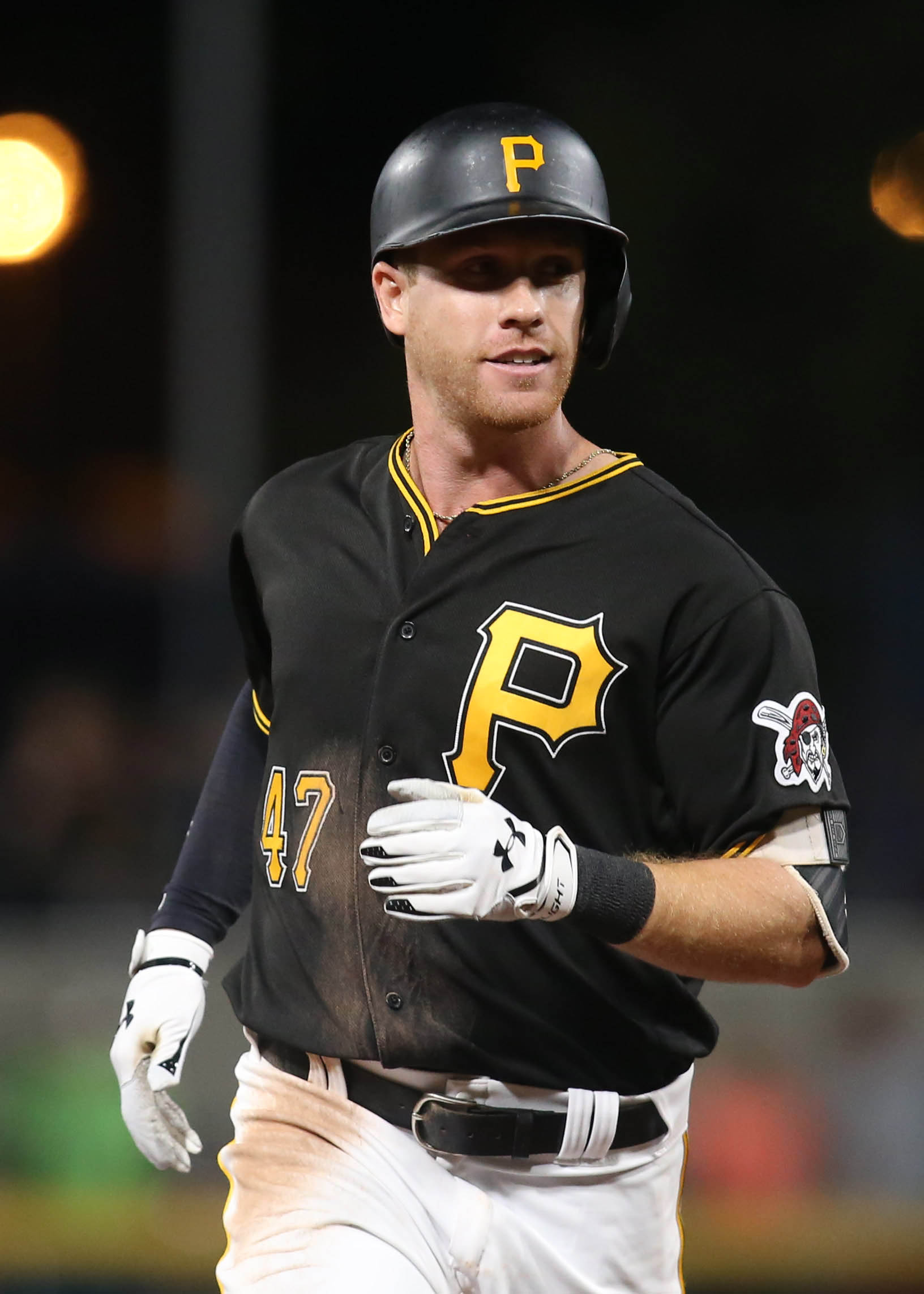
In Luplow, Cleveland adds an outfield option to a perilously thin mix. The 2014 third-rounder has yet to find success in the big leagues, but he’s raked to the tune of a .300/.378/.479 slash with 15 homers and 11 steals in 539 Triple-A plate appearances across the past two seasons. Luplow won’t turn 26 until next September, so there’s still plenty of time for him to carry that Triple-A productivity over to the big league level.
[Related: Updated Cleveland Indians depth chart and Pittsburgh Pirates depth chart]
From a defensive standpoint, Luplow has played all three positions in the Majors, albeit just 14 innings in center, and drawn generally positive reviews. In 382 2/3 innings of outfield work as a Major Leaguer, he’s posted +4 Defensive Runs Saved, a 3.1 Ultimate Zone Rating and an even mark in Statcast’s Outs Above Average. Luplow still has a minor league option remaining, so he can be sent to the minors without being exposed to waivers if he doesn’t crack the roster out of Spring Training next year.
Moroff, also 25, has had similar struggles to this point in his young Major League career, hitting .193/.293/.331 in a tiny sample of 209 plate appearances. Like Luplow, he’s fared better in Triple-A, where he’s a .233/.363/.399 hitter in 1045 plate appearances. He joins the Indians with more than 2700 minor league innings at second base, 1900-plus innings at shortstop and 601 innings at the Triple-A level.
In Gonzalez, the Pirates will acquire a versatile infield option who’s had more big league success than Moroff to this point, though he’s yet to truly thrive at the plate. Gonzalez hit .265/.301/.375 in 143 PAs this past season and is a career .267/.306/.406 hitter in Triple-A. He’s out of minor league options, so he’ll jump right into the mix for playing time with the Pirates in 2019 — a sentiment that was emphasized by general manager Neal Huntington in a press release announcing today’s trade.
“Erik Gonzalez is an athletic middle infielder who plays solid defense and has the potential to be a productive hitter at the major league level,” said Huntington. “He gives us another quality option to play shortstop or in the middle of our infield this year and into the future.”
Thomas, 19, spent this past season pitching for the Indians’ Rookie-level affiliate in Arizona, though he pitched just 19 2/3 innings in total. Overall, he’s totaled 58 professional innings since signing out of the Bahamas as a 16-year-old, and he’s posted a 5.28 ERA with a 61-to-43 K/BB ratio in that time. The bottom-line results are rough, but Thomas did land 30th on MLB.com’s ranking of the Indians’ prospects, with Jim Callis and Jonathan Mayo writing that the projectable righty should add velocity to what is already a 92-95 mph fastball. He also draws praise for his athleticism and a potentially above-average curve, but he’s still several years away from being anywhere near big league ready. Fangraphs’ Eric Longenhagen was a bit more bullish, ranking him 26th in what he tweets is a “very deep” Cleveland system.
Mendoza is also 19 and also spent the most recent season pitching for the Indians’ Rookie affiliate in the Arizona League. He worked to a 4.58 ERA in 37 1/3 innings with 37 strikeouts against 20 walks. Longenhagen tweets that Mendoza is another “projection arm,” crediting him for two above-average secondary offerings and an 87-90 mph heater that figures to tick upwards as his 6’5″ frame fills out.
The swap also opens a spot on the Pirates’ 40-man roster, as they’re dealing two big leaguers for Gonzalez and a pair of right-handers who are years from needing 40-man protection. The trade, then, gives them a potential upgrade in terms of utility infielder while also giving the front office some additional flexibility in advance of next Tuesday’s deadline to protect players from the Rule 5 Draft.
Offseason Outlook: Pittsburgh Pirates
The Bucs’ bid to compete in 2018 fell flat, but the team’s mid-season acquisitions were also designed to keep the window open for the two ensuing seasons. As ever, building out the roster will likely mean a search for cost-efficiency for the Pittsburgh front office.
Guaranteed Contracts
- Gregory Polanco, OF: $28.5MM through 2021 (includes buyouts on 2022 & 2023 club options)
- Felipe Vazquez, RP: $18MM through 2021 (inclues buyouts on 2022 & 2023 club options)
- Starling Marte, OF: $13MM through 2019 (includes buyouts on 2020 & 2021 club options)
- Francisco Cervelli, C: $11.5MM through 2019
- Chris Archer, SP: $9.5MM through 2019 (includes buyouts on 2020 & 2021 club options)
- Ivan Nova, SP: $8.5MM through 2019
- Jung Ho Kang, INF: $3MM through 2019 (re-signed)
Arbitration-Eligible Players (projections via MLBTR contributor Matt Swartz)
- Corey Dickerson – $8.4MM
- Keone Kela – $3.2MM
- Michael Feliz – $900K
Free Agents
- Josh Harrison ($1MM buyout of $10.5MM club option), Ryan Lavarnway, Jordy Mercer
[Pittsburgh Pirates Depth Chart | Pittsburgh Pirates Payroll Outlook]
It’s easy to overlook the Pirates, particularly given the developments elsewhere in the National League Central. The Brewers proved a shocking rival to the Cubs, who still have designs on the top spot. Meanwhile, the Cardinals still have plenty of talent and ample motivation. And the Reds see themselves as prepared to begin climbing the ladder.
It could all end up being quite the rumble, particularly if Pirates GM Neal Huntington proves able to sniff out some buried treasure on the player market this winter. There’s no reason to think he’ll have substantially more payroll capacity to work with than in past seasons, after all, though it’s possible there’ll be some leftover coin to spread around. With all their arb-eligible players included, the Pirates have around $65MM in salary committed to ten players. That only leaves about $20MM of daylight, as against last year’s ~$86MM Opening Day payroll, and of course the club will also need to account for salaries to league-minimum members of the roster. That said, the organization has pushed right up to (but not yet past) the $100MM line in Opening Day payroll in the not-so-distant past, which could suggest there’s a bit more wiggle room to work with.
Supposing the Pirates do see a way to fit some more salaries into the budget, it’s still questionable whether they’ll show much interest in the kind of lengthy commitments that are generally required to land the top-available free-agent talent. The Pirates have focused instead on aggressively pursuing contract extensions with existing young players while pursuing quality veterans on more limited pacts that don’t go past three seasons in duration. (Don’t believe me? Check out this list of Pittsburgh free agent deals of at least three guaranteed years.)
Dipping into the prospect pool to facilitate a trade remains a possibility. Top prospect Mitch Keller is one of the best-regarded pre-MLB hurlers in baseball, and there are enough quality chips surrounding him to enable the club to make a run at about just about any trade target it might like. There’s quite a lot of infield talent, in particular, much of which is at or near the MLB level. Of course, it’s arguable that the 2018 deadline moves reduce the appeal of further sacrificing farm assets. And those infielders, especially, figure to come in handy right now.
There’s a line change underway at the 4-5-6 positions on the diamond. Veterans Jordy Mercer, Josh Harrison, David Freese, Sean Rodriguez, and Adeiny Hechavarria are no longer on the roster, leaving plenty of playing time up for grabs. Bringing back Kang indicates that the Pirates feel he’s likely to bounce back, at least to some extent. He figures to represent a right-handed-hitting complement to Colin Moran at third and perhaps also Adam Frazier at second. Meanwhile, the club recently graduated well-regarded middle infielders Kevin Newman and Kevin Kramer, though each struggled at the plate in limited MLB action. With Pablo Reyes and Max Moroff representing other youthful options who have reached the majors, and intriguing prospects Ke’Bryan Hayes and Cole Tucker steadily marching north (both spent all of 2018 at Double-A, at third base and shortstop respectively), there’s an abundance of possibility.
It’s possible in theory that the Pirates will simply roll with that group of talent into Spring Training, then see how the chips fall. But they may also choose to pursue a veteran piece to supplement the mix. In particular, adding a trustworthy player capable of handling shortstop would seem to make good sense. Beyond Mercer and Hechavarria, open-market options include Jose Iglesias and Freddy Galvis. The Pirates could also hang back and see if any intriguing value propositions present themselves.
To an extent, of course, the infield situation blends into that in the outfield. That’s due in no small part to the clear organizational preference for having a few players on the roster who can transition from dirt to grass. Frazier has done so quite a bit, as has Reyes in the minors, and Jose Osuna is a corner option in either area. Josh Bell will presumably continue to hold down the first base position, while Starling Marte is entrenched as the everyday man in center, so the real focus is on the corner outfield.
Corey Dickerson turned in a quality campaign and seems likely to see most of the action in left field. He’s most productive against right-handed pitching, though he was certainly plenty playable against lefties last year. The same can be said of Gregory Polanco, who was polishing off a breakout campaign before he was felled by an unfortunate injury. It’s possible he’ll recover steadily and be at full health for much of the 2019 campaign. But given the significance of the surgery he required and the uncertainty of his rehab timeline, it’s impossible to assume that’ll be the case.
The optimal solution, it seems, would be to find a quality right-handed-hitting outfielder who can cover for Polanco and then integrate with the lefty corner pieces once the club is at full health. It’s certainly possible the Bucs would like such a player also to feature as an infield option. Steve Pearce could in theory be a match, though at this stage of his career he’s a better fit for a team that can offer him ABs at first base and DH. There’s an argument to be made that a short-term veteran — Adam Jones, Cameron Maybin, or even old friend Jose Bautista are among the open-market options — would be the most sensible addition. Avisail Garcia of the White Sox could be a target as well, though perhaps it’s likelier he’d be pursued on a cheaper deal if non-tendered.
Most intriguingly, though, is the idea that the Pirates should consider a piece that would be around for years to come, helping to cover for the impending departure of Dickerson via free agency and bridge to players being developed. Tempting though it may be to draw a line back to former franchise cornerstone Andrew McCutchen, the best righty-hitting corner outfielder available, that feels unlikely. There are quite a few more possibilities via trade. Controllable players such as Steven Souza, Domingo Santana, Keon Broxton, Michael Taylor, Aaron Altherr, Hunter Renfroe, Franmil Reyes, Manuel Margot, Albert Almora, and Kevin Pillar could conceivably be made available. Whether any would truly pique the interest of the Pirates, or come at a palatable price, remains to be seen. Osuna and Jordan Luplow each share some characteristics with the aforementioned players and are pre-arb options already on hand. Of course, neither has hit much in early MLB chances. It’s possible that the right acquisition could check several boxes in one fell swoop.
That brings us to the battery, where two of the team’s most interesting possible trade chips lie. As with Dickerson, the Bucs owe significant but manageable sums to catcher Francisco Cervelli and starter Ivan Nova. Each of these players would draw outside interest and could certainly be shopped around. With the team’s buy-side 2018 trade deadline moves, it’d be surprising to see an important veteran shipped out for a pure prospect haul (at least, without corresponding additions). But perhaps there could be an opportunity to move an established, short-term asset in a way that doesn’t hurt too much in the near term, clears some payroll space, and improves the long-term outlook.
Doing so with Dickerson or (especially) Cervelli, though, would mean opening holes that can’t easily be filled. Of that trio, Nova seems the likeliest to move. Of course, he’s also not a particularly exciting hurler so much as he is a steadily valuable back-of-the-rotation presence. Nova has not sustained the breakout he showed upon moving to the Pirates in the middle of the 2016 season, but has given the organization sixty starts of low-4 ERA ball over the past two campaigns. He’d help shore up quite a few rotations around the game if the Pirates decide to move him, but he also continues to fit on a Pittsburgh staff that will go without Tommy John patient Chad Kuhl for the 2019 season.
It’s arguable, really, that the Pirates are best suited simply holding pat in all respects with regard to the rotation. Picking up Chris Archer in late July hasn’t yet paid dividends, but the hope remains that he’ll find his form and represent a tremendous bargain at the top of the staff alongside excellent youngster Jameson Taillon. If he can sustain his eye-opening 2018 effort, Trevor Williams would round out a strong top trio of starters. The hope is that Joe Musgrove will recover from a recent procedure and be ready to contribute more solid frames alongside Nova in 2019. Out-of-options right-hander Nick Kingham could yet emerge as a rotation piece despite a poor debut showing, while southpaw Steven Brault is a depth piece who can also contribute from the pen. The 40-man roster also currently features a pair of righties in Clay Holmes and Alex McRae who’ll present possibilities. There’s probably room for some tweaking here if desired — if, say, the club prefers a cheaper free-agent veteran and finds a taker for Nova, or sees an opportunity to buy or sell high on an unexpected hurler — but “need” doesn’t appear to be a driving force.
That’s largely also the case in the relief unit, though there’s probably more room to add here. Leftover rotation candidates can round out a group that is led by closer Felipe Vazquez and setup man Keone Kela (who was acquired, like Archer, in July of 2018). Otherwise, losing Edgar Santana to a TJ procedure hurts, but emergent hurlers Richard Rodriguez and Kyle Crick both look to be strong assets. Michael Feliz and Nick Burdi each reputedly possess eye-popping stuff but haven’t yet established themselves in the majors. It’s possible to imagine the pen being made up of internal options, but an addition or two would also make sense. In particular, the club could have its eye on a quality lefty option. Brault could work as a lefty specialist, as he was much more successful against opposing southpaws, but the team certainly could wade into free agency as well. Top options such as Zach Britton and Andrew Miller are likely out of reach, but there are loads of other candidates on this winter’s market.
The broad takeaway from the foregoing analysis seems to be that the Pirates may have greater flexibility than is popularly supposed. From a financial perspective, even $20MM of availability could go a long way. That’s especially so given the significant versatility on the existing roster, which will allow the team to target specific players and/or chase value, adapting as it goes. The unwelcome uncertainty surrounding Polanco certainly puts a damper on things, and it’s undeniably a tough division to tackle, but the Pirates have every chance of fielding a highly competitive club in 2019 — if they make smart choices this winter and have a few things break for them in the season to come.
Pirates Re-Sign Jung Ho Kang
10:33am: Kang will earn a $3MM guarantee on the contract and can take home another $2.5MM via performance bonuses, tweets Joel Sherman of the New York Post.
8:21am: The Pirates announced that they’ve signed third baseman Jung Ho Kang to a one-year, Major League contract for the 2019 season. Kang, who is now repped by Wasserman, returned to the Pirates organization in 2018 after missing the 2017 campaign and much of the 2018 campaign due to visa issues stemming from his third DUI arrest in his native South Korea. The Pirates paid a $250K buyout on Kang’s $5.5MM club option after the season, but he’ll now return to the club at what should be a reduced rate.
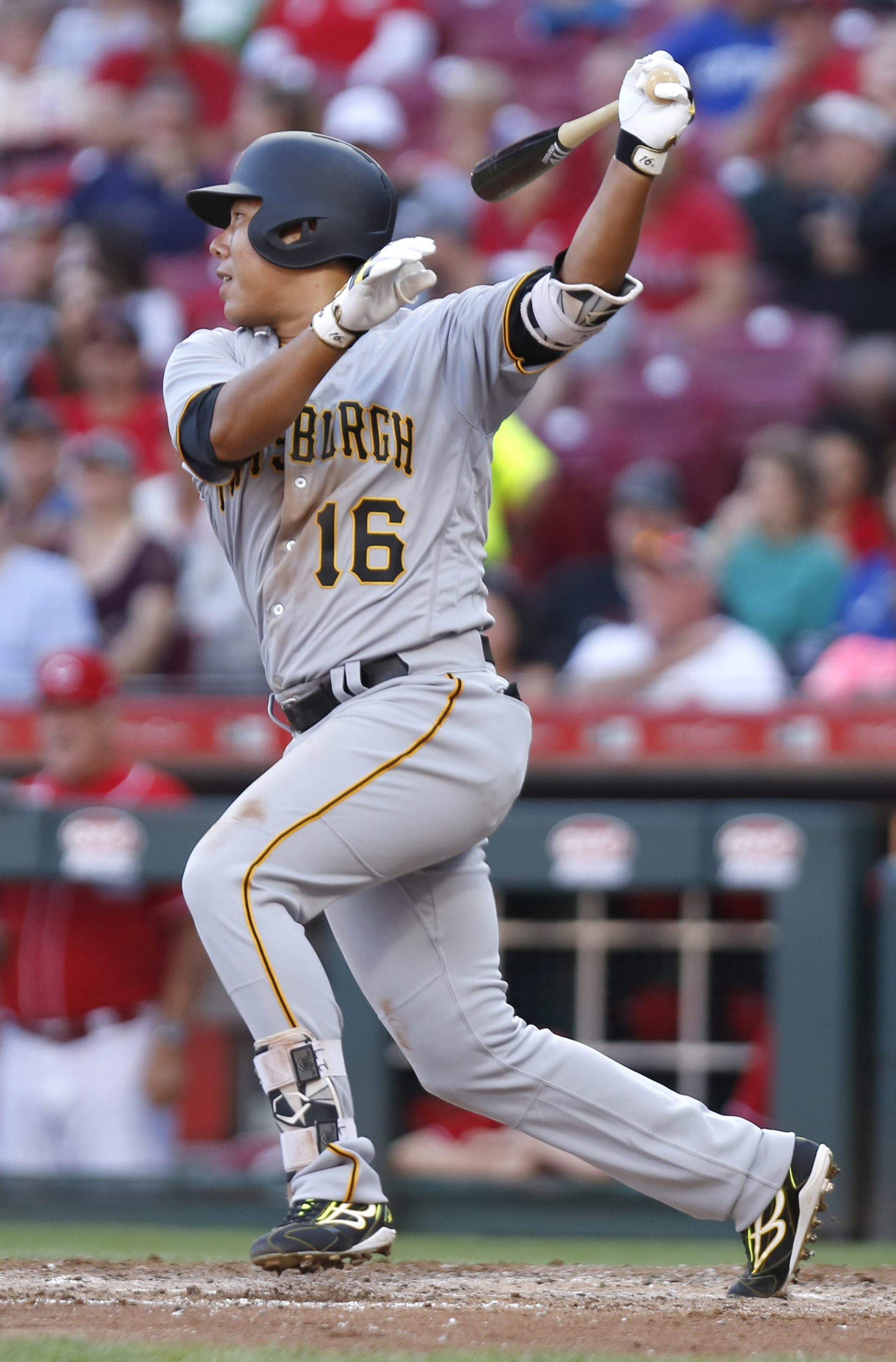
Kang, 32 in April, largely delivered on the hype that followed him to the United States in his first two seasons in Pittsburgh. The former Nexen Heroes superstar posted a .273/.355/.483 with 36 homers, 43 doubles and two triples through 229 games in his first two seasons with the Pittsburgh organization, giving the Buccos plenty of production in return for a relatively modest $16MM investment ($5MM posting fee and a four-year, $11MM contract).
However, Kang played in only three MLB games this past season and was released by his Dominican Winter League after significant struggles in the preceding offseason, so it’s not clear just how well he’ll be able to re-acclimate to big league pitching. He may have gotten a lengthier look had he not required wrist surgery in August, but that health issue only adds to the question marks surrounding him.
Kang will give the Pirates a potential platoon partner for Colin Moran at third base, though he also has MLB experience at shortstop, which is a bit unsettled in Pittsburgh at the moment. Prospect Kevin Newman got his feet wet in the season’s second half and is the top internal option now that Jordy Mercer has become a free agent. As the Pittsburgh Post-Gazette’s Bill Brink tweets, though, GM Neal Huntington indicated at the end of the season that Kang may be strictly viewed as a third base option at this point (Twitter link): “He’s more of a third baseman than even a once-a-week shortstop, and his comfort is definitely third base now, that he’s shared with us.”
Kang’s DUI conviction wasn’t his only legal trouble; he was also the subject of a sexual assault investigation in 2016, though criminal charges were never filed by the alleged victim, who ultimately would not cooperate with police on the matter. Since his DUI arrest in the 2016-17 offseason, he’s gone through a substance abuse treatment program in his home country.
“We appreciate Jung Ho’s hard work to get back to being a productive Major League player, while continuing to handle himself appropriately off the field,” said Huntington in a press release announcing the move. “We feel that bringing Jung Ho back in 2019 will make us better as he will have the ability to make a positive impact on our lineup. Competition and options are important to any organization and this signing provides us with both.”