
Mariners Select Matt Koch
The Mariners announced they’ve selected righty Matt Koch onto the big league roster. Veteran reliever Sergio Romo has been placed on the 10-day injured list, retroactive to April 12, due to shoulder inflammation. To create space on the 40-man roster, Seattle transferred Casey Sadler to the 60-day IL.
Koch is back in the majors for the first time since 2019. A former 3rd-round pick of the Mets, he was traded to the Diamondbacks in August 2015. Koch made his MLB debut the following season, the first of four straight in which he’d pick up some big league time. The majority of his work came in 2018, when Koch started 14 of his 19 outings and tossed 86 2/3 innings of 4.15 ERA ball for the Snakes.
Underlying numbers didn’t support Koch’s capable run prevention figure that season, though, and he couldn’t replicate it in nine outings as a multi-inning reliever the following year. The Louisville product allowed eight home runs in 20 2/3 innings in 2019, and Arizona outrighted him off the 40-man roster that May.
Koch spent the 2020 season with the Yakult Swallows in Japan before returning to affiliated ball last season. He worked 63 1/3 frames as a long relief option for the Indians’ top affiliate in Columbus, posting a 5.83 ERA with a subpar 18.8% strikeout rate. Cleveland never gave him an MLB look, but he signed a minors pact with the M’s this past offseason. Assigned to Triple-A Tacoma to open the year, the 31-year-old has punched out five of the six batters he faced to earn a return call to the big leagues. Koch is out of minor league option years; now that he’s back on the 40-man roster, Seattle has to keep him in the majors or designate him for assignment.
The Mariners signed Romo to a $2MM deal in March. The reliable veteran has tossed a pair of scoreless outings to start his tenure in the organization, but that’ll be put on hold while he recovers. The team didn’t provide a timetable for his return. Sadler, meanwhile, is out for the season after undergoing shoulder surgery last month. His eventual placement on the 60-day IL was a mere formality.
Ryan Divish of the Seattle Times first reported the move.
Mariners Sign Nick Ramirez To Minor League Deal
The Mariners have signed lefty Nick Ramirez to a minor league contract, as first reported by Tacoma Rainiers broadcaster Mike Curto (Twitter link). Ramirez wasn’t formally signed until yesterday morning, but he’s already reported to the Rainiers and tossed a scoreless inning out of their bullpen last night.
The 32-year-old Ramirez spent the 2021 season in the Padres organization and logged 20 1/3 innings out of their bullpen — his third straight season with big league experience. He was hit hard in that time, yielding 15 runs (13 earnd) on 23 hits and seven walks with 14 strikeouts. The resulting 5.75 ERA wasn’t much to look at, and Ramirez cleared waivers last September before opting for minor league free agency following the season.
Though he hasn’t had strong results in either 2020 or 2021, Ramirez did toss 79 2/3 innings of 4.07 ERA ball with the 2019 Tigers. He carries a 4.55 ERA in 110 2/3 Major League innings, as well as a 20.4% strikeout rate, a 9.4% walk rate and a solid 46.1% ground-ball rate. Lefties, in particular, have had a hard time with Ramirez, as evidenced by a .234/.314/.333 batting line in 159 plate appearances. Right-handed hitters haven’t had nearly as much trouble, hitting him at a .255/.323/.466 clip in 326 tries.
While Ramirez was a fourth-round pick of the Brewers back in 2011, this is still only his sixth season as a pitcher. He spent the first five-plus seasons of his professional career as a first baseman before Milwaukee moved him to the mound in 2017. Ramirez carries a 2.96 ERA between Double-A and Triple-A, where he’s posted a combined 20.7% strikeout rate and an 8.8% walk rate.
Anthony Misiewicz and Justus Sheffield are the only two lefties currently in Seattle’s big league bullpen, though the team also has on the 40-man roster Nick Margevicius but down in Tacoma. Other recognizable southpaws on the Rainiers’ roster (but not on the Mariners’ 40-man) include Tommy Milone, Andrew Albers, Roenis Elias and Kyle Bird. Ramirez will give them some additional depth in that regard, and given that he’s pitched in the Majors each season from 2019-21, a strong showing performance could put him on the map for a fourth big league look.
Mariners Sign Daniel Ponce De Leon
The Mariners have signed right-hander Daniel Ponce de Leon, according to Tacoma Rainiers announcer Mike Curto (Twitter link). Ponce de Leon will take the hill immediately for Triple-A Tacoma, scheduled to start today in the second game of a doubleheader.
The Angels inked Ponce de Leon to a minors contract during the lockout but released him earlier this week. The righty didn’t get a long look in official Cactus League action, as Ponce de Leon pitched just two innings in a single Spring Training game. It marks the second time in less than seven months that Ponce de Leon has been released, after the Cardinals cut him shortly before the end of the 2021 season.
Today’s start for the Rainiers will mark Ponce de Leon’s first official pro game outside of the St. Louis organization. The Cards selected de Leon in the ninth round of the 2014 draft, and he has appeared in the majors in each of the last four seasons working in a swingman capacity. With 22 starts in 57 career MLB games, Ponce de Leon has a 4.33 ERA and 23.9% strikeout rate over 147 2/3 innings in The Show, but his biggest issue has been a lack of control. Ponce de Leon has a 12.7% walk rate in the majors, and his walks have also been on the rise even in the minors over the last few seasons.
The 2021 season saw Ponce de Leon miss about two months due to two separate shoulder-related IL stints, and he posted a 6.21 ERA over 33 1/3 frames for the Cardinals. With his walk total (22) almost matching his strikeouts (24), Ponce de Leon became an expendable piece for the Cards. He’ll now look to catch on with the Mariners, providing some rotation or long relief depth at the Triple-A level.
Mariners Sign J.P. Crawford To Extension
The Mariners have officially announced a contract extension with shortstop J.P. Crawford, which reportedly adds on four additional years and $46.15MM in new money. Crawford, who is now signed through 2026, is represented by Wasserman.
According to ESPN’s Jeff Passan, the deal, worth $51MM in total, starts this year and buys out two free agent seasons. Crawford had already agreed to a $4.85MM contract for 2022. Ken Rosenthal of The Athletic has the financial breakdown of the new contract. Jon Heyman of the New York Post notes that the deal does not contain option years and provides details on no-trade provisions.
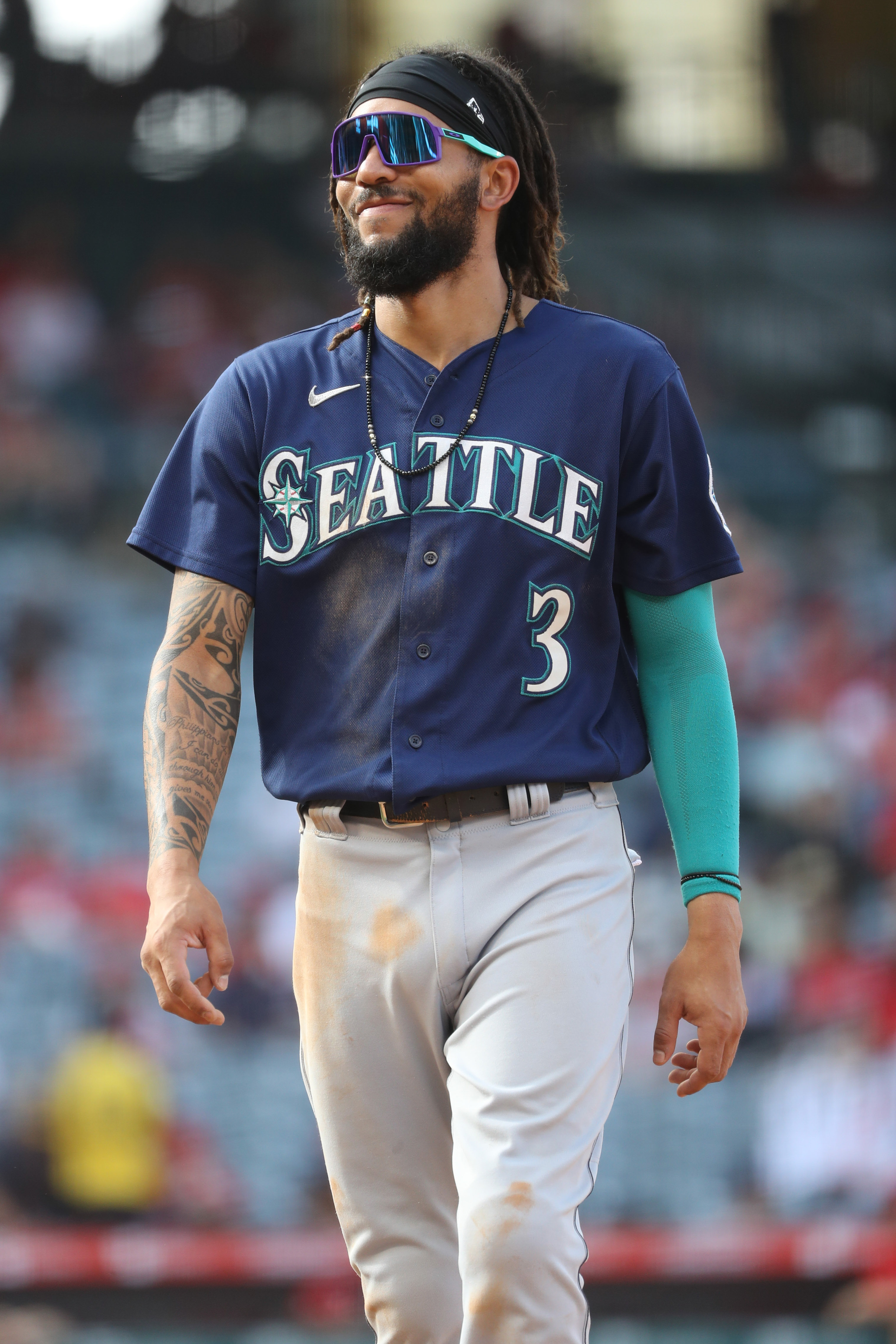
Crawford, 27, was drafted 16th overall by the Phillies out of high school back in 2013. He was traded to the Mariners with Carlos Santana in December 2018 in a deal that sent Jean Segura to Philadelphia.
Crawford has served as the Mariners’ starting shortstop since that trade. Defense is Crawford’s calling card, as he landed a Gold Glove for his work in the shortened 2020 season. In the 2021 Fielding Bible Awards voting, Crawford ranked sixth. He didn’t particularly shine in Statcast’s Outs Above Average metric in ’21, but rated well there in ’20. Crawford did rank seventh among shortstops last year in defensive runs saved.
With the bat, Crawford has steadily ascended to become above average, with a 103 wRC+ in 687 plate appearances last year. That led to a career-best 3.1 FanGraphs WAR, though on a pro-rated basis Crawford was also close to that mark in 2020. Back in November, Mariners president of baseball operations Jerry Dipoto made it clear that Crawford would be the team’s starting shortstop for 2022, regardless of who the team ended up pursuing in free agency.
Now, Dipoto has locked up Crawford through the 2026 season. Dipoto said in a statement Friday, “J.P. brings excellent defense at a critical position, in addition to solid on-base skills and a penchant for delivering in the big moment. He’s an incredibly competitive player who has become an integral part of our team, both on the field and in the clubhouse.”
Crawford represents the sixth Mariners player under contract beyond 2022, joining Robbie Ray, Eugenio Suarez, Marco Gonzales, Evan White, and Andres Munoz. The club has about $80MM in commitments for 2023.
It’s been a while since a somewhat glove-first, lower power position player in the three year service bracket signed a contract extension. Back in January 2016, Dee Strange-Gordon signed a five-year, $50MM deal with the Marlins.
Minor MLB Transactions: 4/7/22
The Mariners have signed right-hander Jairo Diaz to a minor league deal, per Jon Heyman of the New York Post.
Diaz had an excellent season for the Rockies in 2019, throwing 57 2/3 innings out of their bullpen. His 4.53 ERA might not look impressive at first glance, but for someone calling Coors Field home during the “juiced ball” season, that’s nothing to sneeze at. His 25.7% strikeout rate and 7.8% walk rate were both better than league average.
Unfortunately, things went in the wrong direction for Diaz in 2020, as his ERA shot up to 7.65, along with a 16% strikeout rate and 13.2% walk rate. He was outrighted in 2021, throwing just 7 1/3 Triple-A innings on the year due to injuries. For the Mariners, this is a no-risk way of bolstering their bullpen depth.
Some other moves from Opening Day 2022…
- The Mariners also signed minor league deals with lefty Rob Kaminsky and infielder Taylor Featherston, per the team’s transactions tracker at MLB.com. Kaminsky has 4 2/3 innings of MLB experience, which came with the Cardinals in 2020. Last year, he signed a minors deal with the Phillies but was held to just one inning of work in the minors due to a left elbow osteophyte. The last time he saw extensive work was 2019, when he pitched 56 innings between Double-A and Triple-A, with a 3.54 ERA, 25.7% strikeout rate and 9.3% walk rate. As for Featherston, he saw MLB action from 2015-2017, appearing in 137 games but hitting just .160/.221/.256. He didn’t play at all in 2020 or 2021, meaning his last action was 2019. He split that year between Double-A and Triple-A with the Royals, hitting .241/.303/.426, but with a 38.7% strikeout rate.
- The Orioles traded minor league shortstop Mason McCoy to the Mariners for cash considerations, per Roch Kubatko of MASNsports.com. He was selected by the Orioles in the sixth round of the 2017 draft and has been with the organization for his whole career thus far. In 2020, he cracked Baseball America’s list of the top 30 Baltimore prospects, coming in at #29. BA’s report indicated that his defensive game is stronger his offensive output, which he certainly showed in 2021. In 112 Triple-A games, McCoy hit .221/.288/.368, striking out in 29.2% of his plate appearances. However, he did steal 13 bags and spent time at shortstop, second base, third base, left field and center field.
- Tigers announced that left-hander Miguel Del Pozo, who was designated for assignment yesterday, has cleared waivers and been outrighted to Triple-A Toledo. The 29-year-old logged 5 1/3 MLB innings last year, throwing 38 1/3 in Triple-A. In that time with the Mud Hens, he had a 2.82 ERA with a 34.6% strikeout rate and a 10.3% walk rate.
Mariners Select Matt Festa
The Mariners announced their Opening Day roster this afternoon, and reliever Matt Festa made the big league club. Seattle had a vacancy on the 40-man roster, so no additional move was necessary.
Festa is in line for his first MLB work in three years. He suited up with Seattle from 2018-19, tossing 30 2/3 innings of 4.70 ERA ball. The former 7th-round pick only punched out 17.7% of opponents on a below-average 9.2% swinging strike rate. Seattle outrighted Festa off their 40-man roster during the 2019-20 offseason, and he underwent Tommy John surgery not long after.
The 29-year-old returned from the surgery midway through last season, working 21 1/3 innings over 19 outings with Triple-A Tacoma. Festa posted a 2.95 ERA while striking out an excellent 36% of batters faced and only issuing walks at a 3.5% clip. After also impressing the organization in Spring Training, he’ll return to the big league club.
Seattle lost Casey Sadler for the season and will be without Ken Giles to start the year. Paul Sewald, Drew Steckenrider and Diego Castillo look as if they’ll assume the highest-leverage innings, while Festa will step into the middle innings mix. He still has a minor league option year remaining, so the M’s can bounce him between Seattle and Tacoma this season even though he’s back on the 40-man roster.
Julio Rodriguez Makes Mariners’ Opening Day Roster
Julio Rodriguez didn’t give the Mariners much of a choice. The team announced Monday that the 21-year-old outfielder, who is near-universally ranked among MLB’s top three prospects, has made its Opening Day roster.
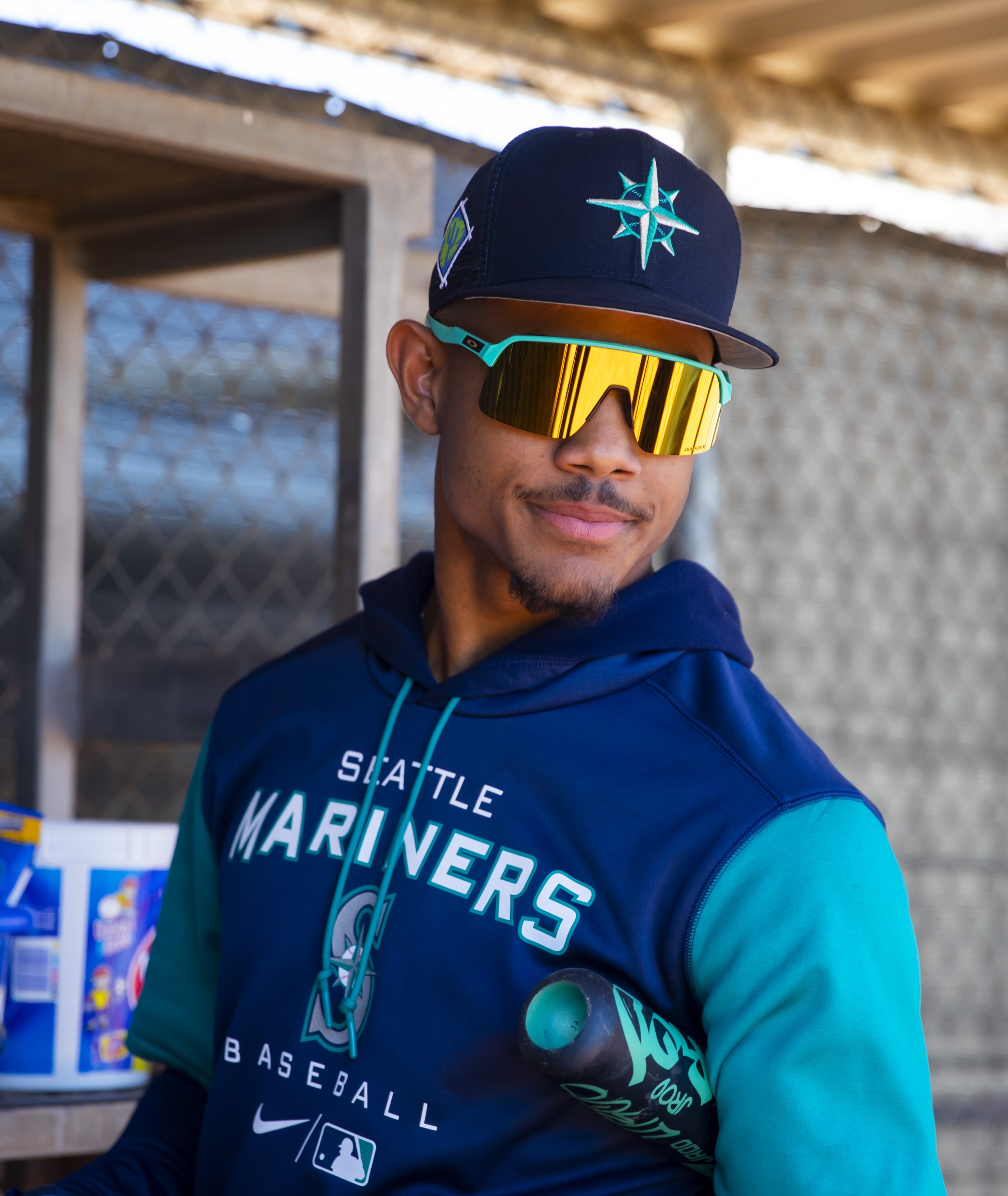
Rodriguez obliterated Cactus League pitching, appearing in a dozen games and slashing .419/.471/.839 with three home runs and four doubles through 34 trips to the plate. He tacked on three stolen bases in four attempts, also flashing his wheels when he circled the bases on an inside-the-park home run, and drew three walks against nine strikeouts.
The massive spring showing comes on the heels of a similarly explosive minor league campaign in 2021. Playing the entire season at age 20 — he turned 21 in December — Rodriguez split the year between Class-A Advanced and Double-A, slashing a combined .347/.441/.560 with 13 home runs, 19 doubles, two triples and 21 stolen bases in just 340 plate appearances. (Rodriguez missed time during the regular season to suit up for the Dominican Republic in the Olympics.)
With just 46 Double-A games under his belt, the Mariners might’ve had a defensible case to keep Rodriguez down in the minors to begin the season had he shown any sign of struggles in camp. But with such a blistering performance in the Cactus League and perhaps in part thanks to the new Prospect Promotion Incentives in the 2021-26 collective bargaining agreement, he’ll instead leapfrog the Triple-A level entirely and get the chance to prove he’s ready to face the sport’s very best pitchers.
Rodriguez figures to join an outfield rotation that also includes offseason acquisition Jesse Winker, veteran right fielder Mitch Haniger and another touted, hopeful building block in Jarred Kelenic. Rodriguez figures to see the bulk of playing time in center field during the early portion of his career, though both Kelenic and Haniger have experience there as well. It’s a talented outfield group has sky-high offensive potential, though both Rodriguez and Kelenic will need to prove that they’re able to handle big league pitching at such young ages. Thus far at least, Rodriguez has been up to the task at virtually every step of his professional career.
Scouting reports on Rodriguez gush over his potential not just to emerge as the face of the Mariners but one of the best players in all of MLB. Baseball America touts Rodriguez’s 80-grade raw power (on the 20-80 scale) and places 70 grades on both his hit tool and his in-game power, noting that while his most impressive long balls are to the pull-side, he can hit the ball out of the park to all fields “with shocking ease.” The Athletic’s Keith Law calls him a potential “long-term cleanup hitter who’ll challenge for MVP awards with 30-40 homers, high OBPs and, at least, solid defense in right field.” Superlatives of this nature are easy to find, as scouts and talent evaluators all agree that Rodriguez looks every bit like a star in the making.
Whether that translates immediately remains to be seen, of course, and for all the lofty expectations placed on Rodriguez, it’s worth recalling that not every ballyhooed prospect hits the ground running. Mike Trout hit .220/.281/.390 in 40 games as a rookie. Ronald Acuna Jr. had a .742 OPS through his first 42 games. Vladimir Guerrero Jr. was five percent better than league-average with the bat as a rookie in 2019. The mere fact that Rodriguez is ranked so highly that he can even be mentioned alongside talents of that nature is impressive in and of itself, but not every top prospect breaks down the big league door and thrusts himself into MVP conversation from the jump, a la Juan Soto.
If Rodriguez is indeed in the Majors to stay, he’ll remain under club control all the way through the 2027 season. He’d reach arbitration after the 2024 season, although it’s quite possible that via the newly implemented bonus pool for pre-arbitration players, he’ll boost his earnings beyond the standard minimum (or close to it) levels for pre-arb players. That’ll depend on Rodriguez’s overall performance and his finish in Awards voting over the next few seasons. If he fares well, it’s also possible that the Mariners will be awarded some bonus selections in future drafts, under the previously mentioned “prospect promotion incentives” put in place under the new CBA.
All that aside, Rodriguez’s immediate promotion to the big leagues is cause for Mariners fans to celebrate. Expectations surrounding the club have rapidly escalated in recent years, due in no small part to last year’s 90-win season and a vaunted farm system headlined by their new Opening Day center fielder. The hope of both the team and fans alike will be that Rodriguez can play a pivotal role in snapping what has become the longest playoff drought not only in MLB but in the NBA, NFL and NHL. The last time the Mariners made the playoffs, Rodriguez had not yet celebrated his first birthday. If the Mariners indeed break through into October baseball this year, there’s a good chance that Rodriguez will have played a considerable role — but for now, fans can simply look forward to getting their first look at a potential franchise cornerstone just over 72 hours from now.
Hector Gomez of Z101 Deportes first reported the news a few minutes before Seattle’s formal announcement (Twitter link).
Photo courtesy of USA Today Sports Images.
Mariners Avoid Arbitration With Mitch Haniger
The Mariners have avoided going to an arbitration hearing with outfielder Mitch Haniger, per Ryan Divish of The Seattle Times. Mark Feinsand of MLB.com relays that Haniger will earn a salary of $7.75MM this year, after he had filed at $8MM with the team filing at $6.71MM. (Twitter links)
This will be a significant raise for Haniger, effectively doubling his career earnings. After making around the league minimum for his first few seasons, like most players, he reached arbitration for the first time in 2020 and earned a salary of $3.01MM. Unfortunately, he missed all of that campaign due to the ruptured testicle he suffered in July of 2019.
Due to missing that whole season, he re-upped with the Mariners for the same salary in 2021 and had a tremendous bounceback season. In 157 games, he hit 39 home runs and posted an overall line of .253/.318/.485, good enough for a wRC+ of 120. Based on that excellent campaign, he will now bump his salary up to $7.75MM in his final arbitration year before reaching free agency this coming winter.
The Mariners seem well positioned to deal with an absence of Haniger next year, given the number of young outfield options on the roster. Jarred Kelenic debuted last year and seems ticketed for a lengthy showing this year. Jesse Winker was just acquired from the Reds and will still be around for 2023. 2020 Rookie of the Year Kyle Lewis is still recovering from a torn meniscus but doesn’t seem too far away now. Then there’s Julio Rodriguez, widely considered one of the best prospects in baseball. He’s currently making a push to land a spot on the team’s Opening Day roster. Even if he isn’t with the club on day one, there seems to be little doubt that he’ll join the club at some point this year.
If Haniger does hit the open market after this season, he should be in high demand based on his excellent numbers at the plate. However, as something of a late bloomer, he’s scheduled to reach free agency at a relatively older age, as he’ll be turning 32 in December of this year. That could limit the length of the deals he is offered, though that could also increase the number of interested teams, as many clubs prefer to eschew long-term commitments these days.
Matt Brash Makes Mariners’ Rotation
Pitching prospect Matt Brash has earned a spot in the Mariners’ rotation to begin the season, per Daniel Kramer of MLB.com. The righty had his contract selected by the club in late September of last year but never got into a game, meaning it will be his MLB debut when he finally takes the hill in the coming days.
It’s been a remarkable rise for the Kingston, Ontario native over the past few years. Selected by the Padres in the fourth round of the 2019 draft, he pitched a few innings of rookie ball and A-ball that season. In 2020, of course, the minor league seasons were canceled by the pandemic, leaving Brash unable to pitch in any official games. At that year’s trade deadline, he was the player to be named later in a minor trade that saw reliever Taylor Williams go to San Diego. As noted by Kramer, Brash wasn’t considered a top 30 prospect of the Padres before the trade nor of the Mariners after.
In 2021, Brash proved that the Mariners had unearthed a hidden gem, as he threw 97 1/3 innings between High-A and Double-A, putting up an ERA of 2.31 between those two levels. Although his 11.9% walk rate was a bit high, his 35.1% strikeout rate was elite. Based on that dominant performance, the club selected him to their big league roster September 28th, hoping that he could help cover some innings as they were making a push for a wild card spot, despite Brash never pitching at the Triple-A level. He didn’t end up taking the mound in those final few games, however.
Based off his excellent work last year, Brash is now considered one the 98th prospect in the game by MLB Pipeline, comes in at #84 at ESPN and #45 at Baseball America. This spring, Brash has continued to build his reputation, throwing 9 1/3 innings with 12 strikeouts, 2 walks and just a single earned run. The new CBA features a provision called the Prospect Promotion Incentive whereby teams can earn an extra pick in the draft if a rookie-eligible player with 60 days or fewer of major league service who is included on a preseason top 100 prospect list by two or more of Baseball America, ESPN.com or MLB.com is promoted and finishes high in award voting in any year before he is eligible for arbitration. Since Brash cracked all three of those lists and has just six days of MLB service time, he could earn the M’s an extra draft pick for a Rookie of the Year win or a top three finish in MVP or Cy Young voting in his pre-arbitration seasons. If the international draft is implemented, he could earn the club a selection if second or third in Rookie of the Year, or fourth or fifth in Cy Young. A team can gain at most one PPI pick in the amateur draft and three total PPI picks for any individual prospect, two international and one amateur, with a max of one such pick per year. (Further details about the incentive are laid out by Evan Drellich of The Athletic.)
After an 89-win season in 2018, Seattle surprisingly decided to tear down their roster and enter a rebuild. After just a pair of losing seasons, they took a huge leap forward last year, winning 90 games and narrowly missing the postseason. Before the lockout, they added the reigning AL Cy Young Robbie Ray to the rotation, joining holdovers Marco Gonzales, Chris Flexen and Logan Gilbert. The 23-year-old Brash will round out that group to start the season. As noted by Kramer, Brash will be the first native of Kingston, Ontario to pitch in the big leagues.
Despite all that praise for Brash, he’s actually the second-best pitching prospect in the system, with George Kirby ahead of him on most lists. However, Kirby will head back down to the minors, based on the fact that he only logged 67 2/3 innings last year. “He didn’t have a huge workload last year,” Mariners manager Scott Servais said. “It’s really important that he continues to progress. George is going to pitch for us this year, there’s no question about it. And I think he’s going to be a huge part of how our season plays out.” Should Kirby continue to develop, the Mariners will have an excellent depth option ready to go in the event of a need in the big league rotation.
Wade LeBlanc Announces Retirement
Left-hander Wade LeBlanc has decided to retire, MLB Network’s Jon Morosi reports (Twitter link). The 37-year-old LeBlanc is hanging up his cleats after pitching in parts of 13 Major League seasons with nine different teams, as well as a stint in Japan with the Saitama Seibu Lions in 2015.
Originally a second-round pick for the Padres in the 2006 draft, LeBlanc has pitched in a number of different roles over his long career. The southpaw has seen work as a full-time starter, full-time reliever, and most often a little bit of both, with teams usually eyeing LeBlanc in various types of swingman or long relief roles. Interestingly, despite the “veteran lefty” mold, LeBlanc didn’t see much specialist work since left-handed batters actually did more damage (.843 OPS) against him than right-handed batters (.763 OPS).
Never a big strikeout pitcher or a high-velocity arm, LeBlanc relied more on off-speed pitches than his fastball, and got out by generating soft contact. When LeBlanc was getting that weak contact and keeping the ball in the park, he was quite effective, though home runs became an increasing problem in recent years.
Of LeBlanc’s nine MLB teams, his longest stints came with the Mariners (333 1/3 IP), Padres (293 1/3 IP), and Marlins (117 1/3 IP). He most recently saw action with the Cardinals, signing a contract in June when the Cards were besieged with pitching injuries.
LeBlanc helped stabilize things by posting a 3.61 ERA over his 42 1/3 innings in a St. Louis uniform, helping the team tread water until eventually going on a major hot streak down the stretch. Unfortunately, LeBlanc wasn’t there to enjoy that success, as he was sidelined with an elbow injury and was reportedly set to undergo some type of medical procedure to address his elbow in September.
LeBlanc will retire with a 4.54 career ERA over 931 1/3 Major League innings. We at MLBTR congratulate LeBlanc on an excellent career and we wish him the best in his post-playing endeavors.