
Orioles Return Rule 5 Picks Brandon Bailey, Michael Rucker
3:01pm: The O’s announced that both players have cleared waivers and been returned to their prior teams.
1:37pm: The Orioles have decided against carrying both of their Rule 5 selections from the December draft, GM Mike Elias told media members including Jon Meoli of the Baltimore Sun (via Twitter). The departures of righties Brandon Bailey and Michael Rucker will open two 40-man roster spots.
It isn’t yet entirely clear whether these two hurlers have cleared waivers. Every other team in baseball will have (or has had) a chance to step into the O’s Rule 5 rights. If nobody places a claim, then they’ll be offered back to their prior teams — where they will not lock up a big-league roster spot unless and until they’re added.
The 25-year-old Bailey came over from the Astros organization after a strong 2019 season in which he pitched to a 3.30 ERA over 92 2/3 innings at the Double-A level with 10.0 K/9 and 4.0 BB/9. He had been selected with the second overall pick in the Rule 5 draft. The Orioles could’ve utilized him as a swingman in the majors this year but evidently didn’t see enough upside to merit the effort.
As for Rucker, who’s also 25, he’d be heading back to the Cubs. Last year, he transitioned into a full-time reliever, throwing 79 2/3 upper-minors innings over 36 appearances. Rucker carried a 4.18 ERA with a healthy combination of 10.5 K/9 and 2.8 BB/9 on the season. He also threw five scoreless innings over three appearances in camp, with three strikeouts and a pair of free passes.
White Sox Extend Yoan Moncada
Yoan Moncada was viewed as a potential building block from the moment the White Sox acquired him, and he’s officially been elevated to that status. The White Sox on Friday announced that they’ve signed Moncada to a five-year, $70MM extension that runs through the 2024 season and includes a club option for the 2025 season.
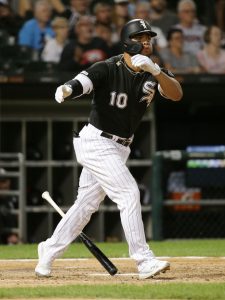
The White Sox, one of the only teams in baseball that discloses financial terms, announced the breakdown of the contract: a $4MM signing bonus, $1MM in 2020, $6MM in 2021, $13MM in 2022, $17MM in 2023 and $24MM in 2024. The $25MM option for 2025 comes with a $5MM buyout. Moncada is represented by the Movement Management Group.
Of players who signed extensions when they had between two and three years of Major League service time, only Mike Trout, Alex Bregman, and Buster Posey received a higher annual average value than the $14MM Moncada will earn over the next five seasons. In a recent look at what a possible Moncada extension could cost, MLBTR’s Jeff Todd set Bregman’s deal (a five-year, $100MM extension from last spring) as a possible comp, and Moncada will fall short of that dollar figure even if his 2025 option is exercised. That said, Bregman was also more established at the big league level and his deal didn’t cover his remaining pre-arbitration season.
Reports surfaced last week about negotiations between the two sides, and the agreement makes Moncada the latest member of Chicago’s young core to ink a long-term deal. The White Sox have signed Eloy Jimenez, Luis Robert, Aaron Bummer to extensions within the last year, and also extended veteran leader Jose Abreu through the 2022 season after Abreu initially accepted the team’s qualifying offer last fall. Between these extensions and the offseason acquisitions of Yasmani Grandal, Edwin Encarnacion, Dallas Keuchel, Gio Gonzalez, and Nomar Mazara, the Sox are clearly ready to put their rebuild behind them as they pursue (at the very least) their first winning season since 2012.
Moncada became one of the cornerstones of that rebuild process when he was acquired as part of the four-prospect package the White Sox received from the Red Sox for Chris Sale in December 2016. At the time of the deal, many considered Moncada to be arguably baseball’s top prospect, and he showed glimpses of that potential during two decent but inconsistent seasons with the White Sox in 2017-18. Last year, however, Moncada broke out to hit .,315/.367/.548 with 25 homers over 559 plate appearance, while also displaying some solid third base defense in the opinion of the Statcast (+5 infield outs above average) and UZR/150 (+4.9) metrics.
It wasn’t all good news for Moncada in 2019, as he posted the lowest walk rate (7.2%) of his three seasons in Chicago and also benefited from a .406 BABIP. While Moncada’s strong baserunning will tend to give him a higher BABIP than most players, a .406 mark (over 100 points above average) indicates some level of good fortune. Still, there’s an awful lot to like from Moncada’s performance, especially for a player who doesn’t turn 25 until May.
2020 was Moncada’s final pre-arbitration season, so his extension will cover that pre-arb year, his three arbitration seasons, and at least his first free agent season. If the White Sox exercise the 2025 option, Moncada will be eligible for free agency as he enters his age-31 season, so there’s still an opportunity at another big payday beyond this contract. It should be noted that Moncada already gained financial security before appearing even in the minor leagues, as he received a $31.5MM bonus upon signing with the Red Sox as an international free agent in February 2015.
The Athletic’s Ken Rosenthal first reported the agreement (Twitter link). USA Today’s Bob Nightengale reported the financial terms. Rosenthal, ESPN’s Jeff Passan and ESPN’s Kiley McDaniel each tweeted additional financial details.
Photo courtesy of USA Today Sports Images
Brewers Extend Christian Yelich
The Brewers have locked up the face of their franchise for the better part of the decade, announcing a nine-year contract with outfielder and 2018 NL MVP Christian Yelich that runs through the 2028 season and includes a mutual option for the 2029 season. Yelich, a client of Paragon Sports International’s Joe Longo, will reportedly be promised seven years and $188.5MM on top of what he was already owed through the 2021 season.
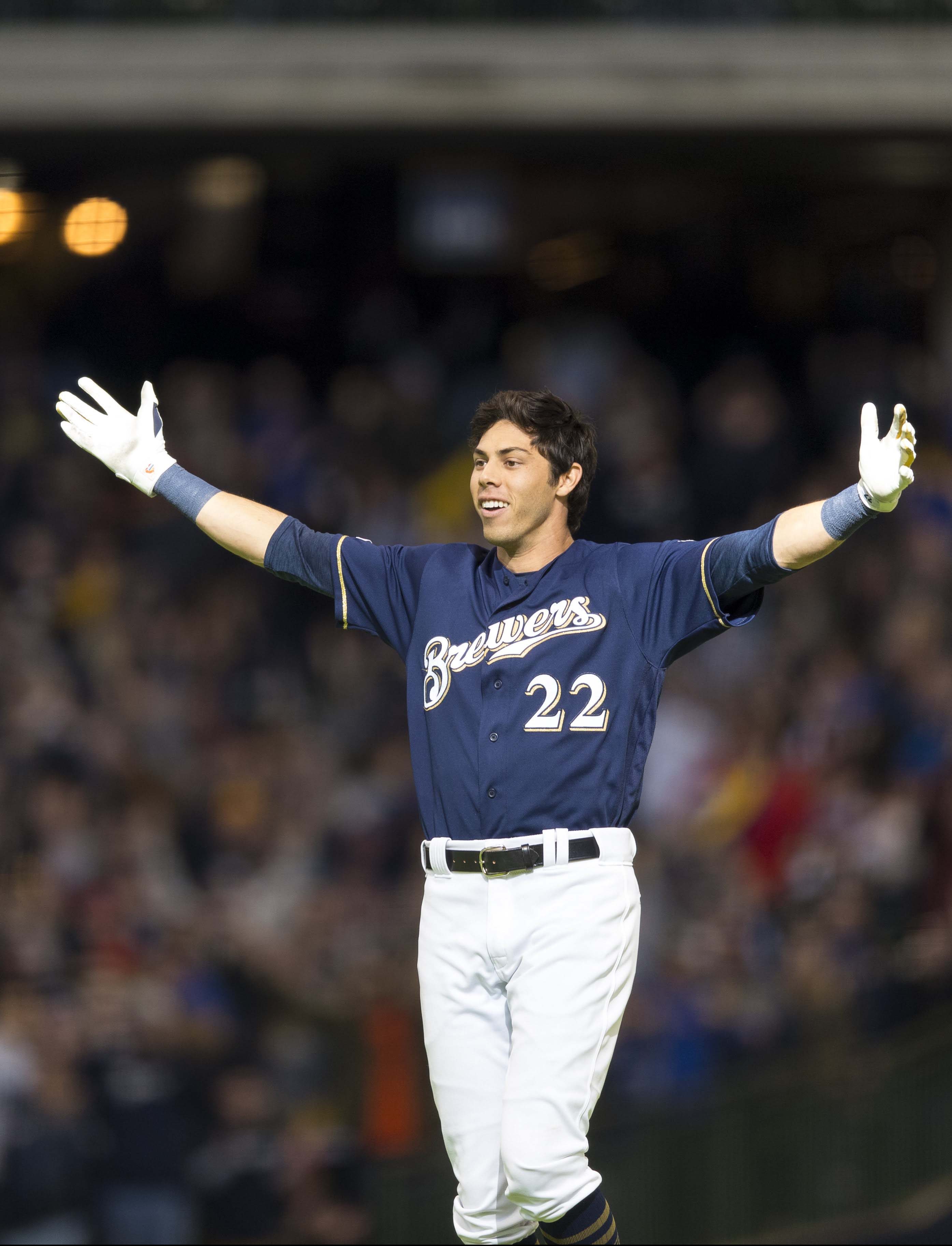
The 28-year-old Yelich was already under club control for $12.5MM in 2020 and $14MM in 2021 — plus a $15MM club option ($1.25MM buyout) for the 2022 season. Those salaries came under the terms of Yelich’s previous seven-year, $49.57MM deal, though; the newly proposed arrangement would obviously catapult him into the game’s elite in terms of annual rate of compensation.
Under the terms of the new contract, those 2020-21 salaries will remain in place, while Yelich will reportedly be guaranteed $26MM annually (with $4MM in deferrals) from 2022-28. The option is said to be valued at $20MM with a $6.5MM buyout. He also receives a full no-trade clause. The contract doesn’t have any opt-outs. In all, he’ll be paid a hefty $215MM over the next nine seasons thanks to today’s extension.
Of course, Yelich has more than proven worthy of that level of investment since being traded over from Miami in a lopsided deal that sent Lewis Brinson, Isan Diaz, Jordan Yamamoto and Monte Harrison to the Marlins. Yelich had cemented himself as a well above-average player in Miami, but the former No. 23 overall pick and top prospect erupted with an MVP season in 2018 and an MVP runner-up in 2019. In two years with the Brewers, Yelich has won a pair of batting titles, posting a combined .327/.415/.631 slash with 80 home runs, 63 doubles, 10 triples and 52 steals (in 58 tries). The 2019 season saw Yelich lead the league not only in batting average but also in on-base percentage and slugging percentage.
That outstanding 2019 campaign ended with an injury — specifically a fractured kneecap suffered when Yelich fouled a pitch into his shin. That might’ve cost him a second consecutive MVP Award — he and eventual winner Cody Bellinger were neck-and-neck at the time of the fracture — but the Brewers clearly don’t have much in the way of concern on potential lingering complications.
In looking for recent comparables, there are some definite parallels with Mike Trout, who also signed what amounts to a career-spanning contract when he was already signed for another two seasons. Yelich’s deal falls well shy of the 10 years and $360MM in new money secured by Trout a year ago, although that’s not really a surprise. Great as Yelich has become, Trout had a superior track record (as he does to everyone else in the game). He was also entering his age-27 season when he put pen to paper, and he didn’t have an option on the contract that his new arrangement was overwriting. Had Yelich played out the remainder of his deal, he’d have needed to wait three years to reach market in advance of his age-31 campaign.
Nolan Arenado, too, bears a quick mention. Like Yelich, he’s an elite talent who inked a mammoth extension in advance of his age-28 campaign, tacking seven years and $234MM onto his previous one-year, $26MM deal. Arenado, however, was only a season away from reaching the open market, so it’s not surprising that his annual value handily tops that of Yelich.
From the Brewers’ vantage point, the Yelich extension should buy some good will with a fan base that grew frustrated by the departures of Yasmani Grandal and Mike Moustakas. Milwaukee spent at a generally conservative rate this winter, eschewing lengthy free-agent deals and high annual salaries alike; the Brewers didn’t give out a free-agent deal longer than Josh Lindblom‘s three-year pact and didn’t promise a larger annual salary than the $10MM rate on Avisail Garcia‘s two-year, $20MM deal.
That aversion to long-term spending surely helped to pave the way for the impending Yelich mega-deal. It’s probably not a coincidence that the Brewers are making a commitment of this magnitude right as the previous franchise-record contract — Ryan Braun‘s $105MM extension — comes off the books. In fact, prior to the Yelich news, the Brewers only had $26.8MM in guarantees on the books in 2022, which will be the first newly guaranteed season on Yelich’s contact. Milwaukee didn’t have a single guaranteed salary on the books for the 2023 season prior to this deal, either. The contract should be manageable in terms of their long-term budget outlook, even if it’s a level of spending which we’ve never seen the Brewers commit to in the past. In that regard, though, it’s clear that the organization views him as a special commodity:
“Christian is everything you could want as the face of a franchise – from his incredible performance on the field, to his leadership as a teammate, to his dedication to the community,” owner Mark Attanasio said in a press release announcing the extension. “This is an exciting day for everyone connected to the organization as we continue our commitment to be a highly competitive franchise and a place that players want to call home.”
The Athletic’s Ken Rosenthal broke the news that the two sides were closing in on a franchise-record deal. ESPN’s Jeff Passan and the New York Post’s Joel Sherman tweeted various aspects of the contract’s structure. MLB Network’s Jon Heyman reported the yearly breakdown. USA Today’s Bob Nightengale reported the no-trade clause and lack of opt-outs. MLB.com’s Adam McCalvy reported on the deferrals in the pact.
Red Sox Sign Collin McHugh, Designate Hector Velazquez
8:45am: McHugh’s deal comes with $3.625MM available via incentives, tweets Sean McAdam of the Boston Sports Journal. Heyman tweets that those incentives beginning at 30 innings pitched and run up through 115 innings pitched. McHugh’s roster bonuses begin at 15 days on the active roster and range up through 90 days.
8:22am: McHugh’s base salary will be $600K, tweets Alex Speier of the Boston Globe. He’ll be able to boost that sum by unlocking bonuses based on innings pitched and days spent on the active roster.
8:15am: The Red Sox announced Thursday that they’ve signed right-hander Collin McHugh to a one-year, Major League contract. In order to open a spot on the roster for the Moye Sports client, Boston has designated righty Hector Velazquez for assignment.
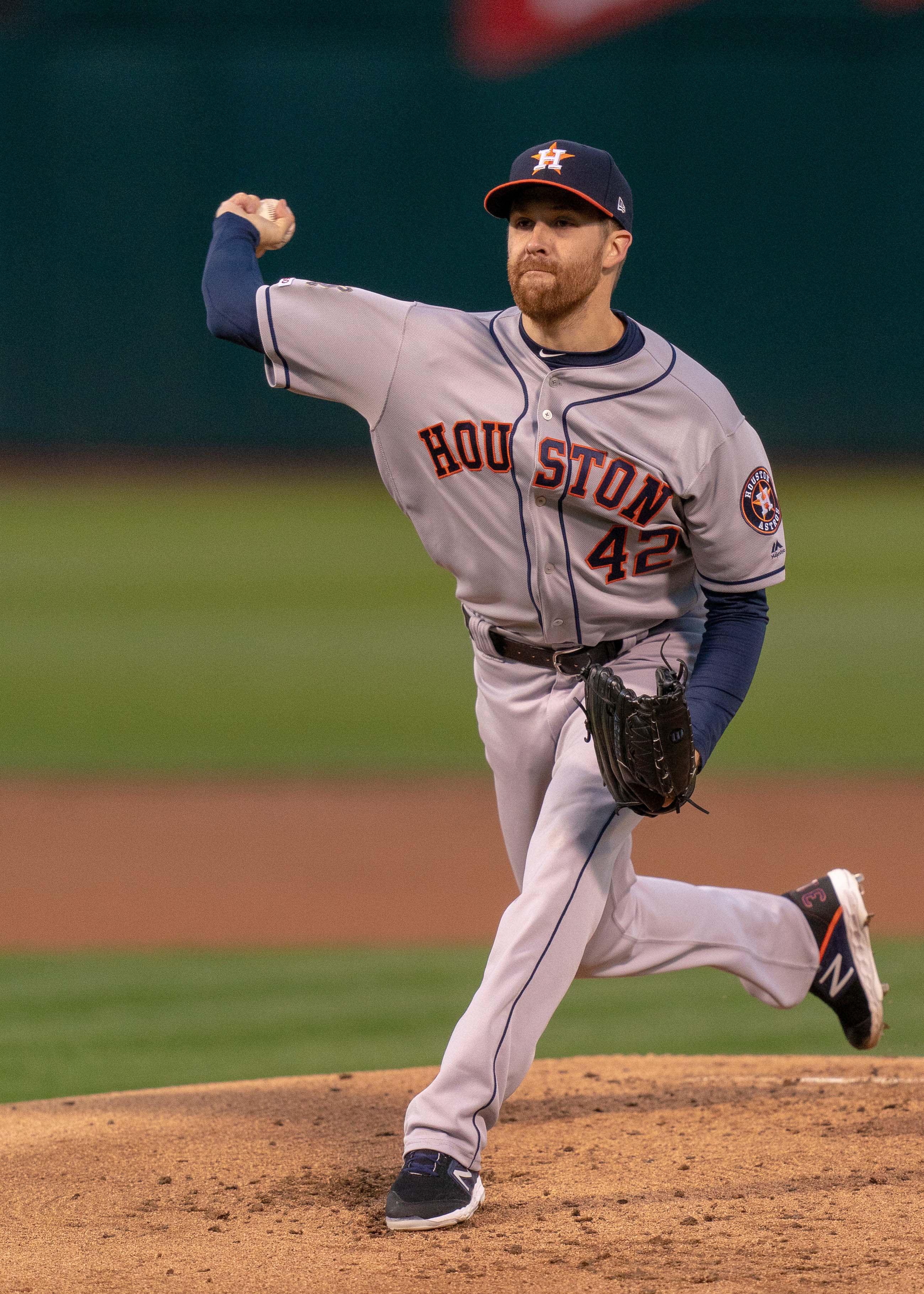
Boston’s announcement on McHugh coalesces with growing uncertainty surrounding the status of ace Chris Sale, who this week underwent an MRI on a problematic right elbow that has since been assessed by some of the industry’s leading surgeons. While Sale is reportedly expected to avoid going under the knife for the time being, he’ll open the year on the injured list and be sidelined for a yet-to-be-determined period of time. Adding some depth in the form of McHugh is certainly a sensible approach and arguably would’ve been necessary even had Sale been healthy.
That said, McHugh himself isn’t a lock to step right into the rotation and contribute as a starter. The 32-year-old missed about a third of the 2019 season due to elbow discomfort and finished out the year on the injured list. MLB Network’s Jon Heyman reported last week that McHugh had been cleared to begin throwing after undergoing a non-surgical “tenex” procedure on his elbow over the winter. His exact timetable to get on a big league mound isn’t yet clear, but he may have to begin the season on the injured list himself if he’s only recently begun throwing.
McHugh made eight starts last year but spent the rest of the 2018-19 seasons in the Astros’ bullpen. His 2019 effort was dragged down by those elbow troubles, which surely contributed to the downward trends in his velocity, swinging-strike rate, opponents’ exit velocity and opponents’ hard-hit rate. McHugh tossed 74 2/3 innings for the ‘Stros last year but turned in a 4.70 ERA that was his highest mark since 2013.
In 2018, though, McHugh was utterly dominant out of the Houston ‘pen. Through 72 1/3 frames, he recorded a stellar 1.99 ERA with averages of 11.7 strikeouts, 2.6 walks and 0.75 home runs per nine innings pitched. And prior to that he was a steady rotation piece, racking up 606 1/3 innings of 3.70 ERA ball (3.60 FIP) with 8.4 K/9 against 2.5 BB/9 from 2014-17.
The manner in which the Red Sox utilize McHugh has not yet come to light, though he could conceivably be deployed in a variety of roles. As noted, he has extensive experience both starting and relieving. With Sale sidelined, the Boston rotation currently has Eduardo Rodriguez, Nathan Eovaldi and Martin Perez locked into starting gigs. Boston has discussed utilizing one or even two openers in the remaining two slots, and manager Ron Roenicke recently revealed that the club will consider stretching left-hander Darwinzon Hernandez out to pitch in lengthier stints. McHugh could function as an opener, a bulk reliever who follows an opener or simply as a conventional starter, depending on the status of his elbow and on how the organization best believes his talents can be maximized.
For now, the Red Sox still appear likely to rely on a hodgepodge of journeymen and fringe prospects to round out their pitching staff, but the ability to eventually insert a health McHugh into the thick of that mix holds clear appeal.
As for Velazquez, he’ll either be traded, run through outright waiver or released within the next seven days. The 31-year-old right-hander was knocked around to the tune of a 5.43 ERA through 56 1/3 innings in 2019. And although he notched a 3.12 ERA with 5.9 K/9, 2.7 BB/9 and a 47 percent grounder rate in 109 2/3 innings from 2017-18, Velazquez’s secondary metrics are less encouraging than that earned run average. His 4.28 FIP was noticeably higher, and he ranked near the bottom of the league in terms of spin rates, hard-hit rates and opponents’ exit velocity. He has a minor league option left and has worked as both a starter and reliever, so it’s possible another club will take him on as a depth piece.
White Sox Sign Zach Putnam
The White Sox have inked righty Zach Putnam to a minor-league pact, the club informed reporters including Daryl Van Schouwen of the Chicago Sun-Times (via Twitter). He’ll head to the minors side of camp.
It has been a while since we’ve heard from Putnam. The 32-year-old was sidelined in 2018 while recovering from Tommy John surgery. His attempted return last year was thwarted by a hamstring injury.
Putnam was quite an effective relief pitcher for the South Siders before the injuries intervened. Over 139 1/3 frames with the organization, accumulated between 2014 and 2017, he worked to a 2.71 ERA while carrying 9.6 K/9 against 3.6 BB/9 along with a 47.6% groundball rate.
Dodgers Outright Yadier Alvarez
The Dodgers announced that righty Yadier Alvarez has been outrighted after clearing waivers, as MLB.com’s Ken Gurnick was among those to tweet. He had been designated for assignment recently.
Alvarez lost his 40-man spot after some shoulder issues cropped up. It’s unclear as of yet what his health outlook is. Any injury issues would only add to the slate of challenges facing the youngster, who’ll turn 24 later this week.
Once considered a blue-chip pitching prospect, Alvarez has long dealt with control issues and slid off track in 2019. He only made two appearances last year while struggling with injury and disciplinary issues.
Alvarez has yet to appear in the majors. Based upon the history to this point, it seems unlikely he’ll reward the team for its up-front investment ($16MM, which was effectively doubled by tax obligations). Still, the Dodgers will presumably be glad to have the chance to hang onto the remaining upside in Alvarez’s powerful right arm. Better still, the team can work to get him on track without tying up a roster spot.
Tom Koehler Retires
Right-hander Tom Koehler, in camp with the Pirates as a non-roster invitee to Spring Training, announced his retirement from baseball on Instagram this morning. The 33-year-old Koehler says he’s looking forward to “starting [his] next chapter in the game,” whenever and whatever that may hold. For now, it seems as though he’ll take some time with his family.
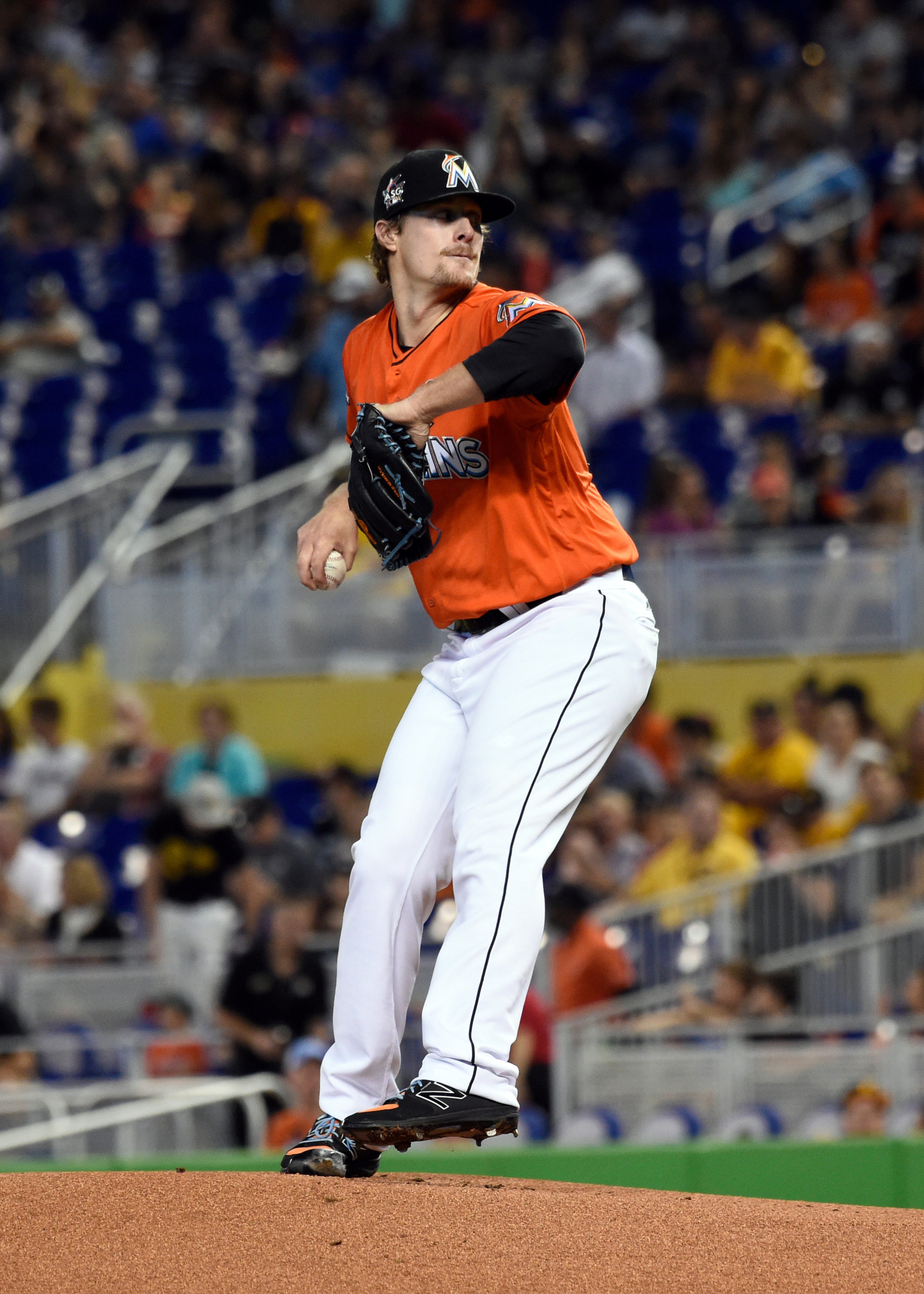
From 2013-16, Koehler was a solid and durable constant at the back of the Marlins’ rotation, averaging 30 starts per season while pitching to a 4.14 ERA with averages of 6.8 strikeouts, 3.7 walks and 1.0 home runs per nine innings pitched. He struggled early in the 2017 season and found himself traded to the Blue Jays, with whom he posted an intriguing 15-game relief stint (2.65 ERA, 18-to-6 K/BB ratio in 17 innings). That showing prompted the Dodgers to take a look at Koehler in the offseason with the hope that he could transform his career as a late-inning bullpen piece.
Instead, Koehler was beset by shoulder injuries in 2018. After spending more than half the season trying to rehab an anterior capsule strain and make his Dodgers debut, Koehler underwent surgery that ended his 2018 season. He never threw a pitch at the MLB level for the Dodgers. He signed with the Pirates both last offseason and earlier this winter but wasn’t able to get back onto the hill.
It’s a tough way to end a playing career, although as an 18th-round senior sign back in 2008, Koehler exceeded any and all expectations. The Stony Brook alum pitched in 161 Major League games, totaling 784 1/3 innings of 4.39 ERA ball along the way. Koehler’s 36-55 record is more an indictment on the sub-par Marlins rosters surrounding him for much of his career than on his own abilities on the mound. He was generally a serviceable option, twice leading the club in games started and once leading them in innings pitched. Koehler was never a household name but pitched into his arbitration years, helping him to secure more than $12MM in total salary. Best wishes to Koehler in whatever path he next pursues.
Minor MLB Transactions: 3/1/20
- The Pirates have signed infielder Sherman Johnson to a minor-league contract with an invitation to MLB spring training (h/t to Andersen Pickard). The 29-year-old tallied 11 MLB plate appearances with the 2018 Angels but has otherwise spent his entire pro career in the minors. In parts of four Triple-A seasons, Johnson has compiled a .241/.347/.364 slash while mostly lining up at second and third base. The Florida State product entered pro ball as a 12th-round pick in 2012.
Brewers Extend Freddy Peralta
February 28: The Brewers have officially announced the deal, which covers the 2020-24 seasons and contains club options for 2025 and 2026.
February 26: The Brewers are closing in on an extension with righty Freddy Peralta, according to Ken Rosenthal of The Athletic (Twitter links). It’ll be worth a guaranteed $15.5MM over a five-year term. Peralta, a client of Rep 1 Baseball, will also give the Milwaukee organization a pair of club options in the pact. They could tack on another $14.5MM in total value if exercised.
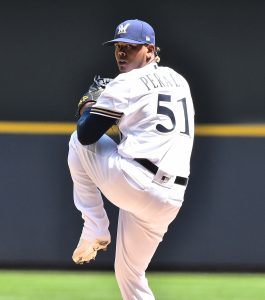
As Rosenthal notes, this is nearly the same contract as that reached recently between Aaron Bummer and the White Sox. But there are some notable distinctions.
Peralta wouldn’t have qualified for arbitration until 2022 at the earliest. (Bummer was on track to be a Super Two at the end of the season.) And Peralta owns only a 4.79 ERA through 163 1/3 career innings. (Bummer had a highly productive 2019 effort.)
At the same time, there’s arguably even greater upside here for the Milwaukee organization. Peralta is capable of working as a starter — or, perhaps, as a provider of bulk innings or roving high-leverage arm. He may not yet have ironed out all the kinks, but he was a well-regarded prospect who now owns a flashy 11.6 K/9 (versus 4.2 BB/9) in his young MLB career. Oh, and he is still just 23 years of age.
Peralta’s earned-run numbers dipped in 2019 when compared to his 2018 debut. Like many other hurlers, he struggled to contain the long ball in a season that produced record home-run levels due to the altered composition of the baseball itself.
In other ways, though, he made clear strides. Peralta upped his average fastball to the 94 mph level on the year; notably, it trended steadily up to the point that he was sitting 96 by season’s end. That primary offering continues to exhibit excellent spin rate. Peralta boosted his swinging-strike rate to 13.0%. He was also fairly stingy in terms of hard contact; Statcast credited opposing hitters with a .333 wOBA but only a .309 xwOBA.
For the Brewers, the downside in such an extension is minimal given the low cost of the deal. It’s always possible that Peralta simply doesn’t piece everything together and remains a fringe big league option, but the financial risk is negligible. If Peralta is able to emerge as even a serviceable fifth starter or reliever, the deal will be well worth it; anything more could turn the pact into a downright bargain for president of baseball operations David Stearns and his staff. That’s not to say that Peralta shouldn’t have signed the deal — turning down life-changing money at any point is extraordinarily difficult — but the upside outweighs the risk rather notably.
As for how Peralta will factor into the immediate plans, that remains to be seen. He’s battling offseason acquisition Eric Lauer and right-hander Corbin Burnes for the final spot in Milwaukee’s rotation this spring. Even if he doesn’t win the job off the bat, injuries always arise, and the Brewers’ rotation has enough uncertain names that it seems likely we’ll see Peralta make some starts in 2020. If not, the aforementioned bullpen role always remains a possibility.
It’s also worth highlighting the extent to which Peralta’s deal enhances the long-term potential for a cost-efficient rotation in Milwaukee. Josh Lindblom‘s three-year, $9.125MM deal spans the 2020-22 seasons. Brandon Woodruff and Burnes are controlled through 2024 and Adrian Houser through 2025. Obviously, not all five members of that quintet are going to pan out as viable big league starters. But some combination of those arms should comprise a notable chunk of the rotation for the foreseeable future — and they’ll likely do so while combining to earn less than $20MM annually as far into the future as 2022.
Peralta is now under control longer than any of his teammates, though Milwaukee’s affinity for precisely this type of value-focused contract structure suggests that similar arrangements will be pursued in the coming weeks and in subsequent offseasons.
Photo courtesy of USA Today Sports Images.
Diamondbacks, Dalton Pompey Agree To Minor League Deal
The D-backs have agreed to a deal with outfielder Dalton Pompey, per Sportsnet’s Jamie Campbell (Twitter link). It’s surely a minor league pact for Pompey, who has acknowledged the new opportunity himself in some replies on Twitter.
Now 27 years old, Pompey was once considered to be among the game’s premier prospects. During the 2014-15 offseason, Baseball America rated him as high as 30th overall among minor leaguers, while both MLB.com and Baseball Prospectus ranked him inside the top 50. In the preceding season, Pompey had skyrocketed from Class-A Advanced to the Majors, hitting a combined .317/.392/.469 with nine homers, 22 doubles, nine triples and 43 stolen bases across his three minor league stops. Even his .231/.302/.436 output in 43 big league plate appearances were impressive, considering that he was a 21-year-old who’d never played above A-ball as of Opening Day that season.
The switch-hitting Pompey had another productive season in the upper minors in 2015 but struggled in 103 MLB plate appearances. Still, the sky appeared to be the limit for the 22-year-old, who was heralded as a plus defender with a high-end hit tool and blazing speed that made him a threat on the basepaths and anytime he put the ball in play.
Sadly, Pompey’s career has been waylaid by injuries — most notably a series of concussions. He barely played in either 2017 or 2019 due to concussions troubles, and a wrist injury limited him to 57 games in 2018. In total, over the past four seasons, Pompey has been able to suit up for just 188 games between the big leagues and the minors — an average of only 47 contests per year. By the time the 2019 season rolled around, he’d exhausted all of his minor league options; the Blue Jays were forced to designate him for assignment in July, at which point he went unclaimed on waivers and was sent outright to Triple-A. Pompey became a free agent at season’s end.
It’s been six years since Pompey debuted in the Majors, which makes it seem like he’s older than he is, but he won’t even turn 28 until next December. He has plenty of hurdles to clear before he can be considered as an option to resurface in the Majors, and the D-backs have a deep outfield mix that’s controllable for the foreseeable future. David Peralta signed a three-year extension earlier this winter, while the Snakes acquired the final two seasons of Starling Marte‘s contract in a trade with the Pirates, and free agent Kole Calhoun signed a two-year deal with a third-year option. Standout second baseman/center fielder Ketel Marte is also signed long-term, while backup outfielder Tim Locastro can be controlled another five years.
Still, the D-backs will give Pompey a proving ground to attempt to demonstrate that his injury troubles are behind him. And with a strong, healthy showing in camp and/or in the upper minors, he could position himself as one of the first lines of defense in the event of an injury at the MLB level.