
Diamondbacks Designate J.B. Bukauskas For Assignment
The Diamdonbacks announced they’ve designated righty J.B. Bukauskas for assignment. The move creates a 40-man roster spot for Zach Davies, who has officially signed his one-year free agent guarantee to return to the desert. According to the team, Davies’ deal also contains a mutual option for the 2024 campaign.
Bukauskas was a first-round pick of the Astros in 2017 and appeared among Baseball America’s top 100 overall prospects the following spring. The University of North Carolina product was credited by scouts with a promising three-pitch mix that included a sinker, slider and high-quality changeup. Evaluators raised questions about how consistently he’d throw strikes thanks to a high-effort delivery, though, with many projecting a future move to the bullpen.
While Bukauskas worked as a starter up through Double-A, he’s indeed moved to relief in recent years. At the 2019 trade deadline, Houston sent him to Arizona alongside Josh Rojas, Seth Beer and Corbin Martin in the Zack Greinke blockbuster. Bukauskas made two Double-A starts the rest of the year and didn’t pitch in 2020 because of the cancelation of the minor league season.
After the 2020 campaign, Arizona added him to the 40-man roster to keep him out of the Rule 5 draft. He was called up for his major league debut that April and wound up pitching 21 times out of Torey Lovullo’s bullpen. He allowed 19 runs in his first 17 1/3 innings, thanks largely to the four longballs he served up. Bukauskas struck out 14, walked seven and missed bats on a slightly above-average 12.2% of his offerings.
Unfortunately, injuries have thrown off his attempts to carve out a permanent spot in the Arizona relief corps. Bukauskas missed roughly six weeks in 2021 thanks to a strain in his throwing elbow. More notably, he began last season on the 60-day injured list after suffering a Grade 2 strain in the teres major muscle in his shoulder. That kept him out of action until mid-July, when he was reinstated and optioned to Triple-A Reno. He pitched quite well in that hitter-friendly environment, working to a 2.66 ERA with a solid 23.8% strikeout rate and an excellent 5% walk percentage over 20 1/3 relief innings.
Despite that performance, Arizona never gave him a look in a floundering MLB bullpen in 2022. He’s now been squeezed off the 40-man entirely, with the Snakes having a week to trade him or try to run him through waivers. It wouldn’t be a surprise to see Bukauskas land elsewhere given his prospect pedigree and Triple-A performance last year. He still has a minor league option year remaining, so another team could keep him in Triple-A for a season if they’re willing to devote him a 40-man roster spot.
White Sox, Hanser Alberto Agree To Minor League Deal
The White Sox have agreed to a minor league contract with free-agent infielder Hanser Alberto, reports Robert Murray of FanSided. The CAA client will be in Major League camp as a non-roster player this spring.
Alberto, 30, spent the 2022 season with the Dodgers and batted .244/.256/.365 with a pair of homers, nine doubles and a pair of triples in 159 trips to the plate. The Dodgers declined a $2MM club option on the well-traveled veteran, instead choosing a $250K buyout and sending Alberto back to the free-agent market.
The 2022 season was the least productive of Alberto’s career, but he’s not far removed from a more respectable .292/.315/.411 showing in 1036 plate appearances split between the Orioles and Royals from 2019-21. Thanks to plus bat-to-ball skills (career 12.2% strikeout rate) but also one of the freest-swinging approaches (career 2.3% walk rate) of any hitter in baseball, Alberto can regularly be counted on for respectable batting averages with middling OBP marks. He’s lacking in terms of extra-base pop, which has also contributed to negating some of the value derived from his penchant for putting the ball in play.
Still, as far as bench infielders go, a career .272/.294/.380 is decent — and it should be pointed out that Alberto carries a much stronger .323/.341/.449 slash in his career against left-handed pitching. He’s able to play second base, shortstop and third base, and Defensive Runs Saved pegs him as above-average at all three spots. (Statcast’s Outs Above Average likes his left-side defense but has panned his work at second base.)
The White Sox are still in search of a clear everyday second baseman, with current in-house options including Leury Garcia, Romy Gonzalez and Lenyn Sosa. Alberto will add some depth and could win a spot on the bench to help out against left-handed pitching. It’s unlikely he’d slide into a strict platoon with the switch-hitting Garcia, though, as Garcia’s career numbers are better against left-handed pitching than against right-handed pitching himself. Both Gonzalez and Sosa, meanwhile, are right-handed hitters as well. That arguably creates some redundancy, but a quality, versatile defender who can put the ball in play isn’t a bad depth option to stash on the bench or in the upper minors.
Rockies, Austin Gomber Avoid Arbitration
The Rockies and left-hander Austin Gomber have agreed to a $1.65MM salary for 2023 and thus avoided arbitration, reports Robert Murray of FanSided. This comes in just under the $1.8MM figure that was projected by MLBTR contributor Matt Swartz. The Rockies subsequently announced that they have indeed signed Gomber to a one-year deal.
Gomber, 29, was a Cardinals draftee but he came over to the Rockies prior to the 2021 season as part of the Nolan Arenado trade. His first season with Colorado went well, as he made 23 starts and tossed 115 1/3 innings. He posted an ERA of 4.53 in that time along with a 23.2% strikeout rate, 8.4% walk rate and 44.3% ground ball rate.
Last year, however, he wasn’t able to be quite as effective. By the middle of June, he was sitting on a 6.43 ERA through 12 starts. He spent more time in the bullpen from that point on, making five further starts and 16 relief appearances. He had better results in the second half and pushed his season down but it still settled at a high level of 5.56.
Disappointing results aside, Gomber crossed the three-year service mark and qualified for arbitration for the first time. He’ll get a modest raise this year and will be in line for two further trips through arbitration after that before reaching free agency. It’s possible he may get a shot to retake a rotation job since the club has been fairly quiet in that department this offseason. Antonio Senzatela suffered a torn ACL last year and will likely miss the beginning of the season. Until he returns, the rotation projects to be Germán Márquez, Kyle Freeland and José Ureña, with Gomber, Ryan Feltner, Peter Lambert and Noah Davis the candidates for the back end.
Phillies Outright Francisco Morales
The Phillies announced that right-hander Francisco Morales has cleared waivers and has been outrighted to Triple-A Lehigh Valley. He had been designated for assignment last week when the club signed Craig Kimbrel.
Morales, 23, was working in the lower levels of the Phillies’ system before the pandemic. His walks were on the high side but he showed plenty of promise down there nonetheless. Baseball America has considered him one of the top 30 Philly farmhands since back in 2018, and he even jumped up to the #4 slot in 2020.
The Phillies added him to their 40-man roster in November of 2020 to protect him from selection in the Rule 5 draft. Unfortunately, his command issues have gotten worse in the upper levels of the minors. In 2021, he split his time between Double-A and Triple-A but walked 15.5% of batters he faced and posted a 6.28 ERA. The club tried converting him to a full-time relief role last year but it didn’t help. He posted a 19.7% walk rate in the minors and also an incredible 28.6% rate in the majors. That latter number was in a small sample of just three appearances but still highlights the ongoing issue.
Morales will now stick in the system but without occupying a roster spot. Since this is his first outright and he has less than three years of MLB service time, he doesn’t have the ability to reject the assignment and become a free agent. He’ll start the year in the minors and try to better harness his stuff to get back onto the roster.
Trevor Kelley Elects Free Agency
The Brewers announced that right-hander Trevor Kelley cleared waivers and was assigned to Triple-A Nashville, per Adam McCalvy of MLB.com. Kelley had been designated for assignment last week when the club acquired Bryse Wilson. Kelley has rejected the assignment and elected free agency, which was his right as a player with a previous career outright.
Kelley, 30, was drafted by the Red Sox in 2015 and worked his way up to the majors in 2019. He got into 10 games for Boston that year but posted an ERA of 8.64. The Sox put him on waivers and Kelley was claimed by the Phillies. He got another four appearances in 2020 but was shelled again with a 10.80 ERA in that short time and was outrighted at season’s end.
The Brewers signed him to a minors deal for 2022 and he was able to crack the club’s roster. He spent the season getting frequently optioned between the majors and minors. He posted a 2.36 ERA in 34 1/3 innings for Nashville with a 30% strikeout rate, 7.1% walk rate and 43.9% ground ball rate. Unfortunately, all those rate stats were a bit worse in his 23 2/3 major league innings, leading to a 6.08 ERA.
Kelley evidently didn’t find a club willing to give him a 40-man roster spot, but those solid results in Nashville could get him a minor league deal. Now that he’s a free agent, he can seek out the best opportunity for himself. If he eventually signs elsewhere and makes it back onto a roster someday, he’ll still have one option season and less than a year of MLB service time.
Orioles Acquire Darwinzon Hernandez, Designate Lewin Diaz
The Orioles announced Wednesday that they’ve acquired lefty Darwinzon Hernandez from the Red Sox in exchange for cash. First baseman Lewin Diaz was designated for assignment yet again in order to create a spot on the 40-man roster.
The 26-year-old Hernandez will give the O’s an arm capable of missing bats at an elite level, but he’s also been plagued by jarring command issues throughout his career. Hernandez has punched out a hefty 32.3% of his opponents in 85 1/3 Major league innings, but that’s accompanied by a disastrous 17.7% walk rate. He still managed a sharp-looking 3.17 ERA in 2020-21, but opponents shelled him for 16 runs in only 6 2/3 innings this past season, bringing his career ERA to an unsightly 5.06. Hernandez has a pair of minor league options remaining and averages better than 95 mph on his heater, however, so the Orioles will hope they can tame some of those command woes and unearth a quality bullpen arm.
For Diaz, this is incredibly his fifth DFA of the offseason. He first went from the Marlins to the Pirates by way of waivers, and the Orioles claimed him (for the first time) from the Buccos shortly thereafter. Baltimore traded Diaz to Atlanta, who designated him for assignment five days later. The O’s claimed him again on Jan. 5, but his latest stint on the Orioles’ 40-man roster will apparently last just five days.
It’s a dizzying whirlwind of transactions that have surely made for a chaotic and unsettling winter for Diaz — a 26-year-old former top prospect who’s yet to have much big league experience at the plate but is regarded as one of the sport’s best defensive first basemen. Diaz is just a .181/.227/.340 hitter in 343 trips to the plate as a big leaguer, but he’s .250/.325/.504 hitter in parts of two Triple-A seasons.
The Orioles have spent the winter trying to add some lefty-swinging depth at first base, hence their two claims of Diaz and their trade for former Royals slugger Ryan O’Hearn, whom they almost immediately designated for assignment. The goal, surely, is to be able to successfully pass players like Diaz and O’Hearn through waivers and retain them as non-roster depth options in the upper minors.
To this point, however, no team has succeeded in getting Diaz through waivers. The allure of his glove and decent power production in the upper minors has continually piqued the interest of other clubs around the league. The Orioles hold the No. 17 waiver priority in the game (determined by last year’s standings), and Diaz has yet to make it past them on the waiver wire (he landed with Atlanta by way of trade, not waiver claim). Time will tell whether the O’s can finally succeed this time around, but it wouldn’t be a huge surprise if Diaz again landed with another club via waivers or a small trade. His DFA will be resolved within a week’s time.
Tigers Claim Edwin Uceta
The Tigers have claimed right-hander Edwin Uceta off waivers from the Diamondbacks, per a team announcement. Uceta was designated for assignment by Arizona as a corresponding move for the D-backs’ signing of veteran Evan Longoria.
Uceta, who turned 25 just two days ago, has spent time in the Majors in each of the past two seasons, tossing 20 1/3 innings for the Dodgers in 2021 and 17 innings for the D-backs in 2022. He’s struggled to a combined 6.27 ERA in that time, fanning 23% of his opponents against a more troublesome 11.5% walk rate. He’s generally done a decent job limiting hard contact — 88.4 mph average exit velocity, 37.4% hard-hit rate — but Uceta has struggles considerably with runners on base, as evidenced by a dismal 50% left-on-base percentage (roughly 23% lower than league average).
Indeed, when Uceta has had the benefit of pitching with the bases empty, he’s yielded an awful .189/.268/.216 to his opponents. With men on base, those numbers skyrocket to .288/.383/.591. Those glaring splits come in near-identical samples — 82 batters faced with the bases empty, 83 with men on base.
Uceta has roughly average velocity on his fastball (93.4 mph average), though he spins it at a well above-average clip. He complements that offering with a changeup and more seldom-used slider — the latter of which generated above-average spin this past season as well. He has a minor league option year remaining, and while his bottom-line results in Triple-A haven’t been particularly impressive (4.81 ERA in 78 2/3 innings), he’s fanned more than 30% of his opponents at that level. Walks have again been an issue in the upper minors, which is obviously a concern for a pitcher who’s struggled with runners on base.
That said, Uceta’s knack for avoiding hard contact, quality spin profile and ability to miss bats are all surely sources of intrigue for the Tigers. Detroit has thinned out its bullpen this winter, trading Gregory Soto to the Phillies and Joe Jimenez to the Braves while watching Andrew Chafin and Wily Peralta depart as free agents (though both Chafin and Peralta remain unsigned). That should create ample opportunity for Uceta to earn a look at some point, perhaps as early as Opening Day if he impresses during Spring Training.
Twins Re-Sign Carlos Correa
Jan. 11: The Twins have formally announced Correa’s return. A press conference is set for 11:30am CT.
Jan. 10: Carlos Correa‘s unprecedented free-agent saga looks to finally be drawing to a close, and it turns out he won’t even have to look for a new place to live. The former Rookie of the Year and Platinum Glove winner has reportedly agreed to a new six-year, $200MM contract with the Twins, which comes with four additional vesting options that can take the value of the contract to $270MM over a decade-long term. The Boras Corporation client does not have any opt-outs in the contract, though he will receive a full no-trade clause. The deal is expected to be finalized on Wednesday.

Correa will receive an $8MM signing bonus (paid out between 2023 and 2024) and annual salaries of $32MM in 2023-24, $36MM in 2025, $31.5MM in 2026, $30.5MM in 2027 and $30MM in 2028. The vesting options are valued at $25MM (2029), $20MM (2030), $15MM (2031) and $10MM (2032). Correa would vest his 2029 option by reaching 575 plate appearances the previous season; that number drops to 550 in 2029 (in order to vest his 2030 option), 525 in 2030 (to vest his 2031 option) and 502 in 2031 (to vest his 2032 option). The options would also vest if Correa finishes top five in MVP balloting, wins a Silver Slugger or claims an LCS or World Series MVP in the prior season. The Twins can still choose to pick up any of the options if Correa doesn’t meet the prior year’s vesting threshold.
The new deal between the Twins and Correa marks the latest and likely final twist in perhaps the wildest free-agent saga that’s ever played out. Correa, a two-time All-Star, agreed to terms with three different teams on three contracts of $200MM or more this winter — the first two of which were scuttled by concerns over the aforementioned right leg/ankle. Originally, Correa came to terms with the Giants on a 13-year, $350MM deal that blew the runner-up Twins out of the water. However, the Giants postponed Correa’s introductory press conference after raising some eleventh-hour concerns regarding his physical. The Mets, who hadn’t previously been involved in the Correa bidding, swooped in and agreed to a new 12-year, $315MM deal with Correa just days later, but New York raised similar concerns on Dec. 24, following their own physical.
At issue has been concern regarding the stability of Correa’s right leg and how well it will hold up over the life of a long-term deal. Correa sustained a significant fracture when sliding into third base as a 19-year-old prospect in the Astros’ system, which required surgery and the installation of a plate that is still in place to this day. While Correa has never been on the injured list due to the leg in the nine years since that injury, he did at least have a brief scare with it late in the 2022 season.
Correa was thrown out on a hard slide into second base and remained down on the field for several moments before leaving under his own power. After the game, he told reporters that he’d been hit on the plate in his leg and experienced brief numbness and vibration. Correa didn’t miss any time following that incident, however, and he went on to bat .346/.393/.481 with a homer and four doubles in 56 plate appearances from the day of that scare through season’s end.
The manner in which Correa’s leg and its hardware would hold up gave the Mets enough pause that they’re reported to have halved both the length and total guarantee of their original offer. The Mets still offered Correa the ability to match the original 12 years and $315MM they put on the table, but the back half of the contract was conditional and the team ostensibly would not budge from its stance on the matter. Unsurprisingly, Correa took the larger guarantee and considerably larger average annual value presented by the Twins on what is now the largest deal in franchise history.
The offseason leg drama surrounding Correa won’t do him any favors when it comes to shedding the “injury-prone” label that followed him early in his career, but it’s worth pointing out that over the past three seasons, Correa has appeared in 89.1% of his teams’ possible games. Eight of the missed contests in that time came early in the 2022 season with the Twins, when he spent a bit more than a week on the Covid-related injured list.
Nevertheless, all eyes will be on Correa’s leg for the foreseeable future. The uncertainty surrounding it was enough to drop Correa — a player the Twins adamantly maintained they never wanted to lose — back in Minnesota’s lap at a lesser rate than the ten-year, $285MM offer they put forth just one month ago, before he agreed to terms in San Francisco. It’s a stunning turn of events and a major narrative change for a Twins club that had been so focused on Correa in the offseason’s early stages that the majority of impact players were already off the board by the time it looked as though they’d been outbid by San Francisco.
With Correa now likely installed not only for the 2023 season but for the next six years, at the very least, the Twins’ short- and long-term outlooks are radically altered. Correa, who batted .291/.366/.467 with 22 home runs as a Twin this past season will be slotted back into the top third of a lineup that suddenly looks substantially deeper than it did just hours ago. He’ll follow leadoff man and reigning AL batting champ Luis Arraez, with Byron Buxton, Jorge Polanco, Jose Miranda and offseason signee Joey Gallo among the names behind him in the order.
With Correa back in Minnesota, trade acquisition Kyle Farmer will shift back from starting shortstop to the utility role the Twins initially envisioned when acquiring him. Acquired from Cincinnati in November, Farmer is a former catcher who has seen time all over the infield in recent years. He can back up each of Correa, Polanco and Miranda while providing Minnesota with a potent bat against left-handed pitching. Correa’s return allows Farmer to be utilized in more advantageous platoon matchups, one year after the former Red slashed .309/.380/.568 against lefties (but just .235/.291/.320 against righties).
The return of Correa on a long-term arrangement also calls into question just where fellow shortstop and former No. 1 overall pick Royce Lewis might fit into the equation once he’s back to full health. Lewis has been plagued by miserable luck on the health front, tearing the ACL in his right knee two times in just over one calendar year. He recovered from that first ACL tear and burst onto the scene in 2022 with a .300/.317/.550 batting line in his first dozen MLB games — only to suffer that ligament tear while playing in the outfield. The outfield could well end up Lewis’ long-term home, but he could also be considered an option at third base (with Miranda perhaps moving across the diamond) or at second base as an heir to Polanco, who is entering the final guaranteed season of his contract. (The Twins hold a pair of affordable club options on Polanco, however.)
Correa’s $36MM salary (and half the payout on his $8MM signing bonus) bump the Twins’ payroll to roughly $157MM — a franchise record. The Twins have also added Gallo (one year, $11MM) and catcher Christian Vazquez (three years, $30MM) thus far in the offseason — a trio of moves that should upgrade the team’s defense at various key positions. While Correa didn’t match his 2021 Platinum Glove numbers in his first season with the Twins, he’s still generally regarded as a plus defender and ought to stabilize the position with quality glovework for years to come. If a move to another position is ultimately deemed necessary, he has the arm strength for a move to the hot corner, ranking 14th among all Major League infielders (min. 100 throws) in terms of arm strength in 2022, per Statcast.
The addition of Gallo has only made it seem likelier that Minnesota will eventually find a trade partner for Max Kepler, as the Twins are now flush with left-handed-hitting corner outfielders (Kepler, Gallo, Trevor Larnach, Alex Kirilloff, Matt Wallner). Kirilloff could see most of his time at first base, but even still, the Twins have as many as four viable corner outfielders for two spots — and that’s not even factoring in right-handed-hitting bench options like Kyle Garlick and Gilberto Celestino.
It all falls under the “good problem to have” cliche, as the Twins now have a bevy of options in the outfield corners and around the infield, freeing up the possibility to explore trades designed to augment the starting rotation and/or bullpen that might not otherwise have appeared quite so palatable.
Put more simply, while the jarring reunion with Correa will no doubt be regarded as the most substantial move of the offseason, it’s not likely to be the last. While the Twins might have erred toward gearing up for a transitional year in the wake of missing out on Correa, suddenly retaining him on the largest contract in franchise history figures to spur the front office into further activity.
ESPN’s Jeff Passan first reported the agreement and the terms (Twitter link). Jon Heyman of the New York Post reported the vesting options and details surrounding the Mets’ reduced offer and surrounding Correa’s physical with the Twins (all Twitter links). USA Today’s Bob Nightengale tweeted that the contract did not contain opt-outs. Ken Rosenthal of The Athletic (Twitter links) and Ronald Blum of the Associated Press reported details on the vesting options and salary structure. Heyman reported the vesting thresholds and the no-trade clause (Twitter links), while Dan Hayes of the Athletic reported the Twins’ ability to trigger the options even if Correa doesn’t meet the vesting mark (on Twitter). Nightengale tweeted the contract was likely to be announced on Wednesday.
Twins Designate Kyle Garlick For Assignment
The Twins announced Wednesday that they’ve designated outfielder Kyle Garlick for assignment. His spot on the 40-man roster will go to shortstop Carlos Correa, whose return on a six-year, $200MM contract (with four vesting/club options) has now been formally confirmed by the team.
Garlick, 31 later this month, has spent the past two seasons with the Twins, hitting a combined .233/.283/.446 in 269 trips to the plate. Those numbers don’t necessarily stand out on their own, but Garlick’s platoon splits tell the tale of a useful part-time/platoon outfielder. He’s been overmatched by fellow right-handers, evidenced by a .207/.258/.345 output. However, Garlick has consistently shown plus power against lefties, batting .256/.303/.534 with 10 home runs and seven doubles in just 145 plate appearances versus southpaws since joining the Twins.
Unfortunately, Garlick has also had difficulty staying on the field during his two seasons in Minnesota. Over the past two seasons, he’s had trips to the injured list for a sports hernia (which required surgery), a calf strain, a hamstring strain, a ribcage contusion and a wrist sprain — the latter of which ended his 2022 season. There’s little doubting that Garlick can hit left-handed pitching, but his lengthy list of injuries, combined with sub-par defensive ratings in the outfield corners, have limited his utility as well.
Garlick seemed to have a place on the Twins’ roster heading forward, as he’s a natural platoon partner for their veritable cavalcade of left-handed-hitting corner outfielders and had already agreed to a modest $750K salary for the upcoming season. That’s only $30K north of the league minimum at this point, though, so it’s not as though the Twins had locked Garlick in for a particularly weighty sum.
Any team wishing to claim Garlick would need to take on that mild salary but would also be able to control Garlick for another four seasons, if they choose. The Twins will have a week to trade Garlick or attempt to pass him through outright waivers. He’s been outrighted once previously in his career, so if Garlick goes unclaimed, he’d have the ability to reject an assignment to Triple-A in favor of free agency.
Red Sox Extend Rafael Devers
Jan. 11: The Red Sox have formally announced the contract as a 10-year extension with Devers, spanning the 2024-33 seasons. As reported last night, that keeps his 2023 luxury tax hit at $17.5MM (the sum of the one-year deal he agreed to in order to avoid arbitration), while the $31.35MM luxury hit on his extension will go into effect in 2024.
Jan. 4: The Red Sox and third baseman Rafael Devers are in agreement on an extension that will keep him in Boston through the 2033 season. Though many outlets reported this as an 11-year extension worth $331MM, Devers and the Sox had already agreed to a $17.5MM salary for 2023. In terms of new money, then, he’s agreed to a ten-year, $313.5MM extension. There are no opt-outs in the deal and he won’t have a no-trade clause. The deal is pending a physical and is not yet official. Devers is represented by Rep 1 Baseball.
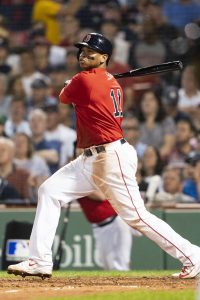
Devers, 26, was set to enter his final year of club control. He was slated to reach free agency after the upcoming campaign but will now stay in Boston for an extra decade, with this agreement set to take him through the 2033 campaign and his age-36 season. It’s easily the largest deal in franchise history, which was previously held by the $217MM deal for David Price. It will also be the 10th-largest guarantee in MLB history, while the $31.35MM average annual value will get him into the top 20 all-time.
Devers will now stick with the only organization he’s ever known and could well spend his entire career in Boston. The Sox signed him out of the Dominican Republic as a 16-year-old in August of 2013, giving him a $1.5MM bonus. He worked his way through the minors and was seen by many as one of the top prospects in the sport. Baseball America ranked him in the top 20 on their top 100 list in both 2016 and 2017. In that latter season, Devers cracked the majors and debuted while just 20 years old. Despite that young age, he hit 10 home runs in just 58 games and produced a batting line of .284/.338/.482. That led to a wRC+ of 110, indicating he was 10% better than the league average hitter.
Devers endured a bit of a sophomore slump in 2018 but has put that behind him in a big way. Over the last four years, he’s hit 108 home runs and produced an overall batting line of .292/.352/.532. That production has been 32% better than league average by measure of wRC+, placing him among the top 25 hitters in the league for that time period.
For the Red Sox, it’s been a bit of a rollercoaster time for the franchise over the past few years. They hoisted the World Series trophy in 2018 but then saw star right fielder Mookie Betts traded to the Dodgers alongside Price. Though the Sox got some interesting players in return, it was widely-viewed as a financially-motivated decision, a bitter pill for fans to swallow after a strong run of success that saw them win four titles from 2004 to 2018. The club slid to last place in the American League East in the shortened 2020 campaign.
Though 2021 saw the club surprise many onlookers by returning to the postseason, they had another disappointing campaign in 2022, finishing last in the division for the second time in three years. This offseason, another star player departed when shortstop Xander Bogaerts opted out of his contract. Though the Sox maintained that retaining Bogaerts was a top priority, he instead signed with the Padres for $280MM over 11 years while Boston came up well short, reportedly in the $160MM range.
With Betts and Bogaerts both leaving for California, the focus turned to Devers. With just one year until free agency, many wondered if the Fenway Faithful would have to endure a third superstar departure in a four-year span, or perhaps a three-year span if the club considered a trade. The reporting on the matter seemed dire as recently as a couple of months ago, indicating that the sides were not close in their extension talks with Boston offering something in the vicinity of $212MM. Instead, they have stepped up in a big way to ensure that Devers is the face of the franchise for years to come. In the long run, it’s possible that Devers may have to move from third base to first base, since his defense isn’t as highly regarded as his bat. But those will be conversations for later days, with another 11 years for the club to figure out how to set the lineup.
In the short term, this won’t change the makeup of the Red Sox on the field, since Devers was already going to be a part of the 2023 club. But it could have an impact on the financial ledger. Devers was previously set to have a $17.5MM count towards Boston’s luxury tax but that number will now jump to $30.09MM. The specific breakdown of the Devers deal isn’t known, but the competitive balance tax is calculated based on the average annual value of the deal, so the breakdown won’t change the CBT calculations. With that new figure in place, the club’s total CBT tally is now $224MM, according to the calculations at Roster Resource. That puts them within striking distance of the lowest luxury tax threshold, which will be $233MM this year. Any further additions, whether this offseason or as the season itself progresses, could potentially push them over the line. Since they paid the tax in 2022, they would be considered a second-time payor in 2023.
Former player Carlos Baerga first reported that the sides were in agreement on Instagram, but had the terms as 11 years and $332MM. Ken Rosenthal of The Athletic first reported the $331MM figure and added the $20MM signing bonus. Jeff Passan of ESPN clarified that the deal included 2023 and would only add ten years beyond that. Jon Heyman of The New York Post first added the absence of a no-trade clause and Alex Speier of the Boston Globe first had the lack of opt-outs.