
Click here to read the transcript of tonight’s live baseball chat
AL West Notes: Adell, Marsh, Flexen, Kozma
Jo Adell was removed during the second inning today’s game after the Angels outfielder collided with the wall in search of a fly ball. The move was made for precautionary reasons, as Adell said he “felt something” after the crash, manager Joe Maddon told the Los Angeles Times’ Jack Harris and other reporters. Team trainers didn’t find anything in the way of a hyper-extension after examining Adell, so the youngster may have escaped any real harm.
Considered one of the game’s top prospects prior to his MLB debut last season, Adell is a big part of the Halos’ future outfield plans, along with fellow up-and-comer Brandon Marsh. A lingering shoulder injury from last season has kept Marsh from any outfield action this spring, though he is expected to be back on the grass next week and Marsh tells MLB.com’s Rhett Bollinger that he believes he’ll be ready for the start of the season. Adell and Marsh will both likely begin the season at the Angels’ alternate training site and then with their Triple-A team, before factoring into the Major League roster at some point during the year.
More from the AL West…
- Chris Flexen was one of a relative few free agent pitchers to sign a multi-year deal this winter, inking a two-year contract (plus 2023 club option) with the Mariners that will pay the right-hander at least $4.75MM in guaranteed money. Tom O’Connell, Flexen’s agent, tells The Athletic’s Corey Brock that Seattle was one of “four or five teams very interested in Chris,” and the Mariners sealed the deal after Flexen was impressed by GM Jerry Dipoto’s pitch of the organization’s merits during a Zoom call. The M’s had done their homework on Flexen in the KBO, as assistant GM Justin Hollander said that during the league shutdown, the Mariners had extra scouts breaking down film of games from Korea and Japan — both to give the scouting staff some work, and also to hunt for any potential hidden-gem offseason targets. Clearly Seattle liked what it saw in Flexen, who had only an 8.07 ERA over 68 career MLB innings with the Mets from 2017-19 but excelled with a 3.01 ERA and 28K% over 116 2/3 innings as a starter with the KBO’s Doosan Bears in 2020.
- The Athletics are giving Pete Kozma a long look in Spring Training, as the veteran infielder has thus far played in all of Oakland’s spring games, MLB.com’s Martin Gallegos writes. Kozma is trying to make his way back to the majors for the first time since 2018, and while Kozma has long been known as a glove-first player, he has been on fire at the plate in the Cactus League. The A’s already have Chad Pinder and Tony Kemp slated for both second-base duty and as utilitymen, though Kozma is making a case for himself for a bench job. It probably doesn’t hurt Kozma’s chances that Jed Lowrie (also in camp on a minors deal, and a veteran with a much longer MLB track record) has only just returned to game action as Lowrie tries to return from the leg injuries that have plagued his last two seasons.
Pirates Sign Trevor Cahill
The Pirates have made a late addition to their rotation mix, announcing Friday that they’ve signed veteran righty Trevor Cahill to a one-year deal. The JBA Sports client will reportedly be guaranteed $1.5MM and have the opportunity to take home another $1MM via incentives. Those incentives are based on innings pitched and kick in with a $100K bonus for reaching 75 frames. Cahill would also earn $150K for reaching 100 innings, $200K at 125 innings, $250K at 150 innings and $300K at 175 innings.
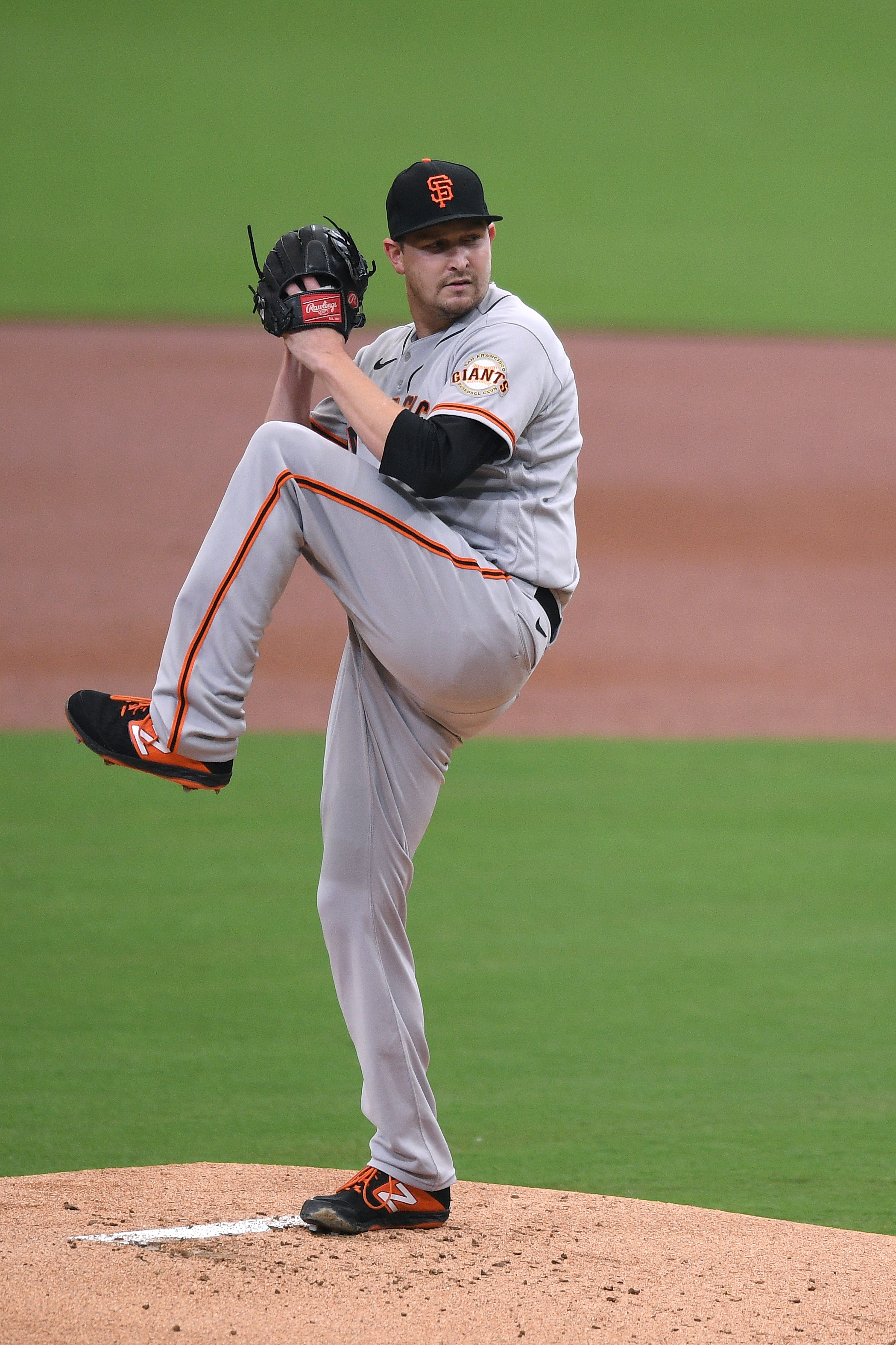
Cahill received interest from as many 16 teams, Nightengale writes, following a season that saw him post a 3.24 ERA/4.38 SIERA over 25 innings with the Giants. Presumably, based on the terms of his contract, much of that interest was on non-guaranteed deals.
Long a ground-ball specialist, Cahill seemed to change course in 2020, albeit with the caveat of his very small sample size of work. Cahill had only a career-low 33.3% grounder rate, while his K% rocketed to 29.2%, by far the highest of his 12-year career. His Statcast metrics were solid overall, and Cahill continued to deliver his signature elite-level curveball spin.
It was a solid bounce-back outing from a very rough 2019 season that Cahill post a 5.98 ERA/4.95 SIERA over 102 1/3 innings with the Angels. Cahill was bedeviled by a 22.5% home run/fly ball rate that season, but he cut that number down to a much more palatable 12.5% in 2020.
The 33-year-old Cahill worked as both a starter and reliever in San Francisco, and it seems likely that he’ll be ticketed for rotation work in Pittsburgh. Certainly, his incentive structure is geared toward that role. With Jameson Taillon, Joe Musgrove, Trevor Williams, and Chris Archer all now pitching for other teams, the Pirates have definitely need for some innings-eating arms in the rotation.
Cahill joins fellow newcomer Tyler Anderson alongside Mitch Keller, Chad Kuhl, and Steven Brault as the top rotation candidates in Pittsburgh, though this collection could change significantly as the season goes along — whether just by simple attrition, other youngsters stepping up to grab jobs, or the rebuilding Pirates trading more hurlers elsewhere.
USA Today’s Bob Nightengale reported the agreement and the terms (Twitter links).
Injury Notes: Realmuto, Grisham, Inciarte, Romine, Guzman
J.T. Realmuto has been cleared for baseball activities, manager Joe Girardi told reporters (including NBC Sports Philadelphia’s Jim Salisbury). Realmuto’s tasks today included hitting off a tee and making 40 throws from 90-foot distances, as the catcher continues to work his way back from a right thumb fracture. There is some optimism that Realmuto will be ready to go for the Phillies’ opener on April 1, with Salisbury writing that the club could take it easy with Realmuto’s playing time over the season’s first week or so, should Realmuto still need a bit of prep time.
A brief injured list to begin the season also isn’t out of the question for Realmuto, as with backdating, he would only miss the first six games. Backup catcher Andrew Knapp would step in as the interim starter, though finding a second catcher could be a little complicated. Rafael Marchan (the only other catcher on the 40-man roster) is battling a hamstring problem, so the Phillies could need to open up a 40-man space to find room for Jeff Mathis or Christian Bethancourt, both in camp on minor league deals.
More injury updates from around baseball….
- Padres outfielder Trent Grisham left today’s game with what manager Jayce Tingler called “a slight strain in his hamstring.” Grisham didn’t think the injury was terribly serious, but Tingler told MLB.com’s AJ Cassavell and other reporters that Grisham will be re-evaluated tomorrow. Grisham enjoyed a breakout season in 2020 that included a Gold Glove, and while the Padres have a lot of depth, they won’t be able to easily cover center field if Grisham’s hamstring lands him on the IL. Jurickson Profar might be the top fill-in choice, as Profar has been getting some work in center field this spring.
- Ender Inciarte has been hampered by a thumb injury that has kept him out of action since March 4. Braves manager Brian Snitker told reporters (including Gabriel Burns of the Atlanta Journal-Constitution) that Inciarte is “progressing, but he’s not to the point he can go out and get a game at-bat right now, so we’ll have to see.” As Burns notes, star prospect Cristian Pache was already looking like a strong bet to break camp with the team, and an Inciarte absence would all but assure Pache of a spot on the Opening Day roster. Inciarte hit only .190/.262/.250 over 131 PA in 2020, and is now entering the last guaranteed year of his contract. With Pache and another noteworthy prospect in Drew Waters both knocking on the door for MLB playing time, Inciarte might be in his final year in Atlanta even if he does have a bounce-back season.
- Cubs catcher Austin Romine hasn’t played since the weekend due to a right knee sprain, MLB.com’s Jordan Bastian tweets. While the problem isn’t considered to be too serious, there isn’t yet any plan for when Romine could return to action. The veteran catcher signed a one-year, $1.5MM free agent deal to act as Willson Contreras’ backup this season. Should Romine have to miss any time, veteran Jose Lobaton (in camp on a minors contract) would likely get the call, though the Cubs would have to make another move to add Lobaton to the 40-man roster.
- Marlins righty Jorge Guzman is battling elbow inflammation and will be “out for a bit” of time, GM Kim Ng told the Miami Herald’s Jordan McPherson (Twitter link) and other reporters. The hard-throwing Guzman was acquired as part of the Giancarlo Stanton trade in December 2017, and he ranked 87th on Baseball America’s top 100 prospects list prior to the 2018 season. Guzman made his MLB debut in cup-of-coffee fashion in 2020, tossing one inning and allowing two homers.
Contract Renewals: Gallen, Lewis, Alonso, McNeil, Anderson
As a standard course of business every spring, teams reach agreement on contracts with their pre-arbitration players. Since pre-arb players have virtually no negotiating leverage, their salaries aren’t far beyond the MLB minimum ($570.5K), and most teams now adopt a particular formula for assigning modest raises to pre-arbitration players who have performed above and beyond expectations.
When a player doesn’t accept this agreement, it has no change on his contractual status with the team. It just means that his contract is “renewed,” and the team will impose the player’s salary for the coming season. For a further explanation of the renewal process, MLBTR’s Jeff Todd provided an outline in a YouTube video last year.
Why would a player not accept the terms of his team’s raise? Often, it is just a matter of “principle,” as Cardinals righty Jack Flaherty (who had his last two pre-arbitration salaries renewed) said last year, as a player who excels during a season simply feels he is worth more than the minor raise a team is offering. Occasionally, you’ll see a player look for a more substantive raise, as Mike Trout’s camp asked for a $1MM salary for the 2013 season, following a 2012 campaign that saw Trout finish second in AL MVP voting in his first full year in the big leagues.
While Trout didn’t get his $1MM ask, some clubs have indeed rewarded players with pre-arb salaries worth well above (by a few hundred thousand dollars, in some cases) the minimum, both as a nod to performance and perhaps as a way to continue good relations with a player and his agent in advance of extension talks.
Here is a list of players whose contracts have been renewed for the 2021 season. As you’ll note, the members of this group have already enjoyed significant early-career success.
- Zac Gallen: The Diamondbacks right-hander finished ninth in NL Cy Young Award voting in 2020, and has a 2.78 ERA over 152 career MLB innings.
- Kyle Lewis: The Mariners outfielder took a renewal on the heels of his Rookie Of The Year campaign.
- Pete Alonso, Jeff McNeil: The two Mets regulars took renewals. As noted by Mike Puma of the New York Post, Alonso’s 2019 NL Rookie Of The Year campaign got him a larger-than-expected salary bump to $652,521 for the 2020 season “as a goodwill gesture” from the team.
- Ian Anderson: The Braves righty made a big impact in his first MLB season, with a 1.95 ERA over 32 1/3 innings. Anderson also has the least amount of big league service time (0.094 days) of any player on this list. MLB Network’s Jon Heyman tweets that Anderson will earn $575K while in the majors and $142,978 in the minor leagues.
MLB To Experiment With Rule Changes In Minor Leagues
The 2021 minor league season will see some new and altered rules at the various levels of playing, according to a statement from Major League Baseball. “Consistent with the preferences of our fans, the rule changes being tested are designed to increase action on the basepaths, create more balls in play, improve the pace and length of games, and reduce player injuries,” the statement reads.
Many of these changes have long been discussed or even already used in other minor leagues — Baseball America’s J.J. Cooper notes that fans of the independent Atlantic League will recognize many of these rules adjustments. It also isn’t necessarily the case that all of these new rules (whether in their current form or whatsoever) will ever appear at the MLB level, given the trial-and-error basis.
Triple-A baseball will see the size of the bases increased from 15 inches square to 18 inches square, a deceptively minor change that could end up having a notable impact on a game. As the league’s statement reads, “the Competition Committee also expects the shorter distances between bases created by increased size to have a modest impact on the success rate of stolen base attempts and the frequency with which a batter-runner reaches base on groundballs and bunt attempts.” In addition, larger bases will also reduce the chances of collisions on the basepaths.
Double-A baseball will experiment with a new rule that addresses defensive shifts, since going forward, “the defensive team must have a minimum of four players on the infield, each of whom must have both feet completely in front of the outer boundary of the infield dirt.” While shifting has been part of baseball for decades, teams have been using shifts more often and in a more elaborate fashion over the last few seasons, to the point that seeing a club deploy four or even five players in outfield for a particular batter isn’t out of the ordinary.
This initial rule will keep infielders within the infield, and the statement also hinted at further limitations to shifts in the second half of the Double-A season: “Depending on the preliminary results of this experimental rule change, MLB may require two infielders to be positioned entirely on each side of second base….These restrictions on defensive positioning are intended to increase the batting average on balls in play.”
Step-off and pickoff moves are the primary focus of the Single-A rules changes, as in High-A ball, “pitchers are required to disengage the rubber prior to throwing to any base, with the penalty of a balk in the event the pitcher fails to comply.” This was one of the rules instituted in the Atlantic League in 2019, as noted in MLB’s statement, and the altered rule “resulted in a significant increase in stolen base attempts and an improved success rate.”
The step-off/pickoff rules will be even more significantly changed for all Low-A leagues. If there is one or more runner on base, pitchers can only throw a maximum of two pickoffs or make two step-offs per plate appearance. The pitcher can attempt a third pickoff or step-off but the play must result in the baserunner being retired. If the runner gets back to his original base on this third pitcher try, the play is called a balk and the runner advances anyway. MLB’s statement said that the limitation could be further lowered to just a single step-off or pickoff attempt per plate appearance, seeing how the initial rule plays out.
The Low-A West league will adopt on-field timers “to enforce time limits between delivery of pitches, inning breaks and pitching changes.” An even more interesting electronic element will be part of the Low-A Southeast league, as the Automatic Ball-Strike System will be used “to assist home plate umpires with calling balls and strikes, ensure a consistent strike zone is called, and determine the optimal strike zone for the system.”
Astros’ Forrest Whitley To Undergo Tommy John Surgery
MARCH 10: Manager Dusty Baker announced Wednesday that Whitley will undergo Tommy John surgery, per Brian McTaggart of MLB.com. He’ll miss the entire season as a result.
MARCH 7: Astros pitching prospect Forrest Whitley has been advised to undergo Tommy John surgery, according to Mark Berman of KRIV Fox 26 (Twitter link). Whitley has been battling arm soreness that has now been diagnosed as a right UCL sprain, the team told Chandler Rome of the Houston Chronicle (Twitter link) and other reporters. No decision has yet been made about Whitley’s next step, as the right-hander is seeking a second opinion.
A 14-15 month layoff for TJ rehab would be the biggest setback yet in a career that has been hampered by injuries. Whitley also had an forearm problem last season that led to an early shutdown at the Astros’ alternate training site, and he has been sidelined with shoulder and oblique injuries in past years. Beyond just health woes, Whitley was also issued a 50-game drug suspension in 2018.
Despite all of these issues, Whitley’s potential is still so highly regarded that he has continued to remain a fixture on top-100 prospect lists over the last four years. Selected with the 17th overall pick of the 2016 draft, Whitley is still only 23 years old, as the Astros took the San Antonio native as a high schooler. Between the injuries and the suspension, however, Whitley has thrown only 197 innings as a professional from 2016-19, and just 24 1/3 frames at the Triple-A level. That brief stint at Triple-Round Rock didn’t pan out, as Whitley was torched for a 12.21 ERA with nine home runs allowed.
In the short term, the Astros were hoping Whitley would rebound from his lost season and look good enough to receive consideration for a MLB promotion at some point in 2021. Over the longer term, Whitley was seen as a bridge to the next generation of the Houston rotation, as Zack Greinke, Justin Verlander, and Lance McCullers Jr. can all be free agents after the season (and Verlander will already miss all of 2021 due to his own Tommy John procedure). Framber Valdez’s season may also be in question thanks to a broken finger, which is why the Astros added some veteran stability through at least the 2022 campaign by signing Jake Odorizzi yesterday.
Astros Sign Jake Odorizzi
The Astros have added the top player remaining in free agency, announcing an agreement with righty Jake Odorizzi. The deal is a two-year pact with a player option for the 2023 season. Odorizzi is represented by Excel Sports Management.
Odorizzi is guaranteed $23.5MM. That takes the form of a $6MM signing bonus, a $6MM salary in 2021, a $5MM salary in 2022, and a $6.5MM player option for 2023. The option comes with a $3.25MM buyout. Performance escalators can max the option out at $12.5MM while also bringing the potential buyout figure up to $6.25MM. Combining to make 30 appearances from 2021-22 will bring Odorizzi to just shy of $24MM over those two seasons in salary, while incentives could push the deal up to $30MM.
On top of the $5MM base salary for the 2022 season, Odorizzi would make $500K for reaching 100 innings pitched, $1MM apiece for throwing 110, 120, 130, 140, and 150 innings, with another $1.25MM if he reaches the 160 inning mark. The deal also contains some deferred money.
The addition of the player option is an obvious method of spreading out the contract’s luxury tax hit, similar to the Yankees’ recent agreements with Brett Gardner and Darren O’Day. With just a $3.25MM difference between the value of the option and the buyout, it’s highly unlikely Odorizzi exercises it two years from now. However, the player option pushes the contract’s guaranteed money out to three years, while still giving Odorizzi the chance to re-test free agency after 2022. That lowers the deal’s average annual value (which determines the luxury tax calculation) to a modest $7.83MM. Altogether, that brings the Astros’ CBT ledger for 2021 to around $203.6MM, per Cot’s Contracts. That keeps them barely below the $210MM tax threshold, albeit without leaving much room to make in-season additions without cutting payroll elsewhere on the roster if they’re adamant about not going over.
Moreso than paying additional dollars, the Astros’ bigger concern about the luxury tax may be more related to the draft-pick compensation penalties attached to teams that go over the CBT, as the Athletic’s Ken Rosenthal recently noted. With McCullers, Carlos Correa, and possibly Justin Verlander all in line to receive qualifying offers next winter, the Astros may be planning to reload their farm system with extra compensatory picks should these players all reject a QO and sign elsewhere. Houston would also have to surrender a higher amount of draft and international signing bonus capital for signing a free agent who rejected a QO from another club.
Reports surfaced last week about Houston’s interest in Odorizzi, which seemed natural considering that Framber Valdez is in danger of missing the entire 2021 season after suffering a fractured ring finger on his throwing hand. While nothing has been decided about Valdez’s status just yet, Odorizzi’s addition will help reinforce an Astros rotation that also includes Zack Greinke, Jose Urquidy, Lance McCullers Jr., and Cristian Javier. More inexperienced options like Luis Garcia and Brandon Bielak will now project as Triple-A depth rather than be called upon to immediately contribute at the big league level.
 Odorizzi doesn’t quite fit the Astros’ usual model of pitching acquisition, as he lacks the big spin rates that Houston has often favored in recent years. It could be that the need to replace Valdez put Odorizzi on the team’s radar, and Astros GM James Click is quite familiar with Odorizzi from their time together in the Rays organization. Houston will be gaining a veteran arm who has a track record of eating innings, though Odorizzi did pitch only 13 2/3 frames with the Twins in 2020 due to a series of minor injuries.
Blister problems, a ribcage strain, and being struck in the chest by a line drive resulted in three separate injured list stints for Odorizzi, bringing a sour end to what had been a pretty successful tenure in Minnesota. Odorizzi posted a 4.01 ERA and an above-average 24.83K% over 323 1/3 innings in 2018-19, and chose to return to the Twin Cities in 2020 after accepting the team’s $17.8MM qualifying offer.
This decision to bet on himself didn’t entirely work out, as a more typical Odorizzi season in 2020 would have likely resulted in a longer and more lucrative free agent deal for the hurler (who turns 31 later this month). With Odorizzi having control over his fate for the 2023 season, he ended up technically receiving the three-year contract he hoped to receive for much of the winter, though it took him almost a week into March to finally land the contract.
MLBTR ranked Odorizzi 11th on our list of the offseason’s top 50 free agents, projecting him for a three-year, $39MM deal. The Twins, Giants, Angels, Red Sox, Cardinals, Mets, Phillies, and Blue Jays were among the many teams who had some level of interest in Odorizzi over the course of the offseason, with clubs joining and departing the hunt depending on other transactions.
ESPN’s Jeff Passan initially reported the sides had an agreement on a two-year contract with a 2023 player option. Mark Feinsand of MLB.com was first with the contract structure. Odorizzi’s former teammate, Trevor Plouffe, provided a breakdown of the incentive structure for the 2022 season. Jon Heyman of MLB Network was first to note the deferrals.
Photo courtesy of USA Today Sports Images
Latest On Mets, Maikel Franco
4:49 pm: While the Mets have checked in on Franco, a deal is “unlikely to come together at the moment,” reports Tim Britton of the Athletic (via Twitter).
2:35 pm: Franco is expected to pick his next team within the next couple of days, according to Joel Sherman of the New York Post (Twitter link).
2:19 pm: The Mets are one of the teams “in the Maikel Franco derby,” MLB Network’s Jon Heyman tweets. Heyman reported earlier this week that interest in Franco was starting to pick up, and the Orioles were another team known to have some interest in the third baseman’s services.
Franco would be an interesting yet also somewhat odd fit on a Mets team that may already have a surplus for position players. J.D. Davis is the incumbent third baseman, and while New York reportedly looked into adding such stars as Nolan Arenado and Kris Bryant this winter, Franco doesn’t represent a clear offensive or defensive upgrade over Davis at the hot corner. The Mets also have Jonathan Villar and Luis Guillorme on hand as more traditional utility infielders, whereas Franco has played only third base and a handful of games at first base over his MLB career.
On the flip side, the Mets may simply want as much depth and talent on hand as possible. The Mets saw plenty of Franco during his days as a once-heralded prospect with the Phillies, though he never fully realized that potential and Philadelphia non-tendered him following the 2019 season. Franco caught on with the Royals and performed well, hitting .278/.321/.457 (106 wRC+, 109 OPS+) over 243 plate appearances in 2020, but Kansas City non-tendered him again rather than pay a projected arbitration salary in the $4.5MM-$8MM range.
At this point in the offseason, Franco’s price tag is significantly lower, so the Mets, Orioles, and other third base-needy teams would surely have interest in the 28-year-old as a potential value signing. A team like Baltimore would be able to offer Franco more in the way of playing time, though Franco could also prefer playing for a projected contender like the Mets, plus New York offers a bit more stability considering that the rebuilding O’s would surely float Franco as a trade chip at the deadline.
NL Notes: Jeffress, Nationals, Varsho, Howard
The Nationals’ release of Jeremy Jeffress yesterday carried some mystery, both because it came so early in Spring Training (and within three weeks of Jeffress signing with the Nats) and because GM Mike Rizzo used the odd phrasing of describing the release as due to “personnel reasons.” Rizzo didn’t provide much further clarification in speaking with Mark Zuckerman of MASNsports.com and other reporters today, apart from saying that Jeffress’ release was “an employment issue” and not related to on-field performance.
Jeffress himself has weighed in, texting Jesse Dougherty of the Washington Post to say that the Nationals’ given reason for releasing him was “not true,” without specifying what the club said. The veteran reliever also wrote a pair of tweets yesterday, one stating “I’m not what they say I am, I’m what God says! I don’t deserve this false negativity!” and another since-deleted tweet saying that his former agent “jus ruined my life.” It remains to be seen if the reason behind Jeffress’ release will ever fully come to light, but if nothing else, this uncertain situation would seem to hamper Jeffress’ chances of catching on with another team.
More from the National League…
- “Catcher/center fielder” isn’t exactly a common defensive skillset, and while Daulton Varsho saw more time in the outfield than he did behind the plate in his rookie season, the Diamondbacks are clear about their top prospect’s future role. “We see him as a catcher who can play other positions, not as a center fielder who can catch,” Arizona assistant general manager Amiel Sawdaye told The Athletic’s Zach Buchanan. Varsho is happy to play wherever, and the outfield might be his clearest path to more MLB playing time in 2021, considering the D’Backs have Carson Kelly and Stephen Vogt as their regular catching duo. The team doesn’t want to take too much time away from Varsho’s development as a catcher, however, given the amount of specialized work that goes into learning the position at the big-league level.
- The Phillies also face a question about how to deploy a top prospect, as Spencer Howard has never thrown more than 112 innings in any of his four pro seasons. As Matt Breen of the Philadelphia Inquirer writes, the Phils could start Howard in the minors since rotation space could be hard to find, or they could manage his innings throughout the season in a relief role on the MLB roster. The latter option would leave the door open to Howard eventually making some starts in 2021, though it would require the Phillies to also keep Howard stretched out in something of a swingman role so he could more easily shift into working as a starting pitcher. A second-round pick for the Phillies in the 2017 draft, Howard’s minor league climb was slowed by some shoulder problems in 2019, and he has yet to pitch at Triple-A ball. Philadelphia promoted Howard to the majors last summer after watching him at the alternate training site, and Howard posted a 5.92 ERA over 24 1/3 innings and six starts.
