
MLBTR Originals
Here’s the roundup of original content from MLB Trade Rumors over the last two weeks…
- In two outstandingly detailed pieces, MLBTR contributor Chuck Wasserstrom explores how the Rockies and Marlins constructed their initial rosters in the 1992 expansion draft, interviewing several executives, managers, scouts, and players from both franchises. Part one and part two are here, and the third and final entry of Chuck’s series on the ’92 expansion draft will be coming later this week.
- Also from Chuck, he continues his Inside The Draft Room series with a look back at the Yankees‘ 2006 draft and an interview with former Yankees scouting director Damon Oppenheimer. This was a pitching-rich draft for New York, as the Yankees selected several very notable arms (including Dellin Betances, Mark Melancon, and David Robertson) who are still producing in the big leagues almost 11 years later.
- If Zack Cozart can keep up anything close to his tremendous start at the plate, the Reds shortstop will be in line for a big free agent payday this offseason, MLBTR’s Jeff Todd writes as part of a Free Agent Stock Watch piece.
- MLBTR’s Steve Adams looked at how players with vesting options in their contracts were progressing towards another guaranteed year (or more contractual freedom) in 2018. Of this group, the Nationals‘ Gio Gonzalez clearly seems the most likely to get his option to vest, though the southpaw will have to stay healthy and keep eating innings to reach the magic 180 IP threshold.
Looking Back at the 1992 Expansion Draft (Part 2)
This is the second of a three-part series looking back at the 1992 MLB Expansion Draft. Click here to read Part 1; click here to read Part 3.
It’s one of those sayings managers have when they address their players every spring: “Play for the name on the front of the jersey, not the back. And play for the other organizations out there. You never know who’s going to be watching you.”
While players might hear that speech but not really listen to it, that axiom tangibly meant something 25 seasons ago.
Two organizations – the Colorado Rockies and the Florida Marlins – were out there in force. Their scouts were doing their player evaluations at the major league and minor league levels. They were doing their homework. They were doing their prep work. They were looking for any reason to have interest in a player – or not have interest at all.
This is the 25th anniversary of the one full year that the Rockies and Marlins spent scouting and preparing for the November 17, 1992, Major League Baseball expansion draft – when the two organizations would be selecting players from the existing 26 major league clubs. A total of 72 players would be chosen – since 50 more major league jobs were becoming available for the 1993 season.
Hundreds of players were auditioning for major league jobs. The truth is … most did not realize it. And when their names were called on expansion draft day, they were stunned.
– – –
On paper, the Marlins and the Rockies had just under 14 months to get ready for the expansion draft – from the time their general managers were hired to the day they arrived in New York City for the initial building of their first big league rosters.
“I found the whole process to be exhilarating … that all the work we had accomplished was ready to move forward,” said Dave Dombrowski, the first general manager in Florida Marlins history. “Our goal was … you want to start an expansion team. You want to get players on board. But ultimately, you’re trying to build a world championship. We knew it would be a while down the road.
“But we were now in the position where finally you were going to have a chance to start adding some players – and all that work that had taken place would come to fruition. So I found it a very exciting time.”
While the Marlins went into the expansion draft knowing they had some money to spend, Colorado Rockies general manager Bob Gebhard and his organization were operating under a tight budget.
“We went into New York with our small group of people who we felt were going to help us make the right selections,” Gebhard said. “But the unknowns were who was going to be available – and could we afford them?
“We felt that we were going to draw some people in Denver. But one of the things the owners brought to my attention is they really thought we needed to win some ball games right away. We were competing in a football city, we were the new team in town, and we really needed to be competitive. We certainly didn’t want to lose 100 games that first year. So we were trying to pick carefully so that, No. 1, we had a team that was affordable, and No. 2, that we had a team that could compete in the 1993 season. We were trying to do both. It was difficult knowing that we didn’t have a lot of money to spend.”
– – –
How would the two teams be put together?
The rules were pretty simple – and pretty complex. All players in the 26 existing organizations were eligible to be drafted, except those with no prior major league experience who had less than three years of service if signed at age 19 or older – or less than four years of service if signed at age 18 or younger.
Cutting to the chase, any “under contract” player who had big league service time was in play if he wasn’t protected. From the minor league side, in layman’s terms, it all depended on when you were drafted – but the drafts of 1990, 1991 and 1992 were off limits. If you were a college kid selected in the 1989 draft with no big league time – you were eligible if an organization didn’t protect you. As an example, Trevor Hoffman, Cincinnati’s 11th-round pick that year, was not on the Reds’ protected list – leaving him available to be selected. If you were a high school kid chosen in the 1988 draft without major league experience (for instance, Yankees minor leaguer Carl Everett), or an undrafted young international player signed that year (the Cubs’ Pedro Castellano), you too were eligible if left unprotected.
What constituted a protected player? Major league teams were able to protect 15 players prior to the draft. Players with 10/5 rights (10 years of major league service, the last five with the same team) and players with no-trade clauses in their contracts had to be protected unless they waived those rights.
The procedure for the three-round expansion draft:
- Before the draft, a coin flip determined which team selected first in the first round and second in rounds two and three – or second in the first round and first in rounds two and three. The Rockies won the coin flip and opted to choose first.
- In the first round, the Rockies and the Marlins alternated turns, with each of the existing 26 teams losing one player. In theory, both teams were alternately selecting who they considered to be the 16th-best player on every other team’s roster. At the conclusion of the round, both Colorado and Florida would have selected 13 players each.
- Prior to the second round, the existing National League teams were able to pull back an additional three players, while American League teams were able to protect four more. The second round proceeded in the same manner as the first, with each existing major league organization losing a second player. At this point, both expansion teams would have selected 26 players each.
- Prior to the third round, the N.L. teams once again were able to protect three more players, while the A.L. teams were able to protect four. During the third round, 20 total players were selected – with each N.L. team losing one player and eight A.L. clubs losing a player. At the conclusion of the round, both the Marlins and the Rockies would have made 36 selections.
Not only were the Rockies and Marlins drafting players, they literally were playing a dice game. If you wanted a player from a specific team, and the other expansion club drafted a player from that club, then you likely lost out on an opportunity. You had to roll the dice when making your selections.
– – –
The Rockies’ trip to New York became eventful before the big event.
After his arrival in the Big Apple, Gebhard was able to engineer a franchise-shaking move before the team had any players on its roster.
“Jim Bronner, the agent for Andres Galarraga, called me and said, ‘I’ve got a first baseman for you.’ And he told me it was Andres,” Gebhard said. Galarraga, a veteran of seven seasons in Montreal and one in St. Louis, had an All-Star appearance, one Silver Slugger Award and two Gold Gloves on his resume. “I told him, ‘You know, I have a very limited budget. I’ve been told I have $8 million to spend on a 40-man roster, so I have to be careful who I make commitments to – because this would be a salary hit.’ So we negotiated a contract for $500,000.
“The day before the draft, we signed Andres Galarraga.”
The 32-year-old Galarraga would go on to hit a National League-best .370 in 1993 and become an early builder of the Rockies’ “Blake Street Bombers” identity that Don Baylor wanted to establish. Galarraga spent five years in a Rockies uniform – finishing in the N.L. Top 10 in Most Valuable Player voting four times.
A second aggressive right-handed offensive presence that Gebhard coveted was Dante Bichette – who had fallen out of favor in Milwaukee.
Gebhard also had an affinity for Milwaukee’s Darren Holmes, a right-handed reliever who had experienced some success in 1992 (2.55 ERA and 6 saves in 41 games) – but was not protected by the Brewers.
The question for Gebhard was … could he get both players? The Rockies believed that if they took one, the other would either be protected after the first round – or selected by the Marlins early in the second round.
“We decided we needed pitchers who could pitch in Denver, so we were going to take Darren Holmes early in the draft,” Gebhard said. “But we had also zeroed in on Dante Bichette. It was a little bit of a mystery how we could get him.”
As fate would have it, “the morning of the draft, I went downstairs for coffee and ran into (Milwaukee GM) Sal Bando,” Gebhard said. “We had some discussions, and then I asked him, ‘What are you looking for?’ He said he needed a left-handed DH, and I asked him if he had any interest in (Texas’ Kevin) Reimer. He said, ‘Absolutely.’ So I asked him, ‘What if we draft him, and after the first round, you pull Dante Bichette back so we didn’t lose him to Florida? We can announce the trade after the draft.’ And he said, ‘That’s a deal.’ That’s how we got Dante Bichette.
“All of a sudden we had the big first baseman in Galarraga and now we had Bichette. We had the makings of a middle of the lineup with two power hitters. The rest of it just sort of fell into place.”
Bichette went on to play seven years for the Rockies, going to the All-Star Game four times. Holmes showed he could keep the ball in the park, surrendering only 34 homers in 263 games during his five years in a Colorado uniform.
Looking Back At The 1992 Expansion Draft (Part 1)
This is the first of a three-part series looking back at the 1992 MLB Expansion Draft. Click here to read Part 2; click here to read Part 3.
Times were much different when Dave Dombrowski began his baseball career.
The year was 1978, and Dombrowski – a recent graduate of Western Michigan University – had just started working for the Chicago White Sox as a scouting and player development assistant. He arrived in the majors only one year after the Seattle Mariners and Toronto Blue Jays joined the American League as baseball’s 25th and 26th teams.
Dombrowski quickly caught the eye of legendary general manager Roland Hemond, who became a mentor to him. After just four years with the White Sox, Dombrowski was promoted to assistant general manager – at the age of 25.
It was the first step in the many staircases Dombrowski wanted to climb in the game.
“I remember at that time in my life, there were certain things that I would have liked to have experienced during my career,” said Dombrowski, who is now the president of baseball operations for the Boston Red Sox. “The thought process for me was … if I ever had the opportunity to be a general manager, it was something I really wanted to do. And of course, I wanted to be on a club that won a world championship and be in a position where you could put together a very successful organization for an extended time.
“But one of the things that was always intriguing to me was to be with an expansion club and to run an expansion club. I thought the opportunity to start a franchise from the very beginning would be one of the most challenging and exciting situations that you could partake in.”
Dombrowski’s baseball career – which has also included serving as the general manager of the Montreal Expos and the GM and president of both the Florida Marlins and Detroit Tigers – would grant him the opportunity to be a part of a championship team and to build an organization from Day One.
2018 Vesting Options Update
Each year, the free-agent class is impacted by the performance of players with vesting options (as is the financial future of players with said provisions in their contract). For those unfamiliar with the option, a vesting option is typically (though not always) a club option that can automatically trigger based on the player’s health and/or performance. Meeting pre-determined criteria for games played, innings pitched and plate appearances are the most common ways of triggering a vesting option. Some also require that a player avoid the DL at the end of the season and/or for a certain number of games over the course of the year.
Here’s a look at all of the 2018 player options that can automatically trigger based on the players’ 2017 performance…
- Matt Cain: The 2017 campaign is the final season of a six-year, $127.5MM extension that Cain signed with the Giants on April 2, 2012. Prior to that point, Cain had been one of the most durable and efficient starters in the NL, but injuries have completely derailed Cain’s career since that 2012 season. Cain hasn’t thrown more than 90 1/3 innings since 2013, and so far he’s delivered just a 4.64 ERA in 455 1/3 innings over the five extra years of control the Giants bought out. If he can reach 200 innings this season and is not on the disabled list due to elbow or shoulder troubles to end the year, his $21.5MM club option would become guaranteed. However, he’s averaging fewer than 5 1/3 innings per start in 2017, and his previous health woes make that decidedly unlikely. His option comes with a $7.5MM buyout, which seems like an inevitable outcome.
- Andre Ethier: Ethier batted .273/.351/.429 through the first three seasons of his five-year, $85MM extension (including particularly strong efforts in 2013 and 2015), but he played in just 16 games last season and has been on the disabled list for the entire 2017 season (herniated disk in his lower back). His $17.5MM club option would automatically vest with 550 plate appearances this season, but that’s obviously not going to happen, so he’ll receive a $2.5MM buyout instead.
- Matt Garza: Garza’s four-year, $50MM contract with the Brewers contained one of the more convoluted vesting options in recent memory. Injury concerns surrounding Garza allowed the club to land a team option valued at a base of just $5MM. However, had Garza made 110 starts over the contract’s four years, pitched 115 innings in 2017 and avoided the DL at the end of the 2017 season, the option would’ve become guaranteed at $13MM. On the other side of the coin, the Brewers would’ve been able to pick it up at just $1MM had Garza missed 130 or more days during any single season of the contract. Neither of those scenarios will play out at this point, though. All of that is a long-winded way of saying that Garza’s option won’t be vesting at $13MM and will come at a potentially reasonable rate of $5MM.
- Gio Gonzalez: Gonzalez’s five-year, $42MM extension came with a $12MM club option for the 2017 season (which was exercised) and a $12MM club/vesting option for the 2018 campaign. If the left-hander reaches 180 innings this season, he’ll be locked in at $12MM next season. For a player as durable as Gonzalez, who averaged 31 starts per year from 2010-16, that seems simple enough. But, Gonzalez has had difficulty working deep into games and has not crossed the 180-inning threshold since 2013. This season, though, he’s already racked up 44 1/3 innings through seven starts — an average of about 6 1/3 frames per outing. He’d need only 29 starts at that pace to trigger the option. And even if he doesn’t sustain that innings pace, if he can avoid the DL and average even 5 1/3 to 5 2/3 innings per start for the rest of the year, he’d accrue enough innings to guarantee that option. Of course, if Gonzalez delivers anything close to the 3.57 ERA he’s turned in through parts of six seasons as a National, the team will likely pick up the option even if it doesn’t vest.
- J.J. Hardy: Hardy decided to forgo the open market at the end of the 2014 season, instead re-upping with Orioles in early October on a three-year, $40MM deal. His contract comes with a $14MM club option ($2MM buyout) that could automatically vest in the event that Hardy reaches 600 plate appearances this season. Hardy, however, has reached that total just twice in six previous seasons with the Orioles, and he’s hitting a mere .196/.232/.252 through his first 113 plate appearances in 2017. Based on his recent health track record, it could be considered unlikely that he stays healthy enough to trigger the option. But if he does remain healthy and doesn’t turn things around at the plate, the O’s won’t have a hard time justifying a reduction in playing time to prevent the option from vesting.
- Greg Holland: Holland signed a one-year, $7MM deal with a mutual option for the 2018 season, though so long as he remains healthy it’s effectively a two-year, $22MM contract with a player option/opt-out provision. Holland’s $10MM mutual option becomes a $15MM player option if he appears in 50 total games or finishes 30 games in 2017. He’s come out of the gate roaring as a dominant closer in Colorado, just as he was in Kansas City. Holland has already finished 14 games, meaning he needs just 16 more to trigger that player option and secure the right to re-enter the open market. An injury seems like the only thing that will stand in Holland’s way, as he’s currently sporting a 1.29 ERA with a 17-to-5 K/BB ratio, a career-best 51.6 percent ground-ball rate and a 93.9 mph average fastball through his first 14 innings.
- Hisashi Iwakuma: After injury concerns stemming from Iwakuma’s physical caused the Dodgers to back out of a reported three-year, $45MM agreement in the 2015-16 offseason, Iwakuma instead returned to the Mariners on a one-year deal with a pair of vesting options. Iwakuma needed 162 innings to trigger his 2017 option, and he needed either 162 innings in 2017 or 324 innings between 2016-17 to trigger his $10MM option for the 2018 season. The 36-year-old racked up 199 innings last year, meaning he now needs just 125 innings in 2017, though he must also avoid the disabled list at season’s end as well. Iwakuma has barely averaged five innings per outing (31 through six starts), but he also needs just 94 more innings this year for that option to kick in.
- Ricky Nolasco: Nolasco’s option isn’t a standard vesting option, but his $13MM club option would become a player option with 400 innings pitched between 2016-17. The 34-year-old logged 197 2/3 innings last year, meaning he’d need 202 1/3 innings in 2017 in order to convert his option. That’s a total that Nolasco has reached only twice in his career, and he’s not on pace to approach that number through his first seven starts of the season. If Nolasco were to make the same number of starts as last season (32), he’d need to average nearly 6 2/3 innings per outing for the rest of the season to reach that level. If he ties his career-high with 33 starts, he’d need to average 6 1/3 frames through season’s end. It’s technically possible that Nolasco does end up with a $13MM player option, but the likelier scenario is that the Halos will choose between a $13MM club option and a $1MM buyout. (Thanks to MLBTR commenters paytoplay and jdobson1822 for pointing out Nolasco’s option.)
Cot’s Contracts was used in the creation of this post.
Inside The Draft Room: The 2006 Yankees
It’s unrealistic to think that 10-plus years after a draft, a large group of players from one team’s draft class would still be intact and together with their original organization.
Face the reality … it’s rare for a group of pitchers to have sustained health and sustained success, period – let alone with one club.
But in a landscape when fantasy drafts rule the baseball world, it’s OK to dream. So imagine having the following relievers in the same big league bullpen – and don’t worry about their roles; this is only a dream (statistics are for the 2016 season) …
- Mark Melancon, who had 47 saves and a 5.42 strikeout-to-walk ratio as part of an All-Star campaign in 2016.
- David Robertson, who had 37 saves and a 3.47 ERA while fanning nearly 11 batters per nine innings pitched.
- Dellin Betances, with his high-90s fastball and 85 mph curveball, who struck out 126 batters in 73 innings while recording 12 saves and 28 holds.
- Zach McAllister, who had a 3.44 ERA and averaged a strikeout per inning – and pitched in the World Series.
- George Kontos, who had a 2.53 ERA in 57 appearances.
And to think … all were members of the New York Yankees’ draft class of 2006 – AFTER the team had already selected Ian Kennedy and Joba Chamberlain.
– – –
Every scouting director has a different story of how he arrived in a position to run a draft.
But it’s not every day when you can say a scout learned first-hand by following in his mother’s footsteps.
Growing up in San Diego, Damon Oppenheimer was a Padres fan at an early age. He lived a couple miles from San Diego Stadium (later known as Jack Murphy Stadium and Qualcomm Stadium); he could actually ride his bicycle there if he wanted to.
Oppenheimer’s affinity for the Padres and the sport grew leaps-and-bounds when his mother, Priscilla, was hired to work as a secretary in the scouting department. Priscilla Oppenheimer went on to a long and distinguished 24-year career with the Padres, rising to director of minor league operations – a position she held at the time of her retirement in 2006.
“When my mom was afforded the opportunity to get that job, it was really nice,” said Damon Oppenheimer, who is now the Yankees’ vice president of domestic amateur scouting – and in his 25th year in that organization. “We were baseball fans, I was into it, and it was neat to be able to talk to her boss. Sandy Johnson was a heck of a scout and a productive scouting director. That was her first boss there, so I learned a lot from just listening to him.”
In what had to be interesting dinner table conversation, the son – an aspiring baseball player – was educated about the inner workings of a baseball front office from his mom.
“I think a lot of the stuff I learned from her was how competitive it was … how many kids there were in a system … how you have to constantly perform while you’re being developed,” he said. “She was always talking about the amount of kids there are – and the amount of kids who didn’t see the window of opportunity closing on them and let it get away. She talked about these talented kids out there who didn’t handle their situations right and didn’t max out their potential.
“On top of the player stuff, she was great at reminding me to make sure you were always good to everybody in the organization. It wasn’t just about the people above you; it was more about the people that were working with you or were working around the game. You know what … that made a big impression on me. I think I’ve probably taken that as a leader and used a lot of her information that she was able to give me. I believe you need to include everybody and make everybody feel like they’re an important part of the process.”
When his playing career ended, Oppenheimer began working as a part-time scout with the Padres while finishing his college degree – and was hired on a full-time basis in 1988. He joined the Yankees as a Midwest cross-checker in 1993 and has been with that organization ever since (except for a nine-month stint in Texas’ scouting department from November 1995-July 1996). In 2005, after stints as the Yankees’ farm director and as the head of pro scouting, Oppenheimer took over the reins of running the team’s amateur draft.
– – –
Every scouting director has a different story of how he arrived in a position to run a draft.
But not every scout cut his teeth at evaluating pitching by squatting behind the plate to catch a Randy Johnson fastball.
Oppenheimer was a two-year letterwinner at USC en route to a brief professional career (he was selected by Milwaukee in the 18th round of the 1985 draft and played in 12 Class-A games before suffering a career-ending injury).
Along with earning honorable mention Pac 10 all-conference honors in 1985, he had the opportunity to catch both Johnson – the future Hall-of-Fame southpaw who was chosen in the second round of that year’s draft by Montreal – and Brad Brink, selected with the seventh overall pick by Philadelphia in the 1986 draft.
Being a catcher helped Oppenheimer in his future roles as a talent evaluator and scouting director.
“Catching is one of the jobs in baseball where, if you don’t really want to be back there, you’re going to fail,” he said. “I really wanted to catch. You had to want to be back there. You had to want to lead. You had to want to think the game through. The ‘thinking it through’ part – planning, how to read advance reports, how to figure out what you’re going to do – that was a big step in my own development as a planner for the scouting department.
“You were always critiquing pitchers as a catcher on how they were doing, where their arm was, what could be fixed, if they have their stuff that day or if they didn’t, and how they competed. I think as a catcher you were able to sit there and incorporate the mental side of a guy’s ability to pitch – along with his tools, his stuff for that day, and then his mechanical portion of pitching. For me at least, it turned me into an evaluator at a young age.”
At the same time, even though he was in uniform, he was able to learn about the way scouts performed their jobs. It put the little voice in his head that scouting might be a direction for him to consider.
“Since my mom was in the game and some of the scouts knew me, they’d seek me out and ask me questions about some of the guys on the team,” Oppenheimer recalled. “It was never about them as people or their personalities; they didn’t cross that line. But they would talk about what I thought of their stuff and what I thought about the way they pitched. So I did think about (scouting) some. To be honest, if you would have told me that Randy Johnson would have been better than Brad Brink, I would have never guessed that. Brad had great stuff, he had a great body, and he threw really good strikes. Randy was still a developing guy; he didn’t throw very many good strikes. In that way, looking at it, I gained some experience in learning more about projecting with Randy vs. Brad – and about how pitchers might develop.
“I’m sure glad it worked out for Randy the way it did. And it was too bad for Brad. The injury thing is such an epidemic in baseball. It’s so hard to figure out who that guy is going to be. Brad had great stuff.”
While Oppenheimer earned his stripes as a catcher in handling Johnson, he had to wait his turn the year before. Although he did see a fair amount of action in 1984 for USC, Oppenheimer often found himself on the bench watching Jack Del Rio work behind the plate – the same Jack Del Rio who is now the head coach of the NFL’s Oakland Raiders.
“It was pretty humbling, because he was quite a bit more athletic – and he was better,” Oppenheimer said. “Jack was really, really gifted. He probably could have been a longtime major league baseball player if that’s the route he wanted to go. But I think he was enamored with football; he liked playing in front of 60,000 to 100,000 people a lot more than he did thinking about playing in front of a couple thousand in minor league baseball to get there.
“From sitting there watching him and being around him – and now being in scouting – if he wanted to be a professional baseball player, he could have been a major league player. He was athletic. He was tough. He could hit. He could throw. He was a decent receiver … I think he’d probably agree with that. He could really run. He was really talented, and he had some kind of ability to compete. He was one of the better athletes that I’ve ever been around.”
– – –
Looking at it in its entirety, the 2006 draft can at best be labeled as average.
There were some big-name talents selected in the upper-half of the first round (Evan Longoria, Clayton Kershaw, Max Scherzer, Tim Lincecum) and a fair amount of lower-round finds (Doug Fister, Chris Archer, Daniel Murphy, Chris Davis and Jarrod Dyson come to mind), but overall, this wasn’t that strong of a draft class.
The Yankees, though, did really well. Despite not picking until No. 21 and being without a second-round selection (the choice went to Atlanta as compensation for the free agent signing of Kyle Farnsworth). The Yankees, in fact, picked only twice in the top 100, and yet they still selected 10 players that reached the majors – including eight pitchers who have combined to appear in more than 2,400 big league games.
“It wasn’t a direct strategy – ‘We’re just going after pitching’ – but off of the volume of what we saw, we thought it was going to be more of a pitching-heavy draft for us,” Oppenheimer said. “There was a little bit more of that to choose from. It was at a time when the organization really needed pitching, so that made it easier to go in that direction.”
The Yankees – as was often the case – did not have their own first-round pick. That selection (No. 28) went to Boston as compensation for the free-agent signing of Johnny Damon.
However, New York lost free agent reliever Tom Gordon to Philadelphia. As a result, the Yankees received the Phillies’ first-round selection (No. 21) and a supplemental first-round pick (No. 41).
Going into the year, USC starting pitcher Ian Kennedy was highly ranked by publications and highly rated on draft boards. The Yankees liked him quite a bit as a sophomore and watched him extensively when he pitched for Team USA.
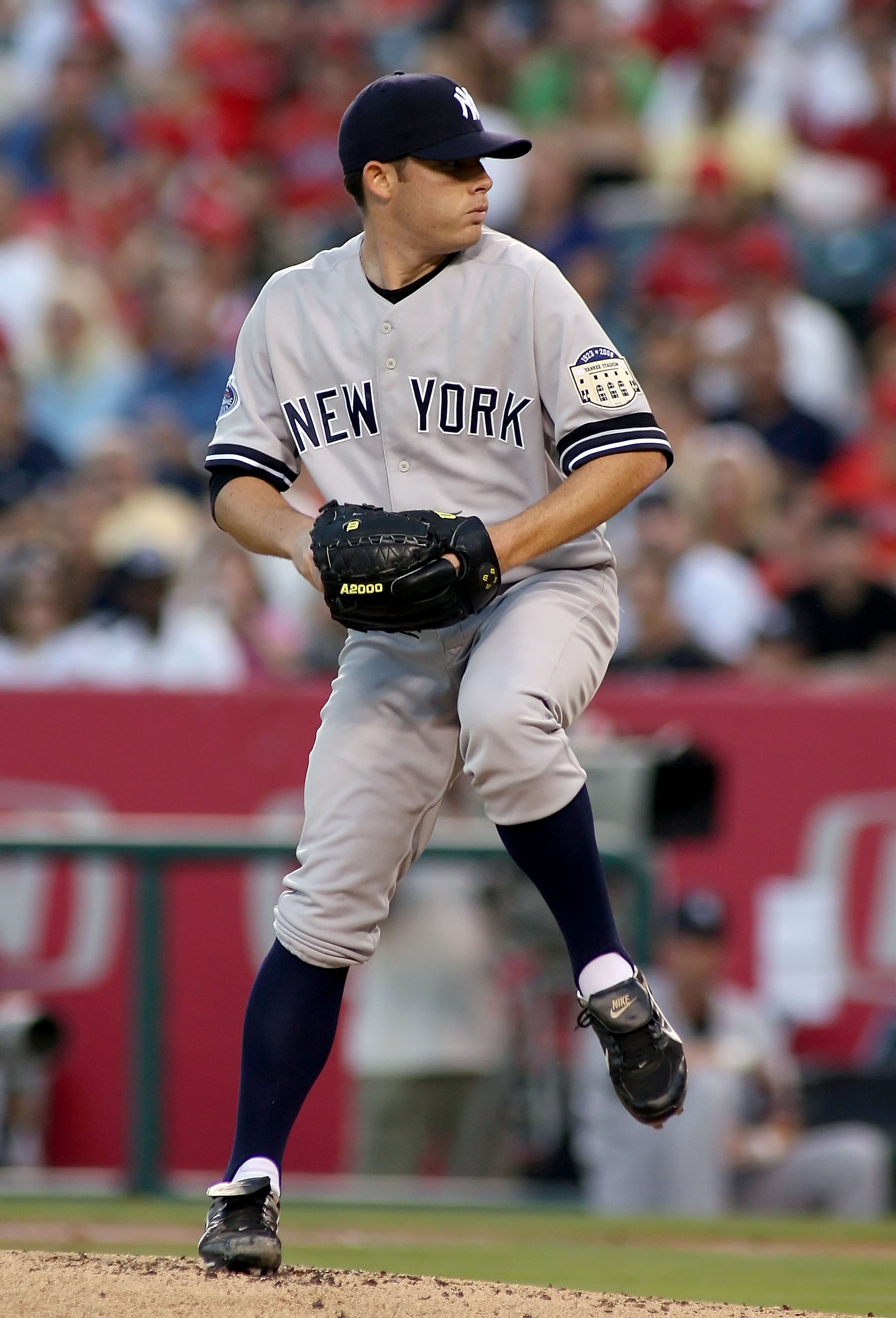
“It was one of those things … as the draft gets closer, you start to get a feel of who might get to you, and we thought there was a good chance he would get down to us,” Oppenheimer said. “We did our extra homework on him, and it turned out to be good. If he did get down to us at 21, we were prepared to take him. We had him higher on our board than his actual draft spot.”
In doing his homework on the right-hander, Oppenheimer reached out to some people at his old college campus.
“I was very close with (USC coach) Mike Gillespie, so I was able to get some pretty good information on what kind of person Ian was – and what kind of a competitor he was. That part of it was huge,” said Oppenheimer, who had played for Gillespie’s USC predecessor – the legendary Rod Dedeaux. “Watching what Ian had done for Team USA added to the comfort level of knowing what kind of a pitcher this kid was.
“I kind of had an idea that he was going to get to us. You’re always sweating it out a little bit when other teams are drafting, but with Ian … we just felt it was going to turn out our way.”
Twenty slots later, the Yankees stayed at the major-college level in selecting University of Nebraska right-hander Joba Chamberlain.
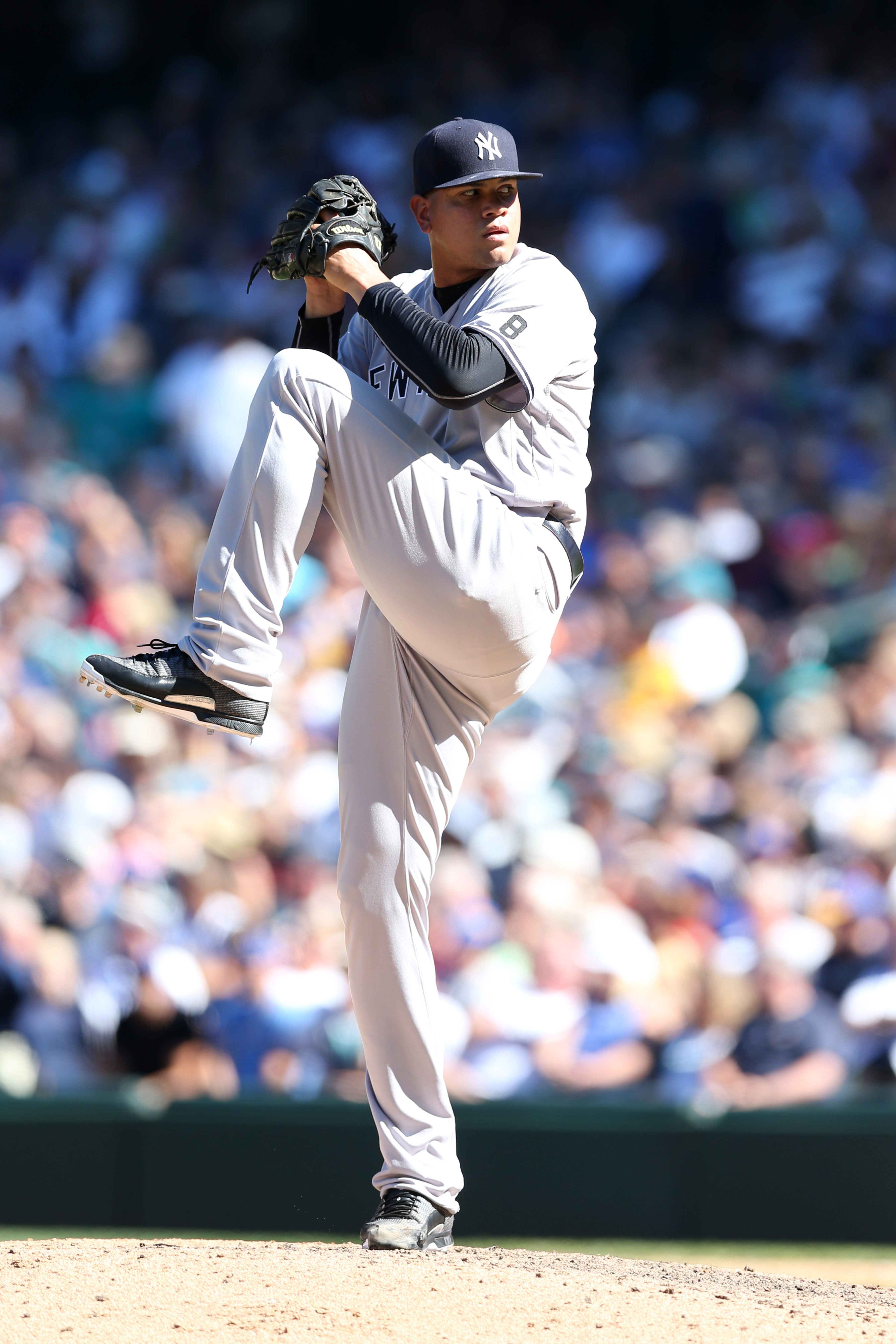
“Joba was a guy we had really close to 21,” Oppenheimer said. “A lot of teams had questionable medical on Joba, but our people were satisfied that his medical was fine, that he was going to be able to be durable, and that he’d be solid.
Free Agent Stock Watch: Zack Cozart
Reds shortstop Zack Cozart has long been an interesting player, with outstanding glovework making him a regular at short despite an often-lagging bat. But he began to show signs of life at the plate in 2015, suggesting the possibility of more. Now, at 31 years of age — with free agency beckoning at season’s end — Cozart is playing like an All-Star.
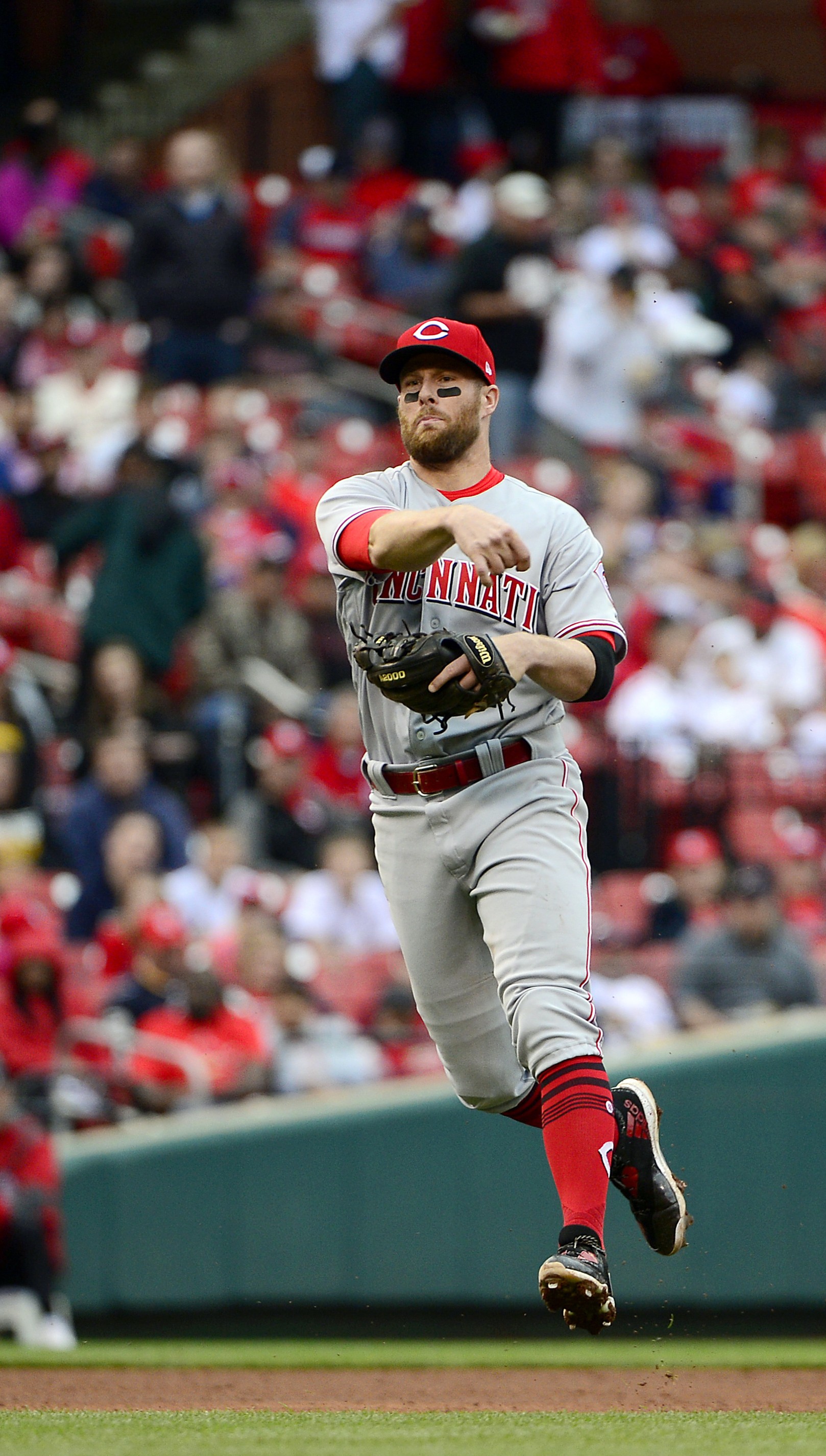
Perhaps this surge would now be less surprising had it not been for a devastating knee injury that disrupted Cozart’s ’15 campaign after just 53 games. At that point, he was slashing .258/.310/.459 and had swatted nine home runs. Upon returning last year, Cozart fell back a bit in overall productivity, but still managed 16 long balls and produced a 91 wRC+ — good enough to make him a 2.5 fWAR player.
Cozart has opened the 2017 season on a hot streak. It’s still early — he has only taken 97 plate appearances — so it’s best to temper expectations. But perhaps there’s more to it than just noting the surge and cautioning on the sample size. He’s hitting a BABIP-aided .329 and delivering an excellent isolated slugging mark (.220) despite just one home run. That’s all promising enough. But Cozart is also walking at heretofore-unseen levels. He entered the year with just a 5.6% career walk rate, but has nearly tripled that (to 14.4%) in the early going, leaving him with a robust .423 on-base percentage .
As ever, it’s fair to wonder whether that apparent improvement can be sustained. Cozart is approaching, but hasn’t quite reached, the stabilization point for walk rate, and even then you’d have to maintain a healthy degree of skepticism and bear in mind his longer track record. But this is the third straight year that Cozart has shown growth in his ability to take free passes. And there are other signs of a real change that shouldn’t be ignored. Cozart’s swing percentage sits at just under forty percent, well shy of his 46.5% career mark. And he’s not just watching more strikes go by: Cozart has offered at pitches out of the zone just 22.7% of the time, a significant reduction from his 29.4% career average. When he does swing, Cozart is missing just 5.6% of the time; again, that’s a significant change (7.3% career SwStr%).
While his strikeout rate is also up a bit, that’s an easy sacrifice to make when these are the results. It would be silly to expect Cozart to continue walking with quite this frequency, but even a bump up to league average (8.8%) would represent a major change in his profile. That might support a league-average on-base percentage. Combine that with the fact that Cozart has posted above-average isolated slugging marks over the past three seasons, and you’re suddenly looking at a real offensive threat.
Let’s not forget: the real calling card here is defense. Cozart doesn’t get talked about as one of the game’s best fielders, but metrics suggest he is. We’re not looking at a small sample here, either. Since he began receiving regular playing time in 2012, Cozart has been an elite defender. While he has traditionally rated as merely an average baserunner, the glove is good enough that Cozart doesn’t have to hit all that much to be an asset.
So, the arrow is pointing up right now, though there’s obviously a long season ahead. Cozart did miss time last year with ongoing issues relating to his 2015 knee surgery; while it seems he’s healthy now, he’ll need to stay that way. And teams will be watching closely to see just what portion of Cozart’s improvements at the plate can be maintained throughout the course of a long season.
As we watch to see how things progress — gauging not only Cozart’s open-market value but also his trade value this summer — there are some markers to bear in mind. Come August, Cozart will reach 32 years of age — just as J.J. Hardy did back in 2014 before signing a three-year, $40MM extension with the Orioles that kept him from reaching the open market. Hardy was an even more extreme version of Cozart at the plate, and was a similarly excellent defender, so seems a highly relevant comp. Though Hardy had a clearer record of success to that point, though, he also hadn’t shown anything like Cozart’s current changes at the plate.
If you see Cozart as a slightly above-average hitter, whose power is sometimes offset by questionable on-base numbers and patches of streakiness, then you’re looking at something like the profile of Ian Desmond, who just landed $70MM over five years. True, Cozart is a middling baserunner, while Desmond is one of the game’s best. But the situation is flipped on defense, where Cozart’s high-level play at short outeighs Desmond’s versatility. But the best aspirational comp is perhaps Brandon Crawford, whose blend of solid plate discipline and pop with otherworldly defense has made him a star (and earned him a six-year, $75MM extension).
Of course, it’s far from clear that Cozart will be able to score anything approaching those kinds of years and dollars, particularly given his age and the still-unknown level of demand. But he’s beginning to make out an argument that he’s just as valuable a player as some of his better-known peers.
Photo courtesy of USA Today Sports Images.
MLBTR Originals
Here’s the week’s original content from the MLB Trade Rumors writing staff and contributors…
- The Angels‘ 2009 draft would’ve been successful even if the team hadn’t drafted a certain all-time great with the 25th overall pick, as Chuck Wasserstrom outlines in his newest Inside The Draft Room piece. Wasserstrom examines the scouting and decision-making process that went into the Halos landing Randal Grichuk, Tyler Skaggs, Garrett Richards and Patrick Corbin within the first two rounds, not to mention the franchise-altering selection of Mike Trout.
- Ryan Howard‘s five-year, $125MM extension with the Phillies drew criticism from the moment the deal was signed in April 2010. MLBTR’s Jeff Todd looks back at how the Howard extension has become “a cautionary tale” or, for the Phillies, “something like the cost expended on a fancy diamond ring in a relationship that ultimately falls apart.”
- Tim Dillard (a.k.a. The Man They Call @DimTillard) is back with his latest Inner Monologue, discussing some of the common terms you might hear around minor league clubhouses. Feel free to yell “OK! LET’S DO THIS!” before clicking on the link.
- MLBTR’s Offseason In Review Series continued, with Steve Adams breaking down the winter moves of the Tigers, Twins, and Yankees.
The Inner Monologue of @DimTillard Baseball Sayings
It’s 8:02am on Sunday April 30th, 2017. So here’s the gist… my name is Tim Dillard. I’m a pitcher in my 15th professional baseball season, and currently in the Milwaukee Brewers organization with Triple-A Colorado Springs. I think that’s it. Oh yeah, I’ve been married for eleven years, and have three remarkable kids. A few months ago I was minding my own business, when MLB Trade Rumors asked if I was interested in baseball blogging. I asked if I could blog about movies instead, but they said no. So here we are… in the midst of my SEVENTH Inner Monologue.
8:05am Basically what I do is just write down my thoughts while logging the exact time. Not sure what typing in the time, and putting it in bold accomplishes. But I guess after the first time I did it, and nobody told me (to my face) that it was stupid… I just kept doing it.
8:07am Right now our team is in Des Moines, Iowa. Last night’s game against the Triple-A Cubs was postponed due to freezing temperatures, ice rain, hurricane-type wind, and lack of fans. Today we’re supposed to have a day game, but could possibly turn into a night game depending on weather.
8:08am Currently, I’m at the hotel trying to see how much I can type before my road-roomy vacates the bathroom.
8:09am When I was grabbing coffee earlier in the lobby, a gentleman asked the front desk lady if he could order room service. (We stay at some nice hotels in the minor leagues, but I can promise you… none of them have room service.)
8:11am Front desk lady was very polite when she told him they didn’t offer room service. Then the man said, “Well, I guess it is what it is.”
8:12am It is what it is? You ever hear people say that? First time I heard that expression was in 2007, and I’m still confused. It’s like saying, “Well, you know oxygen is oxygen.” OR “You win some, you lose some.” OR “How’s a rainbow made?” OR “I’m calmly showing my maturity by hiding my frustration and disappointment behind a fancy philosophical-sounding statement that doesn’t change my current circumstances.”
8:13am Well you know, baseball has a lot of interesting expressions too. Especially in the minor leagues. Such as:
“Wear it!”
“Skillets!”
“Clean it up!”
“Friends dues!”
“Save it meat!”
“Figure it out!”
“Have some feel!”
“There’s a window!”
“Hard in, soft away.”
“That GUY ‘s in the SHOW!!??”
“Don’t like it? Play better!” (or play worse)
8:16am Anyway, I want to coin a NEW phrase in professional baseball. And for some reason I thought now is the perfect time to divulge this special saying to the entire world! (Or at least the few people who read this… thanks for reading mom!) And here it is: “Do Less.”
8:16am Yep, that’s it, that’s the big one. “Do Less.”
8:17am See, baseball is hard. But sometimes it can appear simple when watching it on TV or from the bleachers. For instance, the guy in the picnic area the other day who screamed, “Come on man! Watcha thinkin’ gettin’ picked off! I wouldn’t have gotten picked off! Put ME in, coach!”
8:18am In this particular case, the man had probably been drinking and was borderline unsober. And still has every right to yell his opinion, but I reiterate… baseball is hard.
8:18am Well during the game, in those most intense moments, players can sometimes feel the urge to dig deep or do more. Like when a hitter wants to swing EXTRA hard or run EXTRA fast. Or like a pitcher who wants to throw EXTRA hard or make a pitch EXTRA nasty. But usually the opposite happens. More often than not, the hitter misses, or breaks his bat, or pulls a hamstring. And the pitcher, he usually throws a wild pitch or hangs a fun ball right down broadway.
8:19am Do Less… just watch, it’ll be a thing.
8:20am However, the most important thing about baseball sayings is knowing which one to use, and knowing when to use it. I learned this lesson May 23, 2008.
8:20am I was in Washington D.C., warming up in the visitors left-field bullpen, when the door opened. Suddenly it dawned on me that just beyond the Nationals’ outfield grass and infield dirt, was my Major League Baseball debut!
8:21am All I was thinking as I jogged out to the mound in front of 40,000 people, was… “Left. Right. Left. Right. Left. Right.”
8:21am Thankfully, without tripping, I managed to make it to the mound where veteran catcher Jason Kendall was waiting for me. When he started double-checking my pitches and my signs, I was thinking about how many baseball cards I had of him growing up.
8:22am Then he pulled his mask back down, turned to run back to the plate, and quickly said, “Here we go.”
8:23am And for some unknown reason, I felt the need to say something back to him. So out of all the words and phrases I know, my brain thought it’d be a good idea to intensely scream, “OK! LET’S DO THIS!” (and yelled it like I was wearing giant headphones)
8:23am It was enough for Jason Kendall to kinda stop, look back with a puzzled face, then continue his jog back behind the dish.
8:24am All alone, standing there, on that mound, I spoke out loud, “Did I just tell… Jason Kendall… let’s do this!?”
8:25am I felt very uncool in that moment. Why would I say something so cheesy? Why am I so awkward!
8:25am And I’m pretty sure he told the home plate umpire what I said too, ’cause the whole time I was throwing my first major league warm-up pitches, the umpire was chatting with Jason Kendall then pointing at me and laughing.
8:27am I still don’t know how it all happened, but… I guess it is what it is.
8:27am Ah! Think I just heard a toilet flush.
To Be Concluded…
Offseason In Review: Detroit Tigers
This is the latest entry in MLBTR’s Offseason In Review series. The full index of Offseason In Review posts can be found here.
The Tigers appeared headed for a significant sell-off following GM Al Avila’s ominous comments about paring back payroll and staying within the team’s means, but the Tigers instead had a fairly quiet offseason.
Major League Signings
- Alex Avila, C: One year, $2MM
Notable Minor League Signings
- Omar Infante, Edward Mujica, Alex Presley, Bryan Holaday, David Lough, A.J. Achter, Collin Balester, Travis Blackley, Brendan Ryan, Efren Navarro
Trades and Claims
- Traded OF Cameron Maybin to the Angels in exchange for minor league RHP Victor Alcantara
- Acquired OF Mikie Mahtook from the Rays in exchange for a PTBNL (RHP Drew Smith)
- Selected LHP Daniel Stumpf from the Royals in Rule 5 Draft
Extensions
- None
Notable Losses
- Maybin, Jarrod Saltalamacchia, Erick Aybar, Mike Pelfrey, Mark Lowe
Needs Addressed
“We want to run the organization without having to go over our means. We want to stay competitive, but at the same time, this organization has been working way above its means for some time.”
Those were the words spoken by Tigers GM Al Avila on Oct. 18, and they understandably led to a perception that the Tigers, long a powerhouse in the American League Central, were set to begin shopping several members of their aging core throughout the offseason. The trade of Cameron Maybin on the very first day of the offseason, which shed $9MM and added a power arm to the Detroit farm system, did little to dispel that notion. Detroit appeared to be embarking on a sale.
Over the next several months, names such as J.D. Martinez, Francisco Rodriguez, Justin Wilson, Jose Iglesias and Ian Kinsler were bandied about the rumor mill. Even cornerstones Miguel Cabrera and Justin Verlander, each of whom has full veto power over potential trades, found themselves as the subject of rumors. The Astros were linked to Cabrera at one point, while the Dodgers were tossed out as a potential destination for Verlander (and for Kinsler as well). Somewhat surprisingly, however, the Maybin trade proved to be Detroit’s only notable subtraction of the offseason.
Later in the offseason, Avila stressed that there was never any mandate from ownership that he shed payroll. That seemingly held true even as the torch was passed from long-time owner Mike Ilitch to his son, Christopher, after the former’s death in February at 87 years of age. While there may be some differences moving forward — the elder Ilitch had often dipped into his pockets to acquire and keep top stars — there also wasn’t to be a sudden change of direction. Rather, as Avila explained, the Tigers were only looking to make good baseball trades.
Despite the prior comments and despite the fact that many of the team’s best players are entering their mid-30s, the Tigers understandably still felt there was an opportunity to compete in the AL Central after finishing the 2016 season with 86 wins. After all, with better health from Jordan Zimmermann, a full season of Rookie of the Year Michael Fulmer and improved performance from Justin Upton (who had a monster second half), it’s hardly unreasonable to expect a better record.
Detroit, though, was also conscious of adding to its payroll. Ever cognizant of the long-term commitments that are piling up for aging stars — Detroit already has $83MM guaranteed to Cabrera, Verlander and Zimmermann as far down the line as 2019 — the Tigers eschewed any long-term commitments. A reunion with Alex Avila, who is serving as the backup to young James McCann, proved to be the only Major League free-agent signing. Similarly, Detroit opted not to add any proven players on the trade market, instead rolling the dice on a minor deal to pick up former first-round pick Mikie Mahtook from the Rays.
All of that, though, is not to say that there aren’t players the Tigers would like to have moved. Detroit did its best to shop Mike Pelfrey, Mark Lowe and Anibal Sanchez throughout the offseason. Each veteran carried a significant salary in the final year of his contract, with Pelfrey set to earn $8MM, Lowe earning $5.5MM and Sanchez owed a staggering $21MM (including the buyout of his 2018 option). Unsurprisingly, Avila and his staff found no takers for that trio of underperforming right-handers. Rather than block younger arms with three overpaid vets, the Tigers bit the bullet and absorbed the salary of Pelfrey and Lowe by releasing them in Spring Training.
Questions Remaining
The primary question remaining for the Tigers, now, is if they’ll instead look to sell at the non-waiver trade deadline this year. That decision will be driven by the performance of the club, and the team is off to a solid start thus far with an 11-10 record. Due to the aforementioned veto power over trades, it never seemed likely that Detroit would part with either Verlander or Cabrera. However, the prospect of trading players such as J.D. Martinez, Kinsler, Rodriguez and Justin Wilson was very real and will be once again this summer if the team is under .500.
In fact, even if the Tigers are on the periphery of the Wild Card picture, it’s still possible that they’ll move some pieces. In recent years, teams have been increasingly willing to move impending free agents at the deadline if they may not be worthy of a qualifying offer (e.g. Mark Melancon being traded to the Nationals in 2016). While J.D. Martinez certainly seems likely to merit a qualifying offer if he is able to return to form once activated from a foot injury, Rodriguez definitively will not be. If K-Rod is throwing well, the Tigers could look to move him regardless of their position in the standings, assuming they’re able to fetch a reasonable young piece in return. I’d imagine that the same is true of Justin Wilson, despite the fact that he’s controllable through 2018. While Wilson is arguably the best reliever in the Detroit ‘pen, hanging onto him in pursuit of a one-game playoff rather than capitalizing on a potentially significant deadline return doesn’t seem prudent.
Looking at the larger picture, the Tigers face significant long-term questions in the outfield. The team is hopeful that JaCoby Jones can fill a long-term role in the outfield, but Jones is new to the outfield and has a .544 OPS through the first few weeks of the season. The acquisition of Mikie Mahtook was intended to give the club another option there, but he’s not hitting any better. Anthony Gose was once viewed as the center fielder of the future in Detroit, but he’s been outrighted off the 40-man roster and is now once again pitching in the minors.
The situation is no better in the corners. Steven Moya, whom the club once hoped would be its long-term right fielder, was also outrighted this winter. J.D. Martinez is a free agent following the season, and it’s also possible that Upton, who is hitting .265/.344/.560 with 27 homers over his past 381 plate appearances dating back to July 1, will opt out at season’s end. While that may actually be a good thing for Detroit’s long-term payroll ledger, it would also further cast doubt as to who will be patrolling the outfield at Comerica Park in 2018 and beyond. At present, Tyler Collins is the only controllable outfielder producing in 2017, though his track record is limited.
There are fair concerns, too, about the pitching. Daniel Norris and Matt Boyd are getting chances to join Michael Fulmer as 2015 deadline acquisitions-turned-rotation stalwarts. But neither has approached Fulmer in accomplishment to this point. Meanwhile, the high-priced Jordan Zimmermann is hoping to prove that his 2016 was an aberration and join Verlander to form a quality 1-2 veteran punch. But the results have not been promising early.
The bullpen (other than Justin and Alex Wilson) has perhaps been even more concerning than expected to this point. Rodriguez was shaky, though largely still effective, in 2016, but he has been quite hittable thus far. And the club could well continue to struggle to find good innings from other setup options — including Shane Green, who hasallowed seven waks against seven strikeouts in his first seven innings. While fireballers Bruce Rondon and Joe Jimenez have at times seemed like closers of the future, neither has succeeded early their careers (though there’s plenty of time to turn it around, at least in the case of Jimenez).
Deal of Note
The trade of Maybin on Nov. 3 looked to be the first of many notable moves for the Tigers this winter, but they instead largely stood pat from that point forth. While Avila’s comments that there was no mandate to pare down the payroll are no doubt true, it certainly seems as though there was also plenty of trepidation about adding to the payroll. When the club was searching for center fielders prior to acquiring Mahtook, Anthony Fenech of the Detroit Free Press reported that the Tigers were only looking to spend about $2MM. The center field addition they did make (Mahtook) was earning considerably less, as he’s not yet eligible for arbitration.
Dealing Maybin did bring the club a reasonably useful prospect — MLB.com ranks Alcantara 25th among Tigers farmhands — but looking back on the offseason as a whole, the Tigers aren’t any better overall for the deal. Detroit’s Opening Day payroll is roughly identical to last year’s mark, and the team returned effectively the same core but with a weaker outfield mix. I’ll fully admit that this observation is made with the benefit of hindsight, and it has to be noted that the Tigers couldn’t have known in early November that they wouldn’t get the offers they sought for seemingly marketable assets like Kinsler, Martinez and Wilson.
However, the Tigers had to be cognizant of the fact that their asking prices were a long shot to be met by mid-December, and yet the team still elected not to make even marginal investments to enhance the 2017 roster. Ben Revere (Dec. 23) and Colby Rasmus (Jan. 30) both signed late in the offseason for $5MM guaranteed or less, for instance, and either would’ve served as a likely upgrade to the internal center field options the Tigers took to Spring Training (even with Rasmus recovering from offseason surgery).
Overall, the loss of Maybin isn’t likely to make or break the team’s playoff hopes in 2017, but weakening the team on the first day of the offseason and then doing little to further stock the farm system, shed payroll or bolster the 2017 roster seems counterproductive.
Overview
The expectations of a fire sale proved to be misplaced, but the Tigers’ lack of virtually any winter activity in either direction is still a bit puzzling. It was commonplace to suggest that the Tigers entered the offseason at a crossroads, but rather than deciding which way to turn, the team effectively stood still — with nearly $200MM in MLB salary still on the Opening Day books.
Now, the Tigers find themselves a somewhat uncomfortable position. Detroit unquestionably has the talent to win in 2017, but there are larger questions looming beyond the current campaign. Though there’s a desire to trim payroll, the majority of the club’s most expensive assets are close to immovable either due to no-trade clauses, opt-out provisions or underperformance. However, the team may also be reluctant to look to replenish a thin farm system by moving its more appealing assets in the midst of a season that could yield a playoff berth.
Avila and his staff will have to walk that fine line this summer as they seek to balance current postseason odds with the chances of beginning to rebuild a sustainable core that can once again help them to reach October baseball on a near-annual basis. It’d be an easier call if the Tigers were either running away with the division or sitting near the cellar, but given the strength of the Indians and the relative weakness of the Royals, Twins and White Sox, that seems unlikely. More probable is the fact that the Tigers will be jostling for position with the Indians and firmly in the Wild Card mix, which will force the front office into some difficult decisions.
Let’s see how MLBTR readers grade Detroit’s offseason (link to poll for Trade Rumors app users)…
How would you grade the Tigers' offseason?
-
D 35% (469)
-
C 30% (399)
-
F 27% (362)
-
B 7% (87)
-
A 1% (16)
Total votes: 1,333
Inside The Draft Room: The 2009 Angels
The way things are shaping up, the 2009 Los Angeles Angels of Anaheim draft would have to be considered a good one even if the 25th pick belonged to somebody else. When three starting pitchers (including two southpaws) and a power-hitting position player reach and produce at the major league level, it makes for a nice haul.
The team’s first selection, Randal Grichuk, is now a starting outfielder for the Cardinals – and is coming off a 24-homer season as a 24-year-old.
Supplemental first-rounders Tyler Skaggs and Garrett Richards were members of the Angels’ season-opening starting rotation. Second-round pick Patrick Corbin is the Diamondbacks’ No. 2 starter.
But then, of course, there is the matter of the Angels having the 25th pick that year. And you can very easily picture Commissioner Bud Selig walking to the podium and making his announcement: “With the 25th selection in the first round of the 2009 First-Year Player Draft, the Los Angeles Angels of Anaheim select Michael Trout.”
“I’ve never seen a team walk out of a draft and think they had a bad draft,” said Eddie Bane, the Angels’ scouting director from 2004-2010 and now a special assignment scout for the Boston Red Sox. “Everybody thinks that their draft was the greatest of all-time every year. Sure, we were guilty of the same thing. I don’t know if guilty is the right word; you just love scouting so much that you think the players you picked are just awesome. That’s the way it works. You think you’re going to help stack the organization; that’s the way everybody thinks. But we actually did. It’s kind of a rarity.”
In 2008, the Angels won a major league-best 100 games and went to the postseason for the fifth time in seven years.
Success on the field was mirrored by the Angels’ frequent forays into free agency, which directly impacted the team’s amateur draft capabilities. Over their previous five drafts, the team gave up seven high-round picks as free agent compensation, losing either a first- or second-round pick every year.
The 2009 draft, from that standpoint, was no different; the Angels surrendered their own No. 1 (No. 32 overall) as compensation for the signing of free agent closer Brian Fuentes.
However, the Angels lost several key players to free agency – closer Francisco Rodriguez (to the Mets), first baseman Mark Teixeira (to the Yankees) and starting pitcher Jon Garland (to the Diamondbacks). Lo and behold, the team had a glut of high-round picks – back-to-back at 24-25, followed swiftly by supplemental selections at 40, 42 and 48.
(Have you forgotten how the old Type A/Type B free agent compensation system worked? Take a trip down memory lane.)
“I started with the Angels in 2004, and we had a pick at 12 and got Jered Weaver. But other than that, we never had anything in the first 25 because we were pretty good and we were more in the shopping business,” said Bane – a no-nonsense, tell-it-like-it-is type whose previous Angels drafts included the selection of future big leaguers Weaver, Nick Adenhart, Mark Trumbo, Peter Bourjos, Hank Conger, Jordan Walden, Tyler Chatwood and Will Smith. “We never thought once about not having a really high pick; that was normal. So we were really excited because we had five picks. We thought that was awesome.”
If you recall, 2009 was the “Year of Strasburg.” The chances of Stephen Strasburg getting past Washington and falling all the way to No. 2 in the draft were largely nonexistent.
“I saw him pitch one time for about 2.0 innings and said, ‘This is a waste of time,’” Bane recalled. “I told the area scout to just make sure he does a good job on Strasburg’s makeup and everything else. You don’t spend a lot of time on Stephen Strasburg when you’re picking 24-25.”
Bane started ruling out others he knew would be gone by the middle of the first round and started focusing on players who he thought could be there for him. One player he was immediately drawn to was a prep outfielder out of Lamar Consolidated High School in Rosenberg, Texas, named Randal Grichuk.
“Jeff Malinoff, one of my national cross-checkers who was as good of a hitting scouting guy as there’s ever been … he loved Randal, as did Kevin Ham, the area scout,” Bane said. “Randal could hit his home runs a long way to right-center and left-center. Obvious power. Good athlete. All that stuff. We thought there would be a chance that he would get there.
“It’s hard to describe to people the excitement you get when you see somebody that not every scout loves, and you see the passion they have for the game, and you file that away. I still remember batting practice; I was there with Jeff, and Randal was hitting rockets out to right-center. With Randal, the body has improved with maturity, but it’s not dramatically different than he was in high school. He was a strong, good athlete that could go get a ball in centerfield. His arm was fine. To me, he looked like a lock first rounder. That’s when you start thinking immediately, ‘Well, he won’t be there when we pick’ – because you think other teams see it exactly the way you do. Fortunately, they don’t.”
And then, of course, there was another prep outfielder that Bane locked in on – this one out of Millville Senior High School in New Jersey. Two MVP seasons and three MVP runner-up campaigns later, it’s still hard to believe that Mike Trout would be available that deep in the draft.
– – –
“The first time I ever talked to (area scout) Greg Morhardt about him, he told me, ‘I got a guy in Jersey for next year’s draft who’s going to go into the Hall of Fame,’ and I started laughing,” Bane said. “I don’t know how many times I’ve heard that kind of statement from mostly parents. Usually, it’s not from a scout. But that’s what Mo said. I laughed about it, but I made sure to remember the name.”
Morhardt, whose territory included New Jersey, New York, Maine, New Hampshire, Vermont, Massachusetts, Connecticut and Rhode Island, was a former minor league first baseman/outfielder. For three years (1984-1986), one of his teammates with Minnesota’s Orlando affiliate in the Double-A Southern League was Jeff Trout – an infielder and future dad of Mike (who was born in 1991).
“Sometimes you have to listen to what people say … all the time, I guess, but then you usually filter it out,” Bane said. “I couldn’t be biased because it was some former player’s kid, and I couldn’t have a bias because the scout knows the guy – and he’s looking at the kid through rose-colored glasses. I had to be aware of that.”
In other words, the relationship between Morhardt and the Trouts could have skewed the scout’s judgement and reports. Bane had to go in with an open mind and witness the same things his area scout was seeing. He did … and then some.
“I go to his high school game with Jeff Malinoff,” he said, “and the kids are working hard and everything, but there’s not a lot of great players on the field. Obviously, you know which one is Mike Trout. They take batting practice, and he was killing balls. They took infield, so you were aware of his instincts out in center.
“The game starts, and this is the part that’s hard for people to believe. He pops up a ball to left-center and runs as hard as he can and ends up at third with a triple because they couldn’t catch it. You mark that down. He had a couple other at-bats, a couple more hits, and then around the fifth inning, I grabbed Malinoff and said, ‘Let’s go.’
“He looked at me like, ‘Oh no. What?’ And I got in the car and told Jeff, ‘If that guy’s there when we’re picking, we’re taking him.’ He said, ‘What went on that I didn’t see?’ And I said, ‘There’s something about this guy.’
“I wanted to learn more about him, so I called up (Morhardt) and told him to set up a dinner with me and the Trout family. He did, and maybe 10-15 days later, we had dinner at some colonial restaurant right outside out of Millville. The dinner was the best dinner impression I ever had as an amateur scout. The mom, Debbie, was incredible. Jeff fooled around with Mike like Mike was nothing special to them. And Mike, you could tell there was a lot of love at that table between those guys; they goofed around on each other and kidded with each other. It was the most impressive thing I saw out of Mike before the draft … the way he interacted with his mother and father.
“When I left the restaurant, I was pumped.”
– – –
Draft day … June 9, 2009.
Heading into the day, it was likely that Grichuk would be there when it was the Angels’ time to pick. But would Trout make it past 23 spots? Only a couple trusted higher-level scouts knew Bane’s pipe-dream scenario of landing both Trout and Grichuk.
“I tried to keep it inward as much as I could; Jeff (Malinoff) and (national cross-checker) Ric (Wilson) knew what I wanted to do,” Bane said. “I was kind of paranoid, and I didn’t want a text message going out to somebody saying ‘Hey, the Angels are looking at two high school outfielders in a row.’ Somebody would know who they were. That’s the paranoid part of having that job.”
Bane didn’t care about taking high school guys back-to-back. There is certainly risk in drafting high school players in the first round, and none of the prep position players taken before Grichuk and Trout that day (No. 3 Donavan Tate, San Diego; No. 16 Bobby Borchering, Arizona; No. 21 Jiovanni Mier, Houston) has seen a day of major league action.
“Now, I’ve read a lot of stuff … people saying, ‘How in the world did they take two high school outfielders in a row?’ That was never the way I looked at it,” Bane said. “I just wanted to take the best guy. You have to be blessed to get them to the big leagues. Forget about whether they’re high school outfielders or college shortstops or whatever else. You’ve got to be really blessed to get them there.”
Bane admits he was sweating it out, saying that “a lot of it played out nicely for us. Guys who liked Mike took other guys.
“I’ve read where we had Trout ranked seventh or 10th on our (preference) list – and that may have been on the board – but like I’ve said about being paranoid, I know where he was on my own personal pref list, and that was second behind Strasburg.
“But the only other team that had him ranked anywhere near that high – at least that I could find out – was the Yankees. Damon Oppenheimer told me after the draft that Mike had come into Yankee Stadium and had maybe the best workout that they’d ever seen. But they were picking after us, and they had no chance.
“I worried about Oakland; (scouting director) Eric Kubota did a great job on him. I worried about the Diamondbacks – because they had two picks (at 16-17).”
But after 23 selections, the two high school outfielders were still available. The Angels were on the clock.
– – –
Ask for an explanation of how Trout could still be available after 23 picks, and what you get sounds like a bunch of excuses:
- The weather is too unpredictable, so it’s too hard for scouts to plan trips.
- The weather is too cold and wet, so the player’s body of work is limited compared to players in other parts of the country.
- Pitchers from the northeast have historically done OK in pro ball, but position players have not.
- Due to shorter seasons, some teams don’t scout the area with any regularity.
To a scouting director, those aren’t excuses. They’re realities of the job.
“When you fly up to the northeast in late March or early April, there’s a really good chance that you’ll get snowed out and there’s a really good chance you’re wasting a couple days – whereas you can be in a high school tournament in California and see three games,” Bane said. “If you look at it that way, I can see it.
“But that didn’t come into play for us. You really need to include the entire field and not have an age bias or a regional bias. There had been a kid a few years before that named Billy Rowell, who Baltimore took in the first round, and he kind of washed out. So I think there were several teams that said they wouldn’t go back to the northeast because of that.
“There were teams that didn’t cross-check Mike. The weather … they got rained out this day … they got snowed out that day. Some people don’t understand it, but I understand it. It’s 4 a.m. wakeup calls every day for two months. And unless you really stick your nose to the grind stone, it’s hard to do that every day.”
– – –
While Trout was there for the Angels to select at No. 24, he also was there for them at No. 25. The first name they called was Randal Grichuk. And there’s a backstory.
“You really want to know why he went first? I’ve heard a lot of different stories, but I think I would know,” Bane said. “This is no knock on Randal. We wanted Randal bad.
“Craig Landis – the agent for Mike Trout – called me about a week before the draft and said ‘Mike’s signability has changed.’ And I said, ‘Well, no it hasn’t. I just talked to Jeff (Trout). He’s going to sign for slot.’ I checked with Greg Morhardt after that conversation, too. He said Trout would sign for slot.
“But the rest of the phone conversation with Landis, it was, ‘You need to call Jeff Trout.’ And I said, ‘No I don’t. I know what his signability is.’ He got a little perturbed. He said things had changed. I said, ‘No, I know what they told me. I think these are some of the best people I’ve been around. So if we want to take him, we’re going to take him.’
“I imagine I frustrated Landis a little bit there – and I’m petty. When we knew we were going to get both of them, I thought about the phone call – and we took Randal first.
“(Agents) can always dictate a lot of things, but the one dictate we have on them is that we can draft whoever we want.”
The moral of the story is … know your player, his makeup, his background.
“I knew Mike, and Mike wanted to play baseball and literally prove to everybody that he was the best player in baseball,” continued Bane. “About 10-to-12 days after the draft, Jeff (Trout) either got ahold of me or (Morhardt) and said ‘Will you get this kid out of my house? He’s driving me crazy.’ I reminded him, ‘The number is slot,’ and he said ‘That’s good. Let’s go.’
“The family flew out to Anaheim, and we signed him. He worked out at Angels Stadium, and he was hitting balls that the major league guys weren’t hitting in batting practice. At the time, he was 17. That’s when I knew that maybe we really did get something here.”
– – –
For Bane, his best-laid plans continued to come to life that June afternoon.
As if landing both Grichuk and Trout wasn’t enough, his plans were coming to fruition for the Angels’ supplemental selections at 40 and 42.
“Like I’ve told people – and they have a hard time believing me – we would have been happy getting Garrett Richards with our first pick. We didn’t think he’d be there,” Bane said. “And there’s a story about why we took (Tyler) over Richards, too. It’s kind of unique and really fun – because a lot of things come into play.”
Richards was a college hurler for the University of Oklahoma. Skaggs was a prep left-hander out of Santa Monica (Calif.) High School.
“I never wanted to tell an agent something that wasn’t going to happen,” Bane said. “Garrett Richards’ agent got ahold of me sometime after we had picked Randal and Mike; this had to be somewhere around the 35th pick. He said to me, ‘Are you guys going to take Richards at 40?’ I said, ‘If he’s there, we’re taking him.’
“At 41, the Diamondbacks had a pick. And right after that phone call, we got word that the Diamondbacks were going to take Skaggs at 41. Once we got wind of it, I basically had not told the truth to the agent. So we took Skaggs first and hoped (the Diamondbacks) didn’t take Richards at 41. Then we got both of them.”
As it turns out, Bane’s information was correct. The Diamondbacks were indeed planning on selecting Skaggs; when the left-hander was not available to them, they chose high school shortstop Chris Owings – and Richards became an Angel.
“(West Coast supervisor) Bo Hughes and (area scout) Bobby DeJardin had a lot to do with Tyler Skaggs,” Bane said “When I first went in to see Tyler pitch, I saw a lot of his stuff, but I said, ‘That’s a fourth rounder.’ He was throwing a slow curveball that was just not very good at all.
“But Bo was adamant. So I went back in, and Skaggs threw a tighter breaking ball. I asked, ‘What’s the story?’ Well, he had two breaking balls – and he thought the slow one was really good. We eventually got him to Angels Stadium to work out before the draft, and Mike Butcher – our outstanding big league pitching coach – was there. We’re watching Skaggs throw his bullpen, and we started talking to him. We said, ‘You’ve got two breaking balls, right?’ He said, ‘I’ve got this smaller, slider-type one, but the good one is my really slow curve.’ Butcher and I both said to him, ‘No, it’s not. The slow curve is really good for high school hitters, but it ain’t gonna work against these guys.’
“Skaggs was lights out the next time I saw him. So the chance to get a high school left-hander from Southern California that had that kind of angle, that kind of height, that kind of everything was a no-brainer.
“With Garrett, Arnold Brathwaite – our area scout in Oklahoma – kept coming up with reasons for me not to see Garrett Richards. ‘He’s not going to pitch this weekend … He’s pitching on Wednesday and I know you’re going to be somewhere else.’
“Garrett didn’t pitch on the weekends for Oklahoma; he was their Tuesday or Wednesday pitcher. I think he had a 6.00 ERA at Oklahoma his eligibility year. So I finally went in to see him during the Big 12 Tournament. I went down to the bullpen to watch him warm up, and it was just lights out. But the coaches were saying, ‘You’ve got to do it today. This is your day. Let’s go.’ You don’t see anyone get on a guy in the bullpen; they usually let a guy get prepared on his own in the pen.
“Garrett comes out to pitch, and he was throwing 97 MPH. There were about 30 scouts at the game, and one scout later told me that after two-or-three innings, I got up and said, ‘I don’t know what you guys are doing here. If he’s there, we’re going to take him.’
“I did stuff like that a lot. But I was setting the bait a little bit. This guy, on our grading scale, both of his breaking balls that day were a 70 and his fastball was an 80. He was just blowing away hitters. But he wasn’t doing that the whole year. Look up his numbers; he did not have a very good year, but he had a great day the day I was there.
“Walking away from that, you got a college pitcher that hasn’t had a lot of success, but has tremendous stuff.”
The Angels had a third supplemental pick at No. 48, selecting Eastern Illinois University left-hander Tyler Kehrer. “Wonderful guy. Good worker. But injuries really suck, and that really hurt him,” Bane said. “I thought we had really stole one there.” In selecting Kehrer, Bane missed out on a local kid named Nolan Arenado – who was chosen by Colorado at No. 59.
“Nolan Arenado is the one I kick myself on,” Bane said about the third baseman, who grew up around 20 miles from Anaheim. “They say it was one of the best drafts ever, but it would have been solidified if we had taken Nolan.
“The reason Arenado bothers me is that he was a Southern California kid, and we wanted to dominate Southern California. We felt like we had the opportunity because we had a Wednesday night scout team that Steve Hernandez runs, and it was room service for us. You’d go out there and there would be Mark Trumbo and Tyler Chatwood and Hank Conger. All of those guys played at Angels Stadium every Wednesday night – and you could just pick their brain. All these kind of guys like Arenado would come out and throw an inning, or play four or five innings for us, or take infield. You talk about room service; that was perfect.”
After five picks from 24-48, Bane had a little bit of a breather before the Angels’ next selection – the final pick of the second round (No. 80).
He then had one of those conversations where … you just had to be there.
“I get a break after the first round,” he said, “and I go into the restroom at the Anaheim Marriott. (Area scout) Tom Kotchman was famous for always having my ear on stuff; it really bugged some guys that Kotchman had my ear. But to me, he was Tom Kotchman – he drafts and signs big leaguers – so I’m going to pay attention.
“I’m doing my business at the urinal, and Kotch walks in. He’s at the urinal next to me and he whispers ‘Pat Corbin.’ I said, ‘What?’ And he says, ‘Patrick Corbin, left-handed pitcher.’ I said, ‘Oh yeah, we’ve talked about him. He’s going to be a good pick in a couple rounds. We’ll get him in the fifth round or something.’ And Kotch says, ‘If you don’t get him with our next pick, Atlanta’s taking him.’”
Let it be noted that the Braves did not have a second-round selection; their next pick wasn’t far after the Angels – in the third round at No. 87.
“So I go back into the draft room and quietly grabbed his file,” Bane said. “Before our pick, I gave the name to my assistant, Kathy Mair – who was the best, ever – and she says, ‘The Angels select Patrick Corbin, a left-handed pitcher from Chipola College.’ Some of the guys in the room looked at me like ‘What the hell. Where did that come from?’ Then they realized it was a Kotchman guy, so they quietly got pissed instead of doing it out loud.
“Kotch knew if there was any place that was going to be private, it was in the restroom of the Marriott Suites in Anaheim.”
– – –
On July 8, 2011, only 25 months after being drafted out of high school, Trout made his major league debut. The legend of Mike Trout was about to begin, but Bane was no longer a member of the Angels’ organization; his contract was not renewed after the 2010 season. Such is life in the big leagues.
Grichuk took a slower road to the majors – a fairly normal route for a high school kid, progressing level-by-level. He was traded to St. Louis with outfielder Peter Bourjos for third baseman David Freese and pitcher Fernando Salas in December 2013 – and made his major league debut the following April. Heading into this season, the only first-rounders from that June with more big league homers were Trout and Seattle’s Dustin Ackley – the second overall pick.
Corbin and Skaggs were traded to Arizona as part of a trade deadline deal involving Dan Haren just one year after being drafted (Skaggs was later reacquired by the Angels as part of a three-team deal in December 2013). Both southpaws made their big league debuts in 2012, and Corbin was a National League all-star in 2013.
Richards has had right arm issues the past two years – and is currently on the 60-day disabled list with a biceps strain. Prior to that, he was a combined 28-16 with a 3.18 ERA in 58 starts during the 2014-2015 campaigns.
“You think you really got them. You think you’re really great. Then you start thinking about it,” said Bane, as he reflected about being able to draft the players he was targeting that June. “You say to yourself, ‘What does the industry know about this guy that we don’t know?’ But you have to get past that. You have to trust your own scouts and your own instincts and everything else. And I think we were really good at not following the industry. We paid attention to the industry; we just didn’t follow whatever was conventional.
“We had no idea that all these guys were going to turn out like they did. Obviously, the bell cow was Mike. Getting four ‘plus’ major leaguers and one superstar out of the deal … that’s pretty good.”
– – –
Click here to read other entries in MLBTR’s “Inside the Draft Room” series.
Chuck Wasserstrom spent 25 years in the Chicago Cubs’ front office – 16 in Media Relations and nine in Baseball Operations. Now a freelance writer, his behind-the-scenes stories of his time in a big league front office can be found on www.chuckblogerstrom.com.