
Offseason In Review: New York Yankees
This is the latest entry in MLBTR’s Offseason In Review series. The full index of Offseason In Review posts can be found here.
The Yankees entered the offseason with multiple holes to fill after trading away veterans at last year’s deadline, but following a couple of early splashes, the team remained quiet for the bulk of the winter.
Major League Signings
- Aroldis Chapman, LHP: Five years, $86MM
- Matt Holliday, OF/DH: One year, $13MM
- Chris Carter, 1B/DH: One year, $3.5MM
- Total spend: $102.5MM
Trades and Claims
- Traded C Brian McCann to the Astros in exchange for RHPs Albert Abreu and Jorge Guzman
- Traded RHP Nick Goody to Indians in exchange for cash or player to be named later
- Traded LHP James Pazos to the Mariners in exchange for RHP Zack Littell
- Claimed LHP Joe Mantiply off waivers from the Tigers (later outrighted and re-signed to minors deal)
Notable Minor League Signings
- Ruben Tejada, Jon Niese, Ernesto Frieri, Ji-Man Choi, Donovan Solano (re-signed), Nick Rumbelow (re-signed), Joe Mantiply (re-signed)
Extensions
- None
Notable Losses
- Mark Teixeira, Brian McCann, Nathan Eovaldi, Billy Butler, Dustin Ackley, Richard Bleier (waivers), Jacob Lindgren (non-tendered)
Needs Addressed
The Yankees managed to flirt with contention late into the 2016 season despite acting mostly as sellers at the non-waiver trade deadline. New York’s three-headed bullpen monster of Aroldis Chapman, Andrew Miller and Dellin Betances (often referred to as “No Runs DMC”) was the envy of clubs around the league early in the season and will be imitated (though not likely replicated) for years to come. However, GM Brian Cashman tore that trio apart just prior to the deadline, dealing Chapman to the Cubs and Miller to the Indians in exchange for a king’s ransom of prospects, thus creating a need in the ‘pen.
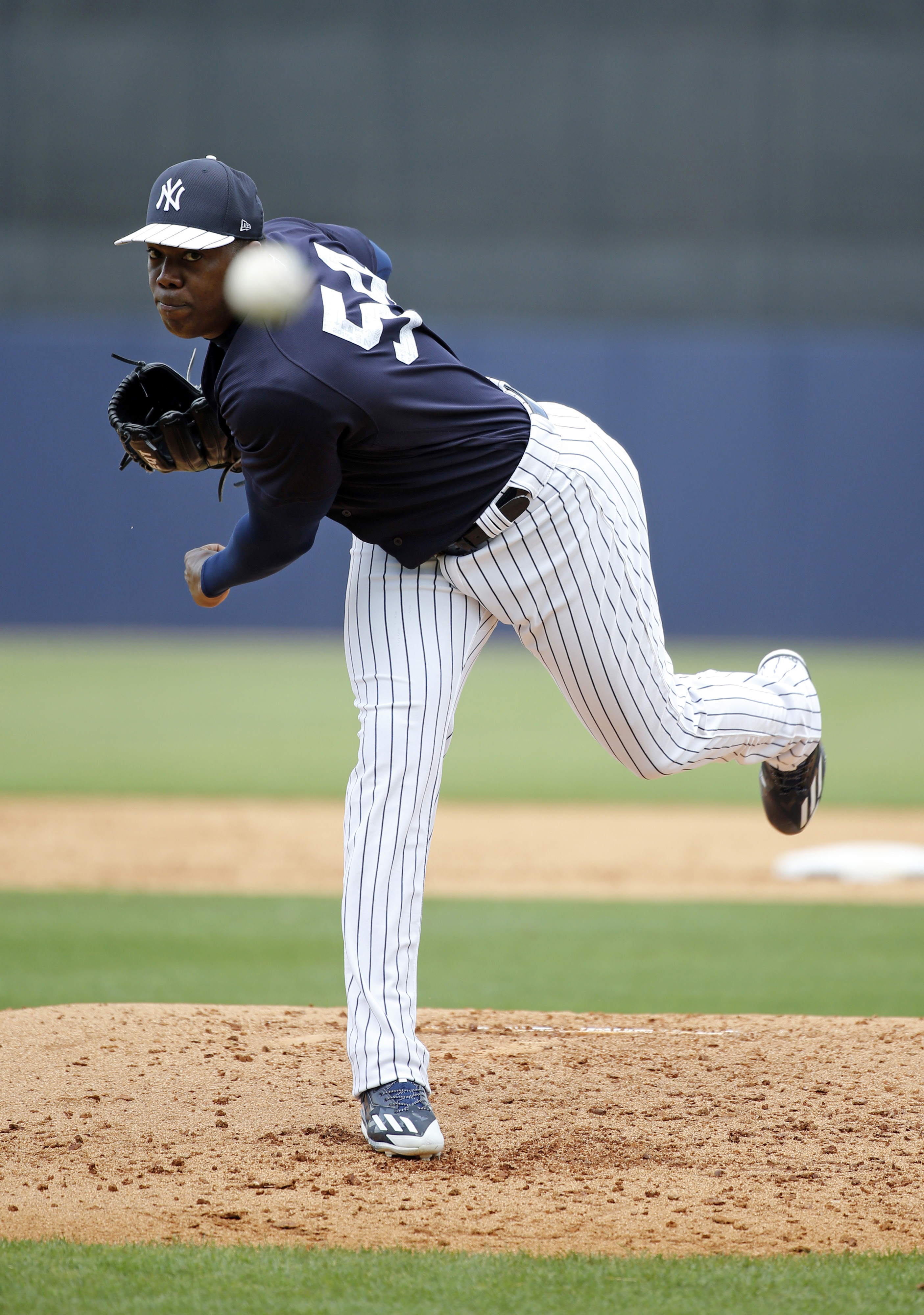
New York was linked to each of the “big three” closers on the market — Chapman, Kenley Jansen, Mark Melancon — but ultimately stuck with a known commodity by signing Chapman to a record-setting five-year, $86MM contract. The deal allows Chapman to opt out in three years, should he see fit. Following that addition, the Yankees were linked to countless other relievers, including Boone Logan, Jerry Blevins and Brett Cecil, but Chapman was their lone Major League signing.
Also changing hands at last year’s trade deadline was Carlos Beltran, who went to the Rangers in exchange for yet another pair of prospects. Cashman & Co. explored the possibility of re-signing Beltran and also looked into top slugger Edwin Encarnacion for the better part of a month as they sought to add a DH bat. Ultimately, they settled on a more affordable option, inking Matt Holliday to a one-year, $13MM deal. The Yankees hit just .254/.317/.391 as a collective unit against left-handed pitching last season, and while Holliday had his own troubles against southpaws in 2016, they were largely BABIP driven. He still showed good power and solid strikeout and walk rates against lefties and should help with that deficiency.
Of course, when looking for ways in which to improve performance against left-handed pitching, clearing space for young Gary Sanchez to see regular at-bats likely ranked near the top of the Yankees’ list of priorities. That goal was accomplished by shipping Brian McCann and $11MM to the Astros in exchange for a pair of low-level righties. That deal not only opened the door for Sanchez, who hit .299/.376/.657 as a rookie (albeit with a significant slump to end the year), it also cleared a fair bit of money off the Yankees’ luxury tax ledger. For a club that has sought to get younger not only to build a sustainable core but also to escape the annual luxury taxation penalties, the two-fold value of that trade shouldn’t be overlooked.
Following those three early moves, it was a fairly quiet winter for the Yankees. While they were linked to names like Jose Quintana, Chris Sale and numerous other trade targets, the Yankees elected to hold onto their recently acquired stockpile of prospects. On the other side of the coin, veterans like Brett Gardner, Starlin Castro and Chase Headley were all said to be available in trades but failed to generate interest and/or quality offers.
The Yanks did go bargain shopping late in the winter, poking around Travis Wood‘s market and eventually snagging defensively challenged/strikeout-prone NL home run king Chris Carter on a one-year, $3.5MM deal. Relative to the $37.5MM the division-rival Orioles spent on a comparable skill set (Mark Trumbo), that pickup looks like a nice value play for the Yankees.
Questions Remaining
When previewing the Yankees’ offseason back in mid-October, I wrote that adding a rotation arm that’s controllable beyond the 2017 season seemed “imperative” for a Yankees team that is poised to lose each of Masahiro Tanaka, Michael Pineda and CC Sabathia to free agency next winter. Clearly, the New York front office didn’t agree: the closest the team came to bolstering its rotation was the minor-league signing of long-time starter and reclamation project Jon Niese, who battled in camp for a pen spot.
It was a minor miracle that three players with the injury concerns that Pineda, Tanaka and Sabathia carried into the 2016 campaign combined to start 90 games for New York. With Nathan Eovaldi gone following Tommy John surgery, Luis Severino won the fourth spot in the rotation. He’s admittedly been very promising thus far, but Severino has yet to demonstrate that he’s capable of sustaining this level of play for a whole season.
While rolling the dice, so to speak, on a pitcher of his upside is a perfectly reasonable play in a vacuum, it’s considerably riskier when the rotation is led by three injury risks with four even more inexperienced arms on hand to round out the fifth slot. Southpaw Jordan Montgomery won the fifth spot and has looked solid through three starts, but the injury question marks and inexperience that permeate the Yankees’ rotation could bite the team later this season. Righties Chad Green, Luis Cessa and Bryan Mitchell are all on hand as reserve options, though that trio has combined for just 25 Major League starts.
Looking to the bullpen, the Yanks again possess a solid late-inning trio in Chapman, Betances and Tyler Clippard. Adam Warren, meanwhile, is a fine multi-inning/swingman option, though the remainder of the relief corps, as is the case in the rotation, is lacking in experience. Tommy Layne posted a terrific ERA in the Bronx after a midseason pickup, but his secondary stats paint a less impressive picture. Rookie right-hander Jonathan Holder posted video game numbers in the minors last season but entered the year with just 5 1/3 innings under his belt. Mitchell claimed the other bullpen spot, but the 26-year-old hasn’t yet shown the ability to miss bats on a consistent basis in the Majors. Chasen Shreve, Ben Heller, Green and Cessa are among the depth options in the upper minors, but it still looks like there was room to add another arm to the bullpen this winter.
Perhaps the lack of additions shouldn’t come as a surprise, however. The Yankees are a club that has oft stated a desire to get younger, and that’s played out both in the pitching staff and throughout the lineup. The early returns on both Aaron Judge and Aaron Hicks are both extremely encouraging — so much so that Gardner’s playing time could potentially take a hit. (Should that play out, expect to hear his name once again bandied about trade rumors.)
The results at first base have been far less encouraging, with Greg Bird and Carter both struggling. Tyler Austin was lost for all of Spring Training due to a fractured foot and has yet to get back into the Triple-A lineup, so the Yanks will have to hope for one of the current options to come alive at the plate. If no one from that group can get it going at the plate, this past offseason served as proof that the current supply of first basemen is larger than the demand, so perhaps an addition could be made.
From a larger-picture perspective, the future of several veteran Yankees is also worth speculating upon. Gardner, Headley and even Castro (despite his relative youth) were all prominently featured in trade rumors this winter. As previously noted, Judge and Hicks could diminish Gardner’s role if both stay productive, and Clint Frazier is waiting in the wings in Triple-A. Either Castro or the resurgent Headley could become expendable as well, once Gleyber Torres reaches the cusp of the Majors. And, of course, moving any of those veterans would further help the Yankees move away from the dreaded luxury tax threshold, as each is playing on a significant multi-year deal.
Deal(s) of Note
The Yankees will face obvious public relations issues for years to come for acquiring Chapman not once, but twice in the wake of his domestic violence allegations in the 2016-17 offseason. Some will move on and prioritize Chapman’s on-field contributions over his off-field issues, but there will be fans and industry folk alike that pass harsh judgment on the organization.
From a purely baseball standpoint, though, the Chapman contract was noteworthy for the Yankees themselves and for the future of free-agent relievers. Chapman was one of three relievers to break Jonathan Papelbon‘s fairly long-standing record (four years, $50MM) for a relief pitcher this winter. Beyond that, each of Chapman, Jansen and Melancon secured an opt-out provision in his contract, further boosting the premium that is placed on elite bullpen help.
That’s especially notable as we look ahead to the mega-class of free agents that looms in the 2018-19 offseason; Zach Britton will headline that year’s crop of relievers, with Cody Allen, Kelvin Herrera and Jeurys Familia all on the open market as well. While it’d be tough for any of them to top Chapman’s $86MM guarantee (Britton seemingly has the best chance), this offseason unquestionably helped to move the market forward for top-tier relief help.
And yet, despite the exceptional value placed on Chapman and other relievers in free agency, the arbitration system lags behind. There’s no greater evidence of that disconnect than the bizarre scenario that unfolded between the Yankees and setup man Dellin Betances.
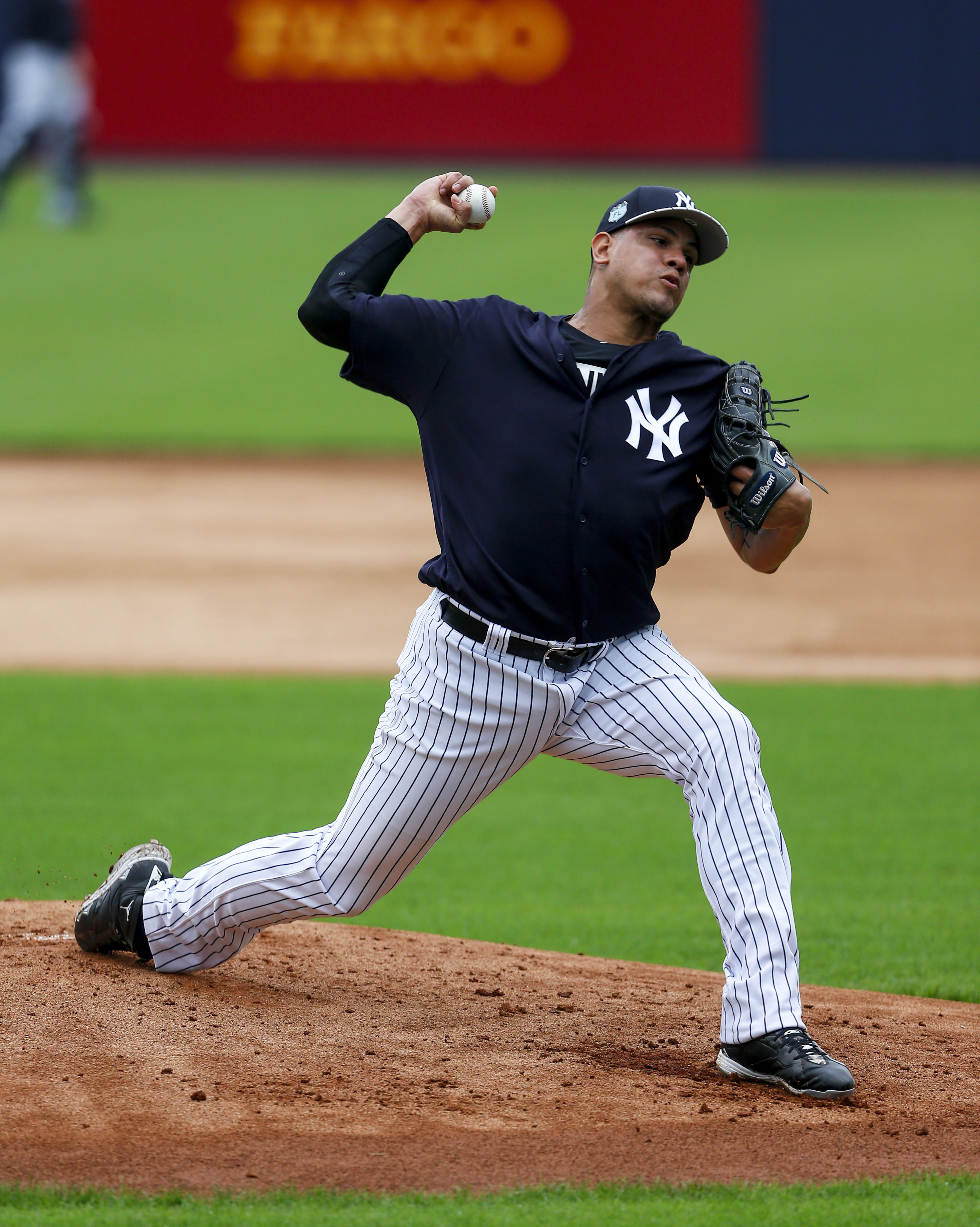
Betances carried one of the most unique arbitration cases in recent history into the hearing room this offseason, as he filed for a $5MM salary against the Yankees’ $3MM submission.
Saves are king in arbitration dealings, and Betances is lacking in that department, with just 22 in his career. However, few relievers hit their first trip through arb with anywhere near the combination of 22 saves and 78 holds that Betances carried, and none has done so with those totals and Betances’ rate stats. The 28-year-old, to date, has registered a career 2.16 ERA with 14.3 K/9 against 3.5 BB/9.
Betances ultimately lost his case, which was noteworthy on its own, but the bizarre tirade from Yankees president Randy Levine that followed the hearing was even more head-scratching. Seemingly unprovoked, Levine blasted Betances and his reps for attempting “to change a well-established market” by seeking a significant raise for a pitcher who had not been utilized as a pure closer. The unnecessary tirade may have damaged the relationship with Betances, as the righty said shortly thereafter that he thinks free agency “will be a little easier when the time comes.”
There’s admittedly little in the way of impact on the Yankees’ roster in the near future, and perhaps the two sides can bury the hatchet between now and the completion of the 2019 season, when Betances will be a free agent. But it’s nonetheless rare to see an executive so brazenly call out one of his players, especially with nothing to gain from the ordeal.
Overview
The Yankees broke the bank on arguably the most dominant reliever in the game, but the remainder of their moves were either short-term or made with an eye toward continuing to inject youth into the roster. For a team that won 84 games last season, a full year of Chapman in the ‘pen and Sanchez behind the plate seems like a recipe for improvement. However, the Yankees almost wholly ignored their lack of rotation depth, instead continuing to bank on a trio of injury-prone starters and a host of unproven young pitchers that may or may not prove to be capable rotation cogs in the long-term.
For a team with postseason aspirations, the contradictory nature of spending $86MM on a closer while simultaneously passing up the ability to add rotation help despite an abundance of affordable arms is confounding. The Yankees’ roster is teeming with young talent and upside, but a few extra arms in what wound up being a buyers’ market for pitching would’ve gone a long ways toward bolstering their playoff hopes. Moreover, the plan for 2018 remains cloudy, as there’s no one with an established Major League track record controlled beyond the current season
The Yankees are off to a strong start and may well return to the playoffs in 2017. Their minor league depth is impressive, to say the least, but I can’t help wondering if the top-heavy allocation of resources in the rotation and in the bullpen necessitated relying too heavily on that depth this year.
Cast your own vote on the Yankees’ offseason below (link to poll for Trade Rumors app users)…
How would you grade the Yankees' offseason?
-
B 51% (1,500)
-
A 22% (654)
-
C 18% (539)
-
D 4% (116)
-
F 4% (109)
Total votes: 2,918
Photos courtesy of USA Today Sports Images.
Transactions Retrospection: The Ryan Howard Extension
On April 26, 2010, Ryan Howard was a star. For four consecutive seasons, the Phillies first baseman had landed in the top five of the National League MVP voting and swatted over forty home runs. With the Phils in the midst of a five-year run of dominance, the sides linked up on a five-year, $125MM extension.
It’s easy to mock that contract now, with the Phillies still paying down the final portion of it — a whopping $10MM buyout of a $23MM option for the 2017 season. Perhaps the organization believed at the time of the signing that the $13MM decision would be an easy one, but surely since-departed GM Ruben Amaro Jr. did not expect it would be so obvious to say goodbye to (rather than retain) the slugger.
With Howard now looking to make his way back to the majors on a minor-league deal with the Braves, his huge contract is no longer weighing down the Phillies. Instead, it serves mostly as a cautionary tale.
It’s easy to go overboard in criticizing the Howard contract, because we know what became of it. Though he continued to hit at an above-average rate in 2010 and 2011, while playing out the remainder of his arbitration-eligible seasons (which had been bought out under a prior extension), the actual years covered by the five-year deal were a disaster. From 2012 through 2016, Howard averaged 19 home runs annually while slashing a miserable .226/.292/.427.
But that outcome surely wasn’t the expected one at the time of the signing. Howard hadn’t yet suffered a devastating Achilles injury. His K/BB numbers hadn’t eroded to the point that they would. (In fact, he had posted 15% or better walk rates in two full MLB seasons — 2006 and 2007 — and had to that point never ended a full year with less than a 10.7% walk rate.) The swing-and-miss was always there, but Howard hadn’t yet seen his chase rate jump suddenly (it topped 30% in 2010 and kept going up from there).
That is to say: the Phillies weren’t wrong in assessing that Howard was a heck of a player. He was! And he gave them 64 dingers and a .265/.350/.497 batting line over the next two seasons, helping the organization to two more postseason berths. That sort of reduced-but- still-useful production might’ve continued had Howard not blown out his Achilles in making the last out of the club’s stunning 2011 NLDS exit.
Of course, while the Howard extension perhaps turned sour quicker than might’ve been anticipated, that doesn’t mean it was well-conceived. Even at his best, Howard was an extremely limited player; at the time of the deal, he was already thirty years old. And the real sin was committed in making the deal so far in advance of Howard’s free agency, at the end of his peak, and in expectation of a longer run of organizational success than could be sustained. This wasn’t exactly unforeseeable, either. As MLBTR’s Tim Dierkes wrote at the time: “The length makes this an unnecessary risk, and at $25MM a year the Phillies didn’t get a discount for taking the gamble and locking him up two years before free agency.”
The Phillies did not come up with a favorable bounce on their ill-advised dice roll. That’s clear. And the deal ended up costing the organization quite a bit of money that could have been reallocated — perhaps, to other players who might’ve helped extend the contention window. (Or, perhaps to other players who might’ve been signed to unwise contracts that would have deepened the eventual financial hole.) But here, too, it’s best to avoid dramatizing the impact. When the Phillies began dismantling their once-great core, Howard’s contract meant that he’d stay on — eventually becoming the lone remaining relic. But it’d be a bit of a stretch to say that the deal impacted the team’s recent decisionmaking, or changed the timeline for a hoped-for return to contention. The delayed rebuilding launch surely wasn’t driven by this one contract.
For the Phillies, the Howard contract proved to be something like the cost expended on a fancy diamond ring in a relationship that ultimately falls apart. When put in perspective, it’s hardly the thing that stings the most. And eventually, you can look back on it all with fondness despite the hard times. By the end, Howard was even able to be seen once more as a proud part of a golden era for the franchise. The Phillies organization will no doubt remember him just that way for decades to come … with the front office also constantly reminding itself of the lesson paid for in his contract.
Offseason In Review: Minnesota Twins
This is the latest entry in MLBTR’s Offseason In Review series. The full index of Offseason In Review posts can be found here.
The first offseason of the Twins’ new-look front office was headlined by a litany of Brian Dozier trade rumors that never came to fruition. Ultimately, the winter proved to be a quiet one for a club that has spent the better part of a decade in the American League Central cellar.
Major League Signings
- Jason Castro, C: Three years, $24.5MM
- Matt Belisle, RHP: One year, $2.05MM
- Total spend: $26.55MM
Trades and Claims
- Claimed SS/2B/3B Ehire Adrianza off waivers from the Brewers
- Acquired Rule 5 RHP Justin Haley from the Angels in exchange for cash
- Traded RHP Pat Light to the Pirates for cash
Extensions
- None
Notable Minor League Signings
- Craig Breslow, Drew Stubbs (released), Chris Gimenez, Ryan Vogelsong (released), Nick Tepesch, Paul Clemens, J.B. Shuck, Ben Paulsen, Matt Hague
Notable Losses
Needs Addressed
The 2016-17 offseason marked the first test for new chief baseball officer Derek Falvey and general manager Thad Levine — the two men that were tasked with leading the new Twins front office following the surprising dismissal of Minnesota GM Terry Ryan (now a special advisor with the Phillies). Those unfamiliar with the Twins may raise an eyebrow at calling it “surprising” for a 100-loss team to fire its GM, but virtually no organization has shown loyalty in its front office and coaching staff like the Twins. Incredibly, Falvey is just the fourth man to assume the top spot in Minnesota’s baseball ops hierarchy since 1985.
While Falvey and Levine didn’t gut their new roster in the same manner that some of their peers have in recent offseasons upon being hired (e.g. Jerry Dipoto in Seattle, David Stearns in Milwaukee), the new Minnesota duo did cut ties on one of the team’s longest-tenured players in the form of Trevor Plouffe. Rather than pay the third baseman a projected arbitration salary north of $8MM, Minnesota outrighted Plouffe, clearing a path for Miguel Sano to man third base.
Along those same lines, Falvey and Levine waited until late in the offseason to designate Byung Ho Park for assignment, banking on the fact that the remaining $9.25MM on his contract would allow him to pass through waivers and remain in the organization without occupying a 40-man spot. That’s exactly how the situation panned out, and he’ll now look to work his way back to the Majors after a strong Spring Training once he returns from an injury in Triple-A.
While an overabundance of corner/DH options (many of whom haven’t been impressive) has been a recent issue for the Twins, catching has been a need in Minnesota since concussions and back injuries forced Joe Mauer to vacate his lifelong position and move to first base. The post-Mauer days have seen the Twins turn to Kurt Suzuki for three years and a long list of less-productive options, including Ryan Doumit, Josmil Pinto, Drew Butera, Chris Herrmann, John Ryan Murphy, Juan Centeno and Eric Fryer.
The first significant move for Falvey and Levine was to shore up the catching spot with a plus defender — something they lacked during the three-year term of Suzuki. Suzuki was often a passable offensive option, relative to other backstops, but he struggled greatly in throwing out runners and in framing pitches. No team caught fewer than the 64 runners the Twins have thrown out in stolen base attempts from 2014-16. (And it’s not particularly close, with the Rockies and White Sox tied for the next-fewest at 82.)
Jason Castro’s three-year, $24.5MM deal might’ve seemed steep based on his offensive struggles, but he grades out as one of baseball’s best framers and threw out base thieves at a 30.4 percent clip in 2015-16. Pitching has been one of the Twins’ greatest ills since their 2011 downward spiral, and Castro should help out the staff in a number of ways. Castro’s struggles against lefties may have prompted Falvey and Levine to bring in a player with whom they’re quite familiar in veteran backstop Chris Gimenez. After spending time with Falvey’s Indians and Levine’s Rangers in recent years, Gimenez broke camp as the backup to Castro in Minnesota, giving the club a platoon option with solid glovework himself.
Bullpen depth has been an issue for the Twins in recent seasons, and while Matt Belisle is hardly a big-name addition, he represented a highly affordable option (one year, $2.05MM) that has pitched to a combined 2.15 ERA across 79 2/3 innings over the past two seasons. He doesn’t miss many bats — an all-too-common trend among Twins pitchers — but has enjoyed relatively consistent success dating back to the 2010 campaign.
Questions Remaining
The biggest question surrounding the Twins this offseason was whether they should pull the trigger on a trade of Brian Dozier on the heels of the second baseman’s 42-homer campaign. Unfortunately for Minnesota, it was hardly a seller’s market. Only the Dodgers and Angels truly needed second base upgrades, and the Halos’ lackluster farm system made it difficult to pursue a premium trade target.
Rumors tying the Dodgers to Dozier persisted for the better part of two months. Specific machinations vary from report to report, but the general, underlying theme seems fairly clear. The Dodgers felt comfortable parting with promising right-handed pitching prospect Jose De Leon in a straight-up swap for Dozier, while the Twins wanted at least one quality second piece. Early reports had the Twins pursuing top-level second pieces such as Cody Bellinger and Yadier Alvarez, though later reports indicated that lesser-regarded names like Brock Stewart were off the table as a secondary piece, as well. Ultimately, L.A. swapped De Leon for Logan Forsythe in a one-for-one exchange.
So, the Twins entered 2017 with Dozier again in the heart of their lineup, and the question now turns to whether it was a mistake not to flip him for De Leon. Certainly, the 24-year-old De Leon is a promising piece, but there’s serious risk in swapping a proven big leaguer for just one pitching prospect (as Twins fans know all too well from the Denard Span / Alex Meyer trade), and Dozier could be in higher demand this summer. Dozier’s quietly been one of the game’s better second basemen for the past four seasons (16.4 fWAR, 17.8 rWAR), but a sudden downturn in performance or a significant injury could make the decision to hold look ill-advised.
Looking to the rest of the roster, the Twins face a familiar refrain. There are question marks up and down the rotation, the bullpen could be thin, and the lineup is extremely dependent on a number of high-ceiling but unproven position players.
Ervin Santana has been somewhat quietly excellent since last June, and Hector Santiago is off to a nice start as he looks to rebound from a terrible stint with Minnesota last season. Phil Hughes, Kyle Gibson and Adalberto Mejia (acquired last summer for Eduardo Nunez) all broke camp in the rotation, but Mejia’s already been optioned out after struggling. Hughes’ velocity is down after thoracic outlet surgery last summer, and Gibson hasn’t shown signs of righting the ship after a down year in 2016.
The Twins lost one rotation candidate early in spring when Trevor May tore his UCL and required Tommy John surgery. It’s possible that Tyler Duffey could get another look in the rotation, with other candidates including once-vaunted prospect Jose Berrios (who was shelled in his first tastes of the Majors last year) or well-regarded lefty Stephen Gonsalves. Former top picks Kohl Stewart and Tyler Jay don’t appear to be especially close, and Jay is in fact now being developed as a reliever. Suffice it to say, the rotation picture is murky, at best.
Adding Belisle to the bullpen was a fine low-cost/low-risk move, but the Twins’ relief corps is still rife with uncertainty. Glen Perkins will be out until at least June following last year’s shoulder surgery, and it remains to be seen if Brandon Kintzler can sustain his 2016 success. Ryan Pressly pitched well from 2014-16, and Taylor Rogers looked like a solid lefty upon debuting in 2016. Beyond that, the Twins are counting on a hodgepodge of inexperienced arms and reclamation projects (e.g. Craig Breslow) to buttress a shaky rotation.
The lineup comes with similar questions. Each of Eddie Rosario, Byron Buxton and Max Kepler has frequented top 100 prospect lists in recent years, and each has had some big league success. But, none of the bunch has solidified himself as a big league regular just yet. Buxton’s early struggles, in particular, lead to further questions for this team.
In the infield, Jorge Polanco opened the year as the everyday shortstop despite the fact that scouting reports peg him as a better option at second base or third base. Sano, meanwhile, needs to prove that he can serve as a passable defensive option at third base. Eduardo Escobar and Danny Santana made the club as reserves, but Santana hasn’t hit since his BABIP-fueled rookie season, and his lack of minor league options could jeopardize his 40-man spot at some point in 2017. At some point, Park or Kennys Vargas will be settled upon as the long-term option at designated hitter, but Robbie Grossman has held down the fort quite nicely in that regard early in 2017.
Deal of Note
Entering the offseason, few would’ve projected Jason Castro to receive the most significant contract of any catcher this winter. The 29-year-old is a former first-round pick and did have an All-Star 2013 campaign in which he batted .276/.350/.485 with 18 home runs in 491 plate appearances. But, he followed up that excellent season with a collective .215/.291/.369 batting line from 2014-16 and hit just .210/.307/.377 in his platform year before free agency.
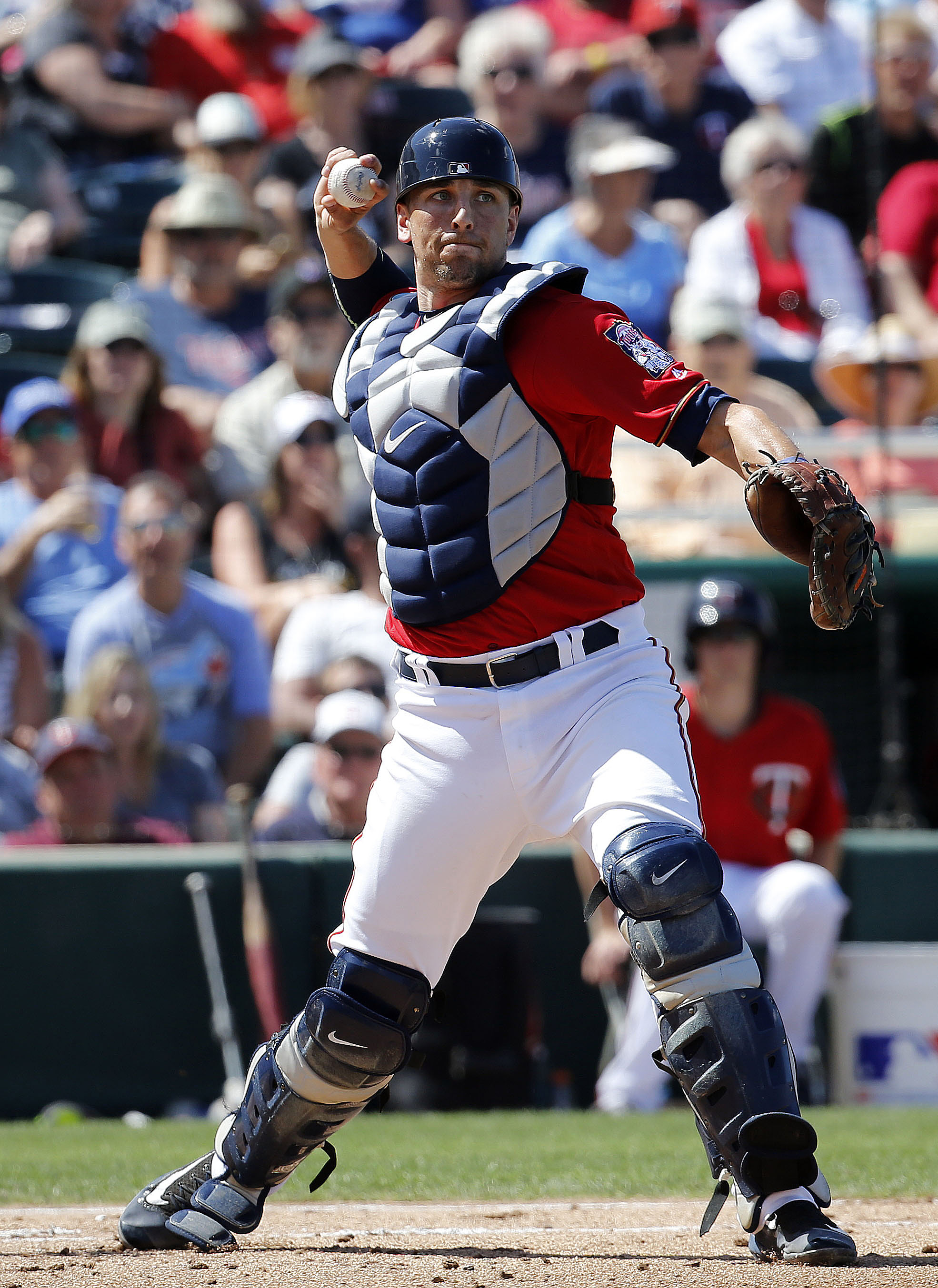
The market for Castro was robust from the start, though, with multiple clubs showing interest. The Twins, Rays and Braves led the charge in pursuing Castro, though he was said to have multi-year offers from at least four teams in addition to multiple three-year offers before signing with Minnesota. Compare that to the market of Matt Wieters — a considerably more accomplished offensive player — and the Castro contract becomes a readily apparent sign of a paradigm shift in the valuation of catchers throughout the league.
Catcher defense is being valued at an all-time high, with a particular emphasis on pitch-framing coming into focus. Wieters’ pitch-framing marks have been below average in recent years, as have those of Welington Castillo — another catcher whose bat is superior to that of Castro but was surprisingly non-tendered. Castillo had to settle for a guaranteed two years at a lesser rate than Castro, further exemplifying that teams are increasingly concerned with what catchers do behind the plate than what they can do at the plate.
While the addition of Castro isn’t going to turn the Twins’ pitching staff from a bottom-of-the-league unit to a premium collection of arms, there’s also an argument to be made that signing a catcher with this skill-set was the best way for Minnesota to overhaul its staff in one fell swoop. Framing numbers, of course, are an inexact science, but for the sake of comparison, Baseball Prospectus rated Suzuki 6.8 runs below average in terms of framing last year, while Castro was among the game’s best at 16.3 runs above average.
Overview
As has been the case in recent years, the Twins are relying on some questionable veteran arms in the rotation and a slew of talented-but-unproven position players to fill out the lineup. Thus far, the Twins have trotted out an everyday lineup that features five players — Buxton, Sano, Rosario, Kepler and Polanco — that were regarded as top 100 prospects within the past two years. There’s plenty of upside in this bunch, but it’s not realistic to expect that each of that quintet will prove to be an average regular or better.
It’s true that in any given season, any club could contend with enough breaks (see: the 2015 Twins). This year’s version of the Twins got off to a hot start, but it still seems likely that 2017 will be more about determining which members of the team’s most recent wave of top prospects can live up to the hype.
If and when they fall out of the race in the American League Central, the Twins will have a handful of chips to cash in and further add to the youth movement, including Dozier, Ervin Santana, Kintzler, Belisle and any of Santiago, Hughes and Gibson depending on health and performance. The new front office didn’t act as a definitive seller this winter, though, suggesting that Falvey, Levine & Co. at least feel it’s possible that enough of the young talent already in the system can be vital cogs in the next competitive Twins team.
Let’s see what MLBTR readers thought about Minnesota’s offseason (link to poll for Trade Rumors app users)…
How would you grade the Twins' offseason?
-
C 43% (905)
-
D 25% (538)
-
B 18% (373)
-
F 11% (240)
-
A 3% (63)
Total votes: 2,119
MLBTR Originals
Here is the week’s original content from MLB Trade Rumors…
- Tim Dierkes published the second installment of the MLBTR 2017-18 Free Agent Power Rankings, rating next winter’s top free agents by their earning potential. The power rankings have already seen some movement from the first entry in March, thanks to some strong (and slow) starts from players in their contract years.
- Music, kerfuffles, and eye-popping internet usage bills are some of the topics discussed by right-hander Tim Dillard in his latest Inner Monologue.
- Though a contract extension between Carlos Correa and the Astros may look like something of an unlikely possibility in the near future, Charlie Wilmoth looks at what a potential Correa extension could look like if the two sides did explore a multi-year arrangement.
- MLBTR’s Offseason In Review series continued with Steve Adams breaking down the Indians’ winter moves.
- Almost 54% of MLBTR readers felt that Matt Bush should be the Rangers’ new closer, as Steve Adams broke down the options (Bush, Jeremy Jeffress, Tony Barnette and the ever-popular “other”) in a reader poll. It looks like the Rangers agreed, naming Bush as their first option for the ninth inning, though the club will also use other pitchers in the closer role in order to keep from over-taxing Bush’s shoulder.
The Inner Monologue of @DimTillard Music & Food
It’s 2:32pm on Friday April 21st, 2017. My name is Tim Dillard. Besides being a Christian, a husband, and father of three, I’m also a veteran minor league baseball pitcher in the Milwaukee Brewers Organization. This is blog number (not sure), that I’ve written for MLB Trade Rumors… and they still use the same google image of me where I’m sporting the “only a mother could love” face.
2:35pm My attributes include, but are not limited to: Pitching over 1,200 professional innings without a pick-off, seeing over 400 feature films, being an experienced baseball juggler, playing guitar till my wife made me sell the guitar, eating a PB&J sandwich in thirty-one different states, making Al Roker burst into laughter, and I once successfully shot a bird with a Nerf Bow ‘n’ Arrow. (bird was fine, but I still feel bad)
2:40pm Anyway, FYI – After yesterday’s rainout here in Colorado Springs, today’s early work on the field was cancelled because of a wintery-mix precipitation. So I have about an hour to squeak down some chronological kerfuffle from my brain before the double-header starts.
2:41pm BTW – I used the word kerfuffle because it was the Thesaurus.com Word of the Day on Wednesday.
2:41pm TMA – This is the abbreviation I just made up… it means Too Many Abbreviations.
2:42pm To write these things I sometimes put in headphones and try listening to classical wordless music. But I’m currently enjoying an interesting mix being played in the clubhouse. Right now it’s U2’s Where the Streets Have No Name. Back in 2004, I wasn’t a huge U2 fan, but then my teammate (and super-utility man) Vinny Rottino said I need to be a huge U2 fan. I said ok.
2:45pm During a road trip the other day in Nashville, I was walking toward the stadium when a man in the street told me, “Hey Tim! I’m 55 years old, and you’re the reason I joined twitter!” Then he asked if we could take a selfie. I said ok.
2:48pm That was a good day too because later that night, The Oak Ridge Boys sang the National Anthem before the game! Growing up in the south, The Oak Ridge Boys were standard listening procedure in the car and at home. In fact, out of all the “special memento” baseballs I have, only three are worthy of the shelf in my office. One is a ball signed by Richard Sterban and the other Oak Ridge Boys, one is signed by actor Jon Gries who played Uncle Rico in Napoleon Dynamite, and the last one is signed by freaking Ichiro Suzuki!
2:52pm I got Ichiro’s autograph in 2006 during the first World Baseball Classic. Team Japan was using the Brewers minor league clubhouse for a few days, so a small group of us players timidly walked into their locker room, found Ichiro, and formally presented him with a baseball and a fresh tipped Sharpie.
2:54pm NOW PLAYING: Spirit In The Sky by Norman Greenbaum
2:54pm The availability of music nowadays is fascinating. My car in high school only had a cassette player. (that’s what was used for music before CDs) Actually, my first few seasons in pro ball, I used a portable CD player. (it was anti-skip)
2:57pm Music is a huge part of the baseball world. For instance, the first home game back after a road trip, you are guaranteed to hear The Boys Are Back in Town from the press box. Clever.
2:58pm Some songs are played at nearly every game, like: Put Me In Coach or The Chicken Dance. And when it’s “Kids’ Day” at the field, we hear a steady barrage of Let It Go and Spongebob Squarepants. Thankfully, stadiums are starting to cut back on the most over-played song of all time… YMCA.
3:01pm Come to think of it, a few days ago I was on a television show because of music! Via Skype, teammate Ivan De Jesus and I were on the American Spanish language Miami morning show Despierta Ameríca that airs on Univision. A great interview with lots of laughs and lots of singing! I’m a big fan of the Latin hits! Muy Bueno!
3:10pm All this typing made me hungry so I took a break. You guessed it… PB&J.
3:10pm NOW PLAYING: Lose Yourself by Eminem
3:11pm Mom’s spaghetti is great, but meals in minor league baseball can vary depending on places and circumstances. Like in 2009, veteran outfielder Mike Cameron was rehabbing with us in Triple-A, and he bought us an awesome post-game spread! Sitting shoulder to shoulder in a tiny clubhouse at Omaha’s old Rosenblatt Stadium, we ate steak and lobster with real utensils! On real plates!
3:14pm The following year, we arrived in Memphis around 2:00am after a long bus trip, and was greeted by legendary closer Trevor Hoffman! Like zombies we walked into the lobby and saw a rehabbing Hoffman surrounded by fifty pizzas, coolers of soda, chips, and cookies!
3:16pm NOW PLAYING: La Bicicleta by Carlos Vives & Shakira
3:15pm The hardest I worked for a post-game meal was on Margarita Island in Venezuela. Around 1:00am I found myself hiking through a backyard, an abandoned casino parking lot, and into a wooded area. Only to emerge on a dead-end street lined with food trucks! Muy Bueno!
3:17pm But probably the most interesting meal I’ve encountered in baseball was in Mexico. After a game, the home team brought us a huge table with a giant fish on it. It was sliced open and we just grabbed and ate. I honestly can’t remember how it tasted, but I do remember the in-meal entertainment was the rambunctious cock fight going on over by first base.
3:18pm Almost time to “SUIT UP” for the game!
3:20pm NOW PLAYING: a commercial… by AT&T.
3:20pm Some people don’t like AT&T, but I actually love AT&T.
3:21pm Nine years ago my wife and I rented a small house in Arizona for spring training. We went to an AT&T store and got a USB thing for internet. I immediately plugged it into my Xbox, and started downloading episodes of The Office and Lost.
3:23pm After streaming for two weeks (“That’s what she said!”), AT&T cut our service off, called me up, and said, “Hello Mr. Dillard, we stopped your internet because you’ve gone over your available usage.” I said ok.
3:24pm Then said, “Your bill Mr. Dillard… is $12,237.”
3:24pm (insert scared/hurl emoji)
3:25pm SOooo… I’ve set many kinds of baseball records at various levels with different teams over my career, but setting the record for highest bill in AT&T history… that is special!
3:26pm NOW PLAYING: Smooth Criminal by Michael Jackson
To Be Concluded…
Offseason In Review: Cleveland Indians
This is the latest entry in MLBTR’s Offseason In Review series. The full index of Offseason In Review posts can be found here.
After narrowly missing a World Series championship in one of the most entertaining Game 7s the sport has ever seen, the Indians entered the winter with a clear focus on returning to that stage.
Major League Signings
- Edwin Encarnacion, 1B/DH: Three years, $60MM (plus 2020 club option)
- Boone Logan, LHP: One year, $6.5MM (plus 2018 club option)
- Total spend: $66.5MM
Trades and Claims
- Acquired RHP Nick Goody from Yankees in exchange for PTBNL
- Acquired RHP Carlos Frias from Dodgers in exchange for cash
- Selected LHP Hoby Milner from Phillies in Rule 5 Draft (returned to Phillies)
- Claimed LHP Edwin Escobar off waivers from the D-backs (released to allow him to sign in Japan)
- Claimed 1B/3B/OF Richie Shaffer off waivers from the Reds (later outrighted to Triple-A)
- Claimed LHP Tim Cooney off waivers from the Cardinals (released, re-signed to minor league deal)
Notable Minor League Signings
- Austin Jackson, Michael Martinez, Erik Kratz, Chris Colabello, Steve Delabar, Kelvin De La Cruz, Adam Moore, Chris Narveson, Wily Mo Pena (since released), James Russell (since released)
Extensions
- Brandon Guyer, OF: Two years, $5MM (plus 2019 club option)
- Roberto Perez, C: Four years, $9MM (plus 2021-22 club options)
- Jose Ramirez, 3B/2B/OF: Five years, $26MM (plus 2022-23 club options)
Notable Losses
Indians depth chat | Indians payroll outlook
Needs Addressed
As one would expect of a team that took the Cubs to the limit in Game 7 of the World Series, the Indians entered the offseason with relatively few needs. The entire rotation was set to return, and the team also possessed some upper-level depth options in the minors. Replacing Mike Napoli at first base and finding a suitable left-handed relief option to join Andrew Miller in the bullpen were Cleveland’s top two priorities. President of baseball operations Chris Antonetti, GM Mike Chernoff and the rest of the Indians front office — minus now-former assistant GM Derek Falvey, who was hired away by the division-rival Twins as their new chief baseball officer — did so in a big way.
Cleveland waited out a surprisingly slow market for top slugger Edwin Encarnacion (more on that pursuit below) and, much as they did in acquiring Miller from the Yankees this past summer, surprised many by adding one of the marquee names on the market. The cost fell shy of expectations for Encarnacion but remains a relatively steep investment for the tight-budgeted Indians, who entered the 2017 season with a club-record $124MM payroll, thanks largely to Encarnacion. Though he’s off to a slow start, April has historically been Encarnacion’s worst month by a wide margin, and his bat should more than offset the loss of Napoli, who returned to Texas for a third stint with the Rangers.
It was a similar story with Logan, as the early market for left-handed relief pitching was extremely steep. After Brett Cecil landed four years and just over $30MM from the Cardinals and Mike Dunn scored $19MM over a three-year term with the Rockies, Logan and fellow southpaw Jerry Blevins looked to be in line for solid multi-year contracts. That never panned out, however, as each languished on the free agent market longer than expected. And while many believed the Indians to be tapped out after their signing of Encarnacion, ownership gave the green light to spend a bit more cash.
Logan was signed to a somewhat surprising one-year deal in February, further proving the point that it typically behooves players (especially relievers) to sign early in free agency. He can still take home a total of $12.5MM if the option is exercised, but waiting out the market and securing a quality ‘pen piece on a one-year deal was a nice move by the Tribe’s front office.
With some uncertainty surrounding the health of Michael Brantley as well as the departure of Rajai Davis — who signed back with the Athletics — Cleveland added some notable names on minor league contracts. Both Austin Jackson and Michael Martinez made the club and are serving as reserve pieces early in the season, though one has to imagine that the recently demoted Tyler Naquin will eventually resurface and challenge for one of their roster spots.
Finally, as has long been a hallmark of the cost-efficient Indians, Cleveland pursued extensions with a number of its young players. While efforts to lock up burgeoning superstar Francisco Lindor fell short, the team was successful in hammering out three multi-year deals. Brandon Guyer’s $5MM extension gives the club a quality outfield platoon option at a very reasonable rate through at least the 2018 season and possibly through 2019.
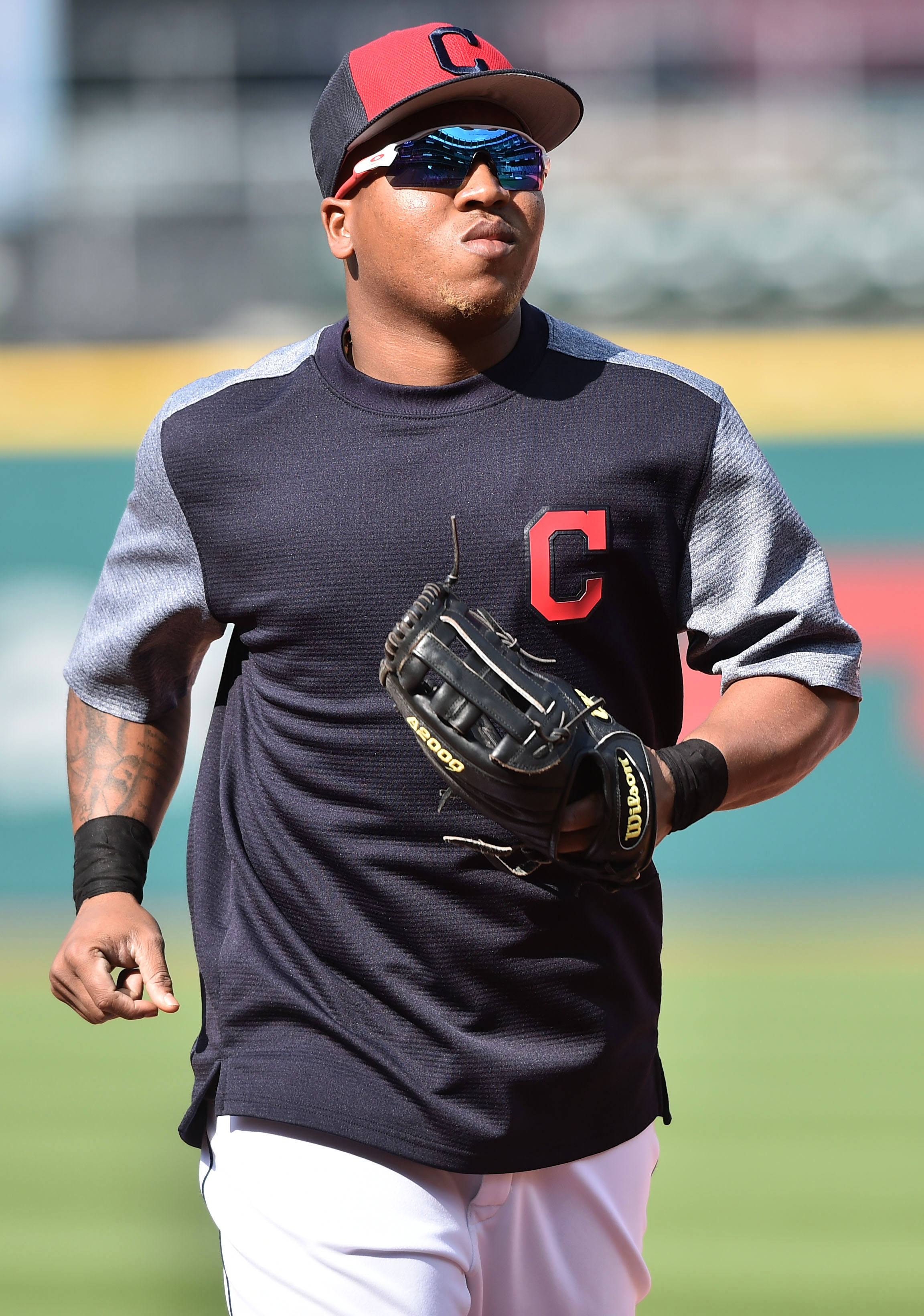
The Perez extension, too, bolsters the Cleveland bench for the foreseeable future. While some may raise an eyebrow at extending a pre-arb catcher that batted .183/.285/.294 in the preceding season, Perez is regarded as a superlative defensive backstop. He also flashed some offensive ability in 2015 when he hit .220/.348/.402 with seven homers in just 220 plate appearances. The price for catcher defense has continually risen in recent years, and Perez can likely justify the deal with his glove alone even if the bat never comes around. If it does, though, Cleveland should have a nice bargain on its hands.
The big move for Cleveland, though, was agreeing to terms on a long-term pact with perhaps its top breakout star of the 2016 campaign. Ramirez, still just 24 years of age, went from light-hitting utility man to Cleveland’s everyday third baseman last year with an excellent .312/.363/.462 batting line to accompany his 11 homers and 22 steals. He can play virtually anywhere on the diamond, as evidenced by his shift to second base this season in the early absence of Jason Kipnis. Ramirez struck out in just 10 percent of his plate appearances last year and continues to suggest that his power is still developing; he’s already homered four times in 2017.
Questions Remaining
As mentioned above, when a team comes within inches of winning the World Series and retains the vast majority of that roster, there aren’t going to be many questions. In Cleveland, the biggest unknown surrounding the team is simply health.
No one knows what to expect out of Brantley after he missed nearly the entire 2016 season due to a shoulder injury that has now required two surgeries. But the Indians made it to Game 7 last season despite receiving zero production from Brantley, arguably their best all-around player, so anything he’s able to contribute in 2017 is just a bonus. To date, he’s batted .289/.373/.489 through 12 games, reminding everyone what an excellent player he was prior to his injury.
In the rotation, Cleveland will hope for better health from Carlos Carrasco and Danny Salazar, each of whom suffered late-season injuries that compromised the team’s postseason pitching depth. Both right-handers have front-of-the-rotation upside if they’re able to stay on the field. Combining them with Corey Kluber makes for a lethal 1-2-3 atop Cleveland’s starting five. Trevor Bauer remains somewhat enigmatic both on and off the field, but his talent is undeniable even if his results are inconsistent. Josh Tomlin finished poorly in 2016 and is off to a worse start in 2017, so if there’s one potential need, it’s at the back of the rotation.
With Cody Anderson lost to Tommy John surgery, the top depth options in Cleveland are Mike Clevinger and Ryan Merritt (who achieved folk hero status with a tremendous spot start in Toronto during last year’s ALCS). If Cleveland is going to go outside the organization anywhere on the summer trade market, my bet would be on an effort to shore up the fifth spot in the rotation. Of course, both Bauer and Tomlin have had plenty of productive stretches, and each could quickly turn his season around.
Deal of Note
Entering the winter, Encarnacion was arguably the top bat available in free agency, and the notion of him signing with the Indians would’ve been little more than a pipe dream. Deep-pocketed clubs like the Red Sox, Yankees, Blue Jays and Rangers were all connected to the slugger, and the Astros, who have become increasingly more aggressive with their spending, were also prominently linked to Encarnacion. When Encarnacion reportedly rejected a four-year, $80MM offer from the Blue Jays, the assumption was that he’d top that guarantee by a fairly wide margin.
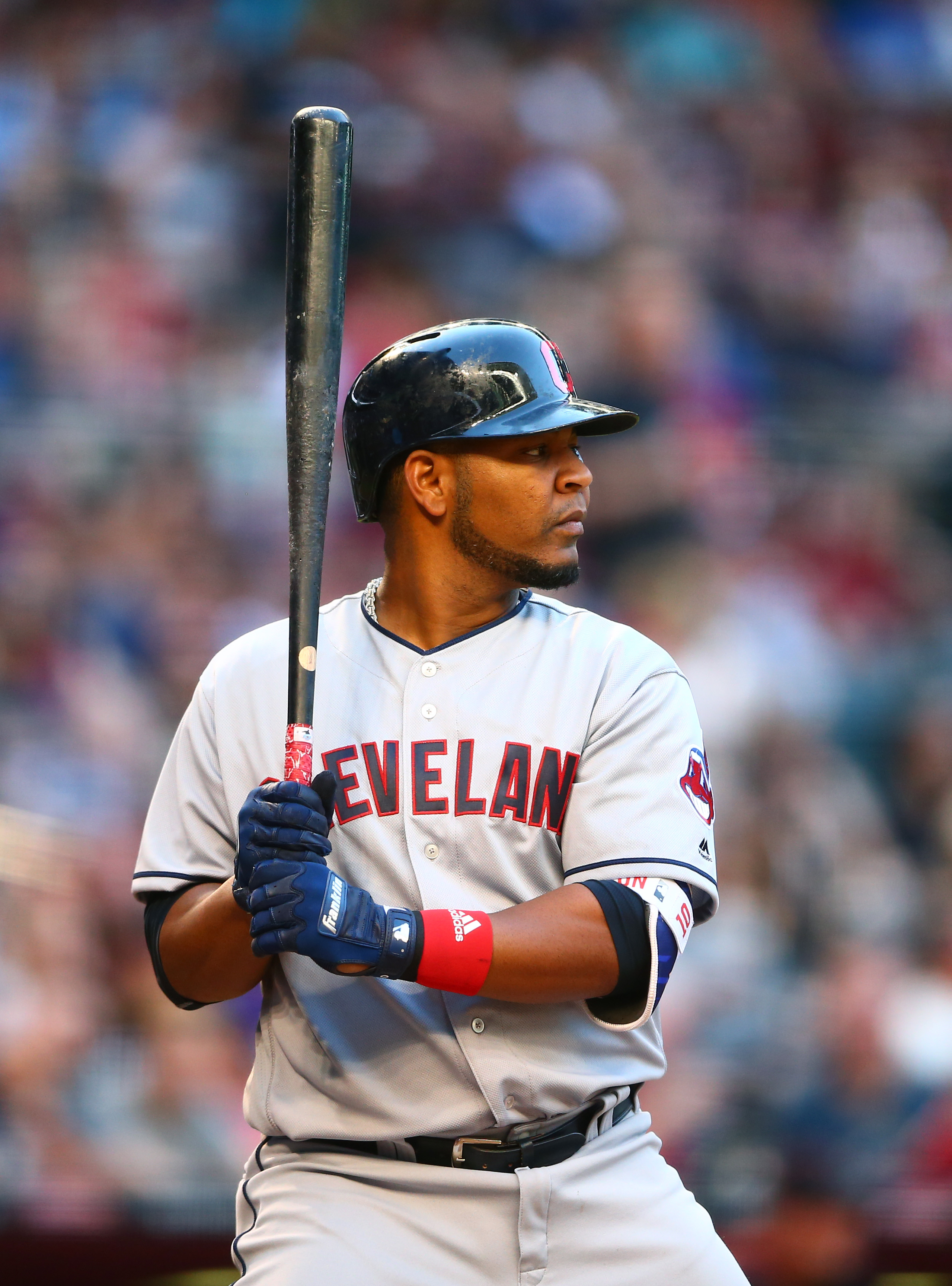
Instead, Encarnacion surprisingly saw his market shrivel in a hurry. The Blue Jays, like many other teams and most pundits, assumed that Encarnacion was gone once he said no to that $80MM figure and pivoted to switch-hitting slugger Kendrys Morales on a three-year, $33MM deal. Boston, instead of spending big in an effort to replace David Ortiz, signed a quality defensive first baseman (Mitch Moreland) and moved Hanley Ramirez into primary DH duties. The Yankees made sense and were often linked to Encarnacion, but they went short-term in picking up Matt Holliday. Ditto for the Astros, who in addition to bringing Carlos Beltran back to Houston, traded for Brian McCann.
With most of the big-spending clubs suddenly lacking a place to put Encarnacion, it became wholly unclear as to where he’d end up. The Rangers were a common thought, but Texas was continually said to be averse (or fiscally unable) to adding another high-priced multi-year contract to its payroll. There was speculation about the Rockies, who had gone outside the box to sign Ian Desmond to a five-year, $70MM deal as their primary first baseman, but the oft-suggested trade of an outfielder (which would’ve moved Desmond to the outfield and freed up a space for Encarnacion) never materialized.
In the end, the bidding war for Encarnacion came down to the Indians and Athletics — as unlikely a pairing as we’ve ever seen for two teams duking it out for one of the game’s top free agents. Cleveland pushed its offer to three years, and Encarnacion cited a winning organization and closer proximity to his family in the Dominican Republic as reasons for choosing the reigning AL champs over Oakland. Encarnacion’s contract is the largest in Indians franchise history — a testament to the unexpected nature of the match between the two sides and to Cleveland ownership’s desire to return to the Fall Classic. If Cleveland does succeed in bringing home its first World Series title in nearly 80 years, the Dolan family won’t complain one bit about their investment in Encarnacion.
Overview
The Indians entered the offseason with very few holes on what was one of the most complete rosters in Major League Baseball, and they addressed their top needs with some of the biggest upgrades possible. It’s still feasible that the back of the rotation could use some augmenting some June or July, but despite the team’s 7-7 start, the Indians are the clear favorite in the American League Central division. It’ll be a surprise if they don’t return to the postseason. And if they can in fact return, this time with a healthy trio of Kluber, Carrasco and Salazar, they’ll enter October with a good chance of becoming the second AL Central team in the past five years to manage back-to-back World Series appearances.
Let’s open it up for everyone to weigh in (link to poll for Trade Rumors app users)…
How would you grade the Indians' offseason?
-
A 51% (993)
-
B 34% (659)
-
C 9% (179)
-
F 3% (59)
-
D 2% (42)
Total votes: 1,932
Photos courtesy of USA Today Sports Images.
2017-18 MLB Free Agent Power Rankings
MLB teams have only played around 9% of their regular season games, but we’ve got our eye on the next free agent class. The players referenced in this post are scheduled (or can elect) to become free agents after the 2017 season. These rankings are subject to change each month, as players drop off due to extensions, injuries, or poor performance, while others see their stock rise.
The first entry in this year’s Free Agent Power Rankings was published on March 14th. The pitchers have only made three or four starts, and the hitters have around 50 plate appearances. Naturally, there hasn’t been a lot of movement at the top of the rankings. We did see one player drop out of the running, as the Cardinals signed catcher Yadier Molina to a three-year, $60MM extension earlier this month. In hindsight, Molina should have snagged an honorable mention last time, but I underestimated his earning power.
That’s the goal here: to rank the upcoming free agents based on earning power. These rankings represent expected contract size, assuming each player reaches the open market and goes to the highest bidder. For the full list of 2017-18 MLB free agents, click here.
1. Jake Arrieta. Arrieta’s first three starts have gone well, as strikeouts are up and walks are down after 18 2/3 frames. There is a potential red flag, however, which was explained by Jeff Sullivan at FanGraphs. Arrieta’s velocity appears to be down a few miles per hour in the early going, despite velocity tracking adjustments that have generally boosted readings across the game. After his second start, Arrieta told reporters, “There’s FanGraph articles. I don’t care about that.” As the pitcher put it, “When the 95-to-97 comes back, it’s going to be tough for teams. And it still is.” Arrieta is right in that it’s only April. But if he somehow stays at 91-92 miles per hour all year, his earning power will likely be lower. Back in Spring Training, Arrieta told Jon Heyman of FanRag Sports, “I don’t think a six- or seven-year deal is out of the question.” We’ll stick with a five-year prediction for now.
2. Yu Darvish. Four starts in, Darvish has succeeded on the back of an unsustainable .230 batting average on balls in play. Strikeouts are down and walks are up in Darvish’s 24 2/3 innings, but it would be unwise to read into it at this point. If Darvish is able to make 30+ starts for the second time in his MLB career, he’ll be paid handsomely. That contract could still come from the Rangers, as GM Jon Daniels told Norm Hitzges on 1310 The Ticket back in March that both sides are open to midseason negotiations.
3. Johnny Cueto. Cueto scuffled in his first start at Arizona, but has gone seven innings in each of his last two outings. He remains on track to opt out of his remaining four years and $84MM after the season, or at least negotiate some kind of extension with the Giants.
4. Masahiro Tanaka. Tanaka has gotten progressively better in each of his four starts this year, culminating in a fine seven-inning start against the White Sox last night. The Yankees’ ace must decide after the season whether to opt out of the remaining three years and $67MM left on his contract. With a healthy year, opting out would seem to be a no-brainer. A few weeks ago, Mike Mazzeo and Bill Madden of the New York Daily News wrote, “Sources tell the Daily News that if the Japanese ace opts out of his $155 million contract, the Yankees would have no interest in pursuing a costly, long-term extension with the 28-year-old righty.” They went on to report that the Yankees “are annoyed at Tanaka’s agent, Casey Close, for holding the threat of a potential opt-out over their heads.” Yankees top brass rejected this report out of hand, as detailed by George A. King III of the New York Post. President Randy Levine commented to King, “I never heard any of this. We normally don’t move until the event.” Recent history backs this up, with the Yankees allowing Alex Rodriguez to opt out before doing a new deal, and waiting until C.C. Sabathia was on the brink of doing so.
5. Jonathan Lucroy. Lucroy, 31 in June, remains the best position player of the 2017-18 free agent class despite a quiet start. After playing in 11 of the Rangers’ 15 games, Lucroy has just one extra-base hit in 44 plate appearances. One new development: on March 27th, Ken Rosenthal of FOX Sports reported that Lucroy and the Rangers tabled extension talks. Shortly after that point, Molina signed his new extension with the Cardinals. With a strong season, Lucroy would be justified in seeking Molina’s $20MM average annual value, over a five-year period.
6. J.D. Martinez. Martinez sprained the Lisfranc ligament in his right foot on March 18th and opened the season on the disabled list. On Tuesday, Tigers manager Brad Ausmus said his right fielder is “pretty close” to a minor league rehab assignment, according to Anthony Fenech of the Detroit Free Press. At this point, there is no reason to expect the injury to affect Martinez’s earning power in free agency.
7. Justin Upton. The big question is whether Upton will opt out of the remaining four years and $88MM on his contract with the Tigers. We should have a better idea by the time he turns 30 this August. But if he hits 30 home runs and draws 70 walks, he’ll have to at least consider seeking a new five-year deal. Thus far, he’s hitting .250/.372/.472 with a pair of homers over 43 trips to the plate.
8. Eric Hosmer. There is probably confirmation bias in me dropping Hosmer a spot after just 58 plate appearances this year. But Hosmer’s $100MM projection was always on shaky ground, as he’s hitting just .232/.301/.364 in 512 plate appearances since June of last year. As far as extension talks, there was a development in mid-March. Sam Mellinger of the Kansas City Star talked to Royals owner David Glass, who said, “I think it will be difficult. I think Hoz wants to stay here, and I think he’s very loyal to our organization. But at the same time, these guys have agents that want to get the best deal for them. Hoz has (Scott) Boras, and if Boras doesn’t get a really good deal for Hoz, then it affects his relationship with his other clients. They sort of set a standard with each one of their clients. So I think we’ll have a difficult time with Hosmer.” As you might imagine, Boras rejected the notion that he is driving the bus rather than his client. In the shorter term, the Royals might have to consider trading Hosmer three months from now if they fall out of contention in the AL Central. That scenario could work to Hosmer’s benefit, as he’d be ineligible for a qualifying offer after the year if dealt.
9. Mike Moustakas. Hosmer’s teammate across the diamond has received less contract-related fanfare, but could soon pass him in earning power. Moustakas, 28, was profiled by Jeff Todd in our Make Or Break Year series in March. So far, the 28-year-old seems to be making it. He’s hitting .300/.352/.620 with five home runs in 54 plate appearances. Moustakas had a hot start last April as well, hitting seven home runs in a 71 plate appearance span before suffering a season-ending ACL tear. So far Moose seems no worse for the wear, starting 12 of the Royals’ 14 games and making appearances in the other two. Moustakas, also a Boras client, could end up hitting 30 home runs this year with solid defense at the hot corner.
10. Michael Pineda. Yes, it’s been only three starts for Pineda, and his first one was a dud in Tampa Bay. But his second effort, also against the Rays, was a masterpiece ranking among the best of his 103 career starts. Pineda can be maddening, with brilliant strikeout to walk ratios but abnormally high home run per flyball rates and BABIPs. For his Yankees career, the result has continually been an ERA much higher than what a metric like xFIP or SIERA might suggest. Pineda’s final stat line could be more of the same, but with a few corrections he could receive Cy Young votes this year. (He was also profiled here as a “make or break” player.)
Dropping out: Carlos Gonzalez. CarGo could return to the top ten if he can right the ship, but he’s off to a miserable start. Over sixty trips to the plate, he’s hitting just .175/.200/.298 with a single home run and 13 strikeouts to go with a pair of walks. That’s not enough of a sample to panic, but it’s enough for a few younger players to edge ahead of him at the moment.
Honorable mentions for the Free Agent Power Rankings include Jay Bruce, Todd Frazier, Carlos Santana, Lorenzo Cain, Wade Davis, Chris Tillman, and Zack Cozart.
Poll: The Rangers’ Closer
After a catastrophic start to the season for Rangers right-hander Sam Dyson, the team’s ninth-inning scene is now among the biggest question marks facing the club’s decision-makers. Like predecessor Shawn Tolleson, Dyson transitioned from largely unheralded setup man to unlikely closer in 2016, racking up 38 saves with a 2.43 ERA, 7.0 K/9, 2.9 BB/9 and a 65.2 percent ground-ball rate. However, Dyson has also seemingly followed Tolleson’s footsteps by imploding early in his second season as a closer; in just 4 1/3 innings this year, the 28-year-old has yielded a staggering 13 earned runs on 14 hits (two homers) and five walks with just two strikeouts. He’s blown three saves and been saddled with three losses for a Rangers team that current sits last in the AL West with a 4-8 record.
A closer change in Arlington seems like a virtual lock, though manager Jeff Banister wouldn’t firmly commit to a new closer yesterday, telling reporters, “We’ll have those discussions,” when asked about a possible change but neglecting to elaborate beyond that (via MLB.com’s Doug Miller). The Rangers do possess several alternative options, so let’s run down the possibilities with a change seeming likely on the horizon…
- Matt Bush: The resurgence of the former No. 1 overall pick as a shutdown reliever is among the most improbable comebacks in recent MLB history. Bush has been dominant in 66 1/3 innings since making his MLB debut at the age of 30 last season, which came after spending more than three years in prison. With the Rangers, he’s posted a 2.58 ERA with a 69-to-15 K/BB ratio, a ground-ball rate of 42 percent and a fastball that has averaged 97 mph. There’s at least some level of trepidation when it comes to Bush’s shoulder, however, as the right-hander received a cortisone injection in his ailing AC joint last week, though he hasn’t demonstrated any ill effects since returning.
- Jeremy Jeffress: The former Brewers closer has been generally excellent since establishing himself as a big league bullpen arm back in 2014. Across his past 164 Major League innings, Jeffress has a 2.58 ERA with 7.7 K/9, 2.8 BB/9 and a ground-ball rate approaching 60 percent. He’s typically averaged about 95 mph on his heater, and he racked up 27 saves in 2016 for the Brewers before being shipped to the Rangers alongside Jonathan Lucroy in a summer blockbuster. Like Bush, Jeffress has had his share of off-field issues and spent a month in a rehab facility for alcohol abuse late last season. Looking solely at his on-field performance, he’s a perfectly serviceable option for the Rangers in the ninth inning and comes with the most experience of the team’s internal candidates. Piling up some additional saves would likely inflate Jeffress’ arbitration earnings next year, though the team likely wouldn’t be deterred by that if it kept them in games in 2017.
- Tony Barnette: A former Diamondbacks minor leaguer that broke out in Japan’s Nippon Professional Baseball, Barnette inked a two-year, $3.5MM deal with the Rangers on the heels of a dominant six-year run with NPB’s Yakult Swallows. The 33-year-old has had a slightly rocky start to his 2017 season but was a terrific low-cost addition to the relief corps last season, logging 60 1/3 innings of 2.09 ERA ball with 7.3 K/9, 2.4 BB/9 and a 46.3 percent ground-ball rate. Installing Barnette as the closer comes with immediate financial implications as well, as his modest $1.75MM salary can rise by as much as $550K based on games finished. He can also see the value of his $4MM club option for the 2017 season increase significantly based on games finished.
The Rangers also have hard-throwing rookie Jose Leclerc, though he comes with just 21 1/3 innings of Major League experience to date. Young right-hander Keone Kela would’ve conceivably been an option to close games in the event of a Dyson meltdown, but he was optioned to Triple-A Round Rock at the end of Spring Training for disciplinary reasons following a clash with some of the team’s more veteran players. Either righty could seemingly be a high-leverage/ninth-inning option down the line, but neither stands out as a likely option at present.
As I did with the Phillies last week, I’ll turn this one over to the general public to weigh in (link to poll for Trade Rumors app users)…
Who should be closing games for the Rangers?
-
Matt Bush 54% (3,890)
-
Jeremy Jeffress 34% (2,443)
-
Other (specify in the comments if you're so inclined) 8% (549)
-
Tony Barnette 5% (340)
Total votes: 7,222
What Might A Carlos Correa Extension Look Like?
Greg Genske, the agent for Astros phenom Carlos Correa, made news this week when he told FanRag’s Jon Heyman his client “is never going to do an multiyear contract” before he becomes eligible for free agency following the 2021 season. Correa later responded that he was unaware of Genske’s comments and said he would consider an extension, although he noted that “the price has got to be right.”
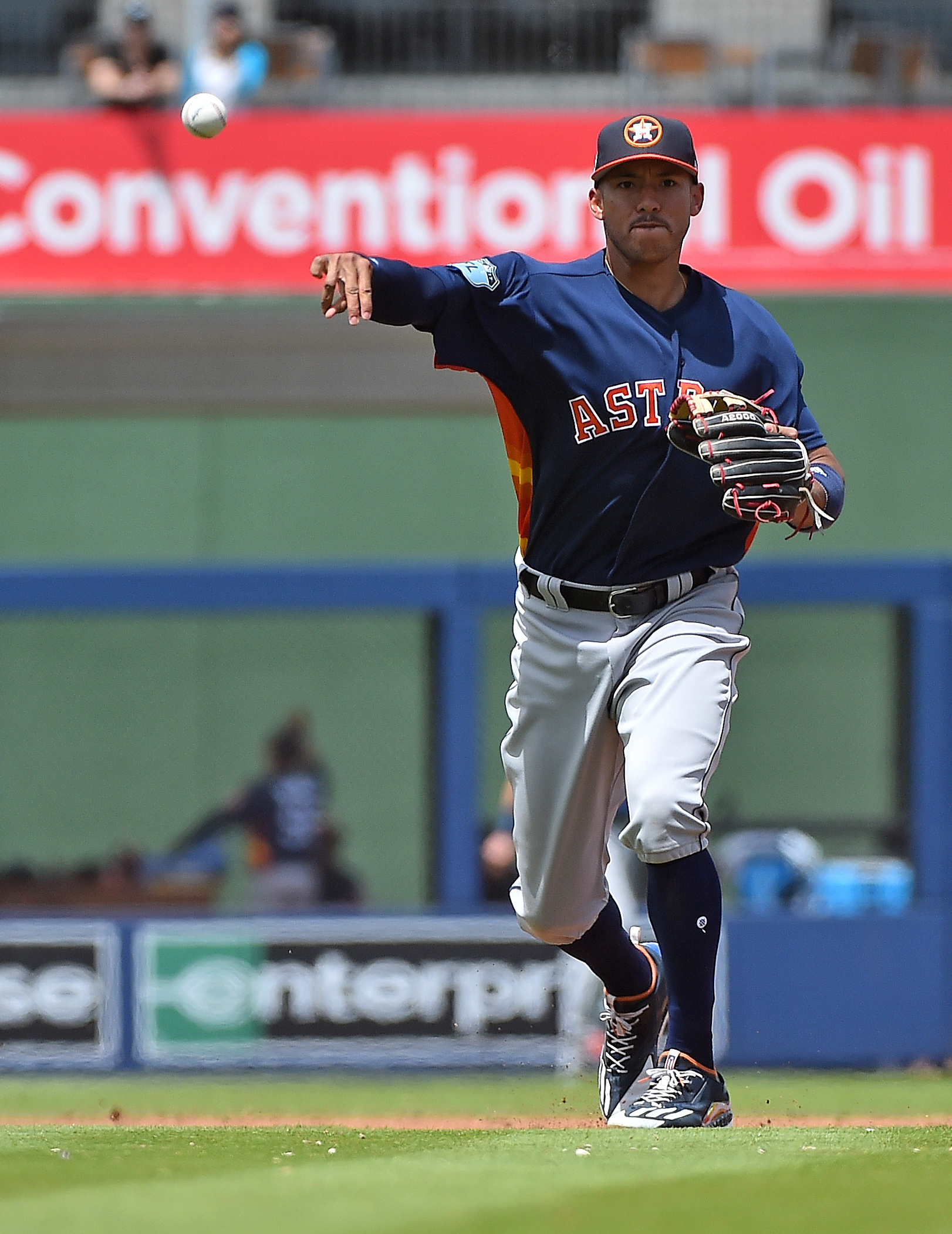 As a former first overall pick in the draft, Correa has already received a significant upfront payday in the form of a $4.8MM bonus, and as Heyman notes, he also has an endorsement deal with Adidas. He might therefore not be desperate to sign away future free-agent years to secure a guarantee.
In the end, then, we don’t know much more about the likelihood of Correa signing an extension than we did a week ago, although it seems fair to say he and the Astros won’t be announcing one anytime soon. Just for kicks, though, let’s imagine what an extension for Correa might look like.
When trying to assess the likely shape of a pre-agency extension, MLBTR’s Extension Tracker is usually a great starting point. Extensions tend to be based on precedents set by previous extensions, which is probably one reason why, for example, Jay Bruce, Justin Upton, Andrew McCutchen, Matt Carpenter and Jason Kipnis all got pre-free agency six-year deals that guaranteed $51MM-$52.5MM when each of them had between two and three years of service time, and why each’s new signee’s deal was worth a few hundred thousand dollars more than the previous one. (All of the deals except Upton’s contained one option, as well.)
So let’s look for potential precedents for a Correa deal based on his talent and upon his service class. Correa headed into the season with 1.119 years of service. Here, then, are the two most expensive extensions in our tracker for players with between one and two years of service time.
Andrelton Simmons: seven years, $58MM
Christian Yelich: seven years, $49.5MM plus one team option
We can see here that a Correa extension will probably require more creative thinking than merely looking at precedents. As good as Simmons and Yelich are, they don’t shine as brightly as Correa one day could, and particularly in Simmons’ case, they wouldn’t have been likely to produce the arbitration paydays Correa one day might.
Also, Correa is a year younger than Yelich was at the time of his extension, and two years younger than Simmons when he signed his. Correa is currently on pace to hit free agency just after he turns 27. His youth could make him particularly valuable on the free agent market, as Jason Heyward — who got $184MM and two opt-outs after becoming a free agent at 26 — can probably attest. Correa and Genske might well see the combination of Correa’s talent and youth as such special characteristics that they’d be especially unlikely to forgo Correa’s opportunity to explore free agency entering his age-27 season, particularly since he’ll hit the market after the signings of what might prove to be precedent-setting new deals for very young superstars like Bryce Harper and Manny Machado, both of whom are set for free agency after 2018.
With that in mind, let’s see if there are other, less obvious, precedents that might help shape an offer that could make Correa think twice.
Buster Posey, 2.161 years of service time (Super Two): eight years, $159MM plus team option
Mike Trout, 2.070: six years, $144.5MM
It seems reasonable to imagine that a Correa extension of a typical length of, say, seven years should fall somewhere in the wide gulf between the Simmons deal and the Trout deal. It’s hard to imagine Correa approaching Posey/Trout territory on any deal of reasonable length — he doesn’t have the service time they did at the time of their extensions, and the Astros are already set to pay Correa near the league minimum salary for each of the next two seasons. He also frankly doesn’t yet have the track record Posey and Trout had at the times of their deals. Posey had won the NL MVP award the year prior to his extension, and Trout finished second in AL MVP balloting in each of the two seasons preceding his.
Another possibility might be for the Astros to sign Correa to a way-outside-the-box extension, offering him a guarantee of ten years or more, a bit like the Marlins did for Giancarlo Stanton or the Reds did for Joey Votto. Both Correa and the Astros would surely see such a deal as risky, and it’s a hard to see the sabermetrically inclined Astros organization taking such a decisive risk on a single player. Correa’s camp might also ask for an opt-out along the lines of the one Stanton got. If there were ever a good candidate for such a lengthy extension, though, Correa would seem to fit the bill, as he’s extremely young, talented and athletic.
Alternately, it’s also possible the two sides could reach a simpler deal that would buy out some or all of Correa’s arbitration seasons while still allowing him to become a free agent following the 2021 campaign. Such a deal seems somewhat unlikely, however, given Correa’s existing sources of income and the absence of a good reason for the Astros to agree to such a pact without getting a significant discount on what they believe Correa’s arbitration-year payouts might be.
There doesn’t currently appear to be much motivation on Correa’s side to sign a deal, and it might be best for their side to wait a year before talking about an extension with the Astros, if they ever do. Allowing Correa to play an extra year might allow his camp to strengthen their argument for giving Correa a deal closer to Posey’s or Trout’s. Correa said this week, though, that he’s not interested in a deal once he hits his arbitration seasons, which begin in 2019. And if he does emerge as a Posey- or Trout-level superstar by then, the possibility of a Harper- or Machado-like payday in his future might be too tempting to resist.
Photo courtesy of USA Today Sports Images.
MLBTR Originals
Here is this week’s original content from MLB Trade Rumors’ writing staff and contributors:
- MLBTR contributor Chuck Wasserstrom looked back at the Red Sox’ 2005 draft, in which Jason McLeod and Theo Epstein selected Jacoby Ellsbury, Clay Buchholz and Jed Lowrie, all of them first-round picks. “We knew having all those picks early … we had the ability to diversify the portfolio, so to speak, where you could take some high-impact riskier high school kids, college performers that you felt really good about with athletic upside, and a junior college guy like Clay Buchholz,” says McLeod.
- Tim Dillard (a.k.a. @DimTillard) takes us on a minor-league road trip in his latest Inner Monologue, explaining why he owns over 400 hotel pens and relating a memorable story about the parallels between plane turbulence and R.A. Dickey‘s knuckleball.
- Jeff Todd reviewed the Rangers’ 2013 signing of Elvis Andrus to an eight-year extension that, unusually for the time, gave the shortstop two opt-out opportunities.
- Steve Adams polled MLBTR readers about the Phillies’ closer situation. 41% of you think Joaquin Benoit should close games for the Phillies, edging out Hector Neris (39%).
- MLBTR’s Offseason In Review series continued with Jeff breaking down the Nationals, Mark Polishuk on the Reds and Dodgers, and myself on the Rangers.