
Offseason In Review: Philadelphia Phillies
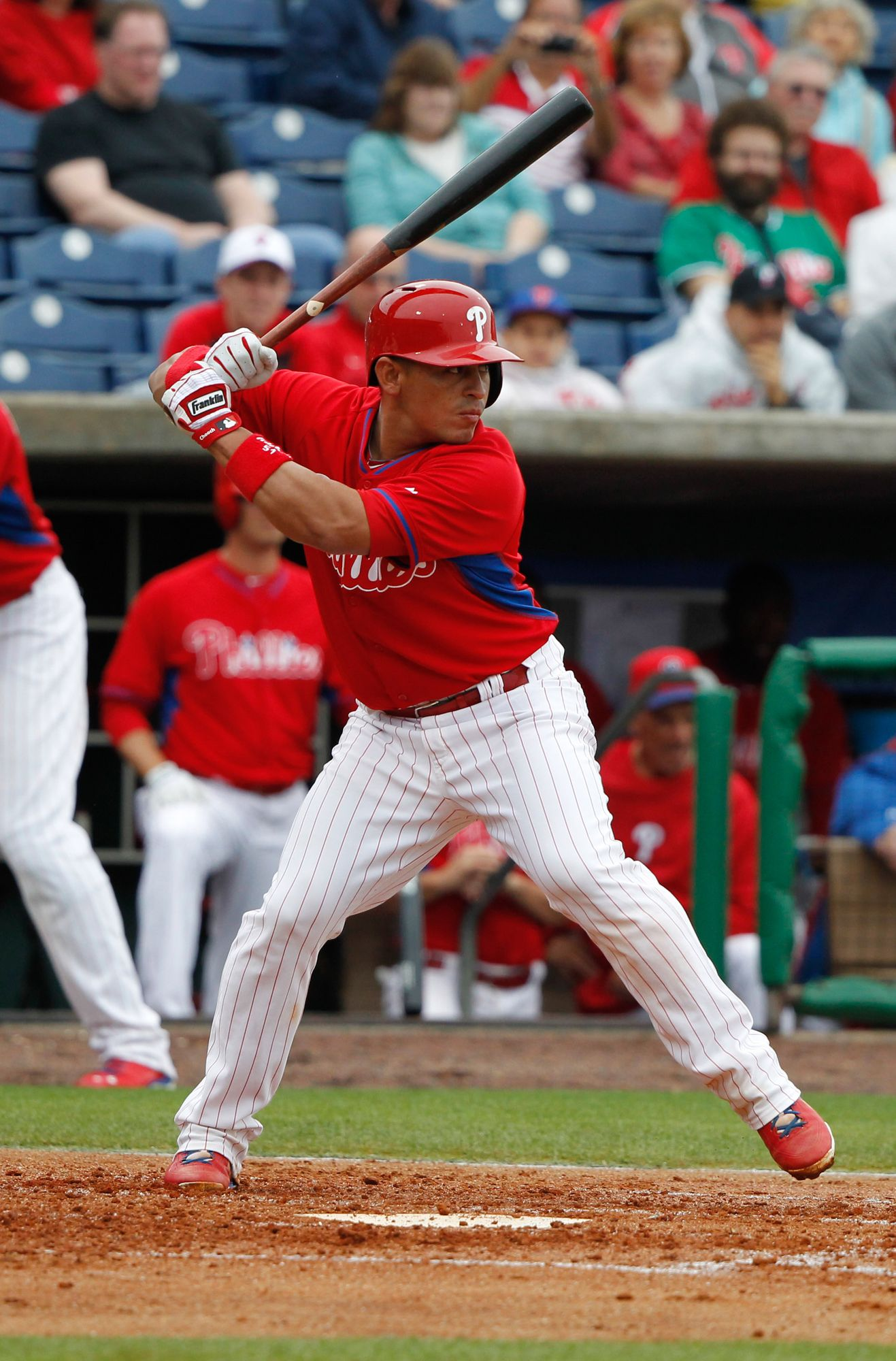
The Phillies brought in more veterans to supplement an already-aging core, and it is fair to wonder if the club is chasing good money after bad.
Major League Signings
- Carlos Ruiz, C. Three years, $26MM.
- A.J. Burnett, RHP. One year, $16MM. Mutual/player option for 2015.
- Marlon Byrd, OF. Two years, $16MM.
- Roberto Hernandez, RHP. One year, $4.5MM.
- Wil Nieves, C. One year, $1.125MM.
- Total spend: $63.625MM
- Bobby Abreu (since released), Brian Bixler, Andres Blanco, Reid Brignac, Shawn Camp, Ronny Cedeno, Chad Gaudin (since released), Tony Gwynn, Jr., Cesar Jimenez, Jeff Manship, Lou Marson (since released), Sean O'Sullivan, Dave Sappelt, Clete Thomas
- Acquired RHP Brad Lincoln from Blue Jays in exchange for C Erik Kratz and LHP Rob Rasmussen.
- Acquired IF Jayson Nix from Rays for cash.
- Acquired C Koyie Hill from Nationals for PTBNL or cash.
- None
- Roger Bernadina, Roy Halladay (retired), John Lannan, Michael Martinez, J.C. Ramirez, Joe Savery, Casper Wells
Offseason In Review: Atlanta Braves
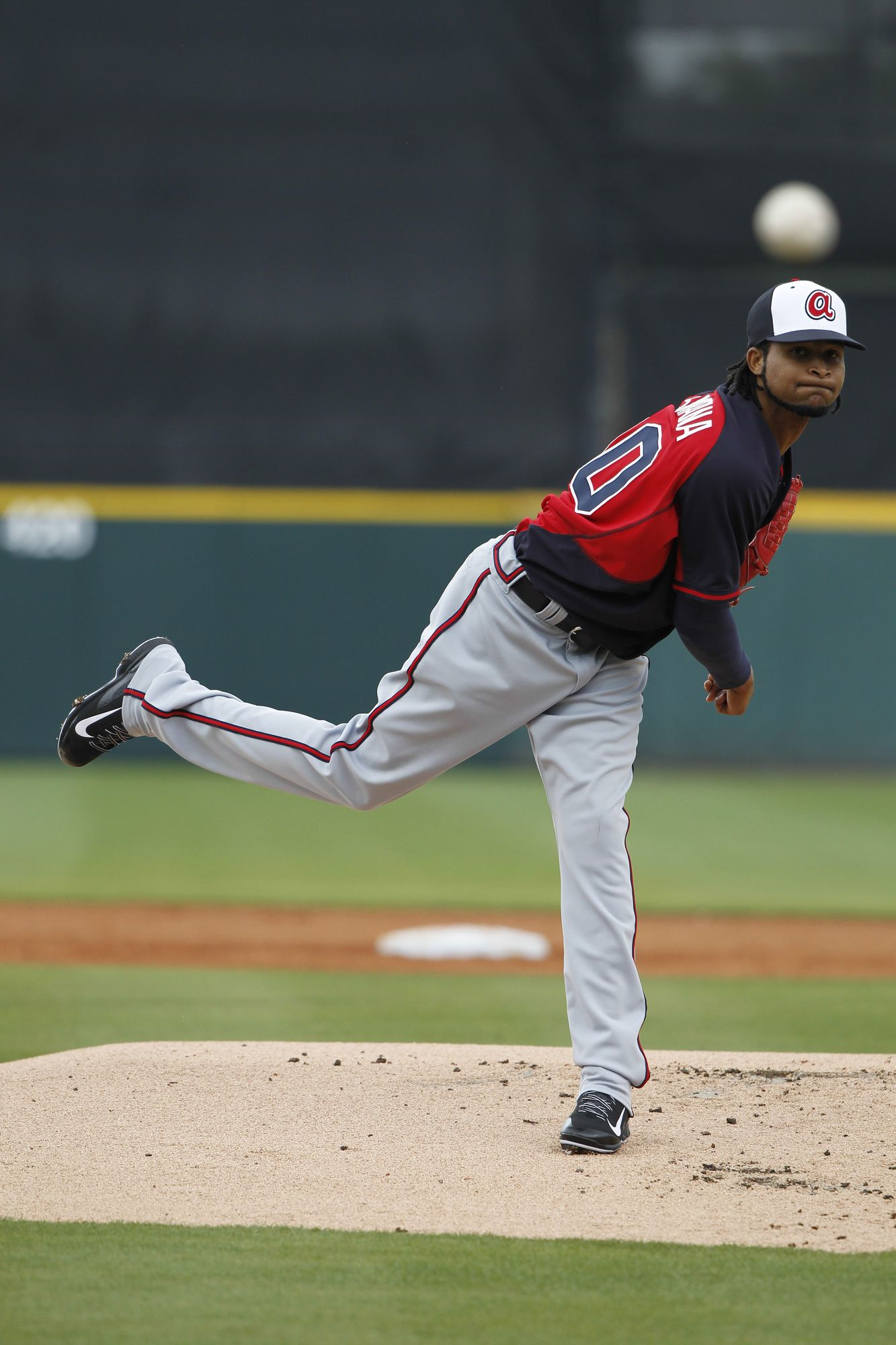
After a quiet start, the Braves made a fascinating play to lock up multiple young stars, then reacted boldly when two top pitchers were lost to their second UCL tears.
Major League Signings
- Ervin Santana, RHP. One year, $14.1MM.
- Gavin Floyd, RHP. One year, $4MM.
- Aaron Harang, RHP. One year, unknown.
- Total Spend: $18.1MM
- Yenier Bello ($400K bonus), Mat Gamel, Freddy Garcia, Tyler Greene, Mark Hamilton, Steven Lerud, Yunesky Maya, Luis Perez, Atahualpa Severino, Jose Yepez
- Acquired C/OF Ryan Doumit from Twins for LHP Sean Gilmartin.
- Acquired RHP Zach Stewart from White Sox in exchange for cash.
- Freddie Freeman, 1B. Eight years, $135MM.
- Andrelton Simmons, SS. Seven years, $58MM.
- Craig Kimbrel, RHP. Four years, $42MM.
- Julio Teheran, RHP. Six years, $32.4MM. Club option for 2020.
- Jason Heyward, OF. Two years, $13.3MM. (No team control added.)
Notable Losses
- Luis Ayala, Scott Downs, Tim Hudson, Paul Janish (non-tendered), Elliot Johnson (non-tendered), Reed Johnson (declined option), Kameron Loe, Paul Maholm, Christhian Martinez (non-tendered, still unsigned), Brian McCann, Eric O'Flaherty
Otherwise, the major concerns for Atlanta are those that the team expected to face going into the year. Will high-dollar veterans B.J. Upton (center field) and Dan Uggla (second base) do enough to justify regular roles, if not their contracts? If not, the team may be forced to turn to other, far-from-certain options (such as Jordan Schafer and Tommy La Stella) to supplement or replace those veterans. Will the Gattis/Laird combination behind the dish be serviceable over a full season, and/or can Bethancourt force his way into the bigs? And can Chris Johnson approximate his surprising 2013 at third?
Offseason In Review: Toronto Blue Jays
After a very quiet offseason, the Blue Jays will rely on internal replacements and hope for better health in order to get back on track in 2014.
Major League Signings
- Dioner Navarro, C: Two years, $8MM.
- Adam Lind, 1B/DH: One year, $7MM (team option exercised).
- Casey Janssen, RHP: One year, $4MM (team option exercised).
- Total spend: $19MM
Notable Minor League Signings
- Munenori Kawasaki, Dan Johnson, Chris Getz, Andy LaRoche, Mike Nickeas, Steve Tolleson, Brett Carroll, Jonathan Diaz, Tomo Ohka
Trades And Claims
- Acquired C Erik Kratz and LHP Rob Rasmussen from the Phillies in exchange for RHP Brad Lincoln.
- Claimed LHP Brian Moran from the Mariners in the Rule 5 draft.
- Acquired an international bonus slot (worth $244K) from the Angels in exchange for LHP Brian Moran.
- Claimed RHP Liam Hendriks off waivers from the Orioles.
Notable Losses
- Josh Johnson, J.P. Arencibia, Rajai Davis, Luis Perez, Mark DeRosa (retired), Thad Weber
Needs Addressed
After star prospect Travis d'Arnaud was traded to the Mets as part of the R.A. Dickey trade, it seemed like J.P. Arencibia had a clear path as the Blue Jays' regular catcher for years to come. Instead, Arencibia wasn't even tendered a contract following a disastrous 2013 campaign that saw him hit only .194/.227/.365 with 148 strikeouts over 497 PA, not to mention below-average defensive statistics.
To fill the hole behind the plate, the Jays made Dioner Navarro their only notable free agent acquistion of the offseason, signing the veteran to a two-year, $8MM contract. Navarro's last starting role came with the Rays from 2007-09, and he served as a backup from 2010-12 with the Rays, Dodgers and Reds before enjoying a solid season with the Cubs in a platoon with Welington Castillo last year. The switch-hitting Navarro hit .300/.365/.492 with about three-quarters of his 266 plate appearances coming against right-handed pitching, even though he performed much better against southpaws (and over his career, has a .778 OPS against lefties and just a .650 OPS against righties).
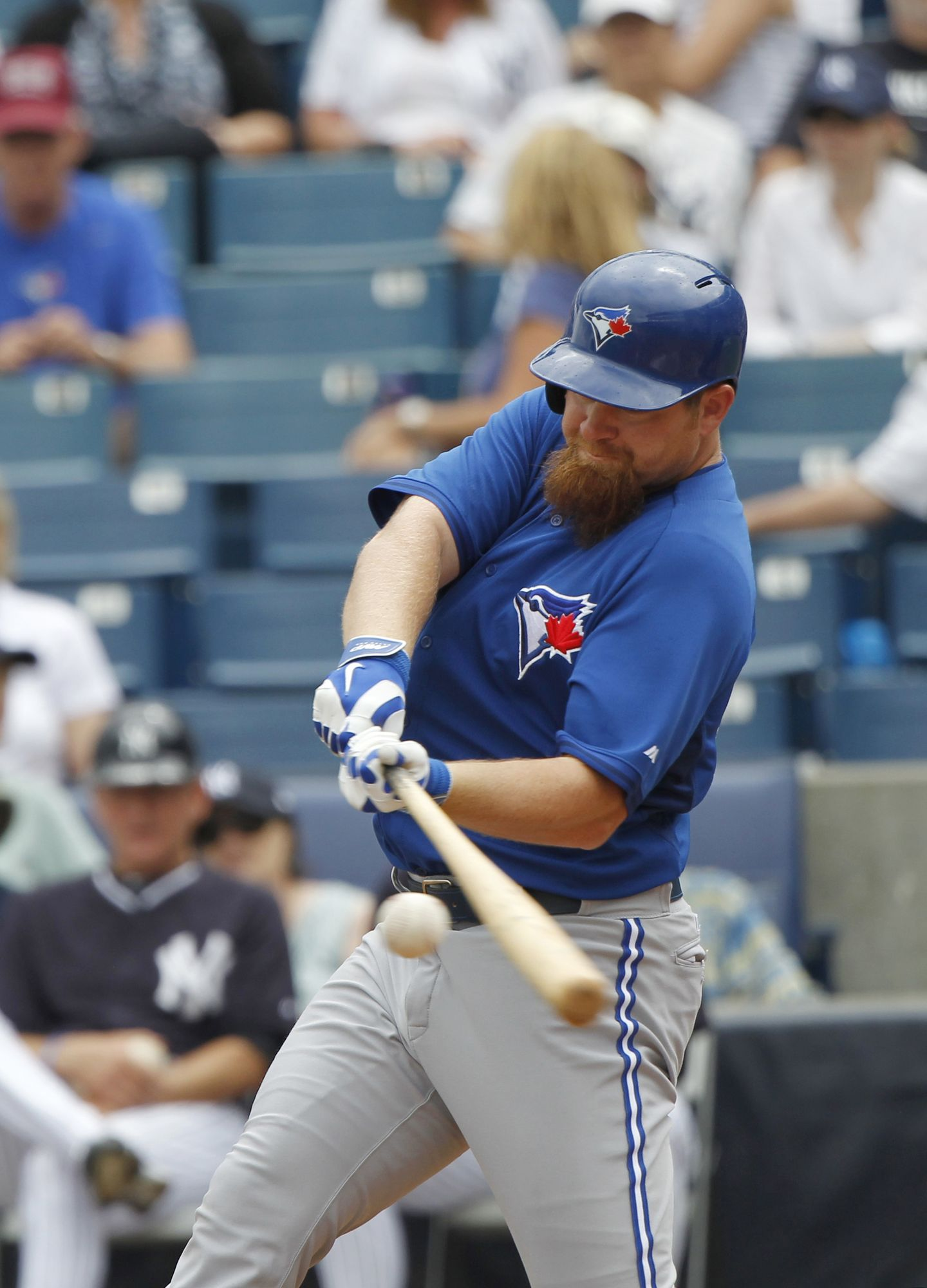
Navarro will get the bulk of playing time against both types of opposing pitchers as backup Josh Thole will largely be limited to games when Dickey is on the mound. Thole's experience with the knuckleball helped him keep the backup job over new acquisition Erik Kratz, despite Kratz swinging a red-hot bat during Spring Training. No matter how the catching situation ends up shaking out, it almost can't help being an area of improvement given that Toronto catchers combined for -1.2 fWAR last season.
As expected, the Blue Jays exercised their team options on Adam Lind ($7MM) and Casey Janssen ($4MM), bringing the club's primary DH and closer back for another season. The Jays also picked up Mark DeRosa's $750K option, but the veteran instead decided to retire. Toronto fan favorite Munenori Kawasaki was also re-signed on a minor league deal and he'll begin 2014 at Triple-A Buffalo.
Questions Remaining
Last September, Blue Jays GM Alex Anthopoulos cited his team's starting rotation as "the most glaring hole on this team and that’s the most glaring area we need to address." With Opening Day upon us, the Jays begin the 2014 season having added not a single notable starting pitching option to the roster. The most notable arm Toronto signed this winter ended up being Roy Halladay, who inked a one-day ceremonial contract so he could officially retire as a Blue Jay.
Anthopoulos ultimately didn't find any rotation help despite exploring several avenues for pitching upgrades. He almost finalized a trade with the Athletics that would've seen reliever Sergio Santos go to Oakland in exchange for left-hander Brett Anderson, but there was enough uncertainty over the oft-injured Anderson's health that the Jays eventually backed away (the A's later dealt Anderson to the Rockies). The Jays explored trading for Cubs right-hander Jeff Samardzija, though the Cubs' demands for both Marcus Stroman and Aaron Sanchez ended negotiations. There were talks between the Jays and Masahiro Tanaka's representatives, yet Toronto didn't submit a $20MM bid to officially negotiate with the Japanese ace.
Toronto holds both a protected top-10 draft pick (ninth overall) and a bonus selection (at 11th overall) for failing to sign top choice Phil Bickford last summer. Owning a pair of top-11 picks could've made the club more open to giving up their second-rounder to sign a free agent starter with draft compensation attached, yet this perceived advantage in the free agent pitching market never materialized for the Jays. They targeted available pitchers with draft compensation attached (Ervin Santana, Ubaldo Jimenez) or without (A.J. Burnett, Bronson Arroyo), but didn't make any deals.
As Anthopoulos explained to the media prior to Spring Training, the Jays simply weren't willing to pay a big price (either money-wise or player-wise in trades) since the club already felt it had quality rotation options in the organization:
“We wanted to add to the rotation, to add depth. But again, where some of the price points were, whether it was years or dollars or some of the acquisition costs in trades, I wouldn’t have felt good standing in a scrum and saying ‘We didn’t believe in the acquisition cost, we just did it but we don’t feel good about it.’ You need to feel good about those moves.”
“A guy like Drew [Hutchison] is not proven or established but you’re ultimately weighing how much better will these other guys be? Certainly they’re more established. But then you start talking about that many more years and that many more dollars. Does it make sense to do that? If we didn’t have guys we felt were talented and could contend for those (rotation) spots and could end up putting together good seasons for us, we might have said we’re going to go well beyond where we want to go (on free agents) because we have to."
Hutchison posted a 4.60 ERA (4.03 xFIP, 4.09 SIERA) with a 2.45 K/BB rate and a 7.5 K/9 in his 2012 rookie season before undergoing Tommy John surgery in August of that year. He returned to pitch in 10 minor league games last season and, after an impressive Spring Training, earned himself a spot in Toronto's rotation. J.A. Happ had been penciled into a rotation spot but suffered through a rough spring and is now on the DL, leaving long-time Blue Jay Dustin McGowan as the current fifth starter.
Given McGowan's lengthy injury history and Hutchison's short track record, this wasn't the rotation overhaul that the Toronto fanbase was hoping for back in October. Anthopoulos' strategy seemed to be using the qualifying offer system to his advantage, waiting until the asking prices for pitchers like Jimenez and Santana had been drastically reduced, and then sign one (or even both) at a team-friendly cost.
The strategy seemingly almost worked in Santana's case. The veteran righty had reportedly agreed to a contract with Toronto, but, before he took his physical with the Jays and officially signed his deal, the Braves made a late offer and Santana instead signed a one-year, $14.1MM contract to go to Atlanta. (Anthopoulos hinted that this was the timeline of events in a recent interview with the Toronto Star.) This scenario outlines the risk that Anthopoulos took in playing the waiting game, as the Braves weren't even in the market for pitching until Brandon Beachy and Kris Medlen both underwent season-ending Tommy John surgeries.
Beyond pitching, the Jays did nothing to address their hole at second base. The team explored a big splash at the position in Ian Kinsler, though talks with the Rangers never turned into anything serious, especially since Texas asked for Edwin Encarnacion. (As it happened, the Rangers indeed landed their desired slugging first baseman for Kinsler when they swapped him to the Tigers for Prince Fielder.)
With no notable new faces, the Jays look to be going with the unheralded Ryan Goins as the primary second baseman, with Maicer Izturis getting the bulk of starts against left-handed pitching. Goins projects as a below-average hitter (a .679 OPS in 418 Triple-A plate appearances, and a .609 OPS in 121 PA with the Jays last season) but will provide value with his glove if he displays the same excellent defense he showed in 2013. Izturis, meanwhile, is looking to rebound from a dreadful -0.9 rWAR season. The second base situation looks to be below-average at best, and perhaps the weakest position on any contending team at worst.
For a team coming off two injury-plagued seasons in a row, the Jays have very little depth. Valuable backup outfielder and stolen base threat Rajai Davis departed for a two-year contract with the Tigers, and the Jays' four current bench players are either coming off terrible seasons (Izturis, Thole) or are unproven commodities (Kratz, Moises Sierra). This is an under-the-radar deficiency that leaves the Jays particularly reliant on good health, especially considering that their four AL East rivals are regularly able to find production from bench players and minor league signings.
It was also a quiet winter for the Blue Jays on the extension front. Colby Rasmus is the team's most prominent extension candidate as he enters his last year under contract, yet Anthopoulos said the team is comfortable waiting until later in the season to decide about offering the center fielder a new deal. Rasmus was reportedly on the trade market for pitching this offseason, so it seems like the Jays aren't totally sold on him as a long-term piece (or they don't think he'll re-sign).
Deal Of Note
Casey Janssen doesn't have the eye-popping fastball or strikeout numbers that usually mark a top closer, yet he has excelled in the role since taking over as closer during the 2012 season. Janssen has quietly been one of baseball's best relievers over the last three seasons, posting a 2.46 ERA, 8.9 K/9 and 4.47 K/BB in 172 IP between 2011-13, and notching 56 saves in 2012-13. With this track record, picking up a $4MM team option on Janssen's services for 2014 was a no-brainer for the Blue Jays.
The righty's name didn't surface in any trade rumors this winter, as while a number of teams were looking for ninth-inning help, the closer market was rich with several experienced free agent names. This isn't to say that Toronto would've wanted to trade Janssen anyway — it was Santos, after all, who was almost dealt twice (once for Anderson, and once as part of a three-team deal involving the Rangers). The Jays' deep bullpen has a few potential closing options waiting in the wings, so if the team falls out of the race by midseason, Janssen could be a name to watch at the trade deadline. Santos will get an early shot at saves since Janssen will begin the season on the DL with a back strain.
Overview
In a way, Anthopoulos took a lesser risk in swinging those major trades with the Marlins and Mets in the 2012-13 offseason than he did in making virtually no moves this past winter. Nobody expected the Jays to generate as many headlines this offseason as they did with last year's blockbusters, yet it was a surprise to see the club do so little to address what are still major question marks at second base and in the rotation.
Anthopoulos denied speculation from the media (and agent Scott Boras) that Rogers Communications, the team's ownership group, was limiting payroll. While nobody expected the Jays to have another $35.5MM payroll boost, only the Pirates spent less on free agents than the Jays did this winter. Since Toronto also didn't add any big salaries in trades or via contract extensions, the team was significantly outpaced by all four of its division rivals in terms of winter spending, even the small-market Rays.
Rather than a lack of funds, it would seem that Anthopoulos simply couldn't connect on most of the moves he wanted to make this offseason. Will the lack of transactions keep the team in the AL East basement? As I wrote in my Toronto offseason outlook last October, "the Jays believe they already have the nucleus of a winning team….the Blue Jays may not be as far away from contention as they seem if they get some good health luck," so just getting the first-choice lineup on the field might be the biggest key to the season.
That, of course, is easier said that done. The Jays had the second-most DL stints of every team in baseball last year, and the fourth-most player days lost to the disabled list altogether. They have a veteran team with an overall checkered injury history, and the team plays its home games on an artificial surface. While it's likely Toronto will cut down on injuries just by avoiding flukes (i.e. Melky Cabrera's spinal tumor), the lack of roster depth means that the Jays' season could essentially be ruined by one major injury.
The Blue Jays certainly aren't perceived to be World Series contenders as they were a year ago (though many of the same faces are returning), yet on paper they're also better than their 74-88 record from last season. Even an average performance from the rotation will get the Jays back over the .500 mark, but challenging for a playoff spot in a stacked division will be a taller order.
Photo courtesy of Kim Klement/USA Today Sports Images
MLBTR Originals
A look back at the original reporting and analysis found on MLBTR this past week:
- Zach Links spoke with high-level MLB executives about the much-debated qualifying offer. Unsurprisingly, their take is that while the system favors clubs, players and agents are responsible for anticipating demand appropriately before deciding whether to accept or decline the QO. One AL executive told Zach that if changes are to be made, the union will "have to give something substantial back. Now, whether that's something like an extra year of arbitration, I'm just not sure. I don't think the owners would just give it back to the players, it's something that [the owners] bargained and negotiated for."
- The 2013-2014 Offseason In Review series continued with Charlie Wilmoth's examination of the the Rangers, Mark Polishuk's recap of the Orioles and Red Sox, and Jeff Todd's analysis of the Nationals.
- Tim Dierkes was the first to report the Royals claimed Rule 5 selection Patrick Schuster off waivers from the Padres.
- Tim was the first to learn right-hander Jason Bulger, the 22nd overall pick in the 2001 amateur draft, has ended his comeback from shoulder surgery and will retire after seven MLB seasons.
Offseason In Review: Washington Nationals
After adding an impact starter and a few veteran pieces, the Nats will look to make a strong run at a division title after falling short in 2013.
Major League Signings
- Nate McLouth, OF. Two years, $10.75MM.
- Kevin Frandsen, IF. One year, $900K.
- Total Spend: $11.65MM.
- Acquired RHP Doug Fister from Tigers in exchange for LHP Robbie Ray, LHP Ian Krol, and INF Steve Lombardozzi.
- Acquired C Jose Lobaton, LHP Felipe Rivero, and OF Drew Vettleson from Rays in exchange for RHP Nate Karns.
- Acquired LHP Jerry Blevins from Athletics in exchange for OF Billy Burns.
- Acquired INF Brandon Laird from Royals in exchange for PTBNL or cash.
- Acquired OF John Wooten from Athletics in exchange for LHP Fernando Abad.
- Acquired cash from Athletics in exchange for OF Corey Brown.
- Acquired PTBNL or cash from Phillies in exchange for C Koyie Hill.
- Jordan Zimmermann, RHP. Two years, $24MM. (No team control added.)
- Ian Desmond, SS. Two years, $17.5MM. (No team control added.)
Offseason In Review: Boston Red Sox
The World Series champions will use some of their well-regarded young prospects to fill holes left by a pair of notable departed free agents.
Major League Signings
- Mike Napoli, 1B: Two years, $32MM.
- Edward Mujica, RHP: Two years, $9.5MM.
- Jon Lester, LHP: One year, $13MM (club option exercised).
- A.J. Pierzynski, C: One year, $8.25MM.
- Chris Capuano, LHP: One year, $2.25MM.
- Grady Sizemore, OF: One year, $750K.
- Total spend: $86MM
Notable Minor League Signings
- Dalier Hinojosa ($4.25MM signing bonus), Francisco Cordero, Rich Hill, Brandon Snyder, Tommy Layne, Scott Cousins, Chris Resop, Mike McCoy, Jose Valdez, John Ely, Corey Brown
Trades And Claims
- Acquired IF Jonathan Herrera from the Rockies in exchange for LHP Franklin Morales and RHP Chris Martin.
- Acquired RHP Burke Badenhop from the Brewers in exchange for LHP Luis Ortega.
Extensions
- David Ortiz, DH: One year, $16MM. Vesting option for 2016, team option for 2017.
Notable Losses
- Jacoby Ellsbury, Jarrod Saltalamacchia, Stephen Drew, Ryan Dempster (restricted list), Matt Thornton, Franklin Morales, Andrew Bailey, Joel Hanrahan, John McDonald, Quintin Berry, Pedro Beato, Ryan Kalish, Michael Almanzar (Rule 5 draft)
Needs Addressed
The heralded 2012-13 Red Sox offseason not only gave the Sox the depth they needed to capture last year's World Series, but also left the team with relatively little to do this winter besides discuss extensions with two long-time franchise stars and address four major free agents.
The one of the four free agents who did re-sign was the one perhaps most vocal about his desire to return to Boston. Mike Napoli received at least one three-year offer from another team, but instead accepted a two-year, $32MM deal to remain as the Sox first baseman. The Red Sox did explore other first base options, most notably chasing Jose Dariel Abreu before Abreu ultimately signed with the White Sox.
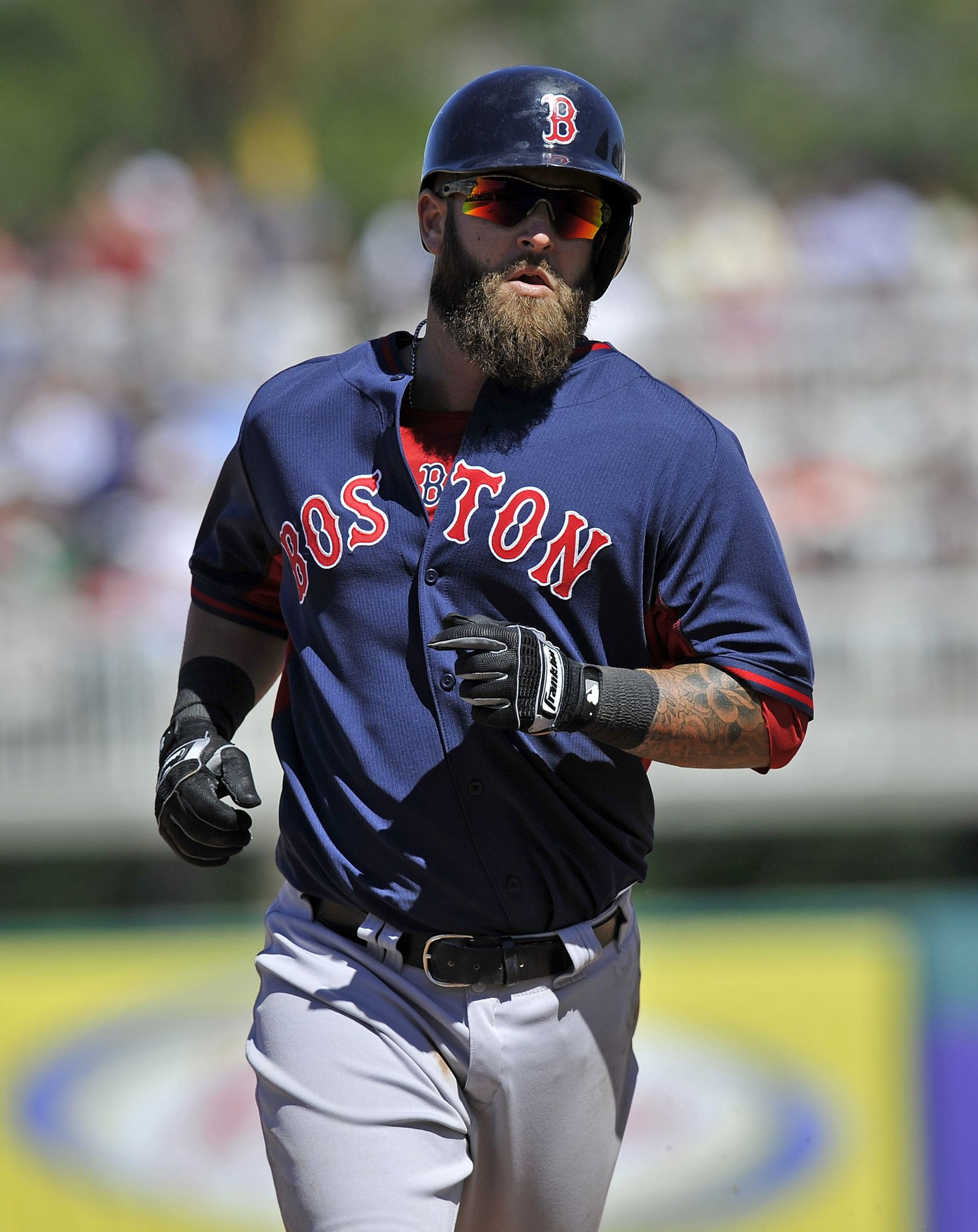
It's worth noting that, of the positions played by the free agent quartet, first base was the only one that didn't have a Major League-ready prospect on the horizon or ready for 2014. The Sox likely would've found a right-handed hitter to platoon with Mike Carp at first had Napoli gone elsewhere, but still, it could be argued that Napoli was the free agent that was most necessary to re-sign for the short term.
Speaking of prospects, with Blake Swihart and Christian Vazquez scheduled to arrive within the next couple of seasons, the Red Sox were only comfortable bringing back catcher Jarrod Saltalamacchia for two years at the most. As such, Saltalamacchia took more security in the form of a three-year, $21MM deal from the Marlins, leaving Boston in need of a short-term starter behind the plate. The solution ended up being a one-year, $8.25MM contract for A.J. Pierzynski. The veteran pairing of Pierzynski and David Ross will handle the catching duties for 2014; Vazquez had an impressive Spring Training and could have the early lead on the 2015 job if he performs well at Triple-A Pawtucket this season.
There were rumors that Boston could look to trade from its starting pitching depth given that the club entered the offseason with six starters for five rotation spots, plus swingman Brandon Workman and top prospects who have already gotten a taste of the bigs like Rubby De La Rosa and Allen Webster. Ryan Dempster's decision not to pitch in 2014, however, ended those rumors. Rather than dip into their younger depth options, the Sox acquired another veteran in left-hander Chris Capuano, who will serve as a reliever and spot starter.
Capuano also adds a southpaw bullpen arm to replace Matt Thornton, whose $6MM team option was declined by the Sox in November. Boston addressed the pen by trading for groundball specialist Burke Badenhop and signing righty Edward Mujica, who performed well for a time as the Cardinals' closer last year but will return to his usual setup role in backing up Koji Uehara.
While the Red Sox will go young to replace Jacoby Ellsbury and (the likely departed) Stephen Drew, that didn't stop them from adding some veteran depth in Grady Sizemore and Jonathan Herrera. While Herrera seems clearly tabbed for a utility infield role, Sizemore's strong Spring Training may have earned him at least a share of the starting center field job. If Sizemore stays healthy and performs at even a fraction of his 2005-08 form, the Sox will have found another incredible bargain given that Sizemore is only guaranteed $750K for the season (though with $5.25MM in incentives).
David Ortiz has been vocal about the lack of long-term security in his last couple of contracts (a one-year deal for 2012 and a two-year deal covering 2013-14) but the franchise icon could now remain in Boston through his age-41 season thanks to a new extension. The deal is officially a one-year extension through 2015 but an $11MM option for 2016 will vest if Ortiz reaches at least 425 PA in 2015, plus there's a team option for 2017 as well. While it wouldn't be a shock if a 38-year-old slugger suddenly declined, Ortiz still looks as dangerous as ever, as his .959 OPS and World Series MVP trophy would indicate.
Questions Remaining
The Red Sox at least explored re-signing Ellsbury, but since they weren't keen on going beyond five years or more than $100MM, the club didn't come close to the seven-year, $153MM contract that Ellsbury received from the Yankees. While it remains to be seen if Ellsbury will stay productive over the life of that deal, his loss is a double short-term blow for Boston. Not only did the Sox lose one of their best players to their AL East arch-rivals, their planned replacement (Jackie Bradley Jr.) hasn't lived up to expectations in Spring Training.
Bradley, who turns 24 in April, has a .297/.404/.471 line over 989 minor league PA and is regarded as an excellent defender. While he only had a .617 OPS in 107 PA in his Major League debut last season, Bradley is still considered one of the game's top 100 prospects (ranked 33rd by MLB.com, 50th by Baseball America, 51st by ESPN's Keith Law) and he was expected to get the lion's share of playing time as Boston's new center fielder this season.
Instead, however, Bradley's struggles during the spring have allowed Sizemore a chance at the job — center field becomes a question mark either way, given that Bradley is unproven and Sizemore hasn't played a professional game since 2011. Shane Victorino could potentially play center in a pinch with Mike Carp taking over in right, or the Daniel Nava/Jonny Gomes platoon could shift from LF to RF with Carp playing left field, or Nava could play center while Carp replaces him in the platoon with Gomes. Such a shakeup seems unlikely, however, as it would weaken the outfield defense.
The left side of the Red Sox infield will be manned by Xander Bogaerts at shortstop and Will Middlebrooks at third, as the club hopes that the former will live up his high prospect pedigree and the latter will find consistency in his third Major League season. Baseball America, Law and MLB.com all rank Bogaerts as the sport's #2 prospect and the 21-year-old has already made an impact with the Sox, posting an .893 OPS in 34 postseason PA and taking over as the starting third baseman for the World Series.
That third base job, of course, belonged to Middlebrooks heading into the playoffs but a mediocre postseason just added to his frustrating 2013 season. Middlebrooks hit only .227/.271/.425 in 374 PA, though he did show off some pop by hitting 17 homers. At age 25 and only two years removed from being a highly-touted prospect himself, it's far too soon for the Sox to give up on Middlebrooks, though they're exploring creative backup options like Carp at third.
Exercising Jon Lester's 2014 option was the easiest move the Red Sox made all winter, but signing the southpaw to an extension has been a bit tricker. Lester has expressed his preference to remain in Boston for the rest of his career and even said he'd be willing to give the Sox a bit of a discount on a new contract, so this may not be a "question remaining" as much as it just a matter of time before a deal is reached. The club hopes to have an extension worked out by Opening Day, though Lester has said he's willing to keep negotiations going into the season if the two sides are close.
If Lester is retained, the Sox will have both removed one of next winter's top free agents arms from the board and kept its longtime ace in the fold for several years to come. Lester could end up being the mound equivalent of Ortiz as a staple player who bridges a few different generations of Red Sox championship contenders.
Deal Of Note
It might seem odd to dub merely extending a qualifying offer as one of the most notable moves of an offseason, yet Boston giving such a one-year, $14.1MM to Stephen Drew ended up having far-reaching consequences. When Drew rejected the offer, it meant a team with a non-protected pick would have to surrender its first-round draft pick to sign him, and a protected-pick club would have to give up its next-highest draft choice (be it in the compensation round or second round).
With draft compensation attached, Drew's market has been drastically limited. The veteran shortstop is one of several qualifying-offer free agents who were available for much longer than expected this winter, and of that group, only Drew and Kendrys Morales still remain unsigned. Scott Boras, who represents both men, says his clients are willing to wait until June to sign if need be, as they'll get around the draft pick compensation simply by sitting out until the draft has passed.
How would this impact the Red Sox? As MLBTR's Tim Dierkes and FOX Sports' Ken Rosenthal point out, such a maneuver could put more pressure on Boston to re-sign Drew since otherwise, they'd lose out on a first round pick. You'd think that certainly, some team would develop a need at shortstop and sign Drew before June, but then again, you also wouldn't have thought that Drew would still be available less than a week from Opening Day.
Until Drew is officially in another team's uniform, there's at least a chance he could return to Boston. GM Ben Cherington has been in contact with Boras about the shortstop this winter, though the two sides haven't spoken in weeks and the Sox reportedly offered Drew only a one-year deal. It's also possible that the Red Sox themselves could be that team who needs some shortstop help, in case Bogaerts and/or Middlebrooks can't handle their jobs.
That said, Boston's confidence in these two promising young stars is why the Sox felt comfortable in letting Drew leave in the first place. Transitioning top prospects into regulars is a key aspect of the team's operations, as Cherington tells MLB.com's Anthony Castrovince: "We recognize that our goal is to be as good as we possibly can be in 2014 but also 2015 and 2016 and beyond. To do what we want to do, year in and year out, there has to be integration of young players. We're not going to force that unless we're reasonably confident those guys can contribute right away."
Overview
After rebuilding the roster by adding several mid-tier free agents last winter, the Red Sox had the flexibility to focus on short-term, middle-term and long-term moves this offseason. For the coming season, they shored up their roster holes by replacing Saltalamacchia with Pierzynski, Dempster with Capuano and Thornton/Andrew Bailey/Franklin Morales with Mujica and Badenhop. In the near term, the club virtually ensured that Ortiz will retire in a Red Sox jersey. As for the future, in issuing qualifying offers to Ellsbury and Drew, the Sox ensured at least one extra compensation draft pick (currently 33rd overall) and likely another once Drew finally signs elsewhere.
The biggest long-term move, of course, is entrusting Bogaerts, Middlebrooks and (potentially) Bradley with three positions that combined for 9.9 fWAR in 2013. Though obviously the Red Sox fully expect to be contenders, it's possible this season could be the so-called "bridge year" that the club expected to have in 2013 should the young trio have growing pains. Boston also enjoyed relatively good health and above-average performances from almost the entire roster last season, so a bit of regression is probably in store. (Plus, losing some of the facial hair could be bad karma.)
That said, with Boston's track record of developing homegrown talent, it's also easy to believe that any or all of these three prospects could immediately become solid contributors. With the bulk of the championship core returning, the Red Sox are still deep and talented enough to challenge for another title.
Photo courtesy of Steve Mitchell/USA Today Sports Images
Offseason In Review: Baltimore Orioles
The Orioles spent much of the winter quietly adding depth in the form of minor league contracts, then struck late to score some notable Major League free agents.
Major League Signings
- Ubaldo Jimenez, RHP: Four years, $50MM
- Suk-min Yoon, RHP: Three years, $5.575MM
- Ryan Webb, RHP: Two years, $4.5MM
- Nelson Cruz, OF/DH: One year, $8MM
- Francisco Peguero, OF: One year, $550K
- Kelvin De La Cruz, LHP: One year, $525K (since outrighted)
- Edgmer Escalona, RHP: One year, $550K
- Total spend: $69.7MM
Notable Minor League Signings
- Johan Santana ($3MM base salary if he makes Major League roster), Alfredo Aceves ($1.2MM base salary if he makes ML roster), Delmon Young ($1MM base salary if he makes ML roster), Luis Ayala, Evan Meek, Alex Gonzalez, Alexi Casilla, Xavier Paul, Quintin Berry, Brett Wallace, Aaron Laffey, Luis Vizcaino, Ivan De Jesus
Trades And Claims
- Acquired 2B Jemile Weeks and C David Freitas from the Athletics in exchange for RP Jim Johnson.
- Acquired OF David Lough from the Royals in exchange for 3B Danny Valencia.
- Acquired IF Steve Lombardozzi from the Tigers in exchange for SS Alex Gonzalez
- Acquired RHP Brad Brach from the Padres in exchange for RHP Devin Jones.
- Acquired C Johnny Monell from the Giants in exchange for cash considerations.
- Claimed IF Cord Phelps off waivers from the Indians.
- Claimed IF David Adams off waivers from the Indians.
- Claimed 1B/3B Michael Almanzar from the Red Sox in the Rule 5 Draft.
Notable Losses
- Jim Johnson, Scott Feldman, Jason Hammel, Brian Roberts, Francisco Rodriguez, Nate McLouth, Michael Morse, Wilson Betemit, Tsuyoshi Wada, Danny Valencia, Chris Dickerson, Dan Johnson
Needs Addressed
Baltimore fans spent much of the winter getting impatient with Orioles executive VP Dan Duquette. Several notable players left for free agency, former All-Star closer Jim Johnson had been traded to get his ballooning salary off the books and the team had not one, but two signings fall through due to last-minute issues with the players' physicals.
After a busy February, however, it seems like Duquette was simply biding his time. The Orioles signed one of the few notable starting pitchers left on the market when Ubaldo Jimenez agreed to a four-year, $50MM deal — the most significant commitment made by the O's to a pitcher in recent memory. Duquette had been vocal about not wanting to overspend for a free agent arm and was hesitant to surrender the team's first-round draft pick in order to sign free agents who had rejected qualifying offers, yet had kept in touch with Jimenez's representatives for much of the winter and finally locked the right-hander up by agreeing to a fourth year.
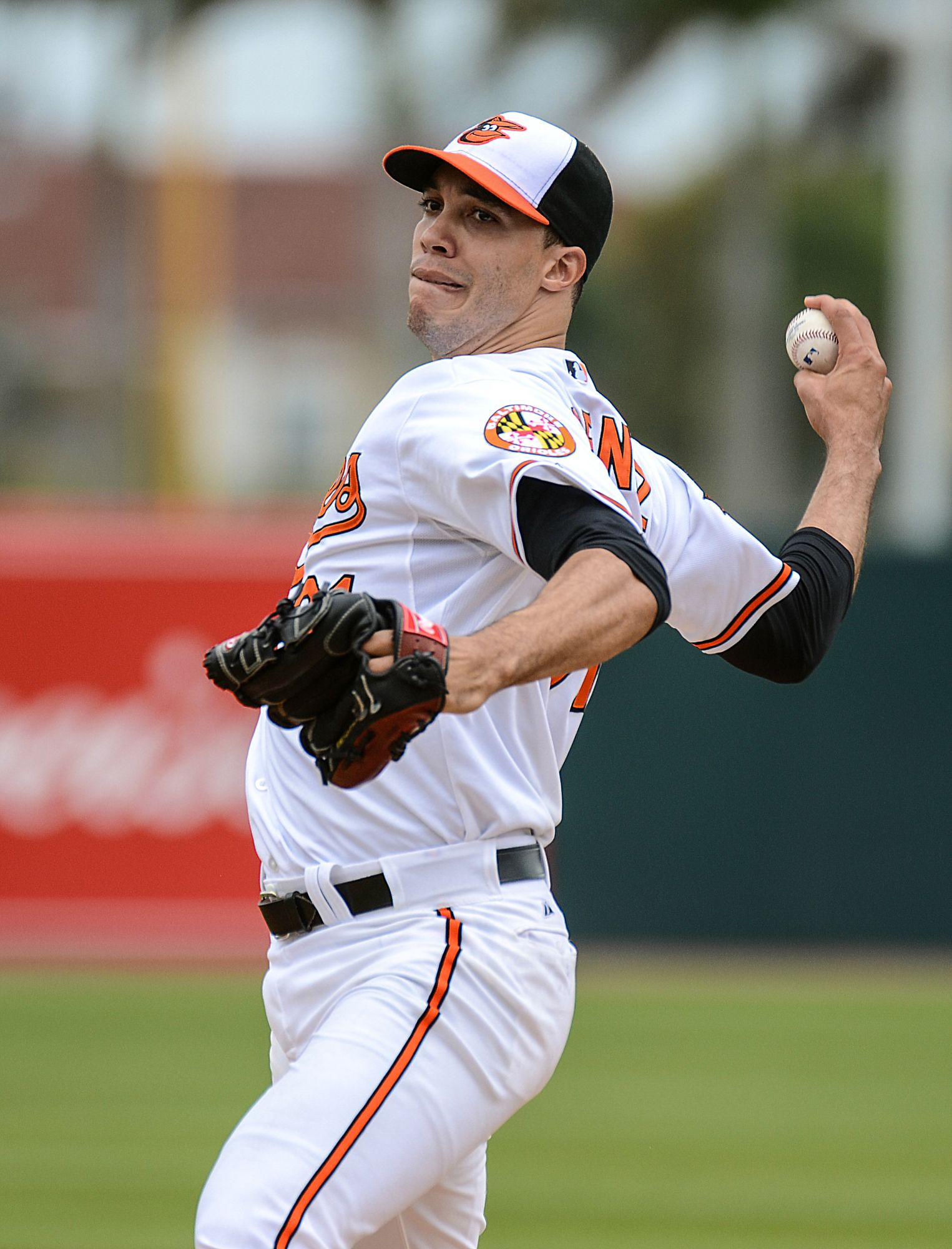
It took Jimenez the better part of three seasons to regain his mechanics, but after a rough start he was dominant in 2013, posting a 2.40 ERA over his final 22 starts with Cleveland. It remains to be seen if Jimenez can remain consistent, but at worst, the O's added a durable veteran arm who has averaged 198 IP per year over the last six seasons. Jimenez joins Chris Tillman, Wei-Yin Chen and Miguel Gonzalez on the staff, and Bud Norris retained his spot with a solid Spring Training, bumping several promising young hurlers to the bullpen (Brian Matusz and Zach Britton) or the minors (Kevin Gausman).
If that wasn't enough pitching depth, the Orioles also have a pair of intriguing arms that could be available later in the season. Suk-min Yoon's three-year, $5.575MM deal is Duquette's latest venture into the international market, and while Yoon was a stand-out starter in the KBO and will be stretched out as a starter in the minors, there is some belief that he would translate best to North American baseball as a reliever. Minor league signing Johan Santana could also find himself in the pen if he can't handle a starter's workload following shoulder surgery that cost him the entire 2013 season. So little guaranteed money is tied up in Yoon and Santana, however, that both pitchers are essentially lottery tickets for the Orioles that could pay off extremely well if either returns to form.
Before landing Jimenez, the Orioles were linked to other veterans like Bronson Arroyo, A.J. Burnett and Ervin Santana, and even after Jimenez's signing were still in on Santana given how the righty's price fell to just a one-year deal. Earlier, Baltimore had explored bringing back Scott Feldman, and were willing to offer him a two-year contract, but Feldman found a longer deal with the Astros.
Fresh off the Jimenez signing, the Orioles then landed another qualifying offer free agent by inking Nelson Cruz signed a one-year, $8MM deal. Signing Jimenez and Cruz cost the Orioles their first- and second-round draft picks, meaning that over 90 players will be off the board before the O's finally pick in June's amateur draft. Some of the club's young international signings help make up the difference, though giving up those picks mean the Orioles are making a bold step towards winning in 2014.
With Johnson gone, Baltimore added some new faces to the relief corps. Free agent right-hander Ryan Webb owns a 3.29 ERA over 276 career innings and his 57.4% career ground ball rate should play well at Camden Yards. The O's took the opposite tack by acquiring live arm Brad Brach, who has had some control issues (a career 5.1 BB/9) but can definitely miss bats, as evidenced by his 117 strikeouts in 104 2/3 career innings. Veterans Alfredo Aceves, Evan Meek and Luis Ayala were signed to minor league deals to provide further depth.
Once Nate McLouth signed with the Nationals, the Orioles filled their need for a left-handed hitting outfielder by dealing Danny Valencia to the Royals in exchange for David Lough. While the 28-year-old Lough only has a career .700 OPS in 323 PA against righty pitching, he brings an outstanding glove (+27.3 UZR/150) to all three outfield positions. Lough will receive regular playing time against right-handers as part of a left field platoon.
Questions Remaining
Johnson's salary was projected to rise past the $10MM mark in the closer's final year of arbitration eligibility and his price simply got too high for the Orioles to manage, so Johnson was dealt to Oakland. Baltimore seemed to have Grant Balfour all but signed as the club's next stopper, yet after Balfour's physical, the O's found some issues with Balfour's wrist and knee that caused them to back away from the agreement. Balfour went on to sign a two-year contract with the Rays (whose team doctors judged him to be in good fitness) and the incident opened the Orioles up to criticism that they were being too picky.
Though the O's explored signing Fernando Rodney and even discussed acquiring Jonathan Papelbon from the Phillies, they ended up forgoing the proven-closer route and now seem set to use Tommy Hunter in the role. Hunter became a full-time reliever in 2013 and quickly took to the role, posting a 2.81 ERA, 7.1 K/9 and 4.86 K/BB over 86 1/3 innings. As Rotographs' Mike Podhorzer explains, Hunter projects as a solid closer for the coming season, though the Orioles' interest in Rodney indicates that they're not totally set on having a novice stopper. If Hunter falters, Webb or Darren O'Day could be promoted to closer, and the Orioles would likely become a prime trade partner for non-contenders looking to deal their closer at midseason.
Manny Machado will begin the season on the DL, as the star third baseman is still recovering from left knee surgery in October. While Machado has made good progress and was recently cleared for physical activity, he won't see any Major League action until later in April. Ryan Flaherty will fill in at third for now, with waiver claims Cord Phelps and David Adams (or even Rule 5 draft pick Michael Almanzar if the O's can find roster space for him) also available at the hot corner for what Baltimore hopes will be only a few weeks until Machado is healthy.
Flaherty will also be part of the very unsettled mix at second base. The Orioles bought low on Jemile Weeks, who has struggled since his excellent 2011 rookie campaign and also hasn't shown much at the plate during Spring Training. With Weeks not producing and the re-signed Alexi Casilla hobbled by injuries, the newly-acquired Steve Lombardozzi may now be the favorite at second base (in addition to adding depth at third and left field). Duquette only needed to surrender a veteran on a minor league deal in Alex Gonzalez to pick up Lombardozzi, a 25-year-old switch-hitter under team control through 2017.
Top prospect Jonathan Schoop, however, is the big x-factor. The conventional wisdom was that Baltimore would keep Schoop in the minors for more seasoning (he posted only a .697 OPS in 289 Triple-A plate appearances) this year and then look to him in 2015, yet Schoop has enjoyed a tremendous Spring Training. Schoop was already called up for a five-game cup of coffee last September, and given the uninspiring other options at the keystone position, the Orioles could keep Schoop's service clock rolling, at least until Machado returns.
As you can tell, there are a lot of moving parts with Baltimore's bench situation. MLBTR's Tim Dierkes recently predicted that "a trade or two" could be in the offing in his look at the Orioles' many out-of-options players since between the out-of-options guys and the minor league signings, the O's simply have too many players for too few roster spots right now. One small move was already made to bring in Adams, as Kelvin De La Cruz was outrighed to Triple-A four months after he was surprisingly signed to a Major League contract.
While the Orioles made a flurry of moves involving smaller names on their roster this offseason, there wasn't much to report on some of their bigger names, as extension talks with such notables as Chris Davis, Matt Wieters and J.J. Hardy haven't delivered much progress. The Davis and Wieters cases perhaps aren't surprising given that Scott Boras clients usually get to the open market. Since Davis and Wieters aren't free agents until after the 2015 season, the O's might want more information before committing to either player, for differing reasons — Davis to see if he's truly an elite slugger following his breakout 53-homer season in 2013, and Wieters to see if he can rebound following a disappointing .235/.287/.417 year.
Hardy is a more pressing case since he's only under contract through 2014. Machado's future looms over any decision the Orioles make with Hardy; though Machado was phenomenal at third base last year, it has been assumed that the O's will eventually move him back to his natural position of shortstop. The Orioles' lack of dialogue with Hardy about a position switch has openly frustrated him, as needless to say, he'd prefer to have his future position settled before signing an extension. Hardy turns 32 in August and Machado only 22 in July, so the easy solution for the Orioles could be to extend Hardy for two or three seasons and just leave Machado at third until Hardy's next deal is up.
Deal Of Note
As the cliche goes, there's no such thing as a bad one-year deal. Cruz brings a lot of baggage with him to Baltimore — a 50-game PED suspension in 2013, his age (he turns 34 in July), declining speed, lots of strikeouts, a below-average outfield glove and career home/away splits (.911 OPS at Globe Life Park, .734 OPS on the road) that raised questions about whether he can produce outside of Arlington. Still, it was this same baggage that allowed the O's to sign the veteran slugger at such a reduced price.
The more important facts for the Orioles might've been Cruz's .266/.327/.506 slash line and 27 homers in 456 PAs last season, numbers that easily surpass the .234/.289/.415 line and 21 homers over 602 PA posted by Baltimore designated hitters in 2013. Seventeen different players appeared at DH for the O's last year and that revolving door has now been firmly slammed shut with Cruz's arrival. Spending most of his time at DH will solve the issue of Cruz's glove, and he should still be able to produce at a hitter-friendly park like Camden Yards.
After turning down a $14.1MM qualifying offer from the Rangers and initially seeking a four-year, $75MM deal, the one-year agreement is certainly not what Cruz and his representatives were expecting from the offseason. Much has been made about how Cruz and other free agents over the last two winters have seen their markets drastically limited with the price of a first-round draft pick compensation hanging over their heads, and Cruz is the first of these free agents to end up with a deal worth less than $14.1MM. It's easy to say in hindsight that Cruz should've accepted the Rangers' offer and tried to rebuild his value in familiar surroundings in Arlington, yet it was hard to predict that his market would so completely dry up. Cruz will no doubt have extra motivation to deliver a big season in 2014, which is just fine for the Orioles.
Overview
If things don't work out for the O's this season, Duquette has given himself a lot of flexibility to reload. While a whopping 15 current Orioles are arbitration-eligible next winter, only five players (Adam Jones, Dylan Bundy, Jimenez, Yoon, and Webb) are on guaranteed contracts past this season. By then the young stars will only be a year older and perhaps ready to contribute, so even if Baltimore is again limited to 85 wins by their tough division, there's still plenty of hope for another run in 2015.
But then again, why wait until 2015? With player salaries topping the $100MM mark, the Orioles are spending a bit more freely in order to hang with the other big AL East payrolls. Giving up the two draft picks for Jimenez and Cruz marks a shift in Duquette's strategy, as this is no longer a team that seems unsure about whether it's rebuilding or not — while Gausman, Schoop, Bundy and company are still on the horizon, the Orioles clearly feel that they enough talent to contend right now. We could still be a year or two away from the "next great Orioles team," or that next great team could have already arrived.
Photo courtesy of Jonathan Dyer/USA Today Sports Images
Executives On The Qualifying Offer
The 2014 season is about to get underway in earnest and two of MLBTR's Top 50 free agents remain on the shelf. Stephen Drew (No. 14) and Kendrys Morales (No. 28) are still looking for homes months after rejecting one-year, $14.1MM qualifying offers from their respective teams. The qualifying offer system, now in its second year, appears to be getting quite a bit of criticism from agents and players around baseball, but that's nothing new. Last winter, I asked Adam LaRoche for his thoughts on being linked to a compensatory pick and having to wait until after the holidays to sign.
"I think that it did [affect me]," said LaRoche, who inked a two-year, $24MM deal with a mutual option with the Nationals rather than the three year pact he wanted. "That's coming from people a lot smarter than I am that explained it to me. I think it affected a couple of other players worse than me, there are a lot of solid ballplayers out there still looking for a job. It definitely hindered some teams from going after some guys…I think there were two or three, maybe four teams out there that it did affect as far as teams that were interested me but didn't want to give up that pick."
As you might expect, after conversations with high-level MLB executives, it seems that front offices are short on empathy for the predicament of the Scott Boras duo. Executives recognize that the qualifying offer system favors clubs, but at the end of the day, they feel players and agents are responsible for anticipating demand appropriately before making their decision.
"It's certainly advantageous to the clubs, so I can understand why certain players wouldn't like it," said one National League executive. "No one is forcing them to reject a one-year, $14MM offer which is pretty darn good and see if they can do better. Honestly, that's just their reading of the marketplace telling them what to do and if it doesn't go the way they anticipated then they just misread the marketplace."
That might be a reasonable view for some, but Boras vehemently disagrees, recently telling ESPN's Jerry Crasnick that he feels as though Morales and Drew are "in jail" rather than true free agents. From Boras' view, the system is having an unforeseen ill effect on the free agency process. From the club's view, everything is going as planned.
"People keep talking about unintended consequences with the new system and I don't think they're unintended at all," one American League exec opined. "I don't understand why anyone went into the current system thinking there weren't going to be lags in the market or thinking that teams wouldn't give second thought to [second tier] free agents."
The AL exec and others were quick to note that the qualifying offer system has not hampered the true cream of the free agent crop. When the Mariners wanted to sign Robinson Cano, for example, their main deliberation was over cost and not the compensatory draft pick they would have to forfeit to the Yankees. While Cano, an elite player at a premium position who was universally considered the top free agent prize of the winter, didn't have to give any thought to accepting the QO, executives argue that someone like Morales should have thought it over. While Morales is an offensively gifted switch-hitter, his possibilities were limited since his appeal is mostly as a DH. Teams would argue that this was all obvious in November and perhaps should have informed Morales and Boras to make a different choice.
Of course, the current qualifying offer system is only a couple of years old but the concept of a restricted MLB free agency has been around for much longer. The current QO construct replaced the widely reviled "Type A/B" system, which placed the better free agents in one of two tiers based on seemingly arbitrary criteria. A team losing a Type A player would receive the signing club's top pick plus a newly-generated supplemental pick in the sandwich round (between rounds 1 and 2). A team losing a Type B player would get a sandwich pick, but nothing from the club signing the player. Agents and players were vocal about their frustrations with that system and executives that spoke with MLBTR expressed similar thoughts. One executive called the formulas used to determine Type A or B (or C, pre-2006/07 offseason) status "antiquated" while another said that the system was "wrought with abuse and handshake offers" to circumvent its consequences. While teams got used to that process over time, executives seem to appreciate the simplicity of the new system. And as one high-ranking executive told MLBTR, the new system helps to "protect the middle reliever." The old system would routinely lump a solid, but not spectacular reliever in the same group as an elite batter or starting pitcher, making free agency a frustrating process. Now, under the current system, no team in their right mind would put a $14MM+ offer on the table for a seventh-inning reliever.
As Drew continues to look for a home, it has been reported that he would take a one-year deal from the Tigers in the neighborhood of the $14.1MM figure that he turned down just months ago. While plugging Drew in for injured shortstop Jose Iglesias has to have some appeal to Detroit, the idea of sacrificing a pick for a one-year rental is surely unpalatable. The execs who spoke with MLBTR said that they would be very unlikely to sign a QO free agent if they were only getting one year out of him, but each of them also conceded that they would consider it under the right circumstances. If their club was right on the cusp of contending and losing a pick – projected to be towards the bottom anyway – made the difference, they would give serious thought to pulling the trigger. This winter, Ervin Santana and Nelson Cruz both wound up signing one-year deals while attached to draft compensation, so those execs surely aren't alone in that thinking. Meanwhile, all of the executives said that they would not rule out a player strictly because he was tied to draft compensation.
After watching Ubaldo Jimenez, Santana, Cruz, Morales, and Drew struggle to find homes for 2014, some have assumed that the QO system will be drastically overhauled in the 2016 Collective Bargaining Agreement. While it's bound to be a high-priority discussion for the union, executives caution that it's far from an automatic to be changed.
"I don't know if it will be changed, but I think if they want it changed, they'll have to give something substantial back," the AL exec said. "Now, whether that's something like an extra year of arbitration, I'm just not sure. I don't think the owners would just give it back to the players, it's something that [the owners] bargained and negotiated for."
Offseason In Review: Texas Rangers
The Rangers won the offseason with high-profile acquisitions of Shin-Soo Choo and Prince Fielder, and they figure to compete again in 2014, but they've taken on two contracts that could be onerous in a few years, and now they're dealing with injury issues.
Major League Signings
- OF Shin-Soo Choo: Seven years, $130MM.
- C Geovany Soto: Re-signed for one year and $3.05MM.
- C J.P. Arencibia: One year, $1.8MM, plus up to $300K in incentives.
- SP Tommy Hanson: Split deal worth $125K guaranteed. Hanson can make up to $3.6MM with incentives.
- SP Joe Saunders: Major-league deal worth $250K guaranteed. Saunders can earn up to $3.65MM with incentives.
- SP Martin Perez: Four years, $12.5MM, with three club options
- Traded 2B Ian Kinsler to the Tigers for Prince Fielder and $30MM.
- Traded OF Craig Gentry and P Josh Lindblom to Athletics for OF Michael Choice and 2B Chris Bostick.
- Traded 1B Chris McGuiness to Pirates for RP Miles Mikolas.
- Claimed SS Andy Parrino from Athletics.
- Claimed P Pedro Figueroa from Rays.
- Claimed P Shawn Tolleson from Dodgers.
- Kinsler, Gentry, Nelson Cruz, Joe Nathan, Matt Garza, A.J. Pierzynski, Lance Berkman, David Murphy, Jeff Baker, Ross Wolf
Meanwhile, Jurickson Profar, who was to become the Rangers' new second baseman, would have provided at least the chance that the team wouldn't miss Kinsler too much. Profar struggled in his first extended shot in the big leagues in 2013, but as a former elite prospect who only recently turned 21, he should have been able to take a step forward in 2014. The 31-year-old Kinsler, meanwhile, had declined both offensively and defensively since his outstanding 2011 season. Unfortunately, the Rangers announced on Sunday that Profar would be out ten to 12 weeks with a muscle tear.
Long-term, the Fielder-for-Kinsler swap is a complex proposition. Even with the $30MM the Rangers received from the Tigers in the deal, and even with Kinsler's own large contract heading the other way, the Rangers added $76MM in salary in the trade, and they'll effectively be paying Fielder $138MM ($168MM minus $30MM) through 2020. The Rangers will need to hope that Fielder's relatively pedestrian .279/.362/.457 2013 season wasn't the start of a trend. Given his deficiencies on defense and on the basepaths, that line made him worth just 2.2 WAR in 2013. And seven years is an awfully long commitment for a slugger who's about to turn 30, particularly given Fielder's physique.
The Rangers did, of course, rid themselves of Kinsler's contract, but there's reason to think that Kinsler, a more athletic player who maintains some defensive value, might decline more slowly than Fielder will. Age can be unkind to big sluggers. The Rangers' Fielder acquisition suited their needs brilliantly in the short term. In the long term, his contract could become a big problem.
The Rangers also made what was nearly a challenge trade with their division rivals in Oakland, sending whiz defensive outfielder Craig Gentry and depth pitching option Josh Lindblom in return for outfield prospect Michael Choice and young middle infielder Chris Bostick. Lindblom lacks upside and Bostick is little more than a lottery ticket, given his strikeout issues in Class A. So the deal mostly boils down to Gentry for Choice. Gentry is clearly a valuable player, but the Rangers wanted Leonys Martin to play every day in center, and Choice, who's coming off a strong season in Triple-A Sacramento, should give the Rangers a good, cheap option in a corner or DH whenever they have space for him.
The Rangers needed to find not one but two catchers, with both A.J. Pierzynski and Geovany Soto eligible for free agency after 2013. Rather than splurging on top free agent option Brian McCann, the Rangers brought Soto back, this time as a starter, and signed J.P. Arencibia to be his backup. Given that the Rangers proved perfectly willing to spend money elsewhere, these were savvy moves, even though there's downside risk, particularly in Arencibia's case. Soto vanished into backup-catcherdom thanks to a bad 2012 season, even though he was still fairly young and had a long track record of providing value. After a .245/.328/.466 season as Pierzynski's caddy in 2013, the Rangers are paying barely over $3MM to have Soto start. He's still a credible starting catcher, and his cost is negligible by the standards of MLB free-agent contracts.
Their signing of Arencibia was also a clever move. Arencibia is coming off a disastrous offensive season in Toronto, and his inability to hit for average is a problem even in the best of circumstances. He is developing a great reputation as a pitch-framer, however, and he has outstanding power for a catcher. It's not hard to imagine a season in which he bats .210 but remains very valuable by helping Rangers pitchers and belting 15 home runs in a very power-friendly ballpark.
The Rangers also added an interesting relief arm in Miles Mikolas, giving up only Chris McGuiness, a left-handed first baseman who would be stretched as a starter and who served little purpose with both Fielder and Moreland available. Mikolas doesn't have any immediate role on the 2014 Rangers, but he throws hard and gets ground balls, and he held his own in a half-season with the Padres in 2012.
On the extension front, the Rangers signed young starter Martin Perez to a four-year, $12.5MM deal that buys out two pre-arbitration seasons and two arbitration seasons, while giving the Rangers reasonable options on Perez's last arbitration season and two free-agency years ($6MM or a $2.45MM buyout in 2018, $7.5MM or a $750K buyout in 2019, and $9MM with a $250K buyout in 2020). The deal is extremely favorable to the Rangers, since $12.5MM is such a meager sum and since the contract gives the Rangers so much flexibility with Perez's age-27 through age-29 seasons. Perez is already off to a good start in his big-league career, and if he can improve at all beyond his performance in 2013, his contract will turn into a bargain very quickly.
Finally, the Rangers added Tommy Hanson and Joe Saunders on cheap contracts, hoping to replenish their starting pitching in the wake of a significant injury to Derek Holland. Tanner Scheppers will now join Yu Darvish and Perez in the Rangers' rotation, with Saunders, Hanson, Robbie Ross and Colby Lewis competing for the final two spots, while Alexi Ogando moves to the bullpen to set up Joakim Soria.
The rotation with which the Rangers are about to enter 2014 probably isn't what they would have imagined for themselves in October, but they'll have to make do. Hanson struggled with the Angels in 2013 as the velocity and effectiveness of his fastball continued to decline. Saunders was somewhat better in 2013 than his 5.26 ERA with the Mariners suggested, and he might turn out to be a modest bargain for the Rangers, particularly given the minimal amount of risk they assumed. But he's still an average starting pitcher at best. Holland and Matt Harrison (who is also working his way back from injury) can't return quickly enough.
2013 closer Joe Nathan headed to the Tigers after declining his 2014 option. The Rangers should still have a decent bullpen, however. Soria will take Nathan's place after a strong spring; he was once one of baseball's best closers, and he'll only be 30 in May, so it's not unreasonable to hope he might be able to return to his prior heights. With Ogando, Neal Cotts and Jason Frasor, Soria will be reasonably well supported. Neftali Feliz and Michael Kirkman, along with a number of the Rangers' lower-profile offseason acquisitions (Shawn Tolleson, Rafael Perez, Pedro Figueroa, Ryan Feierabend, and others) will compete for the last few jobs in the bullpen.
With Profar now out, the Rangers have a hole at second base. Top prospect Rougned Odor might be a possibility, but he has little experience in the high minors. If not Odor, the Rangers could turn to Adam Rosales, Kensuke Tanaka or Josh Wilson. None of those solutions are ideal. That leaves the Rangers with potential question marks not only at DH, but at second base as well — not that Profar would have been a sure thing, of course. Catcher could also be an issue, with Soto recently having a precautionary MRI on his knee. (The injury bug has bitten the Rangers badly.) Also, with lefties Choo and Fielder anchoring the lineup, the Rangers are thin against left-handed pitching, particularly if Choice doesn't make the 25-man roster.
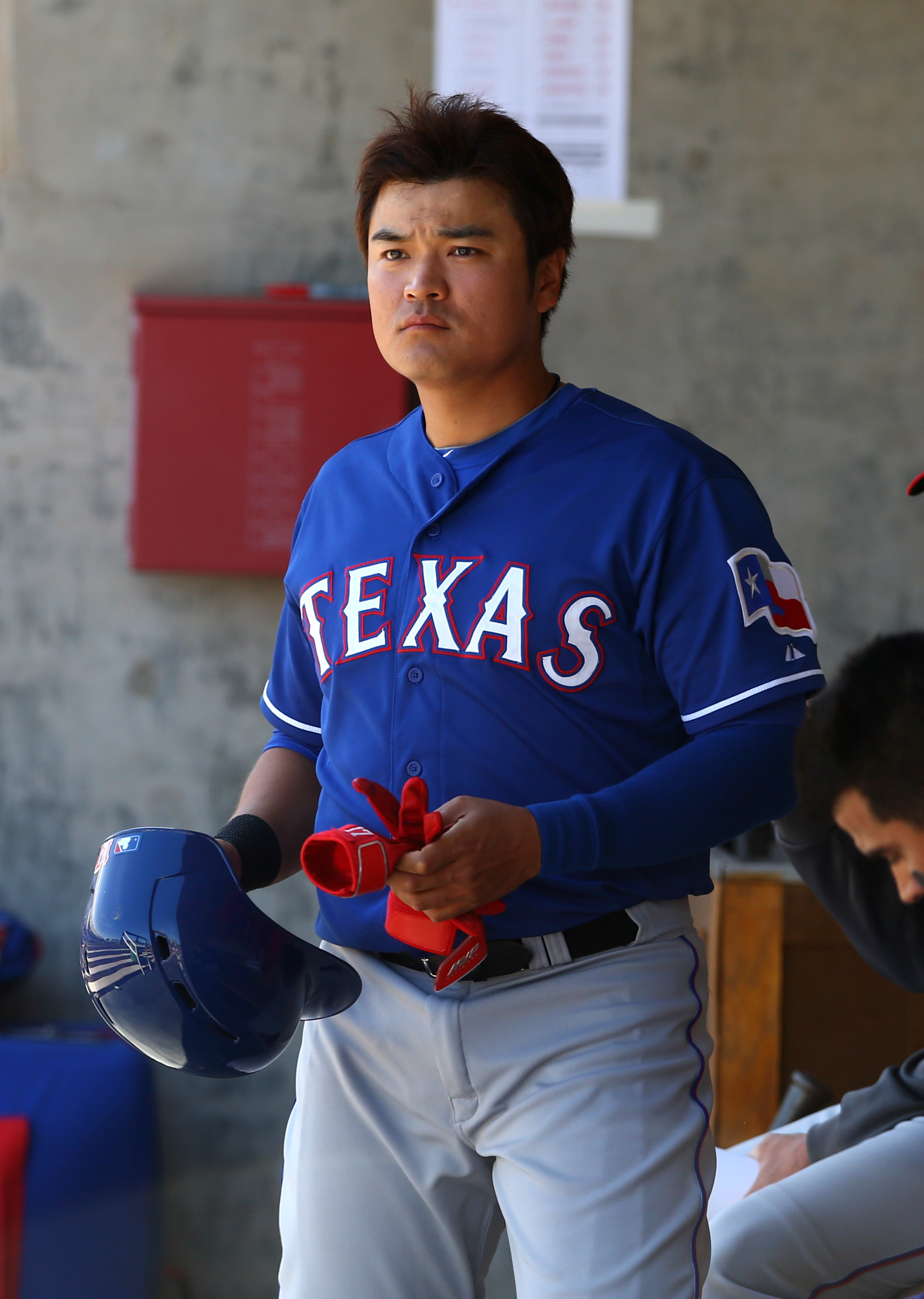 Shin-Soo Choo's massive deal falls into the same category as the Fielder trade — it fits the Rangers' needs to a tee right now, but could become a problem in a relatively short time. The Rangers needed a right fielder given the imminent departure of Nelson Cruz, and it's hard to argue with Choo's spectacular .423 on-base percentage last season. It also makes sense for him to be back in right field, since he was a defensive liability in center for the Reds last season.
In the long term, though, seven years and $130MM is a huge commitment for a 31-year-old corner outfielder who doesn't have elite power and who already arguably should be platooned — Choo hit just .215/.347/.265 against lefties in 2013, with the walk as his only real weapon against them. Given that Choo isn't an outstanding defensive player either, it's easy to imagine that he'll be a tweener type three or four years from now, putting up strong OBPs against righties, but platooning and frustrating the Rangers with his defense as he starts to lose speed. Projection systems are much more optimistic about Choo than they are about Fielder. But Choo comes with warning signs, and seven years is a long time.
MLBTR Originals
A look back at the original reporting and analysis found on MLBTR the last seven days:
- MLBTR's 2013-2014 Offseason In Review series continued with Charlie Wilmoth's recap of the Indians and Reds, Jeff Todd's rundown of the Dodgers and Rockies, Mark Polishuk's assessment of the Rays, and Steve Adams' look at the Angels.
- Tim Dierkes was the first to report Braves left-hander Mike Minor joined Jet Sports Management, which is headed by B.B. Abbott. Minor had been represented by Bo McKinnis.
- Tim provided a scouting report on Odrisamer Despaigne after speaking with an international scouting official, who has seen the Cuban right-hander three or four times in person and has seen him dating back to 2010.
- Speaking of Despaigne, Tim broke the news he swapped agents leaving Jaime Torres for Charisse Dash of DPX Sports.
- Tim ranked agencies by total 2013 wins above replacement, 2013 WAR per player, and the number of four-win and three-win players.
- Steve asked MLBTR readers how the Tigers should replace shortstop Jose Iglesias. You were fairly split between signing Stephen Drew (36%), making a trade before Opening Day (28%), and using in-house options (22.5%).
- Steve hosted this week's chat.
- Zach Links compiled the latest edition of Baseball Blogs Weigh In.