
Offseason In Review: Colorado Rockies
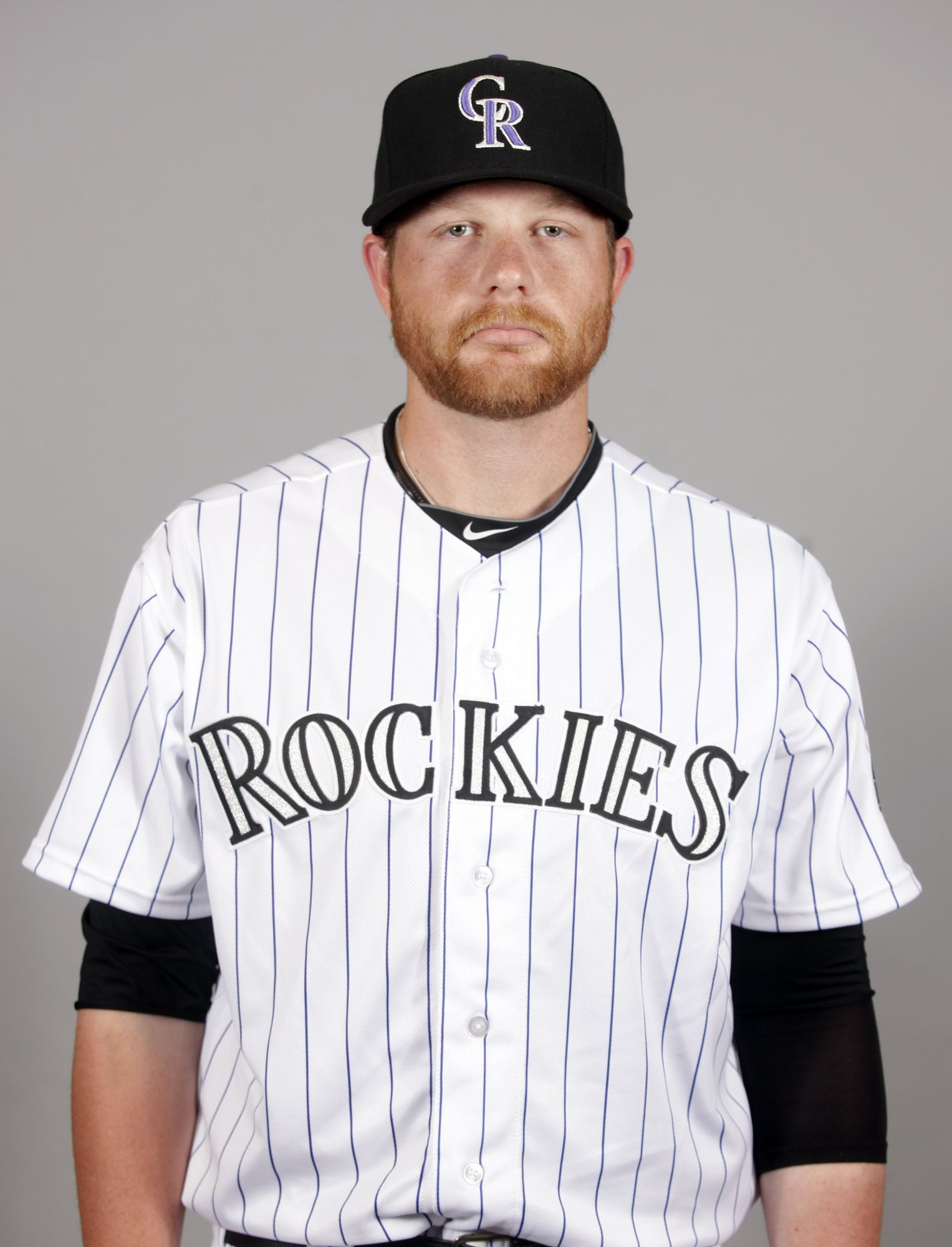
The Rockies made a series of moves this offseason, but seemingly lacked a cohesive strategy and may not be that much better this year than last.
Major League Signings
- Boone Logan, LHP. Three years, $16.5MM.
- Justin Morneau, 1B. Two years, $12.5MM. 2016 club option.
- LaTroy Hawkins, RHP. One year, $2.5MM.
- Jorge De La Rosa, LHP (exercised $11MM club option).
- Matt Belisle, RHP (exercised $4.25MM mutual option).
- Total Spend: $46.75MM
- None
- Acquired RHP Jordan Lyles and OF Brandon Barnes from Astros in exchange for OF Dexter Fowler
- Acquired LHP Brett Anderson and $2MM from Athletics in exchange for LHP Drew Pomeranz and RHP Chris Jensen
- Acquired OF Drew Stubbs in exchange for LHP Josh Outman
- Acquired LHP Franklin Morales from Red Sox in exchange for IF Jonathan Herrera
- Edwar Cabrera (lost on waivers), Rafael Betancourt, RHP (declined option), Mitchell Boggs (non-tendered), Fowler, Todd Helton (retired), Herrera, Collin McHugh (claimed off waivers), Outman, Pomeranz
Offseason In Review: Los Angeles Angels Of Anaheim
The Angels' level of spending did come anywhere near that of the previous two offseasons as the club worked to avoid luxury tax penalties by adding a pair of young arms via trade.
Major League Signings
- Joe Smith, RHP: Three years, $15.75MM.
- Raul Ibanez, DH/OF: One year, $2.75MM.
- Total spend: $18.5MM.
Notable Minor League Signings
- Brennan Boesch ($800K if he makes the club), Brandon Lyon ($1MM), Yorvit Torrealba ($950K), Mark Mulder ($1MM — since released), Joe Martinez, Chad Tracy, Carlos Pena, Ian Stewart, John McDonald, Clay Rapada, Wade LeBlanc
Extensions
- None
Trades and Claims
- Acquired LHP Tyler Skaggs from the Diamondbacks and LHP Hector Santiago from the White Sox in a three-team trade that sent Mark Trumbo to the Diamondbacks.
- Acquired 3B David Freese and RHP Fernando Salas from the Cardinals in exchange for CF Peter Bourjos and OF Randal Grichuk.
- Claimed LHP Brian Moran from the Mariners in the Rule 5 Draft.
Notable Losses
- Mark Trumbo, Peter Bourjos, Jerome Williams (non-tendered), Tommy Hanson (non-tendered) Chris Nelson, Brendan Harris, J.C. Gutierrez, Robert Coello
Needs Addressed
The Angels entered the offseason with a clearly stated purpose: acquire young, controllable starting pitching without breaking the bank — and thereby incurring luxury tax penalties — in order to do so. Plan A may have been Matt Garza, as reports indicated that the eventual Brewers hurler first received a four-year, $52MM offer from the Halos. Garza confirmed the offer, adding that he was on vacation with his wife at the time of the offer and said he didn't want to think about his contract at that point. By the time his vacation was over, Anaheim had pulled the offer. (Garza would sign for $2MM less but with Milwaukee but the opportunity to earn up to $67MM via incentives and an option.)
And so, the Angels turned to the trade market in order to bolster the starting five. Despite having one of the game's worst farm systems (a result of sacrificing numerous first-round picks to sign the likes of Albert Pujols, Josh Hamilton, C.J. Wilson and others), GM Jerry Dipoto was able to accomplish this feat by trading Trumbo to the Diamondbacks in a three-team deal.
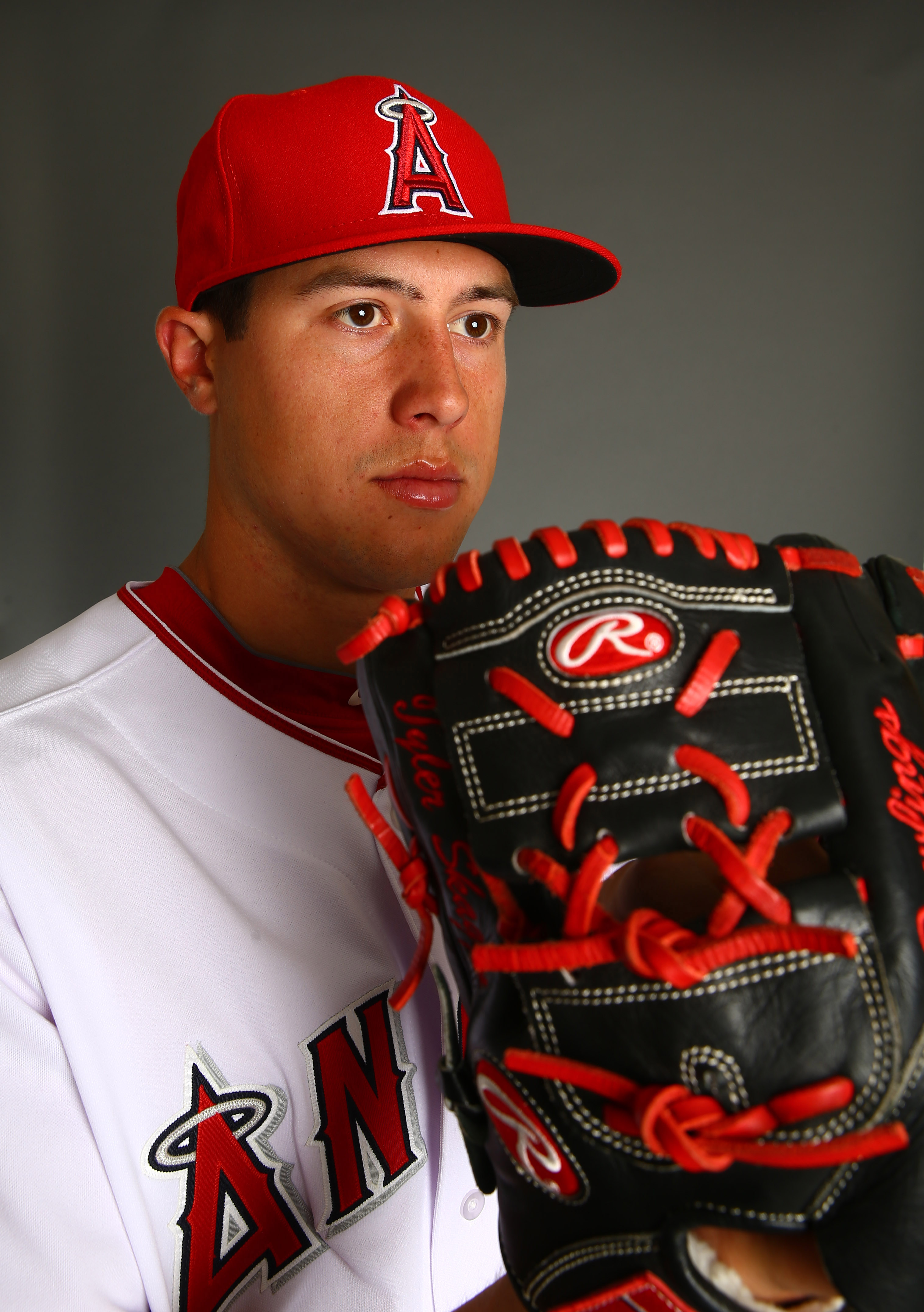 In Skaggs (pictured), Dipoto acquires one of the pitchers he acquired while serving as Arizona's interim GM in the trade that sent Dan Haren to the Angels. The former Top 10 prospect struggled in 2013 due to diminished velocity but looks to have regained some of that missing heat in 2014 already — a promising turn of events for Angels fans. Some view Santiago as a reliever and feel his ERA is a mirage thanks to his substandard command. His ERA may be misleading, but even if Santiago can pitch at a mark near his 4.49 career FIP, the addition of him and Skaggs could benefit the Halos for years to come. As fly-ball pitchers, both should benefit from an outfield anchored by Mike Trout in center.
The outfield defense would've been stronger, but Dipoto & Co. saw fit to dispatch Bourjos and former first-rounder Grichuk to St. Louis in exchange for Freese and Salas. Freese is a decent bounce-back candidate but has long had health questions. He could provide an upgrade in Anaheim, as Angels third basemen slashed just .249/.308/.332 as a whole, but he has just two years of team control remaining to Bourjos' three and is considerably more expensive. Salas has pitched at replacement level since a strong 2011 and doesn't figure to benefit from the move to the American League. He'll look to join a bullpen that posted the fifth-worst combined ERA in all of baseball last season (4.12).
It was that underwhelming performance that led the Angels to aggressively pursue Smith — a former righty specialist who has shown a great deal of improvement versus left-handed hitters in recent years. However, as broken down by MLBTR's Tim Dierkes at the time of the signing, Smith doesn't have elite control, doesn't miss many bats and had his excellent 2013 propped up by an unsustainable strand rate. While his ground-ball tendencies are strong, one wonders if the Angels would have been better suited to wait out the relief market and sign a cheaper arm. Doing so would have allowed them to add a safety net such as Paul Maholm or Chris Capuano on a minor league deal, should Skaggs, Santiago or Garrett Richards need minor league time or should Wilson or Jered Weaver hit the disabled list.
Questions Remaining
While the additions of Skaggs and Santiago give the Angels a serviceable pair of lefties to round out the rotation, the duo doesn't come without risk. Skaggs has his velocity back, but he's yet to so much as sniff big league success, as reflected by his 5.43 ERA in 68 career innings. Santiago's never topped 149 innings in a professional season, and even Richards, the incumbent third starter, has never topped 157 innings (2011). Joe Blanton offers depth to absorb some starts, but his signing has proven to be an abject bust to this point, and there's little Major League ready depth beyond right-hander Matt Shoemaker and non-roster invitee Wade LeBlanc. All of this makes the decision to non-tender Williams — who was projected by MLBTR contributor Matt Swartz to earn just $3.9MM — rather puzzling. The veteran swingman could've served as a nice insurance policy given the likely presence of three starters who aren't used to shouldering this type of workload in manager Mike Scioscia's rotation. Instead, the Angels have considered carrying an extra reliever due to rotation questions, as Mike DiGiovanna wrote earlier in the spring.
Among the club's established players, it's a gross understatement to say that health will determine the fate of this club. Albert Pujols missed 61 games and was hobbled by plantar fasciitis even when in the lineup, leading to the worst season of his career. Josh Hamilton's home run power went missing as he played through a variety of minor maladies without ever hitting the disabled list. He also continued the concerning trend of whiffing in roughly a quarter of his plate appearances. Freese missed significant time with persistent back issues, and Erick Aybar hit the DL for a third straight season.
Despite the addition of Smith, the bullpen lacks much in the way of reliable relievers. Ernesto Frieri has emerged as a solid, albeit erratic ninth-inning arm, but the rest of the relief corps will be comprised of Dane De La Rosa, Kevin Jepsen and Sean Burnett (who missed nearly all of 2013). Beyond that, names like Cory Rasmus, Michael Kohn, Salas and Moran will be fighting for spots.
Also worth some degree of concern is the lost power with the departure of Trumbo. The Halos will attempt to recoup some of that pop through the 41-year-old (42 in June) Ibanez, who clubbed 29 homers with the Mariners in 2013. However, Ibanez also posted just a .306 OBP (not that Trumbo was better in that regard) and wilted in the season's second half last year, slashing just .203/.295/.345 with a mere five of his 29 homers. The Angels seem to be counting on him as their everyday DH, but they could be in trouble if his post-All-Star-break form of 2013 was a portent of things to come. A rebound from former first-round pick C.J. Cron in the minors would give them a nice alternative, but the upper levels of their farm system doesn't carry much in the way of impact bats.
Deal of Note
It seems silly that when discussing a team as deep-pocketed as the Angels — they of $240MM and $125MM commitments to Pujols and Hamilton in 2011 and 2012 — the "deal of note" would be a mere $1MM signing. However, when that one-year, $1MM contract is issued as a sign of good faith to the game's best player, it carries some weight.
The Angels gave Mike Trout the largest salary ever for a pre-arbitration player that wasn't on a Major League deal coming out of the draft — a far cry from the meager $510K salary he received following his MVP runner-up in 2012. Trout and the Angels are said to be discussing an extension that could span six years and begin in 2015 (so as to avoid luxury tax implications for the coming season). Trout has gone on record as stating that he's fine with discussing a new contract once the season begins, so there's no rush for the Angels to get a deal done.
However, another MVP-caliber season that positions Trout for a record-setting payday could arguably be a bigger risk for the Angels than signing him to a record-setting extension right now. A third consecutive historic season might be enough to convince Trout that he's better off going year to year through the arbitration process and hitting the open market in search of baseball's first $300MM (and perhaps even $400MM) contract as a 26-year-old.
Overview
The Angels have three players on their active roster who have been considered among the game's five to 10 best hitters within the past three years in Trout, Pujols and Hamilton. As such, it would be a mistake to completely write this team off despite the poor performance of the latter two in 2013. A rebound from Pujols and/or Hamilton would drastically alter the perception of this team, particularly in light of injuries suffered by the Athletics (Jarrod Parker) and Rangers (Derek Holland) that will undoubtedly impact their seasons.
However, the uncertainty that shrouds those fading stars could be applied to the entire team. Will Freese stay healthy? Can their rotation succeed with a trio of starters that have never even reached 160 innings in a season? Does Trout have another 10-WAR season in him? Will a largely unproven bullpen be able to hold the leads it inherits?
When it comes down to it, the Angels have a big-market payroll but many of the question marks typically associated with a mid- to small-market club. Contention is a long shot, but if their big guns rebound, the rest of the division had best be on full alert, because the Angels possess enough star power to make a run if things break their way.
Photo courtesy of USA Today Sports Images.
Offseason In Review: Tampa Bay Rays
Between keeping David Price and preparing to spend a franchise-record high in payroll, the Rays are going all-in on challenging for a pennant in 2014.
Major League Signings
- James Loney, 1B: Three years, $21MM.
- Grant Balfour, RHP: Two years, $12MM.
- Jose Molina, C: Two years, $4.5MM.
- Ben Zobrist, 2B/SS/RF: One year, $7MM (club option exercised).
- Yunel Escobar, SS: One year, $5MM (club option exercised).
- Juan Carlos Oviedo, RHP: One year, $1.5MM.
- Total spend: $51MM
Notable Minor League Signings
- Erik Bedard ($1.15MM if he makes the Major League roster), Wilson Betemit, James Darnell, Mark Lowe, Victor Mateo, Jordan Norberto, Ray Olmedo, Jayson Nix
Trades and Claims
- Acquired RHP Heath Bell, $500K (from the Diamondbacks) and C Ryan Hanigan (from the Reds) in exchange for RHP Justin Choate and OF Todd Glaesmann (to the Diamondbacks). The Reds also received LHP David Holmberg from the Diamondbacks as part of the trade.
- Acquired IF Logan Forsythe, RHP Brad Boxberger, RHP Matt Andriese, RHP Matt Lollis, and 2B Maxx Tissenbaum from the Padres in exchange for LHP Alex Torres and RHP Jesse Hahn.
- Acquired RHP Nate Karns from the Nationals in exchange for C Jose Lobaton, LHP Felipe Rivero and OF Drew Vettleson.
- Claimed OF Jerry Sands off waivers from the Pirates.
Extensions
- Ryan Hanigan, C: Three years, $10.75MM ($3.75MM club option for 2017 with an $0.8MM buyout).
- David DeJesus, OF: Two years, $10.5MM ($5MM club option for 2016 with a $1MM buyout).
Notable Losses
- Fernando Rodney, Kelly Johnson, Roberto Hernandez, Jesse Crain, Delmon Young, Alex Torres, Jose Lobaton, Luke Scott, Chris Gimenez, Sam Fuld, Wesley Wright
Needs Addressed
It's not exactly Dodgers/Yankees territory, but for the Rays, their 2013-14 offseason counts as a major financial splurge. Between their commitments to pre-arbitration players and the approximately $71.64MM committed to 18 players, Tampa Bay will be spending over $80MM on payroll next season, the highest in franchise history (thanks to Cot's Baseball Contracts for the info). Executive VP of baseball operations Andrew Friedman openly admitted that this type of payroll was "certainly not a sustainable number in terms of where we are revenue-wise" in early January, and that was even before the Rays added Grant Balfour on a two-year, $12MM contract.
And yet, as Friedman noted, "we felt like we had a really good chance to be great next year, that’s why we’re doing what we’re doing.” While you can count on the Rays trimming back the payroll next offseason, right now they're willing to take a one-year financial hit in order to chase a World Series, and Friedman has assembled a club that stands as one of the favorites to win it all in October.
The first hint that this could be a more expensive winter than usual for Tampa Bay came when the team somewhat surprisingly picked up David DeJesus' $6.5MM option for 2014, and then converted that deal into a two-year, $10.5MM contract with a 2016 option. Keeping DeJesus on an eight-figure deal seemed like a curious move given that the Rays already had Matt Joyce as a left-handed hitting outfield option. Joyce's name was floated on the trade market over the winter but ultimately kept in the fold, so between he and DeJesus, the Rays will have the left field and DH spots covered whenever they face a right-handed starter.
The Rays also added a right-handed bench bat in Logan Forsythe, who was the most experienced piece of a five-player package acquired in a late-January trade with San Diego. Forsythe and minor league signings Jayson Nix and Wilson Betemit all fit the Rays' penchant of acquiring versatile bench players, and since Forsythe is only 27 and has some strong minor league numbers to his name, he's a player that could earn a bigger role with the club in the future. The starting middle infield combo of Ben Zobrist and Yunel Escobar had their options exercised for 2014, and the Rays also have options on both veterans for 2015.
Left-hander Alex Torres was sent to the Padres in the Forsythe trade, a loss that Friedman explained was tolerable since the Rays already have southpaws Jake McGee and Cesar Ramos in the bullpen. The relief corps saw some major turnover in the offseason, with Fernando Rodney, Wesley Wright and Jesse Crain (who never actually threw a pitch as a Ray) leaving and Balfour, minor league signing Mark Lowe and Heath Bell all coming into the fold. Juan Carlos Oviedo also re-signed with the Rays for a guaranteed $1.5MM after they declined his $2MM option for 2014.
Bell and Ryan Hanigan came aboard in the Rays' biggest move of the offseason, a three-team deal with the Diamondbacks and Reds. Tampa Bay gave up two minor prospects in order to acquire what they hope will be their everyday catcher and to take $4.5MM of Bell's salary off the Diamondbacks' hands. Bell could also much more than just a salary dump, given that he posted a 2.71 SIERA and 3.08 xFIP in 65 2/3 IP last season, though a .337 BABIP and an 18.5% home run rate boosted Bell's ERA to a (still not bad) 4.11 ERA.
Hanigan became expendable in Cincinnati when the Reds signed Brayan Pena, and the Rays moved quickly to lock Hanigan up to a three-year extension following the trade. He is known for being an excellent defensive catcher in terms of pitch-framing and throwing out would-be base-stealers, but he also posted a .275/.370/.360 slash line over 1320 PA from 2006-12 before slumping to a .567 OPS in 2013 that may have been caused by a .216 BABIP.
Since the Rays brought back veteran Jose Molina, they had a surplus of their own at catcher that was addressed when Jose Lobaton and two High-A prospects were traded to the Nationals for right-hander Nate Karns. The 26-year-old Karns brings yet another live arm to Tampa's organization, as he has a career 2.66 ERA, 2.83 K/BB and 10.5 K/9 through 304 minor league innings, though the 2014 Baseball America Prospect Handbook (which ranked him the ninth-best prospect in Washington's system) believe he projects as a future setup man unless he improves his command and adds a third pitch beyond his "91-95 mph power sinker" and "wipeout hammer curveball, which ranges from 82-85 mph."
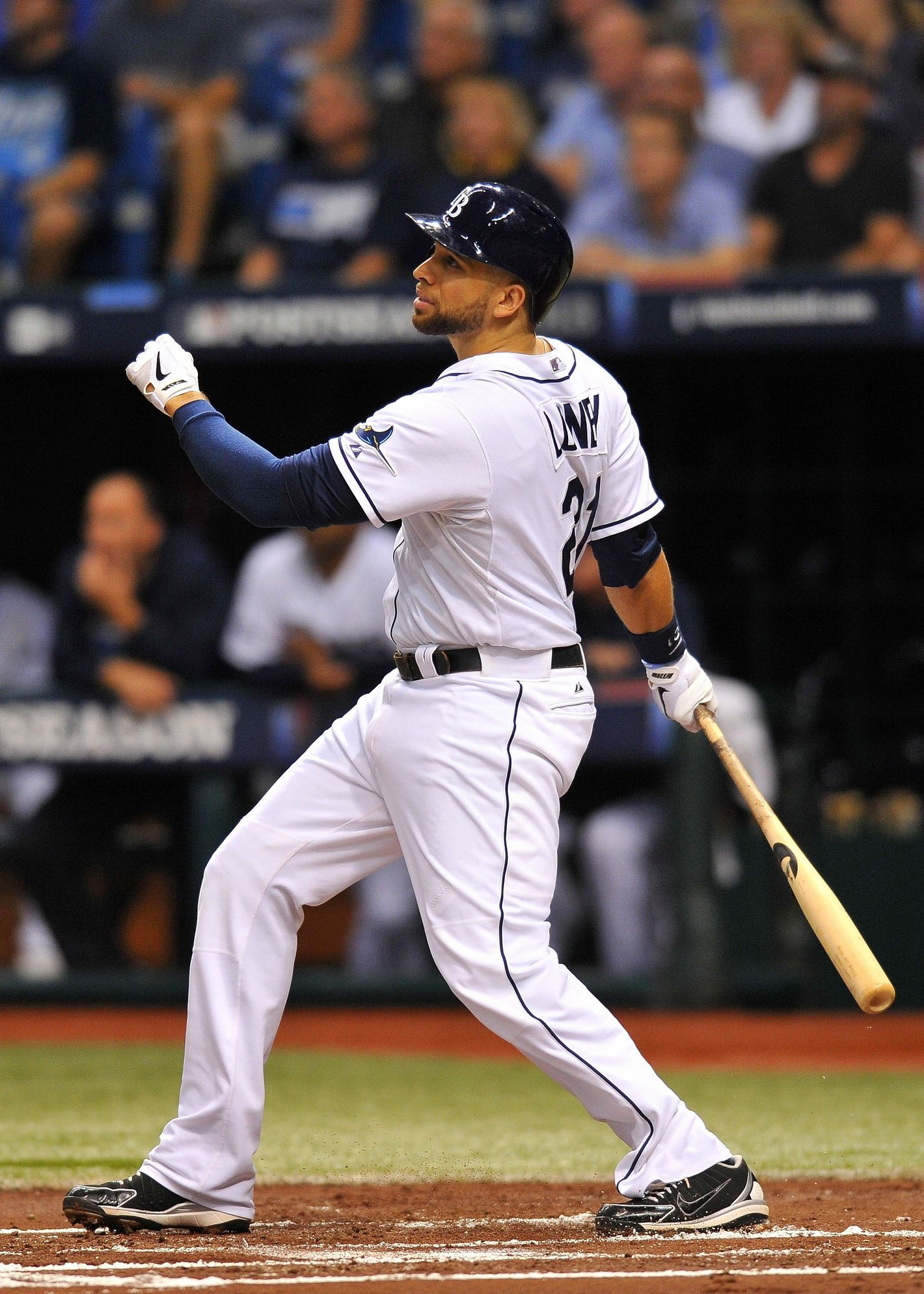
After hitting on Casey Kotchman in 2010 and missing on Carlos Pena in 2011, the Rays struck paydirt on another short-term first base reclamation project when James Loney revived his career with a 2.7-WAR season. The Rays checked out the market for other first basemen, including discussing a trade for Ike Davis with the Mets, before sticking with the familiar option and re-signing Loney to a three-year, $21MM contract (their largest free agent commitment ever), beating out similar offers from the Pirates, Brewers and Astros.
Questions Remaining
The Rays could use a more proven right-handed bench bat than their current selection of Forsythe, Betemit, Nix and Sean Rodriguez, though Forsythe has a solid .290/.363/.430 slash line in 249 career PA against lefty pitching. Zobrist's power numbers took a drop last season, though he improved his contact rate. Fifth starter Jeremy Hellickson will miss up to two months of the season after undergoing arthroscopic elbow surgery, though the Rays have Jake Odorizzi, minor league signing Erik Bedard and Ramos as fill-in options.
If these seem like nit-picking problems, you're right, as there isn't much left to question about a very talented Tampa Bay squad. It's easy to see why Friedman and principal owner Stuart Sternberg were inspired to spend some extra money this winter in order to patch up the few holes remaining in the roster — this may be the deepest and most versatile group of players in Rays history, which gives manager Joe Maddon even more opportunity to squeeze the most out of his club.
This feeling that the Rays were so close to a possible championship may be one of the reasons why Price is still in Tampa. When the offseason began, it seemed as if a Price trade was almost inevitable, as dealing their ace with two years of remaining control would maximize the Rays' return. This is just my speculation, but it's possible that some of the Rays' more expensive moves from earlier in the offseason (i.e. DeJesus' extension, Hanigan's extension, taking on Bell's salary) were made with the expectation that Price's salary would be off the books for 2014 and 2015.
Teams such as the Rangers, Dodgers, Mariners, Giants, Blue Jays and Diamondbacks at least checked in on what it would take to obtain Price, though no serious trade rumors ever seemed to develop. As the offseason hit January, opinions began to shift that the Rays would now keep Price through 2014, or at least until the trade deadline if the team struggled. Price himself thought Masahiro Tanaka's late posting may have been a factor, as interested suitors like the Dodgers and D'Backs spent much of their offseason in pursuit of the Japanese right-hander rather than negotiating a deal with Friedman.
Why didn't a Price trade materialize? The simple answer is that Friedman didn't find an offer that met the high standard he required to move his best starting pitcher. Friedman's ideal trade package included both blue-chip prospects for the future and quality everyday players who could help the Rays in 2014; that's a very high price tag (no pun intended) for any team to meet. The Rays managed such a trick once when they dealt James Shields to the Royals, but since moving Price would further deplete the Rays' pitching staff, Friedman was likely looking for even more for Price than he received for Shields.
You could hardly call it a disappointment for the Rays that no trade partner emerged, as having Price atop the rotation is not exactly a burden, plus Friedman can always explore a deal next winter. He'll get less of a return for just one year of Price's services, but that's a sacrifice Friedman would happily make if Price's presence helps the Rays to a World Series.
Deal Of Note
Between Rodney and Kyle Farnsworth, the Rays have had great success over the last few years at creating star closers out of cheap relief signings. This season, however, Tampa Bay eschewed the low-cost veteran route and replaced Rodney by spending $12MM to sign Balfour. It was a reasonable price for a free agent closer in this year's market, and $2MM less than the Mariners paid to sign Rodney.
The problem with paying extra for a closer, of course, is that if the closer struggles or gets injured, that loss hurts a small-market team even harder. Balfour's health became a question mark when the Orioles walked away from a two-year, $15MM agreement with the closer due to concerns about his knee and wrist. Since Balfour passed his Rays physical and the O's also nixed an agreement with Tyler Colvin over a physical, it could be that Baltimore is just particularly cautious and Balfour is fine. Still, Balfour's recent dead arm issue during Spring Training undoubtedly caused some concern for Rays fans, even though Balfour is back throwing with no apparent problem.
If the Rays were ever going to sign a closer to an eight-figure deal, however, Balfour is a good fit. He is both a known quantity to the Rays (having pitched for the club from 2007-10) and he's been one of the better relievers in baseball in recent years, amassing a 2.47 ERA, 9.2 K/9 and 2.82 K/BB rate over 254 2/3 IP from 2010-13 and posting an incredible 2.9 rWAR performance as a setup man in 2008. It's a track record that comes at a price for the Rays, but Balfour's history indicates he'll be worth it.
Overview
The Rays are no strangers to the postseason, and since most of their young core is controlled, it isn't like 2014 will be the last time the Rays are ever in the playoff hunt. Nonetheless, this year seems like it carries extra weight for Tampa given their added payroll and their closing window with Price, as a long-term extension for the ace left-hander still seems quite unlikely.
In my Rays Offseason Outlook piece from October, I wrote that "Friedman needs the return on the Price trade to keep the Rays afloat for championship runs for the rest of the decade." One could argue that Friedman hurt the 2019 or 2020 Rays by not dealing Price at the best possible time, but then again, if Friedman couldn't find a deal to his liking, maybe this past offseason wasn't that ideal time.
Since the Rays are putting such a focus on this season, could we see Tampa Bay acquire a high-priced contract at the trade deadline if Friedman feels it's the last piece of the puzzle? As Sternberg recently said, "this year's the exception….we want to give this organization and teams like this a chance to compete and win. And we know that it's going to cost us more than we can afford." While the Rays' expenditures are still very much on the modest side, Sternberg's words have to be music to Tampa Bay fans' ears.
Photo courtesy of Steve Mitchell/USA Today Sports Images
Offseason In Review: Los Angeles Dodgers
Major League Signings
- Alexander Guerrero, 2B: four years, $28MM.
- Erisbel Arruebarrena, SS: five years, $25MM.
- Juan Uribe, 3B: two years, $15MM.
- J.P. Howell, LHP: two years, $11.25MM.
- Brian Wilson, RHP: one year, $10MM. Includes $9MM player option for 2015.
- Dan Haren, RHP: one year, $10MM.
- Chris Perez, RHP: one year, $2.3MM.
- Jamey Wright, RHP: one year, $1.8MM.
- Paul Maholm, LHP: one year, $1.5MM.
- Total Spend: $113.85MM (Including Wilson option)
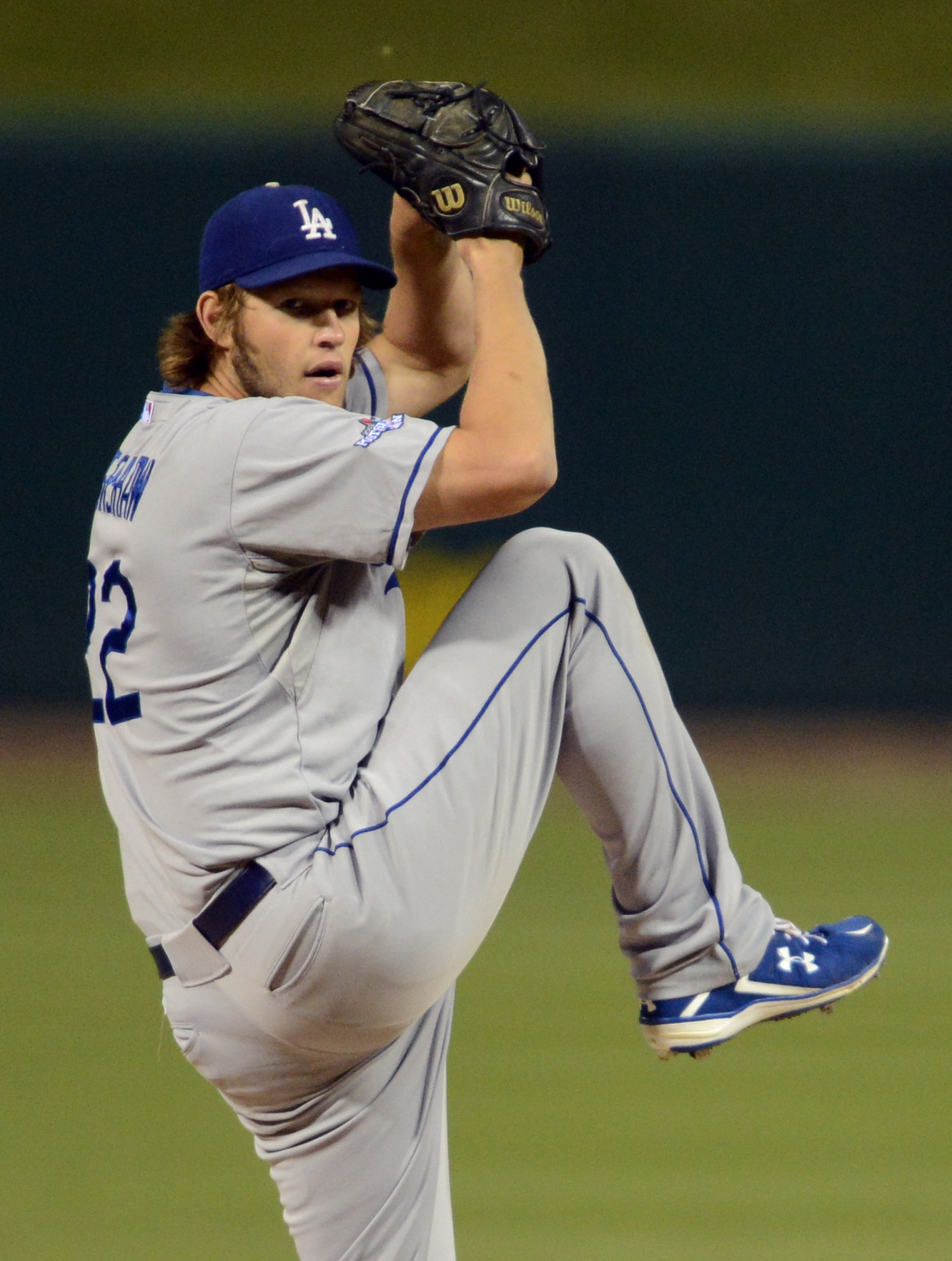
- Clayton Kershaw, LHP: seven years, $215MM. Opt-out after five years.
- Acquired RHP Seth Rosin (Rule 5 pick) from Mets in exchange for cash considerations.
- Acquired OF Jeremy Hazelbaker from Red Sox in exchange for OF Alex Castellanos.
- Claimed OF Mike Baxter off of waivers from Mets.
- Ronald Belisario, Chris Capuano (declined option), Mark Ellis (declined option), Jerry Hairston (retired), Carlos Marmol, Peter Moylan, Ricky Nolasco, Nick Punto, Skip Schumaker, Edinson Volquez, Michael Young (retired)
Offseason In Review: Cleveland Indians
After making the playoffs in 2013 following the additions of Michael Bourn and Nick Swisher, the Indians had a quiet offseason.
Major League Signings
- OF David Murphy: two years, $12MM, plus 2016 option
- RP John Axford: one year, $4.5MM
- Total spend: $16.5MM
Notable Minor League Signings
- Aaron Harang, Nyjer Morgan, Jeff Francoeur, Shaun Marcum, Kyle Davies, David Aardsma, Elliot Johnson, Tyler Cloyd
Trades and Claims
- Traded OF Drew Stubbs to the Rockies for P Josh Outman
- Acquired INF Justin Sellers from the Dodgers for cash
Notable Losses
Extensions
- OF Michael Brantley: four years, $25MM, plus 2018 team option
Needs Addressed
The Indians made an upside play to address their bullpen by signing John Axford to a one-year deal. Axford was often erratic as the Brewers' closer, but has great stuff and pitched well down the stretch for the Cardinals. If he performs with the Indians, they have the ability to take him to arbitration for two more seasons. The addition of Axford will help compensate for the losses of Chris Perez (who the Indians released after he lost his closer job down the stretch and wound up in trouble for receiving a package of marijuana at his home) and Joe Smith. Josh Outman, acquired in a deal with the Rockies, will also likely play a role in the Indians' revamped bullpen, perhaps along with Axford, Cody Allen, Bryan Shaw, Marc Rzepczynski and Vinnie Pestano. (Also this offseason, the Indians defeated Pestano and Josh Tomlin in their first arbitration cases since 1991.)
Taking Stubbs' place in right field will be David Murphy, who the Indians signed to a two-year deal. Murphy hit just .220/.282/.374 with the Rangers last season, but that was with a BABIP 75 points below his career rate, so he's a good bet to bounce back and provide a bit of offense, along with above-average defense, this season. If he does, Murphy, Bourn, Michael Brantley and Ryan Raburn could provide the Indians with an above-average outfield.
Questions Remaining
The Indians have taken a hit with the departures of Ubaldo Jimenez and Scott Kazmir this offseason, and will depend on a trio of younger arms in Corey Kluber, Zach McAllister and Danny Salazar. They'll also have Justin Masterson in his last season remaining before free agency. Those four players are all clearly worthy of rotation spots and should be fine, and Salazar, in particular, should help soften the blow of losing Jimenez and Kazmir. But the Indians are still without a fifth starter — Josh Tomlin, Carlos Carrasco, Trevor Bauer and Aaron Harang are competing for the job. Shaun Marcum may eventually be a factor, but he's still recovering from issues related to thoracic outlet syndrome.
There's also the matter of what they'll do with Masterson. Masterson should be able to command a hefty multiyear deal next offseason, but he has reportedly told the Indians he would be willing to take a three-year contract to stay in Cleveland. That seems extremely generous of him, but the two sides have not yet stuck a deal. (The Indians have also reportedly discussed an extension with star second baseman Jason Kipnis.)
Finally, the Indians are trying to figure out where they'll play Carlos Santana, who spent the offseason working out at third base. Yan Gomes figures to take most of the playing time at catcher, Santana's usual position. One possibility might be to have him platoon with Lonnie Chisenhall, a left-handed hitter, at third. Santana, a switch-hitter, could then spot Gomes at catcher or DH on days when Chisenhall is at the hot corner. Chisenhall struggled in the big leagues in 2013 but is still just 25 and has hit well at the Triple-A level. Much hinges, however, on how well Santana takes to the position.
Deal of Note
 Brantley's four-year, $25MM extension, which contains an $11MM club option or a $1MM buyout for 2018, buys out one and perhaps two years of free agent eligibility. Brantley had filed for $3.8MM in his first season of arbitration, with the Indians offering $2.7MM. That's a fairly large difference, but the midpoint of $3.25MM would have positioned Brantley to make perhaps $13MM-$16MM in his three arbitration seasons. That means the Indians are effectively paying about $10MM for 2017, which is Brantley's age-30 season, plus the possibility of retaining him in 2018. Brantley is approximately an average player — he's never had a star-caliber season and doesn't have much power, but he hits for good averages and is competent in center or in a corner. The deal will be fine if he maintains his current level of performance, and very good if he takes a step forward as he heads into his late twenties.
Overview
The Indians' surprising 2012-13 shopping spree lingered this winter. A year ago, the Indians spent heavily on Michael Bourn and Nick Swisher, improved by 24 games, and received … what? Attendance was actually lower in 2013 (1.57MM) than it had been in 2012 (1.60MM), and tiny home crowds, frequently in the 10K-13K range, watched the Indians down the stretch as they battled for, and won, a playoff spot. Then their season ended unceremoniously as they lost to the Rays in the AL Wild Card game.
The Indians responded with an offseason in which they didn't seem to make much of an effort to re-sign Jimenez, perhaps content to collect a compensation pick and move forward. They also lost Kazmir, who emerged from baseball oblivion to play a key role on the 2013 team.
This isn't to say the Indians will be helpless in 2014. Bourn and Swisher are still on the payroll, and they actually weren't crucial to the Indians' playoff run last year — Kipnis, Gomes, Santana and Raburn were the Indians' four best position players by fWAR. If Bourn and Swisher can contribute more in 2014, they can offset potential regression by Gomes and Raburn and help the Indians compensate for the losses of Jimenez and Kazmir. A full season from the very promising Salazar could also help the Indians significantly. It wouldn't be at all surprising to see them make another playoff run.
After their splashy 2012-13 offseason, though, the Indians haven't followed up, despite the lucrative TV deal to which they agreed prior to the 2013 season. The Indians could have shortstop Asdrubal Cabrera (who will make $10MM in 2014) and perhaps Masterson ($9.76MM) come off the books after the season. If they do, and the Indians' attendance woes continue, it will be interesting to see how the team responds. If Masterson is in fact willing to take a three-year deal rather than a contract more along the lines of the $105MM extension Homer Bailey recently signed with the Reds, then signing him would seem to be a fairly easy decision, and a potential signal that the Indians are still willing to bid on top talent.
Photo courtesy of USA Today Sports Images.
MLBTR Originals
A look back at the original reporting and analysis found on MLBTR this past week:
- Jeff Todd examined the qualifying offer system by considering its context (impact on the overall market, individual teams, and players) and purpose (taxing free agency, distributive goals, and competitive benefits). Jeff opines changes to the QO (including de-coupling the compensation and forfeiture aspects, encouraging participation by smaller-payroll clubs, and more closely aligning compensation/forfeiture to a player's actual market value) could vastly improve the system's function by more evenly spreading its benefits and burdens.
- The 2013-2014 Offseason In Review series continued with Jeff's synopsis of the Giants and Padres; Charlie Wilmoth's look at the Pirates and Cardinals; Mark Polishuk's rundown of the Yankees; Tim Dierkes' recap of the White Sox; and Steve Adams' analysis of the Twins and Royals.
- Tim concluded his Out Of Options 2014 series (the 40-man roster players who have less than five years service time and are out of minor league options, per MLBTR sources) with his survey of the AL East, NL East, and AL West. Tim also combined the division-by-division breakdowns into one all-encompassing list sorted alphabetically by team.
- Spending on free agents this offseason has now exceeded $2B, so Jeff updated each team's total to date.
- A pair of players switched agencies this week. Tim was the first to report White Sox outfielder Avisail Garcia joined Octagon after having been with the Beverly Hills Sports Council and MLBTR learned Astros shortstop Jonathan Villar left the Kinzer Management Group for MDR Sports Management.
- Steve hosted this week's live chat.
- Zach Links assembled the best of the baseball blogosphere for you in Baseball Blogs Weigh In.
Assessing The Qualifying Offer System & Its Purposes
In a recent post, I set forth some context for understanding the overall impact of the qualifying offer system. Now, I would like to try to connect those effects to the actual or potential purposes of the qualifying system, to assess its function and fairness.
While a ready response to the fairness of the system is that it was subject to the collective bargaining process, that does not insulate it from critique. If nothing else, representation of all MLB players does not always ensure that the resulting system will be fair for all player subclasses. The same holds true on the other side of the ledger, as the qualifying offer system has important implications for competitive parity among teams. Putting aside the overall balance between league and union, how does the system function within each of those two entities?
And there is more to consider than just the suppression of salaries (however minimal) and elements of fairness. Just as in setting the rules for the game itself, the rules of the market should aim for consistency of results, a smoothly functioning process, and minimization of situations in which the rules interfere with play (the game being, in this case, a contest of roster construction).
It is fair to ask: what are the reasons to have a system of this kind, and how well does the current iteration serve them while minimizing collateral effects?
A. Taxing Free Agency
One rather obvious purpose of the QO system is that presented already in the first post: it functions as a tax on free agency that allow clubs to allocate money to other purposes.
1. Resource Reallocation
As discussed at length already, the system undeniably serves this purpose by directly limiting the new contracts of players that have declined qualifying offers and transferring leverage to teams that are negotiating extensions. Though its overall impact on a league-wide basis is relatively limited — I estimated that the total value of draft pick compensation transferred annually has been only about 2% to 2.5% of the overall dollars committed through free agency — the system certainly weighs heavily for particular teams assessing a particular player. Taking that as a valid aim of MLB and its member teams, however, questions remain.
2. Disproportionate Burden
Accepting that current MLB players as a whole take on some limitation of overall earning capacity through free agency, that says little about where the burden should fall. It is apparent that, under the current system, the overall benefit to teams is extracted from a limited subset of the market.
The impact is especially severe, in relative terms, for an even smaller group: the relatively marginal QO recipients. While I will not restate the entire point here — see my first post on the topic — suffice it to say that mid-level free agents (and free agents to-be) face potentially wide-ranging impact. Not only is the value of a lost draft pick greater relative to those players' own open-market values, but it can have huge effects on how their market develops and plays out.
It has been suggested that players and teams will do an increasingly accurate job of evaluating the market; a player like Nelson Cruz, for example, might accept the QO, or his former team might not even extend it in the first place. That would lower the relative impact of the system as against overall spending, and would reduce the instances of specific players bearing a severely disproportionate cost.
But the overall benefit-burden ratio would remain largely intact. And, because of the offer's single rate, those players who are just good enough to draw a QO would carry a relatively much larger burden. Surely, there are better ways to take some of the money off of the top of free agency and reserve it for the teams. Were that the only purpose, it is doubtful the qualifying offer system would have been arrived at.
3. Slowing Spending Growth
Could it be that, more than just functioning as a straight tax, the system was intended in part to dampen the growth of spending? By forcing teams to sacrifice non-monetary value, perhaps, would reduce the incidence of unrestrained bidding wars.
One ready response, of course, is that the QO system has seemingly done little to stem record free agent spending, which at last check was up nearly 40% over last year. If the league hoped that stemming the tide of spending growth would result in some part, it seemingly has not. Moreover, as discussed below, the system contains several massive holes that — among other things — severely limit its potential for impacting overall market spending.
B. Distributive And Competitive Purpose
Another oft-noted reason for employing mechanisms that grant rights to teams with respect to players reaching free agency is to compensate them for potentially losing their current MLB talent, or perhaps to help them instead retain it. Likewise, teams signing impact free agents arguably should be forced to sacrifice some future value to do so. Underlying these possible goals are purposes both distributive (roughly, high-revenue to low-revenue) and competitive (i.e., maintaining general parity for the league's overall benefit) in nature.
1. Limitations On The Use Of The Qualifying Offer
At present, a player must start the year with the same club he finishes with in order to be eligible for a qualifying offer. Thus, Matt Garza and Zack Greinke hit the market without compensation attached, while Ubaldo Jimenez and Ervin Santana entered free agency with the burden of a pick.
This potentially serves some functions: First, it prevents contenders from replacing sacrificed future value (through a mid-season trade) with a pick reaped through a qualifying offer. This could be thought to have the effect of preventing the system from passing on too great a benefit to large-market teams, as a general matter. Of course, it also hypothetically limits the return that selling clubs can reap through mid-season trades to a corresponding degree, so the overall balance may not be impacted.
Likewise, the limitations could provide some speculative incentive for teams to retain their own players at mid-season, which also carries competitive implications. Because a mid-season acquisition cannot bring his new team a draft pick, clubs that are out of contention are slightly more likely to hold onto their established players and either extend them or make them a qualifying offer of their own. Were acquiring clubs able to recoup future value after the rental period was over, they would be willing to give up more at the point of acquisition. Of course, it could be that no players really fall in the sweet spot: good enough to hypothetically command a QO from a non-contender at the end of the year, but not so good that they can still bring back greater value through prospect return and/or cost savings in a mid-season swap.
On the whole, the rule that a player cannot receive a qualifying offer from a team he was not with on Opening Day appears to have quite limited benefits.
2. Market-Skewing Results
Once more, however, there is a cost. When Jimenez requires a pick, and Garza does not, it not only leaves the former to bear the burden, but also impacts the resulting player-acquisition market. While the actual results are impossible to pin down, they are far-reaching. Most obviously, there is an effect on where certain players end up in a given free agent period.
Remember, much of the impulse for shedding the old Type A/B system, which was heavily dependent upon the unreliable the Elias Bureau rankings, was to avoid illogical results. Market-driven decisions play a role in the current QO system, but the limitations inherent in its current form lead to drastically skewed results.
Nothing illustrates this better, perhaps, than the fact that compensation free agents Stephen Drew and Kendrys Morales have had to consider waiting until after Opening Day, or even the June amateur draft, to sign. By waiting until the season starts, the player can ensure he will not receive a qualifying offer in the ensuing offseason; by waiting until after the draft, the player can shed the compensation altogether.
These strategies (or, at least, the threat thereof) are available to players as ways to push back against the system and gain some leverage. The alternative is to accept a one-year deal (as did Cruz and Santana) and face another qualifying offer in the next year — if they even play well enough and stay healthy. But the possibility of players waiting out the market into (let alone halfway through) a season is hardly representative of a smoothly functioning market, even if it does not come to fruition. While a multitude of factors played into the situations that these players ended up in, the result is clearly not a ringing endorsement of the current arrangement.
3. Sacrificing Future Value
Less obviously, but perhaps more importantly, the rule prohibiting qualifying offers to mid-season acquisitions means that it is often possible to obtain current production without sacrificing future value. If one purpose of the system is to force teams to give up expected future production to add impact talent to their current roster — thus serving general competitive and even distributional imperatives — then the qualifying offer process is at best highly inconsistent.
While, on the one hand, teams that acquire players mid-season cannot cash them in for picks, the clubs that subsequently sign such players need not give up a future choice. The Dodgers were able to sign Greinke without giving up a draft slot. Certainly, the club could have simply priced a pick into its offer had Greinke been eligible for and received a qualifying offer; or, it could have ignored the draft choice and made the same offer. Either way, Los Angeles would be without its fifth overall prospect (Chris Anderson, as rated by Baseball America), who it used its first choice to select last year.
4. One Size Does Not Fit All
Equally important, another aspect of the current arrangement — the level at which the qualifying offer is set — serves largely to undermine any distributive purpose. As many have noted, larger-market clubs have made many of the qualifying offers, and thus gained many of the resulting compensatory picks. This has been somewhat overstated, however.
The more notable observation, I would suggest, is that every team to have gained a supplemental choice has done so coming off of a winning season. (In 2012-13: Cardinals, Rays, Rangers, Braves, Yankees. In 2013-14: Yankees, Royals, Reds, Rangers, Indians, Braves, Red Sox, Cardinals.) In part, this resulted because players like Greinke and Garza were traded during the season by non-contending clubs, which were able to recoup greater value through trade. On the other hand, of course, those players likely drew less of a return than they would have had the rule allowed their new teams to make them a qualifying offer at the end of the year.
The issue, perhaps, is more that the high-floor, one-size-fits-all approach tends to harm smaller-market clubs on the margins. Indeed, the Pirates allowed A.J. Burnett to hit the market without an offer. As GM Neal Huntington explained, the price was too high for the club to commit in the event that Burnett accepted the offer. He argued that the system "didn't really do what it was intended to do" in that regard. Supporting Huntington's position is the fact that the Yankees — a higher-payroll, but not necessarily more immediately competitive club — made two consecuive qualifying offers to Hiroki veteran starter coming off of an excellent year but looking for a short-term deal).
Had Burnett remained in New York, might he, too, have received a QO? Did the system fail the low-payroll Pirates, who ultimately lost Burnett without compensation? Whatever one thinks of the validity of the decisions and public reasoning of Huntington (and others who have expressed similar sentiment), it makes intuitive sense that smaller-market teams bear a larger risk in extending qualifying offers, which could prevent them from recouping future value for losing impact players. (Somewhat perversely, in the case of the Pirates, their excellent season also played a role; the club's post-season run removed the possibility of a mid-season trade of Burnett.)
5. Talent Retention And The Buyer's Market
Moreover, the current arrangement has not noticeably helped small-market clubs retain talent when the offer has been extended. This is likely because, as I noted previously, those teams still stand to lose a valuable draft choice (the compensation pick) if they re-sign a player, which they must factor into any offer like any other team.
If anything, the system on its whole may make it less likely, at least in some cases, that such players will return to their former clubs. Teams acquiring multiple compensation free agents (like the Yankees and Orioles this year) are able to decrease the overall future sacrifice that they make by doing so.
Take the case of the just-signed Santana: as things stood before the sudden entry of the injury-riddled Braves into his market, his former club (the Royals) would have lost the top overall supplemental choice (29th overall) if they had re-signed him, while teams like the Yankees (55th), Mariners (74th), and Orioles (90th) would have given up far less valuable slots to ink him, having already forfeited earlier picks. Kansas City GM Dayton Moore made clear that the club was happy that Santana decided to sign rather than waiting out the June draft (which would have prevented the Royals from getting compensation): "I think Erv's going to do very well, and we're going to get the pick. And it all worked out."
As the latest point would imply, there is a plain advantage to making commitments to multiple qualifying offer-declining free agents, since it significantly decreases the per-player cost in terms of sacrificed draft picks. As Orioles GM Dan Duquette put it, "if you do one, I think that makes the second one easier, frankly."
Of course, many teams do not have the resources to pull off that feat. Even the Orioles, whose spending capacity may be greater than their usual recent payroll, only pulled off the feat when it was left with cash and a market still full of quality players late in the spring. "This is the first full year of the [qualifying offer] implementation, and I'm not sure people understood how the market was going to play out. I can't tell you we envisioned that the market would get to this point," Duquette said.
Wise big-budget teams can take advantage of this situation much more than can low-revenue clubs. Just as low-revenue teams may find it harder to operate in the system to obtain draft compensation, they may be put at an even greater disadvantage in the buyer's market.
C. Conclusion
In the final analysis, the QO system performs its asset-shifting function, but achieves that at the cost of arguably unbalanced results. Likewise, it appears that the distributive and pro-competitive impacts of the system carry some significant side-effects (in terms of skewing the market), and that the effects are quite limited (if not self-undermining) in operation.
As explained in my prior piece, the direct financial shift effected by the qualifying offer mechanism is both relatively well-defined and relatively limited. Though the leverage-transferring effects of pre-free agent extension negotiations are difficult to pin down, they, too, can at least be understood. Might it be possible to re-cast the system in a way that matches its current market impact, retains and improves upon its purposes, and minimizes its negative effects? I think so.
The key step, perhaps, lies in de-coupling the compensation and the forfeiture aspects of the system. At present, a player's original team decides whether to make itself eligible for compensation by making the qualifying offer; that decision, in turn, dictates both whether the player's new team will forfeit a draft choice to sign him and whether the player will have to bear that cost. A better system would not make the loss of a pick by a new team depend upon the unilateral action of the original team.
Likewise, instituting other changes — such as mechanisms to enhance participation by smaller-payroll clubs and to more closely tie compensation/forfeiture to a player's actual market value – could vastly improve the system's function going forward by more evenly spreading its benefits and burdens. There are, of course, many ways to approach this and many details to be worked out; I will save an attempt at that undertaking for another day.
Out Of Options Players: AL West
The following 40-man roster players have less than five years service time and are out of minor league options. That means they must clear waivers before being sent to the minors, so the team would be at risk of losing them in attempting to do so. I've included players on multiyear deals. This list was compiled through MLBTR's sources. Our series concludes with the AL West.
Angels: Ernesto Frieri, Kevin Jepsen, Andrew Romine
Frieri is the team's closer, and Jepsen has a spot in the pen as well. About a week ago, Mike DiGiovanna of the L.A. Times noted that Angels manager Mike Scioscia said the team could open the season with an eight-man bullpen. DiGiovanna further explained, "Carrying an extra reliever and a five-man rotation would limit the Angels to a three-man bench consisting of a backup catcher, utility infielder and outfielder."
Romine is battling non-roster invitee John McDonald for that utility infielder job, though as MLB.com's Alden Gonzalez noted earlier this month, Grant Green appears to have joined the mix.
Astros: Chris Carter, Lucas Harrell, Raul Valdes
Carter will serve as the team's designated hitter. Harrell is looking to reclaim a spot in the Astros' rotation, which is something of an open competition behind Scott Feldman. Valdes, a lefty reliever, is the oldest player in Astros camp at age 36, according to Evan Drellich of the Houston Chronicle. He's competing for a lefty relief spot with Darin Downs and Kevin Chapman, wrote Drellich a week ago.
Athletics: Daric Barton, Josh Donaldson, Brandon Moss, Fernando Abad, Jesse Chavez, Chris Gimenez, Michael Taylor
Susan Slusser of the San Francisco Chronicle wrote about Taylor on Monday and Tuesday, noting that a scout told her a change of scenery might do some good for the 28-year-old outfielder. Slusser says non-roster invitee Sam Fuld is ahead of Taylor to potentially fill in for Craig Gentry if Gentry needs to start the season on the DL. Slusser wrote Monday that Barton will need at least a few more days to recover from a hamstring strain. Barton doesn't fit well at first base in a potential platoon with Moss, wrote John Hickey of the Mercury News in February, so it could be difficult for him to find a roster spot. Moss seems assured of semi-regular first base duty after hitting 51 home runs for the A's over the past two years. Donaldson is the team's starting third baseman after a breakout 2013.
Gimenez is seemingly fourth on the A's depth chart at catcher, so he has an uphill battle for a roster spot out of camp.
MLB.com's Chris Gabel wrote about Abad yesterday, noting that he's competing with Drew Pomeranz and Joe Savery to become the second lefty in Oakland's bullpen. Though Abad has surrendered a few runs in his six innings of spring work to date, Gabel quotes A's manager Bob Melvin as praising the 28-year-old, leading the writer to speculate that "he might already have secured a spot in the A's bullpen." Last week, MLB.com's Jane Lee wrote that Chavez "appears to be a lock" for the team's pen.
Mariners: Hector Noesi
The Mariners have an open rotation competition after Felix Hernandez in the wake of injuries to Hisashi Iwakuma and Taijuan Walker, wrote MLB.com's John Schlegel on Tuesday. James Paxton, Scott Baker, and Erasmo Ramirez might be the favorites, though, meaning Noesi is really competing for one spot. Noesi could instead be a long reliever out of the bullpen, Bob Dutton of the News Tribune suggested a week ago.
Rangers: Engel Beltre, Pedro Figueroa, Adam Rosales, Michael Kirkman
In a roster projection from Evan Grant of the Dallas Morning News today, he included both Beltre and Michael Choice, noting that the team doesn't want to lose Beltre. Keeping both Beltre and Choice might mean sending catcher Robinson Chirinos to Triple-A despite an impressive spring. Grant sees Rosales as the team's best backup infield option over Brent Lillibridge and Kevin Kouzmanoff, because Rosales can play second base, shortstop, and third base.
Kirkman is part of Grant's projected seven-man bullpen, while Figueroa is not. As a lefty who throws 95 miles per hour, Figueroa was intriguing enough to the Rangers for the club to claim him off waivers from the Rays in late January. It seems the Rangers will be forced to choose one of the two, barring a trade or injury.
Contextualizing The Qualifying Offer System
At base, the qualifying offer system provides a mechanism that allows teams to allocate resources elsewhere while still obtaining the services of certain desirable, established ballplayers. Those players, in turn, sacrifice a portion of the contractual guarantees they would otherwise obtain in an unqualified market. In effect, the system taxes the prospective earnings of certain players who are (or soon will be) free agents.
For more background on the function of the qualifying offer system, see Avoiding The Qualifying Offer, by MLBTR's Tim Dierkes.
The impact of the qualifying offer system has come under much scrutiny over its first two offseasons of implementation. Some have argued that it unfairly penalizes the above-average but non-superstar players that are made a QO (which, if declined, requires another club signing that player to give up its best non-protected draft pick and the accompanying bonus pool money). Others claim that it allows such players a fair chance to sign a substantial contract, pointing to the offer's value (last year, $13.3MM; this year, $14.1MM). A range of arguments also claims that the system perversely favors larger-market clubs.
But before considering such criticisms (and potential reformulations of the system), it is worthwhile to put the system in its broader context, and to consider carefully how it serves (or disserves) its various actual or potential purposes. While it seems exceedingly unlikely that changes will be made before the current CBA is expired and replaced in December of 2016, the topic deserves consideration and debate leading up to that point. In approaching the issue, it is worth looking carefully at both the money at play and where the various risks, benefits, and incentives fall.
A. Overall Market Impact
How much money — in both real and baseball terms — is at stake here? Dave Cameron of Fangraphs posited recently that a 3x valuation of a draft pick's slot value is a good approximation for that pick's value. In other words, a team considering gaining or losing a draft choice would factor that amount in when assessing the potential impact of signing a player (or allowing that player to sign elsewhere). For the 2013 amateur draft, slot values rose by 8.2%, according to Jim Callis of Baseball America. I will assume both a 3x slot value in reaching a market rate, as well as a like 8.2% increase for the upcoming 2014 draft. (Note: because slots shift with every move impacting the draft, the resulting numbers will not be perfectly precise, but should nevertheless easily qualify as accurate for our purposes.)
In 2012-13, six players declined qualifying offers and changed teams. According to River Ave. Blues, teams sacrificed the 17th, 22nd, 28th, 29th, 42nd, and 70th picks, while other clubs picked up the 28th through 33rd selections.
In 2013-14, to date, nine players have declined qualifying offers and changed teams. (Two QO-declining players have yet to sign.) Again, according to River Ave. Blues, teams have sacrificed the 17th, 18th, 21st, 26th, 44th, 48th, and 54th choices, while other teams gained the 28th through 34th pick. In addition, the Yankees both earned and sacrificed two supplemental first round choices. Because they finished with the worst record among clubs to have earned a supplemental pick, they would have stood to gain the first two of those picks.
Add up the slot values, and apply the 3x multiplier, and these are the results: In 2012-13, teams sacrificed a total value of $27.51MM ($4.585MM per player) and gained $29.33MM ($4.889MM per player). In 2013-14, to date, teams have sacrified a total value of $48.90MM ($5.433MM per player) and gained $48.85MM ($5.428MM per player). The 8.2% assumed increase in draft slot bonuses fairly well accounts for the rise in per-player figures, with the increase in overall impact coming otherwise from the increased use of qualifying offers.

It is worth putting these numbers up against the overall free agent spend to gauge their magnitude. I recently broke down free agent spending trends, including numbers for the 2012-13 period and the 2013-14 period to date. In the 2012-13 free agent period, clubs committed just over $1.463B in total via free agency, while this year's spending has now topped $2B (it was at $1.88B as of that post). Thus, the net draft value transferred through the qualifying offer system has been around 2% to 2.5% of the total open-market spend over the last two years.
That, surely, is a relatively minimal savings for MLB teams on the whole. When considering the full gamut of ways in which teams invest money into players — including free agency, extensions, the draft, and international signings — the money saved (i.e., allowed to be re-allocated) makes up a meager portion of the aggregate. Of course, it is worth wondering the extent to which the prospect of a future qualifying offer also transfers savings and leverage to teams negotiating extensions with players close to hitting free agency. This is impossible to calculate, but nevertheless does also transfer value to individual teams and savings to the league as a whole, as against current MLB players.
B. Impact On Individual Teams
On an individualized basis, teams assessing whether to make a qualifying offer, or whether to sign a player bound by draft compensation, have ample flexibility to value the choices at stake and decide whether and how to factor them into their decision.
Generally, a team making a qualifying offer to a player obviously reaps a substantial, albeit variable, benefit (in addition to having the right to choose whether or not to make the offer). It may ultimately retain that player at a one-year rate which, in theory, is at or below that player's market value. Or, it may instead receive a supplemental draft choice that lands between the first and second rounds of the draft. (It has been suggested that a team can sign a player that declined a QO at a lower rate than can other clubs, but that is not entirely true: once the offer has been declined, a re-signing effectively entails the sacrifice of a draft choice that, as explained below, comes with roughly the same value as the choices given up by other teams.)
A team signing a player that declined a qualifying offer, on the other hand, theoretically ends up in a neutral position, because it can discount its offer by the value it places on the pick that it sacrifices. While draft picks move as they are added and subtracted, teams have a very clear idea of what they are giving up in future value, and can apply their own valuations (including the tradeoff of present and future, and the actual slate of available draftees) to reach a discount.
As noted above, teams that are considering extensions of current players — especially, those close to reaching free agency — can also utilize the threat of a QO (implicit or otherwise) to achieve leverage. That may mean little in negotiations with superstars, but could have a sizeable impact on talks with "merely" above-average players. The possibility of a qualifying offer adds to and even enhances the risks of injury or performance decline already present to an above-average free agent-to-be, which could result in savings to current teams. This factor is, perhaps, enhanced in the situations of older or defensively-limited players who could be looking at short-term contracts after their walk years, even if they put up good numbers.
C. Impact On Players Subject (Or Potentially Subject) To Qualifying Offer
Meanwhile, for players, those issued a QO are subject to the whims of their team and other circumstances outside of their control. The take-it-or-leave-it offer is presented at the team's initiative, before the market even opens. (This year, for instance, Ubaldo Jimenez came with draft compensation; Matt Garza and A.J. Burnett did not.)
Further, the cost of the small reduction in overall spending falls squarely on the shoulders of the small number of players who are made a qualifying offer: their market value is decreased by whatever amount prospective teams choose to discount for the lost pick. And that burden is not shared by any other stake-holders (other players, the league, teams).
One line of sentiment says that some players over-value themselves by rejecting the QO. (No player has yet accepted one.) Even if the offer is an arguably fair price for one year of a certain player's services, however, that does not end the matter. It is quite difficult to reach free agency through service time, let alone to do so at an optimal point in time. Players that do naturally seek to maximize their overall guarantee, often choosing a longer contract with a lower average annual value to avoid the risks inherent in suiting up for another season before securing a future commitment. As Ubaldo Jimenez recently explained it: "I knew that I would have a better offer than the qualifying offer. Or at the very least, I wasn't as much worried about the annual salary, I was more concerned with having the long-term security."
For those that decline the qualifying offer and test the market, the resulting tie to draft compensation can be a significant drain. Though it is often suggested that the downside of the QO system lands solely on the more marginal players that receive an offer, that may be true only in relative terms. We do not know whether, say, Robinson Cano would have garnered a $245MM (rather than a $240MM) guarantee from the Mariners without an offer. But it is likely that the impact of a lost pick was factored in on some level. While the effect is a relative drop in the bucket for top-dollar free agents, it appears nonetheless.
(This is not to suggest that the team would have any focus on the loss of the draft pick in negotiating with a star-level player; rather, the value of the lost pick would be baked into the valuations that the team uses in setting internal parameters before entering negotiations. As Blue Jays GM Alex Anthopoulos has explained, for example, "there's still value" even for picks after the first round, "and you still build that into an offer." Of course, teams may still be willing to go past those valuations to land premier free agents, and/or effectively adjust their internal valuation of a pick downward based on their present roster construction and expected point on the win curve.)
More importantly, though, it is clear that non-superstars take the largest proportional impact. That is made obvious by Nelson Cruz, who recently became the first QO-declining player to sign a deal worth less than the qualifying offer itself, with his one-year, $8MM contract falling over $6MM shy of the $14.1MM he could have taken before the start of free agency. (Previously, the least guaranteed money in a deal to a player who declined a qualifying offer was Adam LaRoche, who signed for two years and $24MM last year after declining the one-year, $13.3MM QO.)
Indeed, the greatest risk for a player may lie not in the possibility that they will see a reduction in their earnings to compensate for the value of a lost pick, but in the impact on that player's overall market. Some teams may decide that they will not sacrifice their draft pick in a given year at all, for any number of reasons. Others may decide that, whatever the theoretical value of the pick, organizational needs dictate that they not cede the choice unless they are signing a player of a certain, higher order. Some clubs may simply put a greater internal value on the draft choice than that suggested by Cameron.
Whatever the case, teams clearly do not take lost picks lightly. "You hear people say, 'Well, what if the [drafted] player doesn't make it,'" Brewers GM Dough Melvin has said. "That's not the sole purpose of a draft pick. You can use those picks for trades. … I'm glad we have Kyle [Lohse], but don't tell me that about overrated draft picks. Their asset value is huge." The net effect, in all likelihood, is often to take away some teams that would be potential suitors and, perhaps, to limit the willingness of some others to offer multiple years.
This could explain, in part, how a player like Ervin Santana ended up taking a one-year pact (at the precise value of the qualifying offer) just to get in camp before the end of the spring. This kind of situation is not unprecedented even without draft pick implications — for instance, Edwin Jackson signed a $11MM pillow contract with the Nationals the year before the QO system went into effect, and did not cost the Nats a pick (he was a Type B free agent under the old system). Like Jackson, Santana had multi-year offers, apparently at about the price achieved last year by Kyle Lohse. But Santana was unwilling to sign for three years at a total value roughly equivalent to two years of qualifying offers, as was Lohse, and was apparently unable to translate relatively strong demand into a fourth year.
The point here is not that the QO in and of itself prevented Santana from achieving the four or five-year deal he was hypothetically entitled to. Rather, it is that, for the reasons just noted above, the qualifying offer played a role in dampening his market and reducing his leverage to pry away more years at a strong average annual value. And that, in turn, makes for an even greater potential increase in the proportion of the burden borne by a limited class of players.
Then, there are the soon-to-be free agents facing the possibility of a market hampered by the burden of draft compensation. As noted above, their leverage is surely reduced by the prospect of carrying that added cost, especially if always-shifting demand turns out to be less than robust. And the qualifying offer introduces risk to the player through the unpredictability of its effects, especially since the system drastically skews the market (through the protection of some draft picks and the fact that teams signing multiple compensation free agents sacrifice increasingly less valuable choices.) Indeed, players like Justin Masterson and Chase Headley have reportedly seen their current teams insert the qualifying offer into extension talks.
D. Conclusion
With this understanding of the broad parameters of the function of the qualifying offer system, the question becomes one of purposes. What does the system hope to accomplish, and hope to avoid? And how well has it done? I will suggest an approach to those questions in a second post.
Offseason In Review: San Diego Padres
The Padres made two substantial free-agent additions while otherwise mostly tinkering at the margins of the roster, and will look to their young core to move the team forward in 2014.
Major League Signings
- Joaquin Benoit, RHP. Two years, $15.5MM.
- Josh Johnson, RHP: One year, $8MM. Conditional $4MM club option.
- Total Spend: $23.5MM
Notable Minor League Signings
Trades and Claims
- Acquired OF Seth Smith from Athletics for RHP Luke Gregerson.
- Acquired LHP Alex Torres and RHP Jesse Hahn from Rays in exchange for IF Logan Forsythe, RHP Brad Boxberger, RHP Matt Andriese, RHP Matt Lollis, and 2B Maxx Tissenbaum.
- Acquired IF Ryan Jackson from Astros in exchange for OF/1B Jesus Guzman.
- Acquired RHP Ben Paullus from Yankees in exchange for IF Dean Anna.
- Acquired OF Alex Dickerson from Pirates in exchange for OF Jaff Decker and RHP Miles Mikolas.
- Acquired LHP Patrick Schuster (Rule 5 pick) from Astros in exchange for RHP Anthony Bass.
- Acquired RHP Devin Jones from Orioles for RHP Brad Brach.
- Claimed OF Alex Castellanos from Rangers.
Extensions
- None
Notable Losses
- Clayton Richard, Ronny Cedeno, Jose De Paula, Colt Hynes, Mark Kotsay, Jason Marquis (still unsigned)
Needs Addressed
Sitting here today, one year ago, did anyone think that Benoit would get nearly double the guarantee of Johnson? Nevertheless, that's what happened, and both righties are now Padres. Benoit, of course, will plug into the setup role vacated by Gregerson, and could ultimately supplant Huston Street in the closer's role with the latter coming up on an option year. In a sense, this was a need of GM Josh Byrnes' own making, though Benoit does represent an interesting choice as a closer-in-waiting who has spent most of his career as a setup man. It remains to be seen how the gambit will turn out, of course; though Benoit has been quite good in recent seasons, he is already 36 years of age.
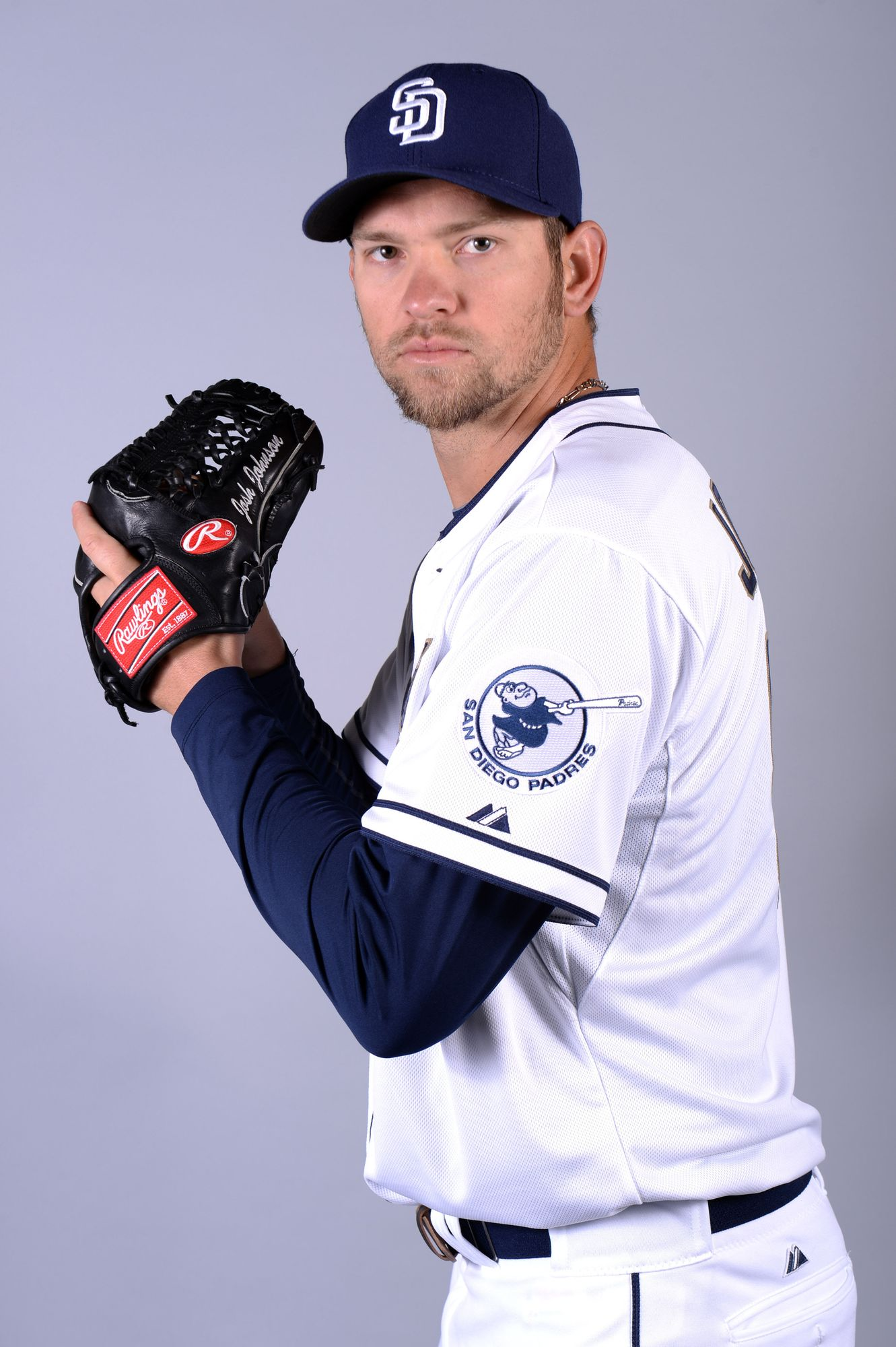
Johnson, meanwhile, represents the last major piece of a re-worked rotation. After moving on from former key arms Edinson Volquez and Clayton Richard, and adding something of a reclamation project by trading for Ian Kennedy last July, the club had room for another arm to put alongside Andrew Cashner, Tyson Ross, and Eric Stults. With younger pitchers like Joe Wieland, Robbie Erlin, and Burch Smith in the organization, GM Josh Byrnes could have stood pat or waited to land a cheap deal with a veteran, innings-eating arm. Instead, he went for upside.
Otherwise, the 2014 roster had no significant, pressing needs. That did not mean that Byrnes and company would sit on their hands, however, particularly with a host of somewhat marginal MLB players occupying valuable 40-man spots. What ensued was a re-working at the edges of the roster seemingly designed to capture some value for surplus parts.
There were many moves, but their net impact is relatively minor. San Diego purged its bullpen of a series of players who threw for the big club last year, led by Gregerson but also including Bass, Boxberger, Brach, Hynes, and Mikolas. Likewise, the Pads moved on from a variety of reserve types, led by Forsythe and including Anna, Guzman, and Decker.
The return for this big group, and the prospects that accompanied them, will have some impact on the MLB roster. Torres is the team's only sure southpaw in the bullpen, while Smith will see plenty of plate appearances from the corner outfield. Schuster is currently battling minor-league signee Sipp for a spot in the 'pen as a second lefty, while Jackson and Castellanos are in the mix for bench roles. Meanwhile, Hahn and Dickerson are both top-thirty organizational prospects (though so was Andriese).
On the whole, the Pads' front office put out a lot of effort that may not make a huge difference. Looking at the two main trades involving MLB players, it is fair to ask whether Torres and Smith are a better combination than Gregerson and Forsythe? San Diego had dealt its primary lefty, Joe Thatcher, in the Kennedy trade, so adding Torres bypassed the need to purchase a new southpaw. But moving Forsythe still left the club with ample outfield options, and does little to make sense of the earlier Gregerson-for-Smith swap.
By sending out Gregerson for an equivalently-priced platoon outfielder, San Diego not only failed to free up salary space but created a need to book an even more expensive replacement in Benoit. Smith, at least, offers a different skillset than Forsythe, who was perhaps redundant with Alexi Amarista. But his power has declined since leaving Coors Field, and defensive metrics are not fans of his outfield work. While it made some sense to bring in a righty-masher, San Diego never moved any of its other corner bats, leaving it with five outfielders deserving of a roster spot (at least until Cameron Maybin suffered his most recent injury). And it is far from clear that Smith was fair value for Gregerson, who has been consistently effective over all five of his MLB seasons.
Questions Remaining
The biggest questions in San Diego relate to the fulfillment of potential. The club features many important young players, two of whom — shortstop Everth Cabrera and catcher Yasmani Grandal — are coming off of PED suspensions arising out of the Biogenesis investigation. While the roster arguably features an over-abundance of right-handed-hitting corner outfielders, one (Maybin) will be out to start the year and another (Carlos Quentin) has really never been consistently healthy. The steady Chris Denorfia is also available, though he lacks the talent of the other two. And in the rotation, in addition to a return to form from Johnson, the club will hope for a bounceback from Kennedy and continued development from Andrew Cashner and Tyson Ross. Getting the answers to these questions is simply a matter of waiting and watching.
On the transactional side, speculation on a Chase Headley extension has undergone a roller-coaster ride ever since he broke out in 2012. It has appeared at times that San Diego was set to make the third baseman the long-term face of its franchise, but at present that seems unlikely. "This has been a topic for a couple years. There's been dialogue. Both sides have tried. We just haven't been able to agree to the essential deal parameters," said Byrnes. "There are no active discussions. But the door's always open." As Headley himself has made clear, the gap between his healthy and productive 2013 and his injury-plagued, less-excellent 2013 campaigns posed a major obstacle.
So, all signs point towards Headley playing out the 2014 season without a new deal, allowing both sides — and the rest of the league — to assess his actual value. The open question, then, is somewhat different at this point: If Headley performs, but the Padres are not within shouting distance of a post-season bid at the trade deadline, will he be dealt?
Deal Of Note
Of course, the Pads are surely hoping that dealing Headley is not an option due to the team's performance on the field. If Byrnes did not feel there was a legitimate chance at a post-season run, it is unlikely that he would have participated in a competitive auction for the towering Johnson. Taking advantage of Petco Park's reputation for suppressing the long ball, San Diego was able to beat out several other teams — including the Pirates, who instead brought in Volquez — for a roll of the dice on Johnson returning to form.
Looking past his misleading ERA totals from last year (he suffered from high BABIP and HR/FB rates with a low strand rate), Johnson has an impeccable track record — when healthy. His SIERA and xFIP marks, for instance, have not strayed above the 4.00 level since 2007. His swinging strike percentage last year was right at his career mark, and he punched out hitters at a career-best rate of 9.18 K/9.
The issue, of course, is durability: Johnson has endured a string of health issues. In fact, he has exceeded 200 innings in just one season and has made it to triple-digit inning tallies in only four MLB campaigns. San Diego bought itself some protection by negotiating a conditional $4MM club option for 2015 that will be available to the club if Johnson fails to make seven starts. While that provides some benefit to the club in the event of a catastrophic injury, the fact remains that Johnson's signing is a roll of the dice.
Johnson's signing, ultimately, makes a lot of sense for both parties. For Johnson, a pillow contract in a pitcher-friendly situation made San Diego a natural fit. The Padres wanted a pitcher of his talent level to supplement their excellent group of younger players, but they did not want to pay the premium needed to get a more established option. There's risk sure, but at one-third the guarantee given to Bronson Arroyo, the potential payoff is worth putting the cash on the line. As Byrnes has explained, "if [Johnson] can pitch like he has for many years in his career, we're a different team."
Overview
On the whole, the Padres' moves seem solid enough. Indeed, in a survey conducted by ESPN.com's Jayson Stark, the team landed second on the "most improved" list among NL clubs. Of course, as Stark noted, San Diego's additions (like those of most of the National League) paled in comparison to what some AL clubs did in terms of impact. But given the organization's solid group of younger players, and limited overall payroll capacity, Byrnes and his staff have put the team in a position to make a run like that of the Pirates last year — if some things break in San Diego's favor.
Photo courtesy of USA Today Sports Images.