
Athletics To Meet With Government Officials About Coliseum Lease Extension
The Athletics have a meeting on Thursday with officials from the City of Oakland and County of Alameda to discuss a lease extension at the Coliseum, reports John Shea of the San Francisco Chronicle.
The A’s are planning to move to Las Vegas for the 2028 season, a move that was already unanimously approved by all 29 other owners. But their lease at the Coliseum in Oakland is up after 2024, leaving them without a home stadium for the three intervening seasons. Various solutions for how to navigate that interim period have been considered, including playing in Sacramento, Salt Lake City, Reno, sharing San Francisco’s Oracle Park with the Giants or playing at the organization’s Triple-A field in Las Vegas.
Staying in Oakland never seemed to be a realistic option, with the relationship between the club and the city growing frosty during and after the stadium negotiations. Oakland mayor Sheng Thao has previously indicated that the city would have lofty demands in any lease discussions, such as the city retaining the rights to the name “Athletics” or a guarantee of a future expansion franchise. More recently, she indicated the city is willing to reopen talks with the club, but also relayed that she hadn’t spoken with owner John Fisher since he started focusing on the Vegas move in April.
It seems likely there’s a financial motivation for the sides to come back to the table. It was reported back in August that the club’s TV deal with NBC Sports California runs through 2033 and pays the club about $60MM per year. Jeff Passan of ESPN later reported that the club will actually receive about $70MM in 2024. But the deal lapses if the club leaves the Bay Area.
Sharing Oracle Park with the Giants would allow the club to continue collecting that money but would come with many logistical problems. The other proposed locations are not considered to be in the Bay Area and would result in forfeiting the deal. If the A’s want to get that TV money, staying in Oakland could be their best bet.
That doesn’t necessarily mean the upcoming negotiations will be fruitful, as the city and county will now they have leverage coming into the talks. But with the club having millions of dollars on the line, perhaps they can work something out. Shea reports that the A’s pay $1.2MM annually in rent. Also per today’s report, the meeting will feature Oakland chief of staff Leigh Hanson, city council member Rebecca Kaplan, county supervisor David Haubert and A’s team president Dave Kaval.
Red Sox Remain Open To Offers On Jansen, Martin, Schreiber
Kenley Jansen has been the subject of trade speculation for a large portion of the offseason. With the Red Sox’s payroll seemingly pushing against ownership’s spending limit, there’s sense in looking to move the four-time All-Star closer. Alex Speier of the Boston Globe wrote this evening that the Sox remain in contact with other teams about a possible Jansen trade before Opening Day.
He isn’t the only Boston reliever who could find himself on the move. MassLive’s Christopher Smith reports that the Sox have also expressed to other clubs they’re willing to field offers on right-handers Chris Martin and John Schreiber.
Of that trio, Jansen probably has the lowest trade value. That’s more a reflection of his contract than an indictment of his performance. Jansen is set for a $16MM salary in the second season of the two-year free agent deal which he signed last winter. That’s a lofty price tag — especially at a point in the offseason in which many teams could be near their own payroll ceilings — but he remains a very effective late-game arm.
Jansen locked down 29 of 33 save opportunities a year ago. He led the National League with 41 saves for the Braves two seasons back. He has allowed between three and four earned runs per nine in each of the past two seasons, including a 3.63 mark over 44 2/3 innings for Boston.
While that is the second-highest ERA of his excellent career, it remains better than average. That’s also the case for last season’s 27.7% strikeout rate, a personal low that nevertheless topped the league mark for relievers by four percentage points. The 36-year-old found some extra life on his trademark cutter. Jansen averaged 94.3 MPH on the pitch, his highest velocity since 2014.
If Boston wanted to maximize the prospect return, they could offer to pay down some portion of Jansen’s salary. That’s a strategy they took in the Chris Sale deal, sending $17MM to the Braves to convince Atlanta to relinquish Vaughn Grissom. Smith reports that they’re less keen to do so with Jansen, writing that they’ve been reluctant to include cash to facilitate a trade.
That wouldn’t be as significant an obstacle regarding Martin (and certainly not with Schreiber). The former, like Jansen, signed a two-year free agent deal last offseason. While Jansen had a solid first season at Fenway Park, Martin was downright excellent. He turned in a microscopic 1.05 ERA over 51 1/3 innings. His 23.1% strikeout rate was solid and he kept the ball on the ground at a 51% clip. Martin continues to boast perhaps the best control of any reliever in the game. He walked just 4% of opponents a year ago and hasn’t handed out free passes at even a 5% rate in any of the last six seasons.
Boston owes Martin a $7.5MM salary for the upcoming campaign. He’s also set to receive the final $1.5MM of a $4MM signing bonus in June. As shown on MLBTR’s Contract Tracker, that’s a little below the $9-11MM annual salaries secured this offseason by high-end setup relievers like Robert Stephenson, Héctor Neris, Jordan Hicks and Reynaldo López (the final two of whom will compete for rotation spots). Martin turns 38 in June, but the one-year commitment minimizes long-term downside. His fastball averaged 95.7 MPH last season, right in line with where it has sat throughout his career.
Schreiber, who turns 30 next month, is in a different spot contractually. He’s under arbitration control for three seasons. He and the Sox agreed to a modest $1.175MM salary for the upcoming campaign. The righty was a revelation two years ago, turning in a 2.22 ERA while fanning nearly 29% of opponents. His ’23 campaign wasn’t quite as impressive. Schreiber missed two months early in the year with a teres major strain in his throwing shoulder. He returned in July but worked with sightly diminished velocity relative to the prior season.
In 46 2/3 frames, he turned in a 3.86 ERA. Schreiber punched out a solid 26% of opponents, although his walk rate spiked from 7.4% to an alarming 12.3% clip. While his low arm angle remained a very tough look for right-handed hitters, lefty batters teed off for a .300/.456/.533 line in 79 plate appearances.
Moving Schrieber certainly wouldn’t be about finances. Considering offers on him (or Martin, to a lesser extent) seems more of a broad openness by chief baseball officer Craig Breslow and the front office to consider opportunities that could balance the roster. Boston is still looking for right-handed hitting outfield help and could use additional certainty out of the rotation.
Dodgers Re-Sign Clayton Kershaw
February 12: Ronald Blum of the Associated Press reports the specifics on Kershaw’s performance bonuses and escalators. The future Hall of Famer would earn a $1MM bonus for his sixth start next season, $1.5MM for each of his next three starts, and $2MM if he reaches 10 starts. A relief appearance in which he accrues at least nine outs also qualifies, protecting Kershaw in the event he follows an opener.
The $5MM base value of his 2025 player option would escalate based on his ’24 workload by the following amounts:
- $2MM for six starts
- $3MM apiece for seven through nine starts
- $4MM for 10 starts
If he exercises the option, the deal includes additional bonuses for 2025 depending on the number of starts he makes in each of the next two years.
February 9: Clayton Kershaw is heading back to the Dodgers. The team announced Friday that the left-hander has re-signed on a two-year guarantee — the second season of which is a player option. Kershaw, a client of Excel Sports Management, is recovering from November shoulder surgery and isn’t expected to pitch until the second half of the season, at the earliest. He’s reportedly guaranteed $10MM on the pact: $5MM in each season of the deal.
Joel Sherman of the New York Post reports that Kershaw’s 2024 incentives are contingent on him making six to ten starts this season. Any increases to this year’s base salary will also be reflected in the value of his player option. Sherman further adds that between those escalators and incentives specific to the 2025 season, Kershaw could earn as much as $25MM in year two of the contract. That’d give him a total earning power of $37.5MM over the two years of the contract.
Kershaw can boost that 2024 salary to $12.5MM based on the number of games he starts this season. The number of games he starts can also boost the base value of his 2025 player option. Right-hander Tony Gonsolin was moved to the 60-day IL to open a 40-man roster spot for Kershaw. If and when the Dodgers need another 40-man spot, Kershaw himself can be transferred to the 60-day IL.
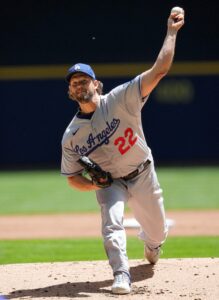
Assuming he’s able to suit up at some point in the second half, the 2024 season will be Kershaw’s 17th pitching for the Dodgers, who selected him with the No. 7 overall pick in the 2006 draft. Injuries have begun to take their toll on Kershaw, who hasn’t reached 30 starts in a season since 2015, but the quality of his results remains largely constant. From 2009-15, Kershaw averaged 32 starts per year, won four straight ERA titles and took home three Cy Young Awards. Since 2016, he’s averaged just 24 starts per 162-game season but maintained a brilliant 2.55 ERA — including sub-2.50 marks in three of the past four seasons.
Kershaw clearly wasn’t pitching at 100% for much of the 2023 season. A shoulder strain landed Kershaw on the injured list in July, and manager Dave Roberts candidly acknowledged in September that he was pitching at less than full strength. Los Angeles limited Kershaw to five innings per start for all but one start in his return from the injured list (a 5 1/3-inning outing in his final appearance of the season). Along the way, Kershaw’s average fastball dipped to career-low levels; he averaged just 89.4 mph on his fastball in his return — including just an 88.7 mph average through his final four starts.
Diminished velocity notwithstanding, Kershaw remained quite effective. In eight post-IL starts he turned in a pristine 2.23 ERA. His 22.2% strikeout rate and 11.1% walk rate were both a ways from his pre-injury levels (27.7%, 6.3%), but Kershaw looked to making the most of what he had to offer on any given day. He didn’t allow more than three runs in any of those final eight appearances and in fact held opponents to one or zero runs in six of them. The D-backs ambushed him for six runs in the first inning of his lone NLDS start, however, ending his season on a low point.
It’s not yet clear when Kershaw might be able to rejoin the Dodgers’ staff, though they’ll presumably provide an update when announcing his deal and discussing it with the media. A returning Kershaw in the second half will provide some high-end insurance for a Dodgers rotation that is teeming with uncertainty. Right-hander Yoshinobu Yamamoto will be adjusting to a new culture and a new league in his debut campaign this year. Right-hander Walker Buehler is in his first full season back from Tommy John surgery. Southpaw James Paxton is a perennial injury risk. Young righties Bobby Miller, Emmet Sheehan, Gavin Stone and Kyle Hurt haven’t pitched full big league seasons.
As already noted, Kershaw won’t be the only potential second-half addition for the Dodgers. The aforementioned May underwent a Tommy John revision and flexor tendon repair in early July but could potentially be back for the stretch run. Gonsolin, who underwent Tommy John surgery in late August, feels like a longer shot to make it back but could potentially do so in a bullpen capacity if his rehab plays out in a best-case scenario.
The Dodgers are set to pay the luxury tax for a third straight season and are already well into the final tier of luxury tax penalization. As such, any dollars committed to Kershaw will be taxed at a 110% rate. That apparently won’t be a deterrent as they welcome the future Hall of Famer back for a 17th season.
In 2712 2/3 innings though his big league career, Kershaw owns a 210-92 record, a 2.48 ERA, a 27.6% strikeout rate and a 6.3% walk rate. He’s a ten-time All-Star with five NL ERA titles, three Cy Young Awards and a National League MVP Award under his belt.
Joel Sherman and Jon Heyman of the New York Post first reported the Dodgers and Kershaw had reached an agreement. The Athletic’s Andy McCullough reported the presence of a 2025 player option. Fabian Ardaya of The Athletic reported the terms of the deal.
Getz: White Sox Expect Cease To Be Opening Day Starter
Trade chatter on White Sox ace Dylan Cease has died down over the past month amid reports that first-year general manager Chris Getz has set an extremely high asking price and has shown no willingness to back down, even as the season draws nearer. Getz himself threw more cold water on the possibility of trading Cease today, plainly telling the Sox beat: “I expect [Cease] to be our Opening Day starter” (X link via Chuck Garfien of NBC Sports Chicago).
Like the majority of baseball executives, Getz didn’t speak in absolutes. There’s always the chance of a late offer that’s simply too good to turn down — particularly if a contending team loses a starting pitcher to a long-term injury this spring and feels emboldened to make a trade that was previously deemed too costly.
That said, Getz also didn’t need to go out of his way to frame it as likely that Cease would be on the Opening Day roster, either. Choosing to voice that is a firmer stance than speaking in generalities about remaining open-minded and considering all avenues. That’s the route Getz took just one month ago, publicly stating that a Cease trade could potentially come in the offseason, at the deadline or even at an atypical time like May or June, if the right offer presented itself then.
Entering the offseason, Cease stood out as one of the likeliest trade candidates on the market. The White Sox fired longtime GM Rick Hahn and executive vice president Kenny Williams last summer, promoting Getz from assistant GM. He began the offseason making clear that the Sox would be open for business, even going so far as to candidly state, “I don’t like our team.” The South Siders have indeed proven active, trading relievers Aaron Bummer and Gregory Santos, acquiring young outfielder Dominic Fletcher and swinging a trade for veteran catcher Max Stassi.
Many of the Sox’ dealings have focused on improving the defense; Getz said in today’s media session that early talks with free agent pitchers this winter showed a reluctance to sign in Chicago because of the team’s poor glovework (X link via CHGO’s Vinnie Duber). Recognizing that limitation, Getz acquired Nicky Lopez and glove-first infield prospect Braden Shewmake (in the Bummer deal), signed Paul DeJong, and landed a pair of catchers with good defensive reputations (Stassi and free agent Martin Maldonado). Fletcher, acquired from the D-backs in exchange for pitching prospect Christian Mena, is regarded as a plus defender at all three outfield spots.
Amid all that roster shuffling, there was a general expectation that Cease would eventually be moved. That no longer seems nearly so certain. There’s clear risk in hanging onto the 28-year-old righty. A spring or early-season injury could prove catastrophic for the Sox, tanking the value of their clear best trade chip. At the same time, trading Cease this summer won’t necessarily reduce the asking price, particularly if teams simply weren’t putting forth compelling packages for him this winter.
Cease is coming off a pedestrian 4.58 ERA, but he’s only one season removed from a runner-up showing on the AL Cy Young ballot, when he pitched 184 innings of 2.20 ERA ball. His strikeout rate and velocity both dipped a bit in ’23 from their ’22 levels, and he gave up more hard contact than usual. The extent to which those red flags combined to impact offers for him can’t be known, but if Cease can come out looking like the 2022 version of himself, it’s conceivable he could even command more near the deadline — particularly since the supply of starting pitching will be much smaller than in the offseason, when there’s a wide bank of free agents to consider.
Cease is controllable through the 2025 season via arbitration. He and the White Sox agreed to a one-year, $8MM deal earlier this winter, avoiding an arb hearing in the process. The right-hander leads all of Major League Baseball with 109 starts dating back to the 2020 season. In that time, Cease sports a 3.58 ERA with a 28.5% strikeout rate, 10.4% walk rate, 36.5% ground-ball rate and 1.03 HR/9.
Padres, Jurickson Profar Agree To One-Year Deal
Free agent infielder/outfielder Jurickson Profar and the Padres are in agreement on a one-year deal, reports Robert Murray of FanSided. The MVP Sports Group client will be guaranteed $1MM, per Jon Heyman of The New York Post, with the deal still pending a physical. Profar can also add another $1.5MM via incentives based on plate appearances, per Murray.
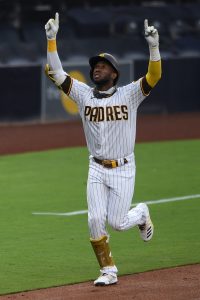
It’s a bit of an early birthday present for Profar, who turns 31 next week. His career has been extremely up-and-down, something that MLBTR covered in 2022. Last year was another downswing on that sine wave, with 2023 his worst season to date. He opted out of his previous deal with the Padres at the end of 2022, taking the $1MM buyout instead of the $7.5MM salary. He lingered onto the market until the middle of March but did eventually get a one-year, $7.75MM deal from the Rockies, narrowly edging out the money he left on the table.
The move to Colorado didn’t suit Profar. His 18.2% strikeout rate and 9.5% walk rate were pretty close to his career norms, but he hit just eight home runs in 472 plate appearances. Given the expectations of the hitter-friendly environment at Coors Field, his tepid .236/.316/.364 batting line amounted to a wRC+ of just 72. His defense was graded poorly as well, and the Rockies released him in August. He returned to the Padres late in the year and finished strong, but in a small sample of just 14 games. FanGraphs considered him to be two wins below replacement on the year while Baseball Reference had him at -1.3 WAR.
Padres president of baseball operations A.J. Preller was a key figure in the Rangers’ international scouting department when Profar originally signed and was eventually ranked the top prospect in all of baseball. Multiple shoulder surgeries have derailed his trajectory, but Profar has still shown inconsistent flashes of solid MLB production and Preller clearly still holds an affinity for him. This will be his fifth season suiting up for the Padres, for whom he carries a .246/.334/.376 batting line in 1321 plate appearances dating back to 2020.
From the team’s vantage point, Profar helps to fill a dire need for outfielders. Prior to this signing, San Diego only had two outfielders on the 40-man roster: Fernando Tatis Jr. and light-hitting Jose Azocar. They’ve also been working top shortstop prospect Jackson Merrill out in left field and could consider the 20-year-old as an outfield option at some point this season, should that experiment go smoothly, though as it stands Merrill has played just 46 games at the Double-A level and has not yet played a single game in Triple-A.
The Friars have also been working to cut payroll throughout the offseason, so securing Profar at barely more than the league minimum surely held appeal. Profar at least gives the Padres three big league outfielders on the 40-man roster, but his signing likely doesn’t rule out the addition of another more notable signing/acquisition who could push the 27-year-old Azocar into a fourth outfield role for which he’s better suited. With Profar added to the fold, San Diego’s payroll now sits at a projected $159MM, per Roster Resource — more than $90MM south of last year’s franchise-record $255MM mark. The Padres have about $215MM worth of projected luxury tax considerations, however.
In all likelihood, there are still some additions to be made by the Padres between now and Opening Day. Their outfield depth remains perilously thin, and they’ve reportedly been exploring both the trade and free agent markets for ways to change that. Red Sox outfielder Jarren Duran is reportedly one potential target. The Padres also have questions in the fourth and fifth spots in their rotation, behind top starters Joe Musgrove, Yu Darvish and Michael King. In-house options include Jhony Brito, Randy Vasquez, Drew Thorpe, Matt Waldron, Pedro Avila, Jay Groome and Glenn Otto, among others, but the Padres are also still looking into the lower tiers of free agency. They reportedly have some interest in Noah Syndergaard and in Michael Lorenzen.
Pirates To Sign Yasmani Grandal
The Pirates and catcher Yasmani Grandal are in agreement on a contract, per reporter Francys Romero. Robert Murray of FanSided reported earlier this evening that the sides were in “serious talks” regarding a deal. Per Jason Mackey of the Pittsburgh Post-Gazette, the deal guarantees Grandal $2.5MM and includes incentives, with MLB.com’s Alex Stumpf noting the contract is a one-year deal.
Grandal, 35, was a first-round pick by the Reds 2010 draft and quickly rose to become a consensus top-50 prospect in the sport ahead of his debut with the Padres back in 2012. Grandal hit an impressive .297/.394/.469 over 60 games during his rookie campaign in San Diego, though he missed much of the following season after being suspended for 50 games due to violating the league’s performance-enhancing drug policy. Upon being traded to the Dodgers ahead of the 2015 season, Grandal established himself as one of the league’s premiere two-way catchers as he combined above-average offense with strong defensive metrics.
During a seven-year period from 2015 to 2021, Grandal slashed an impressive .239/.357/.461 while playing for the Dodgers, Brewers, and White Sox. That slash line was good for a 122 wRC+ that was surpassed only by Will Smith and Mitch Garver among catchers during that stretch. Meanwhile, his +56 Defensive Runs Saved ranked fourth in the majors during that time, trailing only Roberto Perez, Austin Hedges, and Buster Posey. Grandal combined that two-way talent with impeccable durability, with only J.T. Realmuto and Yadier Molina appearing in more games behind the plate than Grandal over that seven-year period. In that time frame, Grandal appeared behind the plate in 693 games, or more than two thirds of his club’s regular season contests.
Fantastic as Grandal was during his peak, the veteran began to decline rapidly upon entering his mid-thirties. Over his final two seasons in Chicago, Grandal slashed just .219/.305/.306 with a well-below average wRC+ of 74. While he maintained a solid 10.4% walk rate in that time, his power production cratered as he posted an ISO of just .087, a figure that pales in comparison to the career .211 figure he boasted entering the 2022 campaign. Father time has also been unkind to Grandal’s defensive skills. While Statcast’s Outs Above Average still grades him as a roughly average defender with plus framing metrics, his -16 DRS behind the plate is the fourth-worst figure in the majors over the past two seasons, ahead of only Elias Diaz, MJ Melendez, and Keibert Ruiz.
While Grandal’s decline over the past two seasons has been a steep one, the veteran backstop could still prove to be a valuable addition for a Pittsburgh team in search of a veteran presence behind the plate. The Pirates lost rookie catcher Endy Rodriguez to UCL surgery back in December. The 23-year-old youngster is expected to miss the entirety of the 2024 campaign, leaving backup catcher Jason Delay and catching-prospect-turned-outfielder Henry Davis as the club’s top internal options behind the plate. Delay owns a .233/.293/.311 slash line across 127 games in the majors, while Davis struggled to a .213/.302/.351 slash line during his first 255 trips to the plate in the big leagues last season.
The addition of Grandal figures to give the Pirates the opportunity to offer Davis, who has caught just two innings behind the plate last year and has started only 92 contests at the position throughout his entire professional career, more time to develop defensively behind the plate in the minor leagues should he require it. Alternatively, the club could look to pair Grandal with Davis at the big league level, providing Davis a veteran mentor as he goes through his first big league season as a regular backstop. Such an arrangement could involve the club carrying three catchers on its roster to open the season, though Delay has options remaining and could be utilized as depth at the Triple-A level.
Pittsburgh also signed 27-year-old catcher Ali Sanchez to a big league deal back in December. Sanchez has just seven games of big league experience, but sports a decent .275/.345/.402 slash line for his career at the Triple-A level and has a strong defensive reputation behind the plate. Sanchez is out of options, meaning the club will have to either carry him on their Opening Day roster or expose him to waivers. With Grandal, Davis, Delay, and Sanchez all set to enter camp with at least a shot at a big league role for the Pirates entering the season, the club has successfully addressed its big league caliber catching depth in the wake of Rodriguez’s injury.
Phillies Sign Spencer Turnbull
The Phillies announced that they have signed right-hander Spencer Turnbull to a contract. It’s a one-year, $2MM deal, according to Jon Heyman of the New York Post (X link). Turnbull, a client of the Boras Corporation, can also earn another $2MM in incentives.
MLBTR contributor Matt Swartz projected Turnbull to earn $2.4MM in his final season of arbitration eligibility, yet the Tigers chose to non-tender the righty in November. It is fair to assume that the clashes between Turnbull and the Tigers over service time contributed to the club’s decision moreso than his modest price tag, though Turnbull also has a checkered health history coming off what is almost three straight lost seasons.
Phillies president of baseball operations Dave Dombrowski has some familiarity with Turnbull, as Dombrowski was still running the Tigers front office when Detroit selected Turnbull in the second round of the 2014 draft. The righty battled some shoulder problems during his trip up the minor league ladder, but made his MLB debut with 16 1/3 innings in 2018 and then tossed 148 1/3 frames during the 2019 season. Despite a league-high 17 losses that year, Turnbull had decent enough peripherals that he looked like a potential building block for the rebuilding Tigers.
That potential was further realized when Turnbull posted a 3.46 ERA over 106 2/3 innings in 2020-21. He pitched well for Detroit during the COVID-shortened 2020 campaign, and then his 2021 season was highlighted by a no-hitter on May 18 of that year. Unfortunately, Turnbull made only three more appearances after his no-no before undergoing Tommy John surgery, which sidelined him for the rest of the 201 season and all of 2022.
Returning to action last year, Turnbull struggled to a 7.26 ERA over seven starts, and he didn’t pitch again the majors after May 6. He was initially optioned to the minors the next day, though that option was overwritten a week after when Turnbull was placed on the 15-day IL due to neck discomfort. The right-hander was eventually moved to the 60-day injured list and wasn’t activated until August, when Turnbull was then optioned to Triple-A.
Turnbull wasn’t pleased with the demotion because he was also dealing with foot injury at the time, and the situation was eventually resolved in November when Turnbull was awarded a full year of MLB service time. He now has five years and 20 days of acknowledged big league service time, and would’ve fallen short of the five-year mark had his appeal for more time hadn’t been granted. This would have delayed Turnbull’s eventual trip to free agency for another year, as he wouldn’t have had the necessary six full years of eligibility heading into the 2024-25 offseason, though that ended up being something of a moot point after the Tigers non-tendered him.
The 31-year-old will now look for a fresh start in Philadelphia under Dombrowski’s watch once again. Dombrowski spoke last month about how the Phillies were looking to add depth to their pitching staff, though since the Phils already have a pretty set rotation and bullpen mix, the team was having some difficulty in luring pitchers who wanted more opportunities for innings. This could explain why the Phillies opted for Turnbull, whose market was lessened given his recent injury woes.
Turnbull, Dylan Covey, Kolby Allard, Nick Nelson, and Max Castillo now project as Philadelphia’s top rotation depth options. Any of this group could also pitch in the bullpen, and Turnbull has a leg up on the others due to the guaranteed nature of his contract. Working as a reliever might also present a new career path for Turnbull to explore if starting pitching is no longer in the cards, though it still seems too early for that door to be closed.
Marlins, Twins Trade Nick Gordon For Steven Okert
The Marlins and Twins have agreed to a deal that will send infielder/outfielder Nick Gordon to Miami in exchange for left-hander Steven Okert. FanSided’s Robert Murray (X link) was the first to report Gordon was being traded to the Fish, while the Miami Herald’s Craig Mish reported (via X) that Okert was heading to Minnesota.
Gordon was the fifth overall pick of the 2014 draft, and a top prospect for much of his time in the Twins’ farm system even though his star began to dim due to injuries and struggles in the upper minors. With a career .248/.298/.361 slash line over 829 career Triple-A plate appearances, Gordon still made his MLB debut in 2021 appearing in 73 games for the Twins, and then took on a larger role with 443 PA over 136 games in 2022. Gordon earned that extra playing time by hitting .272/.316/.427 during the 2022 campaign, and his ability to play multiple positions made him a particularly valuable asset on a Minnesota team that beset by injuries.
Unfortunately, the injury bug again came for Gordon himself last year, as he fractured his right shin after fouling a ball off himself on May 17. This ended his MLB season after only 34 games, and Gordon made it back for six Triple-A games in September but wasn’t ready to return to the active roster before the end of the regular season. Gordon had been off to a tough start even before his injury, hitting only .176/.185/.319 in 93 PA.
The trade comes just a day after the results of Gordon’s arbitration hearing, and the panel sided with the Twins by deciding on a $900K salary for Gordon in 2024, rather than his desired figure of $1.25MM. Gordon is heading into his age-28 season but is still arb-controlled through the 2027 campaign as per his Super Two status. Okert offers only a bit less control, as was arb-eligible for the first of three times this winter and avoided arbitration by agreeing with the Marlins on a $1,062,500 salary for the 2024 season.
It was a little over a year ago that the Twins and Marlins lined up on the blockbuster four-player swap that sent Luis Arraez to Miami and Pablo Lopez to Minnesota. Today’s move isn’t nearly as high-profile, yet it does mark the fifth transaction between the two franchises within the last 13 months, as the Twins’ comfort level with Miami’s front office has continued even now that Peter Bendix has taken over from Kim Ng as the head of the Marlins’ baseball ops department.
Gordon has spent most of his time in the majors as a second baseman, center fielder, and right fielder, with a handful of appearances at shortstop, third base, and right field. The public defensive metrics haven’t been wowed by Gordon’s glovework at any of his positions, yet his sheer versatility makes him an interesting asset on Miami’s roster. Gordon isn’t likely to be answer to the Marlins’ needs at shortstop, though if Jon Berti ends up getting the bulk of playing time at short, Gordon might fill Berti’s old role as the chief utility option.
As Anthony Franco recently observed in a piece for MLBTR’s Front Office subscribers, the Marlins entered the offseason with quite a bit of left-handed relief depth, between Okert, Tanner Scott, A.J. Puk, and Andrew Nardi. Scott didn’t seem likely to be moved given his role as Miami’s projected closer, and unlike Okert, Scott and Puk both have minor league options remaining. Since Gordon is also out of options, this one-for-one swap helps both teams address some needs at the cost of a potentially expendable player.
A veteran of six MLB seasons with the Giants and Marlins, Okert posted a 2.89 ERA over 87 1/3 relief innings for Miami in 2021-22, with the aid of a .224 BABIP. Some course correction arrived in 2023, as Okert had a .295 BABIP and a 4.45 ERA over 58 2/3 frames, and a pretty mixed bag of peripherals. Okert’s strikeout and hard-hit ball rates were both well above average, but his walk and barrel rates were both below the league average. The 32-year-old Okert is also an extreme fly ball pitcher, so his effectiveness has tended to hinge on how well he fares at keeping the ball in the park.
On the plus side, Okert has good numbers against both left-handed and right-handed batters, and he has been a workhorse with 124 appearances over the last two seasons. He’ll now join Caleb Thielbar as the top southpaw options in Minnesota’s very solid relief corps, and rookie Kody Funderburk provides another interesting left-handed arm who could be shuttled back and forth from Triple-A as circumstances dictate.
Between payroll cuts and concerns over their TV contract, the Twins’ offseason has only started to kick into high gear over the last couple of weeks. Minnesota has now dealt both Jorge Polanco and Gordon in an effort to upgrade its pitching depth at the expense of a somewhat crowded group of position players, particularly within the infield. Even without Gordon, Willi Castro and Kyle Farmer can pick up the utilityman slack on the Twins’ roster, and top prospects Austin Martin and Brooks Lee are both expected to make their MLB debuts in 2024.
Billy Eppler Placed On Ineligible List Through 2024 World Series
Major League Baseball announced that former Mets general manager Billy Eppler has been placed on the ineligible list, beginning immediately and through the conclusion of the 2024 World Series. Per the announcement, Eppler violated rules regarding “improper use of Injured List placements, including the deliberate fabrication of injuries; and the associated submission of documentation for the purposes of securing multiple improper Injured List placements during the 2022 and 2023 seasons.” The league added that the investigation “concluded that the pattern of conduct was at Mr. Eppler’s sole direction and without any involvement of Club ownership or superiors. MLB considers the matter closed and will have no further comment.”
The Mets also released a statement on the matter: “The Mets have been informed of the conclusion of Major League Baseball’s investigation. With Billy Eppler’s resignation on October 5, 2023, and with David Stearns leading the Baseball Operations team, the Mets consider the matter closed and will have no further comment.”
Eppler himself provided comment to Joel Sherman of The New York Post: “I cooperated fully and transparently with MLB’s investigation, and I accept their decision.”
Eppler, 48, was hired to be the general manager of the Mets in November of 2021. The club hired David Stearns to be president of baseball operations in September of 2023, with the plan reportedly being for Eppler to stay on GM, working under Stearns. But on October 5, he resigned and it was reported that same day that the league was investigating him for improper use of the injured list.
It’s still not clear which specific players were involved or what the details of the transgressions were. A “phantom IL” placement has been sort of an open secret in baseball for years. If a player is struggling but cannot be sent to the minors due to being out of options or having more than five years of service time, then a club may place him on the injured list with some sort of nebulous injury such as “neck stiffness” or “back tightness”, then send him on a rehab assignment to get some work in the minors and try to get things back on track.
Deesha Thosar of Fox Sports relays that she spoke to various players about the issue who agreed that “every team does it” and expressed confusion as to why Eppler was being singled out. To this point, it’s unclear if the practice was taken to some unprecedented level or if this is the start of the league planning a bigger crackdown on the practice league-wide.
Per Joel Sherman and Dan Martin of The New York Post, the league was tipped off to the practice with the Mets via an anonymous letter, so it’s possible that the club simply got caught in a way that the league felt had to be addressed. Commissioner Rob Manfred discussed the investigation back in October, saying he wanted the department of investigations to “figure out whether we have a bigger problem” regarding injured list usage.
Time will tell whether this becomes a larger issue or if it goes down as an isolated incident. For now, it seems like no other members of the Mets will receive any punishment. By being on the ineligible list for the remainder of the 2024 season, Eppler won’t be able to get a job with any other MLB club until then.
Corey Kluber Announces Retirement
Right-hander Corey Kluber announced his retirement on Instagram this morning. “With sincere appreciation, I am announcing my retirement from Major League Baseball, concluding a remarkable 13-season Major League Baseball journey,” his message reads. “I am deeply grateful for the support of numerous individuals and entities that profoundly influenced my path.” He goes on to thank the five clubs that he played for, the MLBPA, his representatives at Wasserman, various club staff members, teammates and his family.
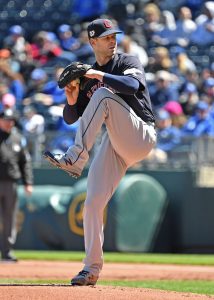 “As I take my leave from the pitcher’s mound, my passion for baseball remains unwavering. I eagerly anticipate exploring opportunities to continue contributing to the sport in a different capacity. To all who have been involved with my baseball odyssey, thank you for crafting an indelible and unforgettable ride. For all of those that will be part of my next chapter in baseball, I look forward to passing on what I have learned to the next generation of MLB players.”
Kluber, now 37, was a fourth-round pick of the Padres in 2007 but went to Cleveland in three-team deal at the 2010 deadline. The Cardinals received Jake Westbrook from Cleveland and prospect Nick Greenwood from the Padres. The Friars got Ryan Ludwick from the Cardinals while Cleveland got Kluber from the Padres. For Cleveland, that deal could hardly have worked out any better. They were having a poor season, which would eventually see them finish 69-93. Westbrook was an impending free agent and of little use to a club in that position, but they managed to exchange him for a huge piece of their future success.
As a prospect, Kluber didn’t have much hype. Baseball America didn’t consider him one of the Padres’ top 30 prospects going into 2010 and he had a 3.45 Double-A ERA at the time of the deal, a fine number but not anything outstanding. He made his major league debut in 2011 and didn’t do too much to impress there either, allowing four earned runs in his first 4 1/3 innings.
The legend really picked up steam in early 2012, as relayed by Jordan Bastian of MLB.com in this story from 2014. With Triple-A Columbus experiencing a rain delay, Kluber began tinkering with a two-seam fastball under the watch of pitching coach Ruben Niebla. “I’d never really thrown it much on a consistent basis,” Kluber said. “I’d throw my four-seam and, here and there, I’d mix in a two-seam. After I threw it over and over and over and over, and it kind of clicked. It was like, ‘This feels a lot better.'” The two-seamer turned out to be the perfect pairing for his offspeed stuff and he took off from there.
He broke out in 2013 by tossing 147 1/3 innings for Cleveland in 24 starts and two relief appearances. He allowed 3.85 earned runs per nine innings that year, combining a 22.4% strikeout rate with a 5.4% walk rate and 45.5% ground ball rate. The next year, he took things to an utterly dominant level. He made 34 starts in 2014 with a 2.44 ERA, 28.3% strikeout rate, 5.4% walk rate and 48% ground ball rate. He narrowly edged out Félix Hernández for the American League Cy Young Award that year.
Realizing they had something special, the club locked him up with a five-year, $38.5MM extension in April of 2015, with that deal running through 2019 and containing two club options. At the time, it was the largest guarantee ever given to a pre-arbitration pitcher.
Kluber continued to dominate in the coming years. He made 32 starts in each of the next two seasons, with ERAs of 3.49 and 3.14 in those campaigns. The 2016 season saw Cleveland go all the World Series, with Kluber posting a 1.83 ERA in six starts that postseason, though they eventually fell to the Cubs in seven games. 2017 was another incredible season for Kluber, as he made 29 starts with a tiny ERA of 2.25. He got his strikeout rate up to an incredible high of 34.1% while walking only 4.6% of batters. He was awarded his second Cy Young at the end of that campaign.
He followed that up with another excellent showing in 2018, posting a 2.89 ERA over 33 starts, but that would eventually turn out to be the final year of his stretch of utter dominance. Injuries hampered him from there and he was never quite the same. But during that 2014 to 2018 stretch, he posted a 2.85 ERA in 1,091 1/3 innings. His 30.3 wins above replacement from FanGraphs in that time period placed him third among all pitchers in the league, trailing only Max Scherzer and Clayton Kershaw.
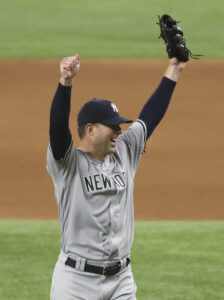
In his seventh start of the 2019 season, he was struck by a line drive and suffered a right arm fracture. He wasn’t able to return and finished that campaign with just 35 2/3 innings pitched. Cleveland picked up his $17.5MM club option but then traded him to the Rangers for Emmanuel Clase and Delino DeShields. The 2020 campaign was eventually shortened to just 60 games by the pandemic, with Kluber tossing just one inning for the Rangers. He suffered a teres major tear in his first outing and missed the remainder of the season.
The Rangers declined the $18MM option for Kluber’s services in 2021, and he would go on to serve as a solid journeyman for a few years. He signed with the Yankees and was eventually limited by a shoulder strain to 16 starts, but one of them was a no-hitter against the Rangers in May. He finished the year with a 3.83 ERA. In 2022, he was healthy enough to make 31 starts for the Rays, but with diminished stuff and a 4.34 ERA. With the Red Sox last year, he struggled immensely, getting moved to the bullpen in May. He was placed on the IL in June due to shoulder inflammation, having thrown 55 innings with a 7.04 ERA on the year. He suffered a setback during his rehab and never returned.
Though it wasn’t a fairytale ending, Kluber nonetheless told a remarkable story. As mentioned, he had a five-year stretch where he was one of the best pitchers on the planet, winning two Cy Youngs in the process. He made three All-Star teams, threw a no-hitter and racked up 1,725 career strikeouts. We was worth 34 wins above replacement in the eyes of Baseball Reference and 38.3 per the calculations of FanGraphs. Per BR, he earned just under $90MM in his playing days. We at MLBTR salute him on a tremendous run as a player and wish him the best in whatever comes next.