
Manfred: MLB Plans To Recognize MLBPA’s Representation Of Minor League Players
TODAY: The card-check agreement has been finalized, ESPN’s Jeff Passan and Jesse Rogers report, and a neutral arbiter will receive the MLBPA’s union authorization cards on Wednesday.
SEPTEMBER 9: Major League Baseball commissioner Rob Manfred announced today that the league is prepared to voluntarily recognize the MLBPA as the new collective bargaining representatives for minor league players. The announcement comes less than two weeks after the MLBPA sent authorization cards to minor leaguers seeking to represent them, and just days after the union received “significant” majority support and formally requested that the commissioner’s office voluntarily recognize the seismic shift in player representation. According to Evan Drellich of the Athletic (Twitter link), the recognition is pending agreement between the league and union on a card-check resolution — essentially an independent verification of the authorization cards sent last month.
MLBPA executive director Tony Clark released a statement in response to MLB’s announcement (relayed by James Wagner of the New York Times):
“We are pleased (MLB) is moving forward with this process in a productive manner. While there are significant steps remaining, we are confident discussions will reach a positive outcome.”
Had the league not agreed, the MLBPA would have engaged with the federal National Labor Relations Board to prompt an election among minor leaguers. Assuming a majority of those who voted approved of MLBPA representation, the NLRB could then have forced MLB’s hand in recognizing the unionization. Those extra steps won’t be necessary, following today’s announcement by Manfred.
An MLBPA official told MLBTR last week the proposed unionization efforts would give minor leaguers their own separate bargaining unit under the MLBPA umbrella, adding that any minor league CBA would be negotiated independently of the Major League CBA that was completed earlier this year. The MLBPA recently announced it had hired all members of the group Advocates For Minor Leaguers, a move which bolstered the union’s leadership ranks in preparation for the shift, which will see MLBPA membership grow from 1200 to more than 5000.
MLB’s announcement figures to accelerate the process for eventually getting minor league players under the MLBPA umbrella. League recognition would serve as an implicit acknowledgement that the majority of minor leaguers would likely have voted in favor of unionization had the PA petitioned the NLRB for an election.
It now seems all but certain minor leaguers will soon become members of the MLB Players Association. It’s completely uncharted territory for minor leaguers, who have never previously been part of a union. In a full post earlier this week, Drellich spoke to a handful of minor league players about the process. Drellich noted that players in the rookie level Dominican Summer League will not automatically be included because it’s based outside the United States, but the MLBPA is now likely to represent players from domestic complex ball up through Triple-A and plans to bargain over DSL working conditions despite those players not officially joining the Association.
Drellich wrote this evening that both the league and MLBPA believe it possible to hammer out a CBA for minor league players in time for the start of the 2023 season. Negotiations figure to start not long after MLB grants its formal recognition (assuming it transpires), and Drellich notes it’s possible the card-check agreement could be reached in the near future, barring setbacks.
As he points out, the expected recognition comes just a couple months after Congresspeople from both parties expressed an interest in reconsidering MLB’s antitrust exemption. Low rates of pay for minor leaguers has been one of many legislators’ critiques, but recognition of a union and signing a collective bargaining agreement with minor leaguers would take that issue outside the realm of antitrust law and into labor law territory.
It’s set to be a monumental change for the MLBPA, which also joined the AFL-CIO this week. The union’s efforts at both expanding its membership and increasing its communication with labor leaders in other industries comes on the heels of a few years of labor strife. Clark pointed to the contentious return-to-play negotiations after the 2020 COVID shutdown and last winter’s lockout as reasons for affiliating with the AFL-CIO.
Details On Bonus Pool For Pre-Arbitration Players
Major League Baseball teams received a memo Thursday outlining the parameters for this year’s newly created pre-arbitration bonus pool, breaking down payouts based both on Awards voting and based on a new, MLB/MLBPA jointly created version of wins above replacement. Both ESPN’s Jeff Passan and The Athletic’s Ken Rosenthal offer specifics on how the pool will be divided.
The most straightforward path to earning a portion of the pool comes via voting in Rookie of the Year, Cy Young and MVP Awards, as well as the “All-MLB Team” honors created by the league back in 2019. If a player qualifies for two (or more) Awards-based bonuses, he’ll receive the higher of the two bonuses, but not both. The bonuses are as follows:
- Rookie of the Year: $750K for first place, $500K for second place
- MVP and Cy Young: $2.5MM for first place, $1.75MM for second place, $1.5MM for third place, $1MM for fourth or fifth place
- All-MLB: $1MM for being named “First Team,” $500K for being named “Second Team”
Whatever remains of the $50MM pool will be divided, on a percentage basis, among the top 100 players based on the joint MLB/MLBPA-created version of WAR. Put another way: should the total WAR of that 100-player group equal 250, a 2.5-WAR player (accounting for 1% of the group’s total WAR) would receive 1% of the pool’s remainder. Passan and Rosenthal both note that as of Sept. 1, Oakland catcher Sean Murphy was leading pre-arbitration players in the MLB/MLBPA version of WAR. An annual report on the bonus pool and its payouts will be issued in early December, according to Rosenthal, who adds that Yordan Alvarez still qualifies to receive a bonus despite signing a sic-year extension in June that covers the 2023-28 seasons.
That’s not because the extension doesn’t kick in until next season; rather, MLBTR has confirmed with a source that all players who sign extensions will remain eligible for bonuses from the pool during what would have otherwise been their pre-arbitration seasons. For instance, Julio Rodriguez and Michael Harris, who both inked long-term deals earlier this summer, can still receive payouts from the bonus pool not only in 2022 but also in 2023 and 2024. Alvarez would have reached arbitration this offseason were it not for his extension, so this will be the lone season in which he qualifies for the bonus pool.
MLB To Implement Pitch Clock, Limit Defensive Shifts Beginning In 2023
Major League Baseball announced Friday that the Competition Committee — an 11-person panel consisting of six ownership representatives, four players and one umpire — has voted to implement three new rule changes for the 2023 season: a pitch clock, a limitation on defensive shifting and larger bases.
Commissioner Rob Manfred issued the following statement after the vote:
“These steps are designed to improve pace of play, increase action, and reduce injuries, all of which are goals that have overwhelming support among our fans. Throughout the extensive testing of recent years, Minor League personnel and a wide range of fans – from the most loyal to casual observers – have recognized the collective impact of these changes in making the game even better and more enjoyable. We appreciate the participation of the representatives of the Major League Players and Umpires in this process.”
The league’s press release describes the changes (and provides context from minor league testing of the pitch clock) as follows:
- Pitch Timer: A Pitch Timer will improve pace of play and reduce dead time. The Pitch Timer Regulations include the following provisions:
- A pitcher must begin his motion before the expiration of the timer. Pitchers will have up to 15 seconds between pitches when the bases are empty and up to 20 seconds between pitches with at least one runner on base. Testing in the Minor Leagues involved 14 seconds with the bases empty and 18 seconds (19 seconds in Triple-A) with at least one runner on base.
- A pitcher may disengage the rubber (timer resets) twice per plate appearance without penalty.
- Subsequent disengagements result in a balk, unless an out is recorded on a runner.
- The disengagement count resets if the runner advances; testing in the Minors had no reset until the following plate appearance.
- A hitter must be in the batter’s box and alert to the pitcher with at least eight seconds remaining. Testing in the Minor Leagues included nine seconds remaining.
- A hitter receives one timeout per plate appearance.
- Umpires will have authority to provide additional time if warranted by special circumstances (e.g., the catcher makes the last out of the inning and needs additional time to get into defensive position).
- KEY STATS:
- Compared to last season, the Pitch Timer has reduced the average nine-inning game time by 26 minutes (from 3:04 in 2021 to 2:38 in 2022) while increasing action on the field.
- Stolen base attempts per game have increased from 2.23 in 2019, at a 68% success rate, to 2.83 in 2022, at a 77% success rate.
- In its most recent week of play, Minor League Baseball has averaged just 0.45 Pitch Timer violations per game.
- KEY STATS:
- Defensive Shift Restrictions: A set of restrictions will return the game to a more traditional aesthetic by governing defensive shifts, with the goals of encouraging more balls in play, giving players more opportunities to showcase their athleticism, and offsetting the growing trend of alignments that feature four outfielders:
- Lateral Positioning: Two infielders must be positioned on each side of second base when the pitch is released.
- Depth: All four infielders must have both feet within the outer boundary of the infield when the pitcher is on the rubber.
- No Switching Sides: Infielders may not switch sides unless there is a substitution.
- KEY STAT: Defensive alignments that feature four players in the outfield increased nearly 6x across MLB since the start of the 2018 season.
- Bigger Bases: With the goal of improving player safety, the size of first, second, and third base will increase from the standard 15” square to 18” square.
- Bigger bases are expected to have a positive impact on player health and keeping Major Leaguers on the field.
- KEY STAT: Base-related injuries decreased by 13.5% in the Minor Leagues this season, including declines at every level of the Minors.
- Bigger bases will reduce the distance between first and second and between second and third base by 4.5”, thereby encouraging offensive Clubs to attempt to steal bases more frequently and generally to be more aggressive on the basepaths.
- Bigger bases are expected to have a positive impact on player health and keeping Major Leaguers on the field.
The committee unanimously voted in favor of the larger bases, although as first reported by ESPN’s Jeff Passan, the players voted against both the pitch clock and the limitation of defensive shifts. The MLBPA confirmed as much in a since-issued statement, which reads:
“Players live the game — day in and day out. On-field rules and regulations impact their preparation, performance, and ultimately, the integrity of the game itself. Player leaders from across the league were engaged in on-field rules negotiations through the Competition Committee, and they provided specific and actionable feedback on the changes proposed by the Commissioner’s Office. Major League Baseball was unwilling to meaningfully address the areas of concern that Players raised, and as a result, Players on the Competition Committee voted unanimously against the implementation of the rules covering defensive shifts and the use of a pitch timer.”
Competition Committee To Vote On Several Rule Changes For 2023 Season
The competition committee is set to vote on various proposed rule changes for the 2023 season, report Evan Drellich and Ken Rosenthal of the Athletic. A pitch clock, limitations on defensive shifting, pickoff limits and enlarged bases are all set to be formally voted upon tomorrow at 11:00 am CST.
As Drellich and Rosenthal note, it seems a mere formality that all the proposed changes will pass. The competition committee was established by mutual agreement between the league and Players Association during the most recent round of collective bargaining. It’s an 11-person panel designed to vote upon potential changes to the on-field playing rules. That committee is comprised of six league appointees, four MLB players and an umpire. Andy Martino of SNY reported in June that the league would be represented by Dick Monfort, John Stanton, Greg Johnson, Tom Werner, Mark Shapiro and Bill DeWitt for this round of voting. The players on the panel are expected to be Jack Flaherty, Tyler Glasnow, Whit Merrifield and Austin Slater (with Ian Happ and Walker Buehler as alternates), while Bill Miller will represent the umpires.
With MLB appointing a majority of the committee, it’s generally expected the league will be able to push through its desired changes with relative ease. (MLB had a unilateral right to change playing rules under the prior CBA, although it had been required to wait a full year after formally proposing it to the MLBPA in the event the union refused to sign off on earlier implementation). Under the current CBA, the committee can implement rules changes 45 days after making a recommendation to the union. That grace period won’t be relevant for this set of proposals, all of which are focused on 2023 and beyond.
The timing of the vote had been unclear, but it has seemed a formality for months that each of the pitch clock, a shift limitation and larger bases would be implemented by the start of next season. MLB had pushed for all three of those provisions at one point during CBA negotiations this past offseason. The parties eventually agreed to temporarily shelve any changes to the on-field product and focus on larger economic issues, but it has seemed inevitable since March that these three factors would be on the agenda (and would very likely be approved) for the 2023 campaign.
Drellich and Rosenthal report the specifics on the proposed alterations. Pitchers would have 15 seconds to begin their delivery with no one on base, while they’d have 20 seconds to start their motion with runners aboard. The countdown begins when the pitcher has the ball, the batter and catcher are in the vicinity of home plate, and all baserunners are in an appropriate position. Catchers must be in position with no more than nine seconds remaining on the clock. If either the pitcher or catcher violates the provision, an automatic ball is called.
Batters also have a time limit. They’re required to be in the box and “alert to the pitcher” with no more than eight seconds remaining on the clock. If he’s not prepared, an automatic strike will be assessed. (The league also has the authority to impose additional discipline on players and/or staff circumventing the clock). There are 30 seconds allotted between batters and 135 seconds between innings and for pitching changes.
The pickoff limit is also a pace-of-play measure. Pitchers are freely allowed to disengage from the rubber twice per plate appearance — whether to throw a pickoff or for any other reason. Doing so resets the clock for that pitch. A pitcher can disengage for a third time, but an automatic balk is assessed if the baserunner is not thrown out. Essentially, the disengagement rule limits pitchers to two “free” pickoff attempts per batter. After two unsuccessful step-offs, the pitcher can again attempt a pickoff but the baserunner would be awarded an automatic base if he’s not thrown out. If the runner advances without a ball put in play — via balk, stolen base, wild pitch, etc. — the pitcher’s disengagement limit resets.
The pickoff limit figures to incentivize more aggressive baserunning, at least among faster runners. Particularly once a pitcher uses his first two step-offs, a baserunner can theoretically extend his lead. The third disengagement means the runner won’t have free rein, but there’ll be more flexibility to push the leadoff knowing that another unsuccessful pickoff attempt is treated as a balk.
Turning to the shift restrictions, teams would be required to deploy four players (not including the pitcher and catcher) on the infield. All infielders have to have both feet on the dirt, and two players must be completely on either side of the second base bag. A shift violation results in an automatic ball, unless it occurs on a ball in play or hit batsman. If the baserunner reaches anyway, the play stands. If there’s an out recorded, the batting team’s manager decides whether to let the play stand. In most instances, they obviously wouldn’t do so, although there are certain situations (i.e. a sacrifice fly) where teams may be content to accept the out for the advancement of other baserunners. Whether a team violated the shift ban is subject to replay review, while possible pitch clock offenses are not.
The league has experimented with the possibility of restricting shifts for quite some time in an effort to increase the batting average on balls in play. That has included some rather complex and extreme tests in the minor leagues. Jayson Stark of the Athletic reported in July that MLB was introducing a “pie-slice” restriction on shifting at the Low-A level. Not only did that require two infielders on either side of second base, it carved out a restricted area around the bag to prevent middle infielders from playing deep and just to their side of second base to take away would-be hits up the middle. That is not in the proposed rules changes for MLB in 2023, to be clear, but it illustrates the league might experiment with further defensive restrictions down the line if the initial shift ban doesn’t produce a desired uptick in base knocks.
The bases, meanwhile, would be enlarged from their current 15 inches square to 18 inches square. That’s a small change designed to facilitate more aggressive baserunning and minimize the chance of collisions on bang-bang plays at first.
Drellich and Rosenthal report a host of other timing restrictions (on mound visits, in-stadium music, defensive timeouts, etc.) that would also go into effect if approved. The Athletic’s post is worth a full read for those interested in all the changes that seem likely to come to the majors next season.
Rangers To Promote Josh Jung
The Rangers are going to promote prospect Josh Jung, per Levi Weaver of The Athletic. Brad Miller is going to go on the 10-day injured list with a hip issue, per Evan Grant of the Dallas Morning News. That will create a spot on the active roster for Jung, but he will also need a corresponding move to get him onto the 40-man roster.
Jung, 24, was selected by the Rangers with the eighth overall pick in the 2019 draft and has been considered one of the top prospects in the sport ever since. He played 44 games in the minors that year, mashing the whole way through. In 2020, he jumped onto Baseball America’s top 100 list, coming in at #93.
Of course, 2020 brought the pandemic and all levels of the minor leagues were canceled, putting a dent in the plans of prospects all across the sport. As things were ramping back up for 2021 and they were all hoping to get back on track, Jung hit another setback. In March, he underwent surgery for a stress fracture in his foot, which was expected to lengthen his absence from organized baseball for another six to eight weeks.
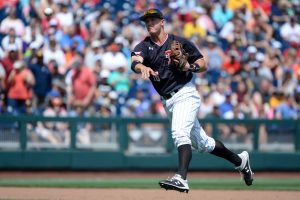 Despite those setbacks, once Jung was finally healthy, he made up for lost time in a big way, finishing 2021 on an incredible tear. He finally made his season debut in Double-A on June 15 and played 43 games at that level, hitting .308/.366/.544 for a wRC+ of 140. He was promoted to Triple-A on August 20 and somehow hit even better. In 35 games for the Round Rock Express, his slash line was .348/.436/.652, wRC+ of 166. That strong finish to his campaign launched him all the way up to #26 on Baseball America’s list going into this year.
It seemed possible that Jung could make his MLB debut early in 2022, maybe even cracking the Opening Day roster. However, he suffered a shoulder strain in February while lifting weights as part of his preseason training program. He had to undergo surgery, which was expected to keep him out for six months. He returned to action in August, seemingly not missing a beat. In 30 games this year, he’s hitting .267/.323/.542, hitting nine homers in that short time. Although the shoulder injury slowed him down, it only delayed the inevitable.
Jung is now considered the #42 prospect in the game by Baseball America, #12 by FanGraphs, #24 by ESPN, #39 by MLB Pipeline and #54 by Keith Law of The Athletic. Just a few days ago, the Rangers seemed committed to keeping Jung down while giving the playing time at the hot corner to Ezequiel Duran, though it seems the injury to Miller has altered the plans. Duran is having an intriguing debut season, hitting .240/.282/.373 for a wRC+ of 86. However, he could also be moved to other positions, having spent some time in his career at second base, shortstop and center field. Miller’s been used mostly as a designated hitter recently, with that spot now freed up somewhat for days when the Rangers want both Jung and Duran in the lineup.
If Jung can meet the lofty expectations placed upon him by his prospect status, he could be the final piece of a Rangers infield that could be set for years to come. Shortstop Corey Seager is in the first of a ten-year deal he signed in the offseason. Marcus Semien has second base locked after signing a seven-year deal this winter. Nathaniel Lowe is enjoying a tremendous breakout season over at first, which MLBTR’s Steve Adams wrote about just yesterday. Lowe is under team control for four seasons beyond the current campaign. There’s a lot of change in the wind in Texas, as they just recently fired their manager and president of baseball operations, but it’s possible that this infield could be a solid foundation for them to build upon in the coming years, helping them emerge from a lengthy rebuilding period.
If Jung can stick with the big league club from here on out, he is on pace to reach arbitration for the first time after 2025 and free agency after 2028. Future option assignments could delay those timelines, however. Jung also won’t reach 60 days of service time here in 2022 and is unlikely to get 130 at-bats. That means he will retain rookie/prospect status through the winter, which could have ramifications for the team. Under the new collective bargaining agreement, players with less than 60 days of service who appear among two preseason Top 100 lists at Baseball America, ESPN or MLB Pipeline can net their team a bonus amateur draft choice based on their early-career finishes in awards voting, so long as their club carries them on the MLB roster for a full service year. If Jung cracks the Opening Day roster next year and he wins a Rookie of the Year or places highly in MVP balloting during his first couple seasons, the club could pick up an extra draft choice down the line.
Image courtesy of USA Today Sports.
Mets Place Max Scherzer On 15-Day Injured List
10:12AM: Scherzer has been officially placed on the IL, retroactive to September 4.
8:58AM: The Mets are placing ace Max Scherzer on the 15-day injured list, manager Buck Showalter announced to reporters Wednesday morning (Twitter link via Newsday’s Tim Healey). The team is hopeful that he’ll return after a minimum stint on the shelf. Scherzer departed his most recent start due to “fatigue” in the same left oblique muscle he strained earlier in the season — an injury that kept him sidelined for nearly two months.
Scherzer, 38, has been sensational for the Mets when healthy enough to take the mound. The three-time Cy Young winner has logged a 2.26 ERA while striking out 30.6% of his opponents against just a 4.6% walk rate. He’s averaged 6 1/3 innings per outing, even with a pair of early exits due to an increasingly problematic left oblique. Scherzer had been slated to start this Friday in Miami.
The injury to Scherzer comes in conjunction with a sequence of brutal losses to the last-place Pirates and Nationals. The Mets have dropped three in row while watching the Braves cruise to six straight victories, culminating in the evaporation of what was once a whopping 10.5-game lead in the NL East for the Mets; the two teams are currently tied with identical 85-51 records.
Even with Scherzer sidelined, the Mets have a strong top four in the rotation, with Jacob deGrom, Carlos Carrasco, Chris Bassitt and Taijuan Walker all active. Walker has struggled of late, with a 6.25 ERA since the All-Star break, although the majority of the damage against him came in one appearance: an eight-run meltdown against Atlanta. Both David Peterson and Trevor Williams are stretched out enough to make starts in place of Scherzer. Peterson started for the Mets both on Aug. 27 and Sept. 2, working a combined 11 1/3 innings, so he’d certainly be an option to step in for Scherzer on Friday against the Marlins.
MLBPA Receives Majority Support To Represent Minor Leaguers, Requests Recognition From MLB
The Major League Baseball Players Association announced Tuesday morning that a “significant” majority of minor leaguers have signed authorization cards in favor of the MLBPA creating a minor league bargaining unit. The MLBPA has formally requested that MLB recognize its new effort to represent minor leaguers. Evan Drellich of The Athletic first reported that the union had received majority support from minor leaguers on the matter and requested voluntary recognition from MLB.
The MLBPA first sent authorization cards to minor league players last week — a first step toward unionizing minor league players who have previously lacked the representation and collective bargaining capabilities enjoyed by Major League players. If MLB chooses not to acknowledge the the MLBPA as the new bargaining unit for minor league players, the MLBPA can (and surely will) file a motion with the federal National Labor Relations Board (NLRB). That will prompt an election among the minor league players, and if there’s a majority among those who vote in that election, the NLRB would subsequently require Major League Baseball to recognize the MLBPA as the bargaining unit of minor league players.
It’s another notable step in what appears to be a fast-moving process. MLB has yet to comment on the unionization effort whatsoever, so it remains wholly unclear when or whether the league will provide a response. The MLBPA can push forward and pursue an NLRB-prompted election at any time, so if commissioner Rob Manfred and his team continue to remain silent on the matter, the union can still advance the process. An MLBPA official told MLBTR last week that the proposed unionization efforts would give minor leaguers their own separate bargaining unit under the MLBPA umbrella, adding that any minor league CBA would be negotiated independently of the Major League CBA that was completed earlier this year.
“Minor league Players have made it unmistakably clear they want the MLBPA to represent them and are ready to begin collective bargaining in order to positively affect the upcoming season,” MLBPA executive director Tony Clark said in a statement released Tuesday morning.
Drellich’s piece contains quotes from several minor league players on the matter and notes that there would still be some hurdles regarding the Rookie-level Dominican Summer League, as the league is not based in the United States. Still, Drellich emphasizes that the players union has told minor leaguers that it plans to attempt to bargain over the working conditions of DSL players as well.
The move to add the majority of minor league players to the MLBPA ranks would see union membership skyrocket from 1,200 — the 40 players on the 40-man rosters of all 30 MLB teams — to more than 5,000. The MLBPA has already bulked up its staff in preparation for the move, announcing last week that it had hired every employee from Advocates for Minor Leaguers as a new full-time employee of the MLBPA.
Currently, neither the salaries nor benefits of minor league players are collectively bargained. Minor league players are only paid during the season, and their minimum salaries range from $400 per week in the lower levels — where seasons are only three months long — to $700 per week in Triple-A (via the Associated Press).
Red Sox, Enrique Hernandez Agree To Contract Extension
The Red Sox have gotten a jump on their offseason business, reportedly agreeing to a one-year contract extension with utilityman Enrique Hernández. The deal guarantees the Wasserman client $10MM for the 2023 season.
Hernández had been slated to hit free agency this winter, but he’ll bypass that opportunity for a third season in Boston. The longtime Dodger first hit the open market over the 2020-21 offseason, when he signed a two-year, $14MM pact with Boston. It was a surprisingly strong multi-year arrangement on the heels of back-to-back down seasons at the plate, but it quickly looked like a coup for chief baseball officer Chaim Bloom and his front office.
The Puerto Rico native posted arguably his best season to date in 2021. He tallied a personal-high 585 plate appearances and connected on 20 home runs and 19 doubles with an overall .250/.337/.449 slash line. Hernández walked at a robust 10.4% clip, only struck out 18.8% of the time and made a strong impact from a power perspective. Altogether, by measure of wRC+, his offensive production checked in nine percentage points above league average.
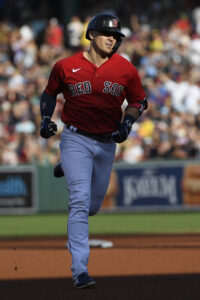
Hernández paired that well-rounded hitting output with his typically strong defense. As he has throughout his career, Hernández proved willing to bounce between the infield and outfield. He spent the bulk of his time in center field and at second base, with public defensive metrics placing him among the league’s best at the former position. On the heels of that strong first season in Fenway, Hernández deservedly earned Boston’s Opening Day nod in center field this year.
The 31-year-old hasn’t managed to replicate last year’s production though. He slumped to a .193/.266/.325 line through the season’s first month and has never fully gotten back on track. While Hernández has improved upon that particularly tepid early-season output, he’s posted below-average numbers at the dish in each month when healthy. He also lost a bit more than eight weeks to a strained right hip flexor that sidelined him from early June until the middle of August. Altogether, Hernández has gotten into 68 games and tallied 304 plate appearances, compiling a meager .219/.283/.354 showing with just six longballs.
Some of Hernández’s underlying numbers have correspondingly gone in the wrong direction. His walks are down to a below-average 7.9% clip, while his rate of hard contact has plummeted from 43.2% to 34.4%. Perhaps the Red Sox are willing to attribute the offensive downturn, at least in part, to the hip issue through which Hernández was battling. Disappointing as his 2022 work at the plate has been, he has continued to rate as an above-average defensive center fielder. If he can recapture something resembling league average offense, Hernández would still be a valuable contributor — either as the regular center fielder or in a utility role that sees him bounce more frequently between the dirt and the grass.
Presumably, Hernández will get the first crack at an everyday outfield role again. The Sox don’t have much in the way of established in-house alternatives, with former top prospect Jarren Duran struggling to a .218/.269/.355 line with bottom-tier defensive metrics through his first 90 big league games. For a Red Sox team that is looking to immediately return to contention after a disappointing 2022 campaign, penciling the 26-year-old into the Opening Day lineup is probably too risky. If Duran plays his way into an everyday job, Hernández could slide into a superutility capacity.
One could argue Boston should’ve aimed higher than either Hernández or Duran and sought an external upgrade in center field. Re-signing Hernández doesn’t expressly rule that out, although it’d seem to alleviate the pressure on Bloom and his staff to dip into very thin waters at the position. Aaron Judge, of course, is the top free agent who’ll be available but looks likely to command a salary approaching or exceeding $300MM. Aside from Judge, Brandon Nimmo is the only clear above-average center fielder who’s slated to hit the open market. The Rays are certain to buy out defensive stalwart Kevin Kiermaier (with whom Bloom is plenty familiar from his time in the Tampa Bay front office), but Kiermaier’s coming off a shaky offensive season of his own and recently underwent season-ending hip surgery.
The trade market may not offer many solutions either. Teams are sure to try to pry Bryan Reynolds away from the Pirates yet again, but no team has been successful (or seemingly even come close) to doing so. The A’s will probably listen to offers on Ramón Laureano, but he’s arguably a cleaner fit in a corner outfield spot than up the middle. Other trade candidates include the Royals Michael A. Taylor and the Cubs Rafael Ortega, but it’s not clear either is an upgrade over Hernández.
It’s the start of what figures to be a busy offseason in Boston. The Red Sox are facing the potential free agent departures of Xander Bogaerts, J.D. Martinez, Nathan Eovaldi, Michael Wacha and Rich Hill, among others. Assuming Bogaerts opts out of the remaining three years on his current contract, the Sox are slated to enter the offseason with a bit more than $70MM in guaranteed commitments for 2023 after accounting for Hernández’s deal. Rafael Devers headlines an arbitration class that’s likely to push that tally north of $90MM.
That still leaves plenty of room for a club that opened this year with a payroll above $206MM, per Cot’s Baseball Contracts. They’ll need to overhaul the pitching staff, address a middle infield position if Bogaerts departs, and perhaps look for upgrades at catcher and in a corner outfield spot. There’s a lot of work to be done this offseason. Today’s agreement to keep around a familiar player whom the organization clearly expects to right the ship marks the first of many key decisions on the horizon.
Jeff Passan of ESPN first reported Hernández and the Red Sox were in agreement on a one-year, $10MM extension.
Image courtesy of USA Today Sports.
Andrew Benintendi To Undergo Hamate Surgery
Yankees outfielder Andrew Benintendi broke the hook of his hamate bone and will require surgery, manager Aaron Boone tells Bryan Hoch of MLB.com. Benintendi is already on the 10-day injured list, having been placed there yesterday.
The club has not yet provided an estimated timeline for Benintendi’s recovery process, but it’s bound to be significant regardless given the time of year. There are just over four weeks remaining in the regular season schedule, which doesn’t leave much time for the outfielder to go through the process of recovering from the procedure and getting back into game shape. Despite their recent slump, the Yankees are still in a strong position to both make the playoffs and get a bye past the first round, as they are five games up on the Rays and 10 1/2 clear of the Central-leading Guardians. That would give Benintendi more time to return, especially if the Yankees can win a playoff round or two, but it’s still unclear if that’s in the cards. Hoch relays word from Benintendi himself, who says he’s still going to speak with some specialists but believes he could return before the end of the regular season.
Acquired from the Royals just prior to the deadline, Benintendi has hit .302/.371/.397 on the year between the two teams. That offensive production is 22% better than the league average hitter this year, as evidenced by his 122 wRC+. That solid campaign was put on hold Friday night, when Benintendi left in obvious pain after hurting himself on a swing.
In the past couple of games without Benintendi, the Yanks have used an outfield of Aaron Judge, Oswaldo Cabrera and Aaron Hicks, with other options like Estevan Florial, Marwin Gonzalez and Tim Locastro on the bench. Harrison Bader and Matt Carpenter could join the club down the line, but neither are especially close. Bader, acquired from the Cardinals at the trade deadline, is ramping up towards a rehab assignment. Carpenter went on the IL a few weeks ago with a fractured foot and still hopes to return at some point. But in the short term, the in-house options will probably have to do.
The Yankees seemed to be walking away with the AL East for much of the year, leading by as much as 15 1/2 games in July. A poor showing in recent weeks dropped their lead as low as four games coming into today, though they defeated the Rays to stretch it back out to five. That means the final weeks of the season are going to be much more important than it may have seemed not too long ago.
Red Sox Promote Triston Casas
TODAY: Casas’ promotion was officially announced, with the Red Sox also calling up Josh Winckowski from Triple-A. Houck was indeed moved to the 60-day IL, Dalbec was optioned to Triple-A, and right-hander Kutter Crawford was placed on the 15-day injured list with a right shoulder impingement. Crawford was supposed to start today’s game against the Rangers but Sox manager Alex Cora said yesterday that the righty would be scratched. Winckowski will instead make today’s start.
SEPTEMBER 3: The Red Sox are going to add first base prospect Triston Casas to the team tomorrow, according to Chris Cotillo of MassLive. That report has been confirmed by Julian McWilliams of the Boston Globe, who adds that Bobby Dalbec will be optioned to Triple-A Worcester. Casas is not currently on the club’s 40-man roster, meaning they will have to open a spot for him. However, it would likely come down to transferring someone to the 60-day IL, such as Tanner Houck, who was previously reported to be done for the season.
Casas, 22, was selected by Boston in the first round of the 208 draft, 26th overall. He got a brief showing in rookie ball that year and jumped to A-ball to start 2019. He hit 19 home runs for the Greenville Drive while slashing .254/.349/.472, producing a wRC+ of 136 and earning a brief promotion to High-A to finish the year.
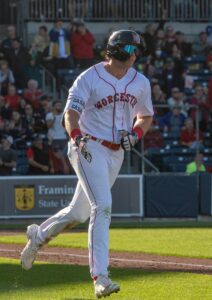
After that strong showing in his first full season as a professional, he was ranked the #70 prospect in the sport by Baseball America. Of course, the minor league seasons were canceled that year by the pandemic, preventing Casas from playing organized ball that season. In 2021, he split his time between Double-A and Triple-A, hitting 14 homers and slashing .279/.394/.484. He walked in 15.4% of his plate appearances while striking out in just 19.1% of them, producing a wRC+ of 141.
After that excellent season, he jumped up to #19 on BA’s 2022 top prospects list and seemed a candidate to make his major league debut this season. The Red Sox stuck with Dalbec as their first baseman to start the year and Casas was taken off the table when he suffered an ankle injury in May, returning to Worcester at the end of July. In Triple-A this year, he’s hit .273/.382/.481 for a wRC+ of 127, walking in 14.5% of his trips to the plate while going down on strikes just 21.5% of the time. He’s currently ranked as the #28 prospect in the league by Baseball America, #14 by FanGraphs and #31 by Keith Law of The Athletic.
Fans of the Red Sox have been calling for this move for some time, not just because of the strong showing of Casas, but also the struggles of Dalbec. After hitting 25 home runs last year and slashing .240/.298/.494 for a wRC+ of 107, he’s slumped this year to a showing of .211/.282/.363. That production is 22% below league average, as evidenced by his 78 wRC+. Based on those disappointing results, he and Casas will switch places, with Dalbec going down to the minors to try to get back on track.
The Red Sox are seven games behind the Blue Jays for the final Wild Card spot in the American League with three teams in between, making it very difficult for them to make a serious playoff run over the final month of the season. Regardless, they will give Casas a look over the remainder of the campaign to see how he fares against big league pitching in the next few weeks and hopefully go into the winter with some momentum towards next season. Eric Hosmer was acquired from the Padres at the trade deadline but is currently on the IL. Assuming Casas shows well enough to earn himself regular playing time, the club will have to figure out how to balance having both on the team.
With only a few weeks to go until the offseason, it’s unlikely that Casas will reach 130 at-bats here in 2022, meaning he will hang onto his rookie/prospect status through the winter. That’s a potentially important note under the new collective bargaining agreement. Players with less than 60 days of service who appear among two preseason Top 100 lists at Baseball America, ESPN or MLB Pipeline can net their team a bonus amateur draft choice based on their early-career finishes in awards voting, so long as their club carries them on the MLB roster for a full service year. If Casas cracks next year’s Opening Day roster and sticks around all season, and he wins a Rookie of the Year or places highly in MVP balloting during his first couple seasons, the club could pick up an extra draft choice down the line.
Image courtesy of USA Today Sports.