
MLB Names Theo Epstein Consultant To Commissioner’s Office
Major League Baseball announced today that former Red Sox general manager and Cubs president of baseball operations Theo Epstein has joined the commissioner’s office as a consultant to Rob Manfred. Specifically, Epstein will focus his efforts on “on-field matters,” including (but presumably not limited to) the effects that proposed rule changes would bring about. Bruce Levine of 670 The Score first reported (via Twitter) that Epstein, who stepped down from his post with the Cubs earlier this winter, would be named to the new post. Epstein turned away interest from other clubs who had interest in hiring him for a new baseball operations jobs.
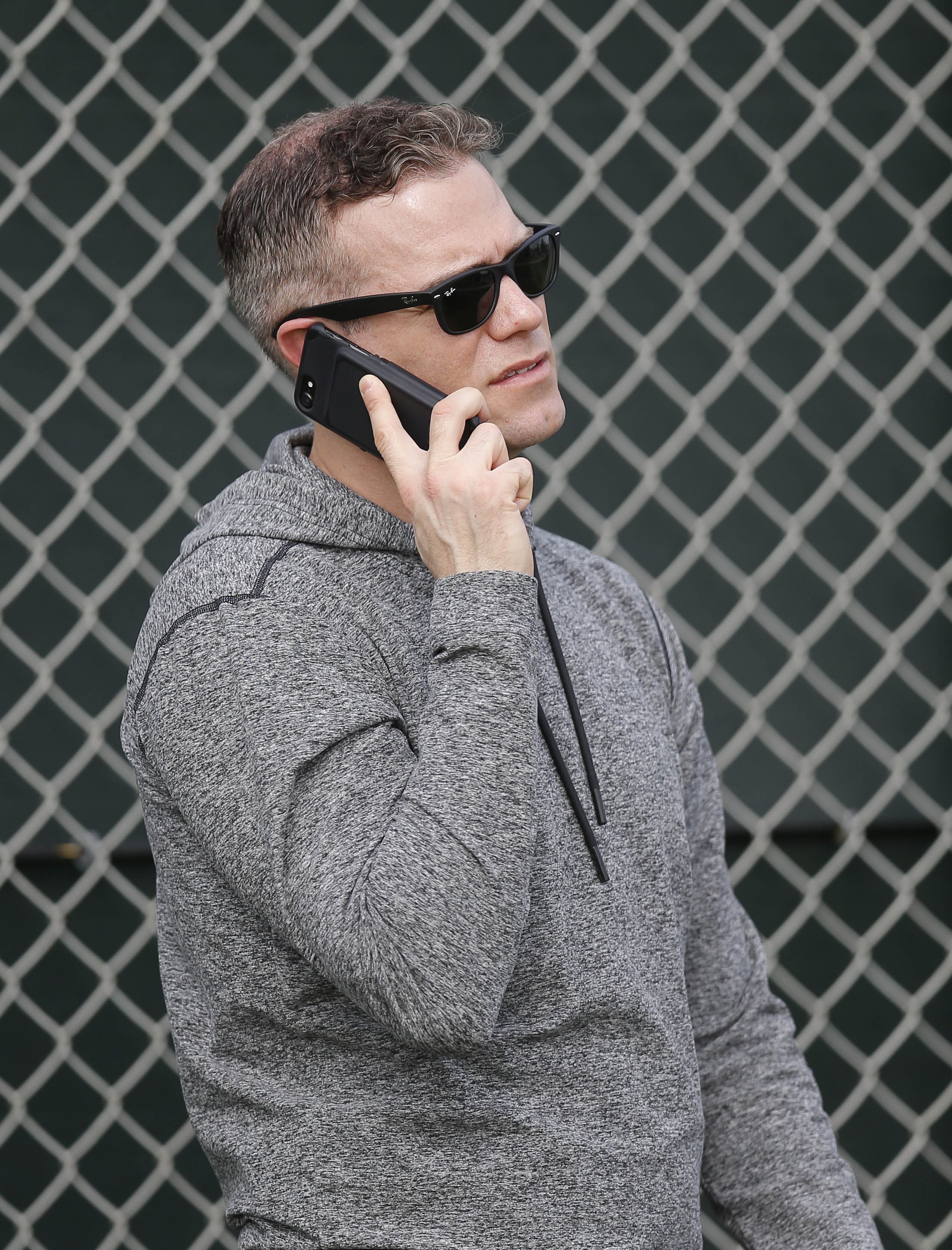
“Theo is one of the most accomplished and thoughtful people in our sport,” commissioner Manfred said in a statement announcing the news. “I am grateful that he has accepted our invitation to complement our ongoing efforts and provide his insights on making the best game in the world even better for the next generation of fans.”
From the moment Epstein stepped down from his position with the Cubs, there’s been speculation about him eventually taking a position with the league. Epstein acknowledged at the time that he had played an inadvertent role in damaging the sport’s aesthetic by helping to pioneer an analytics push that has curbed in-game action. He’s also often been an advocate for expanding the reach and appeal of the game. Some have suggested that Epstein himself may even be an eventual successor for Manfred, although Manfred’s current contract runs through the 2024 season.
“It is an honor to assist the efforts by Major League Baseball and the Competition Committee to improve the on-field product, and I appreciate Commissioner Manfred asking me to be a part of these important conversations,” said Epstein in his own prepared statement. “As the game evolves, we all have an interest in ensuring the changes we see on the field make the game as entertaining and action-packed as possible for the fans, while preserving all that makes baseball so special. I look forward to working with interested parties throughout the industry to help us collectively navigate toward the very best version of our game.”
There’s no indication yet as to whether this is a temporary post or a gateway to a more permanent position within the commissioner’s office. Epstein said when he stepped away from the Cubs and rebuffed interest in new baseball ops ventures that he hoped to spend more time with his family. His status as a consultant with the league will keep him involved in the game but afford him more time at home. Presumably, given Epstein’s track record, other clubs will come calling in future offseasons whether he’s under contract or not — but his status as a consultant at least ostensibly leaves the door open for a return to a club’s front office at some point.
Astros To Sign Pedro Baez
7:22pm: Baez is promised a total of $12.5MM, per MLB.com’s Jesse Sanchez (Twitter links). That includes a $500K signing bonus, successive salaries of $4.5MM and $5.5MM, and with a $2MM buyout of a $7.5MM club option.
The pact also contains some other financial provisions. Baez could add up to $1MM to his 2022 salary depending upon how many innings he throws. He could boost the buyout to $2.5MM and the option price to $8MM through innings-pitched-based escalators.
6:22pm: The deal includes an option for a third year, escalators and a buyout, according to ESPN’s Jeff Passan, who tweets that the total value could range from $12MM to $14MM. It’s a team option, per Mark Berman of Fox 26.
5:05pm: The Astros have agreed to a two-year contract with free-agent reliever Pedro Baez, Jorge Castillo of the Los Angeles Times reports. Financial details aren’t yet known, and the deal is pending a physical. Baez is a Kelvin Nova client.
The Astros are landing a proven late-game option in the right-handed Baez, who recorded a 3.03 ERA with a 25.3 percent strikeout rate and an 8.2 percent walk rate over 356 innings as a Dodger from 2014-20. Baez put up a 3.18 ERA during his last season with Los Angeles, though he notched a much less encouraging 4.98 SIERA along the way and easily registered career-worst numbers in average fastball velocity (94.4 mph), strikeout rate (18.6) and swinging-strike percentage (12.4). The year before that, Baez managed 96 mph velo, a strikeout percentage of 25.0 and a 15.0 percent swinging-strike rate.
Addressing the relief corps has been a known point of emphasis this offseason for Astros general manager James Click, who signed former Ray and Marlin Ryne Stanek before agreeing to the Baez deal. The club was also in on Liam Hendriks before he agreed to a pact with the White Sox and has been linked to Brad Hand, Trevor Rosenthal and Alex Colome. Any of the latter three would seemingly be more impactful additions than Baez and Stanek, so the Astros may not be done trying to upgrade a bullpen that dealt with significant health issues in 2020 and finished a middle-of-the-pack 15th in the majors in ERA (4.39).
Padres’ GM Met With Tatis Last Week; No Offer Made Yet
Jan. 12: Ken Rosenthal and Dennis Lin of The Athletic report that Preller visited Tatis in the Dominican Republic last week. While that might seem to run contrary to yesterday’s report from Nightengale, ESPN’s Jeff Passan adds that Preller and Tatis did indeed meet, but no offer has been made. Passan characterizes things similarly to Nightengale, suggesting that Preller & Co. expect talks to take place and that last week’s meeting could be a precursor to earnest negotiations. The Padres are optimistic about getting something done before Opening Day, per The Athletic.
Jan. 11: Reports of an imminent contract extension for Tatis may be premature. Per Bob Nightengale of USA Today, Tatis and the Padres have yet to begin contract negotiations. Both sides remain amenable to an extension, and they are likely to begin discussions before spring training in mid-February, writes Nightengale. There is no rush for the two sides, however, and it remains wholly possible that Tatis will begin the 2021 season without a long-term extension in place.
Jan. 9: The Padres are in talks with star shortstop Fernando Tatis Jr. about a massive contract extension, Dominican news outlet Pio Deportes reports (Twitter link). The deal would keep Tatis in San Diego into the next decade, as the extension is reportedly an 11-year pact worth $320MM. According to both Pio Deportes and NBC Sports Bay Area’s Jessica Kleinschmidt (Twitter link), talks seem pretty advanced, as a source tells Kleinschmidt there is “ink on paper” but the deal still might not be finalized within the next week.
The $320MM figure would make Tatis’ extension the sixth-richest contract in baseball history, dropping teammate Manny Machado‘s ten-year/$300MM pact down into seventh on the all-time list. Between these two major deals, hefty contracts for Wil Myers and Eric Hosmer, and even the recent trades that brought Yu Darvish and Blake Snell to San Diego, Padres GM A.J. Preller and team ownership are again indicating that the team is prepared to spend at top-tier levels.
Hosmer’s deal runs through at least the 2025 season, Machado is signed through 2028 with an opt-out after the 2023 season, and the discussed terms of Tatis’ deal would lock him up through the 2031 campaign. It seems quite possible that the Tatis extension will also include at least one opt-out, as since Tatis only just turned 22 years old, he and his agents at the MVP Sports Group might want at least one crack at entering the market (or extracting more years and money in a renegotiation with the Padres) during Tatis’ prime years.
Tatis is controlled through the 2024 season, via one pre-arbitration year and three years of arbitration eligibility. The Padres famously placed Tatis on the roster for Opening Day 2019, eschewing a chance to keep him the minors long enough for the team to gain an extra year of control over his services — this decision immediately started Tatis’ service clock but gave the Padres more short-term opportunity in terms of getting a star product on the roster to help the big league team.
An extension would essentially make that debate a moot point, and given how Tatis has performed in the majors, one can hardly fault Preller and company for wanting to unleash him on MLB as quickly as possible. Despite battling hamstring and back problems in his rookie year, Tatis has hit .301/.374/.582 with 39 homers and 27 steals (in 36 chances) over his 629 plate appearances in 2019-20. This past season, Tatis earned a Silver Slugger Award and finished fourth in NL MVP voting.
There is obvious risk in committing such money to a player who is still so young, and has played the equivalent of essentially only one full season. That said, it also makes sense for the Padres to take the leap on a player who showed such promise in the minors (much to the chagrin of the White Sox) and has already made a big impact in San Diego’s lineup.
It’s safe to assume that Tatis’ annual salaries throughout what would have been his arb years would be somewhat limited, in order to give the Padres more flexibility in terms of pure dollars while the money owed to Myers, Snell, and Drew Pomeranz gradually come off the books. If Tatis’ big annual salaries don’t kick in until 2025, that leaves only Machado, Hosmer, and possibly Ha-Seong Kim (at an $11MM mutual option) still remaining on the payroll.
The Competitive Balance Tax is the other interesting wrinkle, as the average annual value of Tatis’ deal (a little over $29.09MM) would be counted against the Padres’ tax bill for all 11 seasons, no matter what Tatis made in terms of actual dollars. Assuming Tatis’ extension begins in the 2021 season, San Diego would still have some flexibility under the $210MM tax threshold this year, as their current tax estimate is roughly $165.28MM. Padres ownership also might not mind exceeding the CBT threshold for a season or two if such an expenditure landed the club a “final piece of the puzzle” type of player for a World Series contender.
Rob Manfred Tells Teams To Plan For 162-Game Season
Major League Baseball commissioner Rob Manfred told teams Monday to expect spring training to begin on time in February and for a 162-game regular season to occur, Bob Nightengale of USA Today reports.
While plans could change based on the COVID-19 pandemic, it’s nonetheless a major development right now that the league has informed its clubs that it intends to return to a full schedule this year. MLB could only play 60 regular-season games per team in 2020, and there has since been talk about another shortened campaign in 2021.
Less than a month ago, the league seemed as if it was preparing for a delayed spring training and a second consecutive shortened season, though that idea did not go over well with the MLBPA. The union, led by senior director of collective bargaining and legal Bruce Meyer, quickly fired back, saying that “players are planning on showing up for spring training on time for a full 162-game season as set forth in the collective bargaining agreement and the league’s previously issued schedule.”
While the players accepted a truncated season with prorated pay last year, they don’t seem willing to go that route yet again. Plus, as Nightengale notes, the league does not have the right to unilaterally push back the start of the upcoming season. That could help set the stage to a return to a full campaign, though it’s unknown whether fans will be allowed back in the stands this year.
Of course, if MLB does revert to 162 games with full salaries for players, it could lessen tensions between the league and the union as they try to negotiate a new collective bargaining agreement before the current one expires in December. The two sides have been at loggerheads over multiple issues in the past couple of years, and if MLB would have fought for another season of fewer than 162 games, it likely would have made their relationship worse. Still, the league and its players do have other matters to hash out soon, Nightengale writes, with health and safety protocols, the universal DH and expanded playoffs among them.
Nationals Sign Kyle Schwarber
1:31PM: The signing has been officially announced by the Nationals. USA Today’s Bob Nightengale reports that the deal also contains an $11MM mutual option for the 2022 season. That option contains a $3MM buyout, so Schwarber’s guaranteed money breaks down as that $3MM plus $7MM in salary.
9:44AM: The Nationals have signed outfielder Kyle Schwarber to a one-year contract, The Washington Post’s Jesse Dougherty reports (via Twitter). The deal will be official once Schwarber passes a physical. Schwarber will earn $10MM from the one-year pact, as per Joel Sherman of the New York Post. Schwarber is represented by Excel Sports Management.
Dougherty reported last month that the Nats were looking into Schwarber after he was non-tendered by the Cubs, with such teams as the Yankees, Angels, Blue Jays, and Twins also linked to the slugger’s market. It isn’t surprising that Schwarber generated such interest given that he had a 38-homer season in 2019, and hit .234/.337/.492 (with 94 homers) over 1606 PA with Chicago from 2017-19.
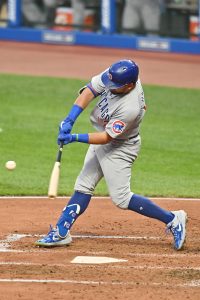 While those numbers were solid, however, they weren’t quite the elite-level production Chicago hoped to receive from a player drafted fourth overall in 2014. Schwarber’s gains with his bat were also rather mitigated by a lot of swings-and-misses (512 strikeouts from 2017-20, the 12th-most of any hitter in baseball in that stretch) and average to subpar baserunning and left field defense.
Things went south for Schwarber in 2020, as he hit only .188/.308/.393 with 11 home runs over 224 plate appearances. Between these lackluster numbers and the Cubs’ desire to cut payroll, Schwarber was non-tendered so Chicago could avoid paying him an arbitration salary projected to fall somewhere between $7.01MM and $9.3MM.
The fact that Schwarber surpassed even the highest arb projection in landing $10MM from Washington is indicative both of how much interest there must have been in his services, and a sign that the Nats are taking more stock in some of Schwarber’s advanced metrics than his bottom-line 2020 numbers. A look at Statcast indicates a solid case for a bounce-back performance, as Schwarber still made plenty of hard contact (including a 95th-percentile exit velocity of 92.8 mph). Between a .219 BABIP and a .302 wOBA that fell well beneath his above-average .330 xwOBA, it can also be argued that Schwarber ran into some bad luck over his sample size of 224 PA.
The Nationals are certainly hoping for a return for the 2017-19 version of Schwarber, as his left-handed bat would nicely augment a D.C. lineup that still leaned mostly towards right-handed hitters even after the addition of switch-hitter Josh Bell. Between Bell and Schwarber, the Nats have now added two sluggers looking for rebound seasons, and a lot of major power potential to a team that finished 21st among all clubs in home runs last year.
Juan Soto looks to be moving to right field to accommodate Schwarber, a position shift that was known to be under consideration depending on what type of corner outfielder the Nationals brought into the mix. Schwarber will surely get some DH time should the National League again use the designated hitter next season, which might have the benefit of unlocking some additional hitting potential for Schwarber since he could focus solely on hitting for those games. It also isn’t out of the question that Washington could break Schwarber in as a first baseman, as Anthony Rizzo‘s presence at the position forced the Cubs to deploy Schwarber in the outfield once Schwarber was moved from his original catcher spot.
Photo courtesy of USA Today Sports Images
Former Angels Staffer Alleges Widespread Use Of Foreign Substances
Last March, the Angels dismissed visiting clubhouse manager Brian “Bubba” Harkins amidst allegations he’d been providing opposing teams’ pitchers foreign substances to aid their grip on the baseball. Harkins responded by filing a defamation action against both the organization and Major League Baseball. The Angels and MLB filed a motion to dismiss the lawsuit last November.
Harkins’ opposition to the defendants’ motion for dismissal was filed in Orange County Superior Court yesterday and obtained by Mike DiGiovanna of the Los Angeles Times. Therein, Harkins alleges widespread use of a rosin and pine tar concoction by MLB pitchers to alter the feel of the ball. Harkins’ assertions involve players from the Angels and opposing teams alike, spanning across the past two decades. In his court filing, Harkins names such players as Troy Percvial and Brendan Donnelly, who last played for the Angels in 2004 and 2006, respectively, as alleged users of the rosin/pine tar mix. Additionally, Harkins includes several recent or current Angel pitchers among those he claims have altered the ball.
Harkins further alleges that MLB has evidence of various high-profile pitchers from other teams using foreign substances to affect the baseball. DiGiovanna relays a text allegedly sent by Yankees starter Gerrit Cole (then with the Astros) to Harkins in January 2019 stating “Hey Bubba, it’s Gerrit Cole, I was wondering if you could help me out with this sticky situation. We don’t see you until May, but we have some road games in April that are in cold weather places. The stuff I had last year seizes up when it gets cold.”
It’s worth noting that none of these specific allegations have been substantiated. To this point, these allegations (more of which can be found in DiGiovanna’s full piece) are limited to Harkins’ pre-trial court filings. The case is set for a January 21 hearing on the defendants’ dismissal motion. If the case were to proceed to trial, Harkins’ attorney will seek at least $4MM in damages, notes DiGiovanna.
More generally, MLB pitchers’ supposed usage of ball-altering foreign substances has become a notable issue throughout the sport in recent months. Last February, then-MLB senior vice president Chris Young sent a memo to teams prohibiting club personnel “from providing, applying, creating, concealing or otherwise facilitating the use of foreign substances by players on the field” (relayed by Ben Lindbergh of the Ringer in July). Nevertheless, Lindbergh spoke with several players who estimated that at least 70% of pitchers were using some form of illegal substance. In November, Eno Sarris of the Athletic spoke with nearly twenty MLB players and coaches about ball-doctoring, and the “median answer was more than three-quarters of the league (uses illicit foreign substances).”
Lindbergh and Sarris note the correlation between the usage of a grip-altering foreign substance and higher spin rates for pitchers. (Both pieces are worth a full read for those interested). This figures to remain a topic of discussion for Major League Baseball, whether or not Harkins’ specific allegations are sufficient to warrant the continuation of his lawsuit.
Mets Acquire Francisco Lindor, Carlos Carrasco
The Mets have made their first huge deal of the Steve Cohen era, acquiring shortstop Francisco Lindor and right-hander Carlos Carrasco from the Indians as part of a six-player trade. To replace their star shortstop, Cleveland will receive two prominent young infielders in Amed Rosario and Andres Gimenez and a pair of Mets prospects — right-hander Josh Wolf and outfielder Isaiah Greene.
It has been widely assumed that Lindor would be on the move at some point this offseason, as the Tribe is looking to cut payroll and Lindor is now entering his final season before free agency. The Mets have been one of many teams mentioned as a plausible suitor, though comments made by both new owner Cohen and team president Sandy Alderson implied that the Mets would be more apt to sign big-name players rather than trade for them, due to a lack of minor league depth in New York’s farm system.
Instead, Alderson and new Mets GM Jared Porter have now swung a major blockbuster. Financial terms of the deal haven’t yet been made public, but it’s safe to assume the Mets are picking up all of the $27MM owed to Carrasco through the 2022 season. Between Carrasco’s contract and Lindor’s projected salary (between $17.5MM and $21.5MM) in his final year of arbitration, Cohen’s willingness to spend manifested itself in a different way, as the Mets will now upgrade their roster by taking some salaries off the books of the cost-cutting Cleveland organization.
Since his debut in 2015, no shortstop in baseball has a higher fWAR (28.9) than Lindor. A four-time All-Star with two Gold Gloves and two Silver Slugger Awards, Lindor has hit .285/.346/.488 with 138 home runs over his six big league seasons, and further established himself as an all-around talent by stealing 99 bases. 2020 was a down year for Lindor, as he hit only .258/.335/.415 over a league-high 266 PA, but that would certainly be explained by the unusual nature of the shortened season rather than a clear sign of a decline.
It is also fair to wonder if Lindor might have been impacted by the trade speculation that has been swirling around him for the better part of three years. After some early-career extension talks with the Tribe failed to lead to a deal, it became increasingly clear that Cleveland would look to trade Lindor rather than just let him walk in free agency. Indians owner Paul Dolan said in 2019 that his team didn’t have the resources to invest heavily in a single player, and rather notoriously told Cleveland fans to “enjoy [Lindor] and then we’ll see what happens.”
Lindor now becomes the centerpiece of an already-strong Mets lineup, as he will step in as the everyday shortstop. Luis Guillorme looks like New York’s top backstop shortstop option now that Rosario and Gimenez are gone, though Jose Peraza and Wilfredo Tovar are also on hand. The Mets could look to add another veteran utility infield type prior to Opening Day, though Jeff McNeil‘s ability to play multiple positions gives them some cover in that respect.
We also shouldn’t assume that the Mets are anywhere near done with major moves, of course. The club has already signed James McCann and Trevor May in free agency, retained Marcus Stroman via the qualifying offer, and such big names as George Springer and Trevor Bauer are also known to be free agent targets for Alderson and company. Since the Mets are still roughly $32MM short of the $210 luxury tax threshold, at least one more pricey contract could certainly be added, and possibly more if the club moved some other salary in a trade, or was willing to take a one-year tax hit for exceeding the threshold.
Carrasco joins Stroman and ace Jacob deGrom in a strong 1-2-3 punch atop the New York rotation. If rookie David Peterson can continue his 2020 performance over a full season and Noah Syndergaard is in form during his midseason return from Tommy John surgery rehab, the Mets could very well have one of the sport’s top starting fives. On the flip side, given the uncertainty of Syndergaard’s health, how Stroman will look after opting out of the 2020 season, and the possibility of a sophomore slump for Peterson, this same rotation carries some questions that now aren’t as glaring with a solid veteran like Carrasco in the fold.
Carrasco’s salary made him a natural trade candidate, and today’s news ends his 11-season run as a beloved favorite for both Cleveland’s fans and within the Tribe’s locker room. Carrasco posted a 3.77 ERA, 25.5 K%, and 19.2 K-BB% over his 1242 1/3 innings in an Indians uniform, highlighted by a 2017 season that saw him finish fourth in AL Cy Young Award voting.
After missing almost three months of the 2019 season due to a leukemia diagnosis, Carrasco made an emotional return to the field that September, and then looked to be fully back during a 2020 season that saw him post a 2.91 ERA, 29.3 K%, and 19.6% K-BB% over 68 frames. His 9.6 BB% is a bit of a red flag, and his highest total in the category since his 2009 rookie season, though this could again be a by-product of the small 2020 sample size.
 It was less than four years ago that Rosario was a consensus top-10 prospect in baseball, and between his young age (25) and the flashes he has shown over four MLB seasons, it isn’t out of the question that he can still fulfill that potential with a change of scenery. Rosario looked to be breaking out in 2019, when he hit .322/.353/.453 over his final 372 plate appearances of the season, but he managed just a .252/.272/.371 slash line in 147 PA in 2020.
As it happened, Gimenez received more playing time ahead of Rosario, and Gimenez responded with a .263/.333/.398 slash in his first 132 plate appearances as a major leaguer. A former top-100 prospect himself, Gimenez is considered a better defender than Rosario and might be Cleveland’s preferred choice at shortstop, with Rosario perhaps moving into the second base vacancy left open by free agent Cesar Hernandez. Since Rosario has been considered to have multi-position capability, the Tribe could also move Rosario around the diamond, perhaps a way of addressing their longstanding outfield problem.
It probably isn’t a surprise that both Wolf and Greene weren’t drafted by Alderson’s front office, which may have made him more open to moving these particular prospects. The two youngsters were second-round picks (Wolf in 2019, Greene in 2020) during Brodie Van Wagenen’s time as New York’s general manager, and were respectively ranked ninth and 10th in MLB Pipeline’s list of Mets minor leaguers.
Drafted as a high schooler out of Texas, Wolf pitched eight innings over five appearances for the Mets’ rookie ball team in 2019. Pipeline rates both his curveball and his fastball as 60-grade plus pitches, with his heater averaging 94mph during his brief rookie ball debut. As per the scouting report, “Wolf’s athleticism, quick arm and clean delivery enable him to pitch to both sides of the plate and all four quadrants of the strike zone, and he earns high marks for his aptitude with regards to making adjustments.”
Greene is another high school product, and he won’t celebrate his 20th birthday until August. Greene is a bit raw, but he already has what Pipeline’s scouting report described as “a contact-oriented approach” at the plate, plus speed, and potential to remain as a center fielder. Baseball America thinks left field might be his eventual destination, but still ranked Greene as the 49th-best prospect available in the 2020 draft, and noted that Greene was “drawing comparisons to Garret Anderson and Michael Brantley” as a hitter.
In the bigger picture, today’s trade emulates other major swaps made by the Indians in recent years — a higher-priced star player (whether Lindor, Carrasco, Mike Clevinger, Trevor Bauer, or Corey Kluber) is dealt for a combination of big-league ready pieces and younger talent. Cleveland president of baseball operations Chris Antonetti and GM Mike Chernoff have done an admirable job of keeping the Indians competitive amidst this constant shedding of higher-paid players, in part due to the team’s ability to consistent develop quality pitchers from its minor league system.
That said, Cleveland now has just over $40MM on its books for 2021, and no players officially under contract beyond the season. At least one of Jose Ramirez‘s club options seem a safe bet to be exercised, but that’s assuming Ramirez isn’t also traded at some point in the next 12 months. The lack of both fan attendance and revenue-sharing payments unquestionably delivered a big hit to the team’s financial picture, but this even more austere approach to roster construction will surely hamper Cleveland’s chances at contending in the AL Central and making another postseason appearance.
ESPN.com’s Jeff Passan (Twitter links) was the first to report that the two teams were “deep in talks” about a Lindor deal, and Passan also noted Gimenez was part of the trade. MLB Network’s Jon Heyman first reported the the two sides had agreed to the trade. MLB.com’s Mark Feinsand reported Carrasco’s involvement in the swap. MLB Pipeline’s Jonathan Mayo reported that Rosario was being dealt, while The Athletic’s Ken Rosenthal reported Wolf’s involvement, and ESPN’s Kiley McDaniel) had Greene’s involvement.
Photos courtesy of USA Today Sports Images
Tomoyuki Sugano Agrees To Four-Year, $40MM Deal With Yomiuri Giants
8:03pm: Sugano has re-signed with Yomiuri on a four-year, $40MM contract, per Rosenthal. The deal includes three opt-out chances, so Sugano will have future opportunities to become a major leaguer.
4:05pm: Nippon Professional Baseball right-hander Tomoyuki Sugano did not reach an agreement with a major league team before his 5 p.m. ET posting deadline Thursday, Jeff Passan of ESPN reports. That means Sugano will remain in Japan in 2021, though he will be eligible to come to MLB as a free agent next winter.
NPB’s Yomiuri Giants posted the 31-year-old Sugano for major league clubs a month ago, and with the likes of Kevin Gausman and Marcus Stroman off the free-agent board, Sugano looked like one of the most appealing starters available on the open market. As a result, several teams – including the Padres, Giants, Mets, Blue Jays, Rangers and Red Sox – vied for Sugano in recent weeks. The Padres were even in negotiations with Sugano on Thursday, Bob Nightengale of USA Today tweets. In the end, though, neither they nor any other big league club could pry him from his homeland.
Sugano will remain a member of the Yomiuri Giants, with whom he has dominated since making his pro debut in 2013. Sugano owns a stellar 2.34 ERA over 1,362 innings with the Giants, and he has won two MVPs and a pair of Pitcher of the Year awards in Japan. He’ll make around $8MM with the Giants in 2021, Ken Rosenthal of The Athletic relays. With another excellent season, though, Sugano could wind up in a major league uniform before the 2022 campaign.
Start Of Minor League Seasons To Be Delayed
While we recently learned that spring training and the MLB 2021 season are set to begin on time, the same cannot be said for the minors. MLB informed teams at the Double-A and Single-A levels that their seasons will be delayed, writes Baseball America’s J.J. Cooper. MLB wants to mitigate the number of overall bodies sharing space at spring training facilities. With that in mind, players at the Double-A and Single-A levels will wait until Major League players as well as those slated for Triple-A have departed their facilities. Presumably, that means Triple-A will aim for a more traditional start to their season.
Cooper provides additional information from the memo, writing, “Additionally, the memo told minor league teams to expect their schedules to run until as late as Oct. 3, a full month after regular season games normally end in early September. It is also expected there will be no minor league playoffs in 2021. With a delayed start, those playoff dates will be exchanged for more dates for all teams.”
After a year with no minor league baseball at all, this news comes not as a surprise, nor an inconvenience, but closer to, as Cooper describes it, a “relief.” Minor league teams do not have nearly the resources to stay socially distanced as players at the Major League level. Travel between cities will be a particular concern for teams as MLB puts together the minor league schedule. From MLB’s perspective, the slow roll-out is an opportunity to establish their new development system incrementally, which could ultimately provide a runway to make further changes to former norms.
With a new 120-team MLB-run minor league system kicking-off, this year will prioritize providing a space for competitive, developmental play for those players trying to make their way to the big leagues. Playoffs will, at some point, return to the minor league system, but for now, the focus is safely providing venues for minor league players to get back on the ball field without overtaxing the now-cohesive overall structure that encompasses both Major and minor league baseball leagues. The delays also gives more time for vaccines to be distributed, which in a best case scenario, could allow for fan attendance at minor league facilities sometime down the line.
Tigers Sign Robbie Grossman
6:42pm: The Tigers have announced the signing.
3:40pm: The two sides have a deal for two years and $10MM, Jon Heyman of MLB Network tweets. Grossman could make up to $500K per year in performance bonuses, per Stavenhagen.
3:39pm: The Tigers are closing in on a two-year, $10MM agreement with free-agent outfielder Robbie Grossman, Cody Stavenhagen and Ken Rosenthal of The Athletic report. The pact will also include performance bonuses for Grossman, a Lagardere Sports client.
Detroit will be the fourth team for Grossman, a sixth-round pick in 2008 who has played in the bigs with the Astros, Twins and Athletics. Grossman played a small portion of his career in Houston under then-manager A.J. Hinch, who is now the Tigers’ skipper.
Grossman and Hinch will now reunite, and the 31-year-old switch-hitter will bring a lifetime batting line of .252/.350/.380 with 50 home runs and 37 stolen bases in 2,748 plate appearances to his new team. While Grossman has been a roughly league-average offensive player throughout his career, he hasn’t graded out as well in the outfield, where he has combined for minus-19 Defensive Runs Saved and a minus-18.9 Ultimate Zone Rating among all three positions.
Last season may have been a career offensive year for Grossman, who batted .241/.341/.482 (126 wRC+), hit eight homers and stole eight bases across 192 PA to conclude his A’s tenure. The majority of Grossman’s season was spent in left field, where the Tigers mostly deployed Christin Stewart in 2020. But Stewart and primary right fielder Daz Cameron had rough years, leaving the Tigers with a need in the corners. The hope is that Grossman will provide it, and his track record of getting on base suggests he’ll improve an offense that posted the league’s third-worst OBP (.303) last season.