
Athletics Extend Khris Davis
Oakland fans have cause to celebrate. The Athletics announced Thursday that they’ve extended designated hitter/outfielder Khris Davis through the 2021 season. Susan Slusser of the San Francisco Chronicle reports (via Twitter) that Davis will earn $16.75MM in each year of the contract, meaning he’ll take home $33.5MM in new money over the next two campaigns. Davis, an Octagon client, would have been eligible for free agency following the 2019 season.
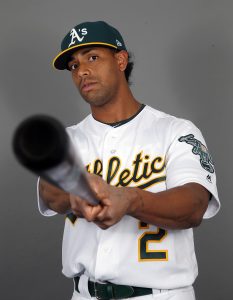
“Oakland has been a special place for me since I arrived,” said Davis in a statement accompanying the announcement. “I love playing here in front of our fans, and my teammates make this feel like a family. I never hid the fact that I wanted to stay in Oakland because that is how I feel and I’m glad that I can continue to call the city of Oakland my baseball home. This team has a bright future, and I’m thrilled to be a part of it.”
Davis, 31, has been a source of immense power and stunning consistency since coming to the A’s by way of trade from the Brewers. There may be no more remarkable piece of trivia in baseball than the slugger finishing four consecutive seasons with a .247 batting average. Of course, while that number doesn’t stand out as particularly impressive, Davis offsets that average with respectable on-base skills and elite power; he’s a .247/.322/.539 hitter since being acquired by the Athletics (this season included) and averaged 44 homers per year in each of his three full seasons in green and gold.
It’s not particularly surprising to see the sides line up on a new deal, especially in this year of the extension. The A’s have proven willing to commit multiple seasons to a DH in the recent past. Though they came to regret the Billy Butler signing, the club has had a lengthy opportunity already to evaluate Davis in person. He has proven capable of putting the ball over the fence in one of the game’s least homer-friendly ballparks. And he’ll continue to earn at the same level he is in 2019, a salary that the club obviously feels it can manage even with its typically bottom-barrel payroll.
From Davis’s perspective, the market has been distinctly unfriendly to defensively limited sluggers. J.D. Martinez hit free agency with a better track record and at a much younger age than Davis would have, but settled for $110MM over five years. And that’s the very top of the market. The aging but highly accomplished Nelson Cruz settled for one year and $14MM this past winter. He took down four seasons and $57MM when he hit the market in 2014, but things have clearly changed since that time.
If there was an upside scenario for Davis in the 2019-20 market, it was probably embodied in Carlos Santana‘s three-year, $60MM deal. Santana was a similar age to Davis; he lacked Davis’s power abilities but was a much bigger on-base threat. That contract came in higher than MLBTR predicted; it also quickly proved undesirable for the Phillies. Santana’s contract was one of several first base/DH accords to be swapped around the league this winter. Perhaps Davis could still have earned more on the open market, in AAV if not also years, but it’s understandable that he wasn’t anxious to test his luck.
Photo courtesy of USA Today Sports Images.
Nationals, Anthony Rendon Resume Extension Talks
April 18: There’s still a “decent-sized gap” between Rendon’s asking price and what the Nationals are willing to offer, per MLB Network’s Jon Heyman (Twitter link). That said, the very fact that talks have continued into the season serves as a point of encouragement for Nats fans who are hoping to see Rendon locked up to a long-term pact.
April 16: The Nationals and third baseman Anthony Rendon met prior to tonight’s game to once again discuss a contract extension, MASNsports.com’s Mark Zuckerman first reported. Rendon met with not only general manager Mike Rizo but also managing principal owner Mark Lerner, per the report.
Like several other stars who’ve signed extensions over the past few months, Rendon is slated to reach free agency at season’s end. The increasingly prolonged nature of the free-agent process and colder-than-expected markets for even some of the game’s brightest stars have begun to push many players toward forgoing the entire process, however. Rendon would be the latest example, joining a list that includes the likes of Xander Bogaerts, Chris Sale and Nolan Arenado.
Rendon, 28, is off to an otherworldly start to his 2019 campaign, entering play Tuesday with a .400/.460/.873 batting line. He’s already clubbed six homers and eight doubles in just 63 trips to the plate, and he’s walked nearly as many times as he’s punched out (six and eight, respectively).
The Nationals and Rendon avoided arbitration this winter by agreeing to an $18.8MM salary for his final season of club control. Any extension would figure to come with a substantial raise in terms of annual value; Rendon may not quite reach the heights attained by Arenado (seven years, $234MM) or fellow third baseman Manny Machado (10 years, $300MM), but those lofty investments nonetheless underscore that a merely modest raise isn’t likely to dissuade Rendon from exploring free agency. Rendon is two years older than Machado but is only 10 months older than Arenado, so perhaps the length of Arenado’s extension will serve as a potential comp in renewed negotiations.
As of late spring, Rendon was somewhat candid in telling NBC Sports’ Todd Dybas that negotiations had “kind of come to a halt” and that the Nationals’ offer “wasn’t to where we thought we should be.” The exact size of contract that Rendon and agent Scott Boras are seeking isn’t clear. Boras clients have a reputation for testing the market rather than inking long-term deals before reaching free agency, though it’s worth noting that the aforementioned Bogaerts extension represents a notable exception to that line of thinking. So, too, does Rendon’s teammate Stephen Strasburg, who signed a $175MM extension with the Nats just under three years ago — at a time time when he was also in his final season of club control.
The Nats have been luxury-tax offenders in each of the past two seasons, but the outlook in that regard is substantially more clear in 2020. Bryce Harper‘s decision to sign with the division-rival Phillies and the potential departure of Ryan Zimmerman next winter clear large numbers off the books; the Nationals will also likely see Brian Dozier, Howie Kendrick, Matt Adams, Jeremy Hellickson and Tony Sipp become free agents at season’s end. Trea Turner represents their only significant arbitration raise on the horizon.
Presently, the Nats only have about $110MM worth of 2020 salary counting against the luxury tax, leaving them nearly $100MM south of the barrier. That’d leave ample room not only for a Rendon extension but for additional offseason maneuverings next winter.
Arodys Vizcaino Undergoes Season-Ending Shoulder Surgery
The Braves have announced that closer Arodys Vizcaino has undergone season-ending shoulder surgery. The procedure involved a labrum clean-up and the removal of scar tissue.
This news represents a major hit to a Braves relief unit that was already under fire. That’s true of many other clubs — including several division rivals — but that doesn’t make it easier to bear. A.J. Minter, the club’s other top option for the ninth inning, has scuffled out of the gates. Others in the bullpen currently include Wes Parsons, Luke Jackson, Jesse Biddle, Shane Carle and Chad Sobotka, although of that bunch, Carle and Sobotka have struggled quite a bit in the season’s first few weeks.
The Atlanta organization isn’t short on promising arms in the upper minors, though the bulk of their top-regarded arms are in rotation roles. Bryse Wilson and Kyle Wright opened the year in the big league rotation, in fact, though each has since been optioned down to Triple-A Gwinnett. Southpaws Luiz Gohara and Kolby Allard are both starting at the Triple-A level as well.
Right-hander Mike Soroka, arguably the most promising young arm the Braves have in-house, didn’t appear to be an option in the hours leading up to the news on Vizcaino’s shoulder. To the contrary, Mark Bowman of MLB.com tweeted that afternoon that it’s likely that Soroka will be recalled to start tomorrow’s game for the Braves. He’ll at least temporarily step into a rotation that is expected to get top starter Mike Foltynewicz back by the end of the month.
It won’t go unnoticed that there is still a rather prominent free agent reliever still left unsigned. Long-time Braves closer extraordinaire Craig Kimbrel held talks earlier in the winter but failed to come to terms with the value-conscious Atlanta organization. He’s still reportedly seeking a multi-year deal; the Braves will be loath to commit to a lengthy accord, but Kimbrel’s leverage may be on the rise as late-inning relief units falter around baseball.
Signing Kimbrel before the June draft would cost the Braves a pick in the 2020 draft, as Kimbrel rejected a qualifying offer from the Red Sox upon conclusion of the 2018 season. Nevertheless, the on-paper fit is now more pronounced than ever, and fan outcry for the organization to broker a reunion with an already beloved franchise icon has been audible since late in the offseason.
The Braves kicked off the winter with a high-profile signing of Josh Donaldson but then went largely dormant, negotiating only small-scale returns for Brian McCann and Nick Markakis. At the time of the Markakis signing, general manager Alex Anthopoulos spoke of the contract’s below-market rate perhaps giving the team flexibility to make further moves down the line — in addition to Braves leadership already having spoken of increased spending capacity earlier in the winter — but that has yet to come to fruition.
As for Vizcaino, the injury may well prove to be the end of his Braves tenure. The hard-throwing righty entered the season with five years, 168 days of Major League service time, meaning he’s already now surpassed the six-year service mark needed to qualify for free agency. Perhaps the Braves will look to retain him on a bargain contract next offseason, but Vizcaino will have the ability to listen to offers from any and all interested parties. He’ll quite likely be forced to settle for a one-year deal with a low base salary and plenty of incentives, if not a minor league contract, as teams throughout the league look at him as a potential bounceback candidate. He won’t turn 29 until November, though, so at the very least, Vizcaino will have age on his side in free agency.
Red Sox Designate Blake Swihart, Select Sandy Leon
The Red Sox have designated catcher Blake Swihart for assignment, as first reported by Evan Drellich of WEEI.com (Twitter link). In his place, Sandy Leon is heading back onto the MLB roster, as Jon Heyman of MLB Network was first to tweet.
Struggling out of the gates, the defending champs have decided upon a change behind the dish. The considerations are familiar; they were weighed just weeks ago when Leon was outrighted in favor of Swihart. This move, then, constitutes a mulligan of sorts.
Swihart wasn’t off to an inspirational start at the plate, with a .231/.310/.385 slash, but it seems likely that the move was driven primarily by the club’s broader pitching issues. The Boston staff has been among the worst in all of baseball thus far. While that reflects quite a bit more than Swihart’s own performance behind the dish, the organization obviously feels it has something to gain in that regard by switching things up.
Leon was stashed down at Triple-A after clearing waivers late in camp. He lacks Swihart’s abilities on offense but is lauded for his glovework and game management skills. He had teamed with Christian Vazquez to form a defensive-oriented backstop combination in recent years, but the club opted to give Swihart a run at the position to open the season after utilizing him in a utility role last year.
The move potentially means jettisoning the upside and cheap control embodied in the control rights over Swihart. He’s earning $910K this year as a Super Two player and comes with three further arbitration-eligible campaigns. Long lauded as a potential impact bat that can line up behind the dish, those predictions haven’t yet come to fruition. Over 626 career MLB plate appearances, Swihart owns a .255/.314/.365 slash line.
Teams that believe in the bat may well give Swihart a chance at a lengthier run of consistent playing time. That could come via trade or waiver claim. If no team is interested in carrying the out-of-options 27-year-old on its active roster and he clears waivers, the Red Sox will have a chance to stash him back at Triple-A.
Dodgers To Activate Clayton Kershaw On Monday
APRIL 15: As expected, Kershaw is now back on the active roster. The club optioned righty Jaime Schultz to open roster space.
APRIL 11: Clayton Kershaw will come off the injured list to make his season debut on Monday when the Dodgers host the Reds, manager Dave Roberts revealed to reporters Thursday morning (Twitter link via Bill Plunkett of the Orange County Register).
Kershaw landed on the IL to begin the season due to a bout of shoulder inflammation that slowed his progress during Spring Training. He’s made a pair of minor league rehab starts since Opening Day — one with Triple-A Oklahoma City and a second with Double-A Tulsa — working six innings and tossing 81 pitches in the latter of the two. In total, Kershaw yielded four runs on nine hits and a pair of walks with a dozen strikeouts in 10 1/3 rehab innings.
Since it became apparent that Kershaw would require an IL stint to begin the season, the Dodgers have also lost both Rich Hill (knee strain) and Hyun-Jin Ryu (groin strain) to injuries. Those maladies pushed lauded southpaw Julio Urias into the rotation to begin the year after he’d been slated to open the 2019 campaign in the bullpen to manage his workload. He’s been limited to about 75 pitches in each of his two starts so far.
It’s not clear exactly how the Dodgers’ rotation will shake out in the coming weeks as both Hill and Ryu mend; Walker Buehler, Kenta Maeda and Ross Stripling figure to join Kershaw in the starting five for now, and it’s possible that Urias will make another start or two until one of Hill or Ryu is able to step back into the fray. At some point, Urias will have to shift to the ‘pen, given that he only pitched a total of 22 innings between the Majors (postseason and regular season) and minors last year in his return campaign from major shoulder surgery in 2017.
Braves Extend Ozzie Albies
The Braves continued to lock up their core pieces Thursday, announcing a contract extension with second baseman Ozzie Albies that’ll guarantee the 22-year-old a total of $35MM from 2019-25. He’ll earn $1MM apiece in 2019 and 2020, $3MM in 2021, $5MM in 2022, and $7MM annually from 2023 through 2025.
The contract includes a pair of club options reportedly valued at $7MM apiece; the first one comes with a $4MM buyout. If both are exercised, Albies will earn a mere $45MM over the next nine seasons — four of which would have been free-agent years.
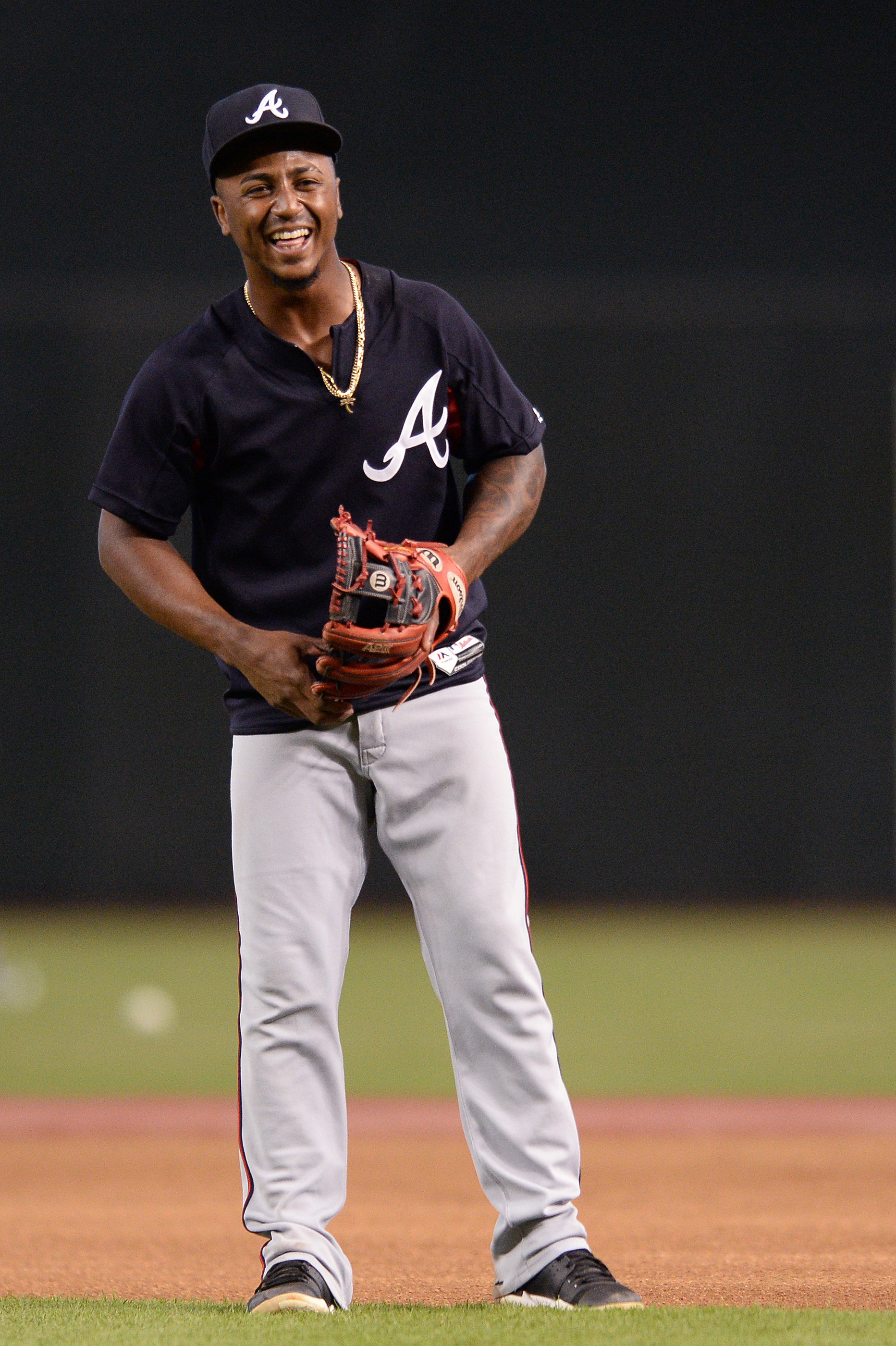 Albies was already under control through 2023 but will now join Ronald Acuna Jr. in comprising a core that the Braves can build around beyond that point in time. Acuna’s contract was deemed by many to be bargain, but the Albies deal runs nearly the same length while checking in at just under one third of the total maximum value.
In terms of overall guarantee, Albies topped fellow second baseman Ketel Marte, though he did so only by giving away additional years of control. Historically speaking, there’s little to no precedent for a player this young and of this caliber surrendering four would-be free-agent seasons for a maximum payout under $50MM. While there’s surely something to be said for accepting a first life-changing payday — particularly with arbitration still two years away — Albies was on track to become a free agent upon completion of his age-26 season. For comparison’s sake, Scooter Gennett earned $18MM over this three arb years despite not breaking out until he was in his first arbitration season. Jonathan Schoop, who was non-tendered after his second arbitration season, signed a one-year deal with the Twins and will earn $19.475MM across what would’ve been his three arb seasons.
Setting aside second basemen and merely looking at players who signed extensions with between one and two years of Major League service, Christian Yelich (seven years, $49.57MM), Andrelton Simmons (seven years, $58MM) and Anthony Rizzo (seven years, $41MM) all topped the Albies guarantee handily — and did so more than four years ago. If Albies was dead-set on an extension, a $50MM baseline would have been at least commensurate with market trends — especially considering the multiple options over free-agent seasons. Instead, the deal checks in more along the lines of dated extensions signed by Starling Marte, Jedd Gyorko and Gregory Polanco.
Frankly, this seems like the type of deal that an agent would strongly advise his client not to take. Perhaps Albies simply wanted to take the largest guarantee the Braves were willing to offer; he received just a $350K signing bonus as a prospect, after all, and his career earnings to date may not even total seven figures. From a purely human standpoint, it’s hard for any 22-year-old player without much in the way of career earnings to rebuff $35MM under the guise that he’ll earn more on a year-to-year basis beginning 24 months down the line. Presumably, all of the points made here were spelled out to Albies before he made what amounts to a life-altering decision.
The contract serves as a reminder that the teams hold overwhelming leverage in instances such as this, and the Atlanta organization took full advantage of that reality. It’s nothing short of a coup for the Braves to land Albies for a maximum of $45MM over the next nine years just weeks after Eloy Jimenez signed a deal that can pay him as much as $75MM over eight years before he ever played a single MLB game.
Albies, meanwhile, entered his second full big league campaign in 2019 with a career .268/.317/.453 batting line to go along with 30 homers, 49 doubles, 10 triples and 22 stolen bases (in 26 attempts). He’s off to a fast start thus far, too, having posted a .929 OPS through the season’s first 11 games. Long one of the game’s top-ranked prospects, Albies earned what figures to be the first of multiple All-Star nods last year as part of a season that both Baseball-Reference and Fangraphs pegged at 3.8 wins above replacement. Given the output he’s already demonstrated to this point in his career, it seems unfathomable that Albies wouldn’t have taken home at least $10-15MM in arbitration, and the more realistic scenario (as evidenced by Schoop and Gennett) is that he’d have done quite a bit better.
The Braves may very well try to spin the Acuna and Albies extensions as big expenditures that’ll buy some good will with fans after a quiet offseason in which they did not spend at anywhere near the level they implied to fans several months ago. And Braves fans, to be clear, should be thrilled by both deals. However, these types of deals aren’t the type that a team can legitimately claim as alternatives to spending in free agency and in taking on salary via trades; rather, they’re the type of contracts that should empower a team to spend in those arenas, knowing full well that paying market rate for other talent is offset by the overwhelming bargains they’ve secured over a pair of homegrown assets.
Ken Rosenthal of The Athletic first reported the agreement (via Twitter). The New York Post’s Joel Sherman reported the terms (Twitter links), with Bob Nightengale of USA Today tweeting the annual breakdown.
Cardinals Extend Matt Carpenter
The Cardinals have locked up a key member of their lineup and one of their longest-tenured players, announcing on Wednesday the signing of infielder Matt Carpenter to a two-year contract extension spanning the 2020-21 seasons. Carpenter, a client of SSG Baseball, will reportedly earn $39MM on the new arrangement. He’d previously been signed through the end of the 2019 season with a club option for the 2020 campaign.
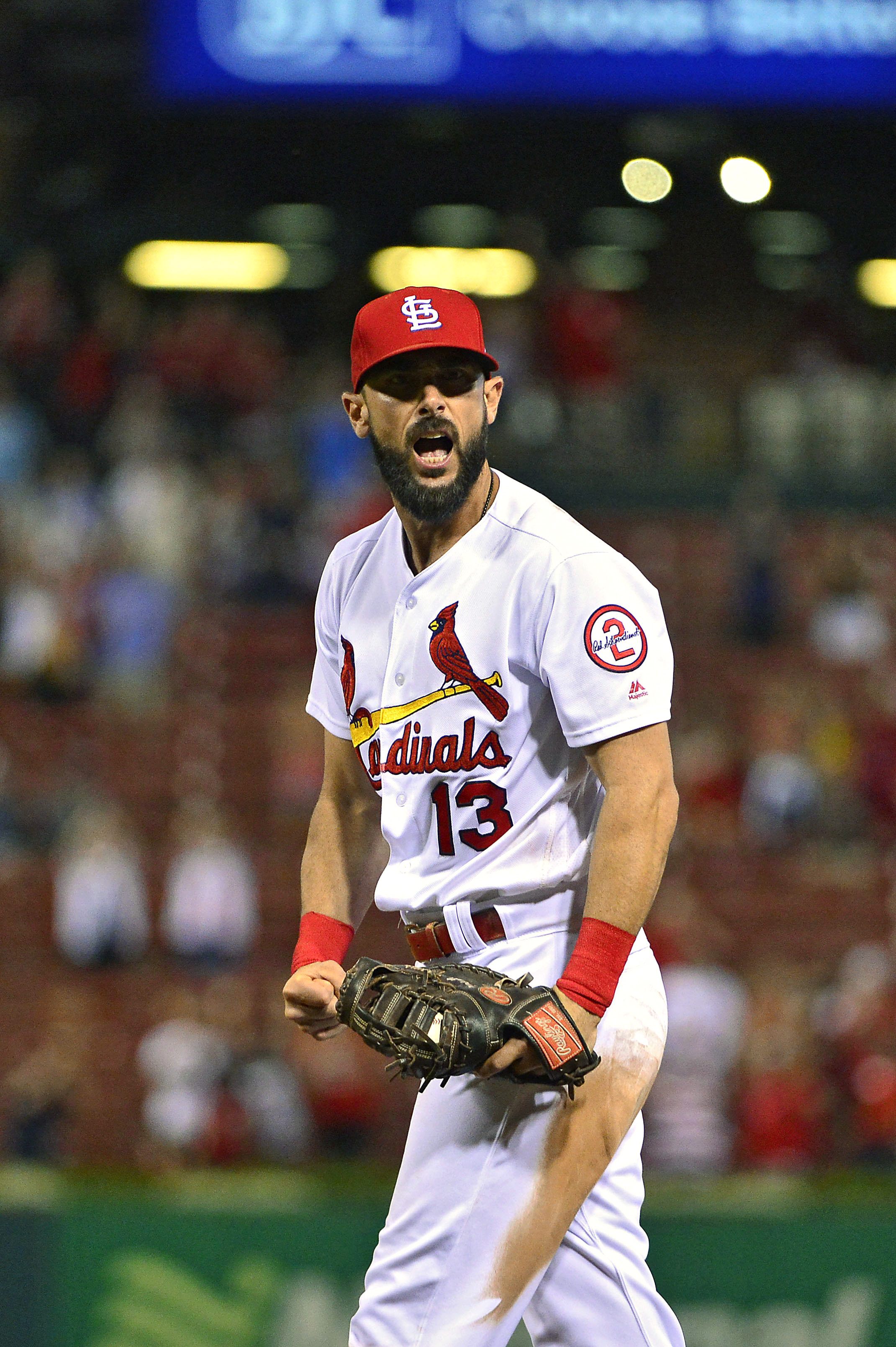
Carpenter will reportedly take home annual salaries of $18.5MM in 2020 and 2021, with a vesting option for the same amount triggering if he makes a combined 1100 plate appearances in 2020-21 (with at least 550 of those 1100 coming in 2021). If the option does not vest, it’ll function as a pure club option with a $2MM buyout. Carpenter will also pick up a no-trade provision for the 2020 season.
Carpenter, 33, is coming off of a stellar 2018 season in which he posted a hefty .257/.374/.523 slash line with a career-high 36 home runs. He has turned in well-above-average offensive work in every one of his seven full seasons in the majors. The new deal comes as Carpenter’s prior pact neared a conclusion. His early 2014 extension included a $14.5MM salary for the current season along with a $18.5MM club option ($2MM buyout) for 2020.
Carpenter joins newly acquired first baseman Paul Goldschmidt in signing on for the foreseeable future. There’s risk in locking into two such corner pieces into their mid-thirties, but both are immensely productive hitters. With that duo now under control through the 2021 season at the very least, it seems that Carpenter will continue to hold down third base for the Cards for the foreseeable future. Carpenter has some experience at second base as well, but the Cards already have a premium defensive option at that position, Kolten Wong, under contract on a long-term deal of his own that runs through the 2020 season and contains a club option for 2021.
That $19.5MM annual value on the new contract won’t put the Cardinals near the luxury tax threshold but will boost the amount of money already committed to next year’s payroll to a hefty $147MM. Fortunately for the Cards, they’re likely ticketed for a small class of arbitration-eligible players, as only John Brebbia, Alex Reyes, John Gant and Dominic Leone are set to receive arbitration raises. Of that quartet, the first three will be eligible for the first time. The Cards will also face a $13MM option ($1MM buyout) on infielder Jedd Gyorko.
With Carpenter now locked into place, the Cardinals suddenly look to have nearly their entire 2020 lineup in house. Goldschmidt, Carpenter, Wong and Paul DeJong are all under contract for next season, as is franchise icon Yadier Molina. Harrison Bader has cemented himself as the team’s center fielder, and although Marcell Ozuna is slated to hit free agency, he’s expected to be replaced by Tyler O’Neill in 2020 and beyond. Dexter Fowler remains under contract through 2021 and figures to handle a corner position unless he struggles through a similarly nightmarish campaign to the one he experienced in 2018.
The Cardinals’ system has a few quality third base prospects, led by 2018 first-rounder Nolan Gorman, but most of the team’s talent in that regard is still multiple years from MLB readiness. It’s possible that Elehuris Montero could’ve been ready for a look in the Majors late in 2019 or at some point in 2020, but he’s still just 20 years of age and only getting his feet wet in Double-A. Gorman has yet to play above A-ball, while well-regarded 18-year-old Malcom Nunez will start his pro career in Rookie ball this summer. By the time Carpenter’s contract is nearing its conclusion, perhaps one of those promising young players will be on the cusp of the big leagues, but the lack of an immediate heir-apparent likely further pushed the Cards into keeping Carpenter on board into the 2021 season.
The Cardinals originally announced a press conference earlier this afternoon. Derrick Goold of the St. Louis Post-Dispatch broke the news that the presser was to announce a new deal for Carpenter. MLB.com’s Jenifer Langosch reported the length of the contract (Twitter link). The Athletic’s Mark Saxon reported the terms of the deal (via Twitter), with Goold adding the yearly breakdown and 2020 no-trade protection.
Luis Severino Shut Down Six Weeks Due To Lat Strain
Luis Severino‘s recent MRI revealed a Grade 2 lat strain that will cause the righty to be shut down from throwing for the next six weeks, the Yankees announced to reporters (Twitter link via Newsday’s Erik Boland). The lat injury is a new development that is unrelated to the previous bout of shoulder inflammation from which Severino was working his way back. This new injury, it seems, was sustained while Severino was rehabbing his shoulder.
As has been well documented by now, the Yankees have a staggering 11 players on the injured list, though it’s arguable that Severino is the most vital of the bunch. The recently extended righty was expected to front the rotation in 2019 but now seems destined to miss the majority of the season’s first half. A six-week shutdown would mean that Severino wouldn’t even resume throwing until the latter third of May, and at that point he’d need to completely rebuild arm strength sufficient to handle a starter’s workload at the big league level. Even in a best-case scenario, there’s little hope of Severino making his first start of the season before the middle of June.
With Severino and CC Sabathia on the shelf, the Yankees have been leaning on James Paxton, Masahiro Tanaka and J.A. Happ as the top three options in the starting rotation. Right-handers Domingo German and Jonathan Loaisiga have been the preferred options at the back of the rotation to this point in the young season, though the Yankees also picked up Gio Gonzalez on surprising a minor league contract late in Spring Training.
The prolonged absence of Severino will do nothing to quell connections between the Yankees and yet-unsigned Dallas Keuchel — the clear-cut top option remaining on the open market. Keuchel’s asking price has reportedly begun to come down recently, though signing him would still come with both luxury tax concerns and draft penalties; specifically, the Yankees would pay a 32 percent tax on any dollars spent on Keuchel and would forfeit their second-highest draft pick and $500K of international bonus money by signing the 2015 AL Cy Young winner.
If the Yankees opt to remain internal, it’ll mean continued looks for German and Loaisiga, plus a potential opportunity for the veteran Gonzalez and/or young righty Chance Adams.
Hunter Greene Undergoes Tommy John Surgery
April 9: The Reds announced that Greene had his surgery today.
April 1: Top Reds pitching prospect Hunter Greene is scheduled for Tommy John surgery, the club announced to reporters including C. Trent Rosecrans of The Athletic (Twitter link). He’ll miss all of the present season and quite likely some of the 2020 campaign as well.
It’s not exactly a huge surprise to hear this news, as Greene was known to have had some elbow issues that were being watched closely. The former second overall pick is just 19 years old and still has plenty of time to get back to full strength and work on trying to reach his immense ceiling.
Greene is known first and foremost for his arm strength, with a triple-digit heater out of high school. But that wouldn’t have been enough to command a record-setting draft bonus; the talented hurler also was prized for his athleticism, mechanics, command, and developing-but-promising secondary repertoire.
It hasn’t been smooth sailing since Greene reached the professional ranks. He didn’t make it into game action that much in his first year and then pitched to a 4.48 ERA at the Class A level in 2018. Of course, he also carried a promising blend of 11.7 K/9 and 3.0 BB/9 in his 68 1/3 innings last year, so there was plenty of evidence of the talent that led the Reds to invest so heavily in him.
Mike Clevinger Likely Out More Than Two Months
10:06am: It turns out the injury is much worse than had initially been expected. Clevinger is going to be sidelined for six to eight weeks before he’s able to resume a throwing progression, manager Terry Francona tells reporters including Ryan Lewis of the Akron Beacon Journal (Twitter link). Since he’ll still need to build back to full pitching strength from that point, it seems all but inevitable that Clevinger will miss more than two months.
9:32am: The Indians have placed starter Mike Clevinger on the 10-day injured list. He’s said to be dealing with a “right upper back/Teres major muscle strain.”
Reliever Nick Wittgren is coming up to the active roster to fill the opening and provide some innings, but obviously won’t fill Clevinger’s role. The Cleveland org will ultimately need another hurler to step into the rotation, at least for a couple of starts.
Glancing down the Indians’ 40-man roster, there are several pitchers with MLB experience that could ultimately be called upon. Cody Anderson has spent the most time in the big leagues but is still building back after missing virtually all of the prior two seasons. Adam Plutko might get the nod but is not at 100 percent. Jefry Rodriguez and Chih-Wei Hu have also pitched at the game’s highest level, as have non-roster hurlers A.J. Cole and Asher Wojciechowski.
Filling in shouldn’t be too much of a problem. The real question is: for how long? It did not seem that Clevinger had suffered a significant injury when he left his most recent start, and there’s still no indication that he’s expected to be sidelined for a lengthy stretch. The Indians will take a cautious approach while hoping that Clevinger is able to get back to action quickly. The 28-year-old righty has been nothing short of outstanding of late, with a ridiculous dozen innings (two hits, 22:4 K/BB) to begin the new campaign.