
Brian Snitker, Bob Melvin Win Manager Of The Year Awards
Braves manager Brian Snitker and Athletics skipper Bob Melvin were named Manager of the Year in their respective leagues, the Baseball Writers Association Of America announced Tuesday. As a reminder, votes were submitted prior to the beginning of postseason play.
Snitker received 17 first-place votes and edged out Milwaukee’s Craig Counsell 116 to 99 on the weighted ballot system. Colorado’s Bud Black, St. Louis’ Mike Shildt and Chicago’s Joe Maddon rounded out the NL ballot, in that order (full voting breakdown here). In the American League, Melvin topped Boston’s Alex Cora by a score of 121 to 79. Tampa’s Kevin Cash, Houston’s A.J. Hinch and New York’s Aaron Boone rounded out the ballot, in that order (full breakdown).
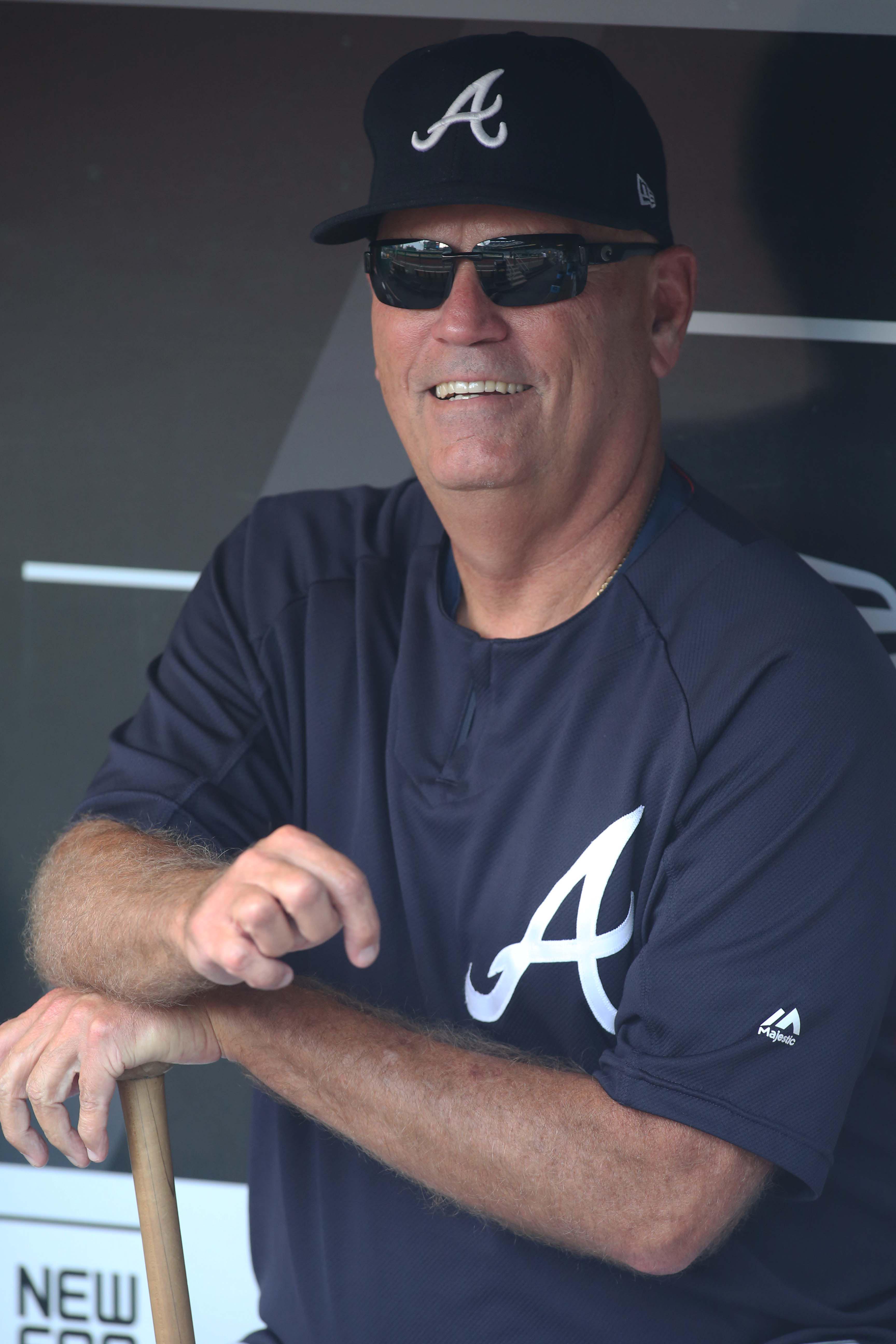
Snitker, 63, has spent more than two decades in the Braves organization, including three separate stints on the team’s big league coaching staff and 15 seasons as a skipper in the team’s minor league ranks. The Braves lifer was named interim manager upon the dismissal of Fredi Gonzalez in May 2016, and while that move wasn’t expected to become permanent at the time, Snitker has impressed a pair of different front office regimes while deftly managing an increasingly youthful roster that now looks poised for perennial contention in the National League East.
Much has been made of the Braves’ rebuild over the past several seasons, as Atlanta has dealt away stars like Craig Kimbrel, Andrelton Simmons and Justin Upton, among others, while stockpiling minor league talent with an eye towards a sustainable run of contending rosters. The front office no longer resembles the group that began the rebuild, following the stunning resignation of GM John Coppolella in the wake of infractions on the international free-agent market and the quieter departure of former president John Hart; the constant throughout that turmoil was that Snitker was the voice of leadership in the dugout.
Expectations for the Braves headed into the 2018 campaign weren’t exactly high, but the emergence of Ronald Acuna, a huge first half from Ozzie Albies, resurgent efforts from Nick Markakis and Anibal Sanchez, and the ultra-consistent Freddie Freeman — all under the tutelage of Snitker and a veteran coaching staff — helped to fuel a 90-72 club that surprisingly took home the NL East division crown.
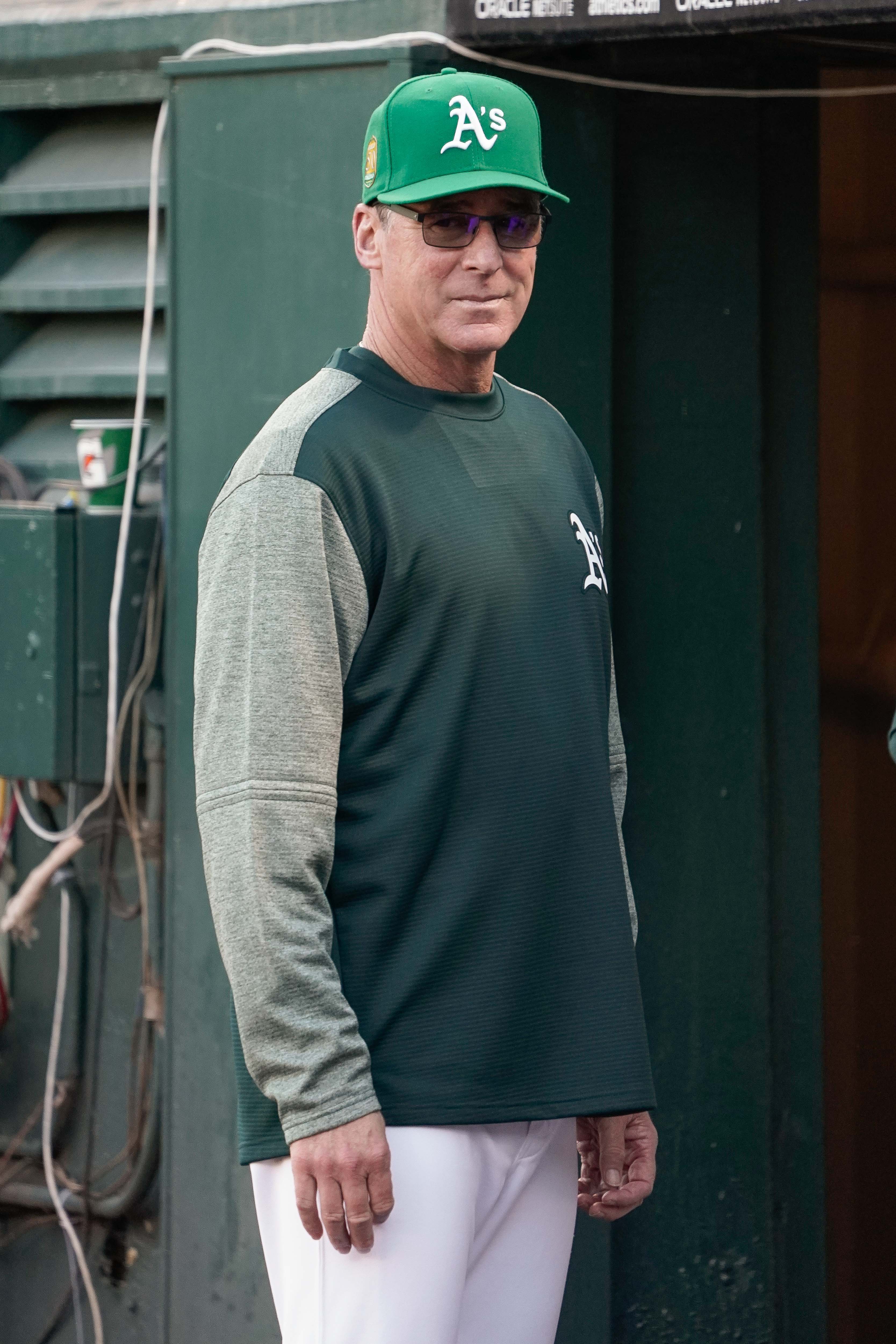
As for Melvin, this is his third Manager of the Year Award, having previously taken home the honor with the 2012 A’s and the 2007 Diamondbacks. As was the case with the Braves, Oakland entered the season as a perceived long shot to make the postseason. Doubts about their ability to do so undoubtedly continued into the summer, as Oakland sat at 34-36 and faced an 11.5 game deficit in the American League West on June 15.
What followed was one of the most impressive streaks in recent history, as the A’s closed out the season with a ridiculous 63-29 pace, leaving the division-rival Mariners and Cash’s Rays in the dust as they marched to a 97-65 finish and an improbable American League Wild Card berth. That the Athletics were able to do so despite a catastrophic level of injury in the starting rotation made the feat all the more incredible. Through it all, Melvin kept his club in good spirits and managed a patchwork rotation comprised primarily of 2017-18 non-tenders and minor league signees. Melvin & Co. leaned on Trevor Cahill, Edwin Jackson, Brett Anderson and Mike Fiers in the rotation down the stretch, while emerging stars like Matt Chapman and Matt Olson anchored a lineup that became one of the league’s best.
Beyond Manager of the Year honors, Snitker and Melvin were each rewarded with new contracts following their strong seasons. Atlanta signed Snitker to a two-year extension with an option for the 2021 season, while Melvin’s contract is now guaranteed through 2021.
Mariners’ Leadership Accused By Former Director Of High Performance Lorena Martin Of Derogatory Remarks
TODAY: MLB is aware of and investigating the matter, per a statement (via Ken Rosenthal of The Athletic, on Twitter).
YESTERDAY, 11:18pm: Martin shares more detailed accusations in an interview with T.J. Cotterill of the Tacoma News Tribune. According to her account, the derogatory comments were made during meetings in the run-up to Spring Training. She claims to have reported them to the human resources department at that relatively early stage of her tenure.
The team has yet again responded with a denial, as Divish tweets, calling the allegations “absolutely false and ludicrous.”
7:00pm: Mariners director of high performance Dr. Lorena Martin, who was hired into her role just over one year ago, has leveled serious charges against key figures in the Seattle baseball operations department in an Instagram post. The team responded by denying her allegations in a statement.
Generally, Martin says the Seattle organization has “major issues” that “have left [her] shocked.” More particularly, she says that she “witnessed and heard first hand” degrading remarks regarding players from GM Jerry Dipoto, manager Scott Servais, and director of player development Andy McKay.
As she characterizes it, those men engaged in “calling latinos lazy, dumb, and stupid, especially the Dominicans.” Martin also suggests that the Mariners were responsible for “firing innocent trainers for trying to do the right thing and because of their color/race.”
In their statement, the Mariners say that they previously fired Martin on October 10th. The organization denies that “any member of our management or coaching staff made racist remarks regarding any of our players or staff” and says it has “not terminated (or threatened to terminate) any trainers during the off-season.”
Additionally, the club claims that “Martin did not make any of these false allegations until after she was relieved of her duties.” Martin specifically disputed that in a subsequent tweet.
Martin’s role was by all appearances a significant one. Per the team’s original hiring announcement, she was responsible for “coordinating all aspects of the Mariners physical and mental training approach of players and staff, including oversight of the entire organization’s medical, strength and conditioning, nutrition and mental skills departments.” Martin had previously worked in a variety of other professional sports environments, including most recently as director of sports performance analytics for the NBA’s Los Angeles Lakers.
Six Players Decline Qualifying Offers
The seven free agents who were issued qualifying offers by their former teams must decide by 4pm CT today whether or not to accept. You can get the full rundown of how the qualifying offer system works here, but in brief — if a player takes the offer, they will return to their team on a one-year, $17.9MM contract for the 2019 season and can never again be issued a QO in any future trips to the free agent market. If a player rejects the offer, their former team will receive a compensatory draft pick should another club sign the player. (The signing team will also have to give up at least one draft pick and potentially some funds from their international signing bonus pool.)
Most free agents reject the QO in search of a richer, more long-term contract, and this is expected to be the case for most (though not all) of this year’s qualifying offer class. The MLB Player’s Association has now announced all of these decisions, so they’re all official:
- A.J. Pollock will enter free agency after turning down the Diamondbacks‘ qualifying offer, tweets Jon Heyman of Fancred. He’ll be the top center fielder available and should draw interest from a fair number of teams, though his market demand is not yet clear.
- Bryce Harper declined the Nationals‘ qualifying offer, per Mark Zuckerman of MASNsports.com (via Twitter). That’s utterly unsurprising, as the superstar is lining up nine-figure offers as we speak.
- Craig Kimbrel is heading to the market rather than taking the one-year pact to stay with the Red Sox, Chris Cotillo of MassLive.com was among those to tweet. The veteran closer is expected to command a much larger and lengthier contract in free agency.
- Patrick Corbin won’t be accepting the Diamondbacks‘ qualifying offer, as per Fancred Sports’ Jon Heyman (Twitter link). No surprises with this decision, as Corbin is set to receive the biggest contract of any free agent pitcher this winter.
- Yasmani Grandal won’t accept the Dodgers‘ qualifying offer, ESPN’s Alden Gonzalez (via Twitter). Even in the wake of another mediocre postseason performance, there was little doubt Grandal would turn down the QO, as he projects to earn a strong contract as the best catcher in the free agent market.
- Dallas Keuchel has rejected the Astros‘ qualifying offer, MLB.com’s Mark Feinsand reports (Twitter link). The ground-ball specialist and 2015 AL Cy Young Award winner will hit the open market, and it remains to be seen if a return to Houston could be in the cards. The Astros could also lose Charlie Morton in free agency, and Lance McCullers Jr. will miss all of 2019 recovering from Tommy John surgery.
- Hyun-Jin Ryu has accepted the Dodgers‘ qualifying offer, as we explored in detail earlier today. Ryu becomes the sixth player to ever accept a QO, out of the 80 free agents who have been offered the deal over the last seven offseasons.
Hyun-Jin Ryu To Accept Dodgers’ Qualifying Offer
3:04pm: Ryu will indeed accept the qualifying offer, Fancred Sports’ Jon Heyman tweets.
12:01pm: Left-hander Hyun-Jin Ryu is “most likely” going to accept the one-year, $17.9MM qualifying offer issued to him by the Dodgers, MLB.com’s Mark Feinsand (Twitter link) hears from a source, though nothing has been finalized as of yet. The seven free agents who have qualifying offers pending have until 4pm CT today to accept or decline the one-year contracts.
Of those seven names, Ryu was the only one who seemed like a realistic candidate to accept the QO, given his significant injury history. Separate surgeries on Ryu’s shoulder and elbow cost him all of the 2015 season and limited him to just a single game in 2016, and a torn groin sidelined Ryu for almost three months of the 2018 campaign. The southpaw also had DL stints for more minor hip and foot issues in 2017.
These health concerns surely would’ve impacted Ryu’s stock on the free agent market, plus rejecting the qualifying offer would’ve meant that Ryu’s next team would’ve had to surrender draft picks and potentially international signing pool funds in order to sign him. The QO, Ryu’s health history, and his age (he turns 32 in March) all factored into a relatively modest placement for the left-hander on MLBTR’s Top 50 Free Agents list — Ryu was ranked 20th, with a projected three-year, $33MM contract (from the Dodgers).
If he does end up accepting the qualifying offer, Ryu would lock in a big payday for 2019 that is worth more than half of that $33MM projection. The $17.9MM salary, in fact, would represent just under half of Ryu’s entire Major League earnings to this point, as he originally signed a six-year, $36MM contract with Los Angeles for over the 2013-18 seasons. He’ll get another opportunity to prove that he can remain healthy over a full season, while doing so in a familiar environment of Dodger Stadium and playing for a contending team. Ryu is also ineligible to ever receive another qualifying offer in any future trips into the free agent market, and thus wouldn’t have any further draft pick/international money compensation attached to his services.
From the Dodgers’ perspective, committing $17.9MM to an oft-injured starter is something of a risk, considering that the team already has several rotation options in Clayton Kershaw, Walker Buehler, Rich Hill, Ross Stripling, Kenta Maeda, and Alex Wood (not to mention youngsters like Brock Stewart or Caleb Ferguson). Starting pitching depth has been a centerpiece of the Dodgers’ success, however, as the team has dealt with injuries to virtually all of its starters over the last few years. Even in the unlikely event that all of these arms stay healthy, the Dodgers could still deploy the excess pitchers in the bullpen — Wood, Stripling, and Maeda all spent time as relievers down the stretch last season.
Furthermore, Ryu pitched so well in 2018 that the Dodgers felt a one-year, $17.9MM investment was worth seeing if the lefty could stay healthy and duplicate his performance. Ryu posted a 1.97 ERA, 5.93 K/BB rate, and 9.7 K/9 over 82 1/3 innings last season, with a 90.2 mph average fastball that was in line with his pre-surgery velocity. There also wasn’t much batted-ball luck baked into Ryu’s numbers, as his wOBA and xwOBA were a perfect match (.268).
Ryu would become the sixth free agent to ever accept a qualifying offer, of the 80 who have been issued the one-year deals since the QO system was introduced for the 2012-13 offseason. Ryu’s situation bears a lot of similarities to that of Brett Anderson, whose own lengthy injury history also factored into his decision to accept a qualifying offer from the Dodgers following the 2015 season rather than test free agency.
Rosenthal’s Latest: Greinke, Santana, Angels, Harper, Orioles, Machado
The Athletic’s Ken Rosenthal suggests teams in need of pitching should take a second look at Diamondbacks ace Zack Greinke. With Arizona set to lose Patrick Corbin and A.J. Pollock to free agency, the Dbacks are, unwittingly maybe, staring down a period of transition. The $34.8MM the 35-year-old Greinke is owed yearly might seem like a bitter pill to swallow, but there are ways of diverting a portion of that cost to make the contract palatable. The Rangers and Diamondbacks, for instance, reportedly discussed a Greinke deal last offseason wherein the Rangers would have offset the AAV by sending Shin-Soo Choo the other way. Another strategy to offset that cost is straight cash. However it’s done, getting Greinke’s AAV down to the range of $20MM to $25MM might make him an attractive, shorter-term alternative to a free agent like Dallas Keuchel on a five-year pact, given that Greinke is now essentially on a three-year deal. So long as he’s priced appropriately, the Diamondbacks could move him. Whether or not they should depends on the cost. Be sure to check out the entire article here (subscription link), but for now, here are more snippets from Rosenthal on high-priced veterans from around the league…
- Unlike the Dbacks with Greinke, the Mariners are likely stuck with their veterans, given the sticker price of right-hander Felix Hernandez, third baseman Kyle Seager and Robinson Cano. In the context of the Greinke conversation, moving Cano almost seems plausible, as he’s only a year older than Greinke and owed almost $15MM less per season, but whereas Greinke isn’t much diminished from peak form, Cano is not long removed from an 80-game suspension, signed for two years longer and likely to move down the defensive hierarchy next season, from second base to either first or designated hitter.
- Rosenthal quotes a rival executive who says the Phillies are “shopping the hell” out of first baseman Carlos Santana. If they could move off the two years and more than $35MM owed to Santana, the Phils would love to move Rhys Hoskins back to first, since he recorded an unsightly -24 DRS in left field last season. Adam Dunn is the only left fielder to record less defensive runs saved in a single season since 2003, when Sports Info Solutions introduced the data. For Santana’s part, he’s been decent defensively at first over the last few seasons with the Indians and Phillies, even managing 1 DRS in 119 innings at third for the Phils last year. Still, he’s probably more of an asset to an American League team where he could cycle in and out of the designated hitter slot.
- The Angels, as well, are looking to shed salary in the form of Kole Calhoun or Blake Parker. Matt Shoemaker, after missing most of last season, is a non-tender candidate as well. The Angels are wary of dipping into their farm system to improve the major-league squad, as they’ve worked hard to rebuild their prospect pool. Still, they have a relatively desperate need for pitching and are, therefore, looking to shed salary where they can.
- Rosenthal quotes an anonymous agent with an interesting take on the Bryce Harper saga in Washington. The agent theorizes that GM Mike Rizzo is largely extricating himself from the process moving forward, instead moving aggressively to fill the Nationals’ other needs and leaving ownership to make the final verdict on Harper. Of course, creating a better baseball situation in Washington surely won’t hurt in the pursuit of Harper either.
- Also in Washington, the Nats could see a boost to their finances if their dispute with the Orioles over rights fees from the Mid-Atlantic Sports Network (MASN) is settled, as expected, by MLB’s internal arbitration panel. An appeals process could still be at hand, but baseball officials hope both teams will live with whatever verdict comes down from the Revenue Sharing Definition Committee, which consists of Brewers owner Mark Attanasio, Mariners CEO Kevin Mather and Toronto CEO Mark Shapiro. In dispute is over $200MM in rights fees from 2012 to 2016. If the hearing goes as expected, the Nats will see an influx of cash that should grant them future payroll flexibility. Before you ask – no, the matter will not likely be settled in time to aid in the wooing of Harper.
- For the Orioles part in the above dispute, Rosenthal suggests it wouldn’t be a bad idea for the Orioles’ next front office hires to include someone in good standing with the MLB office. Along with the more explicit organizational issues, Baltimore has also apparently had a poor relationship with the league office as well. A portion of the discord stems from the above dispute with the Nationals over rights fees for the Orioles’ owned MASN, but there’s also suspicions that Camden Yards has somewhat unfairly been passed over for the All-Star game in recent years. Camden Yards was a forerunner for the way modern sports facility are built, but they have not hosted an All-Star game since its second year of existence in 1993. Other organizations have longer droughts in this regard, but the missed opportunity to honor the 25th anniversary of Camden Yards in 2017 still stings.
- As for the free agent market’s other big fish, Rosenthal quotes the Athletic’s Jayson Stark who hears that the Yankees are doing more than their due diligence to get first-hand accounts of Manny Machado‘s character. They likely won’t be disappointed by what they hear, as those close to Machado have nothing but good things to say, while recognizing the occasional on-field gaff.
Chase Utley To Retire
Longtime MLB star Chase Utley was released today by the Dodgers, clearing the way for his formal retirement. He announced in a press conference earlier this summer that he would retire at the end of the 2018 season.
Utley, 39, turned in a compelling 16-year run at the major-league level. In addition to possessing high-end all-around talent, Utley will be remembered as perhaps the consummate grinder of his generation. Of course, his hard-nosed play also occasionally drew the ire of opposing players and fans.
There’s ample cause to view Utley as a strong Hall of Fame candidate. The former No. 15 overall pick (Phillies, 2000) ran up a cumulative .275/.358/.465 batting line with 259 home runs, 1103 runs scored, 1025 RBIs and 154 stolen bases. The six-time All-Star won four Silver Slugger Awards at second base — each coming between 2006-09, when he was widely considered to be one of the best players in all of baseball. From 2005-13, Utley raked at a .290/.378/.503 clip — good for a robust 129 OPS+.
Put it all together, and Utley compiled more than 60 wins above replacement by measure of both Baseball-Reference (65.4) and Fangraphs (63.2). More than half of that tally came during a ridiculous five-year run from 2005 through 2009, when Utley racked up value by contributing in all facets of the game. That monster peak coincided with the Phillies’ rise into a powerhouse. Utley paired with Jimmy Rollins to form an outstanding up-the-middle duo and the club fielded a variety of other high-end talents.
Utley’s single best season, by measure of wins above replacement, came in 2008 when he helped lead the Phillies to a World Series Championship. Then 29 years of age, Utley hit .292/.380/.515 with 33 homers during the regular season and played a pivotal role in helping the Phils advance beyond the NLCS against the Dodgers.
Over the years to come, Utley ramped down into merely a highly above-average player. He was churning out 3+ WAR campaigns through 2014 — marking a decade-long run in which he reached at least that annual tally (by B-Ref’s measure). The inevitable breakdown campaign came in 2015, but Utley still found a way to bounce back. He turned into a sturdy role player after moving to the Dodgers via trade. Utley was particularly useful during the 2016 and 2017 campaigns, when he appeared in 265 total games, providing the Dodgers with 918 plate appearances of .246/.321/.400 hitting and over 1600 innings of solid glovework.
It was clear during the 2018 season that the end was near. Utley faded at the plate in limited action while dealing with thumb and wrist injuries. When he announced in the middle of the year that he’d hang up his spikes for good, it came as little surprise. The Dodgers preferred to keep him on the roster for the duration of the 2018 campaign, though Utley was not active for the postseason.
By retiring now, Utley will forego the remainder of his contract with the Dodgers. He had been under contract for the 2019 season at a rate of $1MM. Giving up that cash will leave Utley just under the $125MM mark for career earnings. That’s a hefty haul, to be sure, but he earned every cent. It’ll be interesting to see how Hall voters ultimately handle Utley’s case. He doesn’t have the individual accolades that many prefer to see among Hall of Famers, but he had one of the better peaks of any second basemen in recent memory, has one of the more impressive overall resumes at that position, and will no doubt draw support from those who value his broad-based contributions to many successful teams.
Photo courtesy of USA Today Sports Images.
Joe Mauer Announces Retirement
Joe Mauer will officially retire from Major League Baseball, as La Velle E. Neal III and Phil Miller of the Minneapolis Star-Tribune report. Mauer’s future was in doubt throughout the 2018 season, but he has ultimately chosen to call it a career after 15 major league seasons, all of them spent with the Twins.
Born in Minnesota and attending high school in St. Paul, Mauer seemed destined to be chosen first overall by the Twins in the 2001 draft, and endeared himself to fans in Minnesota and beyond throughout his career. After honoring the final year of an eight-year, $184MM contract signed with the club, it seems fitting that Mauer retires with the team that drafted him, playing out the entirety of his career with one organization. Mauer has taken out a full-page newspaper ad to share a heartfelt letter with Twins fans announcing his decision.
Though it was unknown at the time whether he would return for another season, Mauer’s final game at Target Field was a magical one. Starting the game at first base, Mauer took the field alone as he was greeted by his two daughters. In what would turn out to be his final at-bat, Mauer hit a double–sliced into left-center field–that seemed emblematic of his signature hitting style. Then, one final time, Mauer put on his catcher’s gear for the first time in more than five years and received one pitch from Matt Belisle before exiting the game to a rousing ovation from the Minnesota faithful.
Spending the first 10 years of his career behind the plate, Mauer was forced to move to first base after battling concussions. In those seasons, though, Mauer distinguished himself as one the most prolific offensive catchers in recent memory. In 2006, Mauer became the first full-time catcher to win an American League batting title, and his three career batting titles are the most all-time among catchers. Named the American League MVP in 2009, Mauer joined the likes of Thurman Munson, Johnny Bench, and Ivan Rodriguez as one of a few backstops to earn that distinction.
In his career, Mauer appeared in 1,858 games, tallying 2,123 hits and 143 home runs, and posting a slash line of .306/.388/.439, his 55.1 WAR good for third-most in Twins franchise history. Mauer walks away from the game as an interesting case for the Hall of Fame. In his time as a catcher, Mauer posted dominant numbers, especially over a five-year span between 2006 and 2010. His peak alone places him in the company of the game’s all-time great catchers; his career WAR ranks seventh-most among catchers. And while Mauer has generally posted above-average numbers as a first baseman, the injury-prompted transition certainly hurts his case.
Regardless of the outcome of his Hall of Fame candidacy, Mauer’s career is one to look back on fondly. He was universally well-regarded by fans, teammates, coaches, and the media, garnering a reputation as a consummate professional. As expressed in his letter, Mauer plans to use his departure from baseball to spend more time with his family. We at MLBTR congratulate him on a marvelous career and wish him well in his future endeavors.
Report: Document Raises Questions About Dodgers’ Payroll Intentions
Though the Dodgers’ pockets are among the deepest in the game, they haven’t been known (at least under their current front office leadership) for handing out monster contracts. The Dodgers, in fact, successfully dipped under Major League Baseball’s luxury tax threshold for the first time under the Guggenheim ownership group in 2018.
Still, when the Los Angeles organization swung a massive contract swap last December to sneak beneath the tax line, the general assumption was that the club mostly saw an opportunity to re-set its tax rate. After all, the scheme under the current collective bargaining agreement includes enhanced penalties for repeat offenders, increasing the incentives for performing a limbo act at least once every few years. Many wondered if the timing was designed at least in part to coincide with a 2018-19 free agent market that features some premium talent.
Now, though, there’s some evidence that the Dodgers may have different plans altogether. According to a report from Bill Shaikin of the L.A. Times, a 2017 document prepared for potential investors suggested that the organization projected to remain beneath the luxury tax threshold for years to come. Specifically, the Dodgers told investors they projected to carry a $185MM payroll for 2019 and 2020 before increasing that number to $191MM in 2021 and $196MM in 2022. The organization predicted soaring revenue despite a streamlined budget (including with regard to player salaries).
Some provisos are assuredly warranted. As Shaikin explains, this document hardly binds the team in a legal sense. And a “high-ranking team official” tells Shaikin that the payroll numbers represented only a “forecast.” That said, it’s also fair to point out that any organization could theoretically expose itself to potential liability by including any known misrepresentations in a bid to draw investors.
Notably, too, the document was prepared before the team qualified for the postseason last year and ultimately went on to make consecutive World Series appearances. And it’s somewhat unclear whether the salary levels contemplated would relate to actual expenditures or calculations for purposes of assessing the competitive balance tax. Over the long haul, that might not matter much, but it certainly weighs into both the team’s immediate plans and the intentions behind the numbers it presented.
So, what might all this mean for the Dodgers’ near-term spending outlook? Most immediately, a source indicated to Shaikin that it’s quite likely the Dodgers will go past $200MM for the coming season. Whether or not that’s due to tweaked thinking since this document was prepared, it seems that the $185MM figure is no longer realistic.
Even if the Dodgers were to stick to that kind of spending level, the constraints may not be as great as one might imagine. Presently, the Dodgers are within just a few million dollars of that $185MM sum, though that estimate includes yet-undetermined arbitration salaries and doesn’t account for factors like non-tendered players or potential trade candidates with notable salaries (or projected salaries).
Furthermore, L.A.’s luxury tax ledger, which is based on the average annual salary of the team’s contracts rather than actual year-to-year salaries, is cleaner. Currently, the Dodgers payroll sits at just a bit north of $161MM for purposes of the CBA — well shy of this year’s $206MM luxury tax barrier. Even if one of Hyun-Jin Ryu or Yasmani Grandal were to accept a $17.9MM qualifying offer, the Dodgers would be at just over $179MM in luxury tax dollars, although that outcome would throw a wrench into the supposed 2019 bottom-line payroll target.
All things considered, it’s eminently possible for the Dodgers to add a premium salary — even after re-upping Clayton Kershaw at a rate that’s just short of the loftiest AAV in history — while staying out of the tax. It would take some finagling, and would perhaps mean parting with talented players on generally appealing contracts, but the document does not seem to conclusively take the Dodgers out of the hypothetical running for highly-paid players.
In the broader picture, of course, there’s surely something to be gleaned from this document. The notion of a payroll that trudges northward with inflation certainly does not align with the general image of the Dodgers as a freewheeling financial behemoth. It generally suggests that the organization will prioritize efficient spending while generally avoiding massive and lengthy contractual entanglements — a description that won’t be surprising to those that have followed the club’s course under president of baseball operations Andrew Friedman.
That said, it’s difficult to reach any firm conclusions based solely upon this document. For instance, the Dodgers’ financial experts may simply have been projecting payroll to grow steadily from its then-projected future rate, rather than making any detailed assessment of the ever-complicated process of compiling a roster from season to season. And there are always creative possibilities that could be part of the planning here. The Dodgers’ wealth of young talent leaves the team capable (in theory, at least) of shedding contracts that go bad in future seasons. Most importantly, business plans change, and individual player investment decisions will surely not be dictated by the directional thinking at one point in time.
Rays, Mariners Swap Mallex Smith, Mike Zunino In Five-Player Trade
The Mariners and Rays both crossed off an item on their offseason checklist Thursday, officially announcing a five-player trade that will send catcher Mike Zunino, outfielder Guillermo Heredia and minor league lefty Michael Plassmeyer from Seattle to Tampa in exchange for center fielder Mallex Smith and minor league outfielder Jake Fraley.

[Related: Seattle Mariners depth chart and payroll outlook | Tampa Bay Rays depth chart and payroll outlook]
“Bringing Mallex back home to Seattle is exciting for us all,” said GM Jerry Dipoto in a tongue-in-cheek statement — a nod to having briefly acquired Smith in a previous trade. “His combination of speed, base running impact, defense and on-base abilities are unique in today’s game. We believe his breakout 2018 performance reflects the many ways his skills will positively impact the Mariners for years to come. Jake Fraley exhibits a similarly exciting set of athletic and baseball skills. His offensive game blossomed in 2018 and creates an exciting profile when coupled with his exceptional defense and overall instincts. Both players fit our desire to build a younger, more athletic and exciting roster.”
Unsurprisingly, the first significant swap of the 2018-19 offseason involves the ever-active Dipoto. As recently as Tuesday, the Seattle GM spoke of a desire to “re-imagine” the Mariners’ roster while striving to remain competitive. Specifically, he indicated to MLB.com’s Greg Johns that adding a center fielder would be a priority. Adding Smith not only achieves that goal early in the offseason but simultaneously lowers the club’s lofty payroll a bit; Zunino is projected by MLBTR contributor Matt Swartz to earn $4.2MM through arbitration this winter, while Smith is not yet arbitration-eligible after narrowly missing Super Two status and is controlled through the 2022 campaign.
This marks the second time in the past two years that Dipoto has acquired Smith, although the speedster’s original Mariners tenure was measured in minutes. Dipoto acquired Smith from the Braves in a deal that sent Luiz Gohara to Atlanta and promptly flipped Smith to Tampa Bay in order to acquire two years of Drew Smyly‘s services. Unfortunately, Smyly injured his arm that Spring and ultimately required Tommy John surgery before ever throwing a regular-season pitch for the Mariners.
This time around, Smith’s acquisition seems to carry more permanence. He’s fresh off a season in which he hit .296/.367/.406 with a pair of homers, 27 doubles, an AL-leading 10 triples and a hefty 40 stolen bases. The 25-year-old Smith saw action at all three outfield positions with the Rays and delivered above-average ratings, but he’ll almost certainly slot in as the primary center fielder for manager Scott Servais in Seattle. He’ll give the Mariners a significant defensive upgrade over Dee Gordon, who admirably attempted to try his hand at a new position last season but graded out as one of the most ineffective defensive center fielders in the game. Gordon now appears likely to return to second base, if he isn’t traded himself, with Robinson Cano perhaps shifting to designated hitter and rotating between second base, first base and third base.
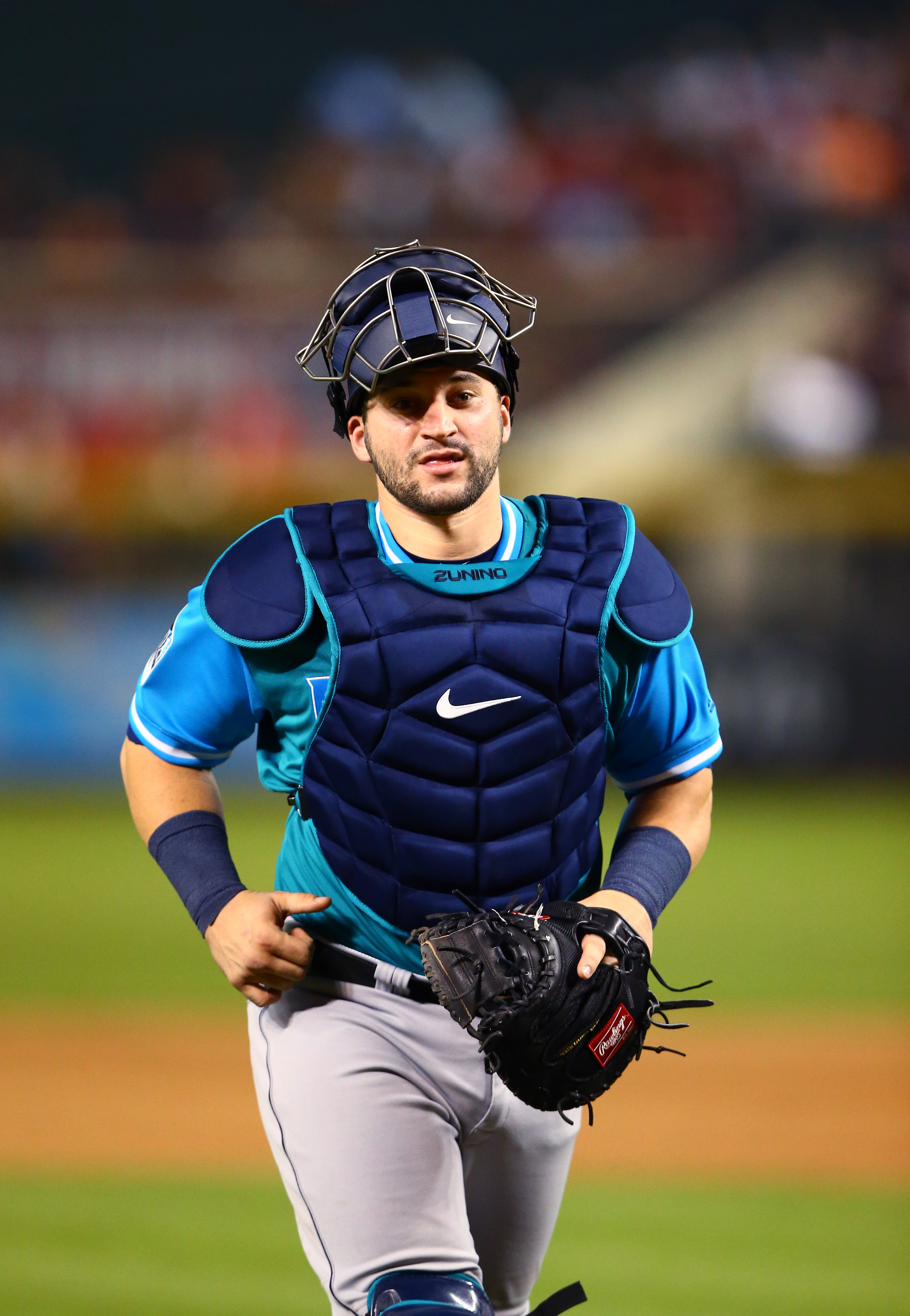
For the Rays, the addition of Zunino gives them a catcher with light-tower power and premium defensive skills. However, Zunino pairs those highly desirable traits with enormous strikeout tendencies and questionable on-base skills. He’s coming off a season in which he hit just .201/.251/.406 with 20 homers, but he’s also only a season removed from a vastly superior .251/.339/.509 output and a career-high 25 homers. Over the past three seasons, Zunino is a .223/.300/.462 hitter with with 57 home runs in 1032 plate appearances. The average and OBP might not jump out, but when adjusting for the Mariners’ pitcher-friendly home park, that level of production rates at about seven percent better than the league-average hitter and nearly 20 percent better than that of a league-average catcher (by measure of OPS and wRC+).
Defensively, Zunino threw out a career-best 35 percent of would-be base thieves in 2018, and he perennially ranks among the league’s best in terms of pitch framing. He’s received well above-average marks in Baseball Prospectus’ Fielding Runs Above Average for catchers in each of his Major League seasons, and he’s controllable for the next two seasons. If the Rays feel they can curb Zunino’s alarming 34.2 percent career strikeout rate, perhaps they believe there’s some yet-untapped upside in the 27-year-old. If not, he’ll nonetheless give them a strong throwing/framing backstop with more power than just about any catcher in the game.
Acquiring Zunino pushes Michael Perez, acquired in this summer’s Matt Andriese trade with the Diamondbacks, from a starting role to a backup job. The 26-year-old Perez impressed in his brief big league promotion in ’18, hitting .284/304/.392 with a homer and five doubles while halting five of 17 stolen-base attempts against him (29 percent). Perez has received quality defensive ratings of his own throughout his minor league tenure, so this pairing gives Tampa Bay a couple of solid to plus defenders behind the plate — a likely point of emphasis for lead baseball ops duo Erik Neander and Chaim Bloom as they engage in experimental tactics with their pitching staff.
As for Heredia, he’s not entirely dissimilar from Smith in that he’s a fleet-footed outfielder with minimal power who is capable of handling all three outfield positions. He’s not likely to crack a crowded Rays mix that could feature Tommy Pham, Kevin Kiermaier and Austin Meadows as starters in the outfield. However, he could also give the Tampa Bay organization a nice bench option or upper-minors depth piece, as he does have multiple minor league options remaining.
Heredia, 28 in January, hit .236/.318/.342 with the Mariners in 337 plate appearances last season — numbers that fall right in line with his career .244/.321/.336 output in 870 PAs. Unlike Smith, he’s garnered poor defensive ratings in center field, though he grades out above-average in the outfield corners.
Plassmeyer, 22, was the Mariners’ fourth-round pick just five months ago in the 2018 draft, which aligns with Dipoto’s willingness to deal from his most recent draft classes. He traded catcher David Banuelos, his 2017 fifth-rounder, to the Twins last December and also flipped 2017 fourth-rounder Seth Elledge to the Cardinals this past summer. Plassmeyer, Mizzou product, posted a ridiculous 44-to-4 K/BB ratio through 24 innings in Short-Season Class-A ball this summer.
Fraley, 23, was Tampa Bay’s second-round pick in 2016 and is coming off a monstrous .347/.415/.547 showing in 2018, but those gaudy numbers came in 260 PAs against younger competition at Class-A Advanced.
While the addition of Smith fills one vacancy for the Mariners, it also creates another. Light-hitting journeyman David Freitas now sits atop the team’s depth chart behind the plate, so adding some catching options either via free agency or (more likely given Dipoto’s tendencies) via the trade market now figures to become an imperative in the months to come. As for the Rays, they’re dealing from a position of strength and also adding some additional depth by picking up Heredia, so this trade merely checks one item off a length to-do list early in the winter, thus freeing the Tampa Bay front offices to turn its focus to other areas of need (namely, the pitching staff).
Ryan Divish of the Seattle Times reported that the two sides were close to a deal involving Zunino, Smith and Heredia. The Athletic’s Ken Rosenthal tweeted that an agreement was in place, while Joel Sherman of the New York Post and Greg Johns of MLB.com added some context on the return (Twitter links) before the inclusion of Plassmeyer and Fraley was also reported by Divish.
Pirates Re-Sign Jung Ho Kang
10:33am: Kang will earn a $3MM guarantee on the contract and can take home another $2.5MM via performance bonuses, tweets Joel Sherman of the New York Post.
8:21am: The Pirates announced that they’ve signed third baseman Jung Ho Kang to a one-year, Major League contract for the 2019 season. Kang, who is now repped by Wasserman, returned to the Pirates organization in 2018 after missing the 2017 campaign and much of the 2018 campaign due to visa issues stemming from his third DUI arrest in his native South Korea. The Pirates paid a $250K buyout on Kang’s $5.5MM club option after the season, but he’ll now return to the club at what should be a reduced rate.
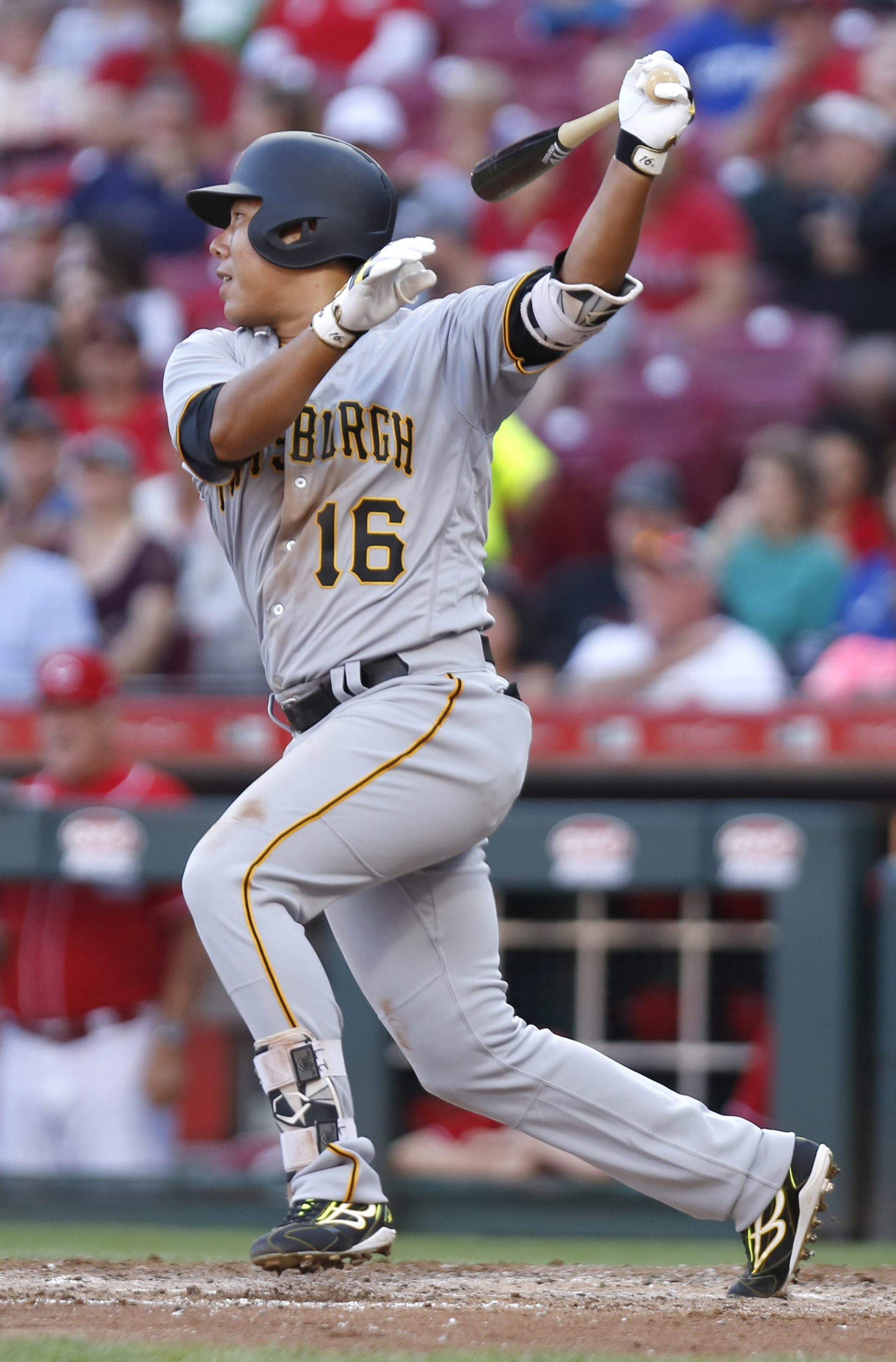
Kang, 32 in April, largely delivered on the hype that followed him to the United States in his first two seasons in Pittsburgh. The former Nexen Heroes superstar posted a .273/.355/.483 with 36 homers, 43 doubles and two triples through 229 games in his first two seasons with the Pittsburgh organization, giving the Buccos plenty of production in return for a relatively modest $16MM investment ($5MM posting fee and a four-year, $11MM contract).
However, Kang played in only three MLB games this past season and was released by his Dominican Winter League after significant struggles in the preceding offseason, so it’s not clear just how well he’ll be able to re-acclimate to big league pitching. He may have gotten a lengthier look had he not required wrist surgery in August, but that health issue only adds to the question marks surrounding him.
Kang will give the Pirates a potential platoon partner for Colin Moran at third base, though he also has MLB experience at shortstop, which is a bit unsettled in Pittsburgh at the moment. Prospect Kevin Newman got his feet wet in the season’s second half and is the top internal option now that Jordy Mercer has become a free agent. As the Pittsburgh Post-Gazette’s Bill Brink tweets, though, GM Neal Huntington indicated at the end of the season that Kang may be strictly viewed as a third base option at this point (Twitter link): “He’s more of a third baseman than even a once-a-week shortstop, and his comfort is definitely third base now, that he’s shared with us.”
Kang’s DUI conviction wasn’t his only legal trouble; he was also the subject of a sexual assault investigation in 2016, though criminal charges were never filed by the alleged victim, who ultimately would not cooperate with police on the matter. Since his DUI arrest in the 2016-17 offseason, he’s gone through a substance abuse treatment program in his home country.
“We appreciate Jung Ho’s hard work to get back to being a productive Major League player, while continuing to handle himself appropriately off the field,” said Huntington in a press release announcing the move. “We feel that bringing Jung Ho back in 2019 will make us better as he will have the ability to make a positive impact on our lineup. Competition and options are important to any organization and this signing provides us with both.”